



Abstract
This article presents an original dataset of direct public funding (DPF) of political parties across 27 post-communist regimes from the outset of transition until 2020. It represents the first systematic, and detailed account of the actual level of DPF provided to parties outside established democracies in terms of geographical and temporal coverage. The dataset has a panel format and includes information on DPF per registered voter and cast ballot separately and in aggregate for more than 800 country-year observations and more than 200 election campaigns. The analysis unveils substantial cross-national and within-country variation in the level of DPF, as well as between statutory and election financing. Despite an increasing reliance of political parties on the state, no pattern exists regarding the dynamics of access and distribution rules. It also highlights the limitations and risks entailed by the extensive use of various proxies such as dichotomous indicators, composite regulatory indexes, or perception-based measures that do not capture cross-national and within-country variation either in DPF or other dimensions of political financing regime.
Introduction
This research is driven by conceptual, operationalization and empirical challenges regarding how state funding of political parties is tackled in cross-national research. While each challenge is analytically distinct, they are closely intertwined and affect each other’s dynamics. They are particularly visible in the advancement of theory-driven research still hindered by the insufficient development of ‘comprehensive theoretical frameworks, […] sharp conceptual tools and classificatory schema’ (Norris and van Es, 2016: 2).
Despite recent progress in assessing the impact of party and campaign funding on the quality of democracy, party competition, membership rates, party-business relations, and political corruption through theoretical lenses (Cagé, 2020; Casal Bértoa et al., 2014; Fazekas and Cingolani, 2017; Hummel et al., 2019; McMenamin, 2013; Potter and Tavits, 2015; Rashkova and Su, 2020; van Biezen and Kopecký, 2017), two fundamental challenges remain. The first concerns the deficit of accurate cross-national longitudinal data, while the second touches on the data conversion into conceptually reliable and valid measurements (Norris and van Es, 2016: 2). Whereas data gaps started to be filled through individual and collective efforts (Cagé, 2020; Poguntke et al., 2016; Scarrow et al., 2017), the geographical coverage is mainly limited to Western democracies. Consequently, most large-N studies rely on various proxy measures epitomized by aggregate regulation-based indexes or dichotomous indicators, which, at best, only scratch the tip of the party finance iceberg.
Against this backdrop, this study contributes to the research on comparative party finance by partially addressing some of the existing limitations and challenges stemming from the data shortage and its operationalization into reliable measures suited for cross-national and longitudinal analysis. It introduces a new dataset on direct public funding (DPF) of political parties across 27 post-communist regimes from the outset of transition to nowadays (1990–2020). The dataset contains information on the actual level of state funding provided for party statutory and election activities for more than 800 country-year observations and almost 230 elections. Furthermore, it contains additional relevant indicators for the design of the DPF mechanism, such as the eligibility (pay-out threshold) and allocation rules. Accordingly, regardless of whether DPF is treated as an outcome or as an explanatory variable, this data will help party scholars and practitioners to assess better the effects of state resources on party competition or other phenomena of interest.
Party finance in comparative research: State of the art and limitations
During the last two decades, there has been an increase in scholarly attention to the effects of political financing regime (PFR) on different aspects of party competition, political corruption, and democratic quality. This progress is particularly noticeable in diversifying methodological approaches employed by scholars dealing with political finance research. While case-oriented studies remain the workhorse of party funding literature, an emerging body of comparative analyses apply variable-oriented or mixed research designs. Table 1 provides an overview of studies and data resources in political finance since Susan Scarrow’s review (2007: 196) to show the differences and the progress in the field. While in her overview country studies dominate the landscape, Table 1 presents a more heterogeneous picture.
Selected multi-country studies and data resources on political financing.
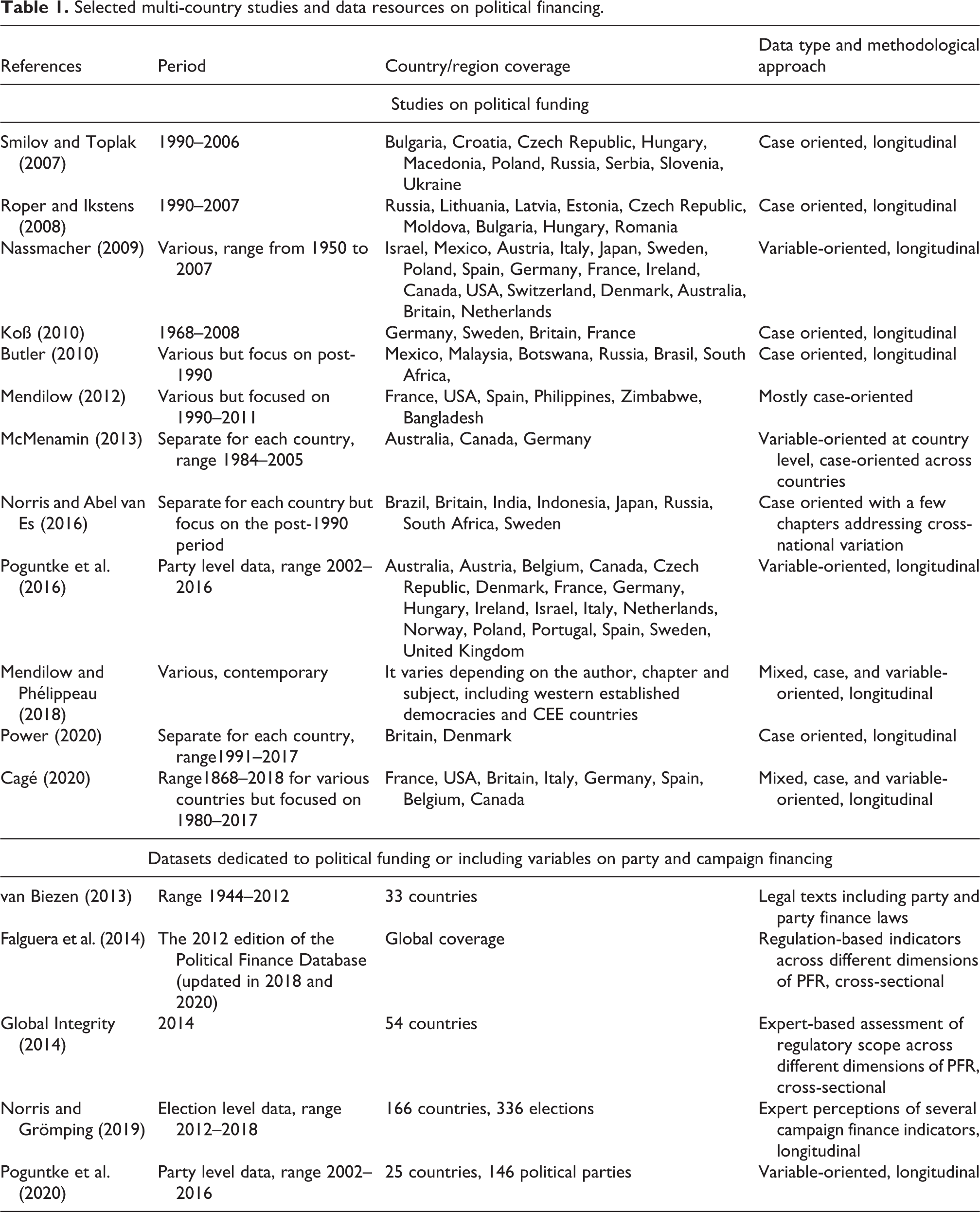
Besides a shift towards a more sophisticated research agenda and a more diversified palette of methodological tools, the critical difference between earlier and more recent studies is the ability of the latter to overcome the isolation from the mainstream research of party politics, electoral competition, party-business relations, and democratic governance. Despite increased access to empirical data and the acknowledgement of party and campaign financing as a critical factor affecting party system development, electoral competition, and democratic governance, a paradox remains. With some exceptions mostly limited to established democracies (Cagé, 2020; Casas-Zamora, 2005; McMenamin, 2013; Nassmacher, 2009; van Biezen and Kopecký, 2014), hard empirical data on political funding are primarily used in case-oriented research or small-N studies, while large-N studies rely almost exclusively on various proxy measures instead of the actual figures.
This approach is confirmed by the prevalence of studies using regulation-based measures that rely on the IDEA political finance database (Austin and Tjernström, 2003; Falguera et al., 2014) or follow a similar operationalization technique. They employ dichotomous indicators (absence vs availability of public funding, absence vs presence of donation caps) or composite indexes constructed through different aggregation techniques. Hence regardless of whether one employs DPF as a self-standing indicator or incorporates it into a composite index, it reflects only the regulatory scope (quantity of regulations) with little to no bearing on the regulatory depth (the content of regulations). Consequently, the regulation-based measures employed to assess the effects of PFR/DPF on party competition and political corruption are sensitive to the way how they are constructed. Therefore, it is not surprising to discover that empirical studies testing similar hypotheses produce opposite results.
A case in point is epitomized by the mixed results obtained from the testing of the cartel party thesis (Katz and Mair, 1995, 2009). While parties increasingly relied on the state, the collusion of established parties has not frozen party competition and has not hindered the emergence of newcomers (Casas-Zamora, 2005: 40–43; Hino, 2012; Hug, 2001: 102; Pierre et al., 2000: 20; Scarrow, 2006), although some scholars found that a broader regulatory scope and higher regulatory density is more likely to deter new party entry (van Biezen and Rashkova, 2014). Likewise, the provision of DPF was found to be positively associated with lower electoral volatility, higher party system institutionalization, a higher survival rate of small parties, and a more level playing field (Birnir, 2005; Booth and Robbins, 2010; Casal Bértoa and Spirova, 2017; Potter and Tavits, 2015; Rashkova and Su, 2020). Finally, despite contrasting developments, the rules on ballot access, eligibility threshold, free broadcasting and subsidies have generally shifted from more restrictive to more inclusive over time, albeit the increase in DPF still favoured the established parties (Bowler et al., 2003; Loomes, 2012; Piccio and Biezen, 2018).
Another example concerns research investigating the relationship between PFR (including the provision of DPF) and party corruption. There are several measures employed to test whether a harsher PFR or the availability of DPF deter corruption: a binary measure (absence vs presence of DPF), a composite index of direct and indirect funding, an aggregate index of PFR including DPF, and the share of DPF in the structure of party income. While a few studies found the provision of DPF to be negatively associated with corruption (Ben-Bassat and Dahan, 2015; Hummel et al., 2019; Kostadinova, 2012: 83), others came to the opposite conclusion (Abel van Es, 2016: 2018; Casal Bértoa et al., 2014: 366; Casas-Zamora, 2005: 39; Evertsson, 2013; Fazekas and Cingolani, 2017; Lopez et al., 2017: 27–28; Nassmacher, 2009: 143), or could not find consistent evidence in either direction (Norris, 2017: 228–229; van Biezen, 2010: 70; van Biezen and Kopecký, 2007).
None of them, however, accounts for the variation in DPF. Yet precisely this kind of variation accounts for the regulatory depth of financing rules. For instance, the DPF level might significantly influence the fundraising behaviour of political parties and electoral competitors. If public funding covers a large part of the parties’ financial needs, it might weaken the incentives to source funds illicitly, especially when subsidies are withdrawn as punishment for such behaviour. Otherwise, the probability of deterring political actors’ involvement in such murky deals remains feeble. Hence, where political corruption is party related, what matters is not just to provide symbolic budgetary support but to provide sufficient funds to weaken the incentives to seek resources from unlawful sources.
While the discussion of how much DPF political parties should receive from the state to deter them from seeking illicit funds remains open, the use of regulation-based indexes does not capture this variation. The deficit of hard cross-national time-series data is reflected by the emergence of an alternative approach. It relies on expert assessment in constructing perception-based indexes on the scope of formal rules and more specific issues such as the significance of DPF in the pool of campaign resources, fairness and transparency in accessing public and private funding, equitable access to media, or the impact of vested interests on the electoral outcomes. The resulting measures are used to assess more broadly the quality and integrity of the electoral process (Coppedge, 2020; Coppedge et al., 2020; Global Integrity, 2014; Norris and Abel van Es, 2016b; Norris and Grömping, 2019b). While their use is still limited, the key challenge they face is identical to regulation-based indexes – whether they are valid proxies for actual party financing.
The last aspect often referred to as hindering the advancement of party funding research concerns the omission of temporality (Grzymala-Busse, 2011; Pierson, 2004). This omission is a common feature of large-N studies analysing the effect of PFR/DPF on party competition and corruption (Abel van Es, 2016; Ben-Bassat and Dahan, 2015; Birnir, 2005; Booth and Robbins, 2010; Casal Bértoa et al., 2014; Potter and Tavits, 2015; Rashkova and Su, 2020; Tavits, 2008). Certainly, temporality is explicitly or implicitly accounted for as an element of the research design to mitigate the risk of reverse causation between the explained and explanatory variables through their measurement at different points in time. However, it is not present as a methodological tool to account for the diachronic variance similar to the cross-case synchronic variance in the variables of interest (Bartolini, 1993: 135). While temporality is more carefully integrated into case study research (Butler, 2010; Casal Bértoa and Biezen, 2018; Mendilow, 2012; Mendilow and Phélippeau, 2018; Norris and Abel van Es, 2016a; Roper and Ikstens, 2008; Smilov and Toplak, 2007), the problem of generalizability and external validity remains a critical issue. Heretofore, only a few studies have incorporated temporality to analyse the relationship between PFR and political corruption, but in all cases, the explanatory variable was operationalized either as a composite index of PFR (Fazekas and Cingolani, 2017; Lopez et al., 2017) or an aggregate DPF index (Hummel et al., 2019).
As this overview shows, reliance on aggregate indexes bundling together indicators measuring different aspects of PFR (e.g., donation and spending limits, provision of DPF) through various techniques is not the optimal way to investigate the effects of PFR on party competition or corruption. More importantly, similar scores might conceal substantial differences between apparently identical cases, which can be misleading for troubleshooting the most problematic areas of PFR from a policy perspective. Against this background, I present a dataset containing more fine-grained indicators capturing the cross-national and temporal variation in DPF.
The general overview of the dataset
The dataset of the DPF level covers 27 post-communist regimes during 1990–2020. 1 The data structure accounts for cross-national and within-country variation as well as funding levels for party statutory and election financing. Accordingly, for the statutory party funding, the unit of analysis is country-year, while for the campaign financing – country-elections. Most of the data come from official primary sources. In a few cases, when primary sources were not available, the level of DPF was estimated based on relevant regulations and economic indicators. Since the dataset and Supplemental materials (Appendix B) provide details on operationalization and sources for each country, here it suffices to mention that in most cases, I rely on budget laws and their implementation, decisions of the electoral management bodies and oversight institutions, as well as party and campaign funding laws and regulations.
Additionally, I use a wide range of electoral monitoring and technical assistance reports of various international organizations (Organization for Security and Cooperation in Europe/Office for Democratic Institutions and Human Rights (OSCE/ODIHR), Group of States against Corruption (GRECO), International Foundation for Electoral Systems (IFES), International Republican Institute (IRI), National Democratic Institute (NDI), etc.), and other secondary sources. Furthermore, when there are data inconsistencies even between official sources, I cross-check them with alternative data. While some discrepancies might remain, they do not affect critically data accuracy and reliability.
Based on the raw DPF data, I construct two indicators suited for cross-national and longitudinal analysis: direct public funding per registered voter (DPFRV) and direct public funding per vote (DPFV). The first is calculated by dividing the total DPF by the official number of registered voters, while the second is obtained by replacing registered voters with cast ballots. These indicators are available for three levels of analysis: statutory, election and total funding. While their value is expressed in current USD, thus, without accounting for the purchasing power parity or inflation, anybody interested in constructing alternative measures and proxies incorporating them can use raw data expressed in local currency. Furthermore, based on raw data and Nassmachers (2009: 109–115) formula used to estimate the index of political spending, one may calculate an equivalent index of DPF that automatically accounts for the cross-national variation in economic development, purchasing parity and inflation.
Besides the level of DPF, I also collected information on other variables of the DPF mechanism, such as the eligibility (pay-out threshold) and allocation rules. The former pertains to the legal requirements to get access to DPF, while the second – the distribution of DPF among those who are eligible. In the following sections, I conduct a descriptive analysis of the dataset from different angles that uncover the variation in DPF: the method whereby DPF is determined, the relationship between DPF for statutory and election funding, and the cross-national and within-country variation over time. Next, I explore the same developments regarding access and distribution rules. Finally, I provide a short validation test of the relationship between the actual DPF and several alternative measures.
Method determining the level of DPF
Assuming that incumbents are expected to determine the level of state funding to their advantage, the way it is determined might affect patterns of interparty competition. If political parties know in advance the criteria of how DPF is determined, this awareness creates a more predictable and transparent environment for political competition. On the contrary, if the rules are ambiguous, they create more space for abuse. Casas-Zamora (2008) uses party discretion to set the subsidy level as a defining feature of the DPF regime. The lack of clearly defined and predictable rules on setting the level of DPF is more prone to political manipulation. It might contribute to a faster increase in subsidies than vice-versa (Casas-Zamora, 2008: 14–15). By applying this framework to the post-communist regimes, I investigate whether this relationship holds. While post-communist polities have used various methods to determine the DPF level, they fall within three categories: Party or electoral law explicitly stipulates a fixed amount of DPF and how it is distributed based on electoral performance expressed in cast ballots or parliamentary seats. Party or electoral law determines the level of DPF based on a flexible economic indicator such as the average or minimal wage, a given share of budgetary revenues, expenses, or GDP. The level of DPF is determined annually based on an ad-hoc decision, usually adopted through the budgetary process.
In terms of transparency and predictability, the first method is better since the law details how many subsidies parties will receive. However, it requires bargaining over the new terms each time the key actors decide to alter the level of funding. Nevertheless, in those countries that used this method to determine the amount of DPF (e.g., Armenia, the Czech Republic, Georgia, Latvia, Poland, Russia, and Slovakia), the key players could strike the necessary agreements to increase the DPF level. While the frequency of such agreements varies, the increase in DPF suggests that when it comes to securing higher access to state resources, political parties can overcome existing disagreements to accommodate each other’s interests.
The second method relies on an economic indicator used to determine the DPF level, such as a wage-based coefficient or a percent of budgetary revenue, expenses, and GDP. Besides transparency and predictability, flexibility represents a clear advantage over the previous one since it cushions the effects of inflation. It is also the most popular method employed by the post-communist regimes – however, contingent on the precise indicator, the mechanism slightly varied. Where DPF was determined based on a wage-based coefficient (Bulgaria, Kazakhstan, Moldova, Ukraine, Uzbekistan, Belarus, Slovakia), the calculation procedure followed a bottom-up approach. It was linked to the registered voter, cast ballot, parliamentary seat, or their combination.
Conversely, when a specified percentage of the state budget or GDP was used as a benchmark to determine the subsidy level (Bosnia & Herzegovina, Croatia, Lithuania, Macedonia, Montenegro, Romania, Serbia, Slovenia, Lithuania), the mechanism followed a top-down approach. The total amount of funding was determined firstly at an aggregate level and then distributed among beneficiaries. Nevertheless, despite the built-in advantage of self-adjusting, it has not prevented political parties from pushing for more budgetary resources, from switching from one method to another or looking for new DPF sources such as local budgets. These amendments suggest that the party appetite for resources grew faster than wage levels or the budgetary revenue.
Finally, according to the last method, the size of DPF is determined by an ad-hoc decision, usually adopted through the budgetary process. For campaign funding, it may also represent a decision of the electoral or another body adopted separately for each contest. Theoretically, this is the most discretionary and flexible method to accommodate party needs on a short-term basis. Because it creates the largest leeway for parties to bend the rules to their advantage, it is more likely to be manipulated to extract resources from the state. Albania, Azerbaijan, Estonia, and Hungary used it for the entire period, while Lithuania, Bulgaria, Macedonia, Slovenia experimented with it for shorter periods. Likewise, Croatia, Russia, Uzbekistan, and Tajikistan used it to determine the funding level for elections. Nevertheless, as one will see, there is substantial variation in the funding level between cases within this group.
Figure 1 provides a comparative overview of the DPF level by funding type (statutory vs elections), indicator (DPFRV vs DPFV) and the method used to determine it. Contrary to Casas-Zamora’s assumption, there is no clear pattern between the method and amount. While in most cases, the preferred method to determine the level of DPF represents a dynamic indicator, as the boxplot’s width shows, the ad-hoc decision is not associated with the extraction of more state resources. One possible explanation for this outcome is the incremental nature of the budgetary process that would curb even the parties’ ability to exploit their privileged position relative to other actors subject to budgetary allocation rules and constraints. Regardless of the method used, political parties amended the regulatory framework as they saw fit to readjust the level of state resources to match their financial needs.
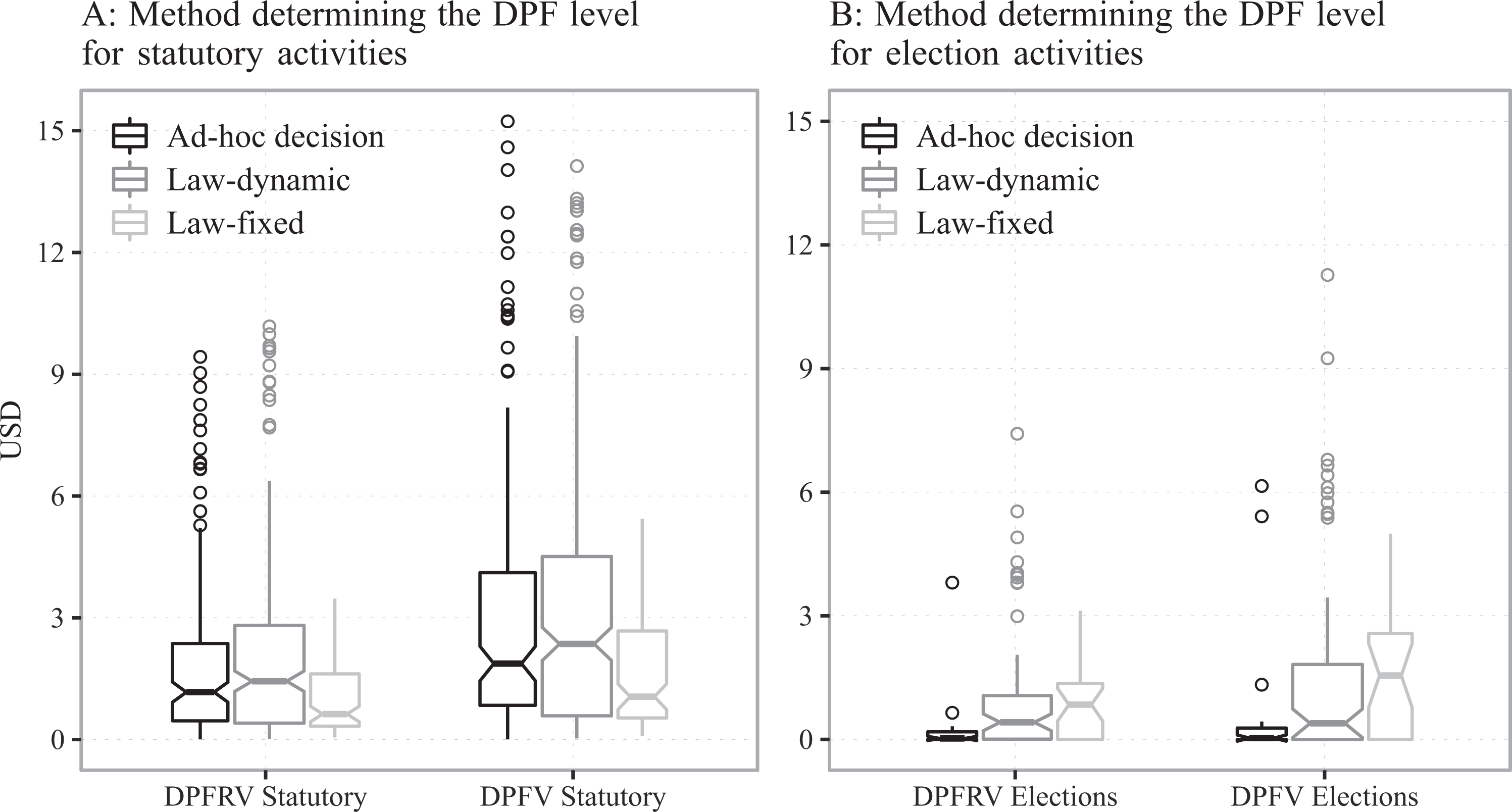
Variation in the DPF level across post-communist regimes by method and funding type 1990–2020.
Statutory vs election financing
There are three policy options regarding the provision of DPF to political parties. DPF can be earmarked for day-to-day party operations, electioneering activities, or both. While these alternatives are acknowledged, this distinction is rarely accounted for in comparative research. The choice of a given policy option, however, might have considerable implications for party system development and party competition. While the most inclusive option for party development is to offer enough funding for statutory and election activities, it is not always the case. Of course, if statutory funding can be used for elections, this is not a problem. However, from the perspective of electoral competition, this distinction is crucial because the access and distribution criteria might be different. Hence, if statutory funding is available only to established parties that fulfil the eligibility criteria, the access to the election subsides is more relevant since it affects considerably the calculations of political entrepreneurs to enter the competition given the entry costs. Whereas the availability of DPF for campaigning is one among many factors affecting electoral competition, it proved to affect party system institutionalization, electoral volatility, and the ability of new parties to succeed (Birnir, 2005; Booth and Robbins, 2010; Hino, 2012; Hug, 2001; Ibenskas, 2020; Potter and Tavits, 2015; Rashkova and Su, 2020; Tavits, 2008).
On the other hand, if DPF is provided only for elections, it is not a sustainable policy option for long-term party development since it is a one-shot game. The peculiarity of campaign subsidies is confirmed by their differential impact on the electoral success of anti-establishment, radical-right and fringe parties across established and young democracies. While across Western democracies, the degree of state funding of elections was found to boost the electoral support for the radical-right parties (Bichay, 2020), the opposite holds for the new East-European democracies. Easier access to DPF earmarked for campaigning proved to diminish the support for the anti-establishment parties across post-communist polities (Bértoa and Rama, 2021). 2 Despite these divergent findings, the long-term effect of electoral subsidies on party longevity appears to be limited. Although election subsidies may help new parties to break through, without access to DPF for day-to-day party operations, the probability of party survival is lower (Casal Bértoa and Spirova, 2017).
While all three policy options are present across post-communist polities, there is a substantial variation regarding the countries’ preferences towards a given policy alternative and the DPF level. This variation is noticeable in Figure 2 that displays the relationship between statutory and election funding using DPFRV and DPFV during election years. Although most cases lie within the range of approximately 2 and 4 dollars, the cross-national variation is still high even within this range, let alone outside it. Data also shows that despite the absence of a clear pattern: Montenegro, Slovakia, the Czech Republic, and Croatia stand out for the overall generosity. Likewise, Estonia, Bulgaria, Bosnia and Herzegovina can be singled out given the largesse of DPF provided for statutory party activity. At the other extreme, one finds more than half of former-soviet republics that provided little to no support to electoral competitors. The rest, including Hungary, Slovenia, Serbia, Poland, and Lithuania, lie between the two extremes.
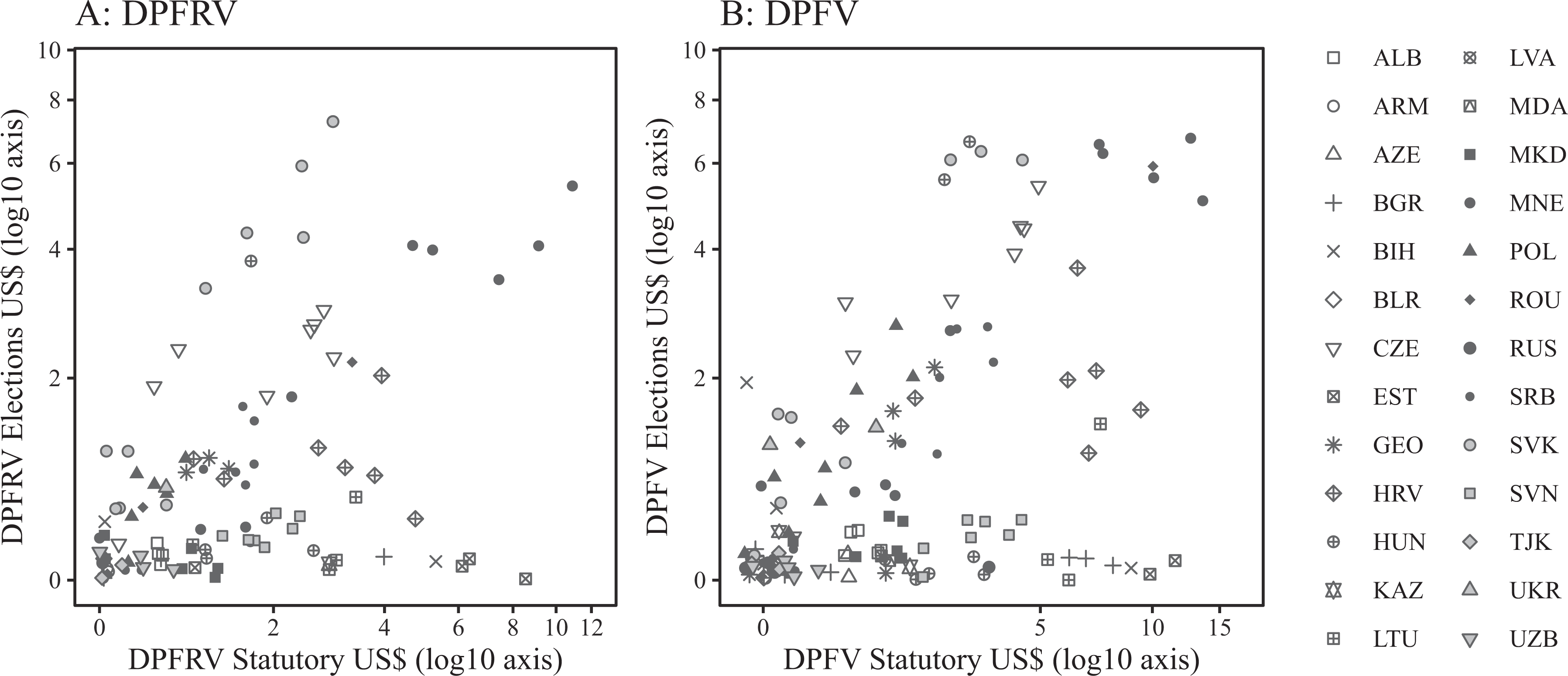
Relationship between the level of DPF for party statutory and election financing. Note: Data is jittered on both axes to minimize overlapping at low levels of DPF.
Variation over time in the level of public funding
While the previous two sections can be regarded as two snapshots of the same phenomenon taken from different angles, this section introduces the dynamic element. It looks at both cross-national and within-country variation over time for DPFRV and DPFV. Unlike previous sections, where data was split based on the DPF type, here I present it in aggregate. Hence, for the election years, the DPF incorporates statutory and election funding, while for the non-election years – only DPF for party daily operations. Even though DPFRV and DPFV are highly correlated, the DPFV is more relevant because it is closer to what parties actually receive from the public purse. Since often the funding level was linked neither to the electoral market size nor the electoral turnout, the difference between the registered voters and cast ballots considerably affects both measures. In short, the lower the electoral turnout, the higher the gap between the DPFRV and DPFV. The relationship between these two indicators is illustrated in Figure 3.
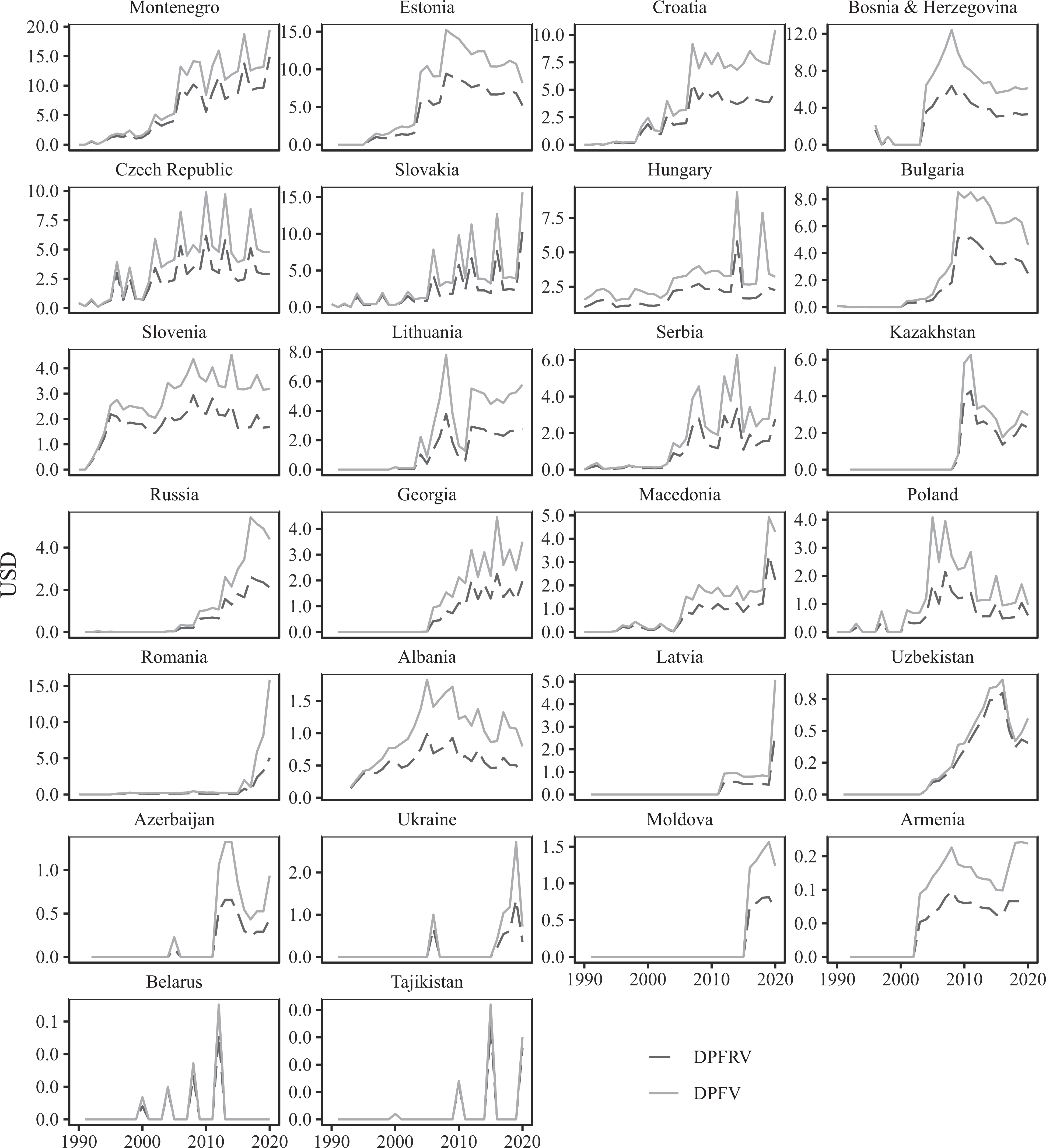
Variation over time in the level of DPF by country and type 1990–2020. Note: The y-axis is adjusted to each country’s range in the DPF level due to high cross-national variation.
The figure displays tremendous cross-national and within-country variation in the amount of DPF over time. One-third of post-communist polities located at the top of Figure 3 are visibly ahead of others regarding the level of state support, although the variation is considerable even within this group. For instance, if one takes the total DPFV provided over the years, top-ranked Montenegro provided twice as much as Slovakia and the Czech Republic and almost three times more than Slovenia. These disparities are even more remarkable if one steps outside the group of heavy DPF providers. Poland and Russia, which are middle-ranked, still provided more DPF by a factor of five to six than Moldova, Ukraine, Azerbaijan, and Uzbekistan.
Partially, this variation is also driven by the timing of the DPF introduction, which splits post-communist polities into two groups. While most CEE and Balkan countries introduced DPF either immediately after the fall of communism or during the early stage of transition, almost all former-Soviet republics followed suit much later. Some of them, including Kazakhstan, Moldova, Latvia, Ukraine, and Azerbaijan, introduced DPF only after two decades of independence or later. While few ex-soviet republics subsidized campaigning, the level of state support was so insignificant that it covered only a tiny share of the financial needs of parties and candidates. Furthermore, in a few authoritarian regimes (Belarus, Uzbekistan, and Tajikistan), state funding was the only legal source of income for campaigning.
The differences in DPF are even more prominent if one considers cross-national and within-country variation simultaneously via two aspects of temporality – direction and magnitude of change. Overall, one may identify two broad developments. The first represents a steady increase in DPF followed by its stabilization with fluctuations in both directions. The second depicts an increase followed by a decrease in state funds. 3 A similar pattern is observed regarding the magnitude of change conceived in relative and absolute terms. The relative magnitude reflects the increase or decrease in DPF per time unit, while the absolute magnitude reflects the ratio between the highest and the lowest value of DPF.
A few examples will illustrate these points. In the Czech Republic, the Law on Political Parties (LPP) was amended three times between 1990 and 2000. As a result, the nominal value of DPFV for campaign reimbursement increased tenfold, from CZK 10 to CZK 15, 90 and 100, respectively. Likewise, following the Velvet Revolution in 1993, Slovakia increased the amount of DPFV for election expenses fourfold, from SKK 15 to 60 in 1994. While the level of DPF remained unaltered for roughly a decade, the intensified political competition at the turn of the millennium put more pressure on party finances. Hence, following the replacement of the allocation mechanism from a fixed coefficient to a flexible indicator in 2004 (1% of the average monthly wage per vote), by the 2006 parliamentary contest, the reimbursement of election expenses increased by almost three times.
Similar developments occurred in Georgia and Russia, although they touched on statutory party funding. Between 2005 and 2013, the Georgian LPP was amended three times (2007, 2009 and 2013) by expanding the mechanism of DPF. Consequently, the nominal value of DPF in 2019 was almost five times higher than in 2005. Russia is an even more striking case since it switched from a dynamic indicator (minimum wage) to a fixed coefficient in less than 2 years from the effective introduction of DPF in 2004. Because the minimum wage growth was much slower than party demand for resources, the funding level increased tenfold already in 2005. Furthermore, between 2004 and 2017, the LPP was amended five times, resulting in a nominal increase of DPF by a factor of 300.
Even in countries where the funding level was linked to a floating coefficient, such as a percent of budget revenue that would ensure a constant increase in financing, political parties could not refrain from tinkering with the rules. Montenegro is an extreme case in point, especially given the generosity of the state. The share of state funds increased from 0.2% in 1993 to 0.5% in 2017, with supplementary fluctuations (0.3–0.6%) in between. Moreover, since the central budget funds were insufficient, the local budgets became an additional source of income in 2008, with shares ranging from 0.5% to 3%. Accordingly, between 1994 and 2020, the subsidy level increased by 24 times (dollars equivalent). Likewise, the increasing demand for resources pushed Macedonian parties to switch from an ad-hoc decision method to a budget share-based formula in 2004 (0.06% of the budget revenue). In 2018, the share of budgetary funds earmarked for parties was augmented to 0.15%, resulting in a ninefold increase in DPF (dollars equivalent) between 2005 and 2019.
Despite an upward dynamic in most countries, the noticeable cases are those in which the decline in DPF represents a deliberate decision of the very actors affected by it. The decrease in public funding occurred through amending the LPP, earmarking less than the maximum ceiling set by law, or budgeting less than previously. Regardless of the exact mechanism at work, there are instances in which the decline in DPF represents the outcome of deliberate party decisions. Poland, Estonia, and Bulgaria are exemplary cases in this respect. In Poland, the amendment of the LPP in 2010 resulted in a substantial drop in the subsidy level. In 2011, Polish parties received for their statutory operations about half of DPF earmarked in 2010. The same holds for their Bulgarian counterparts. Following a twelvefold increase of financing during 2001–2009 (BGN1–BGN12 per vote), state funding dropped to BGN11 and BGN8 in 2014 and 2020, respectively, which constitutes a decline of one-third. Finally, Estonian parties, which decided on the funding level via the budget law, passed through a similar experience. Accordingly, following an eighteenfold surge in DPF (dollar equivalent) between 1996 and 2008, it dropped by 30% by 2019.
These examples illustrate the inability of composite regulatory indexes or binary indicators to capture the differences in the funding level. I turn now to the other two aspects of the DPF mechanism – eligibility and allocation rules. While eligibility rules are employed as a substitute for a dichotomous indicator of DPF (Birnir, 2005; Bértoa and Rama, 2021; Casal Bértoa and Spirova, 2017), allocation rules received almost no consideration from the academic community. The lack of attention is somewhat surprising, considering their prominent role in the policymakers’ struggles over the distributional consequences of DPF for party competition.
Eligibility rules to public funding
Eligibility rules, as embodied in the pay-out threshold to obtain access to DPF, represent a crucial benchmark for the inclusiveness of the DPF mechanism. They play a central role in the argumentation line of the cartel party thesis that assumes the propensity of the established parties to protect themselves against the competition from the newcomers by raising the entry barriers (Katz and Mair, 1995, 2009). To obtain state funding, political parties must fulfil a minimum requirement expressed in votes, seats, or both. For election financing, there is another criterion employed to allocate funding – official candidate status. Candidate status as an eligibility benchmark has several implications for the inclusiveness of the DPF scheme and electoral competition. It removes the barriers (past electoral performance) to DPF, expands the pool of recipients, and creates incentives for the formation of new parties by covering a part of the entry costs.
Moreover, if statutory funding is always disbursed based on past electoral performance, this does not always apply to elections. Campaign subventions may be disbursed before and after elections or through both methods, either as advance payments for campaigning or reimbursement of election expenses. However, when candidate status serves as a benchmark alone or combined with other access criteria, the subsidy associated with it is always disbursed in advance; therefore, it can be used for electioneering. Hence, a lower access threshold to DPF is associated with the openness towards competition and favours the emergence of new parties.
The left-hand panel of Figure 4, which reflects the dynamics of the eligibility rules for party statutory funding, exhibits three developments: stability, increase and decrease in the pay-out threshold. The range in the eligibility requirements to public funding varies from 0 in Moldova to 7% in Kazakhstan. 4 It also shows that stability is the dominant pattern in most countries. The remaining countries are split into roughly two equal groups that either increased or decreased the barriers to access state funding. While Albania, Croatia, the Czech Republic, Slovakia, and Romania shifted towards more demanding conditions, Georgia, Macedonia, Montenegro, Slovenia, and Lithuania switched to friendlier access rules.
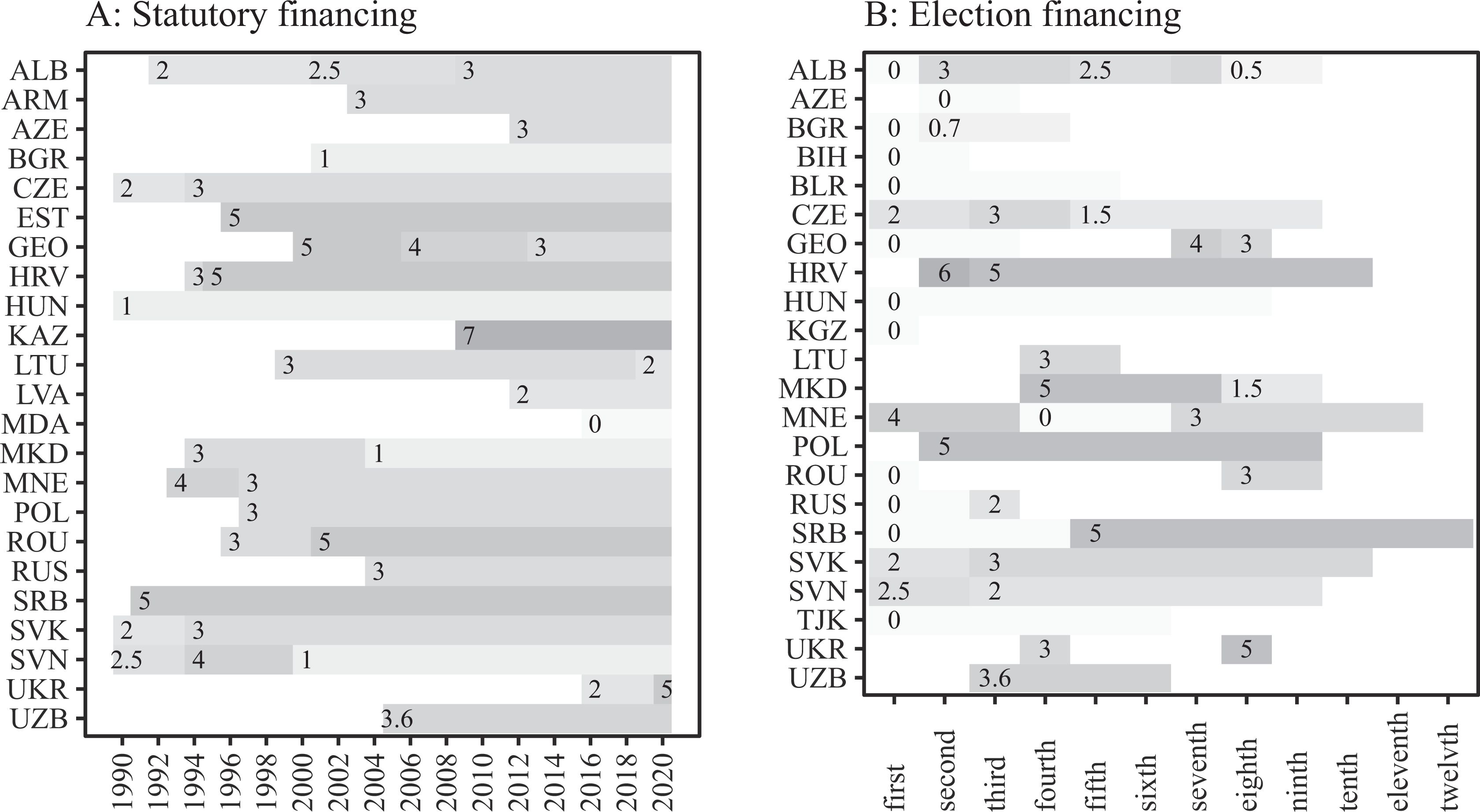
Cross-national and within-country variation in access rules to DPF for party statutory and election financing 1990–2020. Note: The X-axis from the right-hand panel represents the sequence of parliamentary elections.
The right-hand panel of Figure 4 shows that, relative to statutory funding, the access to election subsidies represents a more inclusive process since approximately half of the post-communist regimes deemed candidate status a sufficient condition to benefit from the state support. A possible explanation for this inclusiveness is the minimal support offered by the state in such cases. Thus the access to DPF is likely to have little impact on the electoral outcomes, although a stronger symbolical effect. The dynamics of the pay-out threshold to campaign subsidies reveal similar diverging trends as for the access to statutory funding. While the status-quo prevails (several former-Soviet republics, Poland, and Hungary), other cases are divided into those increasing (Bulgaria, Georgia, Russia, Serbia, and Slovakia) and decreasing (Croatia, the Czech Republic, Macedonia, Montenegro, and Slovenia) the barriers to DPF. This mottled picture shows that the regulation of access to DPF substantially varies across post-communist polities, thus offering inconclusive evidence to support the cartelization of party politics, at least regarding the access conditions.
Allocation rules of public funding
The distribution formula reflects the method whereby state funding is apportioned among recipient parties. Two conflicting principles are built into any distribution formula, i.e. equality and proportionality (van Biezen, 2003: 44–45; OSCE/ODIHR and Venice Commission, 2010: §§ 183–185, 2020: §§ 237–239). 5 Equality, in its extreme form, implies that DPF is evenly apportioned to political parties or electoral competitors, regardless of their electoral performance. In contrast, proportionality foresees a distribution exclusively based on electoral performance measured in votes, parliamentary seats, or both. Normatively speaking, a mechanism combining both principles by applying ‘objective, fair and reasonable criteria’ in distributing subsidies ‘might be most effective at achieving political pluralism and equal opportunity’ (Council of Europe, 2003: § 1; OSCE/ODIHR and Venice Commission, 2020: § 239). However, when defining such criteria, the precise meaning of ‘objective, fair and reasonable’ becomes quite problematic (Pinto-Duschinsky, 2006). Accordingly, incorporating these conflicting principles into any distribution formula will yield a biased allocation contingent on the recipients’ identity.
Despite this normative tension, I assess the distribution method based on its openness towards party competition. It ranges between 0 and 1, where 0 implies a pure egalitarian and 1 – a fully-proportional distribution of funding. For instance, if half of DPF is evenly distributed among all eligible parties (without accounting for past performance), while another half is proportionally allotted based on electoral performance, I assign a score of 0.5. The closer/farther this score lies to/from 1, the more/less concentrated the distribution of subsidies is among beneficiaries. The result of this operationalization is presented in Figure 5.
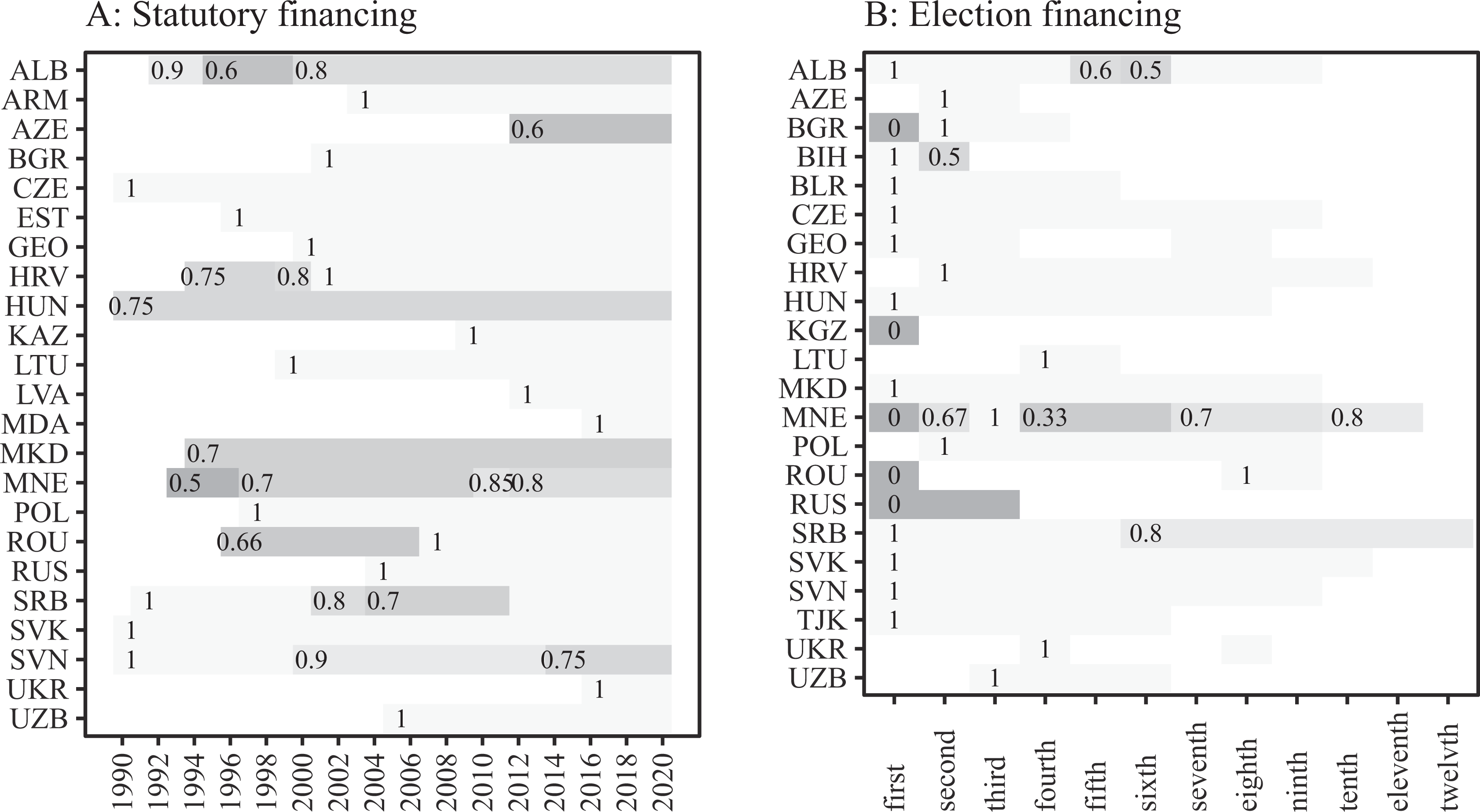
Cross-national and within-country variation in allocation rules to DPF for party statutory and election financing 1990–2020. Note: The X-axis from the right-hand panel represents the sequence of parliamentary elections.
Pure proportionality represents the dominant allocation method, with fewer cases incorporating the egalitarian element. One may notice three distinct trends concerning the change in allocation rules: stability, towards a more egalitarian and a more proportional distribution. As Figure 5 reveals, the status-quo prevails in about two-thirds of countries for both types of funding. 6 Remarkably, the former Yugoslav republics, Albania, and Romania are the cases recording the most frequent changes in the allocation mechanism for statutory funding (Panel A), although in different directions. While Albania, Slovenia, and Serbia shifted towards a more egalitarian distribution, Croatia, Montenegro, and Romania switched to a more concentrated allotment of subsidies. Montenegro and Albania also record the most frequent amendments in the allocation of electoral subventions (Panel B), albeit in opposite directions. Even though this indicator does not reveal the underlying criteria employed to apportion state subsidies (votes, seats, party membership, electoral competitor status), 7 the presence of quite pronounced egalitarian elements undermines the logic of a purely instrumental approach in designing the rules that would favour exclusively the established parties.
Comparison with alternative measures
The observed variation in the funding level reveals a critical limitation of a binary coding used to assess the effects of DPF on any phenomena of interest since it flattens cross-national differences and within-country variation over time. Likewise, reliance on aggregate regulatory indexes, which bundle together either various aspects of the DPF mechanism (amount, access, distribution) or different dimensions of PFR (DPF, donations, spending), generate similar problems for they measure conceptually different things. Finally, expert-based indexes entail similar risks. While such indexes might be internally consistent and capture better within-country developments, they are more likely to perform worse in assessing cross-national variation. Hence, I provide several illustrations proving the advantages of DPFV over alternative measures. Given the shortage of studies and data with the same geographical and temporal coverage, I rely on those that either intersect with my dataset or include alternative DPF measures besides regulatory or expert-based indicators, such as the degree of state dependence, operationalized as the share of DPF in the structure of party income (Casal Bértoa et al., 2014; van Biezen and Kopecký, 2014).
The exploration of binary or composite measures of DPF does not require additional undertakings, as Figures 2 and 3 uncovered their shortcomings. Therefore, I analyse two expert-based indexes and the degree of state dependency to assess their fit against the actual DPF and party access to funding. To test the validity of a perception-based index against the level of DPF, I use a variable from the ‘Varieties of Democracies’ that measures the expert perceptions regarding the significance of electoral subsidies for political parties (Coppedge, 2020; Coppedge et al., 2020: 61), which is the closest equivalent to the actual level of DPF. 8 Likewise, to test the reliability of expert perceptions regarding equitable access to DPF, I use the relevant variable from the ‘Electoral Integrity Project’ (Norris and Grömping, 2019b), 9 and cross it with the pay-out threshold for campaign subsidies from my data. The pay-out threshold represents the legal equivalent of equitable access as defined by Norris and Grömping (2019a: 14) and has a similar interpretation – the easier the access to DPF (the lower the pay-out threshold), the more equitable the access mechanism. The crossing of expert evaluations with the DPFV, as presented in Figure 6, reflects quite a mismatch between the expert assessments and the objective indicators. As the left-hand panel shows, this mismatch is particularly noticeable at low levels of DPFV, where the expert scores on the significance of DPF are quite widespread along the y-axis. Likewise, there is plenty of evidence for the opposite combination – similar expert scores coexist with significant differences in DPFV. A similar discrepancy is noticeable in the right-hand panel. It shows that in some cases, the absence or the presence of a minimal legal pay-out threshold, meaning a more inclusive and equitable access mechanism to election subsidies, is regarded by experts as unfair or that similar expert scores are assigned to cases with very different access thresholds.
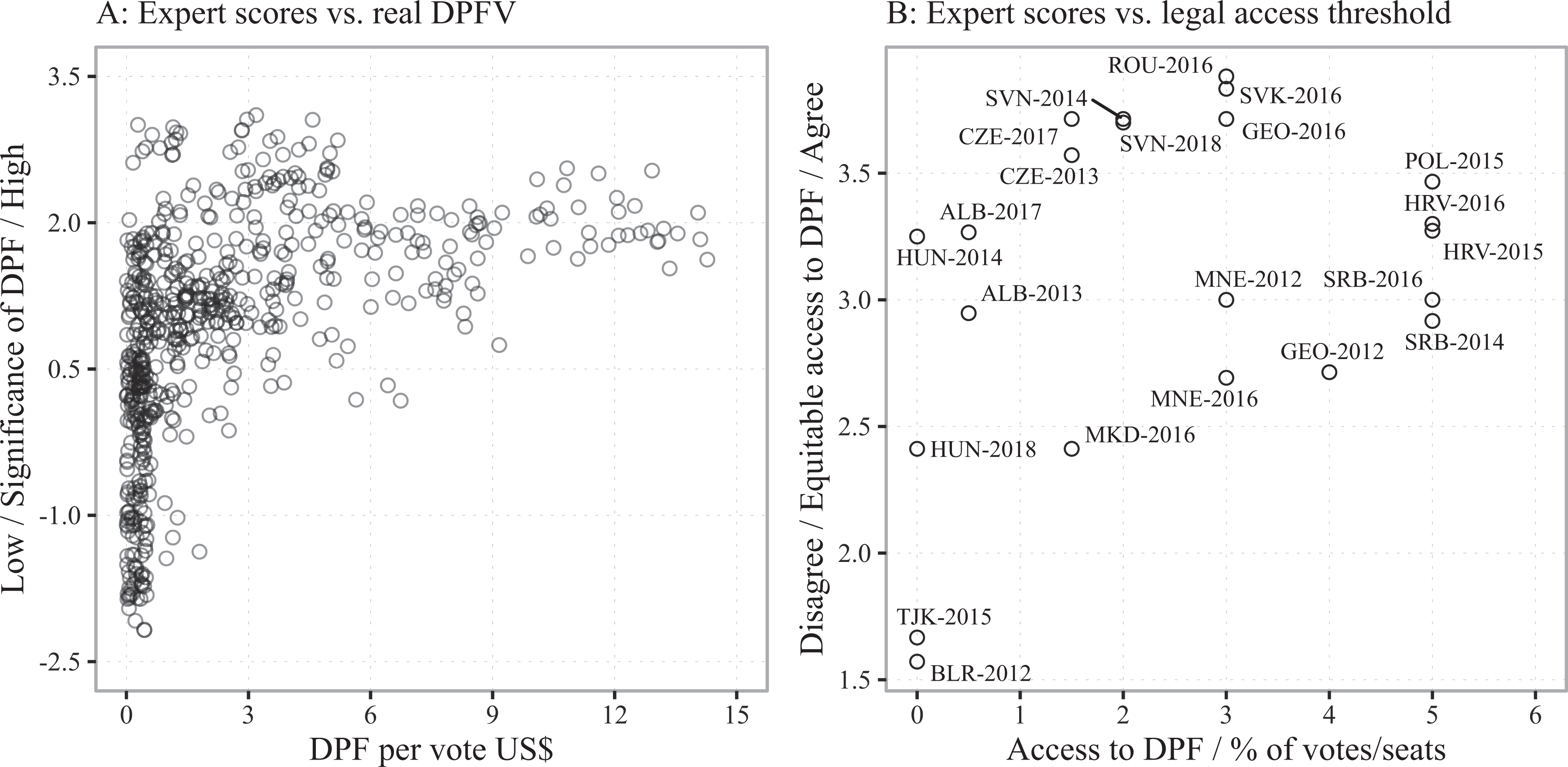
Relationship between the expert scores reflecting significance and access to DPF vs DPFV and the legal pay-out threshold. Note: Data in Panel A is jittered on both axes to minimize overlapping.
This evidence suggests that expert-based indexes are poor substitutes for the actual level of PDF (Panel A). Furthermore, the bias in evaluating the fairness in access requirements to electoral subventions, given the existence of quite objective legal requirements, is even more worrisome for the reliability of such measurements (Panel B), at least regarding party and campaign funding. Considering the inconsistency between the expert scores and the objective indicators presented here, their mechanical use in comparative research is of substantial concern. For instance, it would be intriguing to see whether Bichay’s (2020) findings regarding the beneficial impact of election subsidies on the electoral performance of radical-right parties would hold if alternative measures, such as the actual level of DPF or another regulation-based index, were employed instead of the expert-based index from the Varieties of Democracies used by Bichay.
Finally, I test the degree of state dependency against the actual level of DPF. Unlike previous measures, however, this is a proxy derived from hard data. Hence, it is of higher quality and better suited to comparative research. Despite these advantages, there are two potential issues regarding its validity and accuracy in capturing the variation in the actual level of funding relative to DPFRV. First, the proportion of DPF in the structure of party income might be endogenous to the DPFRV, that is, be dependent or determined by it. While this is not a problem, to be interchangeable with the DPFRV, there must be a very high correlation between the two measures. Second, the degree of state dependency might still conceal substantial differences in DPFRV even if the share of state subsidies in the structure of party income could be similar across different cases. To assess their interplay, though, one needs data on private and public funding. However, given the lack of reliable data on private party funding for the post-communist regimes, I rely on other studies, including both measures (Casas-Zamora, 2005: 49; Nassmacher, 2009: 143; van Biezen and Kopecký, 2017: 87, 90).
Accordingly, if the assumption that the level of DPF affects the state dependence rate is plausible, one would expect a strong positive relationship between DPFRV and the share of DPF in the structure of party income. Conversely, if similar state dependence rates are associated with different levels of DPFRV, this would undermine their interchangeability. The interplay between DPFRV and state dependence, presented in Figure 7, reveals a mixed picture. While there is a positive relationship between the DPFRV and the share of subsidies in the structure of party income, it is not strong enough to use them interchangeably. The limited potential for exchange is particularly noticeable in the left-hand panel, displaying the raw data with a correlation of only 0.4 and a model that explains little variance. Hence, this makes state dependence a troublesome replacement for the DPFRV. Even after a log transformation of DPFRV that substantially improves the strength of the relationship (r = 0.67), as shown in the right-hand panel, it is not sufficiently strong to make state dependence a valid substitute of DPFRV. Furthermore, the presence of similar cases on state dependence but different on DPFRV raises additional concerns for the unwarranted use of the former in comparative research on party finance.
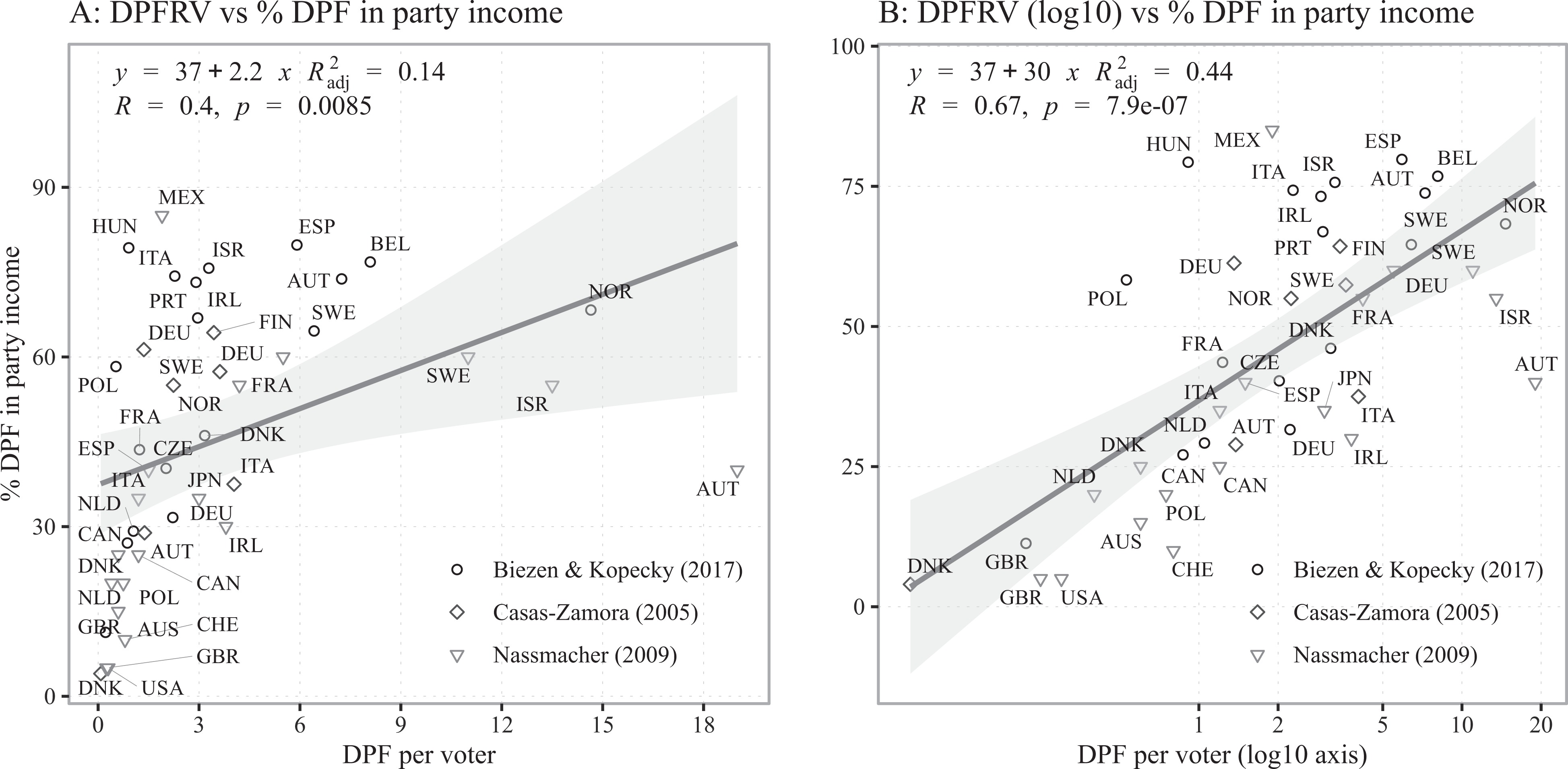
Relationship between the level of DPF per voter and the share of DPF in the structure of party income. Note: Temporal coverage: van Biezen and Kopecky (2017) – 2011–2013, Nassmacher (2009) – 2002, Casas-Zamora (2005) – 1975–1989. Currency expressing DPF per voter, van Biezen and Kopecky (2017) – Euro, Nassmacher (2009) – USD, Casas-Zamora (2005) – 1990 constant USD.
Conclusion
Excessive reliance on various proxy measures typified by single indicators such as absence vs the availability of DPF, composite indexes bundling together several regulatory dimensions of PFR, or expert evaluations represents a risky endeavour for comparative research on party finance. Besides the fact that such proxies only capture the regulatory scope, some are biased and inaccurate in reflecting the lay of the land regarding the level and access to DPF. More importantly, none of them accounts for the variation in the level of state support provided to parties.
This study presented an original dataset of the actual level of DPF for 27 post-communist regimes between 1990 and 2020 to address some of these limitations and shortcomings. It provides much more reliable and accurate measures of DPF relative to any existing alternatives that fail to account for the level of state assistance to political parties. Likewise, the panel structure of the dataset allows investigating the effects of DPF on the relevant political processes and phenomena over time, thus overcoming the limitations of cross-sectional data.
This dataset shows a very diverse landscape regarding the key features of the DPF mechanism. First, there is no clear pattern between the method whereby the level of DPF is determined and its increase over time. Irrespective of the method, the funding level was augmented whenever the dominant party/coalition considered it appropriate or could reach an agreement over the new arrangements. Second, post-communist polities greatly varied in terms of party activities funded from the public purse. While in some cases, political parties benefited from the budgetary support for their statutory and election activities, in other cases, the state limited its assistance only to one of them. Third, the data compellingly illustrate a tremendous cross-national and within-country variation concerning the pace and magnitude of change in the funding level.
Additionally, although the gap between the most and the least generous providers of DPF does not vanish over time, the deliberate party decisions to scale down the reliance on DPF in some cases suggest the presence of self-containing mechanisms, irrespective of the rationales behind them. Fourth, the variation in eligibility and allocation rules depicts, alike, contrasting developments. While in most cases, the status-quo represents the dominant pattern, the shift towards more restrictive or more permissive rules vis-à-vis the access and distribution criteria splits post-communist regimes into two almost equal groups.
Despite an increasing reliance on the state over time by political parties, data provides only partial support for the cartelization thesis since empirical evidence holds exclusively about the level of DPF. If one considers, however, the shifts in eligibility and distribution rules, the cartelization argument is not fully backed by evidence. Approximately half of those post-communist regimes that amended these conditions raised the access barriers and made the distribution of subsidies more concentrated. Another half, on the contrary, moved in the opposite direction by switching to a more inclusive and egalitarian mechanism in the allocation of subsidies, thus favouring new and small parties. These contrasting developments also show the limits of the international organizations (e.g., OSCE/ODIHR) capacity to push for the adoption of access and distribution rules to promote a level playing field and political pluralism. Such inconsistent drifts hint at the prevalence of domestic forces and intra-party system dynamics in shaping the parameters of the DPF mechanism.
The validation test of crossing the DPFV with alternative indicators has convincingly shown the drawbacks of the latter. While these shortcomings are more evident concerning dichotomous indicators and aggregate regulation-based indexes, the expert-based measures turned out to possess critical flaws alike. The bias is particularly striking with respect to the fairness of access requirements to state funding, given the severe mismatch between the expert scores and the legal pay-out threshold. As expected, the share of DPF in the structure of party income is the next best indicator, but it too might be skewed in either direction. Crucially, the failure of various proxies to account for the variation in DPF or other features of PFR is of paramount importance in terms of policy implications for the content and the direction of political finance reforms. Since many studies contain implicit or explicit policy recommendations, they might provide misleading insights considering the bias, imprecision, and the feeble connection of the proxies they rely upon with the reality on the ground.
This dataset can be deployed to answer two types of research questions contingent on the DPF status as a variable. If the DPF is tackled as an explanatory variable, it may be employed to assess the impact of DPF on variables usually associated with the dynamics of political competition and party-voters linkages such as party system institutionalization, permeability towards newcomers, electoral volatility, electoral turnout, membership rates, or confidence in political parties. Conversely, if DPF is treated as a dependent variable, it may be used to investigate the possible causes behind the variation in the level of DPF or access and distribution rules such as the level of economic development, regime type, electoral system design, patterns of party competition and political corruption, among others. Therefore, it might help researchers to cast a new light on the complex and sensitive relationship between state funding of political parties and a wide range of political processes and phenomena based on more accurate and reliable indicators.
Supplemental material
Supplemental Material, sj-pdf-1-ppq-10.1177_13540688211037302 - Direct public funding of political parties: Between proxy measures and hard data
Supplemental Material, sj-pdf-1-ppq-10.1177_13540688211037302 for Direct public funding of political parties: Between proxy measures and hard data by Sergiu Lipcean in Party Politics
Supplemental material
Supplemental Material, sj-r-2-ppq-10.1177_13540688211037302 - Direct public funding of political parties: Between proxy measures and hard data
Supplemental Material, sj-r-2-ppq-10.1177_13540688211037302 for Direct public funding of political parties: Between proxy measures and hard data by Sergiu Lipcean in Party Politics
Footnotes
Declaration of conflicting interests
The author declared no potential conflicts of interest with respect to the research, authorship, and/or publication of this article.
Funding
The author(s) disclosed receipt of the following financial support for the research, authorship, and/or publication of this article: This research has received funding from the European Union’s Horizon 2020 research and innovation programme under the Marie Sklodowska-Curie grant agreement No 895004. The financial support is gratefully acknowledged.

Supplemental material
Supplementary materials, including the dataset, codebook and replication file, are available online.
Notes
References
Supplementary Material
Please find the following supplemental material available below.
For Open Access articles published under a Creative Commons License, all supplemental material carries the same license as the article it is associated with.
For non-Open Access articles published, all supplemental material carries a non-exclusive license, and permission requests for re-use of supplemental material or any part of supplemental material shall be sent directly to the copyright owner as specified in the copyright notice associated with the article.
