



Abstract
Culture, as part of socialisation processes, has an important role to play in child development. Embedded in the everyday lived experience, culture promotes accepted values and behaviours that children adopt and express in later adulthood. These values become intrinsic and aid in the development of prosocial skills. However, the role of culture in the development of empathy in children is sparse, relying on experimental and survey-based studies rather than focusing on children’s own perspectives. This study provides a unique and rarely seen opportunity to explore culture through drawings with Yolŋu (Indigenous inhabitants of East Arnhem Land) children, from a very small, remote community near the coast of tropical north Australia. By observing children’s perspectives of their own culture, links to different types of empathy are made. Through the use of a two-step iterative abductive analytical process, thematic analysis of the drawings and insights provided by interview transcripts revealed themes of: Country; Identity; and Sharing. These themes revealed a new understanding of empathy, broadening our understanding of what empathy is and how it is demonstrated. This research highlights the important role culture has in the development of authentic empathy in children.
Introduction
Culture transmits values and behaviours, through imitation and teaching, that guide the development of interpersonal and social skills such as empathy (Boyd & Richerson, 1988; Mesurado et al., 2014; Zittoun & Gillespie, 2015). Through these socialisation processes, cultural values become intrinsic, influencing the development and expression of empathy. However, the role of culture on the development of empathy in children is sparse. Scientific definitions of empathy and methods for exploring empathy have limited our understanding of the intertwining nature of culture and empathy. Given this important influence of culture, it is imperative to investigate cultural elements that contribute to the development of empathy.
Definitions of empathy have varied over time (Davis, 2018; Markus & Kitayama, 2010), and also vary culturally (e.g. Chopik et al., 2017; Gladkova, 2010; Shimizu, 2001). Despite this, empathy is still investigated predicated upon dominantly western definitions of empathic components (cognitive and affective empathy) and behaviours that are defined by western social norms. There is a dearth of literature that interrogates and describes forms of empathy from a cultural or everyday viewpoint (Depow et al., 2021). By limiting our definitions of empathy in this way we narrow our field of view, constraining our understanding of different types of empathy and how culture may influence them.
Through exploration of Australian Indigenous Children’s perception of their own Yolgnu culture, cultural identity, and cultural environment, we attempt to unpack the empathy construct using this unique cultural lens. This leads to new understandings of empathy: Understandings that do not fit neatly into traditional psychological definitions. What is revealed is an ‘authentic’ type of empathy that is not constrained to affective nor cognitive domains, but reflects a deep and mutual connection with culture, with others, and with the land and waters (Country) upon which these children reside.
Empathy
Western viewpoints traditionally define empathy in terms of cognitive and affective processes that essentially help us to understand a situation from another’s points of view (de Vignemont & Singer, 2006; Riess, 2017). In turn, this informs what responses may or may not be appropriate (Hoffman, 2000; Lamm et al., 2007). Importantly, empathy acts as a social navigation tool to aid interpersonal and social interactions resulting in successful communication and relationships (Davis, 2018; Vaish et al., 2009; Watt, 2005). Children high in empathy are more helpful (Barnett & Thomspon, 1985; Eisenberg et al., 1991), donate more (Eisenberg et al., 1987), sympathise with others more (Eisenberg et al., 1991), and are better able to take the perspective of others (Barr, 2011). Empathy has roles to play in the development of identity (Zhao et al., 2013), the strengthening of peer support networks (Braza et al., 2009) and improving coping mechanisms (Taylor et al., 2013).
Empathy research with children often involves the ‘donation’ or ‘distribution’ paradigm where children are given a resource and asked to distribute this amongst themselves and others. Stewart and McBride-Chang (2000) found some differences in donation behaviour between western and Asian second-grade children, concluding that both developmental (cognitive) and cultural influences were responsible. Eisenberg et al. (2015) discusses the different types of empathy children from different cultures exhibit, although results are not consistent. Some of these variations may be due to the methodologies employed across different studies, as well as the operationalisation of the empathy construct, capturing different types of behaviours (Depow et al., 2021). Eisenberg et al. (2015) suggest that the focus should be on participant’s views of what empathy is, taking cultural context into account. Since cultural values have a direct impact on the prosocial attitudes and behaviours developed in children, it makes sense then to interrogate those cultural underpinnings to appreciate the different types of empathy that develop as a result. More research should involve the cultural contexts of participants to more fully understand these different types of empathy.
The culture/empathy interface
Where a society has a strong culture, the principles and foundations of that culture are visible and practiced every day. This means that children are then exposed to these cultural norms, socialising them to that culture’s expectations (Strayer & Roberts, 2004), responsibilities and roles (Mesurado et al., 2014), as well as promoting moral and prosocial behaviours (Zittoun & Gillespie, 2015). In this way, culture is integral to the social development of children.
Children are exposed to many different socialisation processes, with culture being just one. Our argument here is not that culture is the ‘only’ determinant in the development of empathy, rather that its importance has been previously underestimated, and opportunities to explore this in various remote and isolated locations have been scarce. Whilst empathy in children has been widely researched, often the social and cultural contexts of these children has not been considered. A study by Woolrych and colleagues (2024) into the links between Dene culture (Canadian Sahtu Lands) and empathy development revealed that children’s understandings of their roles and responsibilities, of themselves and others, was strongly linked to their culture. This study employed the paradigm of children drawing pictures depicting their interpretation of what it meant to be Dene (‘Aboriginal’). The study identified, from the children’s point of view, the most salient aspects of their culture, revealing that empathy-related constructs such as belonging and sharing were an integral part of this culture. Woolrych et al. (2024) dubbed the development of empathy through cultural influences as authentic empathy. For clarity, the term ‘authentic empathy’ captures the inherent influence of culture on empathy, acknowledging the unique ways in which culture and empathy are intertwined in children’s everyday lived experience. Thus this ‘authentic empathy’ is culturally bound and may vary between cultures. This empathy is ‘authentic’ in that it is derived from the specific teachings and practices of that culture, within a specific community. Its exploration is important in understanding, more fully, the important role culture may have in the development of empathy in children.
The current study
This research attempts to explore children’s most salient aspects of their own culture in daily life, and what types or examples of empathy may be manifest in these depictions. The methodology follows that of Blight and Eady (2015, Eady (2015), based on procedures by Alerby (2010), and Alerby and Bergmark (2012), that employ children’s drawings of their culture and life, in a culturally appropriate way. This abductive approach seeks to reveal what aspects of empathy may be unique to this particular culture (in this case, Yolgnu culture). This design allows for a move away from western scientific paradigms, shifting to a more ethnologically-based approach. The results will give us a deeper understanding of the culture/empathy nexus, demonstrating the important ways culture influences the development of empathy.
Context – the ramingining community
This study provides an invited, in-depth look into the already established cultural values of one of the oldest living cultures on earth, through the perspectives of their children. There are many lessons to be gained from delving into the everyday lived experience of culture for Australian Aboriginal children, highlighting what is, for them, the most important aspects of their cultural lives. Once these elements have been uncovered, psychological constructs, such as empathy, can be laid next to the emerging cultural framework to identify elements that align, and highlight how Australian Aboriginal culture can link and guide a new understanding of the development of empathy in children. Lessons learned from this study can be shared to guide children across Australia and beyond enhancing empathy development globally.
Ramingining (pronounced with a hard ‘g’) is an Indigenous community in north-east Arnhem Land, approximately 580 km from Darwin past the edge of the Kakadu national park. The area is accessible only via four-wheel drive (during the dry season), or by air. Driving includes a large river crossing through crocodile infested waters, over 250 km of dirt roads and multiple creek crossings. The wet season brings flooding, limiting access to air only. The flight in, on a small plane with 8 seats, reveals the red earth, trees, swamps, and mangroves. This is inhospitable country, exposed to harsh hot sun in the dry season and flooding rains with high humidity in the wet season. When you arrive, the town lies still and quiet. People collect in small family groups and each group has strong ties to and relationships with their culture and surroundings, which determines their relationships to one another. Women wear long colourful skirts, often wearing two skirts at once and men dress casually, barely anyone wearing shoes. Often feet are hard, calloused and tough, and they can weather any terrain. English is the second language in this area with many languages spoken across 10 main clan groups called Yolŋu Matha, meaning “Yolŋu tongue” or “people language”. Here, connection to Country and ‘dreaming’ have been interrupted due to colonialism, with communities striving to retain and reinvigorate their cultural practices and heritage, which is reflected in the arts centre and strong culture of storytelling.
Approximately 900 people live in this community with a median age of 26 years of age (as at last census; Australian Bureau of Statistics, 2016). At this time, children aged 0–14 years make up 28.6% of the population and 86.6% are registered as Australian Aboriginal. Each home is individually structured; however, each family has a number of houses that belong to their clans. Some clans have over 150 family members. Different clans are associated with different businesses or structures within the community, encompassing both Aboriginal and Non-Aboriginal entities. Both Aboriginal and non-Aboriginal people are employed by these including nurses, police and teachers. This means that the children here are exposed to some outside, western influences that can include government and non-government agencies. The community also has internet and cable access, meaning children are familiar with modern television shows and movies, and have frequent contact with the ‘outside’ world. The community has a strong arts community, and has been involved in the filming of the SBS documentary “Ten Canoes” (de Heer & Djigirr, 2006), with the lead actor a Yolŋu man. The Yolŋu people are very proud of their identity, and their culture is promoted globally through events such as the Garma Festival, and popular musical bands such as King Stingray and Baker Boy.
“Country”: The cultural meaning
In Yolŋu culture, Country (capitalised as opposed to “country”) is considered an entity unto itself. Country, in this context, includes all the lands and waters, plants, animals, and people that inhabit it. Country is provider, teacher, holder of histories and is the foundation of cultural concepts, values and beliefs. This includes taking care of Country, as Country takes care of them (see Taylor-Bragge et al., 2021). Due to this the Yolŋu peoples are very connected to the natural world in a way that non-Indigenous people are not. The Yolŋu always notice what is going on, they see all the animals and all the things that are happening around them. They know how to hunt for food, how to track, what foods are in season, and where to find them (Tamisari, 2022). That is their world. From birth, families, community and Elders teach children about this unique culture. Yolŋu people showed us how they placed significant emphasis on maintaining their cultural practices within social, ceremonial, and community settings. Local governance, community services, and education were largely conducted in Yolŋu languages, with leadership provided by Yolŋu kin. They embraced a “two-ways, both-ways” philosophy, advocating for a balance between engaging with mainstream Australian society and preserving their cultural heritage. This philosophy shaped bilingual and bicultural education models in Yolŋu community schools, ensuring children learned within both Yolŋu and western frameworks (Coulehan & Gaykamaŋu, 2013).
A local female Elder taught the visitors that the town was very communal in nature, unlike the white man’s culture that is very individualistic. She also shared that the children have learned about their culture from when they were babies. In her teaching she explained that the local people are frequently dancing, going to the mangroves, fishing, and attending ceremonies. These are things they are taught from an early age, learning deeper layers of culture and cultural practices as they get older, through ceremony, when they are ready.
Ethical considerations
Ethics approval was given by University of Wollongong (UOW; 2014/075) and was funded by the UOW Faculty Seed Grant program (2018). The research team was also guided by the AIATSIS Code of Ethics for Aboriginal and Torres Strait Islander Research Australian Institute of Aboriginal and Torres Strait Islander Studies (2020). This research ethics framework is structured around four principles: Indigenous self-determination; Indigenous leadership; impact and value; and sustainability and accountability. The extensive experience of the researcher for this project, working and living with remote Indigenous communities in Canada and Australia, helped ensure each of these four principles were followed. Each child participant had written consent from parents/caregivers, and researchers were given permission by the Ramingining community to conduct this research on Country. Children were also asked if they wished to participate verbally, told they did not have to participate, and that they could stop at any time.
Indigenous self-determination
The researcher in this study was invited by a woman who had been adopted into the Yolŋu in 1998. The woman had been volunteering at Council for Aboriginal Alcohol Program Services [CAAPS] (n.d), an important community education collective. This person, although now moved away, has remained close with her adopted mother and also with the Elders within this community. When they met the researcher, who was building this research on community strength and knowledge, she called her adopted mother, the female Elder of her family to explain the research and ask permission for the researcher to visit Ramingining.
As discussed in the Methods section, the methodology employed in this research actively transfers control to the children participants, ensuring the children only participate as much as they are comfortable with doing.
Indigenous leadership
The female Elder had a relationship with the senior judicial traditional owner and contacted her to explain the research project and ask permission for this to take place on Country (Yolŋu lands). The female Elder who invited the visitors, reminded the traditional owner of her adopted daughter and believed this project would make a positive story and have a positive impact. The female Elder received permission and when the researcher and adopted daughter arrived in the community, they thanked the traditional owner for allowing them to be on Country. In this way, cultural protocols were followed giving the leaders within the Indigenous community control on whether this research took place or not, and who conducted this research on Country. Once settled in the community, and after visiting the adopted mother and sharing a meal, we explained how we would like to speak with local children aged 7–12 years to ask them what being Yolŋu means to them through drawing pictures and having a guided discussion. The female Elder enlisted two young women who she felt had social confidence and interpreting skills and asked them if they would be willing to help with the research. Since there are not often visitors to this isolated community, the children can be quite shy towards strangers. Therefore, together, the researcher and the two young women walked through the streets of the village and explained to the parents and children what we were doing and the reason for the visit. The women took the researcher to any house with a child of that age, translated for the researcher, and made the interactions possible. There was full transparency and full consent at every stage.
Impact and value
This project offers a strengths-based approach to Australian Indigenous culture. This reflects a recent move in the literature away from deficit-based studies. In this way, this project highlights the unique values of Yolŋu culture and its important contribution to the development of social skills such as empathy. The approach taken for this research was discussed with the families and community. Being of Canadian Indigenous heritage herself, Dr Eady shared how valuable these opportunities and relationships with community were to us, and how this sharing of Yolŋu culture and perspectives would be valued by others around the world. The locals were told the purpose of this work was to tell the story that highlighted the strengths of Indigenous culture and their children, who lived in remote and isolated communities such as Ramingining. The knowledge generously shared with us through this process would help other people, Indigenous and non-Indigenous, learn from the Yolŋu people the important role culture can play in the development of empathy in children.
We made it clear to the community that, rather than just gather information about Yolŋu people, we wanted to learn from them by spending time, listening and gaining a better understanding of their cultural way of living. We explained that we wanted to learn from the children about how they have come to learn to live in harmony with the world.
Sustainability and accountability
The adopted daughter of the female Elder remains close to her extended family and continues to call and visit regularly. The researcher was welcomed by the adopted mother as her yapa (Yolŋu word for sister) and continued to connect with her until her recent passing. The researcher and adopted daughter remain tied to the community and visit regularly. Children’s drawings were sent back to the community and community input was sought for the analysis and themes derived from the pictures and transcripts, as well as on the final drafts of this article.
Method
Participants
The two translators that were enlisted by the female Elder walked with the researcher and identified homes where children aged 7–12 years resided. At each of the homes, the researcher explained what they were doing and the translator translated for the family members. The carers and parents were told the details of the study, and were asked if they had any questions. Eleven children in the remote Australian Aboriginal community of Ramingining, ranging in age from 7 to 12 years, were invited to participate.
Procedure
The children followed the researcher and interpreters to a local playground that had concrete slabs on the ground. The group sat with the researcher and the translators to do the drawings, the materials of which were provided by the researcher. The methodology employed uses children’s drawings as empirical evidence (Alerby & Bergmark, 2012; Blight & Eady, 2015). This process was deemed appropriate to and within the skill set of children of this age group (Eady, 2015), and involved four steps:
Each child who participated drew one picture. One child, in particular, asked for a new sheet of paper to “start over” because they were not happy with what they were drawing. These drawings took place over 2 hours, with two groups of children over a week-long period.
It should be noted that the question “What comes to mind when I say the word Yolŋu?” (Indigenous), is deliberately separate from our research question concerning cultural elements of empathy. This was done for several methodological reasons. For children to be active and meaningful collaborators in research, language, concepts and tasks should be situated well within the child’s knowledge and capabilities (De Felice et al., 2023). In this way, the children’s perspectives of their culture, in an every-day setting, was captured. The children drew their pictures freely and naturally, relying on their knowledge of their own everyday-lived reality. The pictures produced, reflect this.
Our aim was to identify the important cultural elements, as identified by the children themselves that may be related to empathy. Therefore, it was important that the instructions and the questions for the children were clear and simple. Asking children what they thought were the cultural elements that enabled the development of empathy would have been well beyond their comprehension skill set. This is a common problem in qualitative research where ‘adult’ research questions are posed to children who may misinterpret or not understand the concept nor the question (Field et al., 2004). We also wished to limit the potential contamination of white western belief systems and values on the data (Mazzocchi, 2006). The authors acknowledge that concepts of ‘Aboriginality’ or ‘Indigeneity’ may only be relevant when viewed from a differing cultural lens (i.e. whitefella; Trigger & Dalley, 2010). However, our methodology was specified “Yolŋu” in the instructions to the children. Our aim in using this procedure was to collect data that was as authentic as possible for the participants, by minimising white-western cultural influences (Eady & Rifenburg, 2023). Following this protocol, we not only transfer control to the children themselves, but also help ensure that responses are purely from the child’s perspective and understanding, resulting in a genuine and authentic dataset. In other words, in following this methodology we were able to capture the lived experiences of these children.
Analysis
Analysis of the drawings was conducted by two researchers across two phases, in an abductive post-positivist approach (Ryan, 2006). The first phase of analysis was inductive. Complete coding was used, with codes and themes derived from the data at the semantic level (Braun & Clarke, 2006). The goal was to first identify the explicit elements within children’s drawings without referring to the empathy construct. Pictures and transcripts were coded separately. Due to the shy nature of the children, the results of the transcript analysis will not be presented in this paper, as the children spoke little, resulting in a sparse, but still valuable dataset. As a result we used these transcripts to help identify and clarify any elements within the drawings that were unclear to the coders, and have used quotes from the children’s interviews to demonstrate additional evidence of our themes.
Thematic analysis was used to identify common themes and elements within the pictures and transcripts. This approach was chosen due to its suitability in managing different types of qualitative data (Braun & Clarke, 2006; Driessnack, 2006). From the codebook developed two researchers conducted analyses independently. Neither researcher involved in the analysis of the data participated in the collection of data. One researcher had some learning in Australian Indigenous Culture and researched empathy. The other coder did not have these research backgrounds, leaving them more naïve to these concepts. This helped improve the rigour of the coding. Codes were compared and discussed to identify commonalities and differences, with themes generated from these findings. Meetings with the researcher who collected the data and community were also conducted to give better cultural context and understanding to the elements depicted within the drawings and increase coders’ cultural understanding, to help further guard against western scientific lensing.
Phase two of the data analysis was deductive with researcher derived codes interpreted for latent meanings within the drawings and initial codes that related to the empathy construct. Good alignment was found between empathy-related themes and cultural themes; thus the original cultural themes were not changed, rather these definitions were expanded to include empathic elements, adding depth to each theme (see Figure 1). Initial themes.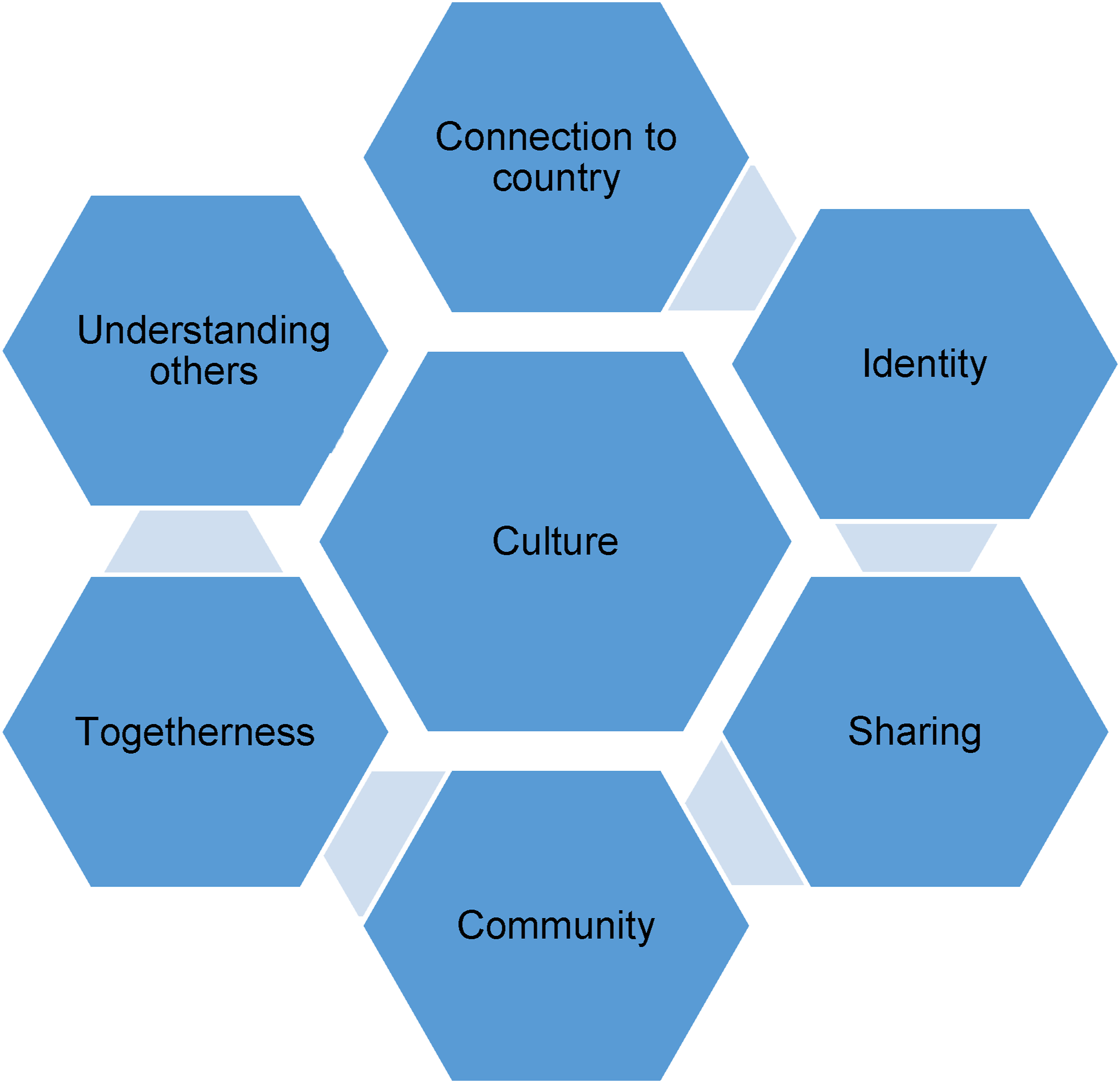
Results and discussion
Initial analysis of pictures across two researchers revealed 6 themes (see Figure 1), nested around the major theme of culture.
Each theme was explored further and fully described, highlighting examples from the data. Collaborative analysis collapsed these into three overarching themes (see Figure 2). Collapsed themes.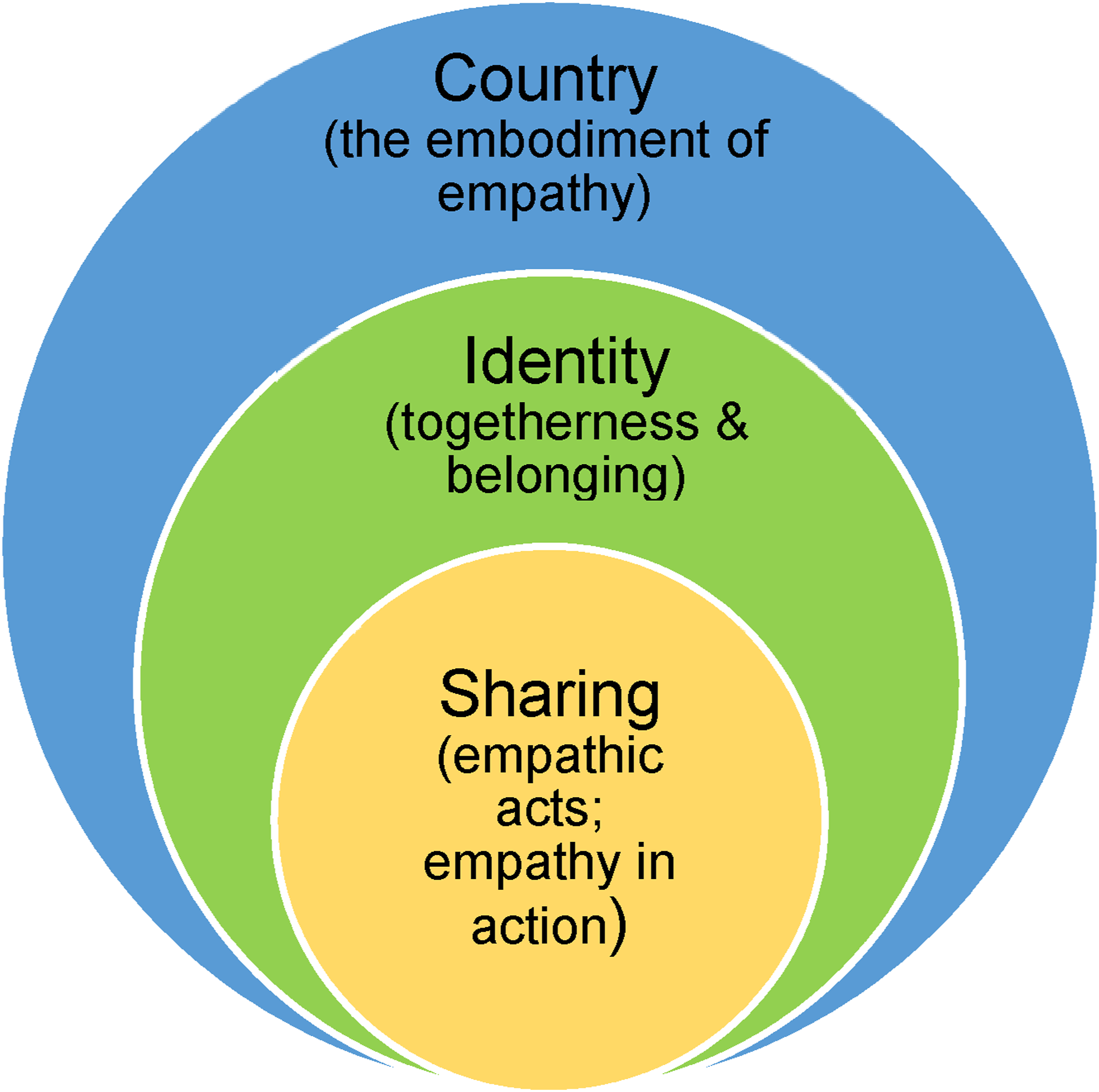
The overarching themes of Country, Identity, and Sharing are discussed below, accompanied by one drawing providing an example of each.
Readers will note that the word ‘country’ is sometimes capitalised. This is deliberate and is used out of respect for Yolŋu culture and peoples, as well as indicating that we are referring to Country as the cultural entity, as opposed to the inanimate meanings of the common use of the word. The term ‘on’ Country refers to the culturally-based notion of doing things with, being with, and learning from Country. This is not simply camping or engaging in activities on land or in water, rather it is a reciprocal act that acknowledges Country as a separate entity, observing and understanding the ebbs and flows of the seasons. When we refer to things ‘on’ Country, in this paper, we are referencing this as part of this community’s every-day cultural practice.
Country: The embodiment of empathy
In all but one of the pictures, nature was portrayed. Trees, mangroves, crabs, birds, and buffalo were dominant. Many had only natural elements, and where man-made structures and modern elements were present, nature was still the focus. Trees were centred in the pictures, whilst grass and water took up the majority of space in others and were vividly coloured. These natural elements were detailed, with birds nested in trees, and in some cases only the trees coloured in. For these children, nature, and therefore Country, was a dominant and important part of their lives, conveying a sense of respect and appreciation for nature (Figure 3). “At the crossing, we go together and these are the trees”. (Ram 5).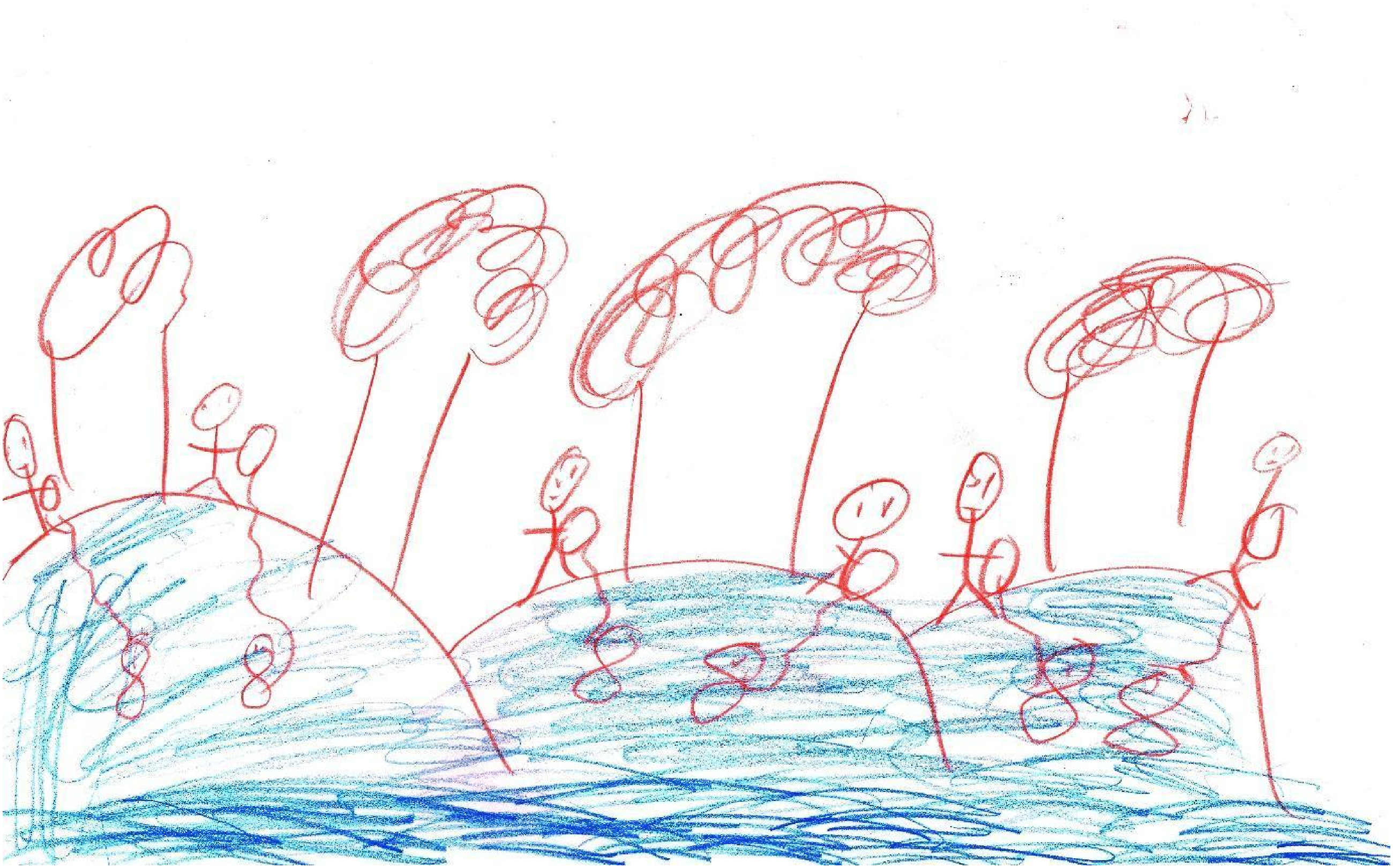
The pictures showed Country intertwined with daily activities and cultural practices. Country facilitates these children’s connection with their culture – in fact, the two cannot easily be separated. Country is part of who they are as a people and as a person, and is the focal point of life (McKnight, 2015). During this research, adults would often communicate to the children in their own language. The importance of the continuation of culture is not lost on these children: “It is important because we need time to teach things to young people” (Ram 4). The role of traditional activities such as ‘men’s business’, hunting, and games held ‘on’ Country, are important ways that culture is taught to the younger generation.
Country is not seen as only a resource of entertainment and essential items such as food, but also a teacher (Spillman et al., 2023). The participants of our study showed an understanding of this, and the importance of being ‘on’ Country where one learns. A sentiment reinforced by the female Elder who helped us with this research. For example, Ram 4 stated that Country was a place for people to: “….they sleep there and learn…off the land.” (Ram 4). Spillman et al. (2023) advocates that their curriculum The Country as Teacher, a formative exploration of how Indigenous pedagogies centred around Country, should be taken-up as part of mainstream schooling for all Australian students, highlighting the important role Country plays in Australian Indigenous culture.
Connection to Country encompassed several aspects such as Country as a place of reference; Country as a resource; Country as teacher; Country providing a sense of belonging; and culture embedded in Country. This multi-layered connection to and reverence for ‘Country’ is strongly evident in the data. The care-based relationship between the people and Country is an expression of empathy, which, as a process, is not confined to human-on-human interaction, but extends to our natural world (Lithoxoidou et al., 2017). As humans we can form relationships with nature based on respect and care (Salmón, 2000). Tam (2014) found that people who ascribed human characteristics to natural elements cared for and empathised more closely with them. For Australian Aboriginal culture, Country (land, waters, flora, fauna) have an independent consciousness. This allows for a close and personal relationship with nature, where care for nature is paramount (Cameron & San-Roque, 2013). Research suggests that empathy is a key component for this relationship with nature (Brown et al., 2019).
Country teaches culture, which in turn teaches children their roles within a community and the behaviours that are expected of them. In the development of social values, norms, and actions, culture has an important role to play (Eisenberg et al., 2015; Mesurado et al., 2014). As children develop, so too does their understanding of their culture (Eisenberg et al., 2015), and from this learning, cultural traditions, values, and norms are upheld. Culture, then, can promote the development of moral and prosocial behaviours (Hoffman, 2000; Zittoun & Gillespie, 2015), and therefore empathy.
Identity: Through togetherness and belonging
Children frequently drew people doing activities together, including their friends and family members. Everyone has their role to play within the community. In this picture, people can be seen sitting together ‘on’ Country, demonstrating one of the ways in which cultural traditions and values are shared. These children proudly embrace their heritage as Yolŋu (Indigenous) people and do so with pride. One picture (Ram 1) shows their own hand coloured as a rainbow with a cloud in the background, representative of traditional rock-art seen in the region (Figure 4). “it is important to be together, to share and tell stories, and be together, like this (pointing to everyone sitting around) they are family” (Ram 4).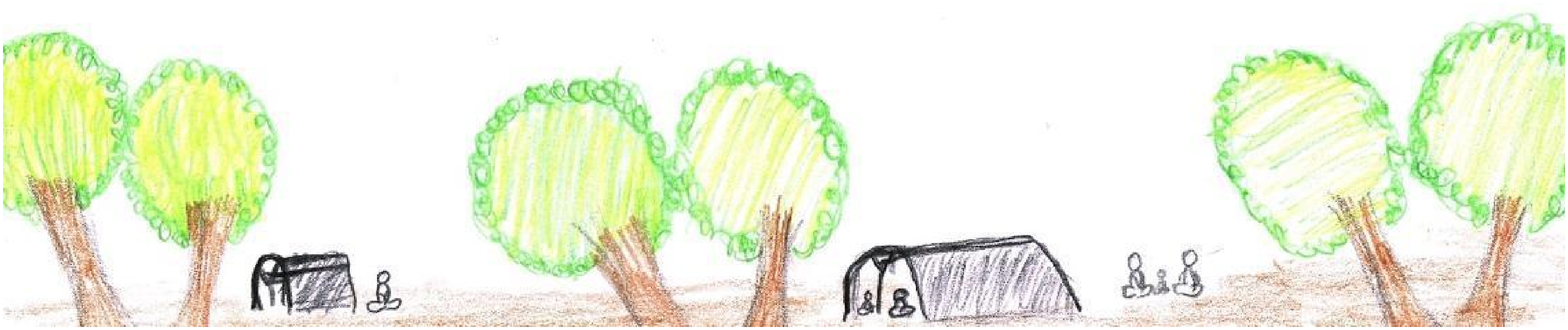
There is a strong sense of belonging and togetherness in these pictures. Many of these activities were based in culture and the children drew and spoke to these with a sense of pride. In one picture a group of people with torches can be seen with a buffalo that came into town. One member of the group, according to the transcript, is shouting a warning to everyone to watch out for it: “he is saying buffalo!, to warn the people” (Ram 3). In this, and many other ways, community members look out for and protect each other.
As well as embracing their own culture, the pictures demonstrated an almost seamless integration of western cultural aspects. Buildings were nestled amongst trees and animals (Country), modern vehicles were depicted as part of hunting expeditions, some used modern torches (flashlights), whilst others used traditional slingshots. The children demonstrated a strong understanding of themselves and how they may be viewed by others. “There is only one shop on one corner but we are important!” (Ram 6). They understood that they are different from others in terms of their culture and where they live. There is no judgement in this, rather an acceptance of their world just the way it is.
A sense of identity is important in the development of empathy, particularly regarding self/other concepts. As Berry (1994) points out, identity is not only knowledge about oneself, but also knowledge of oneself in relation to others. In empathy this distinction is important in identifying that the needs of others are not necessarily the same as your own, and that these may change depending on circumstance (Lamm et al., 2007). The children demonstrated this awareness through their pictures. For instance, in several pictures of a Water Buffalo that came into town. In one picture, a child is shouting a warning to others (Ram 3). In another, a person is holding a sling-shot to ward off the Buffalo (Ram 6), whilst in another, a car is seen driving toward the Buffalo to encourage it away from the town (Ram 10). This shows an understanding of the danger the Buffalo posed to others, and the desire to mitigate this risk. This could be considered a type of perspective-taking, which is central to the empathy construct (Davis, 2018; de Vignemont & Singer, 2006), understanding how events can impact others. Although the authors acknowledge that no concrete instances of perspective-taking, as defined in western constructs, were present in the pictures, the care shown for others in these pictures demonstrate an understanding of potential risks to others. Perspective-taking and self/other knowledge (Taylor et al., 2013), includes understanding the impact people have on Country, and Country on them, which in turn inform the development of helping actions.
Sharing: An empathic act. Doing things together as a form of empathy
In every picture containing people, no-one was alone. Whether hunting, playing or participating in cultural activities, people and families were portrayed doing these together. Togetherness was a repeated theme in pictures and interview transcripts, lending a strong sense of belonging. “I: if you get the bird, would you eat it? P: it is only for fun and I do it with my friends I: do you do a lot of things with your friends P: I do EVERYTHING with my friends” (Ram 7).
Doing things together can be seen as a type of sharing: sharing space, time, resources, and companionship. Sharing enables the teaching of cultural practices and skills: “ P: and look at this one, hunting for buffalo I: and when you go hunting are you all hunting together? P: yes we all go together” (Ram 10).
One picture shows a group of people sitting outside tents under trees. In the transcript the child said that this was showing “men’s business”, and whilst it would be culturally inappropriate for us (as female researchers) to explain this further, it demonstrates that culture is shared and taught amongst the community to their children (Figure 5). “me two of my brothers and my mom and my dad” (Ram 10).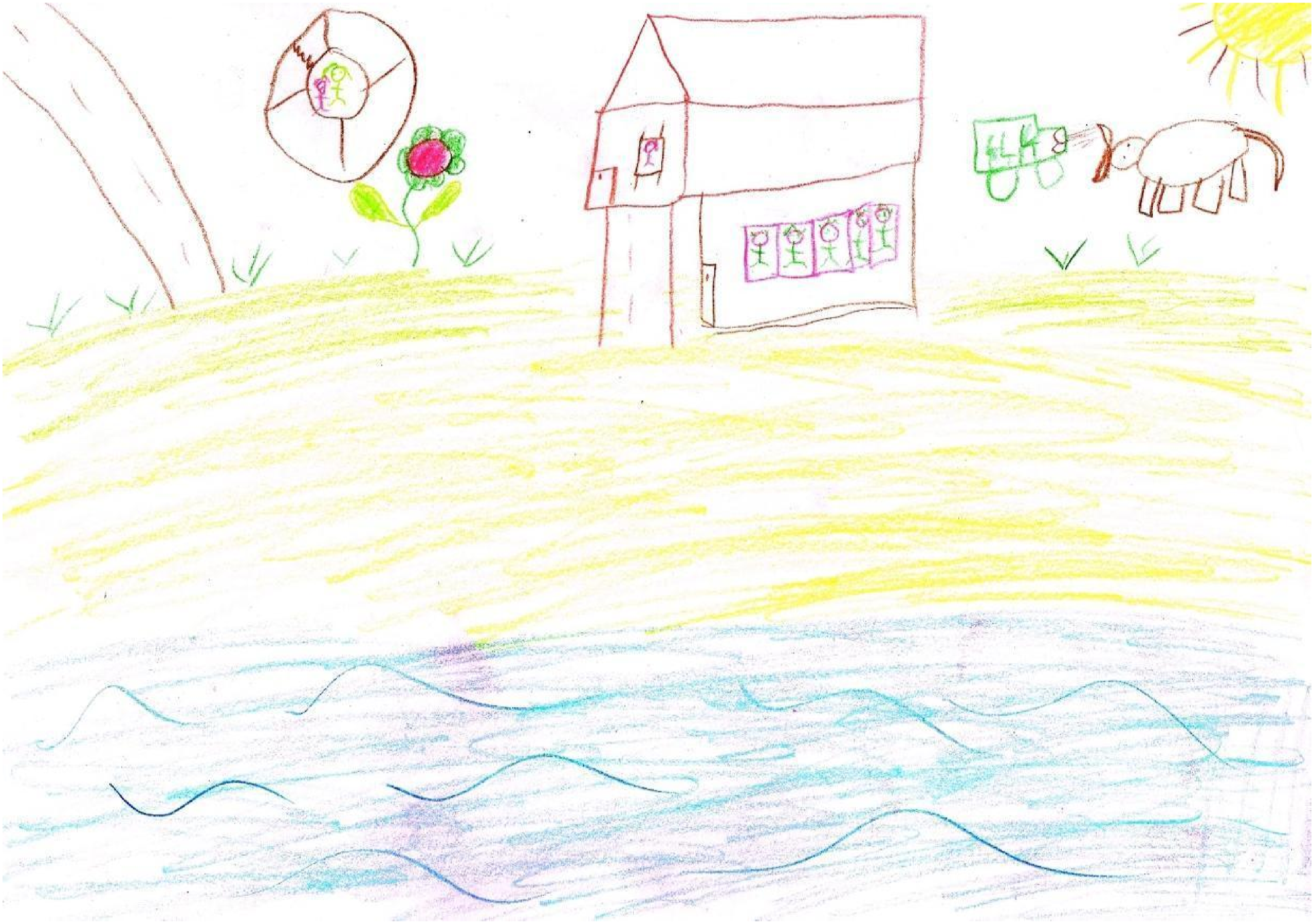
Aboriginal culture is centred on sharing with others who may be in need, strengthening the whole community (Dew et al., 2020). The children also shared their pictures and their stories of them with the researcher. The act of sharing can encompass an acknowledgement of shared understandings, values, authenticity, connection, and culture (Hatcher, 2012). This concept of sharing is not just about sharing resources and time with others, it is also about how the land (Country) shares its resources and knowledge with those living on it (Cameron & San-Roque, 2013). Sharing of knowledge, through Dreaming is a central aspect to the Aboriginal culture (Lowe et al., 2020).
Sharing is a prosocial behaviour, and demonstrates empathy in practice (Davis, 2018). Sharing behaviours as evidence of empathy have been demonstrated in the research (Eisenberg, 2006; Ongley & Malti, 2014) with findings indicating children higher in empathy share more (Guo & Wu, 2021). In western literature, sharing is often defined as giving, donating or volunteering, however, in this study we see sharing as a broader set of behaviours that includes space, time, and culture. It is not confined to only material resources. Sharing is also an act that acknowledges the needs of another, be it another person, or the land. For the children of Ramingining, sharing is an intrinsic part of their everyday life and is central to their culture.
Discussion
The aim of this study was to investigate which elements of the children’s culture was most important to them, and how these cultural elements may be related to empathy. The three overarching themes of Country: the embodiment of empathy; Identity: the importance of togetherness and belonging; and Sharing: doing things together as a form of empathy, are interconnected. Each is a demonstration of a type of Authentic Empathy born of culture and kinship: a part of these children’s everyday lived experience. Figure 1 (above) shows how each theme is embedded within the next, although the authors are not suggesting this is a hierarchical arrangement. Rather we suggest that each of these themes is itself an important component in the formation and development of authentic empathy in children.
The pictures produced by the children for this study offered a rich dataset that provided valuable insights about these children’s every-day lives, and the importance of Country and culture. In each of the major themes, links to empathy can be made. When asked what Yolŋu looked like to them, overwhelmingly the response positioned Country centre-stage. Elements of the natural environment were drawn in great detail and with vibrant colours. The people (and children) were depicted engaging in activities ‘on’ Country, ‘in’ Country, and ‘with’ Country. This strong connection to Country is evident and enhanced through daily cultural practices and teachings. This connection is reciprocal, and care for Country is a foundational cultural practice that is taught to children from a young age. This results in an empathetic relationship to the land, waters, animals, plants and people that reside there.
Whilst ‘empathy’ in the scientific definition cannot be seen explicitly in the drawings, the empathy shown to others and to Country is implicit via the importance the children placed on being ‘on’ Country and learning from Country. In Australian Aboriginal culture Country is not passive nor considered a discrete independent element of life. It is a complex weave of interactions that embody the roles of teacher, resource, a preserver of history, a guardian of culture, and importantly, a foundation for identity. As a teacher, Country imparts lessons on sustainability, interactions, kinship and relationships (see Salmón, 2000), as well as empathy and reciprocity. Country provides and sustains the peoples living upon it, and the people, in return, respect and sustain Country (Nicholls, 2014). This care for another entity is a demonstration of empathy (Brown et al., 2019; Lithoxoidou et al., 2017). Understanding and knowing the needs of others and being considerate of those needs is empathy in action (Schwenck et al., 2014), and for Australian Indigenous people, Country demonstrates, every day, its empathy in the way it provides, protects, teaches, and nurtures those living on it.
The children exhibited a strong sense of belonging and identity in their drawings. People were always depicted doing things together, and the importance of their identity as Yolŋu is frequently reinforced through the drawings and transcripts. This is despite the exposure these children have to western cultural elements. Through cultural practices and knowledge, children develop knowledge about themselves and others, and their relationships with all (Lowe et al., 2020). The juxtaposition of western modern with more Yolŋu traditional elements in the drawings demonstrate the children’s knowledge of their identity as Yolŋu peoples, their knowledge of others, how they are the same and different, and their acceptance of this. The prominence of culture and Country being visible and lived every day contributes to the children’s strong sense of identity. This is strengthened through feelings of togetherness and belonging, which are key foundations of empathy (Baumeister & Robson, 2021). Only when we can identify others’ needs as separate to our own, can we demonstrate empathy (Lamm et al., 2007).
The embodiment of this identity, founded on Country, and in culture, gives rise to a range of behaviours that demonstrate associated values. These include empathy-based behaviours such as sharing (Eisenberg, 2006; Taylor et al., 2013). Sharing does not need to be reduced to the simple exchange of material things, it can be the giving of time, of company, or effort. In these children’s pictures, sharing was demonstrated frequently through people doing things together: sharing of space, time, resources, and activities, both with others and ‘on’ (or with) Country.
The act of sharing may also be the result of other socio-cognitive mechanisms (such as modelling; see Zhou et al., 2024), although this particular research is unable to definitively identify these elements. However, we argue, that since the research question asked the children what Yolŋu meant for them, the evidence of sharing present in these pictures points to the important influence culture may have on this behaviour. Being ‘on’ Country means sharing Country, and all that it offers, and always in the presence of others, highlighting the importance of constructs such as togetherness and belonging. The children shared their time, company, experiences, and spaces with each other unstintingly. There were several instances where children spoke of the importance of never being alone, of doing things together, and of sharing things such as food, along with the importance of sharing and learning of their culture. These acts of sharing are empathy in practice.
The dataset points to the importance of culture and Country for these children. This expression of ‘authentic empathy’ (i.e. empathy resulting from culture), aligns with previous findings by Woolrych et al. (2024) regarding Indigenous Canadian children. There too, connection, identity and sharing were strong themes that seemed to be the result of their unique cultural practices and teachings. Much of the empathy research with children involves the use of stimuli, measuring responses, observational studies (see Eisenberg et al., 2015), and helping/donating paradigms (Stewart & McBride-Chang, 2000). However, previous research does not contextualise the development of empathy, ignoring the role that socialisation factors, such as culture, have to play. Our study demonstrates that culture is the foundation upon which children learn and enact empathic behaviours. What has been revealed in these pictures is empathy as connection, belonging/identity and sharing. It goes beyond the restrictive definitions of ‘cognitive’ or ‘affective’ empathy, showing what empathy looks like in everyday practice, shaped by cultural knowledge and practices. Future research and empathy-based programs should consider children’s culture and contextualise programs to be rich in culture. Empathy-related cultural elements can provide the tools for empathy development in children across Australia and around the world.
Limitations
The sample size for this study was small, although that is not considered a major limitation for qualitative studies (Wolff et al., 2019). Ramingining itself is a small community, and only children who wanted to participate did, lowering the sample size. During the drawing exercise and subsequent interviews with the children, an Aboriginal interpreter was present, as children often spoke in their own language. This may have resulted in some changes in wording during translation impacting transcription, although these few instances did not undermine the data.
Since the children were from a small community, they were not used to strangers. The researcher who travelled to the community was unknown to the children, resulting in shyness in the interviews. This had two impacts. Firstly, the researcher, in order to garner a rich dataset, did, at times, engage in guiding questions in the children’s interviews. This type of challenge is not unique to this study, and care must be taken when interacting with children for research purposes. Secondly, the results meant less transcript data was available for analysis. The transcripts, therefore, were not analysed, but were still valuable, providing clarity around pictorial elements and reinforcing the thematic evidence from the drawings. Cultural considerations also precluded some information. For example, when one participant began describing their drawing of men’s business the female researcher stopped the child from expanding further, out of respect for cultural protocols. These cultural restrictions are not unusual; however, it must be acknowledged that some potential data may be missing due to researchers respecting these sacred subjects.
One major limitation of this study was the absence of an Australian Aboriginal researcher as part of the project team. We acknowledge that our interpretation of the children’s drawings may not have been wholly objective nor free from our own cultural biases. To help counter the dominance of the ‘western’ voice on our analysis and interpretation, we solicited feedback from an Australian Aboriginal academic, as well as one of the members of the Ramingining community. Their feedback indicated that our representation and interpretation of Australian Aboriginal cultural elements was true to that culture with no obvious bias, however we acknowledge this bias may have still been present.
Finally, there are many potential social influences that may impact the development of empathy in children. This paper does not argue against those elements, but rather highlights the importance of considering cultural contexts, and how this may influence how empathy is manifest and what types of empathy is demonstrated. Also, we acknowledge that the children may have focused on natural elements simply because of their environment. However, the children prioritised natural elements in their drawings over other elements such as houses, cars, tvs, etc. The similarities in findings in Woolrych et al. (2024) suggest that these elements may be unique to certain cultures. More research is needed to investigate these differences in children, according to their culture. This would highlight the strengths of different Indigenous cultures around the world and provide us with valuable insights and lessons about the development of children in western contexts.
Conclusion
This study sought to explore the empathy-related elements present in Australian Aboriginal culture by viewing culture through the lens of children’s own perspectives. Culture has an important role to play in the social development of children, including empathy. Our analysis revealed strong themes of Country, Identity, and Sharing, all of which were linked to the empathy construct (de Vignemont & Singer, 2006; Hoffman, 2000; Lamm et al., 2007), forming the building blocks for empathy development. The children’s pictures demonstrated multiple examples of Authentic Empathy: empathy born of culture.
Understanding which cultural elements most strongly align with the empathy construct not only gives us new insights into empathy, but also gives us an in-depth appreciation for Aboriginal culture and its strengths. There are lessons here about the value of culture, of having a strong connection to Country (and culture), a strong sense of identity, and different types of sharing. We should heed these lessons and find ways to embed these elements in all societies across Australia and beyond. There is strength in Indigenous knowledge and ways of doing that can increase our own knowledge of Australian Aboriginal culture, which we should revere and imbue as qualities that are important for the development of prosocial human beings.
Footnotes
Acknowledgements
This research was funded by a University of Wollongong Faculty Seed Grant (2018)The authors would like to extend gratitude to the Ramingining community for their generosity, invaluable support, guidance and most importantly sharing their community strength and knowledge with us. We also acknowledge those people who have helped us craft this paper with sensitivity and respect to Australian Aboriginal culture.
Declaration of conflicting interests
The author(s) declared no potential conflicts of interest with respect to the research, authorship, and/or publication of this article.
Funding
This research was funded by a University of Wollongong Faculty Seed Grant (2018).
