




Abstract
In Global North’s psychology, some existential experiences such as the loss of beloved persons are understood as purely individual problems. In a society of functioning individuals, the person is responsible for her own condition and for consuming the healthcare services provided to overcome the “problem” as soon as possible to go back to the fully functional role in the society. This vision raises several questions about turning “experiences” into “pathologies.” Historically, mankind made sense of death, loss, and grief as both a personal and collective experiences, mediated by heterogeneous cultural forms. I elaborate theoretically the concept of cultural mediation of grief, focusing on the esthetic and temporal dimensions of such mediation, as it is visible in art, rituals and everyday discourses. The idea is that such mediation is always present, and that psychology must be able to recognize it also in apparently secularized societies.
Introduction: En “Exotic” Ritual
In Jules Verne’s novel Around the World in Eighty Days (1995), one of the plot’s topical moments is the first encounter with the character of Aouda, an Indian princess who just loss her elder husband, while she is led by some Brahmins to perform the suttee ceremony.
“A suttee,” returned the general, “is a human sacrifice, but a voluntary one. The woman you have just seen will be burned to-morrow at the dawn of day.” [.]
“Is it possible,” resumed Phileas Fogg, his voice betraying not the least emotion, “that these barbarous customs still exist in India, and that the English have been unable to put a stop to them?” [.]
“Yes,” returned Sir Francis, “burned alive. And, if she were not, you cannot conceive what treatment she would be obliged to submit to from her relatives [.] Sometimes, however, the sacrifice is really voluntary, and it requires the active interference of the Government to prevent it.” (Verne, 1995, p. 60–61)
Verne’s novel belongs to the genre of exotic adventures, flourishing at the end of the 19th Century as a form of indoctrination of the youth to the civilizing cause of French and British colonialism (Dine, 1997). As a privileged young European white boy, I was a reader of Verne’s novels too. Later, I realized the deeply racist and colonialist attitude of that kind of literature (Dine, 1997), although the exotic locations instilled me curiosity for travels and encounters with other cultures. The suttee is the “most disturbing Indian practice of a wife’s self-immolation on her husband’s funeral pyre” (Fludernik, 1999, p. 411). Of course, Verne never visited British colonial India. His descriptions were based on second-hand accounts. However, he explicitly blamed the “barbarous customs” that only the colonial “government” could prevent. Aouda’s episode (Verne, 1995) is an example of the literature used to justify colonialism as a “civilizing mission” (Dine, 1997; Fludernik, 1999), but also an example of how the 19th Century’s Europeans understood the funeral rituals of different cultures. According to the feminist critique (Burns, 2000), the suttee is an example of how colonization and patriarchy canalize the existential experiences to promote a social and gender oppression. The voice of the sati—the widow victim—was either appropriated by the British colonizers to justify colonization through the narrative of the “white men saving brown women from brown men” (Spivak, 1988, p. 269), or by Indian nativists to perpetuate women subjugation promoting the idea of ritual suicide as the only way to gain respectability buy confirming ultimate subjugation to the husband (Fludernik, 1999; Spivak, 1988).
The suttee is an extreme but adamant example of how funeral rites channel the psychological tasks of grieving. A funeral ritual is a way of channeling the personal experience of grief into a socio-cultural framework. Suttee says that the only way for a woman to be praised is through her submission to the husband (Fludernik, 1999), reconfirming a patriarchal social order. By banning suttee, the British colonial power wanted to promote a different patriarchal social order (Fludernik, 1999).
More in general, funeral rituals connect the personal and social experience of death: “Different parts of the overall funeral process may address different psychological and spiritual needs. [.] Whereas society views death as a taboo subject, expects people to get over grief quickly, and is generally impatient with pain and suffering, funerals provide a structure and sense of safety that makes death real and facilitates the grieving process. Funerals create a space for death in a society that makes little or no time for death and dying.” (Giblin & Hug, 2006, p. 16)
Funeral rituals are also embodied and esthetic experiences that mediate the meaning-making of grief. They work to create positive memories, hope and new meanings (Cann, 2018; Giblin & Hug, 2006).
Death and grieving are problems for the living, who must deal both with one’s own death and with acting in the event of the others’ death. Every culture has found a special solution to solve these problems. One cannot compare or generalize the unique solutions that different communities to the experience of death and grieving. As many existential experiences, grief is the arena where hegemonic and alternative life vision meet, conflict, and sometimes merge. However, in psychology it is still very clear that the hegemonic understanding is the perspective through which the experience of grief is understood. Besides the criticism to the normative gaze on grief presented in psychiatric manuals (Horwitz & Wakefield, 2007), the cross-cultural perspective is promoting cultural sensitivity in the treatment of grief (Hinton, et al., 2013) but is basically stating that we must consider cultural aspects when diagnosis and intervention are required (Smid, et al., 2018). Culture is still understood as an independent variable that must be considered to update our manuals (Smid, et al., 2018). Seldom an author discussed Global North 1 psychology through the gaze of a Global South culture (Somé, 1995).
I suggest that psycho-cultural diversity must be understood as the universal process of elaborating a solution to the universal existential problems (Tateo, 2020). Cacciatore & DeFrain (2015) stressed how “coping with grief is an individual and familial experience,” but “is also a social and cultural enterprise, infused with ancient and contemporary rituals, customs, beliefs, and deeply held values. Though the basic human dynamics of grief are remarkably similar from a global perspective, each story unfolds in a unique individual, familial, cultural, and historical context.” (Cacciatore & DeFrain, 2015, p. vi)
Verne’s example showed that also death can become the arena of oppression, for instance of colonized people and women. The European attitude towards the solutions that other cultures developed to the existential problem of death and grief was dismissive and parodied. The fictionalized account of the funeral was meant to demonstrate the primitiveness of Indian culture and to justify the Western rule. Yet, it also expresses a pedagogical will about how it is “ought” to grief according to a (Christian) “civilized” rule (Fludernik, 1999). “From the outsider’s perspective, grief in a particular culture outside our own may look very exotic or strange or just simply wrong.” (Cacciatore & DeFrain, 2015, p. vi)
If grief can be colonized, it can also be decolonized (Doxtater, 2011). According to de Sousa Santos (2018), the abyssal line of oppression is produced by the cooperation between colonialism, patriarchy, and capitalism. This epistemic triad imposed a worldview based on the systematic silencing, marginalization, and demolition of all alternative epistemologies. Of course, Global North is not only a geographical area, rather a system of social relations that can be found either within or between cultures. Cultures are not internally homogeneous, and the colonization of grief operates both at the personal level—by prescribing a self-healing and performative overcoming of grief (Horwitz & Wakefield, 2007)—and at the group level—by silencing traditional funeral rituals. Decolonizing thus implies first to expose and deconstruct the epistemic hegemony and then to understand the cultural mediation of existential experiences. In the specific case of grief, I will try to answer the following question: how can we theorize the cultural mediation of grief and the role of the esthetic dimension in the socially channeled elaboration of the personal meaning of loss? After historically reviewing different aesthetics of death and grieving, I will deconstruct the neoliberalist ethnocentric perspective about grief which seems predominant in the Global North and present the cultural mediation of grief as a variety of local solutions that the different cultures developed to the existential problem of death.
The Problem of Dealing With Death
Death is a problem for the living (Blauner, 1992) because they are in charge of solving complex existential problems: coping, both emotionally and materially, with the loss of a (more or less) beloved person; reassuring the society about their authentic suffering but also that the suffering will be overcome; establishing the “ought” relationship with the memory and the soul of the deceased, also preventing it to come back or to stick to the world of the living. The process implies a negotiation of meaning between distancing and bonding, which results in ambivalences, uncertainties, and afterthoughts. The individualistic perspective of Global North contemporary epistemology tends to focus on the personal and intimate experience of loss: “Grief is a “life-long human experience because of attachment and the inevitability of loss.” The stronger the attachment the more likely one will have a strong grief response. “Grief is a sign of affection, involvement, and the cost of commitment.” Grief is typically comprised of a flood of emotions. Some combination of hurt, sadness, fear, anxiety, anger, and guilt is often felt. Strong anger may be felt and directed toward self, the deceased, others, and God.” (Giblin & Hug, 2006, p. 14)
There is a normative dimension in grief (Kofod & Brinkmann, 2017), which is not only related to the public exhibition of suffering yet signals a deeper existential issue. As Blauner (1992) aptly pointed out: “The social distance between the living and the dead must be increased after death, so that the group first, and the most affected grievers later, can reestablish their normal activity without a paralyzing attachment to the corpse. Yet the deceased cannot simply be buried as a dead body: The prospect of total exclusion from the social world would be too anxiety-laden for the living, aware of their own eventual fate.” (Blauner, 1992, p. 26)
Death implies a systemic reconfiguration of a network of relationships and the affective and embodied experience of the loss of an object of feelings and practices. The living shall care about producing a new configuration within some culturally acceptable parameters. The living shall also care about their own fate and, depending on the religious system of beliefs, about the fate of the deceased in the afterlife. “Not only is the deceased lost but also the role(s) he or she played in others’ lives. Family survivors often feel a sense of confusion and a sense of being overwhelmed by the many decisions that follow death. Loss may trigger fear, and anxiety arises from fear of the future, of abandonment, and of inability to meet basic survival needs. Grief may be felt as an inner sense of emptiness and an interpersonal sense of loneliness. Grief is often felt bodily as physical distress including headaches, stomachaches, heart attacks, sleeplessness, muscle pain, and so on.” (Giblin & Hug, 2006, p. 14)
The local cultural system provides guidance to meaning-making process: a set of suggestions about the “proper” way to solve those existential problems: “the survivors try to make sense of lives and death [.] and provide imposed narratives structures that interpret the value of life” (Cann, 2018, p. 8).
The guidance’s binding force consists in being public and shared by the members of a community (Douglas, 1966). The social suggestions must be flexible enough to allow the negotiation of a personal grieving experience. As liminal process (Binski, 1996), death marks a transition, a reorganization of a system, regardless of the infinite phenomenology of practices that one can observe in different historical and geographical locations. Grief is neither purely solipsistic, nor completely socially guided. It is a personal construction of meaning within a framework of social suggestions. Does this make the idea of grief less intimate or more superficial? Not at all.
The Local Meanings of Grief in the Psychology of the Global North
The Dictionary of Psychological Terms of the American Psychological Association Defines Grief as
“the anguish experienced after significant loss, usually the death of a beloved person. Grief is often distinguished from bereavement and mourning. Not all bereavements result in a strong grief response, and not all grief is given public expression [.] Grief often includes physiological distress, separation anxiety, confusion, yearning, obsessive dwelling on the past, and apprehension about the future.” (APA, 2020)
The APA definition admits the possibility of a detachment between grieving as an emotional experience and the social aspects of grief. I suggest, instead, that the social guidance of grief is not only contained in its public display norms but also internalized, even in the disenfranchised form of grief. Brinkmann and Kofod (2018), in their proposal of grief as extended emotion in an affective niche, suggested that the presence of the social suggestions is embedded as distributed artifacts and material arrangements in the person’s environment.
Another controversial issue is the emergence of the diagnosis of Prolonged Grief Disorder to be included in the DSM-V and ICD-11 (Prigerson et al., 2009). The diagnosis introduces several normative dimensions in how grief should be experienced yet naturalizes those dimensions and creates a problematic way of grieving (Killikelly & Maercker, 2018). In the ICD-11, the prolonged grief disorder is defined as: “a disturbance in which, following the death of a partner, parent, child, or other person close to the bereaved, there is persistent and pervasive grief response characterised by longing for the deceased or persistent preoccupation with the deceased accompanied by intense emotional pain (e.g. sadness, guilt, anger, denial, blame, difficulty accepting the death, feeling one has lost a part of one’s self, an inability to experience positive mood, emotional numbness, difficulty in engaging with social or other activities).” (WHO, 2020)
The first relevant aspect is the attempt to establish temporal parameters for the evaluation of the grief, which is per se problematic has the duration of grief can be the object of complex personal and social negotiations resulting in a wide variability across cultures and persons. “The grief response has persisted for an atypically long period of time following the loss (more than 6 months at a minimum) and clearly exceeds expected social, cultural or religious norms for the individual’s culture and context. Grief reactions that have persisted for longer periods that are within a normative period of grieving given the person’s cultural and religious context are viewed as normal bereavement responses and are not assigned a diagnosis.” (WHO, 2020)
In the Boundary with normality and Culture-Related Features sections, the ICD-11 introduces indeed some caveats with respect the cultural dimensions of grieving. Consideration must be paid to the evaluation of the people who share the bereaved person’s cultural or religious perspective about the response to the loss or duration of the reaction as abnormal. It is also acknowledged that the cultural practices about normative duration of grief; expression of emotions; rituals; concepts of an afterlife; stigma associated with certain types of death (e.g., suicide), may vary and mediated the likelihood of experiencing prolonged grief reactions as well as clinical presentations (WHO, 2020).
The non-negative dimensions of grief are not considered. Emotions like love, nostalgia, tenderness, longing, resentment for being abandoned, guilt, sweet memories and celebration of the deceased’s life are not mentioned in the griever’s experience (Brinkmann et al., 2019). Also, the linear temporality of the experience is implied by the diagnosis (“reactions that have persisted for longer periods”), not considering that the feelings associated with the loss can come and go during one’s life cyclically. Indeed, many cultures provide normative ways of channeling the cyclical nature of grief through ritual celebration at established periods (e.g., one year after the death; the day of the deceased’s birthday; special holidays such as Día de los Muertos; etc.).
What would happen if psychology considered love in the same way: a mono-dimensional and linearly temporal emotion? Would be possible to imagine a Prolonged Love Disorder 2 ? A condition of a couple staying together loving for a X number of years after the encounter, accompanied by intense emotional pain/pleasure (e.g., sadness, longing, joy, passion, boredom, guilt, anger, emotional numbness, difficulty in engaging with social or other activities). Love and loss are considered mutually exclusive, to the extent, that overcoming grief makes one ready for a new love.
The psychologization (Granek, 2015) of grief is channeled between individual amplification of variability and cultural inhibition of variability. “There is no prescription for how to grieve properly, no guideposts for what is normal versus deviant mourning. We are just beginning to realize the full range of what might be considered “normal grieving.” Recognition of this variability is crucial in order that those who experience loss are treated non-judgmentally and with the respect, sensitivity and the compassion they deserve.” (Wortman & Silver, 1989, p. 355)
Variability creates a problem when it comes to the need of generalizing the experience of grief in view of a diagnosis. The individualistic perspective of the Global North psychology is indeed based on the idea of the universality of the psychological features of the grief experience, whose variability may be determined by the cultural differences (Stroebe & Schut, 1998).
Instead, the cultural guidance of the personal grief experience is a complex process that cannot be reduced to cultural variations of a monotonal universal emotion. Grief can maybe not be reduced to a single emotion at all. It is rather a complex, ambivalent, collective, longitudinal existential process in which different emotional experiences, practices, symbols, artefacts, thoughts, and values are involved.
For instance, in some cultures and in some historical periods, the conditions of widowhood and widowerhood are considered lifelong, though specific life trajectories and normative transitions are provided. The idea of overcoming grief, of letting go and restart a new life is quite recent and limited to some cultures. The events about death are for the benefit of the survivors, even those who are meant to benefit the deceased easing the afterlife. Nevertheless, a widow or a widower are not prevented from remarry. Parents who lost their child are not prevented to have children. There is a cultural framework that enables specific channeling of developmental trajectories. However, living with a significant loss is a lifelong experience that does not follow a linear trajectory (e.g., the grief work hypothesis, see Stroebe et al., 2003). Grief experience is rather a culturally mediated and fluctuating existential condition. Moreover, it is sometimes actively sought over time and institutionally cultivated through periodical memorial acts; esthetic practices; artefacts; food; rituals; etc. (Cacciatore & DeFrain, 2015; Cann, 2018).
Affective Logic
Looking for an “authentic,” “culture free,” grief emotion without considering the cultural mediation is meaningless. This may be a trivial claim for psychological anthropology (Eisenbruch, 1984), yet the universality principle is still informing the clinical approach to grief, as demonstrated by the recent developments of the DSM-V and the IDC-11. Assuming a universal psychological feature of grief, beyond or beneath the cultural variations, is a projection of an individualistic approach to psyche, which is typical of the Global North (de Sousa Santos, 2018). Every cultural context is filled with social suggestions about the way of making sense of one’s own death or the loss of a beloved one. Even the most capitalistic and secular society provides suggestions, even if in the form of removal and refusal of the idea of death. The question is to understand how the personal meaning of grief is constructed through the mediation of cultural resources and how one can recognize such social suggestions in different cultural contexts. To illustrate my hypothesis, I draw on examples from the cultural context I am familiar with, as the intent is not to compare the diversity of religious and cultural experiences but to emphasize the process.
The process of meaning-making implies a selective internalization of the social suggestions, which become tools to produce a personal and unique version of culture, which is in return selectively externalized. Such social channeling is primarily experienced aesthetically (Tateo, 2018b), through a holistic felling into the situation. Culture provides suggestions, models, and atmospheres about how grief “ought” to be experienced that the person selectively internalized and then used to express grief (Tateo, 2018a). Expressing a selective form of suggested conduct (e.g., dressing in black, mourning, being on one’s own) affects the personal experience of grief (Figure 1). A statue of the mourning Virgin Mary in an Italian church (photo by Tateo, 2017).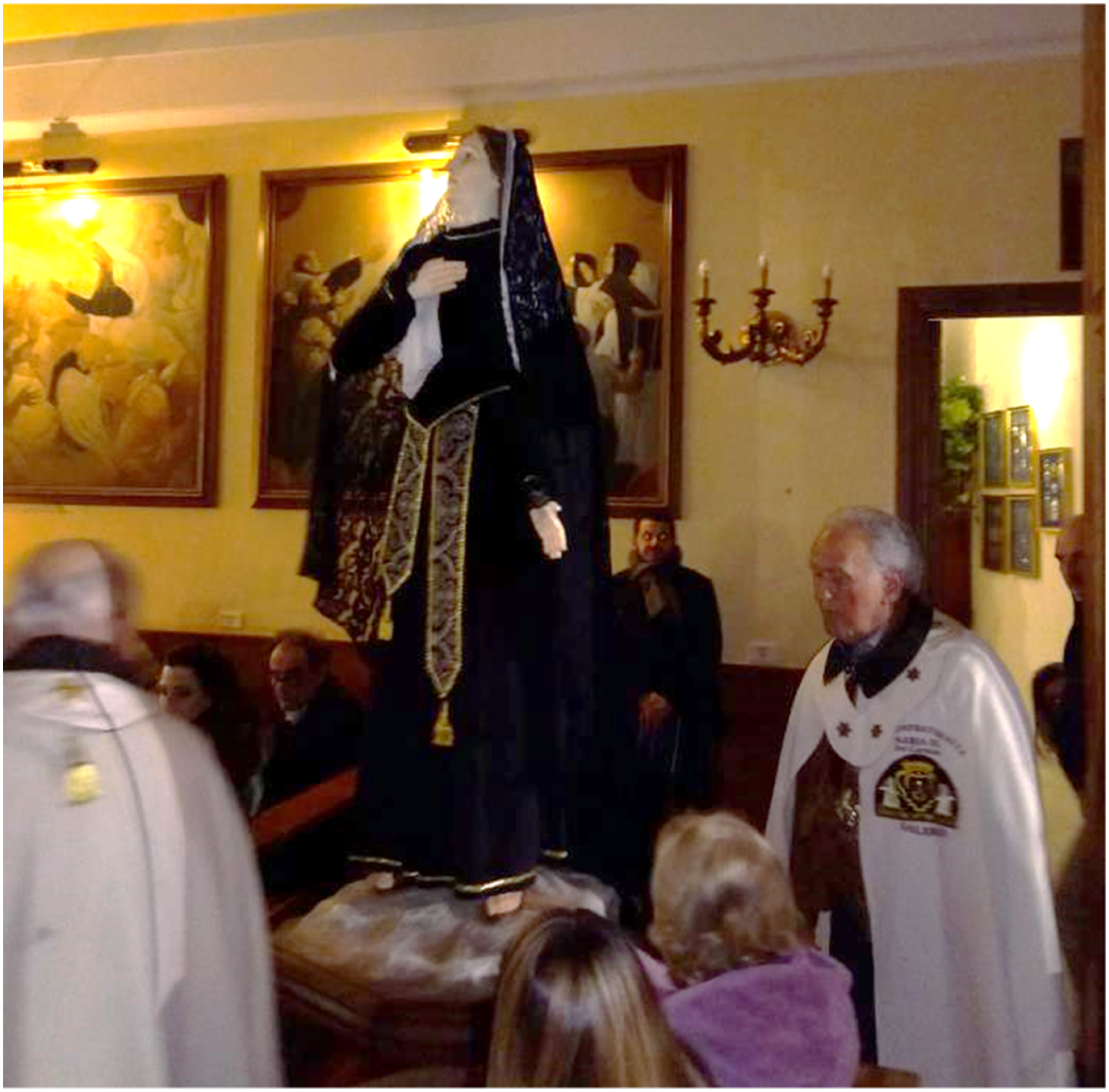
One of the major sources of social suggestions about grief is of course religious iconography. Figure 1 shows a statue of the Mourning Virgin Mary in a baroque dress. The statue is brought every year in procession during the Easter Week. It is literally a model of mourning mother. Those who look the statue can aesthetically experience grief, from the body posture to the dress. One can feeling into the experience of grief, which is presented as holistic model: is not only the dress, the posture or the narrative alone that make the model, but the whole (Figure 2). Alms for the souls in a church of Braga, Portugal (photo by Tateo, 2016).
The socially guided affective logic (Tateo, 2018b) allows to manage the inherent contradictions of the loss, through the mediation of internalized cultural artifacts (rituals, photographs, dresses, etc.) (Tateo, 2018a). In terms of affective logic, the two statements: “I am grieving therefore I am wearing black”; and “I am wearing black therefore I am grieving” are equally valid.
Another powerful way of providing social suggestions through an esthetic experience is the food tradition. The use of serving sweets during and after the funerals has both a symbolic and sensuous meaning of providing relief, meaning of resurrection (for the living as much as for the death) and confirming the community identity bonds (Cann, 2018). This does not primarily happen by telling the meaning of offering sweets, rather through the sensuous experience of the sweet.
The “Invention” of Purgatory
Literally and symbolically, finding the “proper” place for the loss is a fundamental task of the living. The personal experience of death is mediated by systemic collective organization of the relationships between the living and the dead ones, in the developmental perspective of past-present-future direction. Changes in the system imply changes in the personal meaning. Different cosmologies, social order, gender differences, etc. imply different experiences of grief. However, mediation is eventually constructed through a personal synthesis (my grief).
The invention of the Purgatory in Christianity (between 5th and 13th Centuries) is an example of re-organized relationships between living time deeds; ways of dying; afterlife; personal responsibility; family, community, and church role (according to a legal-economic model) (Le Goff, 1984; Willis, 2008). Purgatory introduces an intermediary step, in which the beloved souls are not definitively condemned or saved but placed in a transitory condition that can be shortened by the survivors’ actions (e.g., alms, prayers, good deeds, pilgrimages, charity, etc.). In return, the souls in the Purgatory, properly venerated, can intercede with God for the benefit of the living (Figure 3). Veneration altar for the souls of Purgatory in Naples catacombs, Italy (Photo by Tateo, 2017).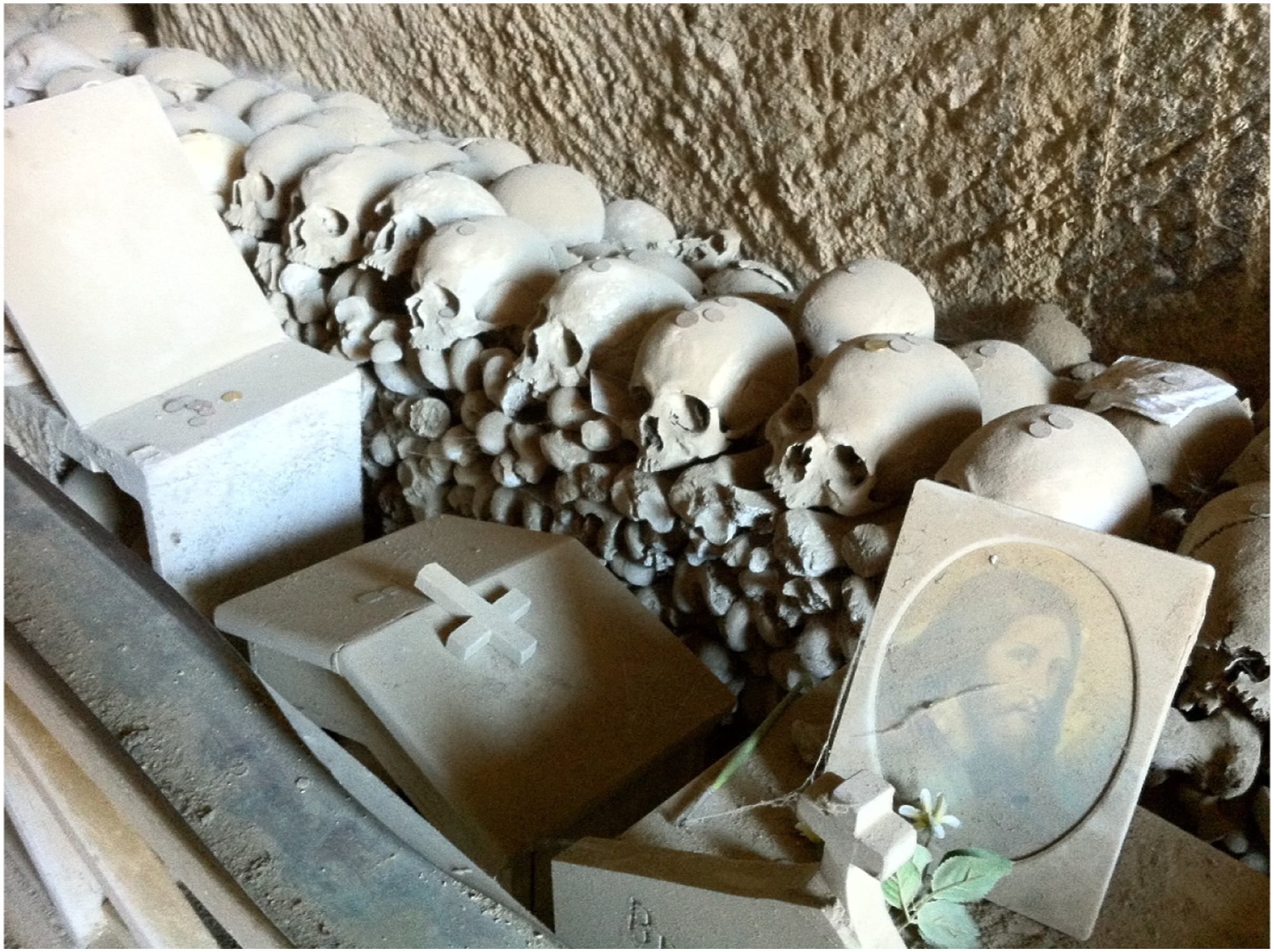
What could sound “primitive” superstition was an important part of the grief experience for many. A whole cult of the Purgatory souls developed, completely reconfiguring the relationship with the deceased and even the way to dispose the corpse. In many cities, it is still possible to see the places of cult, in which people adopted the skulls of the Purgatory souls and established a bond made of offers and prayers.
The Ars Moriendi
The study of grief mainly focuses on the experience of loss of a love object. Yet, the experience of death is part of a larger system that also includes one’s own life, the others’ lives, and our own death. The loss acquires meaning also in relation the meaning of life and to the way of dying. Good and bad life are related to good and bad death. Also in this case, culture provides several social suggestions about the way of living and dying.
For instance, at the end of the 15th Century, a normative system of organizing the luminary process of dying was produced. It was a set of rules, rituals, images, and examples about the way a person should prepare her to pass away and set up the offspring legacy among the living ones (Figure 4). Tomb of St. Engelbert, early baroque architectural style, by Heribert Neuss, 1665, Dom (cathedral) Köln, Germany (Photo by Tateo, 2018).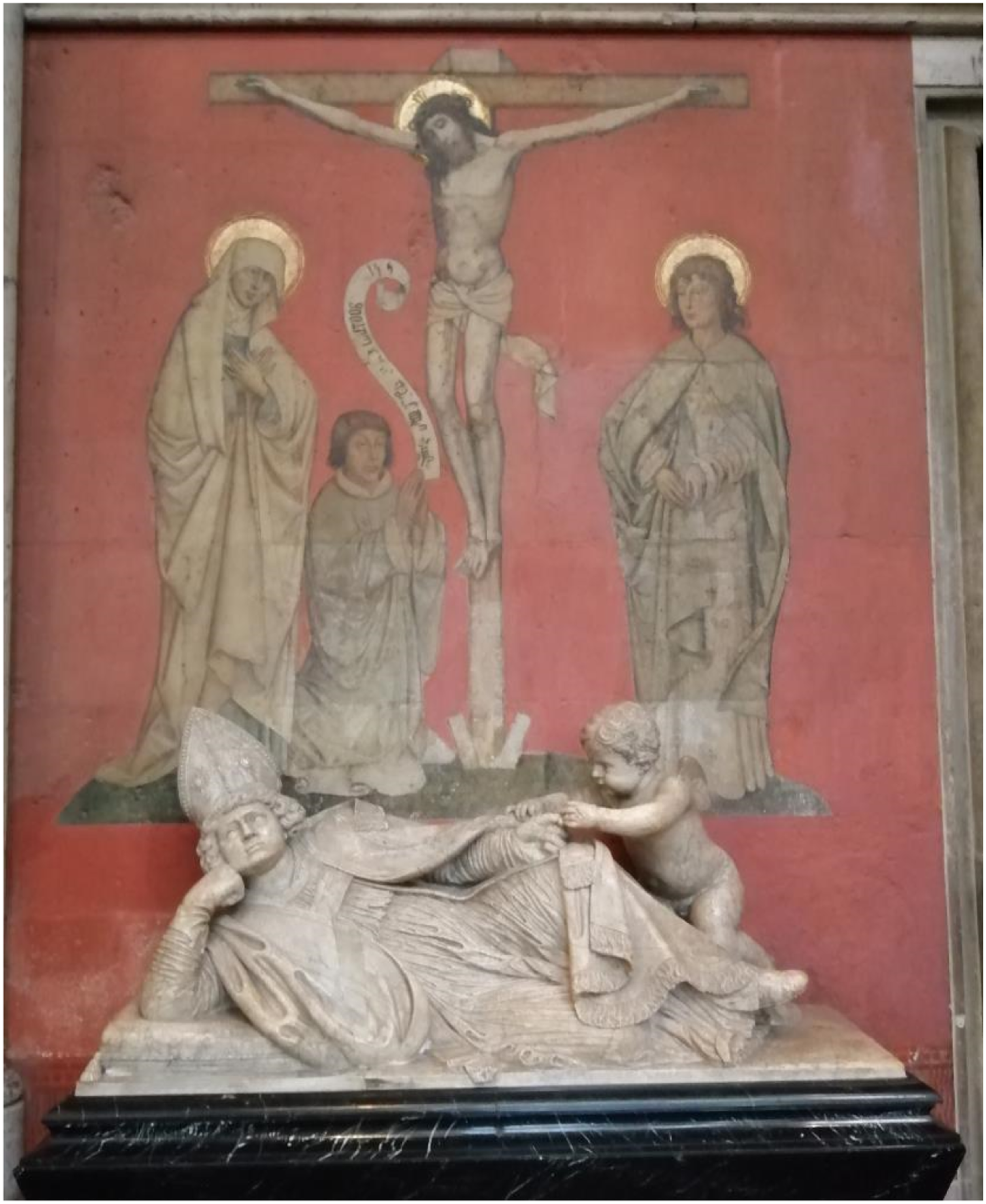
The good death was an insurance for the afterlife, but also for the grieving family. Essays about the ars moriendi (“the art of dying” in Latin) flourished (Ariés, 1974). “The iconography of the artes moriendi joins in a single scene the security of a collective rite and the anxiety of a personal interrogation.” (Ariés, 1974, p. 37) A long agony was preferred to a sudden death, as it provided the time to be prepared and to accomplish the rituals; to dictate the last will; to allow the deathbed visits of the community; and to receive the sacraments.
We fail to recognize the secular ars moriendi of our contemporary societies. The rhetoric about heroism in war or in suicide attacks are similar prescriptions of ars moriendi not different from the suttee despised by Verne.
The life history of a person contributes to the meaning-making of her loss by the living. An unexpected non-normative loss (e.g., a child or a suicide) is problematic (Avery & Reynolds, 2000). On the other hand, a quick death can be more acceptable than a long agony. Preparing for the death (our own’s or our beloved ones’) becomes salient in cases that can result in ambivalent meanings, such as euthanasia (Ricou & Wainwright, 2019).
The 15th Century ars moriendi emphasized the esthetic and symbolic meanings of the dying’s final acts, relegating in the background those surrounding the deathbed, supposed to act as bystander and to express their bereavement publicly, but not necessarily sincerely (Ariés, 1974).
Thy Death: The Loss of “The Other in Me”
The meaning of grief changed again when the status of emotions in European culture changed at the onset of the Romantic era. By the end of the 18th century, the English movement of the so-called Graveyard poets (Parisot, 2013), introduced a new aesthetics of death and bereavement. Images to symbolized the inner psychological and affective life that will later develop into Romantic aesthetics. The best-known ode by this movement is probably the Elegy Written in a Country Churchyard written Thomas Gray and published in 1751. The poem’s final verses read: “No more, with reason and thyself at strife,
Give anxious cares and endless wishes room;
But through the cool sequester'd vale of life
Pursue the silent tenour of thy doom” (Gray, 1751, lines 85–88)
In Graveyard poets’ aesthetics, the meaning of one’s life is not associated to good or bad deeds but to the capability of meditating the inevitability of the death, which is symbolized by the melancholic landscape of cemeteries and country churches. This aesthetics represents the transition toward a psychologization of grief (Granek, 2015), that became a matter of personal feelings. In the emerging sensibility of the 19th Century Romantic esthetics: “mourning was unfurled with an uncustomary degree of ostentation. It even claimed to have no obligations to social conventions and to be the most spontaneous and insurmountable expression of a very grave wound: people cried, fainted, languished, and fasted. [.] The nineteenth century is the era of mourning which the psychologist of today calls hysterical mourning. [.] It means that survivors accepted the death of another person with greater difficulty than in the past. [.] the death which is feared is no longer so much the death of the self as the death of another, la mort de toi, thy death.” (Ariés, 1974, p. 67–68)
The authenticity of the mourner’s feelings and the emotional experience of grief became central. The loss became an emotional problem (Figure 5), opening the way to the contemporary understanding of grief experience. Koln Cathedral: ‘Way of the Cross’, 14th station, by Wilhelm Mengelberg, Neo-Gothic (1893–1898) (photo by Tateo, 2018).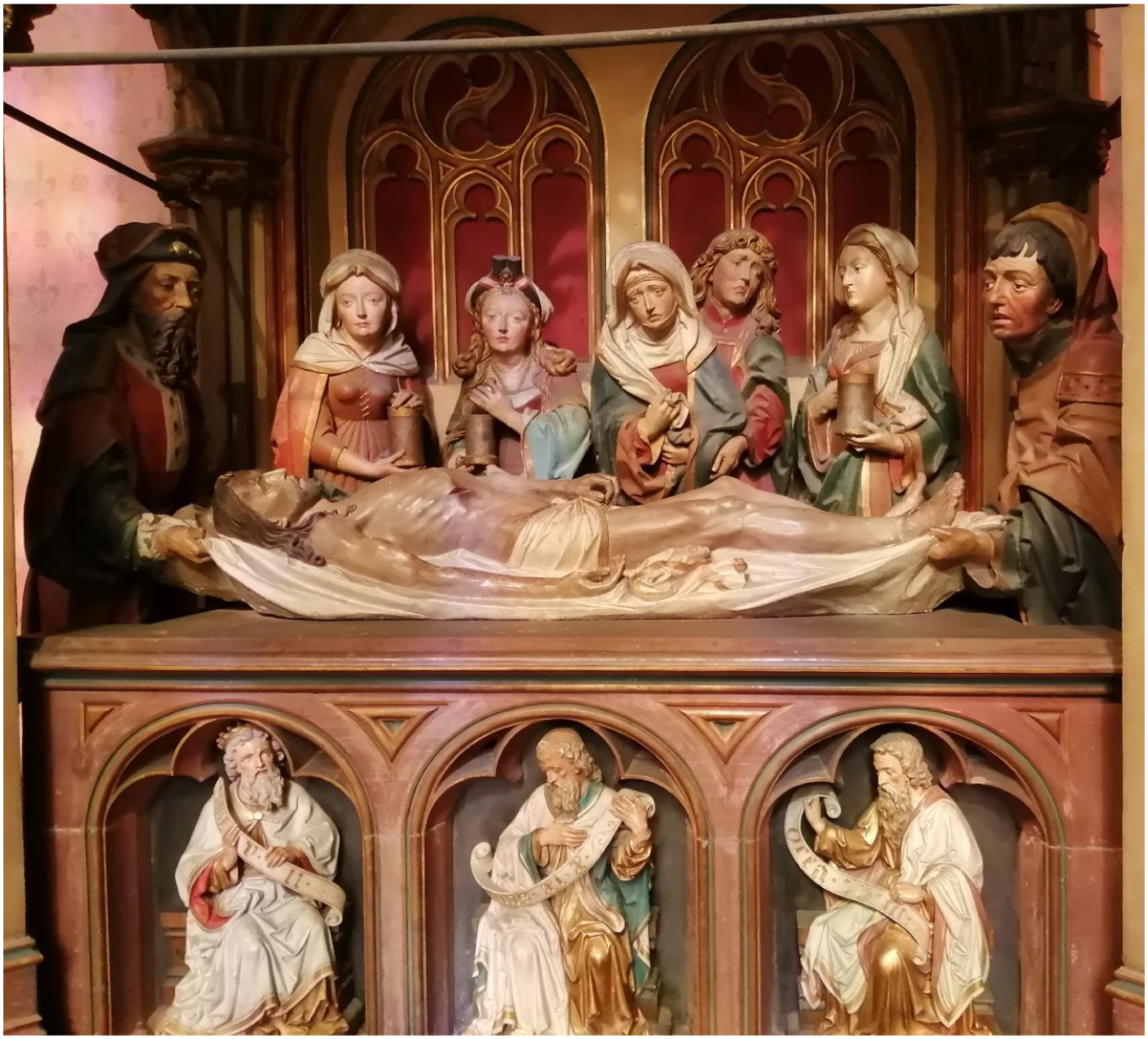
According to Ariés (1974), this was also the moment in which the immanence of death started to be distanced from the word of the living. By the end of 18th century, cemeteries were removed from the inner cities and burials were no longer permitted inside the churches. New types of cemeteries in the outskirts of the cities were built, where the deceased could be visited by the family. “People went to visit the visit the tomb of a dear one as one would go to a relative’s home, or into one’s own home, full of memories.” (Ariés, 1974, p. 72) The tomb became a place of private and bourgeois cult of memory, a topos of romantic literature. The cemetery became an organized space of atmosphere suggesting an affective experience, to mediate both the cultivation of memory and the elaboration of grief (Ariés, 1974; Marsico & Valsiner, 2017). Death was distanced and bounded in special places. Its iconography progressively shifted of focus from the deceased to the griever: “mourning is no longer a necessary period imposed by society; it has become a morbid state which must be treated” (Ariés, 1974, p. 99).
The Systemic Reorganization
The psychologization, individualization and temporalization of grief, in secular capitalistic societies, (Granek, 2015) leads the bereaving person to a paucity of ritualistic conventions in the mourning period. People experience grief less frequently, but more intensely since the emotional involvements are not diffused over an entire community. Grief is temporally regulated with a starting, a middle, and an end point (Granek, 2015). The current social suggestions guide the person to consider grief as a disruption that must be fixed as soon as possible to get back to the job of living full, productive lives. If the morbid condition cannot be fixed by the griever alone, fast enough or well enough, it is prescribed to seek professional help by a “doctor of grief” (Ariés, 1974, p. 99), in the form of a therapist, a prescription for medication (Granek, 2015), or even a spiritual medium. However, it is incorrect, as Blauner (1992) maintains to oppose the ritualization of mourning, as a feature of “premodern” cultures to the secularization of grief. “Since mourning and a sense of loss are not widely shared, as in premodern communities, the individualization and deritualization of bereavement make for serious problems in adjustment. There are many who never fully recover and “get back to normal,” in contrast to the frequently observed capacity of the bereaved in primitive societies to smile, laugh, and go about their ordinary pursuits the moment the official mourning period is ended.” (Blauner, 1992, p. 26–27)
Such an opposition perpetuates the colonial stereotype of secular and progressive cultures, which are considered as more “developed” than the more “spiritual” and “traditional” cultures. This stereotype is sustained by the poor capability of contemporary social sciences to detect the forms of cultural mediation of grief.
«Let it go» and the Horror Vacui
In the psychology of Global North, death, suffering, and grief tend to be removed. Paradoxically, this happens through several social suggestions to security, safety and well-being that immediately evoke their negative counterpart (Tateo, 2018b). “[D]eath has become unnamable. Everything henceforth goes on as if neither I nor those who are dear to me are any longer mortal. Technically, we admit that we might die; we take out insurance on our lives to protect our families from poverty. But really, at heart we feel we are nonmortals. And surprise! Our life is not as a result gladdened!” (Ariés, 1974, p. 106)
A major source of social suggestions about how experience grief in the psychological depictions of mourning is presented in the mainstream media (Granek, 2015). The cultural mediation covers the whole system of relationships between the death and the living. The invention of Purgatory, which was a way to establish a permanent relationship between the deceased’s soul and the living, has been replaced by the invention of the Threshold as ambivalent way to distancing and letting go. In the last decade, indeed several American series mention death and grief (see, for instance the series “Medium,” “Drop dead Diva,” and “Ghost Whisperer”). A connection between the living and the afterlife is marked by an obsession for the problem of trespassing, resolving the open business between the deceased and the living to let it go, even with the help of a spiritual medium. The popular series Drop Dead Diva deals instead with the issue of coming back through reincarnation. It seems that the mainstream media grasped the importance of universal existential questions such as: what is after death? How can one continue a bond and let go at the same time? Also in this case, the questions are a problem for the living. To reconfigure the right relationship with the deceased and to be concerned with my own death are complementary issues (Blauner, 1992).
Neoliberalist cultures of the Global North shun emptiness (Bang & Winther-Lindqvist, 2017; Mortelmans, 2005). The loss of a beloved one is the ultimate form of emptiness one is terrified to face. It is the complete overturning of the Romantic crepuscular sensibility. In the Graveyard poetry (Parisot, 2013), the idea of death as the ultimate void was the opportunity to value life worth living in its full. The Romantic hero embraced the void meditating on his own and others’ fate. The aesthetics of the Threshold in the popular media represents a twofold concern: to be sure that the beloved one is trespassed, leaving one free to go on; and to be sure that there will always be someone or something to fill this emptiness. The idea of being able to live with the loss and to love again at the same time seems overwhelming.
Diversity and Grief
An historical overview of the cultural mediation of grief experience along European iconography and symbolic practices showed how the meaning of this common human experience is constructed. Grief is both a personal and collective phenomenon in specific socio-culturally mediated forms. In the neoliberal Global North, the myth of grief as pathological and solipsistic experience in secular societies, can be based on the (ethnocentric) illiteracy in recognizing the current forms of cultural mediation (e.g., DSM-V and IDS-11).
When I was an associate professor in Denmark, one of my students attending a course on grief and cultural psychology, reported a local tradition: when a person dies at home, the family immediately lights a candle and opens the window in the deathbed room all night long. The interesting fact was that when I reported the episode to the classroom, the students were unable to recognize in it any ritual or symbolic act, they simply commented: “We don’t know why they do it”.
The solution is to deconstruct the naturalization of grief as an individual, solipsistic, and temporally constrained emotion. Grief is a developmental and holistic process, involving several complex, ambivalent, and cyclical emotions, whose meaning is elaborated through selectively internalized social suggestions. The concept of affective logic (Tateo, 2018a, 2018b) can provide a useful theoretical model to understand the relationship between the living and the dead as a systemic cultural organization and to describe the personal synthesis of cultural guidance, through processes of internalization/externalization (De Luca Picione, 2020).
Once the Global North perspective on grief is deconstructed, the psychodiversity and anthropodiversity that cultures have historically cultivated in dealing with this fundamental existential problem can be appreciated. Local preferences, such as for instance the secularization of death in Western societies, shall not become normative or universalized. Only the process of finding local solutions to universal problems can be psychologically generalized, not the outcomes.
The idea of a lifelong coexistence with death and grief seems an unbearable perspective for the most part of the people nowadays. But spatiotemporally decentering our ethnocentric perspective can be a very useful exercise. “In 1231 the Church Council of Rouen forbade dancing in cemeteries or churches under the pain of excommunication. Another council held in 1405 forbade dancing in cemeteries, forbade carrying on any form of gambling there, and forbade mummers and jugglers [.] for more than a thousand years people had been perfectly adapted to this promiscuity between the living and the dead.” (Ariés, 1974, p. 24–25)
Dancing, playing music or gambling and other mundane activities in the cemeteries were current in the history of European cultures, to the point that they had to be banned. Contemporary necropolitical societies reconfigured the relationship between life and death by focusing on the negative feelings associated to the latter (Mbembe, 2008). Fearing death and reacting with isolation, anger, depression, helplessness, or indifference are forms of internalized social control that leads to the passivity.
This restricted vision of grief has been naturalized ignoring different existential solutions, or labeling them as “traditional”, which is the polite form for “primitive.” It seems difficult to accept alternative views that celebrate both life and death as part of a whole, experiencing grief and memory both as a pain and a lifelong celebration.
Seldom in literature one finds a reflection about grief from the perspective of the Global South. The most powerful example I found is in the book by Malidoma Patrice Somé (1995), who is both an academic scholar and a sciaman. Talking about the death and funerals of his grandfather—a respected head of family and sciaman of the Dagara culture in Burkina Faso—Somé developed a reflection about the role of rituals in the elaboration of grief which is particularly illuminating: “Unlike people in the West, the Dagara believe it is terrible to suppress one’s grief. Only by a passionate expression can loss be tamed and assimilated into a form one can live with. [.] A spirit who is not passionately grieved feels anger and disappointment, as if the right to be completely dead ha been stolen from them. So, it would be improper for a villager to display the kind of restraint and solemnity seen at Western funerals” (Somé, 1995, p. 57)
From a Global South perspective, the Western psychology of grief appears dangerous for both the person and the community. Somé’s position is not only advocating to recognize the traditional Diagare way of grieving. It is actually saying that the Western way is problematic and maybe dangerous.
Later in the book, talking about the role of ritual music in the funeral, Somé explains: “Rhythm and chanting crack open that part of self that holds grief under control. But grief unleashed without the help of ritual drummers, musicians, and chanters runs the risk of producing another death. It is a force without container.” (Somé, 1995, p. 57)
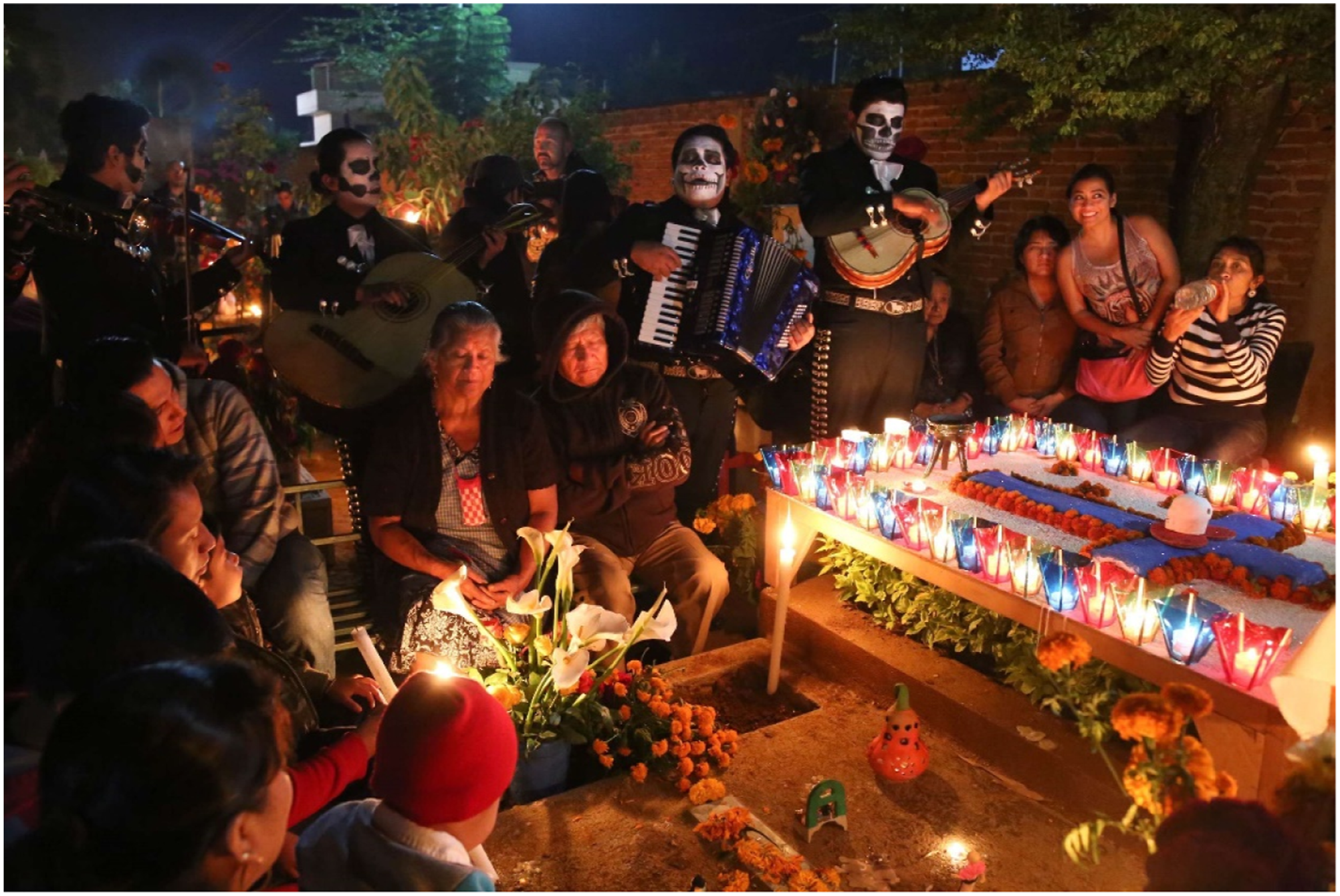
The social suggestions that channel the meaning-making process of grief are primarily esthetic, in the sense that they involve experience as a whole and create an affective relationship (Figures 6 and 7) (Tateo, 2018b). Dancing pallbearers are still common in New Orleans, Ghana, and Nigeria (Creative Commons Licence). At the Santa Cruz Xoxocotlan Cemetery in Oaxaca, family, friends, and musicians gather to remember a loved one and to celebrate life (Creative Commons Licence).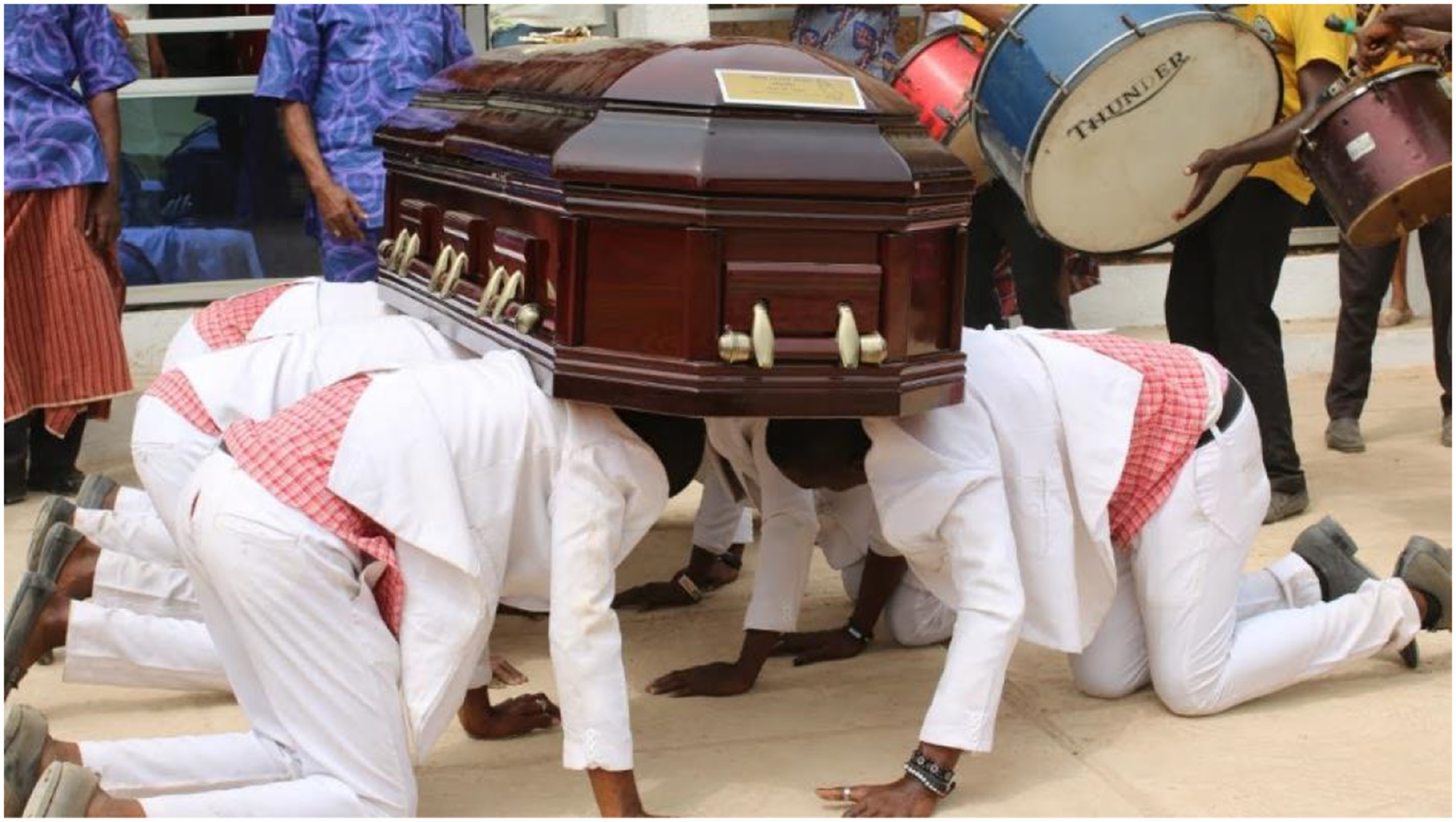
Discussing the decolonization of grief in the Iroquois community who is fighting the cancellation of its cultural heritage, Doxtater (2011) opposed the Global North psychology’s trauma-resolution approach to the traditional way of understanding grief as an empowering experience. “Facilitators work quickly to overtake grieving. I disagree. I suggest that humans of any race should not ignore unresolved grief. In this part of human life we gain extremely significant self-knowledge. We learn about survival. We learn that power is possessed and not given. We are not being empowered. We have power.” (Doxtater, 2011, p. 100)
Iroquois’s people foundational ethics is based on the idea of fairness and solidarity: “no one eats until we all eat, no one is healed, until we are all healed, and no one is happy until we are all happy. Happiness, or healing grief is paramount.” (Doxtater, 2011, p. 98)
Loss of an affective object is of course a major disruption in the life of the person and of the group. Global North psychology has narrowed the territory of such experience to the dual intimate relationships. This is neither intrinsically good nor bad. Mainstream psychology is an indigenous solution to the existential problem of dealing with loss and it is not universal. If one fails to acknowledge it, such an illiteracy leads to overlook other forms of social suggestions and ritualization, indeed: “man is a ritual animal. If ritual is suppressed in one form it crops up in others, more strongly the more intense the social interaction. Without the letters of condolence, the telegrams of congratulations and even occasional postcards, the friendship of a separated friend is not a social reality”. (Douglas, 1966, p. 77)
The grief for the loss is based on a pre-existing affective relationship: one does not miss what does not love.
A Theoretical Elaboration
As a matter of conclusion, I want to stress the relationship between the cultural medioation of grief, the affective logic and the aesthetics by proposing an original theoretical perspective. The current understanding of grief as it presented in the DSM does not take into account those relationships and the tentative to include culture reduced it to an independent variable.
The two affects are mutually inclusive (Figure 8) and their relationship is actively cultivated through cultural mediation. The disruptive nature of grief grows out of the consciousness of irreversibility of time: love always precedes loss in experiencing grief, although in affective terms the loss can be anticipatory (Winther-Lindqvist, 2014). Complementarity of affects through cultural mediation cyclically feeding love into grief.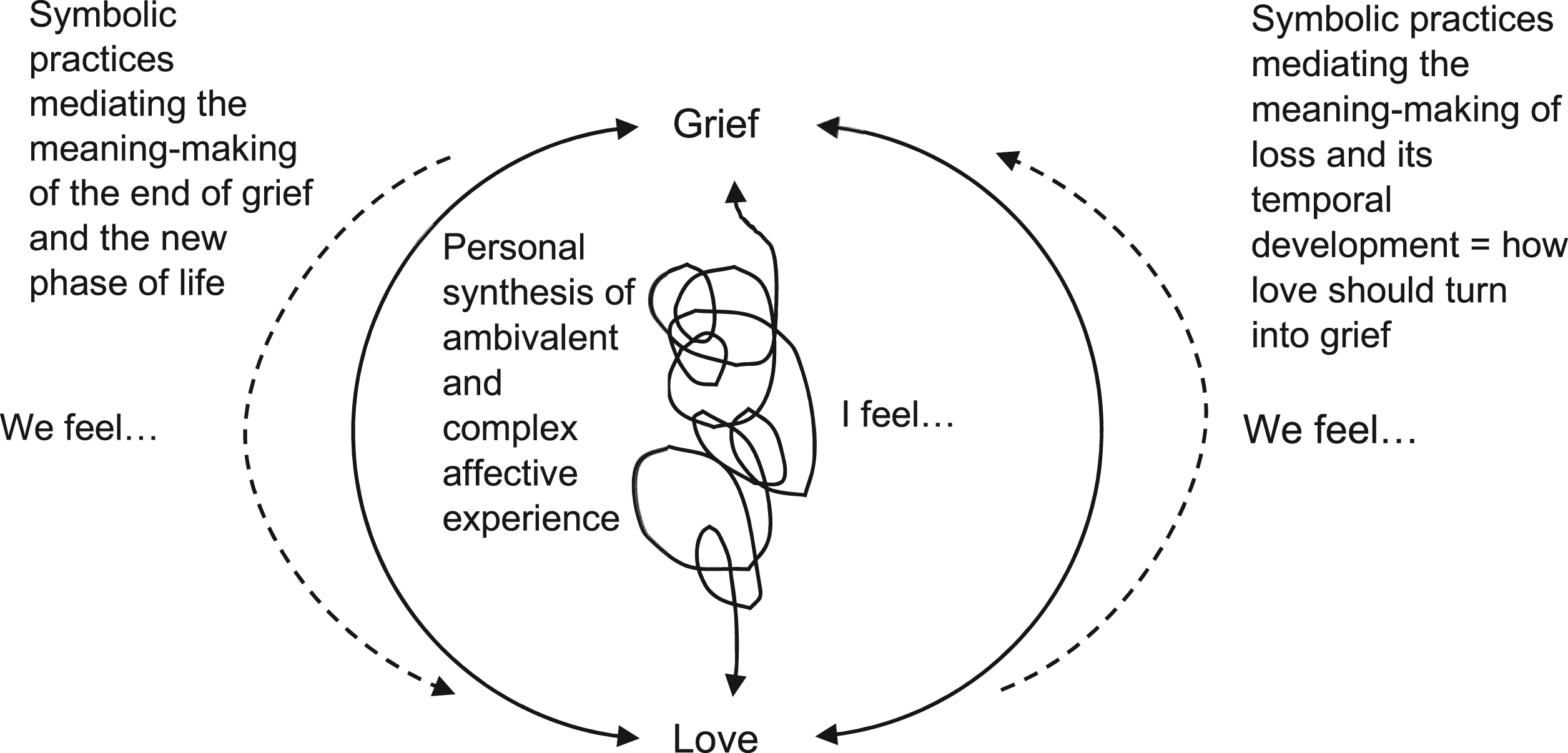
Once the relationship is established, culture provides suggestions to make sense of it (“We feel X”) and the person actively internalize those suggestions to build her own meaning (“I feel Y”). In the Prolonged Grief Disorder model, only the linear causal relationship is considered.
Instead, love turns into grief but is not replaced by it, but also the opposite is true. The cultural resources channel the universe of feelings into a transformative process (Somé, 1995), suggesting for instance how fast, by which acts and with whom love shall turn into grief so to be elaborated by the person and the community (e.g., the funeral rite in Figure 6). On the other hand, the cultural suggestions channel the transformation of grief into love, both for the missing person and for a new living partner. Such cyclical transformation is actively cultivated (e.g., the ritual in Figure 7) by the community. The social suggestions, which are often provided in the form of esthetic experiences, do not override the personal elaboration of the loss, rather they channel it into more socially acceptable forms. A hegemonic worldview that reduces psychodiversity by silencing the many forms of grieving would perpetuate the colonialist and patriarchal oppression both within communities—silencing subaltern experiences and marginalizing or pathologizing them and between cultures—labeling alternative forms as exotic or superstitious. Understanding the cultural and esthetic mediation of grief implies that psychology should recognize complexity and diversity, or it will repeat Verne’s mistake: to dismiss and to parody diversity in the name of a monological vision of human experience. Such a deconstruction should finally result in the self-recognition and self-assertion of individual and communities, especially the marginalized ones, to the right of making-sense of their existential experiences. Also, the environmental crisis produced new existential phenomena such as the environmental grief, for which the different cultures—both in the Global North and Global South—are developing meaning and cultural mediations. Global North psychology has not yet adopted the epistemological humility to learn from the different epistemologies—as I have tried to discuss about the normative grief—and still tries to apply its recipes with a “cultural sensitivity” spice. The attempt to adapt concepts such as “anxiety” and “trauma” to the existential experience of people facing environmental crises may fall into the same epistemological mistake and just picking some “exotic” concept as “mindfulness” to spice up and mask the perpetuation of cultural hegemony (Ojala et al., 2021; Rhodes, 2021). Instead, psychology of the Global North needs to take the criticism by alternative epistemologies very seriously and revise its theories and practices.
Footnotes
Declaration of conflicting interests
The author(s) declared no potential conflicts of interest with respect to the research, authorship, and/or publication of this article.
Funding
The author(s) received no financial support for the research, authorship, and/or publication of this article.
