



Abstract
This study aims to describe and analyze the career decision-making of the first author in the context of life trajectory using autoethnographic trajectory equifinality modeling (Auto-TEM). The life story and analysis of the first author indicate that career decision-making is a constant pre-constructive process in the life trajectory of an individual. This process is a semiotic and trans-action one between the individual and society. In other words, career decision-making is an issue of the cultural psychology of dynamic semiosis, which is concerned with understanding the manner in which the life trajectory of a person promotes or inhibits socio-culturalism and not only a subject of matching and self-esteem. Alternatively, we emphasize that career decision-making for an individual is an act of meaning with a unique ontological aspect. We propose the value of Auto-TEM as a qualitative method for describing such a dynamic career decision-making process. The autoethnographic viewpoint renders possible the understandings of the dynamics of the personal–collective culture synthesis for the subject.
Keywords
Introduction1,2
Career research in the 21st century requires understanding occupations and social roles in individual life trajectories. Unsurprisingly, however, society and organizations do not provide individuals with career structures during this unstable era. Social norms and expectations during the 20th century restricted individuals’ occupational options because the social order gave fixed courses from which they had to choose appropriately (Savickas et al., 2009). However, in the 21st century, individuals must be transformative and flexible in their careers. Social systems are more dynamic because of increased longevity, rapid advances in information technology, economic globalization, and shifting mobility. For this reason, a shift in cognition is required, in which each individual takes responsibility for their career and proactively develops or designs it (e.g., Collin & Young, 2000; Hall, 1996; Savickas et al., 2009). Career decision-making is not only an issue of vocation but is also related to the fundamental issue of proactive living. Under these circumstances, room exists for the reconsideration of the assumption of career choices in previous research and new methodologies for exploring it. This study addresses two approaches—trait-factor theory and self-efficacy—to understand career decision-making in the subsequent text. Career decision-making has been theorized from trait-factor, psychodynamic, developmental, and social learning perspectives. Among them, the mainstream approaches today are the trait-factor theory and the self-efficacy approach in the tradition of social learning theory.
The first is trait-factor theory (e.g., Parsons, 1909; Holland, 1997), which seeks to match compatibility between occupations and individuals. This theory features an understanding of objective matching from the external perspectives of researchers or career counselors. Parsons and Holland highlight the matching of individuals and work. Parsons, a professor at Boston University, established The Vocation Bureau of Boston in 1908 with Mrs Q. A. Shaw and was the first to use the term vocational guidance. The practice is summarized in Parsons’ book “Choosing a Vocation” (Parsons, 1909) where the key concern was how to assist young people in selecting suitable occupations. Parsons (1909) stated that there are three main elements of wise vocational choice: (1) A clear understanding of oneself, aptitudes, abilities, interests, ambitions, resources, limitations, and causes. (2) Knowledge of the requirements and conditions of success, advantages and disadvantages, compensation, opportunities, and prospects of different lines of work. (3) True reasoning on the relationship between these two groups of facts.
Holland (1997) theorized the matching of individual personality and environment, which inspired a wide variety of research and practice due to its simplicity and practicality. He assumed a realistic, investigative, artistic, social, enterprising, and conventional personality for career interests and that the fit between this and the environment (occupation) was significant.
However, in this approach, career decision-making is typically regarded as a temporary act of finding a job and overlooks the fact that career decision-making is a process. For instance, situations where a person no longer matches the mindset of an organization a few years after entering the organization are common. Therefore, as a traditional approach to understanding career decision-making, the trait-factor theory fails to provide a sufficient understanding of the actual situations and is unable to address modern careers in which subjects repeatedly change career decision-making.
The second approach focuses on self-efficacy (Betz & Hackett, 1981, 1997; Hackett & Betz, 1981; Lent & Hackett, 1987; Taylor & Betz, 1983) as an intra-personal factor. Self-efficacy is a concept central to social cognitive theory proposed by Bandura (1998), who defines perceived self-efficacy as follows: … people’s beliefs about their capabilities to produce designated levels of performance that exercise influence over events that affect their lives.
Studies on career decision-making and self-efficacy originated from the conceptualization and promotion of women’s career development by Betz and Hackett (1981). The study examined the relationship between participants’ potential vocational choices and self-efficacy expectations at the time of the study. The fact that self-efficacy influences career development and choices is suggestive. However, the problem is that the quantification of self-efficacy has led to a lack of individuals’ existential meaning-making for specific occupations (e.g., what kind of doctor does the person want to become and what is the process of becoming a doctor?). Furthermore, while they position self-efficacy as an essential process factor in career development, the actual processes have not been paid enough attention to.
When making a career decision, it is necessary to take a long-term, developmental 3 perspective that captures the shifting meanings of the decision. This is because meaning-making is constantly transforming in the irreversible flow of time. The perspective of career development throughout life has been proposed in Super’s developmental approach (Super, 1957; 1980). Notwithstanding, this study builds on the interests of cultural psychology to understand the relationship between individuals and signs in irreversible times.
Understanding career decision-making requires a reconstruction from the cultural psychology perspective. First, career decision-making needs to be viewed as a constantly pre-constructing process toward the future in terms of life trajectory (Valsiner et al., 2021). Second, it should be understood as a dynamic, open-systemic process (Valsiner, 2007; 2016). As a system, humans communicate information within cultural–historical contexts (including others) to make meaning of working in their life trajectories. Third, the qualitative methodologies for describing such a dynamic career decision-making process should be considered. The dynamic semiotic approach employed in this study emphasizes “culture as a process,” (Demuth et al., 2021) not the “structure” of the culture. Therefore, this study is not intended to identify the diversity or typology of people’s career decisions.
In general, a career is defined as “the combination and sequence of roles played by a person during the course of a lifetime” (Super, 1980, p. 282). Notably, this definition considers career development as occurring in the context of life trajectories instead of simply referring to the progress of the vocational status of individuals. Moreover, the socio-cultural constraints and guides on career development and the process of semiotic negotiation toward the future should be understood because such combinations and sequences of roles are semiotic products.
This semiotic nature of career decision-making leads to the necessity of understanding the dynamics of the signs involved in career decisions (e.g., thoughts, relationships, others, language, and other mediations). However, studies on career decision-making have mainly conducted quantitative surveys and insufficiently addressed the meanings of career decisions made by individuals.
Therefore, this study focuses on the life trajectory of the first author and comprehensively describes the meaning-making process of his career choice. Specifically, the experience of the first author provides an insight into the manner in which the meaning of the career decision to become a teacher became problematic at the turning point and his reconstruction of the meaning. Moreover, this study also describes the social powers in the trajectory due to the fact that the career decision process is socio-culturally oriented.
The study employs autoethnographic trajectory equifinality modeling (Auto-TEM) as a research method, which can enhance the understanding on the abovementioned career decision-making dynamics.
Methods: Autoethnographic trajectory equifinality modeling
This study proposes Auto-TEM as a mode of autoethnography. This approach is a creative fusion between two methods, namely, autoethnography and TEM. Simply put, autoethnography is the researcher’s description of their own culture. Thus, in this study, we juxtapose between the description and analysis of the life story of the first author. TEM is a significant component in the Trajectory Equifinality Approach (TEA), which is based on cultural psychology. This section will first introduce TEA/TEM and discuss the node between TEM and autoethnography.
Trajectory equifinality approach
The TEA (Sato, 2017) consists of three components, namely, TEM, Historically Structured Inviting (HSI), and the Three-Layer Model of Genesis (TLMG; Figure 1). TLMG is a model that considers the self in three layers, namely, action, sign, and value, whereas HSI is a method of inviting research participants based on an experienced history of the subject. However, the current study does not focus on HSI and TLMG. Tripartite model of the trajectory equifinality approach.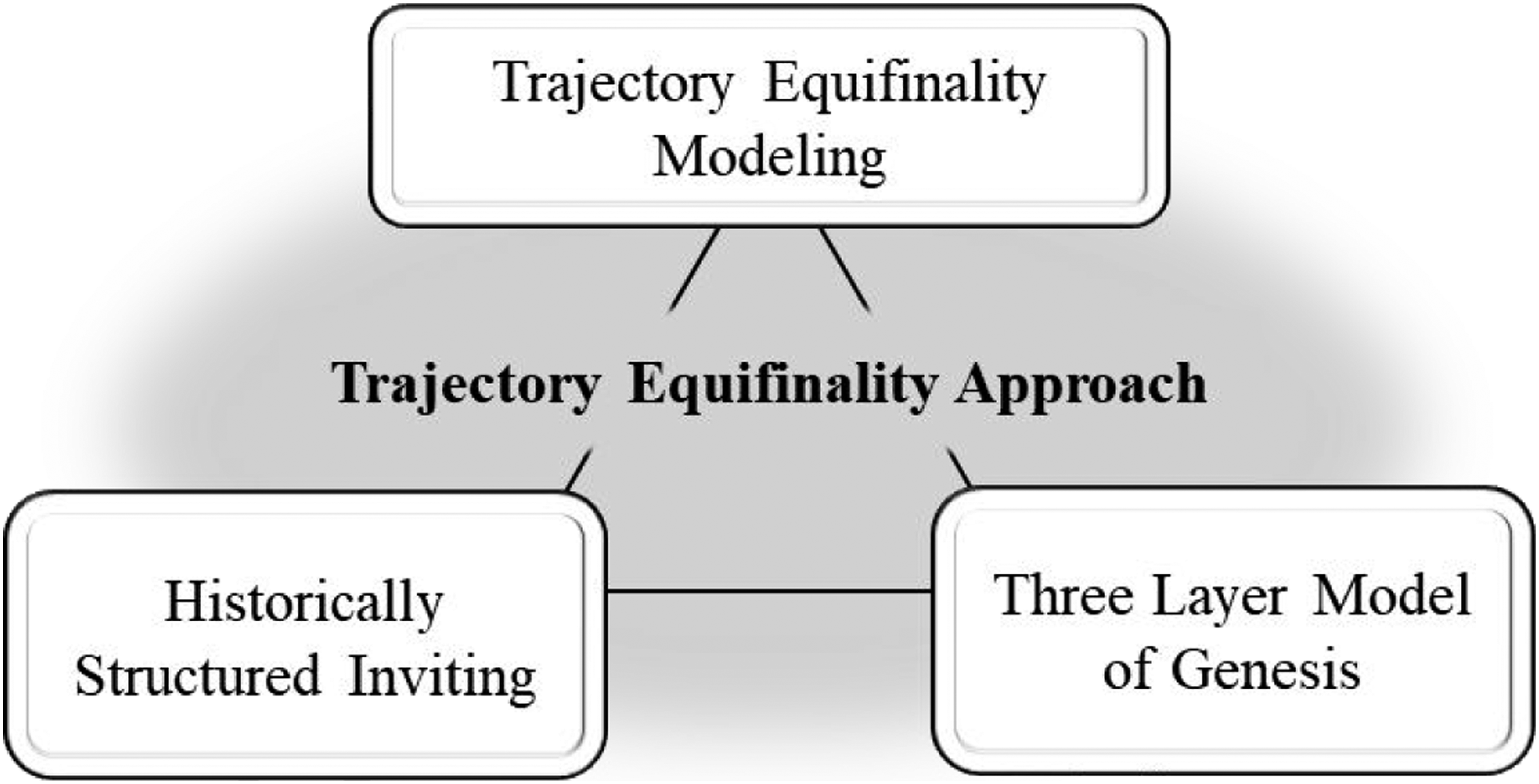
The critical concepts of TEA are multilinearity and equifinality, where the natural and traditional social sciences considered the object of the study a closed system. In this system, researchers assume the absence of interaction or exchange between the system and the outside world (environment). Therefore, the relationship between the initial (cause) and final (effect) condition is determined in a linear manner, which is similar to classical mechanics in physics.
In contrast, open systems premise interaction and exchange between the system and the outside world. In TEA, people, which are the system that constructs life trajectories, are regarded as an open system. In other words, the leading assumption is that life trajectories are not in the causal relationships. For example, an unclear career decision at a given life moment does not immediately lead to failure in life. A mode of reasoning that linearly relates life experiences (here, unclear career decisions and subsequent life failures) is inadequate for understanding human development. The life trajectory of an open system is considered multilinear (Valsiner, 2000) with a possibility of taking various trajectories during interaction with the outside world.
Furthermore, the concept of equifinality is crucial to open systems. This concept indicates that people may reach a similar state from different initial conditions and different trajectories over time (Valsiner & Sato, 2006). Thus, the idea suggests that even if a certain form of power interrupts the life trajectory of a person, such a person can still reach the goal (equifinality point) using different paths. Therefore, instead of focusing on the causes that influence the results experienced by people (e.g., enrolled in college or got married), TEA focuses on the actual or possible trajectories that are available to reach such a condition.
Trajectory equifinality modeling
TEM is a method in cultural psychology that describes the life trajectories of people within an irreversible time (Sato, 2017). It depicts the development of individuals toward future goals and the manner in which the trajectory is guided by the powers of social direction (SD; e.g., obstructive factors) and social guidance (SG; e.g., supportive factors). These powers create the bifurcation point (BFP) tension between SD and SG. In TEM, analyzing and describing personal experiences are possible by assuming that they are related to socio-cultural aspects.
TEM has a feature in which it can depict life trajectory within the actual-possible (vertical axis) and the irreversible time dimension (horizontal axis). Notably, the arrows representing irreversible time do not represent spatialized, measurable time or direction. Instead, it stands for the duration of time as a visual instrument (Sato, 2015). Therefore, understanding the qualitative time (instead of chronological time) an individual experiences when making a particular decision is essential.
Dividing the life stories (or histories) into periods from the narrator’s perspective is also a part of the TEM analysis. These periods deepen the qualitative time in the life trajectory of the individual. By dividing life trajectory into periods on the basis of the transition point for the individual, it enables the analysis to consider developmental and clinical support from the perspective of the person and analytical expansions that focus on specific periods (Yasuda, 2015).
Conceptual tools and their meaning in TEM.
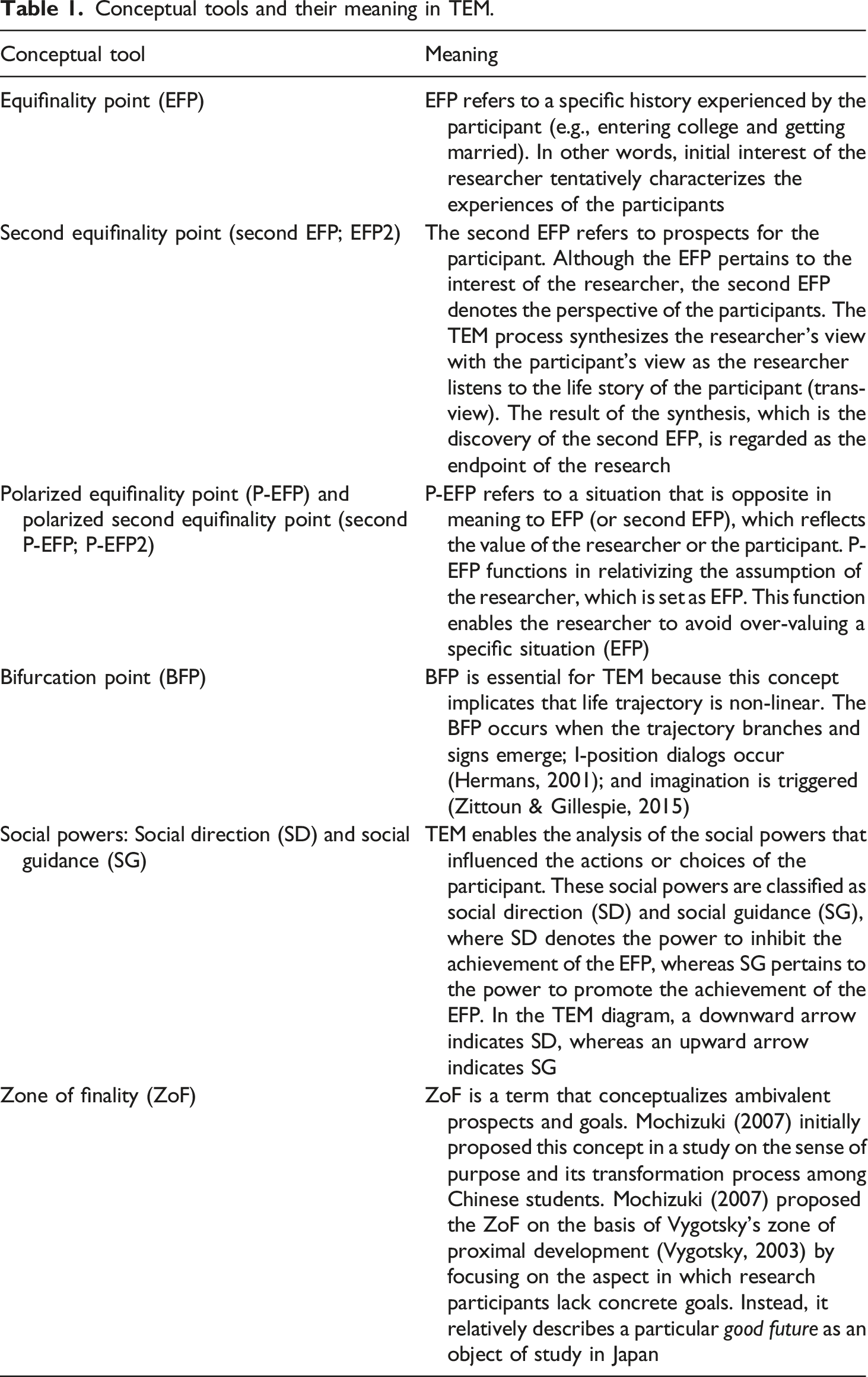
As previously mentioned, TEM can describe the decisions of people and emphasize qualitative time in the trajectory at the same time. In addition, the conceptual tools can help to generalize specific experiences. In summary, understanding career decision-making using TEM enables the exploration of personal–collective dimensions without neglecting the developmental process of the subject.
Cultural psychology of dynamic semiosis: The background theory of TEA
The Semiotic-Cultural Constructivist (SCC) approach focuses on the intersubjective process of subjectivity construction, wherein the notions of corporeality, asymmetry, tension, and opacity play central roles in guiding human development (Guimarães, 2021). One of the pioneers of the SCC approach is Vygotsky (1994), the first cultural psychologist to focus on the concept of “sign.” He pointed out that higher mental functions are sign-mediated processes (A→X→B), not a conditionally reflexive process (A→B) (Figure 2). Vygotsky’s triangle (Vygotsky, 1994).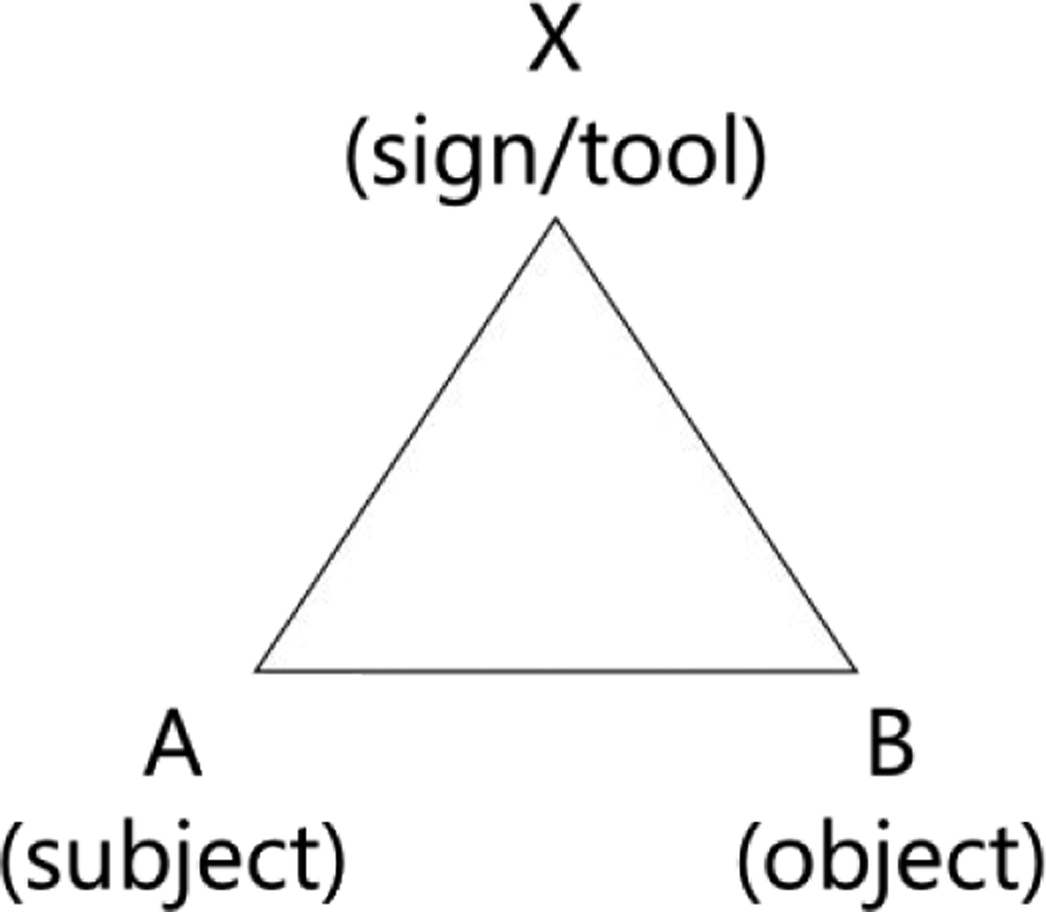
The framework of this study, Cultural Psychology of Dynamic Semiosis (CPDS), is characterized by treating culture as a “sign” that cohabits with the human mind in the irreversible flow of time. Namely, CPDS emphasizes the “past–present–future” relationship of signs. We act in a mutual negotiation between the constructed (not predicted) imaginary future and re-constructed past experience based on reality in the present (Valsiner, 2019). A sign is socially and historically constructed in the “past,” but it functions in the “present” toward the “future.”
Now consider the case where signs facilitate human action (promoter sign; Valsiner, 2004). One example of this is wearing a mask during the COVID-19 pandemic. This act is directed toward the “future” to prevent people from contracting COVID-19. Meanwhile, without the “past” invention of the mask, wearing the mask would not be promoted. In some cases, the sign inhibits the act (e.g., one does not want to wear a mask because it makes them uncomfortable), and such a sign is called an inhibit sign.
Experience is inherently complex, but in terms of how to generalize (semiotize) that experience, Valsiner distinguishes between “point-like signs” and “field-like signs.” A point-like sign is a categorical sign that generalizes experiences. A field-like sign is the sign field that generalizes experiences while retaining its complexity and diversity. For example, a person may say, “University A has a high deviation value,” which is a point-like sign because it understands University A with a single indexical sign of “high deviation value.” Conversely, suppose another person says, “University A is a university in my hometown, and I have fond memories of it. I like the lush greenery, beautiful landscape,... and the warm atmosphere.” In such a case, the person generalizes University A while maintaining the complexity and diversity of the experience—“memories” and “warm atmosphere” are not easily verbalized and involve ambiguous images.
Furthermore, the complex interaction of point-like and field-like signs leads to the generation of the semiotic field that overwhelms the psyche (hyper-generalized affective semiotic field). In this interaction of signs, a qualitative leap occurs, described as Vygotsky’s synthesis, (Valsiner, 2015) as the emergence of a new quality of experience, or restructuring of the sign hierarchy (Valsiner, 2016). From an intra-personal perspective, searching for meaning in our lives is a process of creating personal culture to relate objects of one’s Umwelt with hyper-generalized sign fields in the mind (Valsiner et al., 2021).
From an inter-personal perspective, collective cultures—constructed similar to the “twin” personal culture—interact with a higher layer of social representations (Valsiner, 2016). Collective cultures are related to the behavior of a particular group of people. Here, social representations are a concept proposed by Moscoviti (2001) but also introduced in CPDS. Social representations are encoding the environment in ways that specify directions for expected conduct and feelings about such conduct by oneself and others (Valsiner, 2016). For example, in a Japanese garden, visitors are expected to appreciate the garden quietly and communicate with themselves instead of making loud noises or running around. Thus, social representations construct a semiotic Gestalt—Semiosphere (Lotman, 1990), including normative expected possible acts in a society.
Autoethnographic TEM
Autoethnography
Autoethnography is a qualitative research approach in the social sciences (e.g., psychology, anthropology, and sociology) that intends to understand social and cultural contexts (personal and collective) through a critical reflection of the personal experiences of the research. Although autoethnography is not a specific 1) research technique, 2) method, or 3) theory, it colors these three employed in fieldwork (Hayano, 1979). According to Adams and Herrmann (2020), autoethnographic projects use selfhood, subjectivity, and personal experience (auto) to describe, interpret, and represent (graphy) beliefs, practices, and identities of a group or culture (ethno; Adams & Herrmann, 2020, p. 2).
Autoethnography dates back to Hayano (1979), who defined autoethnography as the ethnography of the “own people” of the researcher. Later, Ellis and Bochner (2000) systematically reviewed autoethnographic research and established autoethnography in social science. The authors positioned it to encourage dialogical communication with readers through evocative descriptions. Specifically, autoethnographers critique the positivistic and objective descriptions in traditional ethnography and focus on emotions and evocative descriptions with the objective of transforming communication in social science. However, the methodologies in autoethnography lacked scholarly attention (Tsuchimoto & Sato, 2022). Thus, cultural psychology needs to explore the possibility of connecting TEM and autoethnography in a methodological manner.
What is the culture in autoethnography?: Culture as a process of relating
Autoethnography synthesizes personal and collective culture, which can be a node to cultural psychology. However, autoethnographers frequently consider culture an ontologically given entity. As such, the attention given to developmental aspects is scarce (Tsuchimoto, 2021). This insufficiency necessitates a methodological elaboration for conducting autoethnography in cultural psychology. In autoethnography, culture generally refers to the customs or habits of a particular group, organization, ethnicity, or nation to which a researcher belongs. However, this assumption is inadequate, that is, culture is the dynamic semiosis (Valsiner, 2007; 2016) that guides or regulates one’s development. Therefore, an elaboration of the term culture in autoethnography is necessary.
Valsiner (2016) describes culture as a process of relating among “I–ME–world,” originating from G. H. Mead’s (1934) scheme of the Self (Figure 3). Specifically, the “I” relates to the “ME,” whereas the “ME” relates to the external world. Here, “I” is related to the world through “ME,” the objectified self, and not directly. According to this scheme, one’s culture is considered the entire relationship (double loop), a sign-mediated constructive process that emerges between “I <> ME” and “ME<> the world.” In this scheme, the “I” (phenomenological self) is distanced from the world through the “ME,” which is semiotized by the other, thereby making it possible to simultaneously understand the intra-personal and inter-personal semiotic construction. However, the cultures or the relationships among “I <>ME” and “ME <> the world” are infinite. Autoethnographic loop model of understanding culture as a process of relating (source: Valsiner, 2016) (I <> Me <> THE WORLD scheme; “autoethnographic” and “ethnographic” were added).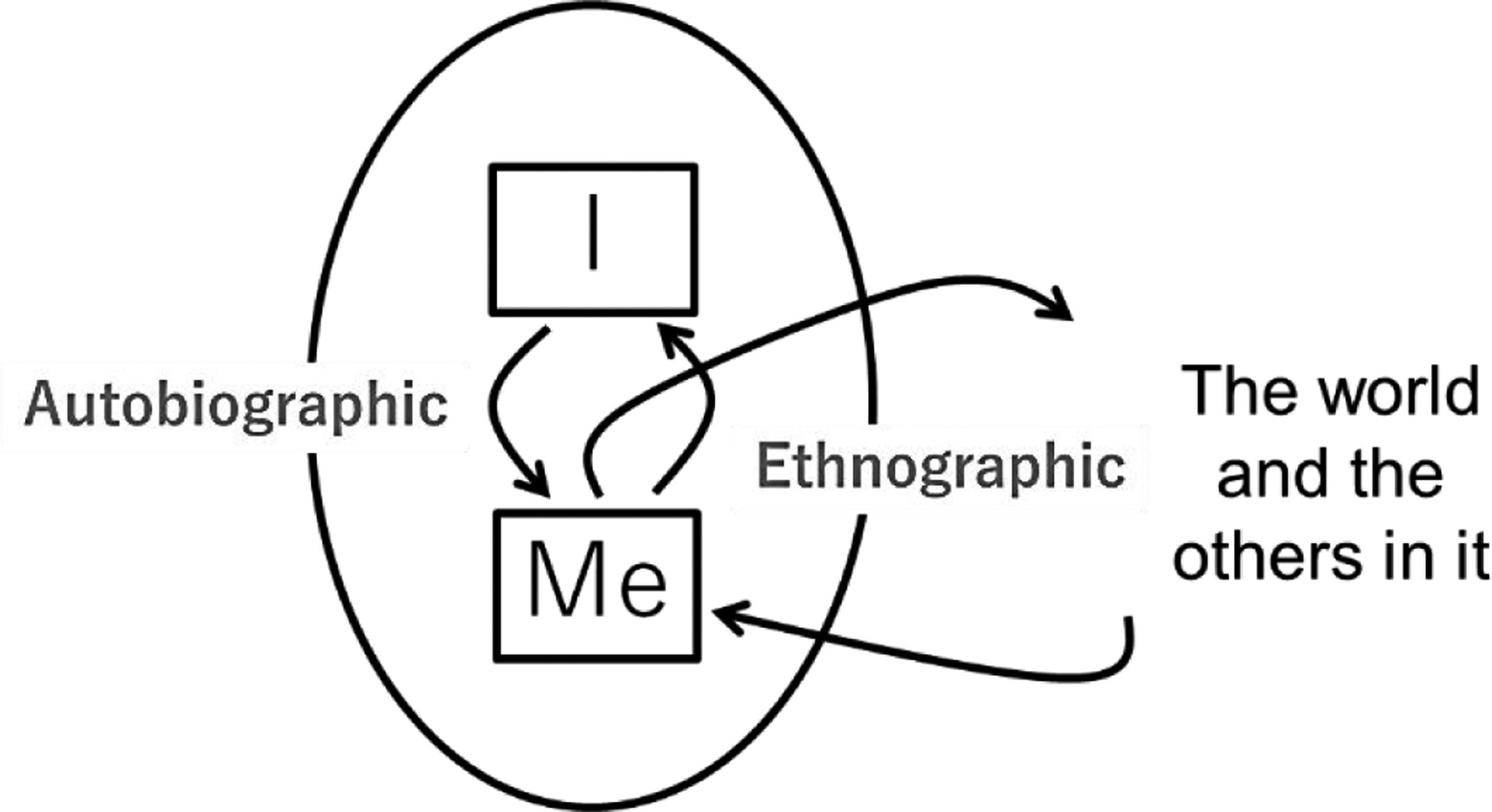
Thus, examining all these relationships is impossible, where a minimum unit of inquiry on the experience of the subject is required. Moreover, the person experiencing such events, that is, the autoethnographer, can evidently identify such a relationship.
The current study highlights autoethnography as nanopsychology, which is the “psychology where the empirical database is purified to include humanly important existential experiences (focus on selected data that are given in their minimalistic form) which are then put to rigorous theoretical scrutiny” (Valsiner, 2018a). Valsiner warns against beliefs in quantification and data accumulation (especially big data) in psychology. According to Valsiner (2018a), quality is needed for the sense-making of the phenomena of experience to improve the theoretical precision of psychology. Therefore, “the investigation of the minimum possible unique instance for the maximum generalizability of the knowledge that is available in the instance – as Vygotsky proposed “minimal Gestalt” as a unit of analysis – is needed” (Valsiner, 2018b).
Autoethnography requires understanding of the self autobiographically and ethnographically (Ellis et al., 2011). According to the I–ME–world scheme, the former is a description of I–ME, whereas the latter denotes the ME–world.
Development of self-study using TEM
Studies that examined the relationship between autoethnography and TEM are few. However, several approaches have demonstrated the potential to deepen the understanding of the complexity of the human mind. Lehmann et al. (2020), the study that is most relevant to the current research, was a collaborative reflexivity on the themes of living, aging, and dying. The authors explored these themes collaboratively through interviews and discussions of their experiences. They emphasize a more explicit focus on uncertainty, such as death, in TEM. Another example is Nakatsubo and Ogawa (2012), who employed TEM as a self-study for understanding the experience of a female childcare worker. The authors examined the process of her regulation of (controlled or expressed) her emotions during a confrontation with a mother and the types of emotional changes that occurred during this interaction.
Furthermore, scholars from several disciplines have suggested the potential of TEM to deepen self-reflection. For example, according to Hamana (2018), in the field of early childhood education and care, TEM has the potential to use for autoethnography because TEM is “well designed to resolve the weakness of the analytical aspect and the problem of not being able to read the researcher’s childcare experience as a story” (Hamana, 2018, p. 104). In addition, Toyoda (2017) proposed a method for career design called self-TEA analysis in the context of career design seminars at the end of business school. The abovementioned study demonstrates the value of TEM in deepening the deliberation on one’s career development process.
Data collection and analysis
The first author created and revised Auto-TEM seven times by re-reading research notes, interviewing others involved in his experience (especially Prof. A, the supervisor of the first author during his master’s program), remembering his experiences, and discussing with the second author (from January 2017 to March 2020).
Although it is not easy to describe this “modeling” process, its overview is as follows. First, as a prototype of Auto-TEM, a lifeline diagram (Figure 4) was created at a “TEA training camp” held at Ritsumeikan University (January 2017). Second, based on this diagram, the first author remembered significant events. Here, they referred to research notes to depict the events in more detail. Third, the Auto-TEM diagram was revised for theoretical elaboration and detailed description through interactions with participants at conference presentations (e.g., The 10th International Conference on Dialogical Sato, 2019 and the 16th European Congress of Psychology, 2019). Prototype Auto-TEM lifeline diagram (partially modified, January 2017).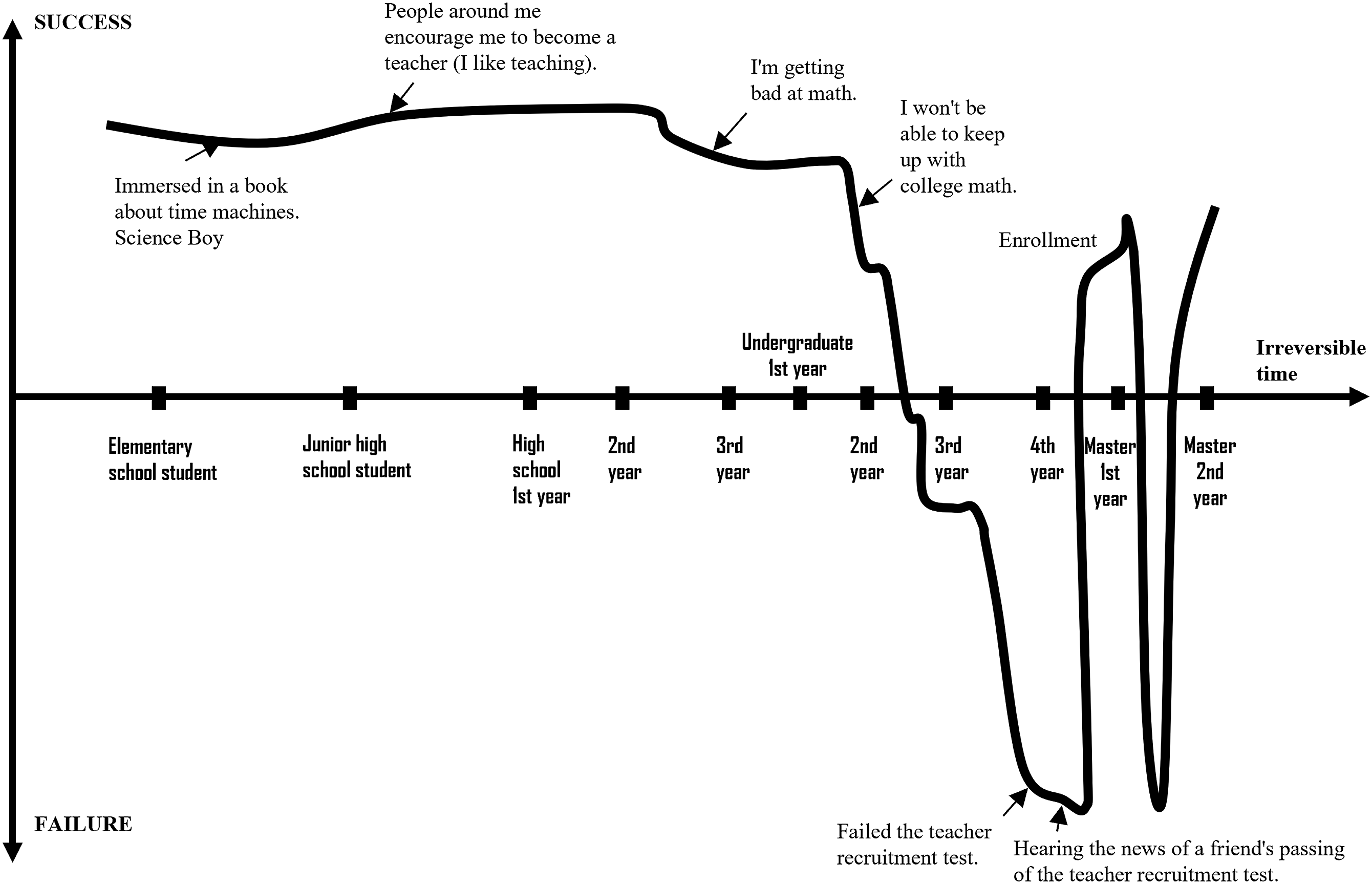
Additionally, as an autoethnographer, the first author focused on the significant events he experienced. Further, he described his subjective feelings and conflicts. He deliberated on the support from others and institutional restrictions involved in those feelings and events with the help of TEM’s conceptual tools. For instance, the author adopted the fundamental assumption from the TEA study that “bifurcation points emerge in the tension between social powers.” If the social powers created tension in the TEM diagram, was BFP not generated? Contrastingly, I considered whether social powers existed in the BFP. Such a dialogical positioning between theory and experience was an essential process of “modeling.”
Results
Summary
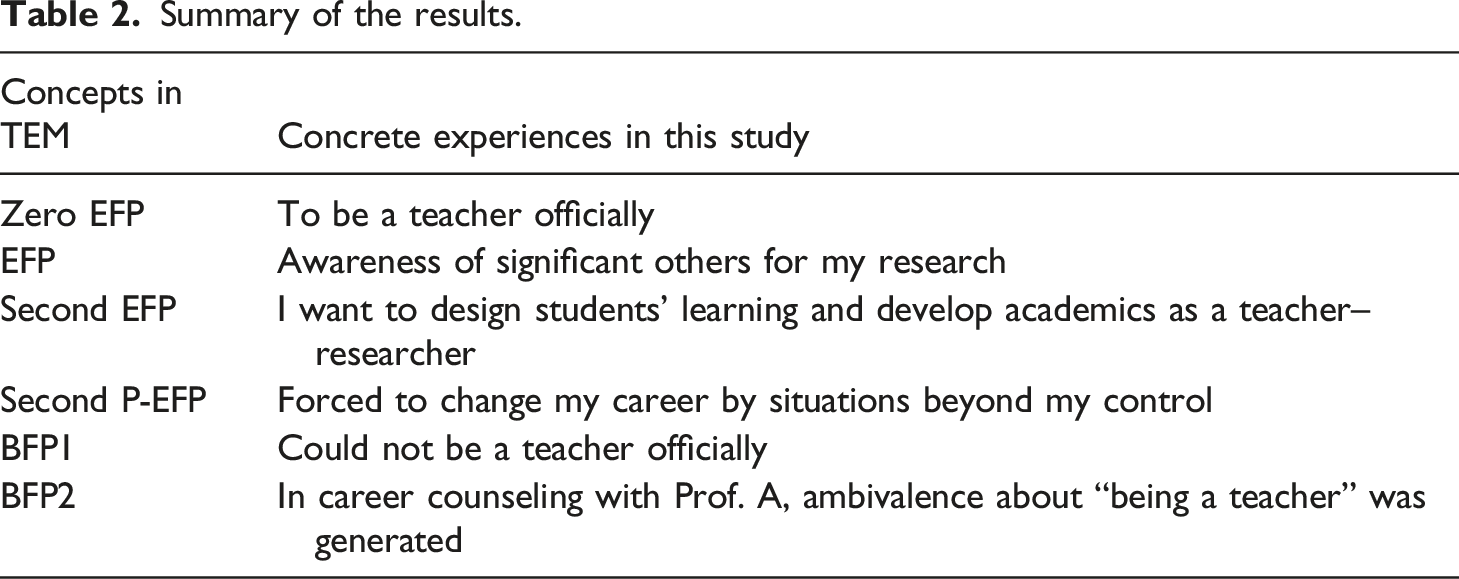
Summary of the results.
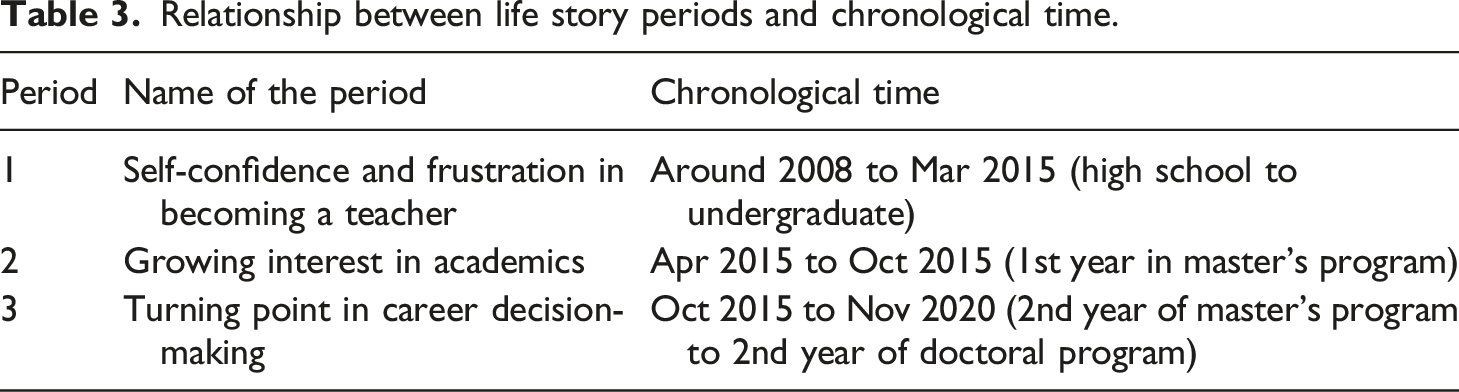
Relationship between life story periods and chronological time.
Life Trajectory of Career Decision-Making
Figure 5 depicts the model of life trajectory described by Auto-TEM. In this model, rational decisions and institutionally directed trajectories are represented by straight lines, whereas the curved lines represent trajectories that include problems or conflicts. The majority of TEM diagrams represent the arrows between events as straight lines. However, arrows are a sign. Thus, we considered that straight arrows, which denote rational and linear understandings, may not typically and appropriately represent human development. The subsequent sections describe life trajectory in terms of career decision-making at each period of the model. Auto-TEM diagram of the life trajectory of the first author
4
(significant events are shown in bold).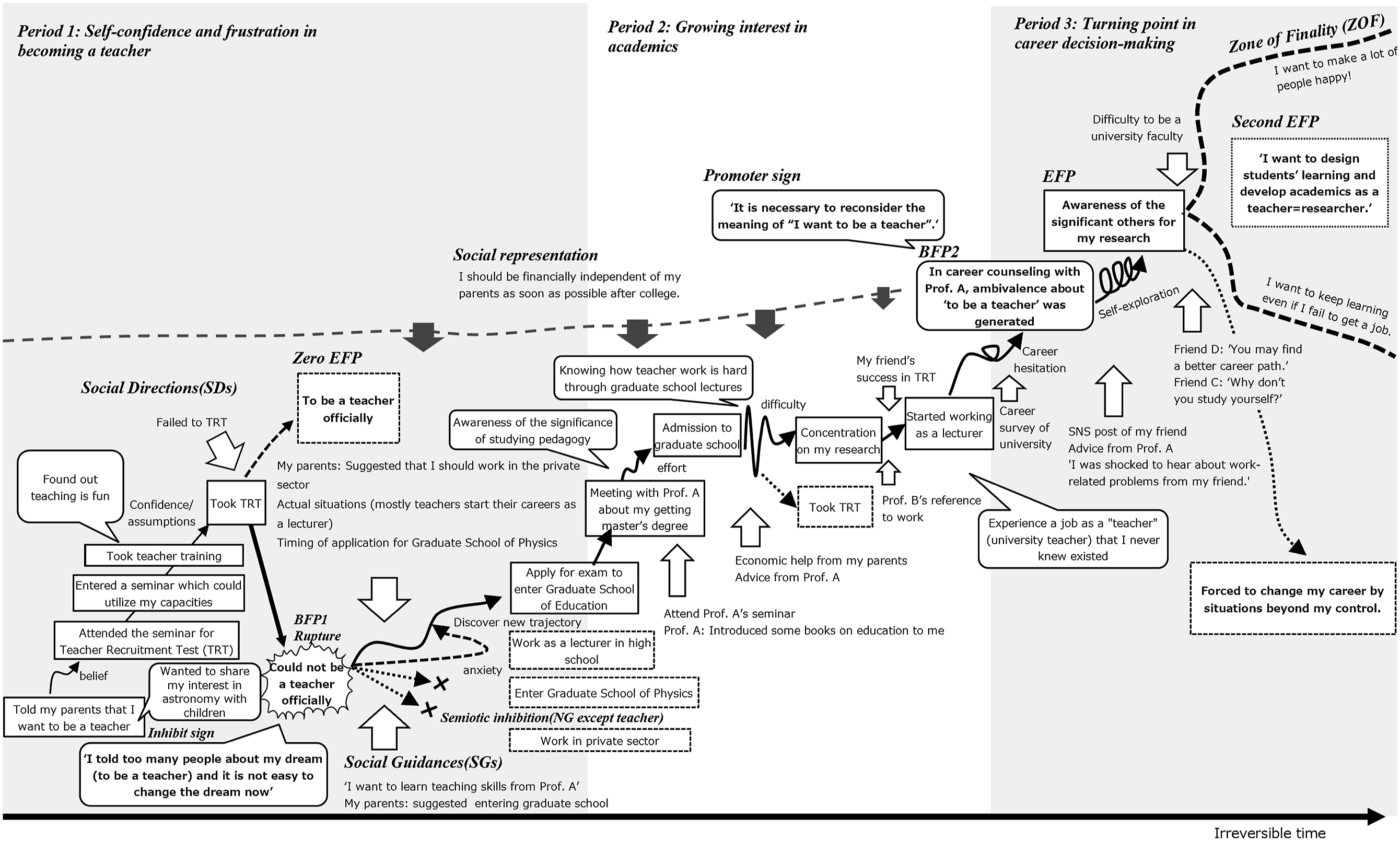
Period 1: Self-Confidence and Frustration in Becoming a Teacher
Life Story
I was a fourth-year student in the Faculty of Science at a national university in Japan. As a prospective teacher, I felt great fascination in becoming a science teacher by participating in Teacher Recruitment Test (TRT) seminars and by experiencing educational practice. Alternatively, I had not experienced many failures in examinations I had taken (from elementary school to college). Moreover, I made great efforts thus far; as such, I was confident that I will pass the TRT. Failure in the TRT led me to realize the gap between my future vision and reality. As I could no longer become a full-time teacher, I was faced with the need to consider other options. I was clueless about which career I should take during this period. I asked for advice from many people, including my family, friends, and mentors. In this manner, I identified several options. At this point, the imagination of working as a teacher for the next year became reality for the first time. It aroused my anxiety. At the same time, I found it challenging to make a career decision because I was left with no option except to be a teacher. At the suggestion of a family member, I discovered the option of going to a graduate school to further my education and visited a professor for advice.
Analysis
I was undergoing the process of psychologically transitioning toward life after being employed as a full-time teacher. At the time, I was wondering about the type of teaching and classroom management I wanted to do and the type of life I wanted to have. For this reason, I could not realistically consider working as a teacher in the following year. I did not pay much attention to TRT. Therefore, failure in the teacher employment examination became a rupture or career discontinuation for me.
During this period, I felt a strong commitment and passion for the future of becoming a teacher. Nevertheless, the future goal of becoming a teacher also functioned as an inhibit sign that reduced the multilinearity of my career trajectory. Specifically, after my failure, I asked for advice from many people, who provided options such as “going to a graduate school for physics” and “working in the private sector.” These options emerged as a result of social powers. However, the conclusion is that non-teaching occupations could not be regarded as a reasonable decision because they were viewed as different from the direction of the goal of becoming a teacher. At this point, observing the tension between individual career goals and the social powers that prevent or guide the person is possible.
From the perspective of TEA, social powers provide an opportunity for considering life trajectories in a multilinear manner, whereas individuals in life trajectory were making semiotic negotiation between these options and the career goal of becoming a teacher. As a result, the sign becoming a teacher constructed a dilemmatic situation in terms of career decision-making.
Period 2: Growing interest in academics
Life Story
In period 2, I gradually developed an interest in academics. I decided to apply for the Graduate School of Education and visited Prof. A to ask for advice about entering. I asked what kind of study I should pursue and what research plan to prepare. At that time, Prof. A introduced some literature on education for study. This literature greatly attracted my interest and, at the same time, provoked reflection. I was especially surprised by my ignorance of pedagogy after reading these books. In addition, I began to feel a sense of crisis that I still lacked sufficient knowledge of pedagogy. In such a tense situation, I read these books and other academic papers many times in the months before taking the entrance examination for the graduate school. As a result, I passed the exam. During this period, I realized the importance of studying pedagogy. At the same time, I began to learn about the difficulties of teaching and became interested in scholarship through lectures at the graduate school.
Furthermore, Prof. B introduced me to a part-time lecturer at a university, who helped me recognize the difficulty of educational practice. This opportunity was a memorable experience because I could still be in a teaching position, yet face students that differed from junior and senior high school students.
Analysis
During this period, I was conducting my research despite the tense relationship between the social representation that “I should be financially independent of my parents as soon as possible after graduating from university” and social support from others around me. The first-year students of the master’s program (including me) could opt to take the TRT even while they were enrolled. However, I did not take the TRT. Instead, I focused on my research for my master’s thesis. The reason for this decision was that furthering my education in graduate school meant fulfilling my responsibility to my parents, who had been a burden on me.
Period 3: Turning Point in Career Decision-Making
Life story
In October 2015, when I was a first-year student of the master’s program course, I visited Prof. A to request him to confirm the answers to a career survey conducted by the university. I handed the questionnaire to Prof. A and said, “I am not sure whether I should be a high school teacher or a junior high school teacher.” This comment triggered a dialog with Prof. A about my career, who advised me that “it is hard no matter what kind of job you choose, so you should decide after carefully considering what you are suited for and what you want to do.” I felt the necessity to reconsider the meaning of “becoming a teacher” on the value level, which I previously vaguely recognized.
In terms of the career decision process from BFP2 to EFP1, Prof. A and I identified this period as a self-exploration process, which I considered a turning point in my life. During this period, I questioned the concepts of desires or values and what they meant to me concretely. I repeatedly visited the university library and read books on psychology and career education to answer these questions. In my research notes, I described my understanding of value and career at the time as follows: (Value is) what a person wants, including deeper insight, unlike a notion of “I want to.” (November 7, 2015) Work is not “something I will do for the rest of my life,” but “something I am now thinking I want to do for the rest of my life” …. Then why do I want to be a high school teacher? …. Teachers are involved in someone’s life, and I want to influence someone. I decided to become a teacher because I wanted to leave proof that I existed. However, this is possible even if I am not a teacher. (November 7, 2015)
BFP2 was a turning point in my career decision because it swayed the meaning of becoming a teacher. At the time, I was moving back and forth between exploring my teaching philosophy and values and reconsidering my research plan due to the shift in the theme for my master’s thesis. In addition, in discussions on careers with the graduate students during Prof. A’s seminar, I received advice about the possibility of selecting a career apart than teaching and about researching my career. Conclusively, I began to ask myself, “Whom do I want to help by doing my research?” As I sat in my Kotatsu
5
and thought about the purpose of my master’s thesis, I thought to myself, “I am radiate happiness. I want other people to be happy, too. That’s why I conduct research.” Once I arrived at that “answer,” I burst into tears and could not stop. (February 6, 2016)
The abovementioned note is a retrospective description of the moment when I decided on my career goal. This moment was a drastic and esthetic experience. In this note, others include friends met on social networks, friends who talked about work, and students involved in the future. These “answers” were also the answers to Prof. A’s questions and the values I had been exploring thus far.
By discovering the answer, I was able to generate a goal: “I want to design student’s learning and develop academics as a teacher–researcher.” This prospect includes an essential part of my involvement in education: I want to see children’s growth in front of me, and I want to be influenced by them and grow. I also began to think that if I could continue my research, especially about careers, while continue being related to students in the university, I could help the students in front of me and many more others. This idea was rooted in my experience as a home tutor and the career support I received. In addition, even if I were unable to become a “teacher–researcher” and failed to land an employment, then I want to continue learning and “make a lot of people happy.” However, whether I could achieve this goal remained unclear.
P-EFP2 of Fear
I set the second P-EFP as “forced to change my career by situations beyond my control.” I did not want this situation in my life in my quest to achieve the goal of becoming a university teacher–researcher. I determined the second P-EFP in February 2020 (third year in the doctoral program and producing my seventh Auto-TEM). However, this P-EFP of fear was described in a research note in October 2019: The end of life suddenly. I realized that I was afraid that my ambition would be cut short in the middle, like dying in an accident. His death by accident — perhaps I was secretly overlapping myself with him. Is it possible for a person to live with the consciousness of death? Does the relationship change when a friend has an incurable disease? We can’t say anything in FF14
6
if a character dies in an unimportant place. In the game, they can’t slip and die. I thought it when I collapsed (fainted). When I was on the plane, I thought I would hate to die here and not leave a message. Like Mt. Kitayokodake or Mt. Maya, the experience of dying if you make a mistake. Experiences such as the oceans of Micronesia, where I might die here. Death is always there, and I guess I was (subconsciously) afraid that I might jump out of the way at a moment’s notice. Whether such a thing actually happens or not. (October 2019, Research Notes)
I experienced a fainting spell in August 2019, when I was a third year doctoral student. The diagnosis I received was vasovagal reflex (fainting due to low blood pressure), where I regained consciousness within a few minutes. At the time, however, I felt distant from my consciousness and was unable to control my body. My partner, who was living with me, helped me. However, I lacked the strength to stand and to keep my eyes open despite wanting to. I collapsed in front of her—it was a relatively horrible experience for me. Moreover, I felt that I did not want to die in the middle of the road or leave my partner behind. As I describe in my research note for October 2019, this fear is a synthesis of various imaginary and actual experiences from my past. My sudden inability to achieve my career goals represents a rupture of the story I am trying to construct. It is the very future that I do not want to realize at present.
Analysis
One of the differences between BFP1 and BFP2 is the flexibility of the choices. The career choice in BFP1 was a fixed and linear career decision, which was based on the previous experience of the first author, whereas the career decision in BFP2 was not flexible but open to other options. However, it involved a semiotic inhibition process. In contrast, BFP2 provided a pleromatic meaning (Valsiner et al., 2021) to career prospects. Career decision-making as a ZoF enables the consideration of resilient career trajectories despite the emergence of a rupture. In other words, it enables people to make a career decision that includes the possibility of taking shadow trajectories (Bastos, 2016) and the abundance of imagination in transition (Zittoun, 2006; Zittoun & Gillespie, 2015).
Concluding remarks
This study intended to describe and analyze the career decision-making of the first author in the context of life trajectory using Auto-TEM. The life story and its analysis demonstrate the concrete process by which individuals elaborate and enrich their career decisions in life trajectories and the semiotic and transactional negotiation between the individual and society. Career decision-making is an issue in cultural psychology in terms of dynamic semiosis, which is concerned with understanding the manner in which a person’s life trajectories promote or inhibit socio-culturalism and not only a subject of matching and self-esteem.
Conversely, we emphasize that the career decision-making of an individual is an act of meaning (Bruner, 1990) with a unique ontological aspect and two aspects. First, a person who is undergoing the process of career decision-making may discover alternatives with an esthetic realization of one’s existence (EFP in this study). Second, career decision-making can sometimes be a process in which the reconceptualization of an existential experience, such as death, emerges with intense emotions (second P-EFP in this study). In this manner, living and dying as P-EFPs play crucial roles in the processes of meaning-making about the experiences and existence of individuals (Lehmann et al., 2020).
This study proposes the value of Auto-TEM as a qualitative methodology for describing such a dynamic career decision-making process. Career decision-making is a personal and a collective cultural process. Observing the connection between personal and collective cultures from the external viewpoint is challenging because these cultures are mutually related and resonating. The autoethnographic view renders possible the revelation of the understanding of the dynamics of their synthesis. Furthermore, TEM provides useful conceptual tools for autoethnography researchers to elaborate on the socio-cultural aspects of career decision-making.
This study suggested that the imagination of others and the dialogical self in conflict played an essential role in career decision-making. Thus, further methodological considerations are necessary to integrate imagination theory or dialogical self within Auto-TEM to enrich the reflection of the researcher and describe deep experiencing process (Lehmann & Valsiner, 2017).
Footnotes
Acknowledgments
We are grateful to the participants of the Kitchen Seminar held on February 10, 2021.
Declaration of conflicting interests
The author(s) declared no potential conflicts of interest with respect to the research, authorship, and/or publication of this article.
Funding
The author(s) disclosed receipt of the following financial support for the research, authorship, and/or publication of this article: This work was supported by the Japan Society for the Promotion of Science (KAKENHI grant JP22K13714, JP22K10767), and Ritsumeikan University.
Ethics approval
We consulted extensively with relevant researchers, who advised that this autoethnographic study does not require ethical approval.
Consent to participate
This autoethnographic study does not require informed consent.
Consent to publication
This autoethnographic study does not require additional informed consent.

Notes
Author Biographies
Teppei Tsuchimoto is a Research Fellow of Japan Society for the Promotion of Science, Osaka University, Osaka, Japan. He is interested in bridging autoethnography and developmental-cultural psychology, career development, personal and collective culture in the garden, qualitative research theories and methodologies, and career education in peripheral regions.
Tatsuya Sato is a professor in the Faculty of Comprehensive Psychology at Ritsumeikan University, Osaka, Japan. And now he has been a dean of the faculty since 2021. His general interests are in the history, theory, and methodology of psychology. In addition, he has interests in forensic psychology and semiotic cultural psychology. He innovated the qualitative psychology called Trajectory Equifinality Approach since 2004, and he has published many articles and books including the English written book “Making of the Future: The Trajectory Equifinality Approach in Cultural Psychology” (Information Age Publishing,), 2016. Also, he has produced about 200 works among volumes, chapters, and articles. Email: