



Abstract
Islamophobia across the western world appears to be on the rise yet very little is known about it. This review systematically examines qualitative literature to gain an in-depth understanding of Muslim minorities’ experiences of ‘Islamophobia’, and how it may impact upon their psychosocial wellbeing. 180 initial studies were identified across six databases; PsycINFO, ASSIA, Humanities Abstracts (EBSCO), IBSS, CINAHL and MEDLINE, 9 of which met the inclusion and quality criteria. The studies included were analysed using Thematic Synthesis and four key themes were identified; ‘Construction of The Other’, ‘Stigmatisation of Appearance and Attire’, ‘Homogeneity of Identity and Experience’ and ‘Concealing and Normalising Behaviour’. The findings of this review are consistent with previous literature and highlight the difficulties Muslims experience as victims of ‘Islamophobia’. In conclusion, the implications for psychological research and practice are discussed.
Introduction
Since the early 21st century (post 9/11), there has been an exponential rise in discrimination and/or racism towards Muslims, particularly across the western world (Rippy & Newman, 2006). The recent socio-political climate, with its wave of western nationalism, has further amplified the anti-Islamic rhetoric (Akbarzadeh, 2016). The media has arguably played a significant role in this regard – by fuelling the creation and maintenance of negative stereotypes of Muslims and dispersing a fear of Islam.
The term Islamophobia, dates back to the late 20th century when it was used in the context of Muslims in Europe and the U.K. (Samari, 2016). It first appeared in literature in a report produced by the Runnymede Trust. The report described Islamophobia as ‘an unfounded hostility towards Islam and a fear or dislike of all or most Muslims’. (Conway, 1997, p. 5). The report described Islamophobia as a one-dimensional mind-set with four broad categories. These included: ‘prejudice expressed in everyday conversation and reflected in media representations, exclusion from employment, from management and responsibility, from politics and government, discrimination in employment practices, in the provision of services such as health and education, violence involving verbal abuse, vandalizing property and physical abuse’ (Inayat, 2007, p. 288).
Islam is the second largest religion of the world (Lipka, 2017), with its followers constituting a significant proportion of the world’s population. Yet Muslims have been/continue to be subjected to various subtle and overt forms of Islamophobia (López, 2011). Islamophobia is reflected not just on an individual level, but is also manifested across social, structural and political contexts (Nadal et al., 2012). Many studies and reports have highlighted the rise in discrimination and hate crimes (explicit Islamophobia) towards Muslims, predominantly after the 9/11 attacks and the war on terror (Rippy & Newman, 2006). Some of the more implicit forms of Islamophobia however can be seen in the form of racist immigration policies, banning religious practices, increased surveillance and ethnic profiling of Muslims (Naderi, 2018).
Islamophobia has been found to have adverse effects on the lives of Muslims across the world, and more so when they constitute minority groups in western parts of the world. Further, Muslims’ experiences of religious and racial discrimination are associated with poor psychological health and social wellbeing (Samari et al., 2018). Widespread feelings fear and apprehension of hate crimes especially following negative media representations of Islam are also common amongst Muslim minorities (Haque et al., 2019).
Research aims and questions
The research was aimed answering the following research question: “What is known in literature about Muslim minorities’ experiences of Islamophobia?”
In doing so, it aimed to contribute to the existing knowledge of ‘Islamophobia’ and how it is experienced by Muslims, particularly across western societies. An implicit aim of the review is to offer an in-depth understanding of the marginalisation, exclusion and ‘othering’ of Muslims and how this may impact their psychosocial well-being. In keeping with this aim, the review utilises qualitative studies in collating and synthesising rich accounts of peoples’ experiences.
The study situates itself within the field of humanistic psychology, with an emphasis on developing a holistic understanding of the individuals who have been involved in the studies. In doing so, it intends to highlight issues of race and religion, such as ‘Islamphobia’ that appear to influence aspects of human wellbeing and growth. Hence, a further objective of the study is to explore the psychological and social implications of ‘Islamophobia’. The information gathered and analysed as part of this review aims to bring together the research in this important yet understudied field of study. It may in turn be utilised by psychological researchers and practitioners to widen their understanding of difference and diversity, particularly in regards to the lived experience of Muslim minorities in the west.
Methodology
In keeping with the above aims and questions, a systematic literature review of how Muslim minorities experience Islamophobia was undertaken, with particular emphasis on their psycho-social wellbeing. The information gathered was analysis qualitatively using ‘Thematic synthesis’ (Thomas & Harden, 2008), a method that allows researchers to analyse participants’ perceptions, experiences and meanings, on a deeper level (given the qualitative nature of the approach) but also more broadly through the integration of studies across a variety of participants and contexts. It is also seen to be valuable in recognising gaps in research and informing developments with regards to future research and/or evaluation/implementation of interventions (Tong et al., 2012).
Search strategy
The search engines used for identification of studies included: PsycINFO, ASSIA, Humanities Abstracts, IBSS, MEDLINE and CINAHL. The searches included all studies to date, produced in English language. The key words used for searching on the databases identified, included ‘Islamophobia’ AND ‘psychosocial factors’ OR ‘psychosocial development’ OR ‘wellbeing’ or ‘mental health’.
Inclusion and exclusion criteria.
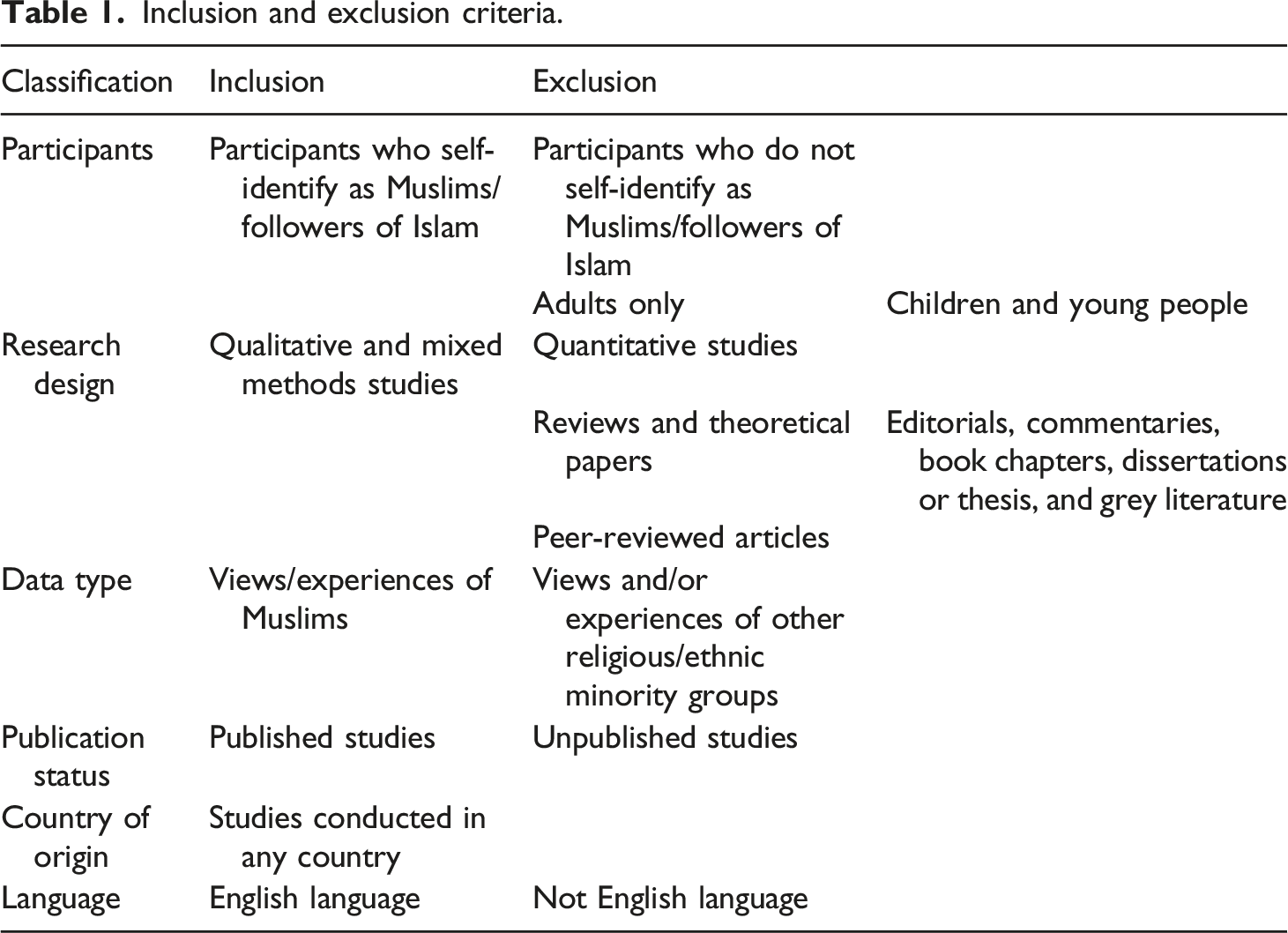
Selection and screening
The articles were initially reviewed for relevance based on their titles and later through abstract search. Any duplicates within the screened articles were excluded. The remaining articles were then assessed according to the pre-determined inclusion and exclusion criteria. In keeping with the inclusion criteria, quantitative and mixed methods studies were not included. This was in accordance with the aim of collating rich narratives about people’s experiences, and to support the development of an in-depth understanding of Muslims’ experiences of Islamophobia.
Data extraction
Characteristics of Included Studies.
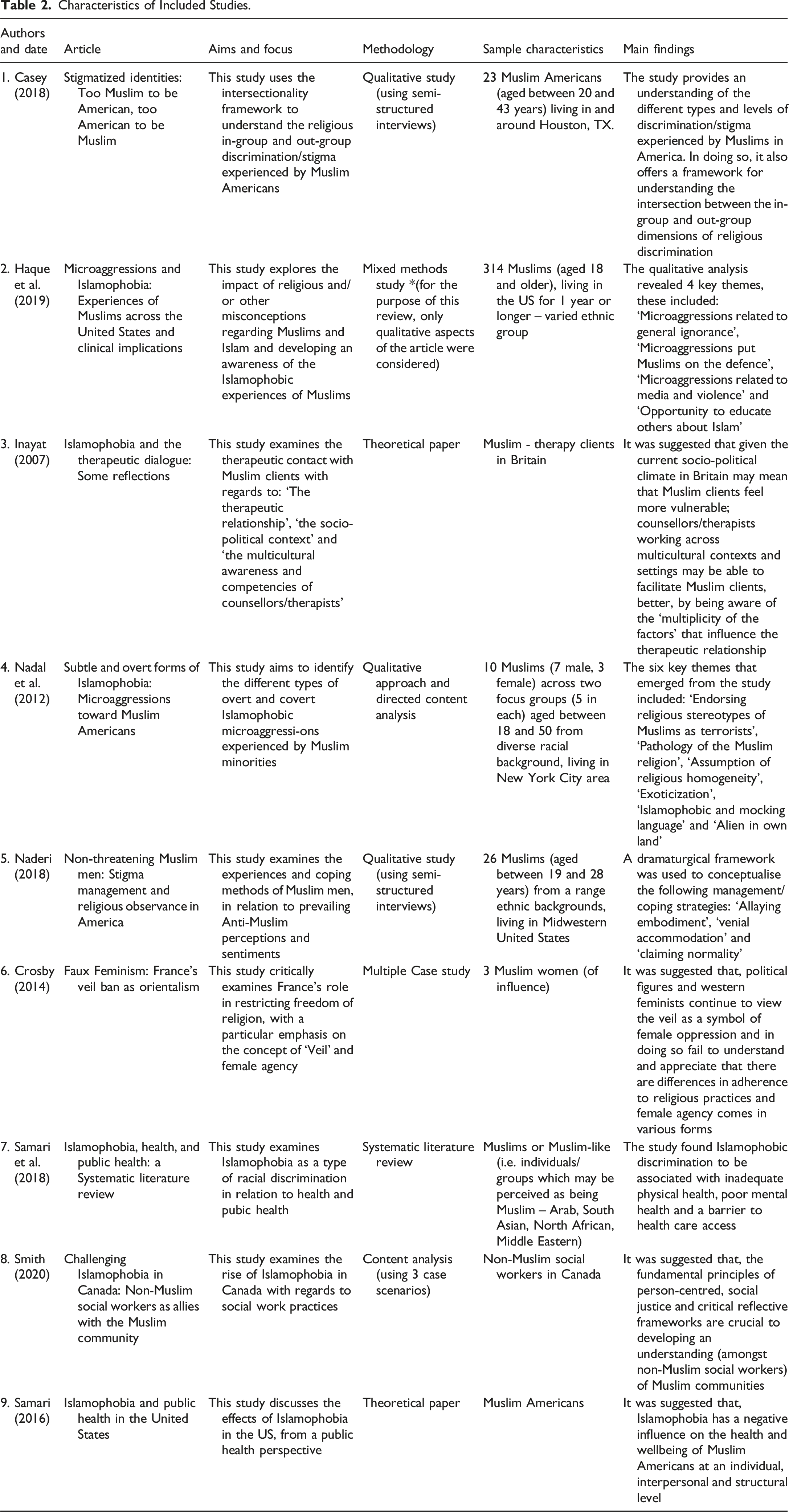
Quality assessment
The quality of included studies was assessed using the ‘Guidelines for assessing qualitative research’ proposed by Elliott et al. (1999). As part of the current study, nine studies were assessed studies in the following domains; however, no studies were excluded based on this quality assessment. A summary of this process can be found in Supplementary Appendix C.
Thematic synthesis
Meta-synthesis is a relatively new technique for examining qualitative research (Allen, 2014). Stern and Harris (1985) were the first to coin the phrase ‘qualitative meta-synthesis’ with reference to the amalgamation of a group of qualitative studies. Their aim was the development of an explanatory theory or model which could explain the findings of a group of similar qualitative studies.
The data collected from the nine included studies was brought together using Thematic Synthesis (Thomas & Harden, 2008), a process that allows researchers to merge and analyse the findings of various qualitative studies in a coherent, meaningful manner (see Supplementary Appendix A - 1.1). According to Campbell et al. (2003), synthesis ‘involves some degree of conceptual innovation, or employment of concepts not found in the characterisation of the parts and a means of creating the whole’ (p. 672). To complement this process of Thematic synthesis, Braun and Clarke’s (2006) guidance on conducting thematic analysis was used to inform the creation of themes (see Appendix B - Thematic Map)
The process of Thematic Analysis was initiated by gaining familiarity with the data extracted (reading and re-reading). This was followed by ‘line by line’ coding of the findings of each of the studies included in the review. Each line of the text selected, was coded independently. Prior to completing this stage, the codes generated were scanned to ascertain if they connected to the text in a consistent and coherent manner. The text was further examined to determine if any additional coding was required before progressing to the next stage. The second stage of the process involved the accumulation and organisation of the codes generated in the previous stage, into descriptive themes, consistent with the findings within the text. The final stage, involved progressing from descriptive aspects to more interpretive elements within the text. This process allowed the development of ‘analytical themes’ which integrated the findings of the studies to answer the research questions (Thomas & Harden, 2008).
Trustworthiness
The guidelines proposed by Elliott et al. (1999) were utilised as part of the review protocol for the identification and inclusion of studies. Throughout the various stages of the study, the reviewers engaged in reflexive activities to help develop their awareness of their own positioning on the topic. To further ensure trustworthiness, a structured search strategy was employed and an audit trail was maintained (see Supplementary Appendix A - 1.2) The search results are presented clearly and concisely using a PRISMA Flow diagram (Moher et al., 2009).
Ethical considerations
The study was planned and conducted using the guidance for research ethics proposed by the British Psychological Society (BPS, 2018) and the Health and Care Professions Council (HCPC, 2016). Additionally, the studies were assessed in a transparent manner using the quality criteria outlined by Elliott et al. (1999).
Findings and discussion
In keeping with its aims and questions, this systematic review explored the experiences of
Muslims in relation to Islamophobia. In total, 180 studies were identified from searches
conducted across six different databases, namely; PsycINFO, ASSIA, Humanities Abstracts
(EBSCO), IBSS, MEDLINE and CINAHL (see Figure 1). ‘Islamophobia’ was used as the primary search term and no similar terms
were used, as the review was aimed at developing an understanding of the term
‘Islamophobia’, particularly with regards to the ways in which it is used and expressed in
literature and how it is experienced (both implicitly and explicitly) by Muslim minority
groups. PRISMA Flow diagram for the search process utilised in the literature review (Moher et al., 2009).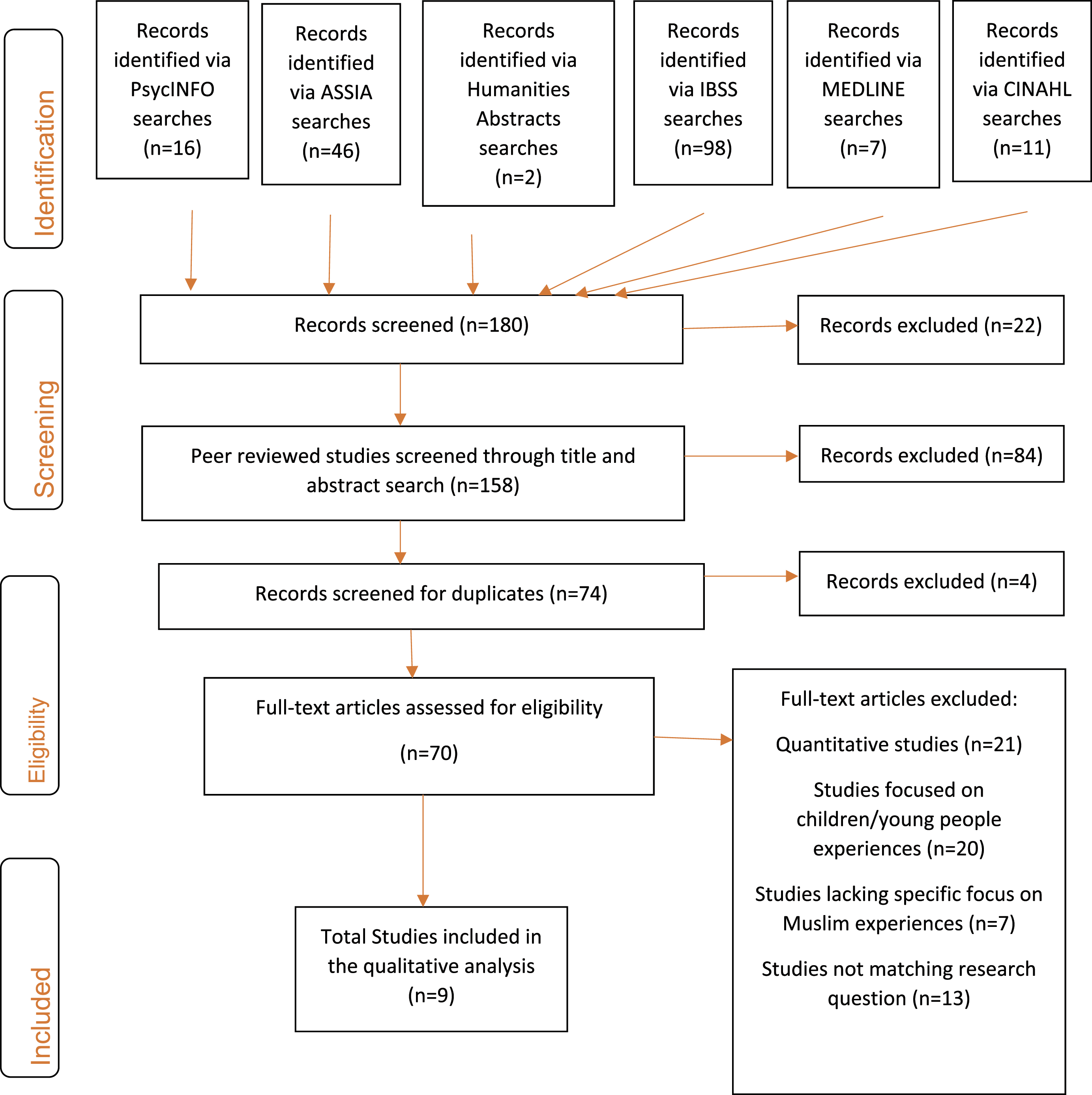
All studies relevant to the review were conducted in western countries (most in North America) where Muslims form a minority group. As majority of the studies were conducted in America, it was difficult to develop a nuanced understanding of Islamophobia and how it is experienced by Muslims across a range of contexts/environments. From a total of 180 identified studies, 22 were excluded (non-peer reviewed) in the initial stage of screening. Another 84 articles were excluded on the basis of a lack of relevance to the purpose, aims and questions of the study. The remaining 74 studies were screened for duplicates and 4 were eliminated. Subsequently, 70 full text articles were assessed against the pre-determined inclusion/exclusion criteria (see Table 1), following which 61 were excluded (see Figure 1, for a detailed description).
Thematic synthesis
The nine full-text studies remaining after this process were included in the review (see Table 2). The studies were analysed using Thematic Synthesis (Thomas & Harden, 2008) whereby four key themes were identified: ‘Construction of the other’, ‘Stigmatisation of appearance and attire’, ‘Homogeneity of identity and experience’ and ‘Concealing and normalising behaviour’. The theme titled, ‘Construction of the other’ was expressed implicitly and/or explicitly across all nine studies included in the review. ‘Homogeneity of Identity and Experience’ was identified in six of the studies, ‘Stigmatization of Appearance and Attire’ across seven studies and ‘Concealing and Normalising Behaviour’ in four of the studies included.
Construction of the other
The continued negative stereotyping of Muslims and Islam, particularly in the Media has contributed to a rise in Islamophobia. These prevailing stereotypes are seen to dehumanize Muslims and reinforce the construction of Muslims as the ‘other’, an out-group to be feared (Casey, 2018). Their effects are wide ranging and often appear to have negative repercussions for Muslims across individual, interpersonal and social contexts. All of the studies reviewed found the incidents of 9/11 and their reporting, to exacerbate the anti-Islamic rhetoric, which led to the linking of Islamic faith and its followers to terrorist ideologies and practices. The maintenance of such negative stereotypes in the western media further solidifies the ‘us and them’ view (Bishop, 2002, p. 68).
According to Casey (2018) those who are identifiable as Muslims, for instance, by the way they dress (headscarves, veil) or have names that are reflective of their identity have a greater likelihood of being perceived in relation to these negative stereotypes. They further suggested that Muslim Americans, despite their varied ethnicities are placed under a generalised category of ‘Muslim’ which is often used as a means of delineating them as ‘the other’ (Casey, 2018). In a study conducted by Haque et al. (2019), many of the participants stated that media reports regarding attacks on people who simply appear to be Muslim or reports about Muslims’ places of worship being attacked, makes them fearful and apprehensive to leave the security of their homes. They further reported being scared of retaliatory attacks by right wing individuals and/or groups.
In their recent study, Naderi (2018) closely examined the gendered nature of prevailing stereotypes regarding Muslims. One of the participants in the study challenged the mono-dimensional media representations of Muslim men which portray them as radical and socially deviant. He stated, ‘…these guys with turbans on their head, with a beard, doing this, maybe a gun or sword on their hand...giving speeches, usually when they have kidnapped somebody, that’s the Muslims that they show’. Moreover, in a study conducted by Haque et al. (2019) several participants reported that they found western media to continually guise Muslims as being ‘fundamentalists’, ‘extremists’, ‘conservative’, ‘fanatical’, ‘violent’, ‘uneducated terrorists’. A few of the participants reported great difficulty in undoing the impact of these negative media portrayals of Muslims and Islam.
In light of the studies reviewed, it is imperative that the ‘Othering’ experienced by Muslims and its impact on their psychosocial well-being must be addressed in psychological research and practice. It can be argued that the existing gaps in this domain of study may contribute to the reluctance experienced by practitioners within the field, to actively engage with and/or address such issues in therapeutic contexts.
Homogeneity of identity and experience
People often identify Muslims as a homogenous group whereby individual members are all
similar, have the same beliefs, experiences and religious practices. Nadal et al. (2012) identified this concept as the
‘assumption of homogeneity’ that is different from stereotyping, in that people may be
aware of religious beliefs and practices but assume these to be fixed and characteristic
of all members of the group. One of the participants in their study shared how certain
‘assumptions of homogeneity’ were made about her and her mother when they were walking
down a street. She stated, ‘A truck driver said to my mom, Say hi to Osama. And
that was like kind of the worse thing…’ (p. 23).
Haque et al. (2019) suggest
that identifying all Muslims as a homogenous group could be understood as a lack of
awareness and/or understanding of Islamic doctrines and practices. In recent years the representations of Muslims have become increasingly negative
(Elkassem et al., 2018;
Smith, 2020). Muslim
identity is associated with backwardness, oppression, extremist ideologies, terrorism
and anti-Western views. Such associations classify Muslim men, as the aggressors and
Muslim women as the oppressed. A Muslim Immigrant from Pakistan when talking about
Muslim men’s’ portrayals in the western media stated, ‘..He is irrational, he
is threatening, he is scary.. There’s no way he believes in.. those ideals that the
West holds dear and sincere to them’ (Naderi, 2018, p. 46).
Haque et al., (2019) in their review of literature state that public health services are not immune to homogenisation of Muslim Identity, either (Abu-Ras & Abu-Bader, 2008; Al Wazni, 2015). A study conducted by Abu-Ras and Abu-Bader (2008) suggests that Muslim families are increasingly being questioned and often reported to authorities for suspected child abuse. An example of this is a social worker at a school reporting a family to authorities for alleged child abuse following scratches on the child’s arm (despite parents offering an explanation that the reason for the scratches was a fall from the bicycle) (Haque et al., 2019).
Homogenised identities of Muslims are created, perpetuated and experienced across a variety of contexts, as detailed above. Such homogenisation often has wide ranging implications for the psychosocial wellbeing and growth of Muslims, particularly those belonging to minority groups in western countries (as discussed earlier). Psychological research and practice should emphasise the need to understand such processes of homogenisation which can often have dire consequences for the health and wellbeing of the concerned group.
Stigmatisation of appearance and attire
How Muslims appear and dress has continued to be a source of both curiosity and concern amongst Non-Muslim (predominantly western) communities. It is believed both consciously and subconsciously that there is something inherently wrong or peculiar about the way people from different religious groups, appear and dress (Nadal et al., 2011). In a study conducted by Haque et al. (2019), many of the female participants shared how they received stares from people when they were dressed in their ‘hijabs’ (Muslim veil). The participants reported that they felt as though these stares were intended to communicate discomfort and/or hate.
A negative view of those that appear ‘Visibly Muslim’ (headscarves, beards etc.) is often preferred over other more neutral or positive views (Crosby, 2014). Gitlin (2003) described such a process of preferring one world view, over others as a form of ‘hegemony’. The west continually appears to franchise the Muslim veil as a sign of oppression. Crosby (2014) found this view to be reinforced by western feminists and political figures who fail to appreciate the variation in adherence to religious practices and do not recognise that female agency can be manifested in different forms. One of the female participants in the study described the veil as an empowering aspect of a Muslim woman’s identity. She stated, ‘while many see it as means for women to disappear as victims within a public space, it is powerful in its ability take possession of public space’ (p. 53).
Islamophobia based on appearance and attire is not limited to Muslim women alone. For example, in a study conducted by Naderi (2018), a male participant expressed feeling immense pressure to fit in and look ‘less Muslim’ and how this interfered with his way of life. He stated, ‘when I’m going to the airport, I just try to make sure that my beard is shaved…so I end up debating whether to.. please everybody else or just to go with how I am supposed to live, which is the way of my life…That’s the challenging thing, [pause] that’s a big issue, actually, to be dealing with in my daily life’ (p. 47–48).
Appearance and attire, appear to coincide with how individuals construct and conceptualise their individual and collective identities. In light of the literature reviewed, it can be argued that stigmatisation of appearance and attire experienced by Muslims interferes with how they present themselves particularly in public domains and in turn informs their view of others and the world. Such issues and their consequences remain largely understudied across psychology literature.
Concealing and normalising behaviour
According to Goffman (1963) individuals at times conceal features of their identity (including appearance) which they feel may be stigmatised by other supposedly ‘normal’ people. However, if they think that these features (ethnicity, name etc.) cannot be concealed, they try to mute them (not talk about them) in order to lessen their (adverse) impact on their identity. In a study conducted by Smith (2020), a participant shared that she worked with a client who chose to abandon her traditional or customary dress to adopt a Western dress code. This was in response to her experiences of Islamophobia in the larger community. A female participant in a study conducted by Casey (2018) shared that she chooses not to present herself in a way that would attract attention to her Muslim identity. She stated, ‘I don’t cover [my hair]. I blend in, whereas if I were to cover I wouldn’t’. Similarly, in her effort to the negative media portrayals of Muslims, another female participant in a study conducted by Haque et al. (2019) stated, ‘I find it a daily struggle to be a positive example in society in order to break these stereotypes. It’s a struggle because honestly, at times it’s a lot of pressure for one person to feel’.
According to Naderi (2018) a strategy that Muslims commonly adopt to fit in and not be classed as ‘the other’, is that of denouncing features of their identity and claiming ‘normality’. A participant in their study summed up this up in one statement – ‘We’re just normal, average guys’. Another male participant shared how he feels Western media pathologises Muslims and Islam. He stated, ‘…I think, obviously, due to the media portrayals, it’s kind of hard to see a family man portrayal of a Muslim man…But the reality is…We want just to work...take care of our family, and live a content life’. (p. 54). Ratts and Pedersen (2014) describes these strategies as a means of mitigating the stigma of negative portrayals by associating with what is classed a ‘normal and average’.
The literature reviewed highlights how Muslims experience external pressures to conform to and exhibit western standards of ‘normalcy’. Many Muslims across the world, particularly those belonging to minority groups in the west, report this as an ongoing struggle they experience (discussed above) in their lives. It can be argued that conforming to such standards which may at times appear to be in conflict with ones preferred way of being, can have implications for one’s psychosocial wellbeing.
Strengths and limitations
This systematic review with its primary focus on the construct of Islamophobia and how it is experienced by Muslim minorities in the West, offers valuable insights into an understudied issue that affects the lives of millions of Muslims across the world. Most research in the area focuses on Islamophobia alongside other types of racial and ethnic discrimination, however, by focusing specifically on the construct of Islamophobia, this study fills that gap in literature. Additionally, most of the existing empirical research on Islamophobia to date utilises quantitative methods. However, this review aimed to offer a deeper, qualitative understanding of Islamophobia and only a small number of studies were found to meet the inclusion criteria. The limited number of studies that were found that focused upon the qualitative experience of Islamophobia might be viewed as a limitation to the work.
Implications for research and practice
This study examined Islamophobia as experienced by Muslim minorities in the West. As noted in the findings, Muslims are subjected to both overt and covert forms of Islamophobia which have negative effects on their wellbeing. The Islamophobic experiences of Muslims, such as those explored in this review are significant, meaningful and warrant further attention especially in psychological research and practice (Casey, 2018). Investigating the nature of such occurrences can offer further insights into a presently understudied yet important area in the literature on difference and diversity. This issue also remains largely unaddressed in psychological research, which in turn has implications for its practice.
Research on the consequences of such stigma and discrimination on the wellbeing of Muslims, is mostly quantitative in nature and focuses heavily on the experiences of Muslims in North America. Future research should therefore, utilise more qualitative means of inquiry to offer an in-depth understanding of Muslims who consistently endure widespread discrimination and Islamophobia. Furthermore, the disciplines of psychology should endeavour to engage more (in both research and practice) with issues of race, religion and culture and how these may influence human well-being and growth.
In terms of clinical practice, understanding of Islamophobia (alongside other forms of discrimination) may enable practitioners to offer therapies in a culturally sensitive manner. According to Parker et al. (1998), training with regards to multicultural competencies amongst trainee therapists increases their willingness to perceive cultural differences amongst people and further allows them to recognise these differences as meaningful and significant. Acknowledging these differences was also found to have a positive effect on the therapeutic relationship and in turn therapeutic outcomes (Inayat, 2007).
Conclusion
The current socio-political climate has magnified the stigma and discrimination Muslims continue to face. Muslims are increasingly portrayed as the villain, however, the studies reviewed as part of this review have found Muslims to be a marginalised group, often in need of support. The fields of counselling and psychology with their emphasis on human well-being have much to offer in this regard, particularly in terms of developing a holistic understanding of human experience. Issues pertaining to Islamophobia and associated marginalisation, however, have remained largely unaddressed in psychological philosophy and research. The disciplines of Psychology must seek to incorporate and advocate multicultural perspectives, in theory, research and practice. Psychological researchers and practitioners must also seek to recognise the multiplicity of factors that impact on the psychosocial health and wellbeing of Muslims, a marginalised, stigmatised and often misunderstood group of people.
Supplemental Material
Supplemental Material - Muslim minorities’ experiences of Islamophobia in the West: A systematic review
Supplemental Material for Muslim minorities’ experiences of Islamophobia in the West: A systematic review by Ishba Rehman and Terry Hanley in Culture & Psychology
Footnotes
Declaration of conflicting interests
The author(s) declared no potential conflicts of interest with respect to the research, authorship, and/or publication of this article.
Funding
The author(s) received no financial support for the research, authorship, and/or publication of this article.

Supplemental Material
Supplemental material for this article is available online.
Author Biographies
References
Supplementary Material
Please find the following supplemental material available below.
For Open Access articles published under a Creative Commons License, all supplemental material carries the same license as the article it is associated with.
For non-Open Access articles published, all supplemental material carries a non-exclusive license, and permission requests for re-use of supplemental material or any part of supplemental material shall be sent directly to the copyright owner as specified in the copyright notice associated with the article.
