




Abstract
The research on international norms offers several models of their evolution; however, a convincing model specifically depicting the phase of norm emergence is still lacking. Macro models (e.g. the norm life cycle) focus on the overall evolution of norms and distinguish the emergence phase as one among others, but they remain too rough. Meso models focus on a specific phase, but on phases other than norm emergence, such as diffusion (e.g. the signalling model) or enforcement (e.g. the spiral model). If they do focus on emergence, this focus remains case-specific and lacks theorisation. Micro models (e.g. the persuasion model or the funnelling model) focus on specific sequences within a phase. In this article, I develop one model of norm emergence by conceptualising it as the diffusion of a problem through different agendas and the discursive transformation of a problem into a (problem-solving) norm. The model distinguishes four sequences of norm emergence: problem adoption by norm entrepreneurs; issue creation in the public sphere; candidate norm creation in the institutional-deliberative sphere; and norm creation in multilateral negotiations. I illustrate the utility of this model by tracing the emergence of the norm against cluster munitions.
Introduction
How do international norms emerge? At the beginnings of norm research in International Relations (IR), ‘the dynamics by which norms emerge, evolve, and expand in international society’ were diagnosed to ‘have been the subject of strikingly little study’ (Nadelmann, 1990: 479). But since then, a large body of literature has been exploring various aspects of this question. Martha Finnemore and Kathryn Sikkink’s (1998) norm life cycle and Thomas Risse, Stephen Ropp and Kathryn Sikkink’s (1999) spiral model are certainly the two most prominent cases in point, frequently applied and adapted (Bailey, 2008; Flockhart, 2006; Krook and True, 2012). Several other studies suggest alternative patterns of norm emergence or diffusion (Efrat, 2015; Sandholtz and Stiles, 2009), or deal with differing factors driving norm evolution (Linde, 2014; Müller and Wunderlich, 2013). Yet, we still lack a model of norm emergence that offers a fine-grained framework for studying its stages, actors and dynamics. This article develops one such model.
Norms may emerge via different pathways, for example, from habits (Kratochwil, 1991: 81–83), from decentralised national legislation (Clapp and Swantston, 2009) or from practices (Kelley, 2008). They may be codified, but they do not need to be (Finnemore, 2000). They may originate with governments (Ingebritsen, 2002) or with (transnational) societal actors (Kaufmann and Pape, 1999). In the present article, I model and study one particular type of norm emergence, namely, norm emergence through bottom-up processes leading to the formalisation of proscriptions or prescriptions giving expression to what kind of behaviour is considered appropriate in certain situations for actors with a certain identity (Jepperson et al., 1996: 54). I conceptualise norm emergence as the diffusion of a problem through different agendas. In this process, a (deplorable) condition is discursively transformed into a (problem-solving) norm in four stages. In the first stage — problem adoption — an undesirable condition appears on the norm entrepreneurs’ agenda, where it is defined as a problem. In the second stage — issue creation — this problem appears on the public agenda, where it is defined as a social issue. In the third stage — candidate norm creation — this social issue appears on the institutional-deliberative agenda, where it is defined as a candidate norm. In the fourth stage — norm creation — this candidate norm appears on the institutional decision-making agenda, where norm negotiations take place.
The value added by this model is twofold: first, the model organises established theoretical concepts into one coherent framework; and, second, this framework advances our understanding of why some norms emerge but others do not by designing one ideal-typical path of norm emergence and by specifying both the necessary stages for an emerging norm to complete and the necessary conditions within those particular stages to be met. Hence, the present study proposes a novel perspective on norm evolution, while also adding to the emerging interest in negative cases and broadening the focus on norm diffusion by considering the diffusion through different political spheres instead of through different levels of the international system.
To demonstrate the value of the model, I conduct a plausibility probe by studying the emergence of the norm against cluster munitions (CM) in the period 1945 to 2008. The political relevance of this case lies in its connection to human security, as well as in the fact that the adoption of the Convention on Cluster Munitions (CCM) in 2008 was preceded by decades of CM use in warfare — and by failed attempts to prohibit these weapons. The fatal consequence of these failures, namely, the ongoing killing and injuring of thousands more people with CM, underscores the necessity of studying the processes and conditions of norm emergence. The theoretical relevance of this case lies in its long history, offering two distinct normative cycles that display both different outcomes and different combinations of relevant factors included in the model.
I begin by briefly discussing existing models of norm evolution to demonstrate the need for a new model. I then introduce the agenda diffusion model by clarifying its assumptions and conceptualising its four stages. In the empirical part, I apply the model to two episodes in the emergence of the norm against CM.
State of the art: Models of norm evolution and policymaking
The research on international norms offers several relevant models that I label macro, meso and micro models. Macro models depict the entire biography of a norm, with norm emergence as an initial phase, followed by institutionalisation, diffusion, internalisation and compliance. Examples of such models are the evolutionary pattern (Nadelmann, 1990), the norm life cycle (Finnemore and Sikkink, 1998) or the norms–genes analogy (Florini, 1996). Meso models depict specific phases like emergence, diffusion, enforcement or norm erosion. Examples of such models are the signalling model (Hyde, 2011), the erosion or regress model (McKeown, 2009; Rosert and Schirmbeck, 2007), or the interactive translation model (Zimmermann, 2017). Micro models depict sub-phases of the phases, such as initial issue adoption by norm entrepreneurs or final negotiations in an institutional setting. Examples of such models are the persuasion model (Deitelhoff, 2009) or the funnelling model (Holzscheiter, 2010).
In light of the abundance of models, why do we need another one? Two reasons make a new conceptualisation of norm emergence necessary. First, different models zoom in on different aspects of the complex and multifaceted phenomenon of norm evolution. Macro models offer important insights into the overall development of norms and give an idea about specific stages but remain too rough. Micro models provide the details on some, but not all, sub-phases and, moreover, leave out the question of how these sub-phases add together in the overall development. Meso models mostly focus on stages other than norm emergence. Second, the existing models of norm emergence suffer from under-theorisation: they distinguish only case-specific stages of norm emergence; they remain case-specific in their findings despite proposing a general process of norm creation; they do not clearly delimit the stages from each other; or they treat stages following norm emergence as part of norm emergence (Clark, 2001; Gest et al., 2013).
As a meso model of norm emergence, the agenda diffusion model that I present in this article addresses these challenges. It disaggregates the process of norm emergence into four distinct sub-phases (see Figure 1) and abstractly conceptualises these sub-phases by integrating insights from micro models into this conceptualisation. In addition, I draw on policymaking models because I view the creation of international norms as a specific form of policymaking, that is, the recognition, processing and, ideally, solution of social problems in the (international) political system (Howlett and Giest, 2013: 17). To be sure, policymaking research, and research on agenda setting in particular, has already influenced the research on international norms (Keck and Sikkink, 1998: 25; Steffek, 2013). Nevertheless, complex conceptualisations of agenda setting like the one offered by Jutta Joachim (2003: 248) remain the exception. This is why, in the following analysis, I put a particular focus on agendas while modifying classical policy models to reflect international and transnational processes of norm creation.

Stages of norm emergence.
The model: Norm emergence as agenda diffusion
The agenda diffusion model seeks to answer the central question of how a problem finds its way through transnational and international institutions, and how this process results in the adoption of a norm. To capture this process, the model draws on two basic concepts: the concept of social problems and the concept of agendas.
A certain condition becomes a problem when people perceive a discrepancy between what the status quo is and what they think the status quo should be according to their values (Cowan, 1986: 766; Winston, 2017: 3). This discrepancy may create pressure to take action to change the initial condition, that is, to solve the problem (Kingdon, 2003: 109). Thus, a problem that receives our attention and motivates our action becomes an issue on our agenda (Cobb and Elder, 1971: 903–905). An agenda can be generally defined as ‘a set of issues that are viewed at a point in time as ranked in a hierarchy of importance’ (Rogers et al., 1991: 6). Agendas guide action by expressing (for certain points in time) what problems will be addressed (or not) and in what order. Hence, interaction and competition between issues is constitutive of the very concept of agendas (Hilgartner and Bosk, 1988; Zhu, 1992: 826). Placing issues on these agendas is commonly described as agenda setting. As agendas function as filters selecting the issues that will receive political attention and expressing their priority, agenda setting is a precondition for potentially far-reaching decisions, and thus an essential element of political processes.
The public agenda and the political agenda are commonly considered the two main agendas, comprising several sub-agendas (Cobb and Elder, 1983: 85; Zhu, 1992: 826). The international public agenda includes the agendas of the populations, transnational civil society organisations, interest groups and the media. The international political agenda includes the agendas of governments, international organisations and their bureaucracies, and international civil servants. We may further distinguish the institutional deliberative agenda from the institutional decision-making agenda (Elgström, 2000: 460). The former includes all issues attracting political attention — it is the agenda of those international forums that serve the primary purpose of communication, debate and formation of political will. The latter includes only those issues scheduled for a decision — it is the agenda of international forums that serve the primary purpose of treaty negotiation.
Since there are several potentially relevant agendas, agenda setting also serves the purpose of issue expansion, that is, its diffusion through different agendas (Baumgartner and Jones, 2009: 17, 83; Cobb et al., 1976). Depending on what the initial agenda of an issue is and who the ‘issue proponents’ are (Dearing and Rogers, 1996: 3), two general paths of agenda diffusion are distinguished, namely, bottom-up and top-down (Cobb et al., 1976: 132–136). In open bottom-up agenda setting, civil-societal issue proponents place the issue on the public agenda, counting on political actors to respond by setting the issue on the political agenda. In hidden bottom-up agenda setting (or lobbying), the issue proponents pitch the issue directly to the decision-makers, who then place it on the political agenda. In top-down agenda setting, political actors set a problem on the public agenda to mobilise the public to alleviate political decision-making. In inside-in agenda setting, the issue originates within and is bound to the political sphere, for example, because the public might reject the political measures addressing it (see Table 1).
Agenda-setting models.
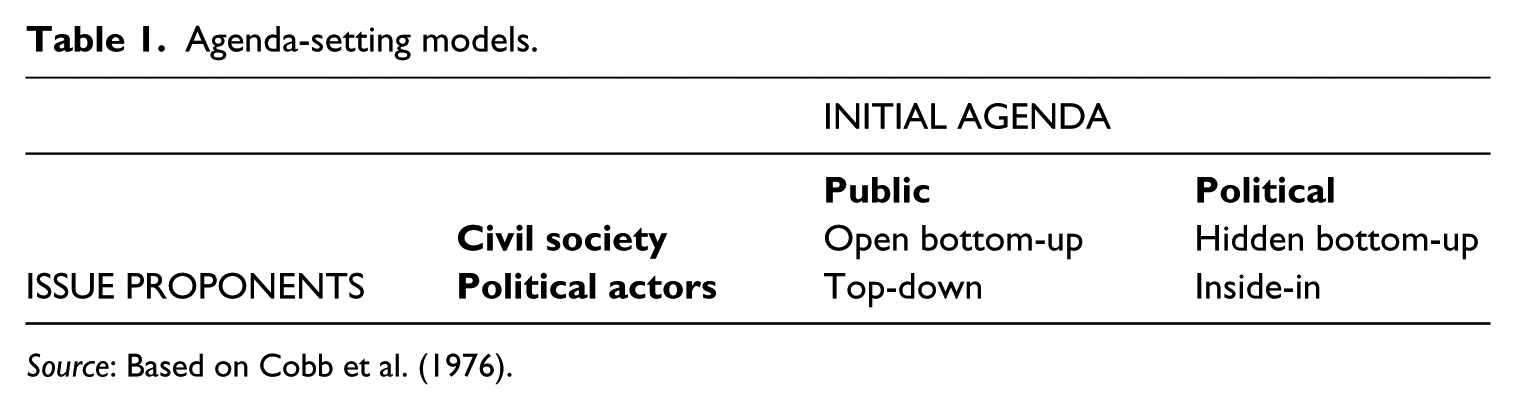
Source: Based on Cobb et al. (1976).
I consider top-down and bottom-up diffusion processes as theoretically plausible and empirically supported. Accordingly, the bottom-up model that I propose here is only one possible model — I developed it to reflect the state of the art in norm emergence, which mostly focuses on public-driven norm-setting processes. Moreover, while not neglecting that, at each stage, several problems may compete with each other for attention and other resources, the model focuses on the diffusion of one problem for analytical purposes.
Linear models face criticism for: being inaccurate, overtly deterministic and oversimplified; suggesting unidirectionality while ignoring feedback loops, overlaps and the interactions of multiple cycles; and artificially distinguishing stages and suggesting successions of stages that do not match the reality (Hofferberth and Weber, 2015: 82–83; Krook and True, 2012: 106; Sabatier, 2007: 7). These points cannot be dismissed, but they can be mitigated. First, it is important to recall the function of models: depicting parts of the world in an ideal-typical way and reducing complex processes to their main characteristic features (Snidal, 2004: 227–228). Second, a model does not have to encompass all possible forms of a phenomenon as long as it is explicit about what form it focuses on and why. Third, ideal-typical models allow for comparisons both of the phenomenon with the model and of different instances of the phenomenon with each other. Fourth, the determinism implied by the model, that is, the necessity of the stages and their particular order and features, is an analytical, theory-building move — and thus open to empirical testing.
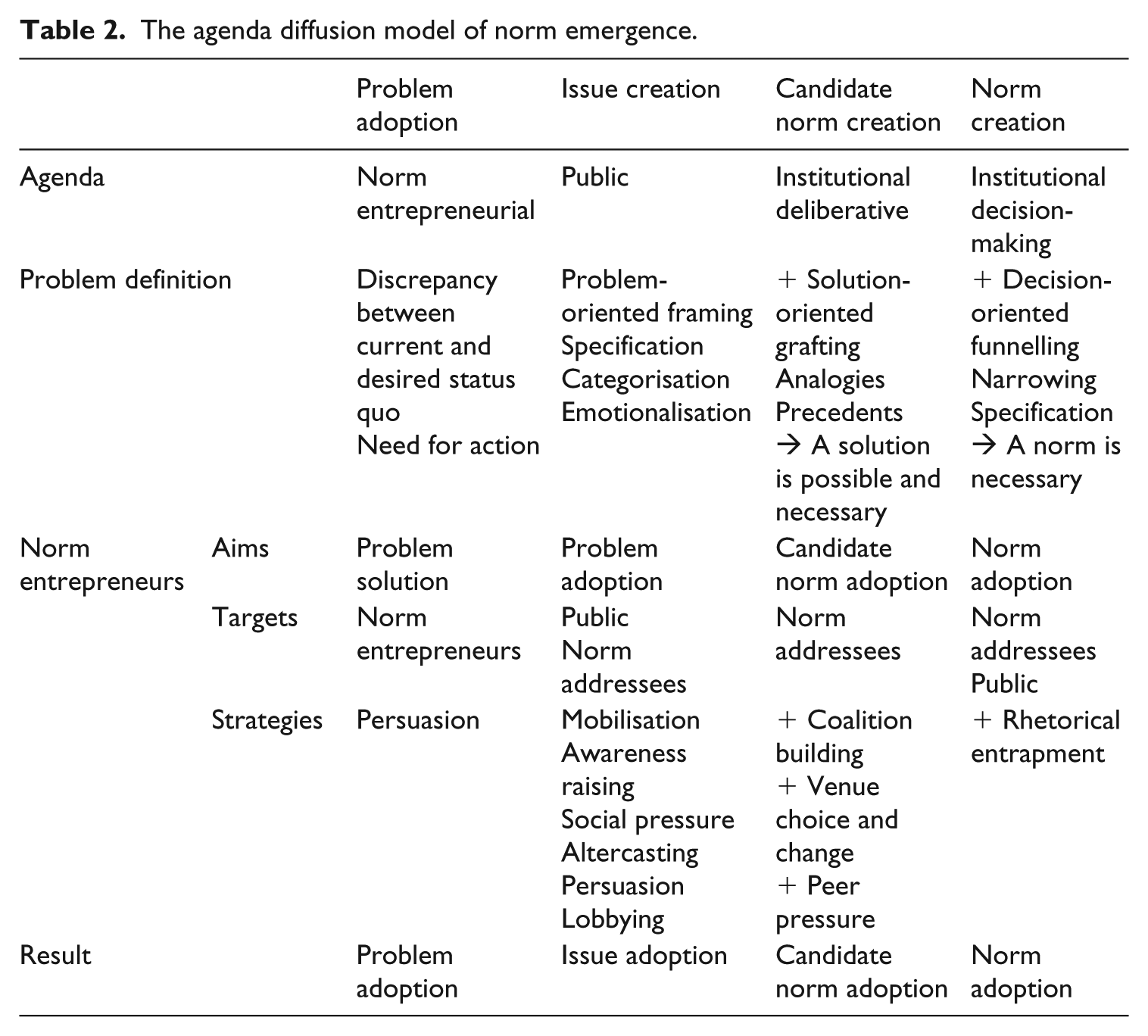
In the agenda diffusion model (see Table 2), the appearance of a problem on a particular agenda marks the beginning of a new stage, but as the term ‘diffusion’ suggests, the model does not imply that the problem disappears from other agendas or that the processes of the previous stage stop. The model, hence, accounts for overlap and simultaneity. Also, in contrast to the terms ‘career’ or ‘rise’, the term ‘diffusion’ encompasses bottom-up and top-down issue movements as well as movements through the same level. I expect the agenda diffusion model to apply under the following scope conditions. In contrast to spontaneous norm emergence out of practices and habits, the norm emergence processes in question are characterised through deliberate norm-setting efforts (1), initiated bottom-up (2), aiming at formalised norms (3), which, instead of codifying common practices, are supposed to instantiate behavioural changes (4) and are thus likely to ignite resistance of the (governmental) norm addressees (5).
The agenda diffusion model of norm emergence.
Stage I: Problem adoption
In the first stage, a normatively undesirable condition becomes a problem on the agenda of norm entrepreneurs. The stage begins when such a condition attracts the attention of potential norm entrepreneurs. The latter group might be affected by the problem themselves, be approached by those who are affected, or witness the problem directly (e.g. while working in the field) or indirectly (e.g. through media). In this stage, processes of internal problem definition (rather than outward-oriented strategic issue construction) are dominant — norm entrepreneurs set their own agenda by deciding which problems they want to address by promoting new norms.
The factors influencing internal processes of issue selection can be grouped into two categories: issue-related and organisation-related factors. The former include the norm entrepreneurs’ assessment of: (1) the issue’s chances for success based on issue attributes (such as its simplicity, proximity or salience); (2) its fit into their overall agenda and the agenda of other norm entrepreneurs; and (3) its impact on other issues, that is, whether it is believed to promote or to compromise them (Carpenter, 2014: 38–39, 41, 47; Rosert, 2019: 82–83). The latter include the organisation’s principled mission, but also material pressures on norm entrepreneurs arising in the competitive advocacy market, their position in the transnational hierarchy and their dependence upon the interests and resources of other transnational or international organisations and donors (Cooley and Ron, 2002: 6–9; Stroup and Wong, 2017). The stage of problem adoption is completed successfully if norm entrepreneurs adopt the problem and launch a norm-setting campaign.
Stage II: Issue creation
In this stage, norm entrepreneurs create issues to engender public mobilisation, which should leverage their influence on the norm addressees. The stage begins when norm entrepreneurs succeed in public agenda setting, that is, when the respective problem appears on the public agenda and sustains the attracted public attention over a certain period of time. When this happens, the problem diffuses from the agenda of norm entrepreneurs into the public agenda. It also diffuses through it by reaching a bigger audience or other media channels.
Issues are created through information politics (i.e. through posters, newspaper op-eds or radio interviews), as well as action politics (i.e. through demonstrations or political art like flash mobs) (Keck and Sikkink, 1998: 19–21). Both strategies convey the framing of the issue, which, to be effective, has to specify, categorise and emotionalise the problem. Specifying a problem means defining what the current and the desired situations are and pointing out the discrepancy between the two (Kingdon, 2003: 110). It also means identifying the scope and the causes of the problem and those actors responsible for developing and implementing the solutions (Baumgartner and Jones, 2009: 27; Keck and Sikkink, 1998: 27). Epistemic communities — ‘networks of professionals with recognized expertise and competence in a particular domain’ (Haas, 1992: 4) — provide this crucial information. Categorising means sorting the problem into a broader category of problems (Kingdon, 2003: 111). Emotionalising means pointing out the features of a problem that are expected to invoke the audience’s feelings, for example, threats to moral values or bodily harm (Keck and Sikkink, 1998: 27).
In addition to this issue-centred strategy, norm entrepreneurs rely on the actor-centred strategies of social pressure, positive altercasting, persuasion and lobbying. Social pressure is exercised through ‘naming, blaming and shaming’, which stands for the public exposure and criticism of the problem-causing behaviour (Schimmelfennig, 2001: 64). Positive altercasting, which is the other side of the coin, is exercised through the attribution of positive roles and praise (Petrova, 2016: 390). Through arguing and persuasion, the decision-makers may alter their convictions and transform their preferences (Payne, 2001: 40–43). Lobbying is carried out in direct (and frequently informal) contact with decision-makers when certain problems are brought to their attention and expertise as well as policy suggestions are provided (Kim, 2016: 605–606). The stage of issue creation is completed successfully if decision-makers with formal agenda-setting rights adopt the problem, that is, decide that the problem belongs on the institutional agenda.
Stage III: Candidate norm creation
In this stage, norm entrepreneurs continue their advocacy to construct a norm candidate and to persuade the norm addressees to set the problem on the institutional decision-making agenda. The stage begins when norm entrepreneurs succeed in institutional agenda setting, that is, when the respective issue appears on the institutional-deliberative agenda. When this happens, the issue diffuses from the public agenda into the institutional agenda. It also diffuses through it by reaching other institutions.
The candidate norm is created through ongoing processes of problem definition and ideational change essential to achieving a policy consensus and creating the willingness to negotiate (Charnysh et al., 2015: 328; Hirsch, 2014: 812). Part of the problem-definition process is shifting the burden of proof from those defending the need for a new norm to those defending the old practice (Price, 1998: 631–633). The discussions become more solution-oriented (Joachim, 2003: 248), with the candidate norm being the solution. To ensure institutional fit and to demonstrate that problem solutions are both necessary and feasible, the candidate has to be grafted onto and adapted to existing normative resources, such as the organisational culture, problem analogies and precedents (Elgström, 2000: 461; Price, 1998: 628–630).
Cooperative actor-centred strategies become more dominant than confrontational strategies. Public mobilisation and social pressure may still be necessary to prod reluctant norm addressees to participate in the norm-setting process (Petrova, 2016: 392); yet, overall, these aspects decrease as they might be counterproductive (Elgström, 2017: 235). Instead, coalition building becomes essential. Various norm entrepreneurs (transnational and domestic non-governmental networks, international organisations, and like-minded states) combine their resources to compensate for each other’s structural disadvantages, such as limited institutional access, lack of mobilising structures, lack of expertise, lack of authority and/or credibility, or lack of direct influence (Elgström, 2017: 227–228; Joachim, 2003: 251–252). In such coalitions, the commitment of like-minded norm addressees is crucial as they might lead by example (e.g. through national legislation), complement public pressure with (diplomacy-based) peer pressure and be particularly convincing in persuasion processes (Elgström, 2000: 463). Conflicts among the norm addressees may strengthen the position of the norm entrepreneurs since the latter may act as compromise-makers (Joachim, 2003: 263).
Choosing an institutional venue that would provide a conducive opportunity structure through its membership, mandate, output, rules of procedure and legitimacy is another major task (Coleman, 2013: 168–170). If no such venue exists or if it turns out that available venues hinder the norm-setting efforts, norm entrepreneurs try to change the institutional setting or even create new venues (Cottrell, 2009; Fehl, 2014). Forum shifting is facilitated if the norm addressees are divided (Norman, 2018: 17). The stage of candidate norm creation is completed successfully if norm addressees adopt the candidate norm, that is, decide that the candidate norm belongs on the institutional decision-making agenda.
Stage IV: Norm creation
In this stage, norm entrepreneurs work towards a formal adoption of the norm. The stage begins when a candidate norm diffuses from the institutional-deliberative into the decision-making agenda.
To ensure successful norm negotiations, different internal and external strategies are combined. Inside the negotiations, funnelling — narrowing the discursive space by including certain problem definitions and solutions while excluding others — becomes the dominant strategy of norm specification (Holzscheiter, 2010). Moreover, the norm’s behavioural and formal provisions are specified. To level power asymmetries and facilitate normative persuasion, certain institutional conditions need to be established: the communication process has to be inclusive, but, at times, also exclusive; it has to allow for equal and fair communication; and it has to be subject to public scrutiny (Deitelhoff and Müller, 2005: 172–175). Such rational, truth-seeking discourses may prompt the entrapment of their participants, whose initial — perhaps only instrumental — commitments and arguments limit the range of (normative) positions that they can take in later discussions without jeopardising their credibility (Schimmelfennig, 2001). Outside the negotiations, mobilisation and shaming again become essential to maintain pressure on the negotiators. The adoption of the norm successfully concludes the stage of norm creation and the whole process of norm emergence.
The norm against CM as a plausibility probe: Case selection and data
The norm against CM was adopted in December 2008, with almost 100 states signing the CCM in Oslo. This marked the successful end of the so-called Oslo Process, which was launched with the aim of prohibiting CM less than two years before and championed by the Norwegian government. CM are weapons consisting of dispensers filled with up to several hundred sub-munitions (bomblets) that are dispersed after the weapon is dropped; they function through fragmentation as both the dispenser and the bomblets fragment on impact into small pieces of shrapnel. The weapons’ indiscriminate effects were the reason for banning them: CM pose a particular threat to civilians during and after the strikes because they cover large areas and because many of the bomblets malfunction and explode much later, often decades after the conflict has ended.
Spanning a period of almost 64 years, the CM case offers two distinct research periods (RP) of similar length, which are delimited by two institutional cycles and end with contrasting outcomes. The first research period (RP1) begins on 1 January 1945 and ends with a negative outcome on 10 October 1980, when the Convention on Certain Conventional Weapons (CCW) was adopted without any regulations on CM — even though the weapons had been part of the negotiations. The second period (RP2) begins on 11 October 1980 and ends with a positive outcome on 30 May 2008, the day of the adoption of the CCM.
The first theoretical purpose of this case is to probe the plausibility of the model (Levy, 2008: 6–7). The agenda diffusion model is based on established theoretical claims, but the heuristic value of their assemblage within one coherent model has yet to be demonstrated. Thus, in contrast to a strict theory test, which would have required a crucial case, I chose an evident case for this plausibility probe to be able to make as many relevant observations as possible. The norm against CM exhibits many elements of the model, such as the problem’s presence on different agendas, its adoption by norm entrepreneurs and a bottom-up norm-setting campaign. The second theoretical purpose of this case is the causal advancement of the model. The within-case variance of the CM case, which exhibits one episode with a negative outcome and one episode with a positive outcome, allows for hypothesising about the necessity of specific stages and of specific elements of the stages.
I analysed three kinds of material. Secondary sources on the case provided evidence for some theoretical aspects that I could not assess directly; primary data (see Table 3) provided evidence not available from secondary sources. Articles from the New York Times (NYT) and The Guardian (GRD) provided data on problem definition, on strategies and levels of public mobilisation, and on degrees of public pressure. 1 Verbatim and summary records of the deliberations on inhumane weapons were used to trace the institutional evolution of the norm at the conferences of the International Committee of the Red Cross (ICRC), the United Nations General Assembly (UNGA), the United Nations Conference on Certain Conventional Weapons (UNCCW) and the Oslo Process. The original data are included in tables and figures throughout the case study, but for reasons of readability, in the following, I present a stylised account with references to the corroborating tables and figures.
Documents per source per research period.
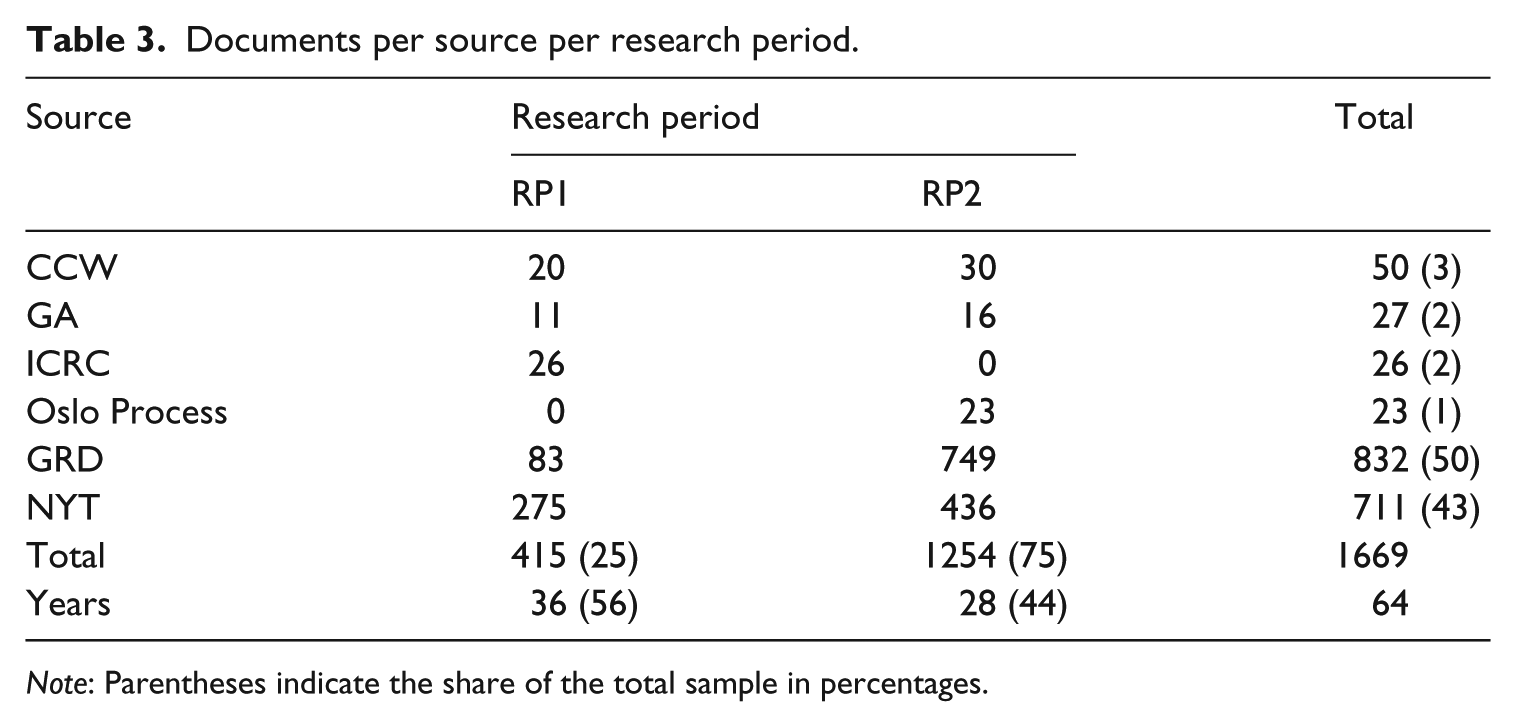
Note: Parentheses indicate the share of the total sample in percentages.
Episode I: Non-emergence of the norm against CM in the CCW
Problem adoption
Right after the end of the Second World War, the ICRC committed itself to strengthening international humanitarian law (IHL). The question of the means and methods of warfare had been omitted from the Geneva Conventions of 1949, but the ICRC continued to push the inhumane weapons problem by issuing reports and memoranda in the 1950s and the 1960s (ICRC, 1956, 1967). These first documents, while addressing the dangers of weapons of mass destruction (WMD) as well as incendiary and delayed-action weapons, did not deal with CM. In 1969, following increased attention to the use of CM in the Vietnam War, the ICRC adopted the CM problem by putting these weapons (among others) on the list of potentially inhumane weapons that might violate the IHL principles of distinction and unnecessary suffering. The document was submitted to the Conference of Government Experts (CGE) as part of the preparation for the Diplomatic Conference on the Reaffirmation and Development of International Humanitarian Law Applicable in Armed Conflicts (CDDH), which would negotiate Additional Protocols to the Geneva Conventions (Kalshoven, 1975: 78–80).
No issue creation
Public attention to the CM problem was generally low. The US military, having experienced in the case of napalm the amount of public outrage that the use of controversial weapons could trigger, were keen to avoid any publicity related to their use of CM in the Vietnam War (Krepon, 1974: 600; Prokosch, 1995: 99–100). Nevertheless, in 1967, the protests against this war had also somewhat boosted the attention to and the mobilisation against CM, though this remained a low and singular peak (see Figures 2 and 4). US air warfare with CM was mentioned in the International War Crimes Tribunal, but this did not meet with much media attention (Prokosch, 1995: 93). US relief organisations (such as the American Friends Services Committee and the Quakers) published several reports about the effects of CM on Vietnamese and Laotian populations, pointing to high numbers of duds (Wiebe, 2003: 95). Yet, the media almost never mentioned ICRC efforts or referred to NGO statements (see Table 4). Social pressure followed a similar pattern, with one Vietnam War-related but non-sustaining peak in 1967. The target of these protests was the US military — but also Honeywell, a US company developing and producing CM. However, the Honeywell protests were less frequent and visible than protests against other companies providing weapons for the Vietnam War (e.g. Dow Chemical) (Prokosch, 1995: 136–144).
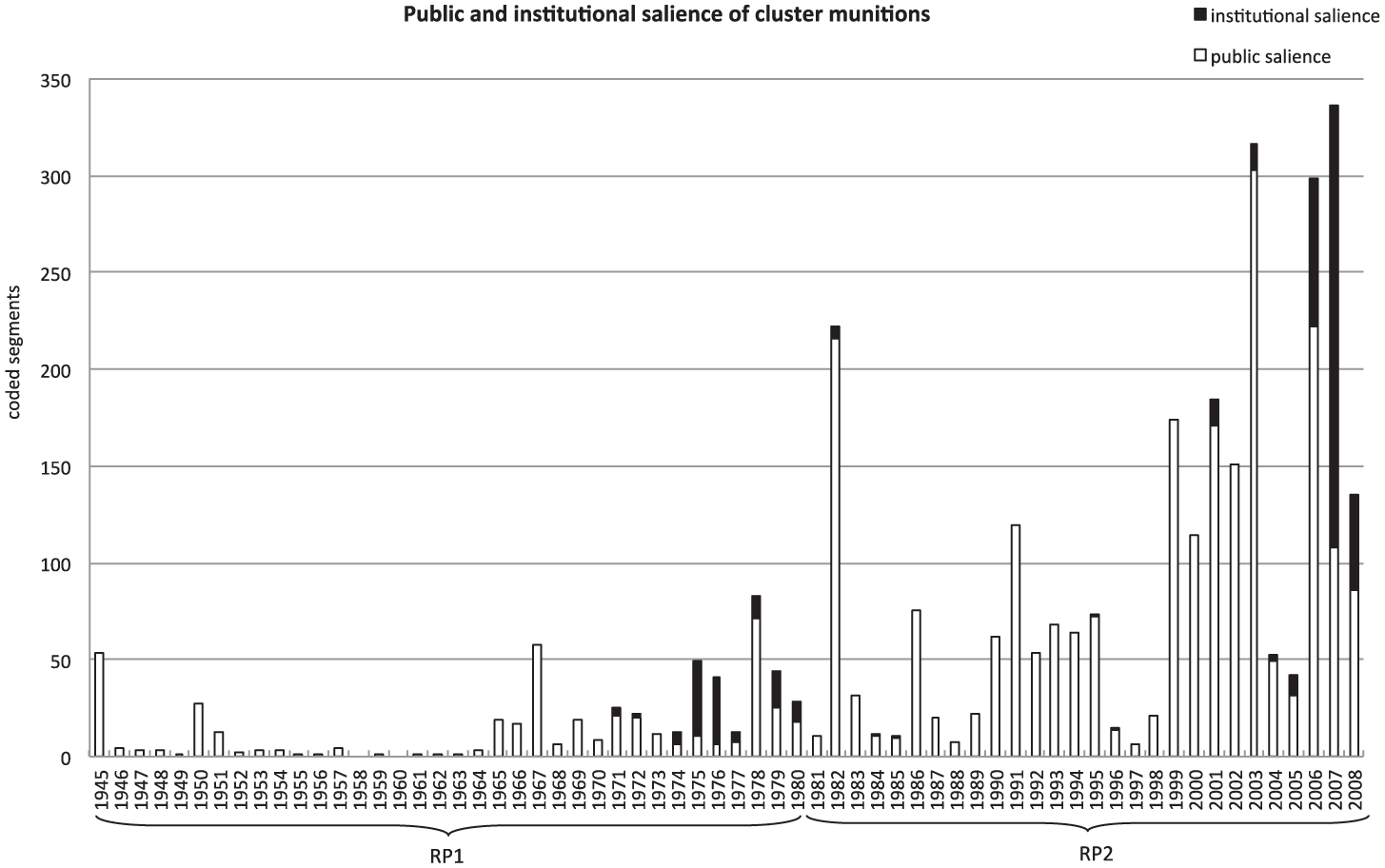
Salience of the cluster munitions problem, 1945–2008.
Public salience, mobilisation and social pressure.
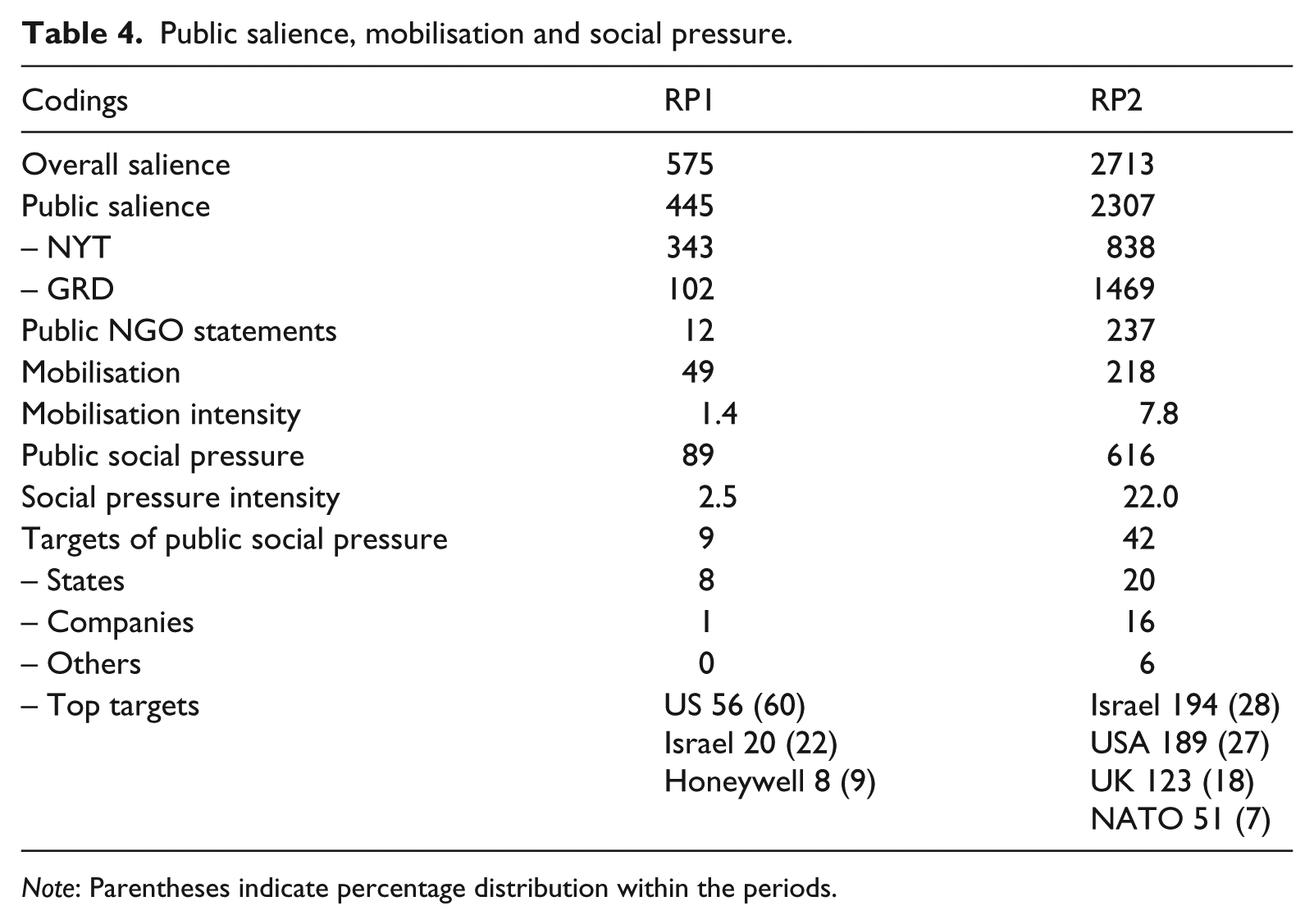
Note: Parentheses indicate percentage distribution within the periods.
The linkage to the Vietnam War had a certain stigmatising effect on CM, but neutral reporting about the use of CM still outweighed stigmatisation (see Figure 3 and Table 5). While the framing conveyed general facts about CM, such as the conflicts in which the weapons were used, their users and their targets, the injuries caused by CM — portrayed as conventional weapons — were almost never specified (see Table 5).
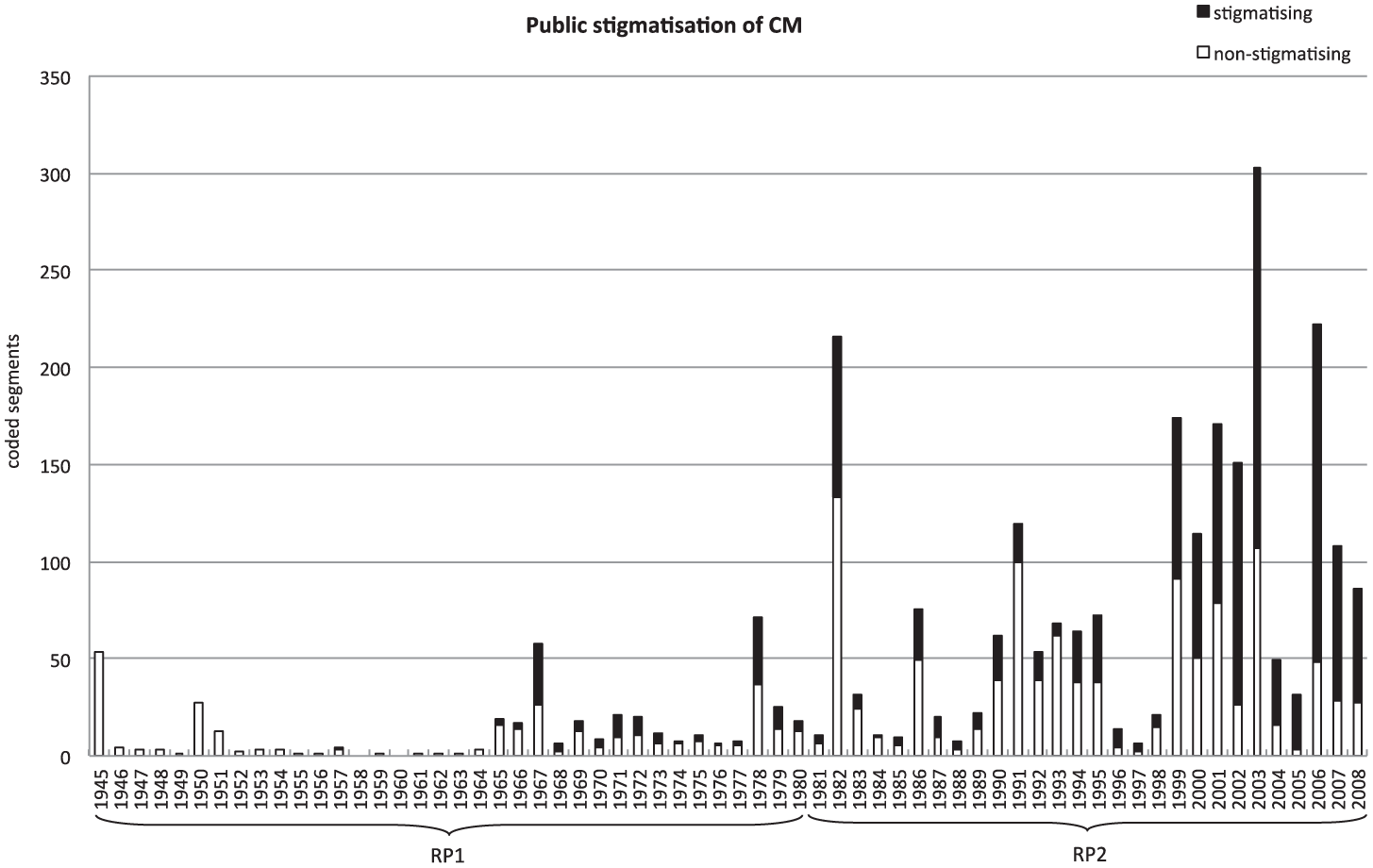
Stigmatisation of cluster munitions in the public discourse, 1945–2008.
Framing — aggregated data from media and institutional documents.
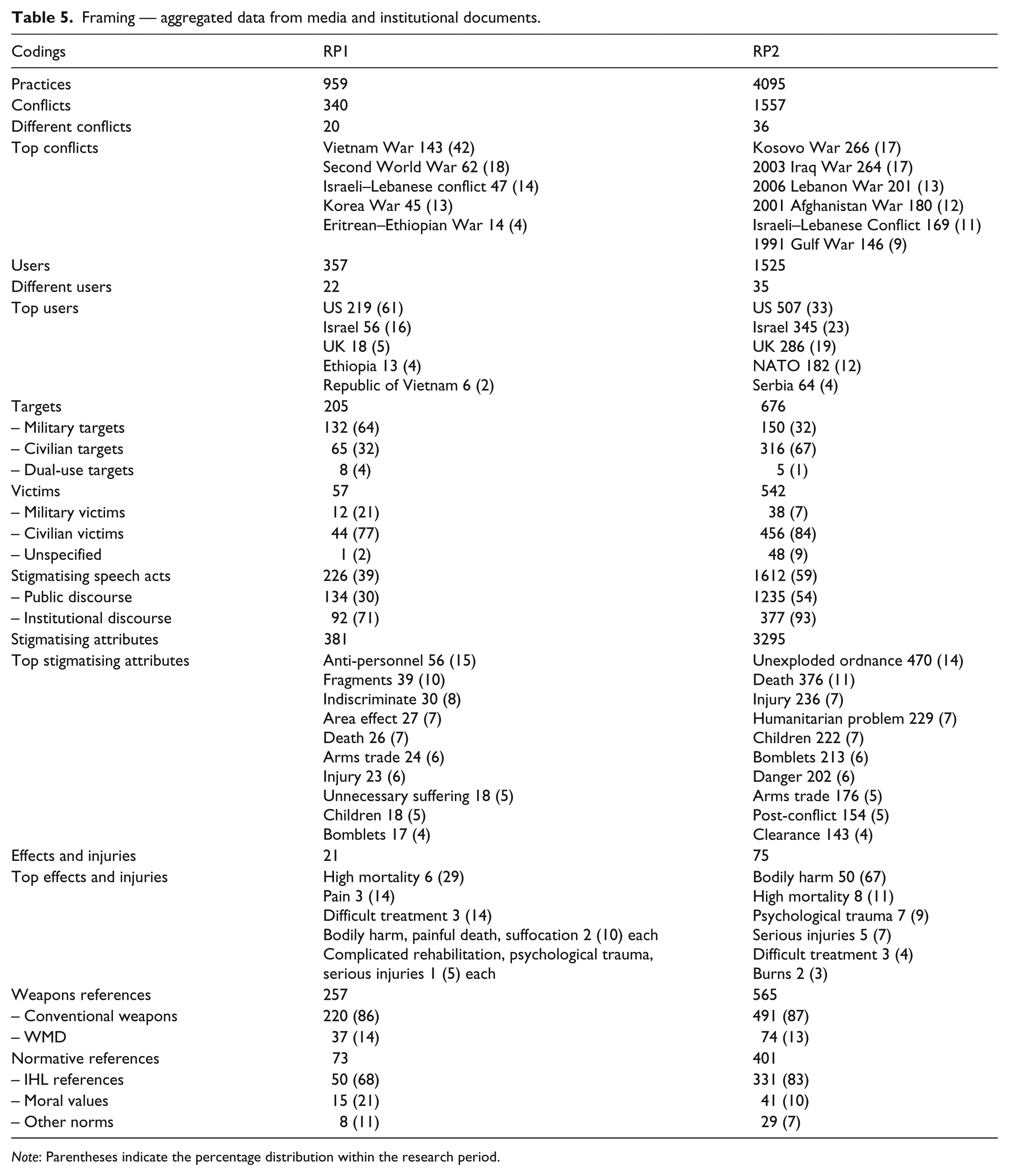
Note: Parentheses indicate the percentage distribution within the research period.
No candidate norm creation
A broad institutional discussion of the CM problem did not take place. The CGE ignored the CM problem. The UNGA and the United Nations Secretaries-General (UNSGs) explicitly supported the ICRC’s efforts on inhumane weapons from 1968 by adopting respective resolutions and publishing several reports, but CM in particular appeared in UN documentation only as late as 1976 (the UNGA and the UNSGs prioritised WMD and napalm) (Baxter, 1977: 47–49). As the stage of candidate norm creation was skipped, there was no institutional room to define the problem.
Norm creation
Despite the lack of public and institutional discussions, the ICRC had succeeded in convincing the CGE participants to include CM, among other weapons, on the CDDH agenda (Mathews, 2001: 993). Right from the beginning of the negotiations in 1974, the CDDH decided to separate the topic of inhumane weapons from the main conference and to install the Ad hoc Committee on Conventional Weapons, which met in three sessions: 1974 in Lucerne, 1975 in Geneva and 1976 in Lugano. Eventually, the Ad hoc Committee did not agree on restrictions on any of the weapons in question and decided to resume negotiations under United Nations (UN) auspices: during 1978–1980, the UNGA convened the UNCCW and its agenda again included a proposal to prohibit CM.
However, all these negotiations largely centred on other weapons, and CM did not take up much space. The problem definition included only traces of the essential elements. Other weapons prohibitions were almost never used as precedents for a CM norm. The strongest — and almost single — point of reference was IHL, in particular, the duty to discriminate between civilians and combatants (see Table 6). The delegates rarely articulated support for a CM norm, and they rarely criticised CM users. In contrast to what the idea of funnelling leads us to expect, the discussion did not become more specific: most speakers referred to the general idea of regulating the weapons without mentioning the precise kind of restrictions they had in mind.
Grafting onto normative resources of IHL.
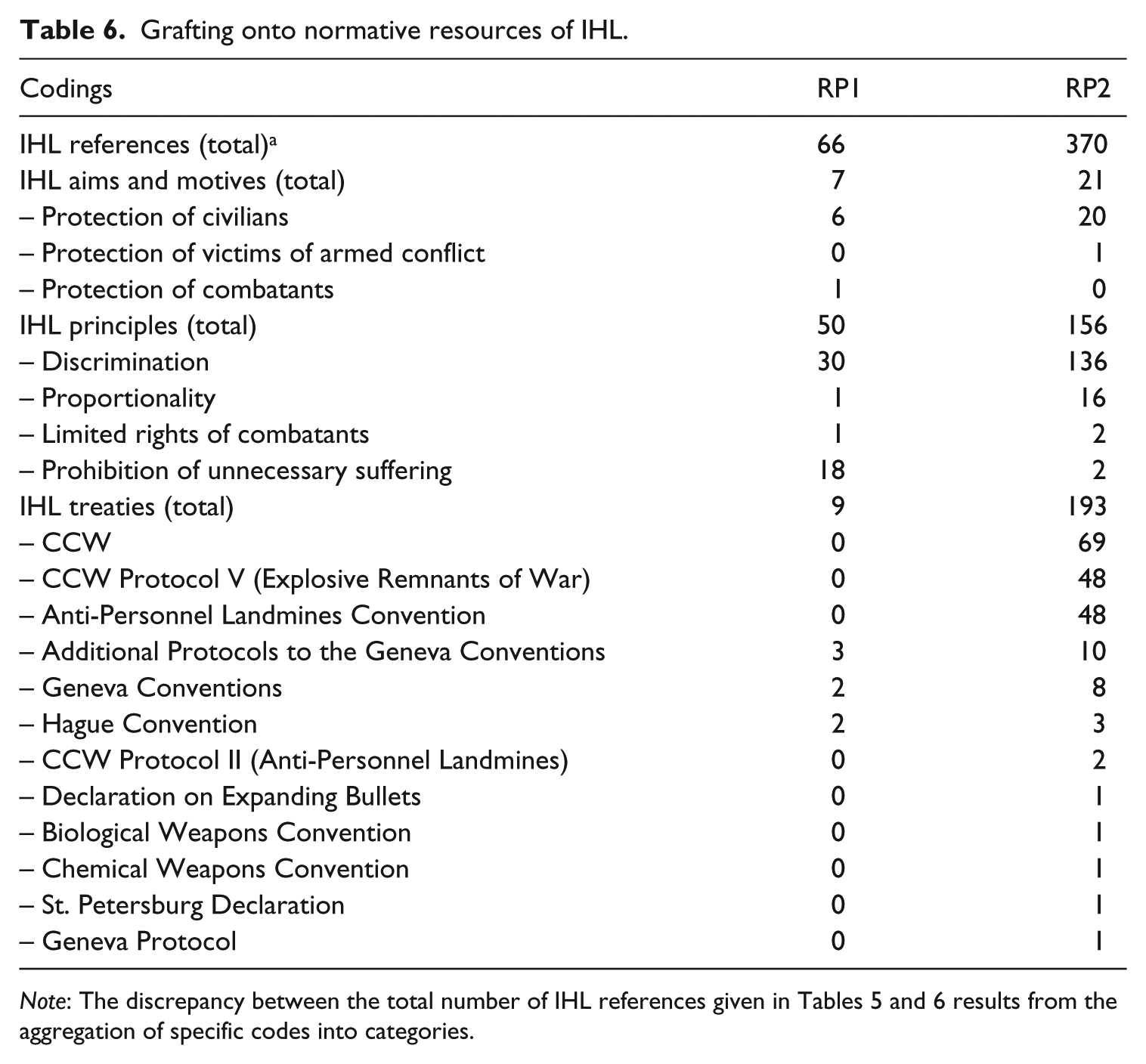
Note: The discrepancy between the total number of IHL references given in Tables 5 and 6 results from the aggregation of specific codes into categories.
The commitment of the norm entrepreneurs to the norm was low, and the pro-norm coalition dissolved quickly, reacting to massive resistance from governments with technologically advanced militaries (Prokosch, 1995: 148–156). The three actors qualifying as norm entrepreneurs — the peace movement, the ICRC and the group of like-minded states led by Sweden and Mexico (and including Egypt, Norway, Sudan, Switzerland and Yugoslavia) — acted independently of and asynchronously from each other. The peace movement’s main target was the Vietnam War and not the weapons as such; moreover, they were not advocating an international ban on CM, but rather called upon the US, first and foremost, to stop their use. The ICRC applied its usual strategy of subtle and direct diplomacy instead of public opinion shaping. Since no one else had assumed this task, a visible champion of a norm against CM was lacking.
The UNCCW had reached an agreement codifying restrictions on the use of weapons producing non-detectable fragments, anti-personnel landmines and incendiary weapons, but not on the use of CM. In the end, what had precluded an agreement on CM was not so much a controversy, but rather simple neglect of this topic.
Episode II: Emergence of the norm against CM in the Oslo Process
Problem adoption
The disappointment with the CCW had halted the momentum of regulating inhumane weapons for a whole decade (Borrie, 2009: 16). However, at the end of the 1980s, the ICRC and other humanitarian actors launched a new wave of norm-setting, with a focus on blinding laser weapons and anti-personnel landmines (Mathews, 2001: 998). In the wake of the 1991 Gulf War, which saw the heaviest use of CM since the Vietnam War (Goose, 2008: 220), but also due to reports from non-governmental organisations (NGOs) active in countries affected by the Vietnam War, the Mennonite Central Committee explicitly requested to include CM when the International Campaign to Ban Landmines (ICBL) was formed (Wiebe, 2003: 96–97). However, cautious to jeopardise the campaign through the inclusion of the presumably more contentious CM issue, the ICBL’s leadership opted for a single-issue advocacy and concentrated solely on anti-personnel landmines (Goose, 2008: 220–221, 236).
The ICRC, while not giving up on the issue, pursued it only half-heartedly. It set CM on the agenda of its expert meeting on certain weapon systems, which was conducted in preparation of the First CCW Review Conference in 1995/1996 (ICRC, 1994a: 62–70). CM were then included in the ICRC report submitted to the CCW but hidden under the broader topic of unexploded sub-munitions. The recommendation to implement technical solutions such as self-destruct mechanisms was rather cautious too (ICRC, 1994b: 155–156). To sum up, even though CM had faced ‘meaningful opposition … in the NGO community’ (Goose, 2008: 221) and had been adopted as a problem by some norm entrepreneurs, they did not gain the unequivocal commitment of the advocacy gatekeepers.
Following the North Atlantic Treaty Organization (NATO) air strikes against Serbia, in particular, the bombing of the Serbian town Niš in May 1999, which killed 15 civilians and injured 30, and with the Second Review Conference of the CCW (in 2001) on the horizon, the ICRC, Human Rights Watch and some other NGOs, such as Handicap International and Landmine Action, started working towards an international regulation of CM (Petrova, 2008: 80–81). Several reports warning about the dangers of (unexploded) CM 2 substantiated the requests for a norm, but these varied in scope from a ban (Mennonite Central Committee) to national moratoria, technical solutions or use restrictions (ICRC and HRW) (Borrie, 2009: 40–42).
Two strategic redirections of the norm entrepreneurs led to the launch of the Cluster Munitions Coalition (CMC) in November 2003. The discussions in the CCW Preparatory Committee had revealed that the governments were not willing to assume negotiations on CM. Acknowledging this reluctance and grafting onto the post-conflict harm frame that the Ottawa Process had established, the norm entrepreneurs identified the problem of explosive remnants of war (ERW), for which a mandate had already been agreed upon at the Second Review Conference, as a possible entry point for the CM issue onto the CCW agenda (Van Woudenberg, 2008: 466–468). However, the ERW-related discussions, as well as the respective protocol, were narrowed down to clearance obligations instead of the preventive restriction of weapons that turn into ERW (Boothby, 2005: 18). Unsatisfied with this result, the advocacy community turned the focus back on CM by designing the CMC as an umbrella organisation that would concentrate on exploiting the next institutional opportunity — the Third CCW Review Conference in 2006 — to negotiate a legal instrument regulating the use of CM (Nash, 2006: 36–37).
Issue creation
Even before the Niš incident, which catapulted CM onto the public agenda, CM had become more of a public issue in the 1980s and 1990s than in previous decades (see Figure 2). The use of CM had diversified, from 20 different conflicts somehow linked to CM in RP1 to 36 in RP2, and from 22 different users in RP1 to 35 in RP2 (see Table 5). The reporting on conflicts with CM use had led to two attention peaks (in 1982, linked to the Falkland/Malvinas War, and in 1991, linked to the Gulf War). Moreover, several arms export scandals led to increases in salience, stigmatisation and social pressure on the users and producers of CM (see Table 4). Yet, public mobilisation remained low since the trade in arms was only weakly politicised until the mid-1990s (Cooper, 2011; Erickson, 2015: 52–55, 106–108).
The landmine campaign had a positive spillover effect on CM, but it was only at the very end of the 1990s and in the 2000s that CM became (and persisted as) a public issue. The attention peaks were again driven by salient conflicts with CM use (Kosovo in 1999, Afghanistan in 2001/2003, Iraq in 2003 and Lebanon in 2006), but they were considerably higher than in previous research periods because norm entrepreneurs started using conflicts with CM use as windows of opportunity to draw attention to the CM problem, as more than 200 public NGO statements indicate (see Table 4).
Problem adoption resulted in information and action politics, as well as in substantial changes of the framing (see Table 5). The number of stigmatising statements increased by a factor of 7.1 relative to the period before 1980, with 80.6% of stigmatising statements in RP2 occurring after 1998, and with non-stigmatising reporting on CM becoming increasingly rare (see Figure 3). The reported targets of CM attacks changed from predominantly military to predominantly civilian. Civilian victims reported in RP2 exceeded civilian victims reported in RP1 by a factor of 10.4. The categorisation of CM as conventional weapons remained, but in contrast to RP1, conventional weapons themselves were now stigmatised more strongly as an effect of the ban on anti-personnel landmines. The CM problem was re-categorised from an arms trade problem to a humanitarian problem in post-conflict environments.
Problem adoption also had clear mobilising and pressuring effects. Mobilisation more than quadrupled from RP1 to RP2, but within RP2, it quintupled from the period 1980–1998 to the period 1999–2008. Mobilisation intensity, that is, the average number of mobilising events per year, rose from 1.4 in RP1 to 7.8 in RP2 in general, and to 18.3 after 1998. Social pressure — public criticism of CM traders and users — in RP2 exceeded the social pressure in RP1 by a factor of 6.9; its intensity rose from 2.6 in RP1 to 22.0 in RP2 in general, and to 39.4 after 1998 (see Table 4). The mobilisation and social pressure peaks were clearly related to two salient conflicts with CM use: the Iraq War in 2003 and the Lebanon War in 2006 (see Figure 4).
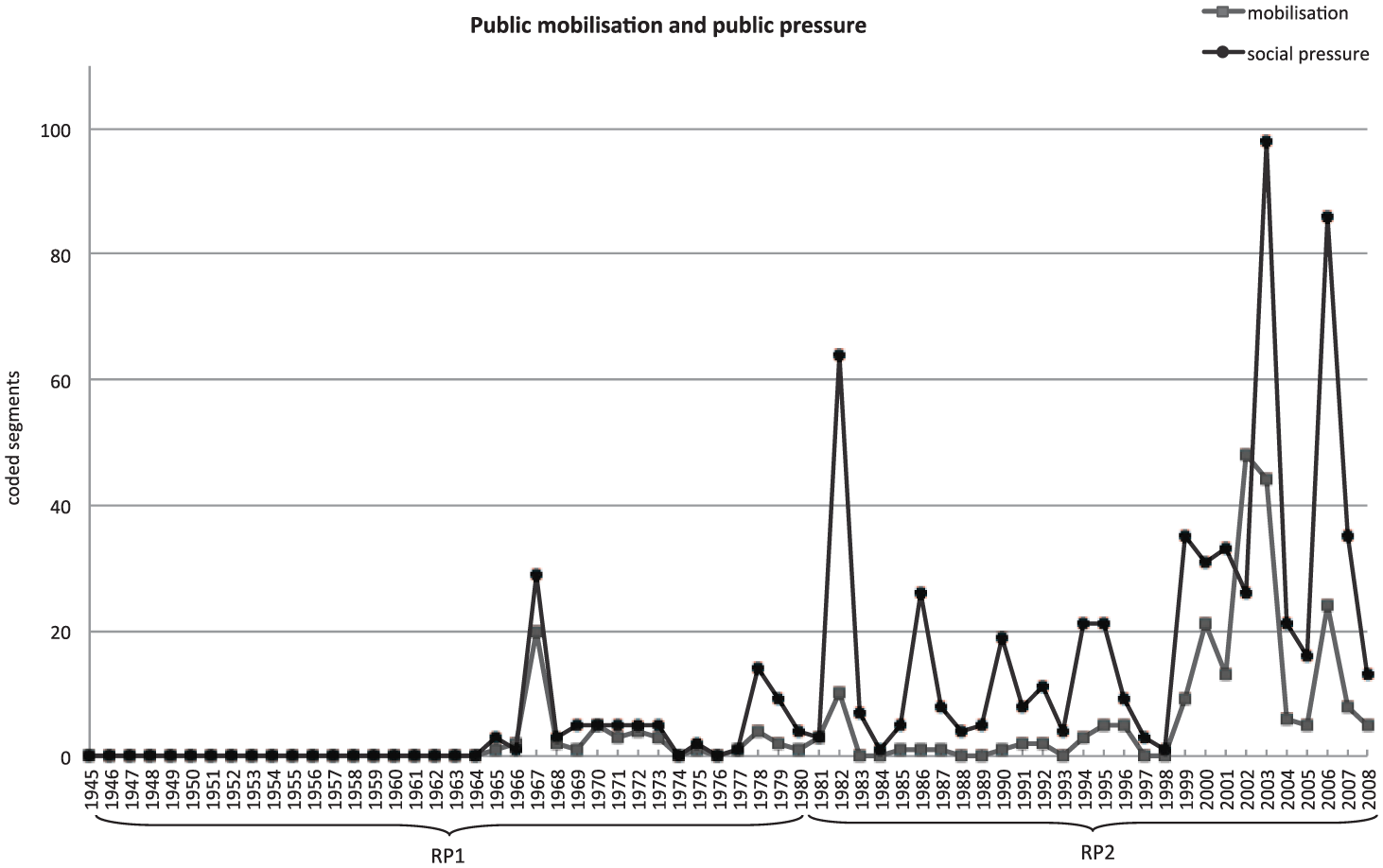
Public mobilisation and public pressure related to CM, 1945–2008.
Candidate norm creation
Nevertheless, the CM problem lacked a broad institutional diffusion. The UNGA, just as it had in the 1970s, completely ignored the issue until the Oslo Process had already gained traction. Before the Third Review Conference (in 2006), the CM issue only rarely popped up on the agenda of the UNCCW, even though some (unsuccessful) efforts to draw attention to CM had occurred at the Review Conference in 2001 and during the subsequent meetings of the state parties.
Nevertheless, coalition building occurred. Some governments usually viewed as middle powers (e.g. Austria, Belgium, Norway, South Africa, Sweden and Switzerland) had already been (informally) working together to identify ways to address further issues with humanitarian implications since 1999 (Borrie, 2009: 44). In 2006, a like-minded coalition consisting of the CMC and pro-norm governments began to emerge with the aim of increasing the pressure during the Third Review Conference (Goose, 2008: 223–225). NGOs continued their public campaigning and direct lobbying of governments, both at the international and national levels (Petrova, 2008, 2016). Governments (and parliaments) of three countries (Austria, Belgium and Norway) not only endorsed the NGO campaign and adopted an international ban of CM as a policy goal, but also enacted national legislation prohibiting the use, possession, production, transfer and stockpiling of CM (Bolton and Nash, 2010: 177). The governments of Canada, the UK and the US did not go that far, but they at least gave up certain types of CM (Hulme, 2009: 221). Through its public campaign, the CMC made the issue visible and politicised it; through their institutional and diplomatic activities, the like-minded governments both provided the formal structures and created support for norm negotiations among their peers (Bolton and Nash, 2010: 178).
Norm creation
The creation of the CM norm involved a deliberate venue change: the negotiations were assumed at the Third Review Conference but continued outside of the UNCCW, namely, in the Oslo Process (2007/2008). A proposal for a further CCW protocol addressing the humanitarian concerns of CM had been included on the UNCCW agenda, but all the governments could agree upon in the official final document was a group of experts that would explore possible solutions to the CM problem. This is why, in an additional declaration, 25 like-minded states signalled their willingness to negotiate restrictions on certain uses and certain types of CM outside the CCW. In November 2006, Norwegian Foreign Minister Jonas Gahr Støre launched the so-called Oslo Process by inviting all interested parties to Oslo in February 2007 to begin negotiations on a convention. Together with Norway, a core group of long-term proponents of the CM norm (Mexico and Sweden, as well as Austria, the Holy See, Ireland, New Zealand and Peru) took the lead (Borrie, 2009: 139–141). The treaty was drafted in several follow-up meetings (including in Lima in May 2007, Vienna in December 2007 and Wellington in February 2008), adopted in Dublin in May 2008 and opened for signature at the signing conference in Oslo in December 2008. 3
The problem definition now included essential features like grafting and funnelling. The number of IHL references more than quintupled, including a considerable increase in references to its general principles (mostly to the duty to discriminate between combatants and civilians), but also, and more importantly, an increase in references to specific treaties (mostly to the CCW, the ERW protocol and the Anti-Personnel Landmines Convention). Funnelling took place, too, as the option that had been dominant at the outset of negotiations — restricting only some types of CM — was excluded during the process and replaced by a prohibition on all weapons defined as CM (Rappert and Moyes, 2009: 246). This was a surprise since at the outset of the process, even humanitarian organisations like the ICRC were advocating only a partial ban on ‘such cluster munitions that cause unacceptable harm’ (Borrie, 2009: 237–234). With a precise definition of CM as well as concrete behavioural and formal provisions, the Oslo Convention is comprehensive and specific. 4
Achieving this far-reaching outcome in a far from harmonious process required a mix of dynamics and strategies, which involved both pressure and persuasion (Petrova, 2016: 394). The conflict was induced into the Oslo Process due to the fact that Norway’s invitation, directed to governments willing to work towards a ban on CM, had also attracted governments who, realising that restrictions were unavoidable, aimed to weaken the emerging norm (Adachi, 2017: 47–48; Petrova, 2016: 392). Different tactics were applied towards these so-called norm antipreneurs (Bloomfield, 2016) — Germany, Japan and the UK among them — than towards the pro-ban side. Accordingly, perceptions of the legitimacy of the forum, the openness of the process and deliberation tactics varied greatly between the two factions.
From the perspective of ban sceptics, the positive portrayal of the Oslo Process was inadequate. These states criticised the process for not including major producers and users while vindicating the UNCCW in an attempt to shift the negotiations back to this forum, despite — or probably precisely because of — its shortcomings (Adachi, 2017: 47). They also attempted to break down the category of CM by distinguishing between ‘smart’, that is, presumably reliable munitions equipped with self-destruct mechanisms, and ‘dumb’, that is, inaccurate and unreliable munitions that posed a threat to civilians (Petrova, 2016: 393). Moreover, they advanced re-legitimising counter-frames that depicted CM as crucial to force protection (Petrova, 2018: 636–637). When these arguments did not take hold, the norm antipreneurs complained about their side not being listened to and accused the norm supporters of ‘moral blackmailing’ (Petrova, 2016: 394).
But the institutional framework proved conducive to overcoming this resistance because it allowed the pro-ban side to grow and to unify. Even though some of the major military powers chose not to participate, the process was inclusive — that is, in principle, open to all interested parties, geographically diverse and including different stakeholders, such as survivors and humanitarian advocates, but also (some) producers (Borrie, 2009: 313). The explicit consensus orientation was safety-netted by a two-thirds majority rule, which ensured that a decision would not be blocked by single dissenting states — a constant risk in the consensus-based UNCCW (Cottrell, 2009: 233). Also, the institutional structure provided for additional ‘learning forums’ (the seven regional conferences in particular) where the participants, sharing a ‘common lifeworld’ (due to their geographic proximity or their status as affected countries), could deepen their knowledge of the problem as well as build trust and solidarity (Petrova, 2016: 394). The normative agreement that the CM hazard had to be reduced, which had emerged before the process, meant that communication was motivated by a common goal and moral values. At the same time, both the means to achieve this goal (through a ban, through moratoria or through restrictions) and key understandings (e.g. on definitions) were open to discussion; thus, the delegates felt that they had a genuine say in the process (Borrie, 2009: 151–157, 313).
The two tales of the Oslo Process validate the theoretical criticism that, contrary to what the communicative action theory posits, norm-setting processes are neither open-ended nor designed for mutual persuasion (Hanrieder, 2011: 403–404). Rather, they move towards a pre-established goal and rely on unidirectional persuasion with the norm entrepreneurs as the persuaders and the norm addressees as the persuadees. Moreover, the Oslo Process demonstrates that in contentious processes, arguing cannot be the single dominant strategy. Rather, strategies need to be tailored to the varying attitudes of the norm addressees towards the norm. Arguing can be expected to increase and channel the support of norm-supporting addressees (and it did so in the Oslo Process), but social pressure and rhetorical entrapment are more promising in achieving at least the declaratory norm acceptance of norm-rejecting addressees. Linking the announcement of the Oslo Process to the goal of a ban on CM and explicitly inviting supporting states allowed for entrapment because the participation in the process as such signalled norm commitment (Petrova, 2016: 389). This, in turn, limited the scope of the positions that could be openly expressed by excluding not only arguments contesting the need for a norm, but also arguments pointing to the military interests of the states. The resulting ‘spiral of argumentative exchanges’ based on humanitarian considerations forced the initial norm sceptics to reverse their positions and to declare norm support (Petrova, 2016: 392–393).
Conclusion: Evaluation of the model
I introduced a new theoretical model of norm emergence and sought to demonstrate its value for the analysis of empirical cases. While, strictly speaking, the model was applied to only one case, namely, the norm on CM, the two normative cycles that the norm on CM went through provided two different opportunities to apply the model. In the following, I will synthesise the results and suggest conclusions regarding the model.
The case studies yield two main findings with causal implications. First, the emergence of the norm requires the full completion of the diffusion process, that is, the diffusion through all agendas captured by the model. Since each stage in the process performs specific functions for norm emergence, the omission of certain stages may preclude norm emergence even if the issue reaches subsequent stages. Second, the distinctive features of the stages appear to be conditions of success for the completion of the respective stage. In the short run, their presence or absence explains why issues develop in a certain manner in a specific stage; in the long run, this explains why a norm emerges or not.
Between the RPs, the degrees of norm diffusion varied. In RP1, the CM problem had been adopted by norm entrepreneurs and placed on the institutional agenda, but without becoming a public issue either before or after. This resulted in a lack of public mobilisation and a lack of social pressure, which, in turn, led the CM issue to slip from the institutional agenda pretty much unnoticed. In RP2, at the end of which a norm against CM was codified in the Oslo Convention, the CM problem diffused according to the model. Norm entrepreneurs had adopted it and used the windows of opportunity provided by different conflicts with CM use to create a public issue. They also persuaded governmental decision-makers to set the issue on the agenda of the UNCCW, where a candidate norm that subsequently moved onto the decision-making agenda of the Oslo Process emerged and, at the end of it, finally became a norm.
The presence and strength of the distinctive features of the stages varied between the RPs too. In RP1, the framing lacked crucial elements, such as concreteness, emotionalisation and grafting, for attracting and sustaining public attention. This went along with low public mobilisation and low social pressure, the activation of which is an essential condition for the emergence of norms on contentious issues such as weapons prohibitions. Even though different actors had sought a norm on CM, they did not unite in a coalition, and thus did not pursue a joint strategy. In contrast, all strategic elements identified in the model were present in RP2: CM were reframed into a post-conflict humanitarian threat claiming civilian victims; the ERW protocol and the landmine ban treaty provided concrete normative precedents; both public mobilisation and social pressure increased; and a coalition of like-minded non-governmental and governmental actors was built.
Since the agenda diffusion model relies on established theoretical concepts, I have confidence in the generalisability of the findings. The model has already proved useful in explaining the case of interest here, namely, the emergence of the norm on CM. Yet, since the CM case is not a crucial case (i.e. a least- or most-likely case), the claim of the model’s general applicability requires systematic tests in further case studies guided by the question of whether each of the four stages, their particular order and each of their distinctive features are necessary for positive outcomes. What seems promising to me is a configurational conception of causality: the idea that the presence and characteristics of one condition may compensate for the absence of another, or that different combinations of conditions may yield a similar outcome. Apart from transferring the model to areas other than humanitarian arms control, I suggest selecting cases both on the dependent variable to verify necessity (i.e. to check if positive outcomes are generally preceded by the full diffusion process), and on the independent variables to verify sufficiency (i.e. to check if the completion of stages, and certain combinations or orders of those stages, yields positive outcomes). To theoretically advance the model, taking a multiple-issue perspective and depicting issue competition (and other interactions) at each stage also seems a worthwhile endeavour.
Footnotes
Acknowledgements
For helpful comments on earlier versions of this article, I thank the editors of the EJIR and the three anonymous reviewers, as well as Elizabeth Bloodgood, Maéva Clément, Maren Hofius, Martin Kahl, Anna Kreikemeyer, Hanna Pfeifer, Johanna Polle, Sybille Reinke de Buitrago, Delf Rothe, Lena Schumacher and Louise Wiuff Moe. Karl Buchacher provided invaluable research assistance, and Hannah Mück an excellent language editing.
Funding
The author(s) received no financial support for the research, authorship, and/or publication of this article.