



Abstract
Background:
Evidence on the efficacy of palliative care in persons with severe multiple sclerosis (MS) is scarce.
Objective:
To assess the efficacy of a home-based palliative approach (HPA) for adults with severe MS and their carers.
Methods:
Adults with severe MS-carer dyads were assigned (2:1 ratio) to either HPA or usual care (UC). At each center, a multi-professional team delivered the 6-month intervention. A blind examiner assessed dyads at baseline, 3 months, and 6 months. Primary outcome measures were Palliative care Outcome Scale-Symptoms-MS (POS-S-MS) and Schedule for the Evaluation of Individual Quality of Life-Direct Weighting (SEIQoL-DW, not assessed in severely cognitively compromised patients).
Results:
Of 78 dyads randomized, 76 (50 HPA, 26 UC) were analyzed. Symptom burden (POS-S-MS) significantly reduced in HPA group compared to UC (p = 0.047). Effect size was 0.20 at 3 months and 0.32 at 6 months, and statistical significance was borderline in per-protocol analysis (p = 0.062). Changes in SEIQoL-DW index did not differ in the two groups, as changes in secondary patient and carer outcomes.
Conclusion:
HPA slightly reduced symptoms burden. We found no evidence of HPA efficacy on patient quality of life and on secondary outcomes.
Keywords
Introduction
Around 15% of multiple sclerosis (MS) patients have a progressive course from the outset, and a further 35% develop progressive disease after a variable period with relapsing disease (secondary progressive MS). 1 International, multi-stakeholder initiatives have recently increased the focus on progressive MS, with the mission to speed up the development of therapies for people with this challenging disease form, most of whom are severely disabled for many years.2,3
Alignment of treatment with the patient’s needs, values, and preferences, a core element of shared decision-making and palliative care (PC), should be routine aspect of care of any health professional (HP) and in any care setting. The provision of PC services, irrespective of diagnosis and illness stage, has been advocated, together with the development of such services for patients with neurological diseases.4–6 In this context the integration of neurology, PC, and rehabilitation competencies is key, as well as the individualized care provided by each discipline along the disease trajectory.7,8
A consensus review concluded that there is limited evidence for the provision of PC for patients with progressive neurological diseases and that further research into this area of care is urgently needed. 9 Two randomized controlled trials (RCTs) have been published on this regard: a UK trial on 52 MS patient-caregiver dyads comparing a 3-month specialist PC service to standard care found no effect on the primary outcome (emotional, psychological, and spiritual needs of MS patients). Nevertheless, some symptoms improved and informal caregiver burden was reduced compared to standard care. 5 The other (Neurology-Palliative care (Ne-Pal)) RCT compared a 4-month home specialist PC service to standard care in 50 people with advanced neurodegenerative disorders, 36% of whom had MS. The intervention significantly improved patient quality of life (QoL) and some symptoms compared to standard care; but there was no effect on caregiver burden. 10
We performed a multicenter RCT involving adults with severe MS and their carers to assess the effectiveness of a home-based palliative approach (HPA) added to usual care (UC). As for the RCTs reported above, we applied the framework for development/efficacy testing of complex interventions. 11 The results of the RCT are presented, except for the economic analysis and the nested qualitative study, which will be presented in separate papers.
Methods
Study design and participants
In this randomized, examiner-blind, controlled study, we recruited patients from three Italian centers. The protocol was approved by the local ethics committees and the study was undertaken in accordance with the Declaration of Helsinki. 12 The trial was registered at www.controlled-trials.com (ISRCTN73082124).
Participants were non-institutionalized adults (age ⩾ 18 years) with severe MS and their primary carers. Other patient inclusion criteria were primary or secondary progressive MS,1,13 Expanded Disability Status Scale (EDSS) score ⩾ 8.0, 14 complex symptoms, 15 and ⩾2 unmet care needs. 16 The carer (a family member, relative, or friend of the patient) was his or her next of kin and was designated by the patient except for patients with severe cognitive compromise. All patient-carer dyads gave written informed consent before study enrollment.
Randomization and masking
Dyads were randomly assigned (2:1) to receive HPA or UC. Allocation to treatment groups was done using a third-party, web-based computerized randomization procedure with stratified minimization for EDSS score (8.0–8.5, 9.0–9.5), presence of severe cognitive compromise (clinical judgment), and center (Online Supplementary Table 1).
The trial senior statistician (R.R.) was not involved in study conduct. The blind examiners used a web-based case report form (eCRF), so that visit 1–3 data were available to HPA teams and coordination unit. After visits 2 and 3, examiners were asked to guess dyad assignment.
Intervention
Based on the principles of PC, 17 each center had a HPA team consisting of a physician (neurologist or physiatrist), a nurse (case manager and team leader), a psychologist, and a social worker. Nurses of the Milan and Rome centers had degrees and worked full time in PC; the Catania nurse attended a week-long individual training course. Prior to study start, all team members were trained in the HPA intervention; 3 and 6 months after trial initiation they met again to share experiences, fine-tune the protocol, and discuss difficult cases.
After a comprehensive assessment of the dyad needs based on direct observation and on visit 1 information (available via the eCRF), the HPA team defined the contents of the intervention, involving the dyad and the patient caring physician (the intervention was not intended to replace existing services). Subsequently, the team verified program implementation and reviewed it as necessary. The team was not on call for dyads: in the event of emergencies, dyads contacted the patient caring physician or emergency medical services. All team activities were recorded in the PeNSAMI patient study record, which was kept at the patient’s home and available to all HPs/caregivers.
UC consisted of the health and social services provided by the Italian National Health Service in the study area. Dyads assigned to UC received the three examiner visits (visits 1–3) and the monthly telephone interviews, but not the HPA team visits (except visit 0). At the end of the study, dyads who received UC were offered the HPA.
Outcomes
The pre-specified primary endpoints were changes in patient quality of life (SEIQoL-DW) and symptom burden (PC Outcome Scale-Symptoms-MS, POS-S-MS). The SEIQoL-DW is administered in an interview in which respondents nominate the five areas of life that are most important in determining their QoL, and rate the satisfaction/functioning and weight/importance in each of these areas. 18 The SEIQoL-DW index can range from 0 to 100 (best).
The POS-S-MS (primary outcome measure) and the core POS were developed and validated for use in PC.18,19 POS consists of 10 items addressing emotional, psychological, and spiritual needs, and provision of information and support, each scored from 0 to 4; POS total score can range from 0 to 40 (worst). POS-S-MS comprises 20 items relating to MS symptom burden (0 to 4 scale) plus an open question. Following advice of the POS-S-MS authors, we used the 17 pre-set items (POS-S-MS total score possible range 0 to 68 (worst)). 20 For both core POS (version 1) and POS-S-MS (http://pos-pal.org/maix/) we used the preceding 7 days’ time frame, and caregiver version of the scales in patients with severe cognitive impairment.
In addition to core POS, patient secondary outcome measures were the European Quality of life Five Dimensions (EQ-5D-3L), 21 the Hospital Anxiety and Depression Scale (HADS), 22 the Functional Independence Measure (FIM), 23 and direct and indirect tangible costs (assessed by the MS foundation Costs Questionnaire, MSCQ). 24 Carer outcomes were the Short Form 36 (SF-36), 25 the EQ-5D-3L, the HADS, and the Zarit Burden Interview (ZBI). 26
Statistical analysis
The sample size was based on previous data for POS-S-MS 5 and SEIQoL-DW. 10 For the SEIQoL-DW, we were in a more exploratory situation than for the POS-S-MS, as the available data referred to a mixed population. 10 In addition, we expected that up to 50% of MS patients would have not been able to complete the SEIQoL-DW (severe cognitive compromise); in these the only primary endpoint was the POS-S-MS (caregiver version). In view of these considerations, we purposely considered the two outcomes separately in this phase II/III RCT, and we set a power of 80% for the SEIQoL-DW and of the 85% for the POS-S-MS.
For the POS-S-MS, we calculated that a sample size of 62 patients would yield a power of 85% to detect a mean score change of −0.4 (standard deviation (SD), 0.5) in the HPA group compared to a change of 0.2 (SD, 0.8; null hypothesis) in the UC group, at an α level of 0.05. 5 Assuming 20% dropout, 49 patients were required in the HPA group and 25 patients in the UC group (total sample size 74).
For the SEIQoL-DW, we calculated that a sample size of 32 patients would yield a power of 80% to detect a mean score change of 12.1 (SD, 12.8) in the HPA group compared to a change of −7.4 (SD, 19.3) in the UC group, at an α level of 0.05. 10 Assuming 20% dropout, 25 patients were required in the HPA group and 13 in the UC group (total sample size 38).
All randomly assigned patients were included in the main intention-to-treat analysis, provided that at least one contact with the team occurred (HPA group). The average effect of the intervention over time on all outcomes was evaluated between the two groups using generalized estimating equations (GEE, repeated-measures analysis of covariance with exchangeable correlation). All analyses were adjusted for the baseline value of the outcome. Besides intervention group (HPA, UC) and time visit (3-month, 6-month), all analyses included as a pre-specified covariate center (Milan, Rome, Catania), as the intervention was delivered by teams that operated in different socio-cultural contexts. In addition, for analysis of patient outcomes POS-S-MS, POS, and FIM, we used the following pre-specified prognostic covariates: presence of severe cognitive impairment and age (baseline EDSS score was not included in the model as it was associated with cognitive impairment). For analysis of patient outcomes SEIQoL-DW and HADS, we used the covariates baseline EDSS score and age. We also tested for the first-order interaction term center per intervention group, to assess the homogeneity of the treatment effect across centers. For analysis of the ZBI total score, we used the covariates and interaction term reported above (first set of patient outcomes), plus carer’s age and sex, and carer living with the patient. 27
In the main intention-to-treat analysis, missing data were imputed according to Rubin’s Rules (fully conditional specification approach) using the auxiliary variables age, time visit, center, intervention group, and the baseline value of each outcome measure. A per-protocol analysis was also done for the primary outcomes and all secondary outcomes and included only those patients who accomplished the outcome measures.
Two-sided p values of less than 0.05 were judged to be significant; p values were not adjusted for multiple comparisons. Analyses were done with Stata (version 13.0) and SAS (version 9.4).
Results
Dyad enrollment and characteristics
Between January and November 2015, 50 dyads assigned to receive HPA and 26 assigned to receive UC were analyzed (Figure 1). Table 1 illustrates participant demographic and clinical characteristics at baseline.
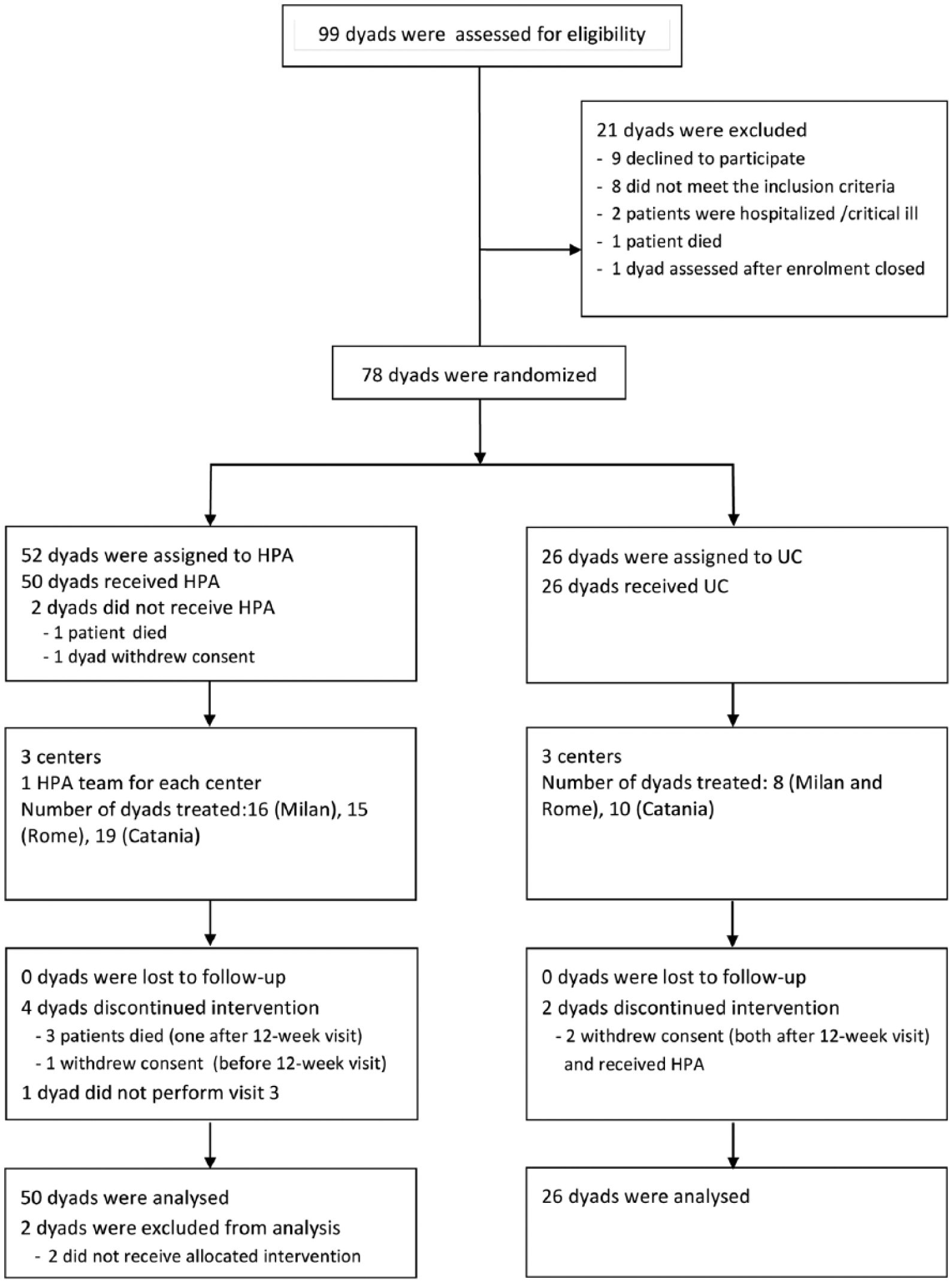
CONSORT 2010 Flow diagram of the trial.
Baseline characteristics of the 76 MS patient-carer dyads at baseline, by allocated group.
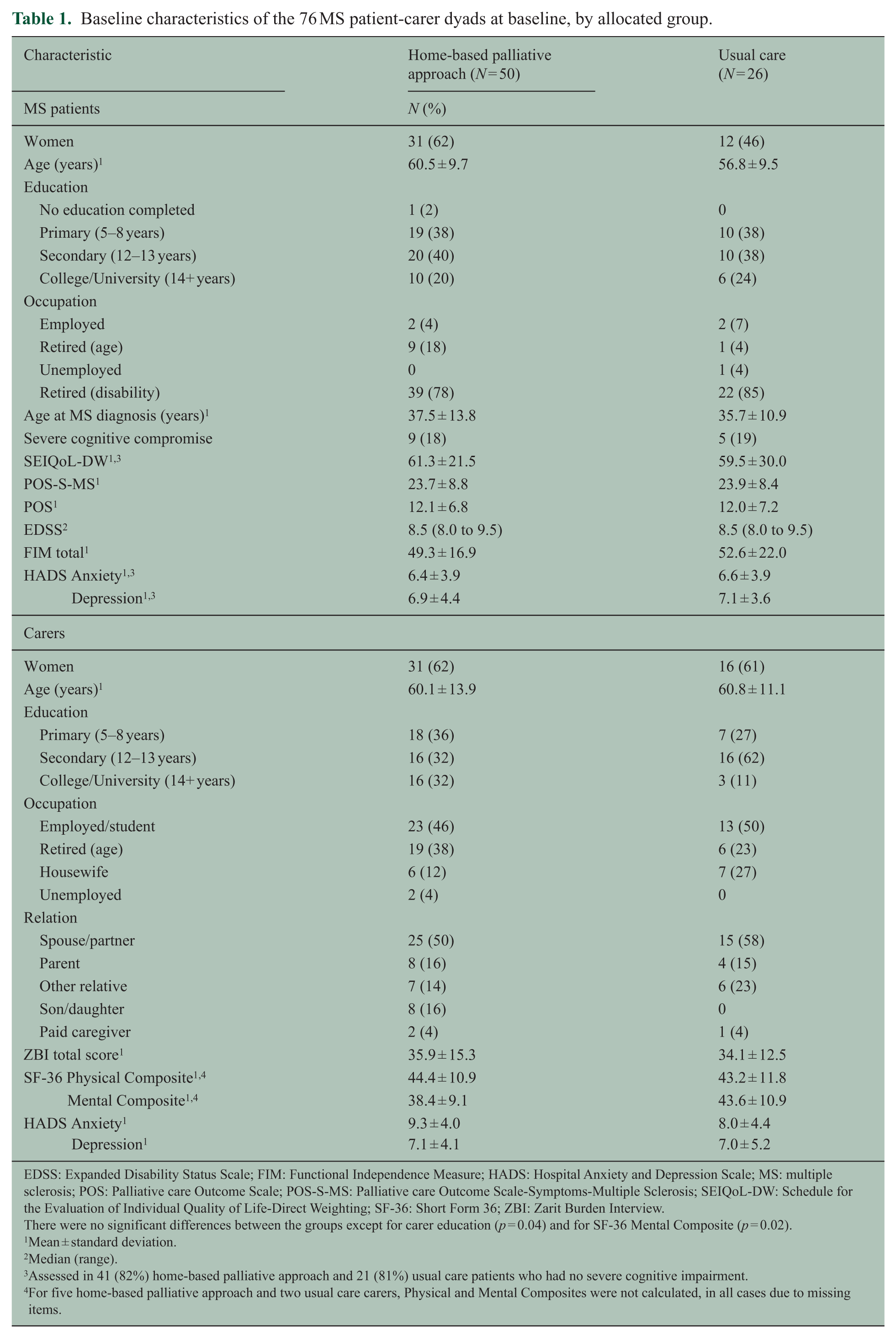
EDSS: Expanded Disability Status Scale; FIM: Functional Independence Measure; HADS: Hospital Anxiety and Depression Scale; MS: multiple sclerosis; POS: Palliative care Outcome Scale; POS-S-MS: Palliative care Outcome Scale-Symptoms-Multiple Sclerosis; SEIQoL-DW: Schedule for the Evaluation of Individual Quality of Life-Direct Weighting; SF-36: Short Form 36; ZBI: Zarit Burden Interview.
There were no significant differences between the groups except for carer education (p = 0.04) and for SF-36 Mental Composite (p = 0.02).
Mean ± standard deviation.
Median (range).
Assessed in 41 (82%) home-based palliative approach and 21 (81%) usual care patients who had no severe cognitive impairment.
For five home-based palliative approach and two usual care carers, Physical and Mental Composites were not calculated, in all cases due to missing items.
HPA team activities
Overall there were 360 home visits, 269 (75%) by one HP, 85 (24%) by two, and six (2%) by three or four HPs. On average, dyads received 4.9 home visits in the first 3 months and 2.8 in the second 3 months. The nurse (team leader) performed 152 visits (33%), followed by the psychologist (25%), the physician (25%), and the social worker (17%). Figures were well balanced across centers (Table 2) except for the number of visits performed by two or more HPs (Milan 4%, Rome 14%, Catania 51%; p < 0.001). Time from randomization to HPA team assessment was shorter in Catania (median 8 days) compared to Milan (11 days) and Rome (12.5 days; p = 0.11).
Home-based palliative approach (HPA) team activities in the three participating centers.
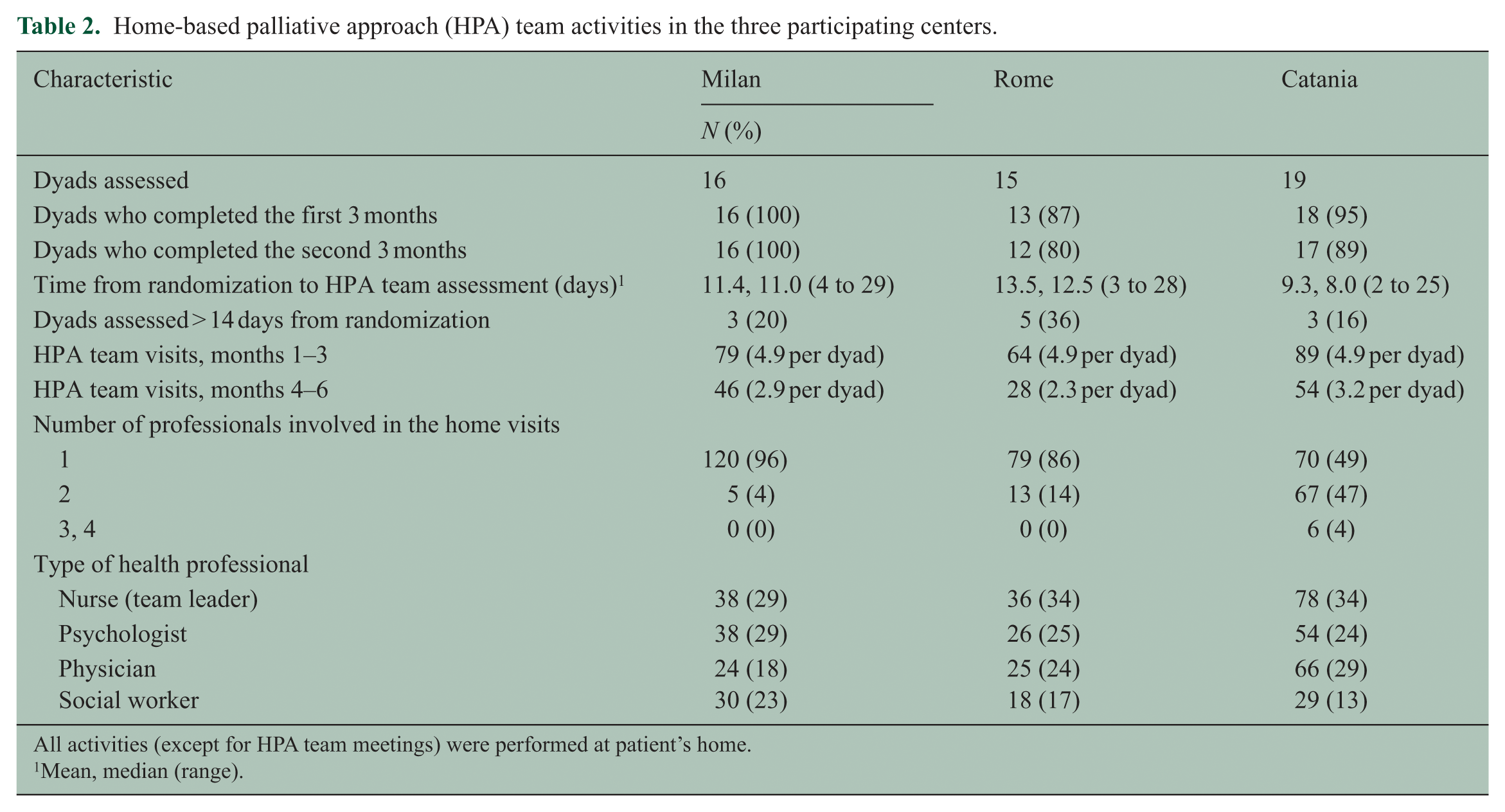
All activities (except for HPA team meetings) were performed at patient’s home.
Mean, median (range).
Figure 2 reports the pre-specified care needs 16 addressed by the HPA teams, and those fulfilled at the end of the intervention, based on team reports. The most addressed care needs belonged to the domain “managing everyday life” (38%), followed by “organization” (34%) and “psychosocial” (27%). A partial or complete fulfillment was reported for most “managing everyday life” needs (97%), but for “organization” (73%) and “psychosocial” (72%) dimensions fulfillment was lower, particularly for “access to services” and “emotional wellbeing” categories. These patterns appeared quite similar across the centers (Online Supplementary Figure). In no instance spiritual needs were identified (or addressed). Discussion about advance care directives and end-of-life decisions was reported for two patients.
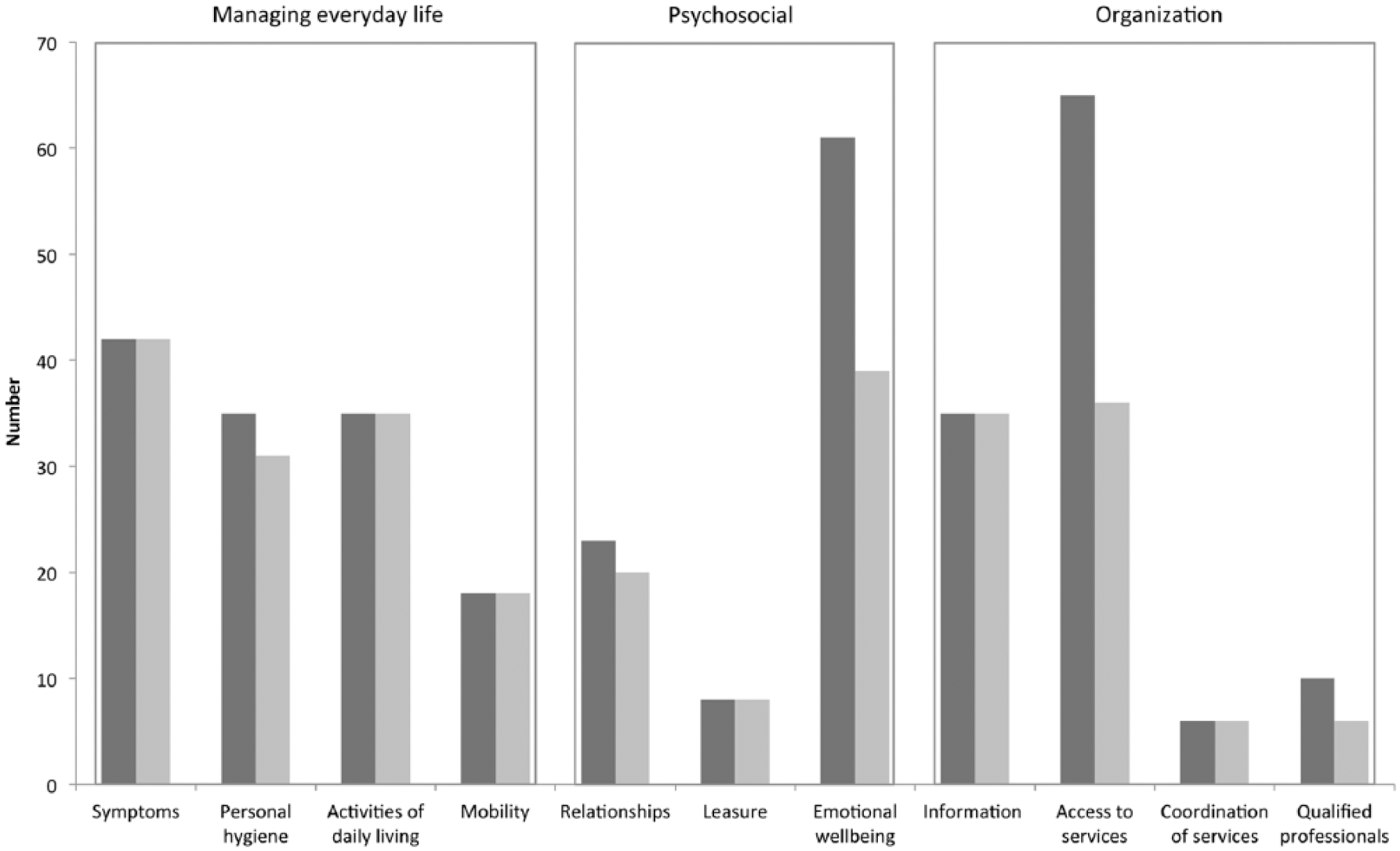
The care needs addressed (dark gray, overall n = 338) and fulfilled (light gray, n = 276) as reported by the home-based palliative approach (HPA) teams. Care needs are grouped into 11 pre-set categories and 3 domains. 16
Primary outcomes
Mean change in POS-S-MS score from baseline to 3 months was 1.1 (95% confidence interval (CI), −0.5 to 2.7) in the HPA group and −0.2 (95% CI, −2.9 to 2.6) in the UC group, with a mean between-group difference of 1.3 (95% CI, −1.7 to 4.2), and a Cohen’s d effect size (ES) of 0.20. Mean change in POS-S-MS from baseline to 6 months was 2.3 (95% CI, 0.4 to 4.1) in the HPA group and 0.3 (−2.0 to 2.6) in the UC group, with a mean between-group difference of 1.9 (95% CI, −1.1 to 5.0) and an ES of 0.32 (Figure 3). There were no data missing/imputed at baseline; data of three HPA patients were missing at 3 months and of five HPA patients at 6 months. The pre-specified multivariate analysis is reported in Table 3: HPA significantly reduced symptom burden (p = 0.047), and there was no interaction between intervention and center (p = 0.62). In the per-protocol analysis (Online Supplementary Table 2), the HPA effect on POS-S-MS was of borderline statistical significance (p = 0.062).
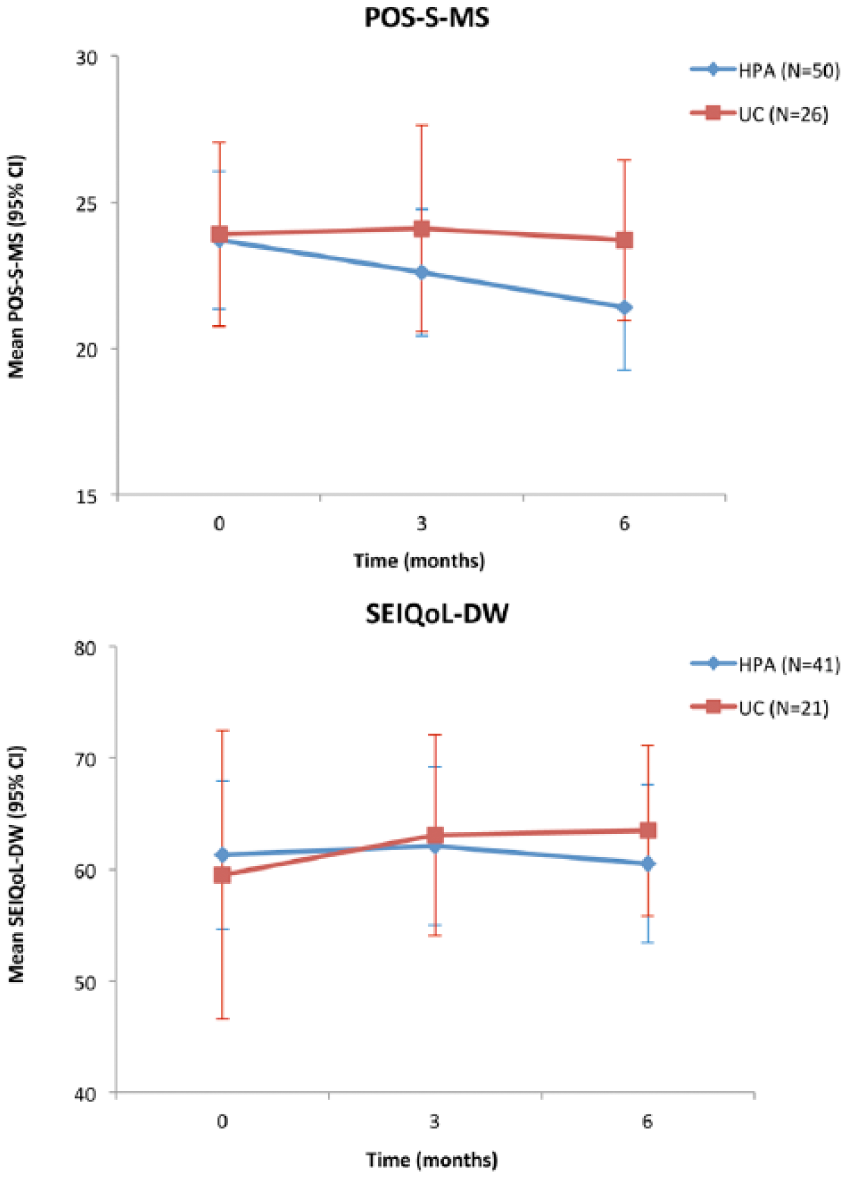
Change in the two primary outcome measures Palliative care Outcome Scale-Symptoms-Multiple Sclerosis (POS-S-MS) and Schedule for the Evaluation of Individual Quality of Life-Direct Weighting (SEIQoL-DW) by intervention group (intention-to-treat data). Point estimates and confidence intervals (CIs) are from the raw data.
Generalized estimating equation models (intention-to-treat analysis) of the two primary outcomes.
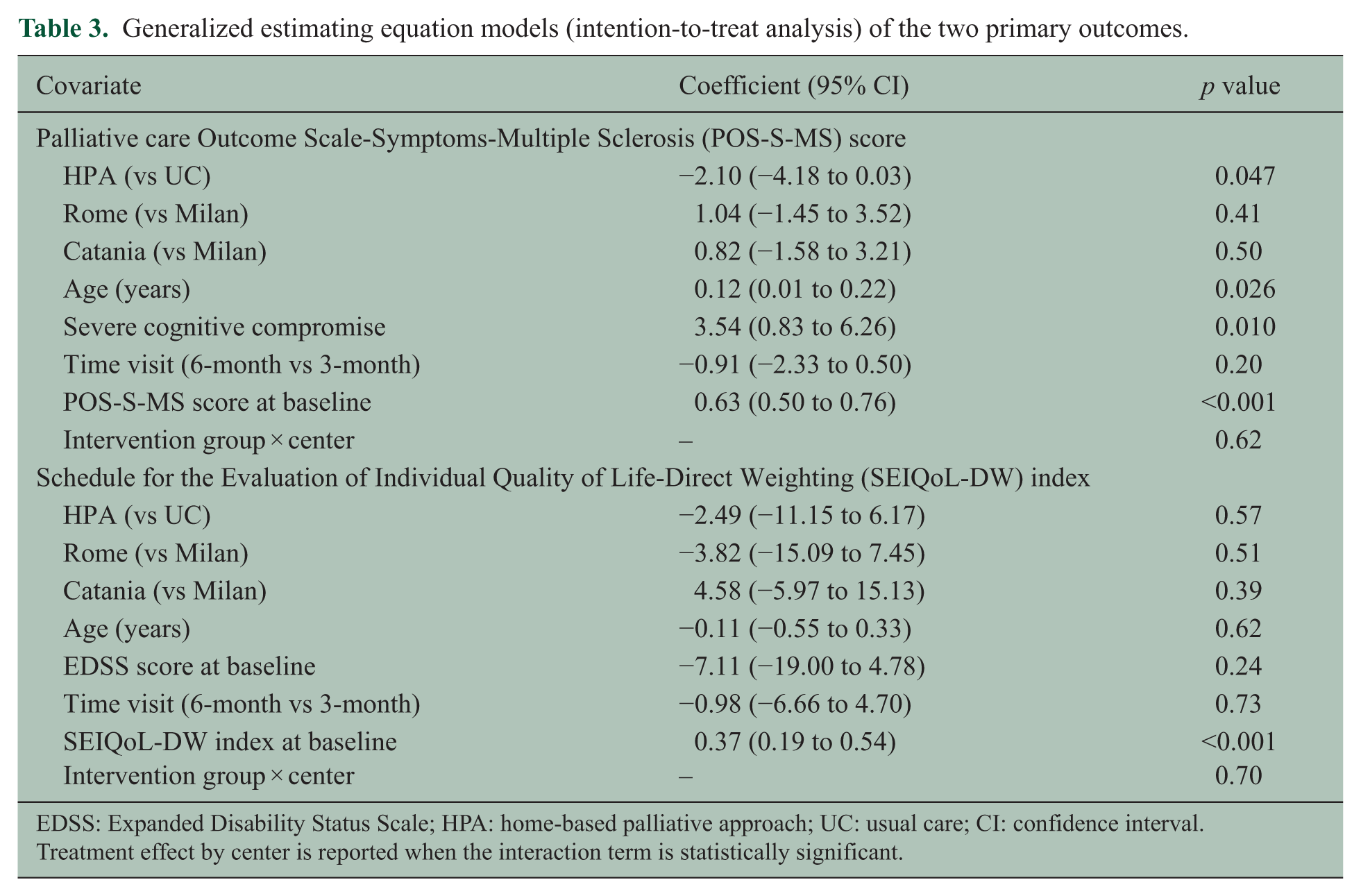
EDSS: Expanded Disability Status Scale; HPA: home-based palliative approach; UC: usual care; CI: confidence interval.
Treatment effect by center is reported when the interaction term is statistically significant.
The SEIQoL-DW interview was administered to 62 patients (82%; 41 HPA, 21 UC) without severe cognitive impairment. Mean change in SEIQoL-DW index score from baseline to 3 months was −0.9 (95% CI, −6.8 to 5.1) in the HPA group and −3.7 (−17.6 to 10.3) in the UC group, with a mean between-group difference of 2.8 (95% CI, −12.2 to 17.8; ES, 0.11). Mean change in SEIQoL-DW from baseline to 6 months was 0.8 (95% CI, −5.3 to 6.9) in the HPA group and −4.0 (−21.1 to 13.1) in the UC group, with a mean between-group difference of 4.8 (95% CI, −13.2 to 22.7; ES, 0.10; Figure 3). There were no data missing/imputed at baseline; data of four HPA patients were missing at both 3 and 6 months. In the pre-specified multivariate analysis, HPA had no significant effect on the primary outcome (p = 0.57), and there was no interaction between intervention and center (p = 0.70; Table 3). Findings from the per-protocol analysis matched those of the main analysis (Online Supplementary Table 2).
Serious adverse events and attrition
There were 22 serious adverse events (Table 4) in 20 patients, 15 events in 13 patients on HPA (30%), and 7 events in 7 patients on UC (27%; p = 0.78). Three HPA patients died, all deaths were deemed to be unrelated to the intervention. Three dyads discontinued the intervention, one in the HPA group and two in the UC group (Figure 1); one HPA dyad completed the intervention but did not perform visit 3.
The 22 serious adverse events (20 patients) listed by report date (day/month/year).
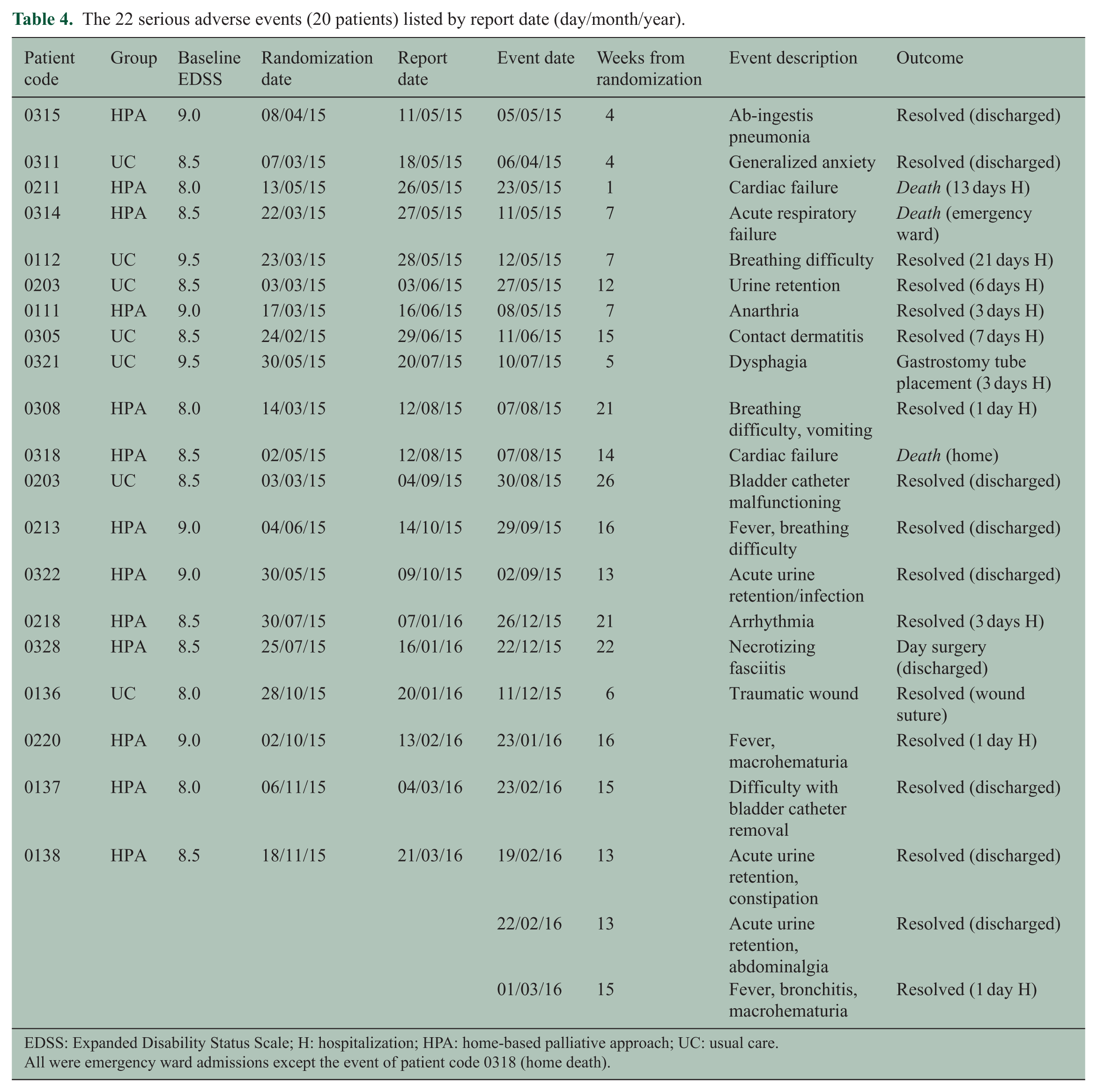
EDSS: Expanded Disability Status Scale; H: hospitalization; HPA: home-based palliative approach; UC: usual care.
All were emergency ward admissions except the event of patient code 0318 (home death).
Other patient outcomes
We found no significant difference between intervention groups for change at 3 and 6 months in POS, HADS Anxiety and Depression, and FIM total score (Online Supplementary Table 3). Two patients with baseline EDSS 8.0 worsened to EDSS 8.5 at 3- and 6-month visits (one from each intervention group), the other remained unchanged (data not shown). Per-protocol analysis of secondary patient outcomes are reported in the Online Supplementary Table 2.
Caregiver burden and other carer outcomes
Mean change in ZBI score from baseline to 3 months was 1.1 (95% CI, −1.7 to 3.9) in the HPA group and −0.5 (−4.1 to 3.2) in the UC group, with a mean between-group difference of 1.6 (95% CI, −3.1 to 6.2; ES, 0.16). Mean change from baseline to 6 months was 0.2 (95% CI, −2.8 to 3.2) in the HPA group and 1.7 (−1.1 to 4.5) in the UC group, with a mean between-group difference of −1.5 (95% CI, −6.1 to 3.1; ES, 0.16). There was no effect of HPA on ZBI score (p = 0.83), or interaction between intervention and center (p = 0.20; Online Supplementary Table 3). Per-protocol analysis findings matched those of the main analysis (Online Supplementary Table 4).
Examiner’s masking
At visit 2, examiners guessed dyad assignment correctly in 12/73 (17%), incorrectly in 6 (8%), and answered “don’t know” in 55 (75%). Figures at visit 3 were 14% for correct, 7% for incorrect, and 79% for “don’t know” answers. Examiners guessed the correct assignment in both visits in four HPA dyads (9%) and one UC dyad (4%).
Discussion
In this 6-month RCT in severely affected MS adults, an HPA reduced symptom burden as assessed using the multidimensional POS-S-MS (primary outcome measure). The size of HPA effect was small, manifested at the end of the study, and the statistical significance was borderline. Three patients died during the study, all belonging to HPA group. The independent data and safety monitoring committee confirmed the center principal investigator judgment that these deaths were unrelated to the intervention. One further patient died immediately after baseline visit and the day before randomization, and one in the trial screening phase (Figure 1).
Reduction of symptom burden was in line with evidence from the UK trial, which found improvement in a subset of five POS-S-MS symptoms (pain, nausea, vomiting, mouth problems, and sleeping difficulty). 5 We identified no evidence of efficacy of the intervention for the SEIQoL-DW (primary outcome measure), or for secondary patient (POS, HADS, FIM), and carer outcomes (22-item ZBI, SF-36, HADS). Findings for caregiver burden were at odds with the UK trial, which found a significant improvement in those carers (13/26 in the PC group and 17/26 in the standard care group) who completed the 12-item ZBI. 5 It should be noted that findings on caregiver burden in PC interventions are conflicting, as highlighted by a recent systematic review and meta-analysis. 28
At main difference with the UK and Ne-Pal trials was that in PeNSAMI the teams involved did not originate from PC services, and this was not a specialist PC intervention. 29 The three HPA multi-professional teams were led by a nurse who received higher specialist training and worked full time in PC (Milan and Rome) or had received PC training for the trial and worked full time in MS rehabilitation (Catania); the physicians (one neurologist and two neurologists and physiatrists) and the other professionals were MS experts. The clinical characteristics of our patients were similar to those of the UK trial, but Ne-Pal included patients with other neurological conditions, and excluded patients with severe cognitive compromise. 10 As in the UK trial, the HPA teams addressed the identified needs of the dyads indirectly, by activating existing services or bringing them to the attention of the dyads, which was a major study challenge due to the fragmentation of care and silos working style of services.15,30 This may have impacted the response to the intervention, which we originally hypothesized at 3 months. It is thus possible that as for the reduction in symptom burden (POS-S-MS) which manifested at 6-month visit (Figure 3), the time of HPA care was insufficient to produce an effect on most outcome measures. Data from team records also documented a difficulty in HPA goal achievement especially for psychosocial and organizational issues, while for symptom management and activities of daily living needs were at least partially met in the 6-month time frame (Figure 2). These issues also emerged from the focus group of the HPA teams conducted at the end of the trial (Online Supplementary Box), and should be carefully considered in the design of future PC trials for MS patients, which should at best match with both service activation and the MS disease trajectory.
Other differences with the two published RCTs which inspired our study are the adoption of a multicenter design and an examiner-blind design (the nature of the intervention prevented us from blinding patients and carers to their allocated group). The latter made more complex (and burdensome) the study procedures: the SEIQoL-DW interview was not administered by the HPA team (team members could only access SEIQoL-DW data of the patient via the eCRF), and participants had sometimes difficulty in distinguishing HPA team and examiner roles. In addition, the examiner’s visits (particularly the SEIQoL-DW interview) and the monthly telephone interviews may have produced some non-specific effect in the UC group, which might have moderated the occurrence of performance bias. 31 However, an examiner-blind design improves the quality of the study by preventing ascertainment bias. 31 Inter-rater reliability (in outcome ascertainment) was a minor issue as in Milan and Catania outcome measures were obtained by the center’s main examiner only, and in Rome both trained examiners (main and backup) operated. We met our recruitment and retention targets, and missing data on both patient and carer outcomes were <10%—well below our pre-specified hypothesis, 12 and data of RCTs on PC.28,32
It is essential to have QOL as a primary outcome measure for a PC intervention. 17 We chose the SEIQoL-DW interview as it is an individualized tool, preventing patient exposure to non-pertinent or frustrating items, and the oversight of significant QOL dimensions. Ne-Pal findings provided evidence of the feasibility of SEIQoL-DW administration in this disabled patient population and good scale responsiveness. 10 However, in view of the PeNSAMI trial experience, this instrument may have a higher potential in the hands of the treating professionals (here the HPA team), as it can be used to elucidate patient values and priorities, and thus facilitate the setting of goals that are aligned to such values. 33
To conclude, PeNSAMI trial showed that 6-month HPA slightly reduces MS symptom burden, but did not produce evidence of an effect on patient QOL, or on the multifaceted patient-carer needs. Moreover, our findings suggest that a PC intervention for patients with severe MS may need to be over a longer period than 6 months. The trial was designed and conducted to minimize the risk of bias, at the expense of some burden for patients, carers, and HPs. The analysis of the qualitative study nested in the RCT, by addressing the living experiences of participants, will supplement trial findings, identify the strengths and challenges of the intervention, and contribute to improve intervention’s contents, processes, and timing.
Footnotes
Appendix 1
Acknowledgements
We thank all of the MS patients and carers who participated in the study. We also thank Professors Diego Centonze and Marco Salvetti; Drs Milena De Riz, Giancarlo Di Battista, Claudio Gasperini, Alessandra Protti, and Marco Rovaris; and the local sections of the Italian Multiple Sclerosis Society in Milan, Rome, and Catania, for their help with dyad recruitment, and the POS team for their advice on the POS-S-MS scale. Trial registration number: ISRCTN73082124.
Declaration of Conflicting Interests
The author(s) declared the following potential conflicts of interest with respect to the research, authorship, and/or publication of this article: A.S. has been a board member of Biogen Idec, Merck Serono and Novartis and has received speaker honoraria from Genzyme, Merck Serono, and Excemed. F.P. received honoraria for speaking activities from Bayer Schering, Biogen Idec, Merck Serono, Novartis, and Sanofi Aventis. He has served as advisory board member of the following companies: Bayer Schering, Biogen Idec, Merck Serono, and Novartis. M.G.G. has received research funding from Merck Serono and consulting and speaking fees from Biogen Idec. P.C. has been a board member of Biogen Idec, received travel grants from Sanofi Aventis, Biogen Dompe, and Merck Serono. P.Z. and M.A.B. are board members of the Fondazione Italiana Sclerosi Multipla (charitable organization). All other authors declare that they have no competing interests.
Funding
The author(s) disclosed receipt of the following financial support for the research, authorship, and/or publication of this article: The Fondazione Italiana Sclerosi Multipla (FISM) funded the trial (Grant No. 2014/S/1 to A.S.).
References
Supplementary Material
Please find the following supplemental material available below.
For Open Access articles published under a Creative Commons License, all supplemental material carries the same license as the article it is associated with.
For non-Open Access articles published, all supplemental material carries a non-exclusive license, and permission requests for re-use of supplemental material or any part of supplemental material shall be sent directly to the copyright owner as specified in the copyright notice associated with the article.
