



Abstract
Ensuring acoustic comfort in educational environments is crucial for both pedagogical efficiency and user health. This study examines the acoustic performance of a newly constructed university research center in Türkiye, in line with the criteria set out in the “Regulation on the Protection of Buildings Against Noise.” Unlike most studies in the literature, which generally rely on post-occupancy measurements, this study offers a proactive evaluation method by integrating on-site environmental noise measurements (Leq) with detailed sound insulation simulations (KS Schallschutzrechner) in a building that is still under construction. Analyses show that, while the building’s location meets environmental noise limits (41–54 dBA), which is well below the 65 dBA threshold, the internal partition elements are insufficient to meet legal requirements. Quantitative findings reveal that using curtain wall systems (Rw: 33 dB) and MDF cabinets integrated into partition walls results in acoustic performance being approximately 10–15 dB below regulatory limits. Furthermore, excessive volume imbalances between corridors and workshops and the failure to design auditoriums as enclosed spaces were identified as the primary causes of acoustic failure. The study concludes with evidence-based design recommendations to bridge the gap between architectural design decisions and regulatory compliance, such as the use of high-performance laminated glass and optimized material placement. This research provides architects and consultants with a repeatable performance review model to ensure acoustic standards are met before completion of the building.
Introduction
Sound propagates in a medium in the form of a physical motion consisting of vibrations. If this motion is within the range of auditory frequencies, it is perceived as sound by the ear and other auxiliary organs. 1 Noise is a subjective concept and is defined as “unpleasant, unwanted, disturbing sound.” 2 Excessively loud noise, even if it is pleasant, needs to be controlled because of its harmful effects, ranging from hearing loss to many physiological and psychological disorders.2,3 In 1971, a working group of the World Health Organization (WHO) reported that “noise should be considered a major threat to human health.” 1
Noise causes sleep and hearing impairment, has psychological, cardiovascular, physiological, performance and voice communication effects and causes general behavior and disturbances in residential areas. 2 Noise is classified into two types depending on the area where it occurs and the way it propagates: indoor and outdoor noise. In-building noise is generated by the use of vehicles, equipment (radio, mechanical household equipment, etc.) and living activities (people, pets, etc.) present in a certain area, while outdoor noise is generally generated as a result of transportation, industry and construction activities. 4 Noise in educational buildings is one of the main factors that negatively affect learning processes. Studies show that high noise levels in classrooms distract students and reduce academic achievement. 5 In this context, ensuring acoustic comfort in educational buildings is critical not only for compliance with regulations but also for pedagogical requirements.
Most studies of acoustic comfort in educational buildings tend to focus either on user satisfaction or on-site measurements once the building is complete. However, there is a limited body of research that directly compares national regulatory criteria using simulation and measurement methods, and monitors performance during construction. This gap in the literature makes it difficult to predict the impact of design decisions on regulatory compliance. This study presents a replicable methodology that integrates simulation and field data to verify acoustic compliance during the design and construction phases of complex educational buildings. This method enables architects and engineers to identify design flaws during implementation and ensure full compliance with legal standards.
The aim of this study is to evaluate whether the Research Center, which was designed with an educational function and is in the process of construction, meets the acoustic comfort criteria. In this context; national and international legislation on educational buildings were examined in the context of acoustics. Then, the volume information of the Research Center building and the material information of the elements forming the space were processed into the Ks Schallschutzrechner simulation program and sound insulation values were obtained. The results obtained using the on-site measurement and simulation program were tested according to the compliance of the limit values in the regulations. The test results were evaluated and recommendations were presented in line with the data obtained.
Literature review
In this study, Zhang et al. 6 examined individual control approaches (e.g. personal acoustic canopy systems) to improve classroom acoustics through simulation.
In their study, Zhu et al. performed acoustic optimization using ODEON software in university multimedia classrooms. The simulation results were then compared with the measurements. Furthermore, they evaluated sound transmission index (STI) and optimal reverberation times. 7
Semerci and Kaygısız 8 evaluated the workshops and classrooms of Necmettin Erbakan University on the parameters of form, volume and sound absorbing material. It was concluded that the use of sound absorbing materials in the wrong amount and location makes the space more absorbing than necessary and concave surfaces prevent the sound from spreading homogeneously. In addition, the noise level of the environment of the primary school, which is an educational building, was determined and it was evaluated whether the environment of the building was suitable for education. It was determined that it did not meet the values due to reasons such as the highway being in the neighborhood and suggestions were made for improvement. 3
In their study, Tardini et al. 9 examined national standards and target values for classroom acoustics in over 50 countries, summarizing design practices based on expert opinions. 6
In his research, Daloğlu 10 examined Izmir B.B. Music art workshops within the scope of the “Regulation on the Protection of Buildings Against Noise,” identified the problems and made suggestions for the acoustic comfort of the spaces at the end of the study.
Kılıç and Adalı conducted on-site measurements to determine the noise pollution level of a primary school in Mudanya district of Bursa province. Situations in which the values in the ENCR (Environmental Noise Control Regulation) were exceeded were observed and suggestions were made such as ringing the entrance bell at short intervals and afforestation of the school garden in order to prevent environmental noise. 11
In their research, D’Orazio et al. present three case studies to demonstrate parameters such as RT, STI, background noise and implementation challenges. They used the design and in situ measurement method. 12
In his study, Kabil aimed to determine the acoustic comfort conditions of the classrooms, lecture halls and laboratories in Trabzon Province Karadeniz Technical University Kanuni Campus and to develop the necessary suggestions for improvement. Within the scope of this study, the values of reverberation time (RT), early decay time (EDT), definition (D50) and sound transmission index (STI), which are important in speech intelligibility, were compared with the optimum value ranges through simulation method. As a result of the study; the preparation of the acoustic project at the design stage emphasizes that it will also prevent problems that may arise during the use of the space. 13
In this study, Cal et al. examined perceptions of soundscapes inside and outside schools by conducting a survey with 452 teachers in the UK. The findings indicated that schools are perceived as chaotic, vibrant and exciting spaces, rather than calm environments. A weak correlation was found between acoustic perception and demographic variables such as age, gender and experience. However, as teachers’ well-being increased, they perceived the overall school soundscape more positively. Perceptions of sound varied across different spaces (classroom, corridor, cafeteria, playground, gym) and levels of comfort and privacy. 14
Çakır investigates the relationship between acoustic comfort evaluations and psychoacoustic parameters in closed public spaces that are not used for acoustic purposes, specifically in dining spaces. On-site measurements, laboratory hearing tests and questionnaires are determined as research methods. It is found that better acoustic comfort is achieved with higher clarity and lower roughness values. It has been revealed how psychoacoustic parameters will change with the change in the number of people in dining spaces. 15
Bulunuz et al. evaluated the noise level, causes and effects of acoustic improvement in a school in Antalya by using measurement and questionnaire method. It was found that noise was reduced by half as a result of acoustic improvement. In the survey results; it was stated that although the noise was mostly defined as low and medium, there was high noise during breaks. 16
In this study, De Salvio and D’Orazio analyzed long-term measurements of student activity and speech levels in two historic university lecture theaters, both before and after restoration, in order to assess the acoustic environment. The acoustic improvements made during the restoration process, particularly the new line-array-based PA system, reduced background noise, thus improving the signal-to-noise ratio between student noise and teacher speech. Clustering methods (K-means and Gaussian mixture model) were employed to distinguish between student activity and speech levels. The results showed that K-means is more robust in the face of varying sound levels. 17
Yılmaz Karaman and Berber Üçkaya aimed to increase the quality of education by addressing the acoustic comfort situation in Dokuz Eylül University Faculty of Architecture. Modeling, measurement and survey methods were used. As a result of the study; it was once again revealed that acoustic design, which should be carried out together with architectural design, limited the interventions to be made in the interior design process and thus the desired acoustic quality could not be achieved. 18
Özçetin established performance criteria for providing acoustic comfort in buildings providing music education and evaluated the acoustic performance of the Musiki Muallim Mektebi Conservatory building, one of the important historical buildings of Ankara. This evaluation was made using measurement and simulation method. As a result of the study; it is stated that the auditory comfort conditions of educational buildings with music functions should be different from traditional classrooms and the inadequacy of the legislation in our country for educational buildings with music functions and this deficiency should be completed. 19
In this study, Hamida et al. take a comprehensive look at the indicators used to assess students’ acoustic preferences and needs in educational buildings. Traditional guidelines tend to focus on dose-based (e.g. sound pressure level) and structure-based (e.g. sound-absorbing surfaces) indicators, while user-based indicators, which encompass students’ physiological and psychological responses, are seldom considered. A review of the literature indicates that, although user-, dose-, and structure-based indicators are important, student acoustic preferences are largely overlooked in existing research. 20
Görkem and Demirel determine architectural acoustic design criteria for television studios. The data proposed in the literature on architectural acoustic design criteria for television studios were examined within the framework of national and international legislation. The importance of architectural acoustics of television studios was understood through regulations and the deficiencies in the regulations in Türkiye were determined. 21
In their study, Manesh et al. emphasize the importance of speech intelligibility in educational buildings, comparing different methods used to calculate acoustic indicators. They argue that traditional formulas are quick but inaccurate, while simulation software is detailed but time-consuming and expensive. This study developed a machine learning-based system in which data obtained from Grasshopper-Pachyderm simulations was processed using CatBoost and pix2pix algorithms to estimate acoustic indicators in numerical and visual (heat map) formats. The model achieved high accuracy, ranging from 89% to 99% and also demonstrated strong performance with visual outputs. Consequently, this data-driven approach enables the rapid and reliable assessment of acoustic comfort in educational buildings. 22
In the literature studies, while the importance of environmental noise in acoustic evaluations of educational buildings is emphasized, it is seen that technical parameters such as material properties, thickness and usage patterns of building elements as well as spatial organization are determinant on acoustic comfort. In addition, the correct definition of the source-receiver relationship and the selection of appropriate materials play a critical role in the control of sound transmission within the building. As a result, it is seen in the literature that the main parameters affecting acoustic performance in educational buildings are sound insulation values of building elements, volumetric ratios between spaces, layout of indoor components and environmental noise exposure. In this study, these parameters are quantitatively analyzed with a simulation-based method and compared with the limit values defined in the Regulation on the Protection of Buildings against Noise and Environmental Noise Control Regulation. 23 Thus, it is aimed to go beyond the limited analyses in previous studies, which mostly focused on qualitative evaluations and on-site measurements, and to conduct a multi-layered and data-based performance review. The fact that the problem areas highlighted in the literature (volume mismatches, materials with low insulation performance, interior space arrangements, etc.) are similarly observed in the Research Center examined in this study strengthens the relevance of the findings to the field. In this framework, the present study aims to provide tangible recommendations for improving acoustic comfort in educational buildings by testing building performance through compliance with national legislation. In this context, the study proposes a holistic method based on legislation-based performance analysis in the field of building acoustics and presents an evaluation model that can be integrated into the design process in educational buildings.
Existing studies reveal that acoustic comfort in educational buildings is generally addressed through “post-occupancy evaluations” (POEs) conducted after completion. While many studies emphasize the importance of theoretical standards, the number of studies questioning the quantitative compliance of architectural decisions and material details (e.g. curtain walls and partition wall integrations) with national regulations during the construction process is quite limited. This gap in the literature makes it difficult to identify “performance deviations” arising during implementation between design intent and legal performance obligations. Focusing on a research center under construction, this study combines on-site measurements with simulation techniques to offer a proactive assessment model to the literature, using regulatory criteria as a control mechanism even at the implementation stage.
Method
In this study, firstly, the place of noise in the legislation was examined. After the literature research, data such as the information of the building elements (material type, material thickness, application conditions, etc.), the dimensions of the walls forming the spaces, the volume of the space were examined and processed into the Ks Schallschutzrechner program. The obtained environmental noise measurement and simulation program data were compared with the limit values specified in the Environmental Noise Control Regulation 23 and the indoor noise level values were compared with the limit values specified in the Regulation on the Protection of Buildings against Noise. 24 The simulation program is a detailed data method in which the material, thickness and space volumes of the dividers are processed.
The Ks Schallschutzrechner simulation program used in the study is a calculation model developed to determine the sound insulation values of building elements. This program calculates the sound transmission loss by considering parameters such as volume information, material types and thicknesses of elements such as walls, floors and ceilings. The simulation results are compared with the “Regulation on the Protection of Buildings against Noise” to evaluate the acoustic comfort. In addition, environmental noise measurements (Equivalent continuous sound pressure level -Leq-) were made at six points determined on the building facade and compared with the limit values in the Environmental Noise Control Regulation. 23
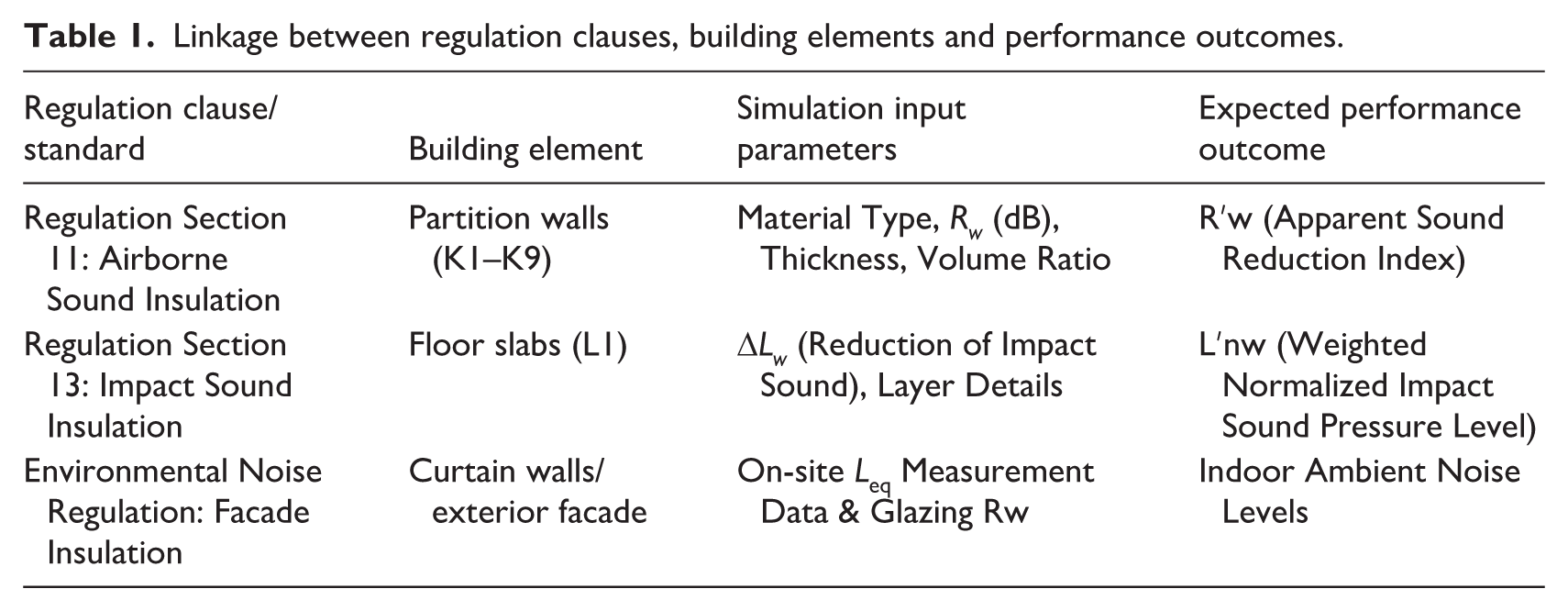
The methodological framework of the study is based on a hierarchical model combining simulation and field measurements to control acoustic performance during the design phase. The following technical parameters were used in the analyses performed using the Ks Schallschutzrechner simulation program (Table 1):
Calculations were performed in one-third octave bands between 100 and 3150 Hz, in accordance with building acoustics standards.
The software uses calculation models based on the ISO 12354 standard. In this context, when calculating sound transmission between partition elements, not only direct transmission but also flank transmission paths were defined as boundary conditions.
Simulation data were calibrated with laboratory test results from material manufacturers and standard Rw values defined in the regulation. Field measurements were verified using a (Leq) Svantek 979 Type 1 device in accordance with TS ISO 1996-2 standards.
Linkage between regulation clauses, building elements and performance outcomes.
Examination of the place of noise in legislation
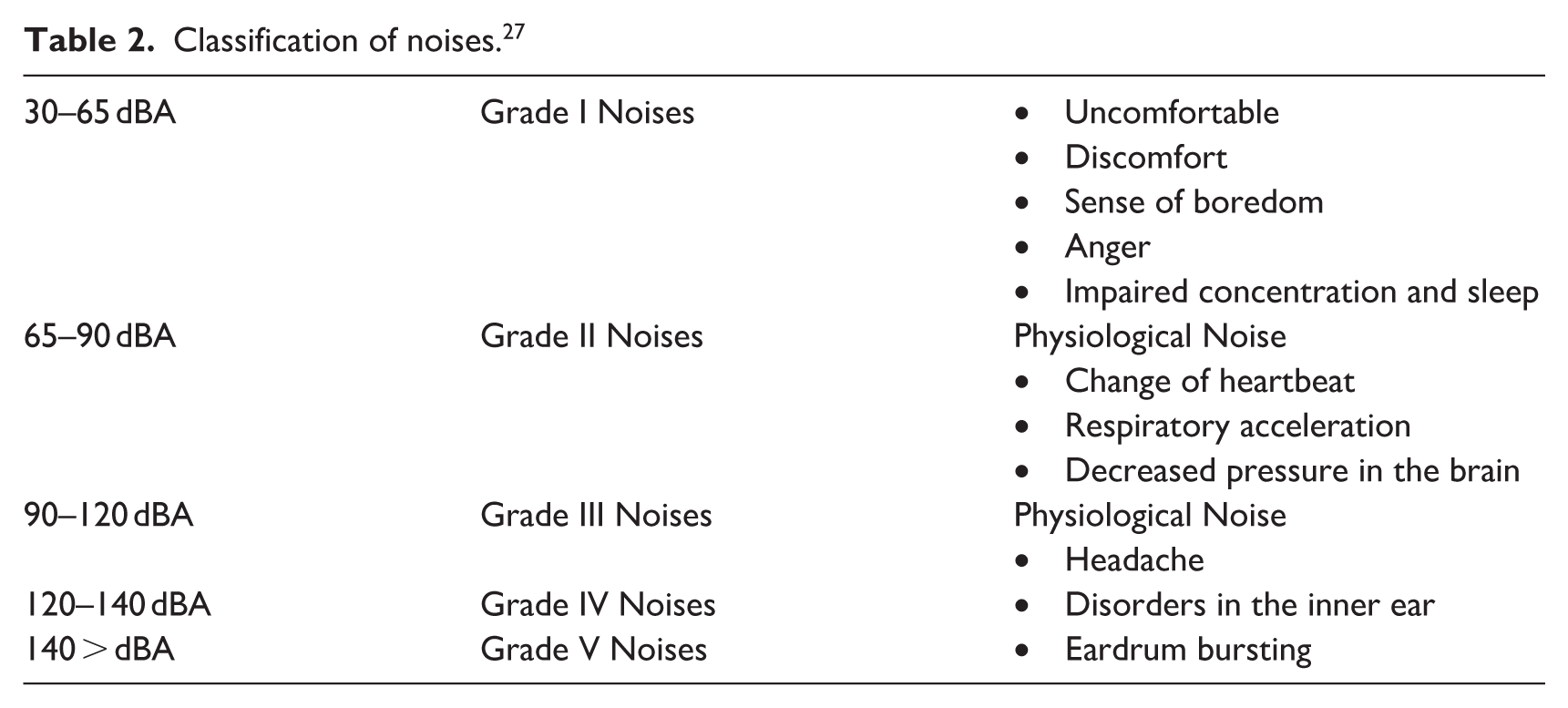
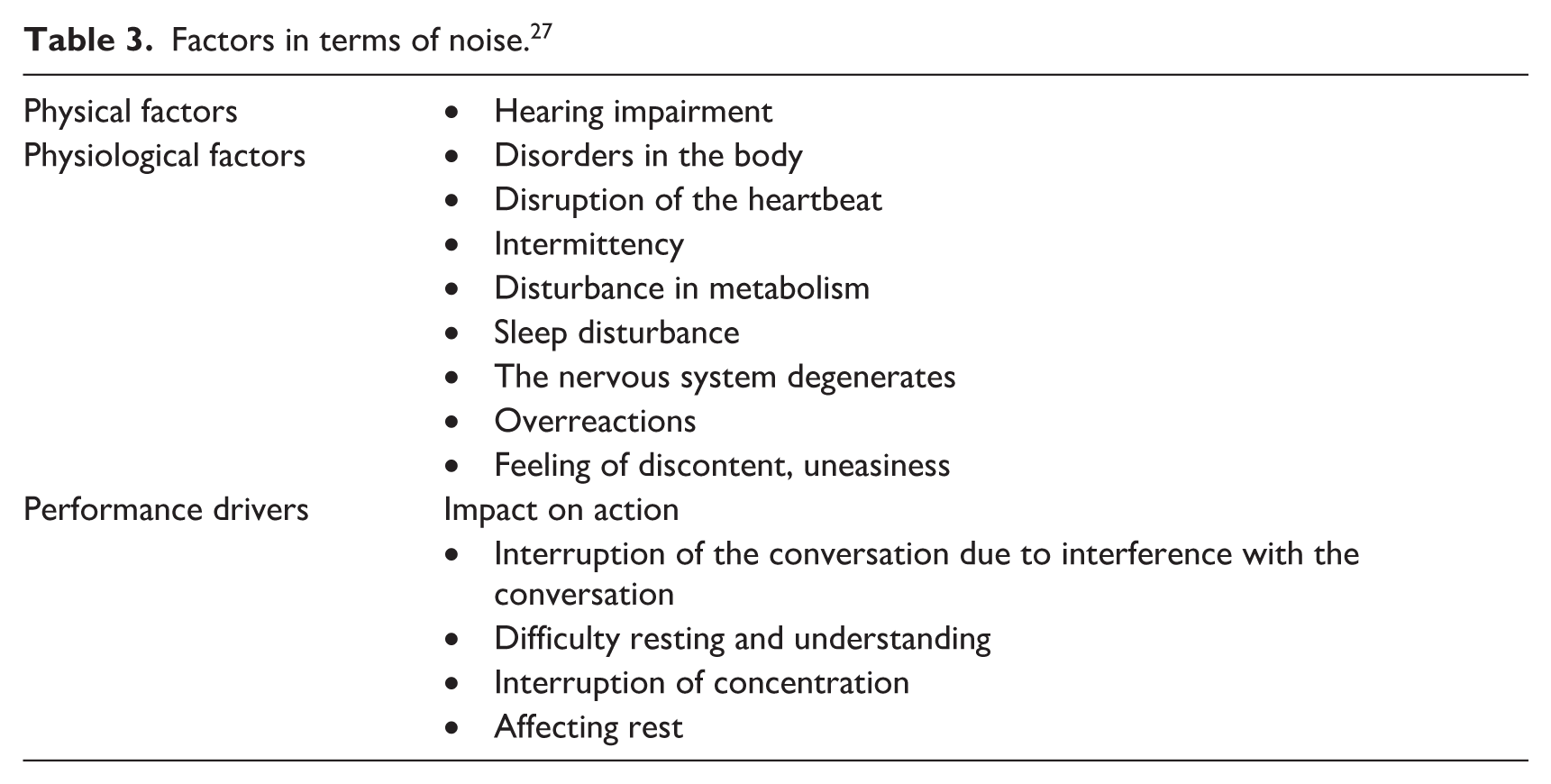
Various studies have been carried out in Türkiye and around the world in order to reduce and prevent the negative effects caused by noise (Tables 2 and 3). The first legal regulation on this subject is the “Occupational Safety and Health Regulation” issued by the USA on December 29, 1970.25,26 The UK in 1960 and Japan in 1967 enacted the first noise laws, although not as comprehensive as the EPA. Among European countries, the Netherlands enacted noise laws in 1979, France in 1985, Spain in 1993 and Denmark in 1994. 26
Classification of noises. 27
Factors in terms of noise. 27
In Türkiye, the regulation on the control of noise was first issued on December 11, 1986. 28 Until 1986, noise was mentioned superficially in laws and regulations. First, in the Turkish Civil Code published in 1926, noise was defined as noise exceeding the tolerable level between neighbors. Then again in 1926, the Turkish Penal Code mentions noise as the sound emitted by an instrument. The aim is to prevent disturbing public peace. In 1934, in the Law on Police Duties and Powers, noise is evaluated through the concept of time. In 1974, the Occupational Health and Safety Regulation aims to control noise in workplaces. The limit value of noise is given in decibels and noise protection methods are explained. In the 1986 Noise Control Regulation, the definition of noise and noise sources (highway, airway, industry, road and construction) are stated. Then the limit values of the classified noise sources are given. In 2004, legal regulations were developed with the “By-Law on the Assessment and Management of Environmental Noise” and revised in 2022 and still valid today as the “By-Law on Environmental Noise Control.” In addition, the “Regulation on the Protection of Buildings against Noise” was issued in 2017 and entered into force in 2018. 24 With this regulation, the limit values of noise from neighbor-to-neighbor, airborne and impact-generated noise are given. With this regulation, it is emphasized that noise does not only consist of sounds outside the building, but also that there may be human and machine-induced noise inside the building and that this type of noise is also controlled.
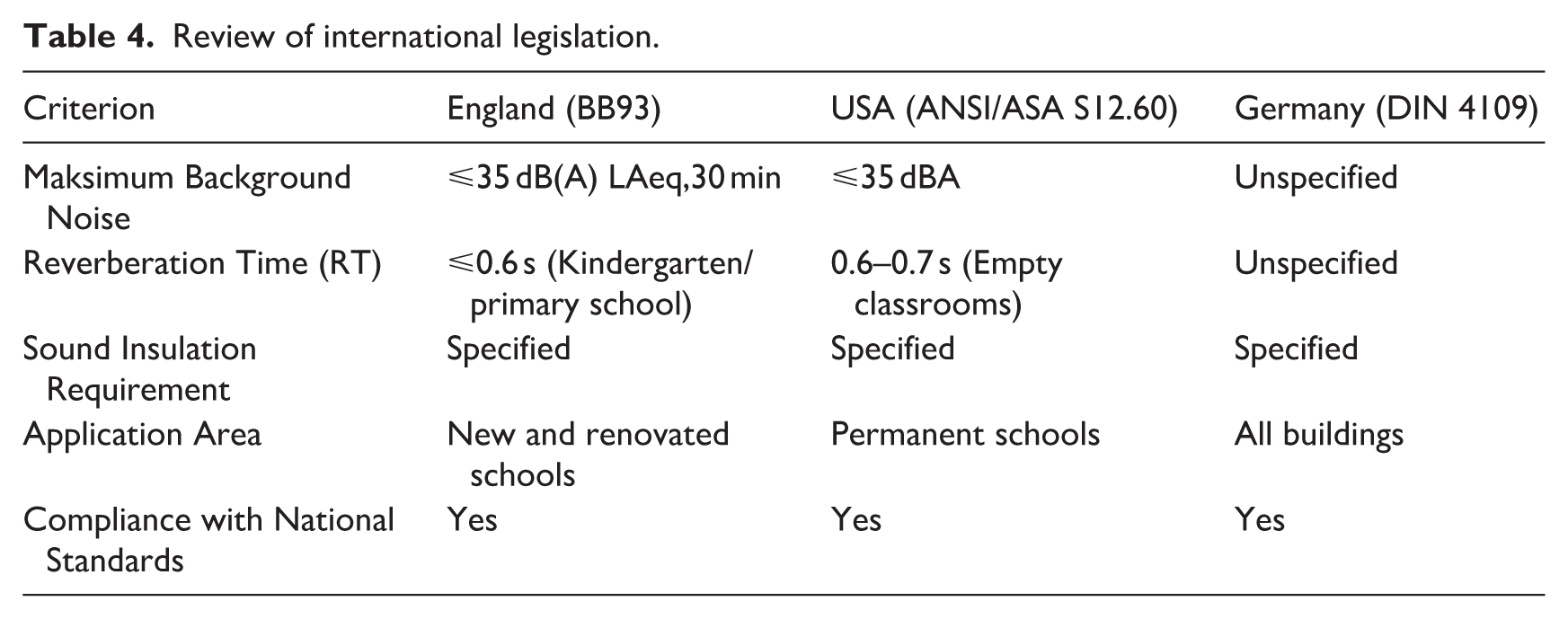
Noise control and acoustic comfort in educational buildings positively affect the learning process and increase user satisfaction. In this context, various countries have developed different standards and regulations to improve acoustic performance in educational buildings. Regulations such as BB93 in the UK, ANSI/ASA S12.60 in the United States and DIN 4109 in Germany set comprehensive parameters for sound insulation, noise control and reverberation times in educational buildings. Although these regulations aim to ensure the acoustic comfort of users, they vary in line with the local conditions and implementation practices of the countries. The development of existing noise legislation in Türkiye and its status in practice have been evaluated in a comparative perspective, taking into account these international regulations (See Table 4).
Review of international legislation.
Noise control analysis of the Research Center building
The Research Center building is located on the university campus. The structural system of the building is reinforced concrete-steel systems. The floor area of the building is 3178.57 m2. The total construction area is 10,590.84 m2. The height of the building is 13.50 m.
The two-story building has two basement floors and a courtyard inside. On the second basement floor there are technical volumes, workshops and classrooms; on the first basement floor there are two lecture halls, laboratories and stationery; on the ground floor there are exhibition, library and foyer; on the first floor there are exhibition and classrooms; on the second floor there are administrative units such as open meeting rooms and executive rooms. The facade is curtain wall (Figure 1).
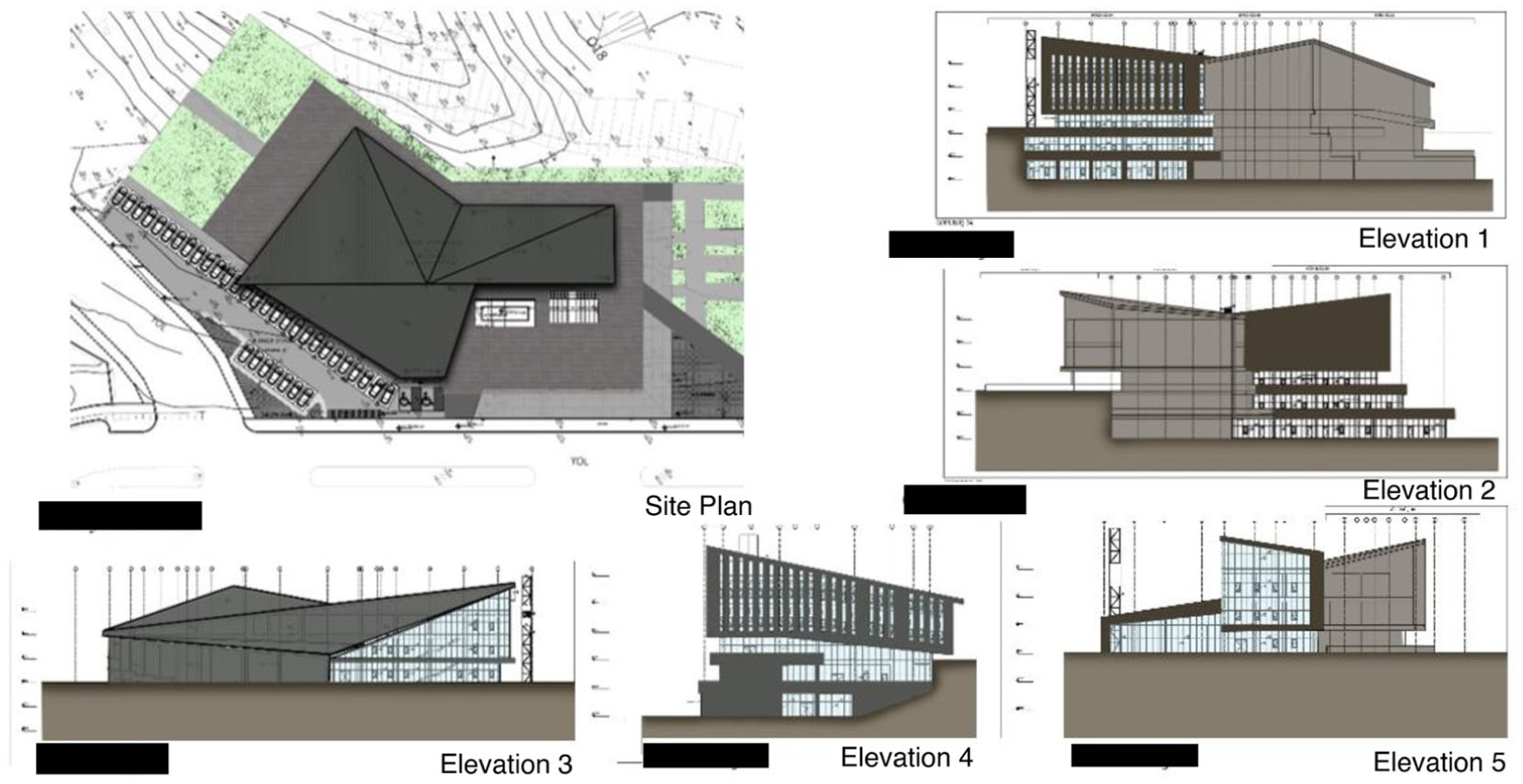
Site plan and elevations of the Research Center building.
Analysis within the framework of the regulation on the protection of buildings against noise
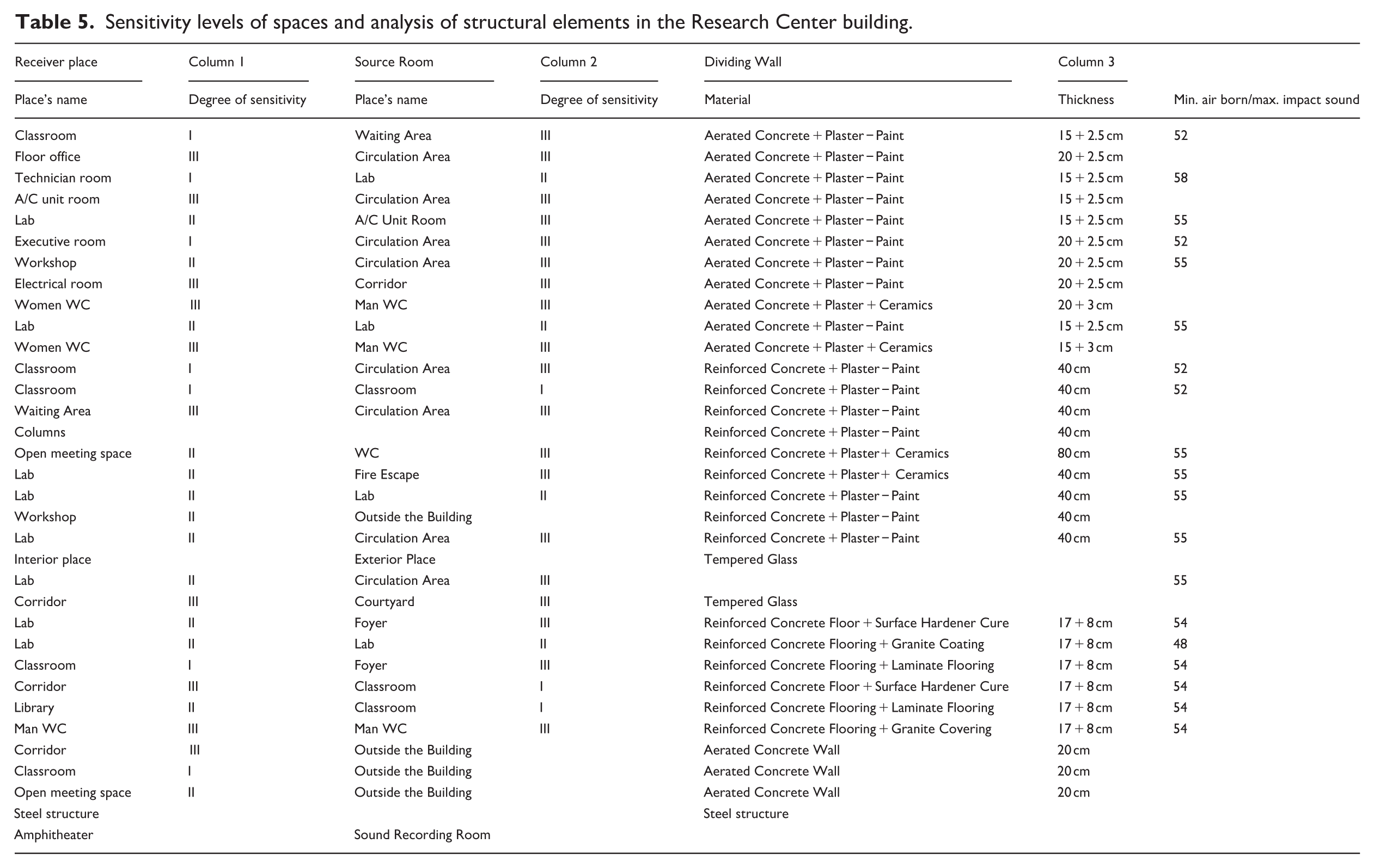
The degree of sensitivity to noise in the building as a source and receiver is classified according to the regulation. The material type of the walls dividing the spaces, the volumes, functions and sensitivity levels of the separated spaces were taken into consideration and the plans and sections were colored (See Table 5). For example, if the function of two spaces and the material type and thickness of the dividing structural element are the same, the effect of the volume relationship of the spaces on acoustic comfort will be analyzed. The walls that are classified and represent each situation are coded in the plans and cross-section.
Sensitivity levels of spaces and analysis of structural elements in the Research Center building.
As can be seen in Figure 2, a MDF cabinet has been placed inside the partition element, which significantly reduces its sound insulation values.
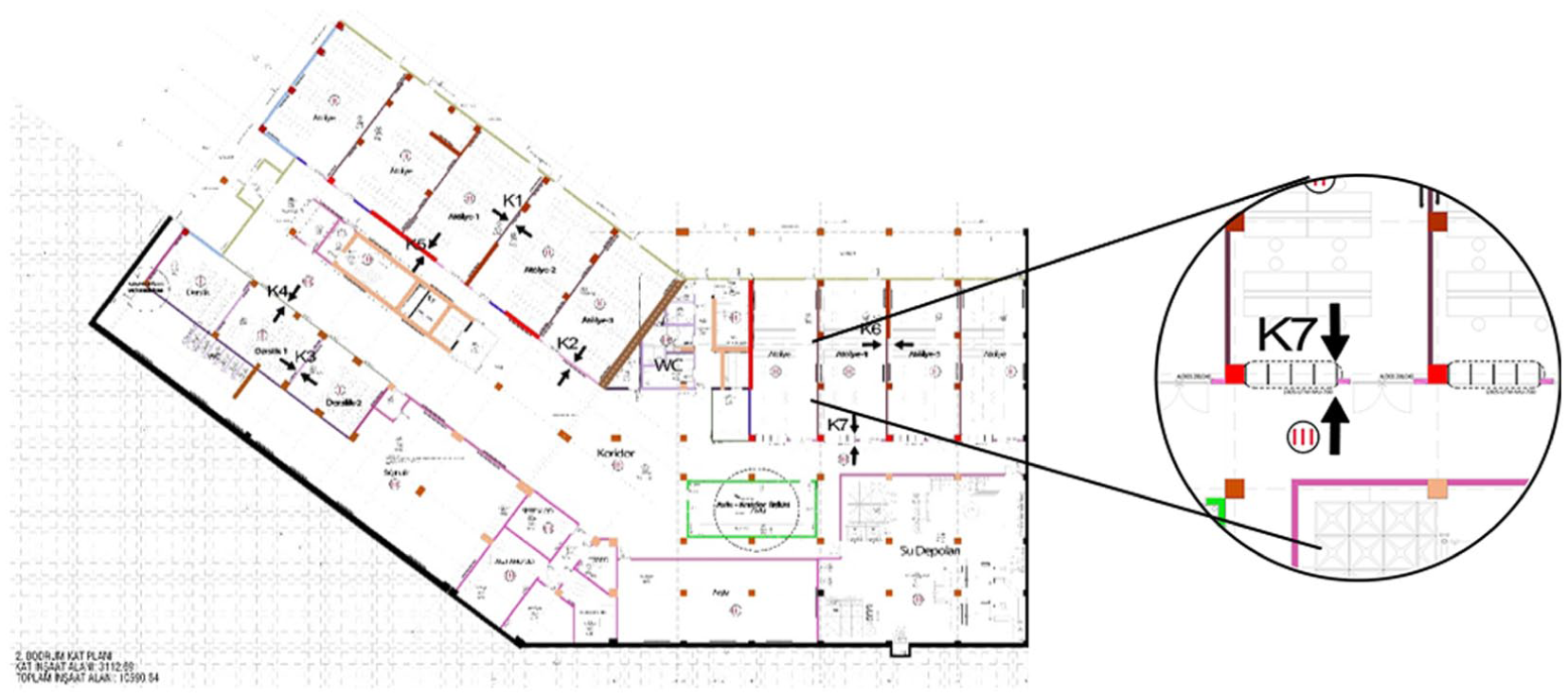
Basement Floor Plan showing the locations of partition elements (K1–K9) and the identified acoustic weaknesses due to internal furniture integration.
In compound wall applications; it should be preferred that the sound insulation performance of the building elements (door, window, wall, etc.) are close to each other. This is because the sound insulation performance is similar to that of the building element with the lowest performance value.
The area shown in Figure 3 was excluded from the evaluation because it is not bounded by dividers and is not a closed volume. The fact that the amplifier, which is sensitive to noise in the receiver state and is also a noise source, is not an enclosed volume is also considered negative.
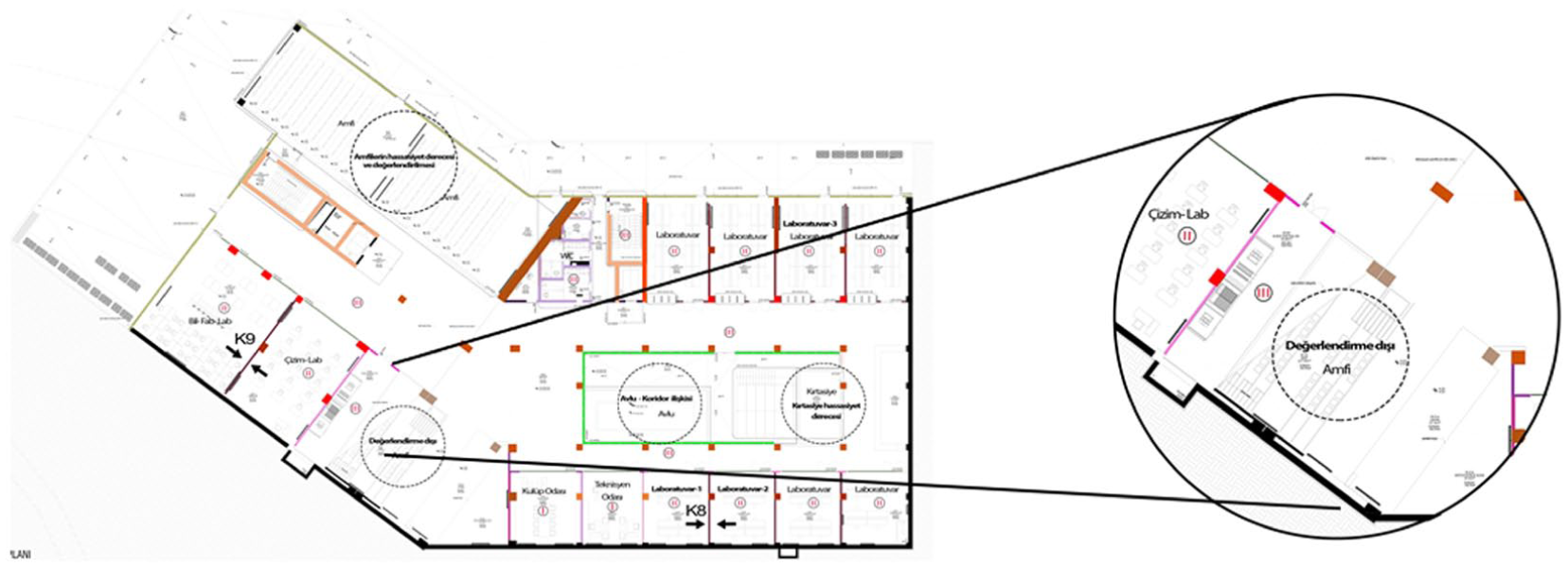
Basement floor plan highlighting the lecture hall area, which presents acoustic risks due to its open-volume design and lack of spatial boundaries.
The library is emphasized in the area indicated in Figure 4. The library space, which is among the noise sensitive spaces in the Regulation on the Protection of Buildings Against Noise, was evaluated negatively in terms of acoustics due to the lack of closed volumes. In addition, the ground floor was not evaluated due to the lack of closed volumes.
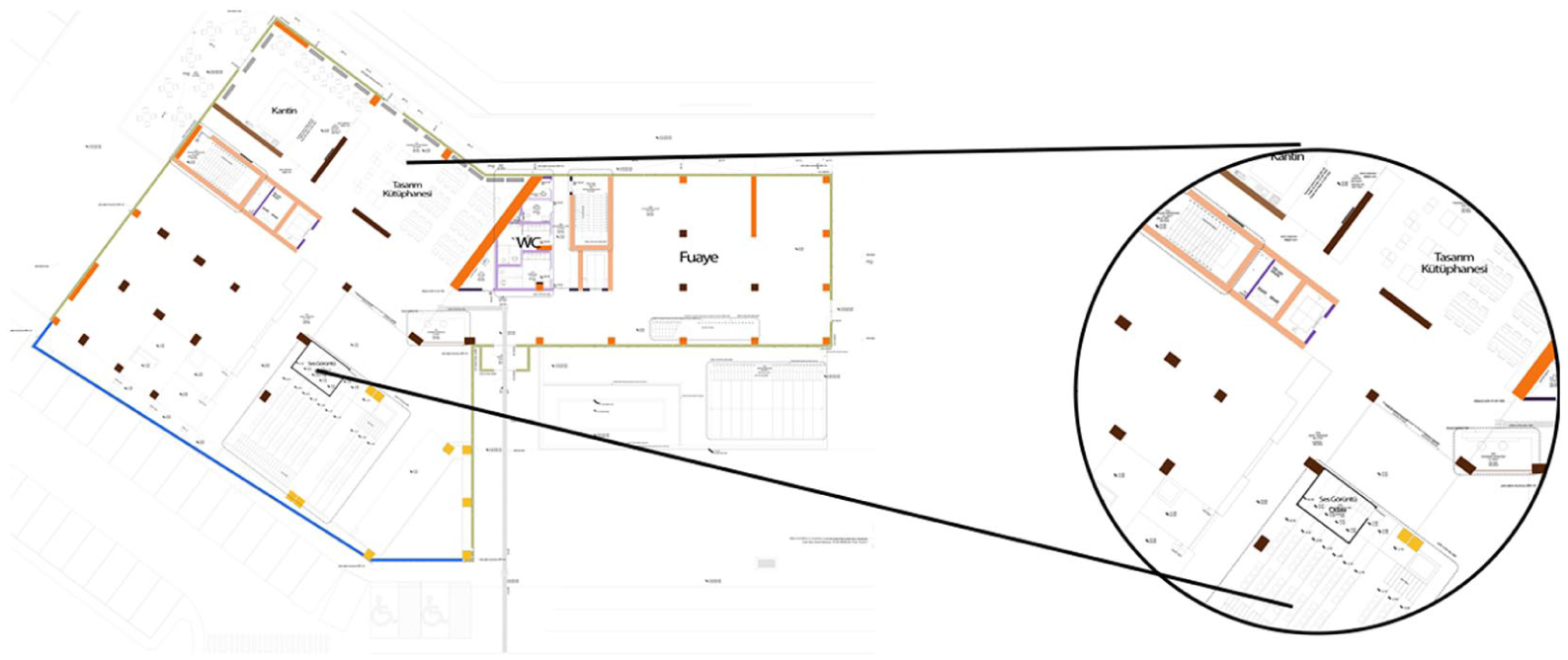
Ground floor plan emphasizing the library area, where the absence of enclosed volumes leads to negative acoustic evaluations according to national regulations.
It is emphasized that the continuity of the curtain wall is not ensured in the area indicated in Figure 5. In addition, it was determined that the curtain glass on the entire facade reduces the acoustic comfort of all spaces.
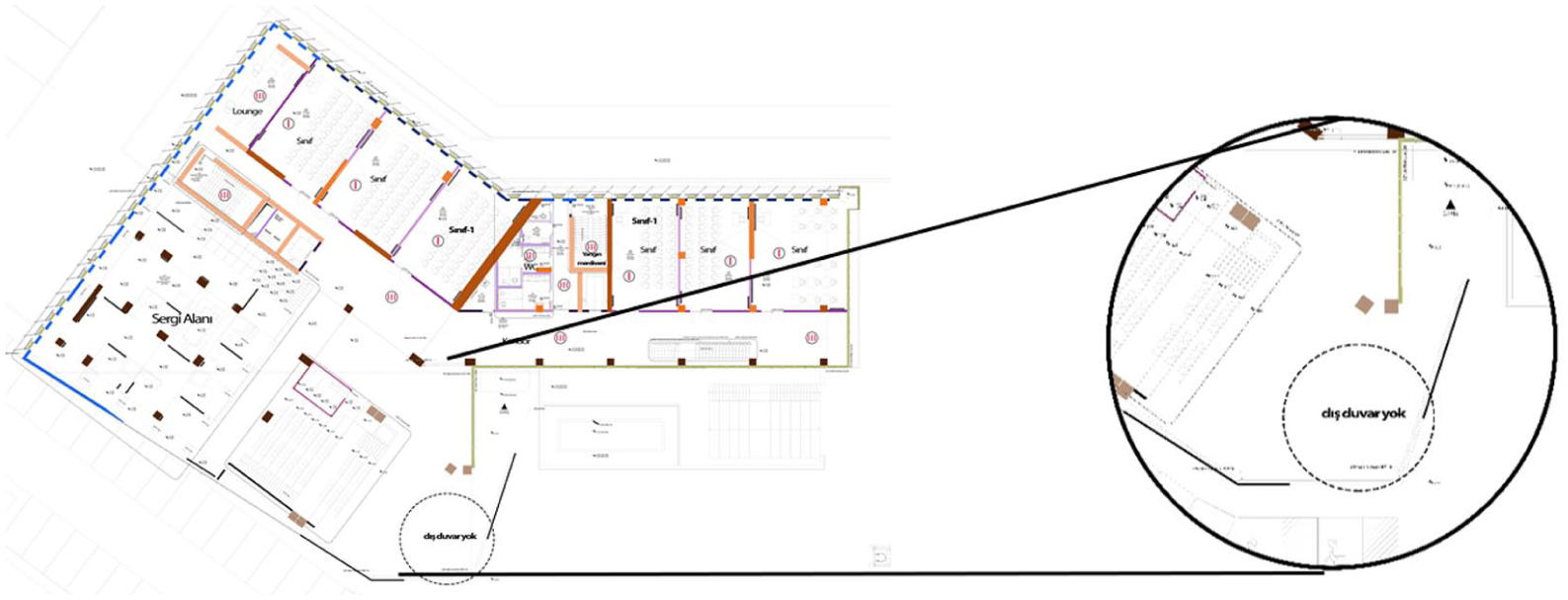
Floor plan illustrating the continuity issues of the curtain wall system and its impact on reducing the overall acoustic comfort of the spaces.
In the area indicated in Figure 6, it is seen that there is no divider element separating the meeting area, which is in sensitivity class II and the waiting area, which is in sensitivity class III, and therefore no acoustic evaluation can be made.
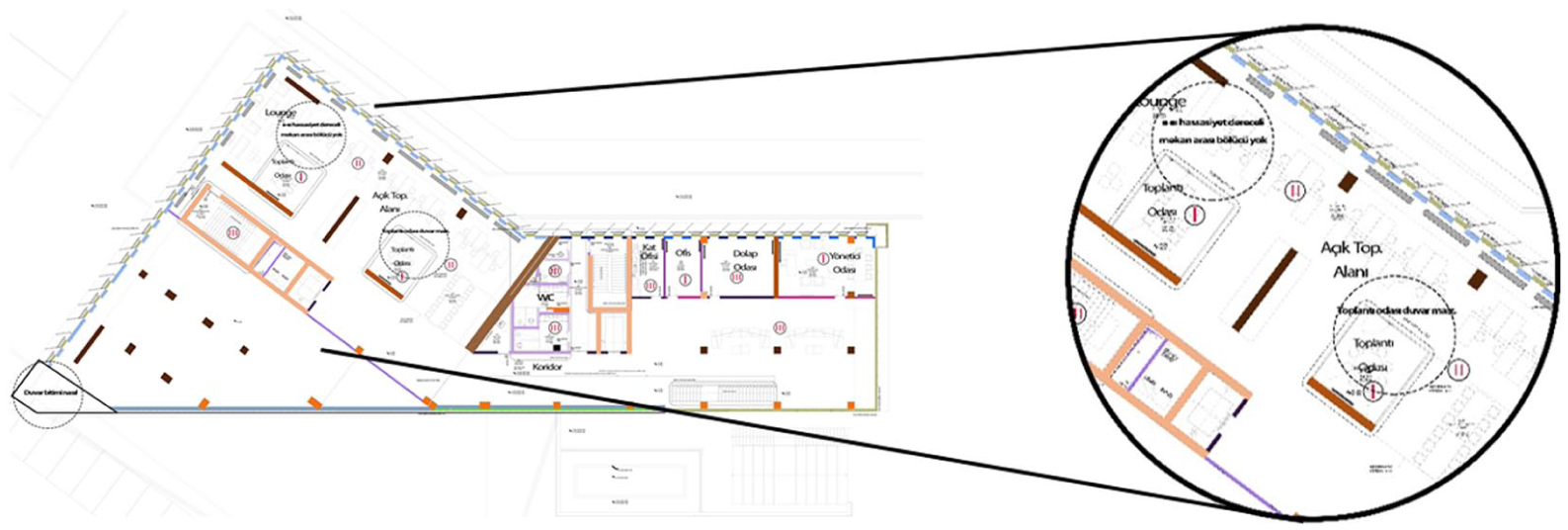
Floor Plan.
In the cross-section A-A shown in Figure 7, the divider elements separate the III degree sensitivity areas. Therefore, no evaluation was made in this section.
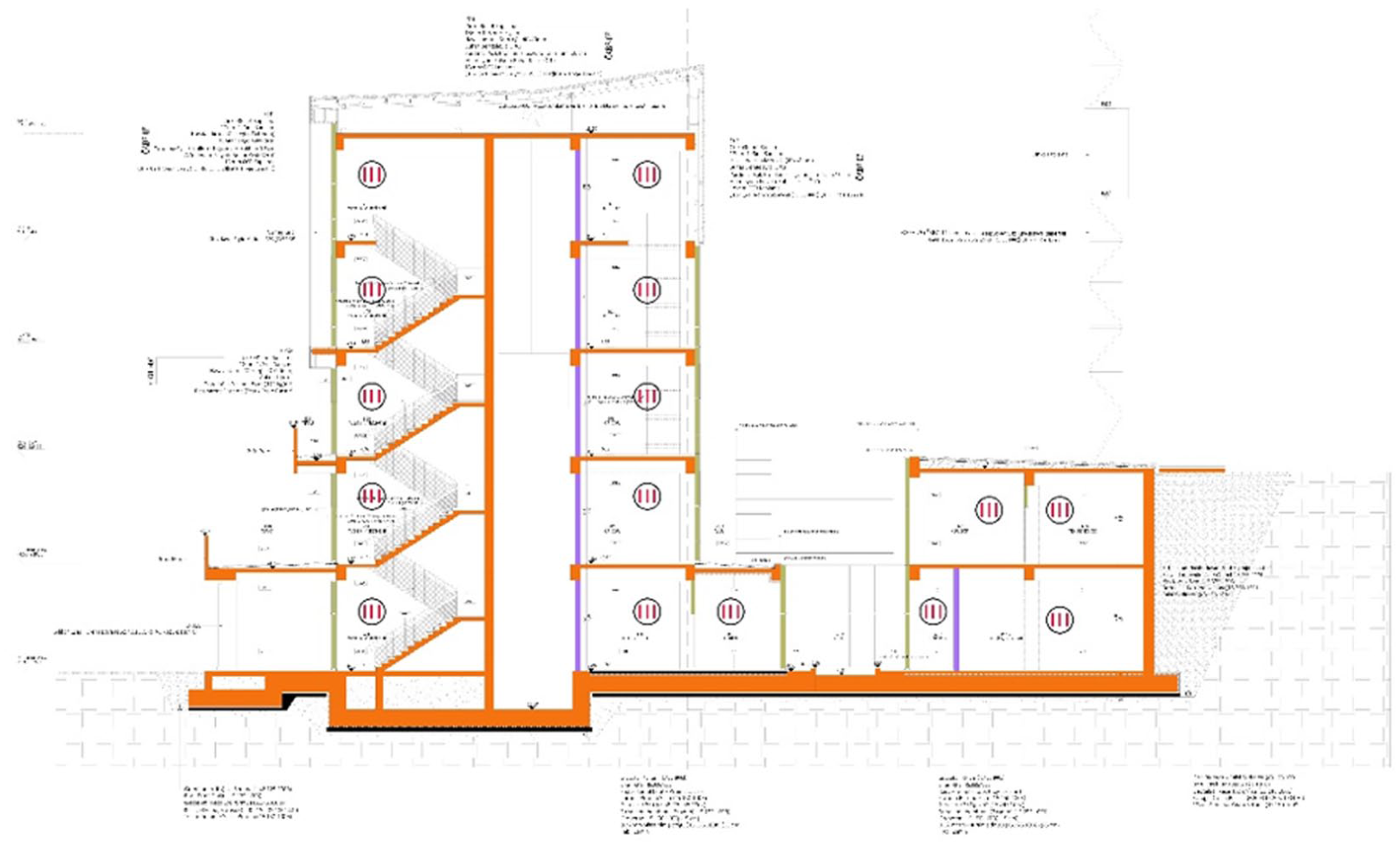
A-A section.
Figure 8 shows the impact-induced sound evaluation of the open office with degree II sensitivity and the classroom with degree I sensitivity. It can be said that the carpet tile covering used on the open office floor is effective and maintains the limit value in the regulation.
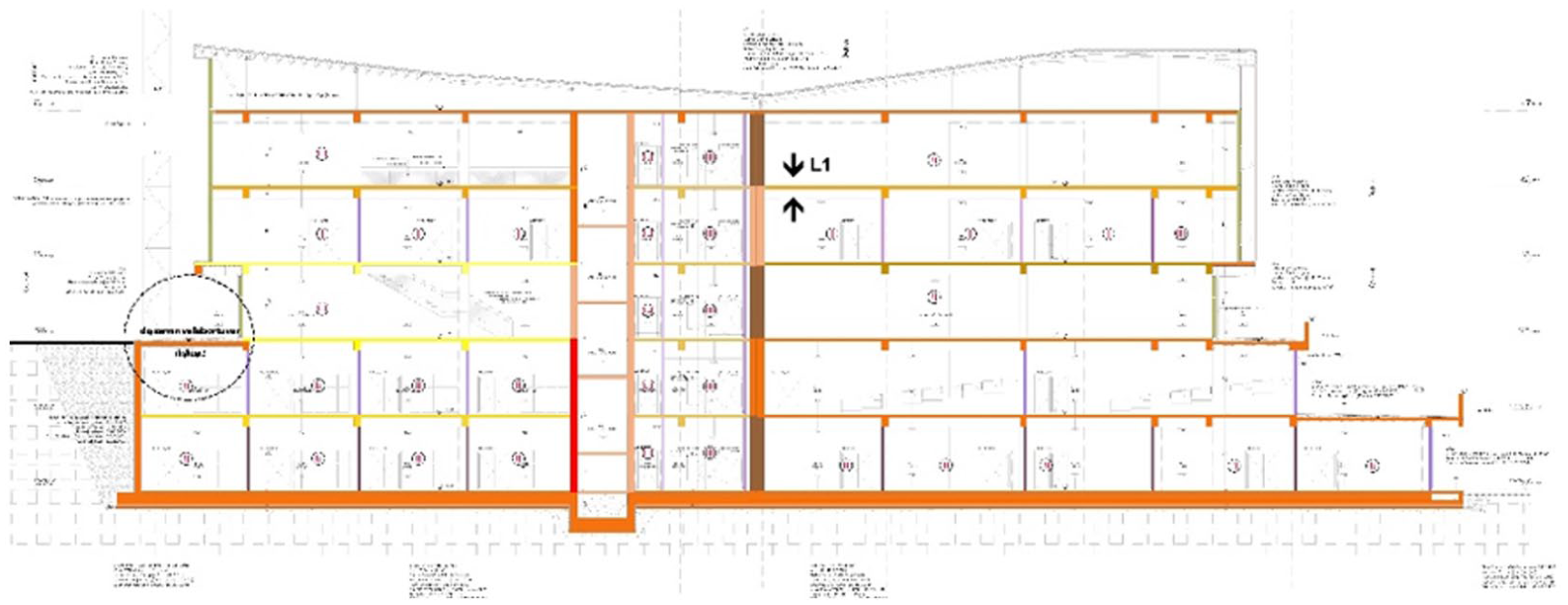
B-B section illustrating the impact-induced sound evaluation between the open office and the classroom, showing the effectiveness of carpet tile flooring.
Limitations
The research center building was under construction at the time of the study. The data from the technical drawings of the building were entered into the simulation program, but since the building was under construction, in-situ measurement data were excluded from the scope of the study.
Performance evaluation
In this study, the performance evaluation was carried out by taking into account the material properties, thicknesses and spatial relationships of the building elements (walls, glass, doors, etc.). The evaluation is based on both equivalent continuous sound pressure level measurements made on-site and sound insulation data obtained with simulation software (Ks Schallschutzrechner). Within the scope of the performance evaluation, the effects of volume imbalances in the building, curtain wall systems with low Rw values and material layouts in the interior (mdf cabinets, etc.) on acoustic comfort were analyzed.
Equivalent continuous sound pressure level (Leq)
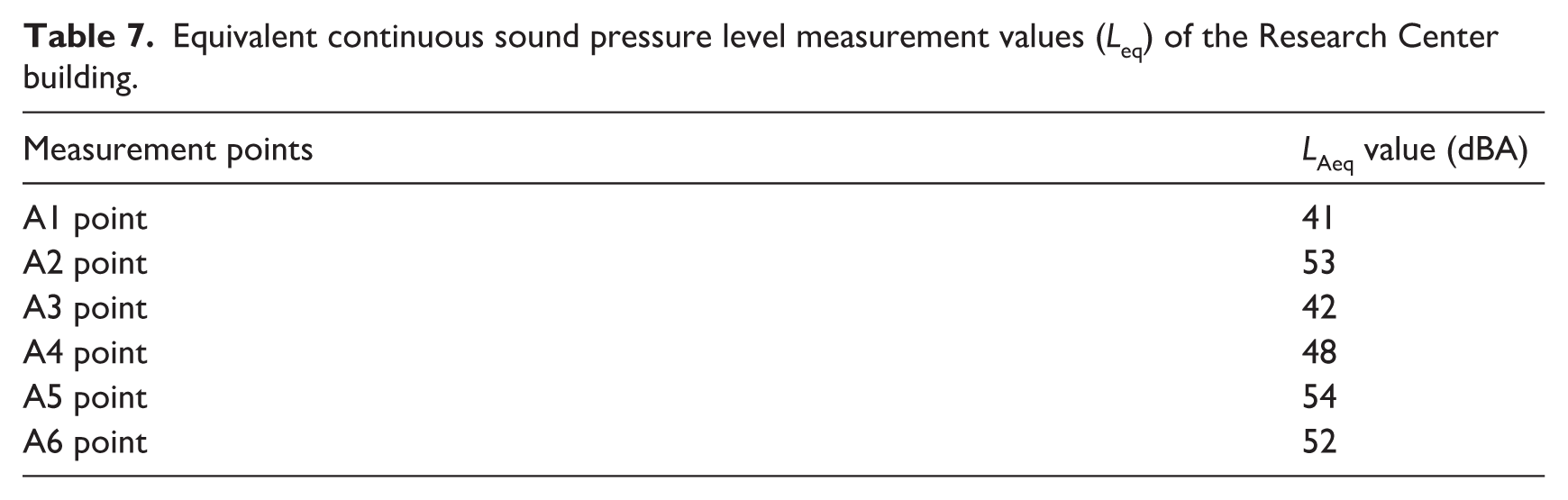
Equivalent continuous sound pressure level analysis involves the quantitative determination of the sound level around the building and comparison with the limit values specified in the regulations (Table 6). In this study, the environmental noise level was determined by Leq measurements in the area where the Research Center is located. The Leq value is calculated by taking the energy average of variable sound levels over a given period of time. It is an internationally recognized parameter in environmental noise analysis. The analysis reveals the effect of the surrounding highway and campus mobility on the noise level reflected on the building and provides data on the suitability of the building location for education. At the same time, the compliance with the Environmental Noise Control Regulation was analyzed. Leq measurements were carried out with a Svantek 979 type 1 device at six points for 10 min each in accordance with the Environmental Noise Control Regulation (Figure 9 and Table 7).
Environmental noise level limit values (Environmental Noise Control Regulation).

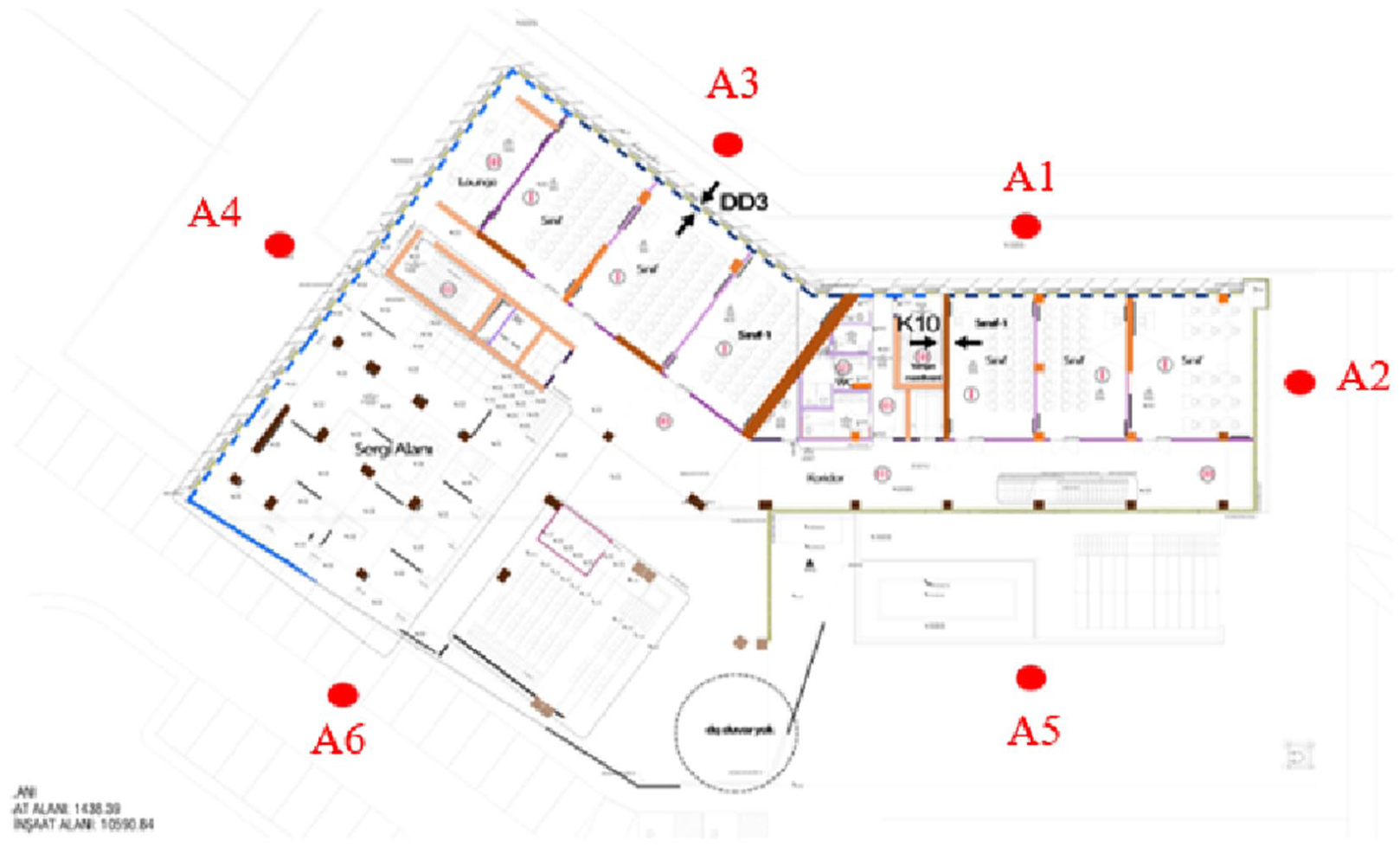
Distribution of the six on-site measurement points (A1–A6) used to determine the equivalent continuous sound pressure level (Leq) around the building facade.
Equivalent continuous sound pressure level measurement values (Leq) of the Research Center building.
As seen in Figure 10, the limit value determined in the Environmental Noise Control Regulation is 65 dBA during the daytime. As a result of the measurements made around the Research Center building, it was determined that the limit value was not exceeded (daytime measurement values were taken into consideration since the research center, which is evaluated in the educational structure, is used between 08:30 and 17:30).
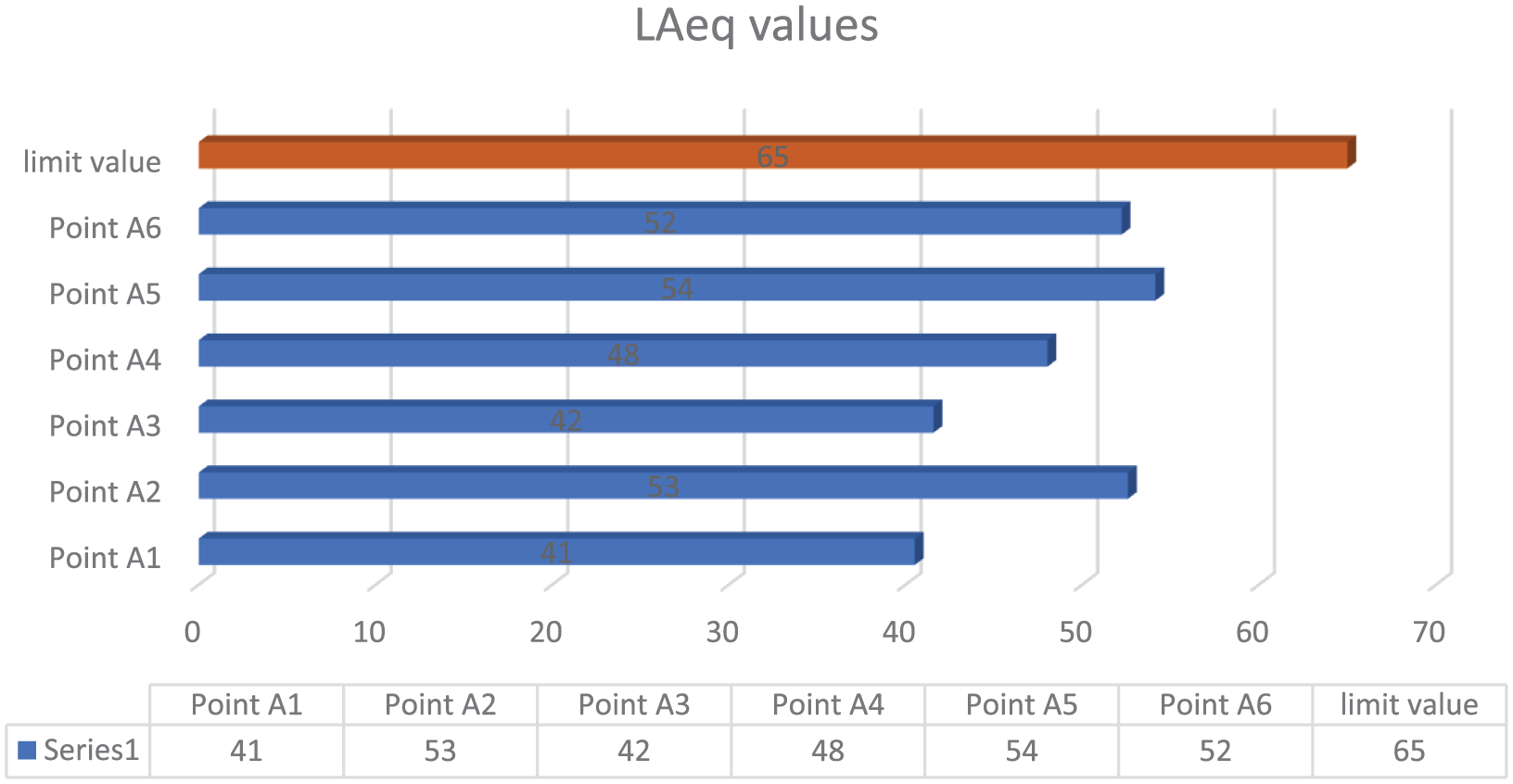
Limit value comparison of the Research Center building weighted equivalent continuous sound pressure level (LAeq).
Analysis of sound insulation performance of building elements by simulation method
The sound insulation performance of building elements is analyzed by simulation in this study. Using the Ks Schallschutzrechner program, the material type, thickness and spatial layout of each partition element (wall, glass, door, floor) were included in the model. The sound transmission loss values obtained as a result of the simulation were compared with the limit values specified in the “Regulation on the Protection of Buildings against Noise.” Due to this method, a predictive performance assessment could be made for the interior spaces of the building under construction where on-site measurements could not be made. The findings show that especially glass surfaces with low Rw values and volumetric disproportions negatively affect the sound insulation performance. It was also observed that the weakest component in the composite building elements determines the performance of the whole system (Table 8).
Sound insulation analysis of the spaces for educational purposes in the Research Center building obtained with the simulation program.
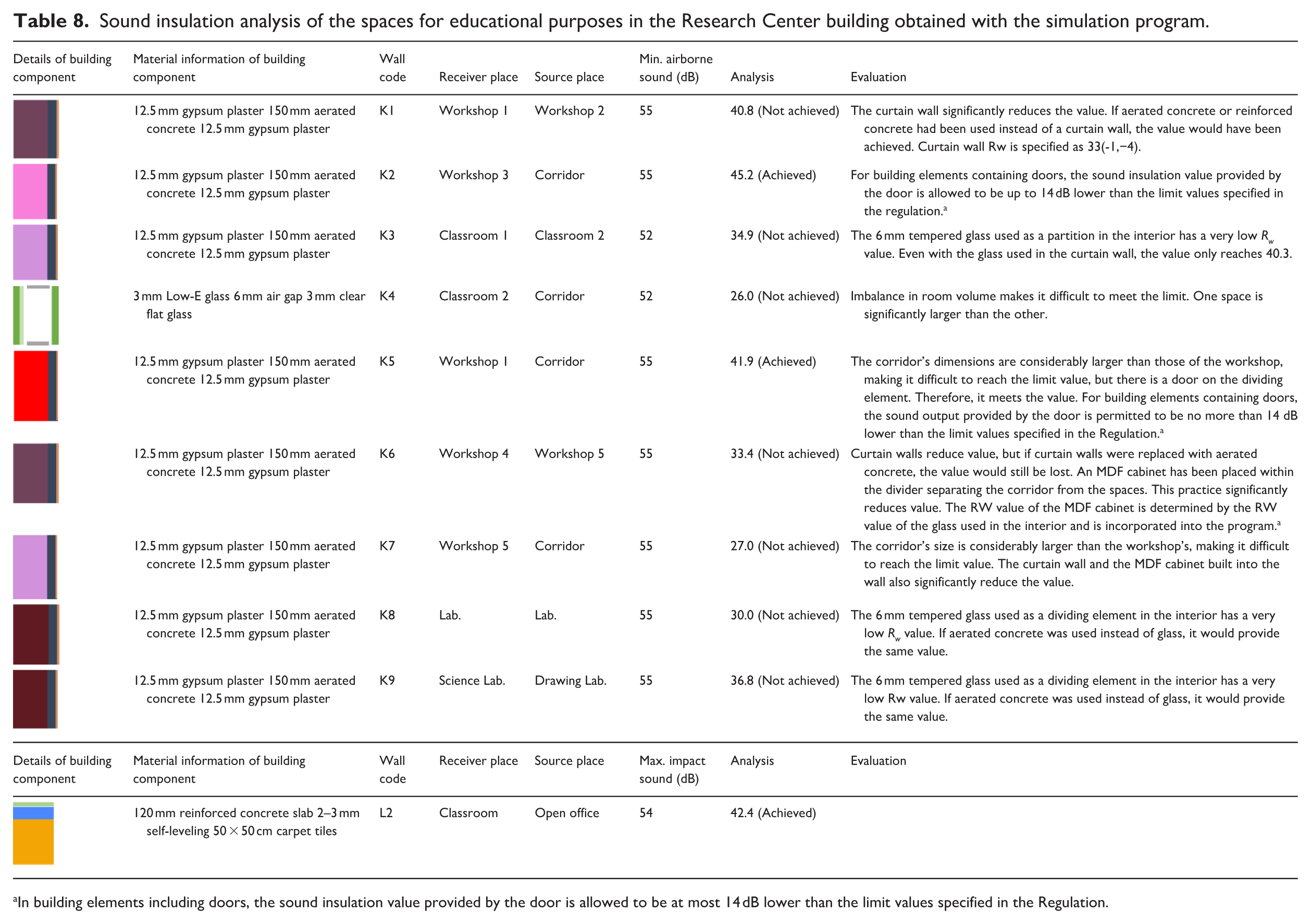
In building elements including doors, the sound insulation value provided by the door is allowed to be at most 14 dB lower than the limit values specified in the Regulation.
K1 is a divider element that separates spaces with the same function and the same space dimensions and therefore equal volumes. The value obtained in the project does not meet the limit value given in the regulation. It is predicted that the curtain wall reduces the performance considerably. It is thought that the value would have been achieved if the facade consisted of aerated concrete or reinforced concrete system instead of curtain wall. According to the information given in the architectural project, the curtain wall performance is determined as Rw 33 (−1,−4).
K2 is the dividing element separating the workshop (II) from the corridor (III). Since the corridor here is considerably larger than the workshop, the value is predicted to be low. However, according to Article 11/3 of the Regulation on the Protection of Buildings against Noise, 14 dB below the required value can be accepted if there is a door component in the partition element. When the plans are examined; K2 building element contains a door as a compound wall. Thus, the limit value is met.
K3 is the divider element separating classroom (I) from classroom (I). The acoustic comfort of the spaces, which are identical in volume and function, cannot be provided. Here, the material of the dividing element of both spaces separated by the corridor is glass. The 6 mm tempered glass used as a divider in the interior has a very low Rw value. Even the Rw values of the glass used in the curtain wall do not meet the limit value when processed into the program.
K4 is the divider element separating classroom-1 (I) from the corridor. The corridor is considerably larger than the classroom. Both the volume disproportion and the very low Rw value of the divider element cause the acoustic comfort of these two spaces to be inadequate.
K5 is the divider element that separates workshop-1 from the corridor. Compared to K4, the material of this element is reinforced concrete and its cross section is thicker. Also, the volume of K5 is closer to the volume of the corridor. Since there is a door on K5, the value below 14 dB is accepted. It meets the limit value.
K6 is the dividing element separating workshop-4 (II) from workshop-5 (II). It does not meet the regulation limit value. Curtain wall reduces performance. Even if aerated concrete is used instead of curtain wall, the result does not change. Because a MDF cabinet is placed inside the dividing wall separating the corridor and the spaces. This application reduces the performance considerably. The RW value of the MDF cabinet was determined as the Rw value of the glass used in the interior and entered into the program.
K7 is the dividing wall separating workshop-4 (II) from the corridor. The material of the dividing wall is aerated concrete and it contains a door. It is the placement of the MDF cabinet inside the wall that reduces Rw considerably in this building element. In addition, the cladding on the façade and the imbalance in the volumes of the spaces are other factors that prevent acoustic comfort.
K8 is a dividing wall separating two laboratories. It does not meet the limit value in the regulation. This is because the 6 mm tempered glass used as an interior divider has a very low Rw value. It is predicted that the limit value will be met if aerated concrete is used instead of glass or glass with high Rw value is used.
K9 is the dividing wall separating the science laboratory (II) and the drawing laboratory (II). Compared to K8, these two spaces are larger and although they do not meet the limit value in the regulation, they are closer to the limit value than K8. The fact that the partition wall separating the corridor and the space is made of glass with low Rw value is the biggest factor in not meeting the limit value.
L1 is the floor separating the open office and the classroom. It meets the regulation limit value.
Performance deviations and impact analysis
The simulation results revealed that a large proportion of the partition elements in the Research Center building fell significantly below national regulatory standards. The performance deviations identified and their potential impact on user comfort were analyzed as follows:
✓ Specifically, the K1 wall separating the educational areas exhibited a deviation of 14.2 dB, performing at 40.8 dB against the required limit of 55 dB. Similarly, elements K3 and K4, which separate the classrooms, performed poorly, remaining 17.1 and 26 dB below the 52 dB limit, respectively. These results highlight the acoustic inadequacies of the 6 mm tempered glass and curtain wall details selected during the design phase.
✓ These performance losses, which range from 10 to 26 dB, are not just theoretical failures; they will result in sound (both speech and mechanical noise) being transmitted clearly between adjacent spaces. This reduces the ability of students and researchers to focus and eliminates “speech privacy” between classrooms completely. Furthermore, lecture halls are not designed as enclosed spaces, which leads to uncontrolled reverberation times and humming effects that directly threaten the quality and intelligibility of education.
✓ These findings echo the “acoustic omissions during the design phase” documented by Yılmaz Karaman and Berber Üçkaya in relation to Dokuz Eylül University. Furthermore, the high deviation rates determined in this study provide practical confirmation of the discrepancy between legislation and practice highlighted by Özçetin in his study of conservatory buildings. The need for “artificial intelligence and simulation-based early inspection,” as advocated by Manesh et al., is vital for preventing errors of up to 26 dB in buildings internationally
Conclusion and suggestions
This study analyzes the compatibility of building acoustics regulations in Türkiye with the design and implementation phases of educational buildings. It makes the following key contributions to the literature:
Analyses have revealed significant discrepancies between the theoretical decisions made during the design phase and the legal requirements. Specifically, it has been determined that poor insulation values in curtain wall systems, as well as details such as MDF cabinets integrated into partition walls, reduce acoustic performance by 10–15 dB below regulatory limits. This demonstrates that attention to detail is as important as material selection.
In educational buildings, it has been observed that poor acoustic performance is not only due to inadequate insulation, but also to an imbalance in volume between large areas such as corridors and classrooms. Additionally, designing high-sound-sensitivity areas, such as auditoriums, as open spaces leads to uncontrolled reverberation times.
On-site Leq measurements (41–54 dBA) indicated that, while the building was within regulatory limits (65 dBA), improvements to the façade insulation were required to prevent external noise from entering the interior.
The study presents a replicable performance evaluation model that focuses on simulation and environmental measurement for structures under construction.
This research is limited to one building type and one structure under construction. It is recommended that future studies include different building typologies and are supported by “post-occupancy evaluation” (POE) studies, which measure user perception after the building has been completed.
Suggestions
In light of the research findings, the following concrete steps should be taken to ensure acoustic comfort in educational buildings:
Reinforced concrete or acoustic panel systems with high Rw values should be preferred instead of curtain walls. Glass surfaces should be fitted with laminated or acoustically coated solutions.
MDF cabinets should be avoided in partition walls, or these units should be insulated to ensure high levels of insulation. Special soundproofing systems should be used for door components.
Sound-absorbing panels should be installed to minimize acoustic losses caused by the difference in volume between corridors and classrooms.
Acoustic simulation tools should be used from the initial stages of the architectural design process, which should be carried out in consultation with experts.
Footnotes

Funding
The authors received no financial support for the research, authorship, and/or publication of this article.
Declaration of conflicting interests
The authors declared no potential conflicts of interest with respect to the research, authorship, and/or publication of this article.