



Abstract
In this study, loose blown-in sound-absorptive materials were used as insulation in metal stud walls and timber frame constructions. Building acoustic measurements assessed the soundproofing performance of mineral wool, cellulose, wood fiber, and straw in these wall systems, with a primary focus on straw. Key parameters such as density and dynamic stiffness were examined for their influence on the sound reduction index (SRI). Results showed that increased dynamic stiffness of straw raises the mass-spring-mass resonance frequency and enhances mechanical coupling between wall sheets, potentially reducing the SRI by up to 19 dB in double-wall systems. For timber frame walls, the SRI (Rw + Ctr) ranged from 42 to 46 dB, depending on straw’s dynamic stiffness. The study also evaluated the ISO 9052 method for measuring the dynamic stiffness of loose materials like straw. Predicted resonance frequencies, based on measured dynamic stiffness, consistently overestimated observed dips in sound transmission loss, highlighting limitations of the standard. Issues included the required sample load of 7.6 kg over a 0.20 × 0.20 m surface, which significantly influenced dynamic stiffness values. Case studies with varying loads and densities confirmed the impact of sample loading. These findings underscore the need for a new standardized method tailored to loose materials used in wall cavities, distinct from ISO 9052, originally designed for impact sound insulation materials.
Keywords
Introduction
The global construction sector’s urgent need to reduce embodied carbon and improve energy efficiency has catalyzed renewed interest in bio-based insulation materials. The construction industry accounts for 40% 1 of global CO2 emissions, driving demand for materials that combine low environmental impact with multifunctional performance. Straw insulation offers a negative carbon footprint (−0.5 to −1.5 kg CO2eq/m2) 1 compared to mineral wool (2.01–5.5 kg CO2eq/m2) 2 when considering sequestration and production energy. Therefore, straw, an agricultural byproduct, presents a compelling solution when processed into standardized building components. The manufacturing process of straw enables the straw to be introduced into the building components at a higher density, which promises a thermal advantage due to increased storage mass and improved performance during summer overheating. While previous research has focused on the environmental and thermal properties of this product, little is known about its acoustic properties.
This paper addresses three fundamental challenges impeding straw’s widespread adoption. Quantifying its sound insulation mechanisms in wall assemblies, evaluating the applicability of standardized testing protocols for the dynamic stiffness (particularly ISO 9052-1) for cavity applications, and establishing predictive relationships between material parameters and acoustic outcomes.
Work presented in Cascone et al. 3 discusses the fire resistance, durability, thermal performance and in the acoustic performance of straw in building constructions. In Case of Acoustic Performance, the “acoustic insulation” of straw bale walls where investigated.” The measured sound insulation losses vary between 42 and 49 dB. The mechanical properties of straw are presented and discussed in Konečný et al. 4 The study shows that time-variable loading causes significant deformations in straw structures. Therefore, higher densities, starting from 80 kg/m3, are recommended for improved performance. In Hon (Alex) Koh and Kraniotis, 5 the thermal material properties and performance of straw bale structures are systematically summarized. The study demonstrates that straw has a slightly higher thermal conductivity, necessitating thicker layers to achieve equivalent thermal performance in wall constructions that incorporate straw. But the environmental impact of straw bale is significantly less compared to other thermal insulating materials, when normalized by thermal conductivity. Previous studies showed that the material properties of the cavity material can influence the sound insulation performance of the wall construction.6,7 Especially Hongistio et al. 8 shows that the dynamic stiffness of the cavity material is an important parameter for the low frequency performance of the wall construction.
The dynamic stiffness of building materials has primarily been of interest for impact sound insulation boards. Therefore, measurements are generally conducted according to the specifications of ISO 9052-1. 9 However, the authors consider the application of this measurement standard for determining the dynamic stiffness of materials in wall construction cavities to be critical. In the measurement procedure, it is assumed that the material is under the load of a screed system, with the sample being subjected to 200 kg/m2. This assumption does not apply to cavity-damping materials in wall constructions. The materials used in this context typically have a low density and deform significantly under load, potentially affecting their dynamic stiffness. The publication 10 demonstrated this behavior of damping materials when the load plate weight varies in the range of 2–8.4 kg. The dynamic stiffness for selected cases of composite materials, depending on the load, increased by a factor higher than 5. Since the compression of the sample reduces its flow resistivity, its actual stiffness also increases. 11 This effect can also be elegantly demonstrated numerically according to the numerical model presented in Schmelzer et al. 12
In Neusser et al., 13 the dynamic stiffness measurement was conducted according to the specifications of ISO 9052. 9 Based on the results of these measurements, a correlation between dynamic stiffness and weighted the sound reduction index of two different constructions could be demonstrated. However, the dips in the frequency-dependent sound transmission loss, due to mass-spring-mass resonance, suggested that the dynamic stiffness values determined by the ISO 9052 9 measurements are too high.
This study systematically investigates the impact of different blown-in materials on the sound insulation performance of wall constructions, with a particular focus on variations in bulk density of the blown-in straw. The objective is to determine how these factors influence the acoustic behavior of timber frame wall constructions.
In the second part, two case studies aimed at determining the apparent dynamic stiffness of straw in loose form, to interpret the shown changes in the sound transmission loss by varying material and density inside of the wall cavity. To determine it, a method was used using a certified device in accordance with ISO 9052. To achieve different densities the material was compressed, therefore it was necessary to place the material in a rigid frame. The effect of rigid frame was already investigated before in Urbán and Roozen. 14 The second study presents measurements made in another laboratory, using the same procedure according to ISO 9052 with the difference that a load plate of lower weight, to achieve lower probe density, was used and compared with the load plate required by the norm. The results are used of the two hollow wall constructions.
Methodology
Measurement
Sound transmission loss
The airborne sound reduction index R of the wall structures was measured according to EN ISO 10140-2:2021. 15 All measurements were carried out with third-octave band filters in the frequency range from 50 to 5000 Hz. The measurement rooms at Technisches Gewerbemuseum (TGM) comply with the requirements of EN ISO 10140-2 15 due to their size and the suppression of flanking transmission achieved through decoupling measures and additional layers.The frequency depended sound reduction index is calculated by equation (1) with L1 energy average sound pressure level in the source room in dB, L2 energy average sound pressure level in the receiving room in dB, S the area of the free test opening in which the test element is installed in m2 and A the equivalent sound absorption area in the receiving room in m2.

Dynamic stiffness
Analytical determination
Assuming that after the application of blown insulation there is a physical connection of the boards on each of the sides of the double leaf wall not just via vertical studs but also acoustic absorptive filler of the wall cavity, the estimation of the so-called resonance mass spring mass frequency fR can be performed using the formula (2). The equation is well known from literature and standards as well.16–18 There the fR is determined based on the mass per unit area of the wall cladding layers m’[kg/m2] and the dynamic stiffness s’ [MN/m3] of the absorptive material in the wall cavity.

Despite the fact the equation (2) was derived for elements where the absorptive layer is fixed directly to the basic construction (the effect of additional stiffness caused by stud connection is neglected 17 ), this formula is often used also for approximation of the double leaf walls. This analytical approach was later used as rough estimation when discussing the effect on the mass-spring-mass resonance frequency the sound insulation spectra of lightweight walls described in the next section.
ISO method
Very often the method described in standard ISO 9052-1 9 is used when the dynamic stiffness is needed to be determined in building acoustics. This method was developed for materials used under floating floor dynamic stiffness determination, especially for materials with smooth surface used in a continuous layer. 9 The standard proposed method may not be applied for materials with loadings lower than 0.4 kPa (materials in wall linings) or higher than 4 kPa (machinery foundation). 9 Blown insulation technology can induce significant material loading due to the interaction between the rigid boundaries of the wall cavity and the high pressures generated during application. The extent of this loading depends on the material’s flexibility, elasticity, and the required density to meet specific performance criteria. For the materials under investigation, requirements such as fire protection necessitate precise control over density.
The pressures applied during this technology typically range from 6 to 600 kPa, depending on the material. Since the flexibility of blown insulation materials is strongly density-dependent, accurately estimating the material loading within the construction is challenging. Variations in density affect the material’s dynamic stiffness, which in turn influences the mass-spring resonance frequency of the system. Therefore, understanding the relationship between density and dynamic stiffness is essential for the investigated materials.
For this study, the dynamic stiffness was determined using the method specified in ISO 9052-1, which served as the standard procedure. Experiments has been performed in two laboratories. The first case study was carried out in Building acoustics laboratory facility of State research institute TGM. For this purpose, the certified measurement setup “DYPS” (Figure 1) was used. The standardized procedure according to ISO 9052-1 for open cell material testing with sinusoidal signal excitation from the top of the massive rigid plate was applied. The effect of compression of the blown material was investigated here. Blown material was placed in the rigid frame of dimensions 0.206
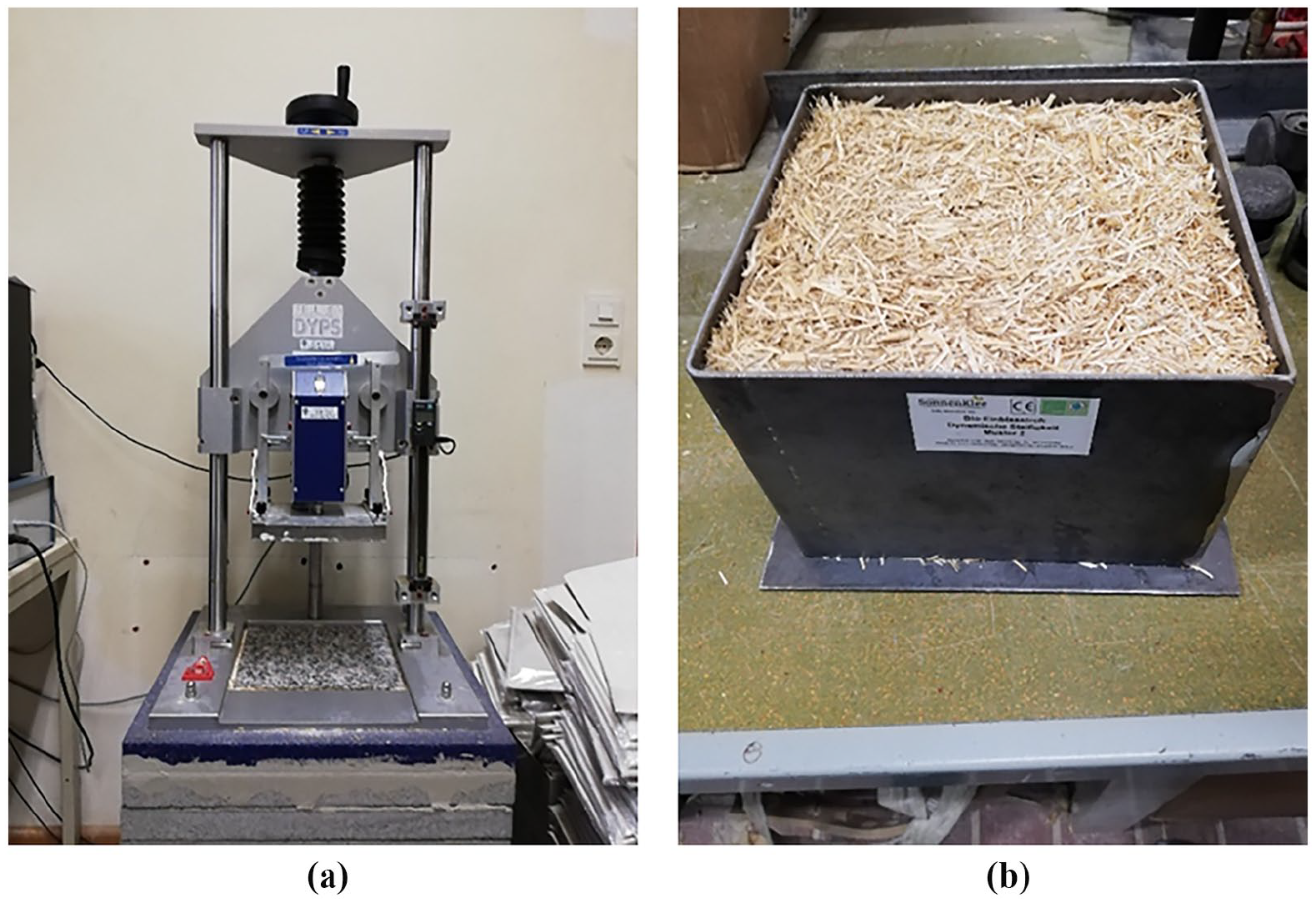
(a) Measurement of dynamic stiffness based on ISO 9052-1 (case 1)—Measurement apparatus and (b) Specimen—straw loose material in the rigid frame.
The second case study was performed in the lab of the research unit of building physics of Technische Universität Wien. The measurement setup was created in accordance to the standard ISO 9052-1 with load plate of mass 7.665 kg (Figure 2(a)). The dynamic stiffness was determined based on free loading of the straw in loose form. After, the load plate was changed to the light version (1.263 kg) and the effect of three cases of straw compression was measured (Figure 2(b)).
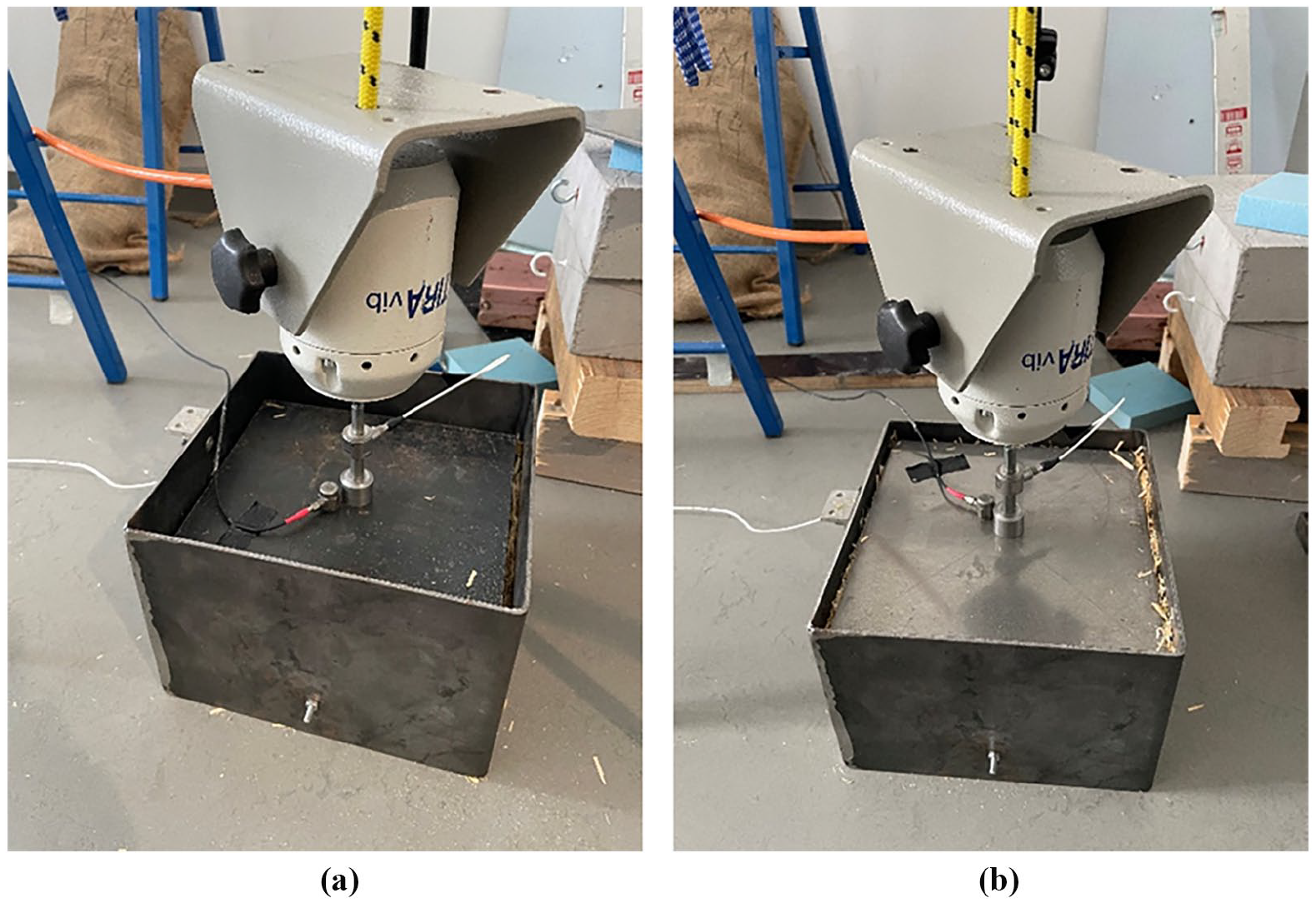
(a) Measurement of dynamic stiffness based on ISO 9052-1 (case 2) and (b) measurement apparatus with load plate of mass 1.263 kg; measurement apparatus with load plate of mass 7.665.
A logarithmic sweep was used to excite the samples and the measured values were extrapolated to zero force amplitude. The excitation source was the TIRAvib 50018 shaker charged by the TIRA E60 analog power amplifier and the frequency response was recorded by an Dytran 3055B2 acceleration sensor and the Dytran 1051V1 force sensor fed through National Instruments four channel signal acquisition NI 9234 mounted in NI USB-9165. The whole experiment was evaluated by an automated routine in MATLAB. As the straw was in loose form it had to be placed in the steel frame with inner dimensions 0.206 × 0.206 × 0.15 m (the same as in the previous case). By putting on the loading plate the material was compressed.
Before discussing the results must be mentioned here, the effect of air flow resistivity could be present in this type of material testing as load plate was 3 mm smaller in equidistant in comparison to the by frame created space. However, this boundary condition was kept for both experiment cases.
Constructions
Metal stud wall
To minimize the influence of other factors on the sound transmission of different materials within the cavity of lightweight constructions, a construction was selected that provides reduced sound transmission through the studs. The objective was the measurement of the sound reduction index of a 20.5 cm thick double stud wall (Figure 3) with different materials for cavity damping. The metal stud wall, approx. 10.4 m2 (2.77 × 3.75 m), was installed between two reverberation rooms according to EN ISO 10140-5. 19
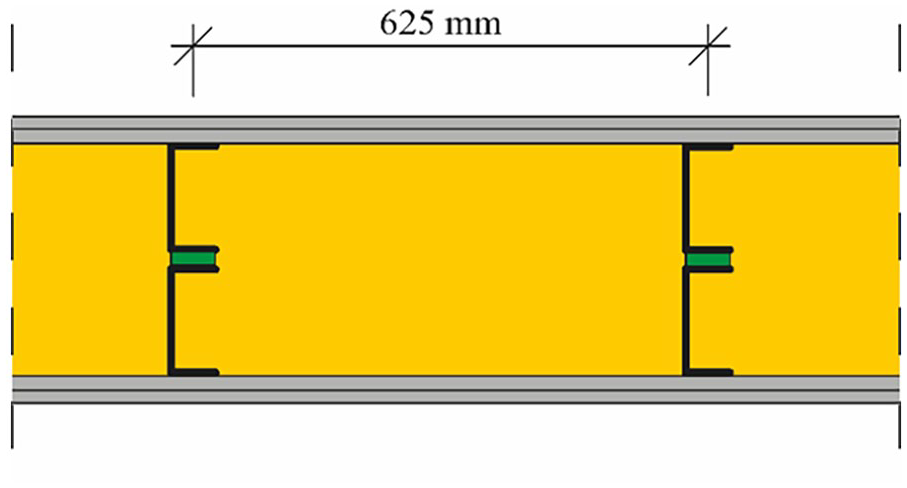
Cross section of the examined double metal stud wall construction (2 × 12.5 mm gypsum plasterboard, 155 mm insulation material, 2 × 12.5 mm gypsum plasterboard). The studs were decoupled with a 5 m thick foamed polyethylene. For mineral wool the insulation material is 2 × 75 mm thick with an 5 mm airgap in between both layers.
The double metal stud wall construction described in Figure 3 was used to test four different insulation materials (as specified in Table 1) for their sound reduction capabilities. It resulted to 4 variations of construction composition in total. The measurement setup, as illustrated in Figure 4 involved creating a removable opening of approximately 30 cm width in the upper area of the wall, where the insulation material was inserted before closing it again with plasterboard. To ensure airtightness, the joints were taped with adhesive tape.
Comparison of the dynamic stiffness s’ of the materials used for cavity damping.
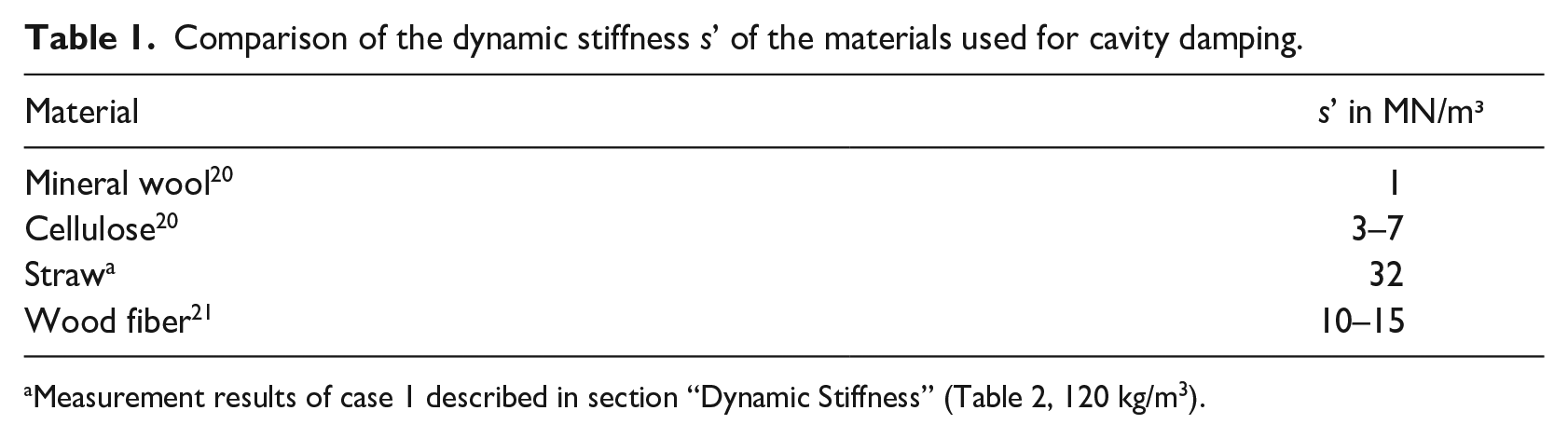
Measurement results of case 1 described in section “Dynamic Stiffness” (Table 2, 120 kg/m3).
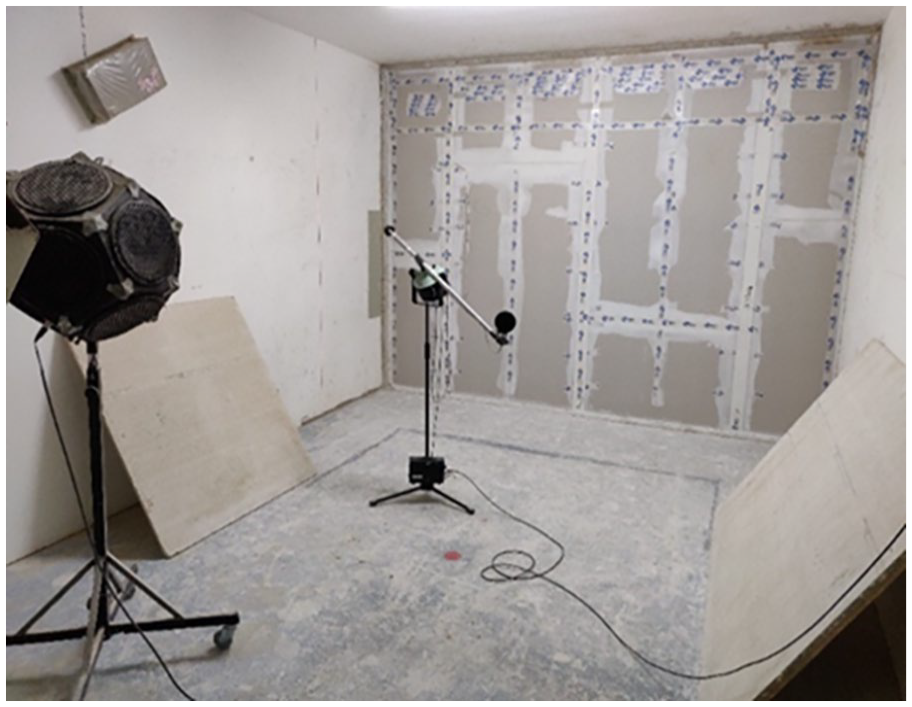
Measurement setup according to EN ISO 10140-2 for measuring the airborne sound insulation of the wall construction.
Timber frame wall
The objective was the measurement of the airborne sound insulation of a 20.5 cm thick wooden frame wall (Figure 5) with different materials for cavity damping. The wooden frame wall, approx. 1.8 m2 (1.23 × 1.48 m), was installed between two reverberation rooms according to EN ISO 10140-5. 19
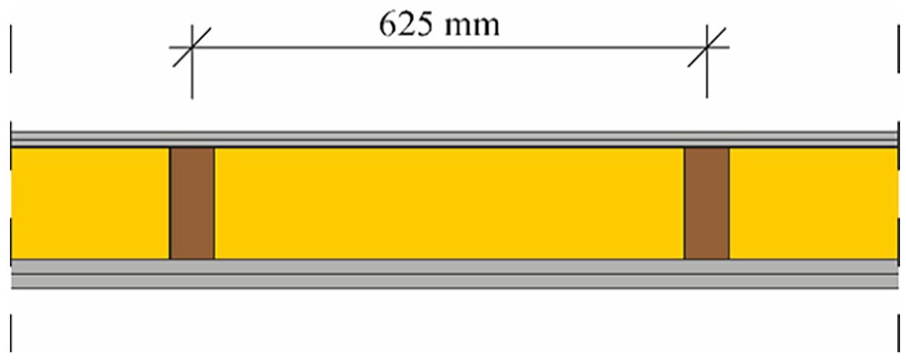
Cross section of the examined wooden frame wall (2 × 12.5 mm gypsum fiber board, 160 mm insulation material (Mineral wool, Straw with different densities), 2 × 10 mm gypsum fiber board).
In the cavity of the in Figure 6 described timber frame wall, different density variations of straw were blown in and the airborne sound insulation was measured. The density of the straw was varied in three variations (63, 108, and 120 kg/m3) The measurements were carried out in the window opening of the test facility (see Figure 6).
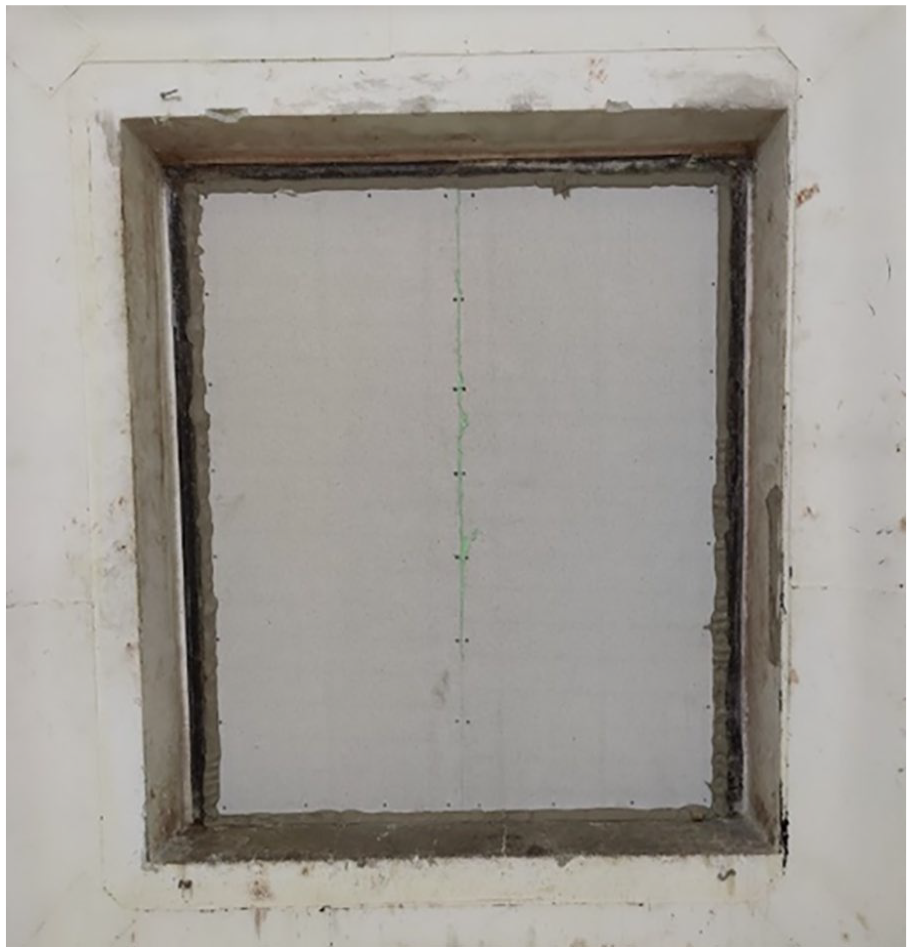
Examined wooden frame wall mounted in the window test opening according to EN ISO 10140-2 15 for measuring the airborne sound insulation.
Results
Effect of different blow in materials inside of the cavity of a metal stud wall
The results presented in this section compare the performance of different materials that can be introduced by blowing in, namely mineral wool, cellulose, wood fiber, and straw. The discussion covers the acoustic performance of the wall construction as well as an environmental comparison between the different materials.
The results of multiple measurement series are averaged to obtain the frequency dependent sound transmission losses shown in Figure 7, which represent the influence of different wall constructions on the sound insulation performance at different frequencies. The curves illustrate the variations in mass-spring-mass resonance frequencies for the different materials tested. The straw and wood fiber materials exhibit resonance frequencies within the range of 63–125 Hz. These variations in resonance frequencies can be attributed to the differing dynamic stiffness values of the insulation materials, which directly influence the positioning of the mass-spring resonance in the frequency spectrum.
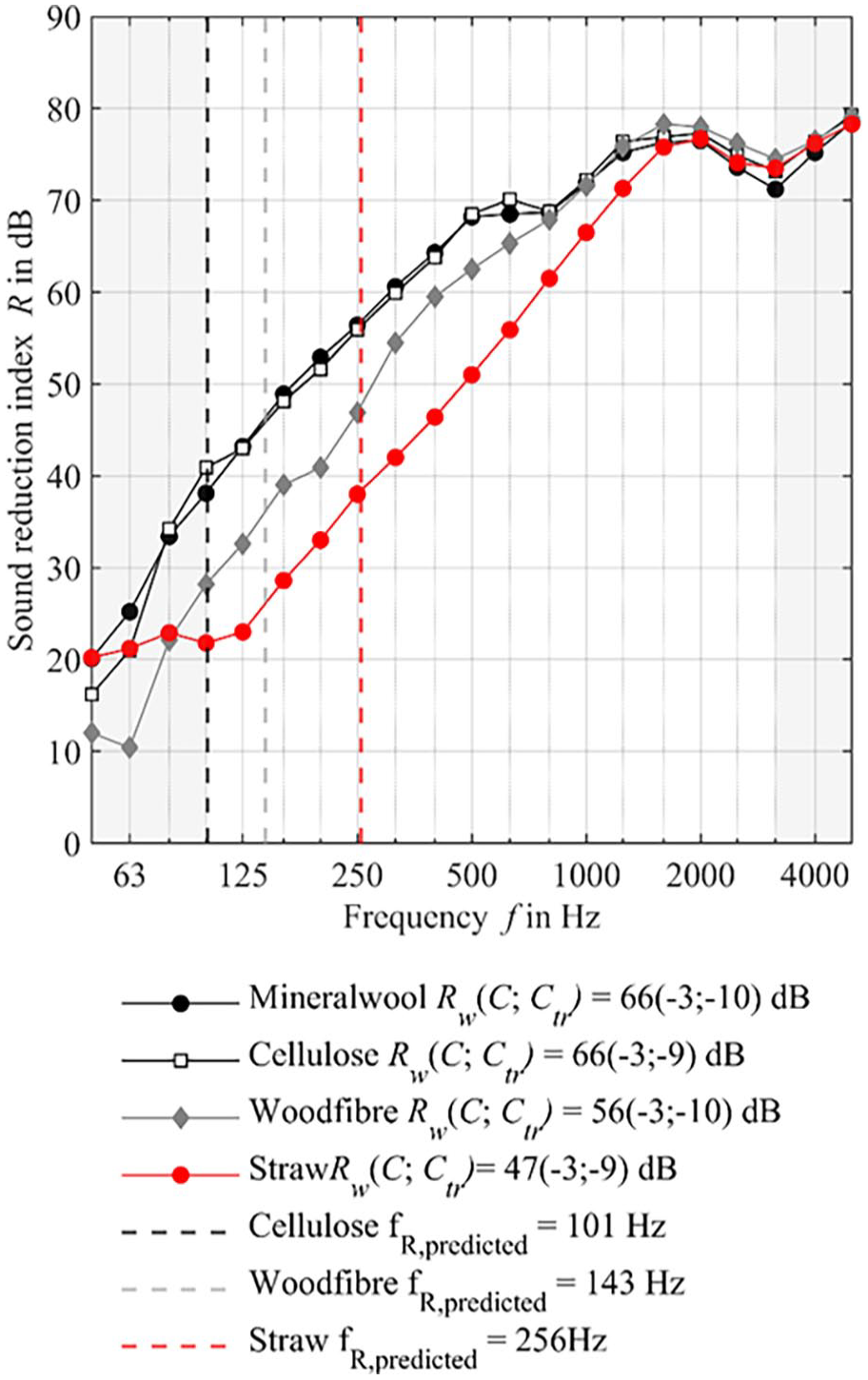
Using equation (2) and based on the dynamic stiffness measurement results at a bulk density of around 128 kg/m3 from section “Effect of different blow in materials inside of the cavity of a metal stud wall” and the surface weight of the wall cladding (24.95 kg/m2), we can predict the mass-spring-mass resonance frequency. For the variant with straw in the cavity of the wall construction, Figure 7 shows that the mass-spring-mass resonance occurs between 100 and 125 Hz.
For a dynamic stiffness of 32 MN/m3, determined using the ISO 9052 9 method, the predicted mass-spring-mass resonance frequency is 256 Hz. This prediction overestimates the actual resonance frequency at which the dip in the sound transmission loss can be observed in Figure 7 for the straw-filled wall. The comparison in Figure 7 between the predicted mass-spring-mass resonance frequencies for constructions with other insulation materials reveals a similar relationship, with the predicted frequencies consistently overestimating the observed dips in sound transmission loss. Based on the values presented in Table 1, it is evident that the prediction of mass-spring-mass resonance frequencies tends to overestimate the occurrence of these dips in sound transmission loss measurements. Since the calculation method for the mass-spring-mass resonance frequency has been validated, the authors propose that the measurement method used to determine the dynamic stiffness may not yield accurate values for the materials investigated. The predicted resonance frequency of the construction variation using mineral wool as the insulation material is 45 Hz. Since this frequency lies outside the available data range for the sound transmission loss, it is not plotted in Figure 7.
The wall construction with straw in the cavity shows better performance than walls with lighter cavity fillings below the mass-spring-mass resonance frequency due to its higher overall mass and stiffness. Plateaus observed in the sound reduction index for mineral wool and cellulose variations at around 500 Hz can be attributed to the dominated transmission path over the metal studs, which are decoupled by a 5 mm thick foamed polyethylene connection seal.
The pressure of the “blow in” procedure for wood fiber and straw variations introduced an air gap between the metal studs, which explains the absence of the plateau region in their sound reduction index. All wall construction variations show an increase in sound reduction index of around 12 dB/octave above 800 Hz, and the dip at 3150 Hz represents the coincidence region of the plasterboard planking. The density of straw in the cavity does not significantly improve the sound insulation in comparison to other materials tested. In this frequency region, a significant difference in airflow resistivity among different insulation materials would result in variations in sound transmission loss. In Stani, 6 Figure 6, it was demonstrated that airflow resistivity in the range of 6.5–28 kPa s/m2 influences sound transmission loss starting at around 1000 Hz. Therefore, it can be concluded that the varying airflow resistivity of the investigated material variations, although not measured, does not lead to substantial differences in sound transmission loss.
Figure 8 shows the relationship between the single-number rating of sound insulation Rw for the double-wall, according to Figure 2, construction and the mass-spring-mass resonance frequency resulting from the wall construction. The resonance frequency is calculated based on the surface weight of the wall cladding layers m’ (24.95 kg/m2) and the dynamic stiffness s’ of the insulation material in the wall cavity based on Table 1. Both with and without the spectrum adaptation value for traffic noise Ctr, a correlation between the two quantities can be observed. The discrepancies observed in the results are likely attributed to the measurements of the dynamic stiffness (not the exact same material) conducted in Refs. 20, 21, based on ISO 9052 9 or unspecified methods. As discussed in section “Effect of different blow in materials inside of the cavity of a metal stud wall,” the variation in measurement setups suggests a potential influence on the results. Moreover, comparing the evident dips due to the mass-spring-mass resonance (Woodfiber fR,estimated = 63 Hz) with the resonance frequencies predicted through tabulation (Woodfiber fR,calc = 160 Hz) reveals a lack of satisfactory agreement. Thus, as previously discussed in section “Effect of different blow in materials inside of the cavity of a metal stud wall,” there is a pressing need for a standardized measurement approach for the dynamic stiffness s′ of material within cavities of building constructions under minimal load.
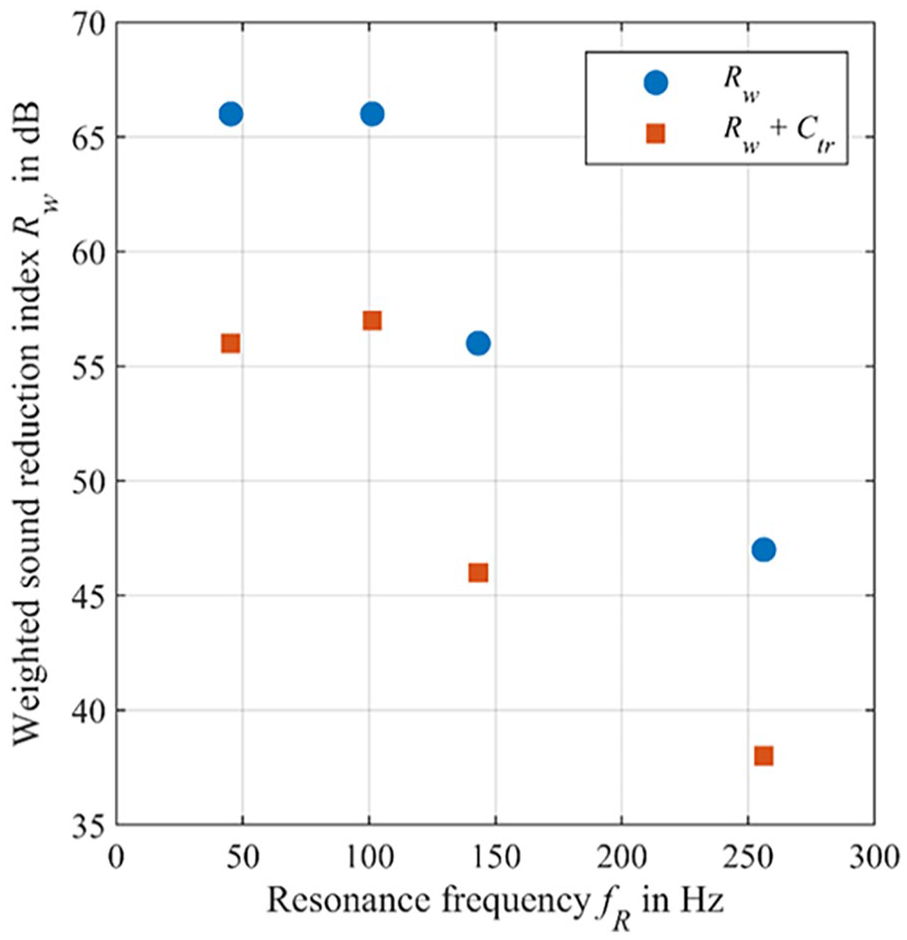
Relationship between the single number rating of the sound insulation of the double wall and the mass-spring-mass resonance frequency determined from formula (2), dynamic stiffnesses of Table 1 and for straw the measured dynamic stiffness value based on the introduced “double mass” method.
Effect of straw density inside the cavity of a timber frame wall
The frequency dependent sound reduction loss in Figure 9, for all variants followed a typical pattern for lightweight constructions, with a dip in the index caused by mass-spring-mass resonance and a dip in the around 3150–4000 Hz caused by the coincidence effect. The frequency at which the mass-spring-mass resonance dip occurs shifts according to the stiffness of the spring, which is significantly affected by the insulation material’s material and density. The highest values for single-number-weighted parameters were observed for the variant with the cavity filled with straw with the lowest density. For wooden frame walls filled with straw, an increasing resonance frequency was observed with increasing density, and a broad dip with higher densities may be caused by uneven density distribution. Above the mass-spring-mass resonance frequency, there is an increase of 12 dB/octave in the sound reduction index, influenced by the overall mass of the construction mainly influenced by the transmission path over the plate-connecting studs. Since this transmission path remains the same for all variants, the observed changes in the weighted sound reduction index are primarily influenced by the mass-spring-mass resonance dip. This results in an increase in airborne sound insulation as bulk density decreases and dynamic stiffness lowers. The introduction of straw with low bulk density can lead to an improvement of up to 2 dB in the single-rated airborne sound insulation dimension, enabling the wall structure to achieve comparable building acoustic levels as with conventional ones.
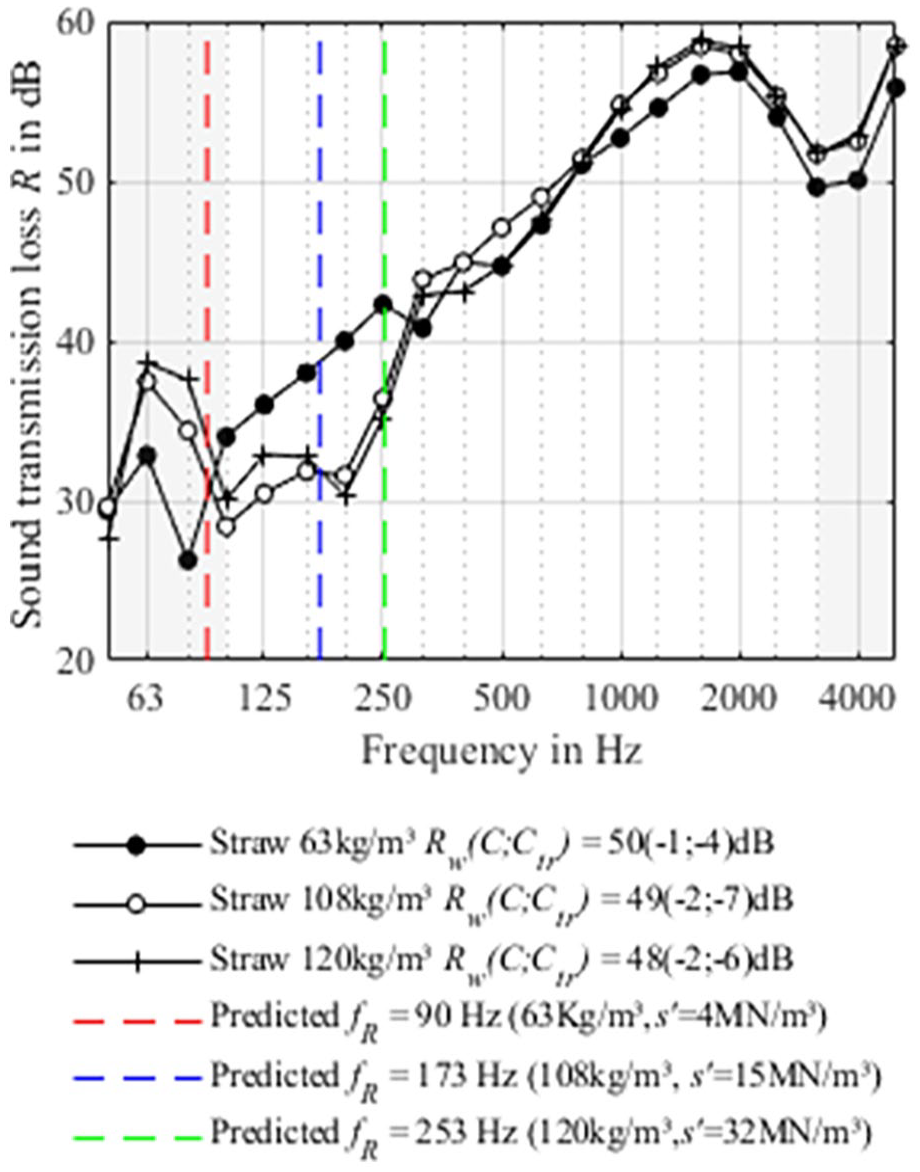
Frequency-dependent trend of the sound reduction index of timber frame wall under the influence of different insulation materials in the cavity with increasing density.
Figure 10 depicts the correlation between the single-number rating of sound insulation (Rw) for the double-wall construction, as shown in Figure 10, and the mass-spring-mass resonance frequency stemming from the wall construction. This resonance frequency is determined by considering the surface weight of the wall cladding layers (m1’ = 28.75 kg/m2, m2’ = 23 kg/m2) and the dynamic stiffness (s’) of the insulation material within the wall cavity from Table 2. A clear linear relationship between these two variables emerges. As the resonance frequency increases, there is an approximate 1 dB reduction in the sound insulation rating for every 70 Hz increment. Although the correlation is somewhat attenuated with the spectrum adaptation term, a noticeable decrease in Rw + Ctr with higher mass-spring-mass resonance frequency is still observable.
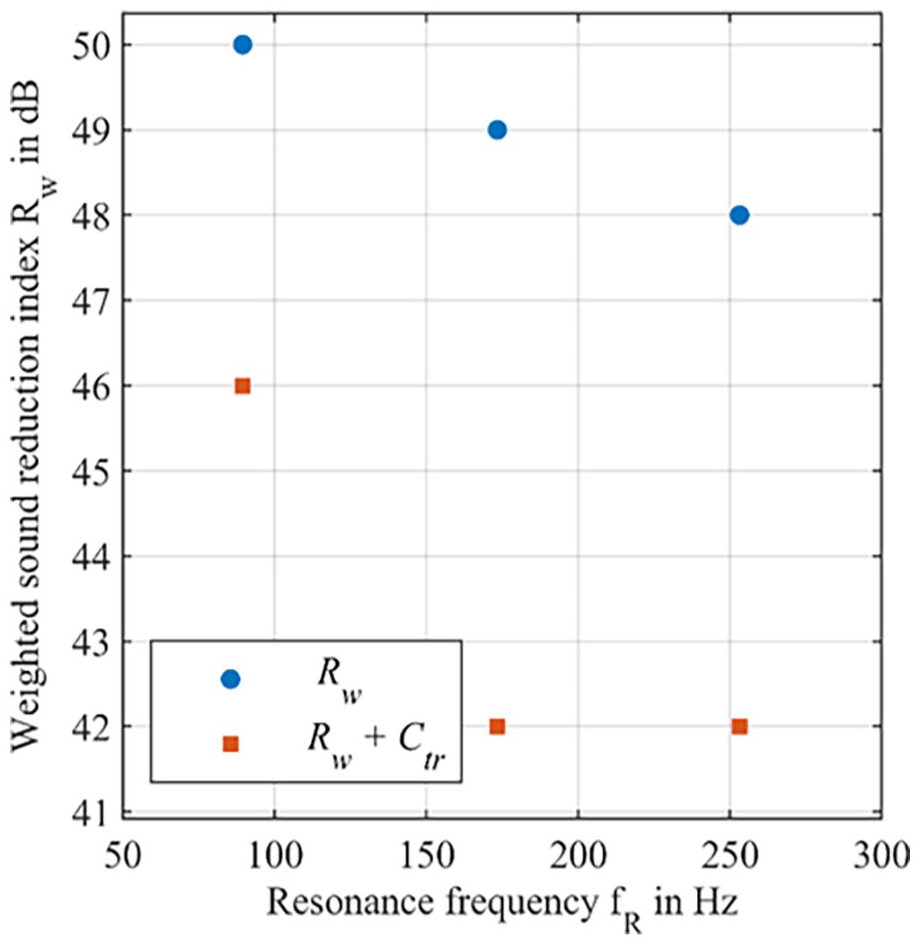
Relationship between the single number rating of the sound insulation of the timber frame wall and the mass-spring-mass resonance frequency determined from formula (2) and measured dynamic stiffens values based on the introduced “double mass” method.
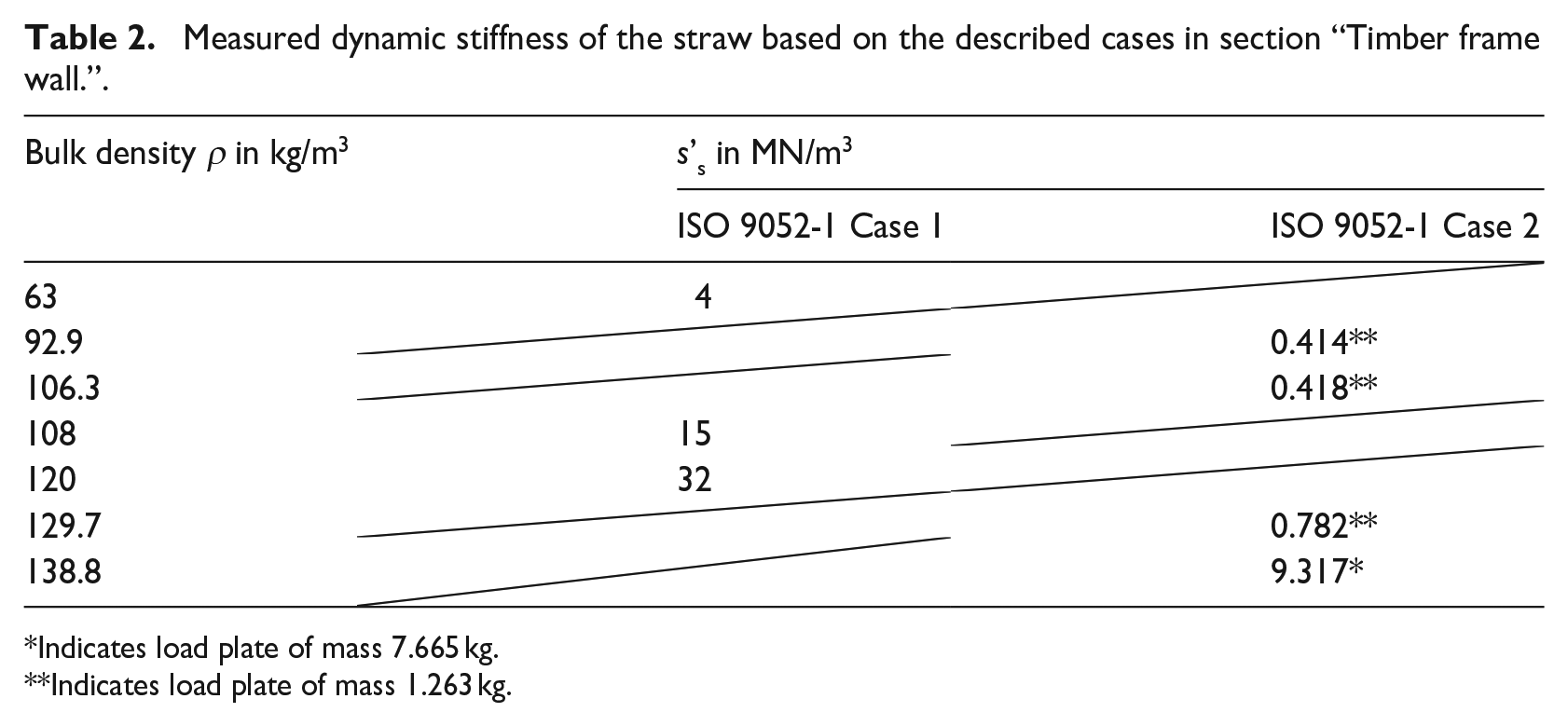
Measured dynamic stiffness of the straw based on the described cases in section “Timber frame wall.”.
Indicates load plate of mass 7.665 kg.
Indicates load plate of mass 1.263 kg.
Dynamic stiffness
The dynamic stiffness was determined by extrapolating the resonant frequency of the 1DOF measurement setup determined for five different excitation amplitudes using a logarithmic sweep. Within each measurement case, the tested material was excited 10× for more precise averaging during frequency processing. Each loose material compression variant was measured only once. The measurement results for straw in this section compare the two case studies described in section “Timber frame wall.” The load applied to the specimen, resulting from the differing weights of the two steel plates, significantly influences the measurement results. As shown in Figure 11, the dynamic stiffness measurements exhibit substantial variation across all tested bulk densities. Case study related measurement data reveal a correlation between bulk density and dynamic stiffness, with dynamic stiffness increasing as bulk density rises. The rate of increase in dynamic stiffness is greater with higher bulk densities. This phenomenon is even more pronounced in Case 1 when using the ISO 9052 9 measurement method with load of recommended mass on the specimen. For Case 2, with the minimal load plate mass of 1.263 kg, the results for densities between 92.9 and 129.7 kg/m3 show only a slight increase in stiffness of approximately 0.4 MN/m3. A significant increase in dynamic stiffness, reaching 9.317 MN/m3 at a density of 138.8 kg/m3, was observed only with the load plate mass of 7.665 kg. Table 1 presents the numerical values from Figure 11 and highlights the differences in the measured dynamic stiffness depending on the examined cases.
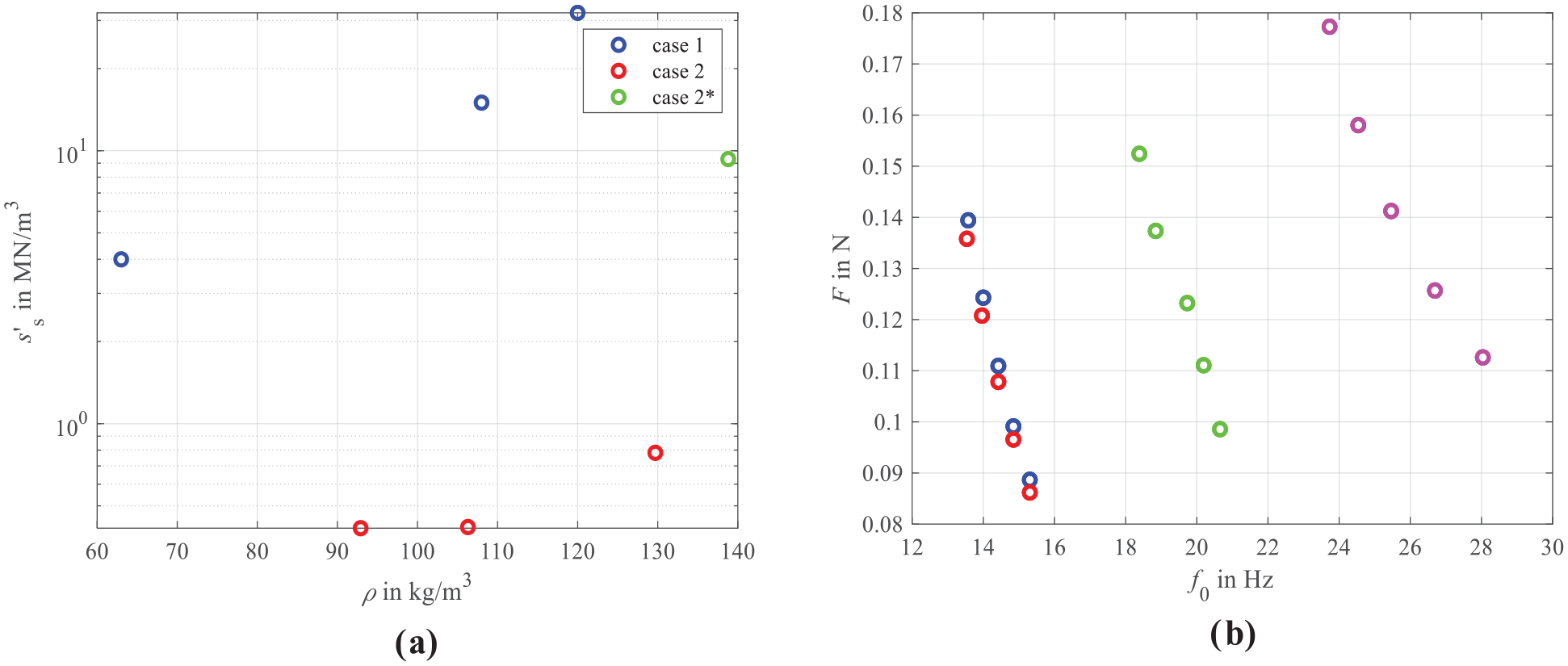
(a) Dynamic stiffness and density relation for straw blown material. Blue—case 1; Red—case 2 (load plate of mass 1.263 kg); Green—case 2 (load plate of mass 7.665 kg) and (b) Case 2 only—resonance frequency and force excitation relation for straw under four different boundary conditions. Blue—load plate mass 1.263 kg, bulk density ς = 92.9 kg/m3; Red—load plate mass 1.263 kg, bulk density ς = 106.3 kg/m3; Green—load plate mass 1.263 kg, bulk density ς = 129.7 kg/m3; Magenta—load plate mass 7.665 kg, bulk density ς = 138.8 kg/m3.
Straw from different sources was used for the mentioned case studies. Thus, differences in the measured results between individual case studies can be expected and should not be overly scrutinized. For instance, in Case Study 1, straw was sourced from Sonnenklee GmbH. The product used is specifically manufactured and marketed as a blown-in insulation material. In case study 2, freely available straw was used as feed or pet bedding. The free surface around the load plate could influence the measurement results by affecting the airflow resistivity of the sample under different loads. This free surface varied between the case studies. In both cases, the plates had dimensions of 0.20 × 0.20 m, with a consistent 3 mm gap between the steel cube and the edges of the plate.
Nevertheless, three questions must be discussed.
The first question is, why there is a change in the dynamic stiffness of the material during different compression? The dynamic stiffness of soft porous materials with an open-cell structure can vary depending on their loading rate or compression. It is caused by a change in their internal structure, there will be a reversible or irreversible change in stiffness, which affects the resulting resonant response of the given system. In this phenomenon, there is a change in the porosity, when the volume of the pores decreases or they are destructed when compressed. Compression increases the contact area between adjacent cells or fibers (increase in bulk density). Therefore, there is an increased mechanical interaction in the structure of the material. This is directly related to the increase in the resistance against deformation of the material (static and dynamic compressive forces) or its stiffness, and to the reduction of the damping capacity.
The second question is, why there is a change in the dynamic stiffness of the material with almost negligible change in compression or bulk density but increased mass of the load plate? This could be possibly related to the interaction between the resilient material and the load plate. By increasing the weight of the load plate, the inertia of the system increases, which can affect the resulting dynamic response of the system, especially towards higher frequencies during oscillation. Also, using a weight of higher weight will result in a better and more even distribution (possible change of distribution) of the pressure respective of force propagation, which increases the interaction between the load plate and the damping material (affects the material’s deformation characteristics). A significant change in the weight of the load plate can also lead to the forming of new modes of the oscillating system due to the change in the overall material response to dynamic excitation. Although the bulk density remains unchanged, its ability to absorb or dissipate energy under dynamic conditions may vary with the weight of the load plate.
However, related also to this question it must be pointed on the third question, why in case 2, when the bulk density changed from 92.9 to 106.3 kg/m3, there was only a negligible change in stiffness, and at a value of 129.7kg/m3, stiffness began to gradually increase. This could be caused by an uneven interaction between the load plate and the loose material layer. At lower bulk density, the straw may not be evenly distributed in its volume. Also, the material is significantly softer in this case and when excited from above through the light load plate, the plate jumped at specific levels of excitation.
Summary
This study highlights the potential of using loose-blown straw as a thermal insulation material within the cavities of double-wall and timber frame constructions. The results indicate that sound transmission loss is reduced by up to 19 dB compared to a double metal stud wall with cavities filled with cellulose or mineral wool. Compared to a variant with wood fiber insulation, the sound insulation is 9 dB lower when straw is used. Measurements on the timber frame wall demonstrate that the sound reduction index is strongly influenced by the dynamic stiffness of the blown-in insulation material. Our findings reveal a clear correlation between the sound reduction index and the mass-spring-mass resonance frequency, which is governed by the dynamic stiffness of the cavity material and the surface mass of the planking boards. Notably, an increase in resonance frequency corresponds to a decrease in the sound reduction index of the analyzed constructions.
For the measured double metal stud wall, the dynamic stiffness values for all materials except straw were obtained from literature. However, these values are based on data from unspecified measurement methods or from procedures outlined in ISO 9052. 9 As demonstrated, dynamic stiffness measurements can vary significantly depending on bulk density and load conditions. Consequently, directly linking a predicted resonance frequency—based on measured dynamic stiffness—to real-world performance requires critical scrutiny. A comparison between the predicted mass-spring-mass resonance frequency, calculated using dynamic stiffness values measured according to ISO 9052 9 for straw samples with varying densities, and the observed dips in sound transmission loss shows that the prediction consistently overestimates the resonance frequency. This discrepancy suggests that the dynamic stiffness values obtained using the ISO 9052 7 setup differ from those in the actual wall construction. The authors attribute this difference to unknown boundary conditions that vary between the standardized measurement setup and the real-world installation conditions.
Additionally, two case studies demonstrated that the degree of compression—or the increase in bulk density of loose material—significantly affects the resulting dynamic stiffness of the system. Measurements on loosely packed straw with low density and a lightweight loading plate indicate that excitation from the top may act as a limiting boundary condition when evaluating materials with very low stiffness. This finding motivates the development of an alternative measurement method, based on ISO 9052, that utilizes excitation from the bottom.
The proposed measurement setup, designed for testing loose materials, will incorporate a rigid frame similar to the one presented in chapter “Timber frame wall.” It is essential to assess the impact of applying a load with an area smaller than that of the tested resilient material. It can be hypothesized that the distribution of the applied load and the resulting compression of the sample will vary depending on the material type, thereby influencing the actual dynamic stiffness of the system.
Future research should focus on reducing the dynamic stiffness of blown-in straw to enhance the sound transmission loss of the investigated wall structures. To support this research, a reliable measurement procedure for the dynamic stiffness of loose, low-density materials is required—one that minimizes loading on the specimen to accurately reflect real-world installation conditions within wall cavities.
Footnotes
Declaration of conflicting interests
The author(s) declared no potential conflicts of interest with respect to the research, authorship, and/or publication of this article.
Funding
The author(s) disclosed receipt of the following financial support for the research, authorship, and/or publication of this article: The authors acknowledge the financial support from the AUSTRIAN SCIENCE FUND (FWF), grant number I 5503-N, (Engineered wood composites with enhanced impact sound insulation performance to improve human wellbeing) and the support of all project partners of the research project “Schall.Holz.Bau II.” The project was funded by the “NÖ Wirtschafts-und Tourismusfonds” in the funding track “Kooperation” under the number WST3-F2- 525823/007-2018. Author DU acknowledges support by the Slovak national grant VEGA 1/0205/22 and KEGA 033STU-4/2024.
