



Abstract
The acoustics of Palacio de los Deportes in Mexico City, a former sport venue for the XIX Olympic Games in 1968, currently in use mainly for massive modern music concerts, was studied by performing measurements in situ, in-lab speech intelligibility tests from measured impulse responses, and by computer ray-tracing simulations. Long reverberation times and late strong echoes were found as the main acoustic disturbances severely affecting speech intelligibility, and acoustic quality indices D50, C50, C80. A simulated solution is proposed including curved diffusers and absorbing treatment that could bring reverberation times and intensity of echoes toward values more suitable for pop and rock events with an expected improved acoustic quality. The acoustics of Palacio de los Deportes is put in context with those of the AO Arena in Manchester and the O2 Arena in London, two similar comparable venues that are well regarded on account of their popularity and acoustic quality.
Keywords
Introduction
Palacio de los Deportes is an iconic architectural landmark in Mexico City, originally designed and built by Mexican architects Félix Candela, Enrique Castañeda, and Antonio Peyri 1 to house the basketball, volleyball, and classic wrestling competitions during the XIX Olympic Games in 1968. The design follows the rationalist architecture movement, aiming in this particular case for a low cost, agile, and seismic-proof construction. Figure 1 shows an aerial image of Palacio de los Deportes in Mexico City. The architectural design of Palacio de los Deportes is inspired after the “Palazzetto dello Sport” in Rome, Italy, by Piere Luigi Nervi, in that case displaying a dome of solid concrete, instead of the comparatively lighter and larger structure of Palacio de los Deportes. The dome here consists of 121 hyperbolic-parabolid pyramids made of 0.02 in thick copper plates facing to the exterior, an intermediate layer of waterproof asphalt, and 38 mm thick wooden plates on the interior. The dome is supported by a tubular frame of steel and aluminum. In the interior, the circular central stage is 86 m in diameter, surrounded by a seating area divided in two levels with a maximum diameter of 115 m, and a 22,000 seat capacity. The maximum height from the stage floor to the dome is 50 m. The interior volume is 444,165 m3.
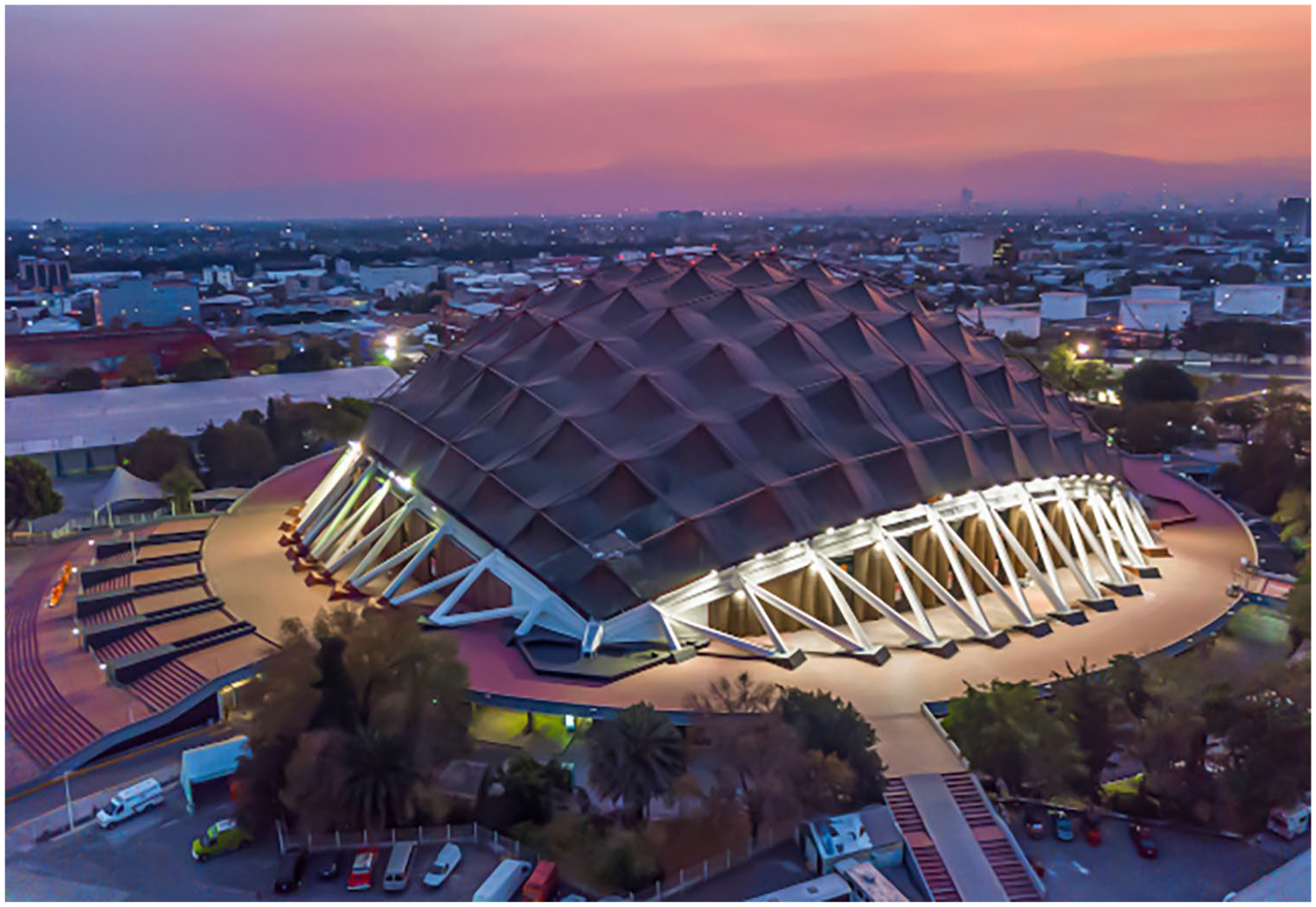
Aerial image of Palacio de los Deportes in Mexico City. 2
After the 1968 Olympics, the use of Palacio de los Deportes to stage sporting events waned very significantly, in favor of different diverse activities such as commercial exhibitions, mass academic test examinations, bull-fighting events, and others. At around 1990, Palacio de los Deportes was commissioned to a private company in the local music industry which has promoted its use as a rock and pop music venue up to this date. However, issues of its questionable perceived acoustic quality have been frequently reported,3 –5 and keep appearing in the musical critic press, and in social media among the assistants to many different musical events that are staged there. On the other hand, and as far as we know, no technical or scientific study had been conducted, up to now in this work, in order to objectively assess the acoustic quality of Palacio de los Deportes. A previous study 6 modeled the structural vibration of the dome cover using Finite Element Analysis. The frequencies of the 10 lowest natural vibration modes of the structure were reported between 1.3 and 3.2 Hz (periods of vibration between 0.76 and 0.31 s), well below the audible frequency range of sound related to the architectural acoustics.
The architectural acoustics of modern pop and rock venues presents certain particularities that have been the object of a relatively recent and modest amount of published research. 7 These modern venues are most often of larger dimensions, and of larger seat capacities than traditional concert halls that have been otherwise studied very extensively in the acoustics literature.8,9 Criteria of good acoustic quality remain applicable generally unchanged in most cases, 10 albeit somewhat stressed in these larger venues, where reverberation times and time delays of early reflection tend naturally to become larger as well, in potential detriment of the perceived acoustic quality.
A review article by Bradley, 11 classifies existing common room acoustic parameters broadly into four types of measures: decay times, sound strength, clarity measures, and spatial impression. In the case of Palacio de los Deportes, on account of its present use as a modern pop and rock music venue with amplified sound as an almost strictly invariable rule, measures of sound strength and of spatial impression are of relatively less importance than are on the other hand measures of decay times and clarity of speech and music. For this reason, in the work that is presented here, room acoustic parameters that are determined consist of decay times: EDT, T20, T30, and clarity measures: D50, C50, C80, TS. These are also complemented with subjective listening tests of speech intelligibility. Consideration of different parameters for the evaluation of architectural acoustic quality is important in that previous studies 12 have shown that individual objective parameters fail to fully describe the quality of the perceived acoustic quality, while also observing that reverberation time parameters present the greatest correlation with most of the subjective characteristics.
This article is organized as follows. After this Introduction, the next section describes the methods used for the acoustic evaluation of Palacio de los Deportes, which was carried out through acoustic measurements in situ, in-lab speech intelligibility tests based on measured impulse responses, and acoustic ray-tracing simulations. Then, the results of the acoustic evaluation are presented, followed by a discussion, and suggestions for acoustic treatment, whose potential benefits are demonstrated by further acoustic ray-tracing simulations. Some conclusions are finally presented.
Acoustic evaluation of Palacio de los Deportes
Acoustic measurements
Measurements in situ were carried out in order to obtain acoustic impulse responses from a sound source in the stage area to 16 microphone positions distributed in the stage and seating areas. A wooden clapping device was used as an impulsive source of sound. 13 Recordings were made in two consecutive takes, one for the stage, and another for the seating area, with eight microphone positions in each area. Recordings from six assorted microphones (four omnidirectional condenser microphones Beyerdynamic MM1, a ribbon bidirectional microphone Marantz MPM-3500R, and a cardiod condenser microphone MXL CR89) were made with a Zoom F6 digital recorder at 48 kHz sampling rate in 32 bit floating point format. Recordings with two additional microphones were made with a Zoom H6 digital recorder at 48 kHz sampling rate in 24 bit fixed point format. In this case, the built-in microphones (XYH-6 stereo capsule) of the Zoom H6 digital recorder were used. Recordings were made with the microphones raised 1.8 m above the floor in each area. Sound impulses were repeated 10 times in each area. Atmospheric conditions at the time of recording were obtained from a digital weather sensor Kestrel 4500: atmospheric pressure: P0 = 776.7 hPa, relative humidity: RH = 48.7%, ambient temperature: T = 22.1°C. Digital signal processing of the recorded impulse responses was performed in software using GNU Octave and EASERA, where energy-time curves (ETC), echograms, spectrograms, and room acoustic parameters were determined, including EDT, T20, T30, C50, C80, D50, TS. Figure 2 shows a panoramic view during the acoustic measurements inside Palacio de los Deportes.
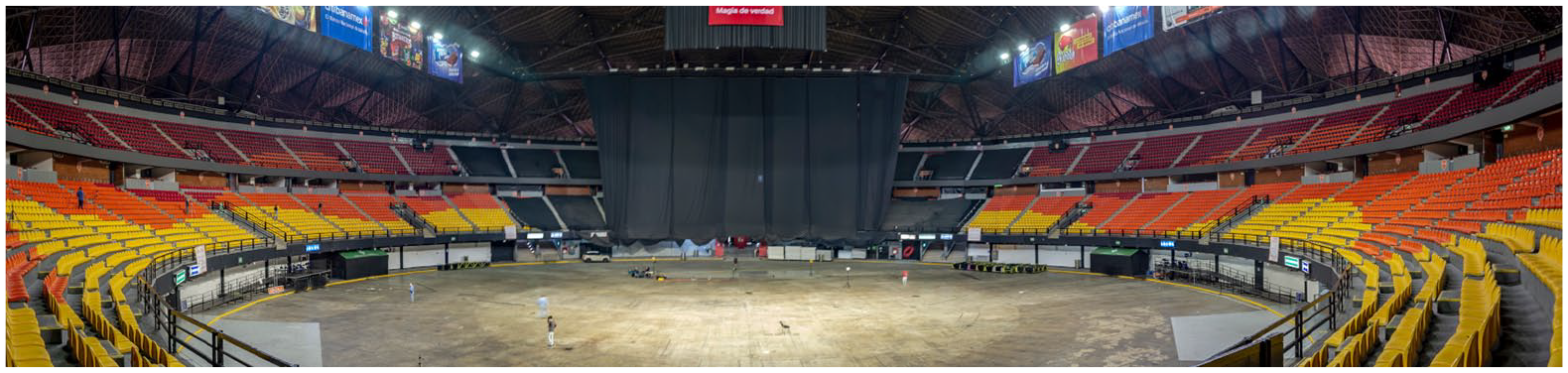
Panoramic view during the acoustic measurements inside Palacio de los Deportes.
Speech intelligibility tests
Speech intelligibility tests were conducted using a set of monophonic recordings of 125 short phrases in Spanish produced by random female and male speakers, tagged to have a Mexican Spanish accent in the Mozilla Common Voice speech corpus in Spanish. 14 The original clean monophonic speech recordings were convolved in the GNU Octave software with the reverberant impulse responses 15 measured in Palacio de los Deportes at microphone position four in the stage, and at microphone position 12 in the seat area, both corresponding to the same individual Beyerdynamic MM1 omnidirectional microphone. Speech intelligibility tests involved 18 participants, six female, 12 male, aged between 23 and 43 years old. They freely expressed their consent and received the results of an in-lab audiometric test as retribution for their participation. Tests were conducted by means of a Google Forms questionnaire, as described elsewhere, 16 except that in the present case tests were conducted locally under controlled laboratory conditions, rather than remotely. The audio files were played back from a laptop computer using a Focusrite Scarlett 4i4 digital audio interface, and Sony MDR SA-1000 circumaural headphones.
Computer ray-tracing simulations
A 3D geometric computer model of Palacio de los Deportes was developed in the software Rhinoceros using information from published architectural plans. 1 The geometric precision of the model was limited up to the point of not including some specific details such as the individual seat shapes, and details of the internal support structure of the dome, for instance. Acoustic sound absorption coefficients were assigned for the different surface materials of the computer model from generic values tabulated in the architectural acoustics literature. 17 Acoustic ray-tracing simulations18,19 were executed in Rhinoceros with the Pachyderm and Grasshopper plugins. Simulations were configured with atmospheric values matching those of the measurement sessions, and by tracing 100,000 rays with a cut-off time of 4.5 s. Energy-time curves, echograms, and other room acoustic parameters were obtained from these simulations. Table 1 shows the main interior surface elements and materials in Palacio de los Deportes. Table 2 shows the absorption coefficients in octave frequency bands used for ray-tracing simulations of the acoustic elements and materials in the existing conditions and in the proposed acoustic treatment of Palacio de los Deportes.
Main interior surface elements and materials in Palacio de los Deportes.
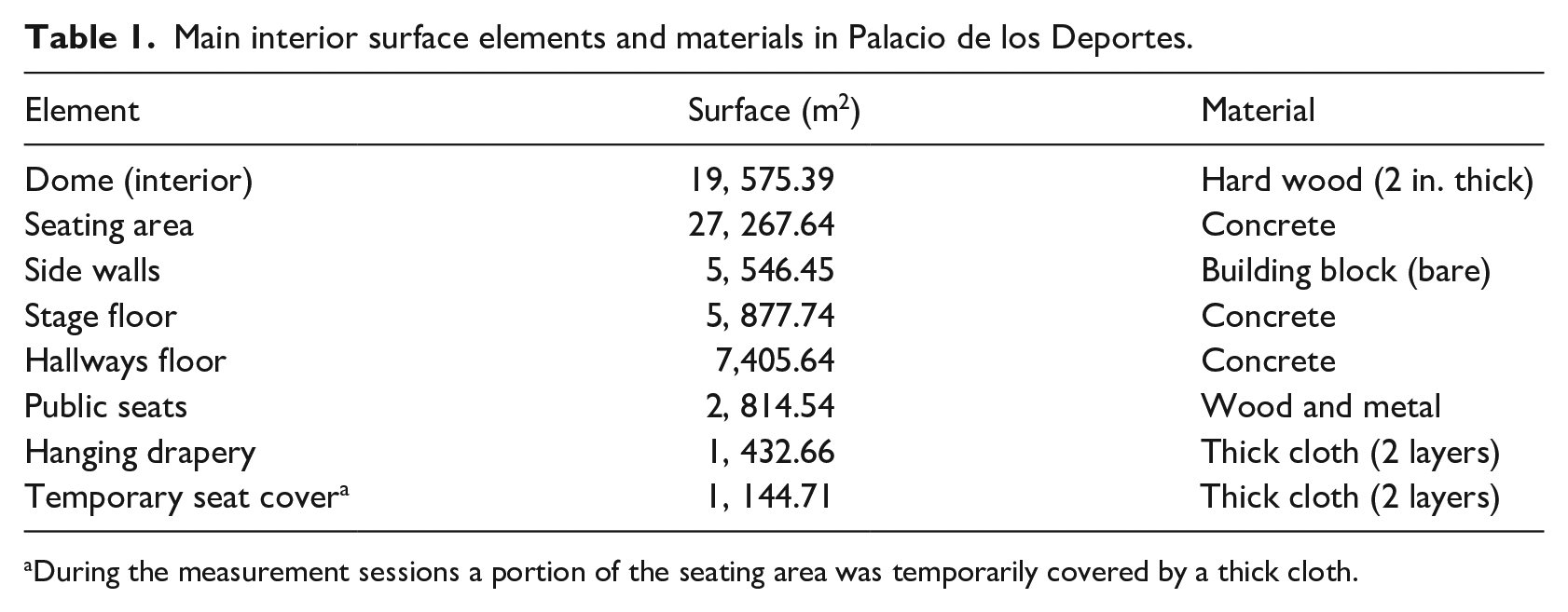
During the measurement sessions a portion of the seating area was temporarily covered by a thick cloth.
Absorption coefficients in octave frequency bands used for ray-tracing simulations of the acoustic elements and materials in the existing conditions and in the proposed acoustic treatment of Palacio de los Deportes.
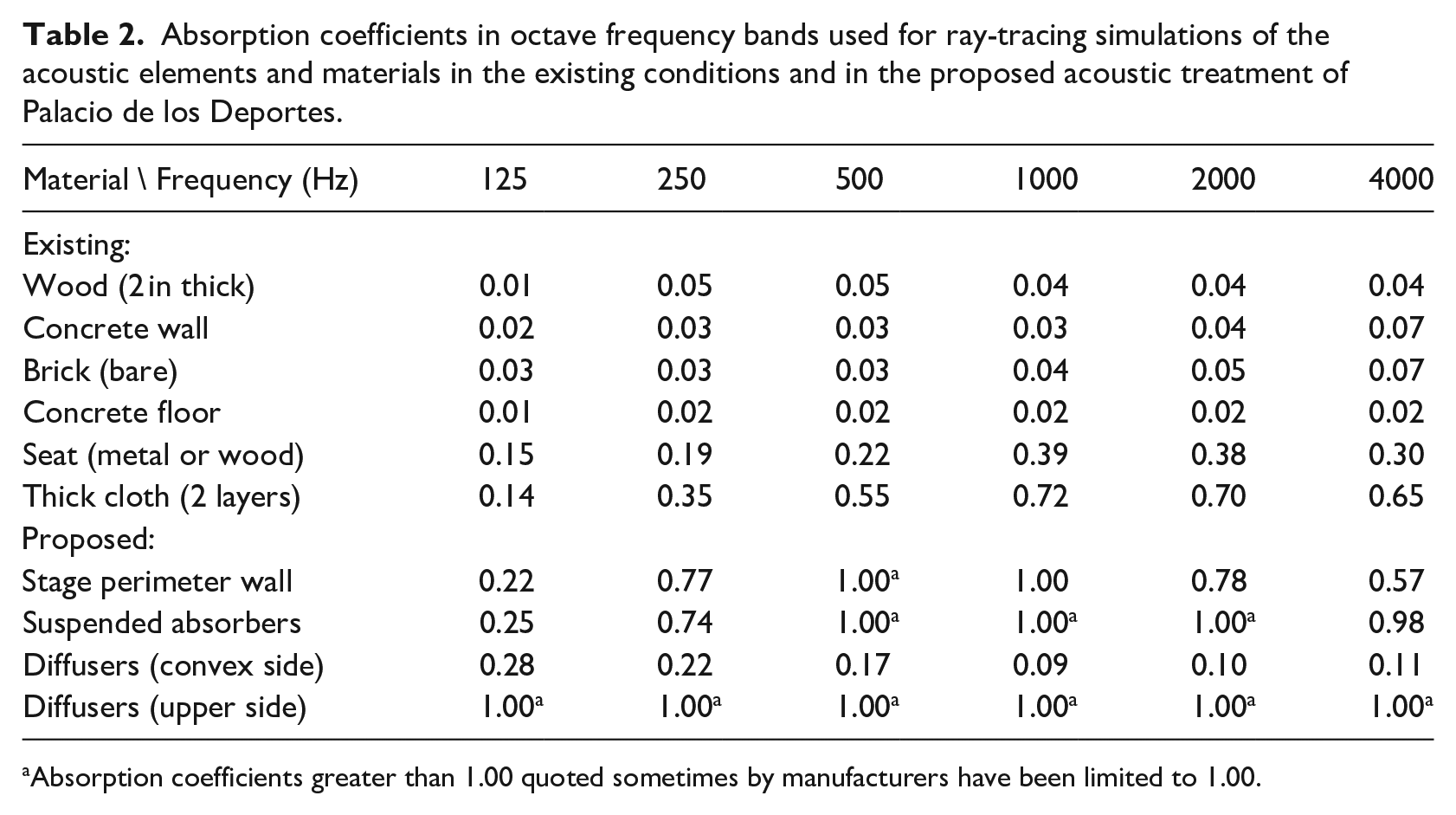
Absorption coefficients greater than 1.00 quoted sometimes by manufacturers have been limited to 1.00.
Results
Reverberation times
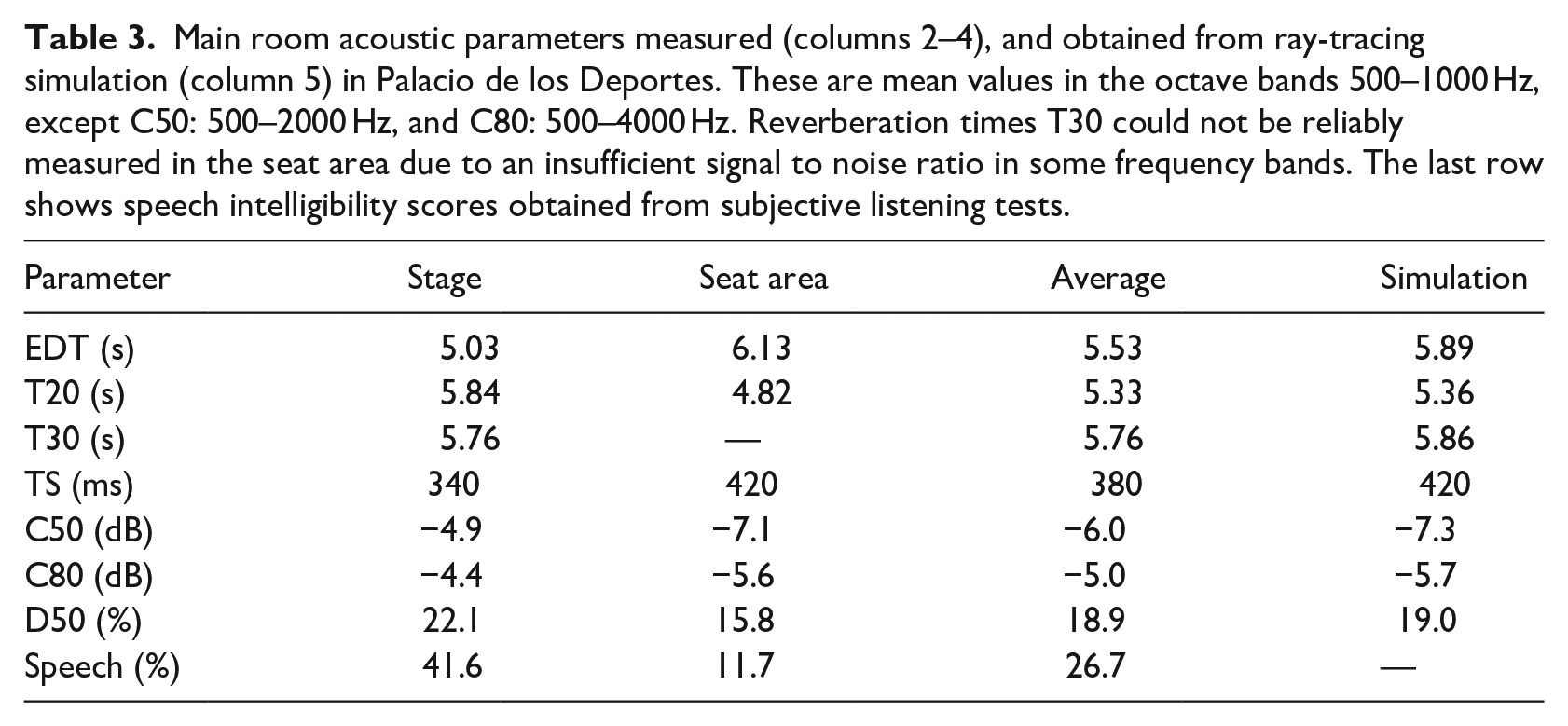
Figure 3 shows the reverberation times in 1/3 octave frequency bands measured and simulated in the current interior condition of Palacio de los Deportes. Mean values and standard deviations are shown taking into account all microphone positions in the stage and seat areas. Measurements and ray-tracing simulations show similar results, with some differences that might be due to the possible mismatch between the sound absorption coefficients that were assumed in the simulations and the actual real values. Table 3 presents the main room acoustic parameters measured, and obtained from ray-tracing simulation in Palacio de los Deportes. Speech intelligibility scores obtained from the subjective listening tests are also presented. The reverberation time T30 could not be reliably measured in the seat area due to an insufficient signal to noise ratio in some of the 1/3 octave frequency bands, even when using different sound sources that were tried during the measurement sessions.
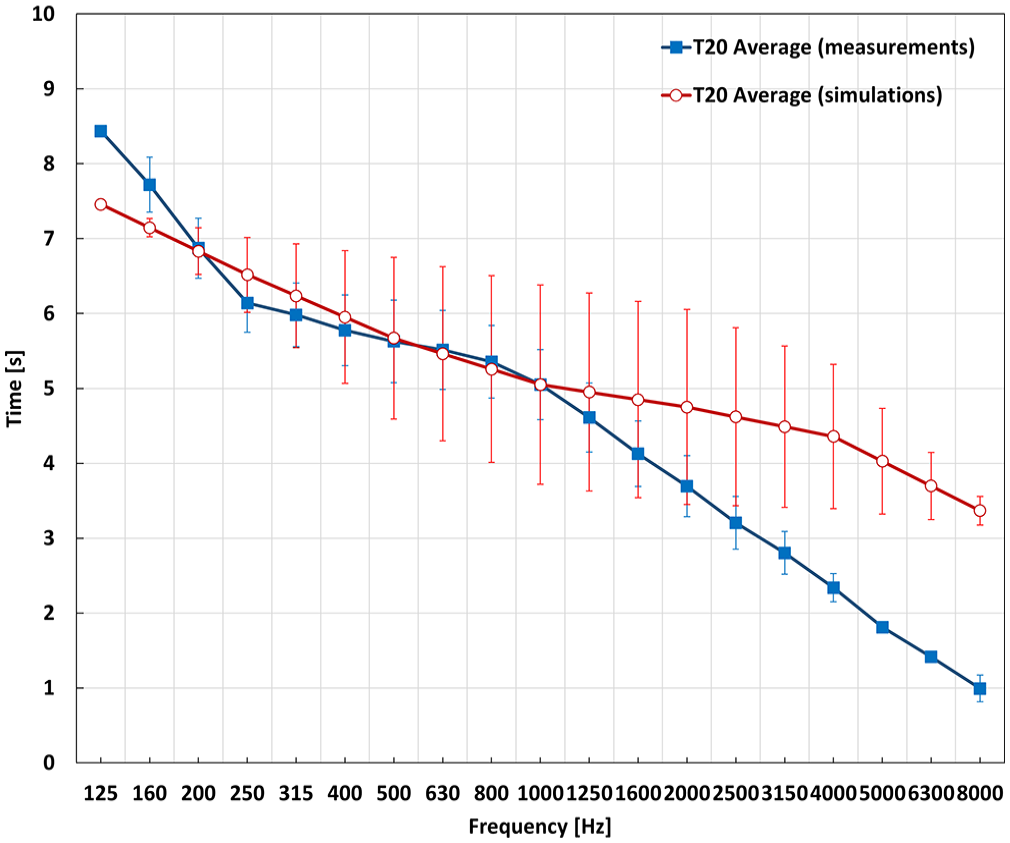
Reverberation times in 1/3 octave frequency bands measured and simulated in the current interior conditions of Palacio de los Deportes. Mean values and standard deviations are shown taking into account all microphone positions in the stage and seat areas.
Main room acoustic parameters measured (columns 2–4), and obtained from ray-tracing simulation (column 5) in Palacio de los Deportes. These are mean values in the octave bands 500–1000 Hz, except C50: 500–2000 Hz, and C80: 500–4000 Hz. Reverberation times T30 could not be reliably measured in the seat area due to an insufficient signal to noise ratio in some frequency bands. The last row shows speech intelligibility scores obtained from subjective listening tests.
Early sound reflections
Ray-tracing algorithms can be considered sufficiently accurate to model the early stages of sound propagation in room acoustics 20 It is important to note that ray-tracing results, as shown in Figure 4, and similarly ahead in Figures 5, 7 and 8, are conventionally interpreted as representing a transient, broadband, frequency-independent acoustic behavior, and that subsequent frequency-dependent results can be obtained after post-processing by appropriate filtering or frequency analysis of the resulting impulse responses. Figure 4 shows the initial ray-tracing time frames during the first 300 ms of the simulated acoustic impulse response in the current interior condition of Palacio de los Deportes. The initial emission of sound from the source located at the stage is followed almost immediately by sound reflected from the floor, and a somewhat later by reflections from the surrounding wall. Sound that is initially directed or reflected upwards is then reflected downwards from the dome, arriving at the seat area very strongly and substantially delayed after the direct sound. This illustrates the existence and possible detrimental effect of strong reflections and focalizations of sound from the dome and from the stage perimeter wall.
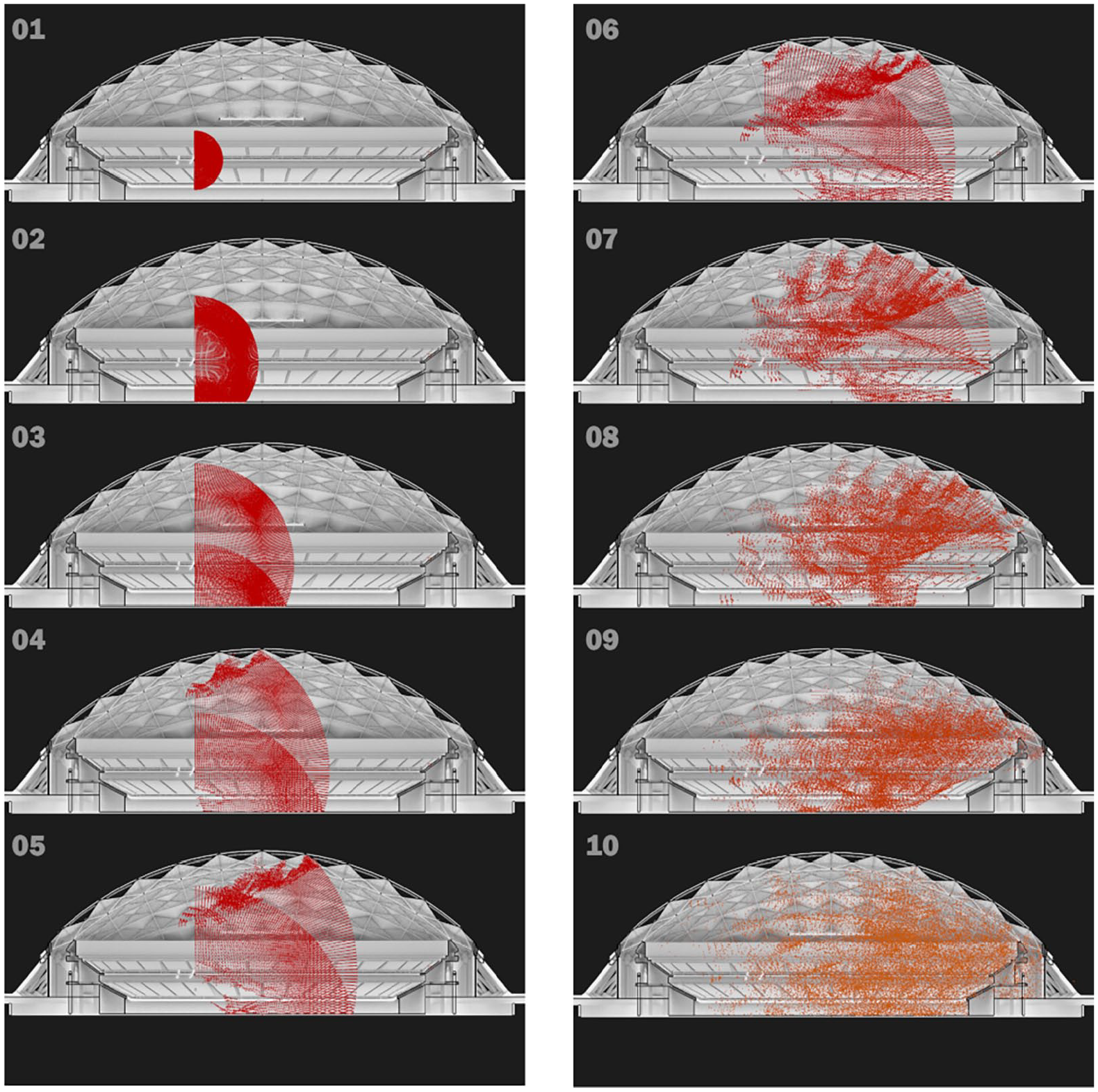
Initial ray-tracing time frames during the first 300 ms of the simulated acoustic impulse response in the current interior conditions of Palacio de los Deportes.
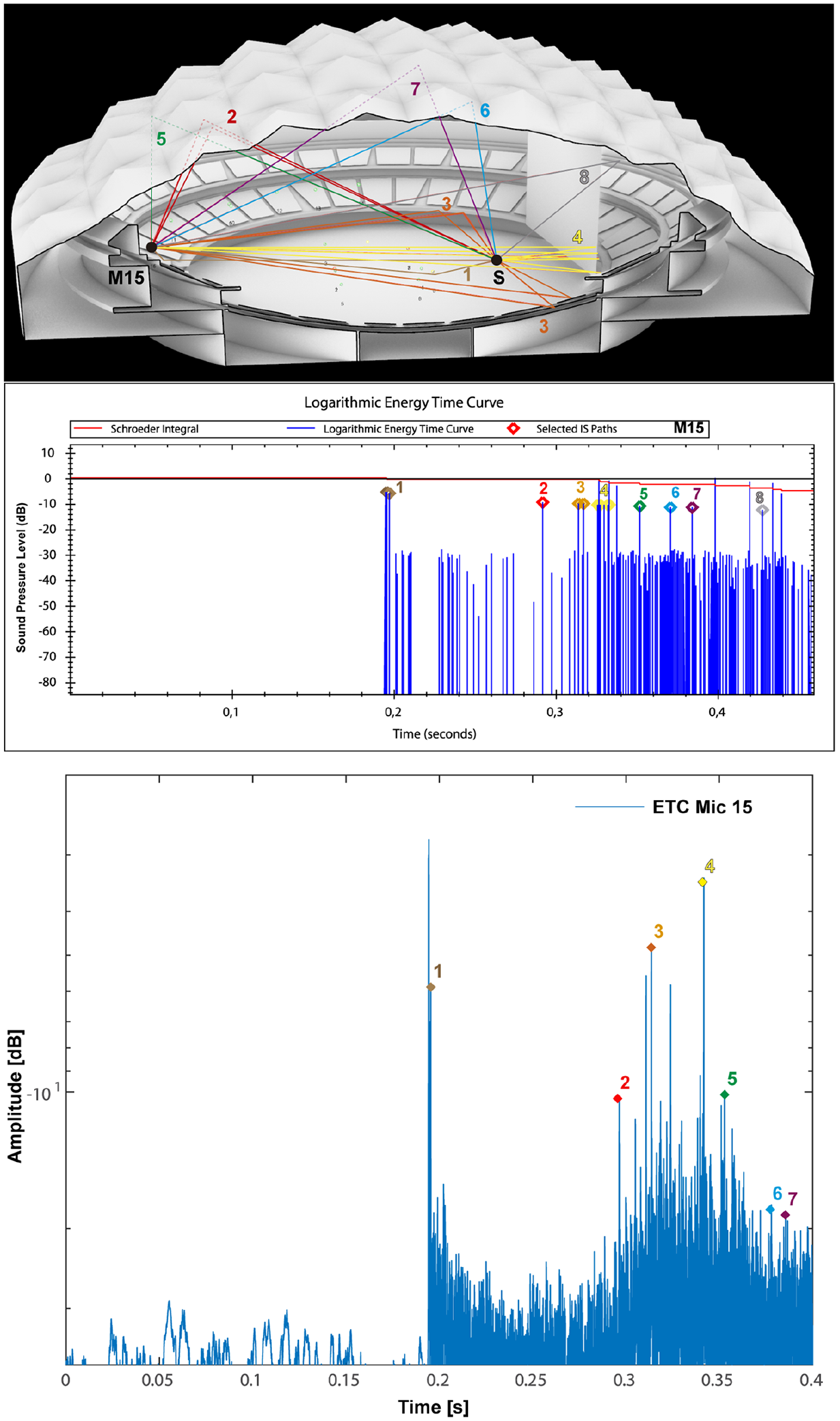
Simulated ray-tracing compared with measurements of the direct sound and the first reflections arriving at microphone 15 in the seat area in the current interior conditions of Palacio de los Deportes.
Figure 5 shows simulated ray-tracing compared with measurements of the direct sound and the first reflections arriving at microphone 15 in the seat area in the current interior condition of Palacio de los Deportes. Based on this representation, it is possible to identify similar strong sound reflections in the simulated and measured sound energy plots, which then can be traced geometrically as to their particular sound paths in the 3D sketch at the top of the figure. These strong early reflections can be evaluated as to their subjective effect according to criteria such as those proposed by Barron, 21 illustrated in Figure 9. In this context, strong early sound reflections coming from the dome and from the peripheral wall in the current interior condition of Palacio de los Deportes can be considered as detrimental to the perceived acoustic quality.
Acoustic treatment and estimated performance
In order to devise a possible solution, several potential strategies were tested by means of acoustic ray-tracing simulations, and evaluated in terms of their ability to improve on the resulting simulated acoustic parameters. Design strategies were inspired by two emblematic instances: the Royal Albert Hall in London, 22 and Sala Nezahualcóyotl concert hall in Mexico City. 9 A viable combined strategy was found appropriate that involves the use of absorbing material covering the surrounding wall of the stage, an array of suspended concave diffusers (reflective from below, absorbing from above) distributed at different mid heights, and an array of suspended absorbing sheets up high between the diffusers and the upper dome. Commercially available materials were assumed for these elements with nominal absorption coefficients as indicated in Table 2. The diverse benefits brought up more generally by the use of acoustic diffusers in building environments have been previously established. 23 The design proposed here cares for other non-acoustic issues, such as maintaining appropriate illumination and visibility of the stage area from all seats, among others. This suggested acoustic treatment is illustrated in Figure 6.
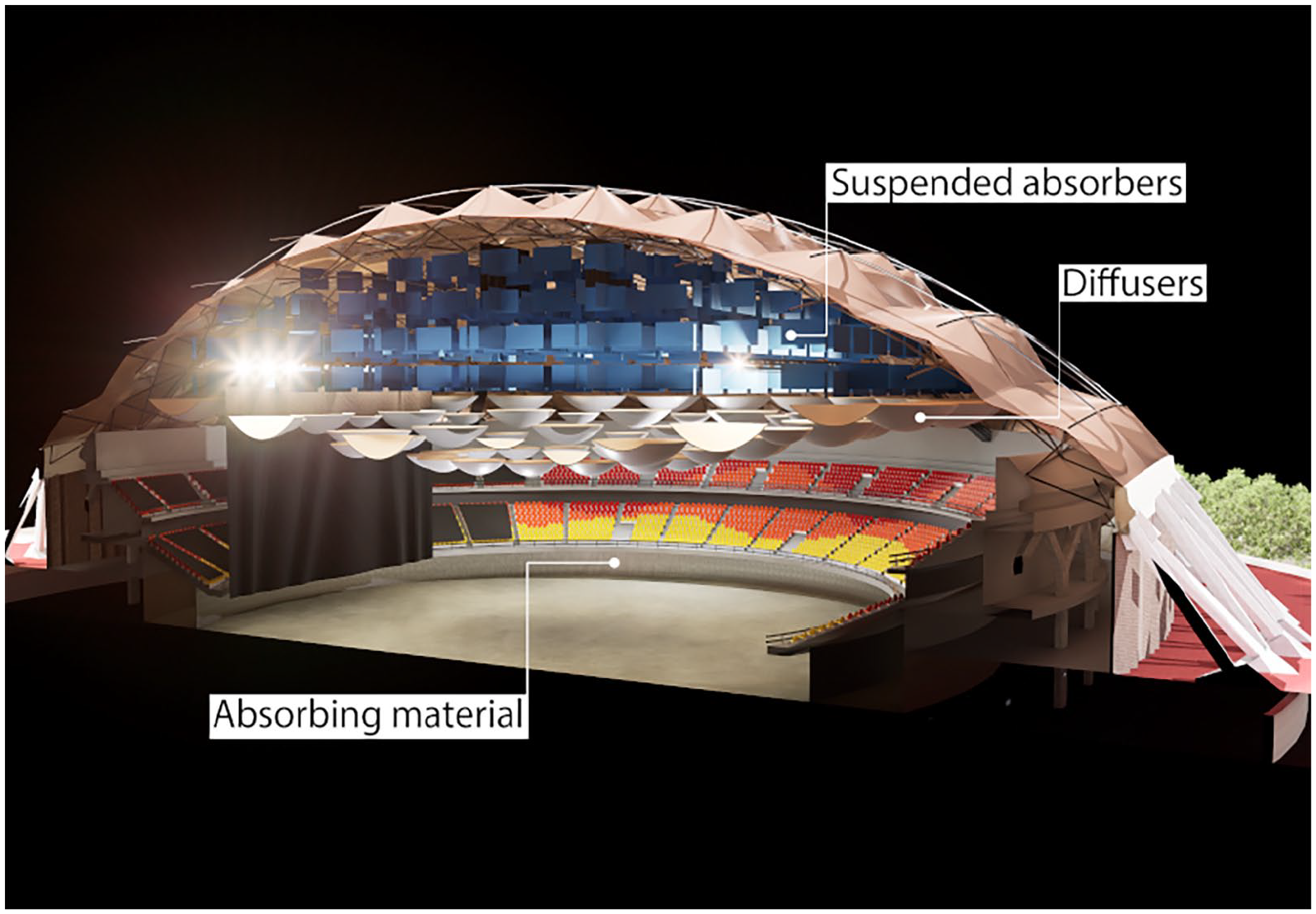
Suggested acoustic treatment in Palacio de los Deportes.
Figure 7 shows the initial ray-tracing time frames during the first 300 ms of the simulated acoustic impulse response in the proposed interior acoustic treatment of Palacio de los Deportes. In comparison with Figure 4, the beneficial effect of the proposed diffusers can be observed in that early reflections reach the seat area from different directions, with reduced strength and shorter time delays, instead of the strong late reflection from the upper dome that is currently observed. This benefit is also shown in Figure 8 that shows the simulated ray-tracing compared with measurements of the direct sound and the first reflections arriving at microphone 15 in the seat area in the proposed interior acoustic treatment of Palacio de los Deportes.
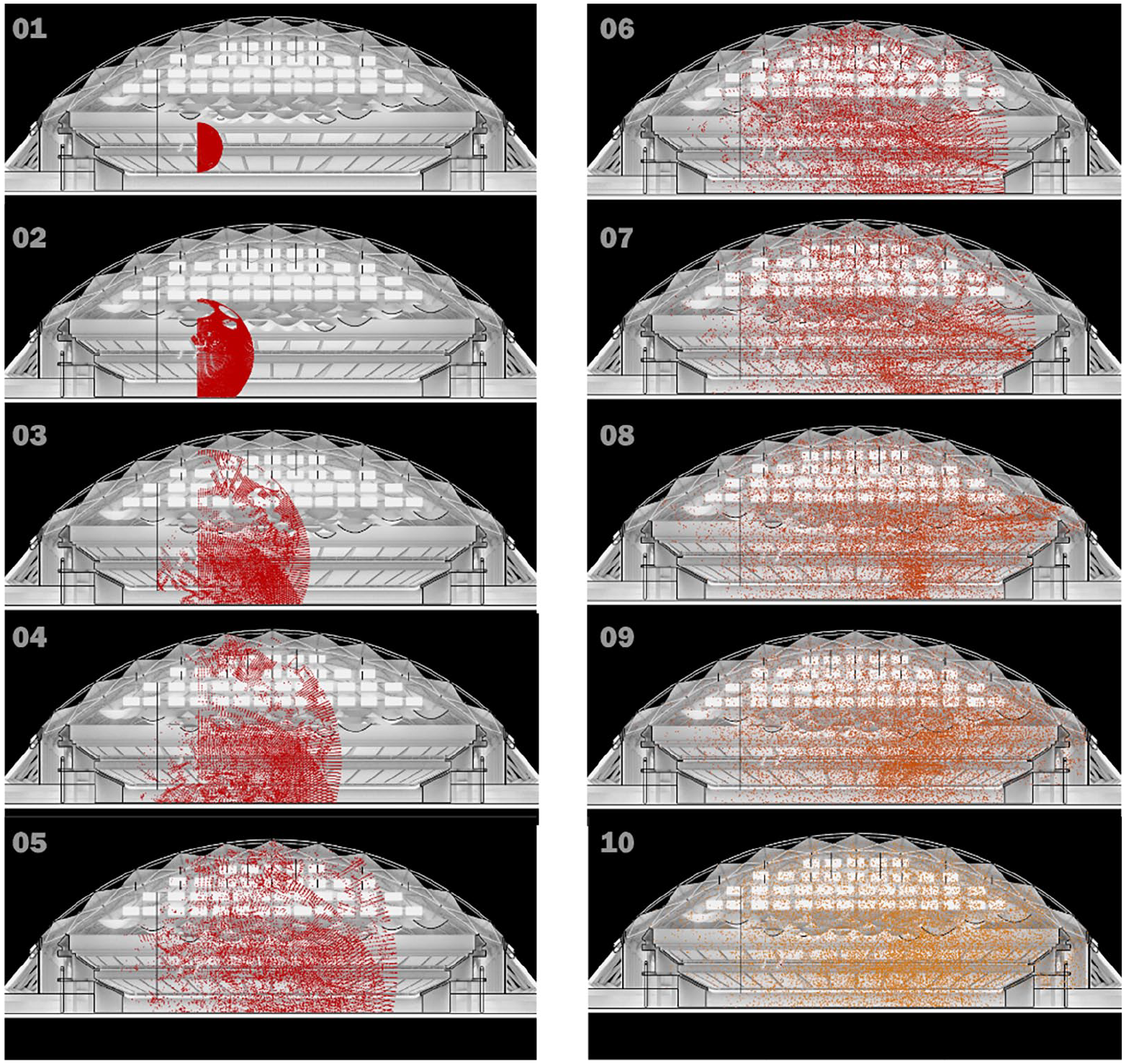
Initial ray-tracing time frames during the first 300 ms of the simulated acoustic impulse response in the proposed interior acoustic treatment of Palacio de los Deportes.
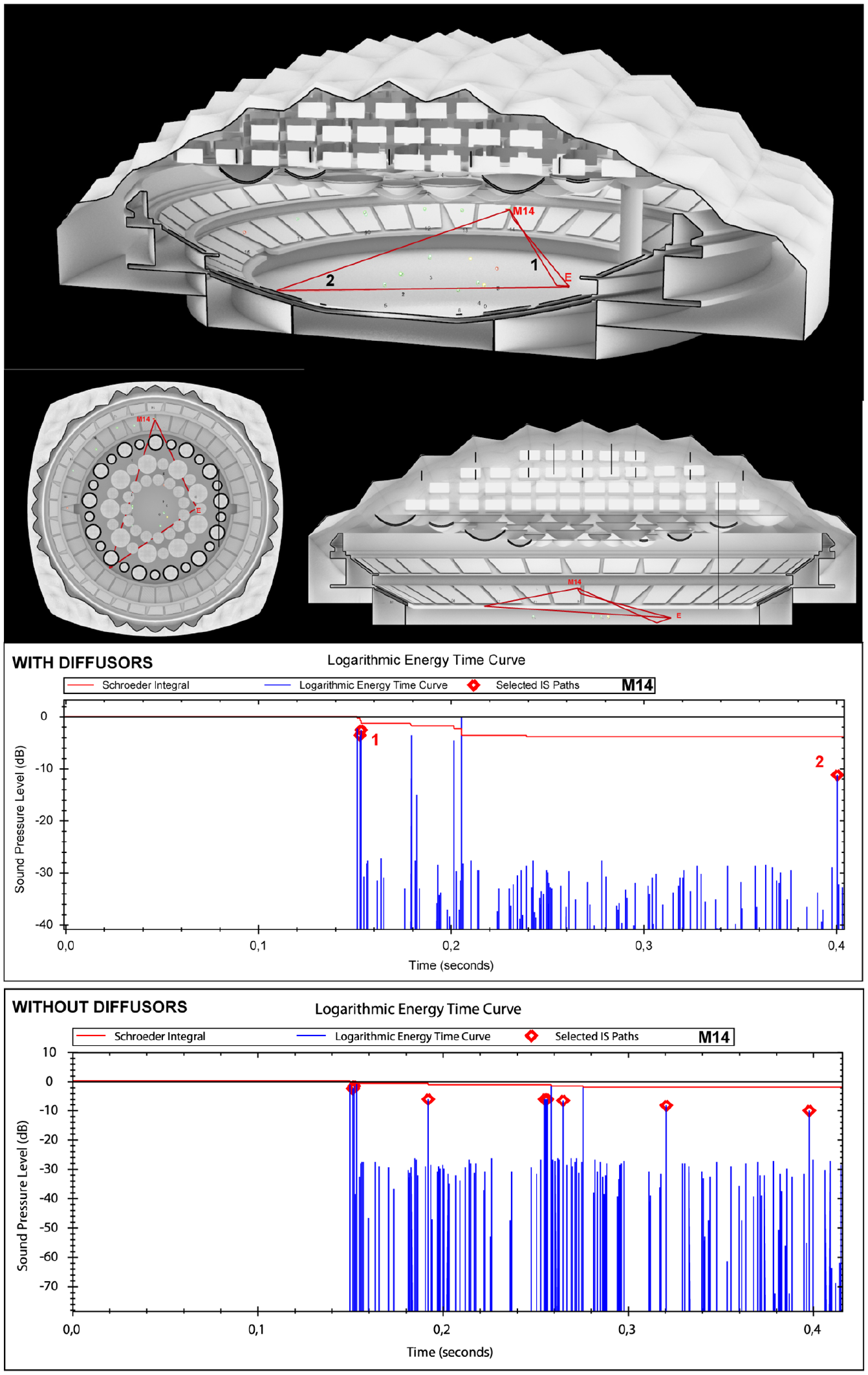
Simulated ray-tracing compared with measurements of the direct sound and the first reflections arriving at microphone 15 in the seat area in the proposed interior acoustic treatment of Palacio de los Deportes.
Discussion
From the results presented before, summarized in Table 3 and Figure 9, it can be concluded with certainty that the acoustics of Palacio de los Deportes is at present very deficient. For instance, according to reverberation times recommended for large pop and rock venues, 7 in terms of the volume and seat capacity of Palacio de los Deportes, reverberation times ought to be of about 3 s or less, while at present, reverberation times are of around 5 s. Similarly, present values of room acoustics quality, such as C50, C80, D50 and speech intelligibility scores are too low compared to recommended values. 7 Finally, observed early sound reflections are mostly detrimental to the perceived acoustic quality, on account of their high relative strength and long time delays of over 100 ms.
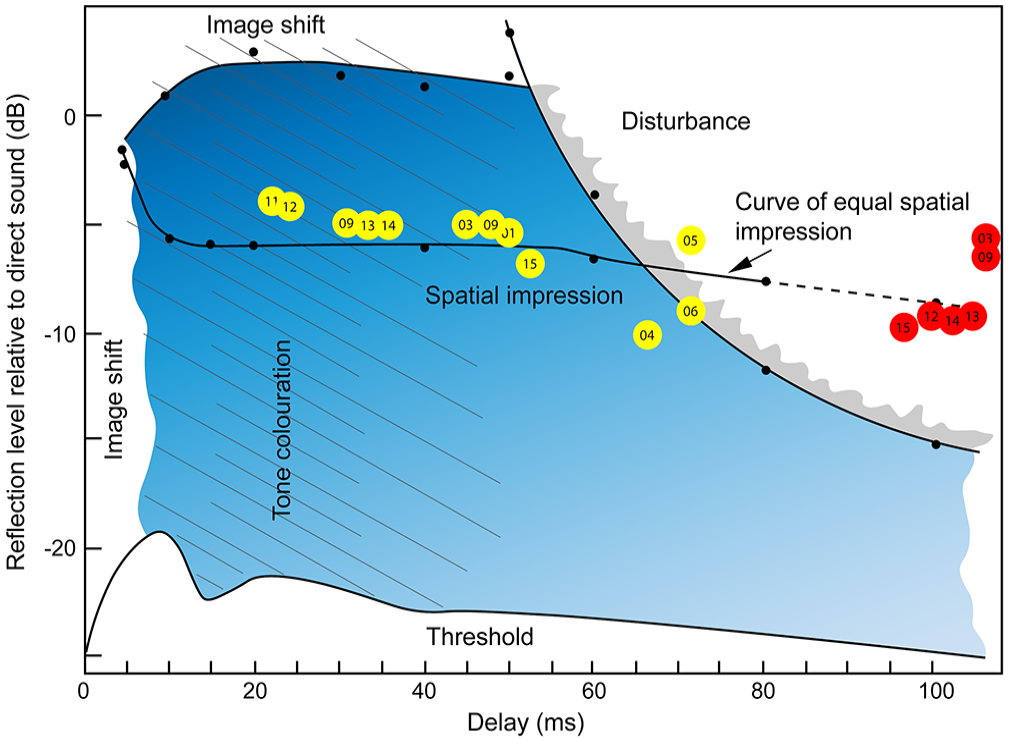
Perceptual effects of early reflections according to Barron. 21 Red and yellow circles correspond to early reflections obtained from ray-tracing simulations of Palacio de los Deportes in its current state (red circles), and after the proposed interior acoustic treatment (yellow circles).
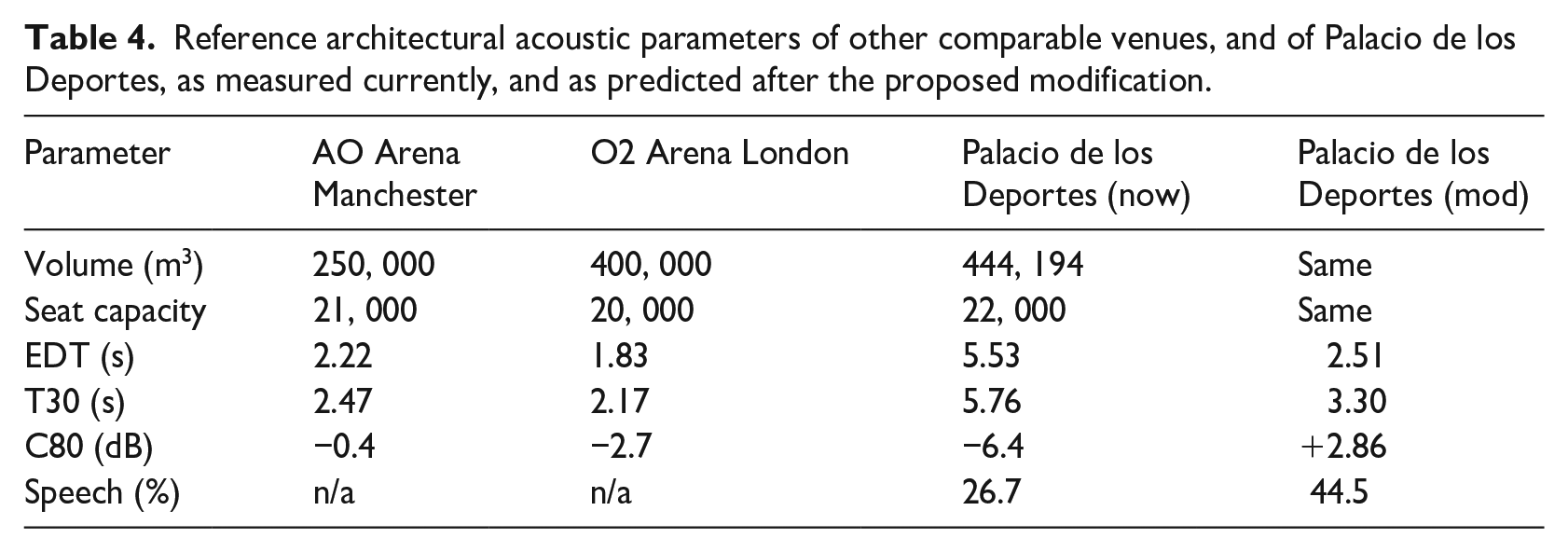
Figure 9 illustrates the perceptual effects of early reflections according to Barron. 21 Red and yellow circles correspond to early reflections obtained from ray-tracing simulations of Palacio de los Deportes in its current state (red circles), and after the proposed interior acoustic treatment (yellow circles). Table 4 gives reference architectural acoustic parameters of other comparable venues, and of Palacio de los Deportes, as measured currently, and as predicted after the proposed modification. Based on all the above, the proposed acoustic treatment can bring the acoustic parameters of Palacio de los Deportes in Mexico City up to the standard of modern well regarded pop and rock music venues, 24 such as the AO Arena in Manchester, previously known as the Manchester Evening News Arena or MEN Arena, 25 and the O2 Arena in London. 26 For instance, according to the acoustic ray-tracing simulations, the new reverberation times in Palacio de los Deportes are estimated to be brought from 5 s to around 3 s, with similar improvements being estimated for the clarity index C80, and other room acoustic parameters.
Reference architectural acoustic parameters of other comparable venues, and of Palacio de los Deportes, as measured currently, and as predicted after the proposed modification.
An aspect that has been left aside in the present study is that of sound amplification in Palacio de los Deportes. This is expected to play a significant role in the perceived sound quality. The original public address system in Palacio de los Deportes is no longer extant. It consisted of a circular array of speakers distributed around the seat area, and intended mostly for the delivery of spoken messages. In any case, the original sound system might have been most surely insufficient nowadays for the reproduction of good quality sound at high sound pressure levels. At present, no fixed sound amplification system is in place, and it is particularly for each musical event that different sound amplification systems are temporarily installed and used, with the corresponding varying degrees of sound reproduction quality being achieved. Future work in this regard might consist of either the definition of precise strategies and guidelines for these temporary sound installations, or rather the design and installation of a permanent sound amplification system, or even the use of a combination of both strategies.
Conclusions
Room acoustic parameters of Palacio de los Deportes in Mexico City, a former 1968 Olympic venue, nowadays used mainly for modern pop and rock music concerts, have been here determined and reported for the first time. Reverberation times, speech intelligibility, and characteristics of the main early sound reflections have been determined from measurements in situ, from in-lab subjective speech intelligibility tests based on measured impulse responses, and from acoustic ray-tracing simulations. Reverberation times were found at around 5–6 s, well in excess of values around 3 s that are recommended in the room acoustic literature for this kind of venue, according to its unusually large volume and seat capacity. Speech intelligibility was found correspondingly to be very poor, with an average score of 26.7%; while the time delays, and the relative sound levels of the main early reflections were found detrimental to the perceived sound quality, according to well established perceptual criteria for room acoustics quality.
In order to improve this situation, a possible acoustic intervention has been proposed, involving the use of additional sound absorbing and sound diffusing elements. The potential benefits of these modifications have been studied by means of acoustic ray-tracing simulations, showing that the main room acoustic parameters of Palacio de los Deportes in Mexico City can be brought up to a high standard of quality, comparable to those of well regarded similar venues such as the AO Arena in Manchester, and the O2 Arena in London.
Footnotes
Acknowledgements
The participation of the following persons is greatly appreciated in different practical aspects of the work presented here: Leobardo Arellano, Naftalie Jiménez, Carlos Mena, Laura Padilla, Carlos Paz, Dulce Ponce, Guillermo Quintero, and the anonymous participants in the subjective speech intelligibility tests.
Data availability
Data used in this research can be made available on request.
Declaration of conflicting interests
The author(s) declared no potential conflicts of interest with respect to the research, authorship, and/or publication of this article.
Funding
The author(s) disclosed receipt of the following financial support for the research, authorship, and/or publication of this article: This work was partially supported by a research grant from DGAPA-UNAM, PAPIIT project IT100723: “Medición de absorción, aislamiento y difusión acústica de materiales por reflectometría y transmisión en régimen transitorio.” Author AEAP received a postgraduate study grant from CONAHCyT, México.
Ethical approval and informed consent
Participants in the speech intelligibility tests reported in this research provided an informed consent of their participation by fulfilling and willfully submitting on their own, the corresponding Google Forms questionnaire.
