




Abstract
In open-plan offices (OPO), workspaces without ground-to-ceiling dividers, noise is one of the most complained about aspects, causing physical and psychological impacts. With the increasing interest for a human-centric design, notably after the publication of ISO 22955, this review aims to identify the main noise sources in this office layout and the employees’ perception of related health effects, evaluating the interventions proposed to overcome their impacts. Following the PRISMA guidelines, a review was conducted using the Scopus and PubMed databases, considering subjective questionnaires distributed in offices, which could include physical workspace assessment. It excluded studies limited to: (a) laboratory experiments; (b) isolated cognitive tests; (c) office layouts other than OPO; (d) systematic reviews; and (e) mathematical models. Sixty studies were identified and the screening process resulted in 11 selected for inclusion, which indicated irrelevant speech, chatting, and telephone ringing as the main noise sources causing productivity loss, stress, and low comfort rates due to distraction and lack of privacy. To overcome these impacts, researchers suggested the use of sound-absorbing surfaces, separated zones for different tasks and headphones, although their effectiveness relies on human behaviour and economic feasibility. Thus, the evidence indicates that noise is a recurrent issue in OPOs, it demonstrates the importance of appropriate acoustic performance of the workspace and the necessity of new studies regarding OPO workers’ perception of noise and their health, particularly after the COVID-19 new safety guidelines.
Introduction
The World Health Organisation 1 recognises the influence of the built environment on health by considering continuously interactive factors related to the physical environment as well as individual traits. Individuals spend around 90% of their time in enclosed buildings and are frequently exposed to unhealthy indoor environments, 2 although the impact depends on the environment quality, duration of exposure and individual sensibility. 3
Noise is one of the environmental risk factors for the human body cycle interruption,4,5 and, considering the workspace, it influences workers’ performance due to stress and mood alterations, 6 as well as triggering anxiety and bipolar disorder. 7 It is associated with physical effects as well, such as hearing impairment, voice loss, fatigue, and heart and blood pressure alterations, affecting over 30 million people just in the United States. 8 Impacts on the health and well-being of the office workers are directly linked with economic impacts since they result in higher absenteeism, presenteeism and accident rates. 9
Considering economic impacts, open-plan offices (OPOs) became a trend after the 2008 recession with the need of reducing operational costs, and more recently, this type of layout is used as a solution to the modern human-centric workspace design. 10 The need of this type of focused layout is also supported by the fact that employees’ annual salaries costs can exceed the building operation expenses up to 25 times. 11
With total visual contact and no ground-to-ceiling dividers, OPOs offer flexibility to their users and better social interactions, 10 although studies demonstrate that employees face numerous noise-related problems, such as privacy and productivity loss, causing great dissatisfaction rates 12 affecting more than 50% of all office workers,8,13 being the main cause of complaints. 13 Workers need to be able to communicate with their colleagues without distracting others. 14
The type of layout and building design can determine the actual noise exposure and the noise sources, although it can be produced indoors and outdoors. 14 Still, it is unclear which sounds are considered to be unpleasant, and even which is the most unpleasant one, in order to cause health and well-being consequences acknowledged and noticed by the office workers, especially in OPOs. The effectiveness of the acoustic design strategies depends on individual behaviour. For instance, if the room has appropriate acoustic insulation, its functioning is nullified if the windows are opened, allowing external background noise into the space.
Altogether, it is still not clear how OPO workers perceive noise and the health impacts caused by the acoustic performance of the space. Subjective measures are necessary in order to understand the real building operation. In order to do so, the International Organisation for Standardization (ISO), launched guidelines to assess the actual physical environment (ISO) 3382-3 15 and its user’s perception of it (ISO 22955 16 ), confirming the interest of the industry and stakeholders.
Aims
To the authors’ knowledge, there is no record available of systematic reviews of real interventions made in open-plan offices in regard to workers’ perception of the acoustic conditions of the workplace and its impacts upon their health and well-being, before and/or after the COVID-19 pandemic. Hence, the aim of this research is to identify, evaluate and summarise the available studies about real interventions in OPO regarding workers perception of noise impacts in their health and well-being, as a way of making evidence more accessible to decision-makers.
Therefore, the main research questions are:
What are the main noise sources in OPOs?
What are the self-rated health implications caused by them?
What are the interventions that researchers proposed (so far) to overcome noise implications on workers’ self-rated health and well-being in OPOs?
What is the effectiveness of the measures proposed?
How should an open-plan office sound like?
Materials and methods
Following the PRISMA (Preferred Reporting Items for Systematic Reviews and Meta-Analyses) protocol for secondary analysis of longitudinal data, the inclusion criteria of the literature review considered surveys and questionnaires held in open-plan offices with the intention of analysing the workers’ individual perception of the acoustic performance of the space, considering physical and mental health impacts and consequently their work performance (measured by their own productivity perception). Those studies may be or not complemented by objective measures (standardized acoustical measurements) or by actual room design manipulations for comparison.
In more detail, the exclusion criteria comprised studies limited to:
Laboratory experiments
Different office layouts other than OPO (except if the study included OPO along with other layouts)
Systematic/literature reviews
Mathematical models
Cognitive tests (non-self-rated surveys isolated)
Duplicated papers
Language barrier (if not in English)
No access to the document through the databases used
The databases used for the purpose of this review were Scopus and PubMed, of which were chosen based on the study content (scientific and biomedical literature, respectively). The search used the following keywords (mentioned in the title or abstract) using Boolean operators: ‘noise’ AND ‘health’ AND ‘open-plan offices’. The search did not consider any time limitations and was made by one reviewer. Before the screening, 41 papers were retrieved from Scopus and 19 from PubMed. Duplicated (n = 2) and non-English papers were excluded (n = 1).
Synonyms of the keywords used were similarly used, such as ‘acoustics’, ‘acoustic’, ‘subjective evaluation’, ‘soundscape’ and ‘well-being’, as well as specific words related to health, like ‘annoyance’ and ‘stress’. The Boolean operators in these cases were, consequently, ‘acoustics’ AND ‘health’ AND ‘open-plan offices’ OR ‘noise’ AND ‘well-being’ AND ‘open-plan offices’ OR ‘noise’ AND ‘annoyance’ AND ‘open-plan offices’ OR ‘noise’ AND ‘stress’ AND ‘open-plan offices’ OR ‘noise’ AND ‘subjective evaluation’ AND ‘open-plan offices’ OR ‘soundscape’ AND ‘subjective evaluation’ AND ‘open-plan offices’ OR ‘acoustic’ AND ‘subjective evaluation’ AND ‘open-plan offices’.
As a result of the initial search, the first screening was made based on the title and abstract of the 57 papers, of which 38 were excluded based on the mentioned criteria. The second filter, considering an in-depth reading of all remaining papers resulted in 18 papers, which were assessed for eligibility and led to eight irrelevant papers being excluded, as not having an intervention focus (for example, workers’ productivity and performance assessed by cognitive tests). Lastly, the review included 10 papers.
The additional search retrieved different papers, which included irrelevant papers (for example, different office settings, cognitive tests, systematic reviews, mathematical models, laboratory interventions, non-related to self-rated health implications- e.g. just related to self-rated productivity- and inaccessible papers). After the new search, one new study was included in this review, leading the total number of included papers to 11. Figure 1 demonstrates the inclusion and review process.
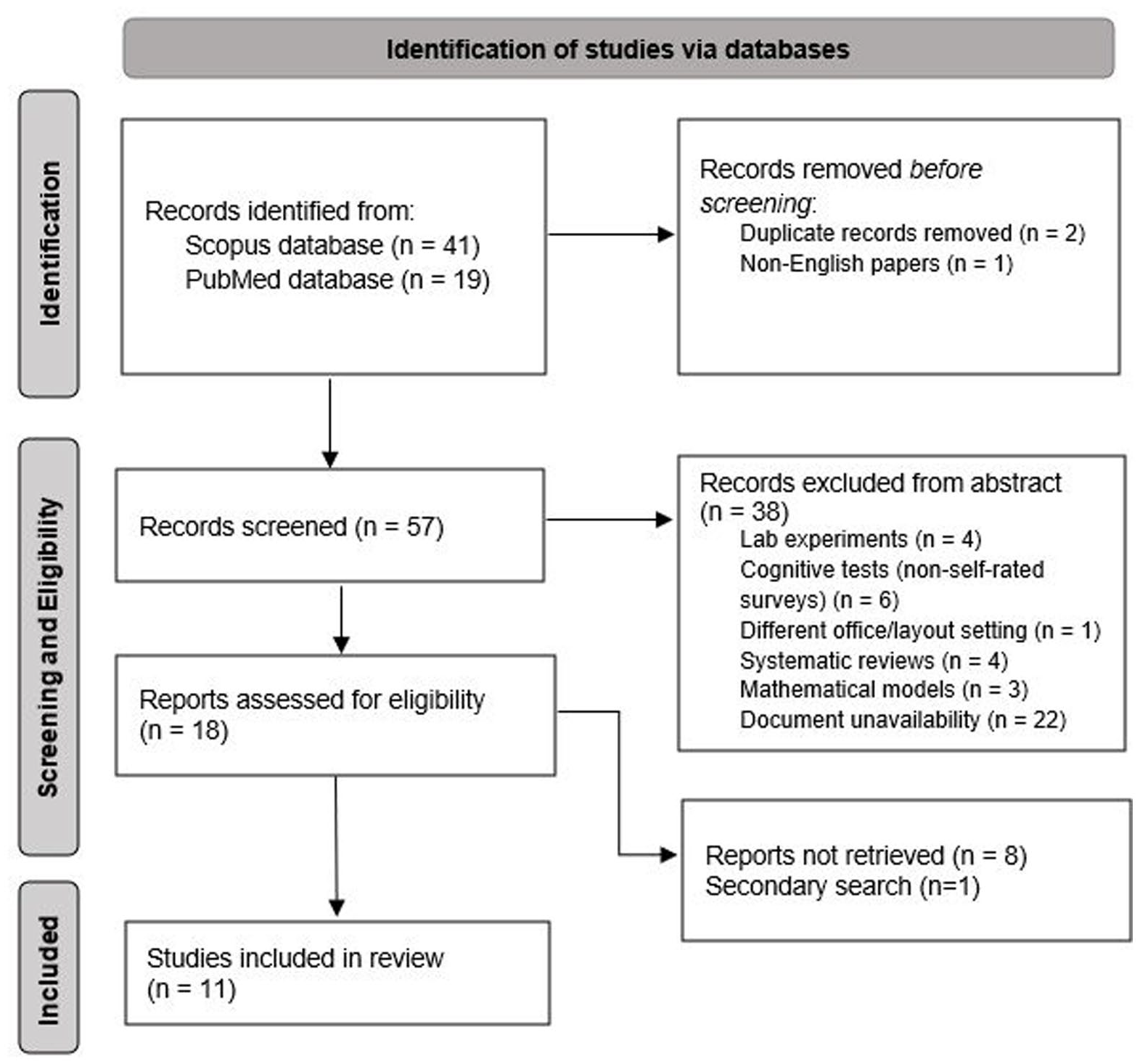
Inclusion criteria of the systematic review considering its phases (studies included (n = 11)).
Results
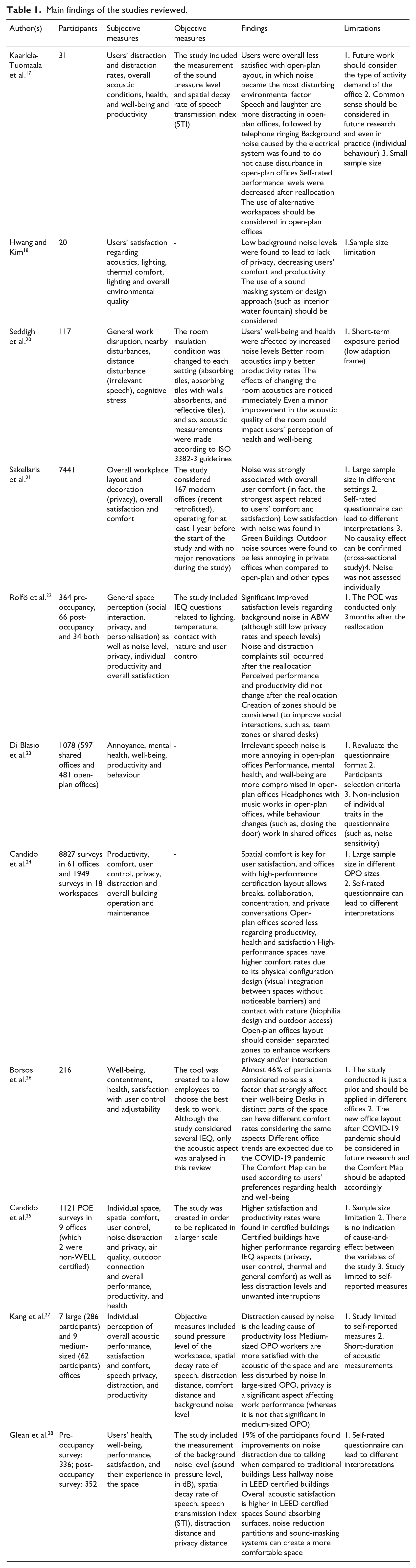
The studies reviewed (which will be described in the following sections) considered different IEQ factors. The interaction between them was addressed to some extent in the reviewed articles, yet, for the purpose of this review, only noise/sound was assessed in detail. Table 1 presented below illustrates the main characteristics, findings and limitations of the studies reviewed.
Main findings of the studies reviewed.
Studies description
Study 01 – Kaarlela-Tuomaala et al. 17
Kaarlela-Tuomaala et al. 17 evaluated workers’ perception of the work environment in two different settings: private and open-plan offices. The aim of the study was to determine and compare the perception of the acoustic environment of both scenarios. The study involved 31 office workers which were relocated from a private office with just one person to an open-plan with 20 other workers.
The participants had a mean age of 35 years old (ages between 26 and 56 years), and most of them worked full-time with an average of 6.4 h of daily work hours (an average of 2 years of work). They have been working in the company for 8 years (on average) and the educational degree of most of them was college or technical university level.
A typical working day of the participants was spent 38% on average processing texts, approximately 15% planning creative work, meetings, phone calls and mathematical tasks and 8% was spent with practical tasks (such as using the printer). Regarding hearing abilities, two out of all participants reported it to be slightly weaker than normal.
The participants answered a questionnaire before and after relocation (a difference of 6 months in each setting). The first survey was conducted 2 months before the relocation, the second one 4 months after and lasted 15 min each. The questionnaires were answered at the participants’ workstations. Participants were identified by codes and not names to compare each questionnaire correspondingly. The number of participants represents the number of workers that answered both questionnaires (the study itself involved more office workers; however unmatched answers were discarded).
In order to compare the personal perception of noise exposure, acoustic measurements were undertaken in both scenarios. Initially, the main noise source expected was speech, and, therefore, noise measurements were chosen based on it (ISO 3382-3 already mentioned) to evaluate general ambient noise levels, which included the measurement of sound insulation of the offices. In addition, in both scenarios workers were exposed to outdoor noise sources (the spaces were equipped with windows).
The questionnaire included broad questions regarding concentration and disturbance levels and leading factors, but mainly questions about individual perception of the space acoustic quality, individual satisfaction and comfort concerning noise exposure and its impacts (symptoms experienced – psychological issues, such as anxiety, memory problems, lack of motivation and concentration, as well as physical pain, such as headaches).
Limitations of the study, which were pointed out by the authors, include the lack of interaction between employees after relocation, which could have affected the results. In addition, for future reference, studies should compare the acoustic performance of well-designed and poorly designed OPOs in order to obtain significant answers.
Study 02 – Hwang and Kim. 18
Hwang and Kim 18 analysed the indoor environmental factors influencing open-plan office workers’ health and comfort through a Post Occupancy Evaluation (POE) survey, in order to investigate occupants’ behaviour compared to the building operation. In addition to the survey, the space conditions associated with the thermal environment (such as relative humidity, air velocity, radiant temperature, and outdoor temperature, among others) were measured for approximately 2 years in order to measure the background noise levels and compare with the questionnaire responses.
The building selected was awarded the ‘1st Grade Green Building’ by Korea’s Green Building Council (KGBC), and, therefore, is highly energy-efficient. Regarding acoustics, this certification ensures the quality of the indoor air environment by maintaining a low level of noise exposure indoors (which was assessed and confirmed within the certification process).
The building itself was assessed five times during the study between February 2008 and May 2009 (one floor was selected based on the building scale, height and number of occupants and had four different measurement devices). The surveys were conducted at the same time as the space assessment. The number of respondents varied in each measurement, being (respectively): 699, 547, 610, 383 and 505. There is no information regarding the number of participants that participated in all surveys (participants were anonymous).
The questionnaire was undertaken online and included questions about comfortability rates regarding general conditions of the office as well as regarding privacy and the space acoustic quality and satisfaction (questions regarding lighting satisfaction were included – however, are not relevant for this review). The workers were asked to describe (using percentage) the impact of the environmental factors on their work, considering thermal comfort, overall air quality, acoustics, and lighting.
Although the study consisted of the analysis of several indoor environmental aspects, the interaction between them was not assessed. For the purpose of this review, it is adequate, however, future studies should consider the interconnection between variables (considering Engineer et al. 19 framework).
Study 03 – Seddigh et al. 20
In order to evaluate the workers’ different perceptions of the acoustic quality of the office under different acoustic conditions, Seddigh et al. 20 conducted a study where the room acoustic elements were manipulated (better and worse conditions) and then had the acoustic conditions measured, and workers’ acoustic satisfaction related to their health and productivity was assessed through a questionnaire (in each condition). Each scenario was compared to the baseline office (with no manipulations).
The study involved 145 employees, of which only 40 respondents participated in all conditions. The room acoustic manipulations included the installation of wall absorbent panels (improved condition) and sound reflective ceiling tiles (worse condition). Two different floors were used in this study (both OPOs with similar characteristics) and each floor experienced the manipulations three times, which were made discretionally (differences were not noticeable).
To illustrate, one of the floors was exposed to better conditions initially, worse conditions and then better once again (the other floor experience the opposite condition). After 2 weeks of each manipulation exposure, surveys were conducted (including a baseline survey before any room alteration).
The survey was conducted electronically and included four main topics: Disruption in general (considering background noise), Nearby disturbances (related to intelligible and irrelevant speech), Cognitive stress (associated with the difficulty of thinking clearly) and self-rated performance level. The acoustics measurements followed the ISO 3382-3 standards and included two devices on each floor which measured the noise levels every 30 min during working hours (06:30–18:00).
One of the limitations of the study, mentioned by the authors, is that perhaps the placebo effect caused by the space manipulations and the employees knowing about them could have made them pay attention to the noise itself, impacting the results. Another limitation is the exposure duration and the possibility of adaptation to the different scenarios.
Study 04 – Sakellaris et al. 21
Sakellaris et al. 21 conducted a study to assess the interaction between the work environment and workers’ comfort, health, well-being, and consequently their productivity. The study involved distinct types of office layouts (although mostly OPOs, mentioned as modern offices), as well as several indoor environmental factors, and not just noise isolated.
The study included 167 buildings in eight different countries and 7441 participants, which included questionnaires regarding workers’ individual perceptions of their workspace. The questionnaire sent out included detailed topics about IEQ in order to conclude the aspects most associated with their well-being considering the building characteristics (such as location and layout) and workers’ individual traits.
In more detail, the questionnaire included questions about workers’ individual perceptions of each IEQ (temperature, air quality, light, noise, office typical characteristics, such as layout, privacy and maintenance, as well as overall comfort rates). Questions regarding noise were divided between indoor and outdoor noise sources as well as general satisfaction, which is complemented by the already questions regarding privacy and office layout.
The results were, then, separated interaction of the overall comfort versus individual characteristics (which were divided into gender, age and Effort-Reward Imbalance, which is a framework based on the health and well-being impacts caused by the difference between work effort and lack of recognition), and overall comfort versus the built environment (divided into geolocation and office type).
The authors recognise some limitations of the study, such as bias caused by the self-reported questions asked in the surveys, which (isolated) do not represent actual IEQ problems (which should be assessed through objective measures, and then analysed simultaneously).
Study 05 – Rolfö et al. 22
Differently and previous studies, Rolfö et al. 22 assessed the workers’ satisfaction and self-rated performance before and after relocation from OPOs to activity-based offices (ABWs). For context, the difference between both office settings is the use of workstations, which in ABWs follows the concept of flexi-desking (random seats each day), as explained by the authors of the study.
Initially, the study involved web-based questionnaires, group and individual interviews, and observations. Considering the questionnaires, 364 workers took part in the baseline (before relocation), and 66 on the follow-up questionnaire (in which 34 participated in both). Overall, the questionnaire included questions about workers’ satisfaction with the actual physical workspace conditions, which was divided between IEQ (air quality, temperature, lighting, aesthetics and, clearly, noise), communication (interaction with co-workers), privacy and perceived performance.
The main aim of the interviews was to investigate in more detail the questions included in the questionnaires, as well as general job satisfaction. 20 employees participated in the group interviews (three) and 26 in the individual interviews (in which 10 of them participated in both).
The observations were made by the researchers and were conducted in three different periods of the day: morning, lunchtime, and afternoon. These periods were selected in order to analyse the complaints made during the interviews and the questionnaire responses.
The authors of the study acknowledge that with only 34 participants participating in both questionnaires, the analyses of the results are limited to their generalisation, combined with the fact that no observations nor interviews were made. In addition, the study is visible to bias caused by the subjective measures assessed.
Study 06 – Di Blasio et al. 23
Differently than study 01, 10 years later Di Blasio et al. 23 evaluated noise impacts (mainly background noise caused by irrelevant and intelligible speech) in workers of OPOs (more than five occupants in the space) in comparison with shared offices (two to five occupants). In the study conducted, both office settings were assessed at the same time in various positions with different work activities and building elements (related to acoustic treatment), characterising a cross-sectional study.
The study included 597 respondents in shared offices and 481 in OPOs. The online questionnaire had 17 questions separated into sections regarding background information and subjective opinions. The sections were created in order to separately investigate workers’ annoyance (1), mental health and well-being (2), self-rated productivity (3), occupants’ behaviour (3) and the actual physical space (presence of acoustic strategies, 4).
In more detail, section 2 was subdivided by considering symptoms and feelings, such as stress level, distraction, motivation, irritation, fatigue, overstrain and headaches; section 3 asked for the main strategy used to reduce annoyance from parallel conversations, such as the use of headphones, taking breaks or even doing home-office.
Nevertheless, the study involves limitations, such as individual factors that were not taken into consideration individual factors (cited by the authors as noise sensitivity, psychological factors and personal traits). In addition, as well as the prior studies, the assessment of subjective measures can stand for bias, along with the participants’ selection (which was voluntary), and annoyed workers could have been more likely to take part in the study.
Study 07 – Candido et al. 24
With the recent dissemination and greater knowledge of the Green Building certification systems and high-performance buildings, Candido et al. 24 conducted a study to evaluate workers’ satisfaction, perceived health and, consequently, productivity in OPO introduced in high-ranking efficient workspaces.
The study analysed workplaces certified with the Sustainable and Healthy Environments (SHE), which is a rating system focused on occupants’ health, well-being and productivity (as explained by the study authors). POE questionnaires were sent out to 61 different buildings and included 8827 participants, which were analysed with a subset of 1949 answers of 18 extra high-performance buildings certified under the WELL Building Standard or Green Building Council (GBC).
The questionnaire had 47 main questions regarding overall perceived satisfaction, health and comfort in the work environment, specific questions regarding the actual physical space and spatial comfort and questions regarding IEQ (indoor air quality, lighting, temperature and noise).
Considering noise, the survey included questions concerning distraction, privacy and overall noise satisfaction considering the office layout, social interactions, and background noise.
Although considering numerous buildings and different offices (with representative sample size), the different settings may not represent the generalisation of the results for one specific type of layout and/or spatial design, especially considering distinct locations, building elements and personal traits.
Study 08 – Candido et al. 25
Following the same approach as the prior study, Candido et al. 25 conducted a study regarding the health and productivity of high-performance OPO workers by analysing the IEQ and their subjective health implications by comparing the results between traditional and healthy certified buildings. The study included nine commercial buildings, of which two were WELL certified, and involved 1121 POE questionnaires, and observations made in the offices to verify and evaluate the workspace regarding active and biophilic design, as well as overall layout and spatial design.
The participants included in the POEs were on average 31–50 years old and had a workload of over 30 h a week. The variables assessed in the POE are (in summary): general spatial comfort and overall satisfaction, connection to nature, distraction and interruptions (caused mainly by noise), workability, self-rated productivity and health, social interaction, and privacy.
Acknowledge by the authors, limitations of the study include the sample size and how the data was collected (such as several offices in the same building). Differences in the offices (such as if it had a Green or Healthy Building certification) could limit the results, even the comparison between the two offices with the same certification (considering that the building systems are different). In addition, the authors were not able to find a cause-and-effect relation between the IEQ analysed in the study.
Study 09 – Borsos et al. 26
In order to assess OPO workers’ comfort and satisfaction, Borsos et al. 26 developed a survey based on IEQ factors to assess stakeholders to improve the workspace occupants’ expectations and outcomes (named as ‘comfort map’). The survey was created to understand the level of health and well-being impact of each IEQ (visual, acoustic and thermal comfort, as well as air quality) based on occupants’ perceptions, considering that opinions would differ.
Additionally, apart from being an OPO, the company used a desk-sharing system based on the argument that individual comfort and performance do not rely on having a specific desk or place to work, but that different tasks can be done in different spots within the workplace, as explained by the study authors.
The online survey had 216 anonymous participants, in which part of them was exposed to comfort differences (isolated room manipulations). The conditions of each subject position (desk – workstation) were measured based on the IEQ chosen to be assessed: temperature, humidity, lighting, noise exposure and carbon dioxide concentration. The comfort differences included the manipulation of the mentioned IEQ measured. The measurements were made during working hours (09:00–16:00).
However, the study represents a pilot phase. One limitation of the comfort map is the lack of validation from stakeholders, which is considered in the next phase of the research. In addition (and mentioned by the researchers) are the objective measurements taken, which were considered to be non-sufficient for assessing noise, underestimating the real disruption caused.
Study 10 –Kang et al. 27
Kang et al. 27 compared the objective and subjective acoustic performance of different OPO sizes, evaluating the difference between workers’ acoustic needs in each office size. The study involved seven large-sized OPO (LOPOs) and medium-sized OPO (MOPOs), with 348 and 286 questionnaires sent out (respectively).
For context, LOPO size ranged between 460 and 720 m2 approximately and MOPO ranged between 30 and 170 m2. The objectives measurement followed the ISO 3382-3 and included sound pressure level, spatial decay rate of speech, distraction distance, comfort distance and background noise level. The acoustic measurements were made for 1 h on a weekday in two different time ranges (10:00–12:00, or 14:30–17:30) depending on the presence of the questionnaire participants.
The questionnaire used was divided into three distinct sections. The first one was about individual information, such as age and gender. The following part was related to their work performance perception considering noise-related factors and overall acoustic satisfaction (such as how much distracting are parallel conversations), and the last part was about the disturbance level of most common noise sources in OPO (mainly produced by humans actions, such as talking and typing).
However, the questionnaire did not consider individual factors, such as noise sensitivity and personal behaviour. Furthermore, there is no recollection of the participants’ selection. Another limitation is the short duration of the acoustic measurements, which may not represent the general acoustic performance of the offices assessed.
Study 11 – Glean et al. 28
Glean et al. 28 considered the building envelope of high-performance (Leadership in Energy and Environmental Design (LEED) certified) OPO in their study, mainly focused on the use of glass and its impacts on workers’ health and well-being due to the improvement of the acoustic comfort. The study aimed to create an approach to interpret and compare acoustic solutions in OPO designed for its users, and not only considering the building operation systems.
In order to evaluate the impact, pre-post occupancy evaluation (PPOE) surveys were conducted, as well as indoor environmental measurements (background noise, STI and distraction distance) before and after the relocation from a traditional office to the LEED-certified one (the POE survey was taken 1 year after the relocation to avoid bias). The noise measurements were made following the ISO 3382-3 guidelines.
The pre-occupancy survey involved 336 workers, whilst 352 workers participated in the POE survey (there is no recollection of the number of workers that participated in both). The questionnaires included subjective questions on issues that could impact their comfort, satisfaction, productivity and health in the workplace. Additionally, on top of numerical scale questions (1 for strongly disagree and 5 for strongly agree), the questionnaire included open-ended responses to allow workers to fully express their opinions.
As mentioned by the researchers, although the numerical scale facilitates the analysis of the results, it does not reflect the actual workers’ experience of the room acoustical conditions since it is an average value. Another limitation noticed is the prediction of noise sources that the space is exposed to.
Authors should discuss the results and how they can be interpreted from the perspective of previous studies and the working hypotheses. The findings and their implications should be discussed in the broadest context possible. Future research directions may also be highlighted.
Discussion
Noise perception is a result of the interaction between individual factors and the physical environment itself. 29 Considering the workplace, especially OPOs, indoor soundscapes will vary greatly and this can impact workers’ health and well-being, although it depends on the workplace environment (for example, its layout and overall design) as well as on individual auditory sensation and the human body interpretation of it (such as, causing tiredness and/or annoyance), 30 similarly to the efficacy of the approaches used to overcome noise-related problems.
This general framework is described in Table 1 presented previously, summarised in Figure 2 shown next, and explained in the following sections.
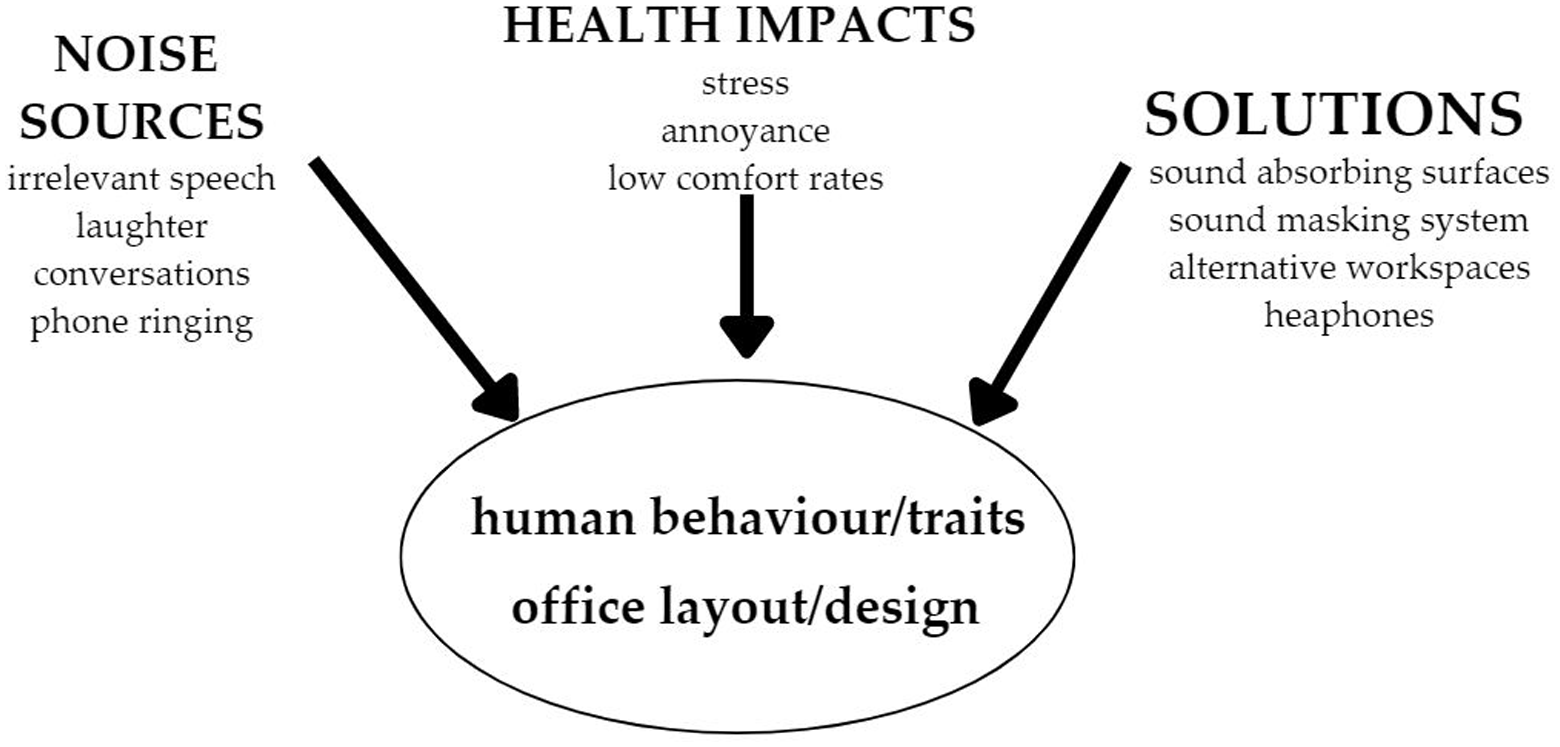
Noise perception and interaction with workers and the physical workspace.
Main noise sources in OPOs
Workers should be able to work with no distractions within the workplace. However, when sharing the room with other workers (which is the case of OPOs), even daily activities can represent a major annoyance factor. In this scenario, the main cause of noise dissatisfaction in OPO is due to irrelevant speech, laughter and telephone ringing.17,23,27 Interestingly, background noise caused by electrical equipment (such as mechanical ventilation systems) was not established as a main cause of disturbance in OPO, 17 even though outdoor noise sources were found to be highly distracting when compared to other types of office layouts. 21 Curiously, low background noise was noticed to decrease workers’ comfort and productivity since it is related to the lack of privacy. 18
However, noise is not only an issue in open-plan workspaces. Kaarlela-Tuomaala et al., 17 for instance, found that noise levels are similar in private and open-plan offices (although possible distinct noise sources). Rolfö et al. 22 discovered that the social interaction was lower in activity-based workspaces than in OPO (resulting in less background noise level), although distraction complaints and privacy issues still happened in both settings, and workers’ self-rated performance remained the same.
Therefore, and as mentioned, not only does the layout type of the workspace influences the acoustic performance and noise-related issues. Even in different OPO sizes, acoustic satisfaction is noted to be distinct, and, although still an issue, large-sized OPO workers are more affected by the productivity loss caused by the lack of speech privacy. 27 Hence, cost-effective solutions beyond sound-proofing systems should be implemented in order to enhance workers’ health and well-being, resulting in higher productivity and overall life quality.
Subjective health implications
Subjective measures are important to understand how the occupants perceive the environment they are inserted in. Considering the Triple Bottom Line, the building operation systems may be appropriate regarding regulations and standards (which are assessed through objective measures), however, if it does not suit its users (or at least the majority) it cannot result in positive outcomes.
Understanding how the building is operating through the workers’ perception is helpful in a sense of optimising the environment. On a local scale, healthy workers produce more; on a larger scale, healthy workers are healthy people, proving that scalability and replicability are possible at a global level.
When it comes to open-plan workspaces and noise, the dilemma is how to allow social interaction between workers and at the same time provide them with privacy and provide them with a space with reduced or no distractions of any kind in order that they can complete their job tasks. And considering the location of all the studies analysed, this balance between noise and silence is a global difficulty (even though noise sources might differ).
As a result, when compared to different office layouts, OPO workers have lower rates of comfort and performance and, in this scenario, the comfort given by the actual spatial design was found to be a key factor in their satisfaction. 24
Noise appears to be the environmental aspect most related to users’ comfort and satisfaction, representing the most disturbing one within an OPO layout.17,21 The health and well-being of OPO workers are affected by increased noise levels, 20 and, in fact, these impacts are recognised by them, 26 and (therefore) they acknowledge the reduction of their productivity. 17
However, as expected, workers have higher satisfaction and productivity rates in certified buildings, which in turn were found to have high-performance IEQ aspects considering general comfort, as well as fewer distraction levels and unwanted disturbances.25,28
Interventions proposed
Based on the results of the studies done, the researchers proposed numerous interventions that could lead to higher satisfaction rates and all the benefits that come with it. Seddigh et al. 21 found that minimal improvements (which can be noted almost immediately) in the acoustic performance of the space imply less disturbance and stress levels, resulting in better productivity rates and workers’ perception of health and well-being.
In view of green and healthy OPO in certified buildings, the higher comfort and productivity rates (when compared to traditional workspaces) are given to the spatial design itself, with, for instance, visual integration with no visible barriers and contact with nature (biophilia design). 24 Considering the spatial design itself, measures like the implementation of sound-absorbing surfaces, noise reduction partitions and the use of a sound masking system are cited as ways to create a more comfortable work environment, 28 as well as the use of design approaches related to biophilia, such as the use of interior water fountains. 18
In terms of large renovations, another solution pointed out by researchers is the creation of separated and isolated zones in order to enhance workers’ privacy and/or social interaction, as well as creating alternative workspaces,17,22,24 given that different desks in the same office can represent different experiences and, therefore, different comfort rates when assessing the same aspects. 26
Fast and easy solutions were mentioned by researchers, such as the use of headphones with music, 23 in which the workers would have free will to choose what to listen to and at what volume. This way, the background noise would be avoided and blocked.
Effectiveness of the interventions
Renovations in the workspace, such as the installation of sound-absorbing surfaces, for instance, might not always be an option, especially considering the economic impact caused by the renovation itself (materials, construction workers, civil engineers, architects, etc.) and by the disruption caused to the employees (in which if not relocated, would have to deal with more noise, dust and people going in and out of the space – contradicting all the study presented so far).
The use of a sound masking system, as explained, depends on human behaviour and personality traits, as well as the type of sound used in the system (which, once again, depends on individual personalities). If the sound used causes annoyance to the workers, the purpose of the system is invalidated.
The placement of noise reduction partitions is worthy when correctly installed. It can be a cheaper solution depending on the material used when compared to sound absorbent panels and can bring more privacy to workers, but the aesthetic of the office might be compromised, as well as maintenance costs.
The installation of separated zones and alternative workspaces, which are major renovations, still results in economic and disruption issues mentioned previously, in addition to significantly changing the office layout. Moreover, this type of solution depends on the space available in the office.
Individual changes, such as the use of headphones with music, are controversial. Although blocking the background noise, it is not a solution to the privacy issue in OPO. In addition, this solution, if implemented, should be applied with guidance on the sound volume (which should be in between safe levels, corroborating with the purpose of this review).
The standards and guidelines used to certify spaces and/or buildings already consider acoustic strategies to result in optimal aftereffects when it comes to the building operation itself and users’ outcomes, and, thus, are self-explanatory. However, the certification process may negatively impact the whole construction costs (LEED certification, for example, can represent an increase of 5% to 15% of the total cost, 31 although the building operation expenses compensate for it).
Loudness (or quietness) of an open-plan office
Noise caused by the use of mechanical ventilation systems, or any electrical equipment (such as computers and printers) was not found to be significantly loud to disturb the OPO workers. This means that human behaviour is the main element that causes noise-related dissatisfaction in open-plan workspaces.
Considering the general workspace and the post-pandemic scenario, noise is even more evident, and sources are distinct. Online meetings, for instance, are becoming louder and louder (disregarding the use of earphones – which is a problem considering hearing health and safe noise levels). In OPOs, different workers might have a simultaneous online meeting, which leads to the need of raising their voices and the computer volume, representing higher background noise and so forth. Loud environments lead to louder meetings.
However, silence does not represent a synonym for comfort given that the lack of privacy is one of the main complaints in OPO. The excess of unwanted sounds, at the same time, is the major cause of distraction, annoyance, and stress in the work environment, which is, even more, accentuate in open-plan layouts provided that there are no full partitions (disregarding sound absorbents barriers).
The studies analysed in this review could not provide an understanding of the balance between noise and silence, or even the optimal OPO soundscape, in order to promote concentration and reduce distractions, while granting social interaction but promoting privacy among workers. As mentioned, workers in any type of office layout need to be able to concentrate and have private conversations with colleagues and/or clients at the same time.
As cited, one of the reasons for the lack of privacy in OPO is given to the low background noise (of any kind), which leads to dissatisfaction and low productivity. 18 Controversially, distraction caused by human activities (such as conversations, typing on the computer and phone ringing) is one of the most irritating aspects of this type of office layout,17,23,27 whereas background noise caused by electrical equipment was not validated as a disturbing factor. 17
Research questions answers summary
Figure 3 presented next outlines the main findings of this review according to each research question given.
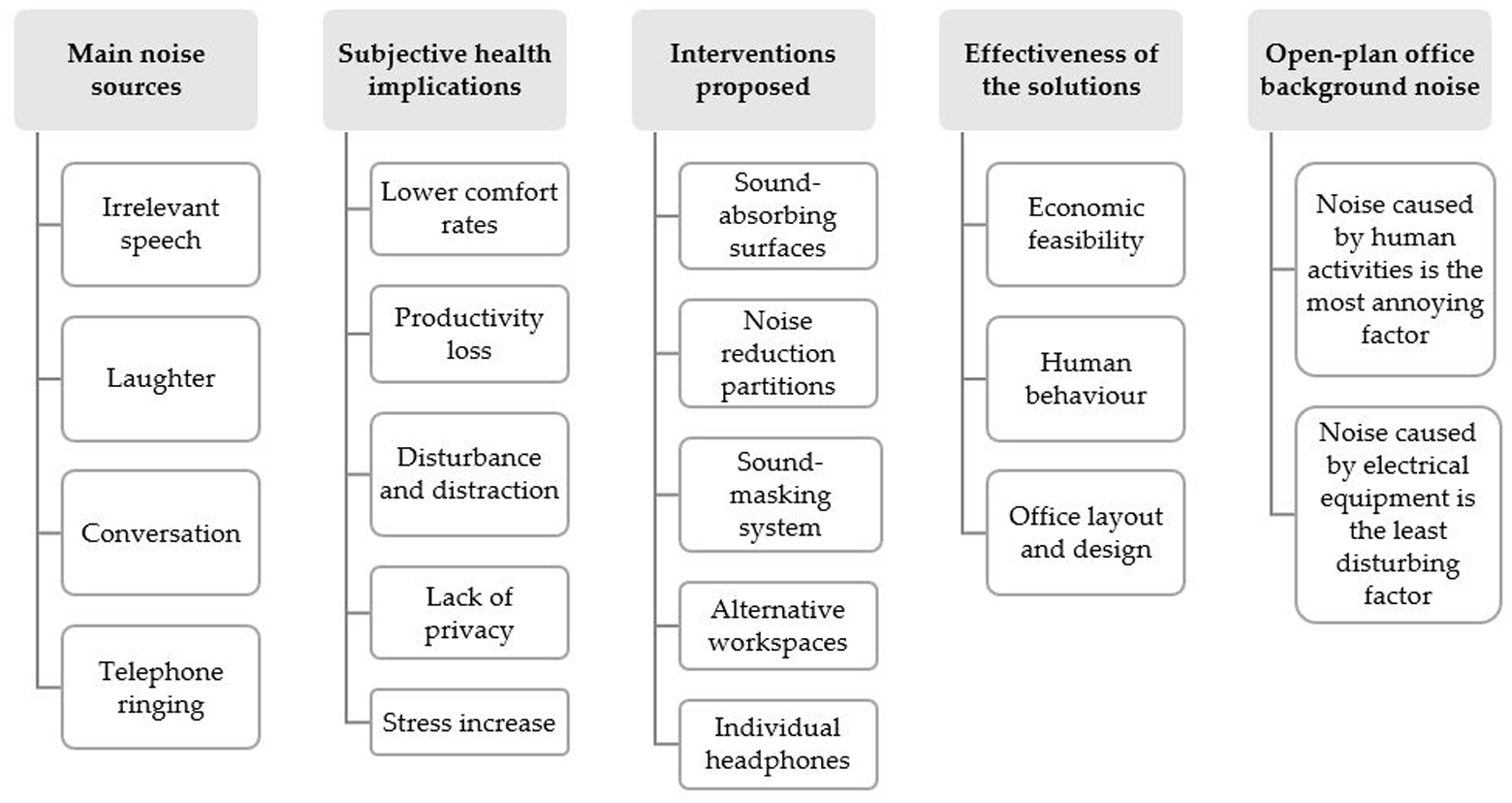
Research questions main findings summary diagram.
Limitations, recommendations and knowledge gaps
Limitations
A broad limitation of the studies presented is the sample size and the technique used to determine the population. This review considered studies with more than 8.000 participants, but also studies with only 20 respondents. This discrepancy reveals a lack of study foundation. Most studies considered online voluntary surveys, in which the questionnaire was sent out to all the workers in the company. However, the number of employees differs from each company to another (and so, response rates should be taken into consideration).
Overall, the workers’ performance is what determines the overall strategy of the company to act on noise issues. However, how to accurately assess performance is still unknown, and so, researchers proposed health indicators, the HPIs, as health is the main factor that influences productivity. In this context, PPOE and POE are just workers’ complaints if there is no resolution. Common mistakes, such as the mentioned sample size as well as the representativeness, the way participants are chosen and or sampling bias (people tend to participate in surveys if they are not satisfied with the matter) and/or not taking objective measures (to compare with the subjective answers), may impact the results and should be considered carefully. 31
In addition, the purpose of this literature review is to promote an array of options to decision-makers. However, it is known by the authors that each project is unique and, as described previously, certainly depends on its location, structure, and interior design (among other architectural and engineering elements). Consequently, stakeholders should have a holistic view of the project when considering the solutions proposed, along with technical guidance in official documents (such as ISO standards).
Recommendations
Equations, procedures, and guidelines should’ve been followed in all case studies (note that none of them described the use of any type of sample size determination procedure) in order to calculate the sample size. The sample size techniques are most likely to depend on the number of variables (for instance, annoyance, stress, fatigue, etc.), research approach, statistical and data analysis method, the complexity of the study, and the resources available (for instance, time and equipment). 32
The problem with small sample sizes is the change of supposing a true premise as false, or the other way around, whereas large sample sizes (way more than calculated as ideal – which will be explained next) imply statistical errors (minor differences become significant), as well as resulting in excessive use of resources, mostly time and money. 33
According to Memon et al., 32 sample sizes can be determined using sample-to-item ratios, population-sample tables and general rules of thumb. The authors explain that the first category should be used in the case of studies including questionnaires and that the number of participants is determined by the number of questions. The ideal, reported by the authors, is at least five participants per question (5-to-1 ratio), although different authors suggest different ratios and that a 20-to-1 ratio is more prevalent among researchers.
Future research
Considering subjective measures, the impact of noise on OPO office workers is hard to assess, and it is recognised by researchers. The association between other environmental aspects, such as lighting or temperature, is important particularly because occupants are exposed to them simultaneously, and, as explained by Engineer et al., 19 the impact of one of them affects all other health attributes. Future work should include the analysis of the interaction of the factors (although some of the studies analysed considered several environmental aspects, they were analysed isolated, and, therefore, no conclusion was made on their interaction).
In view of the replicability and scalability of health and well-being in the work environment, defining the order of effects is a challenging task. For instance, stress caused by non-related work factors (personal life) may lead to low job performance and vice-versa (low productivity leads to stress). Future research related to noise and self-rated health implications should include questions regarding personal life in order to understand daily life outside the workspace and how it affects the outcomes found in the surveys.
Considering the current COVID-19 pandemic and how it affected the indoor space (and the changes that are yet to come), future research should include the analysis of workers’ perception of health considering the new safety guidelines that particularly affect background noise and/or general noise levels (especially social distancing and the constant need for air changes – opening windows more often or the use of adapted mechanical ventilation systems).
Still considering the coronavirus pandemic, future research should consider the analysis of noise impact in different office settings, such as home office or even hybrid work. The comparison between working from home and working from the actual office should be analysed in order to identify the differences in workers’ perception of noise impacts on their health and well-being (mostly considering the different noise sources in distinct situations).
Conclusions
Considering the evidence presented in this review, workers exposed to excessive noise or even the absence of it are more likely to be dissatisfied with the workspace environment, especially in OPO where the challenge is to understand the fine line between privacy and (extreme) sociability (maintaining the definition of an open-plan workplace).
Assessing noise objectively and subjectively is important to understand not only how the building is operating but how occupants perceive the environment, and even more important considering the amount of time spent indoors and how it affects life quality in the short and long-term. Not only the building operation should be monitored regularly, but workers’ satisfaction and comfort should similarly be assessed frequently, and stakeholders should not wait for complaints in order to find a solution (as it probably reached a point that it is unbearable).
Considering the review itself, the inclusion criteria prioritise subjective measures in order to understand how the employees felt about the environment they were inserted in and how it influenced their own perception of their productivity. However, it is known by the authors that it is more efficient to measure their productivity through objective measures by testing their cognitive performance. The review made demonstrates that noise caused by indoor human activities, such as irrelevant speech and machinery use (phones and computers), is the main noise source in OPO impacting workers’ health and well-being globally. Outdoor noise sources were not found to affect their health, although it seemed to be perceived as an annoyance factor, whilst indoor noise sources caused by electrical equipment were not found to be distracting. However, traffic and the ventilation system itself, for instance, were not assessed individually and should be considered in future research.
The evidence indicates that short-term effects are represented by workers’ self-rated productivity loss, which is affected by their immediate satisfaction and comfort towards noise exposure (among other environmental aspects). Excessive noise exposure is reported to be related to distraction and annoyance, leading to extended physical and psychological effects (such as fatigue and anxiety, respectively).
To overcome noise problems in OPO, the research retrieved the use of sound absorbing materials, the use of background noise (which can be combined with biophilia design), the use of isolated spaces within the office according to each task as well as the use of individual headphone (which increases user control and consequently user satisfaction).
However, the measures proposed depend mainly on economic feasibility to be implemented and on individual behaviour to perform as expected, in order to provide silence whilst allowing social interactions among workers resulting in the attempt of an optimal office soundscape.
The balance between noise and silence, resulting in the mentioned optimal soundscape, is still undetermined. The research could not provide any further insight into how an OPO should sound like considering privacy, and concentration whilst allowing social interactions among workers.
Lastly, the review made demonstrates the need for acoustic improvements in the workspace considering workers’ health and well-being, independent of the location of the office. Additionally, apart from gathering information for stakeholders, indicates the necessity of new studies in regard to OPO workers’ perception of noise-related implications, especially after the adoption of the new COVID-19 guidelines. In the case of the actual case studies, future research should consider sample size determination methods to reach an ideal number of participants in order to achieve more accurate and standardised outcomes. This way results analysis and comparison would be easier and would imply fewer mistakes.
Footnotes
Declaration of conflicting interests
The author(s) declared no potential conflicts of interest with respect to the research, authorship, and/or publication of this article.
Funding
The author(s) received no financial support for the research, authorship, and/or publication of this article.
