The propagation of acoustic waves in periodic structures, also known as phononic crystals or PCs, is prohibited in certain frequency ranges, which are referred to as the frequency band-gaps. The existence, the location and the width of the frequency band-gaps are mainly determined by the geometrical parameters and the material properties of the PCs. In this work, a virtual acoustic laboratory based on a fully coupled fluid-structure interaction (FSI) model is developed to determine the sound insulation capacity of one-dimensional (1D) and two-dimensional (2D) periodic walls. The FSI model is discretized using the frequency-domain spectral element method (FDSEM), which is an advanced finite element method (FEM) using special high-order shape functions. Following the guidelines of the ISO10140, the setup of the developed FSI model allows us to take into account the essential physical phenomena, especially the interaction of the wall structure with the fluid domains (air). The FSI model based on the FDSEM increases the computational efficiency and accuracy in comparison with the standard FEM. Several numerical examples will be presented and discussed to show that the designed periodic walls in certain frequency ranges within the band-gaps may exhibit much better sound insulation capabilities than monolithic walls.
A wall construction, used in civil engineering, requires good acoustic insulation to protect people from the harmful impact of noise exposure or to protect sensitive measurement instrumentation and equipment in laboratories and industrial manufacturing. Recently, periodic structures have received more attention for their far superior acoustic protection capabilities in a range of applications. It is widely known1 that the acoustic/elastic wave propagation in periodic structures can be severely hindered in certain frequency ranges due to the scattering effects or the local resonances. The frequency range, in which the wave propagation is prohibited, is referred to as the band-gap, and the periodic structures are known as the phononic crystals (PCs) or frequently also metamaterials (MMs). Extensive works have been done in recent years regarding the applications of PCs, especially acoustic/elastic wave devices, sound isolation and vibration suppression, etc., but very little studies are devoted to the potential use of PCs in building acoustics.
This work aims to determine the sound reduction index (SRI) of walls composed of periodic substructures via a virtual laboratory. The virtual laboratory uses a theoretical model for the description of the fluid-structure interaction (FSI) and follows the guidelines of the ISO 10140.2 In this model, the interactions between the air in the source room, the wall specimen, and the air in the receiving room are taken into account. While several methods have been developed for the analytical and numerical determination of the acoustic wave transmission loss in layered wall structures of rather simple geometry, such as the transfer matrix method or the statistical energy analysis,3,4 only the FSI model can consider the mostly important physical phenomena, such as the strong coupling between the fluid domain and the structure, and has very few limitations regarding the boundary conditions, the geometry and the material properties. This increases the reliability and flexibility of the calculation and allows for a realistic numerical simulation and comparison with experimental measurements.
In the past, several studies used the FSI model to determine the acoustic wave transmission loss in structural panels and walls. The calculation in the high-frequency ranges needs a great deal of computational resources. Therefore, most previous studies only focused on the low-frequency range.5,6 Clasen and Langer examined the influence of flanking transmission and approximated the wall structure by beam elements.7
More recently, Arjunan et al.8,9 used a finite element method (FEM) model to determine the sound transmission loss in double panels and del Coz Díaz et al.10 used a two-dimensional (2D) model to investigate the sound transmission loss in brick walls in the high-frequency range. Studies about the use of the FSI model and the influences of several effects, such as the mounting conditions or the absorption characteristics of the virtual laboratory, have also been conducted11,12 and the three-dimensional (3D) geometry of the laboratory was considered to reduce the influences of the eigenmodes.13,14 The FSI model is still very rarely used to examine the sound insulation capabilities of a wall structure and the related literature is rather limited. One of the possible reasons for this is probably the relatively simple setup of the standard wall structures used in building acoustics and the wide range of possible analytical and numerical methods to predict their behavior. However, for the examination of complex geometry, boundary conditions and material properties, such as periodic walls and the sophisticated interference phenomena which arise, a detailed FSI model is necessary.
To improve the accuracy and the efficiency of the computational simulation in the virtual laboratory, the FSI model in this work is treated numerically using the spectral element method (SEM), which is an advanced FEM using special high-order shape functions. The SEM was developed by Patera in 1984 to solve some problems in computational fluid dynamics.15 Later, it was also applied to a wide variety of engineering problems, for example, wave propagation in functionally graded materials,16 structural health monitoring,17 seismology18 and many other fields. The general superiority of the SEM in analyzing the wave propagation problems with high accuracy was studied in many previous works and also compared to other spectral methods.19–22 However, to the best knowledge of the authors, no previous works using the SEM to calculate the SRI of a wall structure based on the FSI model have been yet reported in literature.
This paper has two main purposes. The first one is to develop a virtual acoustic laboratory to test and predict the sound insulation performance of wall structures via a FSI model. The SEM is adopted for solving the theoretical model of the virtual laboratory and its efficiency for calculating the SRI with different accuracy levels is examined. The second purpose is to use the virtual laboratory based on the FSI model and the SEM to examine the sound insulation capabilities of periodically structured walls. While some simple methods like the transfer matrix method and the stiffness matrix method are able to predict the SRI of one-dimensional (1D) layered walls, they can not recover certain physical phenomena that occur in periodically layered walls. For 2D and 3D arbitrary geometry, there exists no theoretical and rigorous model to accurately predict the SRI and a FSI model is thus needed.
The paper is structured as follows. In the following section, we present the governing equations for the FSI model and its discretization in the framework of the SEM. The setup of the virtual laboratory is described and validated by comparison with measured data for simple wall structures. Furthermore, a brief description of the basic principle of periodic structures is given. Afterward, we discuss the accuracy and the efficiency of the FSI model and demonstrate the advantages of the SEM. Subsequently, the main results of the paper are presented, where we examine several 1D layered and 2D periodically structured walls and show their superior sound insulation capabilities in the band-gap. The influences of the material parameters and the geometrical configurations of the wall structures are investigated in detail, and a comparison between the theoretical predictions by the dispersion diagrams of the unit-cells and the actual frequency responses in term of the SRI curves of the respective periodic wall structures is shown. At the end, we conclude the paper and summarize the essential findings.
Descriptions of the FSI model, the SEM and the virtual acoustic laboratory
Governing equations and the FSI model
In the experimental determination of the sound reduction index of a wall, a measurement laboratory is used. Two rooms, the source room and the receiving room, are divided by the wall specimen. In the source room, the placed loudspeakers emit acoustic waves at varying frequencies. The resulting pressure distribution excites the wall specimen, which then vibrates and induces a pressure distribution in the receiving room. The sound pressure is measured using microphones and from the difference between the sound pressure levels in the source room and the receiving room, the transmission loss is obtained. In this work, this process is simulated by a theoretical model describing the fluid-structure interaction (see Figure 1).
Definitions of the normal vectors and the fluid and structural domains in the FSI model.
The governing equation for the fluid or air domain is the following Helmholtz equation for a compressible inviscid fluid:
with the pressure the angular frequency the speed of sound the source and the nabla operator In equation (1) and throughout the paper, the common time-harmonic term is omitted for the sake of brevity. A monopole sound source is used as a representation of a loudspeaker in a test laboratory, which satisfies the equation
with the phase angle the power of the sound source and the Dirac-delta function . The following impedance boundary condition is used for defining a specific impedance at a boundary:
Here, is the outward normal vector on the boundary and is the imaginary unit. With the impedance boundary condition it is possible to assign a specific reflection coefficient or absorption coefficient to a surface. They are related to the impedance by
and
with the characteristic surface impedance of the structure and the characteristic impedance of air For a normal wave incidence and while for an oblique wave incidence and Here, is the angle of the wave incidence and is the angle of the transmitted wave, which are related by the Snell’s law or Then, equation (4) is also valid for a random wave incidence by properly taking the statistical average of the corresponding quantities, under the assumption of a perfect interface described by the impedance boundary condition given in equation (3). The considered wall specimen is described by the equations of motion for a homogenous, isotropic and linear elastic continuum in the frequency-domain as
with
the stress vector the body force vector the mass density of the structure and the displacement vector In the 2D problems considered in this work, the solid wall structure is assumed to be under the plain strain condition. The structural damping is considered by using a complex Young’s modulus 23 with the isotropic loss factor as
This method does not implicitly take the frequency dependence of the material behavior into account, but will be still used, since the necessary material coefficients for more sophisticated models are not known for the materials under consideration and due to its simplicity for use. Nevertheless, the method delivers a good approximation for structural attenuation.
The pressures in the source room and the receiving room result in a force resultant on the boundaries of the structure and the vibrations of the structure induce an acoustic pressure field in the fluid domains. The reciprocal influence between the structure and the fluid is referred to as strong fluid-structure interaction or coupling, which is necessary to be taken into account for the accurate determination of the sound insulation capabilities of walls in building acoustics.24 The fluid and structural domains are shown in Figure 1. Their interaction is described by the following continuity and equilibrium conditions on the fluid-structure interfaces:
and
where is the Cauchy stress vector. The definition of the normal vectors is given in Figure 1.
Numerical discretization by the SEM
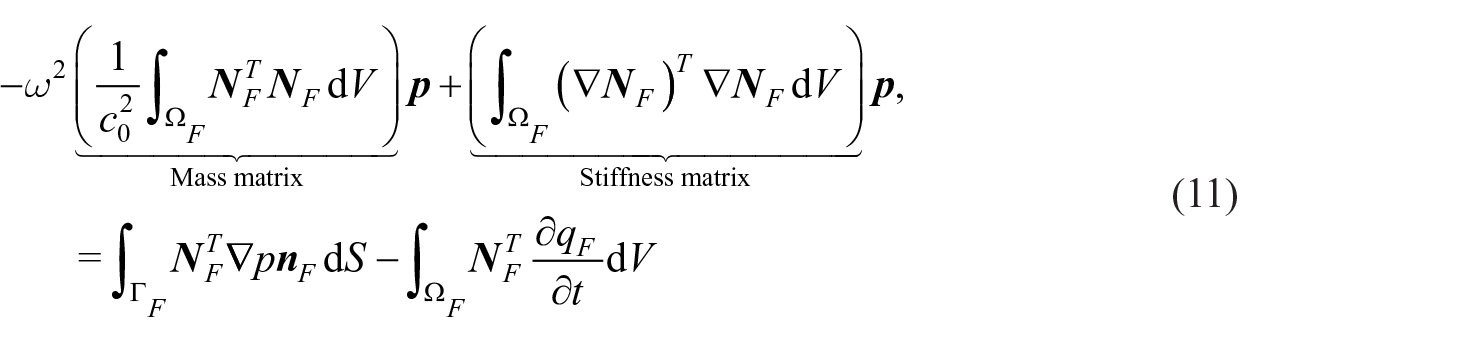
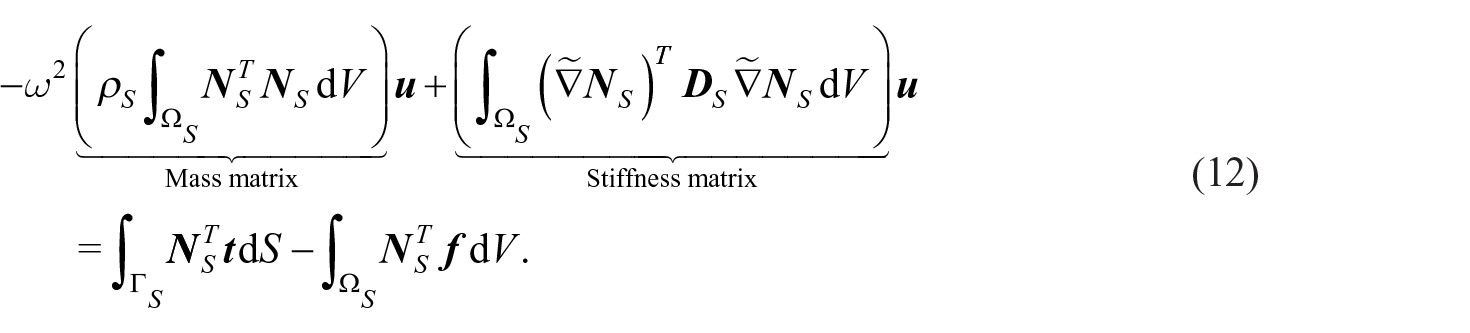
Using the weak-form formulation or the Galerkin method, the boundary value problem under consideration can be recast into a discretized form by approximating the pressure field as Here, is the vector of the shape functions and is the nodal pressure vector. The displacement field is approximated by with the matrix of the shape functions and the nodal displacement vector For the sake of conciseness we refer to Pozrikidis25 for a detailed explanation of the Galerkin method. The discretized linear system of algebraic equations for equation (1) then is
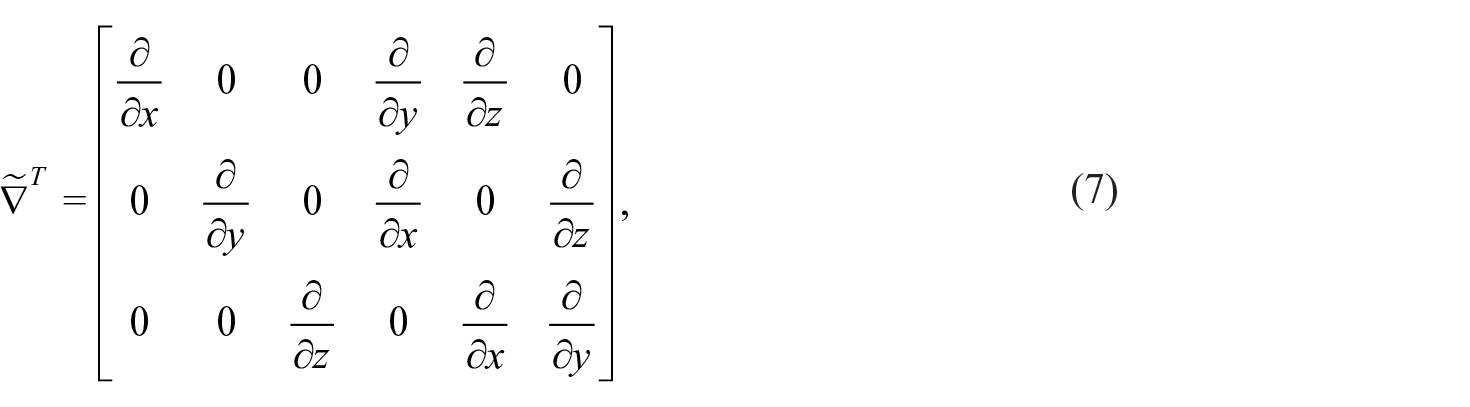
Here, is the elasticity matrix (see e.g. Pozrikidis25 for a definition of the elasticity matrix and the stress-strain relation). The terms for the element mass matrices and element stiffness matrices are labeled in equations (11) and (12). After assembly according to the standard procedure of the FEM, we finally get the following system of linear algebraic equations for the fluid domain
and for the structural domain
where is the stiffness matrix and is the mass matrix, for the fluid domain denoted by the subscript and for the structural domain denoted by the subscript on the right hand side of equations (11) and (12) stands for the force or loading vectors of the fluid and structural domains, respectively.
The interaction between the fluid and the structural domains is considered by the coupling conditions. Using equation (10) in the first part of the right hand side of equation (12) leads to the approximation of the acoustic pressure on the boundary of the structural domain as
The dynamic displacements on the boundary of the fluid domain can be approximated by substituting equation (9) with in the first part of the right hand side of equation (11), which leads to
Since only the displacement component in the normal direction of the structure causes an acoustic pressure in the fluid, the shape functions not corresponding to this direction have to be set to zero in equations (15) and (16). After introducing the element coupling matrix
and assembling the element coupling matrices to the global coupling matrix the linear system of the resulting algebraic equations can then be written as
This is the discretized FSI model used in this work. We refer to the literature for further details and a more in-depth explanation, for example Sandberg and Ohayon.26
The introduction of a monopol source, see equation (2), is quite trivial: Since the Delta function has the sifting property the term can be simply added to the right hand side of equation (18) according to the geometrical position of the source.
The above described coupling procedure is rather straight-forward and easy to implement, but it requires conforming meshes for the fluid domain and the structural domain. If, for instance, different meshes are used for the fluid domain and the structural domain and therefore, the positions of the nodes of the meshes are not identical on the coupling interfaces, other coupling methods are advantageous. Possible approaches include the Consistent InterpolationMethod,27 the Mortar Method28 or the Localized Lagrange Multipliers Method.29,30
Shape functions of the SEM
In the SEM, the Lagrange polynomials are used as shape functions which are defined by
where is the order, is the nodal set for the construction of the polynomials, and and are the node numbers.
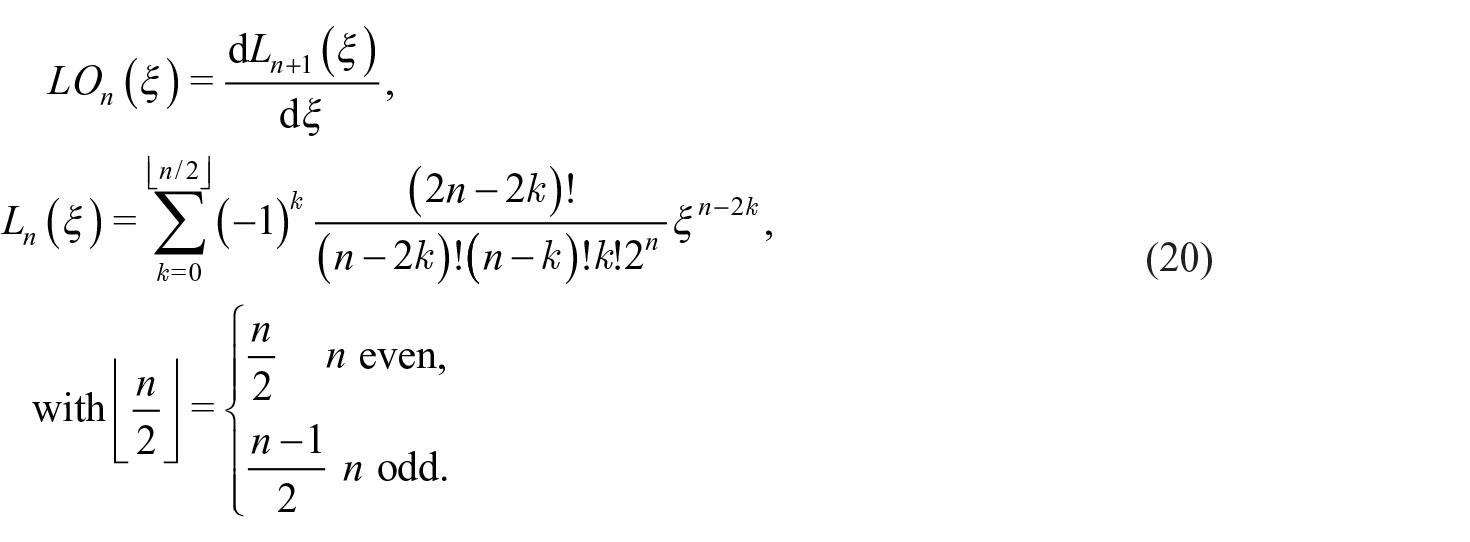
In the conventional FEM, the nodes are evenly distributed (abbreviated by ED), causing the so-called Runge-oscillations at the edges for high orders of and resulting in a large numerical error of the calculation. The Runge-oscillations can be avoided in the SEM by the distribution of the nodes at the zeros of the Lobatto polynomial and the edges of the element. This is referred to as the Gauss-Lobatto-Legendre node distribution (abbreviated by GLL). The Lobatto polynomial is defined by
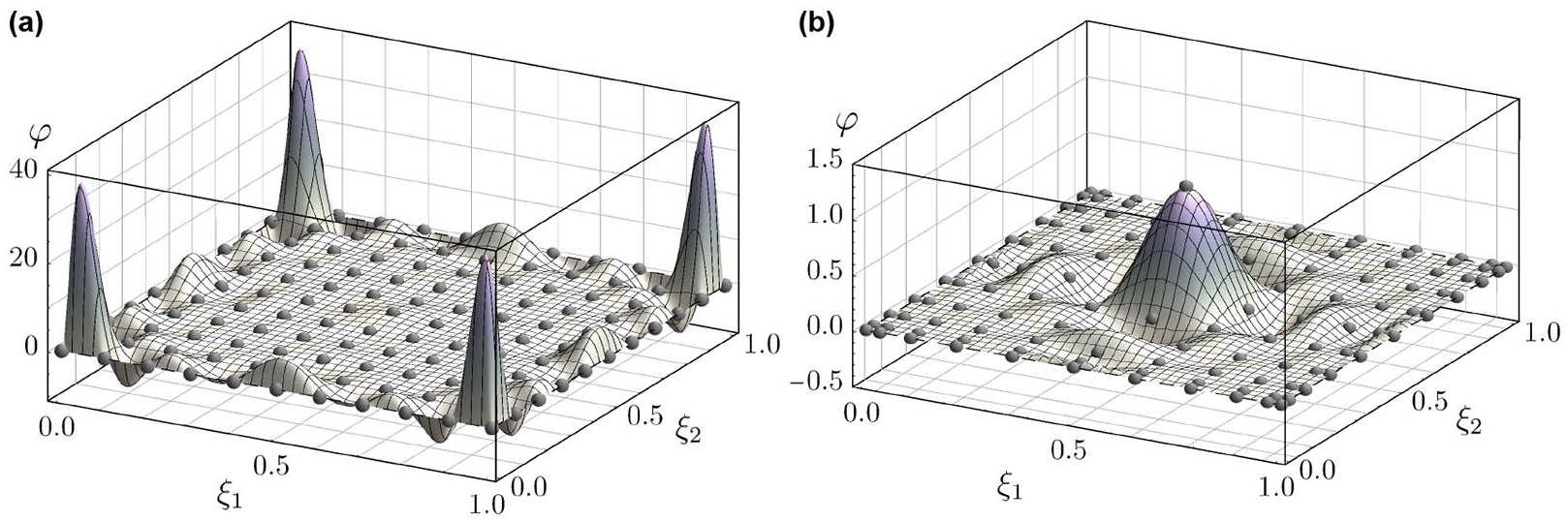
The use of the GLL shape functions leads to a much lower condition number of the linear system of algebraic equations, which allows us to use much higher orders of the shape functions without increasing the numerical error.25,31 This leads to the spectral convergence of the SEM. In contrast, increasing the number of elements only leads to an algebraic convergence rate. An example for the 2D shape function using the ED node distribution is given in Figure 2(a), which shows the Runge-oscillations at the edges. In Figure 2(b), the GLL node distribution is used, which avoids the oscillations and limits the functional values to unity. The 2D and 3D shape functions can be easily constructed by the product of the one-dimensional (1D) shape functions.
The 2D shape function for with (a) ED and (b) GLL node distributions.
Another important aspect of the SEM is the possibility of using the Lobatto quadrature for the numerical integration of the element mass matrices in equations (11) and (12).25 This leads to a perfectly diagonal element mass matrix but also introduces a small error in the calculation. In most practical applications, however, this error is negligible. An exact integration is possible by the use of the Gauss-Legendre quadrature, but this leads to fully occupied element mass matrices.
Virtual acoustic laboratory for the determination of the transmission loss
The measurement of the sound insulation capabilities of a wall structure usually follows some national or international guidelines for the setup of the experimental determination, for example the DIN EN ISO 10140 in Germany,2 to enable a better comparison between different laboratories. The theoretical model in this work follows these guidelines as well, so that the numerical result can, in principle, be compared to the measured sound reduction index (SRI) of a wall specimen. For this reason, we call the model in this work a virtual laboratory. Nevertheless, the measured SRI in different laboratories may differ considerably for the same specimen, especially in the low-frequency range. The reason for this is due to the differences in the sizes of the laboratory, the mounting of the specimen, the absorption characteristics of the laboratory walls, the temperature and humidity of the air, etc. The works of Schmitz et al.32 and Meier et al.33 have shown possible deviations of up to 20 dB in the low-frequency range and 4–8 dB in the high-frequency range for the same specimen, but measured in different laboratories. However, the work of de Melo et al.34 has demonstrated that, if all material properties, the geometry of the laboratory, and other impact factors are very well known, a numerical simulation can achieve a very close approximation to the measurement in the laboratory, even in the low-frequency range. Since, for the comparison shown in this work, the material and laboratory properties are only roughly known, there are some deviations to be expected.
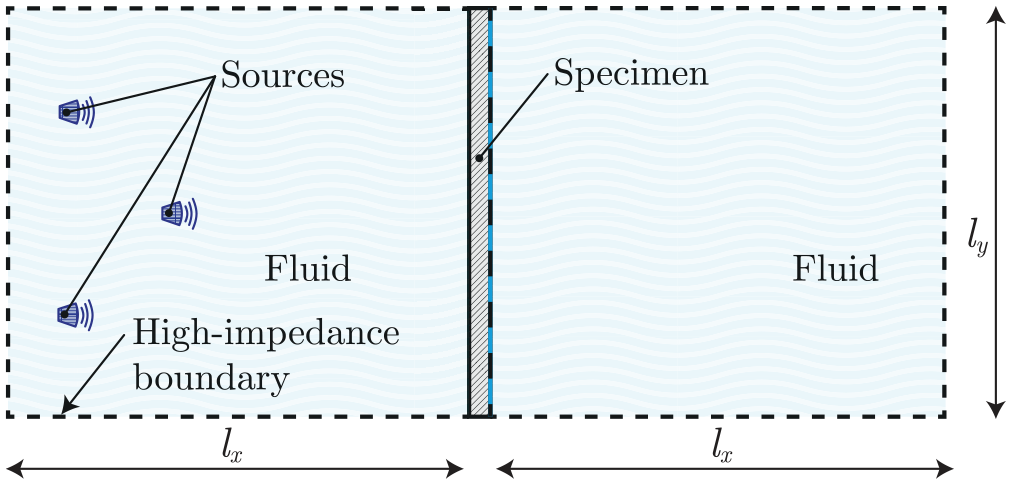
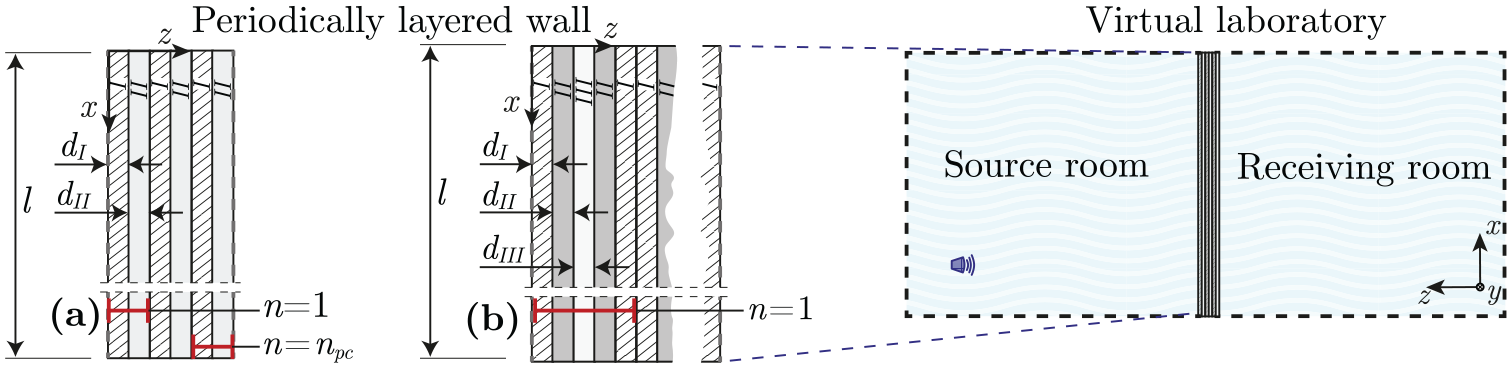
The schematic of the virtual laboratory is shown in Figure 3. As recommended in the DIN EN ISO 10140, the dimensions m and m of the rooms are sufficiently large. The sound velocity in the air is set to 341 A high impedance is assigned to the walls of the laboratory, equivalent to an absorption coefficient see equation (5).
Schematic of the virtual acoustic laboratory.
Sound sources described by equation (2) are used. The influences of the geometrical and material parameters like the size of the virtual laboratory, the absorption coefficient, the mounting of the specimen or the effect of flanking transmission could be quite high. For detailed studies we refer to Maluski and Gibbs,6 Ackermann11 and Gibbs and Maluski35
The diffusivity of the sound field in a test laboratory is of major importance for the evaluation of the sound transmission of standard walls. In Papadopoulos,13,14 the geometry of a virtual laboratory has been modified in order to increase the diffusivity. However, for the present investigation of periodic walls, the influence of the diffusivity of the sound field in the two virtual testing rooms is relatively small in comparison to the resonance and scattering effects within the periodic structure, especially at high frequencies. For this reason, we use rectangular testing rooms in our virtual laboratory and do not consider the diffusivity effect in detail.
To calculate the transmission loss, referred to as the sound reduction index equation (18) is solved numerically for the pressure distribution in the fluid domains and then is obtained by
with the mean square root for the source room (denoted by ) and the receiving room (denoted by ). The reference pressure is and and are the area of the wall specimen and the equivalent absorption area. The equivalent absorption area is defined by
with the surface areas of the source room and their respective absorption coefficients The lengths of the sides of the source room and the width of the specimen are used for a 2D calculation as an approximation with . We refer to Möser36 for more details.
Periodic wall structures
This work examines two kinds of periodically arranged wall structures. In the 1D periodic wall, the layers repeat periodically in the normal direction of the wall. In the 2D periodic structure, the wall consists of the so-called unit-cells which repeat periodically in the -direction and the -direction (see Figure 4). Since the length of the wall is usually far larger than the length of the unit-cell, the relevant number of the unit-cells in the normal direction of the wall is However, the length of the wall has also some influences in certain 1D cases.
Schematic of a 2D periodically arranged wall.
The general behavior of the wave propagation in the periodic structures can be determined by an eigenvalue calculation of the domain formed by the unit-cell for different values of the wave vector The wave vector is varied within the corners X and M, the so-called irreducible first Brillouin zone (IBZ),37,38 as shown in the unit-cell in Figure 4. The following periodic Bloch boundary conditions are assigned on
where is the target boundary, is the source boundary and is the position vector. The implementation of the boundary conditions is described in detail in the work of Veres et al.39
It should be emphasized here that the Bloch boundary conditions are only applied to the unit-cell of an infinite periodic wall structure (but not the finite periodic wall structure in the fluid-structure interaction model) for the calculation of the dispersion diagrams (see the left figure in Figure 4). This technique is common to analyze the dispersion properties of an infinite periodic structure in a certain frequency range and optimize the geometry of the unit-cell with regard to a wide and low-frequency band-gap. It should also be noted, that for simplicity the IBZ in this work is restricted to the high symmetry points X and M (even though for some unit-cells considered in this paper additional high symmetry points exist) since only these points are relevant for the determination of the SRI by the proposed virtual acoustic laboratory.
Accuracy and efficiency of the virtual acoustic laboratory
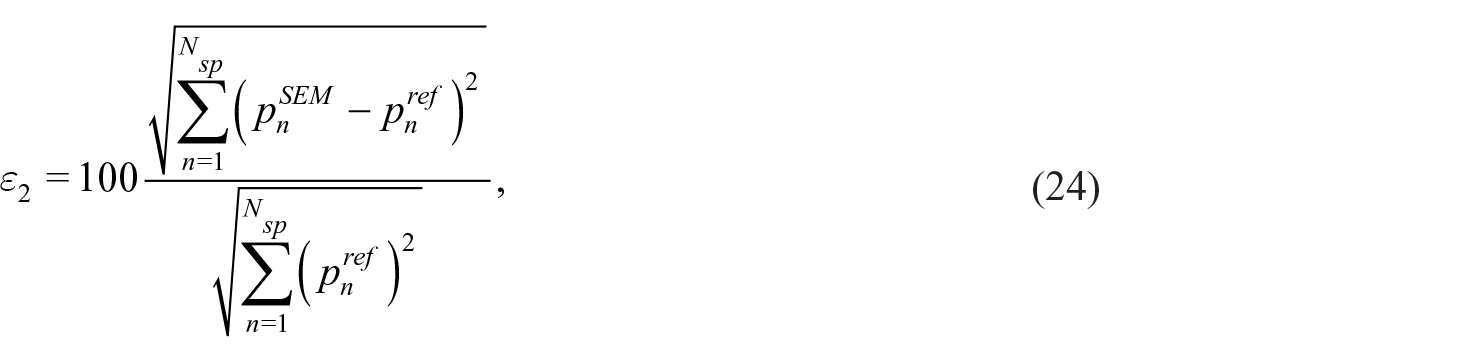
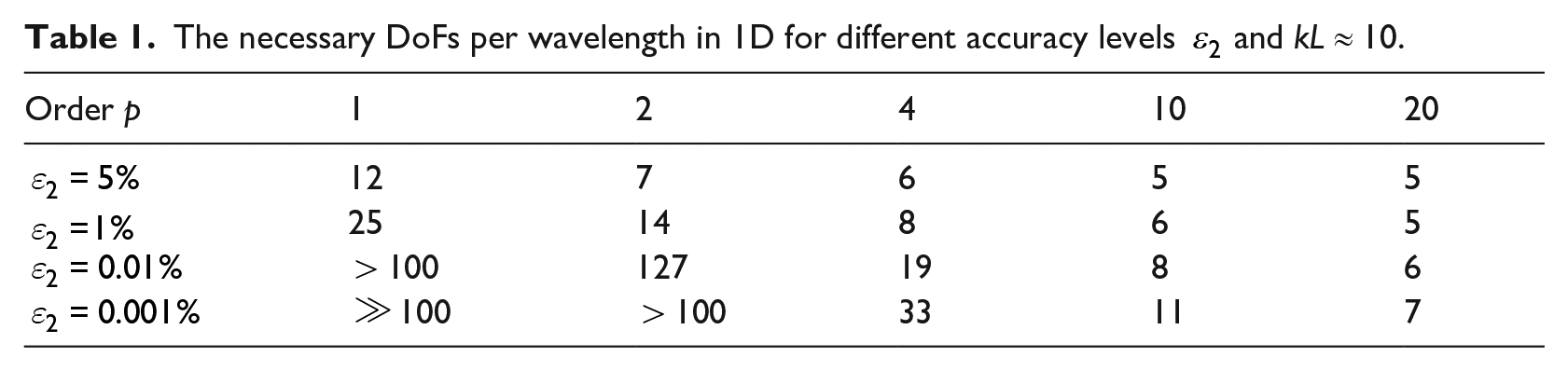
The SEM is very efficient, especially for problems that require a high accuracy. The spectral convergence leads to a significant reduction in the required degrees of freedom (DoFs) per wavelength. A comparison for a small wavenumber is given in Table 1, where the error is computed for a 1D Helmholtz problem with non-reflecting boundary conditions and sufficiently small length so that is very low. The error is defined by
with the reference solution (calculated with a very high accuracy by using a large number of DoFs per wavelength and a high order ) and the SEM solution is the number of sample points used to calculate the error. As an example, for and approximately 250 DoFs are needed in a 1D problem with m and DoFs are needed in a 3D problem with if we choose . For only 16 DoFs are needed in the 1D problem and DoFs are needed in the 3D problem. Obviously, for a high accuracy or a low error it is very advantageous to use a high order especially for 2D and 3D problems.
The necessary DoFs per wavelength in 1D for different accuracy levels and kL ≈ 10.
Order p
1
2
4
10
20
12
7
6
5
5
25
14
8
6
5
> 100
127
19
8
6
≫ 100
> 100
33
11
7
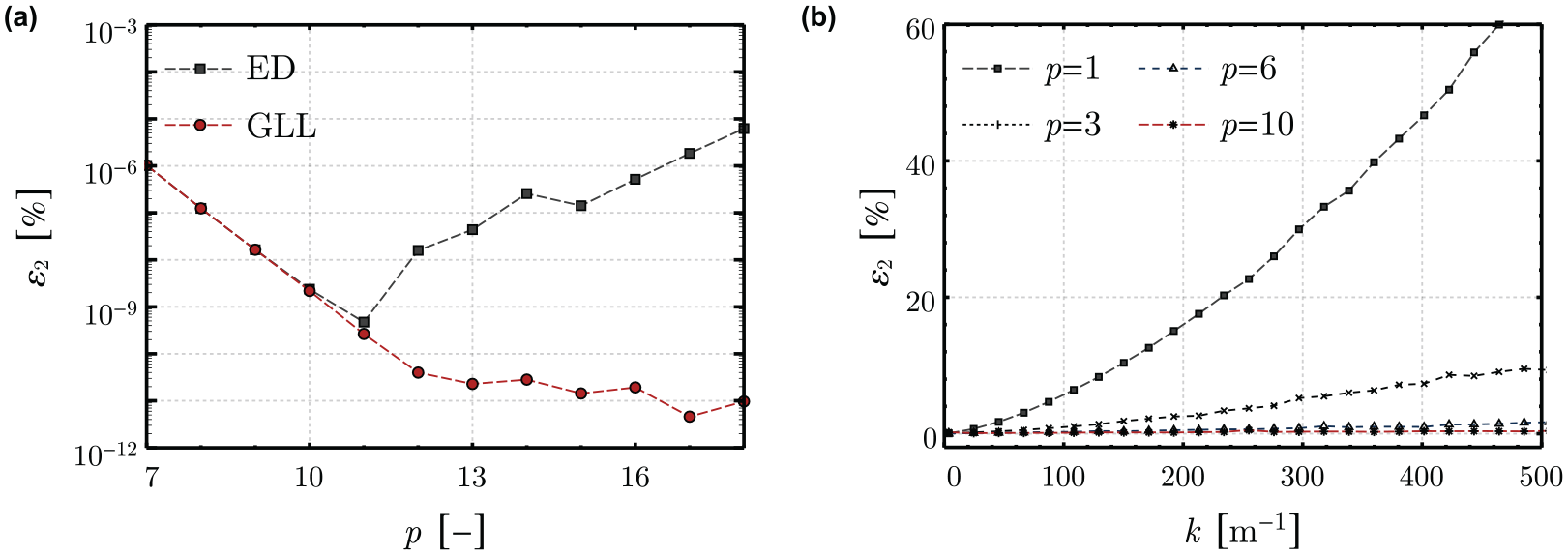
It should be noted, that the number of the necessary DoFs is usually higher due to the numerical dispersion at higher frequencies.40 Thus, Table 1 should only be regarded as an approximate guideline for selecting the necessary discretization level for the intended accuracy of the solution. Numerical dispersion is basically the increase of the error of the numerical solution at higher wavenumbers. It is visible in Figure 5(b), that a choice of a high order lowers the error for high wave numbers and thus limits the negative effect of the numerical dispersion.
Error for the 1D Helmholtz equation with Dirichlet boundary conditions and its variation with (a): the order of the shape functions and (b): the wave number
As mentioned previously, the condition number of the linear system of algebraic equations is lower if we use the GLL shape functions instead of the ED shape functions. This results in a better numerical behavior for a high order of the shape functions (see Figure 5(a)) and also for inherently ill-conditioned problems. These include problems in the close proximity of eigenfrequencies, crucial material parameters such as Poisson’s ratio or a strongly distorted mesh. The general correlations shown in Figure 5 for a simple 1D Helmholtz problem also hold for complex FSI problems.
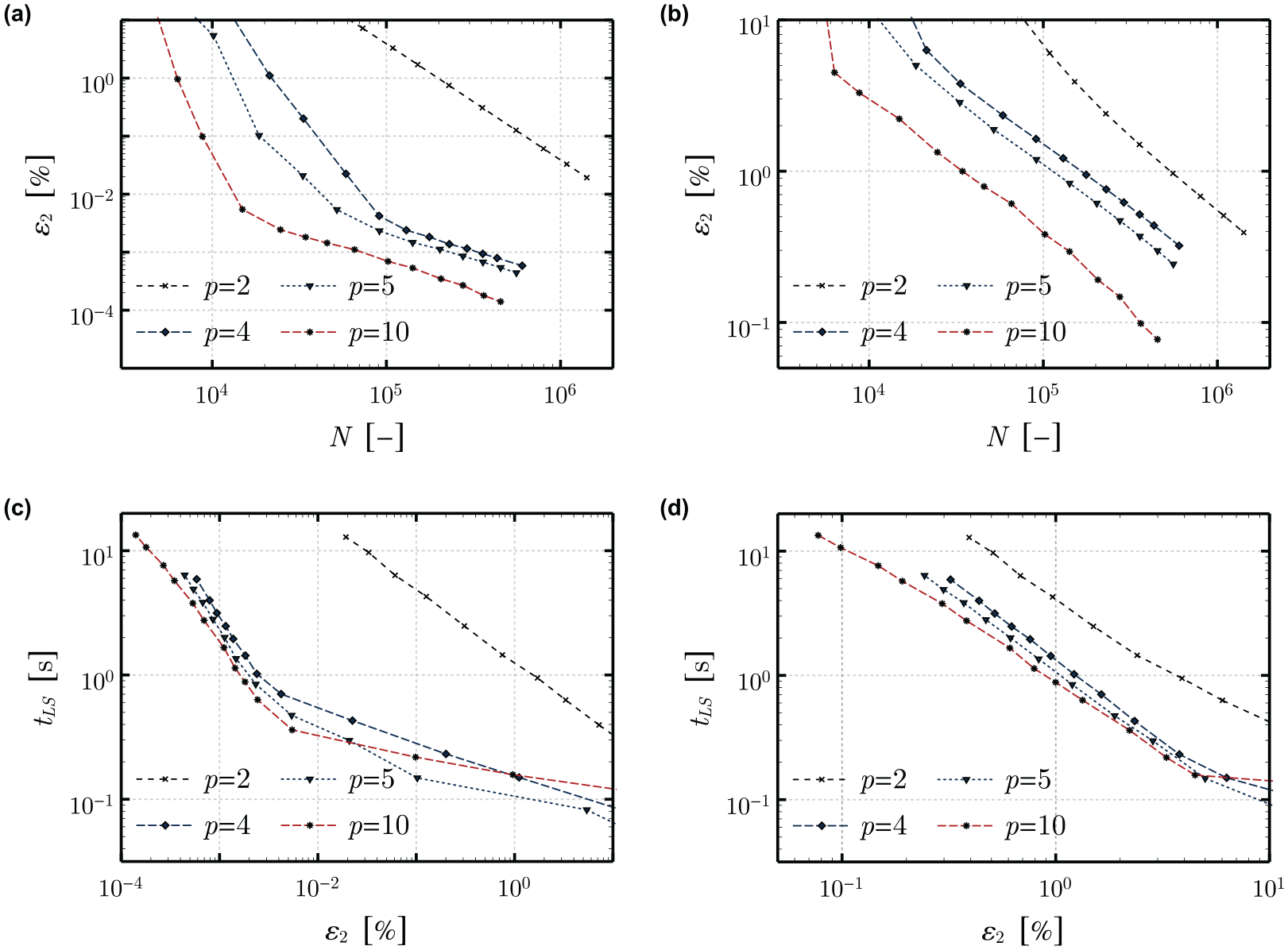
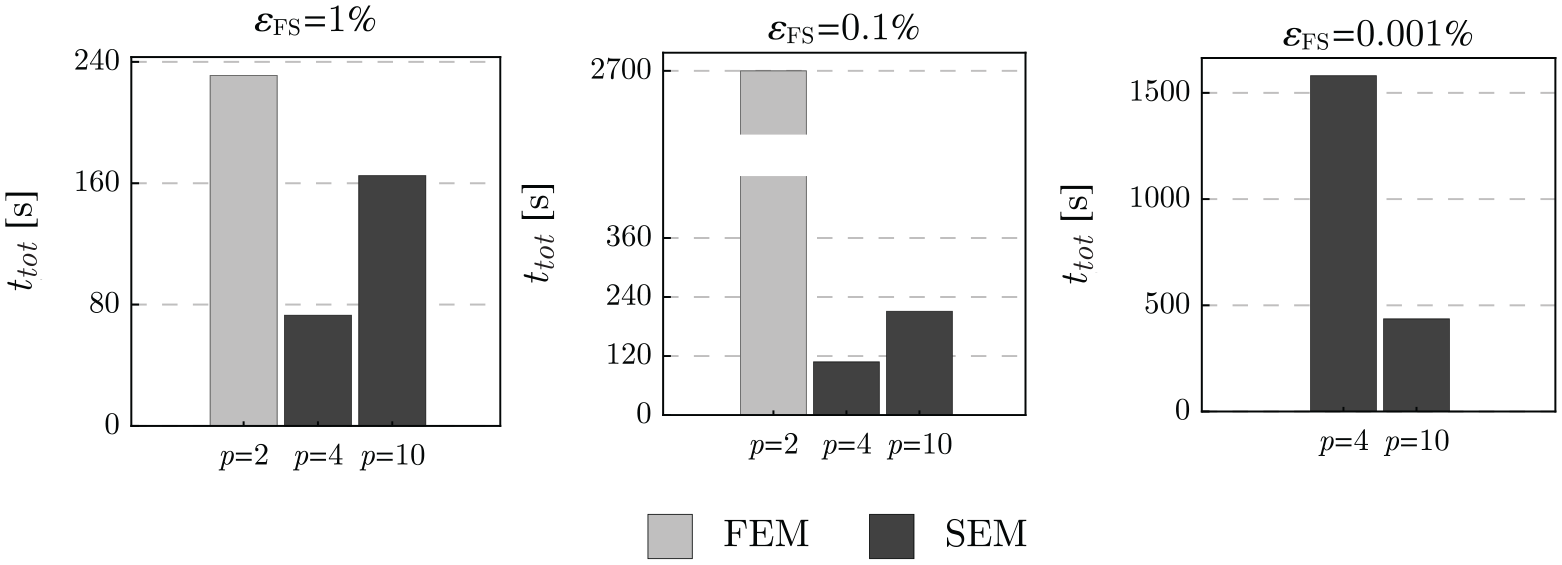
While the use of a high order decreases the necessary number of DoFs, the required time for solving the resulting linear system does not necessarily reduce. This is because that the sparsity (the relative number of zero elements) of the coefficient matrix decreases and the solution of the linear system of algebraic equations becomes less efficient. This is shown for the virtual laboratory in Figure 6 for solving equation (18) at Hz. While the use of is efficient for a high accuracy, for a low accuracy the solution of the linear system is less time-intensive if we use a lower order Figure 6(c) and (d) show the time required for solving the linear system of algebraic equations for only one frequency, and Figure 7 shows the time needed for the calculation of the SRI for the entire frequency range by the developed algorithm. The frequency range includes 16 1/3-octaves from 100 Hz until 3150 Hz and a total number of 336 discrete frequencies. In general, while for a low accuracy a lower order is used, the calculation is far more efficient for a higher accuracy, if a high order is used. The calculation time in this work was measured on a standard desktop computer (a calculation for =2 and was not possible due to insufficient random-access memory of the computer). Usually, the efficiency of the SEM is limited due to the increased calculation time of the element matrices for higher orders. An increased efficiency for higher orders is achieved in this work by precalculating the system matrices for the fluid domains and storing them on the computer and using them for different wall structures. For this reason, we exclude the time needed for the calculation of the element matrices for the fluid domains in Figure 7. To define an a priori accuracy level for the calculation we used the number of nodes per wavelength according to the desired in Table 1. In order to indicate that this a priori accuracy level is not the real error (due to the more complex geometry, the FSI interaction, the numerical dispersion and the influence of eigenfrequencies), we call this the accuracy level which simply indicates the number of DoFs we used per wavelength in the calculation according to Table 1. The calculation time results mainly from the assembly and solution of the linear system for each frequency. The assembly process is more efficient, if the Lobatto quadrature is used for the numerical integration of the element mass matrices since and are then diagonal and the number of operations for assembly of the linear system in equation (18) decreases for each frequency. This leads to an efficiency increase of roughly 10–20%. It should be mentioned here that the diagonal element mass matrices also allow for the use of an explicit time integration method to solve the corresponding FSI problems in the time-domain.41
The numerical error for different discretization levels for (a) the source room and (b) the receiving room, where is the number of DoFs. The required time for solving the linear system of algebraic equations for Hz and (c) the source room and (d) the receiving room.
Comparison of the required time to calculate the SRI curve for different accuracy levels.
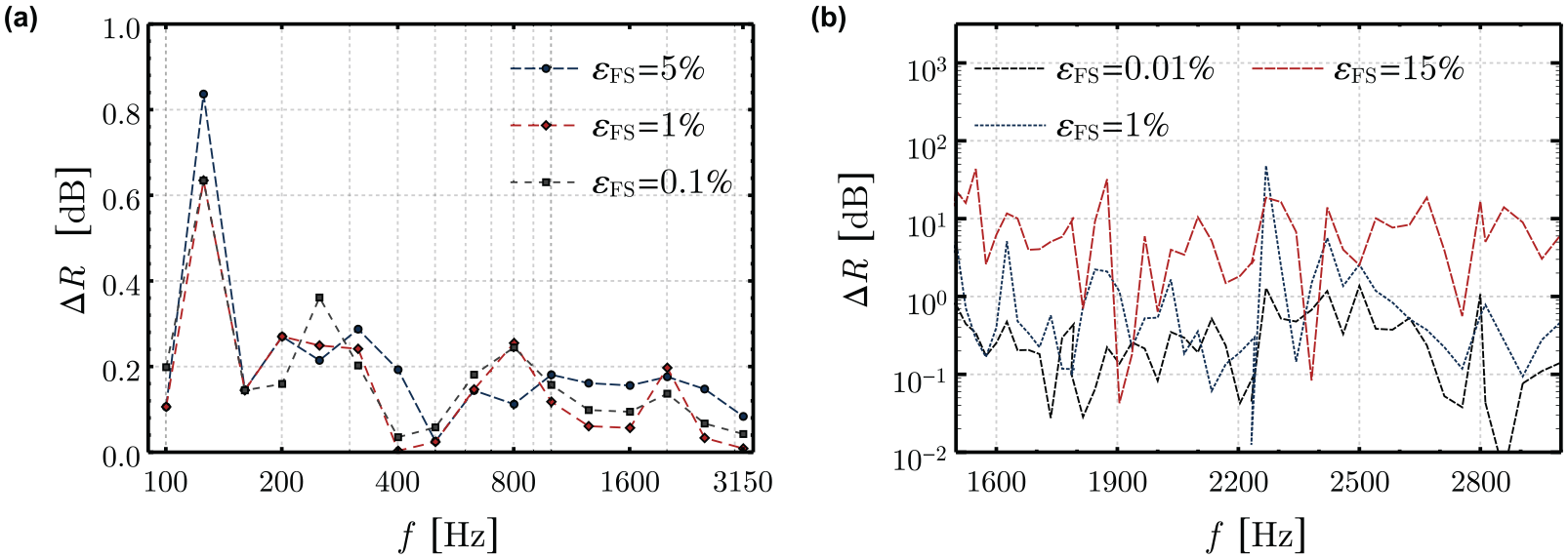
The last question to be discussed in this section is the necessary number of DoFs per wavelength. For conventional wall constructions, a relatively low accuracy is usually sufficient for the virtual laboratory if the main goal is the prediction of the SRI curve or the comparison with measurements in a real laboratory. Figure 8(a) shows the 1/3-octave averaged deviations for a concrete wall from the reference solution, which is calculated with a very high accuracy by using a large number of DoFs per wavelength and a high order The results of the reference solution are also compared with that obtained by commercially available FEM-Software (COMSOL Multiphysics Version 5.3) using a large number of DoFs, and no significant deviations are found. The averaging of the SRI for all frequencies of a 1/3-octave reduces the influence of the eigenfrequencies, but this requires a large number of frequencies to be considered. For the determination of the 1/3-octave SRI curve, we found that at least 10–20 frequencies should be considered for every 1/3-octave.
(a): Deviations ∆ of the -octave averaged SRI from the reference solution for a monolithic wall and (b): Deviations of the SRI for a periodically layered wall.
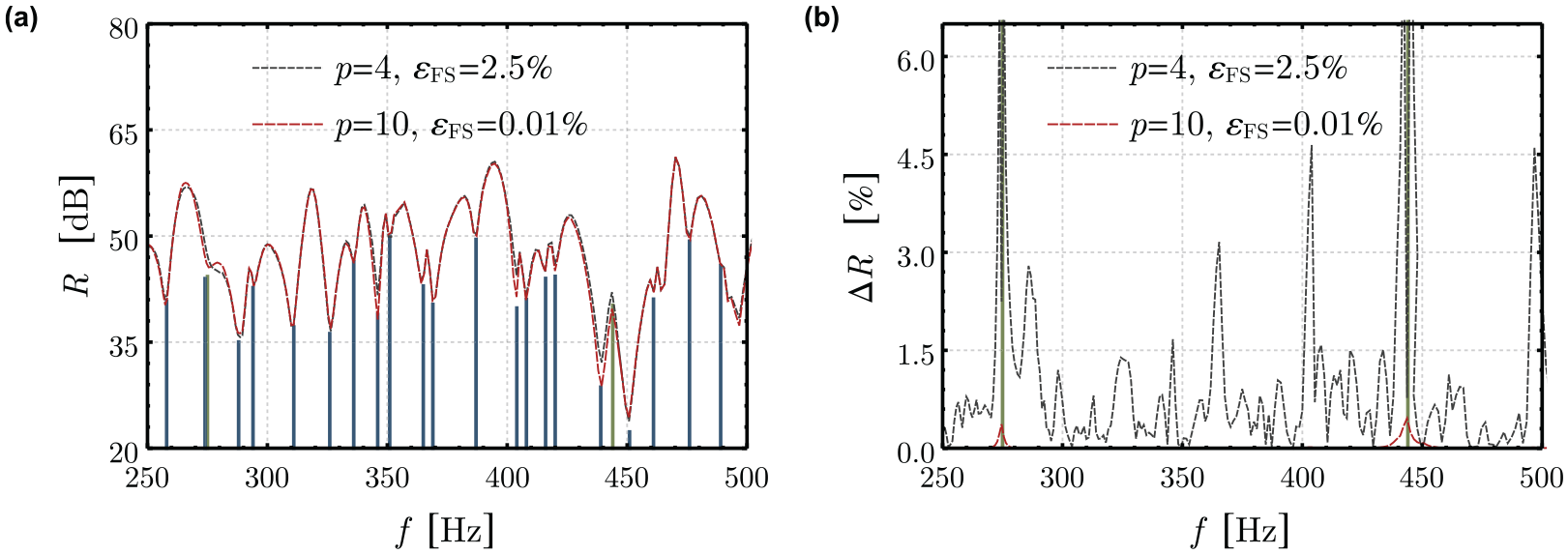
For a detailed analysis of the frequency range, a higher accuracy should be chosen, since the deviations increase in the proximity of the eigenfrequencies, as shown in Figure 9 for a concrete wall. The necessary accuracy should also be increased for the study of periodic structures. In Figure 8(b) the deviations for a 1D periodic wall and different accuracy levels are shown. In the band-gap the deviations are up to almost 100 dB. After averaging over a 1/3-octave interval, this still amounts to remarkable deviations higher than 10 dB.
(a): The SRI R and (b): its deviation ∆ from the reference solution with very high accuracy in the proximity of the eigenfrequencies for different discretization orders The dark green lines mark the wall eigenfrequencies and the blue lines mark the room eigenfrequencies.
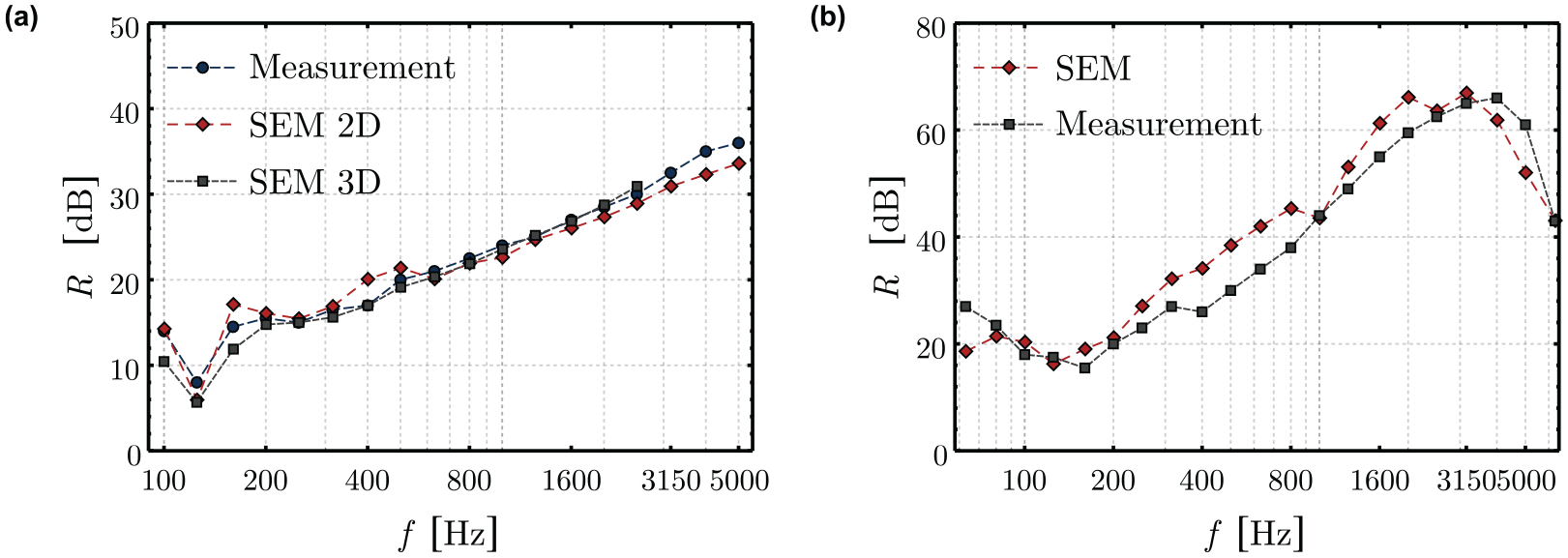
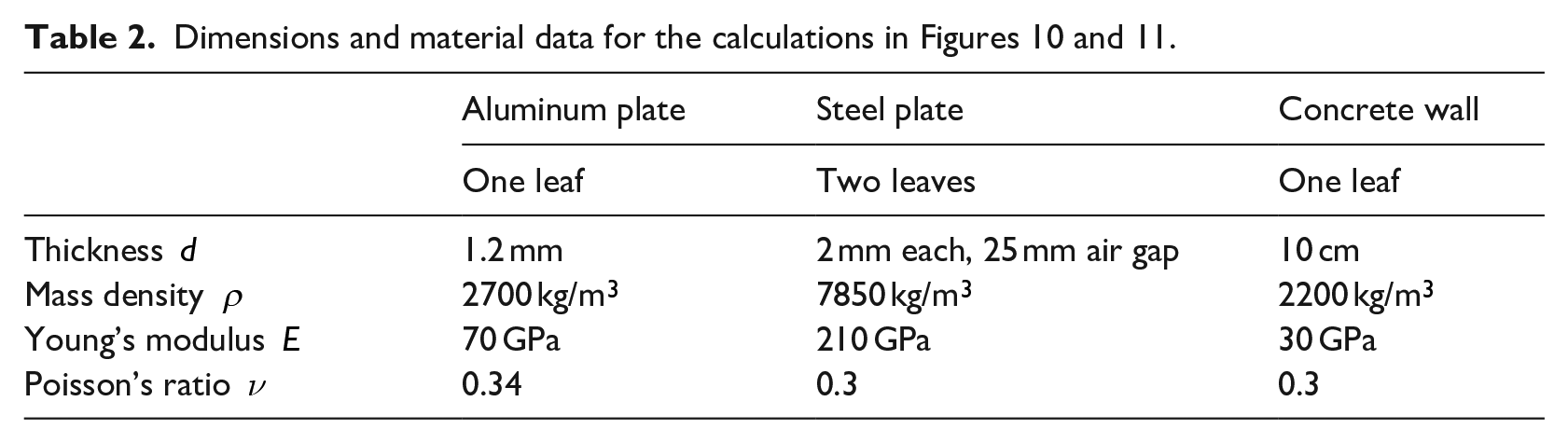
In general, the results agree well with the experimental data as shown in Figure 10, despite some deviations which are possibly due to the limited knowledge about the exact properties of the wall specimen and measurement laboratory. The dimensions and material data are given in Table 2. The comparison in Figure 10(a) also demonstrates that a 2D calculation is sufficient if the structure fulfills the plane strain condition. One of the advantages of the virtual laboratory is its flexibility. Analytical solutions for complex problems usually require a high level of simplifications. For the approach in this work, complex structure or material models can be directly simulated and do not require many simplifications. Another advantage is the amount of information provided by this approach. Not only the SRI curve can be obtained, but also the details about the pressure field in the fluid and the displacement field of the wall specimen.
Comparison between the calculated SRI by the FSI model (SEM) and the measured SRI for a thin aluminum plate (a) and a double-leafed steel plate (b). The measurement data are taken from Villot et al.42 for the aluminum plate and from Hongisto et al.43 for the double-leafed steel plate.
Dimensions and material data for the calculations in Figures 10 and 11.
Aluminum plate
Steel plate
Concrete wall
One leaf
Two leaves
One leaf
Thickness
1.2 mm
2 mm each, 25 mm air gap
10 cm
Mass density
2700
7850
2200
Young’s modulus
70 GPa
210 GPa
30 GPa
Poisson’s ratio
0.34
0.3
0.3
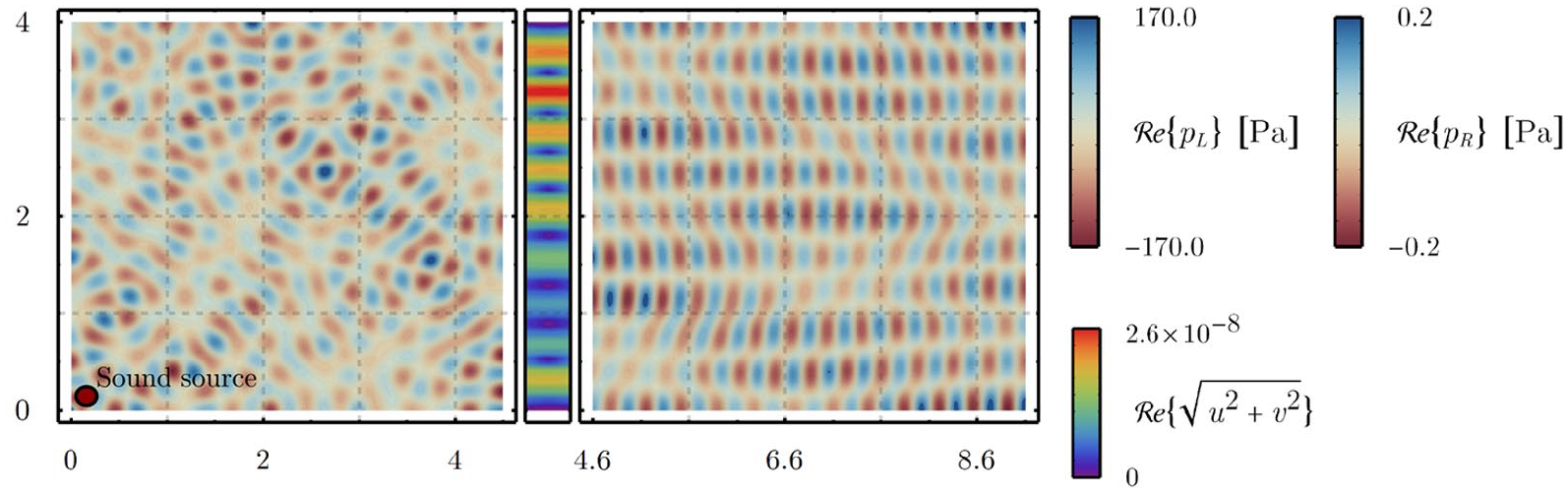
Real part of the pressure field and the displacement field of a concrete wall with a thickness of 10 cm at Hz. Note: The high values for the pressure field are a result of the power of the sound source, which is normalized to unity. This has no effect on the SRI.
An example for a concrete wall of 10 cm thickness is shown in Figure 11 for Hz. This is especially useful for the detailed study of periodically arranged wall structures and their behavior in different frequency ranges.
Numerical examples for periodic walls
1D periodic walls
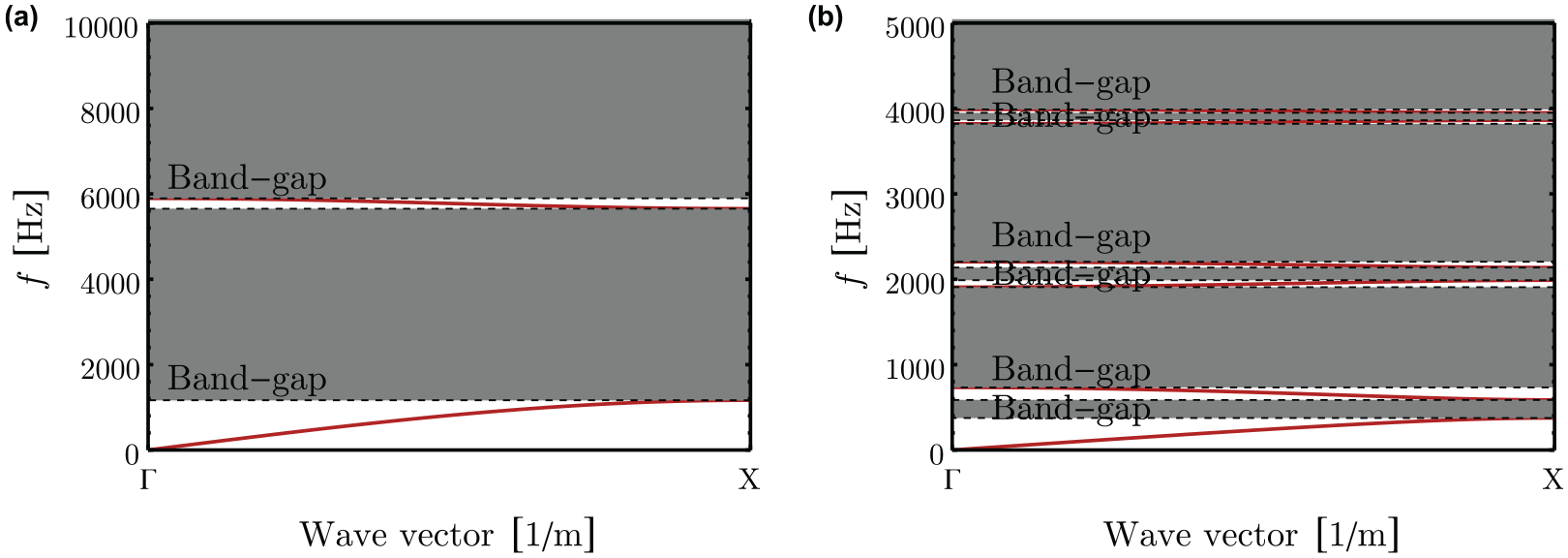
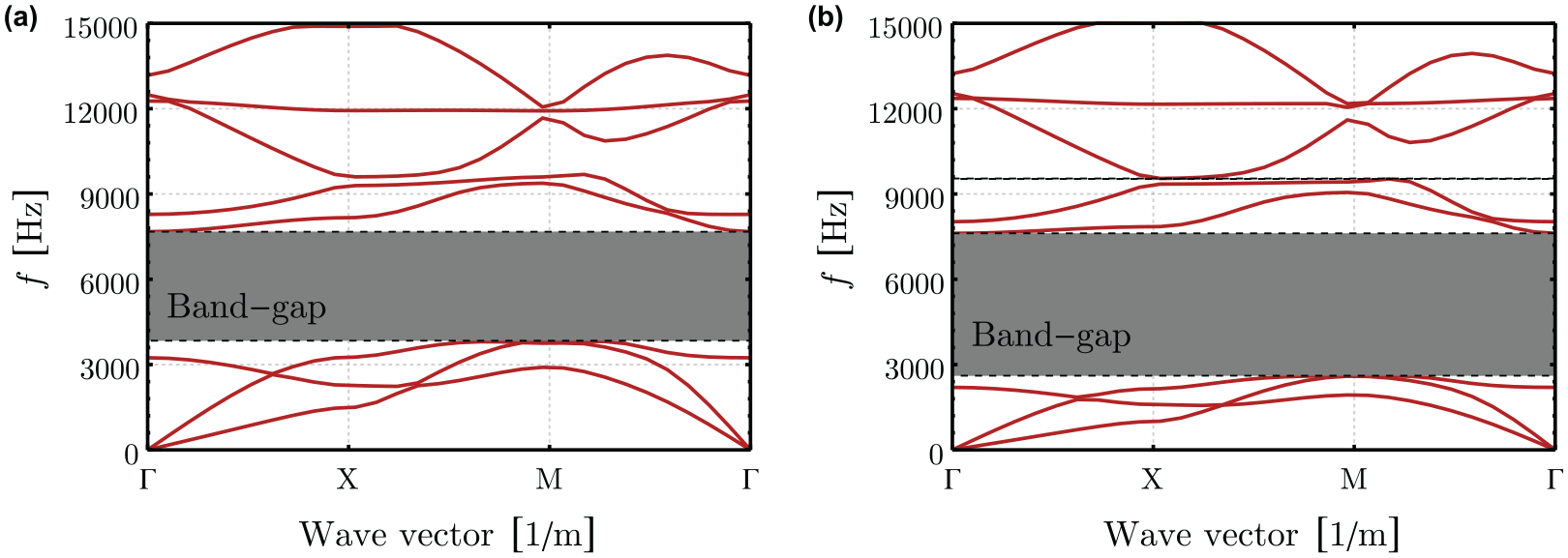
For a 1D periodically layered wall, we examine two different examples (see Figure 12). The unit-cell consists of two layers where two different materials are used for the periodically layered wall, denoted by and . The unit-cell consists of five layers and three different materials denoted by and Figure 13 shows the dispersion diagrams for both unit-cells. The frequency ranges in which the wave propagation is prohibited, the so-called band-gaps, are marked by gray areas. The dispersion diagrams show a theoretical behavior for an infinite number of unit-cells. Since we are interested in the behavior of a finite wall structure and the influences of various parameters on the SRI, we conduct further examinations via the virtual laboratory. The number of the unit-cells is and the -direction is normal to the wall surface (the direction of the sound transmission through the wall). Since the length of the wall may influence the frequency response significantly in certain cases, we examine the efficiency of the periodic wall structures directly with respect to the SRI curves. For the figures depicting a frequency response or displacement field in this work, the denotation of the unit-cell refers to a wall consisting of the respective unit-cell and the calculation according to the methodology described previously.
Schematic of the periodically layered walls. (a): The 1D unit-cell consists of two layers and (b): the 1D unit-cell consists of five layers.
Dispersion diagrams for (a) the unit-cell and (b) the unit-cell The gray areas mark band-gaps.
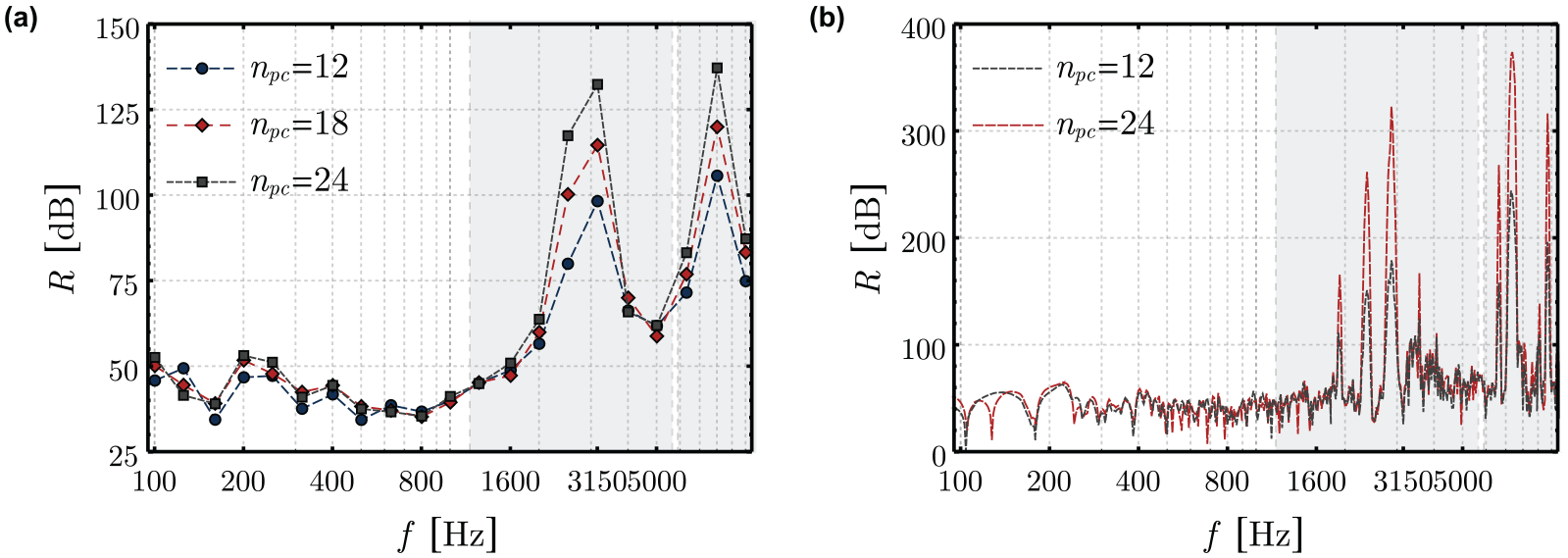
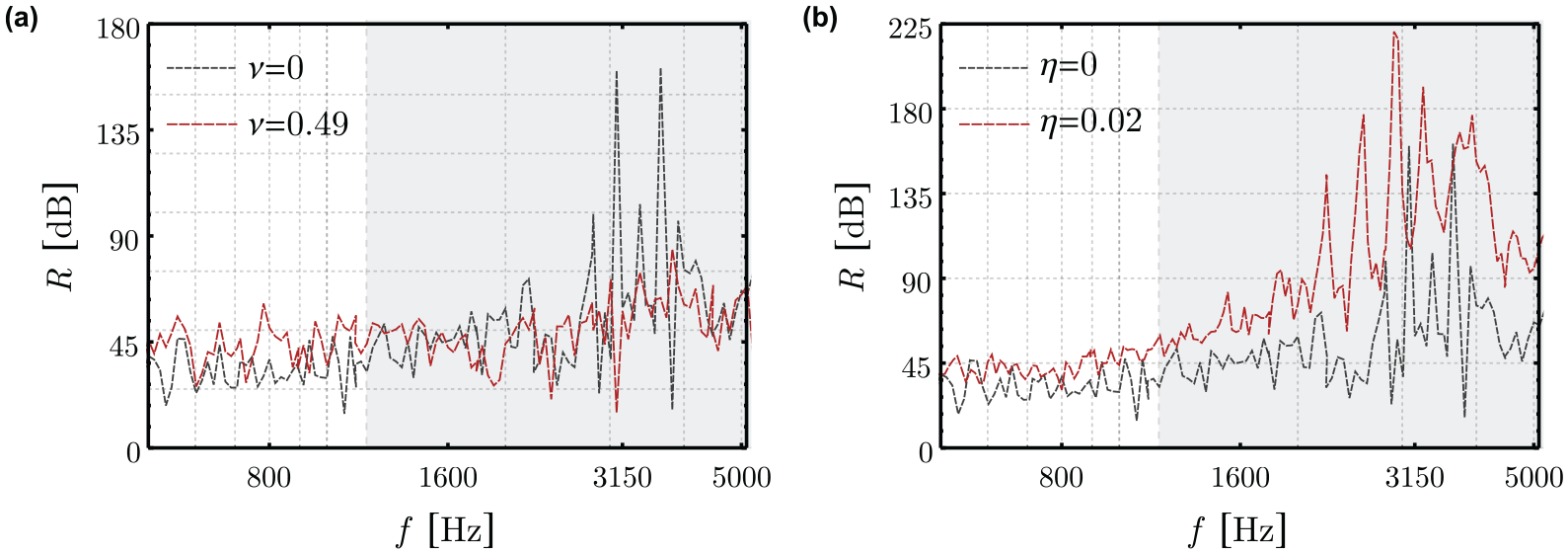
We begin with the examination of the unit-cell A cork-like material with the following material parameters is used for layer mass density Young’s modulus GPa, and Poisson’s ratio . Concrete is used for layer For the unit-cell and all other unit-cells in this section we use the following material properties for concrete: , GPa and . Since the focus of this examination is to investigate the attenuation of the periodically layered wall structure due to resonance and interference effects, we do not use any material damping here. The thicknesses of the layers are set to m and m. Figure 14(a) shows the SRI curves for different numbers of the unit-cells For clarity, the frequency responses are averaged over each -octave. From the figure, it can be concluded, that the SRI in the band-gaps increases with the number of unit-cells by approximately 2.5 dB per unit-cell. On the other hand, in the frequency ranges outside of the band-gaps, increasing the number of the unit-cells leads to an increase of the mass of the wall structure which is the reason for some small gains of the SRI. Note the small length , the increase of the SRI within the band-gaps is less pronounced for larger values of (see the Figure 15(a)). Figure 14(b) shows the detailed SRI (frequency response). The maximum value of the SRI is increasing with increasing value of The SRI is exceeding a value of 120 dB for a sufficient number of unit-cells , especially at certain frequencies in Figure 14(b). This effect will be far more pronounced for more complex unit-cells, which will be shown in the following examples and discussions. Since the virtual laboratory considers the mostly important physical effects, which would influence the behavior of the specimen in a real test laboratory, the obtained SRI results should be capable of representing the realistic performance of the investigated periodic wall structures. Although no experimental verifications in a real test laboratory for the examined periodic wall structures are conducted in this work, experimental investigations of similar problems show indeed the extraordinary wave insulation properties of the periodic structures, for example Vasseur et al.44,45 or Sigalas et al.46 In general, the width of the “band-gaps” (the band-gaps, which occur in a practical application and differ from the theoretical obtained band-gaps in Figure 13) are very narrow. Furthermore, various resonance effects of the virtual laboratory can also decrease the SRI within the band-gaps obtained by calculation of the dispersion diagram.
(a): -octave averaged SRI and (b): SRI (frequency response) for different values of for the periodic wall consisting of unit-cell and m. The gray areas mark the band-gaps obtained from the calculation of the dispersion diagram in Figure 13(a).
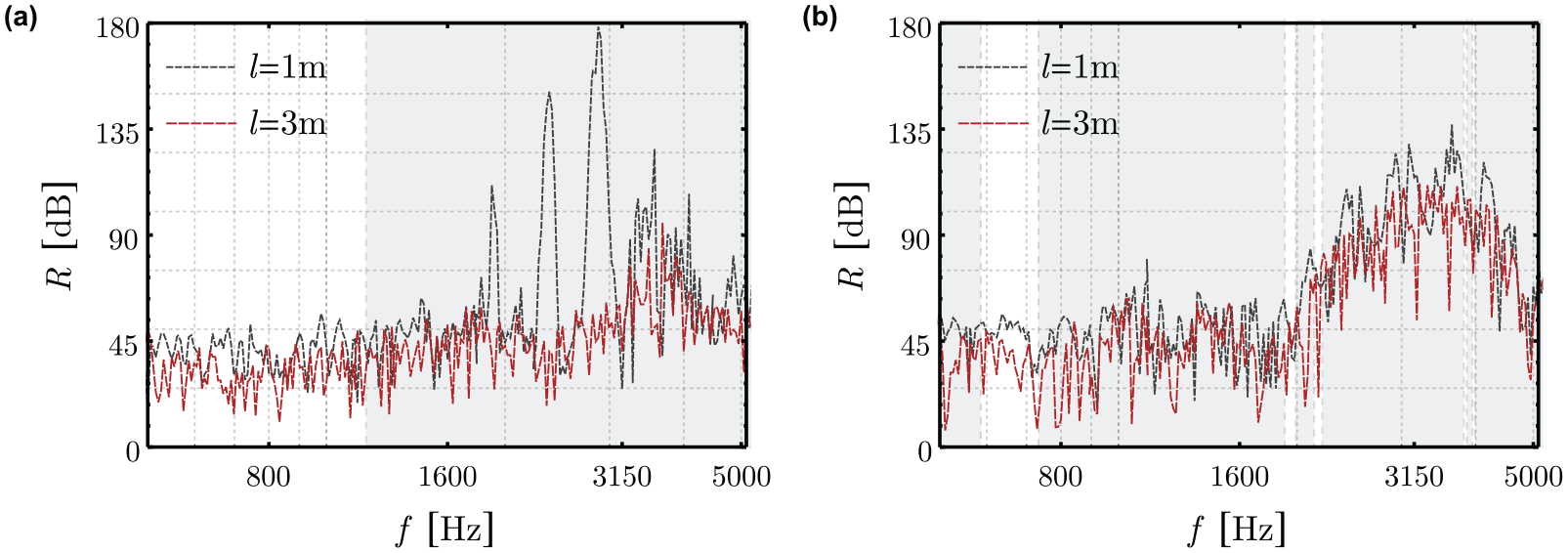
Frequency response for (a): the periodic wall consisting of unit-cell with two layers and (b): the periodic wall consisting of unit-cell with five layers for different values of the wall length respectively. The gray areas mark the band-gaps obtained from the calculation of the dispersion diagrams in Figure 13(a) and (b).
A comparison for different values of is shown in Figure 15(a). The reason for this behavior in Figure 15(a) probably due to the influence of the transverse deformation and the reflections on the clamped boundaries of the wall structure. The 1D periodic structure supports indeed longitudinal waves primarily in one direction, but the generation of shear waves is still possible through Poisson’s ratio. Due to the wave reflections on the boundaries, these shear waves, in turn, generate longitudinal waves which decrease the efficiency of the periodic wall structure. This can be demonstrated by the influence of Poisson’s ratio as shown in Figure 16(a). For small values of , the efficiency of the periodic wall structure increases. The efficiency is also increased by including the material damping, as shown in Figure 16(b).
Effects of (a): Poisson’s ratio and (b): the loss factor for the periodic wall consisting of unit-cell for . The gray area marks the band-gap obtained from the calculation of the dispersion diagram in Figure 13(a).
In summary, the performance of the unit-cell is rather poor. The necessary high value of increases the thickness of the wall to impractical values and realistic applications would also require larger values of . However, the setup of the unit-cell is far more promising. By embedding an additional layer of steel, the number of necessary layers and the negative effects of the length of the wall can be significantly reduced. The corresponding setup is shown in Figure 12. The thickness of the steel layer is set to m and the thickness of the layers and is set to m. Concrete is used for layer and a rubber-like material is used for layer The parameters used for the rubber-like material are , GPa, and for steel we use , GPa, .
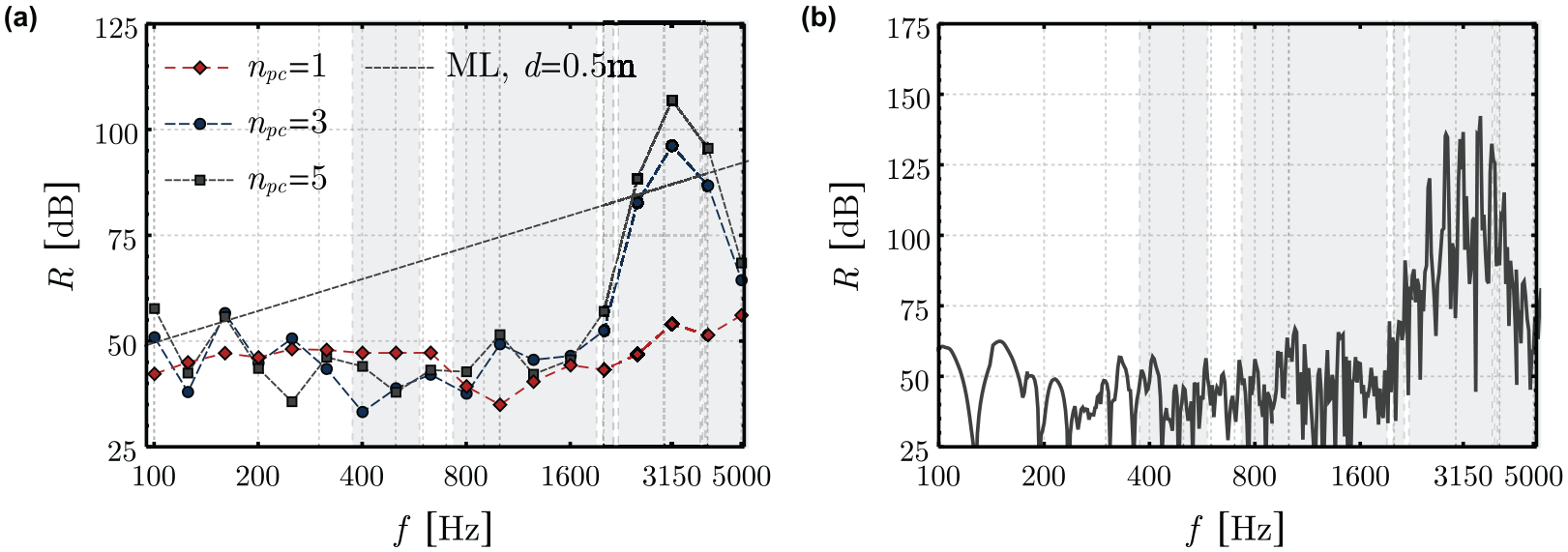
The resulting curves of the SRI are shown in Figure 17(a) for different numbers of the unit-cells consisting of five layers. The gain for each additional unit-cell is much higher and reaches approximately 10 dB per unit-cell in the band-gap. The increase of the SRI in the frequency range outside of the band-gap is only a result of the additional mass and stiffness of the structure. A monolithic concrete wall of thickness m is also included in the figure to illustrate the extreme values of the SRI in the band-gap, which can only be achieved by a periodically arranged wall structure. Doubling the thickness of the periodically layered wall would increase the SRI by about 50 dB while doubling the thickness of the concrete wall would only increase the SRI by about 8 dB. The detailed SRI (frequency response) is depicted in Figure 17(b). While the SRI in the frequency range of the band-gap is in general increased by the periodic arrangement, other resonance phenomena can superpose the interference effects and lead to some drops. However, the band-gap for the unit-cell is clearly more distinct than the band-gap of the unit-cell (compare the peaks and drops of Figures 14(b) and 17(b)). Since the resonance effects due to the steel layer are presumably the main reason for the efficiency of the unit-cell there is also very little negative influence of the length of the wall as shown in Figure 15(b). On the other hand, the result for the unit-cell is believed to rely mainly on interference effects.
(a): -octave averaged SRI for different values of for the periodic wall consisting of the unit-cell ML denotes the SRI for a monolithic concrete wall of thickness m calculated by the mass law.47 (b): SRI (frequency response) for . The gray areas mark band-gaps obtained from the calculation of the dispersion diagram in Figure 13(b).
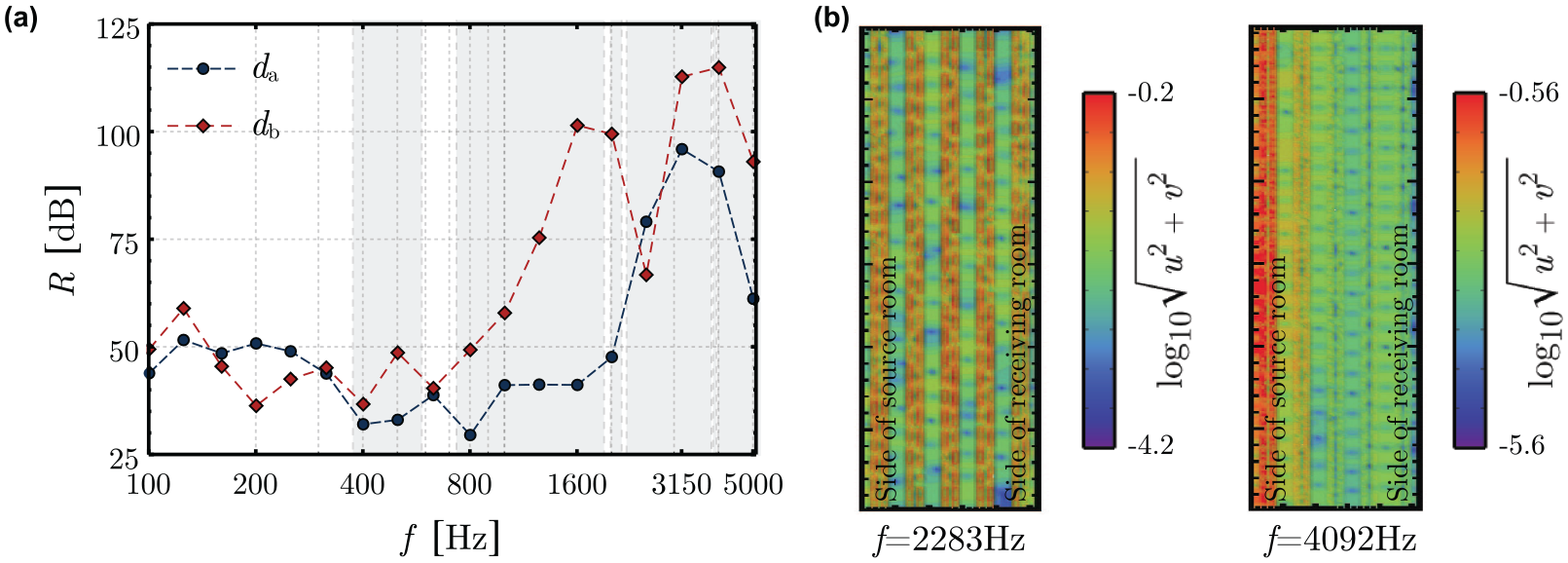
The position and width of the band-gaps as well as the effectiveness of the periodical arrangement are determined by the material properties of the constituting layers and their thicknesses. To demonstrate the thickness-dependence, the thicknesses of the layers are varied in Figure 18(a) for the unit-cell By doubling the thicknesses of the layers, the frequency range of the band-gap is reduced by . This also applies for the 2D unit-cells we will discuss in the following subsection. Figure 18(b) shows the logarithmic displacement field for a layered wall (unit-cell at a frequency outside and inside of the band-gaps. It can be observed, that the wave propagation is severely restricted inside of the band-gap.
(a): -octave averaged SRI for different thicknesses of the unit-cell m, m for and m, m for . The gray areas mark band-gaps obtained from the calculation of the dispersion diagram in Figure 13(b) for the dimensions . (b): Logarithmic displacement field for the unit-cell at Hz (outside of the band-gap) and Hz (within the band-gap).
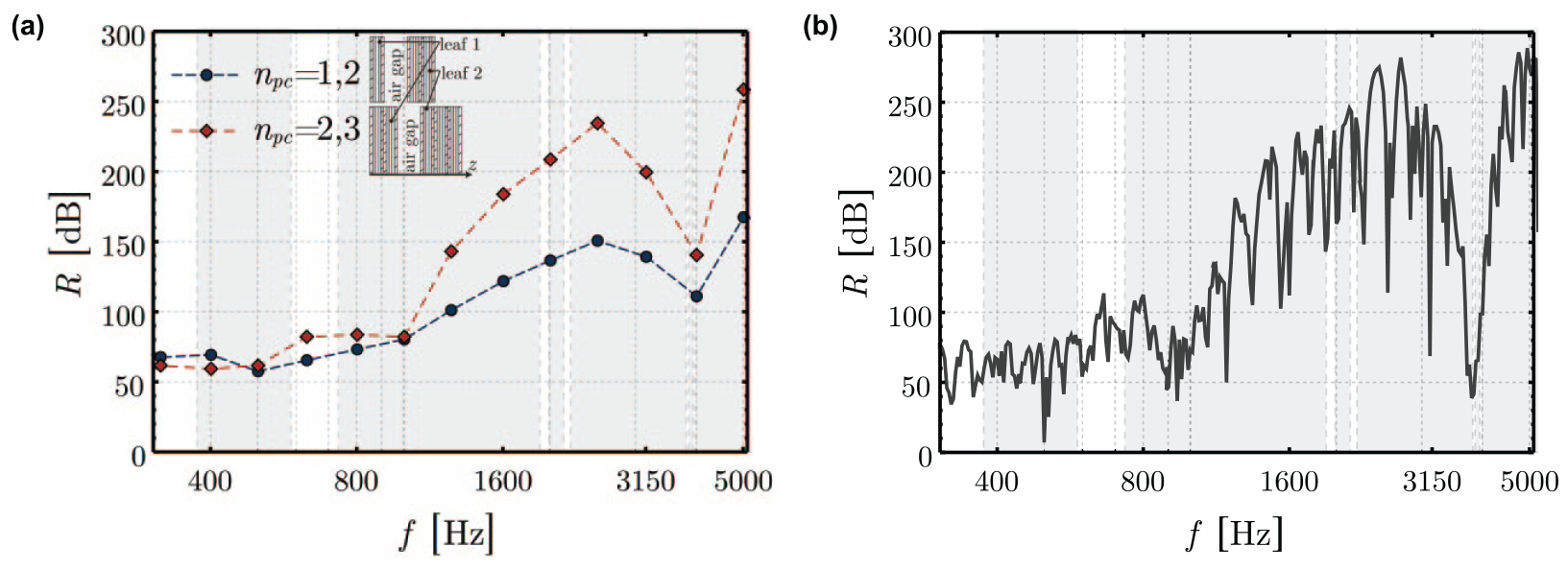
As the last example for the 1D periodically layered wall, we examine the efficiency of a double-leafed wall consisting of the unit-cells Both leaves are separated by an air gap, therefore combining the resonance effects of the double-leafed setup and the periodicity of the leaves themselves. The length of the wall is m and the two leaves are not connected. As expected, the performance within the band-gap is very good, even for a small thickness of the wall (see Figure 19 in which indicates the number of unit-cells in the -direction for the first leaf and the number of unit-cells in the -direction for the second leaf). However, using linking elements to connect both leaves in the assemblage would reduce the efficiency. Since the focus of this work lies on the examination of the periodic wall structures, possible connectors between the adjacent leaves are not taken into account. However, connected leaves could be numerically simulated by simply linking the respective DoFs at the positions of the connectors or using more sophisticated methods, as described for example in Poblet-Puig et al.12
(a): -octave averaged SRI for different values of for a double-leafed periodically layered wall consisting of the unit-cells with a m air gap between the leaves. (b): SRI for . The gray areas mark band-gaps obtained from the calculation of the dispersion diagram in Figure 13(b).
2D periodic walls
Figure 20 shows three different examples for a 2D unit-cell. The unit-cells are repeated along the vectors and to create the periodically arranged wall (see also Figure 4). The length of the wall is set to m for all 2D examples and no material damping is used in order to solely examine the effects of the periodical arrangement.
Schematic of the three examined 2D unit-cells (a) , (b) and (c) .
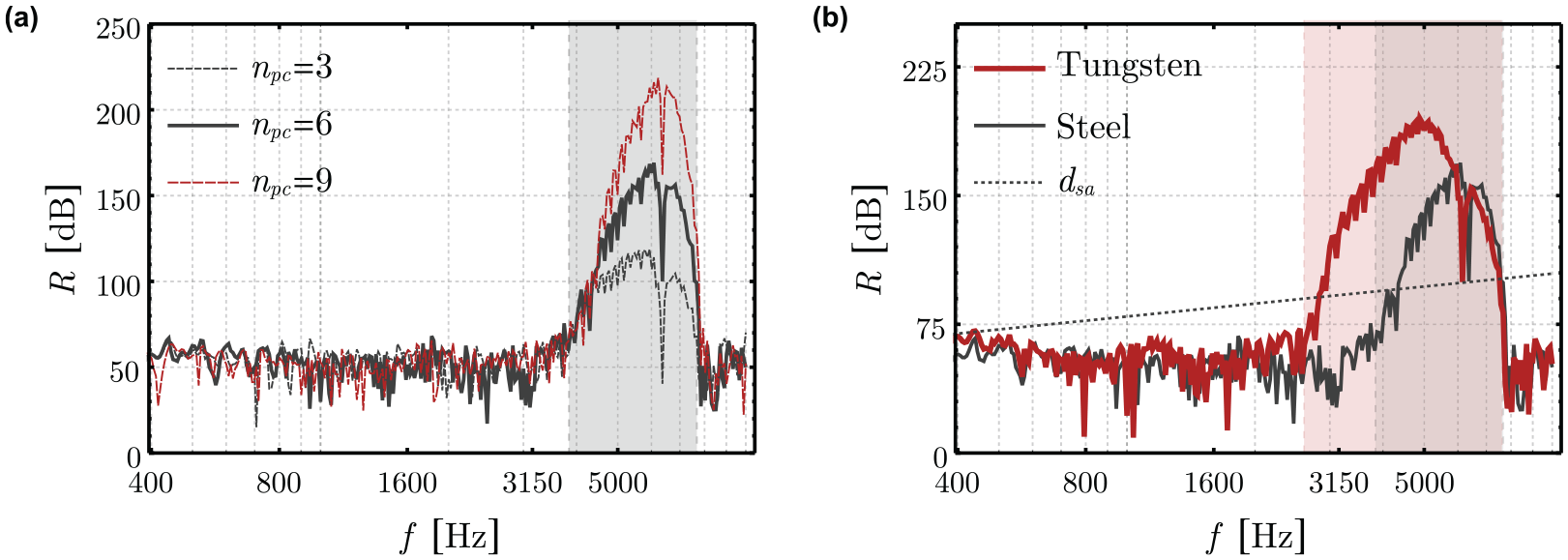
For the unit-cell we use polyethylene (, GPa, ) for the matrix and either steel or tungsten (the material properties of tungsten are: , GPa, ) for the core . Since the 2D periodic wall structure does not allow wave propagation in both - and -directions within the band-gap, there is little influence of the transverse deformation. Therefore neither Poisson’s ratio nor the length of the wall has much impact on the efficiency of the 2D periodic wall structure. The examination of the dynamical behavior of the periodic wall structure can be simplified by calculation of the dispersion diagram as elucidated before. This allows us to efficiently optimize the geometry of the unit-cell in order to achieve a wide band-gap and also a preferable low-frequency band-gap, without increasing the thickness of the periodic wall to impractical values. The dispersion diagrams for a steel core and a tungsten core of the unit-cell are shown in Figure 21. The dimensions of the unit-cell and the frequency range of the Bragg band-gap are inversely related according to the Bragg diffraction law.48 The midgap frequency is in the order of
where is the velocity of the wave in the medium and is the lattice constant. For a more detailed description of the formation of Bragg band-gaps we refer to Kaina et al.49 and Khelif and Adibi.50
Dispersion diagrams for the unit-cell with m, m, m, m and (a) steel core, (b) tungsten core. The gray areas mark the band-gaps.
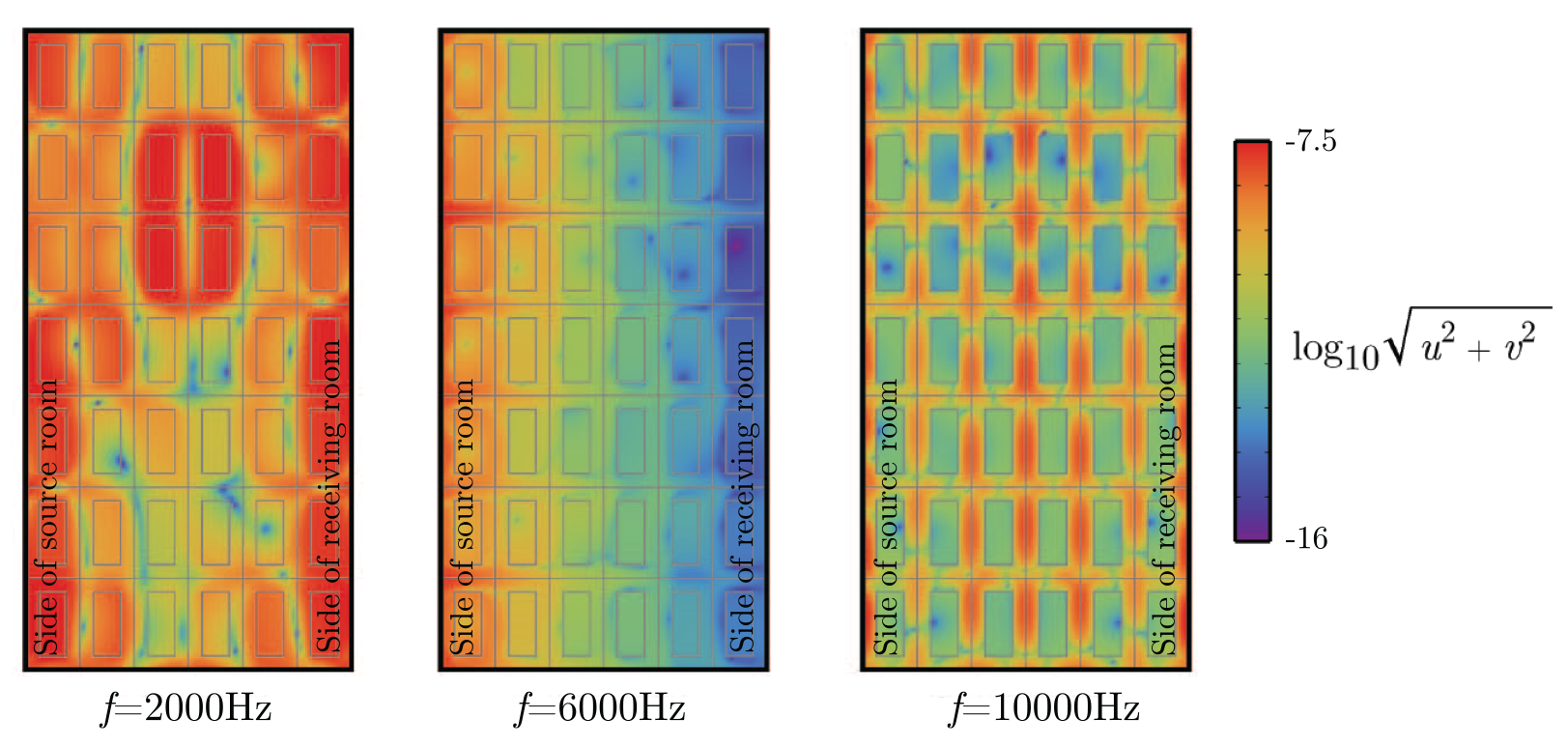
In general, the dispersion diagrams represent the wave propagation behavior within an infinite periodic structure. As also shown for the 1D examples, the actual attenuation can vastly differ in a finite structure, due to wave reflections on the boundaries and other resonance phenomena. Therefore we examine the performance of the more realistic finite periodic wall structure in the virtual laboratory for the 2D examples as well. Figure 22(a) shows the SRI (frequency response) for different numbers of the unit-cells in the -direction. The sound insulation increases by dB per unit-cell. A suitable way to improve the efficiency of the periodic wall structure is to use another material for the core or the matrix. In general, the mass density and the stiffness of the materials used should differ as much as possible. In Figure 22(b) tungsten with a higher stiffness and mass density is used for the core, and thus the width of the band-gap is increased and also its mid-frequency is lower. To show the significantly superior sound insulation capabilities of the periodic wall structure within the band-gap, the SRI for a monolithic steel wall with the same thickness is also included, which is denoted by in Figure 22(b). Figure 23 shows the logarithmic total displacement fields for three different frequencies and = 6.
SRI curves for the wall consisting of the unit-cells and (a): steel core with three different numbers of the unit-cells in the normal direction of the wall and (b): different materials for the core with . The red and gray areas mark the band-gaps from the dispersion diagrams in Figure 21 steel core).
Logarithmic displacement fields for a representative section of the periodic wall composed of the unit-cells at Hz and Hz (outside of the band-gap) and Hz (within the band-gap).
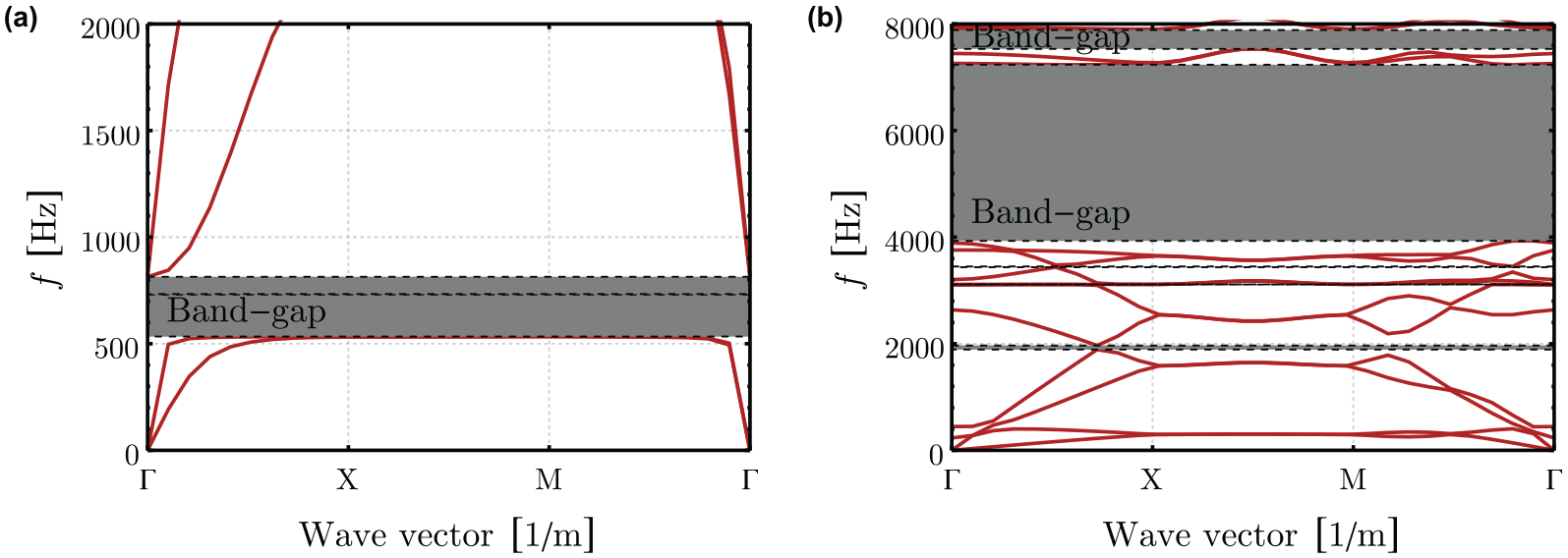
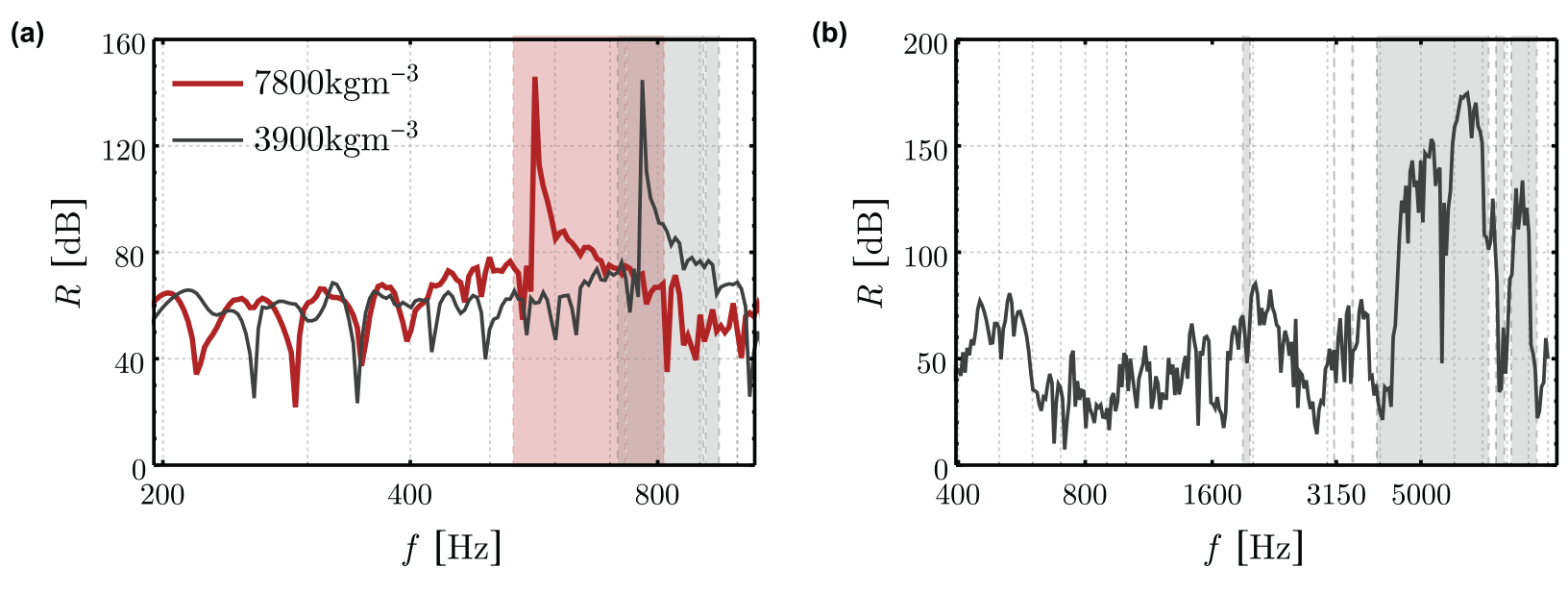
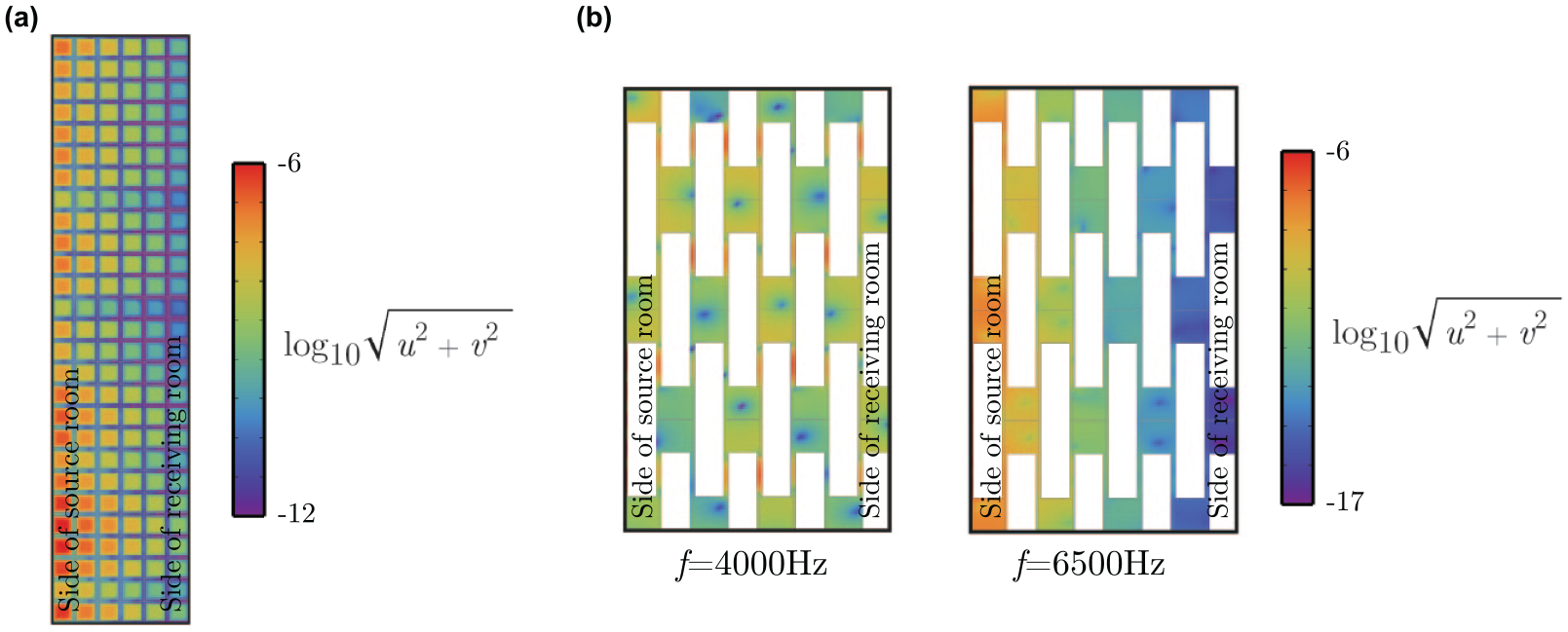
The 2D unit-cell uses a steel core coated with a soft elastic material GPa) and imbedded in a concrete matrix This setup enables vibrations of the core as a local resonator, which allows for a band-gap at relatively low frequencies, as shown in the dispersion diagram in Figure 24(a). The stiffness of the core has very little impact on the band-gap, but a variation of the mass density allows for tuning the first local resonance frequency and shifting the position of the band-gap to a lower frequency. This is shown in the SRI (frequency response) curve in Figure 25(a) for two different mass densities of the core. The Figure 26(a) shows the logarithmic total displacement field at a frequency inside of the band-gap. It can be seen, that the sound insulation relies on the resonance effects of the steel cores, which counteract the wave propagation by their vibrations inside the soft matrix. In the last example, we examine a specifically designed hollow brick, which is arranged according to Figure 20(c). Concrete is used as the material for the hollow brick. Again, the dimensions of the brick , , and are optimized for achieving a wide band-gap at a low frequency while maintaining a rather small thickness of the wall. The dispersion diagrams are shown in Figure 24(b). There is one large band-gap but also several smaller band-gaps exist due to the irregular geometry of the unit-cell. It should be noted here, that a filling inside the cavities (e.g. to improve the thermal insulation) must not affect the wave propagation characteristics, otherwise the band-gaps will be changed. The transmission loss of the brick wall is shown in Figure 25(b) for , where the peaks corresponding to the respective band-gaps of the dispersion diagrams can be seen. Due to the overlapping resonance effects and the small width of the band-gaps, some of the peaks are not evidently distinct. Again, the logarithmic total displacement field is shown in Figure 26(b) for a frequency outside and inside of the band-gap.
(a): Dispersion diagram for the unit-cell with m and a steel core. (b): Dispersion diagram for the unit-cell with m, m, m and m. The gray areas mark the band-gaps.
SRI curves for (a): the periodic wall composed of the unit-cells with two different values of the mass density of the core (the gray and red areas mark the band-gaps from the calculation of the dispersion diagram, shown for 7800 in Figure 24(a)) and (b): the periodic wall composed of the unit-cells (the gray areas mark the band-gaps from the dispersion diagram in Figure 24(b)).
Logarithmic displacement fields for a representative section of the periodic wall composed of (a): the unit-cells at Hz (within the band-gap) and (b): the unit-cells 32D at Hz (outside of the band-gap) and Hz (within the band-gap).
Conclusions
In this paper, the acoustic insulation properties of periodically layered walls are analyzed with the help of a virtual acoustic laboratory. To consider the most important physical phenomena, which could occur in a real measurement laboratory, a strongly coupled FSI model is adopted. The governing equations are solved numerically by the SEM to increase the efficiency and accuracy of the calculation. Regarding the efficiency of the SEM, it is found that a rather high accuracy is necessary to precisely determine the sound reduction index, especially at high frequencies. The use of the high-order shape functions decreases the computing time for obtaining the SRI curve over a large frequency range in comparison to the standard FEM.
The periodically layered walls show promising features for special sound insulation applications. These could be relevant to the noise reduction in civil engineering or vibration protection of sensitive measurement instruments in mechanical engineering in a defined frequency range. The increase of the sound reduction index in the frequency range within the band-gaps is extremely high for most of the examined setups. Such a high sound reduction index could not be achieved by traditional monolithic walls, even with a very large thickness. The range of the band-gaps for the studied periodic wall structures in this paper is still limited to relatively high frequencies, and achieving the low-frequency band-gaps while maintaining the high efficiency and feasibility remains a challenging task for practical applications.
Footnotes
Declaration of conflicting interests
The author(s) declared no potential conflicts of interest with respect to the research, authorship, and/or publication of this article.
Funding
The author(s) disclosed receipt of the following financial support for the research, authorship, and/or publication of this article: The work of this paper is supported by the German Research Foundation (DFG, Project No. ZH 15/30–1), which is gratefully acknowledged.
ORCID iDs
Elias Perras
Marius Mellmann
Chuanzeng Zhang
References
1.
HusseinMILeamyMJRuzzeneM. Dynamics of phononic materials and structures: Historical origins, recent progress, and future outlook. Appl Mech Rev2014; 66: 040802.
2.
DIN 10140-5:2014-09. Laboratory measurement of sound insulation of building elements - Part 5: Requirements for test facilities and equipment. Berlin: ISO, 2014.
3.
BrouardBLafargeDAllardJF. A general method of modelling sound propagation in layered media. J Sound Vib1995; 183: 129–142.
4.
CrockerMJPriceAJ. Sound transmission using statistical energy analysis. J Sound Vib1969; 9: 469–486.
5.
DavidssonPBrunskogJWernbergPA, et al. Analysis of sound transmission loss of double-leaf walls in the low-frequency range using the finite element method. Build Acoust2004; 11: 239–257.
6.
MaluskiSPGibbsBM. Application of a finite-element model to low-frequency sound insulation in dwellings. J Acoust Soc Am2000; 108: 1741–1751.
7.
ClasenDLangerS. Finite element approach for flanking transmission in building acoustics. Build Acoust2007; 14: 1–14.
8.
ArjunanAWangCJYahiaouiK, et al. Finite element acoustic analysis of a steel stud based double-leaf wall. Build Environ2013; 67: 202–210.
9.
ArjunanAWangCJYahiaouiK, et al. Development of a 3D finite element acoustic model to predict the sound reduction index of stud based double-leaf walls. J Sound Vib2014; 333: 6140–6155.
10.
del Coz DíazJJÁlvarez RabanalFPGarcía NietoPJ, et al. Sound transmission loss analysis through a multilayer lightweight concrete hollow brick wall by FEM and experimental validation. Build Environ2010; 45: 2373–2386.
11.
AckermannL. Simulation of sound transmission through walls (in German). Dissertation, Technische Universität Braunschweig, Braunschweig, Germany, 2002.
12.
Poblet-PuigJRodríguez-FerranAGuigou-CarterC, et al. The role of studs in the sound transmission of double walls. Acta Acust. United Acust2009; 95: 555–567.
13.
PapadopoulosCI. Development of an optimised, standard-compliant procedure to calculate sound transmission loss: Design of transmission rooms. Appl Acoust2002; 63: 1003–1029.
14.
PapadopoulosCI. Development of an optimised, standard-compliant procedure to calculate sound transmission loss: Numerical measurements. Appl Acoust2003; 64: 1069–1085.
15.
PateraAT. A spectral element method for fluid dynamics: Laminar flow in a channel expansion. J Comput Phys1984; 54: 468–488.
16.
HedayatrasaSBuiTQZhangC, et al. Numerical modeling of wave propagation in functionally graded materials using time-domain spectral Chebyshev elements. J Comput Phys2014; 258: 381–404.
17.
SchulteRT. Modeling and simulation of wave-based structural health monitoring systems by the spectral element method (in German). Dissertation, Universität Siegen, Siegen, Germany, 2010.
18.
KomatitschDLiuQTrompJ, et al. Simulations of ground motion in the Los Angeles basin based upon the spectral-element method. Bull Seismol Soc Am2004; 94: 187–206.
19.
WirasaetDTanakaSKubatkoEJ, et al. A performance comparison of nodal discontinuous Galerkin methods on triangles and quadrilaterals. Int J Numer Methods Fluids2010; 64: 1336–1362.
20.
ChristodoulouKLaghroucheOMohamedMS, et al. High-order finite elements for the solution of Helmholtz problems. Comput Struct2017; 191: 129–139.
21.
WillbergCDuczekSVivar PerezJM, et al. Comparison of different higher order finite element schemes for the simulation of Lamb waves. Comput Methods Appl Mech Eng2012; 241–244: 246–261.
22.
PetersenSDreyerDvon EstorffO. Assessment of finite and spectral element shape functions for efficient iterative simulations of interior acoustics. Comput Methods Appl Mech Eng2006; 195: 6463–6478.
23.
FahyF. Sound and structural vibration – Radiation, transmission and response. 7th ed.London: Academic Press, 2001.
24.
AtallaNBernhardRJ. Review of numerical solutions for low-frequency structural-acoustic problems. Appl Acoust1994; 43: 271–294.
25.
PozrikidisC. Introduction to finite and spectral element methods using MATLAB. 2nd ed.Boca Raton, FL: CRC Press, 2014.
26.
SandbergGOhayonR. Computational aspects of structural acoustics and vibration – CISM courses and lectures. Wien; New York, NY: Springer, 2008.
27.
FarhatCLesoinneMLe TallecP. Load and motion transfer algorithms for fluid/structure interaction problems with non-matching discrete interfaces: Momentum and energy conservation, optimal discretization and application to aeroelasticity. Comput Methods Appl Mech Eng1998; 157: 95–114.
28.
CanutoCHussainiYMQuarteroniA, et al. Spectral methods – Evolution to complex geometries and applications to fluid dynamics. Berlin, Heidelberg: Springer, 2007.
29.
RossMRSpragueMAFelippaCA, et al. Treatment of acoustic fluid–structure interaction by localized lagrange multipliers and comparison to alternative interface-coupling methods. Comput Methods Appl Mech Eng2009; 198: 986–1005.
30.
RossMRFelippaCAParkKC, et al. Treatment of acoustic fluid–structure interaction by localized lagrange multipliers: Formulation. Comput Methods Appl Mech Eng2008; 197: 3057–3079.
31.
PenaG. Spectral element approximation of the incompressible Navier-Stokes equations in a moving domain and applications. Dissertation, École Polytechnique Fédérale de Lausanne, Lausanne, Switzerland, 2009.
32.
SchmitzAMeierARaabeG. Inter-laboratory test of sound insulation measurements on heavy walls: Part I – Preliminary test. Build Acoust1999; 6: 159–169.
33.
MeierASchmitzARaabeG. Inter-laboratory test of sound insulation measurements on heavy walls: Part II – Results of main test. Build Acoust1999; 6: 171–186.
34.
de MeloGDSVGergesSNYGibbsBM. Sound absorption at low frequencies: Modelling a test room. Build Acoust2006; 13: 141–158.
35.
GibbsBMMaluskiS. Airborne sound level difference between dwellings at low frequencies. Build Acoust2004; 11: 61–78.
36.
MöserM. Engineering Acoustics (in German). Berlin, Heidelberg: Springer, 2012.
37.
BrillouinL. Wave propagation in periodic structures. London: McGraw-Hill Book Company, 1946.
38.
DeymierPA. Acoustic metamaterials and phononic crystals. Berlin, Heidelberg: Springer, 2013.
39.
VeresIABererTMatsudaO. Complex band structures of two dimensional phononic crystals: Analysis by the finite element method. J Appl Phys2013; 114: 083519.
40.
BériotHPrinnAGabardG. Efficient implementation of high-order finite elements for Helmholtz problems. Int J Numer Methods Eng2016; 106: 213–240.
41.
KudelaPŻakAKrawczukM, et al. Modelling of wave propagation in composite plates using the time domain spectral element method. J Sound Vib2007; 302: 728–745.
42.
VillotMGuigouCGagliardiniL. Predicting the acoustical radiation of finite size multi-layered structures by applying spatial windowing on infinite structures. J Sound Vib2001; 245: 433–455.
43.
HongistoVLindgrenMHeleniusR. Sound insulation of double walls – An experimental parametric study. Acta Acust United Acust2002; 88: 904–923.
44.
VasseurJODeymierPAChenniB, et al. Experimental and theoretical evidence for the existence of absolute acoustic band gaps in two-dimensional solid phononic crystals. Phys Rev Lett2001; 86: 3012–3015.
45.
VasseurJODeymierPAKhelifA, et al. Phononic crystal with low filling fraction and absolute acoustic band gap in the audible frequency range: a theoretical and experimental study. Phys Rev E2002; 65: 056608.
46.
SigalasMKushwahaMSEconomouEN, et al. Classical vibrational modes in phononic lattices: Theory and experiment. Z Kristallogr2005; 220: 765–809.
47.
MechelFP. Formulas of acoustics. 2nd ed.Berlin Heidelberg New York: Springer, 2008.
48.
BraggWHBraggWL. The reflection of X-rays by crystals. Proc R Soc Lond A Math Phys Sci1913; 88: 428–438.
49.
KainaNFinkMLeroseyG. Composite media mixing Bragg and local resonances for highly attenuating and broad bandgaps. Sci Rep2013; 3: 3240.
50.
KhelifAAdibiA. Phononic crystals – Fundamentals and applications. New York, Heidelberg, Dordrecht, London: Springer, 2016.