



Abstract
The digital commons support novel organizational models such as cosmolocalism and open cooperativism that seek to challenge the capitalist mode of production. They set out to establish a counter-hegemony vis-à-vis the current hegemony of neoliberalism. The paper engages in the debate between Marinus Ossewaarde, Wessel Reijers and Vasilis Kostakis over the emancipatory potential of the digital commons by reviewing the P2P Lab and Tzoumakers as illustrative cases of cosmolocalism and open cooperativism. The paper shows that the P2P Lab and Tzoumakers exhibit core features of cosmolocalism and prefigure a sketch of open cooperativism. For the digital commons in general and P2P Lab/Tzoumakers in particular to contribute to the counter-hegemony of open cooperativism, it is necessary to link to a chain of equivalence criss-crossing the commons, ethical market entities and a partner state via cross-sectoral value propositions, inclusive governance, and economic models, innovative law policies and open sustainability standards, all aiming to force capitalism adjust to a commons-oriented post-capitalist transition.
Introduction
The last decades are witnessing the rise of commons-based peer production identified with the digital commons that support cooperative economic models such as cosmolocalism and open cooperativism occupying a niche alongside the state and capitalist market operation. Peer production refers to the decentralized collaboration of peers on the Internet. Commons-based peer production merges peer production with the digital commons. The commons, in general, are distributed or common property resources/infrastructures (natural resources, technology, knowledge, capital, culture), self-managed by user communities in accordance with collectively established rules or norms (Bauwens et al., 2019; Bollier and Helfrich, 2012, 2015, 2019; Ostrom, 1990). The digital commons, in particular, are synonymous to the commons-based peer production of open-source software/hardware on the Internet (Bauwens et al., 2019). Prominent examples are Wikipedia, Firefox, Linux (software), and Arduino, OpenBionics (hardware). Whereas peer production can be subject to hierarchical, extractive, closed, and proprietary organizational models as in the case of platform capitalism (Srnicek, 2017), commons-based peer production is heterarchical, generative, open, and non-proprietary. As such, commons-based peer production is poised to sustain novel organizational models such as cosmolocalism and open cooperativism that aim to force neoliberal capitalism to adjust to a commons-based post-capitalist transition.
The paper reviews P2P Lab and Tzoumakers as illustrative cases of cosmolocalism and open cooperativism. The paper is structured as follows: the first section provides the theoretical framework. The second section outlines the analytical framework. The third section describes the methodology. The fourth section analyzes empirical findings. The fifth section articulates the P2P Lab and Tzoumakers counter-hegemony. The sixth section concludes the paper.
Theoretical framework
The last decades are witnessing a “paradigm shift” (Kuhn, 1962) in market economies driven by three key factors: (1) low-cost information and communication technologies; (2) climate change; and (3) neoliberalism. Information and communication technologies affordances such as cost reduction, decentralization, modularity, and openness (Bauwens et al., 2019) coupled with sustainability transitions (Markard et al., 2012; Ostrom, 1990) and the rise of the prosumer (Toffler, 1980) have restructured centralized capitalist production by introducing peer production as an alternative organizational model anchored on the decentralized collaboration of peers on the Internet. Platform economies, crowdsourcing, open-source software/hardware, the digital commons and digital labor, are all fragments of peer production and network effects bootstrapped by the open-source architecture of the Internet (Papadimitropoulos, 2020, 2022).
From local commons to cosmolocalism via the digital commons
The literature (Bauwens et al., 2019; Fuster et al., 2017; Scholz, 2016; Troxler and Wolf, 2016; von Hippel and von Krogh, 2003) has documented thus far two main streams of peer production: (1) firm-hosted peer production (user-centric open innovation business models; platform capitalism; crowdsourcing); and (2) commons-based peer production (open cooperatives; the digital commons; cosmolocalism; distributed ledgers).
While firm-hosted peer production solely focuses on creating company value, maximizing profits from leveraged user knowledge and on enclosing it, commons-based peer production merges peer production with the digital commons of the Internet. The commons consists of distributed or common property resources/infrastructures (natural resources, software/hardware, knowledge, capital, culture), self-managed by user communities in accordance with collectively established rules or norms (Bollier and Helfrich, 2012; Ostrom, 1990). All types of commons, whether material or digital, comprise three elementary components: (1) a resource; (2) a community; and (3) a commoning activity driven by self-governance and the equitable distribution of value (Bollier and Helfrich, 2015; De Angelis, 2017).
There is a burgeoning literature on the commons in the last decades. Elinor Ostrom (1990) was awarded the Nobel Prize in economics in 2009 for having analyzed numerous successful cases of self-managed common pool resources (i.e. forests, pastures, fisheries, irrigation fields) scattered across the globe in countries as diverse as Switzerland, Italy, Japan, Canada, Peru, and more. She identified a number of design principles governing rural commons such as defined boundaries, adaptation localization, poly-centrism, and monitoring. Ostrom’s later work expanded on intellectual and knowledge commons such as the digital commons of the Internet. Scholars, civil servants, and activists are striving today to apply Ostrom’s polycentric model in urban settings (Foster and Iaione, 2016). Cities such as Amsterdam, Barcelona, Bologna, Naples, and Ghent support urban commons in the fields of mobility, shelter, food, energy, and culture through public–private–common partnerships (Bauwens and Niaros, 2017; Bollier and Helfrich, 2015, 2019).
Benkler (2006) coined the term “commons-based peer production” to describe a non-market sector of information, knowledge and cultural production, not treated as private property but as an ethic of sharing, self-management, and cooperation within peers who have open access to fixed capital freely available on the Internet in the form of Free/Liber and Open Source Software (FLOSS). Commons-based peer production features FLOSS-specific modalities such as do-ocracy, stigmergy, modularity, heterarchy, self-management, equipotentiality, and holoptism. Commons-based peer production introduces new and radical forms of ownership, governance, entrepreneurship and financialization on a mission to promote sustainability and empower individuals and communities against the pervasive economic inequalities and power asymmetries of neoliberalism (Bauwens et al., 2019; Benkler, 2006; Scholz, 2016). While firm-hosted peer production in the so-called sharing and gig economy of platform capitalism (Srnicek, 2017) is hierarchical, extractive, closed and proprietary, commons-based peer production is heterarchical, generative, open, and non-proprietary.
Commons-based peer production expands on distributed ledgers such as Blockchain and Holochain and may further connect to material production as in the case of open-source hardware (Papadimitropoulos, 2022; Bauwens and Pazaitis, 2019). Prominent examples of open-source software/hardware are the following: Wikipedia, Slashdot, Loomio, Drupal, Linux, Apache, Mozilla, Wordpress, LibreOffice, OpenBionics, Farm Hack, L’ Atelier Paysan, and many more (Ramos et al., 2021).
Jeremy Rifkin (2014) introduces the model of green capitalism connecting to the Internet of Things infrastructure, fueled by renewables. He advocates the gradual shift of green capitalism toward the Collaborative Commons, supported by free/open-source software/hardware. Scholz and Schneider (2016) add a cooperative twist to the Collaborative Commons by juxtaposing platform cooperativism against platform capitalism. Platform cooperativism refers to online business models operating in terms of democratic self-governance, platform co-ownership, and the equitable distribution of value. These innovative organizations are increasing in numbers and testing a range of operating models. 1
Kostakis and Bauwens (2014) attempt to bridge Ostrom’s local commons with Benkler’s digital commons by re-introducing the ecological model of cosmolocalism or Design Global-Manufacture Local (DG-ML), enabled today by the conjunction of open-source software with desktop manufacturing technologies (such as three-dimensional printing and computer numerical machines) (Kostakis et al., 2015). In a nutshell, the DG-ML model follows the logic that what is not scarce becomes global (i.e. global commons of knowledge, design, software), and what is scarce (i.e. hardware) stays local. Global (digital) commons connect to urban and rural commons, decentralized communities and fablabs/maker-spaces powered by renewable energy systems distributed via micro-grids on the Internet of Things and Blockchain (Papadimitropoulos, 2017; Giotitsas and Ramos, 2017).
Peter Troxler (2019) adapts further Ostrom’s design principles to fit open-source hardware production. The Internet and distributed ledgers such as Blockchain and Holochain can “plug” Ostrom’s design principles in commons-based peer production, thereby enabling cosmolocalism scale wide on the model of open cooperativism (Bauwens and Pazaitis, 2019; Kostakis and Giotitsas, 2020; Pazaitis et al., 2017). The literature has documented dozens of cases of cosmolocalism popping up across the globe. From modular automotive manufacturing, to agri-robotics and peer-to-peer farming, community driven wind power and housing construction to biohacking, furniture fabrication, upcycling, prosthetics, and disaster relief, cosmolocalism abounds in multiple sectors (Ramos et al., 2021).
Open-source hardware innovation
Mainstream economic theory holds that intellectual property rights provide an incentive for producer innovators to invest in R&D and protect their rents. However, economists have long emphasized the drawbacks of patents to information production, given the public goods nature of information (Arrow, 1962). Strong intellectual property rights increase the costs of knowledge protection compared to the benefits of appropriating the value of their own contributions (Baldwin, 2008; Benkler, 2006; 38–39). Strong intellectual property rights lead to commercialization, concentration, and homogenization of information production rights, thus creating a monopolistic renting economy that underutilizes information and stifles innovation (Benkler, 2002; Boyle, 1996; Farrell and Shapiro, 2004; Orsi and Coriat, 2006; Samuelson, 1990).
Ostrom’s (1990) work on long-enduring limited-access commons, followed by the rise of the open-source software (Benkler, 2006; Raymond, 1999; Stallman, 2002; Weber, 2004) and hardware movement (Bonvoisin et al., 2016; Fjeldsted et al., 2012; Gershenfeld, 2005; Kostakis et al., 2013; Troxler and Wolf, 2016; von Hippel, 2005) have shown that openness has, under certain conditions, a number of advantages vis-à-vis closed business models, including innovation spill-overs from anti-rival network effects, low-cost efficiency, improved work quality and environmental sustainability. Innovation is thus considered open when all or some information and/or resources related to the innovation are a commons (self-governed by communities) and/or a public good (governed by the state).
The expiration of the 3D printing patent in 2008 coupled with the development of computer numerical machines, microprocessors and sensors have expanded the scope of open-source software into hardware. Additive manufacturing technologies programed with open code interconnect the production of intangible goods such as design, information, and knowledge with tangible goods such as agricultural tools, windmills and prosthetics. Following the copyleft logic of open-source software (Stallman, 2002), open-source hardware production is built on the legal premise that designs, assembly instructions and bills of material are made publicly available for anyone to study, replicate, modify and sell, including the hardware created (Thomas, 2019: 35–36). The term “hardware” applies to any type of tangible artifact, including electronic, mechanical, or textile. Thus, open-source hardware can democratize the means of production. Eventually, commoning and open sourcing become mechanisms to scale the impact of eco-techno-social innovation. However, while the marginal cost of producing one unit in software nears zero, hardware incurs multiple costs (materials, machines, personnel, overhead, physical space, energy). Also, open-source hardware production may include long and often intertwined supply chains and sophisticated product certification (Thomas, 2019: 105). Therefore, open-source hardware production is more costly and complex compared to open-source software production.
The literature (Fuster et al., 2017; Thomas, 2019; Troxler and Wolf, 2016) has documented thus far a diversity of open-source hardware business models featuring a wide spectrum of value propositions, revenue streams, stakeholder interaction, incentives, and licenses. Value propositions vary from online brokerage and sales platforms to direct sale of objects via web shops, 3D printer retail, customized prototyping for industry or private clients, the distributed enterprise model, research, and education activities. Revenue streams may include dual licensing (freemium-premium), charging for services (training, technical assistance, expertise), charging for licensing if the hardware is used for commercial purposes, selling the physical product and/or an accessory, donations, workshops, crowdfunding, memberships, subscriptions and third-party funding (state funding, grants, firms, organizations, foundations). Stakeholders interacting with fablabs/makerspaces may include universities, institutions, students, firms, experts, freelancers, and businesses. Incentives may vary considerably, from generating income or building human capital to the joy of participating in a common cause, altruism, peer-to-peer learning, sharing, socializing, and so on. The most common licenses used in open-source hardware production are the following: Creative Commons, GNU GPL, MIT, CERN Open Hardware License. However, no proper license has been created thus far to cover the distinction between patent law (hardware, industrial applications) and copyright (text, images, software, design, knowledge, information, art) (Thomas, 2019: 231). This bears certain ramifications with regards to the expansion of open-source hardware into the overall economy.
In short, Thomas (2019) has identified a three-tiered unit of analysis of open-source hardware production:
The community level that corresponds to communities gathering around fablabs to co-design and manufacture products from the bottom-up (e.g. Farm Hack, L’ Atelier Paysan).
The inter-organizational level that corresponds to firms collaborating with communities (e.g. Renault, Volkswagen Local Motors, Kreatize).
The ecosystem level that corresponds to all stakeholder interactions including the state, municipalities, universities, organizations, start-ups (e.g. The Barcelona ecosystem). The Maker Movement has shifted from a DIY-bricolage phenomenon to a global ecosystem of over 1200 Fab Labs in more than a 100 countries.
Despite highlighting the role of commons-based peer production in open-source innovation, the literature often turns a blind eye to a private-collective model of innovation that subordinates the commons to the logic of the capitalist market regulated by the state. Thus, the literature often misreads the democratization of open-source innovation by disregarding drawbacks such as power and information asymmetries between communities and firms (Kioupkiolis, 2018), “green washing” (Bauwens et al., 2019) and the co-optation of open-source software by platform capitalist firms such as Facebook and Google for the purposes of profit maximization (Birkinbine, 2020).
From a similar standpoint, Ossewaarde and Reijers (2017) argue that the digital commons produce an “illusion of the commons,” culminating in cynicism, which is a contemporary form of false consciousness. The digital commons are coopted by platform capitalism, thereby conforming to individualism and the profit-maximization imperative of neoliberalism. Contrary to Ostrom’s ecological commons, there is little emancipatory potential in the digital commons given their apolitical principles. Ossewaarde and Reijers (2017: 26) advocate instead for a free relation with technologies through which the digital commons will supplement emancipatory practices embedded in the ecological commons.
Kostakis (2018) has responded to Ossewaarde and Reijers’ criticism by arguing that the authors conflate the digital commons with the so-called sharing economy of platform capitalism (e.g. Airbnb, Uber, Couchsurfing, etc.). Indeed, the authors mistakenly identify the digital commons with top-down capitalist enterprises operating in terms of profit maximization. Ossewaarde and Reijers make a generalized argument that fails to acknowledge a nuanced reality. It is true that open-source software has been largely co-opted by platform capitalism today. However, neither are the digital commons apolitical nor lack a cooperative ethos. Such a claim throws the baby out with the bath water. Kostakis (2018) argues that the digital commons have both an immanent and a transcendent aspect vis-à-vis capitalism. In the first scenario, capital and state subsume the commons under a commons-centric, crowdsourced capitalism. In the second scenario, the commons become dominant, forcing capital and the state to adapt to their interests.
The paper explores the second scenario. It seeks to contribute to the discussion on the digital commons by reviewing P2P Lab and Tzoumakers as illustrative cases of cosmolocalism and open cooperativism. The paper makes the case that the conjunction of the digital commons with open-source hardware in the model of cosmolocalism has, indeed, the potential to democratize the means of production and bootstrap novel organizational models sowing the seeds of a commons-based post-capitalist transition. Eventually, the digital commons can reconcile Ossewaarde, Reijers and Kostakis’ arguments by providing a cosmolocal link to Ostrom’s ecological commons. However, institutional reforms are sine qua non for cosmolocalism to gain momentum.
Open cooperativism
Bauwens and Kostakis (2014), two of the most prominent advocates of cosmolocalism, are alert of the contradictions of open-source software/hardware as showcased in the capitalist co-optation of the digital commons (Birkinbine, 2020). To reverse the capitalist cooptation, they integrate cosmolocalism as a mode of production into the model of open cooperativism in a mission to give a commons spin to platform cooperativism.
Contrary to platform cooperatives that operate on closed proprietary licenses and, therefore, do not produce commons, open cooperatives apply open protocols, open supply chains and open contributory accounting to boost a networked collaborative economy grounded on common-pool resources from which agents can draw according to their needs and contribute according to their capacities. Ethical market entities can make use of the commons inasmuch as they help regenerate the commons via some sort of capital. The commons can thus sustain an infrastructural backbone for open cooperatives ideally backed by a partner state through taxation, regulation, education, and so forth. Some cases of currently existing open cooperatives include Sensorica and Enspiral, which provide hardware and software services respectively (Bauwens and Niaros, 2017; Bauwens and Pantazis, 2018; Pazaitis et al., 2017).
Like in the case of open-source hardware production, the literature (Bauwens and Niaros, 2017; Freund and Stanko, 2018; Giotitsas and Ramos, 2017; Kostakis and Bauwens, 2014) has identified a three-zoned structure of open cooperativism (Figure 1):
The productive community of members, users and contributors who produce the commons, either for payment or as volunteers. Internet-enabled commons-based peer production connects via the digital commons to fablabs, makerspaces, institutions, public spaces, and so on.
The ethical market entities that transact with or add value to the commons. Ethical market entities can make use of the commons inasmuch as they re-invest surplus in the maintenance of the commons and the sustenance of the productive communities.
The foundation or anchor institution that fundraises, sets the ownership/membership and sharing rules for the commons, defines and enforces reputation, acts as the interface to ethical market entities, protects the commons through licenses and manages conflicts.
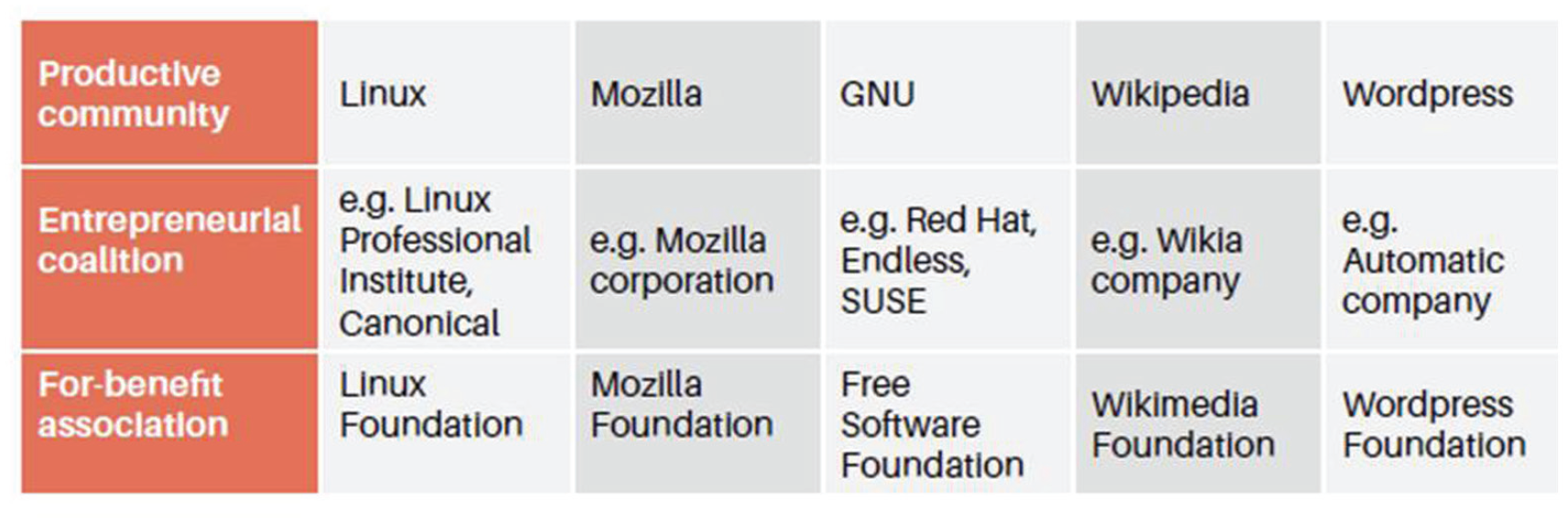
The three institutions that shape the model of open cooperativism.
To sum up, the three-zoned model of open cooperativism operates in terms of:
open protocols and open supply chains feeding into a circular economy designed to eliminate waste and reduce carbon emissions by applying sustainability standards such as renewable energy production, permaculture, organic food production, biodiversity, and so on.
open value accounting that equitably distributes value among multiple stakeholders according to relevant contributions.
value/asset reciprocity among ethical market entities and the commons established via copyfair licensing.
Open cooperatives internalize “negative externalities”; adopt multi-stakeholder governance models; produce material and immaterial commons; and are oriented toward a global political transformation, albeit locally based (Bauwens et al., 2019). The commons can render open cooperatives more competitive vis-à-vis closed proprietary enterprises and force capitalism to gradually adapt to a more inclusive, ecological, and equitable economy in the long run (Bauwens et al., 2019). Yet, the model of open cooperativism is rather a sketch than a blueprint, since experimentation lies at the core of it. Open cooperativism employs floating signifiers such as “friendly capital,” “transvestment,” “partner state,” “the commons,” and “ethical market entities” to transform capitalism into a post-capitalist ethical economy. As such, open cooperativism is rather a political strategy than a standard organizational model.
Eventually, open cooperativism cannot but reproduce the very contradictions of the commons (Papadimitropoulos, 2022). A copyfair license is still absent as well as a proper legal entity 2 that could bind together multiple stakeholders under the banner of an open cooperative. Open cooperatives are still in a hacking mode, tweaking existing legal systems to suit the commons. Open cooperatives are still limited in number, occupying a niche in the market. Distributed ledgers have the potential to widen the scope of open cooperativism by allowing projects to scale wide via decentralized governance models driven by algorithmic design (Fritsch et al., 2021; Rozas et al., 2018). Yet, distributed ledgers are still at their infancy facing a number of challenges such as mistrust, hacks and bugs in the code (Papadimitropoulos, 2022). Open cooperativism is still a working hypothesis needing to be tested empirically, before it crystallizes into a sustainable socio-economic model capable of challenging neoliberal capitalism.
Analytical framework
Kostakis and Bauwens introduce open cooperativism as a counter-hegemonic organizational model opposing the current hegemony of neoliberalism. However, the model of open cooperativism is still under-theorized. The paper employs Laclau and Mouffe’s (1985) discourse theory of hegemony to carve out a theoretical refinement of the model of open cooperativism with the aim to sharpen its political strategy vis-à-vis the current hegemony of neoliberalism. Laclau and Mouffe’s discourse theory of hegemony provides a theoretical toolkit to analyze P2P Lab and Tzoumakers as illustrative cases of cosmolocalism and open cooperativism, given their mutual commitment to radical and plural democracy.
The paper does not address the ontological, political and epistemological complications of discourse theory. Rather, it employs discourse theory as a research methodology and “thin” political theory (Townshend, 2004). Discourse theory offers a matrix of theoretical categories such as floating signifiers, nodal points and discourses that help map complex social phenomena such as social movements, the different logics of collective action, the political construction of social identities, the form of hegemonic strategies, the making and unmaking of political institutions, the formulation and implementation of public policy as well as central topics of political science such as governance and decision-making, to mention just a few (Howarth et al., 2020). Laclau and Mouffe’s discourse theory of hegemony is deemed particularly appropriate in explaining nascent fields of collective action and emergent organizational models such as commons-based peer production, cosmolocalism, and open cooperativism, especially since the latter are poised to challenge the current hegemony of neoliberalism.
Laclau and Mouffe’s discourse theory of hegemony introduces an ontology of the social that uproots any essentialist, deterministic, teleological, classist, statist, and techno-economistic ground by putting forward the political as the main driver of social change. Subjects, objects and systems are social constructs that undergo constant historical and social change as a result of political practices. The political is understood as the ontological essence of society that breeds on indeterminacy, contingency, heterogeneity, and difference to construct hegemonic power relations. The political does not only refer to politics in its institutionalized fashion but to any social activity that includes antagonism and the (un)fixing of power relations. Power is never foundational but relational. It marks the hegemony of one discourse over others as well as the inter-relational articulation of elements floating within and across nodal points and discourses.
Discourse is a precarious articulation of contingent elements into moments and nodal points. Elements are signifiers floating across moments. Moments are patterns that align around nodal points. Nodal points are privileged signifiers. A nodal point acts as a spider web that relates to many if not all moments in a discourse. A discourse may have one or several such nodal points. Significations included in a discourse do not only refer to linguistic utterances and textual analysis but also to the inter-relation of social imaginaries and practices, including technological artifacts, business models, means and relations of production, identity formation, and so on. A discourse articulates the inter-relation of subjects and objects in establishing social practices.
Subject positions are overdetermined or under-determined identities that criss-cross discourses. A woman can be a lesbian, a mother, a carpenter, a leftist, a community member, all at once. Antagonism juxtaposes discourses into chains of equivalence that seek to hegemonize the social space but are constantly subject to disarticulation caused by a chain of difference. Chains of equivalence condense meaning around two discourses simultaneously negating one another, whereas a chain of difference breaks chains of equivalences and pushes antagonism to the margins of society. For example, liberalism and Marxism have been competing for hegemony in the political space over the last three centuries. Hegemony occurs when a discourse occupies the center of the political space as in the case with neoliberalism today.
Laclau and Mouffe’s discourse theory analyses neoliberalism as a hegemonic discourse articulating floating signifiers such as “homo oeconomicus,” “profit maximization,” and “freedom of choice” around the nodal points of “market fundamentalism” and “privatization.” Discourses such as “libertarianism,” “liberalism,” “center-right wing populism,” “social democracy,” and “green growth” align around a chain of equivalence incorporating market fundamentalism and privatization at the core operation of a capitalist state.
Opposing neoliberalism, Laclau and Mouffe (1985) articulate discourses such as “autonomy,” “self-management,” and “the socialization of the means of production” around the empty signifier of “radical and plural democracy,” prefiguring a counter-hegemony without yet a fixed meaning and social practice. The paper reads the model of open cooperativism through the lens of Laclau and Mouffe’s discourse theory of hegemony. Open cooperativism articulates floating signifiers such as “self-governance,” “open value accounting,” “open supply chains,” and “circular economy” around the nodal points of “democracy,” “value distribution,” “openness,” and “sustainability” (Figure 2). Subject positions translate into policy makers, investors, prosumers and commoners participating in multi-stakeholder governance. Floating signifiers, nodal points and subject positions align around the discourses of “the commons,” “the partner state,” and “ethical market entities” to articulate a chain of equivalence seeking to dislocate the current hegemony of neoliberalism by fixing the counter-hegemony of open cooperativism around post-capitalism. Similarly to radical and plural democracy, post-capitalism is an empty signifier, since it is yet to be fixed and established as a social practice.
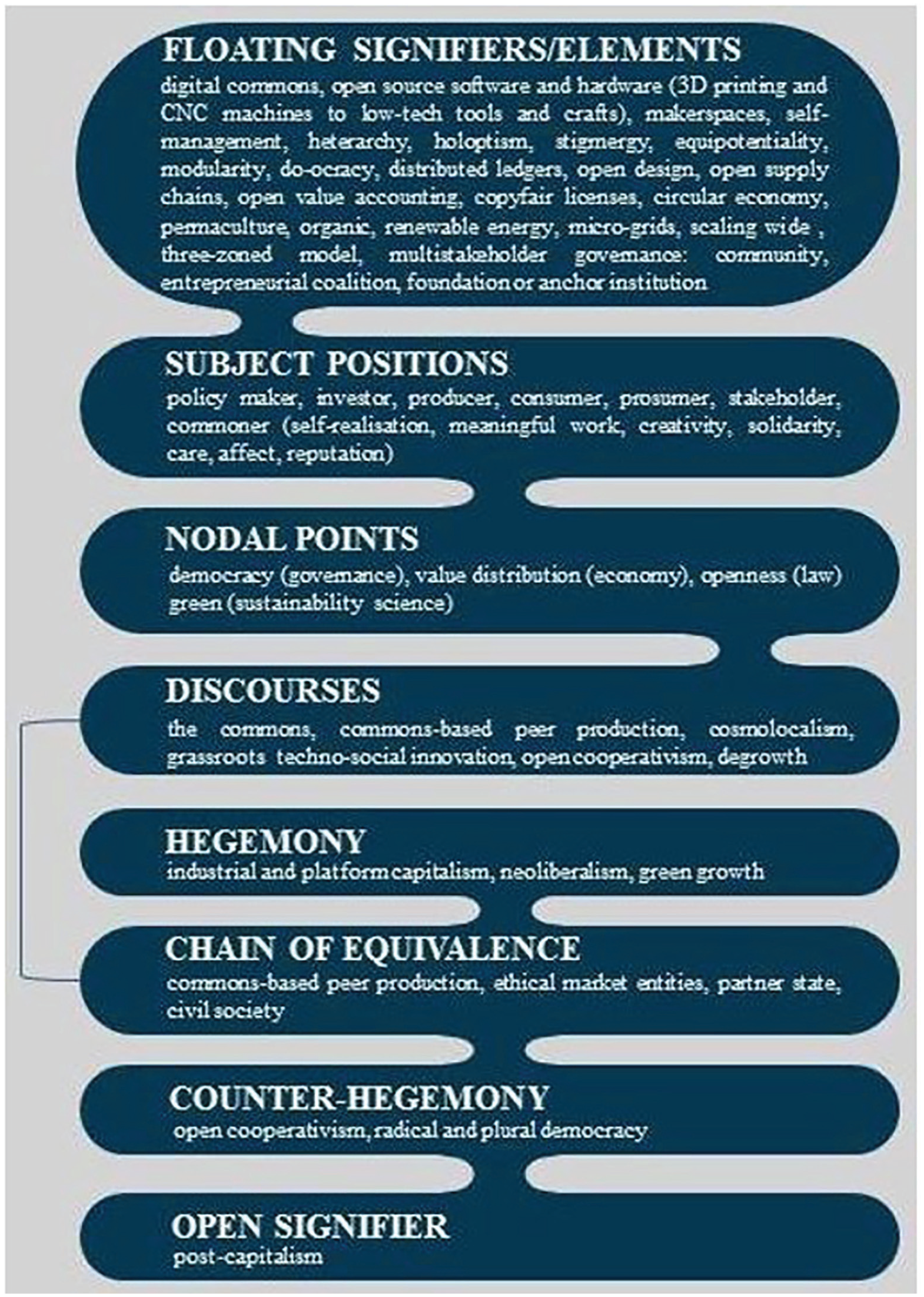
The counter-hegemony of open cooperativism.
Methodology
The paper employs Laclau and Mouffe’s discourse analytical toolkit to flesh out a theoretical refinement of the model of open cooperativism given its current undertheorized status. The goal is to sharpen its political edge in a mission to articulate a counter-hegemonic chain of equivalence between the commons, ethical market entities and a partner state, capable of challenging the current hegemony of neoliberalism. Thus, Laclau and Mouffe’s discourse theory of hegemony functions both as a “thin” political theory and a research methodology.
A case study approach (Yin, 2014) is most suitable when exploring novel organizational models such as cosmolocalism and open cooperativism. The paper reviews P2P Lab and Tzoumakers as illustrative cases of cosmolocalism and open cooperativism operating in the sectors of open science and open-source agriculture respectively. Data collection was based on literature review, participatory observation and interviews. Online material, books, reports, and journal articles written, edited and published by P2P Lab (see Appendix) were reviewed through discourse analysis. Floating signifiers, nodal points and discourses were classified into four coding themes: value proposition, governance model, economic policy, and legal policy. The four aforementioned coding themes came up when reviewing the literature (Fuster et al., 2017).
Semi-structured in-depth interviews (Fiss, 2009 were conducted with four core members of P2P Lab. Given that P2P Lab is the incubator of the Tzoumakers community, snowballing was used to interview members of the Tzoumakers community. In total 10 members of the P2P Lab and Tzoumakers community were interviewed (Table 1). Interview length ranged from 40 to 100 minutes. Interviews were recorded via Skype and transcribed using Descript. Interview questions revolved around the four coding themes identified through literature review on commons-based peer production (Fuster et al., 2017). The author also participated in a workshop and several online and offline discussions over Tzoumakers. Data from the interviews was then triangulated (Gibbert et al., 2008) with data collected via literature review and participatory observation.
Interviewees’ role and organization.
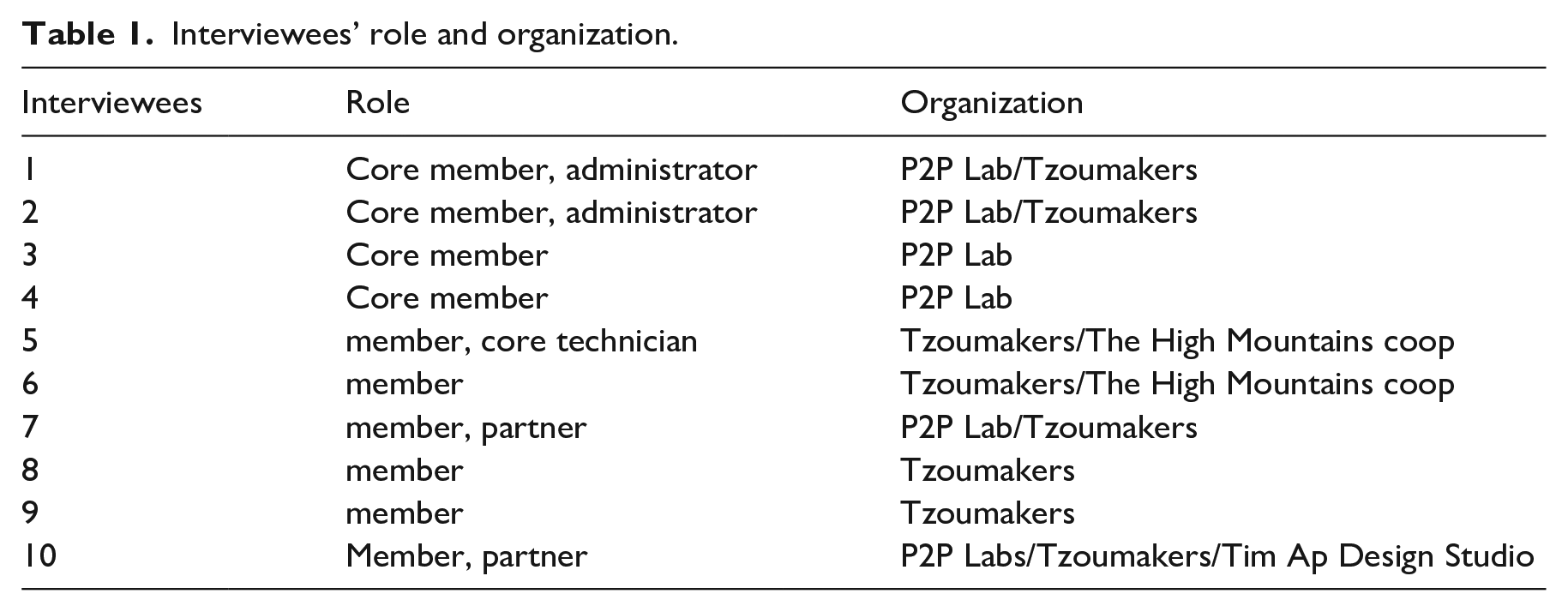
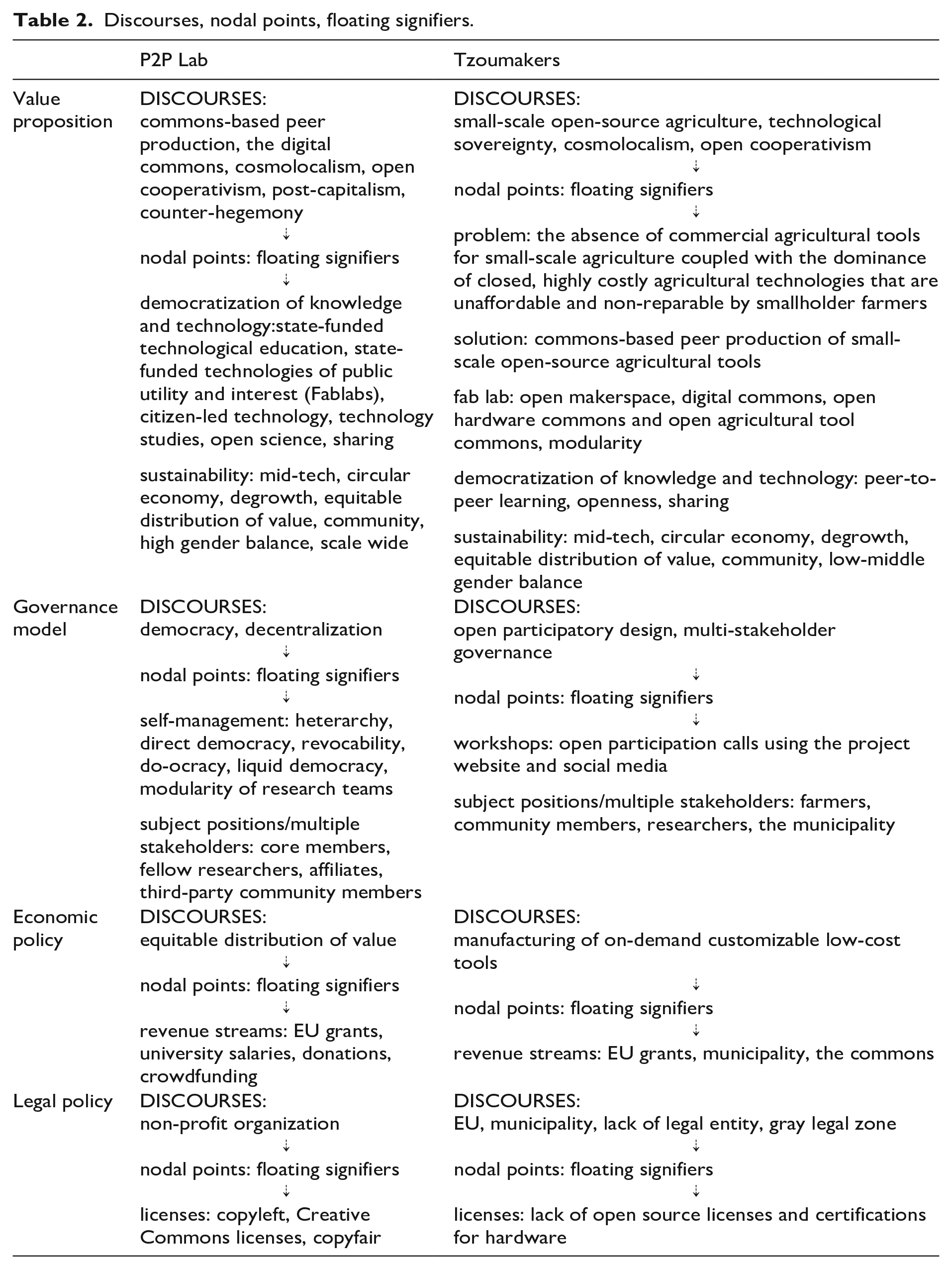
Table 2 lists discourses identified via data collection (literature review, participatory observation, and interviews). Discourses are classified according to the four coding themes identified through literature review. The findings demonstrate that the discourses of P2P Lab and Tzoumakers largely correspond to the discourses of cosmolocalism and open cooperativism (see Figure 2). Following Table 2, this section articulates analytically the discourses featuring in the cases of P2P Lab and Tzoumakers. Finally, the paper assesses the findings from a counter-hegemonic point of view in Section 5.
Discourses, nodal points, floating signifiers.
Value proposition
P2P Lab advocates the model of open cooperativism to remedy the defects of platform cooperativism. The model of open cooperativism articulates the discourses of “the commons,” “ethical market entities,” and “the partner state” under the counter-hegemony of post-capitalism aiming to challenge the current hegemony of neoliberalism. To this end, P2P Lab participates in multiple state-funded research programs (EU grants), cooperating with institutions, foundations, collectives and cooperatives working on cosmolocalism and commons-based peer production. P2P Lab also contributes to open science by means of open-access publications, reports, educational videos, and books on commons-based peer production, cosmolocalism and open cooperativism. P2P Lab drafts policy proposals in Greece and abroad to advance open-source technologies into a state-funded public utility constituted in established legal entities such as fablabs and multi-stakeholder cooperatives. P2P Lab scales horizontally through partnerships with like-minded researchers and commons-oriented institutions. P2P Lab is the incubator of Tzoumakers.
The whole idea stems from P2P Lab, a research collective based on Ioannina, where a group of like-minded scholars had some common research interests, one of which is a productive model we call “Design Global-Manufacture Local” where information, whether it is the design of some tool or a technological solution, is shared as a digital commons globally through the Internet and manufacturing takes place locally in Fablabs equipped with the necessary machinery. . .We submitted research proposals with the idea of making a Fablab at Ioannina. We chose to focus on small-scale farming because it was the main economic activity at the mountains of Tzoumerka situated close to Ioannina. When we won a grant we approached the municipality of Ioannina to seek permission for transforming the cultural center at the village of Kalentzi at a Fablab. We then started equipping the Fablab with the necessary machinery and reached out to local farmers to bring them together into a community and start workshops on manufacturing agricultural tools for small-scale production. (Interviewee 1, translated by the author)
The Tzoumakers seek to tackle the absence of commercial agricultural tools for small-scale agriculture as well as the hegemony of closed, highly costly agricultural technologies that are unaffordable and non-reparable by smallholder farmers (Pantazis and Meyer, 2020). As such, the Fablab of Tzoumakers (Figure 3) caters for the provision of machinery and facilities for the manufacturing of small-scale open-source agricultural tools, using 3D printer, welding station, laser cutter, milling machine and sensors (Pantazis and Meyer, 2020). The FabLab is equipped to support manufacturing activities not limited to the agricultural sector. Thus far, Tzoumakers have organized 30 workshops and created 13 agricultural tools. 3 Some examples include a legume-harvesting machine, a hammering fencing pole, a tilling fork and an aromatic herb grinder. The blueprints, bills of materials, and assembly instructions are open sourced on the project’s website.
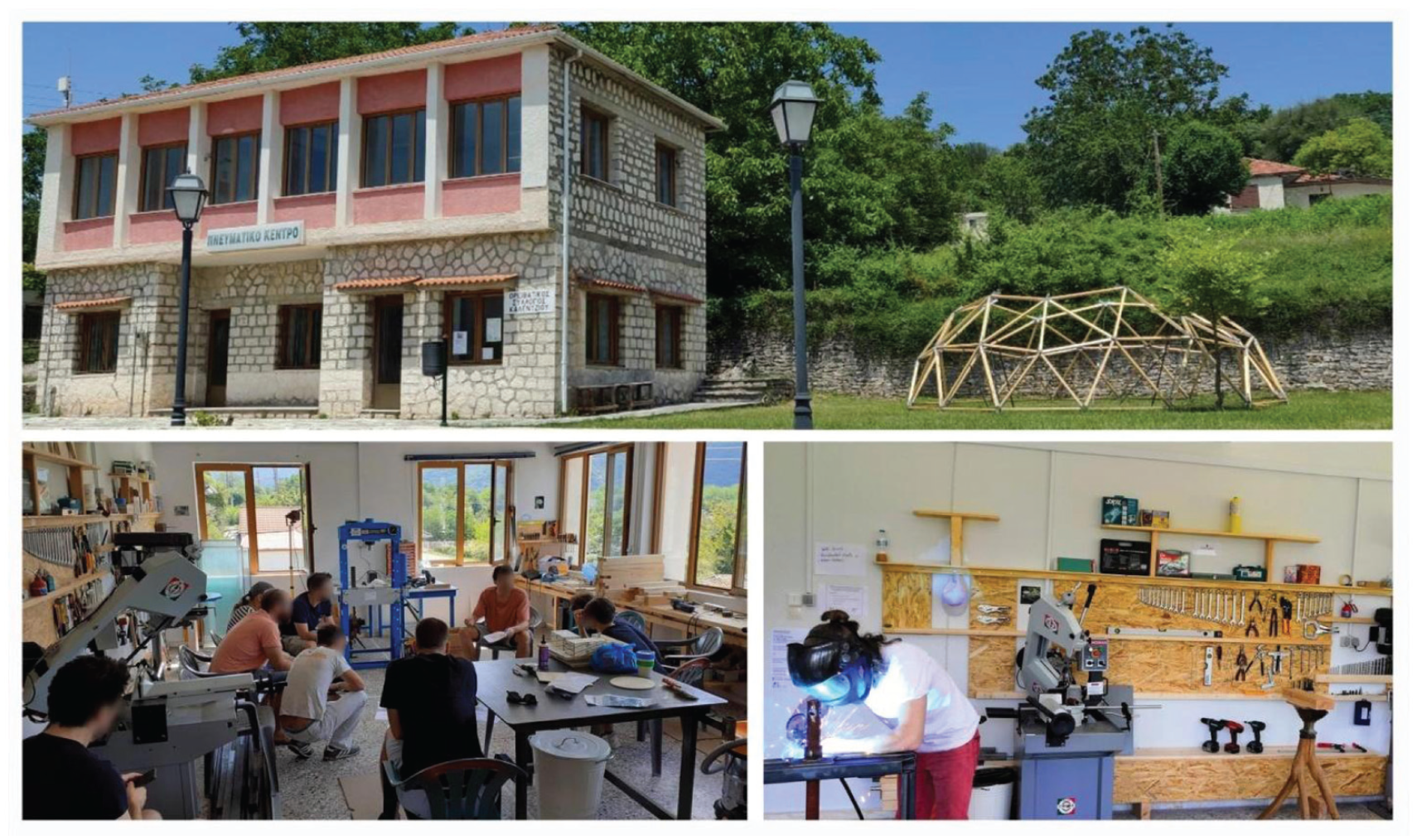
Tzoumaker’s Fablab.
P2P Lab is dedicated to promoting mid-tech, clean energy, and a circular economy. The agricultural tools manufactured by Tzoumakers are made up of recyclable local materials. The community of farmers is also engaged in organic farming and permaculture.
P2P Lab features a high degree of gender balance (48% are women) within its research collective. Tzoumakers, on the other, feature a low degree of gender balance (70% of the community consists of men). Of particular importance is women participation in activities traditionally performed by men such as metal cutting and welding, as evidenced in the Tzoumakers community. Women participation has been referred to as an attempt of gaining autonomy vis-à-vis patriarchy by acquiring new skills and engaging in DIY (Do It Yourself) practices.
I do not see why a woman is not capable of cutting and welding metal provided that all necessary precautions are in place. . .It was an interesting experience for me overall. . .It striked me that i could equally participate in the design process and propose relevant ideas (Interviewee 8)
Governance model
The P2P Lab consists of 20–25 members, ranging from core team members and fellow researchers to affiliates and third-party community members. The governance model is heterarchy, featuring elements of democracy, modularity, direct, and liquid democracy. Research management is assigned to revocable project coordinators, elected through processes of direct democracy. Annual general assemblies and monthly coordination calls constitute the overarching decision-making process of the research collective.
There are four different levels of involvement in P2P Lab. We follow the onion model associated with organizations of commons-based peer production, meaning that the first level consists of core members, the second level of fellows, the third level of affiliates, the fourth level of people participating in the organization without getting paid. Each level of involvement has a different level of participation in decision-making. Core members are actually like being members of a cooperative. . .They decide for everything. . .Fellows participate in general assemblies, they can express their opinion but they do not have a voting right. . .Affiliates do not participate in general assemblies. To become a core member, one usually passes through the stages of being an affiliate or fellow. Salaries are collectively co-determined irrespective of the level of involvement. Transparency is absolute in our financial statements internally. Everything is based on meritocracy and trust. . .We build the community organically from the ground up and when we win grants we distribute salaries accordingly. Long-term strategic research decisions are taken by core members, with the participation of fellows and affiliates, whereas mid-term and short-term decisions related to research projects are taken by decentralized research groups. Each research group is assigned a coordinator who is responsible for ensuring the orderly preparation of project deliverables. Coordination does not mean leadership but combines features of heterarchy, do-ocracy, direct or liquid democracy. (Interviewee 4, translated by the author)
Tzoumakers is the Greek pilot funded by the European Research Council, embedded into the overall research design of P2P Lab. As such, the community of Tzoumakers, which numbers around 15–40 members, follows the P2P Lab’s initial top-down planning of the workshops, combined with a bottom-up approach, since Tzoumakers’ community members have an active role in the design and manufacturing of the tools. Tzoumakers’ community members thus participate bottom-up in the decision-making process. In addition, open call participation via social media and the Tzoumakers website invites potential participants to submit proposals for the manufacturing of demand-driven customizable tools that serve local needs. As soon as a workshop is set, a coordinator, whether a P2P Lab member or a local technician, is assigned to organize the manufacturing of the tool, which is co-designed democratically by all participants (Interviewee 1). For example, the stainless grinder of aromatic herbs was manufactured upon demand of farmers located in the island of Crete, who were not willing to pay the amount of 12,000 euros to buy a commercial grinder.
The Tzoumakers community exhibit diverse motivations in their participation in the workshops: academic interest, professional interest, personal interest, the sense of community, the sharing of knowledge, economic gain, self-fulfillment, and so on.
My research at the university in open-source code as well as my culture coming from the village, where we have learned to work together and help each other, motivated me to participate in the community (Interviewee 9) (. . .) Sharing is a common practice in villages at the mountain. . .we need to help each other in order to be resilient. . .also we have a problem to solve, which is the lack of relevant tools to use in our work (Interviewee 7) (. . .) The whole project aroused my curiosity over people of all ages participating in a community to manufacture agricultural tools in the village. . .This whole thing was beautiful to see because I live in a village and we do not often see such collective activities happening here (Interviewee 8) (. . .) I am a farmer and member of a cooperative as well as president of the association of social enterprises here in Ioannina, therefore I have multiple interests in participating in the project (Interviewee 6) (. . .) I am a third-party member in P2P Lab. . .I grew in the countryside and have some experience in agriculture. . .I also run a Fablab at Ioannina in industrial design and 3D printing. . .So the whole concept of Tzoumakers was very interesting to me from the very beginning (Interviewee 10) (translated by the author)
Economic model
P2P Lab’s economic model comprises university salaries with EU grants. The allocation of grants toward research projects is transparent and collectively agreed upon by core members. The Tzoumakers project is mainly funded by P2P Lab. In addition, the municipality pays for the rent and the bills of the Fablab.
Tzoumakers is an early-stage project with a yet unclear organizing structure. The community is currently in search of a business model that would secure the sustainability of the Fablab in the long run. For example, the manufacturing of tools could meet local demand provided that fixed costs have been covered upfront by farmers interested in sharing on-demand tools. If ethical market entities would opt in to manufacture tools as commodities to sell in the market, they should pay a fee back to the Fablab in terms of a copyfair license.
A number of organizational models are on the table such as integrating the Fablab into the operations of the municipality or adopting a cooperative model. Some are arguing for transferring the Fablab deeper within the premises of the Tzoumerka mountains and turning it into a hub of local crafting and manufacturing for all sorts of local entrepreneurs (Interviewee 7). Others argue for turning the lab into a multi-stakeholder cooperative for collectives and individuals such as ethical market entities, farmers, architects, designers, agro-tourists, and artists (Interviewee 2). It has been also proposed that a foundation could undertake the financing of the lab (Interviewee 10).
P2P Lab suggests that the municipality undertake the operation of the Fablab and employ people to run it. This way, the Fablab would be open daily for people seeking to manufacture or maintain tools, machines, artifacts, etc. Alternatively, the Fablab could be run by local members in terms of a cooperative that could serve several functions, from organizing educational workshops to renting out the Fablab to ethical market entities and/or freelancers willing to make use of the equipment to manufacture stuff. The cooperative could also receive orders from other cooperatives and ethical market entities and manufacture on-demand tools. Depending on the type of stakeholders, the Fablab could adopt a relevant business model and legal entity. . .One vision for Tzoumakers would be to operate as an open platform for multiple collective projects. In this case, P2P Lab could be part of Tzoumakers operating as an open multi-stakeholder cooperative following the principles of commons-based peer production and cosmolocalism (Interviewee 2, translated by the author)
The community still lacks a business model and a relevant legal entity to monetize value creation and include all stakeholders in value production and distribution. This is due partially to the immaturity of the project. But perhaps also the lack of financial floating signifiers such as “funding,” “stakeholders,” “revenue model,” and “revenue streams” reflects the contradiction between commerciality and non-commerciality, manifested within commons-based peer production (Fuster et al., 2017).
Law policy
P2P Lab is a non-profit organization. Most academic publications are released under the Creative Commons license.
We consider ourselves to be a multi-stakeholder cooperative but there is no legal framework to cover the way we organize in P2P Lab. So we must comply with the existing legal framework. We also think that we are an open cooperative since a large part of our operation is open. . .We share our business model with other cooperatives in sectors as diverse as hardware (CommonsLab) and energy (Koinergeia). . .We contribute to open science with our research. (Interviewee 4, translated by the author)
A number of cooperatives have been involved in the Fablab of Tzoumakers for their own purposes. Farmers, food processors, livestock farmers, beekeepers, carpenters, artists, makers, and scientists have used the tools of the Fablab to make all sorts of artifacts. 4 However, Tzoumakers operate in a gray legal zone. The tools manufactured are shared within the community but they lack proper licensing and certification.
The lack of an appropriate institutional framework for the constitution of an open cooperative is associated also with other potential problems. For example, what sort of license of operation the Fablab would have? Is it a craft? Is it a micro-factory? Is it a commercial enterprise? Who is an employee? Who is a community member? Is the user, whether a farmer or a citizen or a company, of the Fablab going to pay a subscription fee? What would be the legal license of using the artifacts? There is the idea of patenting first the tools and then opening them up for use to avoid cooptation. . .But even if patenting a tool, it may contain parts that are already patented. . .So open-source licensing is extremely complicated for hardware. . .Is a tool properly certified? If not, who is responsible if a tool harms a farmer? So we may need to invent a collective open-source ISO for hardware. (Interviewee 2, translated by the author)
Open-source hardware still lacks the equivalent licensing of open-source software such as Creative Commons and Copyleft. The legal status of open-source hardware reflects the contradiction between closeness and openness, which has broader consequences for the economic sustainability of commons-based peer production (Thomas, 2019: 280).
Articulating the P2P Lab and Tzoumakers counter-hegemony
The paper illustrates that P2P Lab and Tzoumakers integrate core features of CBPP and cosmolocalism in their operation. They produce digital commons and open-source hardware through practices of sustainability, sharing, openness, modularity and self-management. P2P Lab and Tzoumakers prefigure a sketch of open cooperativism inasmuch as they comprise: (1) productive communities of researchers, farmers and technicians; (2) ethical market entities such as social enterprises and cooperatives; and (3) the EU and the municipality of Ioannina prefiguring the role of a partner state. Yet, P2P Lab and Tzoumakers are still far from articulating a chain of equivalence to establish a counter-hegemonic block of open cooperativism capable of challenging neoliberalism.
Contrary to Ossewaarde and Reijers’ allegations, the paper shows that the P2P Lab and Tzoumakers community consists of multiple stakeholders/subject positions exhibiting diverse motivations, ranging from academic, technical, personal and professional interest to the joy of participation, sharing, the sense of community, and so on. Anti-capitalist, liberal, post-capitalist and all sorts of socio-political and environmental discourses abound in the P2P Lab and Tzoumakers community. In particular, Tzoumakers support a common thread of argument penetrating Ossewaarde, Reijers and Kostakis’ discourses inasmuch as they showcase the connection of the digital commons with emancipatory practices embedded in the ecological commons. Tzoumakers add a cosmolocal link to Ostrom’s ecological commons by contributing to open agriculture. However, Tzoumakers is still a project in the making facing numerous challenges. There is, still, low demand for small-scale customizable agricultural tools in Greece. P2P Lab members admit that they may have not sufficiently communicated their project to local farmers (Interviewee 2). Low demand is further attributed to suspicion toward EU grants (Interviewees 1 and 2), non-familiarity with digital technologies (Interviewee 2) and the lack of the institutional framework (legal entity, licenses and certifications) necessary to lay the foundation for the establishment of an open cooperative that brings together a partner state and ethical market entities under commons-based peer production (Interviewee 4).
One could further argue that cosmolocal small-scale mid-tech solutions do not fit capitalist economies of scale and locked-in neoliberal farming practices. Agriculture is dominated globally by large corporations manufacturing expensive high-tech machines and tools intended mostly for large-scale farmers (Ioris, 2018; Rehman et al., 2017). Cosmolocalism cannot compete with conglomerates and corporations in terms of capital, marketing and know-how.
Members of P2P Lab (Interviewee 4) and Tzoumakers (Interviewee 6) counter-argue that cosmolocalism occupies niches of economic activity that are not profitable for capitalism such as developing small-scale mid-tech tools for farmers located in the mountains. Capitalism does not invest in small-scale agriculture. Therefore, cosmolocalism could occupy niches unoccupied by capitalism and gradually scale wide into a counter-hegemonic organizational model that corrodes capitalism from within.
Indeed, mountains cover a large part of Greek land and commercial agricultural tools are not designed to suit the needs of small-scale farmers located in the mountains. The average size of holdings in Greece is 4.8 hectare per farm, meaning that most Greek farms are small-sized (Table 3. Eurostat, 2018). Smallholder farms (farms <2 hectares) account for 24% of agricultural land globally and produce 32% of the world’s food (Figure 4).
Farm structure, key indicators, Greece, 2000 and 2010
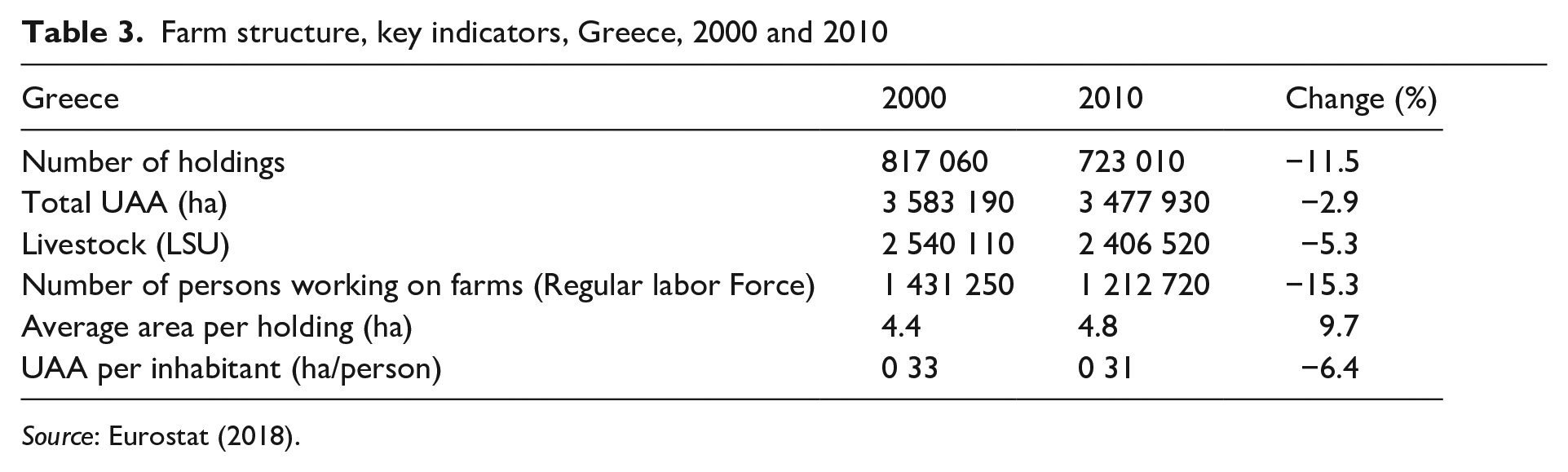
Source: Eurostat (2018).
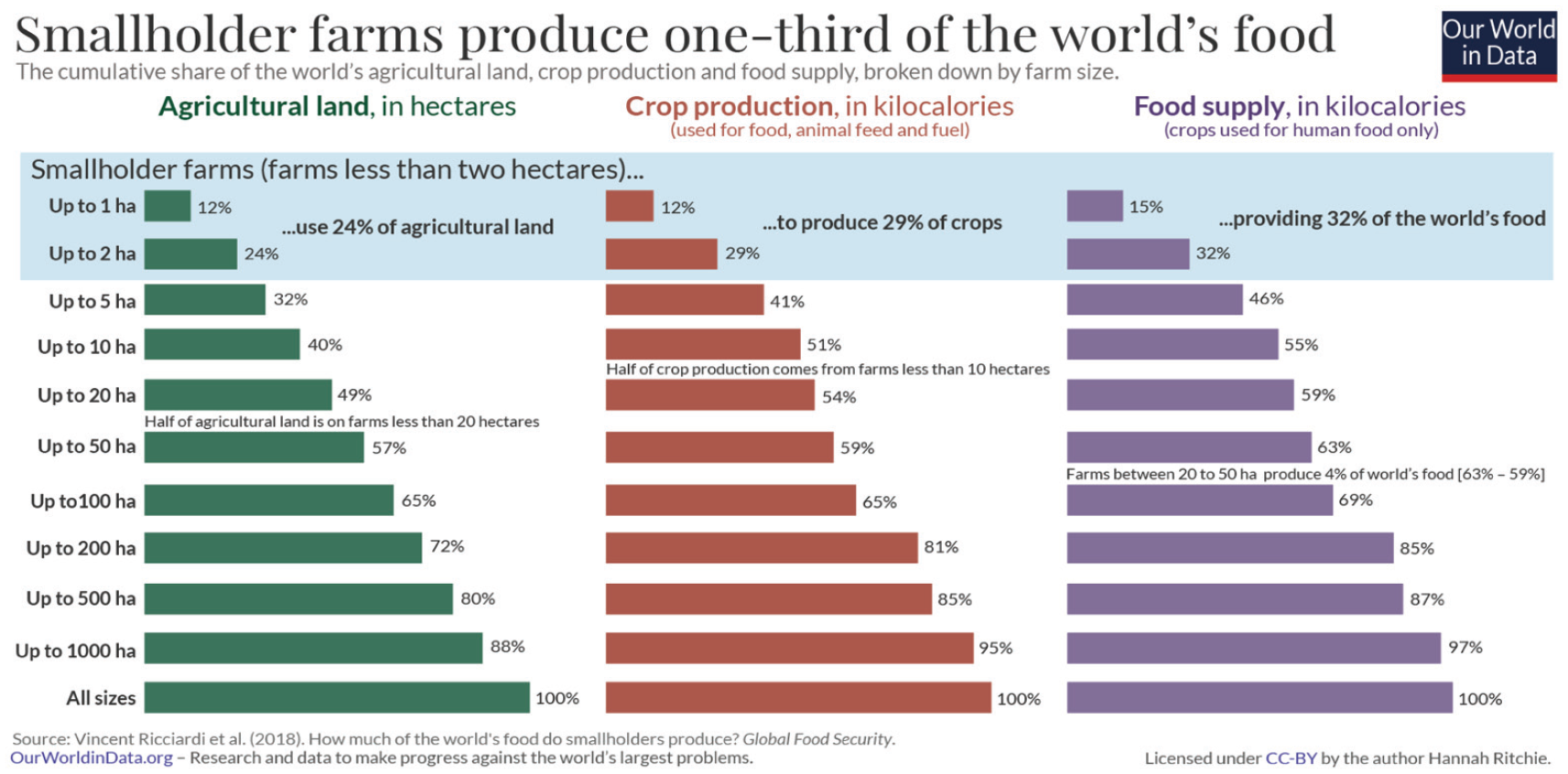
Farm size and productivity.
Statistical data provide fertile ground for cosmolocalism to scale wide in the agricultural sector, since a significant percentage of agriculture is still not dominated by industrial agribusiness. However, cosmolocal open-source hardware solutions for agriculture are still at an embryonic stage. Smallholder farmers are often forced to adopt closed, commercial, proprietary and business-like practices, aligning family-run enterprises with industrial agribusiness featuring large conglomerates and corporations, economies of scale, expensive high-tech machinery, monocultures, and the use of biochemicals (Ioris, 2018). Even in countries such as the USA and France with a well-functioning institutional framework that subsidizes small-scale agriculture, successful open-source hardware projects such as L’Atelier Paysan and Farm Hack—from where Tzoumakers have been inspired (Giotitsas, 2019)—occupy a niche.
Cosmolocalism faces plenty of challenges going forward. Numerous contradictions plague the very operation of commons-based peer production such as commerciality versus non commerciality, closeness versus openness, privacy versus transparency, gated communities, ideologies, fragmentation, and so on (Papadimitropoulos, 2022). It remains to be seen if Tzoumakers can contribute to the articulation of a chain of equivalence between ethical market entities, the commons and a partner state. Missing thus is a chain of equivalence that would create cross-sectoral synergies in agriculture and beyond, beginning from organic farming, permaculture, thermodynamic flows of materials and energy to the manufacturing of agricultural tools, food distribution, commons-based finance, open supply chains, open book accounting, and so on. A chain of equivalence would expand into civil society and politics, including institutional support and funding, win-win public-private-commons partnerships, prosumer incentives, training, education and upskilling.
All strategies had always encountered obstacles. . .the first capitalist enterprises that applied Adam Smith’s distribution of labour encountered problems with guilds and enterprises controlled by the King who holded the monopoly of issuing money, etc. . .Now. . .different sectors require different strategies. . .the sector of software is different than the sector of hardware. . .We try to apply cosmolocalism wherever there is unoccupied space by capitalism as in the case of Tzoumakers with small-scale local agriculture. . .In the sector of open-source software there are contradictions and fragmentation. . .A lot of battles were lost there. . .Open-source software, for example, could be funded by the EU, public institutions and universities instead of corporations such as Google and Microsoft. . .The same applies to hardware. . .For cosmolocalism to scale wide, it is essential that it be communicated via state-funded Fablabs located in municipalities. Like hospitals and elderly care centers, the municipalities could host educational centers for open-source technologies of public utility. This could be a catalyst for communicating the digital commons across the public. . .Rome was not built in one day. . .Capitalism began with one pin factory and it took 250 years to spread. . .Cosmolocalism now builds software, satellites, agricultural tools, windmills. . .Post-capitalism takes time. (Interviewee 4, translated by the author)
Just as it took 250 years for capitalism to replace feudalism as a mode of production, it is assumed that it may also take time for cosmolocalism to transform capitalism into post-capitalism. P2P Lab and Tzoumakers could contribute to the articulation of a post-capitalist chain of equivalence criss-crossing the commons, ethical market entities and a partner state via cross-sectoral value propositions, inclusive governance and economic models, innovative law policies and open sustainability standards. A chain of equivalence would help cosmolocalism scale wide across the economy, civil society and politics to articulate the counter-hegemony of open cooperativism aiming to challenge the current hegemony of neoliberalism by forcing capitalism to adjust to a post-capitalist commons-oriented transition.
Conclusion
The digital commons support novel organizational models such as cosmolocalism and open cooperativism that seek to drive capitalism toward a commons-based post-capitalist transition. They set out to challenge the current hegemony of neoliberalism by establishing the counter-hegemony of open cooperativism. The paper engages in the debate between Marinus Ossewaarde, Wessel Reijers, and Vasilis Kostakis over the emancipatory potential of the digital commons. It employs Laclau and Mouffe’s discourse theory of hegemony to review P2P Lab and Tzoumakers as illustrative cases of cosmolocalism and open cooperativism, capable of articulating a counter-hegemony vis-à-vis the current hegemony of neoliberalism. P2P Lab and Tzoumakers showcase core features of cosmolocalism and prefigure a sketch of open cooperativism. Contrary to Ossewaarde and Reijers’ allegations, the P2P Lab and Tzoumakers community exhibits diverse socio-political and environmental motivations, ranging from ecological and communitarian to anti-capitalist and post-capitalist discourses. Eventually, the review of P2P Lab and Tzoumakers helps reconcile Ossewaarde, Reijers, and Kostakis’ arguments by providing a cosmolocal link to Ostrom’s ecological commons. Thus, cosmolocalism helps further the emancipatory potential of Ostrom’s ecological commons to which Ossewaarde and Reijers subscribe.
P2P Lab is a well-established research collective that scales horizontally by gaining EU grants and making research collaborations. Tzoumakers, on the other, is still a project in the making, backed by P2P Lab, the municipality of Ioannina and a community of farmers and entrepreneurs located in Ioannina and Tzoumerka. Both P2P Lab and Tzoumakers are promising as illustrative cases of the digital commons supporting novel organizational models such as cosmolocalism and open cooperativism. However, for the digital commons in general and P2P Lab/Tzoumakers in particular to contribute to a commons-based counter-hegemonic transition toward post-capitalism, it is necessary to link to a chain of equivalence criss-crossing the commons, ethical market entities and a partner state via cross-sectoral value propositions, inclusive governance and economic models, innovative law policies and open sustainability standards.
Footnotes
Appendix
P2P Lab and Tzoumakers empirical material.
| Books |
|---|
| Bauwens M, Kostakis V and Pazaitis A (2019) Peer to Peer: The Commons Manifesto. London: University of Westminster Press. |
| Giotitsas C (2019) Open Source Agriculture. Grassroots Technology in the Digital Era. Switzerland: Palgrave Macmillan. |
| Kostakis V and Bauwens M (2014) Network Society and Future Scenarios for a Collaborative Economy. London: Palgrave Macmillan. |
| Reports |
| Bauwens M and Niaros V (2017) Value in the Commons Economy: Developments in Open and Contributory Value Accounting. Report. Germany, The Netherlands: Heinrich-Böll-Foundation & P2P Foundation. |
| Bauwens M and Pazaitis A (2019) P2P Accounting for Planetary Survival. Amsterdam, Berlin, Lörrach: The P2P Foundation, Guerrilla Foundation and Schöepflin Foundation. |
| Bauwens M, Kostakis V, Troncoso S and Utratel A M (2017) Commons Transition and P2P: A Primer. Amsterdam: Transnational Institute. |
| Bauwens M and Niaros V (2017) Changing Societies Through Urban Commons Transitions. Berlin: Heinrich Böll Stiftung. |
| Bauwens M and Pazaitis A (2019) P2P Accounting for Planetary Survival. Amsterdam, Berlin, Lörrach: The P2P Foundation, Guerrilla Foundation and Schöepflin Foundation. |
| Giotitsas C and Ramos J (2017) A New Model of Production for a New Economy, Two Cases of Agricultural Communities. London: The New Economics Foundation. |
| Journal articles |
| Bauwens M and Kostakis V (2014) From the communism of capital to capital for the commons: Towards an open co-operativism. tripleC: Communication Capitalism & Critique 12(1): 356–361. |
| Bauwens M and Pantazis A (2018) The ecosystem of commons-based peer production and its transformative dynamics. The Sociological Review Monographs 66(2): 302–319. |
| Giotitsas C, Nardelli P H.J., Kostakis V and Narayanan A (2020) From private to public governance: The case for reconfiguring energy systems as a commons. Energy Research & Social Science 70 101737. |
| Giotitsas C, Nardelli P H.J., Williamson S, Roos A, Pournaras E and Kostakis V (2022) Energy governance as a commons: Engineering alternative socio-technical configurations. Energy Research & Social Science 84 102,354. |
| Kallis G, Kostakis V, Lange S, Muraca B, Paulson S, and Schmelzer M (2018) Research on degrowth. Annual Review of Environment and Resources 43(1). |
| Kostakis V, Fountouklis M and Drechsler W (2013) Peer production and desktop manufacturing: The case of the helix_t wind turbine project. Science, Technology & Human Values 38(6): 773–800. |
| Kostakis V and Giotitsas C (2014) The (a)political economy of bitcoin. tripleC 12(2): 431–440. |
| Kostakis V and Giotitsas C (2020) Small and local are not only beautiful; They can be powerful. Available at: https://antipodeonline.org/2020/04/02/small-and-local/ (accessed 21 August 2021) |
| Kostakis V, Niaros V, Dafermos G and Bauwens M (2015) Design global manufacture local: Exploring the contours of an emerging productive model. Futures, 73, 126–135. |
| Kostakis V, Latoufis K, Liarokapis M and Bauwens M (2016) The convergence of digital commons with local manufacturing from a degrowth perspective: Two illustrative cases. Journal of Cleaner Production 30, 1–10. |
| Kostakis V, Roos A and Bauwens M (2016) Towards a political ecology of the digital economy: Socio-environmental implications of two competing value models. Environmental Innovation and Societal Transitions 18: 82–100. |
| Niaros V, Kostakis V and Drechsler W (2017) Making (in) the smart city: The emergence of makerspaces. Telematics and Informatics 34 1143–1152. |
| Pazaitis A, De Filippi P and Kostakis V (2017) Blockchain and value systems in the sharing economy: The illustrative sase of Backfeed. Technological Forecasting and Social Change 125, 105–115. |
| Pazaitis A, Kostakis V and Bauwens M (2017) Digital economy and the rise of open |
| cooperativism: The case of Enspiral Network. Transfer: European Review of Labour and Research 23(2): 1–16. |
| Pazaitis A and Kostakis V (2021) Are the most influential websites peer-produced or price-incentivized? Organizing value in the digital economy. Organization 29 (4): 1–13. |
| Pantazis A and Meyer M (2020) Tools from below: Making agricultural machines convivial. The Greek Review of Social Research 155 39–58. https://doi.org/10.12681/grsr.24828 |
| Priavolou C (2018) The emergence of open construction systems: A sustainable paradigm in the construction Sector? Journal of Future Studies 23(2), 67–84. |
| Robra B, Pazaitis A and Latoufis K (2021) Counter-hegemonic decision premises in commons-based peer production: A degrowth case study. tripleC: Communication Capitalism & Critique 19(2): 343–370. |
| Websites |
| P2P Lab (n.d.) Projects. Available at: https://www.p2plab.gr/en/archives/category/projects (accessed 21 December 2022) |
| Tzoumakers (n.d.) Tools. Available at: https://www.tzoumakers.gr/tools/ (accessed 21 December 2022) |
| Cosmolocalism (n.d.) Publications. Available at: https://www.cosmolocalism.eu/publications/ (accessed 21 December 2022) |
Funding
The author disclosed receipt of the following financial support for the research, authorship, and/or publication of this article: Principal Investigator in the research program “Techno-Social Innovation in the Collaborative Economy,” funded by the Hellenic Foundation for Research and Innovation (H.F.R.I.) for the years 2022-2024.
