




Abstract
This study investigates the relational dynamics of embodied agency in the empirical context of ballet. Drawing on 15 ethnographic and 6 photo-elicitation interviews with professional dancers from the Finnish National Ballet, this study analyses the ways in which ballet dancers negotiate their agency in relation to other agents in their everyday work. We show how ballet dancers have to balance between satisfying the needs of the invisible gaze through different layers of relationality, on the one hand, and aiming to create room for their intimate, embodied experiences on the other. This study contributes to the existing knowledge on agency at the workplace by illustrating how it is grounded in the body in relational ways. By furthering the phenomenological understanding of subject formation as a form of intersubjectivity, this study shows how the working self is always relationally constructed, open to ambiguity and, sometimes, ‘caught between’ achieving agency and the objectifying scrutiny of the self and others between the visible onstage and hidden backstage. Consequently, this study offers in-depth insights into and parallels for intersubjective development in organisations.
Keywords
Introduction
I feel that dance is a performing art and that the audience has a huge meaning. And the audiences are very different each evening. But if we discuss the everyday and not the performing, per se, then perhaps there’s that kind of relationship where I try not to think so much about how this looks on the outside or how the spectators might receive this. For me, it is very important to be as honest as possible, as open as possible. I try to keep that in mind. Regardless, you notice it. If, for instance, someone enters to follow the rehearsal—someone who hasn’t been there before—you instantly feel that there’s a little element of an audience present in the room. In the opera, where the doors to the halls are often open, it is instantly a different thing if a spectator enters. So, I do recognise that kind of behaviour, where there’s an urge to perform. (In-depth interview extract)
This paper draws attention to the ways in which 15 professional female ballet dancers working for the Finnish National Ballet seek to co-construct embodied agency in relation to their audiences, choreographers and other meaningful agents who significantly affect these body-oriented professionals during their work. Since ballet is meant to be performed for a designated audience by creating gracefulness, ‘lightness’ and enchantment through highly formalised movements within disciplined kinaesthetic frames (Biehl, 2017), this audience also entails powerful scrutiny and a significant presence for the dancers (Aalten, 2007; Hoogsteyns, 2012). In the above quote, one of the ballet dancers discusses her nuanced relationship with this powerful felt agent – the audience – and how it fundamentally affects her bodily sensations and work performances. She indicates a dependence on the audience’s acceptance, being subtly influenced by its presence, and that her respect for its potentially critical gaze is present even during rehearsals. In other words, the ‘invisible gaze’ of an audience seems to affect the movements, somatic cues and gestures of the dancers (Biehl, 2017). In ballet, as it is intensely focused on the body and gendered performance, the scrutiny of the gaze is not limited to the audience. In this context, performance space, self-discipline and occupational culture control enable action, and the senses are carefully structured and technically mediated for audiences to be moved.
The moving, sensate body that interacts with the world has been taken for granted as either an absent presence or a foregone conclusion in our scholarly field (Hassard et al., 2000). While there has been a ‘turn towards embodiment’ within organisation studies (Dale, 2001; Shilling, 2003; Wolkowitz, 2006), with an ever-growing interest devoted to embodied experiences at work (e.g. Brown et al., 2011; Huopalainen and Satama, 2019) that also derive insights from dance as (a metaphor for) organisation (Biehl, 2017; Chandler, 2012; Mandalaki, 2019; Mandalaki and Pérezts, 2022; Slutskaya and De Cock, 2008), the embodied, micro-level achievement of agency remains relatively under-researched within the existing scholarly debates. Furthermore, agency has traditionally been conceptualised in a surprisingly disembodied, cognitive and rational manner – as a singular entity with particular properties rather than as a relational process of entangled, human and nonhuman entities (Zovina and Avison, 2013). Although aeved at the body level through associations withother moving bodies. In this study, we address these critical neglects and turn tophenomenology (Diprose, 1994; Merleau-P few examples do exist in thebroader social science literature (Bruun and Langlais, 2003; Campbell et al.,2009; Noland, 2009), we still know relatively little about how agency isachionty, 1964) for further theoretical insight.
Theoretically, we conceptualise embodied agency as a relational, ongoing process that involves symbols, gestures and bodily movements (Liimakka, 2008; Noland, 2009; Satama and Huopalainen, 2018). Existing research on the agency of ballet dancers (Aalten, 2007; Hoogsteyns, 2012; Satama and Huopalainen, 2018; Schwaiger, 2012) suggests that the contemporary ballet culture – which is an athletic, aesthetic and kinaesthetically political (Biehl, 2017) practice – both represses and enables the dancers. Within this highly controlled setting, the structures, materialities and people co-create knowledge through mutual interactions, meticulous rehearsals, stylised outfits and choreographies. In other words, the dancers need to be able to relationally experience, transform, control and define their own bodies when working (Aalten, 2007; Hoogsteyns, 2012; Liimakka, 2008) through bodily interactions with others. In this manner, embodied agency only becomes possible through relationality and bodily performance in action (Ryömä and Satama, 2019; Schwaiger, 2012).
The intriguing paradox of agency repression and enablement (Hoogsteyns, 2012; van Amsterdam et al., 2022), body centrality, movement repetition and refinement, performance, audience, cultural norms and the associated materiality significance, makes ballet a particularly suitable empirical context for investigating theories about agency as an embodied and relational endeavour Raelin, 2016; Ryömä and Satama, 2019). The suitability of ballet as empirical context of this study lies also in its capability of lending itself for the fascinating exercise of analysing the gaze of an ‘invisible’ audience and for the distinction of the performer-audience relationship between the onstage and offstage.
Phenomenological studies have been criticised for being too focused on subjective experience and accounts of first-person perspective in a rather narrow way (Jensen and Dermot, 2013). In this study, we move towards a more relational understanding of human experience and conceptualise the moving body as an intersubjectivity (Diprose, 1994), that is, as a self that is both constituted by and imbricated in other selves (Schwaiger, 2012) – such as the audience, which can act as a critical judge one moment and as an uplifting fan the next. This focus allows us to develop a relational co-construction of agency in the phenomenological tradition of subject formation (Diprose, 1994; Merleau-Ponty, 1964) and further explore how the dynamics between embodied agency and the audience might constitute a source of intersubjectivity development. Although the dancer–audience relationship has been studied within performance studies (e.g. Litt, 2012; Livingstone, 1998; Schechener, 2002), it has received less attention in organisation studies, which is the gap that our paper aims to address. This co-constructed relationship entails intensive power dynamics that affect the development of dancers’ subjectivity and embodied agency as a relational process.
The empirical material is derived from an ethnographic study that was carried out by Suvi. The research material consists of 15 in-depth ethnographic interviews, and six photo-elicitation interviews, with ballet dancers who describe their work, relationships with their audiences and other work-related aspects in rich detail. We develop an embodied, intersubjective conceptualisation of agency (Merleau-Ponty, 1964; Noland, 2009) by illustrating how working bodies in the context of ballet are always relationally constructed and open to ambiguity. Moreover, the body of researcher is often abstracted from methodological considerations and therefore reduces the scope of reflexivity in analysis. In this study, we illustrate how the researcher’s sensing body matters in conducting qualitative research and contribute methodologically with embodiment as a research approach.
Agency as an embodied and relational endeavour
The notion of agency is widely discussed in both sociology and organisation studies in general, but there is a general lack of ‘consistency in the nature of human and material agencies’ (Zovina and Avison, 2013: 274) and a prominent omission of the sensing, moving body. Traditionally, agency has been defined as an avenue for making a difference (Giddens, 1984) or as the capacity to have power (Stones, 2005). More recently, agency has been conceptualised as the ability to take or to engage in purposeful action (Sherwin, 2009; Tourish, 2014), where freedom, choice and power are central (Barnes, 2000; Campbell et al., 2009). In the humanities and social sciences, more generally, agency as a part of the ‘material turn’ (Van Oyen, 2018) has paved the way for relational analyses of practice, gender, materiality and identity (Cozza, 2021). The lived, sensate body – in relation to and interacting with the world – is at the heart of our conceptualisation of embodied agency (Diprose, 1994; Noland, 2009).
In the phenomenological tradition that we follow in this paper, agency has been associated with the notions of the world and ‘being in the world’. In the Visible and the Invisible, Merleau-Ponty (1964) develops the constitution of subjectivity via ‘folding back upon oneself’ through the ‘flesh’ as a way of problematizing binary ontology. Thus, the experience of ‘I can’ is negotiated, challenged and reformed through embodied agency in a specific context (Noland, 2009; Satama and Huopalainen, 2018) – comprises sensorial abilities and embodied knowledge (Bruun and Langlais, 2003; Leder, 1990; Parviainen, 2002). Many elements such as personal characters, attitudes, individual desires as well as the beliefs, norms and practices of the working community affect the formation of embodied agency.
In line with Bruun and Langlais (2003: 32), we argue that ‘the most fundamental level of embodied agency is that of life itself’. This positions the notion of embodied experience – highlighting feelings, sensations and engagements with the world (Brown et al., 2011) – at the heart of embodied agency. In the spirit of Merleau-Ponty (1964) we understand the lived body as the knowing subject, but we highlight its moving nature as being continuously reshaped by relational dynamics with other embodied agents around. In our view, embodied experiences are stored in the body and form the relational layers of embodied agency. Embodied experiences consist not only of deliberate intentional actions, but also of routines, practices, skills and intended but non-deliberative actions (Jensen and Dermot, 2013). Embodied knowledge, then, is grounded in embodied experiences and encompasses ambiguity, and messiness in everyday life, and has a common feature with tacit knowledge (Polanyi, 1966). This is a kind of knowledge that is hard to verbalise concretely. Both Merleau-Ponty and Polanyi acknowledge the importance of embodiment in knowing, although Polanyi considers the body as the instrument in knowing, while for Merleau-Ponty the body is the knowing subject (Merleau-Ponty, 1964; Polanyi, 1966).
In our view, embodied agency exists only in relation to others (Gergen, 2011; Schwaiger, 2012). During the past few years, the embodied, relational perspective of agency has attracted growing scholarly interest (Küpers, 2013; Mavin and Grandy, 2016). In organisation studies, the recent emergence of the concept of ‘relational turn’, which is a specific sphere within the field, has directed the research focus towards examining how social relations are constantly negotiated between organisational agents (Ospina, 2017). From this relational perspective, it can be said that the self is a lived, ambiguous porous body that is open to others, to being affected, to seeing and being seen, to touching and being touched and can be produced and constrained by others through discourse as well as through ‘nondiscursive’ practices such as dance and movement.
The phenomenological approach leads us to intersubjectivity – a fundamental term in phenomenology (Diprose, 1994) – that further problematizes the dichotomy between subject and object. Intersubjectivity is the ‘space created between two people who are fully engaged with one another’ (Duncan and Elias, 2021: 663) in which the bodily sensation (Lovell and Banfield, 2022) of the relational situation matters. Intersubjectivity is thus the encounter with other humans and non-humans cooperating or conflicting with one another (Jensen and Dermot, 2013). It attaches itself to the notion of relationality, which is used to capture the ‘intra-connectedness’ underlying any form of ‘being in the world’ (Dobusch, 2019). In her autoethnographic reflection, Mandalaki (2019) explores inter-corporeality in the context of salsa dance. She argues for ‘the necessity of disposing ourselves to the experience of unfiltered, affective, and spontaneously inter-corporeal responsive interactions with different others in order to understand our capacity to affectively affect and be affected by each other’ (Mandalaki, 2019: 157). These insights are highly relevant to our study and to other empirical contexts as well.
In professional dance, different levels of relationality exist among the dancers as well as between the dancers and their audiences. In our analysis, we seek to demonstrate how these nuanced dynamics potentiate and constrain the dancers, emphasising audience dynamics in processual and co-creative ways (Livingstone, 1998; see also Lovell and Banfield, 2022). Central to the idea of the audience is the significance of its gaze, which has already been discussed in relation to the disciplining and gendered ballet culture in previous literature (Aalten, 2007; Adair, 1992; Daly and Desmond, 1997; Novack, 1993). The dancer’s self-disciplining and ‘invisible’ gaze serves as a guide for what is appropriate and relevant to share with an actual audience that is either unknown or not physically present (Litt, 2012). As an audience consists of actual people forming impressions, a dancer’s imagined audience might not align with the actual audience in any way (Litt and Hargittai, 2016).
This study establishes a connection between living up to the strict image of the ideal ballet body and the (self-)disciplining occupational gaze. Through Discipline and Punish, Foucault (1977) revitalised interest in the panopticon, using it to illustrate the proclivity of disciplinary societies to subjugate their citizens. In traditional ballet pedagogy, a similar logic of asymmetrical surveillance and organised space is present, where coaches, choreographers and ballet company directors determine and guide the agency of dancers by demanding ‘docile bodies’ that would allow them to create the kind of dancers they want (Wulff, 1998). Needless to say, this occupational culture has been criticised for being objectifying, cruel, competitive and hurtful to the dancers.
Methodology
Methodological approach, empirical context and research material of the study
The methodological approach chosen for this study is ethnographic. Specifically, by drawing on embodied methodologies (Chadwick, 2017), we state that this is a sensory ethnography study, in particular, which aims to capture the sensory, embodied and emotional experiences of people (Pink, 2009; Sunderland et al., 2012: 1056).
The empirical context of this study, represented by the Finnish National Ballet, is considered to be a medium-sized ballet house in comparison with other ballet institutions of the world. The Finnish National Opera, which the National Ballet is a part of, employs approximately 530 full-time employees, 78 of whom are dancers. In the Finnish National Ballet, the traditional dancer ranks are still used; these consist of five ranks (listed from highest to lowest): lead principal dancers, principal dancers, first soloist dancers, second soloist dancers and dancers (Finnish National Ballet, 2022).
We, the authors, both grew up in environments in which music, dance, theatre and other forms of expressive art were highly valued and present. Suvi has personally practiced dance for decades and is thus fairly knowledgeable about the field from first-hand experience, which helped her gain access to the research setting. Astrid is familiar with the dance field as a novice who thoroughly enjoys dance as a spectator and who engages in dance as a social and leisure activity. In addition, we have been working together for a decade and share an interest in embodiment and aesthetics in the context of work. For us, ethnography is a shared learning practice (Dicks et al., 2011: 232), an embodied method (Küpers, 2013; Thanem and Knights, 2019) and a holistic sensory approach. We consider our aesthetic sensitivity (Warren, 2008, 2012) as researchers, openness to empathically engage with others and their experiences and the act of ‘digging deeper’ into the subtlety of the interviewees’ experiences to be essential components of this study. We view embodiment as not only a subject of investigation but also a research approach – our bodies are both the subjects and the objects of our actions of perceiving, feeling and thinking (Crossley, 2006; Thanem and Knights, 2019). As researchers, we continuously practice embodied agency during our research process, where our own bodily sensations during encounters with other bodies provide us with a significant amount of information about the research phenomenon and its fine-grained and vulnerable aspects, such as understanding how ballet dancers manage the structuring and being structured in their profession or being ‘caught between’ the self and the others.
The empirical data for this paper include 15 in-depth ethnographic interviews conducted with dancers from the Finnish National Ballet by Suvi between 2014 and 2017. The interviews were conducted after 18 months of ethnographic fieldwork conducted in four different dance productions, both ballet and freelance, in Finland and abroad. During the fieldwork, Suvi maintained a diary in which she recorded her perceptions and interpretations of the events, conversations and activities between the dancers and herself as well as her own bodily sensations during moments in the field. The interview questions were based on four thematic aspects that had emerged during the ethnographic fieldwork: (1) personal space and embodied borders at work, (2) routines and their relation to subtle, sensory work, (3) passion and vulnerability and (4) relationality. Each interview lasted from 1.5 to 2 hours, and Suvi recorded and later transcribed all interviews. While conducting the interviews, Suvi aimed to develop a trusting relationship with the participants by listening to them respectfully and heeding to the ways in which the relationships between the researcher and the research participants affect the study overall (Sherman Heyl, 2011).
In addition to relating the information obtained through the ethnographic interviews in this paper, photographs are provided to evoke bodily experiences in readers (Warren, 2012), allowing them to become partially immersed in the dancers’ lived experiences, and to observe a different kind of approach to the relationship between the dancers’ embodied agency and the audience. The use of visual materials allows researchers to incorporate diverse voices and multiple levels of understanding within organisations (Ray and Smith, 2012) and, eventually, overcome aesthetic muteness (Taylor, 2002; Warren, 2008). The five photographs included in this paper were obtained from the photo-elicitation interviews for which Suvi asked the participating professional dancers to bring meaningful photographs from their career to the interviews (Harper, 2002). Photo-elicitation has been argued to stimulate the research participants’ capability of expressing their often unconscious thoughts and feelings, producing richer information than other research methods (Slutskaya et al., 2012). The five photographs included in this paper capture the various sides of the dancer–audience relationship. In our experience, letting the dancers talk about their own photographs freely is important in order for them to unlock aspects of embodied agency that we had previously not thought of.
The photo-elicitation interviews were conducted in two phases. First, the professional dancers showed the researcher a batch of meaningful photographs from their careers. After a joint discussion about all the photographs, Suvi then chose some photographs that she found to be especially interesting for the purpose of studying dancers’ embodied agency and that provoked embodied sensations in her. Although photo-elicitation might allow the researcher to sustain a certain interview agenda, it also creates a space in which the respondents can embed the photographs into a joint conversation and, thus, leads to new insights (Lapenta, 2011), which occurred during these interviews. For instance, this made it possible for embodied experiences and tricky relationships with audiences to be visualised and, consequently, to also be verbalised during the photo-elicitation interviews.
Analysis
Our analysis began with thorough readings of the transcribed interviews. These produced an emotional reaction, indicating that they had valuable information to provide about embodied agency, which is in line with this study’s commitment to a body-first approach. While listening to and transcribing the interviews, notes were made in the margins of the transcribed text about interesting points made by the participating professional dancers. We transcribed all the interviews ourselves and analysed the interview materials during the transcription phase.
After carefully reading the interview materials individually, we identified the most significant empirical quotes related to embodied agency, which indicated the relevance of the audience with regard to negotiating and constructing embodied agency. Through collective reflection and thought exchange, the first phase of the analysis involved the reflexive development of the following aspects that capture the intersubjective dynamics between embodied agency and audience in ballet: (1) the relationality levels of dancers’ embodied agency and (2) the tensions between the ‘invisible gaze’ and the intimacy of embodied experience. The analysis was subsequently deepened during the second phase through an examination of the theory and research materials and through an active discussion between the researchers about their personal interpretations of the empirical material. The final phase of the analysis involved deeper reflection and thought exchanges during the actual writing of this paper. We conducted the analysis of the photo-elicitation interviews after we had already begun analysing the ethnographic in-depth interviews to deepen our analysis. In practice, we went through the photo-elicitation interview materials and chose five photographs that, in our opinion, revealed intriguing and untold aspects of the relationship between embodied agency and the audience.
Critical reflections can, of course, be made in relation to this study. First, the richness of the empirical materials and our interpretations were constrained to some extent by the standard article format. In addition, this research demanded embodied reflexivity (Burkitt, 2012) from us, which was not always easy to achieve; for example, when one participant explained to Suvi how she felt that she was downplayed by the company management, Suvi felt deep empathy towards her. Embodied reflexivity (Thanem and Knights, 2019: 5–6) was critical for analytically reflecting on the deeply intimate research material for a broader readership while simultaneously accounting for matters of ethics and the vulnerability of the dancers involved. With this in mind, the following sections present a discussion and analysis of the empirical materials.
Intersubjectivity development in ballet dancers’ embodied agency: Two complementary aspects
Embodied agency co-constructed through different levels of relationality
In the first part of the analysis, we illustrate how embodied agency is co-constructed through different layers of relationality, where the bodies of the dancers, their colleagues, choreographers and artistic leaders all affect the achievement (or lack thereof) of embodied agency. To begin with, one dancer described her relationship with the audience in a surprising manner, almost turning the aesthetics and hardships of ballet into a type of mundane ‘service occupation’ that involves serving customers or selling capitalist seduction: If there were no audience, I would not be needed either. So, I do think that this is a service occupation. Because we produce things and they go to the audience, the audience is who we are here for. I want to touch the audience mentally. So, if one is moved at heart, if even one of those 1,300 people are touched or moved, then I’ve succeeded. I can never know, however, but I can always guess how it went. (Quote from an ethnographic interview)
Ballet dancers work for an audience that pays significant amounts of money for tickets – ballet is, after all, both art and business. In the above excerpt, the dancer distances herself, to some extent, from an intimate audience relationship to rationalise her expressive, extreme bodily work as any other kind of work. This might give her a sense of power. Meanwhile, touching the audience still matters to her profoundly. Here, speaking of touching the audience ‘mentally’ hints at the usual privileging of the mind ‘over’ the body, while ‘moving at heart’ reflects a more holistic view of ballet as a multisensory experience. Hence, fundamentally, the relationship between a ballet dancer and an audience builds on the embodied experiences stored in the dancer’s body and is, therefore, in perpetual interaction with its surrounding environment, agents and materialities (see Lovell and Banfield, 2022: 45). Each moment involving stepping onstage is filled with the unique possibility of moving the audience and of having the power to practice embodied agency in relation to the same (Figure 1).
Waiting for the moment to step onstage.
Furthermore, ballet dancers seem to emphasise profoundly enjoying extracting the very best out of themselves and their bodies given that moving the audience – or even only one person present – results in feelings of happiness, power and agency. This could, of course, also be critically interpreted: the audience becomes a projection of the invisible, self-disciplining gaze in the form of the dancers’ internal, observing eye (Roche, 2015) in a patriarchal culture. The urge to move the audience includes excitement, anxiety and uncertainty, which entails both joyful and wounding aspects of meaningful work (Satama, 2016). This ambiguous relationship is at the heart of a dancer’s embodied agency: The relationship with the audience is tricky. It [the audience] carries a huge meaning in our work. I wouldn’t do this without the audience. On the other hand, I try to avoid thinking about what the audience thinks. I do this for myself. (An ethnographic interview extract)
As described above, the dancer actively aims to distance herself from her embodied memories related to the audience–dancer relationship. Here, the body is ‘the medium of inter-subjectivity through which the dialectic self-consciousness unfolds’ (Hancock and Tyler, 2001: 577) and in which embodied agency is ‘done’ through the dancer’s active choice to liberate herself from the gaze of the audience (see Budgeon, 2003). However, the intersubjective standpoint enables dancers to ‘take in the other’s point of view’ and construct shared meanings (Diamond, 2007: 148). Interestingly, this quote demonstrates being ‘caught between’ a duality of being externally viewed as a body performing ‘from the outside’ and a body that is internally sensing dance as a personally meaningful practice primarily done ‘for oneself’.
In a similar manner, another ballet dancer describes the audience as a strong presence and an engaging aspect of and asset in her work even if it has a frightening effect as well: At times, the audience feels scary but also gives you tremendous power. Even though there have been rehearsals without an audience, where you’ve done your very best, when the audience is brought in, you get a little more out of yourself. Yes, it is definitely an asset, this audience, although, sometimes, it’s a little scary to go in front of it. And then, of course, how the audience might react to it—for instance, if there’s a particularly receiving audience that screams “Bravo!”, then it will bring a whole new feeling into it, and this triggers oneself to give even more of oneself [as a dancer]. It’s an interactive/communicative feeling with the audience. (An ethnographic interview extract)
In the above excerpt, the (self-)disciplining power of the audience becomes evident, which is always triggering the dancer to kinaesthetically transcend her limits to ‘get and give more’ out of her body. Hence, this statement reflects the subtle, fully internalised (self-)discipline of the ballet culture. Meanwhile, the dancer’s embodied agency, in turn, draws on a constant negotiation between the self and the shared (Odgen, 1994), which leads to their intersubjectivity development, little by little. Therefore, the co-presence of dancers and the audience, as well as how the dancer experiences this relationship when performing onstage, seem to be of significance, as captured in Figure 2, which also captures the idea of giving all of oneself to the audience and the creation of an illusion in the nightly Swan Lake. As one of the ballet dancers explains, ‘Here, you can sense the magic of the stage and how it feels to be onstage’.
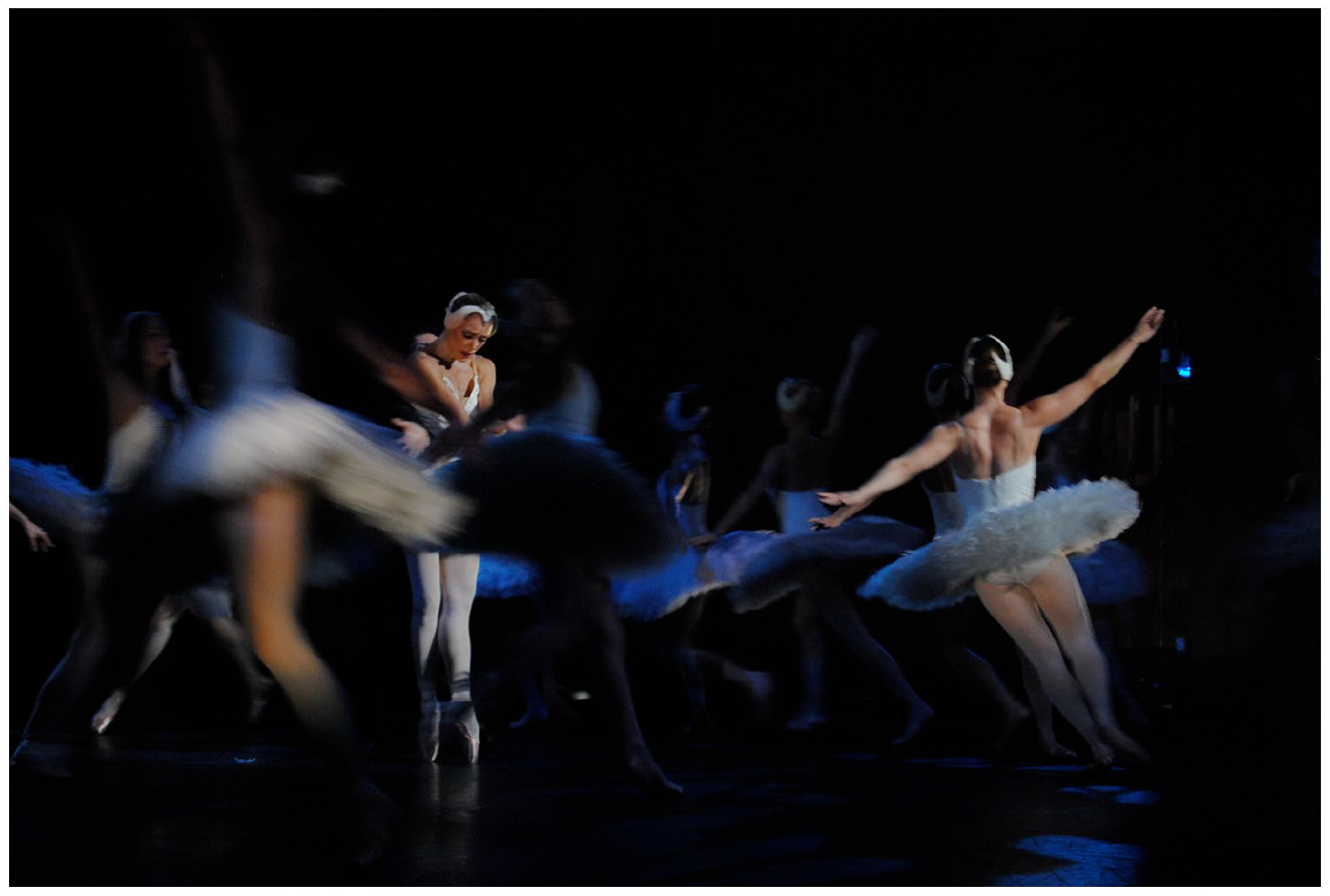
The feeling of co-presence between the performers and the audience captured from the curtains.
Relationality has many different levels in dancers’ everyday work. Embodied experiences with supportive colleagues and sensing colleagues closely are one of these levels, as explained by a participant in the following: Working with a partner is such an important part of this work, especially in a duet in which you dance with another person. The team play, that joint feeling, living that moment together with a partner. Sensing a partner. I believe people sense each other at work places more than what we even realise. We should trust our senses more and respect what our senses tell us. In our work, we learn to sense each other’s bodily language and rhythm because we don’t go through things so much verbally. That’s one of the subtleties of our work. But here, again, you can sense the everyday life and see my ankle taped. (A photo-elicitation interview extract)
The ballet dancer uses Figure 3 below to describe how ‘it is the feeling and empathising with the situation with a partner, sensing a partner, that counts’. The ballet dancers’ sensory, largely nonverbal work develops their ability to interpret each other’s body language and rhythm offstage. This is an interesting part of relationally practicing their embodied agency with collegial support. Below, the same dancer explains how she manages to block out spectators offstage and focus on ‘the feeling of the movement’, where agency becomes possible through movement and relations with her colleagues. Here, the dancer voices a more phenomenologically informed understanding of herself as a dancer, where movement, self, others and the lived body are interconnected (Diprose, 1994; Merleau-Ponty, 1964). Furthermore, actively creating and being a part of a supporting community matters greatly to her, which contrasts with the influence of competitive individualism in the ballet culture to some extent (compare McRobbie, 2015). Meanwhile, Figure 4 portrays a peaceful moment of stretching on a tour. Here, a ballet dancer is momentarily alone, not surrounded by his community, but instead focusing thorougly on stretching his body that will later move onstage with his colleagues.
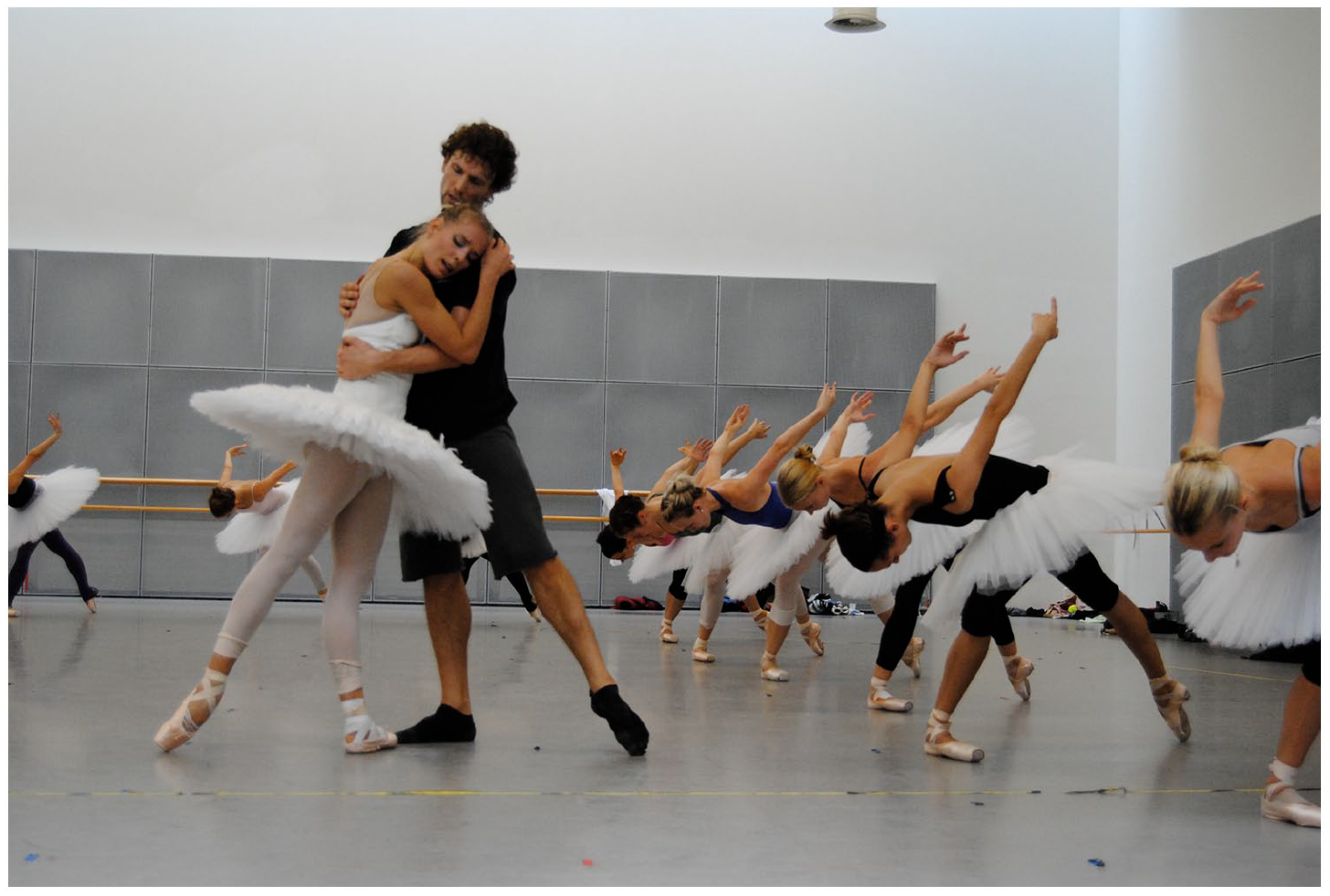
The sensing bodies entwined with each other offstage.
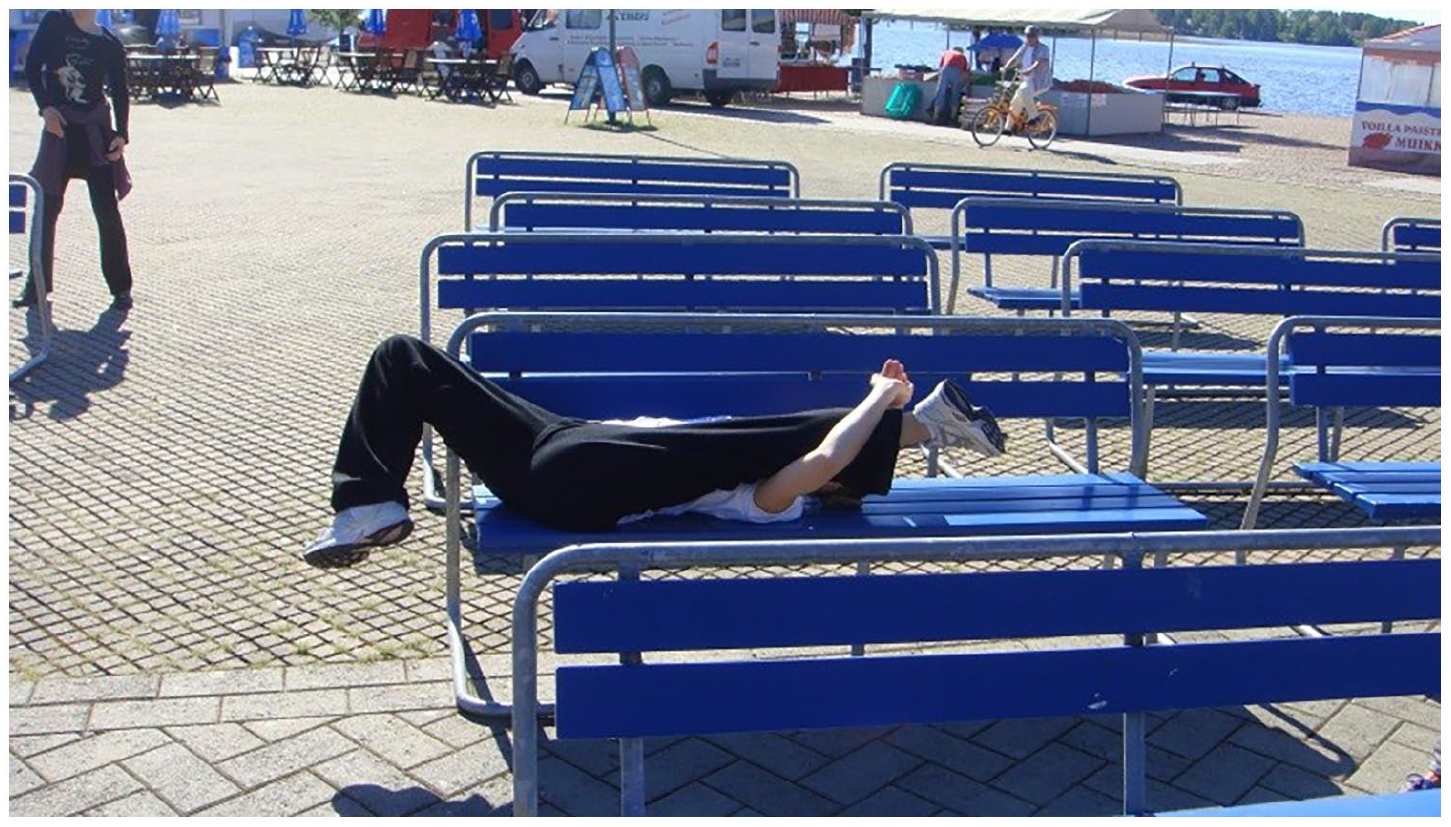
Stretching on a tour.
I don’t think about the audience itself offstage at all. For me, it is the feeling of the movement and the colleagues that matter. I have such supportive colleagues. It is awesome how you can encourage each other with little words and acts. For example, I used to support the new and young colleagues who did not feel like they are part of the company right away. I have said to some of them “Hey, you did that very well” or “Your pirouettes are beautiful”. Or finding it easy to ask for help and to admit that this is something I cannot do: those are the most important things in my offstage work. (Ethnographic interview quote)
However, the onstage performance is a constant negotiation – not only between the dancers and the audience but also between the choreographers and the dancers (Ryömä and Satama, 2019) – that affects the fine-grained ways in which productions and their movements are rehearsed as well as the feelings that the dancers experience when performing for their audience onstage. There are different kinds of choreographers, as described by one ballet dancer in the following excerpt: There are those choreographers who search for good personalities for their production. On the other hand, there are those choreographers who are keen on their own style of movement and, thus, aim at creating their “fantasy” by cloning the movements despite the different personalities of the dancers. . . Of course, it is much more interesting if the choreographer tells me to move in a certain manner, but I do the movement slightly differently. Once, I did so, and the choreographer was enthusiastic and commented “Hey, that was an interesting choice, let’s keep it!”—and I felt liberated! (An ethnographic interview extract)
As described above, when a choreographer gives a dancer the space to move in their own way, the dancer gains more freedom and agency. It seems that the details of rehearsed choreography that is ‘ruled’ by a ballet master offstage matter only up to a certain point – the point at which everybody knows the formal performance script – thereby illustrating the meaningfulness of equal power in negotiating embodied agency. In the example above, the intersubjective dynamics become visible through the competition between the ‘critical gaze’ and the embodied experiences stored in the body of the choreographer and those of the dancer.
Many dancers dislike the persistence of traditional hierarchical ballet structures and seek to ‘break free’ from such rigid forms that serve as mediators for their embodied inter-relationality to others (Liimakka, 2008). In the quote below, a ballet dancer takes a particularly critical stance towards ballet’s traditional hierarchical relations as they are re-introduced to the group by its artistic leader: I hate the hierarchical ranking system above everything. I think it’s just terrible. It’s when it’s like, yeah, I just want to say that, for a really long time, our group was so ground-breaking, there were no [hierarchical] categories. This is what our current leader wanted to bring in. And he felt like it was about serving the audience and building collaborative relationships. And the other thing is that we had quite a lot of resistance towards it in the group. And even those who were later appointed to a role, so many of them have voted against it. But yeah, so I’m the lowest caste. But if I am asked what my role is in our group, it’s really not that. I feel that my role in our group is really strong and that I’m a versatile dancer. (An ethnographic interview extract)
As the quote exemplifies, the leader’s view of categories presented as ‘serving the audience’ may be in strong conflict with the dancers’ personal, embodied experiences. They may feel that they do better work than what the hierarchical nominations suggest. For the artistic leader, the idea of graduated progression gives him a sense of clarity regarding where the dancers are situated within the ballet structure, providing him with the possibility of rewarding (or punishing) them based on how they perform in his eyes. Hence, an artistic leader significantly affects a dancer’s embodied agency on an everyday basis, thus creating a constraining dynamic for their inter-subjectivity development as well. Although certain ballet dancers desire to ‘break free’ from the existing structures to make their own decisions independent of the formal leader, the hierarchies rarely allow this to happen. As the same ballet dancer concludes, ‘The artistic leader believed in top-down management and competition’, which he thought would lead to the personal development of the dancers, but, instead, it hindered the whole ballet group and its inter-subjective dynamics. In sum, embodied agency in ballet is co-constructed through different relationality levels in the field. Through intersubjectivity development, dancers co-construct a meaningful and intimate relationship with their audiences and other agents both off- and onstage.
Working in between the ‘invisible gaze’ and the intimacy of embodied experience
It seems that embodied agency does not materialise only through different relationality layers as such but also through the sharpening of details, movements and embodied experiences that ballet dancers can use to negotiate their relationship to the others. Thus, ballet dancers have to strike a balance between satisfying the needs of the invisible gaze, on the one hand, and aiming to create room for their intimate, embodied experiences on the other. A sense of scrutiny and discipline is present during rehearsals, where unfolding the details of movement matters. The following excerpt captures the never-ending attempt to achieve perfect movements through bodily refinement, solitude and routine-based repetition, which is an aspect of highly individualised and less collective work behind the scenes that the audience rarely catches real-life glimpses of. One of the ballet dancers explains as follows: We repeat the movements hundreds of times and refine, refine, refine. . . This makes our work very routine-based. It is about constant competition against yourself and not against others; no one else can do that work for you. (An ethnographic interview extract)
This quote captures the loneliness-related aspect of ballet: endless repetition as self-disciplining, where the body resembles an instrument that is to be endlessly shaped, fine-tuned and worked upon. Here, embodied agency is largely practiced and developed in relation to oneself offstage, disciplined by an internal, observing eye (Roche, 2015). Again, the conventions for how to move are highly controlled and the embodied agency is defined by the occupational culture of the dance genre (Aalten, 2007; Daly and Desmond, 1997; Wulff, 1998).
Endless rehearsing of the tiniest details raises certain questions – who cares about these refined details in the end? A ballet dancer answers this question as follows: We sharpen those details offstage probably because we aim for perfection, and it’s the same when you’ve followed colleagues who’ve done more of these modern [dance performances]. Yeah, and this choreographer, Ohad Naharin, could have us practice a specific movement or a series of movements endlessly. I ponder what a tiny detail it is—so tiny that no audience member or professional that was not familiar with the song would notice. But it is probably about that inner striving for perfection. (An ethnographic interview extract)
As the dancer describes, striving for perfection through rehearsing stems primarily from her self-discipline of always seeking to move or perform a bit better – a bit more gracefully – which is associated with both the hardships of ballet and, paradoxically, the deep satisfaction that results from it (Hoogsteyns, 2012). This personal urge for perfection can, therefore, be described as an element that both restricts and enables a dancer’s embodied agency. As Mandalaki (2019: 157) points out, in the sphere of affective inter-corporeal experience to which inter-subjectivity development belongs, ‘bodies are not judged based on their material characteristics but as living beings able to mutually affect each other and as equally needed for experiencing joyful corporeal interactions’. The embodied experience that is ‘stored’ in a dancer’s body becomes important in the process of inter-subjectivity development. In connection to this, an experienced ballet dancer describes the differences between experienced dancers and beginners in the field as follows: When you get older and more experienced, the movement gets more nuances and colourful, of course. But no matter if you are a young or an old dancer, your whole life as a human being and your personality is present onstage; it will be sensed and transmitted to the audience in one way or another. (A photo-elicitation interview extract)
The mention of the dancer’s ‘whole life’ being present on the stage, transmitting to the audience, reflects the phenomenological, intersubjective relationship between the dancer and the audience. Here, the dancer also talks about how her ageing body enables a broader repertoire of movement and expression. This view challenges ballet’s normative obsession with youthful bodies (Schwaiger, 2012).
In the quote below, the dancer describes the differences between raw movements and their subtleties. The subtlety is rehearsed and refined through reflective practice offstage (Zeitner et al., 2016). The connection to the audience is then experienced onstage, at the kinaesthetic level (Ladkin and Taylor, 2010), through engaging in delicacy and emotions, as the dancer points out in the following: In my opinion, such detailed sharpening could guarantee that subtlety. I find that subtlety makes room for emotions. I think it is the delicatesse—that is what I’m passionate about. The fact is that it is through the movements that I get to experience a sensation inside that I hope to be able to transmit to the audience. And that sensation is born through the fact that I’m not chained too much, that I don’t have to think about the rule or forms. (An ethnographic interview extract)
In ballet, the audience relationship appears to depend on the idea that performing well symbolises respect for both oneself and the audience. Even when a dancer’s body is exhausted to the point of almost breaking down, the self is made responsible for performing and continually stretching the body’s limits. The following quote exemplifies this endless, painful striving for perfection, which is associated with the influence of neoliberalism in this setting (see McRobbie, 2015). Here, it also becomes evident that experiencing pain and exhaustion is viewed as a normal part of the ballet culture – to the extent that pain is almost glorified: At work, I notice that [passion] in the fact that I’ve never done a bad performance in the sense that I’d act like I’d be on stage with a mask on or like I’d be in totally other or different worlds. There are bad days of rehearsing and days when “places” [of the body] are in pain or sore or something. But I love being onstage. I find it extremely important. In my opinion, it’s also about appreciation of yourself and appreciation of the audience. Last season, I had a week in which I had seven performances in five days. I was completely dead. And there were twenty kids present, all excited. In that situation, when technique doesn’t help anymore, physical strength doesn’t help anymore, a happy mind doesn’t help anymore—that is when the passion kicks in. Like you have that much passion, regardless of everything, that you want to give those 20 kids a once-in-a-lifetime experience and pull it off with the last energy you’ve got left. The feel of jouissance and passion also nourishes and facilitates the performance. (A photo-elicitation interview extract)
Regardless of momentary breakdowns, the dancer forces herself to feel the passion for her occupation (Satama, 2016) in order to ‘deliver’ onstage. Ballet dancers have been trained to force their material bodies to perform at an extremely high level regardless of how they are feeling. Hence, focussing on the ideal image of ballet enables dancers to overcome their physical limits. The following empirical extract captures the ways in which opening oneself to the audience and building mutual trust in this relationship offstage matters in the process of intersubjectivity development: The movement alone does not light a fire or touch [the spectator]. When the artist is most vulnerable and open, that is the moment when the artist touches the particular audience that is observing. That is when you realise that “this is it”—right here and now, this is when s/he opens up herself for me. (An ethnographic interview extract)
As the above quote exemplifies, intersubjectivity is the dialectical process of continually (re)constructing subjectivity in the presence of, and in relation to, another (Duncan and Elias, 2021) through inter-corporeal dynamics (Mandalaki, 2019), which connect the embodied agency of a dancer with an audience in the moment offstage.
Sometimes, the stage can be moved to environments outside the opera house, where unexpected audiences can be encountered. As described below, the embodied experience is a special one in unusual performance places. In these situations, the offstage–onstage and intersubjective dynamics of the individual and the collective (Duncan and Elias, 2021) become blurred, and dancers may feel like the audience comes closer to them, as one of the participants explains below: I will remember that moment forever. We were on a tour, and it was an unknown, little village. There was a dosser following our rehearsal on a park bench outdoors. After we had finished the rehearsal, he came to say to me that he had never seen anything so beautiful and thanked us for dancing. It felt unbelievably good, as we could evoke an experience in a normal person who had never seen ballet or visited opera. (An ethnographic interview extract) We sometimes chat with each other in these stretching positions. And when people pass by, they think that “oh, there is an exploded Barbie doll there”. The dancer living in his or her body is so extreme. It demands at least an hour before you can start working. You cannot just go and start talking, as I have done when I have done some hosting gigs. So, tuning your body is an ongoing and essential part of this whole process every day. (A photo-elicitation interview extract)
In the above excerpt, the dancer describes the interpretation of the audience passing by roughly using the extreme expression of ‘exploding Barbie dolls’, as dancers’ bodies stretch beyond the limits of what bodies are normally expected to do. Here, intersubjectivity materialises as a space in which recognition emerges as two people express their feelings and understandings – fully experiencing their subjectivity as stretching dancers in the presence of observing passersby (Benjamin, 2006). The fundamental aspect regarding the meaningfulness of the dancers’ work in relation to their audience seems to be constantly present in the dancers’ reflections as well. For one of the dancers, making art is valuable in its own right: One of my colleagues said that when she makes art, she thinks that she could make someone’s life better with that art. I replied that that’s superb, but I make a piece of art for myself because I enjoy it myself. I do like and enjoy performing for an audience. I do enjoy training all by myself, too. But somehow, it is a bit like a hobby, practicing without the audience. (An ethnographic interview extract)
However, the audience is what makes the dancers’ work professional, as the dancer reflects above. Without the audience, her work is mere rehearsing and not for real.
The dancer describes Figure 5 as follows:
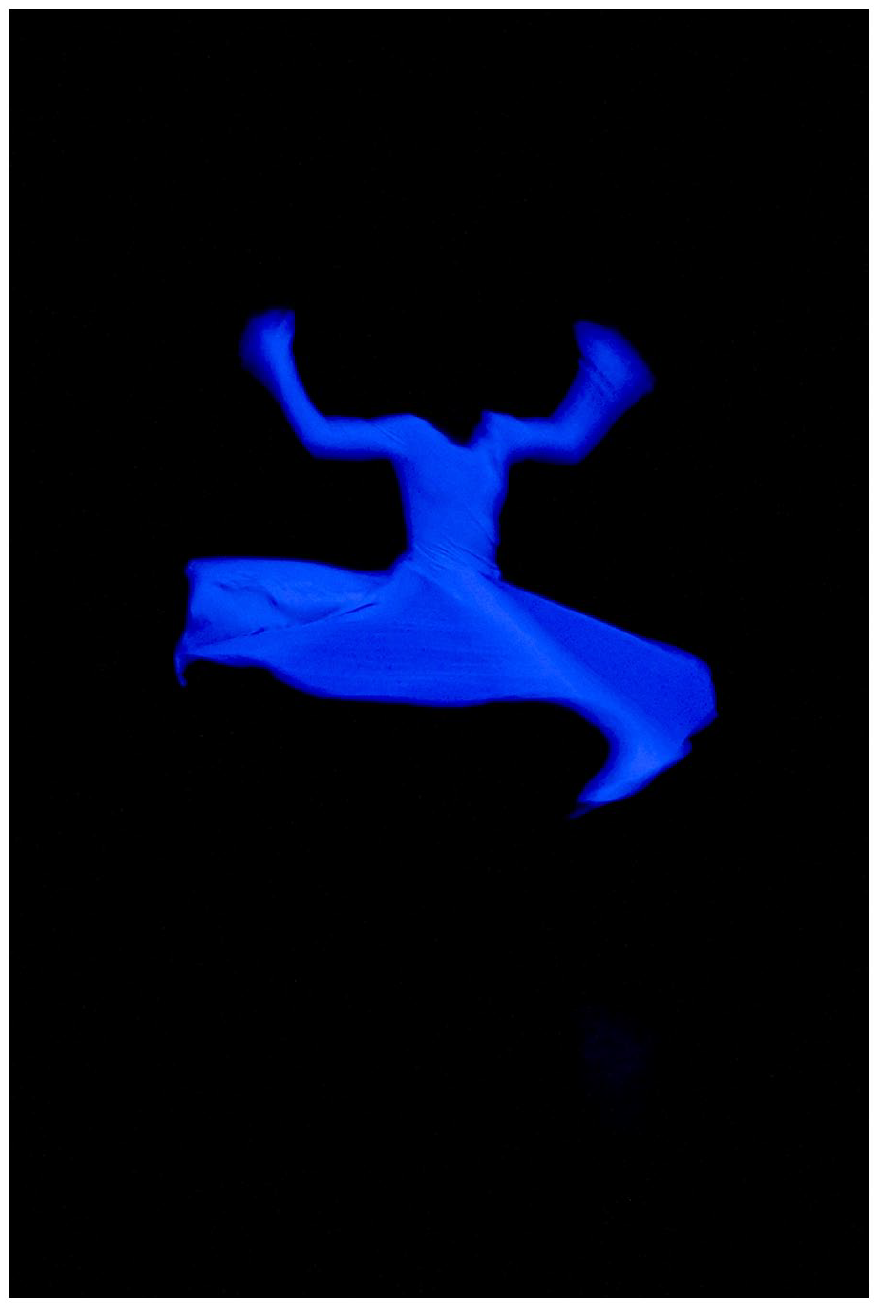
A floating body in an unknown onstage space.
I always dive into new projects unprejudiced: in this performance, I wanted to distance myself from the creature I was performing. As a spectator, you need to interpret the performance through the moving skirt without seeing my facial expressions. I also wanted to try this because I usually have very strong and vivid facial expressions, and I didn’t want to play to my strengths but to explore the possibilities of my vulnerabilities with the audience. (A photo-elicitation interview extract)
As illustrated in Figure 5 and described in the quote above, facial expressions often play a significant role in constructing the intersubjectivity between dancers and their audience. Here, the dancer wanted to disengage herself from the captivating impact of her face on the audience and to try a different idea in accordance with the notion that the performance is built upon a fundamentally embodied subject that is suddenly disembodied, expressing the bodily tension between conformity and liberation (Mandalaki, 2019: 139) in a powerful way. This second part of the analysis illuminated the intersubjective development of ballet dancers through the ways in which they work – endlessly striving for perfection not only through the meticulous repetition and refinement of their movements but also through expressing openness and vulnerability. In the empirical materials discussed, these attempts seem to often occur in a manner that extends the physical limits of the body while ignoring the dancers’ subjective bodily exhaustion or pain in favour of performance perfection. Taken together, the development of embodied agency at intersubjective levels is realised through a complex shifting between the different levels or relationalities of the self, the other agents behind the scenes, the occupational culture and the audience (Bruun and Langlais, 2003). Thus, it is through constant negotiation between the ‘invisible gaze’, the others and the intimacy of embodied experiences that the relationality of embodied agency emerges and is developed further.
Discussion: Towards an intersubjective understanding of embodied agency
This study investigated the intersubjective dynamics between embodied agency and the audience in the context of ballet. Drawing on a sensory ethnographic study and 15 interviews with ballet dancers in the Finnish sociocultural context, we analysed the ways in which ballet dancers co-construct their ambivalent relationships with their audiences, which included accounts of how dancers move in relation to other powerful agents in the field. In this manner, we sought to shed further light on dancers’ intersubjective development through the achievement (or lack thereof) of embodied agency in a highly disciplined work culture. By approaching agency on a micro-level, our study offers in-depth insights into the world of professional ballet and the continuous becoming of ballet dancers through bodily practices, movement, repetition, ‘invisible gazes’ and relationality to others. Specifically, we identified two complementary aspects that shed light on the process of intersubjectivity development in ballet: (1) embodied agency as co-constructed through different relational levels and (2) working in between the ‘invisible gaze’ and the intimacy of embodied experience. These help us develop the theoretical notion of relational embodied agency and offer insights into and parallels for intersubjectivity development in organisations.
The contributions of this study are twofold. First, by foregrounding a phenomenological approach that highlights relational embodied agency and the embodied knowledge created through subtle actions of interacting bodies (Merleau-Ponty, 1964), a more nuanced conceptualisation of agency, which problematizes the tension between subject and object, was brought forward. Instead of focussing on subjective accounts of agency as existing phenomenological studies have tended to do (Jensen and Dermot, 2013), this study broadened the existing discussions by acknowledging the intersubjective dynamics of embodied agency. Thus far, some studies have acknowledged the embodied dimension of agency (e.g. Holland, 2010; Liimakka, 2008; Noland, 2009; Satama and Huopalainen, 2018; van Amsterdam et al., 2022) and the invisible presence of the audience that affects a dancer’s embodied agency (Hoogsteyns, 2012; Wulff, 1998). Our findings extend these studies by empirically illustrating how dancers’ embodied agency is co-constructed through different relational layers, which revealed nuanced levels of inter-subjectivity development between the self and the multiple others (Duncan and Elias, 2021; Mandalaki and Pérezts, 2022), such as the audience, colleagues, artistic leaders and choreographers. Further, we demonstrate how the processes of inter-subjectivity development between the self and the others and how embodied agency builds on the relational layers of embodied experiences ‘stored in’ the dancers’ bodies.
There are limitations and cultural norms with regard to how free the ballet body is to move. As Diprose (1994: 15) articulates, ‘what you can become is limited by the social history of your body’ as well as social milieux. We illustrate how the relationality of embodied agency when working in between the ‘invisible gaze’ and the intimacy of embodied experience can be viewed as both repressing and empowering. This insight supports previous studies carried out in the context of ballet (Aalten, 2007; Authors, year; Hoogsteyns, 2012; Wulff, 1998). In ballet, the audience almost becomes a projection of the dancers’ internal, observing eye (Roche, 2015), which (self-)disciplines yet, simultaneously, empowers the dancer and blurs the boundaries between the lived performing self and the surrounding audience. It is through constant negotiation between the ‘invisible gaze’, the others and the intimacy of embodied experiences that the relationality of embodied agency emerges and is developed further. We show how embodied agency materialises not only through physical contact with others but also through the activation of the embodied knowledge, which ballet dancers mobilise offstage to gain agency and negotiate their audience relationship onstage. For example, this became especially obvious when the interviewed dancers stretched the limits of their bodies to perform or when they worked in close physical and mental proximity to one another.
In line with Mandalaki (2019: 153), we see the body as a ‘lively experiential site where affective relational possibilities can develop somewhere in between submission and liberation’. Dancing effectively teaches us how to empathically feel, relate to and be sensitive to other bodies (Mandalaki and Pérezts, 2022). Embodied sensitivity towards others developed as the dancers moved in relation to each other. For example, when a colleague felt her partner’s movements in her own body, the bodily boundaries were dissolved, and the intersubjective dynamics of embodied work were revealed (e.g. Bruun and Langlais, 2003; Riach and Warren, 2015). Furthermore, by supporting one another, dancers could gain agency in an otherwise competitive and individualistic setting. These forms of support, cooperation and co-existence at the micro-level, which are also reflected in the empirical data, invite us to further ‘think about the potential of change through movement’, as Biehl (2017: 55) so eloquently proposes. Could ballet as a form of kinaesthetic politics be practiced ‘differently’ and in less individualised, competitive and scripted ways? The development of embodied agency as a relational process has important ethical implications in professional settings, and ethics can be understood as an embodied practice (Perezts et al., 2015). What happens moment to moment when bodies encounter each other during work can be significant for how oppressive work cultures could be transformed into more humane and equal ones.
In addition to enriching the literature on embodied agency with the intersubjective perspective, this study aimed to broaden the understanding of the role and experience of rehearsing and its relationship with bodily transformation within organisation studies. We illustrated the entwined onstage–offstage dynamics of refinement, repetition and performance, which we argue should receive more attention in organisation studies. It is offstage that the meticulous rehearsing and the sometimes wild, dirty and emotional work practices become visible. Hence, the onstage–offstage dynamics could reveal more nuances about the characteristics of companies, their employees and the reasons behind their behaviours in comparison to when only looking at the ‘surface’. For example, the artistic management first makes difficult decisions offstage, hidden from the public gaze, only ‘performing’ them onstage afterwards and exposing themselves to the opinions and criticisms of the audience. Therefore, the dancers, leaders and people in all work organisations are exposed to embodied qualities and the gaze of the invisible audience – the things and actions around us that we judge on the basis of the emotional sentiments that they invoke in us. .
Surprisingly, little has been done in organisation studies to better understand the audience dynamics and their effects on the onstage and offstage worlds of businesses and organisations. Biehl (2017) suggests a conceptualisation of spectators as co-players who actively participate in the creation of performance through their physical presence, perceptions and responses. In ballet, dancers’ onstage performances come into being through the felt presence of the audience and the bodily interactions of both the performers and their audience. The relationship between onstage and offstage work could be applied to many fields, such as service and managerial work. In ballet, there are elements – such as the strict rules and occupational norms – that affect and constrain the ways in which embodied agency materialises behind the scenes. The types of onstage–offstage dynamics that this paper sheds light on could be extended to today’s business world: the audience (or the clients) sees only the surface image that a company wants to convey – the majority of the subtle but extremely meaningful details (possible exhaustions, trials, errors and actions) of the company’s work process only become visible offstage. By tuning into and closely examining these dynamics, the fine-grained sensory-based behaviours of people at work, including the reasons behind their behaviours, could be better acknowledged and understood (Author, year; Mandalaki and Pérezts, 2022). We have illustrated how agency is fundamentally embodied and relational, in turn affecting the bodies of others. Importantly, we have also highlighted how the powerful invisible gaze moves between the dancers and other agents in this intersubjective process, something to which we return here as central to the application of our ideas to broader organisational contexts.
Our society places enormous pressure on us to look, move, sound and act in normative and socially accepted ways. As workers, we all perform ‘under the gaze’ of others to some extent. Just like professional ballet dancers discipline themselves and refine their movements offstage in pursuit of the onstage outcome, so do contemporary workers in other industries – for example, managers practice their speeches and ways of acting offstage until they are ready to perform onstage in front of their personnel and stakeholders. A gendered dimension is present in how we are ‘judged’ by the many audiences in front of which we perform. Space, facial expressions, body movements, sound, dress and scripts all contribute to the gendered performance. Therefore, the (imagined) audience is an important relational part of constructing our embodied beings at work.
Methodologically, we contribute to the existing studies on embodied research methodologies (Helin, 2019; Viteritti, 2013) by paying close attention to the subtle, micro-level embodied sensations of both the research subjects and us as sensing and vulnerable researchers as well as to the fine-grained analytical clues obtained during the research process. In practice, when conducting ethnographic interviews, the first author had deep, embodied experiences in the field. These felt moments were meaningful when constructing her own understanding – not only about the dynamics that exist between the professional dancers and the audience but also about the intersubjective development between the dancers and herself as a researcher. Complementing this insight, the research material also evoked bodily sensations in the second author, who felt power, ethics and embodiment entwine while reading the research material. The material evoked sensations about body pressure, the endless strive for perfection and bodies being ‘caught’ between objectifying scrutiny and achieving agency. As women working in academia, a context wherein the productive body is never allowed to rest properly, we could both relate with the self-discipline and hardships associated with ballet. Methodologically, this study became a deeply embodied experience for us, in which the intersubjective dynamics between the researchers and the researched became blurred. Also, we felt interpersonally connected with each other as researchers when writing up this study. Therefore, this study was not only a study about dancers’ embodied agency, but a deep reflection into our own embodied agency as researchers, as well.
Conclusion
Through our study, we stress the importance of studying how the sensate, moving body connects and relates to other bodies – not only in ballet but also in other organisational contexts. By moving in between the different stages of our lives, we might gain deeper insights into how people handle, via versatile actions across space, the freedoms and limitations of their embodied actions in relation to other bodies as well as to the particularities of these worlds. Even if organisations already enable rich social interaction via verbal communication, embodied agency plays a significant role in conveying hidden, subconscious or even repressed bodily experiences and must not be downplayed in the time of increased virtual work.
Even managers, entrepreneurs, researchers and other knowledge-intensive professionals can make use of the findings of our study in which performer-audience relationships play out and dynamics of onstage and offstage are present, although some workplaces lend themselves better than others to this exercise. For example, in routine-based factory-work embodied agency is restricted by a certain schedule, rhythm and monotonic postures. Even so, the factory-workers can make use of their agency by thinking about their own desires and modes of working. A lack of co-presence has often been identified as a potential limitation of technology-enabled work, but it has rarely been discussed in depth (see Dulebohn and Hoch, 2017). Moreover, we invite those who organise virtual teams to provide enough space and opportunities for face-to-face encounters and by doing so, enable embodied agency to emerge.
Our conclusions indicate that there are several important avenues for future research. Being more mindful aware of one another’s bodily and emotional states one another while engaged in everyday work, like ballet dancers do, is essential. Salsa is an example of how agency is shaped, constrained and enhanced by the physical resistance of a partner (Mandalaki and Pérezts, 2022). This analogy can be applied to other workplace contexts, as well. For example, a bodyguard shapes the agency of the person they are mandated to protect in a very direct and physical manner. It would be intriguing to study the different levels of relationality that emerge in this kind of context, and further ponder what kind of ‘dance’ emerges from this type of bodily security work.
Hence, it would be important to heed to one another’s aesthetic cues (Küpers, 2013; Warren, 2012) and the ethical possibilities that arise during daily interactions at work. We argue that understanding embodied agency is essential for better understanding the underlying mechanics behind our ‘visible’ behaviours at work and how these connect to embodied vulnerabilities, power and embodied normativities in organisations (van Amsterdam et al., 2022).
Moreover, the work of professional dancers can be seen to be mirrored in the work of leaders in terms of balancing between off-stage and on-stage worlds; the difficult decisions of management are first made off-stage, hidden from the public gaze, and only afterwards ‘performed’ on-stage and exposed to the opinions and criticism of the personnel and other people. In other words, we all are undeniably attached to our bodily reactions and experiences that are difficult to verbalise but which deserve to be recognised more thoroughly in our practical lives. In addition, contemporary work happening between online and offline environments could be further explored by using the parallels of onstage-offstage dynamics.
Our analysis touches upon the concept of vulnerability in the formation of embodied agency – to which organisational researchers have paid limited attention thus far, with the exception of a few examples (Corlett et al., 2021; Johansson and Wickström, 2022; Mandalaki, 2019) – which would surely offer important insights for future research on embodiment and suppressed bodily experiences in organisations. Additionally, giving a voice to and accepting embodied vulnerabilities and bringing them to the fore, as the ballet dancers in this study generously did, can help build deeper, tangible, intercorporeal connections with other bodies and co-create agency in relation to one another. Establishing trust and building relationships through openness and the sharing of negative emotions, as the ballet dancers included in this study also seemed to do, has potential with regard to changing working cultures and has also tentatively entered the leadership research agenda (Brescoll, 2016; Corlett et al., 2021).
Furthermore, connecting the often autonomous analysis of audiences in terms of their performances, identities and communities to the theories of materiality and space represents an interesting research direction. In ballet, the outfits and the pointe shoes control and expose the performing body in relation to the audience in particular ways. The mirror performs another important, constantly present, offstage materialisation of the audience through which ballet dancers get to work with the ‘invisible gaze’ even when their audience is not actually present. Offstage, bodily gestures and postures, as well as facial mimicry and other ways of expression, are often worked on by looking at oneself in the mirror. The relationship with the mirror is, however, complicated because mirrors enhance the self-discipline of the gaze by constantly allowing one to watch oneself from the outside instead of feeling the movements. Similarly, other relevant aspects, such as the significance of gender, ethics and ageing in the development of relational embodied agency, remain underexplored in this study and merit further scholarly attention.
Footnotes
Funding
The author(s) disclosed receipt of the following financial support for the research, authorship, and/or publication of this article: This research was supported by Foundation for Economic Education, Finland, grant number 20-11051.
