



Abstract
Over the past few decades, we have witnessed the widespread deployment of technologies that enable real-time interaction between co-located and remote participants. These technologies and their accompanying organisational arrangements have created new forms of cooperation and collaboration. They also present challenges for ethnographers seeking to understand the practices, the ‘lived work’ of the participants. In particular, they demand a concern with the physical, the material and the embodied, in other words with what has been termed multimodality. We argue that it is through detailed analysis of specific instances, the circumstances of their use, that we can begin to discover the competencies, skills, the ‘know-how’ that enable practice. In this article, we consider one particular setting that is both distinctive because of its scale but also characteristic of many technology-saturated contemporary workplaces. We aim to show how in this case, as in others, the interactional and the sequential is an inextricable aspect of practice. To uncover these practices requires particular attention to the multimodal but that this presents challenges for ethnographies, even those that draw on complex arrays of resources such as video-recordings. We suggest that this resonates with recent debates regarding how we conceive of materiality, the roles of technologies and practice.
Introduction
Contemporary developments in work and organisation pose significant challenges for ethnography and more generally qualitative research. The emergence of new specialisms and occupations, the transformation of the office and organisational space, and the widespread deployment of advanced technologies demand reconsideration of what constitutes data, how it is produced and perhaps most importantly, how it is subjected to investigation and analysis. As Rouleau et al. (2014) note, these rapidly changing organisational environments have begun to lead to new forms of organisational ethnography. These include, for example, field studies that involve teams of researchers working concurrently in multiple sites (Jarzabkowski et al., 2015; Marcus, 1995), novel ways of tracking and shadowing people as they move through different spaces (Raulet-Croset and Borzeix, 2014) or integrating new kinds of materials and documents with fieldwork observations (Hassard et al., 2018; Hine, 2000; Kozinets, 2015; Tunçalp and Lê, 2014). Indeed, there is widespread recognition that contemporary work relies upon distinctive affinities between the material and digital, between the local and the remote, and contingent interdependencies of action and activity that arise within distinct workplaces and in some cases unpredictable worksites.
These developments resonate with analytic concerns from those in science and technology studies, to take technology, the nonhuman, the material and its agency seriously: to consider the interdependencies and interconnectedness of the human and nonhuman in action (Latour, 1987, 2000). So, for example, analysis of practice increasingly encompasses the material – objects, bodies, artefacts, tools, technologies (see, for example, Schatzki, 2001, 2002; Shove et al., 2012). Nevertheless, the emphasis on the interdependency and interconnectedness of agents has tended to be prioritised while the performance of practice has received less attention. In this article, we will draw on materials from two settings, control rooms, examples of what has been called technologically saturated domains (Suchman, 1996), where personnel use a variety of complex technologies to collaborate with and monitor others. These technologies are interdependent and interconnected, combining visual and textual resources and allowing different ways of communicating with local and remote colleagues. We will uncover how they draw on the material artefacts, the various systems they use, and through embodied actions undertake, or ‘perform’, their activities. Collaboration and coordination in this technologically saturated setting relies on what might be considered the mundane uses of technologies and routine forms of interaction. Understanding the nature of these interdependencies in this complex domain raises methodological problems for the ethnographer. It demands attention be paid to the material, to the embodied actions of the participants, it needs to be ‘multimodal’. This requires augmenting fieldwork with ways of accessing and attending to details of the collaboration and communication, of the interconnectedness of the individuals and the technologies.
A growing corpus of studies concerned with the investigation of work in complex, organisational environments draws on ethnomethodology and conversation analysis and focuses in particular on the analysis of video-recordings of naturally occurring activities, albeit augmented by field studies and the like. Sometimes known as workplace studies, this corpus of research is primarily concerned with addressing the social and interactional production of organisational activities. It focuses on the production of particular actions as they emerge within and contribute to the context at hand and the ways in which personnel and others participate in the ongoing activity. Sequence and identifying the sequential relationship(s) between particular actions is critical in this regard, enabling the identification of particular practices and in evidencing how people orient to each other’s conduct. These sequences through which participants produce and coordinate their actions rely upon a variety of resources be it talk, bodily conduct, or use the tools and technologies, objects and artefacts. A focus on sequence provides a means to develop rigorous analyses of materials gathered in everyday settings, particularly those that utilise video-recordings (see, for example, Heath and Luff, 2000; LeBaron, 2005; Smets et al., 2014). In this article, we would like to suggest that the growing communicative and technological complexities of certain forms of work environment pose particular challenges for studies that prioritise the interactional production of activities and rely on video-based field studies for their ‘data’ and observations.
To reveal more about the nature of these challenges, both for studies that are grounded on sequential analyses of activities and for more general ethnographies of the contemporary workplace, we focus on one particular area of concern which focusses on the nature of descriptions. From the participants’ perspective, descriptions of objects, events and of problems are critical to how work is accomplished. They are essential for the identification and management of work. Through the way they are produced, their nature and character can have different implications and different consequences for others. They are a resource for collaboration, vehicles for coordinating actions between participants. We will draw on materials gathered in two control rooms to reveal how participants produce descriptions and how these evolve to accomplish concerted organisational responses to critical problems. We will consider the detailed ways, participants through an interplay of the material, visual resources and ways of talking, produce descriptions that contribute to the work in the setting. These descriptions, therefore, serve as a resource for analysts. However, by considering the activities in a setting where activities are particularly dispersed, and where technologies serve to mediate communication and collaboration, we suggest that the production of descriptions of objects of concern do not just pose challenges for the participants but also for analysts considering the accomplishment of organised activities in distributed environments.
Background
Recent lively debates concerning materiality and materialism suggest extending what is characterised as ‘matter’, addressing different forms of agency from human and ‘non-humans’ and taking seriously the concerns of ‘embodied individuals’ (Coole and Frost, 2010). While raising concerns with certain aspects of social constructionism, these conceptual frameworks still seek to draw on ethnography to understand the ‘quotidian’, the ‘tacit’, the ‘details’. They also make demands for developing new forms of analysis among which are ‘multimodal’ analyses that suggest a rethinking of the dynamics of materialism. These developments maintain a commitment to the importance of materiality in social action and the practices of participants, indeed some characterising practice as the ‘primary unit of enquiry’ (Mol and Law, 2004). The initiatives that have emerged have largely been informed by the contributions by Latour (1987, 2000) and others within science and technology studies. They have a commitment to taking the nonhuman, the material, and its agency seriously; to consider the interdependencies and interconnectedness of the human and nonhuman in action (e.g. Maller, 2015). Reckwitz (2002), for example, defines practice as ‘routinized type of behaviour which consists of several elements, interconnected to one other: forms of bodily activities, forms of mental activities, “things” and their use, a background knowledge in the form of understanding, know-how, states of emotion and motivational knowledge’ (pp. 249–250). However, the focus on the interconnected has tended to give priority to ‘networks’, variously conceptualised, as the vehicle through which practice is instantiated and institutionalised. Despite the long-standing recognition with how practices emerge and how they change over time (Mol, 2002) less attention has been paid to how particular practices are applied on actual occasions with regard to the particular circumstances at hand: to ‘the isolated moments in the performance of a practice’ (Maller, 2015: 59). And yet, the occasioned performance of a practice raises important questions concerning agency and competence, the tacit knowledge, know-how and practical reasoning that enables and forms a critical aspect of particular practices.
The concern with the performance of practice, materiality and with embodied activities has informed a corpus of studies, known as workplace studies, which in quite different ways have been concerned with developing multimodal analysis and the dynamics of material action. Also principally utilising an ethnographic approach, typically augmented with video-recordings and drawing on an ethnomethodological perspective (Garfinkel, 1967) and conversation analysis (Sacks, 1992), these studies have been concerned with uncovering the detailed ways in which participants coordinate their actions to accomplish their work. Typically, this is through a detailed sequential analysis of recordings of naturally occurring activities. Such an approach serves to warrant an analysis: a participants’ conduct reveals a display of understanding of a prior action by a colleague which in turn provides the means for others to make sense of that participants’ contribution. This emphasis on sequence and sequentiality enables a distinctive approach to considering the agency that arises among various individuals while they produce collaborative action.
To illustrate the distinctiveness of these from other ethnographic studies, we might take one particular set of domain that has been a recurrent locale of concern for workplace studies, what have been characterised as ‘centres of co-ordination’ (Suchman, 1997), or sometimes ‘control room studies’. Whereas some ethnographic studies might, say, consider discourses of control (e.g. Fleming and Sturdy, 2011) or how control and resistance are accomplished through the visual affordances of artefacts (Alcadipani and Islam, 2017). Workplace Studies draw on naturally occurring recordings, typically audio-visual recordings, to reveal how in centres of coordination collaboration relies on detailed and subtle forms of interaction and seemingly mundane practices. They consider, for example, how these activities are shaped by the local environment; how the configuration of the organisational space, for example, the arrangement of the consoles and displays features in the accomplishment of co-present interaction (Heath and Luff, 1992; Suchman, 1997) and how particular artefacts and their contents, such as whiteboards, screens and documents serve as resources for collaboration (Goodwin and Goodwin, 1996). Although workplace studies resonate with concerns raised regarding the nature of organisation space and informal interaction (e.g. Fayard and Weeks, 2007), how the sense-making is accomplished drawing on different tools and technologies (Hultin and Mähring, 2017) and how prediction and anticipation is ordered and organised in critical and complex environments (e.g. Knox et al., 2015), workplace studies pay close attention to the in situ production of activities in the setting. In particular, they pay close attention to how the talk, visual conduct, and material action of the participants are produced from moment-by-moment with regard to the ongoing conduct of others and in respect to features of the local environment. Taking one particular example from a control room setting, Kameo and Whalen (2015) reveal how material conduct and turns of talk are coordinated in an emergency despatch centre, how a controller makes sense of the talk of a remote colleague on the radio through resources made available by the technology, how they organise their talk to facilitate the entry of information into a computer system and how they display their understandings to remote colleagues (Kameo and Whalen, 2015; Whalen, 1995). In other workplace studies, researchers reveal how participants are sensitive to quite subtle details of another’s activities, even what those colleagues are typing into a computer system (Luff and Heath, 2000), or how that staff monitor or oversee the actions of colleagues or produce actions so they in turn, can be monitored, overheard or overseen (Goodwin and Goodwin, 1996; Heath and Luff, 1992; Watts et al., 1996). These studies pay careful attention to the details of the ways conduct is produced, for example, how staff might read items from a document out aloud so they can be overheard, how statements are produced using particular prosodies and pacing so they can be heard by staff who are not visible to them (Goodwin, 1996), or how turns of talk are coordinated with visual conduct to imply specific courses of action that need to be undertaken by a colleague (Heath and Luff, 1992, 1996a). Such practices are necessarily embedded within the work practice of the setting; they are inexplicit and tacit. These practices are recurrent and underpin the ways activities are coordinated. Workplace studies make apparent the complexities of collaboration and how staff have to manage a range of diverse concerns in a material environment. They are concerned with ‘networks’ of individuals and technologies, and yet focus on how these are embedded within social interaction, and they are primarily concerned with practice, as this is performed and how it emerges.
In this article, we wish to explore the practice and knowledge, the skills and competencies that underpin how staff undertake their work in a technology-saturated environment. We will consider complex and contingent forms of practice and agency as participants engage with material technological artefacts to undertake concerted action with colleagues. We will reveal the details of the moment-to-moment accomplishment of these practices and show how a critical aspect of their work relies on seemingly mundane exchanges; about descriptions of features of the physical environment, where these can be about people, objects or locales.
We will first consider this in a setting where access to the material environment, although technologically rich, is circumscribed for both participants and for analysts. We provide a brief illustration of a sequential, multimodal analysis of the performance of practice in this ‘traditional’ control room setting. We draw on this setting to reveal the challenges of developing a sequential analysis, for example, how we can identify sequential relationships between specific actions by different participants. In a second setting, the boundaries of the setting are less constrained, not only spatially but also organisationally. Here, participants work together through digital, electronic and online resources, between the local and the remote, and contingent interdependencies of action and activity arise within the workplace. We consider how the materials that enable an analysis of work and collaboration within a more traditional control centre, become increasingly impoverished when we begin to examine the more complex organisational forms and this threatens the ability to develop a sequentially relevant analysis of an activity’s production. These new organisational environments not only raise challenges for how to collect potentially relevant data but also in identifying how activities by different participants are (sequentially) related to those of their colleagues and how these relationships can be seen as demonstrably relevant. In one sense, the problems faced by the ethnographer of such a domain is akin to the challenge for the participants’ themselves, that is, to know what is relevant to the accomplishment of concerted action and by whom in the course of its development.
Method
‘Centres of co-ordination’, that are a principal domain for workplace studies, are necessarily concerned with managing activities in remote settings and with staff in very dispersed locations. These settings, such as news rooms (Heath and Nicholls, 1997), financial trading rooms (Heath et al., 1994), air traffic control (Harper et al., 1991), ground control of airports (Goodwin and Goodwin, 1996; Suchman, 1993, 1997), public rail and underground systems (Filippi and Theureau, 1993; Heath and Luff, 1992, 1996a; Luff and Heath, 2000; Luff and Heath, 2002), emergency dispatch (Whalen, 1995; Whalen and Zimmerman, 1987) and telecommunications restoration control rooms (Hindmarsh and Heath, 2000) might be concerned with activities that cover a large region, a city or even a country. They are technologically saturated, involving information systems of different kinds, visual and textual technologies, physical objects, different kinds of documents and varied means of communication. They are co-located ‘hubs’ of activities where personnel with different responsibilities work and collaborate in the same place, managing resources and having access to activities and personnel outside of that location. Recently, there have been a number of changes to these kinds of centres. Whereas in the traditional control room, while there were a wide range of systems and technologies, the capabilities of each largely remained distinct. Recently, there has been a greater integration between tools, technologies and devices. These technologies have also become more sophisticated, including more visual, graphical and location-based technologies. In concert with these changes, there has also been a change of scale of the control rooms. Typically they have become much larger.
The studies we discuss in this article involved several researchers undertaking fieldwork in the control rooms and closely related settings at the same time. Both can be considered as a form of multi-sited ethnography (cf. Malhotra and Majchrzak, 2014; Marcus, 1995). These studies are also multimodal, the ethnographies were augmented by audio-visual recordings (cf. Heath and Luff, 2000; Llewellyn and Hindmarsh, 2010). However, the analysis developed here is distinctive to say that of Smets et al.’s (2014, 2015) concern with ‘micro-practices’ in terms of logics and detailed narrative descriptions of practice. Here, we draw on fragments of audio-visual recordings to consider sequences of action and reveal practices through which participants utilise material technologies to coordinate their activities with others.
In the first study – which considered collaboration and control in and between stations on London Underground – at various times, three to four researchers gathered data. Because of the scale of the control rooms, this typically involved each researcher focussing on one distinct control room, usually at the same time. In this way, it was possible to consider responses to incidents that effected multiple locations across the network. At other times, the researchers considered different kinds of control rooms and locations at the same time. For example, while one researcher was collecting data, including audio-visual recordings and field observations in a station operations room, another would be gathering materials in a network or line control room and another undertaking fieldwork on a train or around the station. Audio-visual data collected were principally gathered using one fixed camera at each site, focusing on the participants and the technologies available to them (see Figure 1 – bottom left). In all, more than 300 hours of video recordings were collected in the course of this project.
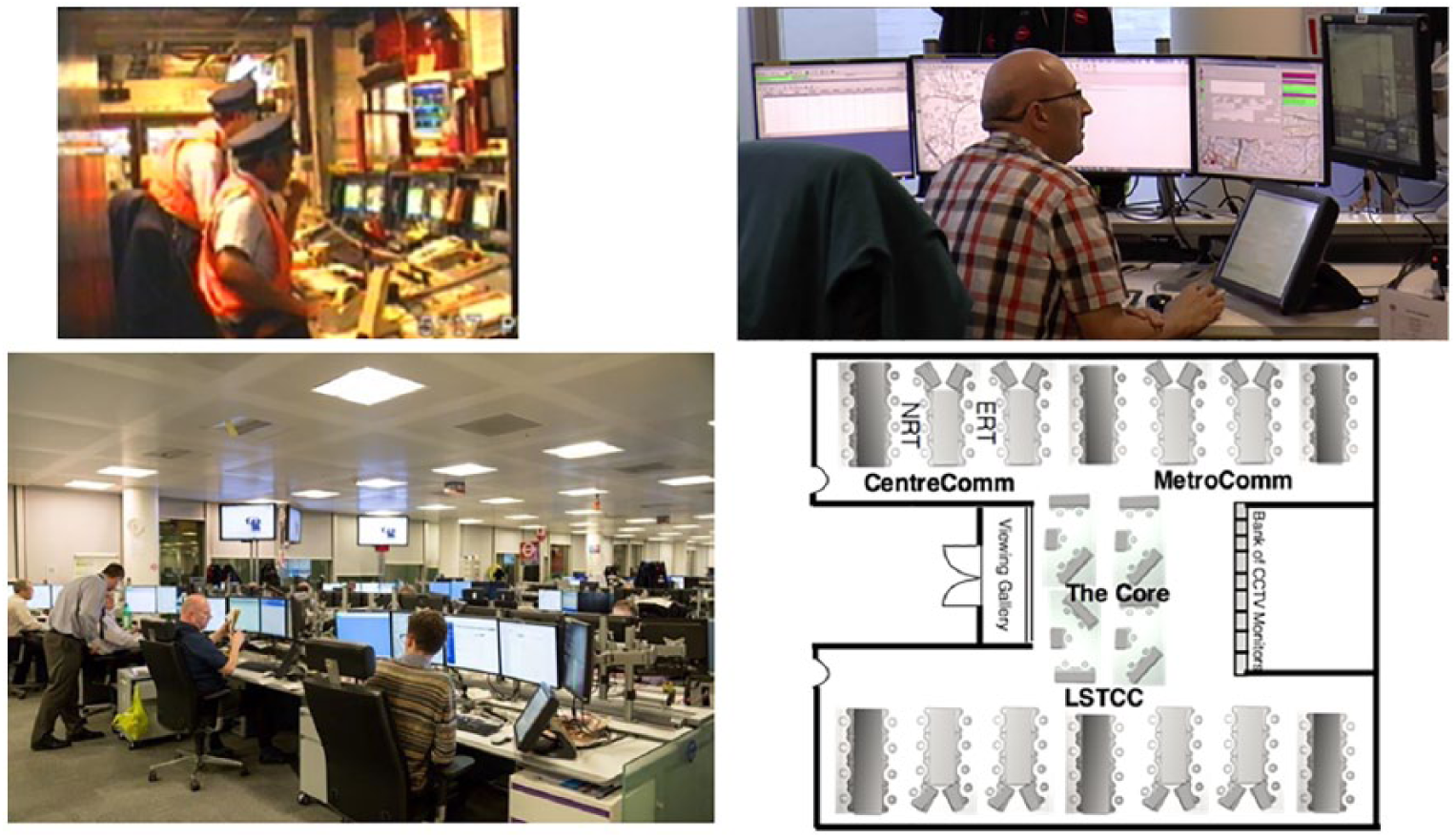
Examples of the domains focused on in this paper. On the top left an image of one of the control rooms considered: Piccadilly Operations room. This has one console, operated by one or two station supervisors and technologies including various systems for monitoring traffic, making announcements, communicating with staff and operating the CCTV. On the bottom left is an image of a one area of a newer multicentre control room – the London Surface Transport and Traffic Operations Centre (LSTTOC). This is taken of part of the CentreComm area. The graphical plan (bottom right) gives a sense of the overall space where more than 100 staff are located working for three principal operations organizations (CentreComm, MetroComm and LSTCC). These are located in different zones. Top right is an image focusing on one ‘work station’ within CentreComm.
The second study focused on one large multicentre control room. This was also a control room responsible for transportation, but in this case surface traffic. Again, more than one researcher was involved at a time and the principal data were video-recordings. Researchers gathered data associated with different teams located in different areas of the control room. Because of the complexity of the activities in the local environment and the range of technologies each member of staff had available to them, we typically gathered data at each location using two cameras: one focused on the principal systems the staff member was using and one a slightly wider angle of the console within the local environment. More than 60 hours of video data were collected in this study. This provided us with materials regarding collocated collaboration as well as the details of the resources staff had available to them, for example, the maps, the Close Circuit Television (CCTV) images and the texts they relied upon.
Although the collection of video data in such settings necessarily has to be focused on particular domains within a setting, in both control centres, these arrangements did allow for the possibility for gathering data in multiple sites at the same time (cf. Knox et al., 2015). If a problem that affected the locations where we were recording at the time, say with respect to a potential evacuation or another major incident, we could consider the materials gathered in these different locations. Although collecting material of such incidents was largely serendipitous, it was possible to select domains where inter-organisational collaboration could be anticipated, and these data have contributed to the analysis of work practices, collaborative activities and the use of technologies in these settings (Heath et al., 2002; Luff et al., 2000, 2017).
In this article, we aim to give a sense of the new kinds of analytic problem and the novel issues that arise when undertaking these kinds of ethnographies by considering an issue that pervades these studies of centres of co-ordination: how staff coordinate responses to problems that arise, how they assess the nature of a problem and then deploy a series of appropriate actions to be undertaken by themselves, colleagues and others in the same or in different organisations. Because of space constraints, we will focus on the details of particular fragments of interaction from each setting. Drawing on these, we will consider how a response is coordinated through the performance of particular practices – in these cases we focus on how objects of concern, features of the environment, are identified and how others who might have an interest in them are informed of their relevance. These practices rely on everyday descriptions.
Coordinating descriptions: cohering organisations
In centres of coordination, descriptions are a critical resource for collaboration, whether this is so that critical incidents can be identified (Goodwin, 1996; Goodwin and Goodwin, 1996; Suchman, 1996), or so that events are communicated appropriately to colleagues in a news room (Heath and Nicholls, 1997) or so staff can distribute key details of an emergency to remote personnel (Kameo and Whalen, 2015; Whalen, 1995; Whalen and Zimmerman, 1987). Descriptions are not just simple accounts of a person, an object or an event but are shaped and assembled according to the circumstances at hand and the anticipated consequences of their receipt. We will consider one particular centre of coordination, a control room, to provide a sense of how these descriptions serve to coordinate activities across an organisation: in this case station operations rooms on the London Underground.
In each major station on London Underground, there is an operations room or ‘ops room’ for short. It is normally staffed by one or two station supervisors who are responsible for overseeing the moment-to-moment operation of the station and for developing a coordinated response to problems and emergencies. Major interconnecting stations, such as Piccadilly Circus, Liverpool Street and Victoria handle up to 10,000 passengers a day. Maintaining the smooth flow of passengers requires that the incidents that arise are managed, wherever possible, with dispatch. The station supervisor has a range of resources to support the discovery, identification and management of problems and events. At any one time, there will be up to 30 staff out and about on the station: mainly station assistants who are responsible for ‘manning’ the ticket barriers, dealing with passengers on platforms, and dealing with problems that emerge in areas such as the entrance foyer, but also other staff including managers and personnel from other organisations. When issues arise, whether this is routine overcrowding or a potential emergency or critical incident, the nature of that problem needs to be identified by the supervisors and any actions that need to be taken need to be conveyed to the appropriate staff. Both the identification of problems and the production of commands and instructions typically rely on descriptions.
To assist supervisors in station operations, rooms contain a range of technologies. Perhaps, the most important system is that for CCTV. A typical control operations room will have between six to eight CCTV monitors, embedded within a console. These monitors provide access to more than a 100 cameras located throughout the station: on platforms, in interconnecting passageways, stairwells, over escalators, in foyers and the various entrances to the station, and in some cases to areas surrounding the station itself. The staff have a range of other equipment, including a radio system which allows staff in the station to speak to each other, public address systems to make announcements to areas within the station and additional equipment such as monitors for displaying traffic information.
Station staff have to coordinate responses to a range of routine problems including controlling the flow of passengers by making interventions to their route, stopping escalators, temporarily closing barriers or even closing the entire station for a while (Heath et al., 2002) as well as removing potentially violent passengers or others who may be problematic to the smooth running of the station (Luff et al., 2000). They also have to identify incidents that are less regular but may be of great consequence. Staff draw on the capabilities of the technologies to assist them and deploy staff to intervene if necessary.
Consider the problem of a ‘suspect package’. Staff on London Underground have long had to be sensitive to unaccompanied packages, and in certain circumstances, on finding one of these, will evacuate the station. They consist of everyday objects - briefcases, lunch-boxes, shopping bags, suitcases, boxes, sleeping bags - the sorts of objects that individuals routinely carry when using London Underground and the sort of object which is large enough to conceal an explosive or incendiary device. Packages become suspect when they are divorced from their owner: left seemingly unassociated with a particular individual within a station. Given the number of passengers travelling through London Underground, the problem of suspect packages can be a major problem. When one is found then the procedure requires the station to be evacuated which can severely affect the travel arrangements of thousands of people, and worse, if the alert is genuine can cause death and destruction. If a suspect package is identified, the station supervisors also need to inform line control centres so that trains no longer stop at the station, or in more serious cases, the service should be suspended altogether on all lines passing through the station. Supervisors would also have to inform the police, various managers, nearby stations, and other staff that may be affected. How a suspect package is identified, how this is communicated to others and the actions that need to be taken all rely on descriptions: descriptions of the object itself, its location and also other features of the local environment.
Occasionally station supervisors will notice packages on the CCTV system such as bags or suitcases which appear to have no obvious owner. Their very visibility on camera and monitor however would tend to suggest that they are not an incendiary device or bomb, since terrorists like others are highly sensitive to the location of cameras. Given the number of CCTV images available, the movement of people around the station and their hidden nature, it is usually station staff who first notice what might be a ‘suspect package’. In the following example, a Station Assistant (SA) calls in on the radio to inform the Station Supervisor (SS) about an object he has found.
SA: Base to () SS: Go ahead SA: Yes I’ve got small little black box down SS: Where abouts are you? SA: At the moment I’m in the corner of the steps with the () on the side of the steps, it’s SS: Hang on a minute. ((looks at monitors)) SS:
It is worth noting a few points: the characterisation of the object, the concern with its precise location, and the failed attempt to see the object using the CCTV system. The supervisor has a colleague (‘the inspector’) go to the scene and inspect the object. A few moments later, the inspector calls the supervisor and recommends evacuating the station.
The discovery and characterisation of the object engenders a complex array of relevant actions and activities, both for staff and for passengers. So, for example, it involves the supervisor informing both colleagues and passengers that they must immediately leave the station.
SS: (over radio)} Base to SS: ((over PA)) Attention please ladies and gentlemen. This station is now being SS: All staff to your positions SS: This station is being evacuated because of a security alert. All
The announcement engenders various actions by different staff based in different locations around the station: encouraging people to leave the platform; stopping passengers entering the station, preventing passengers taking the downwards escalators; and showing people the nearest exit. The announcements are the first actions within a series of activities rendered relevant by the discovery of the object: informing the transport police, monitoring the progress of the evacuation and encouraging passengers to leave, and informing the controllers of the two lines (Piccadilly and Bakerloo) which run through the station that an evacuation is taking place. There are sequential relationships between one action and the next, engendered through talk. The conduct of the line controllers themselves is dependent upon, and engendered by, the evacuation. There are, however, alternative courses of action that are dependent upon the characterisation of the object and in particular its location. Note that the inspector, who is near to the object, on being informed of the evacuation, specifies the object’s location.
SS: ((on radio)) I: Location of the object is bottom of ((SS writes message)) SS: Bottom interchange. Re . . SS: ((SS phones Bakerloo Line Controller)) Yes Piccadilly Circus we’re evacuating again Gov’ We’ve got a suspect SS: Thank you Gov’ . SS2: ((SS phones Piccadilly Line Controller)) Yes Yes. I’m Piccadilly Circus Can you non-stop your trains for us please, we have a suspect passage
The inspector provides a description of the object which is designed to provide the supervisor with the resources with which to request a particular course of action from the respective line controllers. The characterisation and location are critical to determine the relevant courses of action to be taken by the line controllers. In particular, the location of the object in the interchange or cross passageways suggests that should the package explode then trains passing through the station would not be affected. If the package, or the device it potentially contains, is within reach of a platform (‘the way in’), then controllers would be advised to cease all traffic passing through the station.
In their analysis of an evacuation of a major airport, Knox et al. (2015) powerfully show how such events can problematise the characterisation of different spaces around the airport, how they illustrate challenges to how ‘order’ and ‘organisation’ is conceived and how the relationship between material objects and people are considered. Knox et al. thus argue for a relational understanding of organisation. They suggest these problems are not just academic but practical problems for the participants: ‘spaces appear mutable, agencies ineffectual, objects treacherous and informants unreliable’ (p. 1014).
In exploring the ways in which personnel discover, identify and describe the object, we can begin to consider how the action and activities of staff and indeed passengers within different locations emerge and coalesce to enable the safe and secure management of the incident. The principal vehicle through which the difficulty and its implications are made apparent is talk, with the spoken description of the object serving as a fulcrum to the staff’s coordinated response. The identification and description of the object through the ways in which it is communicated to staff both in station and the line control rooms is built through successive sequences of talk and interaction that involve specific individuals in particular locations that enable the object’s appropriate and accountable management. These sequences of talk and interaction form a trajectory that in turn embodies and reproduces the routine ways and order in which problems of this type, that is objects and descriptions of this type are responded to and managed by staff, with the supervisor and the operations room lying at the heart of the action. The concerted production of these sequences of activities, drawing on seemingly mundane descriptions, serve to provide an order and organisation to the management of a potentially critical or chaotic incident. The performance of these practices is achieved through the careful and detailed selection and design of these descriptions. Video-based field studies not only make features of these descriptions accessible for analysis but also can reveal how they are tied to the both the physical environment to which they refer and are sensitive to the interactional location, with regard to prior contributions from colleagues and to subsequent actions. Notwithstanding the distributed character of the incident and its management, they can also reveal how material resources, including technologies such as CCTV and the like can underpin and order the management of the incident. These practices, and the sequential relations they embody and inform, provide not simply ways of coordinating actions and activities, but inform the very ways in which events, activities, persons and, in this case, objects are perceived and constituted.
Mediating descriptions: co-located and distributed collaboration
Descriptions of critical incidents and events are not just transient resources for the real-time management of activities. They also are recorded and documented for colleagues and for various organisational purposes. In the case above, the description of the incident would also be entered into a physical ‘log book’. Such descriptions are also typically recorded into computer systems, where the entries can be accessible to a range of personnel across the organisation. This is the case in London’s ‘Surface Transport and Traffic Operations Centre’ (STTOC). This is a large multicentre control room which brings together three operations centres that were previously housed in different sites: the London Streets Traffic Control Centre (LSTCC), the Metropolitan Police Traffic Operation Control Centre (MetroComm) and London Buses Command and Control Centre (CentreComm). The control room is a location where staff responsible for monitoring and coordinating traffic on the city’s streets are housed. Together, there are approximately 100 staff housed in the same large room (see Figure 1 – bottom). The control room monitors and attempts to manage traffic congestion, identify incidents and manage major events on London’s roads within the area of the M25 (about 600 mi2). Incidents related to surface transport are recorded on an incident logging system (see Figure 2).
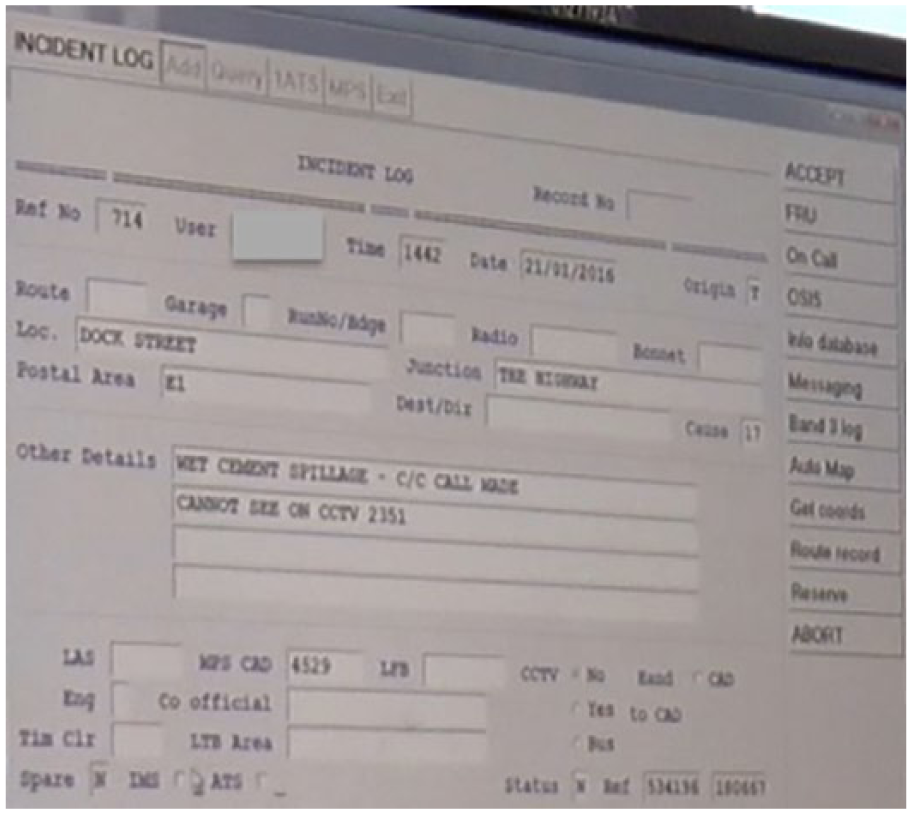
The window showing the incident log for the call in Fragment 2.
The activities of the three centres are closely related: MetroComm manages the police response to traffic incidents, LSTCC controls London’s traffic lights and traffic flow and CentreComm is the centre responsible for the control and management of London Buses. The descriptions that are entered can thus record contributions from members of each of the organisations. The original incident may have been identified by the police, the controllers of the buses may plan a response and this may involve changes to the traffic signalling systems in a particular area of London. The descriptions can also serve to help coordinate contributions from a team. In common with many large open-plan offices, this large space is divided into different zones for different teams, consisting of rows of back-to-back desks. Staff within each zone can sit at any location within the zone, and each working area has a standard set of technologies – most notably a bank of screens – on which the member of staff can configure windows for a range of applications. The incident log system is one of a number of applications each team member has access to and is used in combination with those other systems, including systems that allow access to CCTV images from thousands of traffic cameras across London, various computer-supported mapping systems that show the real-time location of traffic and technologies that keep track of pending calls and support communication with personnel in the control room and around London.
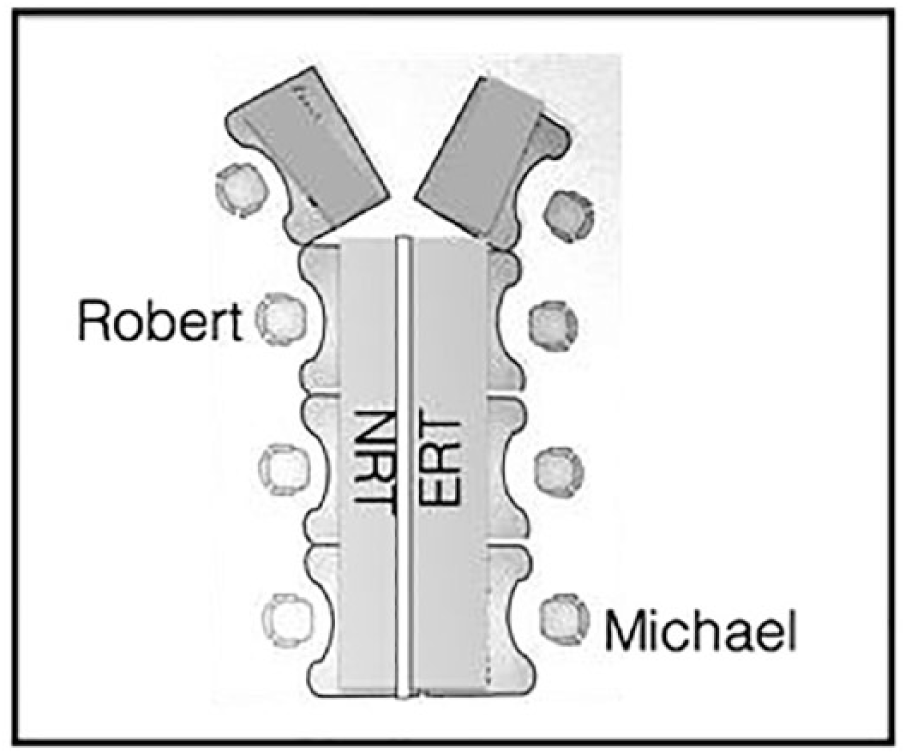
If we consider one of these ‘sub’ control rooms CentreComm, it is divided into two teams with associated managers and related staff. Both teams of up to eight staff are located in a zone consisting of two back-to-back desks along which up to four staff can sit, each having the bank of technologies to support them. Every work area has five monitors between which staff can organise the various applications available to them. One team, the Emergency Response Team (ERT) principally handles incidents as they happen. These may be reported by bus drivers, the police, local bus operations centres or mobile staff employed by CentreComm. Members of the ERT make the ‘first response’ to an incident. They also typically make the initial record, or description, of the incident in the log. The Network Response Team (NRT) manages and plans longer term responses to incidents. If an incident is likely to last a significant time (i.e. more than 20 minutes) then a complex plan may be required, for example, identifying alternative routes for buses to travel on, diverting buses along roads where they do not typically travel, and deploying mobile staff to ensure passengers are informed of such changes. They utilise the initial description to initiate their planning of this response. Hence, the descriptions serve to coordinate activities within a team. They have a rather standardised format: recording typically in order, a very brief account of the reported incident followed by the consequences of the incident and then any immediate action (if any) undertaken by the controller. Usually these are written in an abbreviated form and sometimes utilise codes used by the police: for example, ‘HEAVY TRAFFIC S/B/ SHEER WEIGHT OF TRAFFIC 10 MIN DELAYS’, or ‘FALL ON BUS DUE TO HEAVY BREAKING LAS DECLINED’ or ‘BLOCKED BUS STOP. DRV ASKING IF HE SHOULD SERVE STOP – NO’ or ‘LIBRARY ON FIRE – LFB HAVE CLOSED ROAD’ 1 or ‘RTC PI 2x CAR LAS AND MPS ON SCENE. DOWN TO ONE LANE E/B’. 2
Although staff do communicate with one other face-to-face or through the phone system about incidents, the size and scale of the room, as well as the number of personnel involved can make this problematic. It can be hard to identify who might become responsible for handling a particular incident. Hence, the Incidents Log is the principal resource for communication and collaboration within the control room. When writing a record of an incident, staff are sensitive to the needs of colleagues both within the control room and elsewhere. There is an economy of description in how they are written. As they need to be read quickly, they are written succinctly. In this way, the nature of the incident and any action or response taken can be made clear to colleagues (see Luff et al., 2017, for further details). They are designed for colleagues for particular purposes, to make sense of the incident and provide a warrant for any actions taken.
Nevertheless, the contents of these records may not always be read unproblematically. In the following example, Robert (R), a member of the NRT team for planning responses to major incidents, selects an incident from the log. This incident is on a road on the London Road Network, commonly known as ‘Red Routes’. Roads on this network are critical to the flow of traffic through London’s transport system and have special traffic regulations associated with them (e.g. very strict parking restrictions) and are closely monitored. After reading the description and checking the location of the incident through the CCTV system and the mapping system, Robert goes over to Michael, a member of the ERT team, who originally handled the incident, to discuss it.
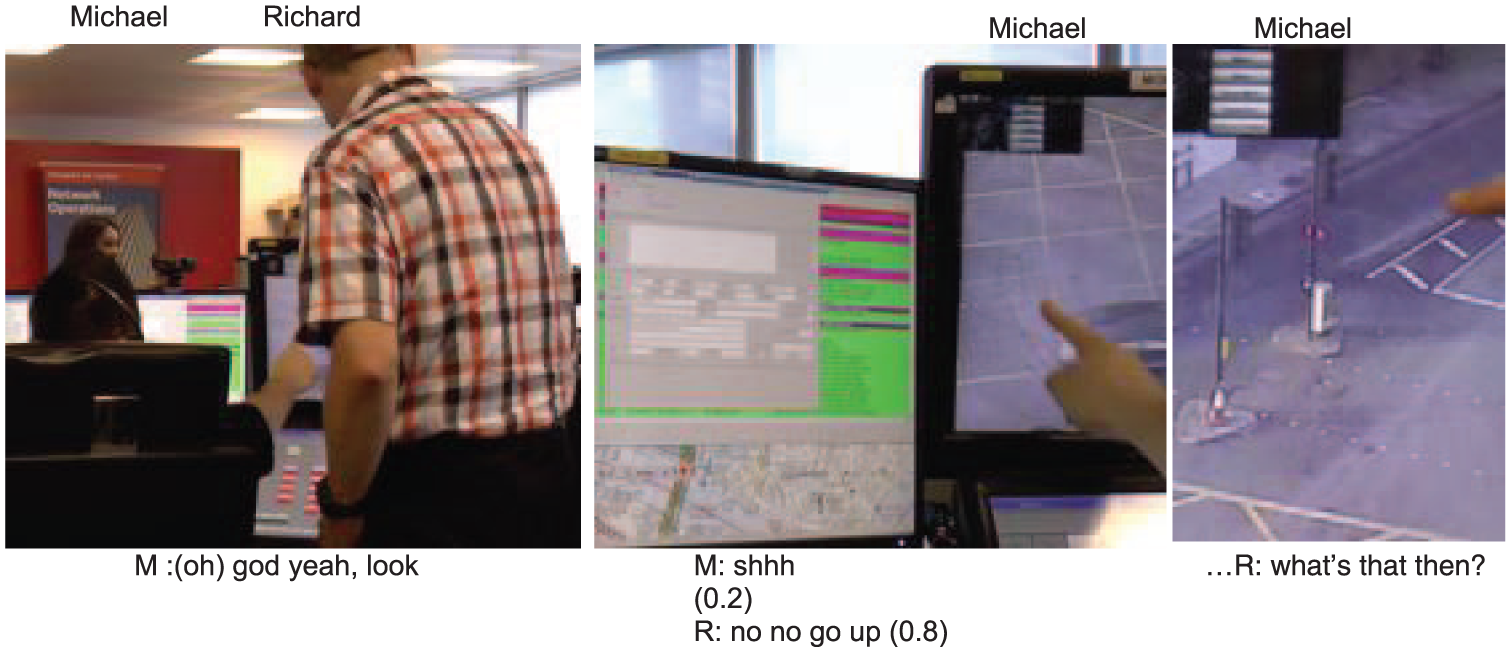
The original call from the police is also located in the STTOC control room – recorded by Michael reported a ‘puddle of cement’ at a junction of one of the major roads in East London on the London Road Network (‘The Highway’). Following the call, Michael tries to find the problem on the CCTV system but cannot locate it. He types the location of the ‘Wet Cement Spillage’ into the incident log and adds the following comment: ‘Cannot see on CCTV 2351’ (see Figure 2). On completion, the incident is added to the Incidents List usually visible on the systems accessible to most of CentreComm staff. Just after it appears on this list, Robert selects the incident and examines the log. He then selects the camera mentioned and 0.5 seconds later the image appears on the screen, he looks over his monitor towards the ERT team and calls out to Michael.
R: (Michael)?
(8.0)
R: (Michael)?
(0.5)
R: two three five one Dock Street?
(0.3)
M: yeah
(0.2)
R: you’ve got on there cannot see on Cee Cee Tee Vee
(0.1)
M: I could not see it
(0.1)
R: (what’s that) large brown mark (I wonder what that is) sheh eh
(0.1)
M: Really?
(.)
R: if you look on the Nor- the Northbound ( )
(0.3)
Robert appears to have found the problem on the image and from the identification in the log searches for the member of the ERT team who entered it. A little later Robert comes around to Michael’s desk to discuss the incident. Michael selects Camera 2351 again, panning the camera around the scene, directed by Robert, until a brown mark becomes visible and Robert points to this saying ‘whats that then’.
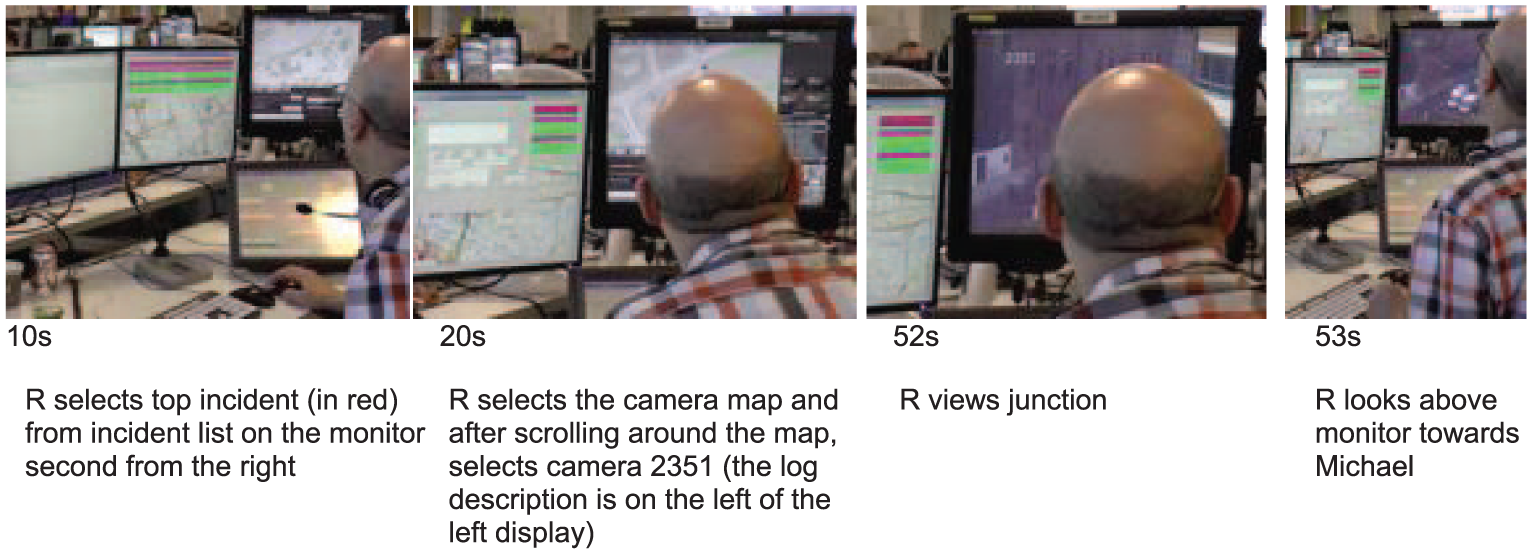
Michael’s response to Robert provides some account of the problem he has faced: ‘he said it was a puddle, I was looking for a puddle’. The appearance of the mark, although large, is not apparently wet. Nevertheless, together they clarify the location of the problem identified by the police. It is on a Red Route and so action will need to be taken about it. In his subsequent talk and interaction with Robert, it is apparent that the visual qualities of the problem are critical in both locating the problem – where it is on the road, and which roads it effects – and the subsequent actions to be taken – whether it is wet and could cause damage to vehicles or dry and could just cause an obstruction on the route.
Robert, returning to his desk, goes on to call another control centre in the STTOC – LSTCC – the one responsible for maintaining the smooth running of all road traffic on the Red Routes and also for repairing any defects. When Robert calls the LSTCC by phone, he refers to someone losing a ‘load of concrete’: a description designed for those responsible for clearing up the problem. In this call, there again is a problem with identifying where the problem is – whether it is indeed on the junction of the road mentioned in the log (‘Dock Street’) or in a location where the street changes name. While on the call, Robert and the member of LSTCC sitting elsewhere in the control centre view the same CCTV image through their own systems to clarify this. Robert then adds the line ‘LSTCC AWARE TLRN’ to the incident log – ‘TLRN’ being the abbreviation for ‘TfL London Road Network’ (i.e. a ‘Red Route’). The note provides an account of why LSTCC were informed, and provides information from which a reader can assess the severity of the incident.
In the case above, as with Fragment 1, the details of a simple description have consequences for a range of personnel. Staff from three different organisations (and four teams) collaborate to help resolve a problem, the nature of which was previously unclear and that has consequences for numerous drivers and passengers on a major thoroughfare in a large city. Throughout their management of the incident, staff draw on different descriptions and characterisations of the problem provided in different media and modes. Initially, the police provide a description in a phone call (giving a characterisation as ‘a puddle’ accompanied by a location). This characterisation is relevant for the management of traffic through the area and reflects its seriousness. Michael transforms this into a textual description as ‘Wet Cement Spillage’ and completes fields giving the ‘Location’ as ‘Dock Street’ and the ‘Junction’ as ‘The Highway’: a description that (formally) characterises the kind of incident and accompanies this with a note revealing some uncertainty to its nature (recording that it cannot be independently assessed). Robert, when clarifying the problem to Michael calls what he sees as a ‘brown mark’ on the ‘Northbound’, and accompanies his description with a gesture to show its extent. When Robert calls the LSTCC by phone the description is again transformed, designed so that it is relevant and appropriate to another team who will be responsible for dealing with it. These descriptions made face-to-face or through the phone can be seen to be understood in particular ways, they have sequential relevancies for colleagues, with regard to how they are understood and the consequent actions that are taken.
The written descriptions, mediated through technology, engender collaboration between personnel for different members of a range of organisation and have a range of consequences, whether this is for the safety of travellers, the management of traffic or the scheduling of public transport. As with descriptions produced through talk, written descriptions are designed for particular recipients, at a particular time and place (cf. Heath and Luff, 1996b; Sacks et al., 1974). When the area under consideration is vast, as in a control room that covers the entirety of a large city, however, features can become ‘de-ecologised’: it being hard to determine the relevance of a particular detail, its consequences for others and the course of activities it entails. The ‘recipient design’ of descriptions, particularly textual descriptions, within multi-team organisations can thus become problematic. So, although there are a range of technologies to help identify and inspect features within the environment and a network of systems that serve to record incidents and mediate the responsibilities between several organisations and teams involved in their management, these may not be sufficient for participants to recognise problems and then develop adequate solutions. To make sense of these records, participants need to assemble coherence, develop compatible identifications, from the various resources available and then configure appropriate responses for others in different organisations with differing concerns. However, when what ties the description of the material object to the organisational import of that description is not apparent, then the ability to design descriptions that are appropriate to their recipients can be undermined. The sequential relationship between the characterisation of a material object and its organisational consequences is fractured.
Discussion
The objects the participants are sensitive to in these settings may seem trivial – small black boxes, bags of powder, puddles of cement, slow moving buses or stationary bodies – but the consequences can be critical – suspect explosive devices, lengthy delays, major congestion or potential suicides. The material qualities of the objects are thus critical for the assessment of the character of the concern at hand. Staff who are responsible for coordinating a response rarely have direct access to their physical qualities of these objects. Instead, their access is mediated through technologies and often their relevance is only apparent through their description by others. These descriptions then set in train sequences of activities often by several participants in parallel. There is a sequential relationship between the characterisation of a material object and its organisational consequences. In some sense, these are ‘socio-material’ relations (cf. Carlile et al., 2013; Orlikowski, 2007), where the materiality is made relevant through the interactions of the participants. Despite the plethora of visual technologies, in contemporary centres of coordination, these characterisations are increasingly being made through texts: features made apparent in talk are transformed to texts and texts are then resources for later instructions made through other means of communication, such as phones, radios or even through video. Analysis of how participants produce these texts and make the physical characteristics apparent reveal the relevancies of the material and the consequences of this materiality to the participants themselves, even when these material qualiaties are mediated through electronic technologies.
These new centres of coordination are saturated with technologies, involve people from different organisations and impact on the activities of the general public. In more ways than one, they can be characterised in terms of ‘networks’ of actors, whether these are human or non-human (cf. Latour, 1987; Law and Hassard, 1999). However, such a characterisation seems to gloss the complex forms of collaboration and coordination engendered through sequences of activities. Even considering one element – a description and characterisation of a material feature of an object – reveals how its design both reflects its relevance and projects its consequences for others; it is a resource that shapes the interplay of activities within and between organisations. Indeed, it seems to be due to the increased complexity and nature of the technologies that the textual description has become a critical resource for coordination.
There are a number of differences between the large-scale multicentre control rooms and the conventional settings considered by workplace and related ethnographic studies. There is a complex division of labour and responsibility. Tasks and activities are increasingly screen and system based. There is usually an absence of a shared public display that reveals the state of current operations. The sheer number of personnel working within the domain and perhaps on the same event at any one time, undermines, or better, necessitates a solution, an order of practice, that enables coordination and collaboration. In the case considered here, these challenges are exacerbated by the extraordinary complexity of the domain of concern for the participants – a substantial and highly populated geographical area – the range of problems with which staff have to deal, and the range of services for whom any problem or incident may be relevant. For any incident and event and its description, there are therefore a broad range of specialisms, services and personnel that might, at some point be implicated in its management. In consequence, a widely accessible resource, description of an event becomes of increasing importance. The transient character of talk as a form of communicative behaviour, a medium that passes or decays, is augmented or increasingly replaced by a medium, namely text, that enables a description to be contingently accessible and relevant to a broad range of relevant recipients. In turn, these descriptions of incidents and events are more formally structured to enable a broad range of interests to be brought to bear in their reading. In contrast, therefore to the more traditional transport control centre where reports of incidents and events were produced post hoc and largely for the purposes of accountability, in these large-scale control centres, the report is the principal vehicle through which personnel progressively manage incidents and events and through which concerted responses are produced.
These developments also pose challenges for those with an interest in the performance and accomplishment of practice and organisation, challenges that resonate with the practical problems faced by the participants themselves. Without too much difficulty, we can gain access to the descriptions that personnel produce and modify in the course of dealing with an incident or event, whether this is through audio-visual materials or other logs or documentary records. By undertaking field work at particular desks, we can record features of an activity’s production – what is said by participants and their use of particular technologies that feature in a description’s production such as CCTV. But, given the range of personnel and services that may contingently contribute to or have some bearing upon an incident’s management, it is not possible to capture or record the range of contributions that feature in the activity. Moreover, an electronic, textual description enables the simultaneous production of various activities by different personnel in different locations. These activities and the interaction they involve are oriented to, even engendered by, the description, but only indirectly coordinated with actions undertaken by others both within and outside the control centre. In other words, highly complex and contingent forms of co-participation and collaboration arise in the emerging management of an incident, but are not necessarily ordered with regard to sequence and sequentiality characteristic of more traditional forms of institutional interaction. In turn, this poses an important analytic issue, that is, how we explore and demonstrate empirically the relationship and the qualities of relationships between particular actions and activities – or more generally the contributions of various personnel from various services. The characterisation of a sequence of activities, relating a prior action to a next, that typically prioritises the sequential production of turns of talk is of less consequence. Settings such as these demand attention to be paid to the embodied practices through which participants engage with material objects and to how these practices are embedded within the local environment. This not only requires access to the material and embodied qualities of performative action but a characterisation of sequence that relates features of talk, bodily action and of the local environment. These settings call for a multimodal, multi-party ethnography of a particular kind and one that can account for interdependent parallel courses of action engendered by different and interrelated modes of communication.
Despite these methodological challenges, studies of these centres of coordination can reveal general issues of relevance to those considering the organisation of complex contemporary work. They serve to prioritise the consideration of organisations concerned with the management of highly contingent events facilitated by new technologies. They reveal new and emerging forms of collaboration where staff engage in distinct but interdependent parallel courses of action and they reveal the heterogeneous ways in which material objects are evoked and consequential for the everyday work of participants. They make apparent why it is critical to develop analyses of how the practices of participants are embedded within and serve to constitute their local context.
The incidents and events that are managed by staff in these control rooms can affect large numbers of people as they pass through an area. They transform the flows of traffic that can have critical knock-on consequences in widely dispersed locations for others. And yet, these incidents are managed through the moment-to-moment interactions between participants through, talk, texts and visual conduct. These studies reveal the detailed dependencies between the local and the dispersed, between the micro and macro. In these settings different characterisations of features of organisational space are produced as part of the everyday work of the participants and have relevancy and consequences for those participants (cf. Halford, 2004; Lefebre, 1991). Staff manage their ‘organisational space’, juxtaposing the local with the remote, to assemble a coherence for themselves and others. Their perception of space is bound to the organisational consequences of their actions, is shaped through their practices and how they accomplish them.
The problems participants face every day in these control room settings no doubt recur in many other large modern distributed organisations. From moment-to-moment, the participants have to manage a range of resources that might be accessible through a range of media, some transitory others more persistent, these may arise from the activities of participants who may be close colleagues or any member of a very large network of organisations and sub-organisations. Staff transform different kinds of ‘information’ through different media to serve the demands of different individuals, with differing responsibilities in those various organisations. They assemble coherence from a range of fragmented real-time resources that facilitates collaboration with collocated individuals and with those who are geographically dispersed throughout a large area, activities that have consequences for thousands or tens of thousands of other individuals. These highly dispersed yet interdependent forms of cooperation and collaboration pose significant challenges to field studies and qualitative methods, challenges that are methodological, analytic and theoretical, and yet it may be by paying attention to small details, the moments of interaction that one can reveal the complexity of collaboration within and across these organisations.
Footnotes
Funding
The author(s) received no financial support for the research, authorship, and/or publication of this article.