




Abstract
This article examines the institutional entrepreneurship displayed by the US tobacco industry in its attempt to overcome the moral illegitimacy of smoking among women in the years following World War I. Using historical analysis within a critical institutional framework, we trace the strategies used by the tobacco industry in combating seemingly powerful taboos and convincing large sections of the female population to take up smoking. Contrary to popular explanations linking the appeal of cigarettes to the aura of sexual glamour that was associated with them, we posit that the industry was able to initially expand its female consumer base by creatively appropriating the discourse of ‘the new American woman’ that was emerging in elite circles at that time. We found that many tobacco manufacturers were institutionally entrepreneurial in their ability to discursively connect selected ideals of emancipation with a spectrum of female identities in American society. We conclude by drawing implications for an understanding of the management of moral illegitimacy.
It is now virtually a truism in organization studies that social legitimacy is an invaluable organizational resource without which an organization’s right to function and even exist can be seriously jeopardized (DiMaggio and Powell, 1983; Meyer and Rowan, 1977; Suchman, 1995). Yet, in reality, we are constantly confronted with the extraordinary staying power of corporations and entire industries that are tainted with high levels of illegitimacy. From oil spills and sweatshops to unorthodox accounting practices and hazardous products, corporate illegitimacy appears to not be quite the disruptive force predicted by institutional theory. This article joins other recent efforts among institutionalists to understand this phenomenon (Lawrence and Phillips, 2004; Okhuysen and Hudson, 2009) with the help of a detailed historical study of the transformation of cigarettes from an illicit product for American women in the early part of the 20th century to a fashionable and commonplace one by the late 1940s. Our focus is on a series of strategic moves made by major US tobacco corporations during this period to harness shifting macro-discourses, cultural mythologies, and new social movements to skillfully redefine the image of a product (i.e. cigarettes) that was stigmatized as being unsuitable for women. This article contributes to furthering our understanding of institutional entrepreneurship (DiMaggio, 1988) in the context of strong product illegitimacy.
We begin by exploring the scholarly literature on organizational non-conformity, particularly under conditions of institutional illegitimacy, and outlining the theoretical framework for our study. We then go on to describe our methodology of historical analysis and take a close look at the severe restrictions against women smoking at the dawn of the 20th century in the United States. Our historical examination moves on to look at major shifts in gender identities that were emerging as part of growing macro-discourses of the ‘new woman’—discourses that were making for more favorable conditions for female smokers. More specifically, we focus on the cultural discourses of the suffragette, the college girl, and the flapper—all with strong and positive symbolic associations with smoking. We will then examine how the tobacco industry adroitly tapped into this discourse of the ‘new woman’ and successfully aligned its products with some of the more progressive ideals of the day. We trace their efforts to simultaneously preserve a faithful following of primary upper-class white women from more conventional and diverse class backgrounds, as well as to draw in a much larger group of ‘ordinary’ women into the orbit of regular smokers. Our study follows some of the early ‘women’s brands’ offered by smaller companies and the strikingly successful strategies of major cigarette firms such as Liggett & Myers, Philip Morris, and American Tobacco (formerly Duke and Sons). We conclude with a discussion of the salience of identity discourses for the management of organizational illegitimacy.
Managing organizational non-conformity and illegitimacy
Institutional theorists are now at a point of amply recognizing that organizations frequently engage in a delicate balancing act between conforming to their institutional environments and deviating from prescribed norms and rules (Deephouse, 1999; Oliver, 1991). Indeed, organizational acts of non-conformity have increasingly drawn scholarly attention since they contribute to our overall understanding of the agency–structure relationship that underpins so much of social dynamics and change (Heugens and Lander, 2008). In brief, the literature leads us to conclude that while organizations are unquestionably constrained by institutional pressures of conformity, they are still able to deviate from cultural and societal expectations by engaging in a range of strategic moves. Organizations may, for instance, be sensitive to contradictions in the wider normative or regulatory environments that give them sufficient space for non-conformity (Seo and Creed, 2002), negotiate arrangements between different elements of their relevant environments that open up possibilities for variations (Bordt, 1997), or they may tap into and creatively appropriate shifting macro-cultural discourses to legitimize novel approaches, as in the creation of new institutional fields (Lawrence and Phillips, 2004). When organizations successfully pull off this kind of non-conformity, they act as skillful institutional entrepreneurs (DiMaggio, 1988; Levy and Scully, 2007) who master the use of rhetorical and political strategies (Suddaby and Greenwood, 2005) needed to ensure the ongoing support of salient stakeholders.
We would also posit that while acts of organizational non-conformity almost invariably risk being perceived as illegitimate, some forms of organizational transgression that incur the stigma of moral illegitimacy are specially problematic and far more difficult to manage. In his path-breaking theoretical exploration of organizational legitimacy, Suchman (1995) clearly distinguishes moral legitimacy from cognitive and pragmatic legitimacy, arguing that it is primarily grounded in normative evaluations of moral propriety. Organizations come close to losing their moral legitimacy when their behavior and/or core activities have deleterious consequences for society and are perceived as violating salient ethical codes (Okhuysen and Hudson, 2009; Suchman, 1995). The Exxon and BP oil spills, the Nike sweatshops, Mattel’s lead-filled toys, and the illegal manipulation of the inter-bank lending rate by Barclays Bank are all cases in which organizations’ moral legitimacy was seriously threatened.
Recent discussions of this phenomenon have persuasively argued that the acquisition of moral illegitimacy places organizations in a particularly difficult position since it thrusts them into emotionally charged situations to a much greater degree than those facing challenges to their pragmatic or cognitive legitimacy (Prasad, 2012). Moral illegitimacy, it is argued, poses a far more serious threat of stigmatization to an organization because it casts the organization as an irresponsible social deviant that is capable of harming significant sections of society either through specific organizational policies and practices or through dangerous and/or socially undesirable products (Prasad, 2012). Moral illegitimacy can therefore trigger a sizeable backlash against an organization or industry from active stakeholders in its institutional environment. Since moral illegitimacy is also typically tinged with a sense of organizational wrongdoing, it can result in vocal stakeholders calling for punitive measures against it.
An organization’s moral illegitimacy is further compounded when its central products and processes are themselves perceived as being the source of harm to sections of society. This is what Okhuysen and Hudson (2009) refer to as the problem of ‘core stigma’. Overcoming organizational core stigma rarely happens by accident. Hudson and Okhuysen (2009: 135) themselves assert that organizations typically take concrete actions ‘to protect themselves from the negative effects of stigma through the use of different boundary management process’. In their study of men’s bathhouses, they particularly highlight the organizations’ meticulous efforts to avoid negative attention and to reduce the transfer of stigma to various significant stakeholders including customers and regulators. In brief, the organizations in this case primarily pursued a strategy of containment to minimize the ill-effects of their own moral illegitimacy. Such a strategy of containment, however, does not explain the success of organizations and industries that have transformed morally tainted objects into acceptable and even socially desirable products. In such cases, organizations are more likely to engage in a form of institutional entrepreneurship that is adept at leveraging cultural resources to transform their normative environments and position their products and processes in a dynamic space that reflects these changes. As noted by Levy and Scully (2007), this form of institutional entrepreneurship is primarily concerned with shifting field-level norms, routines, and rules in ways that alter the core meanings of their products and processes. Our article further aids in understanding these processes through a historical examination of the sustained efforts by several major American tobacco companies to develop and market cigarettes to women in the 30 years following World War I, despite widely held cultural beliefs about smoking being unsuitable for women.
Methodology
The research methods used in this study are entirely historical. Scholars in the field of management and organization studies have periodically called for more historical analyses (Kieser, 1994; Prasad and Eylon, 2001; Rowlinson and Proctor, 1999), arguing that such studies can enhance our understanding of the influence of past actions and events on present practices and circumstances. In other words, historical research does more than shed light on past business practices and managerial actions. Even more importantly, they ‘provide us a critical lens for evaluating the present’ (Prasad and Eylon, 2001: 6). Not only do organizational histories offer us detailed insights into the dynamics within enterprises and workplaces, they also alert us to the role of corporations in appropriating and shaping broader social mindsets (Miller and O’Leary, 1989; O’Connor, 2001; Scott, 1992).
Historical methods permit researchers to examine a relatively longer time period than one looked at with the help of more contemporaneous methods such as interviews, surveys, or observation. This facilitates a closer view of transformational processes including both continuities and discontinuities. In this article, we look at a period of almost 50 years, beginning with our examination of strong social opposition to women smoking in the early part of the 20th century to the early 1940s by which point it had become a commonplace activity for both men and women. Historians also do not make sharp distinctions between background and foreground that are common in other social sciences. Hence, an understanding of context becomes a central element of any historical narrative. As a result, historical methods are helpful in adopting a multi-level analysis—connecting individual actors such as tobacco corporations to relevant social groups (e.g. women’s clubs) and large-scale institutions (e.g. media).
Historical methodologies can themselves be informed by broader theoretical frameworks. In this article, we adopt a critical institutional historical lens—one that recognizes the centrality of institutions in any historical narrative and regards institutions as manifestations of power relations (Suddaby and Greenwood, 2009). Indeed, institutional theory has over the years developed a credible tradition of historical work that explicitly examines organizations from a power-centered or ‘dialectical’ view (e.g. Holm, 1995; Lawrence and Phillips, 2004; Oakes et al., 1998). Our study reflects these influences and follows the tobacco industry’s strategic appropriation of wider field-level discourses and product positioning as complex political moves. This kind of critical institutional historical analysis is useful because it compels us to pay attention to structural constraints on organizations while simultaneously recognizing that a certain amount of agency is invariably available to strong and powerful actors.
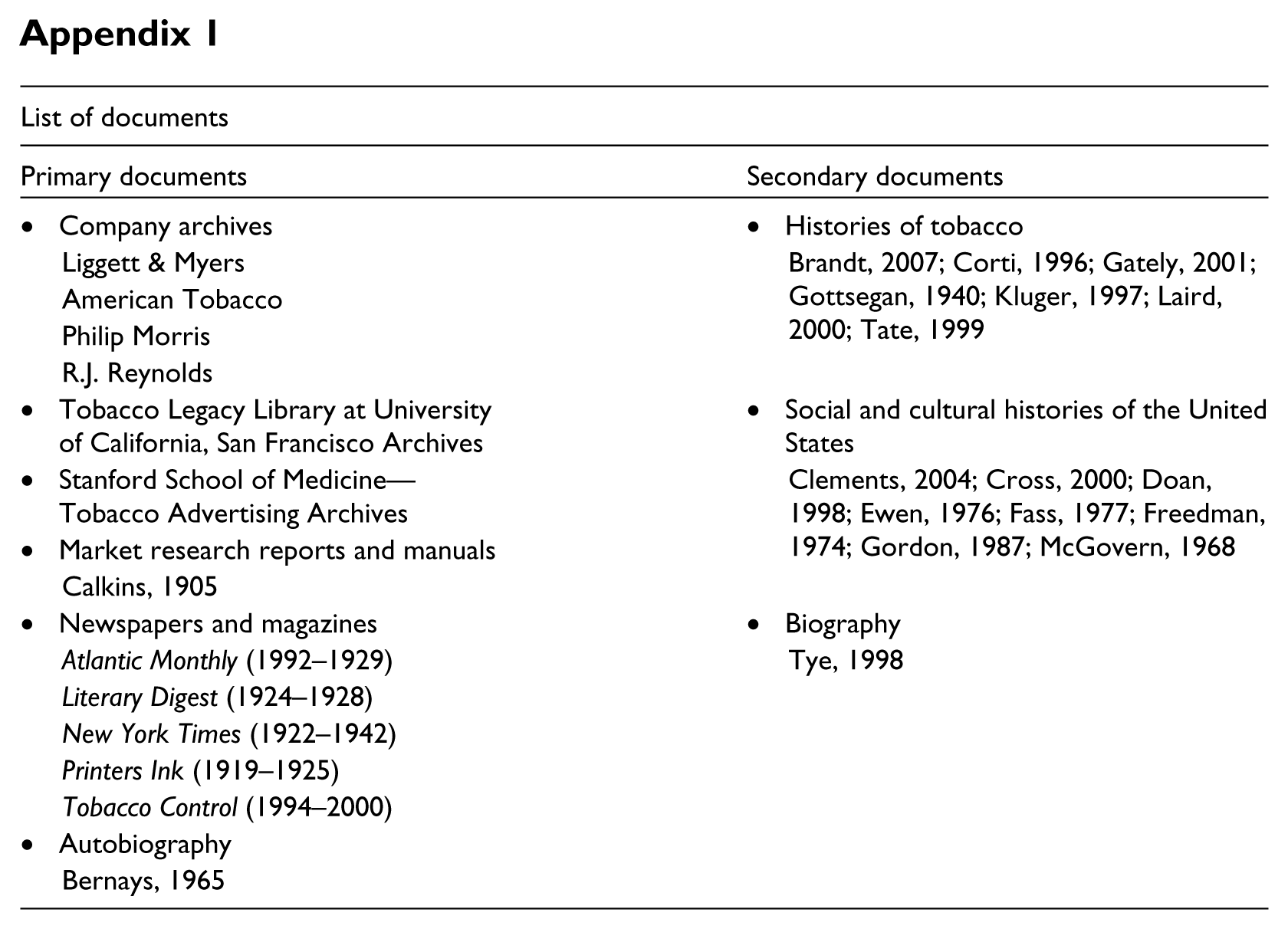
As in any historical study, we have consulted a blend of primary and secondary data sources in order to come up with our arguments. Our primary documents have included magazine articles, newspaper reports and editorials, advertisements, memos, posters, memoirs, and tobacco industry archives. Our secondary data sources include government reports, biographies, company histories, and scholarly books and articles. Appendix 1 provides a detailed list of sources. Our focus has been on both the cultural and economic history of the United States and the corporate history of the tobacco industry from the early part of the 20th century to the 1940s—as the period that witnessed the strong disapproval of women smokers give way to a widespread acceptance of them. We carefully scrutinized these documents in order to understand (a) the cultural climate of opposition to female cigarette smokers in early 20th century, (b) shifting discourses of gender and identity in the same time period, and (c) the strategies adopted by major tobacco companies in transforming cigarettes into legitimate and even desirable products for American women. The remainder of our article details these findings.
Socio-cultural opposition to women smoking
In the first few decades of the 20th century, the institutional environment was far from favorable to women smokers. While Americans had all along been voracious consumers of tobacco—which they mostly chewed or smoked in pipes—national sentiment was predominantly opposed to cigarettes right up to the early part of the 20th century (Brandt, 2007). Indeed, cigarettes were so negatively perceived that they were turned into illicit substances in 14 states that had outlawed their sale and use (Gately, 2001). Women who smoked, however, were subjected to far harsher criticisms than men who did. Editorials and commentaries in the media were overwhelmingly critical of women who smoked (Troyer and Markle, 1983) and were undoubtedly instrumental in shaping public opinion on this issue. Social reformers, such as Vida Mulholland and Lucy Page Gaston who vigorously campaigned against cigarettes in general, reserved their most severe condemnation for women who smoked (Morone, 2003; Tate, 1999). The nation’s law and order institutions were equally opposed to female smokers. In 1904, a woman named Jenny Lasher was sentenced to prison for an entire month simply because she had smoked in the presence of her children (Brandt, 2007). A few years later, in a case about domestic violence brought before the New Jersey courts, Elizabeth Dudka accused her husband of beating her because she smoked. Not only did the presiding judge dismiss the case, but he also declared that any woman found smoking deserved nothing less than a spanking (Tate, 1999).
Even after smoking became a socially acceptable activity for men during and after World War I, attitudes against women smoking remained strong. Efforts were made periodically by Congressmen like Mississippi’s Paul Johnson to ban women from smoking in Washington, DC, and other major cities. In 1922, a woman was struck and then arrested by a New York City policeman for lighting a cigarette in public (Troyer and Markle, 1983), and such harassment of female smokers was relatively routine. Even in states where smoking was legal, bars and restaurants often banned women from smoking on their premises (Segrave, 2005). Elite women’s colleges such as Smith and Wellesley enforced strict restrictions against smoking by students and female staff members, while Bucknell University grounded 44 female students who had smoked for several months (Brandt, 2007).
Clearly, these strong taboos stemmed, in part, from highly gendered connotations that cigarettes held for a majority of Americans. It appears that stigmas relating to women who smoked were linked to three different collective anxieties, that is, the unhealthiness, unfemininity, and immorality of cigarettes. The first anxiety about the unhealthy aspects of smoking for women was, in many ways, the least absorbing concern. Yet, there was definitely a sense that cigarettes negatively affected fertility rates and were consequently likely to impact the reproductive health of women (Tate, 1999). At a time when Eugenics was a popular mode of scientific thinking, there was also a fear that white American female smokers of Anglo-Saxon and Nordic descent might jeopardize the ‘civilized’ racial stock in the United States (Hurty, 1912). A few physicians also expressed concern that smoking might be deleterious to lactating mothers (Brandt, 2007) and thereby affect the health of infants.
A more pervasive anxiety centered around the perceived unfemininity of cigarettes and their inappropriateness for women. Here, the media was quite strident in its disapproval of cigarettes for women, declaring them to be ‘unladylike’ (Kluger, 1997), ‘vulgar’ (Segrave, 2005), and contributing to ‘the overall coarsening of womenhood’ (Literary Digest, 1925). The media’s condemnation of female smokers was particularly noticeable when Alice Roosevelt (daughter of President Theodore Roosevelt) took to smoking on the roof of the White House when her father had forbidden her from doing so inside it. The Sacramento Bee’s response to this incident was typical, declaring smoking to be a ‘manly habit’ and a ‘thousand times more offensive when the smoker was a woman’ (quoted in Tate, 1999). Countless magazine articles in the early decades of the 20th century routinely cautioned young women against smoking, pointing that it was neither graceful nor womanly (Segrave, 2005). As Good Housekeeping asserted in a 1929 piece, ‘the odor of stale tobacco does not add to a girl’s charm, neither do nicotine-stained fingers’ (quoted in Brandt, 2007).
The most overpowering sense of social disapproval toward women smoking, however, was rooted in perceptions of its immoral and sinful nature. In the American imagination of the 19th century, women who smoked were connected to the bars and brothels of Western frontier towns (Gottsegan, 1940), signifying impropriety and a lack of virtue. In the realm of popular culture, smoking was associated with the notorious heroine of Bizet’s opera—Carmen—the promiscuous gypsy who worked in a cigarette factory, who smoked, and was depicted as a wicked enchantress with loose and easy morals (Amos and Haglund, 2000; Segrave, 2005). In some regions of the country, the stigma attached to a female protagonist smoking was so strong that performances of Carmen in Kansas cast the lead character as a milkmaid instead of a factory girl who rolled cigarettes for a living and smoked (Tate, 1999). As a cultural practice, smoking (for both men and women) was also commonly associated with newly arrived, working-class European immigrants, who, in general, were held to be of lower moral character than Americans (Gately, 2001).
In the early years of the 20th century, widely held perceptions about growing numbers of female smokers also triggered worries about the moral well-being of the nation. Views of women as the weaker sex led to concerns that this also made them more susceptible to the evil charms of smoking (Brandt, 2007). It was also commonly held that smoking led to an attitude of carelessness that made women unfit for the responsibilities of motherhood. Smoking was therefore a serious misdemeanor, not only on account of its wanton and sexual connotations but because it indicated the failure of white middle-class American women to responsibly discharge their duties as ‘mothers of the race’ (Rosenberg, 1992).
For the tobacco industry, the social illegitimacy of cigarettes posed a serious problem. The growing urbanization of America and the widespread use of public transport systems were making tobacco a more inconvenient substance because of the lack of easy ability of using spittoons. Furthermore, spitting tobacco juice had come to be regarded with increasing disfavor, given changing perceptions about the hygienic problems this posed in crowded public spaces. In many ways, cigarettes were an ideal product to sell to a mobile urban population. They were easy to carry, easy to light up even on trams and trains, especially with the new safety matches, and easy to dispose.
Duke and Sons—the leading tobacco company of the day that eventually became American Tobacco—had, moreover, recently acquired a technology that was revolutionizing the mass production of cigarettes. This was the Bonsack machine—a piece of equipment that was capable of rolling several thousand cigarettes in an hour (Kluger, 1997). The Bonsack machine, in essence, transformed the cigarette industry from a traditionally labor-intensive operation to a highly mechanized and efficient one that could now benefit from large economies of scale (Brandt, 2007). At the same time, it also created a discrepancy between immense productive capacity and relatively faltering consumption. This new technology therefore provided the tobacco industry with an added impetus to dissipate the social stigma attached to cigarette smoking.
World War I did much to diminish the negative attitudes toward men smoking. The trench warfare of World War I made cigarettes popular with US soldiers who took to smoking while spending long periods of time in the trenches. Very quickly, cigarettes were shipped out to men in the trenches in large quantities and were distributed by organizations such as the Young Men’s Christian Association (YMCA) that had previously been opposed to smoking (Tate, 1999). In an incredibly short period of time, cigarettes went from being perceived as sinful and harmful products to symbolizing patriotism and national pride. Even during the war, however, while young women purchased cartons of cigarettes to send to boyfriends, brothers, and husbands on the battlefront, they could not smoke themselves without eliciting scorn and censure. Thus, virtually half the adult population of the United States was excluded from the cigarette market because of the social taboos against women smoking. It is worth nothing that many cigarette manufacturers actually refrained from directly marketing their products to women, fearing a backlash from the public and, in particular, attacks from various social reform movements that had campaigned for decades against smoking (Printers Ink, 1919).
What the cigarette industry did do was to tap into certain pockets of cultural resistance that were already challenging many of the traditional roles assigned to women and crafting alternative identities for them. In the rest of this article, we will show how the early entry of women into the cigarette market was substantially influenced by the discourse of the ‘new woman’ that was prevalent in some sections of American society (white, affluent, and professional) at that time. We will also examine some strategies of product design and promotion by the tobacco industry that drew primarily upon this discourse rather than on those that emphasized the sexual allure of women.
Smoking and the discourse of the ‘new woman’ in America
In trying to understand the change in the face of normative constraints, some institutionalists have pointed to the role of institutional entrepreneurs in leveraging even minor shifts in macro-discourses within relevant environments. Indeed, Lawrence and Phillips (2004) posit that the emergence of new industries is often the result of the ways in which organizations—and eventually entire industries—insert themselves into new spaces created by changes in societal discourses. These discourses typically contain salient cultural mythologies (Meyer and Rowan, 1977) that in turn set behavioral standards for individuals, groups, and organizations. In our article, we show how specific shifts in discourses of the American woman were adapted by tobacco companies to transform cigarettes into products that were fully compatible with the changing identity of the independent and empowered American woman.
At the dawn of the 20th century, the ideal of American womanhood was still largely embedded in traditional notions about modesty, virtue, and devotion to husband and the family. Social expectations were often colored by older puritanical notions stressing the importance of moral purity and obedience to male authority figures. Even when women attained visibility in the public sphere, it was most often as social reformers campaigning for ‘moral’ causes such as temperance, immigrant education, and even making cigarettes illegal (Segrave, 2005). Thus, the idealized American woman of the times was completely incompatible with smoking, which was overwhelmingly cast as morally and aesthetically reprehensible.
Pockets of cultural resistance to this idea had, however, been growing mostly in elite circles where a small but critical mass of women had begun to challenge the validity of traditional gender roles and to assert their independence and desire to become active participants in the public sphere—be it law, politics, or education. Historians and social commentators have often noted that the emergence of this discourse of the ‘new woman’ signaled the beginning of a shift in consciousness about gender roles in the United States (Freedman, 1974) while simultaneously stressing its limited role among women themselves. In other words, the discourse of the New Woman was largely confined to a relatively small group of privileged white women that included both members of the socialite set and serious campaigners for women’s rights (Freedman, 1974; McGovern, 1968).
A closer examination of this discourse suggests that it generated three distinct (though overlapping) cultural archetypes of the new American woman—they being (a) the suffragette, (b) the college girl, and (c) the flapper. What these archetypes shared was an overall impatience with a number of social conventions including those that disapproved of women smoking. Indeed, each of these archetypes had a strong and positive relationship with the cigarette, although in each case the symbolic value of the cigarette was somewhat different. In the remainder of this section, we will explore these three cultural archetypes and trace their orientations toward smoking.
The suffragette
The cultural archetype of the suffragette emerged directly out of the women’s rights movement and represented the new American woman as an independent and assertive individual, single-minded in her focus on the attainment of gender equality in the political sphere. Suffragettes were committed not only to securing voting rights for women but also to undermining traditional expectations governing female social roles (Doan, 1998; Freedman, 1974). The image of the suffragette was largely shaped by the spectacle of (mostly, white upper class) women taking part in marches and public demonstrations demanding the right to vote. This image also contributed to a sense that suffragettes had relinquished much of their femininity in their relentless pursuit of entry into the hitherto masculine public domain of politics.
Many suffragettes themselves smoked openly and were contemptuous of taboos against women smoking—taboos that they saw as yet another archaic social convention in need of overturning (Brandt, 2007). As noted earlier, Alice Roosevelt—a young woman with suffragette sympathies—made headlines when she defied her father’s refusal to allow her to smoke at home by smoking regularly on the rooftop of the White House (Tate, 1999). Smoking had, moreover, other symbolic links to suffragettes and the women’s movement. In 1912, the Women’s Political Union (WPU) participated in a fund-raising event in New York City in which they sold packs of cigarettes with the WPU colors and the words ‘Votes for Women’ emblazoned on the front (Segrave, 2005). Notorious radical feminist, Emma Goldman, champion of women’s political rights and sexual freedom, was also known to be a regular cigarette smoker (Tate, 1999).
Media discussions of the period characterized the cigarette as an ideal product for the modern, independent American woman (Literary Digest, 1919) with suffragette leanings, with the Atlantic Monthly even suggesting that the cigarette was ‘a symbol of emancipation, the temporary substitute for the ballot’ (quoted in Corti, 1996). In sum, the archetype of the suffragette discursively conflated female smoking habits with claims of gender equality. For many suffragettes themselves, smoking was either a commonly accepted practice or a gesture of resistance to the imposition of unequal social norms. To the broader society, smoking was emblematic of suffragette identity, intertwined as it was with the dismantling of a number of male–female social barriers (Laird, 2000).
The college girl
The early 20th century saw increasing numbers of young women from professional and upper-class families attending 4-year colleges such as Smith, Wellesley, Bryn Mawr, and Vassar where they received an education that closely matched that being imparted to young males from similar class backgrounds (Freedman, 1974). These ‘college girls’, as they came to be called, were widely regarded as pretty, smart, self-assured, and opinionated. While there was concern in some sections of society that a college education did not necessarily adequately prepare young American women for marriage or motherhood, the college girl, for the most part, was a positive figure. The artist, Charles Dana Gibson, contributed to this positive image with the paintings of perky, attractive, and feminine college girls in a variety of poses and scenarios. These ‘Gibson Girls’, as they came to be known (see Figure 1), epitomized smart, confident, and rosy-cheeked college-going women who considered themselves to be mentally and socially the equal of young men (Gordon, 1987).
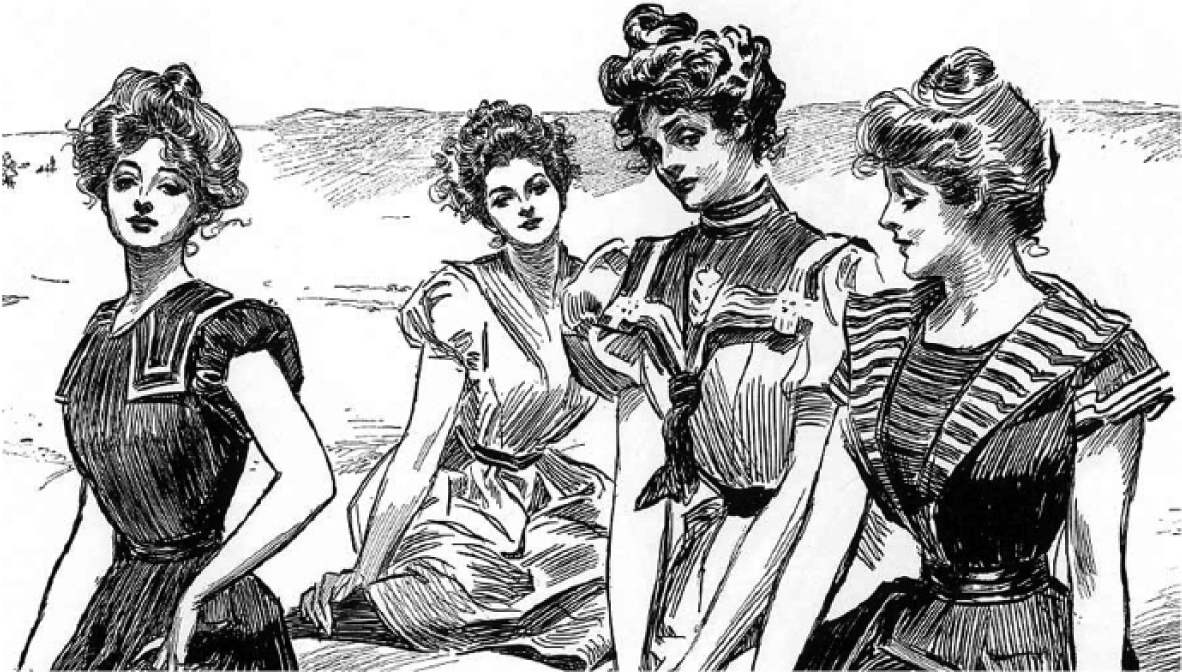
The Gibson Girls.
By the end of World War I, cigarette smoking—which had become quite popular among college girls—was also turning into a central controversial issue for them. Particularly in the elite women’s colleges where questions of gender equality were vigorously debated (Brandt, 2007), smoking symbolized personal choice, feminine independence, and social freedom. As more and more young women began to smoke publicly, colleges and universities began to respond with a number of smoking bans and punishments for violating them (Clements, 2004; Laird, 2000). Students caught smoking were punished with fines, campus confinement, suspension of dating privileges, and, in some cases, even expulsion (Brandt, 2007; New York Times, 1922).
Despite these stringent measures, cigarette smoking remained popular with college girls who often flagrantly violated college rules or cleverly got around them. Students from Wellesley College, for instance, were frequently observed to walk all the way to the town’s end to smoke because the college policy explicitly outlawed students from smoking anywhere on campus or in the town of Wellesley itself (New York Times, 1925). Elsewhere—in Bucknell and in Bryn Mawr—students drew up elaborate petitions demanding that colleges and universities withdraw bans on women smoking and throw open their smoking rooms to female students and faculty (Fass, 1977; Literary Digest, 1925).
By the early 1930s, most American colleges and universities had acquiesced to these demands, and smoking had become a relatively commonplace practice among college women. While the issue generated heated debate in newspapers and magazines such as the Atlantic Monthly, Printers Ink, and Literary Digest, it did not remain in the public forum for very long. By the dawn of the Depression, the cigarette had become an integral element of the archetype of the college girl and was accordingly associated with educated and self-confident young women from privileged backgrounds.
The flapper
The third cultural archetype within the discourse of the New Woman was the flapper. The term flapper referred to a young upper-class woman from the socialite set who was a prominent figure during the decade of the roaring 1920s. Like the college girl and the suffragette, the flapper also challenged conventions around gender roles, but did so mainly in the social and sexual spheres rather than in political or intellectual ones. The character of Daisy in Scott Fitzgerald’s classic novel about the period—The Great Gatsby—in many ways epitomized the flapper.
The typical flapper bobbed her hair, wore shapeless dresses with shortened hemlines, danced close with strange men in nightclubs, painted her lips a vivid scarlet, kept her own latchkey, smoked and drank openly, and was believed to be relatively free with her sexual favors (McGovern, 1968). Flappers engaged in cultural rebellion by favoring an androgynous appearance and challenging roles governing social and sexual behaviors. For the flapper, smoking was part of a cluster of behaviors symbolizing style, subversion, and a more emancipated female sexuality. In other words, smoking was part of a syndrome of rebellion that included other social practices such as dancing in jazz clubs and sexual experimentation (Tate, 1999). Flappers typically smoked through cigarette holders and frequently gave each other jewel-encrusted cigarette holders as gifts (Tate, 1999). Indeed, the cigarette was so much a part of the social scene that cigarette holders became vital fashion accessories (McGovern, 1968).
It is important to note that while flappers had an aura of glamour around them, they were also targets of considerable social disapproval—for their transgression of sexual norms and their non-conformity to ideals of femininity (Doan, 1998). Since cigarettes were so strongly linked to the cultural archetype of the flapper, they began to hold connotations of sexual boldness, unconventionality, and adventurousness.
Tobacco industry strategies and identities of the New Woman
By the end of World War I, the tobacco industry was confronted with a somewhat complicated situation regarding women smokers in the United States. On the one hand, public opinion was strongly opposed to women smoking. This made the tobacco industry hesitant about directly marketing its product to women in fear of a backlash (Bernays, 1965; Tye, 1998). On the other hand, there were clearly discernible (if small) segments of the female population that had embraced cigarette smoking for a number of gender identity–related reasons. One option facing the tobacco companies was therefore niche marketing, that is, selling to the relatively small group of women whose identities were strongly shaped by the cultural archetypes of the suffragette, the college girl, and the flapper.
However, as mentioned earlier, the tobacco industry, by this time, was in possession of a technology that made the mass production of cigarettes an easy and efficient option. The industry clearly wanted to and eventually succeeded in convincing large numbers of American women to take up smoking despite the strong stigmas attached to it. While it is indeed the case that much of smoking’s appeal to women was accomplished through the discourse of glamour and sexual allure, this actually took place somewhat later—in the late 1930s and 1940s, by which time women smokers had become much more commonplace and socially accepted. The early cigarette advertising campaigns relied much more on the discourse of the New Woman to both preserve their appeal among the existing small group of women smokers and draw in a much larger number of women who were neither direct participants in nor influenced significantly by this discourse.
American industries in the early 20th century had already recognized the vital role that social psychology could play in creating mass markets for a range of personal and household products (Cross, 2000; Ewen, 1976). Even prior to World War I, psychologists like Ernest Calkins (1905) had pointed to the psychological possibilities in advertising based on its capacity to unleash a host of emotions ranging from desire and nostalgia to envy, resentment, and insecurity. Prominent business consultants like Christine Frederick had also alerted American enterprises to the pivotal role played by women in consumer decisions. And central to gauging the appeal of consumer products to large numbers of women was an understanding of gender identities (Cross, 2000; Fox, 1984).
Marketers were paying serious attention to the nature of prevailing gender identities and ways in which a range of products could be symbolically connected to them. Advertising techniques were often directed at mirroring desired images that were compatible with identity discourses of the period (Fox, 1984; Lantos, 1987). Even in the years immediately following the constitutional amendment granting women the right to vote, identity discourses of relevance to a majority of American women still revolved around archetypes of the dutiful daughter, the caring mother, and the competent homemaker, all of which were completely antithetical to smoking. To work on these problematic image-identity dynamics, American Tobacco (leading cigarette manufacturer in the United States) hired Edward Bernays—a reputed publicist with a talent for branding and product development (Tye, 1998). Bernays and his contemporaries were able to turn around the cigarette from a taboo product to a commonly accepted one by connecting it to key elements of the discourse of the New Woman.
A careful examination of American tobacco manufacturers during this time period reveals the use of a two-pronged strategy designed to preserve their small (but visible) female consumer base and to simultaneously dramatically expand this base by appealing to women with more conventional gender identities. In the first instance, certain pre-existing gender identities of the New Woman were confirmed and nurtured by specific product designs and promotional campaigns. In the second case, elements of the discourse of the New Woman were intertwined with other gender identities that were more salient to the wider American female population. It is important to keep in mind, however, that the entire discourse of the New Woman and the tobacco manufacturers’ campaigns engaging with it were focused solely on white women from different socio-economic backgrounds.
Validating identities of the New Woman
Women whose social identities strongly resonated with the central cultural archetypes of the New Woman had already adopted smoking without any persuasive tactics being used by tobacco manufacturers. Individuals who saw themselves as college girls, flappers, or suffragettes had taken up smoking for a variety of symbolic reasons that were connected to the discourse of the New Woman. In terms of market share, this group of female smokers was relatively insignificant. Yet, many tobacco manufacturers cultivated the smoking habit among these women because of their prominent symbolic positions in the discourse of the New Woman.
In the years immediately following World War I, a number of tobacco manufacturers hired attractive young women whose sole task was to stylishly light up and smoke cigarettes in public places that were frequented by members of the socialite set. These ‘cappers’, as they were known, invariably adopted the look of the archetypical flapper—with slender figures clad in waistless dresses, bobbed hair, and vividly painted red lips—and staged cigarette smoking as an elegant act that would convey a stylish appeal to other flappers and to college girls who were aspiring flappers (Tate, 1999).
At the same time, a number of smaller cigarette manufacturers began experimenting with developing cigarettes exclusively for women, which they targeted primarily toward the flapper crowd. Brands such as ‘Milo Violets’, ‘Haidee’, and ‘Pera’ were among the first to be marketed as cigarettes with a distinctive feminine aura and were sold around nightclubs that drew flappers (Gately, 2001; Tate, 1999). Philip Morris—a British company that had recently moved to the United States—revived one of its older brands that had been named after the Duke of Marlborough (a victorious English General) by altering its spelling to Marlboro and directly marketing it to women under the slogan, ‘Mild as May’ (Brandt, 2007; Gateley, 2001). 1
Meanwhile, Edward Bernays, the public relations director at American Tobacco was directly connecting the company and the act of smoking with identities of the New Woman. In his own memoirs, Bernays (1965) records the powerful influence exerted by the American psychologist, Brill, on his own grasp of the symbolic properties of the cigarette. Brill persuaded Bernays that so many suffragette and upper-class young women had taken up smoking because the act itself stood for gender equality and, further, that this idea could be successfully communicated to the larger female population. To begin with, however, the symbolic connection between women smokers and gender equality had to be preserved. With this end in mind, Bernays enlisted the support of the women’s movement in staging a segment of the Easter Day Parade in New York City in 1929 (Amos and Haglund, 2000; Bernays, 1965; Kluger, 1997).
Under Bernays’ strategic direction, American Tobacco hired a number of young women (mainly flappers, debutantes with feminist sympathies, and college girls) to march in the parade brandishing cigarettes (American Tobacco’s Lucky Strikes) under banners declaring the emancipation of women and the equality of the sexes. Invitations to participate in the parade had come from a relatively well-known contemporary feminist and read: ‘Women! Light Another Torch for Freedom! Fight Another Sex Taboo!’ (Brandt, 1996, 2007; Kluger, 1997). This part of the parade was widely covered by the media (e.g. Atlantic Monthly, cited in Corti, 1996; New York Times, 1929) and reinvigorated the public discussion about the suitability of cigarettes for women. Women who had sympathized with the earlier suffragette movement and who believed in women’s rights enthusiastically supported the smokers in the parade, while American Tobacco capitalized on the notion of its Lucky Strikes brand as torches of freedom. The sight of attractive young women strolling down Fifth Avenue with lighted cigarettes cleverly brought together the images of the independent college girl, the committed suffragette, and the emancipated flapper (Brandt, 2007), thus uniting the three central archetypes of the New Woman through the act of smoking.
The symbolic connection between smoking and women’s empowerment was also fostered through the periodic choice of key spokeswomen to endorse Lucky Strikes. In 1928, American Tobacco featured Amelia Earhart as its major spokeswoman for its product. A recent celebrity on account of being the first female pilot to fly solo over the Atlantic, Earhart represented the autonomy, drive, and independence of the New Woman (Brandt, 2007; Laird, 2000) while also enjoying popularity among the broader public. In the 1930s, the company chose Alice Roosevelt who had gained notoriety by smoking on the White House rooftop to endorse Lucky Strikes (Tate, 1999). The choice of Alice Roosevelt as a Lucky Strikes spokeswoman vividly linked the product with female rebellion and the subversion of male authority.
The strategic moves taken by different tobacco firms that have been documented here clearly established a relationship between different identity dimensions of the New Woman and smoking. In essence, the cigarette became an emblem of female independence and autonomy for those who identified closely with college girls and suffragettes, and a mark of sexual defiance and self-confidence for those who saw themselves as flappers.
Indirect strategic uses of the discourse of the New Woman
To most cigarette manufacturers at the end of World War I, the real prize in terms of building an expanded market for their products lay in the huge population of ‘ordinary’ American women whose identities were far removed from those produced by the discourse of the New Woman. In fact, historian Allan Brandt (1996) has noted the anticipation of reaching this market expressed by George Hill (President of American Tobacco) when he declared, ‘It will be like opening a new gold mine right in our front yard’. Yet, accessing this market was no easy task, given the persistence of social stigmas attached to women smoking—something that was well understood by the tobacco companies. The Tobacco Merchants Association formed by many tobacco manufacturers in 1915 had set itself the goal of overcoming these negative attitudes toward women who smoked (Troyer and Markle, 1983).
Many public relations executives in the tobacco industry were of the opinion that promoting cigarettes by making obvious links to the New Woman was not the answer. Not only was there a concern that this might rebound against the industry by way of a social backlash because of the industry’s endorsement of non-traditional female role models, but there was also a perception that the discourse of the New Woman had scant resonance for most women who had little in common with flappers, suffragettes, or college girls. As a result, while women had begun to serve as attractive props in the cigarette advertisements of the early 1920s, they were never shown actually smoking.
At the same time, a recognition of the salience of social identity in the consumer-oriented campaigns of the era has been amply documented by a number of social historians (Belk and Pollay, 1985, Leiss et al., 1986; Pollay, 1986). As many of these writers point out, throughout the 20th century, advertising performed a range of mirroring functions—reflecting desired and actual self-images of consumers in the process of various product promotions. It is our contention that a number of cigarette marketing campaigns in the 1920s and 1930s began skillfully inserting images of the New Woman with other more easily recognizable gender images in their bid to make their products both acceptable and desirable to American women.
The tobacco industry was confronted with a complex set of social trends and widely shared impressions at that time. On the one hand, most women actively identifying with the archetypes of the New Woman were from privileged backgrounds who had attended one of the Ivy League colleges, supported the women’s movement, or belonged to the socialite set in Boston, New York, or Philadelphia. As such, their lifestyles were quite socially distant from those of so-called ordinary women. On the other hand, the victory that the suffragettes had won in gaining the vote had created some kind of a bond between different groups of women and had given the ‘New Woman’ herself a greater legitimacy. This was also a moment when growing numbers of women were entering the workforce, to whom the message of gender equality was a welcome one. And finally, there was some kind of an aura attached to college girls and flappers, which caused them to be admired by many women even if the latter did not strongly identify with them. Furthermore, by the end of the 1920s, the cigarette itself was identified in the public mindset with the New Woman.
What the tobacco industry needed to do was to juxtapose these images and identities in such a way that the relationship between cigarettes and the New Woman would begin to have more of an immediate relevance and appeal to the larger female population. We will examine three prominent promotional strategies that accomplished this. They were the Chesterfield campaign, the Philip Morris’ strategy, and the Lucky Strikes campaign.
The Chesterfield campaign
Liggett & Myers—one of the major cigarette manufacturing companies in the United States—marketed its brand called Chesterfield using images drawn from the discourse of the New Woman. The Chesterfield advertisements of the 1930s cast wholesome-looking young women playing athletic and energetic sports such as bicycling and driving motor boats (which had been regarded as masculine activities) while smoking cigarettes. The advertisements made use of the college girl archetypes but emphasized their femininity while taking part in male sporting activities. The advertisements took their cues from the discourse of the New Woman, which was in many ways about blurring the lines between male and female pursuits—in this case recreational activities.
Chesterfield also gestured toward gender equality in a highly successful advertisement (see Figure 2) portraying an attractive young woman wearing a welder’s outfit and a factory helmet and holding a cigarette between scarlet lips. In the top corner of the advertisement, a small box of text also discussed ‘Women at Work’. This advertisement took one of the central themes of the discourse of the New Woman (i.e. gender equality) and located it in a different identity space—the working woman—and then connected it to smoking. Although women welders were virtually non-existent at that time, the advertisement was designed to appeal to female factory workers whose numbers were on the rise. In essence, the Chesterfield advertisement gave the New Woman a class makeover while retaining the ideal of gender equality, which was integral to the archetypes of the suffragette, the college girl, and the flapper.
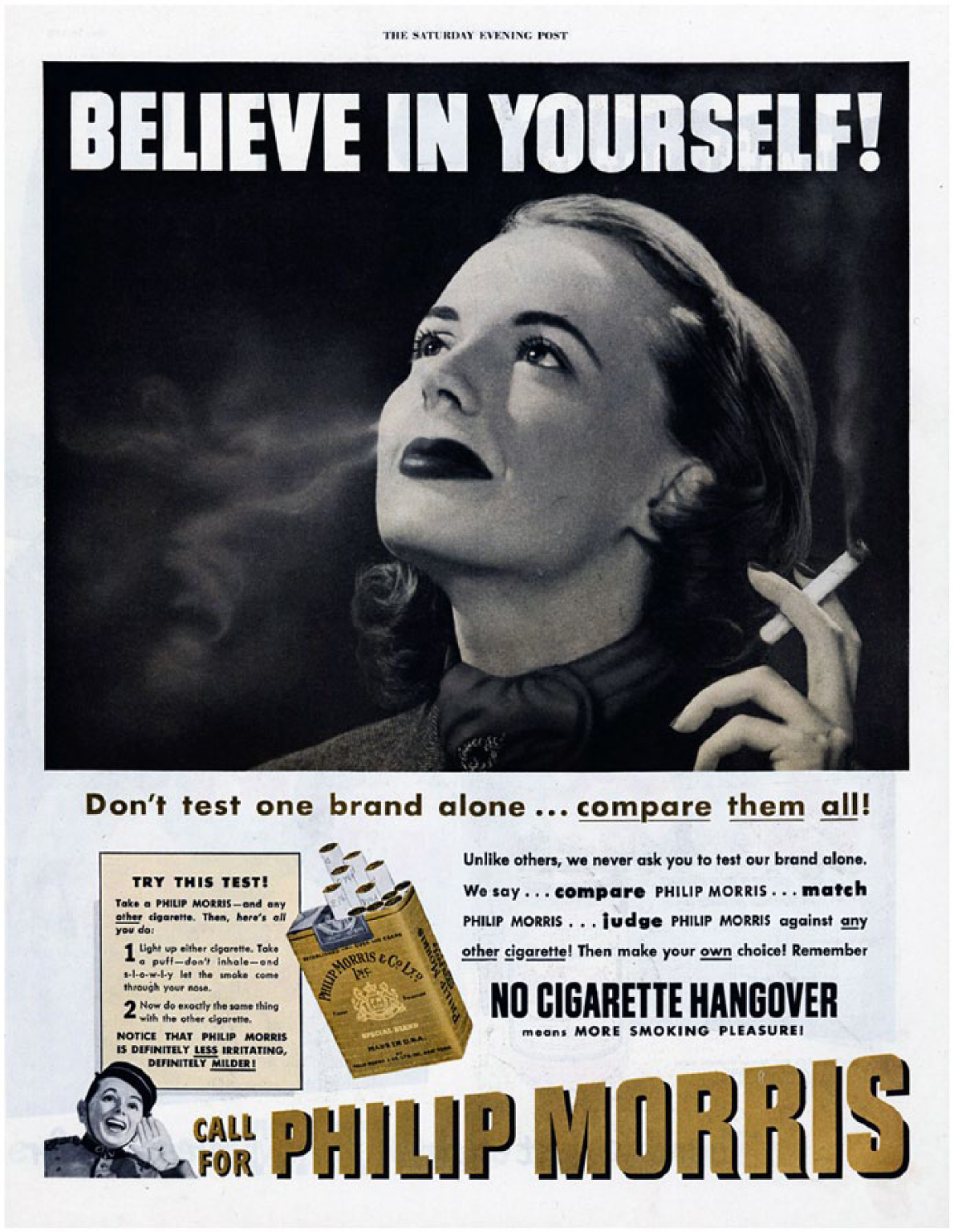
The Chesterfield advertisement.
The Philip Morris’ strategy
Philip Morris followed a somewhat different strategy in promoting and positioning its product. The marketing staff in the company focused more on the flapper as an important cultural archetype to be used in their efforts to expand their female consumer base. There was also a perception within the company that some women (particularly those belonging to the socialite set) were shying away from smoking because they lacked the simple skills of lighting a cigarette, blowing smoke, and putting it out elegantly (Amos and Haglund, 2000). Philip Morris therefore took the unusual step in the 1920s of organizing a lecture tour and workshops directed mainly at women’s social clubs in order to give women lessons in the etiquette of smoking (Wald and Nicolaides-Bouman, 1991). Cartons of free cigarettes were also handed out to women who attended these events.
In the years that followed, Philip Morris’ advertisements continued to feature images of smart, sophisticated young women with captions extolling the characteristics of independence and self-confidence associated with the New Woman. An advertisement for the brand, Parliament, for instance (see Figure 3), portrayed an attractive and poised young woman blowing smoke beneath a caption that read, ‘Believe in Yourself’. The persona of the model selected for this advertisement had a broader identity appeal than the typical flapper, suffragette, or college girl while simultaneously reflecting their poise and self-confidence. Other Parliament advertisements stressed the intelligent New Woman while situating her in visibly exotic places such as luxurious palaces and safaris. The tagline to many of these advertisements read, ‘You’re So Smart to Smoke Parliaments’. These Parliament advertisements were thus not only content to develop the symbolic connection between cigarettes and glamour using exotic locales as backdrops but also inserted messages of female intelligence drawn from the discourse of the New Woman. It is interesting to note that in later cigarette campaigns of the 1940s and 1950s, the glamour theme achieved greater prominence while notions of female autonomy and intelligence largely disappeared. It is clear that the discourse of the New Woman was strategically used to develop a wider consumer base at a time when women’s attitude toward smoking was largely characterized by ambivalence and hesitancy.
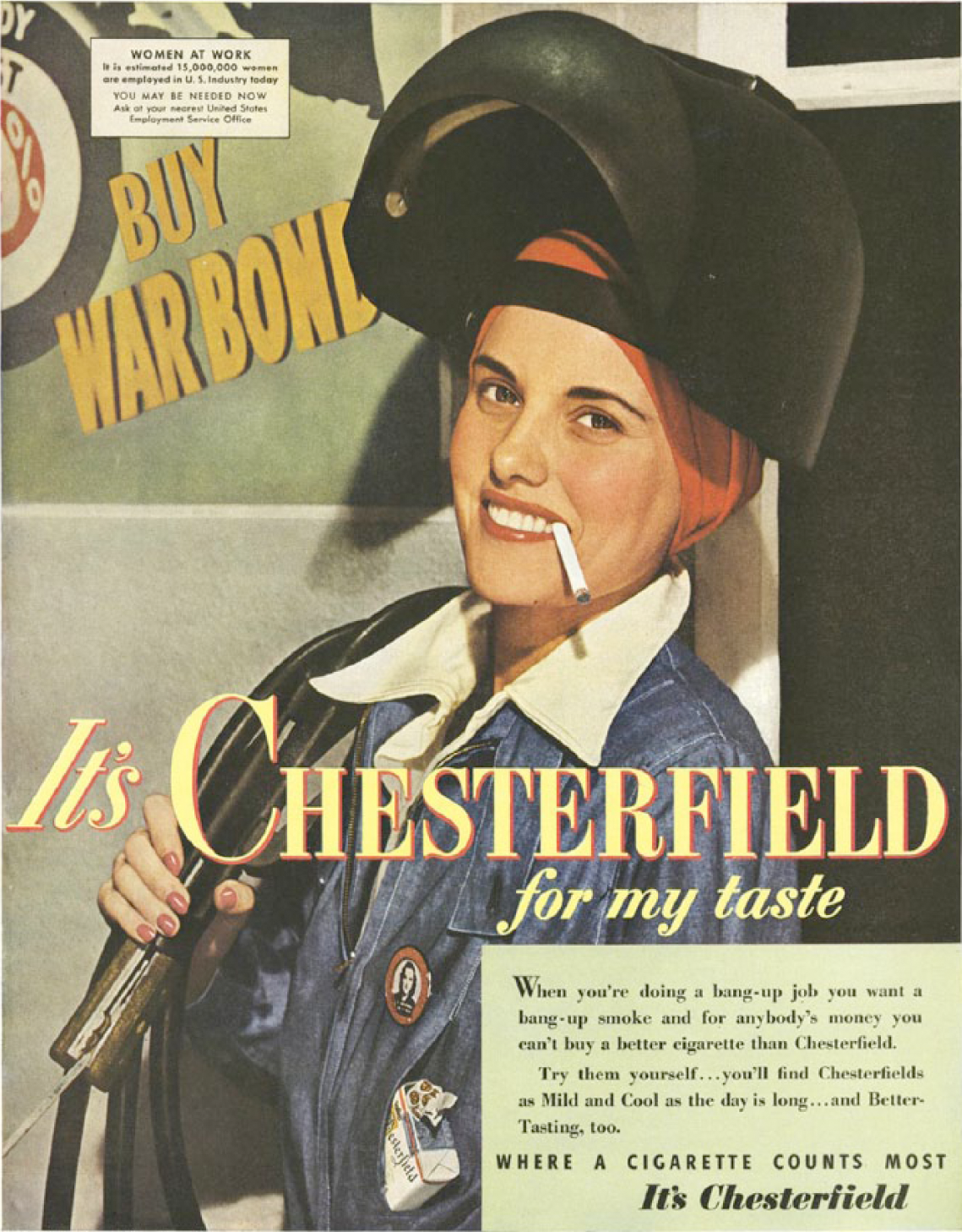
The ‘Believe in Yourself’ advertisement by Philip Morris.
The Lucky Strikes campaign
At American Tobacco, the Public Relations Director—Edward Bernays was combining elements of the discourse of the New Woman with messages about female body image. Bernays was of the opinion that as many barriers between the sexes were removed, social differences between men and women evaporated, and women would increasingly want their bodies to look more like those of men. And, as women’s ideal body types became more androgynous, slenderness became prized over curvaceousness (Tye, 1998). In the 1930s, American Tobacco sponsored a conference that explored the evolution of the American ideal of beauty that confirmed Bernays’ belief that more women were committed to attaining and preserving slim figures (Brandt, 2007) than ever before. Aesthetically too, slimmer figures typified modern forms, and the New Woman was primarily a modern persona.
At the same time, research indicated that nicotine was endowed with strong appetite-suppressing properties (Kluger, 1997). Bernays capitalized on both these factors in the early Lucky Strike campaigns with messages that suggested that the brand helped women who were dieting. The original slogan read, ‘Reach for a Lucky Instead of a Sweet’ and accompanied an image of a slender young woman holding a cigarette. The initial success of this campaign so angered candy manufacturers (who claimed that sales of their product had dropped) that they threatened a lawsuit against American Tobacco (Brandt, 2007; Kluger, 1997). The company responded by softening the Lucky Strikes slogan to ‘When Tempted to Over-Indulge, Reach for a Lucky Instead’ and keeping the images of slender women.
Bernays was also influenced by some of the more prominent psychologists of the day who maintained that cigarettes were both symbols of emancipation and auto-eroticism for women (Tye, 1998). Some of the Lucky Strikes advertisements therefore also combined themes of romance with female empowerment. In one of these advertisements (see Figure 4), a man and woman are shown lighting each other’s cigarettes by touching their ends together under the slogan, ‘Lucky in Love—Reach for a Lucky instead of a Sweet’. While the advertisement linked the cigarette brand to romance, the image of a man and woman lighting each other’s cigarettes also signaled a burgeoning gender equality and was a far cry from the cigarette campaigns of the early 1920s when women either served as background figures or were occasionally depicted inhaling the smoke from a cigarette lit by a man.
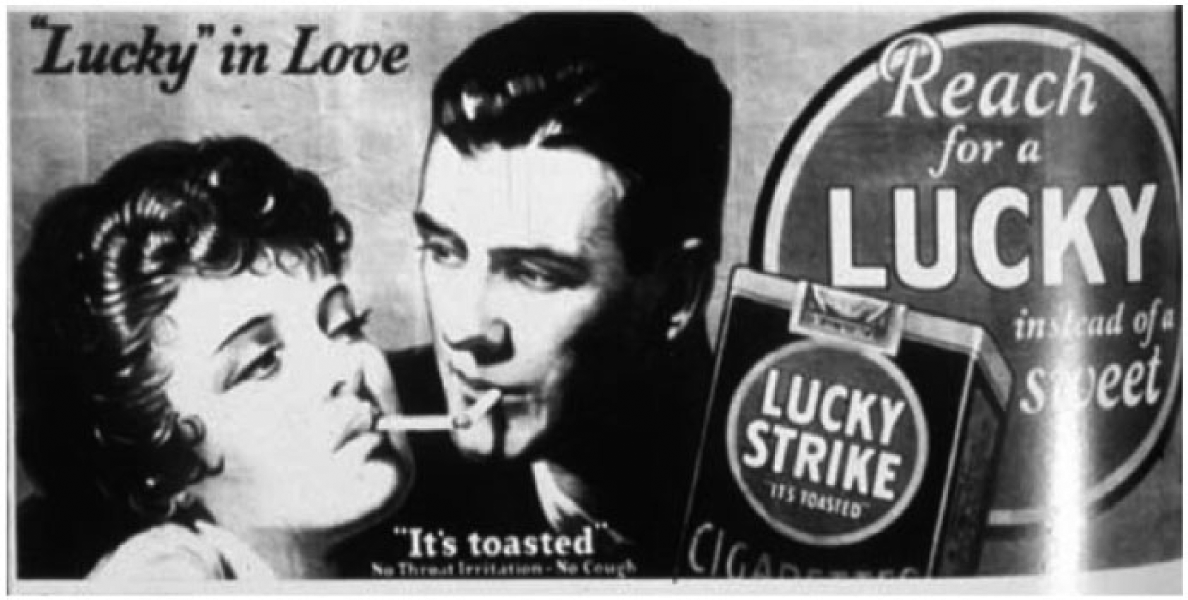
The ‘Lucky in Love’ advertisement by Lucky Strikes.
Discussion: smoke and mirrors as institutional entrepreneurship
Our historical analysis examined the strategies used by the tobacco industry to overcome social resistance to women smokers in the United States in the period following World War I. A key element in these strategies was the selective appropriation of the discourse of the New American Woman in a largely successful effort to make women regular cigarette smokers. As we have documented, major cigarette manufacturing firms actively supported the women’s movement, aligned themselves with it, or skillfully used its core ideals in combination with other socially meaningful themes to appeal to a large segment of the country’s female population. We would argue that as an industry, the tobacco companies crafted a ‘Smoke and Mirrors’ strategy that was largely about mirroring a range of complex, desirable gender identities and juxtaposing them with the act of smoking. There was nothing inherent about cigarettes that connected them to female empowerment. Yet, the promotional campaigns accomplished this through a strategy of distraction—much like the smoke and mirrors tactics used by stage magicians—drawing women’s attention away from the physical nature of the product to a host of mythical and imagined qualities that connected it to female empowerment and gender equality.
This article contributes to the literature on legitimacy management at two levels. At one level, it enhances our understanding of the tobacco industry’s early efforts at combating product illegitimacy. At a broader level, it also augments our grasp of moral illegitimacy as an organizational phenomenon. First, our article refutes the notion that women’s turn to smoking in the United States was somehow a ‘natural’ occurrence that took place through spontaneous choices made by women. Instead, we provide historical evidence that establishes the centrality of institutional entrepreneurship to this process. While the work of scholars like Levy and Scully (2007) offers a sympathetic view of institutional entrepreneurship in the context of social movements, our own historical analysis (by focusing on corporate actors) offers a more critical assessment of it. The conversion of a relatively large number of women to smoking was brought about by a series of sustained and calculative moves on the part of prominent players such as Edward Bernays. Bernays and other tobacco executives harnessed considerable resources and deployed a range of aggressive promotional campaigns over a significant time period. In this case, institutional entrepreneurship demanded not just money and patience but the imagination to connect elements of a burgeoning cultural discourse to the identity formations of American women through a hitherto taboo product.
This particular strategy also left a lasting (and mostly advantageous) legacy for tobacco executives who were repeatedly forced to confront challenges to the legitimacy of their products in the decades to come. In essence, the message that cigarettes were synonymous with female emancipation had become so strongly ingrained in the wider cultural discourse that large numbers of women seemed willing to overlook some of the health concerns that were being raised about smoking in the 1960s—a period that witnessed the consolidation of second-wave feminism in the United States. Phillip Morris was certainly quick to capitalize on this association in its spectacularly successful marketing campaign for Virginia Slims that was targeted at women (Glantz et al., 1996).
In a much-circulated advertisement, the catchy Virginia Slims tagline, ‘You’ve come a long way, baby’, was juxtaposed with a picture of a young woman dressed in the unmistakable style of the 1960s. In the background, above this image was a picture of suffragettes who had taken part in the early women’s movement (see Figure 5). The message being conveyed was that women smoked in the early part of the century when it was taboo and had secured the right to work while doing so; now women had the right to smoke because of this earlier generation’s hard-won battles. In essence, the Virginia Slims campaign seemed to also suggest that a woman’s brand was the next step in women’s liberation. As another Virginia Slims caption read, ‘In 1920 you got the vote and got out of the kitchen. But not until now could you feel comfortable with a cigarette in your hand’.
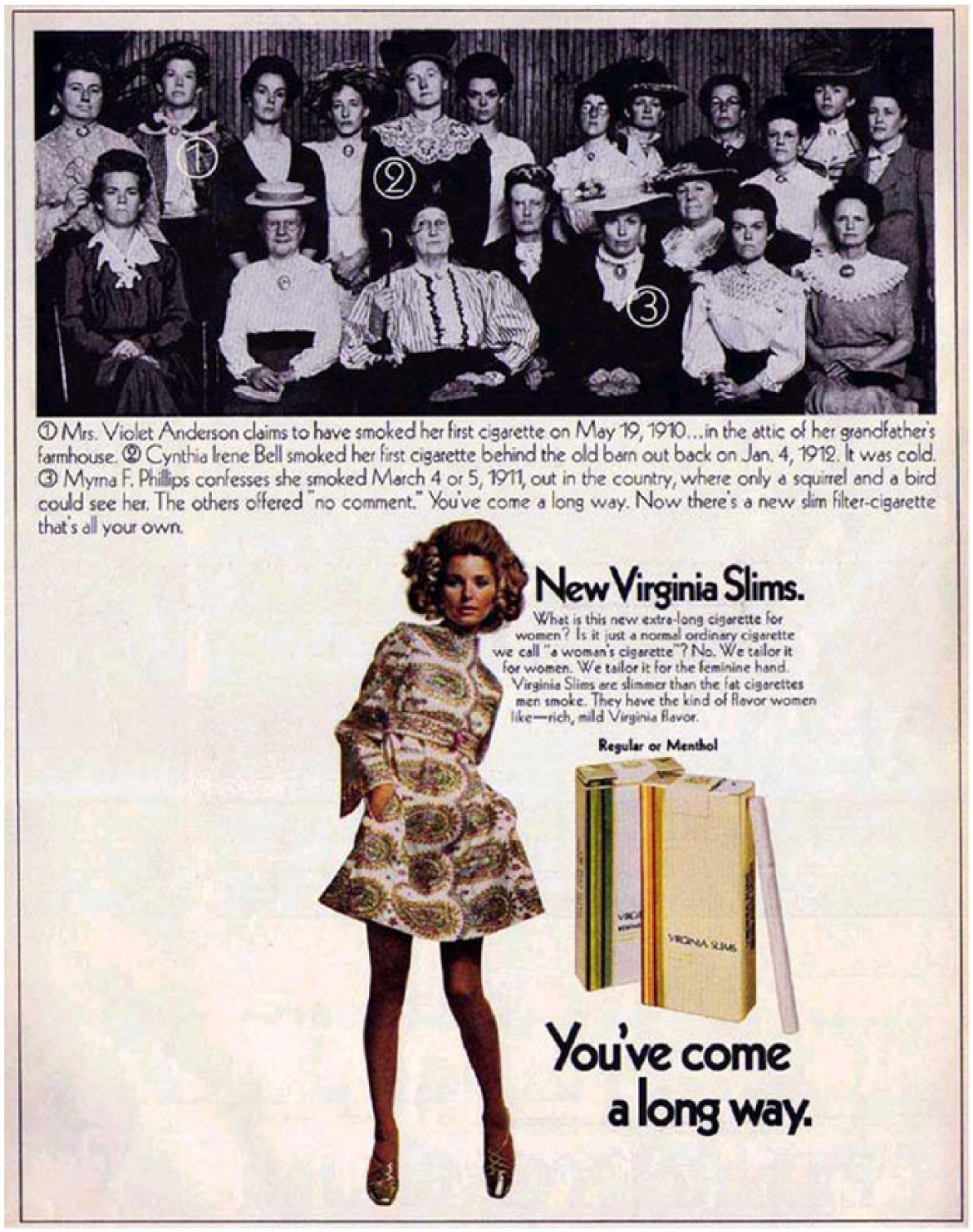
The Virginia Slims advertisement ‘You’ve come a long way, baby’.
A number of internal company memos indicate that the industry was fully aware of the seductive power of these messages (Philip Morris archive; R.J. Reynolds, 1981). Tobacco executives communicated the realization that it was no coincidence that the two major spikes in female smoking occurred in the 1920s–1930s and again in the 1960s (The Cigarette Papers archive; R.J. Reynolds archive). Market research studies also establish that the two historic periods of increases in smoking among young women (but not among young men) took place first from 1926 to 1940 and again from 1968 to 1977. The first coincided with the tobacco industry’s appropriation of the discourse of the ‘new woman’ and the second with the introduction of Virginia Slims and the proliferation of women’s brands that began in the 1960s (Kaufman and Nichter, 2007).
Our findings are also relevant to a broader understanding of the management of moral illegitimacy by large and powerful corporations. The kind of institutional entrepreneurship unearthed here—that is, a smoke and mirrors strategy—is likely to be deployed by firms and even entire industries facing challenges to their moral legitimacy. We should recognize that this variant of institutional entrepreneurship is capable of bringing organizations into closer conformity with their environments not only by adapting themselves but also by influencing the larger normative climate through a series of discursive moves (Finet, 2001). Indeed, a fair number of organization communication scholars (Finet, 2001; Lammers, 2003; Lammers and Barbour, 2006; McPhee and Zaug, 2000) have urged management researchers to pay closer attention to the use of ‘institutional rhetoric’ by salient and powerful actors.
In our study, we found that the institutional rhetoric used by many tobacco companies was entrepreneurial in its ability to communicate connections between specific discourses on the changing roles of women in American society and potential female consumers through the symbolism of smoking. In doing this, these organizations were engaging in a form of identity work that was directed toward a group of salient stakeholders, namely, consumers. While the notion of identity work is not new to organizational scholars (Ashcraft, 2007; Watson, 2008), most research on this issue has focused on compliance, loyalty, and resistance among organizational employees and various occupational and professional groups. By contrast, our article shows how institutional entrepreneurship deploys identity work with segments of society outside the immediate vicinity of the organization. This in turn has important effects for understanding organizational relationships to the wider macro-cultural environment.
Thus, our findings confirm Lammers and Barbour’s (2006) proposition that certain uses of institutional rhetoric allow organizations to control entire populations by eliciting subjects’ willingness to participate in their own subordination to a spectrum of corporate goals and objectives. From this perspective, the tobacco industry and many others like it are engaged in what Foucault (1991) famously termed ‘governmentality’—the use of power that procures individuals’ involvement in their own regulation. Focusing on institutional rhetoric as an element of governmentality would help us better fathom the staying power and success of other morally stigmatized industries (such as fur, gun manufacturers, and producers of pornography) that strategically reclaim their legitimacy by appealing to stakeholders’ identities in a multitude of complex ways. A prominent feature of these strategies is the ability to position stigmatized products in favorable ways by aligning them with lofty socio-cultural ideals such as gender equality, personal freedoms, and class mobility. Furthermore, many of these ideals have strong emotional connections to social identities such as gender, ethnicity, nationality, or class. What we find here is that the strategic face of power functions by persuading major stakeholder groups (e.g. consumers) to disregard the damaging effects of certain products on their own material self-interest mainly because of the powerful identity payoffs that accompany these products. By bringing together a critical historical–institutional analysis and Foucault’s idea of governmentality, our article hopefully opens up avenues for further examinations of the persistence of pervasive corporate social irresponsibility.
Footnotes
Appendix 1
| List of documents |
|
|---|---|
| Primary documents | Secondary documents |
| • Company archives | • Histories of tobacco |
| Liggett & Myers | Brandt, 2007; Corti, 1996; Gately, 2001; Gottsegan, 1940; Kluger, 1997; Laird, 2000; Tate, 1999 |
| American Tobacco | |
| Philip Morris | |
| R.J. Reynolds | |
| • Tobacco Legacy Library at University of California, San Francisco Archives | • Social and cultural histories of the United States |
| • Stanford School of Medicine—Tobacco Advertising Archives | Clements, 2004; Cross, 2000; Doan, 1998; Ewen, 1976; Fass, 1977; Freedman, 1974; Gordon, 1987; McGovern, 1968 |
| • Market research reports and manuals | |
| Calkins, 1905 | |
| • Newspapers and magazines | • Biography |
| Atlantic Monthly (1992–1929) | Tye, 1998 |
| Literary Digest (1924–1928) | |
| New York Times (1922–1942) | |
| Printers Ink (1919–1925) | |
| Tobacco Control (1994–2000) | |
| • Autobiography | |
| Bernays, 1965 | |
Acknowledgements
The authors would like to thank Skidmore College for a Summer Collaboration grant that made this research possible.