




Abstract
This article explores what it is like to be a ‘working carer’—that increasingly common category of employee who combines paid work with unpaid care.1 We draw on phenomenology for our initial motivation, epistemological assumptions and method of data analysis, and on critical sensemaking as a template for interpretation and theorization. In line with critical sensemaking, we see identity as a central feature of personhood, and we examine our participants’ identity work through the specific refractions of plausibility, context and agency. These highlight the inconsistencies and oscillations of identity work, and the ways in which it is influenced by competing discourses of the right kind of employee and the right kind of woman. We foreground the existential aspects of sensemaking, as participants struggle to come to terms with the impact of care on their own life-projects and search for meaning. This reflects our belief that experiential approaches to work-related issues have a vital part to play in a ‘turn to meaning’ in critical organizational research. Key implications for practitioners and campaigners are discussed, and policy makers urged to address the issue of working carer identification, recognition and support with greater sensitivity to the label’s psychological and existential implications.
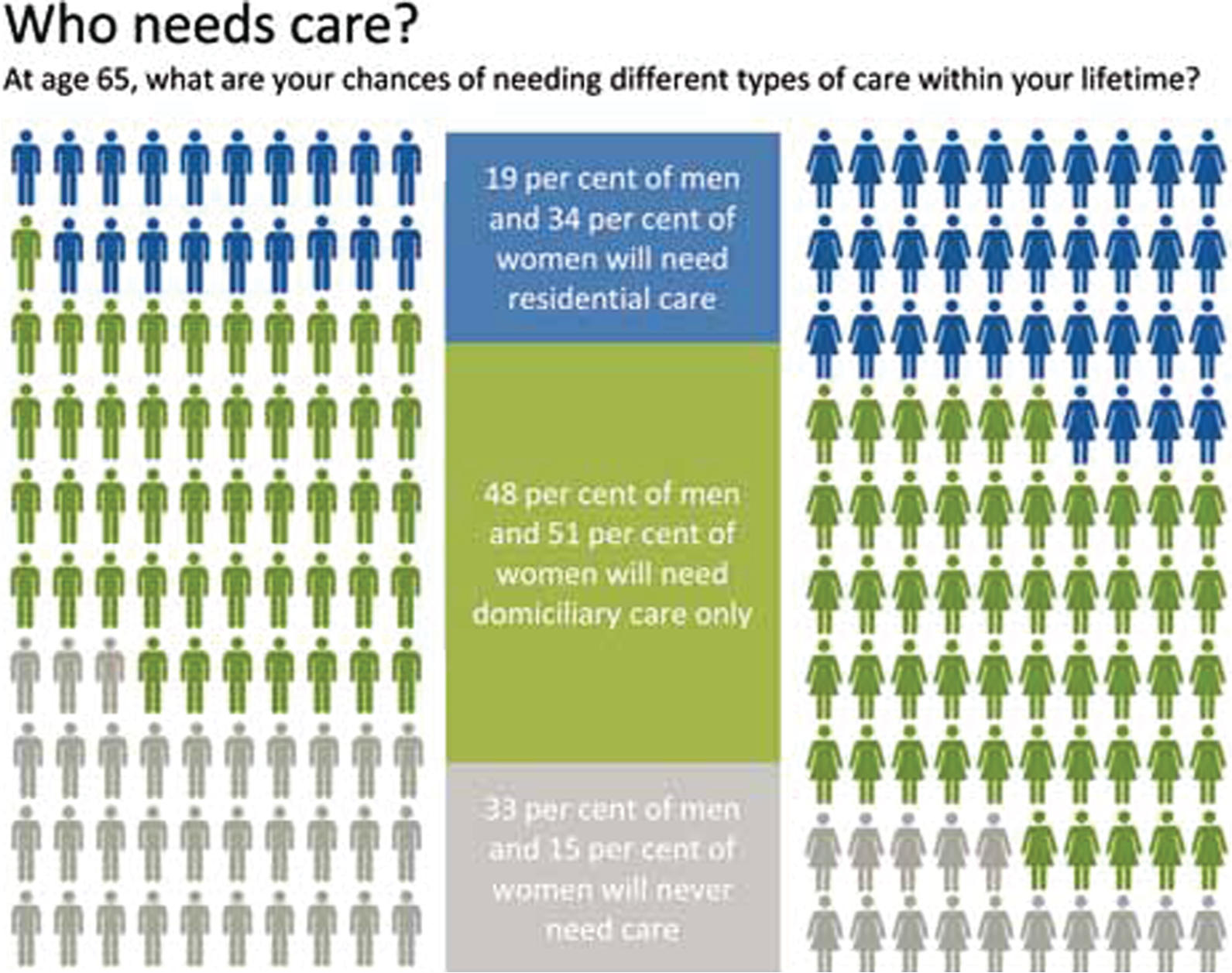
Who needs care?
Setting the scene
A significant trend in contemporary demography is the emergence of a labour-force of working carers who combine paid employment with unpaid care-giving. People are living longer with more complex medical conditions, and there is pressure to support them in their own homes rather than with institutionalized care. At the same time, the drive towards fuller labour-force participation means that families are expected to combine the provision of this home-based care with employment away from the home. Carers UK 2 estimate that as many as three million people in the UK already combine work and care (roughly one in eight people in employment), with 45 as the typical age for the onset of caring responsibilities—just when workers are arguably at their most employable and most productive. The number of carers in the UK is predicted to rise from six to nine million over the next few years, whilst at the same time, the economy will need an extra two million people in employment. The working carers who responded to a recent Carers UK survey reported an average loss of £11,000 per year in earnings because care means having to reduce their hours or take a more junior position. The question of how to cope with this demographic time-bomb is becoming more and more pressing, for policy makers, employers and employees alike.
The ‘family-friendly’ response
Employers are increasingly aware of the need to support the working carers in their workforces (Phillips et al., 2002), often gearing their support towards promoting better ‘diversity’ and ‘work/life balance’ (Crompton et al., 2003; Gregory and Milner, 2009; Guest, 2002). Side-stepping the conceptual issues associated with ‘work/life balance’ (see, for instance, Warhurst et al., 2008), the idea of there being two spheres of life whose demands need to be reconciled usually finds its practical expression in so-called ‘family-friendly’ employment policies (Lewis, 1997; Ramcharan and Whittell, 2003). Policies such as flexible working, job-share and compressed working weeks may not be designed specifically for carers, but they look as if they ought to be fairly ‘carer-friendly’ (Lloyd, 2000).
A number of researchers have questioned the efficacy of ‘family-friendly’ measures (Gregory and Milner, 2009; Guest, 2002; Kossek et al., 2010). Fleetwood (2007) argues for the need to unpack the discourses of ‘family-friendly’ and ‘work/life balance’, suggesting that many flexible working policies which are assumed to be ‘employee-friendly’ are really designed to support organizational interests instead. He cites zero hours contracts, seasonal contracts and standby arrangements as examples of policies that, in fact, give organizations maximum operational flexibility with minimum commitment to their workers. Hochschild (1997) and Lewis (1997) suggest there may be a fundamental incompatibility between recognition of a life outside work and an organizational culture of high performance. Meeting the needs of both employer and employee, both work and life, is a difficult business.
In critical organizational research, the complexity of the work/life interface is often related to what is said (and unsaid) about the legitimacy of ‘family-friendly’ policies and other ‘special’ treatments. Everyday communication and interaction between employees and their colleagues (Kirby and Krone, 2002), between employees and their managers (Kirby, 2000) and between employees and their families (Campbell Clark, 2002) can reinforce or undermine the acceptability of acknowledging a life outside work, and hence influence policy take-up. Work in this tradition reveals the potency of both micro interpersonal interaction and macro discourses, such as the gendered separation of public and private, work and home, paid and unpaid (Acker, 1990; Kirby and Krone, 2002). The nexus of work and care is thus the site of powerful discursive dynamics.
We think there is a case for research which complements this focus on everyday communication and discourse with an examination of everyday experience, that is, the way that ideas and concepts are absorbed into employees’ subjective frames of reference. Research into the experiential semantics of the work/life interface is in its infancy (Casper et al., 2007), but there are calls for its greater emphasis on the organizational research agenda (Eaton, 2003; Kelliher and Anderson, 2010; Meisenbach, 2010). For instance, Fangel and Aalokke (2008) suggest that contemporary working life needs to be seen within the context of the shifting meanings of work and home; home used to be where one could escape from work, but increasingly it is the place where one can find the peace and quiet to concentrate on one’s own work without the distraction of meetings and other workplace interactions—home as the place for ‘real’ work.
Identities at the work/life interface
In the field of identity studies, there is increasing integration of communication, discourse, subjectivity and experience. Over the past decade or so, identity theorizations have focused on the dynamism, fluidity and messiness of identity, and the interactive and contingent qualities of identity construction, particularly within the context of resistance and control. Leading theorists have pointed the way towards greater cross-fertilization between the experiential and the discursive, the realist and the radical, in a ‘turn to identity’ (Alvesson et al., 2008). For instance, Alvesson and Willmott (2002) discuss the connection between the efficacy of identity discourses and the intensity of their subjective meaning. Ashcraft (2005) highlights the visceral aspects of professional roles and expectations, arguing for a nuanced view of identity that assumes that discourse shapes subjectivity just as subjectivity shapes discourse. Identity work is given an embodied narrative twist by Cunliffe and Coupland (2011), who discuss the interplay between self, body and story in the way that people make sense of their organizational worlds. Thus, there is increasing support for complex, cross-disciplinary and integrative conceptualizations of identity in relation to work and working life (Alvesson et al., 2008; Ashforth, 2007; Cunliffe and Coupland, 2011; Deaux and Perkins, 2001; Meisenbach, 2010), and a move away from epistemologies of separation wherein discourse is assumed to be incompatible with experience (e.g. Reicher, 2000).
Our work dovetails with these calls for integrative conceptualizations of identity. As phenomenological psychologists, we are interested in human beings and in how they make sense of their lives, their worlds and their choices. But we are specifically interested in what this sensemaking means for people’s organizational and working worlds, so we view identity as being inextricably linked to context—intersubjective and institutional. The fact that we seek to nudge the experiential, subjective aspects of identity to the foreground is down to our belief that the human being has been traditionally overshadowed in mainstream organizational research. We agree with Nord and Fox (1999) and Yue and Mills (2008) that the individual employee is the ‘great disappearing act’ in organizational research, and suggest that the ‘baby’ of agency, subjectivity and experience may have been thrown out with the ‘bathwater’ of essentialism, interiority and individualism. So, in this article, we explore aspects of identity work at the work/life interface, with a specific emphasis on what these feel like, personally, experientially and existentially. Our research question is, what is it like to be a working carer?
Epistemology: interweaving phenomenology and critical sensemaking
Our work draws principally on the tradition of phenomenology, the philosophy attributed to Brentano and Husserl, and elaborated most famously by Heidegger, Sartre and Merleau-Ponty (Glendinning, 2007). There are many interpretations of what phenomenological philosophy means for empirical research (Glendinning, 2007; Langdridge, 2007), leading to sometimes lively debates about what is and is not properly labelled ‘phenomenological’ (e.g. Giorgi, 2010; Smith, 2010). These tend to revolve around three key issues: the question of description versus interpretation; the search for the universal structures of experience versus the analysis of an individual case: and the question of whether a phenomenological analysis should be directed towards the pre-reflective (intuitive and embodied) or the reflective (interpreted and thematic) levels of consciousness. In the midst of these debates, however, most phenomenologists would agree that they are interested in ‘experience’, and that doing experiential research means taking the first-person perspective seriously (Zahavi, 2008).
Phenomenology is first and foremost a way of thinking about things, relating to the ‘how’ more than the ‘what’ of an investigation (Glendinning, 2007; Moran and Mooney, 2002). Thus, when operationalized, phenomenology is more a methodology for generating experiential data than a framework or template for analysing data derived from other narrative methods (although it can be used as such a template, particularly when articulated in terms of ‘existential phenomenology’; see, for instance, Ashworth’s ‘fractions’ of the life-world—sociality, embodiment, temporality, spatiality, project, discourse and selfhood, Ashworth, 2003). The foundational injunction from Husserl urges us to ‘go back to the things themselves’ to investigate the nature of consciousness (Husserl, 1900/1). This involves bracketing or suspending what Husserl called the ‘natural attitude’, that is, the frameworks and systems of understanding that we use in our normal ways of thinking, and which rely on assumptions from the realm of the natural sciences. As well as causal-explanatory ways of thinking, the ‘natural attitude’ includes psychological constructions, and all the associated means of thematizing, codifying and communicating psychological, social and institutional life.
‘Back to the things themselves’ with interpretative phenomenological analysis
The approach we use to attempt to ‘go back to the things themselves’ is Interpretative Phenomenological Analysis (IPA) (Smith et al., 2009). IPA is a qualitative methodology which is well established in health psychology, partly because of the centrality of the theme of care in phenomenological philosophy (Benner, 1994). IPA draws on ideas from phenomenology and hermeneutics, and is most overtly influenced by the Heideggerian interest in exploring the phenomena of the interpreted world. Like other phenomenological and experiential methods, IPA is relatively unknown in organization and management research (Sanders, 1982; Symon and Cassell, 2006).
IPA is summarized as idiographic, interrogative and inductive in its epistemological orientation, which is useful as a heuristic to articulate our starting point for this research. IPA’s idiographic orientation reflects an interest in the particular in its own right, and not merely as a stepping stone towards generalization. This means focusing on a particular person, a particular instance, a particular context and/or a particular location. We read IPA’s idiography as a call for sensitive attention, contextualization and location of interpretation, and as therefore inextricably linked with questions of reflexivity (Essers, 2009; Pullen, 2006; Tomkins, 2011). We are mindful of Haraway’s claim that ‘the only way to find a larger vision is to be somewhere in particular’ (Haraway, 1988: 590).
IPA’s interrogative element signifies a commitment to the concept of a ‘psychological centre’ for human experience, making it a quasi-realist approach. Whilst recognizing the importance of language in the construction and communication of meaning, IPA assumes that there is something behind the language, something thematic and psychological which reflects the essence of a person or experience. This is a tempered, indeed, ‘critical’, realism; firstly, it treats people’s subjective experiences as if they were real because they feel real, bracketing the question of objective reality; secondly, ‘critical’ interpretive research requires acknowledging the multiple influences on interpretation, including the effects of discourse, ideology and personal histories (Tomkins and Eatough, 2010). In this view, experience and meaning are both constructed and uncovered.
Finally, IPA’s inductive commitment reflects the desire to generate new possibilities and attempt to move away from pre-existing categories that may constrain interpretation (such as the care-as-burden discourse or the metaphor of work/life as a balancing act). Thus, whilst we locate our research in the interface between work and family, and we decide to theorize the empirical findings in terms of identity, our work is not a-priori ‘about’ work/life balance or identity. Rather, it is ‘about’ experience, and we move inductively and exploratorily from this starting point. This is how we attempt to put into practice the Husserlian injunction to ‘go back to the things themselves’.
IPA does not prescribe any specific thematic template for the analysis of the data gathered through its technique. Thus, it is well suited to being combined with other interpretive frameworks which reflect both the researcher’s prior concerns and the points of interest emerging from the data. When combined with such post-hoc interpretive frameworks, IPA’s inductive orientation becomes something closer to the abduction described by Cunliffe and Coupland (2011), in that there is an iterative movement back and forth between theory and data, between pre-conceptions and openness to surprise.
Agency in context through critical sensemaking
We are sensitive to the criticisms levelled at phenomenology in general, and IPA in particular, especially associations with individualism (and its affiliates—introspectionism, essentialism, cognitivism, psychologism and solipsism). Phenomenologists are interested in first-person, subjective experience, and at times this has been read as a neglect of the social, relational, discursive and institutional influences on selfhood (e.g. Parker, 2005). In the search for the ‘non-essentialized individual’ (Lecoure and Mills, 2008), phenomenologists have to tread a fine line between taking the first person seriously and ignoring the constituting influence of context. To use Harré’s expression, we have to proceed carefully if we are to realize a study of individuality rather than individualism (Harré, 1998).
For this study, we draw on the critical sensemaking approach of Helms Mills et al. (2010) to help interpret and theorize the data derived from our IPA analysis. Critical sensemaking is based on the work of Weick (1995), who proposes that sensemaking and organization are mutually constituted events. This involves a dynamic process of meaning-making whereby ‘people create their environments as those environments create them’ (Weick, 1995: 34). Weick’s sensemaking framework has been used to unpack a range of organizational events, focusing in particular on organizational shocks and breakdowns, which operate as a trigger for sensemaking in the search for explanation and the removal of ambiguity (e.g. Weick, 1996).
For Helms Mills et al. (2010), the limitations of Weick’s original proposition revolve around its lack of sensitivity to context. With critical sensemaking, they have sought to develop Weick’s ideas in ways that emphasize intersubjectivity (including how people make different sense of the same event) and power (challenging the assumption that sensemaking is democratic). For us, critical sensemaking’s emphasis on agency is particularly important, for it helps to focus on how and why some, and not other, experiences become subjectively meaningful for people, particularly in relation to the notion of identity. For although Weick is sometimes seen as a flag-bearer for interpretation, he is explicitly not interested in the individual human being in the workplace; his is a focus on systemic rather than experiential sense-making. We therefore look to critical sensemaking to supplement Weick’s focus on meaning-making and interpretation, and to help us flesh out our view of agency in context.
Although we explain our approach by saying that we used IPA for data collection and analysis and critical sensemaking for interpretation and theorization, we do not want to imply a rigid divide between these two phases of analysis. In reality, our work is more iterative, reflecting both the values of the hermeneutic circle on which so much interpretive phenomenology is based (Smith et al., 2009), and the importance of pragmatism in the search for explanations that make sense (Cunliffe and Coupland, 2011; Weick 2011). Thus, just as the stories told by our participants reflect ‘provisional resting points’ in their ongoing efforts to make narrative sense of their experiences (Weick, 2011), so our interpretive efforts represent ‘provisional resting points’ in our attempt to make sense of their sensemaking. Perhaps the best way of summarizing our epistemological ‘resting point’ is that IPA is more visible in our a-priori decisions (i.e. the attempt to be inductive in investigating the raw stuff of experience), and critical sensemaking becomes more visible in the way in which we organize the topics for this article (i.e. the emphasis on identity and resistance as agency in context).
Methods
Participants
We interviewed eight women between the ages of 48 and 62, representing a range of seniorities, from administrative through to middle management. They work for two different public sector organizations in the UK. These employers are considered progressive in terms of culture and ethos, and they offer special ‘carers’ leave’ (both paid and unpaid) as part of a suite of ‘family-friendly’ policies. These progressive policies are extremely visible in all their office buildings, with large poster displays in both public and private spaces, as well as prominent features on the respective websites. Whether as cause or consequence of such policies, a high proportion of their workforces are women. Neither of us had any previous relationship with these women, nor any involvement in their support groups (see below). However, we were familiar with the type of organization, since one of us (first author) had previously worked for a similar employer in the sector.
Our participants are involved in a range of different caring relationships, with five of them caring for an ageing parent, one caring for a disabled (young adult) child, one caring for a disabled sibling and one for a vulnerable friend. Despite these differences in caring relationships, we treat these participants as a single cohort because of their self-definitions. All belong to the working carers’ support group in their workplace, and it was exclusively through these groups that they were recruited for this study. These support groups are voluntary, work-based associations, semi-sponsored by the human resources department, but set up, managed and energized by individual employees. They offer regular meetings, individual counselling and the opportunity for information-sharing, networking and getting one’s voice heard.
There are no fixed rules for sample size in IPA. Instead, researchers are encouraged to be sensitive to IPA’s idiographic commitment, and not to assume that more participants will mean better data (Smith et al., 2009). Interviewing eight allowed us to attend both to the individual experiences and to the common thematic patterns—both parts and whole, a core concern in hermeneutic-phenomenological thinking. Thus, whilst all participants’ accounts are unique and special, they also all relate in some way to the general structure of the phenomenon.
Processes of data collection and analysis
Data were collected using semi-structured interviews, each approximately one hour long. Consistent with IPA’s inductive orientation, the role of the interviewer was to facilitate participants’ sense-making and story-telling, rather than steer them through pre-set topics. Thus, questions were posed along the lines of ‘what is it like—for you—to combine work and care?’. Expressing things in terms of ‘what is it like … ?’ is a common feature of phenomenological methods, attempting to elicit the participant’s own insider perspective and hence get ‘back to the things themselves’.
The interviews were transcribed verbatim and analysed using IPA’s generic procedure. In sum, this involves a close, line-by-line reading of the text, and a noting of the thoughts, ideas, impressions, feelings and initial interpretations that the text evokes. The interpreter develops and refines these interpretations, attempting to move from descriptive and concrete to more conceptual and thematic levels of analysis. The aim is to derive a collection of themes that have enough particularity to be grounded and enough abstraction to be conceptual. These themes are then synthesized into some sort of gestalt and typically presented in the form of a table (Appendix A). The IPA approach involves ‘slowing down our habitual propensity for “quick and dirty” reduction and synopsis’ (Smith et al., 2009: 82) and is therefore consistent with the phenomenological claim that understanding involves dwelling in the moment. The data were analysed for each participant independently before syntheses and disconnects across accounts were considered and the overall thematic gestalt developed. For full details of the IPA procedure and its rationale, see Smith et al. (2009).
IPA involves a ‘double hermeneutic’ (Smith et al., 2009), with the researcher attempting to make sense of the participants’ making sense of their experiences. We combined IPA’s interpretive emphasis with a particular concern for reflexivity. Whilst reflexivity can refer to a wide range of personal, intellectual and disciplinary influences on research, we followed Tomkins and Eatough (2010) in seeing reflexivity more as a call to interpretive agility than as an invitation to overt self-reflection. For us, it was important to stay focused on the participants’ stories. We were mindful that ‘focusing on the presence or personhood of the researcher can tip the pendulum in the relationship between researcher and participant (or between interpreter and text)—away from using oneself to access and illuminate the Other and towards using the Other to access and illuminate oneself’ (Tomkins, 2011: 234). We worked collaboratively, analysing the transcripts independently, and then debating and reflecting on similarities and differences in reaction and interpretation.
Processes of data interpretation and theorization
Our reflexive efforts are also seen in the fact that we revisited our individual and joint interpretations several times over the period of approximately two years in an attempt to stay open to the possibility of new ways of making sense of our participants’ stories. Initially, we referenced the literature on Social Identity Theory (SIT) (Tajfel, 1978) which many have used to explore collective identity issues in the workplace (Ashforth and Mael, 1989; Hogg and Terry, 2001; Pratt, 2000). However, SIT does not really tackle the dynamism, or the how, of identity formulation, focusing instead on the why (the link between identity and self-esteem) and the what, with the differentiation between ‘social’ and ‘personal’ identities marking a tendency towards reification and dualism in SIT-based discussions (Ashforth, 2007; Jenkins, 2008). In order to showcase the significance of identity processes, we supplemented SIT with the sociological ideas of Jenkins (2008), who sees identification as taking place in the space between self-definition and the external definitions provided by labels and categories: internal/external are not seen as separate or opposite, but as simultaneous and inextricable aspects of an integrated identification dialectic. What happens ‘outside’ and what happens ‘inside’ are two sides of the same coin: even ‘psychological’ accounts need to focus on both.
However, even with the help of Jenkins’ dialectic, our initial picture of identity underplayed both the force of experiential feeling and the politics of discursive context. As a result, we revisited our results and reinterpreted them through the lens of critical sensemaking (Helms Mills et al., 2010). This involved examining the themes we had derived with IPA (Appendix A) through the lens of each of the main properties of sensemaking (grounded in identity construction; retrospective; focused on and by extracted cues; driven by plausibility rather than accuracy; enactive of the environment; social and ongoing; Weick, 1995). We used the notion of identity construction—foregrounded in critical sensemaking—as our primary conceptual anchor, and examined our participants’ identity work through the specific refractions of plausibility, context and agency.
In this article, we use these three ideas of plausibility, context and agency to organize and present our findings. We illustrate each of them using selective quotes from our participants’ stories. For reasons of word-length, we cannot ground each of our interpretations with quotes from all eight of our participants. However, our thematic gestalt adheres to the criteria of representativeness and prevalence for IPA analyses (Smith et al., 2009), namely that every single theme has some connection with all eight of the individual participant accounts. (In the data excerpts that follow, […] means that part of the text has been omitted to aid comprehension, and/or for word-length considerations, and [text in square brackets] means that some explanatory detail has been added.)
Plausibility: living with ambivalence and inconsistency
One of the principal properties of sensemaking is that it is driven by plausibility, not accuracy (Weick, 1995). We do not rely on our perceptions and interpretations being ‘correct’, but rather, we need them to be plausible or viable in order to ‘make sense’. The notion that plausibility can differ from one perspective to another, i.e. that it can be contested, helps to account for inconsistency in sensemaking amongst organizational members (Cunliffe and Coupland, 2011; Helms Mills et al., 2010). We think that it also focuses attention on inconsistency within individual accounts; if each perception, event, relationship or response is made sense of individually according to the criterion of plausibility, it should hardly surprise us if these individual sensemaking parts do not always add up to a coherent whole, or at least, not without effort.
Plausibility helps to make sense of the complexity, ambivalence and inconsistency in working carer identity processes in our data. Our participants weave between desiring identification and recognition as working carers, resisting such recognition and maintaining a sort of ‘halfway house’ stance between the two, holding identification at arm’s length by series of probing, testing, deflecting and postponing strategies.
Desire for identification and recognition
All the participants draw on the working carer title to articulate what they do. A key reason they give for their motivation to participate in this study about ‘being a working carer’ is the desire for greater recognition of what they have to cope with. They all belong to the working carers’ support group in their workplace, and have thereby to some extent labelled themselves in terms of a combination of employment and care-giving. Amongst the different participants, identification with care seems to serve a range of purposes and needs. In the case we showcase here, that of Elisabeth, identification seems to be linked with the need to maintain some sense of control over how care is affecting her life, and be granted permission to admit that care is hard. Her identification with care is especially interesting, because she was one of the founding members of the working carers’ support group in her office.
Elisabeth’s son is now in his early 20s and suffers from Myalgic Encephalopathy (ME). The fact that she is caring for a child, not a parent, makes her brand of care feel especially challenging, because it is a distortion of the normal generational cycle:
Here, Elisabeth’s identity work helps her to come to terms with the upheaval brought about by the advent of an unexpected caring responsibility. She decides whether and when to call herself a ‘working carer’ as part of her efforts to make sense of the shock of realizing that her son is not going to grow up and be ‘normal’ by leaving home. This version of care involves complex sensemaking, because it represents a significant disruption to biography and to the plausibility of fit between expectations and experience.
Resistance to identification and recognition
At the same time as desiring recognition, participants also resist identification with care. This resistance manifests in a number of different ways, both within and between individual accounts. We have chosen to showcase what we see as ‘two sides of the same coin’, using Tessa’s story to illustrate resistance both because the identity label is too positive and because it is too negative. Where resistance is to the positive aspects of identity, there seems to be a disconnect between connotations of kindness and altruism and participants’ own experiences of themselves as carers. They have a vision of what care ought to be that they themselves cannot always live up to, and the identity label therefore inspires feelings of inadequacy.
Tessa is the primary carer for her brother, who was born with hydrocephalus (‘water on the brain’) and has profound learning and social difficulties. She finds him very difficult to handle and feels that she does not always provide the gentle, loving care that she ought. So, Tessa’s sensemaking involves probing the parameters for eligibility for identification, testing the plausibility of fit between the label and her sense of herself:
The flip side of this resistance coin is where participants resist identification because of its negative connotations and the risk of stigma. There is great concern about loss of status, respect and security at work. Care is associated with absence, whether literal absence or the absence associated with not being fully engaged, that is, ‘presenteeism’. There are many references in our data to a fear of being seen as not pulling one’s weight, taking advantage of colleagues’ good will, and even being marked out as a victim. In Tessa’s case, resistance is associated not only with wanting to avoid the charge of unreliability, but also specifically to the fear of the taint of mental illness, particularly if there is any hint that this might be self-inflicted. She talks about there being a pecking order in terms of the care conditions that deserve sympathy, respect and recognition from workplace colleagues:
Mental illness, particularly with a disputed diagnosis, makes participants feel particularly uncomfortable about identification with care and unworthy of the respect and sympathy that recognition might otherwise confer. It represents a particularly extreme case of disjuncture between the positive associations of care and participants’ subjective experiences of their own care relationship, thus representing a particular challenge to the plausible integration of identities.
Probing identification
Identification with care is more complex, however, than simply acceptance versus resistance. In between these two reactions, participants occupy a range of ‘halfway house’ stances where they both do and do not associate with the carer identity, and are both inside and outside the carer community. These stances feel tentative and probative, as if participants are hedging their bets vis-à-vis acknowledgment of their caring role and absorption of the carer identity. The two particular manifestations of this probing that we have chosen to showcase emphasize peripheral identification and displacement, and we draw on Annie’s and Linda’s accounts for this, both of whom care for their elderly mothers.
Annie is ambivalent about being known through—and to—the working carers’ support group, and occupies a kind of peripheral position in relation to it. She goes to the group’s meetings, but emphatically and explicitly in listening mode, thereby differentiating herself from those carers who need help. However, she keeps herself on the list of working carers and wants to be given a voice as a carer for the purpose of influencing organizational policy. Despite not wanting support as a ‘working carer’, she does not deny that she does need and want support:
This semi-commitment to the working carer identity seems to consist of occupying an interim, exploratory position, between the world of care and the world of normality, and between claiming formal recognition of care and resisting such recognition. Another manifestation of semi-commitment is advocacy for recognition for other carers, as if to test out the implications of fuller identification with care. All our participants do this to some extent, but it is particularly marked with Linda, the other founder member of the working carers’ support group (with Elisabeth):
So, participants’ relationship with the working carer identity is often tentative and provisional, as they try out the title for size and fit, and for its effects on others. These identity oscillations seem to operate concurrently, and the picture that emerges is a long way from traditional depictions of identification as an all-or-nothing process whereby an identity becomes sedimented in an individual’s self-concept or rejected once and for all. These multiple identities are fluid and overlapping, and we get no sense of the ‘either/or’ switching that is showcased by authors such as Pratt (2000) or Kreiner and Ashforth (2004). Instead, our view of identity links more closely with those critical organizational researchers who emphasize multiplicity and fluidity of identity and a much more messily interwoven pattern of assimilation and resistance (Ashcraft, 2005; Deaux and Perkins, 2001; Jermier et al., 1994; Kondo, 1990). Identification emerges as a process of ‘both/ands’ rather than ‘either/ors’—perhaps what Weick is referring to as ‘simplexity’ (Weick, 2011). This is a departure from Weick’s original sensemaking with its strong legacy of cognitive dissonance resolution (Festinger, 1957): Plausibility in our working carers’ identity work seems to involve reaching towards combinations participants can live with, rather than anything relating to the resolution of ambiguity or the removal of complexity.
Context: the politics of normality
Critical sensemaking highlights the importance of context in all its manifestations, whether intersubjective, discursive or institutional. Agency and context are implicated in a mutually constitutive, formative process whereby discourse shapes selfhood and selfhood shapes discourse. Drawing on both Unger and Foucault, critical sensemaking directs the spotlight towards the range of influences on people’s interpretations of their lives, and in particular, the power of discourses of normality (Helms Mills et al., 2010).
Our participants have a complex and shifting relationship with the concept of normality. Denial of care and resistance to the carer identity helps to preserve a sense of normality, both in the workplace and in the family. This gives a sense of safety and continuity, but it also denies the often harsh realities of combining work and care, wherein participants are frequently exhausted, stressed and resentful about their lot. Alternatively, acknowledging care and associating with the carer identity is a way of soliciting praise and recognition for being special, but it also triggers a frustration with the mixed messages between the rhetoric of ‘family-friendly’ policies and participants’ day-to-day experiences of the workplace. Linda, for instance, struggles to accept her organization’s claims to being ‘carer-friendly’, because she experiences censure by line managers for taking time off and resentment from colleagues who are left to hold the fort in her absence. Her claims to ‘specialness’ are fragile and contingent:
So, participants want to be recognized as special and to be granted the ‘special leave’ that would reinforce this, but the incongruence between organizational rhetoric and their day-to-day experiences would need to be reduced for them to be able to consistently feel this way. At the same time, however, participants also want to be normal, for being ‘special’ also means acknowledging that things are not normal; their mothers are no longer the women they once were; caring for a mentally ill family member is associated with stigma; and the very fact that they are a ‘special category’ means that they may not be seen as fully productive, respected employees. For instance, despite Helen’s advocacy for working carers’ rights, she experiences discomfort over care being incorporated into her own work profile:
… But I sometimes feel that the carer label is being forced onto me at work. I tick the boxes on all the HR forms that say I’m female, white, single, C of E [Church of England], carer. I know why they have to collect the stats to prove that they are a good employer, but I don’t feel comfortable about being classified like that.
Such oscillations highlight that normality depends on role, expectations and context. What feels normal for an employee is probably related to a discourse of masculinity, with its associations of reliability, single-mindedness, rationality, control of emotions and full-time presence at work (Acker, 1990; Broadbridge and Hearn, 2008; Hochschild, 1983). But what feels normal for a carer is more closely associated with discourses of femininity, with their associations of nurturing, protecting, loving and supporting. Perhaps the organizational practices of carer support can be seen in this light, too. The masculine organizational response is to establish measurement categories and Management Information (MI) codes (which is what Helen so dislikes). This response seems similar to Acker’s depiction of masculine organizational logic as consisting of written rules, contracts, documentary tools and job evaluation (Acker, 1990). What carers themselves decide to do fits more readily within discourses of femininity, intersubjectivity and communication, in that they encourage carers to come together to share their experiences, to support one another and to advocate for other carers; this is talking, not measuring.
The gender lens suggests that the experience of being a working carer is shot through with a binary-like sense of a distinction between male and female. Using gender to explore our data was not part of our initial interpretive strategy: although these eight participants are women, this was mostly because of the demographics of the particular public sector organizations from which we recruited. It was also based on the importance in IPA of the principle of homogeneity (Smith et al., 2009), that is, keeping as many participant attributes constant as possible in order to attend to ‘the things themselves’ in a phenomenological sense—a shading of what is common to allow a lighting up of what is idiographic, experiential and perhaps unique. But as we have worked through our various phases of interpretation, we have found it increasingly helpful to use gendered expectations to help explain the incongruences and oscillations of our participants’ identity work.
However, we do not want to imply too rigid a divide or too submissive a response to such a distinction, since our participants seem to live with an ongoing sense of something beyond even ‘both/ends’ and towards ‘all of the above’. They may be monitoring themselves against the templates of normality for masculinity-at-work and femininity-outside-work, but the fact that these two do not always gel does not render them passive ‘victims’ of discourse. To use Kondo’s expression, there is a ‘critical edge’ to gendered identity work, whereby subjugation may be interwoven with subversion and resistance may be tempered with collusion: ‘The complex and often paradoxical effects of these deployments of gender … underline the always unpredictable and incomplete nature of resistance’ (Kondo, 1990: 299).
Agency and selfhood: a critical edge
For us, a crucial aspect of this ‘critical edge’ is related to agency. As phenomenologists, we might prefer to use the lexicon of selfhood or personhood, rather than agency, to articulate the specific focus of an experiential analysis, that is, the ways in which human beings make sense of their life-worlds and the options and restrictions within them. But whatever language we use, we wish to nudge issues of subjectivity to the foreground in organizational research (Nord and Fox, 1999; Yue and Mills, 2008). Thus, working carer identities and their oscillations may well be the effects of discourse, but they strike us as being the felt effects of discourse: they relate to who our participants feel they are, what choices they feel they have, and what existential sense they are trying to make of their lives.
We think choice may be particularly significant when things happen unexpectedly or come as a shock, and when plausibility is therefore challenged abruptly; perhaps the fact that our participants have not chosen to become carers of their parents, siblings or friends in the same way that most of them chose to have children creates a special kind of implausibility. The shocks of care are biographical shocks rather than the disasters or emergencies discussed by Yue and Mills (2008) or Weick (1996), but they may well be triggering a similar sort of sensemaking, and they suggest the powerful but subtle effects of choice in work/life experiences (Gregory and Milner, 2009). As we have illustrated with Elisabeth, for instance, there may be little choice over whether to combine work and care, but considerable choice over whether and how to assimilate, resist and probe the working carer identity—a case of enhanced psychological agency in the face of compromised material choice.
Of course, choice is a central theme in existentialism, and to illustrate the particularly existential aspects of our data, we return to Elisabeth and her realization that she is going to be a carer for the rest of her life. Her interpretations reveal a very profound sense of a biography not only disrupted, but destroyed, as she lives with the possibility of suicide—for herself, for him and for them both:
… And he owns me. It is a symbiotic relationship … And it’s wrong really, because he’s my son! Sometimes I have thought about suicide … Perhaps we might have to go together, a suicide pact type of thing. The Mill on the Floss, it ends with ‘in their death, they were not divided’, and that was a brother and sister … So, ‘in our deaths we will not be divided’ … It might end up just me and [Tom] … stuck together! Like glue! And it doesn’t seem right that it should be that way round. He’s my son! Not my husband!
This is a profound question of identity—felt and articulated experientially and existentially. It goes beyond a clash between masculinized worker and feminized carer. This is a distortion of that feminized experience, for Elisabeth feels that care is turning her into a lover rather than a mother—‘He’s my son! Not my husband!’ Elisabeth is not only struggling with different domains of experience in a sense of ‘work/life balance’, she is also struggling to come to terms with becoming the wrong sort of woman. Indeed, her whole narrative is inflected with what we see as an almost Kafkaesque sense of judgement and punishment, with both Elisabeth and her son serving a life sentence for some unspecified sin or crime that has been committed. It is striking, for instance, how key deteriorative milestones in Tom’s illness seem to coincide with episodes in Elisabeth’s life where she is trying to move away from him and enjoy some independence, such as marrying and going on honeymoon with her second husband. At some level, she senses she is being rebuked or punished for these attempts at independence, and for her confused feelings of womanhood.
As phenomenologists, we believe that an understanding of identity—its oscillations, influences and restrictions—is not only enhanced by an appreciation of what identity feels like ‘on the inside’, but actually grounded by such an appreciation. For in its original Husserlian formulation, phenomenology was never supposed to be a free-floating journey through speculation and mystification (or any of the other ways in which subjectivity is sometimes cast as ‘unscientific’), but rather, it was developed as an exercise in empiricism. Since we can only ever access ‘reality’ through the perspective of the first-person, the most grounded of our reflections are those which we grasp directly and idiographically. For phenomenologists, empirical ‘edge’ lies in the ‘what is it like?’.
Critical implications and conclusions
The policy literature on carers in general, and working carers in particular, tends to position recognition of working carers as a blanket ideal, an unequivocally good thing. The single strongest message in the 2010 International Carers Conference hosted by Carers UK (and attended by politicians, policy makers, service providers, academics and organizational leaders) was that ‘what carers want more than anything else is recognition’. Such lobbying is clearly based on the best of intentions but, by considering recognition in such a wholesale, undifferentiated way, it underplays the complexities of identity and the crucial significance of agency and choice in people’s identity work. This is a significant issue for organizational practice, since so many of the progressive human resources policies that are designed to support ‘diversity’ are based on the literature developed or endorsed by such lobbyists and campaigners (Arksey, 2002; Yeandle et al., 2007).
In questioning the effectiveness of such lobbying for recognition, our analysis intersects with the critical sociological literature on care. Lloyd (2006) argues for the importance of promoting awareness of entitlement to benefits and support, but that using a blunderbuss of identification might not always be in carers’ (or care recipients’) best interests. This literature suggests there is a disconnect between the rhetoric of carers’ rights and the ways in which carers themselves frame and experience their roles (Henderson and Forbat, 2002; Lloyd, 2000). Whilst these authors do not focus on working carers specifically, their conclusions chime with our findings on the organizational, experiential and existential implications of the categorization and formal labelling of care. Indeed, we hope that their recommendations will begin to find a way into policy and organizational practice for working carers, and that employees who are managing such a difficult juggling act will be afforded the space to make more of their own choices about how much support they need, and in what form.
Our working carers want and need to incorporate care into their sense of self, but they also reserve the right not to—and to weave backwards and forwards between these different stances. Or, as Helen puts it, sometimes what she needs is the world to stop ‘helping’ her, if this ‘help’ undermines her sensemaking efforts. Domination and injustice can come about just as much through unwanted recognition as through insufficient recognition (Lukes, 2005). Resistance can be to benign or well-intentioned identities just as easily as to oppressive identities (Ashcraft, 2005), perhaps particularly when it comes to ‘diversity’ identities (Dick and Cassell, 2002). Being able to resist, divert and postpone identification is part of how our participants work with, and come to terms with, both the happinesses and sadnesses of their life-worlds. As Ricoeur (1991; cited in Cunliffe and Coupland, 2011) puts it, ‘we learn to become the narrator and the hero of our own story, without actually becoming the author of our own life’.
Footnotes
Appendix A: summary of themes on the experience of work and care
This table presents the full thematic analysis from the study in the typical IPA format. It is included here to provide some wider context for the themes of identity and recognition that we have chosen to focus on in this article.
We would like to thank the Associate Editor and three anonymous reviewers for their extremely thoughtful and constructive comments during the development of this article.