




Abstract
Learning in projects is frequently emphasized in practice and the literature for knowledge creation, yet there is limited research on how project practitioners articulate learning particularly in complex projects. This study applies the Systemic Lessons Learned Knowledge model to investigate how project practitioners conceptualize learning in complex projects. The research method consisted of narrative inquiry which is considered insightful and useful in acquiring data through storytelling. The research establishes how beyond the alignment of the people and system elements (learning, culture, social, technology, process, and infrastructure), an awareness of complex project attributes can positively influence project practitioners’ learning capability. This study also identifies and discusses the enablers and challenges of transferring lessons learned into knowledge.
Introduction
While strides have been made in improving project outcomes, project failure remains a common reality. Analysis by LogiKal (2019, 2022) for example, reveals that while numbers have improved, up to 38%–53% of projects fail to meet all or most of the triple constraints of time, cost, or quality. This is especially prominent in complex projects where various studies have revealed worrying trends. An investigation of complex enterprise resource planning (ERP) projects, estimates that between 55% and 75% of ERP projects fail to meet their objectives (Wu and Misra, 2023) while KPMG notes that increasing project complexity has resulted in continued project failures—sometimes on an epic scale (KPMG, 2021).
Projects are considered complex when they include properties that make it extremely difficult to predict project outcomes and control or manage the project (Remington et al., 2009). These properties also make it increasingly more challenging to complete projects successfully in terms of time, cost, and quality. It is thus incumbent on project organizations to pursue continuous improvement to address the challenges caused by complexity. A core component of internal continuous improvement involves the utilization of lessons learned (Kerzner, 2023). Arthur et al. (2001) and Eriksson et al. (2017) emphasize the importance of learning from past experiences to understand which behaviors can positively drive future project performance. Belvedere et al. (2019) further argue that achieving efficiency in managing complex projects requires adopting specific approaches to strengthen the project team’s ability to assimilate and apply new and relevant knowledge. Various industry reports have also highlighted how invaluable learning is to project success, with the APM emphasizing on knowledge management in project organizations (Eggleton et al., 2021) and LogiKal (2019) focusing on effective lessons learned processes for project success.
While learning can be considered a critical source of knowledge for project practitioners (Eriksson et al., 2017) understanding what went wrong (or right) and why remains a major challenge in complex projects (Cicmil et al., 2017) resulting in restricted learning and knowledge creation (Belvedere et al., 2019). Consequently, there is a lack of clarity on how learning can be articulated in the complex project environment. This research thus explores how learning is articulated and knowledge creation encouraged among project stakeholders in complex projects. Using the Systemic Lessons Learned Knowledge (SYLLK) model (Duffield and Whitty, 2015), the study intends to answer the following questions:
How do project practitioners’ experiences contribute to learning in complex projects?
How do project practitioners approach learning in complex projects and what challenges do they face?
The subsequent sections of the article follow this sequence: an introduction to the concept of complex projects and learning in projects; a discussion of the SYLLK model and then a presentation of the study methodology. The sections thereafter analyze and discuss the study findings, while the last section draws conclusions from the research.
Literature review and theoretical underpinning
Learning in organizations and projects
Organizational learning can be defined as changes in cognition and behavior at individual, group, and organizational levels (Crossan et al., 2023; Rupčić, 2018) and is characterized as a continuous process (Elkjaer, 2022). This learning is built on the highly localized, interactive, and varied practices of members of the organization who work together in their various collectives (Elkjaer, 2022). The process itself is complex with information and knowledge flow processes within and across the individual, group, and organizational levels (Balarezo et al., 2024).
Where individuals often learn through identifying familiar and common patterns and trends from present and past experiences, events, and situations (Iftikhar et al., 2022), organizational learning is facilitated through intuiting, interpreting, integrating, and institutionalizing (Balarezo et al., 2024; Wiewiora et al., 2020). This helps organizations improve their practices and performance and enhance their prospects in a competitive and dynamic environment (Osobajo and Bjeirmi, 2021) while fostering effective collaboration among different organization actors (Brix, 2017). The importance of organizational learning is well established especially for increasingly complex and dynamic environments (Kars-Unluoglu, 2018) like those in project-based organizations.
Project learning incorporates the individual’s conceptualization and interpretation of learning at team and project levels with the institutionalization capabilities of the organization (Wiewiora et al., 2020). It requires reflection, where individuals introspect on their project experiences, transform, and then share within the organization to initiate collaborative reflection from the collective (Hartmann et al., 2023). This reflective process should inspire a change in action as project events are then assessed with the intention of improving performance in future projects (Chaves and Veronese, 2014). It thus becomes important to consider learning throughout the project (Swan et al., 2010) and assimilate it throughout the organization (Chronéer and Backlund, 2015).
Complex projects
Project complexity is often described from the level of risk and uncertainty that often characterizes project goals, and the methods used to achieve them. Geraldi et al. (2011) posit that project complexity can be explained based on five features: uncertainty, structure, pace, dynamics, and socio-politics within the project. Vidal et al. (2011), on the other hand, examine project complexity based on the distinctive features of project size, project interdependence, project variety, and project context elements. More recently, the peculiarity in the decision-making or governance of the project has been highlighted as another distinctive feature of complex projects (Daniel and Daniel, 2018; Kerzner, 2022). Projects are also categorized as complex from an organizational standpoint (Baccarini, 1996; Williams, 1999) based on the number of stakeholders (Sanchez-Cazorla et al., 2016) and organizations involved (Bosch-Rekveldt et al., 2011). The complexity of a project is evidenced by several teams, units, and departments that are highly interdependent and extremely complicated with non-routine activities (Padalkar and Gopinath, 2016), extensive coordination and communication requirements, and large number of components and technologies involved (Shenhar et al., 2016). The need to manage multiple contracting parties remains a key characteristic of complex projects due to the complicated process involved in balancing and fulfilling the interests and expectations of various stakeholders (Sanchez-Cazorla et al., 2016).
The management of a complex project thus cannot be approached in the same way as that of a traditional project as the dynamics tend to be different (Kerzner, 2022) implying that learning may also need a different approach. The high levels of uncertainty in complex projects dictate that learning be an upfront and continuous stage gate process (Brink, 2017). This suggests that early capturing of emergent knowledge and its effective application are crucial to successful project delivery (Leybourne and Bernardin, 2018). The presence of diverse and numerous stakeholders can also be leveraged to facilitate and stimulate learning in projects (Cundill, 2010). Since learning can potentially improve project outcomes, it becomes imperative to understand how it can be more actively facilitated by project practitioners.
SYLLK framework
It is acknowledged that in many cases, projects fail because of a lack of learning or knowledge sharing in the project team (Duffield and Whitty, 2016). Duffield and Whitty (2015) posit that the problem lies in the inability to effectively utilize and implement the knowledge that has been acquired through lessons learned.
Process methods and social-based methods have been identified as a means of disseminating these lessons learned (Duffield and Whitty, 2015). With the former, knowledge is reflected in policies, processes and procedures, while the latter focuses on complex information and knowledge transfer from person to person (Duffield and Whitty, 2015). These two methods are used as the building blocks for the SYLLK model highlighting two essential components of lessons learned in any project environment: people and systems. The people component comprises learning, culture, and social elements, while the systems component comprises technology, processes, and infrastructure elements.
Each element has various facilitators that need to be aligned to ensure dissemination and application of the lessons learned—these facilitators are lessons learned practices (Duffield, 2016). This alignment can improve an organization’s capability for accumulation of lessons learned through the sharing of experiences linked to these elements. Any encountered barriers need to be overcome to enable effective learning (Duffield, 2016). The SYLLK model facilitates the identification of these facilitators and barriers.
Since the people elements can influence the success of the lessons learned process, development of a learning culture proves critical to the successful dissemination of lessons learned. The learning element involves access to experiences and insights, while culture looks at the creation of a conducive environment for empowering and encouraging individuals to share said experiences and insights. The social element emphasizes the importance of collaboration and interpersonal interactions where learning exchange occurs.
Duffield (2016) emphasizes that for learning to occur, the people and systems components need to work in tandem. The system elements are essential in creating a learning environment for better acquisition, transformation, and dissemination of knowledge. The technology element supports the efficient and effective capture, storage, and dissemination of lessons learned while the process element fosters consistent best practices delivery through clear guidelines for the systematic capture, analysis, and sharing of knowledge. The infrastructure element on the other hand refers to the resources that promote learning and continuous improvement. This integration of the people and systems components to form a knowledge network is in line with the assertion by Leal-Rodríguez et al. (2014) that learning, and innovation can only occur in an organization through information sharing and knowledge integration in projects.
There has been a recognition of the need for wider research into how lessons learned in projects can be disseminated in an organization and incorporated into their practices (Paver and Duffield, 2019). While Systems Thinking has not been commonly used by project managers for learning (Leybourne and Bernardin, 2018), it has been successfully utilized through the SYLLK model. Several studies have incorporated it for example as a learning model, as part of a toolset for highlighting enablers and constraints to delivery capability and as a model for sorting information, enhancing understanding and guiding actions for change in an organization (Paver and Duffield, 2019). The SYLLK model has been envisaged as a means for enabling lessons learned data to be captured from projects and utilized for improvements in future project performance (Duffield and Whitty, 2015). This makes it suitable for modeling how project practitioners shape their learning.
Figure 1 presents a conceptual view of how learning occurs in complex projects. The SYLLK elements are perceived to be influenced by the attributes of a complex project, which consequently contribute to how project practitioners manage lessons learned in the complex project.

The basic SYLLK model in the project environment.
Research approach and method
Given the exploratory nature of our research, we adopted a qualitative approach (see Figure 2) to better understand how project practitioners’ experiences contribute to and shape their learning in complex projects to facilitate knowledge creation.

Research study approach.
The use of open-ended questions through interviews gave the researchers room to capture and understand the viewpoints of research participants without predetermination of the views (Patton, 2014). In contrast to quantitative studies, which advance the relationship among variables and pose this in terms of questions or hypotheses (Creswell and Creswell, 2023), the adopted qualitative method allows for a more in-depth exploration of knowledge creation in projects. This is consistent with the argument by Creswell and Poth (2024) that the qualitative method is instrumental in finding out what participants know, do, feel, and think while exploring and getting a detailed and better understanding of a phenomenon or issue.
Sampling
Purposive sampling was employed for the study (Merriam and Tisdell, 2015), targeting experienced project practitioners in leadership positions (Crawford, 2005; Eweje et al., 2012). Participants were recruited from different sectors in the UK through emails from the local branches of the Project Management Institute (PMI) and the Association for Project Management (APM). By leveraging these established communities of practice, the recruitment process ensured access to a diverse pool of participants who manage projects and were likely to provide rich, narrative data (Clandinin, 2022) from their different industries, thus enhancing the quality of the findings (Merriam and Tisdell, 2015).
In line with the research questions, the criteria for participation included direct involvement in lessons learned-related activities, management of complex projects (Baccarini, 1996; Robinson, 2014), having professional certification (Morris, 2013), evidence of a track record of project completion (Kerzner, 2017), and the willingness to share experiences and provide relevant information (Gibson and Whittington, 2010). The sample size was not predetermined, rather, interviews were conducted until the researchers reached saturation (Bowen, 2008), to the point where the collected data were sufficient to answer the research questions with no new information being discovered.
Data collection
Data were collected using narrative inquiry, which embraces narrative as both the phenomena and method of study. Project stories contain beneficial information about project expectations, and their use is becoming increasingly widespread among project-based organizations (Duffield and Whitty, 2016; Farzaneh and Shamizanjani, 2014). Narrative inquiry is thus considered more insightful and useful in acquiring rich and contextualized data through storytelling than methods such as interviews and surveys, which often focus on predetermined variables or categories (Clandinin, 2022). With storytelling, individuals can make sense of their professional journeys within broader social and organizational contexts (Maclean et al., 2012b) enabling them to more easily express themselves through these stories. Compared to other qualitative methods, narrative enquiry allows responses to be obtained from open-ended questions through spoken or written text by giving an account of actions/events which provide a holistic and chronological perspective on experiences (Czarniawska, 2004; Haydon and Van Der Riet, 2017).
Although narrative inquiry can be considered time-consuming in comparison to other methods, it empowers the research participants to explore their lived experiences, collective practice, and perceptions on an issue or phenomenon (Haydon and Van Der Riet, 2017; Kim, 2016) and legitimizes their claims (Maclean et al., 2012b) while reducing power imbalances between participants and the researcher. For this study, data collection lasted from May 2023 through August 2023. Participants had the option of attending their narrative enquiry session in person or virtually via MS Teams with each session lasting an average of 65 minutes.
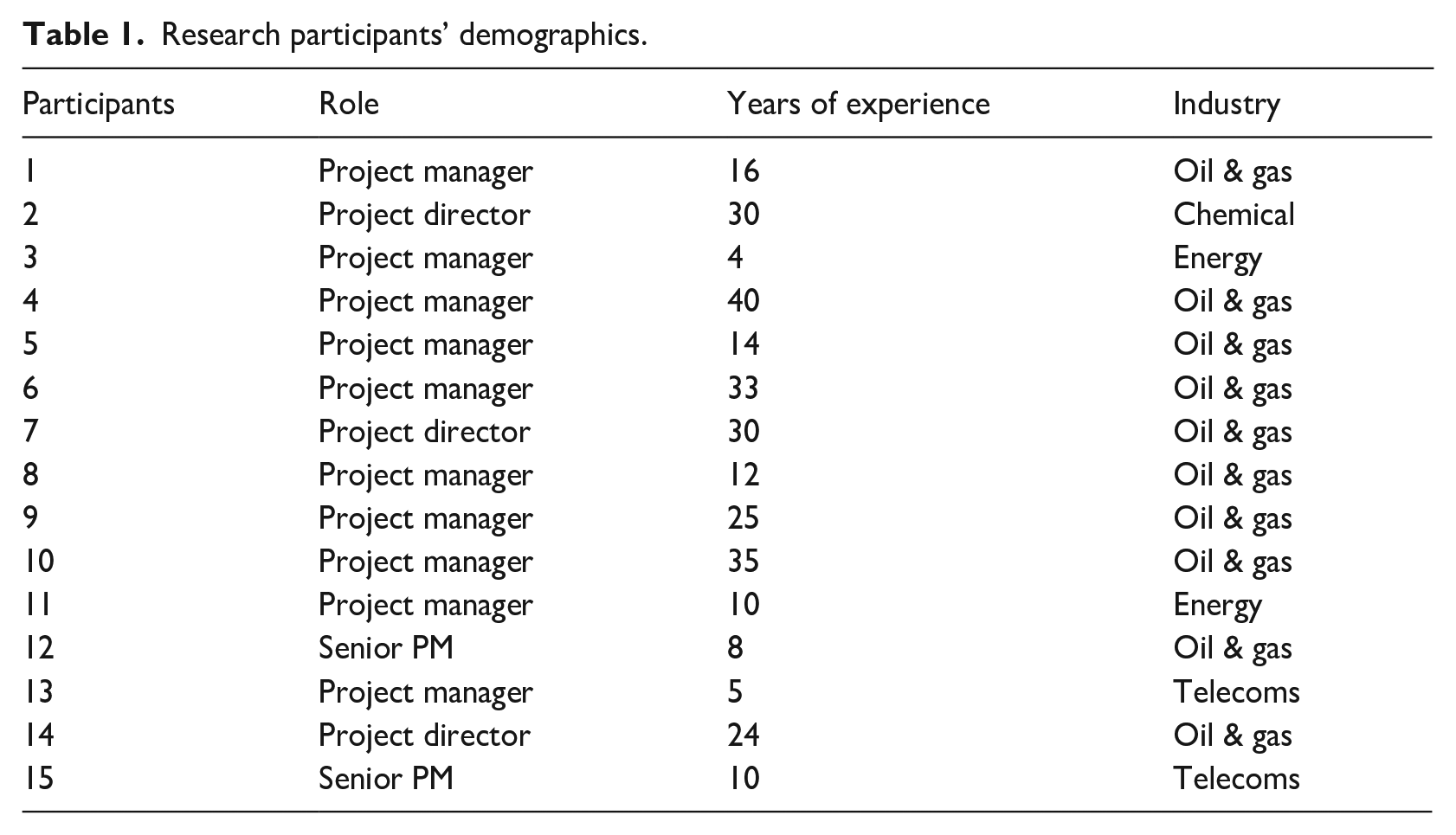
As presented in, Table 1, 15 project practitioners consisting of project managers, senior project managers and project directors were involved in the study. The research participants had significant work experience ranging from 4 to 40 years. This is consistent with Crawford’s (2005) argument that experience is a fundamental indicator of professional competence and success in project management, as the length of time spent managing projects correlates with a practitioner’s ability to foresee challenges and respond effectively.
Research participants’ demographics.
Data analysis
As project practitioners who are directly involved in the learning process, (Serra and Kunc, 2015) the individual research participants were utilized as the study’s unit of analysis. An adaptation of the data analysis method proposed by Creswell and Creswell (2023) as shown in Figure 3, was used in the study with relevant sifting done to obtain pertinent information. A rigorous transcribing process enabled the researchers to familiarize themselves with the text and appropriately organize and group the data in preparation for analysis.
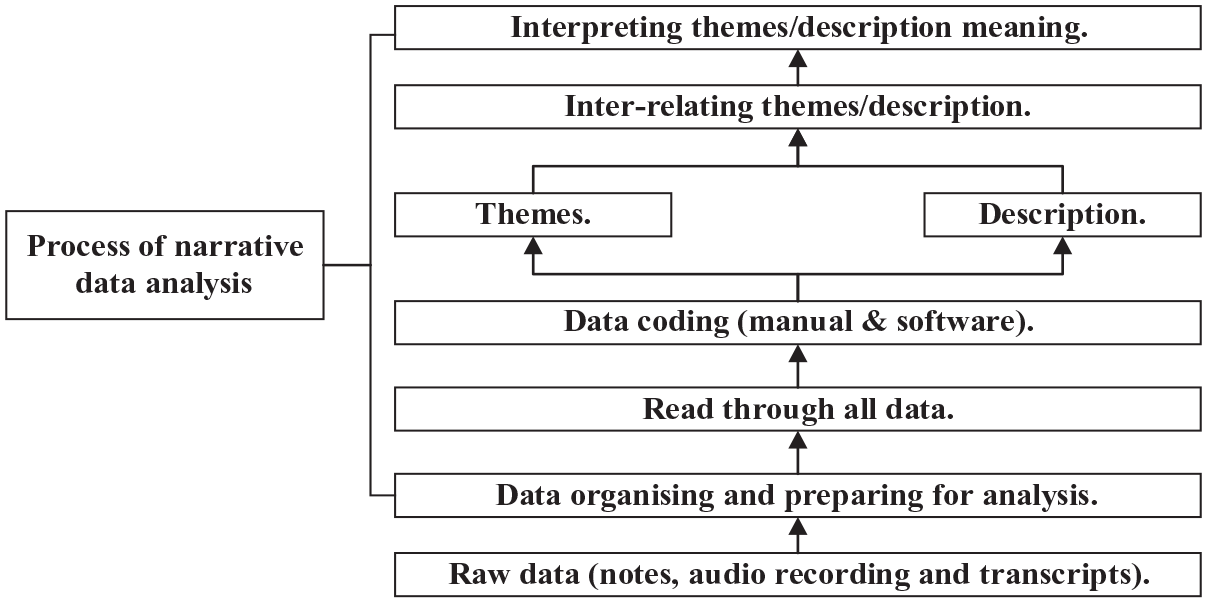
Data analysis of the study.
The narrative transcripts were analyzed using thematic analysis (Gioia et al., 2013) while NVivo 12 was chosen for its in-depth qualitative analysis (Clarke and Braun, 2017) and ability to capture key themes from transcripts (Hsieh and Shannon, 2005). To demonstrate rigor in qualitative research, Gioia et al. (2013) suggest a thematic analysis that allows for the systematic presentation of both a “first-order” analysis based on informant-centric terms and codes and a “2nd-order” analysis based on researcher-centric concepts, dimensions, and themes. Taken together, these allow the researcher to demonstrate the link between the data and the induction of a new concept leading to theory building in the subsequent step while attempting to understand how they would answer the research questions. This approach not only allows configuration of data into a sensible visual aid but also provides a graphic representation of the progression from raw data to terms and themes in conducting the analyses, which are a key component of demonstrating rigor in qualitative research (Tracy, 2010). We thus proceeded in three steps:
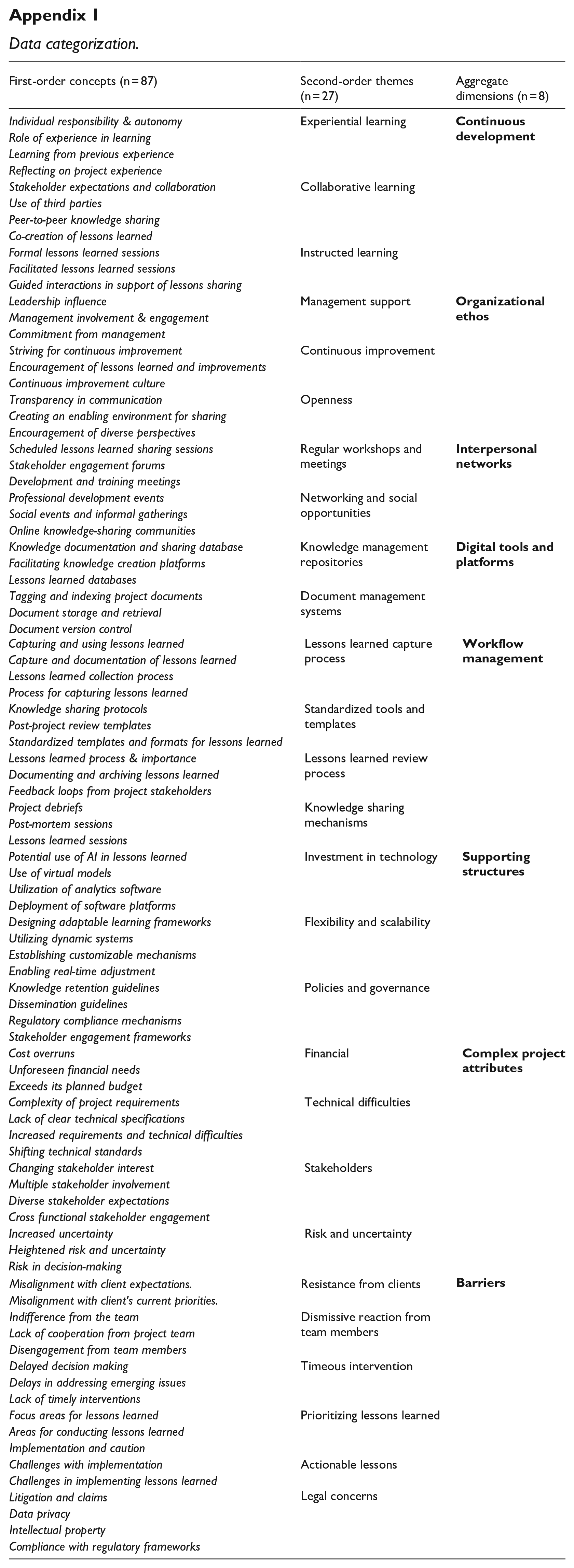
The first-order analysis entailed recognizing and grouping initial concepts into categories based on the participants’ views and perceptions (first-order coding, n = 87).
The 2nd-order analysis captured the emerging themes from the first-order analysis (2nd-order coding, n = 27), firmly supported by theory and instrumental in explaining and answering the research questions.
The 3rd-order further narrowed the emergent themes from the 2nd-order analysis into aggregate dimensions (3rd-order coding, n = 8).
In addition to relying on emerging data using the inductive approach to theory building, we employed an adaptive approach in the later stages to interpret the data and conceptualize it. We considered the SYLLK model as a theoretical lens to identify facilitators (enablers) and barriers (challenges) to learning in complex projects. The 3rd-order themes from the thematic analysis were mapped to the elements of the SYLLK model and their corresponding facilitators and barriers. Using the model, we created a supportive and structured framework that maximizes the potential for capturing and disseminating lessons learned from complex projects and can inform decision-making when setting up lessons learned systems. We argue that complex project attributes create a specific context for learning and influence how it occurs. Data categorization is presented in Appendix 1.
Results
The findings of the research identified eight relevant themes/narratives pertaining to lessons learned in complex projects.
Continuous development narrative
Project practitioners engage in different learning approaches to enhance their project management skills and knowledge as presented in Table 2.
Continuous development narrative.
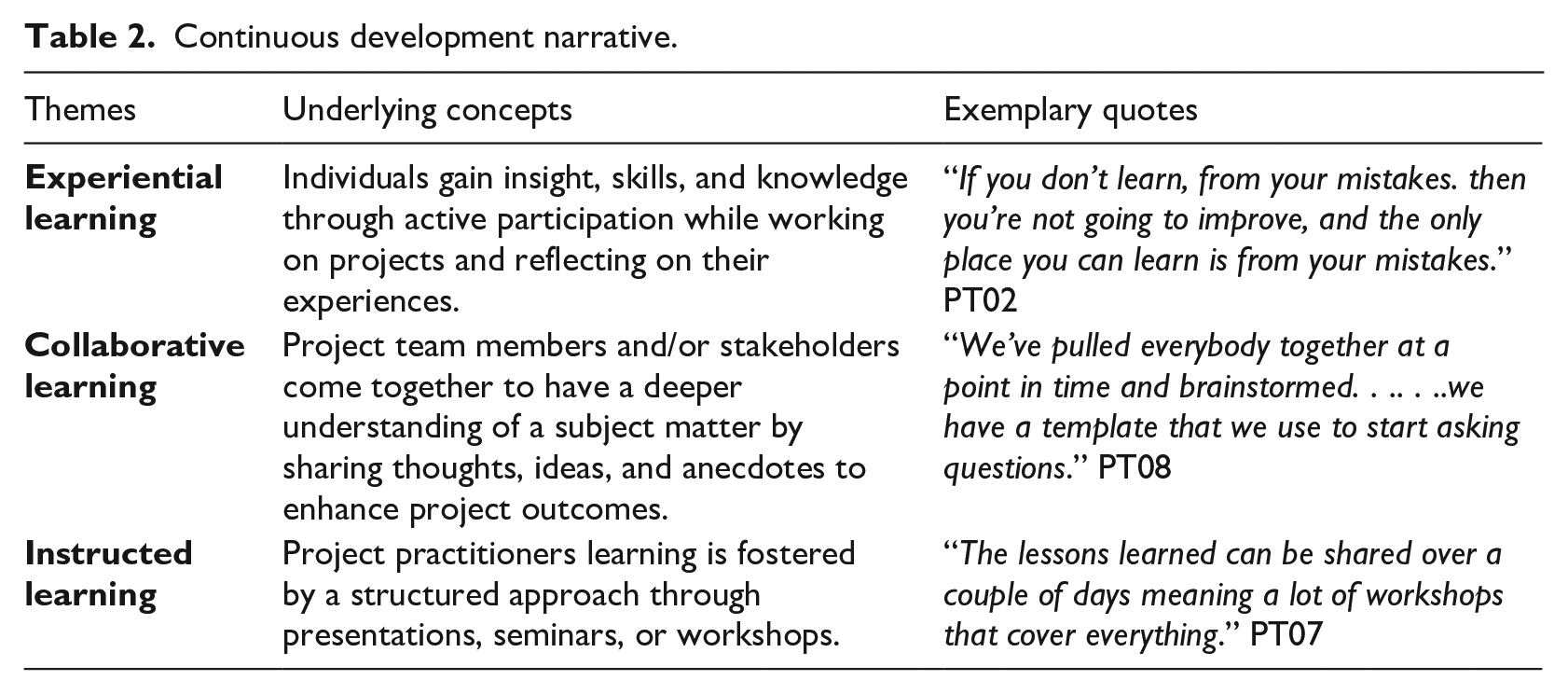
Learning is a continuous process that occurs in different ways throughout the project lifecycle. As PT02 notes, the only way to learn is through mistakes. This experiential learning results in enhanced and new skills, knowledge, and insights as project practitioners learn and reflect on their positive and negative project experiences. As different practitioners come together throughout the project lifecycle, they then share these experiences within the collective creating opportunities for collaborative learning. PT08, for example, describes their organization’s process where they gather everyone for brainstorming sessions showing how this learning fosters peer interaction, engagement in group discussions and knowledge exchange typically on an informal level. Instructed learning on the other hand, provides project practitioners with structured guidance through workshops and seminars that provide useful insights into important lessons learned for consideration in the project being worked on usually through a mandated process. While each of these approaches employs different methodologies to engage project practitioners in the learning process, they tend to complement each other, creating a unique and flexible learning environment.
Organizational ethos narrative
Organizational ethos involves the beliefs, values, and practices that shape how lessons learned are managed. Table 3 summarizes this narrative in relation to enhancing project learning.
Organizational ethos narrative.
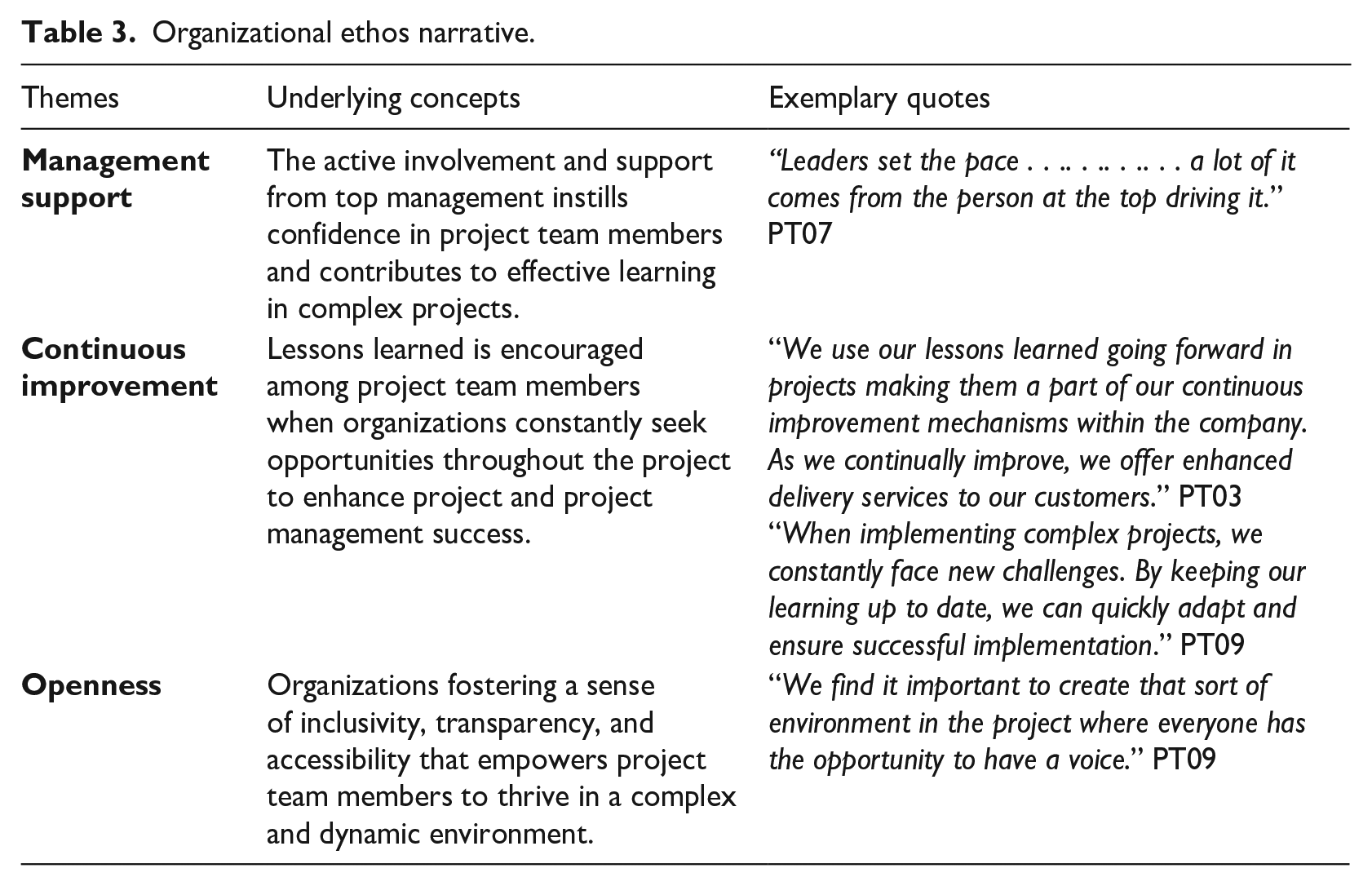
Management support gives project practitioners a sense of organizational leadership’s commitment to the learning goals of the organization. PT07 notes that it is leaders who set the pace, driving the culture of learning among project practitioners. Since complex projects are dynamic, project practitioners value continuous improvement as it enables quick adjustments to evolving challenges and delivery opportunities in the pursuit of excellence. PT03 also highlights that continual improvements enable them to offer enhanced delivery services to their customers. An organization’s openness becomes crucial as an essential motivator for project practitioners sharing their ideas, thoughts and concerns with PT09 emphasizing the need for an environment where everyone has a voice. Such openness fosters inclusivity, transparency, and trust among project practitioners, encouraging creativity and shared responsibility among project team members.
Interpersonal networks narrative
Working on projects provides a platform where project stakeholders can brainstorm, share insights, and engage in discussions while collectively addressing project challenges (Table 4).
Interpersonal networks narrative.
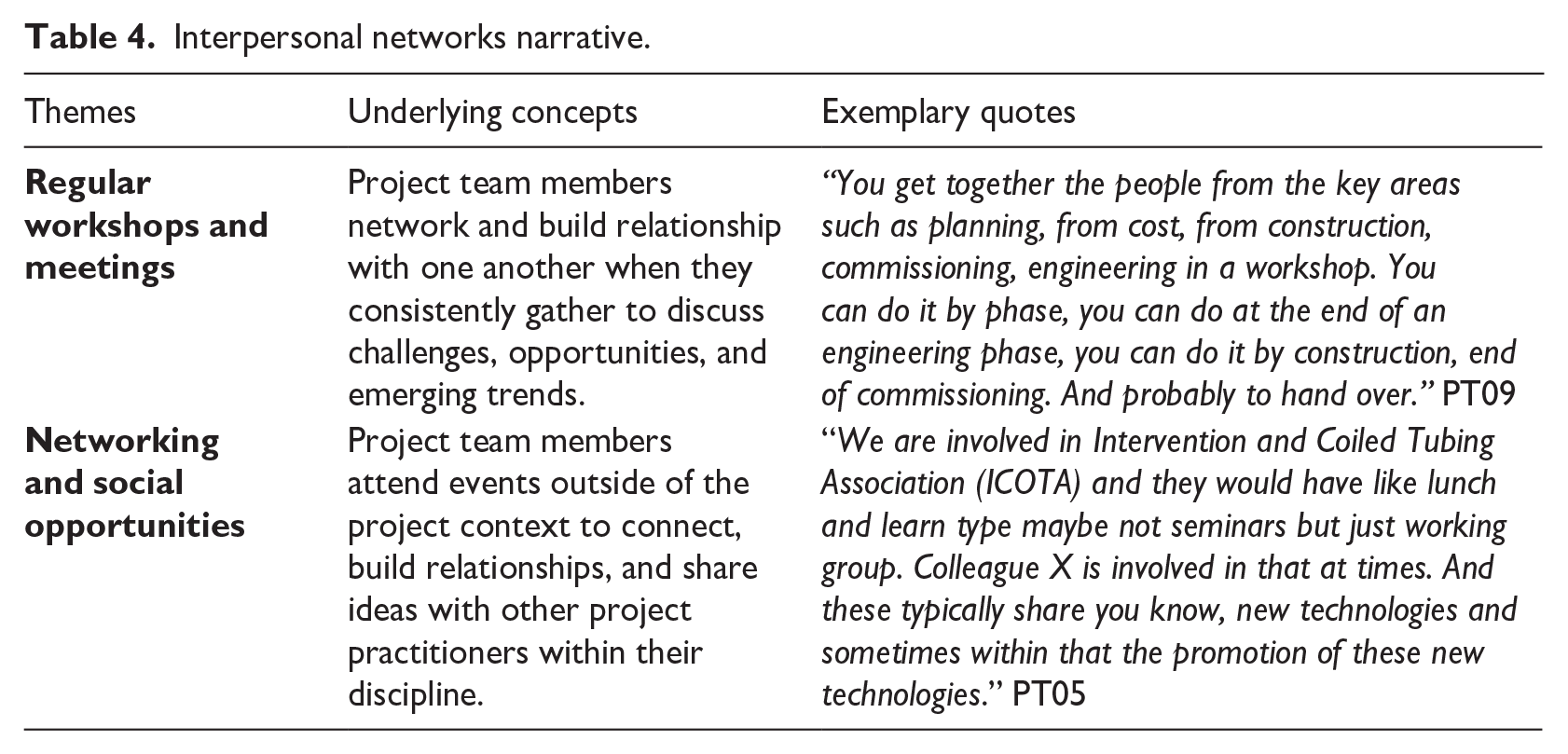
Project practitioners emphasize how interactions and relationships among project team members, are essential for effective collaboration and knowledge sharing. Having formal regular workshops and meetings with key people in the project as PT09 notes, fosters alignment and collaboration among project team members, ultimately driving project success. Likewise, through informal networking and social opportunities, which PT05 describes as lunch and learn type working groups, project practitioners can establish relationships and cultivate a sense of community. These formal and informal events enable the interaction and connection essential for strengthening relationships in the team.
Digital tools and platforms narrative
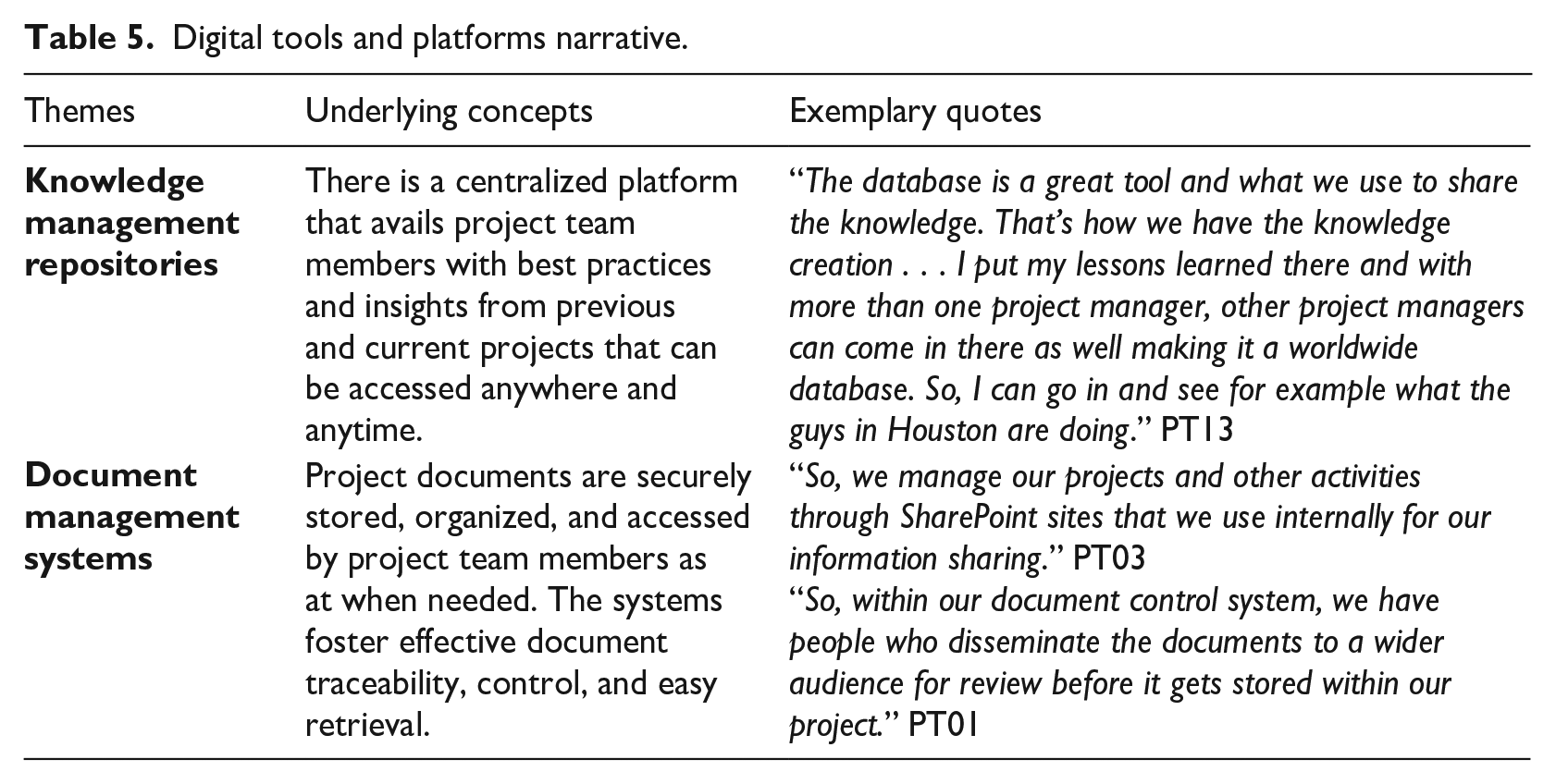
By harnessing digital systems and solutions, project practitioners can simplify and organize information. Through knowledge management repositories, project practitioners have a centralized hub where lessons learned are captured and categorized over the project lifecycle. According to PT13, when it comes to repositories, databases tend to be a great tool for knowledge creation. These repositories when set up well, empower project practitioners with user-friendly interfaces, customized workflows and search capabilities. Likewise, document management systems, present project practitioners with a robust means of securely storing, cataloging and retrieving project reports and documentation. While the document management systems ensure that project documents are easily and timeously accessible to the project team, the knowledge management repositories further ensure that project information is usable for project team members fostering efficiency and creativity within project environments. Table 5 presents an overview of the digital tools and platforms narrative.
Digital tools and platforms narrative.
Workflow management narrative
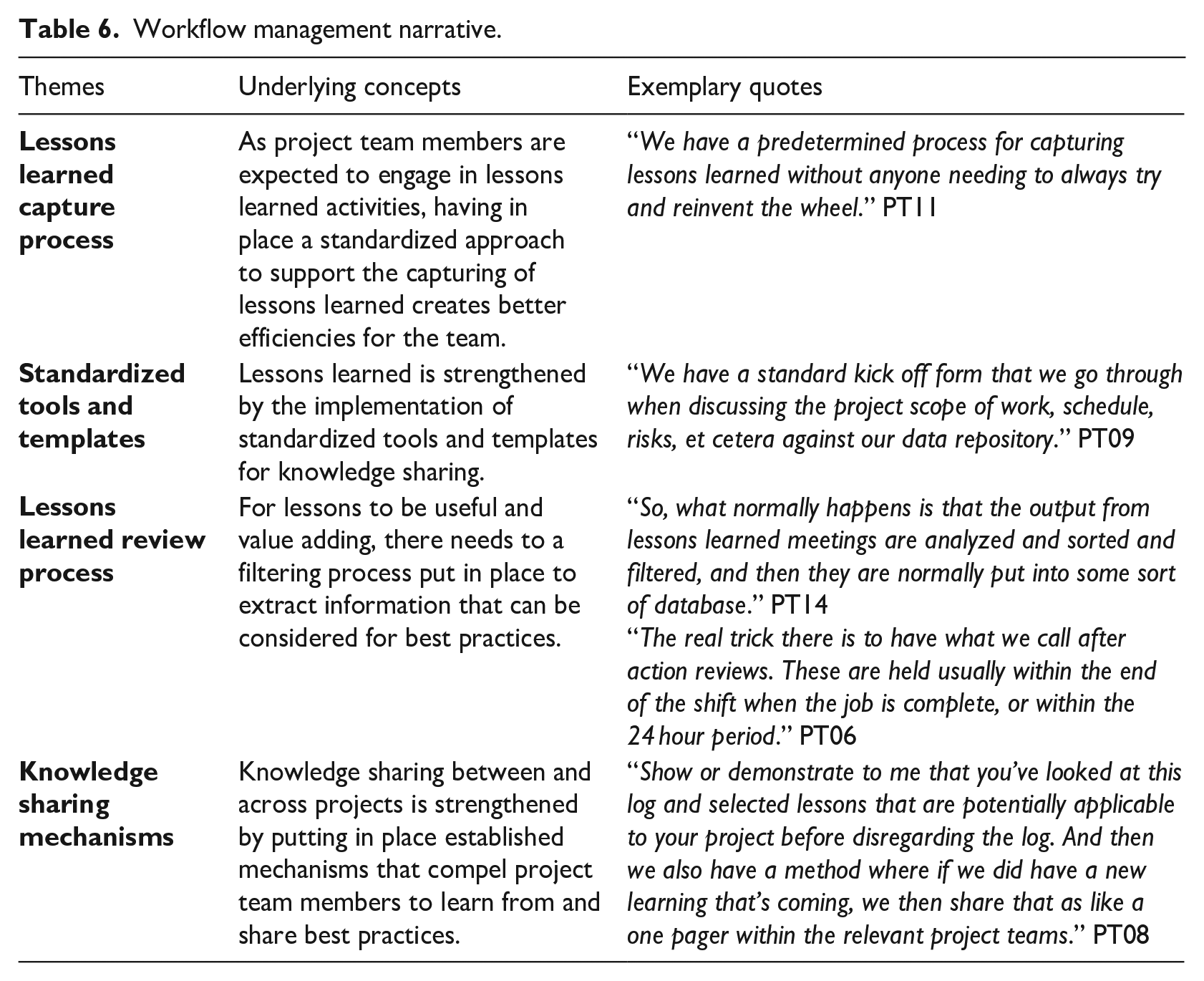
Project practitioners seek structured processes for capturing, reviewing, and disseminating lessons learned. PT11 shares that they have a predetermined process for capturing lessons learned emphasizing the importance of having systematic procedures for identifying and documenting experiences for the lessons learned capture process. Such processes ensure that project team members experiences are captured as and when necessary, providing a basis for informed decision-making and continuous improvement. The lessons learned review process establishes a platform for thorough analysis and examination of the captured experiences and insights with PT14 noting how they have to sort and filter lessons into a database and PT06 discussing the importance of their action review process. Complementing the lessons learned capture processes and lessons learned review processes are the knowledge sharing mechanisms put in place to ensure that best practices are shared among project team members. These serve as a means for sharing lessons learned, while encouraging collaboration among project teams. At times, as observed by PT08, the team may need to be compelled to review lessons to ensure they are implemented in ongoing projects. Finally, standardized tools and templates provide a consistent structured approach for documenting and sharing lessons enhancing captured knowledge accessibility, clarity and usability among project team members. As an example of this, PT09 shares that they have standard kick off forms to guide the lessons learned process. Table 6 presents an overview of the workflow management narrative.
Workflow management narrative.
Supporting structures narrative
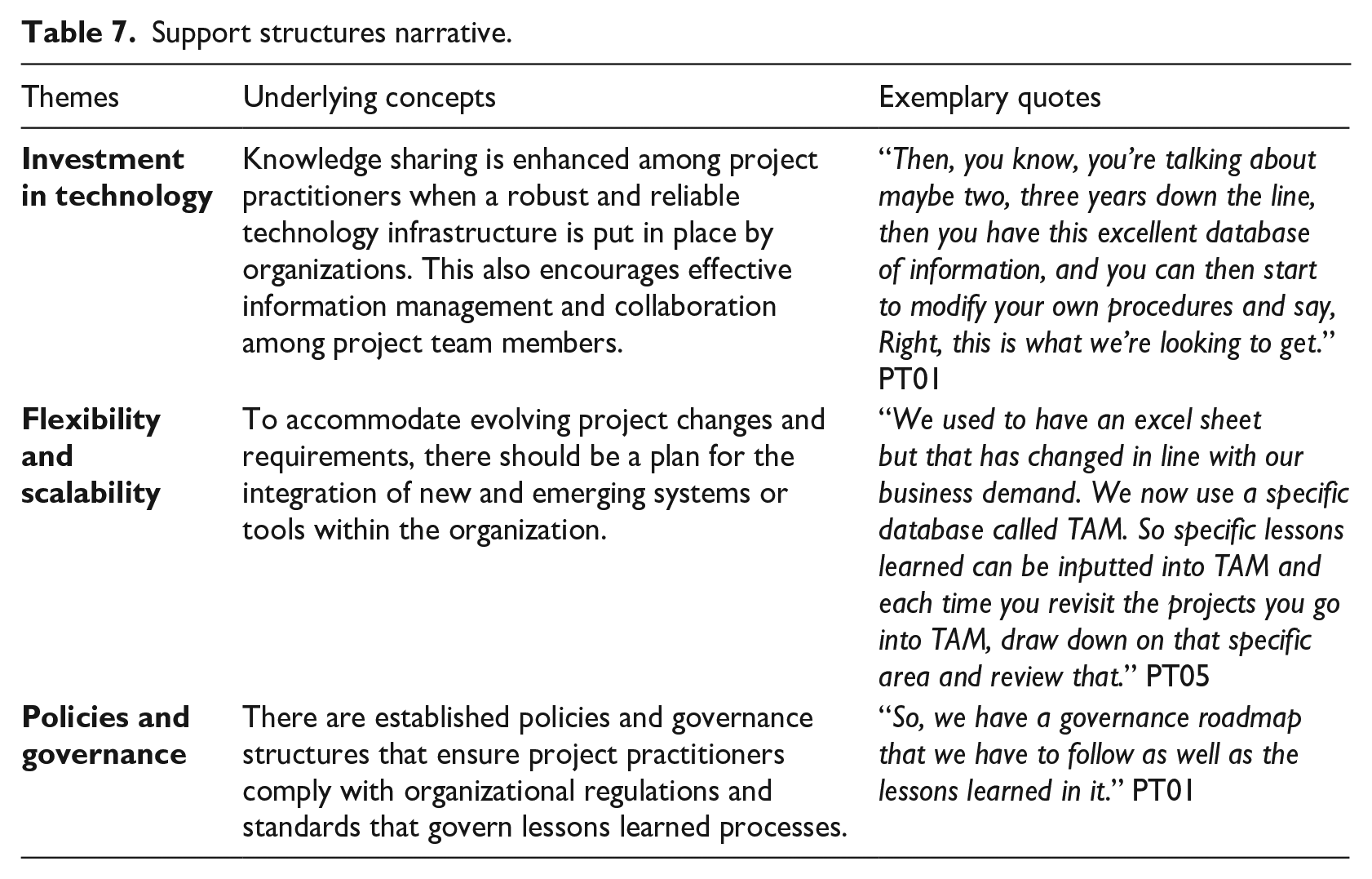
Supporting structures encompass the organizational and physical systems that facilitate lessons learned activities. Investment in technology ensures that project practitioners have the essential platform and tools needed to learn effectively and efficiently. Technology includes but is not limited to advanced hardware, recent software solutions, and IT infrastructure that enable and support seamless data management, communication, and collaboration among project team members. Flexibility and scalability are pivotal in enabling project practitioners to adapt existing technological frameworks to changing project requirements and embrace emerging innovations without disruption allowing agility in a dynamic environment. For example, PT05 discusses how their organization moved from an Excel sheet to a database as their business needs changed. In addition, having policies and governance frameworks that state clear guidelines, ensure compliance, and support project practitioners to achieve their objectives with precision and confidence while promoting best practices in lessons learned processes is essential. Table 7 presents an overview of the support structures narrative.
Support structures narrative.
Complex project attributes narrative
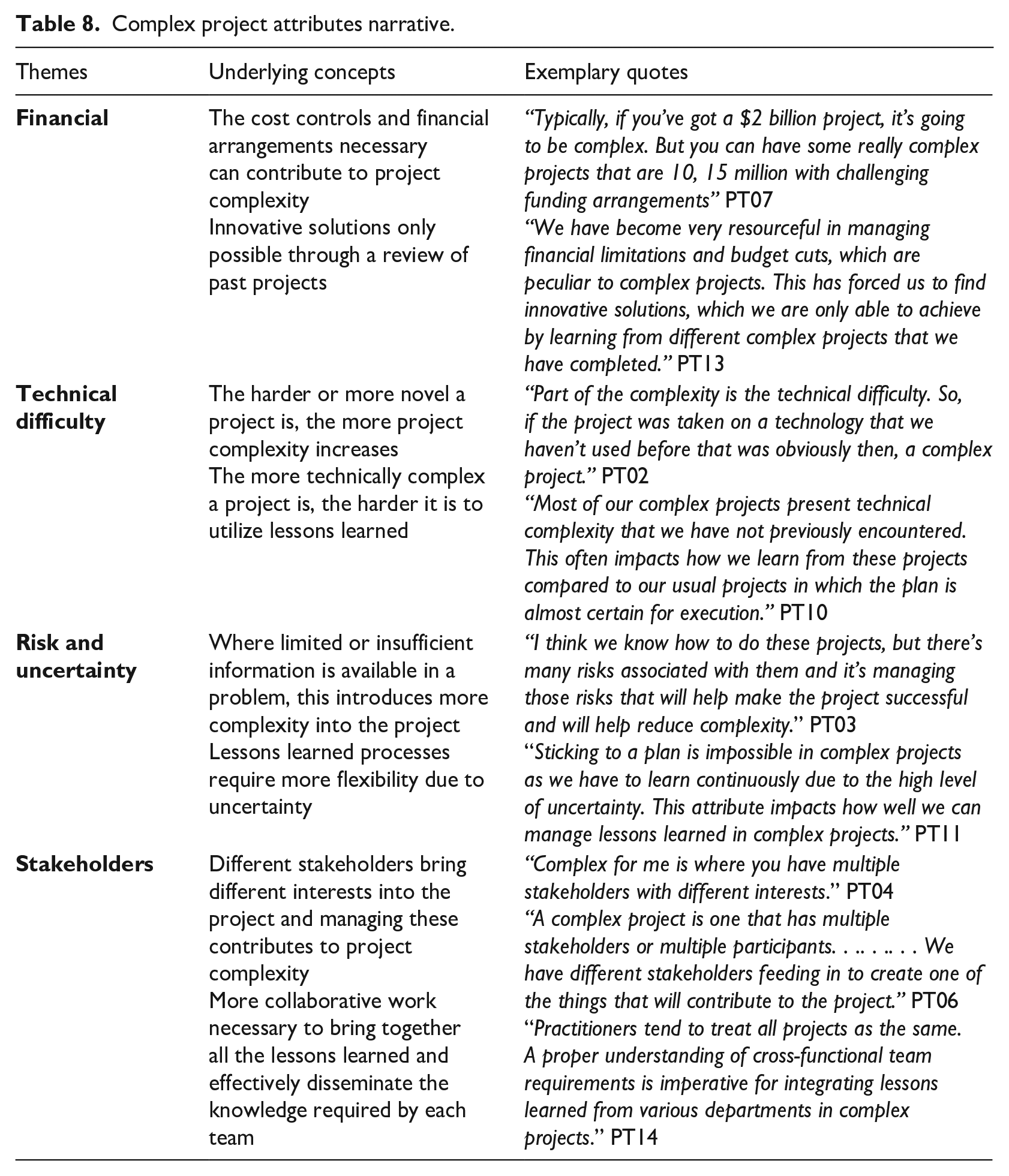
Participants note how learning and knowledge sharing is influenced by the complexity of the project. This complexity is influenced by various attributes which in turn impact the learning process. The financial attribute, while not always a reliable indicator, tends to be used as a rudimentary measure of the potential complexity of a project. PT07 notes that high-value projects tend to come with the need for stringent cost control, contributing to the complexity of the project. The handling of these complexities according to PT13 tends to require access to knowledge from previous projects to enable creativity for managing budgetary constraints. Technical difficulty relates to the detailed and rigorous coordination, planning, and problem-solving skills needed due to the advanced requirements of the project. PT10 notes how this uniqueness means adjustments to learning may need to be made to accommodate any potential unexpected occurrences during the project. Complex projects are inherently characterized by risk and uncertainty, resulting from unforeseen circumstances. Project practitioners also note that uncertainty can occur due to, for example, changes in scope, unexpected curveballs in the project, novel concepts or a project team that is unsure about how to carry out the project. This again tends to mean that projects may not follow the envisioned trajectory exacerbating the challenges that come with the lessons learned process. In addition, the multifaceted stakeholder landscape adds to project complexity. Project practitioners must engage with and manage different stakeholders who may have conflicting interests and expectations. PT14 further highlights how the added ability to integrate information from these varied stakeholders becomes key in ensuring lessons learned can be effectively captured. Table 8 presents an overview of the complex project attributes narrative.
Complex project attributes narrative.
Challenges narrative
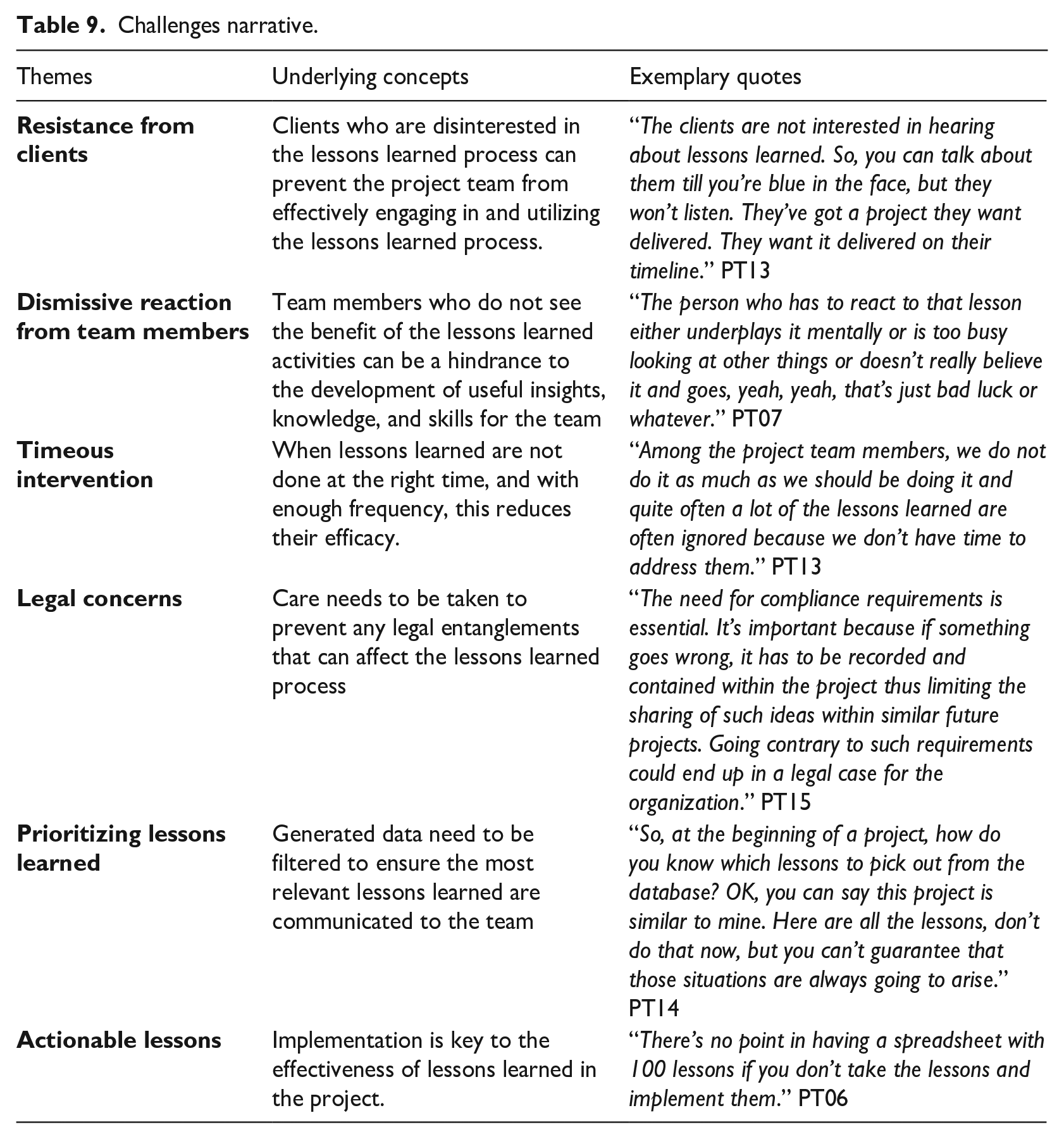
Project practitioners report that they often experience resistance from clients with PT13 noting that some are keener on the actual successful delivery of the project and not on the process for success. Clients are, thus, reluctant to engage in lessons learned activities which can be perceived to impede project progress. In a similar vein, a dismissive reaction from project team members often results in project experiences being overlooked as mere distractions or bad luck, rather than events that should be acknowledged and learned from. As pressure to meet deadlines mounts, project practitioners can find it difficult to maintain frequent lessons learned activities, pushing them instead to the end of the project. This brings about the timeous intervention attribute which emphasizes how project team members can miss crucial insights and experiences that could help enhance best practices, through lack of engagement on lessons learned at opportune times. PT15 highlights instances where project practitioners have not recorded vital experiences and insights due to contractual obligations and regulations. This comes about because of legal concerns for project practitioners, who need to be careful in what they capture to avoid litigation, while ensuring project legitimacy. Prioritizing lessons learned by their relevance and applicability can be a major challenge for project practitioners as they need to determine which project experiences and insights to capture and integrate into an organization’s project practices. A further challenge resulting from this constraint is that of actionable lessons. As PT06 notes, for lessons learned to be effective, certain actions must be implemented to prevent a repeat of previous mistakes or to improve the current process; too often though, lessons are captured, but no actions are taken. The identified challenges are noted in Table 9.
Challenges narrative.
Discussion
The study explored how practitioners actively shape their own learning and facilitate knowledge creation in complex projects. The motivator themes emergent from the study were mapped to SYLLK elements as facilitators/enablers of learning while the challenges were identified as barriers to learning. The complex project attributes emerged as a further influencer on how learning occurs.
Learning enablers
Learning enablers emphasize the various approaches through which individuals and teams learn, to encourage continuous improvement. In complex projects where risk and uncertainty are high, Bakker (2016) assert that learning from experiences is essential in enhancing project outcome and performance. This learning is enhanced through engagement in reflective practices which enable individuals to think critically and devise appropriate tactics to meet daily challenges (Maclean et al., 2012a). This is consistent with Serrat’s (2017) argument that integrating reflective practices in the learning process encourages a critical review of project team performance. In addition, by integrating collaborative structured learning approaches in complex projects, project practitioners can learn from their own experience and that of others, further influencing future project outcomes. These learning enablers foster the development of a learning organization to continuously improve its ability to achieve expected outcomes (Hansen et al., 2020) through systematically capturing, analyzing, and applying lessons learned.
Culture enablers
Culture enablers are organizational beliefs, values, and behaviors that impact how lessons learned are shared and used. In our study, we identified the enablers management support, continuous improvement, and openness. Manata et al. (2021) state that a culture that emphasizes learning by fostering open communication and discouraging the stigma related to making errors is essential in complex projects as it positively supports learning and knowledge sharing among project practitioners (Chesbrough, 2017). Edmondson (2018) additionally notes that an open organization fosters psychological safety, with project practitioners able to share their insights and experiences without fear of retribution. Richter et al. (2023) further emphasize that organizations with a culture of continuous improvement are better prepared to adapt to changes as they allow project practitioners to better navigate risks and uncertainties in complex projects. An environment where sharing is valued, rewarded and encouraged at different organizational levels is thus crucial for lessons learned and knowledge sharing.
Social enablers
Social networks enhance knowledge sharing by creating structures that encourage and support the exchange of experiences and ideas (Wang et al., 2017). Social enablers thus foster relationships and networks among individuals within the organization. Our data suggests that social enablers leverage on social interactions and interpersonal connections to foster learning in complex projects. This is consistent with Brown and Duguid (2017), who highlight the relevance of social dynamics in learning processes and knowledge sharing, arguing that social interactions are an important avenue through which individuals exchange knowledge that is often unrecorded. Project practitioners are at the fore of encouraging these social interactions and interpersonal connections among team members through collaborative workshops and networking opportunities. Project team members are more likely to share their experiences openly when there is a supportive social environment (Bresnen et al., 2005).
Technology enablers
Technology enablers are the systems and tools that support lessons learned activities. In our study, technology enablers ensure that lessons learned are easily usable and accessible for project practitioners. This is consistent with Marnewick’s (2016) assertion that the effective use of technology ensures the centralization of lessons learned and the facilitation of knowledge creation through encouraging accessibility to diverse project stakeholders. Technology enablers ensure that lessons learned are stored securely and communicated efficiently and timeously. A well-executed knowledge management repository and document management system enable real-time best practices sharing and collaboration among project practitioners, fostering learning and continuous improvement (Leal-Rodríguez and Albort-Morant, 2016).
Process enablers
The process enablers define structured templates and procedures for capturing, reviewing and sharing lessons learned. In the complex project context, process enablers are described as establishing and integrating consistent and clear documentation and reviewing processes into organizational practices. This is essential in complex projects where project practitioners are confronted with numerous uncertainties and variables that can impact project outcomes. This is consistent with Duffield and Whitty’s (2015) argument that errors can be reduced and best practices encouraged by implementing a well-structured process for capturing lessons learned. A structured process not only encourages best practices but also facilitates the effectiveness and efficiency of project management practices, leading to continuous improvement and decision-making in complex projects (Milton, 2010). By integrating formal workflow management procedures, project practitioners can foster the necessary adaptive and continuous learning culture. This affirms Duffield and Whitty’s (2016) findings that incorporating structured processes is essential for ensuring standardization and maintaining consistency. Project practitioners are thus well equipped to handle the learning dynamics of complex projects when a structured process is put in place.
Infrastructure enablers
Infrastructure enablers refer to the organizational and physical structures that support lessons learned activities. In our study, infrastructure enablers relate to organizations establishing dedicated frameworks and providing resources to support effective lessons learned management practices. Zwikael and Smyrk (2011) argue that the presence of standardized infrastructure is essential in maintaining the relevance and quality of lessons learned. This helps project practitioners mitigate knowledge management challenges while making lessons learned more actionable for future projects. In complex projects often characterized by the involvement of multiple stakeholders and interfaces, well-established infrastructure enhances collaboration which improves the dissemination of lessons learned again fostering a culture of continuous improvement and learning.
Awareness of complex project attributes
The SYLLK model emphasizes the integrated people and system elements as determining the dissemination and application of lessons learned (Duffield and Whitty, 2015). Our data suggests that complex project attributes are an additional element influencing the capture, review and sharing of lessons learned. These attributes influence the focus of the lessons learned and can result in challenges in the lessons learned process as complex projects rarely have a smooth trajectory. For example, Kermanshachi et al. (2016) observe that learning from historical financial pitfalls is useful in the successful management of financial resources and activities in complex projects. This is because complex projects are notorious for their cost and budget overruns making them ripe for project practitioners to glean valuable lessons. In addition, Bosch-Rekveldt et al. (2011) emphasize the relevance of capturing technical lessons to improve project performance and outcomes. This necessitates a push for project practitioners to understand the unique technical challenges associated with complex projects especially in the use of technologies and processes. The risks and uncertainties inherent in complex projects also compel project practitioners to have a detailed understanding and knowledge of risk management, which is enhanced through a robust lesson learned process. This is consistent with Zwikael and Ahn’s (2011) argument that lessons learned from managing risks and uncertainties can lead to the development of more resilient project planning and better risk mitigation strategies in complex projects. In addition, the involvement of diverse stakeholders in complex projects presents further complexity related to communication and conflict management. This brings to the fore the need for common ground among stakeholders which can be fostered through a collaboration. This complements Oppong et al.’s (2017) assertion that project practitioners can improve stakeholder engagement through lessons learned.
Awareness of challenges to learning
Project practitioners note that learning in complex projects can be affected by challenges which stem from the people and system elements and the complex project attributes. Clients are crucial to the project and their lack of engagement in the lessons learned process can prevent project practitioners from prioritizing this essential process (Carrillo, 2005; Henderson et al., 2013). In practice, team members who lack an understanding of the importance of lessons learned have been found to prevent the implementation of robust lessons learned systems and their actual implementation in projects (Carrillo et al., 2013; Forcada et al., 2013). Continuous improvement can also be impacted by shortsightedly considering lessons learned only at the end of the project or inadequate allocation of time to work on lessons learned (Rhodes and Dawson, 2013), preventing potentially meaningful change during project execution. Extra care needs to be taken prevent legal ramifications within a project (Carrillo et al., 2013). The necessary filtering and disseminating of crucial data can be a mammoth task (Carrillo, 2005) especially when practitioners feel pressured to omit information. This provides a challenge in terms of protecting stakeholder interests while also capturing adequate lessons. In addition, once the lessons learned have been filtered, they need to be made actionable otherwise, a lack of practical or visible implementation makes the process futile (Wiewiora et al., 2009). Where these challenges are not addressed, the effectiveness of lessons learned activities and processes will be impacted, hindering continuous improvement and learning.
Theoretical and practical contributions
This study offers several theoretical and practical contributions. It adds to the ongoing theoretical discussion on managing complex projects by evidencing facilitators and barriers to lessons learned through the use of the SYLLK model. It extends the understanding of the SYLLK model by operationalizing practitioners’ experiences in knowledge creation expressly in complex projects. While the study highlights relevant enablers in the people and system elements of the SYLLK model, it further identifies complex project attributes and noted learning challenges as additional influencers shaping the learning of project practitioners in dynamic and complex project environments.
Awareness of complex project attributes was found to be an enabler in the same vein as the people and system elements in SYLLK emphasizing the importance of context in project learning. Having the necessary awareness allows project practitioners to better tailor and contextualize their insights and experiences to the project’s needs (Qazi et al., 2016). The study also found that the identified challenges cut across SYLLK elements with individual challenges not necessarily fitting into only one specific element. Project practitioners must be aware of learning challenges as a whole to enable them to adapt to new circumstances, refine their processes and continually improve their approach to managing lessons learned (Dowson et al., 2024) in complex projects.
From a practice perspective, the study contributes to a better understanding of how to enable a systematic learning process within complex project organizations by highlighting project governance mechanisms. Organizations can benefit from the guidance provided to shape formal policies that ensure learning occurs from the various successes and failures. In addition, the study provides an overview of the challenges and enablers of learning practices necessary to facilitate learning in complex projects. This information assists organizations in determining the training needed by project practitioners to enable them to be learning agents. For the project practitioner, this study can aid with the benchmarking of best learning practices for inclusion in their projects as engagement with best practice leads to improved project outcomes. With these findings, our study aligns with other studies that suggest that organizations should establish a supportive environment and provide practical guidance for learning and knowledge management (Duffield and Whitty, 2016).
Conclusions, limitations, and a research agenda
Our study suggests that people and systems cannot be separated from the lessons learned process as shown through the dual influence of the SYLLK model and complex project attributes on the lessons learned process. The identified enablers can be considered as conditions, practices and tools that help practitioners effectively capture, disseminate and apply lessons learned from complex projects, leading to knowledge creation and improved project outcomes.
Our study however has limitations that need to be acknowledged. First, it was conducted within a limited number of United Kingdom industries (Oil and gas, Chemicals, Energy, and Telecoms), potentially affecting the generalizability of the findings. This could have influenced the operationalization of the SYLLK framework, as different findings might be obtainable in other industries. Second, it relied on qualitative interview data, possibly introducing bias and subjectivity. Future studies could embrace quantitative or mixed methods to provide a more objective assessment of the SYLLK model application in learning and knowledge creation in complex projects. Several challenges to learning in complex projects have been noted and while it was beyond the scope of this study to investigate them, further research would be beneficial for understanding the challenges better and formulating strategies to mitigate them. Also, a longitudinal study could be explored to understand the long-term impact of operationalizing the SYLLK framework in complex projects.
Footnotes
Appendix
Data categorization.
| First-order concepts (n = 87) | Second-order themes (n = 27) | Aggregate dimensions (n = 8) |
|---|---|---|
| Individual responsibility & autonomy | Experiential learning |
|
| Role of experience in learning | ||
| Learning from previous experience | ||
| Reflecting on project experience | ||
| Stakeholder expectations and collaboration | Collaborative learning | |
| Use of third parties | ||
| Peer-to-peer knowledge sharing | ||
| Co-creation of lessons learned | ||
| Formal lessons learned sessions | Instructed learning | |
| Facilitated lessons learned sessions | ||
| Guided interactions in support of lessons sharing | ||
| Leadership influence | Management support |
|
| Management involvement & engagement | ||
| Commitment from management | ||
| Striving for continuous improvement | Continuous improvement | |
| Encouragement of lessons learned and improvements | ||
| Continuous improvement culture | ||
| Transparency in communication | Openness | |
| Creating an enabling environment for sharing | ||
| Encouragement of diverse perspectives | ||
| Scheduled lessons learned sharing sessions | Regular workshops and meetings |
|
| Stakeholder engagement forums | ||
| Development and training meetings | ||
| Professional development events | Networking and social opportunities | |
| Social events and informal gatherings | ||
| Online knowledge-sharing communities | ||
| Knowledge documentation and sharing database | Knowledge management repositories |
|
| Facilitating knowledge creation platforms | ||
| Lessons learned databases | ||
| Tagging and indexing project documents | Document management systems | |
| Document storage and retrieval | ||
| Document version control | ||
| Capturing and using lessons learned | Lessons learned capture process |
|
| Capture and documentation of lessons learned | ||
| Lessons learned collection process | ||
| Process for capturing lessons learned | ||
| Knowledge sharing protocols | Standardized tools and templates | |
| Post-project review templates | ||
| Standardized templates and formats for lessons learned | ||
| Lessons learned process & importance | Lessons learned review process | |
| Documenting and archiving lessons learned | ||
| Feedback loops from project stakeholders | ||
| Project debriefs | Knowledge sharing mechanisms | |
| Post-mortem sessions | ||
| Lessons learned sessions | ||
| Potential use of AI in lessons learned | Investment in technology |
|
| Use of virtual models | ||
| Utilization of analytics software | ||
| Deployment of software platforms | ||
| Designing adaptable learning frameworks | Flexibility and scalability | |
| Utilizing dynamic systems | ||
| Establishing customizable mechanisms | ||
| Enabling real-time adjustment | ||
| Knowledge retention guidelines | Policies and governance | |
| Dissemination guidelines | ||
| Regulatory compliance mechanisms | ||
| Stakeholder engagement frameworks | ||
| Cost overruns | Financial |
|
| Unforeseen financial needs | ||
| Exceeds its planned budget | ||
| Complexity of project requirements | Technical difficulties | |
| Lack of clear technical specifications | ||
| Increased requirements and technical difficulties | ||
| Shifting technical standards | ||
| Changing stakeholder interest | Stakeholders | |
| Multiple stakeholder involvement | ||
| Diverse stakeholder expectations | ||
| Cross functional stakeholder engagement | ||
| Increased uncertainty | Risk and uncertainty | |
| Heightened risk and uncertainty | ||
| Risk in decision-making | ||
| Misalignment with client expectations. | Resistance from clients |
|
| Misalignment with client’s current priorities. | ||
| Indifference from the team | Dismissive reaction from team members | |
| Lack of cooperation from project team | ||
| Disengagement from team members | ||
| Delayed decision making | Timeous intervention | |
| Delays in addressing emerging issues | ||
| Lack of timely interventions | ||
| Focus areas for lessons learned | Prioritizing lessons learned | |
| Areas for conducting lessons learned | ||
| Implementation and caution | ||
| Challenges with implementation | Actionable lessons | |
| Challenges in implementing lessons learned | ||
| Litigation and claims | Legal concerns | |
| Data privacy | ||
| Intellectual property | ||
| Compliance with regulatory frameworks |
Funding
The author(s) received no financial support for the research, authorship, and/or publication of this article.
Ethical approval and informed consent
The Aberdeen Business School Ethics Review Committee at Robert Gordon University approved our interviews on 26 April 2023. Respondents gave written consent for participation and signature before starting interviews.

Data availability statement
Data for this study are not available to share as the transcripts are confidential.