



Abstract
This article explores a practical approach to teaching animal ethics in food systems as part of a business course. We argue that tackling such complex and emotionally charged topics is vital to shifting unsustainable and hurtful behaviours towards more positive futures. Our teaching example outlines a pedagogy of courageously witnessing, inquiring with empathy and prompting positive action; an activist approach we term fierce compassion. These three layers blend positive and critical perspectives in a classroom to address contentious issues of large-scale industrial animal production hitherto largely neglected in a traditional business curriculum. While acknowledging that academic activism is controversial, we argue that fierce compassion – noticing the suffering that is remote and often systemically hidden – can inform and structure education towards more post-anthropocentric and just futures for all living beings – human and nonhuman alike.
Keywords
Introduction
In the global food industry, nonhuman animals face conditions that many humans find confronting and emotionally disturbing. Each year, over 81 billion land-based animals are slaughtered for food production mostly in large-scale production systems (Food and Agriculture Organization of the United Nations [FAO], 2021). Cruelties are institutionalised, ingrained into ‘taken-for-granted assumptions that form a hidden structure of violence. . .that make the most unspeakable atrocities seem an acceptable part of everyday life’ (Matsuoka and Sorenson, 2018: 1–2). It is common for animal production processes to be screened from sight, such that many consumers remain uncertain about the source of everyday foods (Adams, 1990), making this a potentially contentious topic for the business school classroom when discussing food ethics and sustainability. The burning challenge for business schools is to ‘own up to the role we play in creating the problems that society now faces through the courses we teach, the theories we espouse, and the values we profess’ (Hoffman, 2021a: 515) and accordingly, this article argues that large-scale animal food production presents one such burning challenge. Many students (and teachers), however, are unprepared for the potential angst that may result from exposure to and engagement with large-scale ethical and social problems (Moratis and Melissen, 2021), which means courage (Worline, 2012) and support is needed to handle complex issues of ethics (Singer, 2002), social justice (Hooks, 1994), and engaging in compassionate behaviours (Lilius et al., 2011); qualities needed for reimagining ‘business education as if people and the planet really matter’ (Hoffman, 2021a).
This article focuses on the practicalities of teaching about animals in food production in a business school classroom, asking three interrelated questions. First, how can teachers and learners engage with potentially uncomfortable realities to consider alternative perspectives on animal food production and consumption? Second, how can teachers design learning experiences that consider the rights and experiences of animals in the food industry within the disciplinary confines of the typical business school curriculum? Third, is there a place for activist perspectives in teaching such subjects, and if so, how can we harness the compassion of activism while retaining criticality? We contribute new insights into these three questions by highlighting the value of an approach that we have called fierce compassion. ‘Fierce’ reflects the required level of intensity, action and courage for teaching topics related to large-scale systemic suffering that are yet to be fully recognised societally, such as animal ethics. A degree of fierceness is also useful when the topic in question challenges teachers to handle their own feelings and beliefs about the subject matter while guiding students in critical inquiry in facing the reality. Thus, fierce compassion implies a balancing of difficult-to-face issues with a desire to alleviate suffering through a widening of the scope of compassion and responsibility of business professionals. This includes encouraging students to develop post-anthropocentric values and considerations, rather than keeping with the instrumentalisation of life for short-term economic profit that creates harm to humans and nonhumans (see also Hoffman, 2021a). Due to a predominantly reductive tradition of business, many may find teaching social justice topics in the business school uncomfortable and emotionally demanding. Hence, this article offers fierce compassion as a pedagogic approach that embraces the ethos of academic activism, blending affective experience with critical thinking. Offering a potentiality for positive change, we propose a three-layered approach of courageously witnessing, inquiring with empathy and prompting positive action.
The concept of fierce compassion that we delineate in what follows has been developed from spiritual literature (see Harris, 2014) and is broadly familiar to management studies through its emphasis on compassionate noticing and assisting those who suffer (see Frost, 1999). However, our contribution is distinctive in two ways. Firstly, we apply fierce compassion as a pedagogic approach designed to educate by harnessing activism in a structured way, and secondly, we turn compassion towards animal rather than purely human suffering in organisations, an aspect not covered in previous literatures. Business education all too often ‘misrepresents the fact that suffering is a pervasive, inescapable, and costly organizational reality’ (Kanov, 2021: 85) and fails to question the underlying causes to such suffering which may be institutionalised and taken-as-granted normalised realities. Our approach redirects attention towards individual and mass-scale animal suffering, as well as towards the conditions by which suffering is perpetuated, providing an opportunity for reflection and a potentiality for positive action in finding solutions to such suffering.
Blending insights from Critical Management Studies (CMS) with Positive Organizational Scholarship’s (POS) perspectives on suffering and compassion, we enact and order theory development (Sandberg and Alvesson, 2021) by utilising research from a teaching experience to generate, rather than abstractly explain or theorise, compassion (Carlsen and Dutton, 2011). Throughout, we challenge the implicit humanism and anthropocentrism of both CMS and POS to extend the concept of compassion in management studies to include animals (Frost, 1999; Sayers et al., 2019). We aim to act as internal change agents within the classroom; something we explain in what follows (see also Ergene et al., 2021; Rhodes et al., 2018). The article proceeds with a review of compassion and suffering within business pedagogy and considers how business education is implicated within issues of social justice. Our methods then describe the data and the setup of the learning session. The findings describe fierce compassion as a three-layered approach with screenshots from the teaching material as illustration. In our discussion and conclusion, we highlight the value of our activist approach and reflect on its limitations.
Refusing business education-as-it-is
Academic inquiry is ‘a political project of interrupting the present for a more socially-just future’ (Kutz and Pickup, 2016: 173) which requires a paradigm shift in the field of management and organisation studies towards more critical, interdisciplinary, relational and engaged scholarship, including teaching (Ergene et al., 2021). Yet much academic work – what we research, what topics we teach and how we think about them – are based on values which may (inadvertently) support unsustainable or socially unjust behaviours (Ergene et al., 2021). While unethical and damaging business behaviours may be the unwitting outcome of complex commercial activity (Anderson et al., 2020), many critical scholars perceive them as the privileging of greed (see Gabriel, 2009; Ghoshal, 2005) over a desire to work towards creating thriving and flourishing for all societal stakeholders – human and nonhuman alike.
Hoffman (2021a) calls for a reinvention of business education to scrutinise its underpinning values in search of more aspirational approaches that move beyond a preoccupation with monetary measures and instead prioritise citizenship and duty. Such arguments suggest educating business professionals to embrace critical reflective ability and awareness of large-scale challenges, such as the climate crisis, income inequality and social justice for marginalised human and nonhuman groups, especially if businesses directly impact and profit from such activities. This approach to business education involves not only the examination of societal structures but also reflection upon one’s own role in supporting them (Lloro-Bidart and Sidwell, 2020; Luke and Gore, 1992).
Helpfully, many students are increasingly ‘drawn to business in order to channel the power of the market toward addressing society’s challenges’ (Hoffman, 2021a: 521) with an interest in making companies ‘humane, ethical and eco-friendly’ and working towards ‘a safe environment of economic and social welfare and justice’ (Koris et al., 2017: 177). From our perspective, a post-anthropocentric lens is useful to deepen an emancipatory commitment to tackle societal challenges that affect vulnerable and marginalised groups, such as future generations and those in developing countries who disproportionally face high impacts of climate change (Ergene et al., 2021; Rhodes et al., 2018). We extend this commitment to nonhuman organic life (i.e. animals and nature), who are often overlooked in spite of the interconnections between all life systems on a planetary level (see Waddock, 2011). Human activities, especially commercial ones, detrimentally impact organic life to a large degree making it vital for business professionals to expand considerations towards more ethical functioning that minimises harm in a tangible manner rather than greenwashing unsustainable activities.
With its emphasis on flourishing and thriving, POS is an important resource in this endeavour but as with much business and management theory, it tends to be anthropocentric in nature; focusing on resources and capacities in the pursuit of human, organisational and societal excellence (Pina et al., 2020). This human-focused pursuit also draws on the legacy of psychology with its heavy reliance on animal experimentations. For example, one of the key figures behind the field of positive psychology, which POS builds on (see Cameron et al., 2003), was the 1998 president of the American Psychological Association, Martin Seligman, whose happiness and wellbeing studies stem from his depression research. Seligman was a key animal experimenter developing the ‘learned helplessness’ model (Seligman, 1972; Seligman et al., 1968) where he administered electric shocks to dogs (and later to other animals) to induce helplessness (see Singer, 2002: 46–47 for an overview). Thus, POS has foundational and direct influences by research where animals are seen as objects. Such instrumentality and inducing unnecessary suffering could be challenged by more inclusive or relational conceptualisation of ‘thriving’ and ‘wellbeing’ that do not erase the experiential capacities of other species and instead consider it ethically problematic behaviours if actions result in harming others. Indeed, management scholars and practitioners need to further acknowledge suffering in and around organisations to better appreciate the impacts of business and industry upon different species and thus reimagine business responsibilities beyond the economic ‘bottom line’ (Ergene et al., 2021; Frost, 1999; Hoffman, 2021a).
Recognition of this argument is also emerging in CMS where there have been calls to decentre the human in business scholarship (see O’Doherty, 2016; Sayers et al., 2019, 2021). To date, however, there has been limited reflection in POS and CMS on the differential capacities of nonhuman actors and their thriving in society and organisations. Animal work (Blattner et al., 2019; Tallberg et al., 2021), humans working with animals (Hamilton and Taylor, 2013; Schabram and Maitlis, 2017; Tallberg and Jordan, 2021) and large-scale systems of exploitation, such as animal industries, do not feature sufficiently in the business curriculum. Furthermore, teaching critical management issues typically intellectualises contentious issues and tends to favour theoretical and philosophical models thus supporting abstract interactions with highly problematic issues rather than practical applications or considerations. Despite a wealth of scholarship on the rights and capacities of animals (Taylor and Twine, 2014), feminist and ethics of care perspectives (Adams, 1990) and discussions in critical animal studies that highlight economic systems of exploitation (Matsuoka and Sorenson, 2018) – all of which are relevant to business school teaching on ethics and social justice – many of these literatures do not straightforwardly intersect the CMS curriculum or its reading list (Sayers et al., 2019).
The academic resources available for those seeking to teach more inclusively about the nonhuman world or other social justice topics within critical business subjects, are surprisingly thin. However, one area of enquiry that has capacity to span these broad literatures is food, or more specifically, the ethics of using animals within food production and consumption. Animal production serves as an ideal pivot-point for critical teaching and, one which through its relevance to everyday and aspirational decision-making about food consumption habits, holds an inherent interest for most students. It spans debates that are relevant to the notion of positive social change including climate change (Poore and Nemecek, 2018), human diet and nutrition (Dinu et al., 2017), food activism (Sebo, 2018), animal ethics (Adams, 1990; Singer, 2002), law (Francione, 1995), work and society (Sayers, 2016) and expanding stakeholder thinking to nonhuman animals (Tallberg et al., 2021). There is potential in this subject to challenge the societal norm of seeing ‘animals-as-food’ (Adams, 1990; McLoughlin, 2019); a state-of-affairs that Joy (2011) refers to as ‘carnism’ and Derrida (1991) calls ‘carnophallogocentrism’ (see also Sayers, 2016).
Such embedded social conventions and norms call for interrogation. If business education needs to become more engaged with societal and sustainability issues, then it also needs pedagogical approaches that examine corporate interests and question traditional managerial approaches (Ergene et al., 2021; Hoffman, 2021b); recognising and challenging the instrumental valuations of people, animals and nature. An activism such as ‘minor rebellion’ that refuses to accept (unjust) reality may be called for, in order to drive institutional change (Välikangas and Carlsen, 2020). A post-anthropocentric lens offers a place to start examining the current realities towards scholar-activism that desires change towards a compassionate and just future. As any such pursuit of meaningful change is likely to be challenging, a degree of fierceness is needed in combination with compassion to motivate an engaged, active response for positive change that does not shy away from facing difficult feelings and discussions.
Our approach of refusing business education-as-it-is is a form of ‘systematic activism’ (Moratis and Melissen, 2021) as it questions industry actions through a series of layers to expose and reflect on disturbing and complex issues. The goal is to instil information as well as to embrace affective awareness in students as future decision-makers both in professional and private spaces. Scholar-activists can be seen as ‘tempered radicals’ in educational systems attempting to bring about positive change and act as powerful change agents in what issues are voiced in the classroom and thus part of business professionals’ training (Richter et al., 2020). Others might regard this approach slightly differently, not as activism but rather as engaged scholarship using teaching as a calling to reconsider human-nonhuman interactions towards more ethical behaviour (Ergene et al., 2021; Hoffman, 2021a). Differently orientated scholars might see our approach as part and parcel of CMS in drawing on the ‘power’ of leading a challenging topic for the classroom and stimulating thinking about taken-for-granted systematic and oppressive narratives (Heath et al., 2019; Hooks, 1994; Maclagan, 1995). However our approach is perceived, the aim is to interrogate culturally and institutionally entrenched narratives when discussing animals to challenge affected ignorance (see Moody-Adams, 1994) and the power of commercial operators (such as food producers and marketers). Here we also recognise and reflect upon our own authority as teachers; a role we aim to use ‘for liberating objectives’ (Hagen et al., 2003: 247) to take students beyond the theoretical consideration of a social justice topic by recognising those suffering, whether they are animals in food systems or humans seeking to teach and learn about their experiences.
Towards fierce compassion
Compassion in management studies includes how we notice, understand and relate to other humans in the workplace, a skilful ‘knowing in action’ (Worline and Dutton, 2017), that is a relational, community-based competency (Dal Magro et al., 2020) especially useful during difficult events, such as redundancy at work or the death of a colleague (Dutton et al., 2006, 2014; Lilius et al., 2011). As a core human virtue representing ‘moral goodness’ (Cameron and Winn, 2012), compassion is part of what makes ‘human life worth living’ (Gherardi, 2004: 41), thus representing a core quality in the pursuit of human betterment. Yet few previous studies of compassion focus on the broader structural conditions by which interpersonal relations and emotions are shaped (see Simpson et al., 2014 for an exception), and even fewer challenge hegemonic humanism as a potential source of suffering and injustice. The teaching approach of fierce compassion, by contrast, foregrounds the problem of individual as well as structural suffering and provokes us to think about human power in relation to nonhuman animals, thus blending both critical and positive approaches.
As an activist teaching approach, fierce compassion uses senses and feelings to link a critical treatment of social norms and conventions with experiential learning about large-scale, structural, life-depleting forms of suffering – something we applied to the food industry. In developing our ‘fierce’ approach, we considered different compassion-processes from management studies, including NAR (noticing, assessing, responding) (Kanov et al., 2017) and NEAR (noticing, empathizing, assessing, responding) (Dutton et al., 2014). However, these processes are mostly discussed on an interpersonal level such as noticing the suffering of a colleague in the workplace, with limited mentions of different forms of compassion (and no mentions of the active fierceness we suggest nor how this could be pedagogically structured). Thus, when considering large-scale suffering in more distant forms, such as that endured by animals in production facilities, the discussion on compassion in POS and management studies is limited.
From interdisciplinary literatures, we note some mentions of fierce compassion in contemplative traditions (see Harris, 2014), especially related to Tibetan Buddhism 1 and new work in psychology with a gender approach around ‘fierce self-compassion’ (see Neff, 2021). But while self-compassion is compassion turned inwards (and useful in self-care), we were more occupied by outwardly oriented ideas of confrontation, consideration and learning (and etymologically com-passion means ‘to suffer with another’). But even in these interdisciplinary literature mentions related to ‘fierce’ applications of compassion, explicit links have not been made to considering nonhuman animals. Thus, such humanist biases across many fields uphold anthropocentric notions of compassion as a quality primarily reserved for humans and their interests (although noteworthy are new subfields specifically dealing with animals such as human-animal studies, animal ethics and critical animal studies to name a few). Additionally, to the anthropocentric focus of compassion across many fields, our focus on pedagogy offers a practical contribution and illustration rather than merely conceptualising the approach.
In our teaching example, we turned a spotlight upon what many would regard as uncomfortable or unpalatable realities about the source of animal-derived foods to draw on an affective, rather than purely rational or instrumental experience of learning (Pullen and Rhodes, 2015). Given the contentious nature of the learning materials, fierceness stemmed from not only the confrontation with animal suffering but also the act of speaking up about social justice, in the traditionally neutral business school (Ergene et al., 2021). The teaching sought to stimulate and use difficult feelings, including discomfort, to empower and affect a potential for positive change; a practical means to harness the energy of activism within a supportive, organised business pedagogy framework.
Methods: Animal activism in the classroom
Our methods were based on action research (Mangan et al., 2016) in designing and implementing the teaching experience, an approach we believe generates ‘aliveness’ (see Carlsen and Dutton, 2011) to social injustice and assumptions of human domination. Author one and author two designed the learning experience. For the first author, an activist-scholar, the desire to teach this topic emerged from a long commitment to nonhuman animal rights and protection. The second author, a faculty member responsible for the business course Tackling World Challenges (in which this session was taught), partnered with the first author to harness an activist approach within a structured pedagogy. The course aims to ‘work on’ rather than ‘solve’ ethical issues with teaching being face-to-face as well as via video link (synchronously) across three European business schools (Sweden, Finland, Switzerland). Author one acted as a guest-speaker, interacting both in person and across the video links. The third author reviewed our resultant data, assessing what took place and how it could be analysed away from the classroom through a more conventional interpretational approach (Thompson and Coskuner-Balli, 2007) and thus provided an outsider perspective (Rerup and Feldman, 2011).
The course had 37 students in total and three faculty members (who were also active participants in the session). The students, between 21 and 27 years old, came from around the world including Europe, North America, Africa, China, Russia and India. The session lasted 90 minutes and students had been invited to watch a 2-hour documentary, Dominion (2018), 2 2 weeks prior to attending the class. We openly acknowledged the film to be an activist documentary but stated in a pre-class student email that its powerful imagery provided an important visual resource for reflection, especially as it depicts ‘business as usual’ in animal industries (rather than individual animal cruelty cases). While there are some empirical studies of meat and animals within organisational literature (e.g. Baran et al., 2016; Hamilton and McCabe, 2016) and many were included for contextual depth in the classroom discussion, we selected the film as a non-academic, visual source as the opening for class engagement with the topic. This was to elicit a personal emotional experience of seeing the realities primarily hidden from sight – something that academic articles or a purely in-class lecture may not.
Dominion is based on undercover activist footage from six animal industries that has been shown globally on tens of thousands of street activist screens in public spaces, such as train-stations, market-squares and shopping-malls, in efforts to shift public awareness of current exploitative industrial practices. As such, this material has been widely tested in non-academic settings to engage a variety of individuals into dialogue and reflection about different animal industries’ normal business practices. Nonetheless, warnings about the content were provided to students, along with a choice to engage with alternative less explicit learning materials (we suggested The Game Changers and Cowspiracy), along with self-care instructions (https://www.dominionmovement.com/self-care) to further support student well-being (Wright et al., 2019) as well as a pre-class academic reading (McLoughlin’s (2019) slaughterhouse study) to give students a verbal account in addition to the visual experience of Dominion. However, attendees were not required to watch any of the documentaries as a precondition for session. Indeed, two students and one faculty member stated they had not been able to do so. We designed all tasks to be free-standing, in that there were no assessments tied to the session and attendance was voluntary. Also, author one, who designed and delivered the specific learning material, was not involved in the course examination, thus fostering a degree of academic freedom to deliver the ‘contentious’ topic (see Jones et al., 2020). In class, the documentary claims were complemented by a suite of interdisciplinary academic publications on the topic, hence providing a broader theoretical and non-activist contextual discussion for the session. In addition, we produced a short case study based on corporate digital marketing campaigns in the animal food sector.
We explicitly acknowledged that the definition and measurement of nonhuman suffering is difficult to achieve in a business classroom discussion. While the veterinary and ethological sciences have explored the extent and nature of animal experiences within food production, we did not focus on those technical discussions and only briefly touched on such aspects by presenting the Cambridge Declaration on Consciousness (2012) that focuses on scientific recognition of animal consciousness. We pointed to differences between types of animal agricultural and food production settings (e.g. contrasting backyard chicken coops and intensive broiler chicken keeping), as well as differences in types of agriculture, animal handling and slaughter. We encouraged students to engage with animal suffering but foregrounded compassion as the means to achieve this.
During the teaching, we opened discussions about the film, presented the complementary research and case study material and led the discussions. Author one made clear that the approach was experimental, offered follow-up interviews, explained the readings and scientific findings, as well as provided a follow-up reading list and other visual learning materials for students who wanted to learn more. At the end of the session, we also included information that supports positive action, asking the students to critically question if beliefs and values align with behaviour; whether it could be possible to live and work towards less suffering (pointing to new plant-based food resources, such as https://challenge22.com/ including briefly touching on plant-based food companies); and encouraging students to critically ask questions, reflect on behaviour and speak up for real change. As course leader, author two took a chairing and facilitating role. Field-notes were taken during and after the teaching event and the voluntary post-class debrief interviews were conducted with four students and two faculty members in attendance. Each interview lasted 1 hour and contributed to 6 hours of transcription material. The follow-up interviews functioned as an opportunity to continue discussions and offered space to voice the witnessing experience in private outside the classroom. The low participation in volunteering for the debrief interviews may have been a result of the disruptions caused by COVID-19 lockdowns (which occurred shortly after our session), but could also be due to the confronting nature of discussing this topic further, or that students felt the class session was sufficient to begin to understand the issue.
In analysing the data, we focused on drawing out student and faculty commentary on emotions, senses, feelings and reflections; an approach used by other qualitative researchers to expose vulnerabilities and deeply held beliefs (see Conquergood, 1991; Ellis, 1999; Van Maanen, 2010). These powerful emotions or expressive feelings were critical to developing fierce compassion but also helped us switch between reflection and observation. During data analysis we remained mindful of ‘the implicit norms guiding compassion – the issue of whose suffering we are noticing – [that] must be taken into account’ (Simpson et al., 2014: 353). We understood this to include not only noticing the animals who suffer or how animal suffering was perceived but also to remain alert to the potential suffering among students and faculty, ourselves included. We analysed the resulting fieldnotes and interview transcripts within a context of compassion-related work from POS which enabled us to theorise our experiences while giving it a ‘grounded reading in data’ (Thompson and Coskuner-Balli, 2007: 140). To further engage with the topic and Dominion as the visual teaching material in this article, author one has taken screenshots as data material from the documentary and combined them through using a free online image merging software to create illustrations relevant to the stages of fierce compassion. This allows readers a visual experience and reflection of animals in food systems alongside the descriptions of the three stages of fierce compassion.
Teaching with fierce compassion
While embracing an activist ethos, all the teaching was delivered in a factual yet fierce manner, not shying away from stating difficult, and for some individuals, controversial points. The aim was not to moralise or preach, and our general observation was that the students appreciated the candor of the discussion. They seemed interested by the explicitly activist theme of the session, accepting that this was one lens among many that could be used to discuss the subject levied by scientific research rather than opinions. Students pointed out the dominant messages conveyed by food packaging and were open to the idea that there may be suffering hidden behind product marketing in industry norms. The teaching approach was organised into three layers; courageously witnessing, inquiring with empathy and prompting positive action, which we now describe in more detail.
Fierce compassion as courageously witnessing
Undercover footage was used to widen the scope of noticing to include other species and witness portrayals of their suffering. In showing this footage, the aim was to draw focus to the everyday realities of food production at the same time as encouraging intellectual links to be made between students’ own food decision-making and distant large-scale suffering. We regarded this as a form of experiential learning (Mangan et al., 2016) with relevance to personal as well as commercial values (Hoffman, 2021a). One student reported that this witnessing approach had indeed confronted her with suffering and presented a sensory stimulus to reflect on her own level of awareness: In the supermarket meat isles, you’re not confronted as pictures of black lungs on cigarette-packs do. Instead, you see ‘happy cows’ on the food packaging - you aren’t questioning it and you don’t see this [the student’s imagined suffering behind the ‘product’]. But when watching Dominion, I closed my eyes. . . I couldn’t watch it [the reality] anymore. (Student, debrief interview).
The student portrayed a range of feelings; confrontation, ignorance, fear, repulsion and powerlessness, particularly when contrasting the visual representation of food marketing materials with the ‘shocking’ imagery displayed on cigarette packaging. This participant had grown up on a farm and found the unsettling classroom experience deeply troubling to her ingrained belief in the ‘moral rightness’ of animal food production. Despite having seen animal rights footage before, she had not encountered this in her business education, nor had she considered the possibility of systemic, institutional suffering in food systems as this had not been presented as a topic of concern for future business professionals.
Witnessing also provoked anger at watching the behaviours of those handling animals (as shown in Figure 1): ‘I was so angry at those people [the workers]. But on the other hand, I was also thinking: what can you do?’ (Student, debrief interview). Recognising that emotional responses might be directed at the humans engaged in the ‘dirty work’ (something we have discussed elsewhere, see Hamilton and McCabe, 2016; Tallberg and Jordan, 2021) rather than critiquing large-scale industry-specific processes, we sought to situate such views in the next layer of fierce compassion (offering a theoretical contextualisation when empathising). But at this initial witnessing stage of the process, it was sufficient to see a portrayal of animal suffering and record emotional responses.
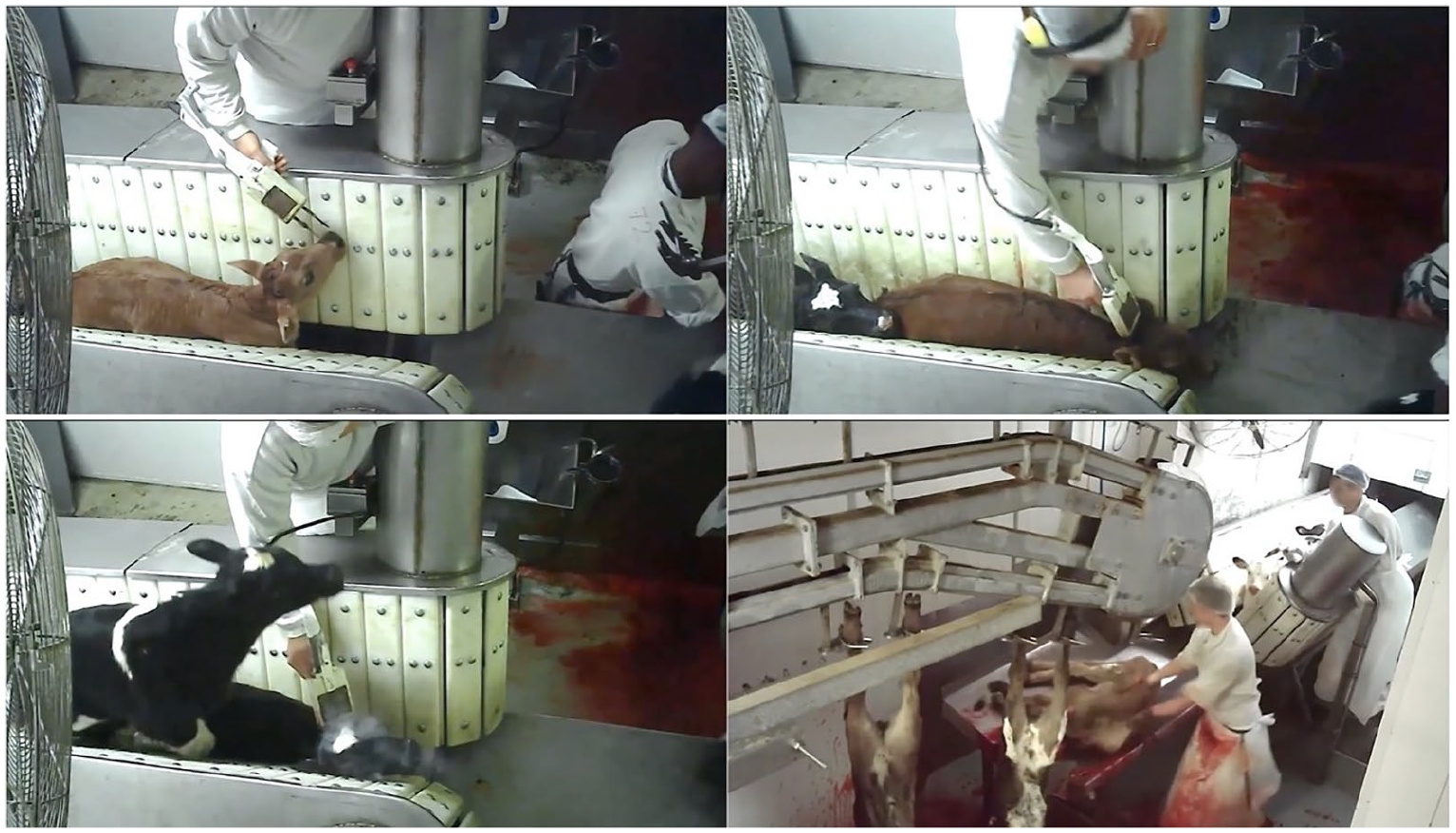
Screenshots from Dominion (2018) showing the ‘humane’ slaughter-processes of business-as-usual. The calves are (unsuccessfully) restricted while being burned by the stunner, throats cut and hung to bleed out while others watch, trying to escape. The cries and vocalisations are not evident in these screenshots but prominent in the video-footage.
As teachers we also focused attention to respectfully allow space for differences of experiences and reflection, noting that many people respond differently when faced with uncomfortable feelings.
Speaking up about these issues [animal ethics] are important to sustain more ethical economic activity. In my ‘wild’ moments I think Covid-19 is nature’s revenge on people, since we aren’t noticing and taking care of nature. This is maybe nature’s way to put us in a situation where we have to change our behaviours. (Author 2, field-notes)
Given that the aim of the class was to stimulate reflection and self-scrutiny, to search for positives by looking at and attending to negatives, comments offered to us illustrated the powerful nature of the business-as-usual footage. It raised important questions about the relationships between humans and other animals and was, therefore, an ideal medium for noticing, witnessing and raising awareness of large-scale suffering (especially considering the mass quantities slaughtered daily). This also prompted wider appreciation of the normative anthropocentrism in the business curriculum as well as the pedagogic potential of empathy, which we explore next.
Fierce compassion as inquiring with empathy
Compassion at work can arise in response to suffering, is socially coordinated and develops through experiencing emotion, often sympathy; ‘feeling-with’ someone who suffers (Dutton et al., 2006). There is an attuning to affect as a source of knowledge beyond cognition (Pullen and Rhodes, 2015). As such, sympathy and empathy are forms of embodied knowledge whereby the suffering of another is communicated in bodily responses which include emotional and physical sensations. We considered this useful in moving from witnessing towards an empathetic inquiry (see Gruen, 2013); embracing the capacity for affective and embodied knowledge but also contextualising this within a cognitive framing of the issues. Hence, we used the classroom discussion and interview sessions to encourage different feelings and perspectives to emerge; the aim of which was to think about and seek to relate to animal experiences. And following that, we tied these experiences to academic literature to add theoretical context, detail and structure for a scholarly discussion. Hence, inquiring through empathy is a blend of embodied affective responses from witnessing suffering to cognitive insights that link to theory. Such inquiry is thus situated on multiple levels of knowing.
Empathy in the classroom was expressed by participants during the discussion, often alongside a sense of guilt or shame: ‘I felt a real sorrow and a shame for humankind, including myself’ (Author 2, field-notes) and one student stated: ‘killing something that has a heart. . .makes me feel bad. I was very sad, wanting to cry when I saw the animals suffer’ (Student, debrief interview). The documentary prompted participants to think carefully about what they had seen and to reflect on the motives of these animal industries, whose suffering is valued and how this is silenced or voiced. ‘Why is everything so violent? You wouldn’t do this to humans but with animals it’s like nobody cares’ one student stated in his debrief interview. We considered these to be valuable expressions of affective empathy and encouraged session participants to listen to each other, to take on different experiences and invite viewpoints.
However, our intent was not to shame or guilt others, rather to increase awareness and discussion of the issue at hand and explore the links to commercial activity and profits. Hence, this layer of fierce compassion situated what had been witnessed when watching the documentary within a wider understanding of how marketing, culture, laws, power and cognitive dissonance shape understanding of food production. The discussion raised important and diverse opinions to surface. As expected, one student felt the discussion was an offense to a traditional way of life where meat constituted a key part of the culture and another student justified animal consumption by her belief that it was impossible to get sufficient calories without eating meat. These students did not experience the topic in the same way, drawing on their embedded cultural and societal norms to rationalise animal suffering. While seeking to relate to the feelings of other students when they expressed feeling surprised, confronted and disgusted, these students retained less affective and more distant perspectives throughout the discussions and also found it difficult to relate to the scholarly materials as a result.
Differing perspectives, such as these, allowed space for more inclusive and varied discussions on the topic. For us, as teachers, we saw it as an empathetic response to recognise such differences for those faced with animal suffering in a classroom setting (for many, for the first time). We drew on the fierceness in our suggested approach, not to debate responses or feelings, but to offer understanding of differences through the academic literature – in this way, de-sentimentalizing the topic rather than offering emotional opinion or response. Crucially then in this layer of fierce compassion, we used a wider pool of interdisciplinary source material for analytic context presented through a critical lens.
From examination of statistical materials, for example, students reported surprise at the scale and details of animal food production industries with one student stating, ‘The reality for animals, I never thought about it. I had no information about this topic at all’. Providing scholarly studies and information about commercial realities as basis for reflection moved learners from emotional responses during the witnessing phase towards a cognitive framing for further discussion. For example, here we presented a case of a dairy company’s social media marketing campaign 3 that feature the slogan ‘girl-power’ above a picture of a dairy-cow with text about dairy being ‘a natural raw-material’. As a provocation, the students were asked to remark upon what was present and what was absent in the imagery. The aim was to challenge thinking about the unseen elements of agricultural management, particularly animal reproduction (birth and lactation) to consider and critique the ‘naturalness’ of the marketing message. It became clear that few had insights into the biological functioning of bovine bodies, the necessary process of reproduction as a precursor to lactation, which could be considered an ‘inconvenient’ truth for dairy consumers. Several students stated that they had never thought about the origin of dairy or what happens to the calves being separated (often) within hours of birth from their mothers (see Figure 2). As someone who hoped to one day have her own family, one student reflected on the anguish cows must experience in the early separation process thus making a personal identification to a mother’s suffering through empathy. Here, the discussion turned towards issues of intersectional oppression and female bodies in marketing which led to an ethical discussion of dairy and its alternatives (see also Cole, 2011; Gillespie, 2014; Linné, 2014). Other students articulated the business and marketing aspects of the case, one stating that they were shocked by the ‘impact of business and marketing on everything we’re doing. This [animal suffering], it’s completely blended out and secretive but learning about this in class has me questioning [my] behaviour’ (Student, debrief interview). Such opinions revealed a macro-scale view of the economic imperatives of the food industry, its marketing messages and the role of consumers (and business students).
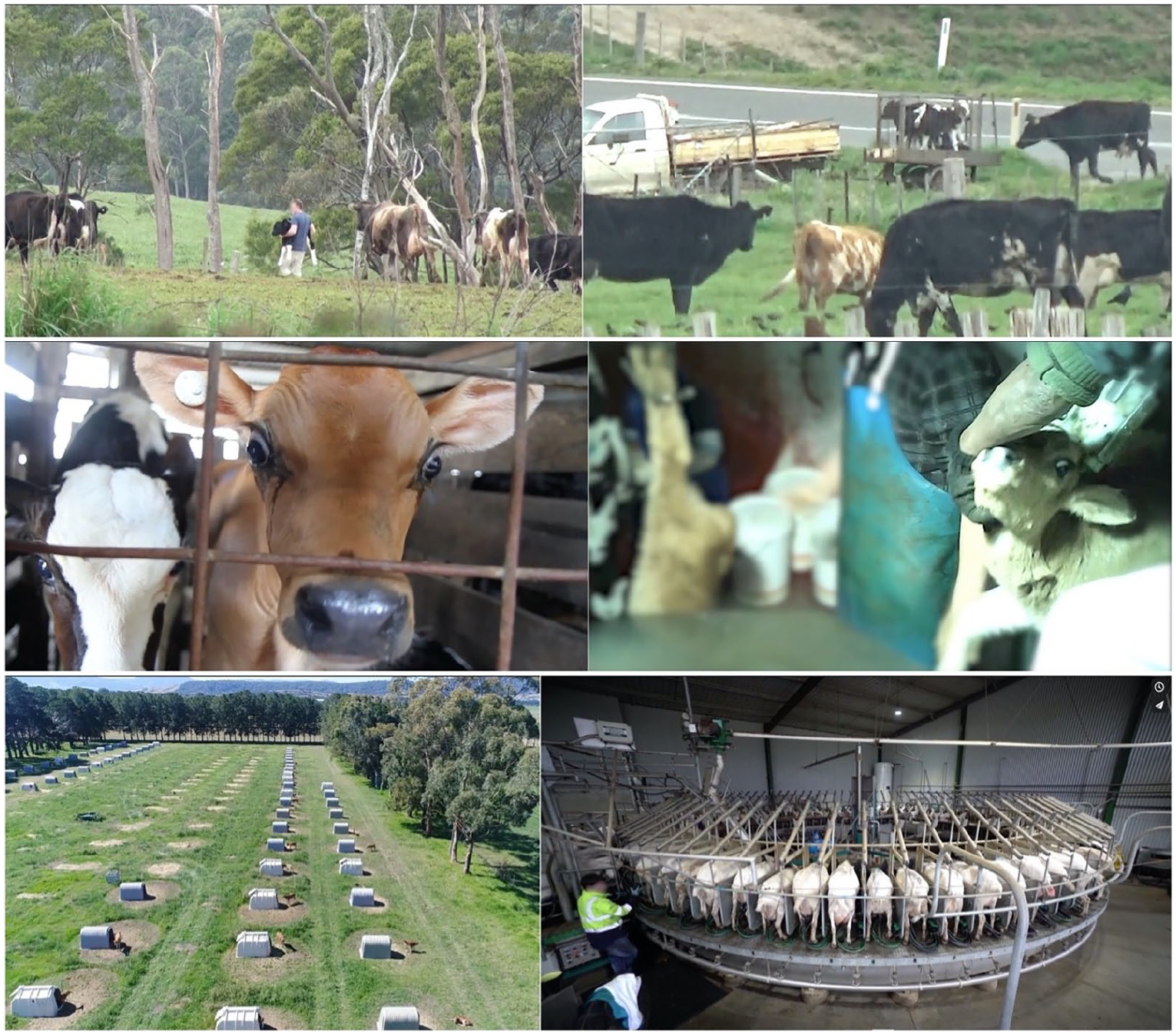
Screenshots from Dominion (2018) of the ‘free-range’ dairy processes our students reflected on. Shortly after birth, calves are separated from their mothers (in spite of physical and vocal protests as seen in the second frame of running after the truck transporting her calves away). Dairy industry’s ‘waste’ products of male calves head for slaughter while most females become ‘milking-machines’.
Controversy arose in discussion of dairy production as gendered reproductive violence as presented in literature (see Gillespie, 2014) prompting a strong reaction in a (male) faculty member who displayed severe discomfort. In the follow up interview, it was clear he wanted to further explain his thinking, but rather than perceive this negatively, we regarded this experience as part of allowing uncomfortable feelings to be voiced and which we see as a necessary precursor to the third layer of fierce compassion – empowering and prompting positive action.
Fierce compassion as prompting positive action
The final layer of fierce compassion was about prompting a shift in perspective or a new awareness and can be described as the part of the session where students were asked to reflect on what they may change or do differently. Many individuals highlighted core values such as compassion and kindness to be important, so when challenged to examine suffering in this way behavioural changes might have to be made or cognitive dissonance measures applied in thinking if resisting ‘moral accountability’ as moral agents of actions (see Williams, 2008). As a result of doing the session several participants articulated ‘a new sense of responsibility to do more for the animals’ (Student, debrief interview) as an outcome. One student exemplified this by stating that: ‘I may have to change my eating habits’. Another student expressed a sense of urgency to widen the debate further: ‘We must raise awareness about these topics, to confront and educate whenever possible’ (Student, debrief interview), in this way highlighting the importance, also from a student viewpoint, of educational inclusion of this topic. However, not all had the same response or compulsion to act differently which we took as a normal pedagogical outcome. Some continued to support ‘animals-as-food’ and redirected discussion to the various so-called ‘humane’ animal agricultural practices. Yet, even amongst the outspoken supporters of animal use there was a readiness to consider animal suffering, especially when discussing one-on-one in the debrief interviews.
Others stated more nuanced or conflicted take-away messages that hinted at a desire to challenge and review behaviours to better support personal values but within uncertain timeframes: ‘I still have to change much, but I’m trying to shift my actions towards being more aligned to my values’ (Student, debrief interview). For this student, the experience presented a potential starting point for future actions as yet unrealised. We encouraged further reflection on such points and perceived that the legacy of the learning experienced may have been longer term for some students than others. It was also interesting that several students stated that they had taken the teaching material out of the classroom, to their own networks to discuss them again. One participant told us that he had tried to shift perceptions about meat consumption as his flatmate was cooking meat. He discussed the paradox of self-identifying as an ‘animal lover’ (see Dhont et al., 2020), highlighting problematic aspects of such an identity when considering the normal industrial processes as outlined in Figure 3.
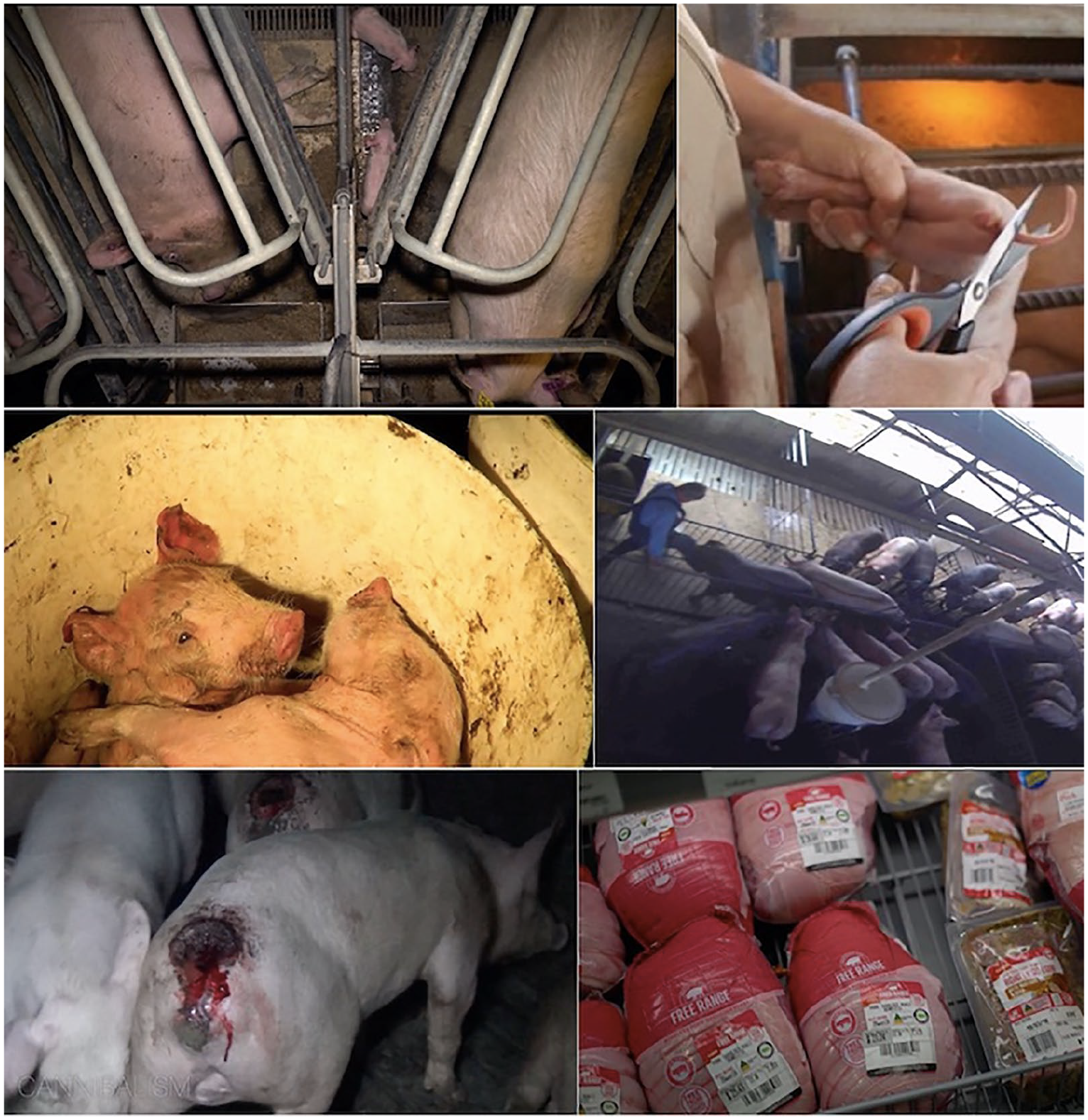
Screenshots from Dominion (2018) showing pigs ‘processed’ as packaged pork for consumption. Sow-stalls/farrowing-crates and tail-docking (without anaesthetics) are legal animal welfare practices in many countries. Students considered this an acutely painful and traumatic process, but producers argue it prevents tail biting (a behaviour indicating distress).
The visually evocative nature of business-as-usual in Dominion opened up the possibility for responding to the suffering that is near us (in our everyday food decisions) as well as the suffering that is far away yet equally hurtful and potentially more problematic (for the animals and humans directly affected). The following excerpt sums up the call towards prompting positive action: We believe that in our apparent superiority we’ve earned the right to exercise power, authority and dominion over those who we perceive to be ‘inferior’ for our own short-sighted ends. It is a justification that has been used before; by the white men to enslave the black or to take their land or their children, by the Nazis to murder the Jews, by men to silence and oppress women. Are we doomed to repeat history over and over? Does this superiority-complex, this selfishness define who we are as a species? Or are we capable of something new? (Joaquin Phoenix, narrator in Dominion, 2018).
When bringing up this issue of animal suffering in food practices in a social setting outside the classroom, one student reported being pleasantly surprised that ‘everyone was supportive’ of discussing the topic. She reflected on the shared responsibility of being courageous to speak up and raise questions about food ethics as well as the responsibility of business professionals to be more mindful of suffering in decision-making and processes. Embodying the role of a moral agent (Moody-Adams, 1994) with a moral responsibility to shift societal affected ignorance (Schwartz, 2020; Williams, 2008), she stated that, ‘we should all do something about this!’ Another student’s apparent motivation for positive action stretched to his professional interests as he hoped to undertake a master’s thesis to create positive impact for animals in business. From these comments and observations, it appeared some compassionate responses were prompted as participants moved beyond initial (distressing) emotions and some used their passionate emotions (such as anger) to fuel motivation for action and change.
While our class had focused particularly on life-depleting, objectionable and arduous elements of the food production industry, the intention was to use empathetic experiences of suffering to bring about positive learning through increased awareness of the hidden realities. Such awareness might empower positive action, or at least promote informed decision-making and normalise discussions of animal ethics as a topic of concern in business education. Fierce compassion provides a pedagogic approach for discussing difficult topics and in the following section we reflect further on our case and draw out our main contributions.
Tackling a world challenge: Discussion and conclusion
The rate of animal slaughter is rising due to an exponential increase in the global demand for meat (FAO, 2021). In addition to the problem of animal suffering, the scale of producing animals as food has grave environmental consequences such as biodiversity loss, deforestation and climate change (Poore and Nemecek, 2018). Tackling such a world challenge is difficult. Yet this was the very problem our pedagogic approach aimed at addressing in focusing on a large-scale issue of high urgency affecting animals, but also humans and the environment. At the outset of our article, we posed three interrelated questions; how teachers and learners might engage with potentially uncomfortable realities to appraise the issue of animal food production and consumption; how to consider the rights and experiences of nonhumans within a disciplinary area that focuses primarily on humans and whether and how activism might be used to augment teaching experiences (without losing critical rigour).
Through a combination of film, scholarly literature and discussion, we addressed the affected ignorance of the topic (Schwartz, 2020; Williams, 2008) with engaged scholarship (Hoffman, 2021b) as a form of academic activism. We used a critical animal studies perspective to challenge the socially-sanctioned speciesism 4 resting on ‘the justifications and cost-benefit analysis provided by the [food] industry’ as well as ‘the physical and psychological distance created between the consumers and the sites of animal slaughter’ (Gröling, 2014; 89–92). As the uncomfortable truth of what lies behind sanitised packaged animal products in our supermarket isles is hidden, change is difficult if the issues are not acknowledged or implications well understood. When it comes to discussing animals in the food industry, the animal interests are often lagging behind environmental or human health reasons despite it being the animals who are foremost and directly affected.
Creating a future that respects multiplicity and the interconnected diversity of life requires some activism: as academics, we must rise to the task of critically engaging with hidden realities and difficult topics that may challenge taken-for-granted behaviours and comfort-zone thinking. Academic privileges come with a moral responsibility to invite a critical yet positive inquiry towards a better future for all involved. Yet living up to such a responsibility requires a degree of fierceness. This is our main contribution to business education: presenting the pedagogical approach of fierce compassion.
The three layers of fierce compassion comprise courageously witnessing, inquiring with empathy and prompting positive action. Each of these steps require emotional labour and indeed courage on the part of teachers and students to face uncomfortable, unpleasant or potentially hurtful images and concepts (Cavanaugh, 2000; Simpson and Berti, 2020; Sinclair, 2000). It was interesting, then, that despite some strong viewpoints emerging in the classroom, there were no negative issues reported in the end of course feedback. Indeed, our overall experience suggests that discomfort was pedagogically useful as this stimulated critical reflection and, for some, new thinking and care (see also Fenwick, 2005; Hagen et al., 2003; Tsui, 2013). For some participants the sadness, anger and shock of Dominion prompted a desire to raise greater awareness among peers, augmented by their exposure to scholarly materials – a unique framing for many who might have previously seen activist material but not scholarly positioned. Others expressed a desire to change their own consumption habits (and challenge those of others). A small proportion of the participants appeared more entrenched in extant viewpoints and norms, although articulating these in reflective ways. It was difficult to predict the outcomes of the experience on students and faculty from the outset. Our follow-up interviews revealed both an appreciation and a rejection of a contested topic which could have negative impacts on those involved, not least those in facilitation roles. However, including a difficult topic such as this in business education is a prerequisite of academic activism (Petersen and Barnes, 2020) although it needs to be coupled with courage (Worline, 2012) and self-introspection (Ellis, 1999) as well as self-care (Neff, 2021).
Embracing rather than screening emotional vulnerability (Jones et al., 2020) can then stimulate a practical and intellectual experience that generates learning. The aim was to change thinking about food by drawing on the theorisation of compassion in management studies (Frost, 1999) and to challenge social and economic norms while making silent suffering visible. Scholar-activism (Hoffman, 2021a, 2021b; Richter et al., 2020) provided a carefully scaffolded approach to stimulate discussion and potential change towards reimagining human-animal relations through a relational understanding of equality.
Educating business professionals in values and behaviours that are rooted in sustainability (Ergene et al., 2021: 5) – as in the case of food production and consumption – is increasingly urgent. How do we inspire more ethical and responsible behaviours? How can we train care and compassion in ourselves and others? In this article, we have suggested that practical everyday topics, such as food, can be useful to open up discussion around ethical perspectives of human-nonhuman relations (that include care and justice) along with entangled ecologically detrimental practices involved in animal industries (Sayers et al., 2021). In our application of it, fierce compassion complements positive organisational perspectives which acknowledge the need to notice suffering, show courage in difficult situations and set wrongs right – and also embraces critical management perspectives which scrutinise organisational and institutional power structures. It is important within fierce compassion that teachers and learners recognise that acts of compassionate noticing and understanding in immediate personal surroundings must not mean overlooking or ignoring the more distant and often challenging aspects of systematic suffering. And, by extension, that systematic and structural ills do not absolve individuals from the responsibility for compassionate action as moral agents with personal choice (Moody-Adams, 1994; Williams, 2008). Beyond an everyday issue such as food, fierce compassion has value for teaching different complex issues because, as critical animal scholars suggest, forms of domination (human, nonhuman animal and nature) are often mutually reinforcing and propagating through intersectional systems of oppression (Gigliotti, 2017; Matsuoka and Sorenson, 2018; Taylor and Twine, 2014), creating social injustice and suffering. Other difficult topics may include modern day slavery, mass incarcerations and the death penalty, biodiversity loss and wildlife exploitation, animals in entertainment, tourism and leisure, live animal export and transport, (un)sustainable forestry and land management and issues related to structural societal inequalities of marginalised human groups including gendered, racial and geographical imbalances.
As activist scholars and teachers, we seek real-world impact with fierce compassion. Fierce compassion provides the scaffolding for such an endeavour towards compassionate action, drawing energy and value from activism while supporting the reflective and discursive capacities of those involved, all within the business academic curriculum – ‘so often devoid of any feelings’ (as one of our students put it). It is necessary, however, to acknowledge some limitations in our study. First, this was a small-scale study on a specific topic of injustice, and it is important to extend fierce compassion to a wider spectrum of contentious topics. While business ethics and sustainability courses often address moral dilemmas, we call for a more radical restructuring of business education (Ergene et al., 2021) influenced by a posthumanist agenda across all subjects to make a positive difference in this ‘decisive decade’ of climate action for systems change (Besharov et al., 2021). We need to act now, to cultivate perceptual change of what matters for business, rather than await top-down business pedagogical changes.
The second limitation of our study is regarding longer-term implications. It is not clear whether witnessing suffering and discussing animal ethics within a course like this had any lasting effects on individual behaviour or thinking nor whether or how this would be translated in a professional role. We were not able to track the legacy of our teaching. This prompts a call for longitudinal studies on fierce compassion, academic activism and managerial outcomes. We noted that some students seemed to take actions immediately following their class (e.g. disseminating their knowledge more widely) where others had a timeless commitment to changing their values. Third, and largely due to limitations of available teaching time, the class did not dwell sufficiently on the positive aspects of economic activities that may offer potential solutions to animal suffering in food production such as the rise in alternative food proteins (though this was the topic of the course taking place the following year). Here, we consider there to be a need for developing new learning materials on sustainable forms of businesses that include the thriving of all species. Hence, we call future research to further consider how we as teachers can support students towards innovative solutions to grand challenges while as activists, we can inspire positive action and real change?
To conclude, this article has explored teaching a complex social justice issue in the business school, an experience that opened up a useful discussion that led some to consider behavioural but also cognitive change on ‘whose suffering matters’ and what is of concern for business students and professionals. Bauman (2020: 101) calls for ‘planetary pedagogies and curricula. . .an education system. . .in the post-humanistic world: one in which the truth, goodness and beauty is hitched towards the thriving of the planetary community and not just the human. . .growing the ethical character and virtues needed for the health and well-being of the planet’. We propose fierce compassion with its courageous witnessing, emphatic inquiry and prompting positive action as a way forward. When we learn to witness – acknowledge, discuss openly and reconsider systems or actions which create suffering of societally disadvantaged human and nonhuman groups – this brings validity to topics that may seem unpopular or unspeakable today, but which rely on evoking the peaceful, compassionate and just aspects of humanity. This is thus our response to whether ‘we are capable of something new’ (as called for by Dominion): Stop valuing some life over other – whether black or white, human or animal, like or unlike – in order to create a more inclusive and just future. While we recognise that judgements about moral rightness and justice are somewhat subjective, suffering is not; thus, critically examining taken-for-granted food praxis has a wider applicability for understanding the interconnectedness of humans and animals. In order to create a post-anthropocentric business agenda, it is our contention that, as educators, we can and should pursue difficult, hidden, controversial topics in the business school that may inspire courage, reflection, empathy and action when blending critical and positive perspectives. Fierce compassion invites activist engagement with social justice issues towards business pedagogy that is inclusive and respecting of the multiplicity of life (Sayers et al., 2021). Time is short – both for scholars and activists – in tackling world challenges that threaten the earth. How we respond to such challenges defines who we are and the type of world we want to live in. Can we create a business society which takes on a fiercely compassionate engagement with social justice topics to create positive changes benefitting all organic life-forms: human and nonhuman animals alike?
Footnotes
Acknowledgements
Thanks to the creators of Dominion who courageously risked their freedom and wellbeing to document the hidden animal realities. A special thanks to Executive Producer, Chris Delforce, for allowing us to use these materials in our article. Much gratitude and thanks for the kind support of the editor, Professor Arne Carlsen, and three anonymous reviewers whose comments greatly helped to develop this article. Lastly, thanks to our students and co-faculty for engaging in this topic.
Funding
The author(s) received no financial support for the research, authorship, and/or publication of this article.
