



Abstract
This article examines entry into paid sex work in Spain, comparing those people who entered sex work by choice and those who were coerced. There is a dearth of research that focusses on documenting the circumstances and conditions in which women engage in commercial sex work in Spain and on examining their opinions about current or planned legislation to regulate sex work. The article is based on a cross-sectional study using a sociological survey of people who work in indoor commercial sex, which is the least visible form of sex work in the Spanish context and about which we have the least information due to stigmatisation, both of the activity and of the people involved. This article considers the circumstances and working conditions of sex workers, and their views and position with regard to the legal framework for this activity. This focus is important at a political juncture in which a policy of criminalisation of sex work is being considered in Spain.
Introduction
The provision of commercial sex is not a homogeneous phenomenon, and highly varied circumstances exist among people involved in the different sectors that make up the sex market in Spain. I distinguish between ‘sex worker’, by which I mean people who choose to work in the sex industry, or who resort to this activity because their life conditions or circumstances do not allow them to access other forms of employment, and ‘victim’, by which I mean women who entered into sex work involuntarily, through coercion. Women engage in commercial sex work in a range of different circumstances, and are a very heterogeneous group, with a diversity of motives and positions. It has been suggested that in sex work there are three different scenarios: choice, circumstance, and coercion (Boyd, 2017), which leads to two forms of entry into paid sex work: by choice or by force/coercion. There are many studies focussing on Spain and other European contexts that discuss women who do sex work (Sanders et al., 2009), few studies have extensively gathered the opinions and voices of women sex workers. This study aims to provide empirical data, in response to a lack of such research in Spain, where the terms ‘sex worker’, ‘prostitute’, ‘prostituted woman’, and ‘sex trafficking victim’ 1 are sometimes used interchangeably, as though they were synonyms.
Studying the debates and the image of the women involved in this activity both in Spain and in other countries in Europe reveals a heterogeneous picture of commercial sex (Boyd, 2017). Sex work can be considered an activity of free choice, an exploitative occupation, or a serious offence against people (Vijeyarasa, 2010). Some feminists and activists treat sex work and trafficking as synonymous (Doezema, 2005; Raymond, 2004). From this perspective, sex work is not seen as a labour opportunity or as an income-generating option for women, because it is considered an activity that always victimises them and engenders violence against them (Farley, 2006). However, Catherine Hakim (2010) has argued that women possess greater erotic capital (a fundamental element of social interaction and mobility), which gives them a competitive advantage over men, enabling them to use their sexuality to their benefit. Hakim (2010) points out through surveys that demand for sex is higher in men than in women. The latter have the power to exploit and manage their sexuality by taking advantage of the commercialisation of sexual services. Meanwhile, patriarchy and conservative moral values are forces that impede women from developing and making the most of this advantage. In this regard, Ruiz (2017) and Izcara (2020) show how women who have been the victims of trafficking, or forced sex work in Central America, return to sex work even after being freed from coercion because it was the most remunerative occupation that they could find. Those women with less erotic capital – lost due to age – look after and surgically transform their body as a tool of their trade, and, therefore, the source of their income. While some women saw an opportunity for social improvement through sex work due to their earnings, others deemed it to be an undesirable medium but the best and only one that they had at their disposal to survive (Izcara, 2020).
Sanders et al. (2009) have shown that not all women start in sex work as a result of coercion. Particular vulnerabilities and circumstances lead certain women to decide to carry out this activity. Among the vulnerabilities mentioned are drug consumption, sexual abuse, poverty, homelessness, family conflicts, and being an adolescent with many limitations (Cobbina and Oselin, 2011; Footer et al., 2020; Karamouzian et al., 2016). Of the circumstances that may drive women to sex work, along with economic necessity and a shortage of options in the labour market, there is the fact of having contact with friends or people who are already in the sex industry and may have an influence on their decision. Studies from Spain, other European countries, and the United States have highlighted that the main reasons mentioned for choosing sex work based on an assessment between cost and benefit included the possibility to earn more money in less time, and opportunities for many young women to pay for their studies (Bernstein, 2007b; O’Neill, 1997; Sagar et al., 2016).
It should also be considered that there are sociocultural realities, for example, in some cities in Italy and Portugal, in which the concept of sex work may not be appropriate as such a concept is related to a professional view of sexual activity. The relations that sex workers offer their clients are often very diverse, and erotic, intimate, romantic and friend relationships occur, which a label of professionalised ‘sex work’ fails to encompass. In this regard, the concept of ‘erotic transaction’ has been created, to bring together all those interactions that involve more than sexual practices (Ruiz, 2017). Furthermore, it has been documented that one of the most commonly offered services by escorts is a ‘girlfriend experience’, which is not based exclusively on actual sex, but concerns the development of greater emotional and time input with clients (Bernstein, 2007a; Milrod and Monto, 2012; Milrod and Weitzer, 2012).
A significant proportion of studies on sex workers tend to be qualitative with small sample sizes, in Spain, the United Kingdom, the United States, India, and in systematic review studies (Deering et al., 2014; Platt et al., 2013). Those studies with samples that approach a larger number of sex workers are concentrated predominantly in the field of health and criminology, meaning that they are clinical or captive samples, and not representative of all women working in commercial sex. These studies deal with the following issues: determining prevalence of diseases or circumstances of psychological or mental health; criminal or criminological behaviours, whether deviant or pathological (Cusick, 2006); and the consumption of drugs (Cusick, 1998; Pérez-Figueroa et al., 2020). Fewer in number are those studies that handle samples of people who make a living from sex work, in which they describe the characteristics of their lives, without being pathologised or seen as a social problem. Some studies have shown the conditions in which commercial sex is undertaken, revealing the situations of risk and safety in the activity (Sanders, 2004). Others have highlighted working conditions that lead to a greater submission and alienation of workers, affecting their well-being (Oso, 2016). Another aspect mentioned is that sex workers are a population that face a higher prevalence of violence, which impacts negatively on their health (Deering et al., 2014; Pando et al., 2013). Focus has also been given to the migratory paths of many sex workers, and how they achieve their migratory plans based on different visions of sex work (Agustin, 2007; Oso, 2010). Finally, other studies have centred on the stigma sex workers suffer and the ways they confront it (Koken, 2012; Liu et al., 2011; Phillips and Benoit, 2013).
One aspect that has been much debated is the question of the most suitable legal system for dealing with sex work in societies today (Cho, Dreher, and Neumayer, 2013; Weitzer, 2007) have stated that the legalisation of sex work increases the flow of trafficking, based on the quantitative analysis of 150 countries and the study of three cases: Germany, Sweden, and Denmark. When legalised, the sex work market is initially in need of women to meet the growth in demand that comes with legalisation. When this demand is not met, trafficking increases, as occurred in Germany, according to their analysis. Nevertheless, they consider that the sex market, in the long term, when it becomes stable, tends to replace forced with voluntary sex work.
However, Jakobsson and Kotsadam (2013) have shown that softer laws make human trafficking to a country more profitable. They find that there is a correlation between countries with more restrictive sex work laws and low levels of trafficking, or a lower number of trafficking victims in those countries. Yet a criminalising policy that prohibits sex work has worse consequences for the people who work in the sector, with regard to stigmatisation and risk. Certain studies have linked the legal system with the conditions and health of sex workers, highlighting very negative effects when sex work is criminalised (Vanwesenbeeck, 2017). When sex work is illegal, there is less access to health resources for people working as sex workers (Harcourt et al., 2010). Decriminalisation of sex work makes it easier for sex workers to access HIV care and prevention services, reduces violence and increases safety (Shannon et al., 2014). A systematic review (Platt et al., 2013) highlighted that criminalisation caused greater harm for sex workers, and above all created barriers to accessing healthcare services. Safety, health, and rights are better guaranteed in legal systems that do not criminalise or prohibit sex work.
There are no recent studies in Spain that describe the population of sex workers, their working conditions, and their opinions about current or planned legislation. The two most relevant studies are: (1) Malgeseni (2006), who estimated the number of people in sex work in Spain at that time to be 113,426, with those workers who solicit on the street being the smallest group, while the largest corresponded to people working in brothels and apartments and (2) the study by Sanchis and Serra (2011), which focusses on one region in Spain (Valencia), and estimates the number of people who offer sexual services in the state to be 100,000, and calculates their economic volume. That study also shows outdoor sex work to be the smallest sector but considered those working in brothels to be considerably more numerous than those in apartments. Neither study includes the opinions of sex workers nor describes their working conditions. There is, thus, a significant dearth of research that focusses on documenting the circumstances and conditions in which women engage in commercial sex work in Spain. This study aims to help reduce this lack.
The objective of this study is to explore: (1) entry into paid sex, and more specifically, to compare those who started in the occupation by choice with those who were forced into it, and their reasons for entering sex work; (2) working conditions and length of time in sex work; and (3) sex workers’ views and position with regard to the legal framework for this activity.
Methods
This is a cross-sectional study using a sociological survey of people who work in indoor commercial sex. I began by collecting replies to the questionnaire personally in brothels and sex work apartments, but the sudden emergence of the global coronavirus disease-19 pandemic meant I had to use online methods. The lockdown and travel restrictions made it difficult to collect responses in situ.
The questionnaire was distributed from February 2020 to March 2021, for which 45.3% were collected via the Internet and the rest in person in three Spanish cities: Barcelona (6.7%), Madrid (15.3%), and Valencia (32.5%). Difficulties with travel due to the pandemic did not make it possible to collect an equal sample in each city, as was originally planned, because these cities have the highest volumes of sex work in Spain. The questionnaire took 8 minutes to complete and for the online version, the ‘Google Forms’ tool was used. The questionnaire comprised 34 questions: 10 sociodemographic questions, 4 on initiation into commercial sex, and the rest on how the activity was carried out (clients, types of service, costs, earnings, perceptions, place of exercise, expenses, and hours of dedication). A pilot was conducted with 36 sex workers, who are not included in the sample analysed, a few months prior to the study to verify that the questions could be understood, and they were suited to the target population. As a result of the analysis of this pilot, the terminology used was modified to take into account differences in expressions used by women from countries in Latin America, who were not used to some of the expressions used in Spain. For example, the way in which the activity was referred to caused problems. The women who worked by choice said that they did not do sex work, but that they were sex workers. For others, however, ‘sex work’ bothered them because they did not see it as a job, and they were doing it because they had no other opportunities for employment. I chose to use both terms – sex work or prostitution – on the questionnaire, so that everyone would feel included. Below are some of the responses sent to the email address provided: Hello good afternoon, my name is Cris (work name). I was a prostitute for 6 years, I left the profession for 4 years and now I’ve come back to it. I would very much like to participate in this survey because there are indeed many things that are talked about that are not true. I’m a woman, mother, wife, prostitute and ‘owner’ of a prostitute house where what I really offer to my girls is a possibility of not going through the hell that I went through in my time, in a world surrounded by drugs. Obviously, I have a family and I would like to participate, as long as it is completely anonymous. ****************** I’m very serious about my work. I do not ‘work in sexual services’. I am a sex worker. I won’t participate in a survey that uses euphemisms to refer to my work. Sex work is work. We are tired of paternalisms, hypocrisy and moralizing. ****************** Hello! My name is Agatha and I’m a sex professional. If you want, send me the link to answer the questionnaire! Thanks
There were 568 participants, but 15 questionnaires were rejected because they were incomplete, thus making the final sample of 553 people who sold sexual services in Spain, disaggregated by sex/gender: 85% (470) women, 8% (44) men, and 4.2% (23) transexual (2.9% no response). At the end of the survey, there was a request for the participants’ personal phone number, to carry out a subsequent interview, if they wished to give more detailed information on the topics of the questionnaire. Only 15.2% (83) of respondents gave their phone number, and in 10 cases, they offered their email address.
Main variables
The main study variables were as follows:
Sociodemographic variables: sex, age, country of birth, duration of residence in Spain, children, partner, level of education.
Circumstances of entry into paid sex: by choice or by coercion; reason for starting sex work; age when starting sex work.
Working conditions: valuation of sex work (0–10), sex work before coming to Spain, time in sex work, number of working hours per day, number of days of rest per week, number of clients per week, income per week, violence from clients, if they had received any help from their customers, intention to register for social security, services requested by clients.
Possibilities of leaving sex work: intention to leave.
Awareness of serious situations: knowledge of minors in sex work, knowledge of coerced women in sex work.
Opinion on legal regulation of sex work.
Analysis
Beginning with a descriptive and bivariate analysis with the IBM SPSS Statistics 24 programme, I analysed all of the variables. Using contingency tables, I then carried out a comparison between two groups that were dichotomised in the variable, When you started to charge payment for sexual services, were you forced?, with the answers 0, no, and 1, yes — or, in other words: 1, coerced – 0, by choice. As a test statistic, I used chi-square, with a reliability level of 95%. Using the variables on sexual services demanded by their clients, I conducted a factor analysis of the principal components using Varimax rotation with Kaiser normalisation, meeting the requirements for this type of analysis (KMO = 0.729; Bartlett’s test of sphericity (approx. χ2 = 690.230; p = .000). Finally, I employed a binary logistic regression model with the aim of achieving a multidimensional view of the variables that significantly influenced the condition of coerced or free choice. This is one of the principal statistical techniques used for classification into two groups, where the classification variable is a dependent binary variable (1 coerced, 0 by choice). Statistical assumptions were controlled for the relevance of the regression analysis.
Participant characteristics
The final sample analysis consisted of 553 participants. Of these, 32.7% (181) were born in Spain and 66.4% (367) in other countries (no response 0.9%) – 19.5% (108) Colombia, 15.4% (85) Venezuela, 4.3% (24) Brazil, 16.8% (93) other Latin American countries, 3.1% (17) Romania, 2% (11) from other Eastern European countries, 2.5% (14) Morocco, 1.4% (8) countries in the European Union, and 0.5% (3) other countries (4 no response). The average age was 29.9 years old (standard deviation (SD) = 7.8), ranging from 17 to 68. The average time of residence in Spain among the foreign participants was 6.9 years (SD = 7.3), ranging from 6 months to 30 years. In terms of education, 2% (11) had received no formal education, 4% (22) had received primary education, 20.4% (113) compulsory secondary education, 46.1% (255) baccalaureate or professional training, and 26.6% (147) had studied at university (0.9% no response). Regarding their personal situation, 44.9% (243) had children, 27.7% (153) lived with their children, while 31.3% had a partner (173). The self-assigned physical appearance score (0 represented low value and 10 represented high value) reached a mean of 8.9 (SD = 1.5).
Entry into sex work
Regarding entry into sex work, 13.2% (73) were coerced, with no significant differences by sex, age, country of birth, or nationality. Of the foreigners, 26.9% (149) had worked in sex work before arriving in Spain. The mean age of entry was 23.4 years old (SD = 5.6), ranging from 12 to 55, without significant differences in the origin of respondents. Those who were below the age of 18 when they began sex work represented 5.5% (n = 28) of the sample, of whom 25% (n = 7) were forced. Regarding reasons for entering into sex work, the most common was the need to earn money to live (68.4%, n = 378), followed by curiosity and wanting to try it (30.6%, n = 169), regarding it as the best option (25%, n = 138), being encouraged to do so (12.5%, n = 69), having to pay off a debt incurred to travel to Spain (7.2%, n = 40), their partner’s influence (2.4%, n = 13), being deceived (1.3%, n = 7), and because of drug abuse (1.3%, n = 7).
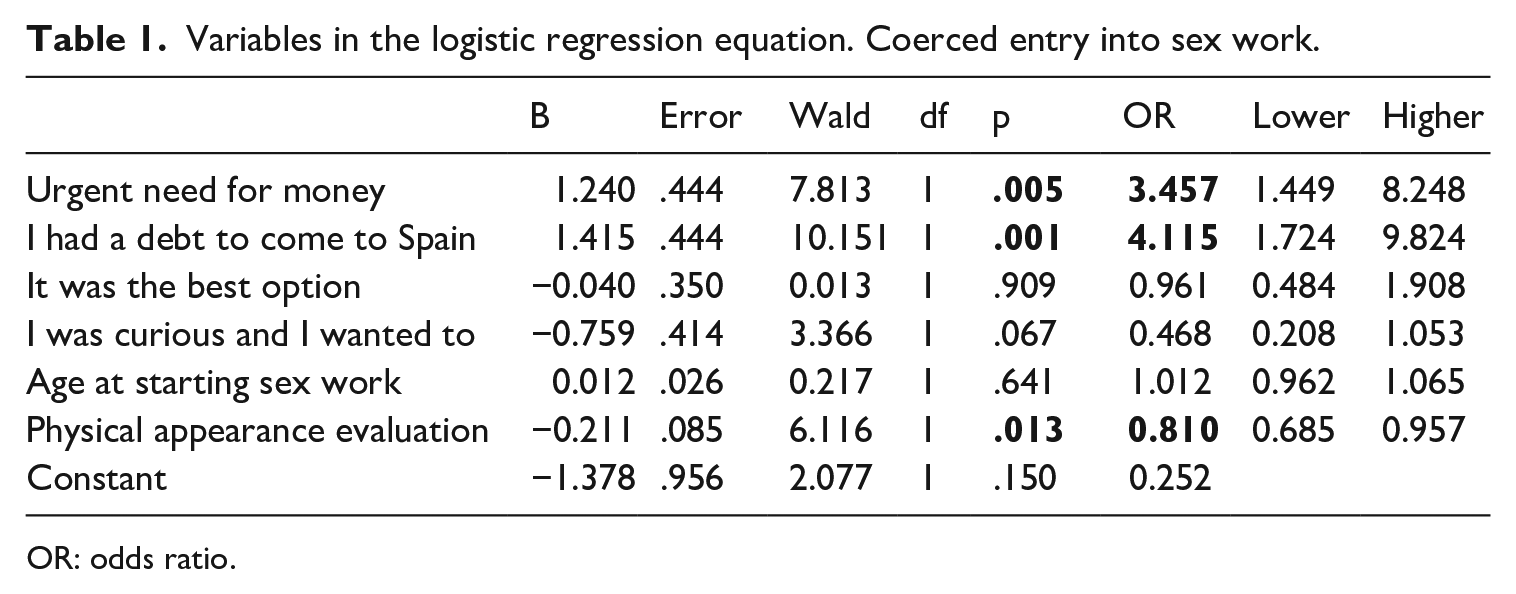
The results of the logistic regression analysis on coerced entry into sex work are explained by three variables that are significant. Coerced entry into sex work is related to a probability of risk that is four times higher for those who incurred debt to travel to Spain, and 3.5 times higher for those who needed money urgently. Also, low self-esteem regarding physical appearance proved significant in relation to forced entry into sex work.
Differences in managing sex service
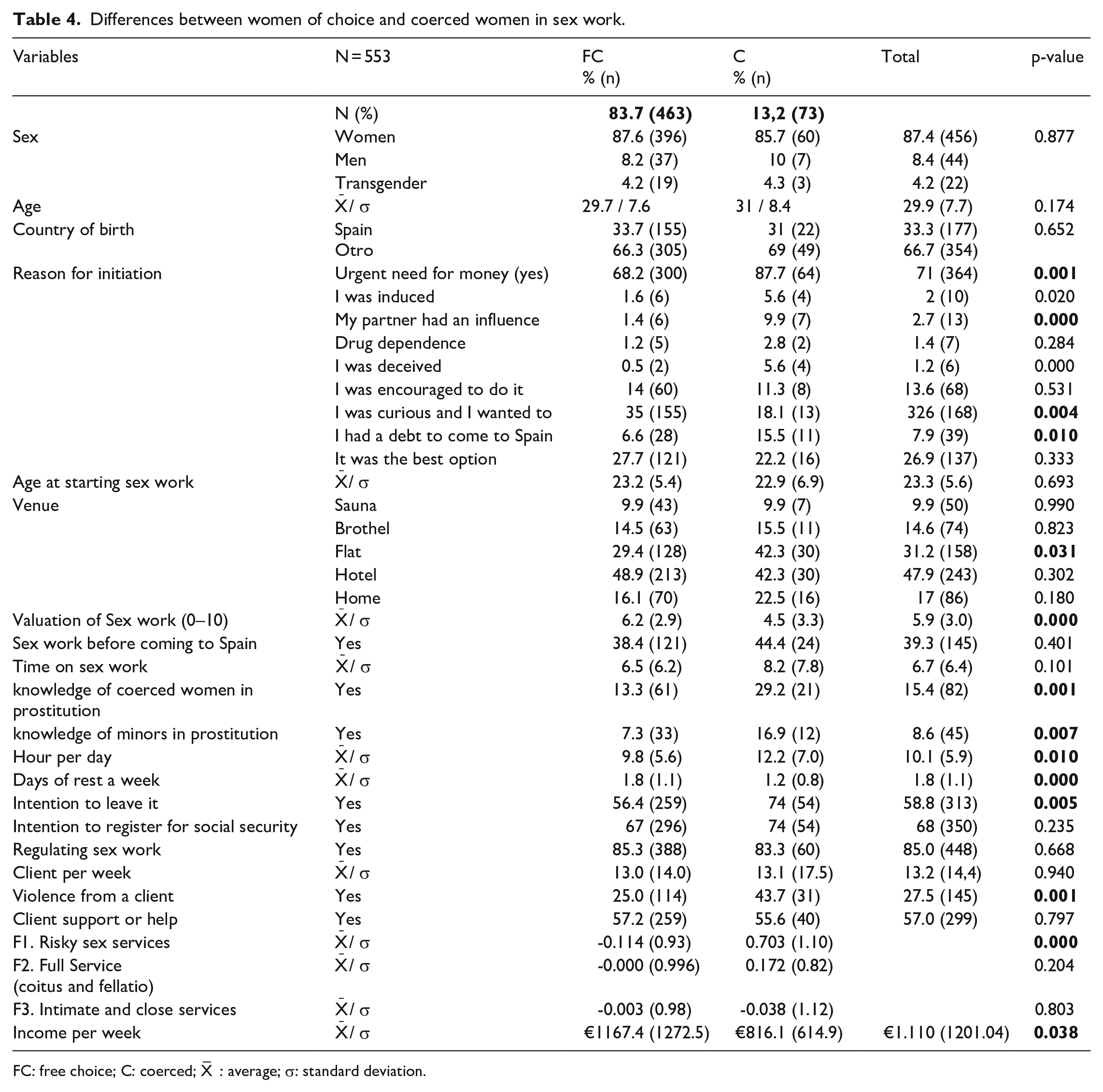
I have found some significant differences in the variables related to how sex work is undertaken (Table 1). In this regard, those who were coerced into sex work carry out their work in apartments to a greater extent than in other venues. They also had a lower assessment of sex work, were more likely to know other women who were coerced or were minors working in sex work, worked more hours per day on average, and had less rest during the week. Furthermore, they have suffered violent episodes at the hands of clients to a greater degree and earned less income per week on average. However, there is no difference in the number of clients per week, or in having had some kind of help at any time from clients.
The research participants were asked what sexual practices were requested by their clients and which practices they did not do. With the first variable, I carried out a factor analysis of principal components that explains 50.5% of the variance, and the variables were grouped into three factors (Table 2).
Variables in the logistic regression equation. Coerced entry into sex work.
OR: odds ratio.
Rotated component matrix.
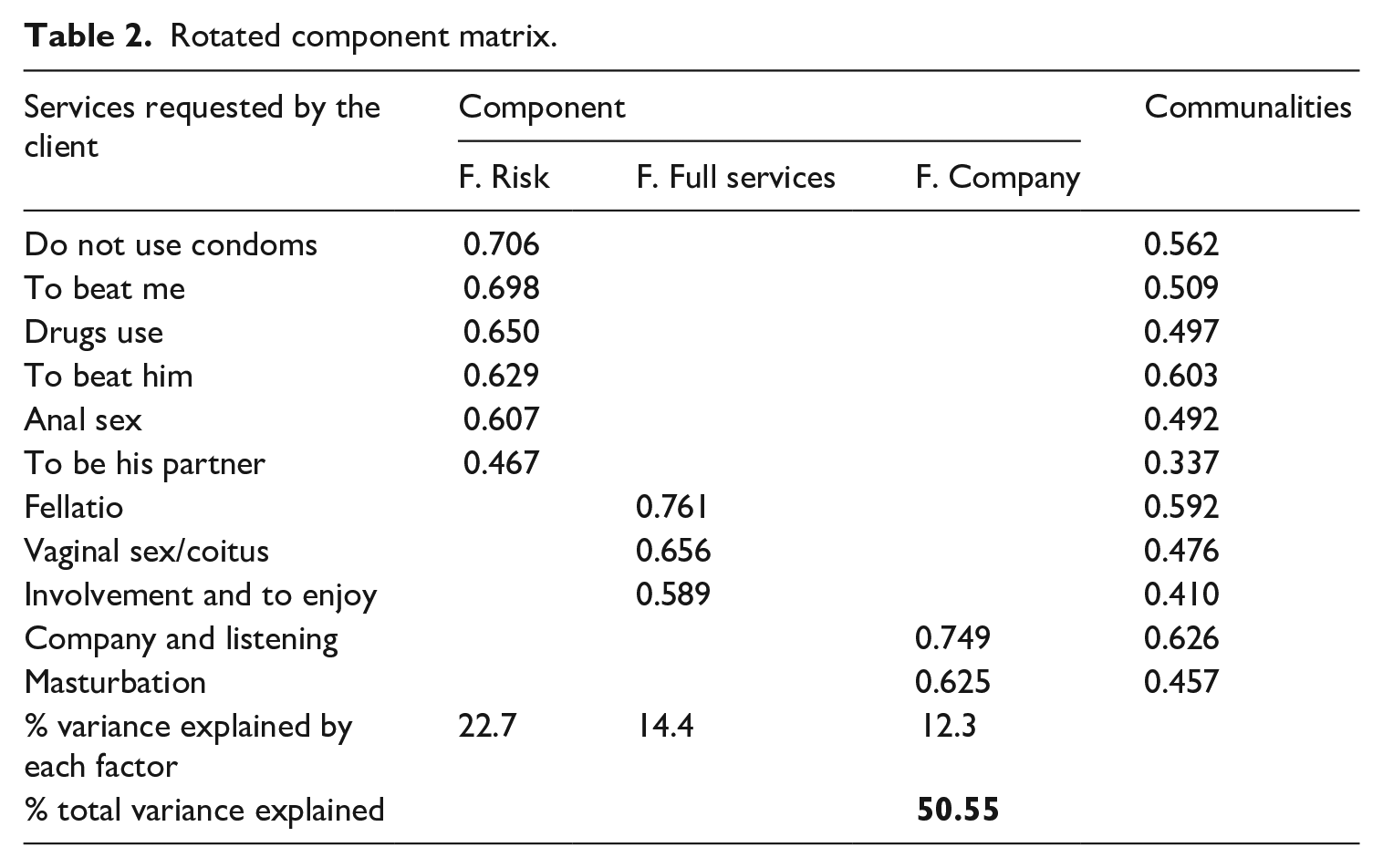
The first factor, which I have called Risky sex services, grouped the variables as follows: not using condoms, being beaten, drug use, beating the client, anal sex, and being the client’s partner. I called the second factor Full service, which consists of the variables fellatio, vaginal sex, and personal involvement and enjoyment. The final factor, called Intimate and close services, brings together the variables keeping company and listening, and masturbation.
Regarding the services that they would not do, the following were indicated: being beaten 58.4% (323), not using condoms 53% (293), anal sex 46.1% (255), drug use with the client 45.9% (254), being the client’s partner 35.1% (194), beating the client 33.3% (184), fellatio 6.7% (37), personal involvement and enjoyment 5.2% (29), keeping company and listening 4.2% (23), coitus 5.8% (32), and masturbation 1.8% (10).
Thinking about the future
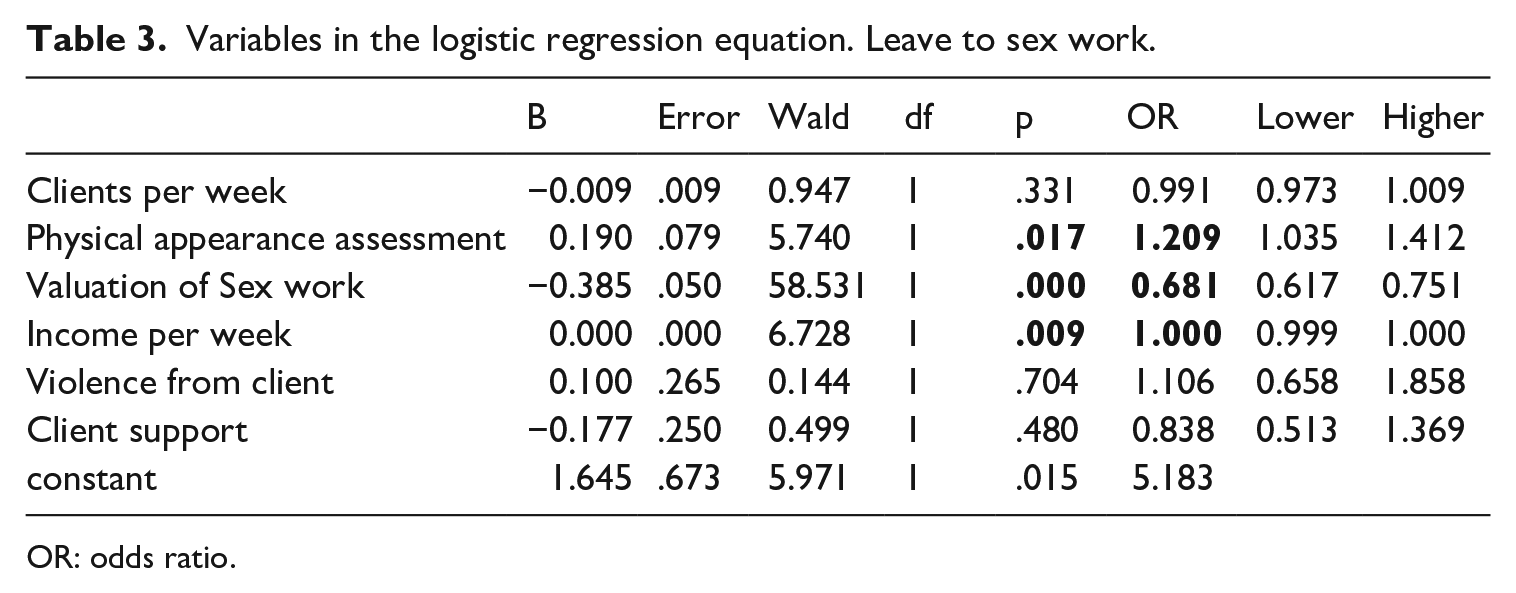
The people who were coerced into sex work showed a greater intention to abandon it than the free-choice group (Table 3). No significant differences were found between the two groups regarding the intention to sign up for social security as sex workers, or opinions on the regulation of sex work. The majority of the respondents were in favour of regulation. There were no differences by sex/gender either, but there were differences according to country of birth. In this regard, 90% of those born in Spain agreed with regulating sex work, compared with 82.3% of those born in other countries (p = .021).
Variables in the logistic regression equation. Leave to sex work.
OR: odds ratio.
In the logistic regression model, the intention to abandon sex work is related to the respondents’ perception of their physical appearance, their opinion of sex work, and weekly earnings, while help or violence from a client was not significant.
Finally, only 7.8% (41) had received help from a charitable organisation at any point, with significant differences between those who were coerced into entry (15.3%) and those who did so by free choice (6.6%). Further results can be found in Table 4.
Differences between women of choice and coerced women in sex work.
FC: free choice; C: coerced; X– : average; σ: standard deviation.
Discussion
Of the people surveyed, 13% indicated that they entered into commercial sex because they were compelled or coerced. I am aware that the sample analysed is not representative because it is extremely complicated to obtain a sample that represents people in sex work. However, this percentage is in line with other studies carried out in Spain, which estimate that around 10% of the women undertaking sex work are victims of trafficking (Meneses-Falcón, 2019). Since the questionnaire did not ask about the source of the coercion, whether it was a pimp or a trafficker or someone else, the type of crime committed could not be determined. Victims do not form homogeneous groups; rather, highly varied situations can occur (Oso, 2010).
The data obtained break from some clichés about the people who are coerced into sex work. First, men and transgender people also stated that their entry into sex work had been coerced, with no significant differences, which means that it is not exclusively women who suffer this situation. International studies show that it is mostly women who are victims of trafficking, and only 8% of men and 2% of children in the area of Western and Southern Europe (UNODC, 2021). My data also show that the majority are women but men are present too. Obviously, women are the majority of victims, but it is possible that there is a gender bias here that makes men and transgender people difficult to see, for they do not always occupy the same contexts as women in the sex market. Above all, more attention should be given to minors. In this sample, there were no minors who were working in sex work at the time of the survey, but some of the respondents were underage when they entered sex work – more than 5%, in fact, and a quarter of those minors were forced into it.
Second, not all the respondents were foreigners, with no differences between those born in Spain and those of non-Spanish origin in relation to forced entry into sex work. An image prevails of women in sex work as victims, illegal immigrants who are compelled to work in sex work (Farley, 2006). The results obtained show that a third of the people coerced into sex work were Spanish and did not come from developing countries. Existing studies with samples of sex workers show that most of the people who work in commercial sex are foreigners in Spain, and in some other European countries the situation is similar, making up between 60% and 80% (TAMPEP, 2009). In this study, more than a third of those surveyed were born in Spain, a proportion that is far higher than in other studies. This discrepancy could be due to the fact the people in sex work who reside in the place where they work or who work in a sector of the indoor sex market are more hidden, as opposed to those born in other countries, who may be more visible. As I have mentioned, the collected sample includes people who do sex work in less visible settings, such as apartments, saunas, chalets, hotels, or their homes. Social stigma forces these people to remain hidden and keep the people in their environment unaware of their activity to avoid facing greater discrimination. Another factor that may have an effect is the economic crisis. In times and contexts of economic crisis, the number of people in sex work increases, particularly among Spanish women, who turn to this activity to support their families and to subsist (Meneses-Falcón, 2019). The stigma associated with sex work is the main source of negative consequences for sex workers
Third, the results, in line with other studies, indicate that the main motivation for entering the activity was financial in nature. Nevertheless, a third of those who entered into sex work by choice and almost 20% of those who were coerced stated that their motivation was liking the activity and being curious, which could lead to the interpretation that this activity is attractive to a sub-section of women. It is possible that financial earnings, along with significant erotic capital (Hakim, 2010), can explain this reason, as well as an attractive physical appearance, which can be important for obtaining higher earnings. The appraisal of their physical appearance had a high score in the whole sample. In other words, those in the sample who consider that they possess strong erotic capital make the most of it to earn a profit. Insofar as the women who do sex work feel satisfied, their working conditions are seen as acceptable and their self-esteem is high, and they are highly rated by their customers. They seem able to experience sex work as a worthwhile option for fulfilling their aims. In contrast, those women who entered sex work under coercion, and who suffered the negative effects of sex work to a greater degree, do not feel satisfied. For them, identification with the activity is different, because it becomes a circumstantial option brought about by a lack of opportunities.
There is no doubt that this activity is attractive due to the money that can be earned (Weitzer, 2009), and the results of the sample show a high average weekly profit, over a thousand euros, which attracts and traps women into maintaining the activity. It is an activity that is flexible, high earning and does not involve a large investment of hours compared with other jobs such as catering and domestic work (Begum et al., 2013; Curtis et al., 2019). Many of the people who are active in sex work would find it difficult to obtain employment with such a high salary. The minimum salary in Spain is €950 per month, and the unemployment rate in recent years has hovered between 18% and 20% (INE, 2020). The number of hours devoted to sex work is high, however, at an average of 10 hours a day, although in general not all of this time is spent with clients, as there are many idle hours spent waiting for clients to arrive (Cusick, 1998). This aspect differs from one of the attractive factors of the activity that has been mentioned elsewhere: that of high earnings and few hours of work (Sanders et al., 2009). It is also possible that these women devote many hours in a row to the job and then have longer periods of rest, as has been shown in the organisation of the plaza (‘spot’) sector of sex work (Oso, 2016), which would justify the stated longer block of working hours.
One highly important result that this study obtained is the knowledge that sex workers have of their colleagues, particularly of those who were coerced or who are minors practising sex work. In this regard, it has been suggested that the people who are in the commercial-sex market by choice could be good allies for identifying children and coerced women (Boyd, 2017), and the data from this study support this idea. If 15% can detect coerced women and 8% know of minors in sex work, this detection among peers could be extremely useful in the fight against trafficking, forced sex work and the sex work of minors. To achieve this, a climate of tolerance and consideration towards sex work is also required, with an inclusive attitude that differentiates it from crime, not seeing sex work and trafficking as synonyms, as some activists and academics do (e.g. Farley, 2006; and Raymond, 2004). One argument is that the conditions for practising sex work and its situation of illegality are what cause problems and harm to women and the community, not the activity in itself.
One frequent and unwelcome occurrence that has been highlighted in contexts of sex work is client violence (Deering et al., 2014). However, the results obtained here reveal that there is more support and help from clients than violent episodes. Thus, more than half of those surveyed had had experience of receiving help from their clients, compared with almost a third who had suffered some type of violence from them. In this regard, a typology of men who pay for sexual services has been established, and not all of these men act with violence or establish relations of objectification. A segment of clients wish to establish close relationships of friendship and company with the people who offer sexual services (Milrod and Weitzer, 2012), and these can become a source of mutual aid in many moments of life in the relationship between the two parties. It is interesting that only 8% have received help from a charity or nongovernmental organisation (NGO), because it shows us how in certain sectors of sex work, NGOs do not have much of a presence, compared with the street and more precarious sectors.
As is logical, the women who were coerced into the activity had experienced more instances of violence (44%), compared with those who did sex work voluntarily (25%). It has been suggested that the indoor contexts of sex work have more safety measures against violence than outdoor contexts (Sanders, 2004).
In Europe, there are different legislative models with regard to sex work (Di Nicola et al., 2005):
Abolitionism: This standpoint has traditionally meant non-intervention from the state except in some circumstances, such as street sex work, and it imposes punishment neither on the person who sells sex nor the person who purchases it, nor on those who run sex businesses (Poland, Czech Republic).
New Abolitionism: In this position, the state prohibits sex businesses and penalises buyers, but not the individuals who undertake sex work (Italy, France).
Prohibitionism: This bans the activity, and punishes and penalises both sellers and buyers, and businesses and brothels, generally by means of the criminal code (Lithuania, Sweden).
Regulationism: Sex work is regulated by the state, sex workers are registered and, in some cases, subjected to medical checks. Another similar option that has emerged in recent years is a legislative treatment that gives rights to sex workers, making them responsible for their own needs (Germany, Austria).
The majority of the sample surveyed were in favour of regulation of sex work (85%), although not everyone was prepared to register and pay social security, with the proportion lowering to 68% in agreement. In Spain, there is no regulation allowing a sex worker to sign up for social security. However, a minority have signed up for other personal activities to be able to receive social protection, although this is not easy. Who is allowed to register depends on decisions made by civil servants.
Understandably, the positive assessment of sex work is higher among those women who entered it voluntarily, compared with those who were coerced, whose score was below 5 – in other words, they did not give their approval to the activity. According to this result, almost three-quarters of those who were coerced hoped to leave sex work. Indeed, 60% of the whole sample declared their intention to quit the activity, due to it having a very high social and personal cost that framed their own and their family’s identity, particularly their children’s. Almost half of the respondents were parents and around a third lived with their children. As has been established, their families tend not to know what they do for a living, and the longer they remained in the sex industry, the more difficult it was to find an alternative occupation (Sanders et al., 2009), unless the money they earned was invested in future projects.
A large amount of the literature has focussed on sex workers’ health-risk behaviours, most specifically on behaviours related to possible sexually transmitted infections, including HIV. It was not part of this study’s aims to directly include this matter, although by collecting data on the most requested sexual practices, one can access this information indirectly. The factors obtained through the grouping of sexual practices that were requested by clients only revealed significant differences in the risk factor. Coerced women scored higher in this risk factor than those who engaged in sex work by their own choice. It is possible that coerced women had fewer options for choosing clients and sexual practices and had to deal with undesirable situations involuntarily. It has been stated that when the economic situation is bleak, prices for sexual acts fall, and sex workers undertake more practices without protection (Pando et al., 2013; Pérez-Figueroa et al., 2020; Shannon et al., 2014). We need to investigate whether coerced women are forced to undertake all types of sex acts against their will. In this regard, the services that support women who have been victims should focus on situations of risk and protection in sexual services, particularly when these women decide to continue sex work once freed, something that occurs among many victims, as Izcara (2020) has shown.
Limitations
This study has some limitations. The sample obtained is not representative of the population that engages in sex work in Spain. In addition, social desirability tends to influence the responses to surveys when dealing with complex or intimate topics, with a notable burden of stigma, and, therefore, some answers may be underestimated. Furthermore, some information was not investigated in this study, for example, what it was like to start in coerced sex work, or if at the time of the survey the respondent was experiencing any coercion.
Conclusion
This study breaks important new ground due to the methodology used. Generally, studies on sex workers in Spain tend to be qualitative, with small sample sizes. This research has collected data from a broad sample of sex workers who work in the indoor sector, which is the most hidden one and about which we have the least information. Stigmatisation of both the activity and the people involved in it is a powerful deterrent to cooperation, making access and information gathering a difficult task. Nevertheless, this study has been able to provide recent data for Spain, at a political juncture when a policy of criminalisation of sex work is being considered, without prior data that back or justify such a legislative choice.
This article presents findings from original primary data, which gather the opinion and circumstances of people who engage in sex work, and who are rarely taken into account. The results indicate that sex work is a choice for most of the respondents who work in the indoor sector of the sex market, in contrast to respondents from other sectors, such as the street, or lower levels of the sex market. The urgent need for money and incurring debt to travel to Spain were given as two variables that create high risk when entering sex work under coercion. The women who enter into sex work under some kind of coercion face less favourable conditions, with higher risk and lower expectations for the future. These differences need to be examined further, particularly to verify the origin of that coercion. We need further research with empirical data that can describe the diverse situations of sex work in different areas of the sex workers’ lives, and above all what they think about sex work and the legislation regarding it. Many of the feminist and academic debates on sex work and the legislation of it do not include the workers themselves. Taking into account the lives, opinions, views and positions of the very people involved in sex work would be an approach based on a gender and human rights perspective, which are both so frequently highlighted in sex work and trafficking debates.
Footnotes
Declaration of Conflicting Interests
The author(s) declared no potential conflicts of interest with respect to the research, authorship, and/or publication of this article.
Funding
The author(s) disclosed receipt of the following financial support for the research, authorship, and/or publication of this article: This Project is part of the National RDI Project, ‘VISIBILITY FOR THE VICTIMS OF HUMAN TRAFFICKING: acting against the trafficking of women for sexual exploitation’, subsidised by the Ministry of Science and Innovation of Spain, Reference: CSO2014-55209-P.
Ethical approval
This research project was approved by the Ethical Committee of the Universidad Pontificia Comillas of Madrid on 15 September 2014.
