



Abstract
This paper reports on findings from a framing analysis of 98 Australian online news reports published in 2024 about endometriosis drawn from a variety of news publications. Using an approach informed by framing theory, biocommunicability and Dan and Raupp’s systematic review of health news frames, the study includes deductive and inductive frames. The analysis reveals how in the news, endometriosis is represented as a cause of individualised pain and suffering that patient-consumers must address through self-advocacy and self-education. While articles did consider thematic framings through reporting of wider issues such as medical gaslighting in endometriosis related care and widespread diagnostic delays, these issues were discussed as regrettable yet ultimately normal consequences of individual medical practitioner failures. Further, these issues were often told through narrative stories and attached to actions everyday people can take to address them, rather than considering wider, systemic-level changes or proposed solutions that could be addressed. Along with this prevalence of narrative reporting, and while pain was foregrounded as a serious symptom, infertility caused by endometriosis was commonly reported despite existing research which highlights the detriment of colluding these two issues. These findings echo existing media research, demonstrating that when reported in news media, endometriosis remains discussed as an individual condition, focused on symptoms such as fertility, and solutions related to self-advocacy. We argue that through this there is an agentless responsibility in this news reporting of endometriosis; while systemic issues are discussed, systemic solutions remain unaddressed, and the audience is left unknowing what to do beyond individual solutions.
The media is a key context wherein discourses of health, illness, and health risk are socially constructed. Health news plays a particular role in this. Audiences turn to trusted news brands to make sense of complicated health and scientific information, as well as health crises such as pandemics (Briggs and Hallin, 2025). Globally, mainstream news and legacy news brands continue to be more trusted sources of news and information compared to social media platforms (Newman et al., 2024). Public policymakers also pay attention to health news when considering what health issues to prioritise and how to address them (Gollust et al., 2019). As such, the way that news reporting problematises certain health issues can have a relational impact on public debate and political pressure applied on health and medical authorities (Figenschou et al., 2021).
Unlike public health threats such as pandemics, little is known about how chronic health conditions are reported on as public health issues. This paper seeks to address this by exploring how Australian news reporting frames endometriosis – a chronic disease – as well as its causes, consequences and treatment options. We focus on news media reporting of endometriosis as this is understudied, and the aggregate decisions that news media make in reporting on health issues are strongly related to how they are treated in public policy and professional medical discourse, as well as on individual level decisions about how, when and where people seek treatment (Briggs and Hallin, 2025; Lewis et al., 2024).
Endometriosis and its impacts
Endometriosis is a common, yet under-recognised chronic disease whereby tissue similar to the lining of the uterus is found outside the uterus (Johnson et al., 2017). Prevalence rates suggest that by the age of 44, one in nine cisgender women will be diagnosed with endometriosis (Rowlands et al., 2021), with the disease also affecting an unknown number of transgender and gender-diverse people, such as nonbinary, agender, genderqueer, gender-nonconforming and intersex people (Adler et al., 2024). There are a variety of symptoms associated with the condition, including dysmenorrhea, non-cyclical pelvic pain, dyspareunia, subfertility and fatigue (Armour et al., 2019a, 2019b), among others. Affected individuals both in Australia and abroad often face significant delays in diagnoses and treatment. In Australia, people with suspected endometriosis face a diagnostic delay of 6.4–8 years (Armour et al., 2020a, 2020b). This, in part, is due to limited knowledge and awareness in the health sector on the disease.
Medical gaslighting – where health-care professionals dismiss or discredit a person's testimony about their own health concerns or symptoms (Sebring, 2021) – is a common feature of endometriosis related care. Scholars in Western countries have expressed concerns regarding both the competence in medical professionals to diagnose and adequately treat endometriosis related symptoms, as well as fidelity concerns – where personal testimony will be outrightly dismissed by medical professionals (Mikesell and Bontempo, 2022). In Australia, Evans et al. (2022) suggest that endometriosis treatment satisfaction is often low with people having to ‘fight’ doctors to be heard and be seen of as ‘more than just a walking uterus’ (2101). Endometriosis myths such as pregnancy being a cure for endometriosis still prevail (Sirohi et al., 2023), and such myths are compounded by treatment regimens which often focus on fertility rather than more common symptoms such as pain (Jones, 2016).
The inadequacy of medical care for endometriosis and the focus on fertility by the biomedical system have been discussed through feminist perspectives. Cisgender women have long been constructed as reproductive bodies with hysterical tendencies when being treated by a biomedical system (Young et al., 2018). Endometriosis is then a threat to medicine's claim of knowledge about the body, and ‘instead of acknowledging the inherent limitations of androcentric medical knowledge, fault is established within women (usually, their choices and their bodies)’ (Young et al., 2018: 341–342). Hysteria's wondering-womb, and the discourse that women's illnesses act as a production of their psyche stemming from a failure to have children, haunts medical literature, reinforcing traditional gender roles (Jones, 2015; Young et al., 2018). This haunting leaks into endometriosis care, as endometriosis fills the ‘diagnostic and cultural location once occupied by hysteria: each disease pathologizes not only certain physical symptoms, but also social and cultural deviations from female gender norms’ (Jones, 2015: 1084). This may provide some insight as to why endometriosis care is narrowly focused on fertility, which creates further complexities due to gendered constructions of the disease. As Jones (2016) writes, when endometriosis is conflated with ‘female problems’, these problems are historically exclusive to ‘white, upper-middle-class, heterosexual women’, which ‘also restricts access to diagnosis for people of color, queer people, poor people, and gender-nonconforming people’ (561). Transgender and gender-diverse people, such as nonbinary, agender, genderqueer, gender-nonconforming and intersex people, lack further access to affirming medical care in regard to endometriosis. They often experience care denial and misgendering in medical healthcare settings, which can increase gender dysphoria and lead to detrimental health care inequalities (Adler et al., 2024; Frecker et al., 2018).
Further, the effects of endometriosis are felt outside of the medical setting. People with endometriosis experience negative impacts on friendships and romantic relationships (Hawkey et al., 2022; Armour et al., 2020a, 2020b). They also report reduced productivity in the workforce, which can impact ability to work or lead to termination due to their condition (Armour et al., 2022; Howe et al., 2023). With school and university, endometriosis can cause presenteeism, absenteeism and impact on tests and assessment (Armour et al., 2020a, 2020b). As we will discuss, the way news media frames endometriosis contributes to how this disease and these impacts are understood in a variety of spheres – medical, public, political and personal. Yet, there is nascent literature on mediated depictions of endometriosis in Australia.
Theoretical frameworks – framing and biocommunicability
To explore the social construction of endometriosis in Australian news media, we drew on two theoretical approaches: framing and biocommunicability.
News sits at the fulcrum of many people’s information ecologies in that it has unique effects on public discourse. As Greenberg (2022) argues, ‘media representations impose cognitive order on the constant flow of experience that we have with health, illness, and disease’ (22). News framing (Entman, 1993) is the selection and salience of content within a news story to create media representations. To frame is to ‘select some aspects of a perceived reality and make them more salient in a communicating text, in such a way as to promote a particular problem definition, causal interpretation, moral evaluation, and/or treatment recommendation for the item described’ (Entman, 1993: 52). Frames in news stories give prominence to certain elements of a story over others, use words or symbols to connect with wider cultural associations, and create resonance within an audiences’ schemas, involving a desired response that is often accompanied by a certain moral reading or judgement (Entman et al., 2009). Using framing as a theoretical lens allows us to understand how endometriosis, and its impacts (or risks), are constructed within news and represented as a social issue. In this paper, we build on the health risk news frames identified by Dan and Raupp (2018). Dan and Raupp (2018) conducted a systematic review of research into news framing of health risks, identifying 37 studies that empirically analysed media coverage of a health risk and identified news frames. From this literature base, they identified consistently operationalised and defined concepts that were used across different studies, creating a list of 45 ‘frame names’ that they condensed down to 15 frames. As they note, the final 15 frames they identified broadly map to Entman's four framing functions: problem definition, causal interpretation, treatment recommendation and moral evaluation.
News framing of health is complicated by structural factors and media logics such as the commercial and competitive imperatives of news organisations, professional news values (Harcup and O’Neil, 2017), the role of health professionals in the co-production of health news (Briggs and Hallin, 2025), and the broader socio political and economic dynamics of media industries. In health news, the normative assumptions of health knowledge, how this knowledge is circulated, who the audience for this knowledge is and how they stand to benefit from it can be understood through the framework of biocommunicability.
Briggs and Hallin (2010, 2025) argue, based on extensive analysis of news reporting of health issues, that health reporting draws from and contributes to a recurring set of models that project cultural assumptions about health knowledge production, circulation and reception in society, known as biocommunicability. Biocommunicability models provide a lens ‘about who constitutes biomedical knowledge, who is authorized to evaluate it and to speak about it, and through what channels it is assumed to flow’ (Briggs and Hallin, 2007: 46). They also project a set of assumptions about how people should correctly react to health knowledge and the sorts of lifestyle and treatment decisions they should make. Briggs and Hallin (2025) propose three biocommunicability common models that are found in news stories: biomedical authority, patient-consumer and public sphere. The biomedical model imagines a hierarchical and linear trajectory of health information. Knowledge about health is created by biomedical authorities, codified into texts such as academic research articles, and then transmitted into popular discourse by healthcare professionals and disseminated through news. The audience is assumed to be a passive receiver of this information who should unquestioningly follow expert advice. In contrast, the patient-consumer model reflects the neoliberalisation of health, where the audience is imagined as rational consumers who need to be armed with product and service information to make reasoned decisions about their healthcare. In this model, journalists assist consumers by educating them on a range of healthcare options available to them via news. In both models, news stories about health are framed in a way that they help individuals regulate their own behaviour and understandings.
The third model, the public sphere, imagines the audience as active citizens who are stakeholders and decision makers in regard to health issues. These issues are then subject to debate, and the information in public sphere news stories is assumed to be helpful as it helps citizens and policy makers to make a collective decision about public interest (Briggs and Hallin, 2010). The public sphere model of health reporting often spills into political reporting, and health issues are framed as topics that the public and policymakers should be concerned about.
Viewing news reporting about endometriosis through a lens of biocommunicability allows us to greater understand the impact of this reporting. Not only can we use framing to understand how endometriosis is constructed within reports, but we can also use biocommunicability to ask: who is the imagined audience? And who stands to benefit?
The framing of endometriosis in media
There has been limited scholarship on news media representations of endometriosis, but existing research shows how media and health professionals’ assumptions have changed over time. Carpan (2003) analysed Canadian and American magazines coverage of endometriosis between 1975 and 2001. Carpan (2003) identified that pain, childbearing and infertility, medical intervention and treatment, diagnostic delay or misdiagnosis, medical dismissal, and endometriosis as a ‘career woman's disease’ were core themes in coverage. These frames relate to wider misconceptions tied to endometriosis, in that endometriosis has been long viewed as a disease impacting career women due to their failure to have children (Adler et al., 2024; Hudson, 2022). Thus, fertility is often a focus of endometriosis treatment. Similarly, Bradshaw (2022) found that in their analysis of Australian news reports about the disease from 1949 to 2011 that historically, endometriosis has been framed as a comorbidity to infertility. Furthermore, Bradshaw (2022) found that medical sources were the dominant sources in reporting, and it was not until the 1970s that personal stories became a focus of coverage. Pain as a symptom was also not discussed until the later decades of analysis, and endometriosis was not a stand-alone focus until the 1980s. In Nigeran newspapers, scholars have found that endometriosis has been rarely reported, and when it was, the disease was not featured on the front or back pages of the publication (Sodeinde and Konu, 2022).
Sanmiguel (2000) charted the re-framing of endometriosis from a ‘career woman's disease’ to more modern representations of the disease in American culture from 1948. It was found that while women's magazines of the 1980s acknowledged that physician delays in diagnosis and dismissal of symptoms were relatively common, ultimately only self-education and self-advocacy were presented as viable ways to address this. As Sanmiguel states, by ‘reducing feminist critiques of medicine to the need for greater self-awareness and education, women's magazines’ coverage […] implicitly suggested that structural inequalities in health care had been sufficiently addressed’ (161–162). Special interest magazines and newspapers were more likely to acknowledge structural changes needed to healthcare, but again typically encouraged ‘consumerist approaches to health’. As she notes, ‘…articles urged individual women to assert their ‘power’ as medical consumers to draw attention to their health concerns’ (170). She continues that: In major magazines and newspapers, endometriosis appeared as a serious but always debilitating disease with consistently negative consequences. Moreover, in their focus on individual ‘victims’ of endometriosis, mainstream accounts continued to obscure the social and political dimensions of the disease. Like women's magazines, general and special interest magazines and newspapers framed endometriosis as a personal trouble demanding individual attention. (Sanmiguel, 2000: 172)
While these studies open an entry point for this paper by analysing how endometriosis has been framed in traditional news publications and magazines, in this study, we provide an up-to-date snapshot of how Australian news media frames endometriosis, focusing on online news as an area of exploration.
Methodology
This research used a mixed-methods approach to content analysis informed by framing theory (Entman, 1993). News framing analysis is commonly used in communication research and provides a systematic approach to exploring both the explicit and implicit meanings encoded in news texts (Neuendorf, 2017).
Sample and data gathering
A sample was chosen from the top news websites in Australia by audience reach ABC News Online, news.com.au (and Body + Soul, a lifestyle news website hosted by news.com.au), The Guardian, Nine (and Nine Honey, the lifestyle arm of Nine News), Herald Sun, Sky News and Seven (Park et al., 2024). The timeframe of January 1, 2024–December 31, 2024, was chosen to ensure the most current reporting was collected. Using the Google News advanced search function, the criteria of: the timeframe, news websites and the term ‘endometriosis’ were entered to identify relevant reporting. Duplicate articles were excluded, as well as articles that only singularly mentioned the word ‘endometriosis’ with no discussion or explanation. This resulted in 98 articles being isolated for analysis.
Data analysis
The 98 articles were analysed using framing analysis. While visuals are an important element of news media discourses, the textual elements of the articles were the focus of this analysis to ensure a deeper exploration into the frames. The visuals attached to these news stories on endometriosis present an opportunity for future analysis.
Analysis was both inductive and deductive. Firstly, a deductive codebook of frames derived from Dan and Raupp's (2018) typology was created. This included listing all relevant frames and their description and excluding any frames that did not meet the context of the current study and could not be related to chronic diseases. This resulted in 12 deductive frames being included in this study. We subsequently analysed the texts inductively and generated topic frames, and both the inductive and deductive analyses occurred concurrently. Inductive frames were created in a pilot meeting, where 11 articles were isolated for analysis. In this meeting, the inductive frames were constructed through discussion. At this time, we also ensured intercoder reliability measures were being followed. For this, we drew on the qualitative method put forward by Cofie et al. (2022), as is consistent with an interpretivist, qualitative paradigm. During our coding meetings, we descriptively and qualitatively characterised the extent to which we agreed on the development of the inductive frames and how we were coding the articles and interpreting the data, encouraging reflexively and discussion rather than relying on a quantitative measure of reliability.
Following this, 10 more articles were isolated and jointly coded to further ensure reliability. The remaining articles were then evenly divided between us and coded respectively, in accordance with the codebook. If at any time a new inductive code was created, we would meet to discuss this code and its meaning to reach consensus. As well as the 12 deductive frames proposed by Dan and Raupp (2018), this process resulted in 27 endometriosis-specific frames being created that could be seen throughout the news reports under analysis (Supplementary material).
Results
News outlets
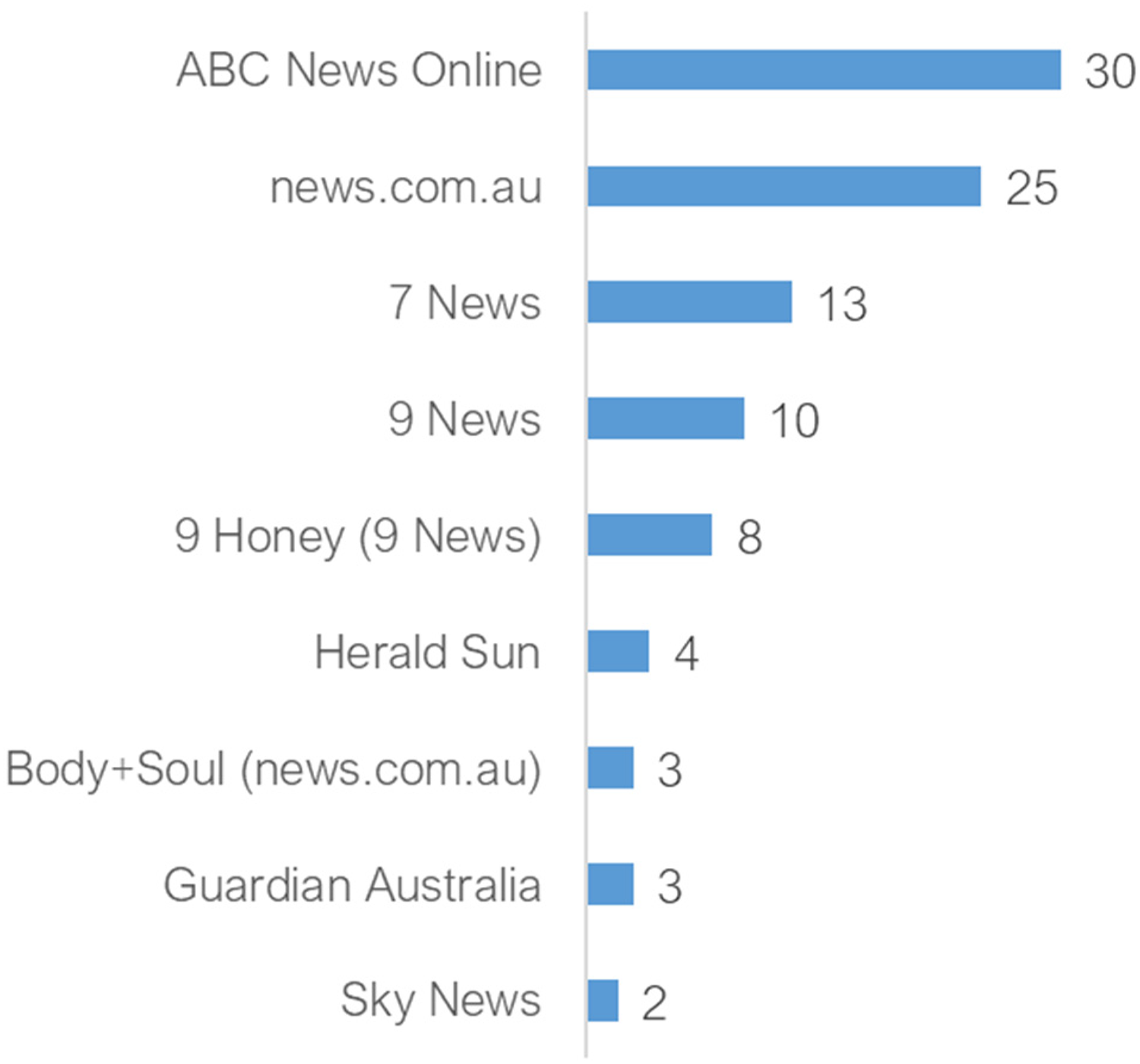
Across the 98 articles, the number of articles published about endometriosis by the news platforms varied (Figure 1). ABC News Online produced the most reporting on endometriosis in the period under analysis (n = 30 articles), closely followed by news.com.au (n = 25 articles). There was a difference of 12 articles between news.com.au and 7 news, which was the third most common publisher with 13 articles. Sky News was the least likely to report on endometriosis (n = 2 articles).
News publications.
Deductive frames
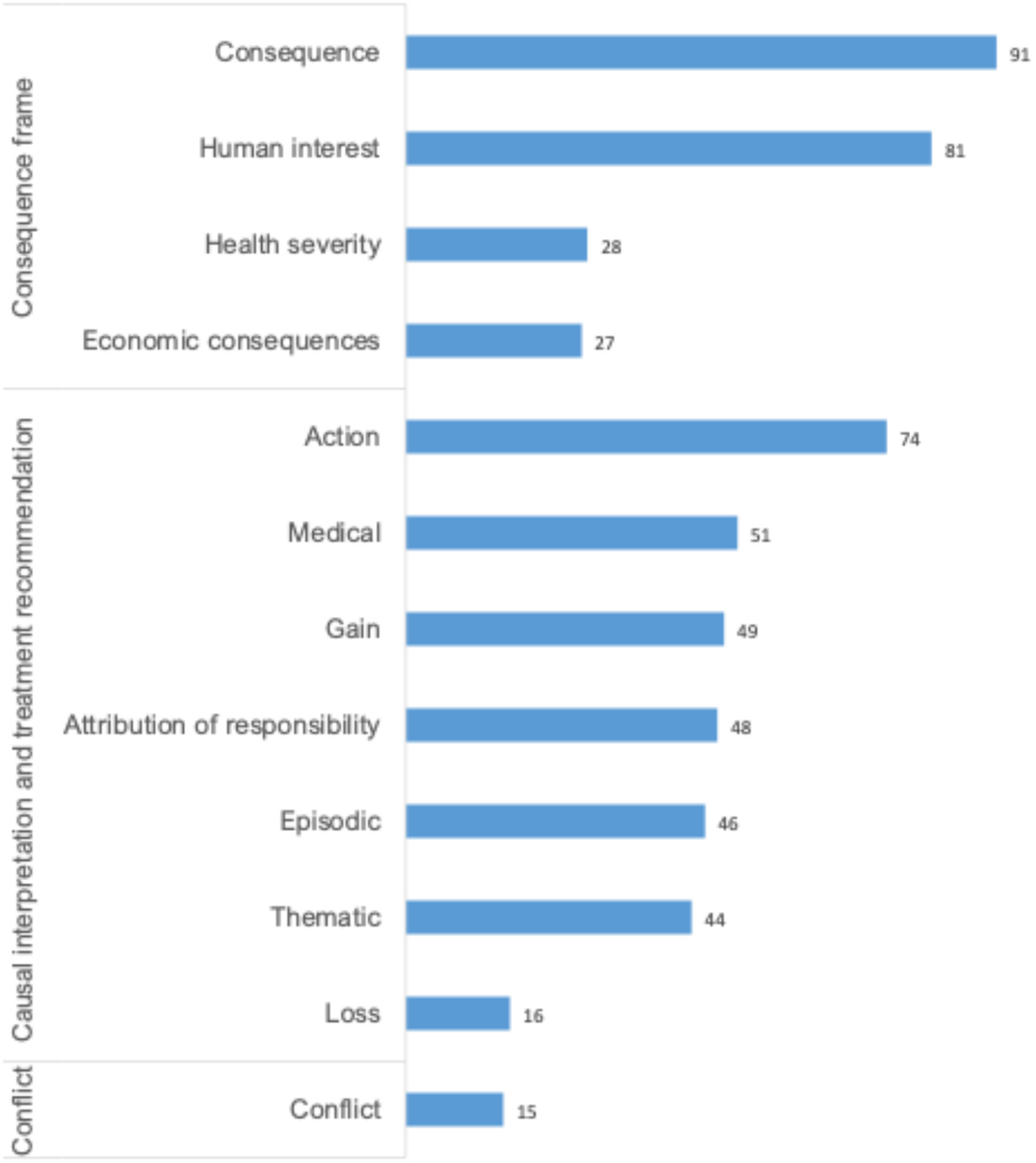
The 12 deductive frames adjusted from Dan and Raupp (2018), when organised into Entman's (1993) four framing functions, demonstrate that the consequence framing function included the two most common deductive frames across the sample (Figure 2). Ninety-one articles framed endometriosis through the consequences of the disease, including harm to self (such as pain), delays to diagnosis and the risk of improper care or treatment. Similarly, human interest stories told the impact of endometriosis on the lives of those affected, often through narrative stories. The third most common frame fit within casual interpretation and was action (n = 74 articles), including stories that promulgate measures that regular people and those in charge can take to mitigate or reduce harm from endometriosis.
Within the treatment recommendation frame, medical stories were found 51 times in the data set, which carried the storyline that endometriosis needs scientific solutions, because biomedical problems exacerbate harm. Articles which highlighted the benefit of adopting certain individual behaviours occurred 49 times. Thematic stories (n = 44) and episodic stories (n = 46) occurred at roughly the same frequency. The former includes articles which argue that endometriosis requires social and political solutions to mitigate or reduce harm, because larger forces and issues exacerbate harm. The latter argue that endometriosis needs individual solutions, because individual lifestyles lead to exacerbated harm (i.e. individual deficiencies lead to delayed or ineffective treatment).
The final framing category only included conflict, which occurred in 15 articles, and these articles largely highlighted conflicts between people with endometriosis and medical care that was rendered inadequate.
Deductive frames.
Inductive frames
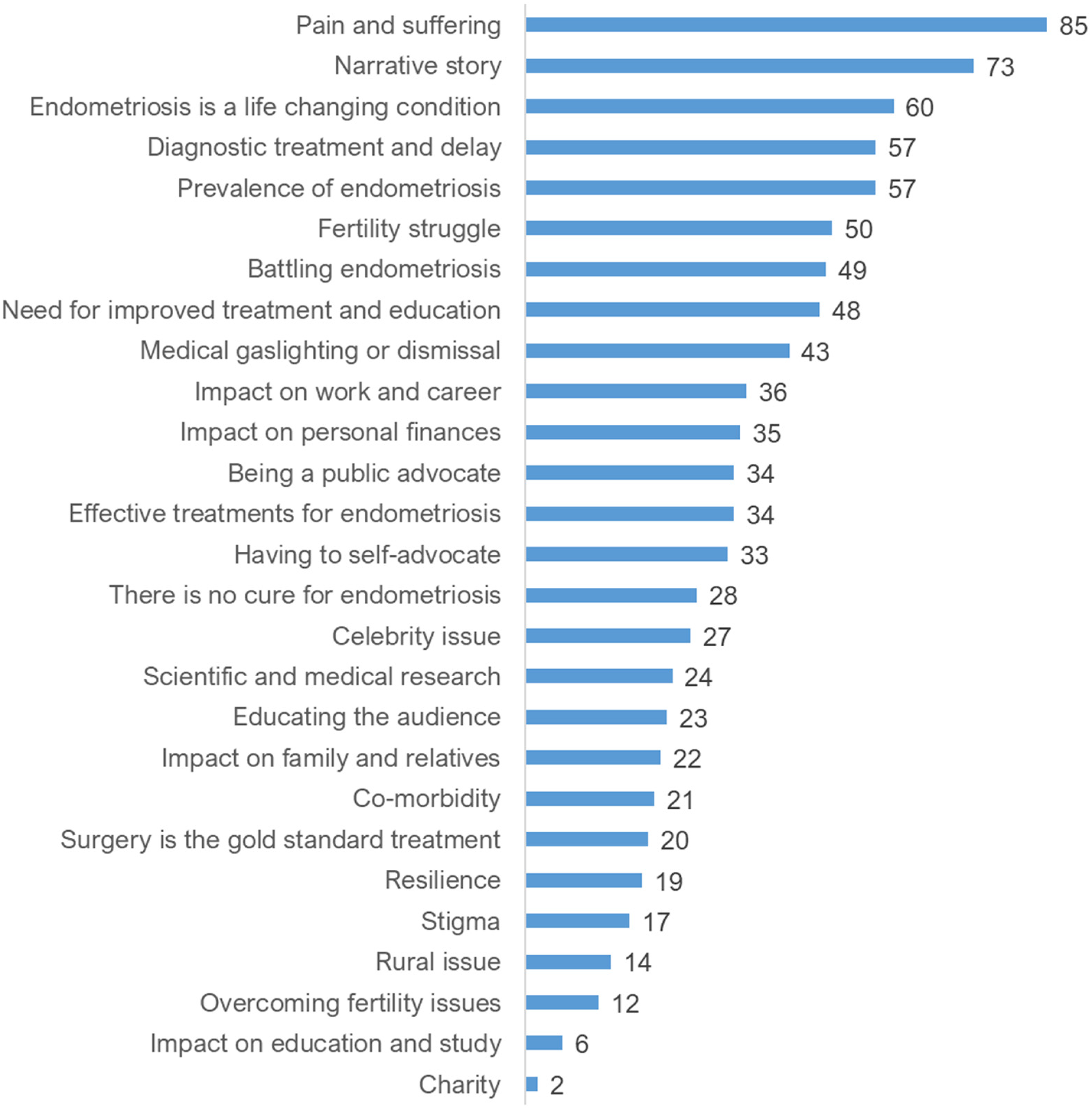
Across the data set, 27 inductive frames were constructed. These frames were specific to the articles under analysis, and one article could include multiple frames (Figure 3).
Eighty-five articles included a frame of pain and suffering. In this frame, people with endometriosis, and/or the disease itself, are portrayed as in pain/painful, leading to suffering. The next most common frame was narrative story (n = 73), and that endometriosis is a life-changing condition (n = 60). Over half of the articles spoke to the prevalence of endometriosis (n = 57), diagnostic (n = 57) and fertility (n = 50) struggles. Thus, those with endometriosis were at the forefront of reporting, with stories of pain and struggle common.
Less common was reporting that considered the impact endometriosis can have on particular facets of life, such as friendships, relationships, work and income, and study. Only 36 articles framed endometriosis through the impact it can have on work, and only 35 on the impact on personal finances. Only six articles considered the impact endometriosis can have on education and study.
Other frames more common within the data set include the need for improved treatment (n = 48), and that those with endometriosis are ‘battling’ the disease (n = 49). Similarly, medical gaslighting or dismissal – while not at the forefront of reporting – was identified in 43 articles. This frame included articles that highlight the inadequate care those with endometriosis receive from medical professionals.
Inductive frames.
Discussion
Agentless responsibility and human-interest focus
Chronic illnesses fall outside the ordinary heuristics of health news, which typically focus on the causes, consequences and treatment for health issues, with a particular focus on blame and responsibility for each element (Dan and Raupp, 2018). However, the ‘causes’ of chronic illnesses are often poorly understood, not known, or multifactorial, meaning discourses of ‘blame’ and ‘responsibility’ that are relevant to pandemics or environmental illnesses are not applicable. It is possible that the results of this framing analysis reflect the lack of fit between journalistic conceptions of blame and responsibility, and the reality for people with endometriosis.
Within the data set, and in regard to the deductive frames, most news stories that used a consequences frame also framed endometriosis as a human-interest story rather than as a sociocultural issue. This framing focuses the reader's attention on individual experiences of pain and suffering, while excluding endometriosis’ broader effects on society, the economy, and human life in general. For instance, among stories that employed the treatment recommendation frame, a similar proportion were thematic in nature (n = 44) – framing endometriosis as an issue requiring social and political solutions – as those that were episodic in nature (n = 46) – framing endometriosis as needing individual solutions. The former represents the public sphere model of biocommunicability, whereas the latter the patient-consumer. However, even when a thematic frame was used, rarely were thematic solutions discussed or addressed. News stories often highlighted inadequacies in care, reflecting that in Australia, people with endometriosis often face long diagnosis times, medical gaslighting or dismissal, or ineffective treatment (Evans et al., 2022). Yet, individual self-advocacy was often foregrounded as either the only or primary solution to these inadequacies. Many thematically framed articles still resolved that endometriosis required people to advocate for themselves, educate themselves on the disease and push for a diagnosis. Political debates over who is responsible for improving the provision of treatment and care were rarely considered in news reporting. The notable exception to this being news.com.au's ‘About Bloody Time’ campaign, which ran throughout March of 2024. During this period, news.com.au published a number of stories with the stated aim of convincing the federal government to provide longer Medicare-funded 1 consultations for endometriosis diagnosis and treatment. These stories mark some of the few examples in the sample where an attribution of responsibility framing, as well as a prescribed action to be taken, were both societal in scope and targeted towards a named entity – the current government. In contrast, it is notable how few other stories in the sample name a person, organisation, or government as being responsible for addressing what is purported to be major shortcomings in the provision of endometriosis diagnosis and treatment.
Instead, we find that the framing function in these stories tends to be casting an agentless responsibility. Numerous stories in the sample discuss the impact of endometriosis on individuals’ lives and occasionally state systems that should be changed to improve these circumstances (such as inadequate medical care), but neglect to articulate any parties that might be responsible for those actions. Such frames are reminiscent of media discourses of endometriosis from the 1970s through the 1990s (Sanmiguel, 2000), which positioned the disease as an individual woman's issue that required self-education and self-advocacy to address, rather than any substantive social or political change. While news stories may promulgate endometriosis as more than just a health issue, they neglect to tell the audiences what macro-level influences such as policy, funding, or medical systems could be responsible for change, beyond highlighting the individual changes a person can take in their own lives.
A narrative of pain and suffering
A variety of inductive frames worked together and separately to construct a discourse of pain and suffering experienced by those with endometriosis across the sample. The pain and suffering frame was the most common frame in the analysis and was found in 87% of articles. Other intersecting frames such as narrative story, endometriosis is life-changing, and celebrity issue further constructed endometriosis as imbued with physical and personal pain for those with the condition. The prevalence of narrative stories reflects the shift of health news co-construction, where a variety of actors, including patients, are involved in the process (Briggs and Hallin, 2025). Narratives are conceptualised as a prerequisite for getting health messages to the wider population (Stroobant et al., 2018), fitting the value of human-interest news stories. The prevalence of narratives in this sample echoes findings by Bradshaw (2022), who noted that personal stories are often the focus of endometriosis news coverage.
The personal narrative of pain and suffering was seen across stories of ordinary citizens and celebrities, often emphasised in headlines. For example, headlines stated ‘I felt like I was dying’ (Kazlauskas, 2024), and ‘it never stops’ (Theocharous, 2024) to describe endometriosis pain felt by ordinary citizens. Within the stories themselves, pain was occasionally attributed to individual actions such as increased pain during intercourse, however, it was more commonly discussed as an all-encompassing pain that is life-changing. This was seen in reporting about Bindi Irwin – an Australian personality and conservationist, daughter of Steven Irwin – with six articles solely about her endometriosis journey found in the sample. In one article, Bindi described her pain as all encompassing, something that affects daily life:
“I was in so much pain and fighting an invisible battle daily,” she tells 9honey.
“I spent so much of my time trying to keep a happy exterior while I was struggling to stay afloat.” (Leach, 2024)
Similarly, a report on Australian singer Ricki-Lee Coulter described her as being diagnosed with endometriosis ‘after enduring chronic pain for more than a decade. In the article, Bindi Irwin is discussed, with her commenting ‘let this be your validation that your pain is real, and you deserve help’ (Dervisevic, 2024). In this comment, Irwin is directly addressing the audience, which, through the lens of biocommunicability, can be described as the patient-consumer.
A common feature of narrative articles about pain and suffering in the sample is that they were often styled in such a way that they address the audience as people who could have, or do have, endometriosis themselves. Self-advocacy has been an important function of the endometriosis community as many have to self-advocate for adequate medical care, and these narrative reports of pain and suffering demonstrate how the pain associated with endometriosis is indeed real and life-changing. However, such reports continue to disregard the inadequacy of endometriosis care as a systemic issue. Furthermore, the cumulative effect of the pain and suffering frame is the exclusion of narratives of endometriosis without extreme pain. This can denormalise less severe manifestations of endometriosis symptoms and deflect attention from the sociocultural factors that may mediate symptom severity. The overall narrativisation of endometriosis further frames the disease ‘as a personal trouble demanding individual attention’, which Sanmiguel (2000: 172) found to be true over 20 years ago in Australian women's magazines.
Inadequate care: Who is to blame?
Similar to the deductive frames, we found an overall agentless responsibility across the inductive frames as well. News reporting acknowledged the sociocultural factors affecting endometriosis care in Australia but rarely drew attention to sociocultural solutions. Inadequacy of care was foregrounded in many news stories, most commonly in those which included the frames of diagnostic and treatment delay (n = 57), need for improved treatment (n = 48), medical gaslighting or dismissal (n = 43) and having to self-advocate (n = 33). The latter two frames often coalesced to construct a strong narrative that medical care for endometriosis in Australia is inadequate. While these stories play an important role in educating the Australian public about the negative medical experiences people with endometriosis face, they still largely draw on a patient-consumer model of biocommunicability rather than a public sphere model. The information is relevant to the audiences in the aspect of their own health, rather than conceptualising this problem as one that is multidimensional, political and needs addressing at a societal level. An exception to this was an article by Evans (2024), which reported on ABC's Q&A program which focused on medical misogyny. This article touched on a variety of systemic issues that can exacerbate medical gaslighting stating ‘there's lots of intrinsic and systematic bias against women’, while also pointing out wider issues such as short appointments, the failure of Medicare to deal with complex diseases (like endometriosis), and how the increase in the number of endometriosis clinics still does not match the prevalence of the disease. However, this style of public-sphere reporting, which points to wider issues as the cause of medical gaslighting, was uncommon.
More common was narrative reporting that told stories of people's experiences with medical gaslighting. For these individuals, the only way to push past this barrier was a personal ‘battle’ with the medical system. In this sample, journalists rarely interrogated the causes of medical gaslighting; they reported on these instances as concrete happenings, rather than a symptom of a wider medical system entrenched in misogyny, or a symptom of the normalisation of cisgender women's pain (Hawkey et al., 2022). As explained by Dunwoody (2021), such reporting focuses on salient moments, leaving readers to knit together a larger picture. For instance, one news report told the story of a woman who went through a 17-year-long battle to get diagnosed with endometriosis (Kazlauskas, 2024). She experienced dismissal, medical gaslighting and being told ‘well, you are a woman and this is normal’ by doctors. She explained: ‘it was not until I started my career in health and I began seeing patients with this condition that I realised I needed to push more’. While the news story does end by suggesting that more doctors need to be ‘educated and equipped to deal with endometriosis’, and ‘need to listen to their patients’, concrete solutions are not addressed. Medical gaslighting is thus framed as a normal – yet regrettable – experience that is to be expected and is likely only to change as individual doctors’ attitudes and behaviour shift over time. No concrete action is proposed that might accelerate this change.
Occasionally, ‘more awareness’ was suggested as a solution to medical gaslighting, or a factor that could improve poor diagnostic outcomes, but awareness raising was often couched in vague terms. One news item suggested that awareness raising is ‘one of the most powerful paths’ to addressing the gap in treatment outcomes. This is described as: Conversations at every level–from the upper echelons of medicine, science and politics to doctors’ offices, dinner tables, workplaces, health clubs and everywhere in between. (Davies, 2024)
In this quotation, we were left wondering what kind of conversations would be had, and by whom, and how these conversations would address a structural problem that is clearly resistant to change. It is implied that larger macro-level forces such as ‘medicine’ and ‘science’ are partly responsible for this conversation. However, an alternative reading in many cases is that something is wrong, but no one in particular is responsible for fixing it. Or conversely, everyone is responsible, which is to say no one in particular is responsible.
At other times, articles overtly suggested that individuals with endometriosis will need to take control of their own health to receive adequate endometriosis care, again speaking to the audience as a patient-consumer. The article discussed above by Davies (2024) included a checklist of ‘5 ways to advocate for your own health and be your own champion’, and asked, ‘Not feeling heard? Use these strategies to advocate for yourself at your next doctor's appointment’. While self-education can be an empowering strategy for some with endometriosis, these frames reflect a neoliberal healthcare ideology. The individual is directed by news to ‘self-govern’ their own healthcare, as inadequacies in care are a natural feature produced by the failings of individual medical practitioners rather than the medical system itself. Instead of engaging the reader as a member of the public sphere and problematising endometriosis care as a multidimensional issue, news audiences are treated as a consumer of medical information and told how they can better equip themselves for the medical gaslighting or lack of education they may receive from medical professionals.
Endometriosis and its impacts
News framed the impacts of endometriosis in many ways. The most common impact of endometriosis found in the sample beyond the narrative of pain was fertility struggles, which occurred in 50 news stories – approximately half of the data set. Next common was impact on work and career (n = 36), and personal finances (n = 35), and the impact endometriosis has on family and relatives (n = 22). Less common were issues concerning rural healthcare (n = 14), or the impact endometriosis can have on education and study (n = 6).
News stories adopted a patient-consumer model of biocommunicability in communicating infertility as the main concern of endometriosis sufferers. Certain news articles solely focused on the fertility journey of individuals or foregrounded in/fertility as a part of their journey, while others represented infertility as a primary symptom of endometriosis. Cisgender women were described as ‘desperate’ to become mothers and endometriosis was treated as synonymous with infertility:
Dr Yazdani said it was common for women with endometriosis to not want children, as they were worried about experiencing pain again when they went off birth control.
But he said women could work with medical professionals and clinics to figure out a pain management plan while trying to conceive.
‘When the time comes for [a woman with endometriosis] to conceive, it's not OK for [her] to just be left like any other woman who hasn't been diagnosed with endometriosis’, he said.
‘Women need to have individualised endometriosis plans … for both the pain and for fertility’. (Searson, 2024)
While infertility may be life-changing for some, there are inherent complexities tying endometriosis with infertility. Those suffering with endometriosis are often faced with a treatment regime focused on enhancing fertility rather than pain relief (Adler et al., 2024; Jones, 2016). Yet, as Evans et al., (2022) uncovered, Australians with endometriosis want to be seen as a whole person – treated beyond fertility.
The focus on infertility means that other impacts of endometriosis fall into the background. The cost of illness burden and adequacy of healthcare are different between those in rural and metropolitan communities (Armour et al., 2019a, 2019b), yet this issue was rarely considered in the news reports. One exception is a news report titled ‘New endometriosis and pelvic pain clinics welcomed, but access for rural Victorian sufferers still a challenge’ (Printz, 2024), which problematised rural healthcare and adopted a public sphere model of biocommunicability. The lack of endometriosis care in rural communities is framed as an issue of public interest, with impacts that need to be considered medically, socially, and politically. Reporting which touched on the cost of endometriosis or its impact on work adopted less of a public-sphere model, and were often found in narrative stories as a single mention that endometriosis made work difficult for the individual at some stage, with little detail about this. More detail was paid to the cost of endometriosis treatment to the individual and the economy, which was described as ‘crippling’ (Leach, 2024). However, struggles of work, finances, education and rural health were distant issues associated with endometriosis compared to issues of fertility, which was bolstered as the main concern associated with the disease. In turn, endometriosis is further tied to fertility, reproduction, and heteronormative assumptions of the disease itself.
Conclusion
This paper investigated news media framing of endometriosis in 98 Australian online news articles from 2024 across a variety of publications. The findings of this project add to our limited understanding on how this disease is discussed, constructed and represented in mediated discourses. Overall, this study finds that endometriosis is commonly framed as a condition causing pain and suffering and one that can be life-changing. News articles most often communicated to the audience through the lens of narrative stories. These narrative stories came from both celebrities and ‘everyday’ citizens affected by the chronic disease alike. These stories push back on the feminisation of pain (Hawkey et al., 2022), showing that pain is not normal, and endometriosis can have life-changing effects for those who suffer from it. However, many of these reports – which employ a human-interest angle – lack nuance in discussing the sociocultural impacts of endometriosis, the inadequate systems in place that contribute to these impacts, as well as possible resolutions for improving care. For instance, reports would tell stories of medical gaslighting, but the news audience was conceptualised as a patient-consumer, and thus told how to better advocate for themselves, or that ‘awareness’ in the abstract would address the issue over time. Similarly, issues such as the economic burden of endometriosis, the impact the disease has on work and study, and the lack of adequate care in rural and regional areas, were less prominent than discussion of infertility. When comparing these results to that of Bradshaw (2022) in their analysis of endometriosis in the Australian press from 1949 to 2011, we can see that despite over 10 years of difference, and while pain is increasingly being discussed in news media, fertility remains at a focal point of endometriosis symptoms, as seen through reporting.
As Jones (2016) writes in their observations, ‘endometriosis is rarely in public discourse, and when it is, it is overwhelmingly presented as an individual tragedy; if resources are deployed, they prioritize fertility or cure’ (566). Similarly, Bradshaw (2022) and Sanmiguel (2000) too noted the prevalence of individualised, narrativised stories of endometriosis. We found this in this snapshot of Australian news reporting about endometriosis, which focused on episodic, narrative tales of endometriosis, infertility, and provided an ‘agentless responsibility’ regarding who is responsible for tackling inadequate care, treatment, and understanding of the disease. The audience is communicated to as a patient-consumer, and endometriosis is painted as a condition of individual tragedy (Jones, 2016). We argue that such reports – while importantly do work to re-frame endometriosis as a serious, painful condition – lack a public-sphere conceptualisation and continue to perpetuate endometriosis and its impacts as only relevant to those with the condition in the context of their own health.
It is important to note the limitations of this study, in that endometriosis is not commonly reported in news media, resulting in a sample size of only 98 articles across 12 months. More research is necessary, such as studies which investigate television news, radio and podcasts, as well as social media and visual depictions of endometriosis, in order to strengthen our understanding of how endometriosis is mediated in Australia. While a burgeoning body of research has investigated endometriosis representations on social media, further exploration and an Australian focus are needed. Further, the impacts of these depictions on news audiences warrant future inquiry, and our findings point to a need to understand more about the journalistic practices that shape the representation of endometriosis in news. As it currently stands, if systemic issues impacting the adequacy of endometriosis care and experiences are to be addressed, news reporting must move beyond individualised constructions of the disease, address responsibility that is not agentless or left up to the individual, and shift from a patient-consumer model of biocommunicability to public-sphere reporting.
Supplemental Material
sj-docx-1-mia-10.1177_1329878X251407719 - Supplemental material for ‘Use these strategies to advocate for yourself at your next doctor's appointment’: a snapshot of Australian online news framing of endometriosis in 2024
Supplemental material, sj-docx-1-mia-10.1177_1329878X251407719 for ‘Use these strategies to advocate for yourself at your next doctor's appointment’: a snapshot of Australian online news framing of endometriosis in 2024 by Hannah Adler and Kieran McGuinness in Media International Australia
Footnotes

Ethical considerations and informed consent statements
This article does not contain any studies with human or animal participants.
Funding
The authors received no financial support for the research, authorship, and/or publication of this article.
Declaration of conflicting interests
The authors declared no potential conflicts of interest with respect to the research, authorship, and/or publication of this article.
Data availability statement
The data sets generated during and/or analysed during the current study are available from the corresponding author on reasonable request.
Supplemental material
Supplemental material for this article is available online.
Notes
References
Supplementary Material
Please find the following supplemental material available below.
For Open Access articles published under a Creative Commons License, all supplemental material carries the same license as the article it is associated with.
For non-Open Access articles published, all supplemental material carries a non-exclusive license, and permission requests for re-use of supplemental material or any part of supplemental material shall be sent directly to the copyright owner as specified in the copyright notice associated with the article.
