



Abstract
News diversity has long been a critical issue in Australia, but current research overlooks the significant share of content that is consumed via social media. Facebook represents the largest of the online platforms by which Australians regularly consume news, and as such, it is fertile ground for exploratory research on diversity and concentration. This article demonstrates how a digital methods approach to media diversity research can reveal the scale, scope and structure of Australia's platform news market. Using ownership and engagement data collected from Meta's CrowdTangle API this paper analyses the concentration of user engagement using conventional econometrics methods for concentration analysis – The Herfindahl-Hirshman Index (HHI) and concentration ratios (CR4 and CR8). The results of this study show the platform has afforded new entrants and demonstrated significant market dynamism among its most dominant players. However, the platform tends to favour established and well-resourced newsrooms rather than early adopters. As Meta continues to divest from and deprioritise news on their platforms, this may come at the loss of media diversity and its role in democratic participation.
Introduction
This paper examines the degree of competition among Australian news pages on Facebook while considering the implications of digital intermediaries on media diversity. For the average Australian, social media is the most popular online distribution method for finding and consuming news (Park et al., 2018; Park et al., 2023; Watkins et al., 2015) and with over 16 million active Australian users, Facebook is host to the largest audience of these social platforms (Statista, 2023). Recently, however, this market for news access has been under scrutiny in Australia and abroad. Concern has been raised regarding the long-term viability of news with global tech giants Meta and Alphabet outcompeting news producers for attention and advertising revenue (Australian Competition and Consumer Commission, 2019). Furthermore, these same platforms function as highly popular intermediaries for newsrooms online. To address this power imbalance, landmark legislation was enacted in 2021 in the form of the news media bargaining code to force these platform giants into mandatory bargaining over payment for Australian news (Bossio et al., 2022) – with similar regulatory interventions being introduced and proposed in countries such as Canada and New Zealand (Thompson, 2022).
The marketplace for news is in many ways fundamentally different on digital platforms (Meese and Hurcombe, 2021). Distinctions have been made between what is termed direct and distributed modes of access, wherein newsrooms have their own channels for access while concurrently using digital intermediaries such as search, social media and news aggregators for distribution (Fletcher et al., 2021). Content producers are increasingly dependent on these platforms for reach, and to track and profile users (Nieborg and Poell, 2018). Furthermore, attention metrics have become “a key factor in the way editors value journalistic performance” (Martin and Dwyer, 2019, p. 62). These platforms have created opportunities for new modes of “news production, distribution and monetization” (Nieborg and Poell, 2018, p. 4275), evidenced by the success of international mastheads, The Guardian and the Daily Mail UK, which have been able to find new audiences and create local arms in Australia (Park et al., 2023).
These changes have been a clear disruption to the status quo for news producers, with a significant shift in the economic structure of the industry evidenced by a departure away from direct access channels and rapid growth in the digital advertising sector (Australian Competition and Consumer Commission, 2019; Flew et al., 2024). Legislative intervention in Australia and abroad also signals the importance of platform-distributed news to governments as an area worth monitoring and safeguarding, with regulators firmly on the side of newsrooms. However, to date, little attention has been given to the question of diversity and concentration on these platforms, and in particular Facebook. Little is known about the scale and scope Australian newsrooms on Facebook including who the largest players are, or how diverse or concentrated the space has become.
As various stakeholders weigh up the future of a platformised news economy, it is necessary also to consider the quality and potential benefits of distributed access news, which is considered herein through a diversity lens. This article examines news diversity on digital intermediaries from a political economy perspective, focusing on Facebook and the Australian context. It observes diversity from multiple junctures within the diversity supply chain (Napoli, 1999, 2011), focusing on source and exposure. It also incorporates a novel approach to the measurement of media diversity using news account ownership and engagement data from a comprehensive longitudinal dataset extracted from Facebook using Meta's CrowdTangle API. The intent is to address a glaring research gap regarding the diversity of Australian news on Facebook. The results show which parent companies own which news accounts, which regions and markets they serve, and the diversity of engagement on the platform.
Diversity and platforms
Media diversity refers to the variety of institutions, actors and content within the media. This includes the ownership of firms, the range of viewpoints represented and patterns of consumption within the media landscape (Napoli, 1999). Diversity is valued for a variety of reasons, with critical issues predicated on the assumption that media has both an economic and democratic value for society (Ho and Quinn, 2009; Iosifidis, 2010; Just, 2009). This delineation has been articulated by some as the market perspective and the public sphere perspective for the media (Croteau and Hoynes, 2006; Smith, 2009). Under the market model, media are private companies that view audiences as consumers. Under the public sphere model, the media are public resources that serve the public and view audiences as citizens (Croteau and Hoynes, 2006). Between the two is a competing interest as to whether content should be designed to be popular and profitable, or whether it should serve the public interest. For both perspectives, concentration can lead to a range of issues of concern for regulators and the public. This includes the economic issues of declining competition leading to monopolies or oligopolies, the democratic issues of diminished pluralism and representation, and the potential for media companies and governments to develop ‘cosy’, undemocratic relationships in the form of clientelism or media capture (Besley and Prat, 2006).
In the Australian context, media diversity has been a particularly salient issue due to multiple periods of concentration in media ownership as a result of market liberalisation pressures and new technologies (Jolly, 2016, 2018). Indeed Australia has been long understood as one of the most concentrated media markets in the world (Flew et al., 2024; Harding-Smith, 2011; Papandrea and Tiffen, 2016). The effects of this concentration are observable with significant concern felt by members of the public evidenced by the record number of submissions made to the 2021 Senate Inquiry into Media Diversity (Parliament of Australia, 2021). Analysis of the public submissions has shown that many Australians don’t feel their needs are being met by the local media industry, with particular concern regarding the availability of diverse content, political bias and a decline in community communication functions (Koskie, 2023).
Scholars who study media diversity and concentration have used various approaches to its measurement along the media supply chain, including ownership analysis (Pusey and McCutcheon, 2011), market share (Noam, 2006; Winseck, 2010), viewpoints (Ho and Quinn, 2009; Segev, 2008) and exposure (Yuan, 2008). These varying approaches have their own implications, with the primary assumption that ownership has a flow-on effect for editorial and programming decisions. Napoli (1999, p. 8) broadly identifies media diversity as “a central component of the broader principle of a robust marketplace of ideas”, offering a model with three components indicative of the media supply chain: source diversity, content diversity and exposure diversity (see Figure 1 below). Source diversity considers the ownership of content and outlets, alongside the diversity of the workforce within media firms. Content diversity pertains to the range of program formats available in a media context as well as the “racial, ethnic, and gender diversity” of those represented in the content and the range of viewpoints expressed (Napoli, 1999, p. 21). Exposure diversity is a measure of the demand side for media production and in this sense is distinct from the source and content components of the media supply chain. Representing the selection and consumption of media by audiences, exposure diversity can be considered from both horizontal and vertical indices.
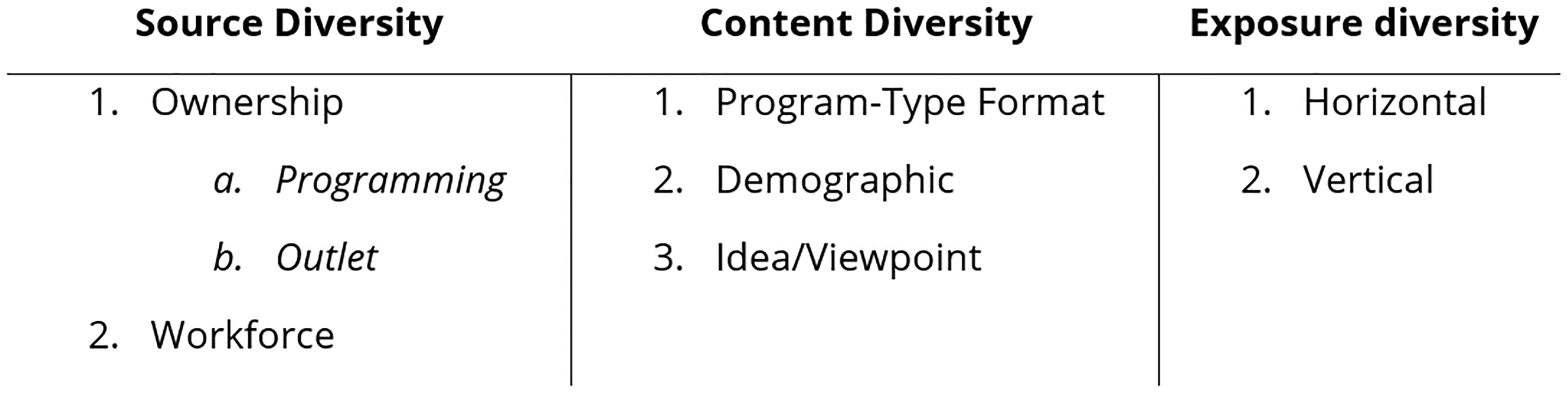
Diversity components, subcomponents, and assumed relationships (Napoli, 1999, p. 10).
Napoli's definition considers the diversity principle within the context of the democratic notion of the ‘marketplace of ideas’ and is predicated on the assumption that an effective democracy requires access to a broad range of diverse and antagonistic viewpoints. This notion is reaffirmed by other scholars, alongside considerations of the economic and cultural value of the media (Ho and Quinn, 2009; Iosifidis, 2010; Just, 2009).
While it has been noted that a great deal of attention has been focused on ownership and market share (Iosifidis, 2010), scholars have begun to give increasingly focused attention to exposure. As the final step in the media supply chain and the measure that identifies impact on the audience, critical importance has been placed on observing and analysing this dimension (Napoli, 2011). Moe et al. (2021, p. 163) note, however, that “exposure diversity remains a multifaceted media policy objective that cannot be reduced to any single empirical indicator”. In their own research they propose using cluster analysis of news repertoires using surveys (Moe et al., 2021), but other methods such as set-top box meters (Yuan, 2008) and data donations have also been used (Fletcher et al., 2021; Meese et al., 2023). The emergence of data donations in particular has been facilitated by the shift towards digital intermediaries as primary method of access for online news in Western countries. This shift has prompted some to emphasise a greater need to explore digital trace data as a useful data point for media diversity research (Loecherbach et al., 2020).
Recent research also suggests that consumers who view news through digital intermediaires – known as distributed access – have more diverse news diets (Fletcher et al., 2021). This supports a broader body of research summarised by Helberger (2018, p. 159) which identifies that “use of social media platforms can result in exposure to more diverse news”. For proponents of the democratic model of the media, these results are promising as they suggest that digital platforms may promote a more diverse news diet. However, as Helberger (2018, p. 159) also observes, that a modest body of counter-evidence also exists, with some studies finding “lesser likelihood for exposure for cross-ideological content” and “the existence of echo chambers”. With some evidence that addresses the democratic perspective, albeit modest and at times contradictory, within the literature there are still unchartered territories for the economic perspective of diversity on digital platforms.
An emerging body of research has examined the plurality of political views and the recommendations that Google News produces (Meese et al., 2023; Segev, 2008). Scholars have also considered the implications of recommender systems used by digital intermediaries on content diversity (Nguyen et al., 2014). What is missing from this domain is a focus on Facebook or an analysis of the diversity of newsrooms on the platform. With the widespread popularity of Facebook as a digital intermediary for news, it stands to reason that diversity on this platform should be given closer attention.
Methodology
To assess the level of concentration on Facebook, this study operationalises the diversity framework devised by Philip Napoli (1999) focusing specifically on diversity at the source and exposure junctures. Facebook data can provide insights relevant to the subcomponents of source diversity and exposure diversity. Analysing the share of news pages and their operators can be used to demonstrate source diversity at the point of outlet ownership. While this study takes an exploratory approach to media diversity, it also proceeds on the assumption that concentration at one of the many junctures within the media supply chain poses a challenge to the democratic and economic value of the media. A wide variety of owners is indicative of a healthy marketplace as competition is assumed to encourage high-quality and original content (Doyle, 2014). Analysis of engagement metrics can also provide insights into horizontal diversity as a subcomponent of exposure. As such, this layer of analysis can show which firms receive the most interest from users of the platform. A high level of exposure diversity is assumed to be of value from a ‘marketplace of ideas’ perspective as it demonstrates that audiences are being exposed to, and engaging with, a wide variety of news sources (Napoli, 1999, 2011).
Data collection and sampling
This study draws upon a corpus of n = 86413 Facebook posts from Australian newsrooms. News pages were identified using a Creative Commons dataset produced by the Public Interest Journalism Initiative (PIJI) from their Australian News Data Project (PIJI, 2024). Their dataset provides an extensive list of Australian print and digital newsrooms, their locations, parent companies, format, coverage area and scale. This list and manual search efforts, which added terrestrial television newsrooms to the dataset, were used to identify an exhaustive list of n = 656 accounts which were input into Meta's CrowdTangle platform to collect the corpus data. A sampling strategy was used, collecting the first Monday of January through to March of each year from 2010 to 2022. The original dataset and the CrowdTangle results were merged to allow for a greater breadth of analysis.
The CrowdTangle output provides a wide range of data including the content of posts, links, publication data, the number of followers a page had at the time of publication and a suite of engagement metrics including likes, comments, shares and reactions. The combining of the PIJI data into the CrowdTangle data provides another layer of insight such as the ownership structures of the pages and the geographic regions served by their mode of primary access, classified as national, state, metropolitan and local. An additional category is also provided indicating the format of primary access, which in this study has been limited to print, digital or television mediums. Radio news has been excluded due to a lack of consolidated public information on Australian newsrooms and initial searches showing low representation of radio newsrooms on Facebook.
Measuring concentration
To examine source diversity, this study uses comparative statistics, observing ownership and the geographic regions served by the pages. It also offers breakdowns of primary access formats to indicate the prevalence of varying sectors on the platform. To measure exposure diversity this study incorporates a novel method using engagement metrics. While revenue is the common data point used by studies into media diversity, there are precedents for using a variety of data points including television ratings (Chan-Olmsted, 1996) and circulation data (Cho et al., 2006) to assess levels of concentration. Some researchers have suggested that user data might be a valuable new tool for diversity research, with Loecherbach et al. (2020) recommending that “gathering digital trace data in combination with an analysis of content is needed to understand behavioural patterns of news selection”.
For this study, likes, comments and shares are combined as a measure of user interest and a proxy for a direct measure of exposure. Facebook's engagement metrics have been used by scholars to identify user interest in diplomatic efforts (Spry, 2018) and political communication styles (McTernan, 2024), but to date, haven’t been utilised for diversity research. This data is analysed using concentration ratios and the Herfindahl-Hirschman Index (HHI). Concentration ratios (CRn) are derived from the sum of the top four and top eight firms’ revenue share within a market. Market concentration is also calculated using the HHI. HHI is produced by calculating the square of each player's market share and adding them together. The end result is a score from 0 to 10000. The US Department of Justice's Antitrust Division considers markets with a HHI of 1000 to 1800 to be moderately concentrated, and any market with an HHI over 1800 to be highly concentrated (U.S. Department of Justice, 2010). Comparatively, the Australian Competition & Consumer Commission states that it is generally less likely to be concerned by horizontal mergers if the resulting marketplace has a HHI of less than 2000 (Australian Competition and Consumer Commission, 2008).
Analysis
Source diversity
Ownership and scale
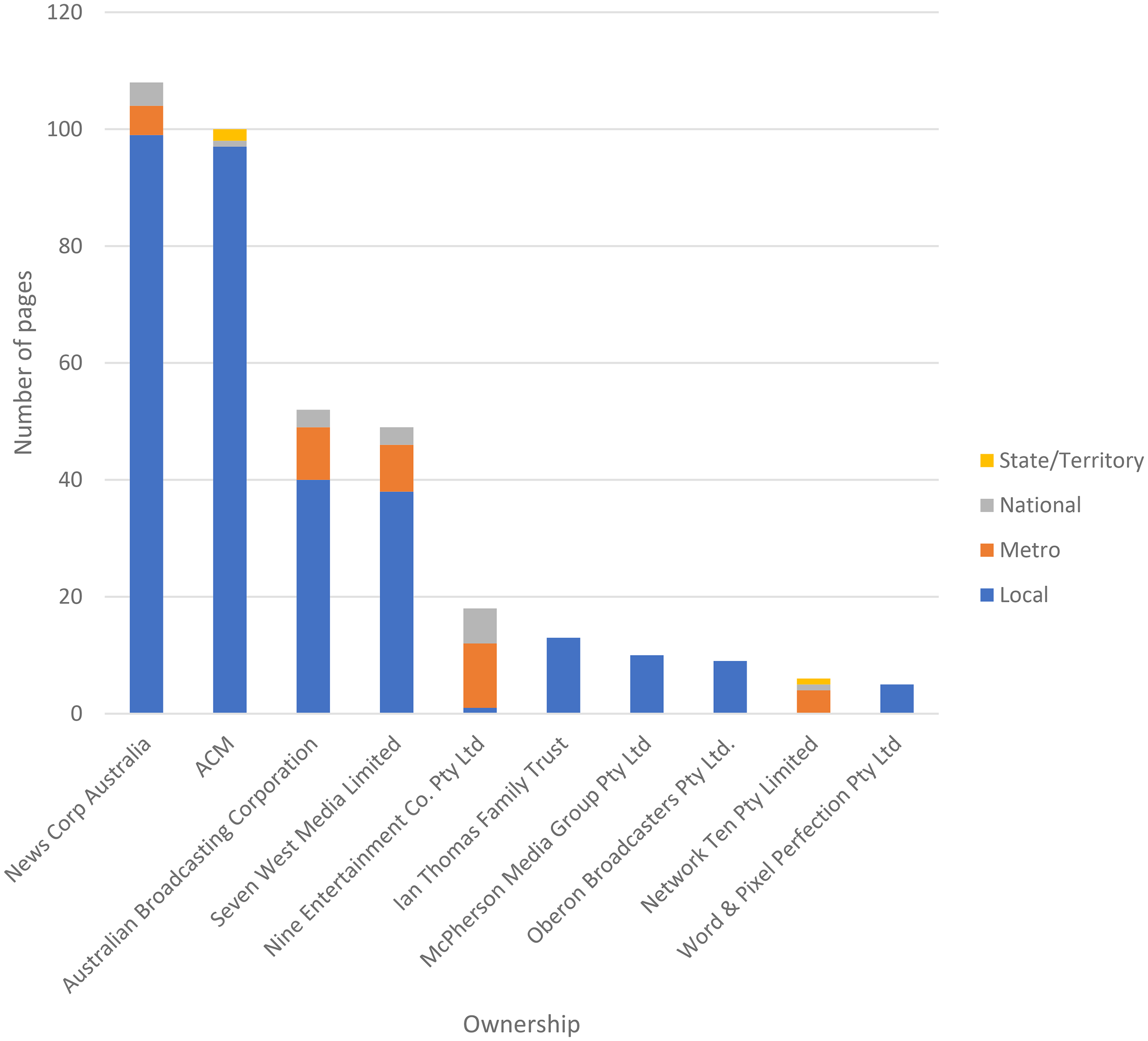
Figure 2, which shows the ten largest news page owners on Facebook, provides several insights relevant to the ownership and coverage of news pages in Australia. Ownership represents the first juncture within the media supply chain and from a democratic perspective is among the more problematic areas for diversity. As to be expected in the Australian circumstance, many outlets are controlled by just a few firms, but the scope of those outlets differs significantly between owners.
A graph showing the scale of ownership and coverage among Australian news pages on Facebook.
First, the majority of pages represent local news outlets with the two largest players in this market being News Corp Australia and ACM. Following these firms, a second tier of ownership is apparent, with the Australian Broadcasting Corporation and Seven West Media also owning a significant share of pages. It is noteworthy that three out of the four largest players are predominantly print media focused for their off-platform outlets. In contrast, ABC is an outlier, instead predominantly being focused on digital distribution. At the same, it is important to note that all of the print news outlets represented by the main four have digital offerings too. The fifth-largest player, Nine Entertainment Co, is another outlier being mostly constituted of metropolitan and national outlets. The remaining five players are the Ian Thomas Family Trust, McPherson Media Group, Oberon Broadcasters, Network Ten and Word and Pixel Perfection. Both Oberon Broadcasters and Network Ten are both exclusively television broadcasters while the rest of the operators in this category are owners of print and digital news operations.
As Baker (2006, p. 16) states “concentrated media ownership creates the possibility of an individual decision maker exercising enormous, unequal and hence undemocratic, largely unchecked, potentially irresponsive power”. It has been long known that Australia's news industry has been concentrated among just a few key owners, the most famous of which is Rupert Murdoch's News Corp (Jolly, 2018). This is clearly evidenced by the data in Figure 2, but a breakdown of coverage is relevant here too. As expected, our results reflect patterns seen in the PIJI data due to the high penetration rate of Australian news accounts on the platform. However, coverage areas vary significantly between firms. The high number of mastheads owned by ACM (n = 100) compared to Nine Entertainment Co (n = 18) alone is an insufficient illustration of the scope of their ownership, of which Nine Entertainment Co has the largest metropolitan coverage of any firm in the country.
Share and distribution
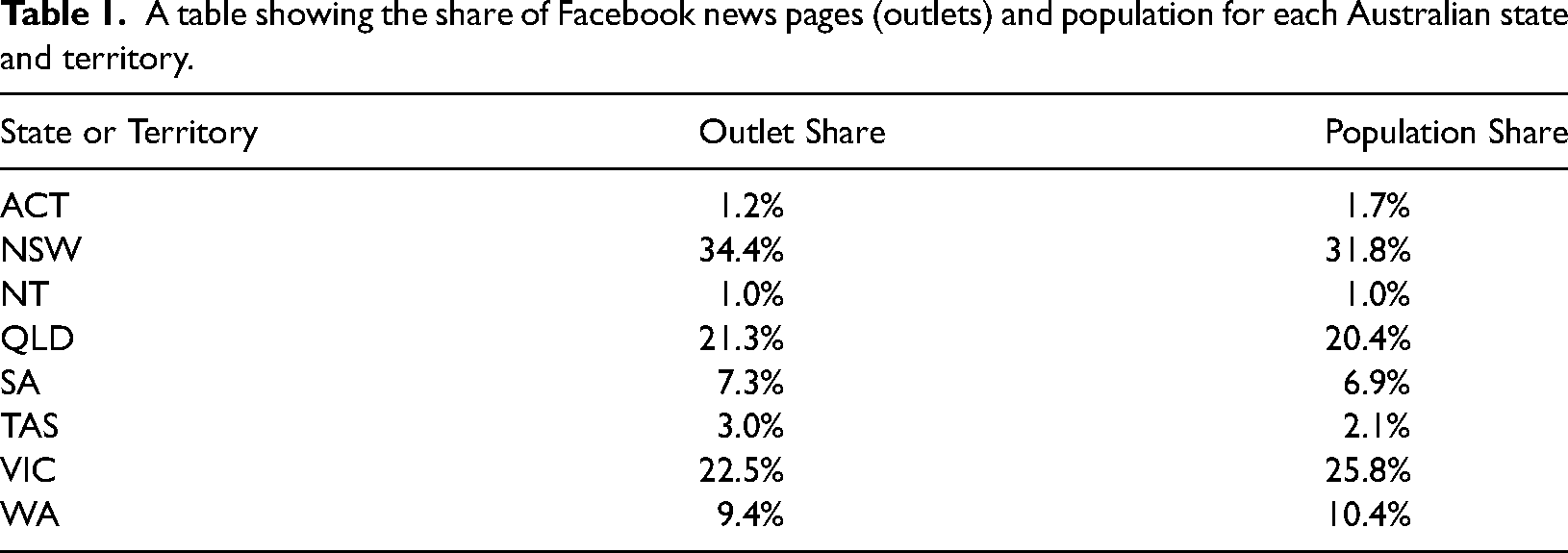
Evaluating the localism share of Australian news on Facebook is established by attributing a region to each page by cross-referencing their direct access source from the PIJI database. For broadcast television and digital sources not included in the original database, this researcher has followed the framework used by PIJI (2024) and attributed scale and coverage using descriptions from the official website of the direct access source. Local, metro and state/territory coverage areas are attributed to states, and only local sources are attributed to a regional coverage area. The total distribution of state share is then calculated by combining the local, metro and state/territory outlets and dividing them based on their state/territory. This share is then contrasted with Australian Bureau of Statistics data showing the population share of Australia based on state and territory (Statista, 2022).
Table 1 presents the share of Facebook news pages (outlets) and population for each Australian state and territory. The outlet share is calculated using the current database which is correct and complete as of 2024. The population share is indicative of Australia's population distribution in 2021. The table illustrates that outlet share is mostly consistent with the overall population. Variation between the two samples is modest with differences of 1% for each state and territory except New South Wales and Victoria which had a variation of 2.6% and 3.3% respectively. The modest variation seen between the share of outlets and population for each state indicates that the number of Australian news outlets on Facebook tracks closely to the distribution of the population. From a localism perspective, this initial finding might be considered a positive result. However, this only demonstrates the presence of an outlet and doesn’t offer a complete picture of how well these pages are maintained, such as post frequency and the quality of their coverage.
A table showing the share of Facebook news pages (outlets) and population for each Australian state and territory.
Scale of coverage and formats
Table 2 presents the share of news pages based on their direct access format. These formats adopt the PIJI framework of digital and print but also feature the addition of television as a direct access category. It also presents the scale of coverage for each format. The purpose is to show which direct access markets have the greater presence on the platform.
A table showing the share of Facebook news pages based on their format for direct access.
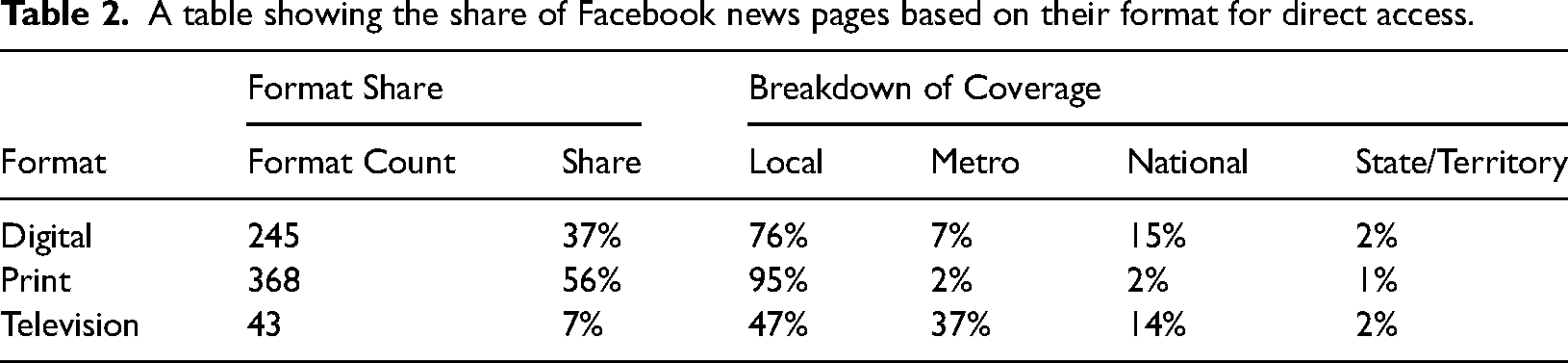
The results show that print formats represented 56% of the pages, making it the largest share by a significant margin. Digital news represented 37% of the pages whereas television represented 7%. This demonstrates the breadth of outlets provided by print and digital news companies compared to television outlets, which contribute significantly less local news pages to the platform. The breakdown of coverage also illustrates how print and digital news is overwhelmingly local whereas television also has a strong metropolitan focus. Television and digital companies also had a stronger national focus, not shared by print news. However, all formats have more local outlets than any of the other three classifications for coverage.
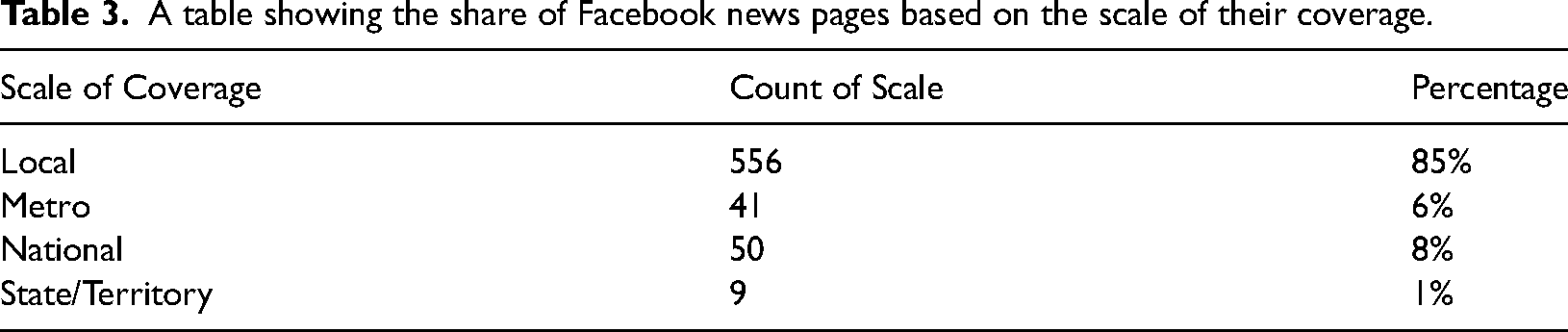
Table 3 presents the share of news pages based on the scale of their coverage. Local pages are associated with smaller regional areas at a local government level, such as The Blue Mountains City Council. Metro pages are specific to capital cities, such as Sydney or Canberra. State/territory scale is limited to only a few outlets that identify as state-oriented news sources, such as Victoria or Queensland. National outlets are newsrooms with an assumed national focus to their stories, such as The Australian. The findings show that 85% of news pages are local in their scale with the remaining 15% constituted by metro, national and state/territory outlets. This demonstrates that at the point of source diversity, local outlets significantly outnumber other types of Australian news pages.
A table showing the share of Facebook news pages based on the scale of their coverage.
Exposure diversity
Concentration of engagement
The following section is concerned with the levels of concentration among engagement metrics aggregated from the posts of pages sampled in this study. Engagement metrics are constituted of likes, comments, shares and reactions. Each of which are features of Facebook's platform by which users demonstrate their interest in the content. These metrics do not demonstrate the profitability or the click-through of content. Nor does their aggregation demonstrate user support for content. Engagement metrics can be surmised to be a measure of interest from users though and are a key metric used by newsrooms to measure the performance of their content. These metrics are also used by the platform's recommender system to preference content in the news feed (Bucher, 2019, p. 7) and as such are also indicative, to a degree, of the platform power that specific news accounts possess.
Figure 3 above provides longitudinal insights into the engagement of the top-performing Australian news pages of 2010. This data shows which pages had the best-performing content at the time and how those outlets have performed in the time since. The ABC's national news page, ABC News and three of their metropolitan news pages, ABC Melbourne, ABC Adelaide, and ABC Hobart were all major players on the platform in 2010. These pages were also joined by the NewsCorp-owned Sunshine Coast Daily. As the graph demonstrates, only ABC News was able to remain highly competitive among the top 5 ranked pages in the years that followed, although Sunshine Coast Daily did maintain a ranking in the top 5 pages for 2011.
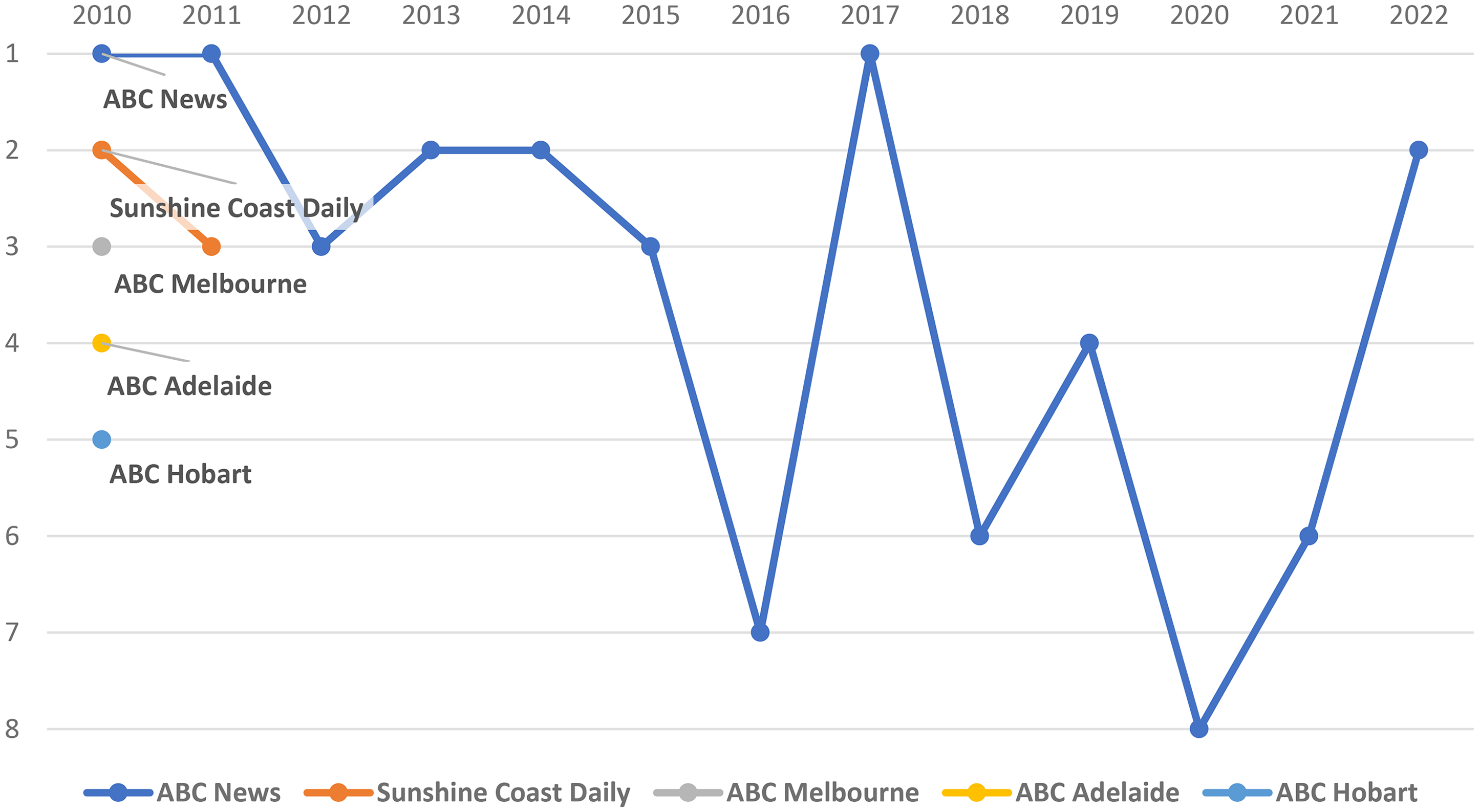
A graph showing top performing Australian news pages on Facebook from 2010 longitudinally extrapolated.
Figure 4 above provides longitudinal insights into the engagement of the top-performing Australian news pages of 2015, while also including their longitudinal performance from years 2010 through to 2022. The results present a number of key findings. First, it shows that there is no specific year or moment as a key entry point for these competitive pages. While ABC News has been a consistently high performer, other pages have each joined the rankings in different years leading to 2015. It also shows that the top pages of 2015 continued to maintain a competitive advantage, with four of the five pages maintaining their rankings well into 2022. This suggests that by 2015, Australian news pages on Facebook had begun to establish a mainstay of dominant players that would persist for years to come. Drawing upon a diffusion of innovation model, we might surmise that this 5-year period from 2010 to 2015 spans some part of the innovator to early majority phases for platform adoption by these Australian news pages (Rogers, 2003).
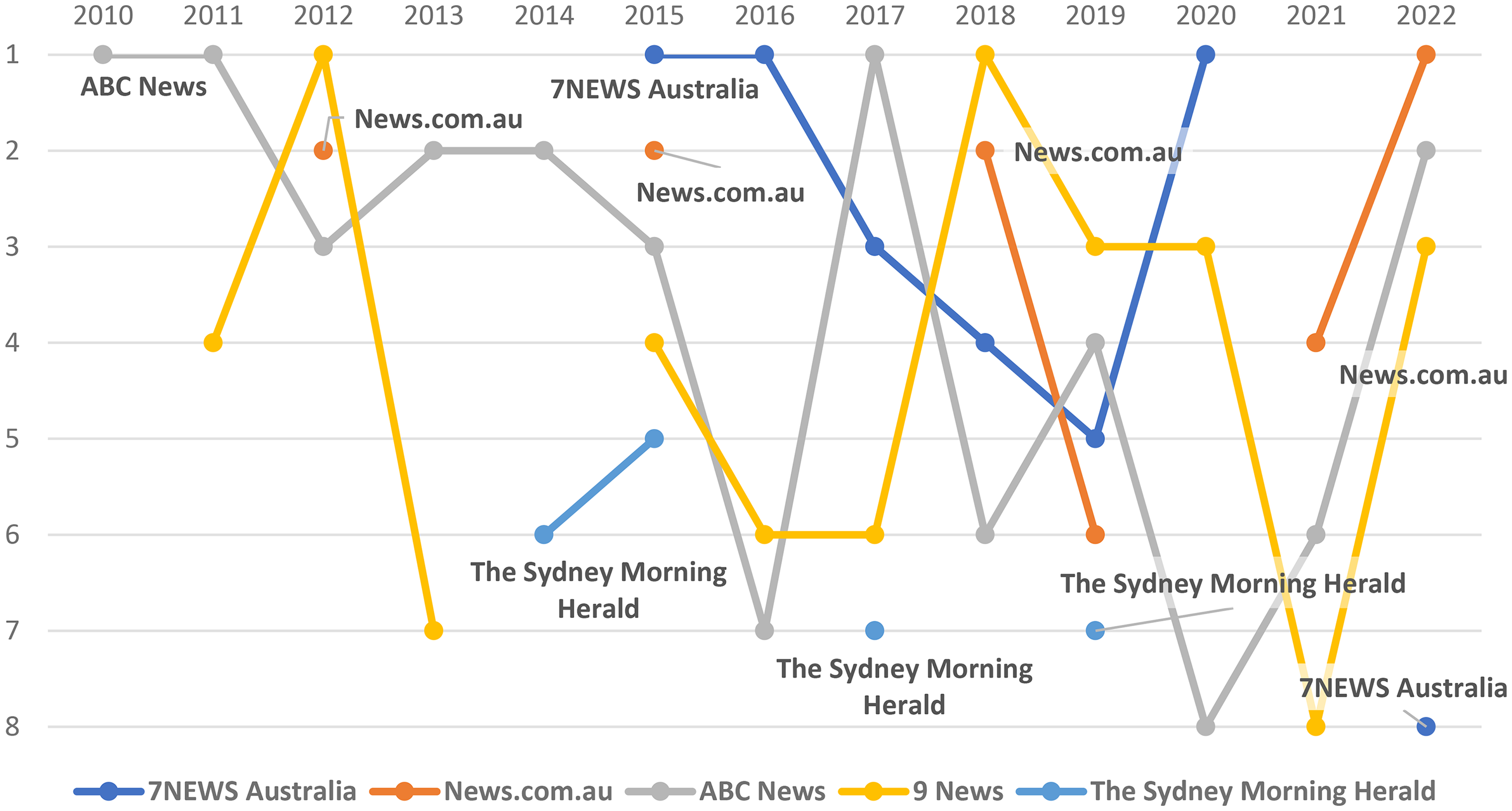
A graph showing top performing Australian news pages on Facebook from 2015 longitudinally extrapolated.
What is also noteworthy about the persistent main players from 2015 is that each page is a distributor for the digital and national mastheads from the largest media corporations in Australia, namely the Australian Broadcasting Association, NewsCorp Australia, Nine Entertainment Co and SevenWest Media. Another point of note is how these main players have significant variance in their positions on this leaderboard. While, by 2015, there is an established group of main players, there is no clear hierarchy of engagement between them.
Figure 5 above provides longitudinal insights into the engagement of the top-performing Australian news pages of 2022, including their performance in the years prior. This graph shows that three of the top five pages in 2015 are in the top five again for 2022 – namely News.com.au, ABC News and 9 News. These pages are joined by later entrants to the platform, Daily Mail Australia and Sky News Australia.
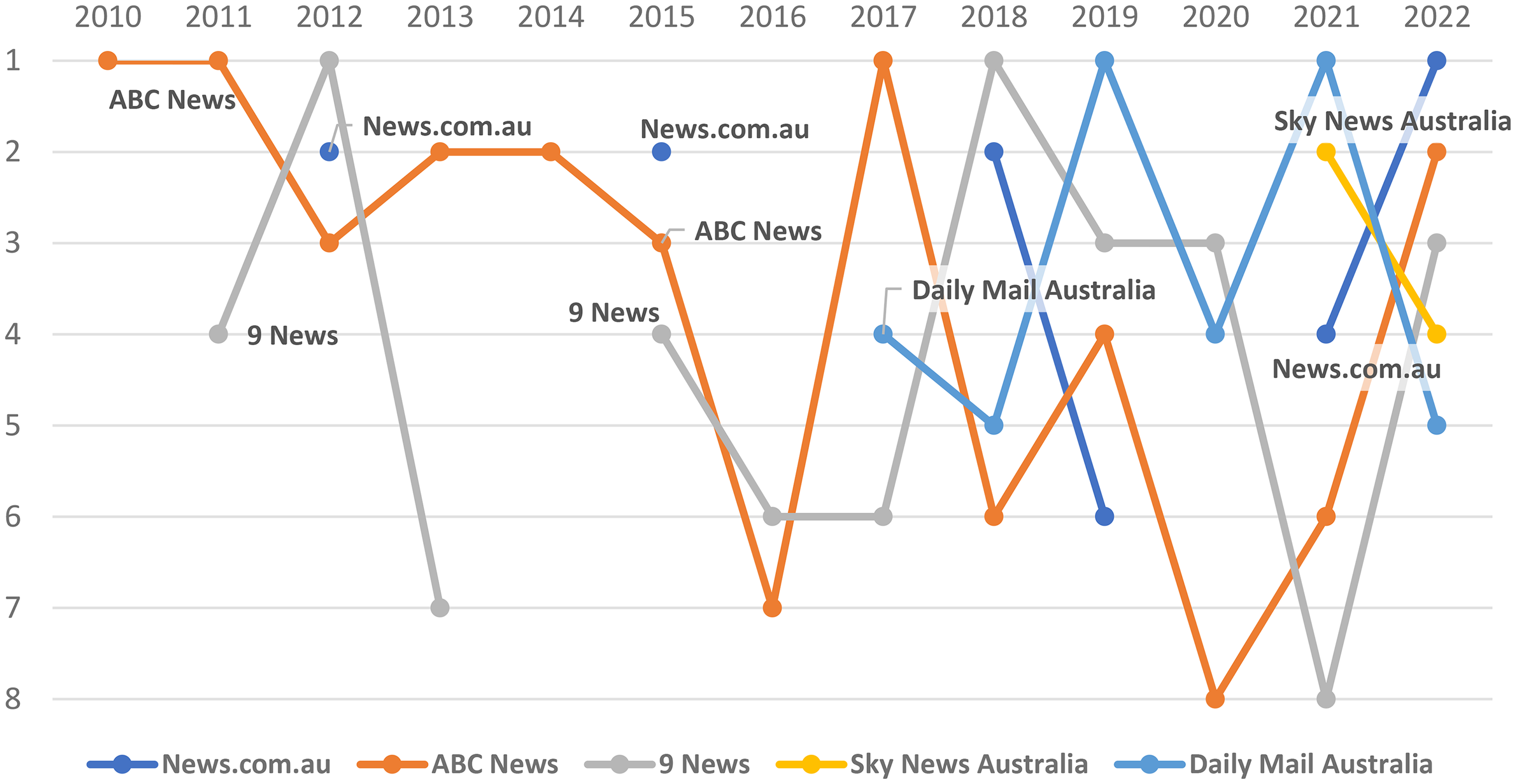
A graph showing top performing Australian news pages on Facebook from 2022 longitudinally extrapolated.
The inclusion of these newer pages in the rankings after 2015 suggests that even after the attention market had become established, there is still room for new players on Facebook. It is also important to note though that these late entrants also emanate from highly successful primary access platforms, with both Sky News and Daily Mail being established and well-resourced news outlets.
Figure 6 above provides longitudinal insights into the concentration of engagement metrics from Australian news pages using the HHI over 12 years. The results show levels of concentration well below the classifications for moderately concentrated markers and highly concentrated markets used by the US Justice Department.
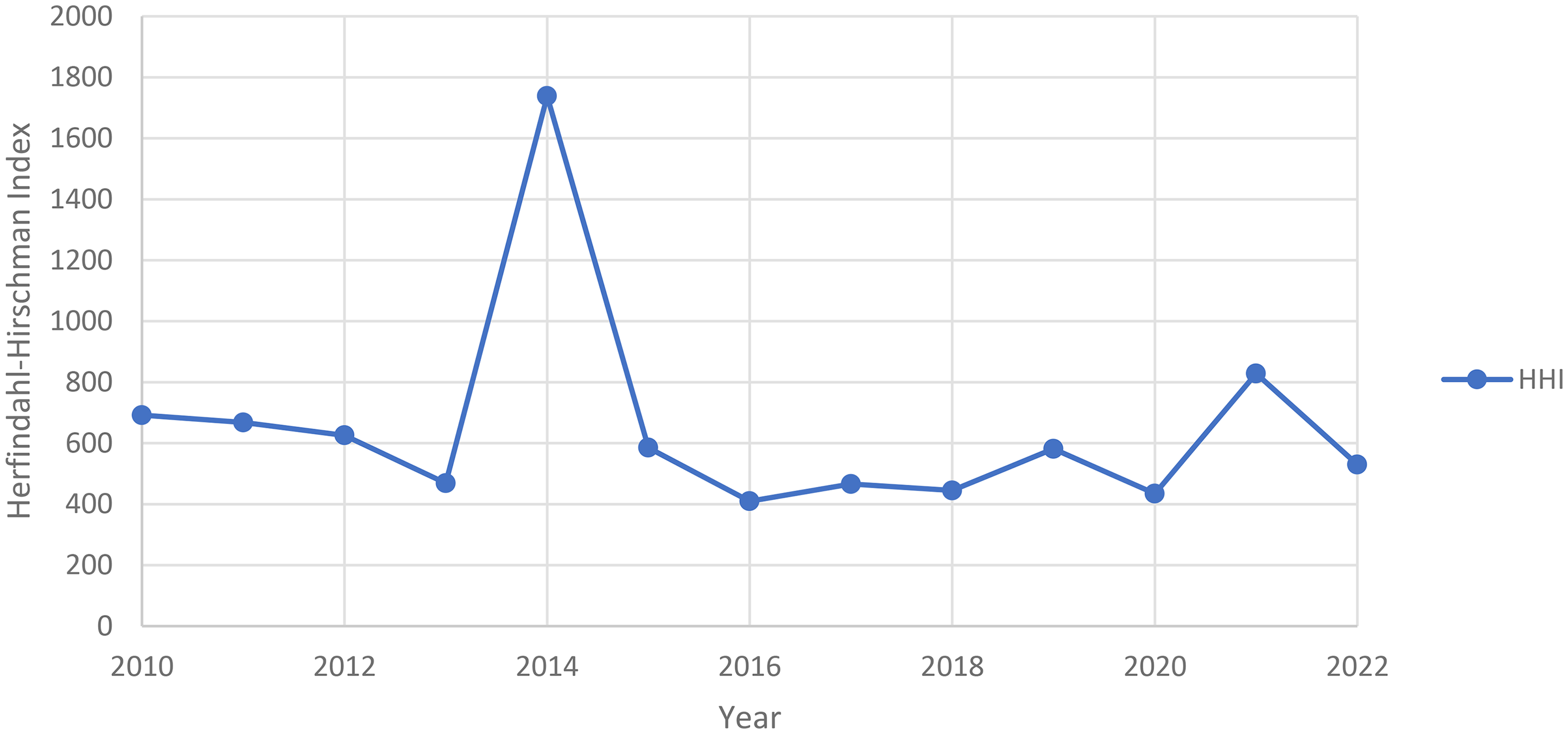
A graph showing the concentration of Facebook engagement from Australian news pages using the HHI from the years 2010–2022.
An outlier is present in this analysis for the year 2014 where the index rose significantly for that period. This result is attributable to a post that went viral, accumulating considerable engagement in a short period. This result is indicative of the sparseness of the market at the time, with only a few established players and an audience base still in development. As such, one highly popular post was able to skew the trends seen in the graph that had mostly been consistent in the years prior and thereafter.
Figure 7 above provides longitudinal insights into the concentration of engagement metrics from Australian news pages using concentration ratios, CR4 and CR8, over 12 years. The graph shows in any given year, a concentration in engagement of between 26% and 43% among the top four pages and between 45% and 61% among the top eight. Note again the outlier apparent in 2014 of CR4 = 62 and CR8 = 78, attributable to a high engagement post in what was still a shallow market for engagement. These results are indicative of a considerably more diverse market on-platform when compared to revenue results seen in Australia's primary access markets such as television and print (Papandrea and Tiffen, 2016). When paired with the leaderboard data in figures for 2010 to 2022 (see Figures 3, 4 and 5), we can also see that while in any given year, a few pages receive a large share of the engagement, there is still significant market dynamism among the top players.
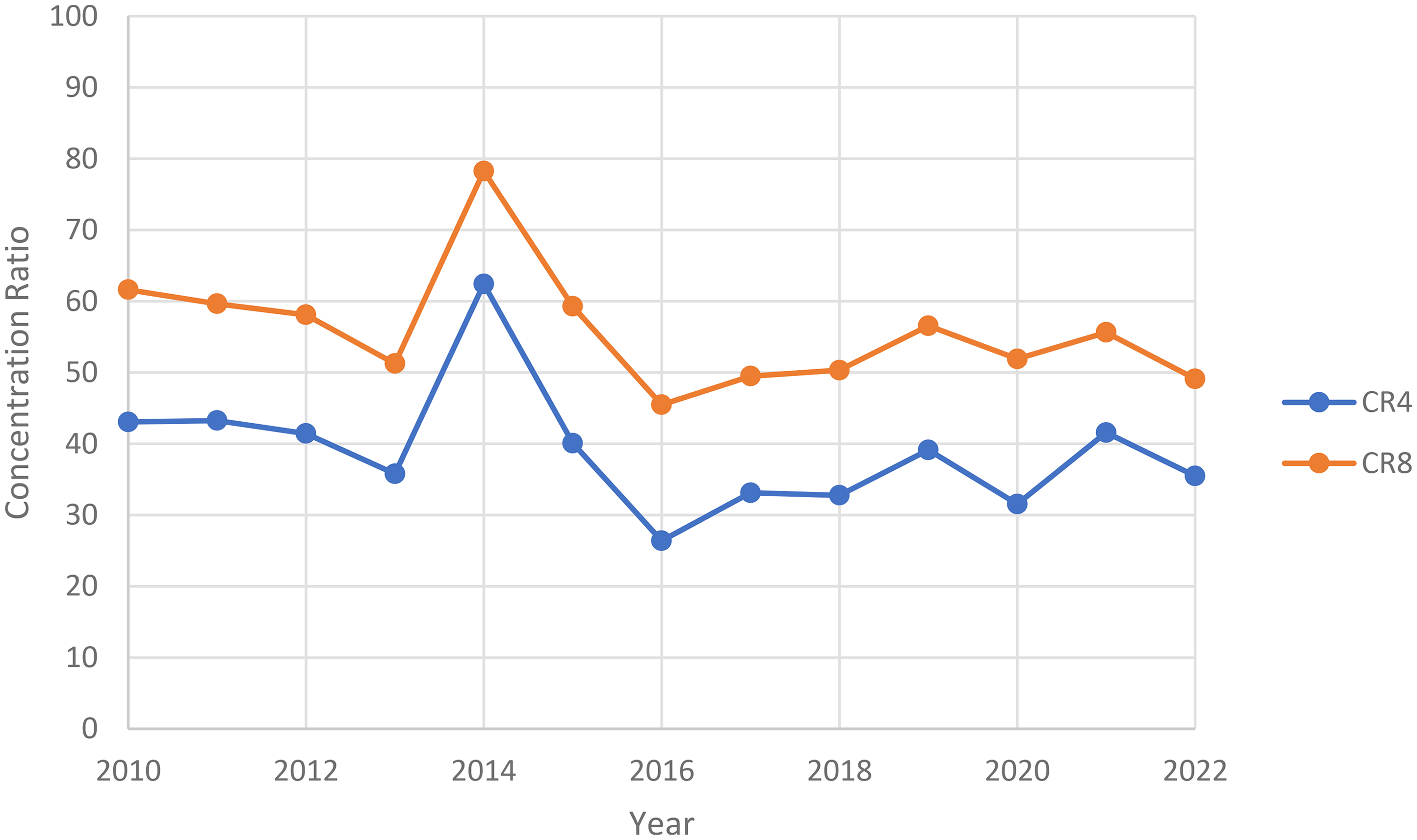
A graph showing the concentration of Facebook engagement from Australian news pages using the concentration ratios of CR4 and CR8 from the years 2010–2022.
Discussion and conclusion
With the future of Australian news on Facebook in doubt, the findings of this study illustrate what might be lost in the process. Our analysis found that Australian news on Facebook is a relatively diverse market compared to the direct access markets from which it is constituted (Ederstone, 2011; Flew et al., 2024; Papandrea and Tiffen, 2016). This is evidenced by the consistently low HHI scores for engagement concentration (Figure 6) which are well below the typical threshold for concentration. This is supported by the concentration ratios for the top 8 pages (CR8), which represented between 45% and 61% of all Australian news engagement on the platform. This is indicative of a competitive market with room for many players and significant consumer choice.
These findings are supported by evidence for significant market dynamism, with rival accounts often trading places as the top account on the platform. Three leading news pages appear in the first few years sampled, ABC News, 9 News and News.com.au, however (Figure 3), there has been room for late but highly popular entrants into this market, with the likes of Daily Mail Australia and Sky News (Figure 5). What is also clear is that being an early adopter has had little relevance to the long-term success of news pages on the platform. Instead, the top pages all represent newsrooms that are already well-established and resourced off-platform. Furthermore, and perhaps rather unsurprisingly, all major players have a national focus for their news, while metropolitan voices that were popular in the first years of the sample have not maintained their lead within the attention market.
While competition between individual accounts was quite diverse, analysis at the source level has shown that ownership appears to be concentrated among a few key players. Over a third of all news accounts were owned by just two firms, News Corp Australia and ACM (Figure 2). This concentration of page ownership is attributable to the high representation of local print and digital outlets on the platform. The owners with the largest share of pages reflect many of the larger firms and their antecedents seen in previous studies into media concentration in Australia (Papandrea and Tiffen, 2016). Together, the results of the source and exposure studies provide insight into the shape of the Australian news market on Facebook. While there are many local news voices on the platform, they are mostly owned by two firms, and they receive much less attention than the nationally focused pages. At the same time, exposure is significantly more diverse, with multiple firms demonstrating competitive prowess in vying for the top position on the platform.
While Australia has seen for many decades a decline in newsrooms (Zion et al., 2016) and concentration in ownership (Dwyer et al., 2021; Ederstone, 2011; Papandrea and Tiffen, 2016), the results of this study show the potential for new entrants on a national level on a distributed access platform like Facebook. Diverse and dynamic consumption would be considered a positive outcome for proponents of both the market and public sphere perspectives for media diversity (Croteau and Hoynes, 2006; Smith, 2009). This would indicate users are free to make varied choices for their content and that users are maintaining diverse media diets. However, new entrants such as The Guardian and The Daily Mail do not emerge from the ground up as local firms but instead as well-resourced international entrants from the UK market. As such, it is unclear whether the platform is capable of providing a reduced barrier for entry within Australia, or if the continuing decline of local news outlets can be reversed.
Recently Facebook's parent company Meta has shown a reluctance to stay in the business of news. Alongside the ongoing news blackout in Canada (Myllylahti, 2023), which also briefly happened in Australia, the company has more recently declared it will no longer pay Australian news publishers, which had been previously guaranteed as a result of the News Media Bargaining Code (Taylor, 2024). The federal government has responded by proposing an amendment to the code that creates an incentive for keeping news on platforms (Bossio, 2024; Public Interest Journalism Initiative, 2024).Conversely, Meta's blackout appears to have had a significant long-term impact on the Canadian news ecosystem. Studies showing a 43% decline in cross-platform engagement suggest that local news outlets are hit the hardest by these bans (Media Ecosystem Observatory, 2024, 2025). These developments are far from resolved, but they are concerning from the perspective of diversity. As one of the largest distributors of news in the country, and as a facilitator of new voices in the national news market, the withdrawal of support for news from Facebook may exacerbate a continuing trend of media concentration in Australia (Flew et al., 2024; Papandrea and Tiffen, 2016).
Reflecting on the limitations of this study, one should consider that engagement metrics are still a relatively underdeveloped field of research. While this study has responded to a prompt by scholars to adopt digital trace data as a tool for measuring consumption (Loecherbach et al., 2020), their use in research is still novel. Scholars have noted how engagement metrics supplied by platforms “have never been subject to serious independent scrutiny” (Bruns, 2017) and as such their accuracy is difficult to fully verify. It is also important to note that these are not a perfect analogue for other forms of exposure analysis, such as subscriber numbers or viewership, and may well represent their own category of exposure. It is likely that only a limited proportion of the public responds to stories, and those who do engage may have different media consumption patterns from those who don't. As such, we may well be viewing surface manifestations of broader patterns of engagement from the public. However, these data commodities still have their power, as inputs for algorithmic recommender systems and as a feedback system for journalists (Martin and Dwyer, 2019; Tandoc Jr, 2014). Further theorisation of these metrics could help further contextualise the results of this study.
Future research may also consider the gap within this study on the subject of content diversity. As the second of the three diversity pillars (Napoli, 1999), this analysis could allow for further interrogation of the substance of the news that has been presented in this study. While audience exposure to outlets was diverse, it is not clear whether the viewpoints presented were equally pluralistic. This scholar would suggest the review of limited case studies that examine specific news weeks or scaled-up research using topic modelling tools to examine the complete dataset. Such research could provide insight into core concern raised in the 2021 senate inquiry into media diversity regarding bias and representation in the media (Koskie, 2023) and how that manifests on digital platforms.
Footnotes
Acknowledgements
This study was produced with support from The Global Media and Internet Concentration Project, a cross national research project led by Dwayne Winseck and based at Carleton University in Ottawa, Canada.
Data availability statement
Some research data for this study is not publicly available due to a data sharing agreement with CrowdTangle. Transformed data is for review upon request from the corresponding author.

Declaration of conflicting interests
The author declared no potential conflicts of interest with respect to the research, authorship, and/or publication of this article.
Ethical approval and informed consent statements
There are no human participants in this article and informed consent is not required.
Funding
The author received no financial support for the research, authorship, and/or publication of this article.