



Abstract
This article examines current Australian research about digital media use by families with young children. Informed by a scoping review of 55 publications (2017–2022), we use select findings as departure points to consider how Australian media and communications research can meaningfully contribute to both local and international knowledge. We find that current Australian research largely mirrors international trends, particularly in its lack of attention to differing experiences of digital childhood and its emphasis on instrumental dimensions of parenting. However, we argue that features of the Australian context mean that researchers here have an opportunity to contribute much needed insights across several key areas. First, there is an opportunity to examine how Indigenous and migrant families navigate digital media, building on existing Australian traditions that highlight these communities’ media practices. Second, there is an opportunity to examine how digital exclusion shapes early childhood experiences, particularly given Australia's persistent challenges with digital inequality. Third, there is an opportunity to critically examine how Anglo-Celtic Australian parenting cultures inform normative understandings of children's digital media use. These directions would not only provide a fuller picture of Australian digital childhoods but would also address areas of significant need in international research. We argue that these directions would enable richer and more deeply contextualised understandings of the breadth of Australian digital childhood experiences, enabling better public debate about children's everyday digital media use.
Keywords
Introduction
In 2019, the Australian federal government announced $34.9 million funding to establish the Australian Research Council Centre of Excellence for the Digital Child. Focusing on children aged 0–8 and running over seven years, the centre's research is focused on ‘supporting children growing up in a digital world’ (Digital Child, n.d.). Then Minister for Education Dan Tehan lauded the investment, stating ‘Our children are growing up with unprecedented access to technology and we need to better understand the effect it is having on them […] The results of this research will benefit parents and inform improvements to children's health and education policy’ (Australian Government, 2019). More recently, in November 2023, the New South Wales (NSW) government announced $2.5 million dollars for a Screen-Related Addiction Research Fund ‘to support critical research exploring the impacts of problematic screen use on young peoples’ development and learning’ (Department of Education, 2023a). As part of the announcement, the NSW Premier, Chris Minns, justified the investment by stating that it ‘will help create a growing body of knowledge on this issue to inform our government policies, but it will also help inform parents in NSW’ (Department of Education, 2023b).
Leaving aside the problematic framing of the NSW fund around ‘addiction’, these developments represent significant national and state investment in the question of what it means for children to grow up in digitally-mediated contexts. This is, of course, a prominent question internationally, yet the research investments by the Federal and NSW governments imply that there are distinctly Australian phenomena to be understood, research contributions to be made, and/or solutions to develop. In recent months, interest in this issue among Australian governments has only increased, with the federal government announcing and legislating a social media ban for under 16s (Long, 2024): a process that included the NSW and South Australian governments co-hosting a summit on the impacts of social media on young people (New South Wales Government, n.d.). 1 In November 2024, the Joint Select Committee on Social Media and Australian Society – an inquiry commissioned by the Federal Government – issued its final report, including suggestions for regulatory reform that would benefit children. While these events have largely focused on older children and their social media use, the public debate around them has been marked by a lack of attention to the diversity of children's media experiences that, we feel, is characteristic of much popular and scholarly discussion around children and digital media broadly. As we discuss in the conclusion of this article, Australian research has an opportunity to provide deeply contexualised insights into young children's digital media use that are much needed not only in scholarly contexts but also within public debate.
In this article, we present one view of current Australian research on young children's digital media use and identify future directions that would improve understandings of Australian digital childhoods and make substantial and much needed contributions to international research. The work we present is part of a larger project that is mapping current research on digital media use by young families to understand how dominant methods, conceptualisations, and concerns are shaping what is and is not known within this field. The project consists of two scoping reviews: a large review of English-language international research (Mannell et al., 2024) and a smaller review of academic and grey literature from Australia. The initial aim of the Australian review was to identify trends unique to Australian research however, the findings of both scoping reviews are very similar: Australian research broadly follows the same trends and is facing the same challenges as international research. 2 That is, there is a significant need for new methodological and conceptual paradigms (particularly more precise articulations of technologies); greater emphasis on dimensions of use other than time; abandoning dosage models of media effects; more attention to diverse digital childhoods; and greater engagement with children as research participants (Mannell et al., 2024). To avoid restating these arguments from the international review, in this article we focus on a select subset of findings from the Australian review and use them as a departure point for considering how Australian media and communications research can meaningfully contribute to both a local knowledge base and the international field of research.
In what follows, we outline the scoping review methods used and then present our findings and discussion in two sections. In the first section, we demonstrate a need for research that pays greater attention to difference and diversity across Australian families and children. We then discuss two areas where Australian cultures, social contexts, and traditions of research can meaningfully contribute: (a) examining the experiences of Indigenous and migrant families and (b) interrogating how digital inclusion and exclusion shape digital childhoods. In the second section, we report findings about the conceptualisation of parenting across the literature, highlighting the need for approaches that expand beyond parent's roles in mitigating and optimising outcomes of technology use. We then discuss an area where Australian media research can contribute – examining the cultural constructions of middle-class Anglo-Celtic Australian parenting. Throughout our discussions, we emphasise that there are both national and international needs for more work in these areas and argue that research from Australian media studies is particularly well suited to addressing these challenges.
Scoping review methods and sample description
This article draws on data produced via a scoping review. Scoping reviews are a form of structured literature review used to map research fields and can be contrasted with other forms of structured review, like systematic reviews, that are used to synthesise findings on a specific issue (Arksey and O'Malley, 2005). Unlike systematic reviews, scoping reviews offer greater flexibility and can be refined iteratively to ensure the best possible coverage of a research field. In keeping with the iterative nature of scoping reviews, there is no pre-registered protocol; however, additional method details are available in Supplemental Material 1.
The scoping review examined research conducted in Australia on everyday digital technology use by families with young children (aged 0–8). As noted, it was part of a larger study that included a scoping review of international studies on the same topic (Mannell et al., 2024). At times, we draw on the findings from that review to contextualise and compare with the Australian findings.
Search and review process
The literature search was conducted in March to June 2022 across three databases: Web of Science, Scopus, and Google Scholar. Searches were limited to abstracts, titles, and keywords and to material published in the prior 5 years (2017–2022) to map current research priorities and make a larger multi-disciplinary review feasible. Search terms and filters are provided in Supplemental Material 1.
Both Web of Science and Scopus allow search results to be filtered by country. In Web of Science, a search filtered by ‘Australia’ produced 26,900 results. Results were sorted by relevance and reviewed to see where relevant results ended. Between result #2501 and result #2550, there were no results that were clearly relevant, so the first 2500 results were exported to Covidence for screening. Additionally, a search in Scopus filtered by ‘Australia’ produced 903 results, all of which were exported to Covidence for screening. After importing, Covidence detected 429 duplicates; these were removed leaving 2974 articles for preliminary screening.
Two further searches were conducted to complete the sample for preliminary screening. We conducted an additional search specifically on siblings as we realised this research would be within scope, yet our initial search string did not include this term. This was done in June using the same processes as above (see Supplemental Material 1 for search terms) and resulted in four publications being added to the sample.
We also added a Google Scholar search to ensure the broadest possible disciplinary representation. This was completed in June 2022 and combined the original search strings and sibling search string. As Google Scholar does not provide an option to filter by country, ‘Australia’ was added to the search terms. Results were reviewed until no relevant results were found. 3 We identified 22 results as potentially relevant. Of these, 11 were already in our sample so only the remaining 11 were added. This process produced a total sample of 2989 results for preliminary screening.
For preliminary screening, results were uploaded to Covidence, and titles and abstracts were reviewed for relevance according to the selection criteria listed below (Table 1).
Inclusion criteria for publications.
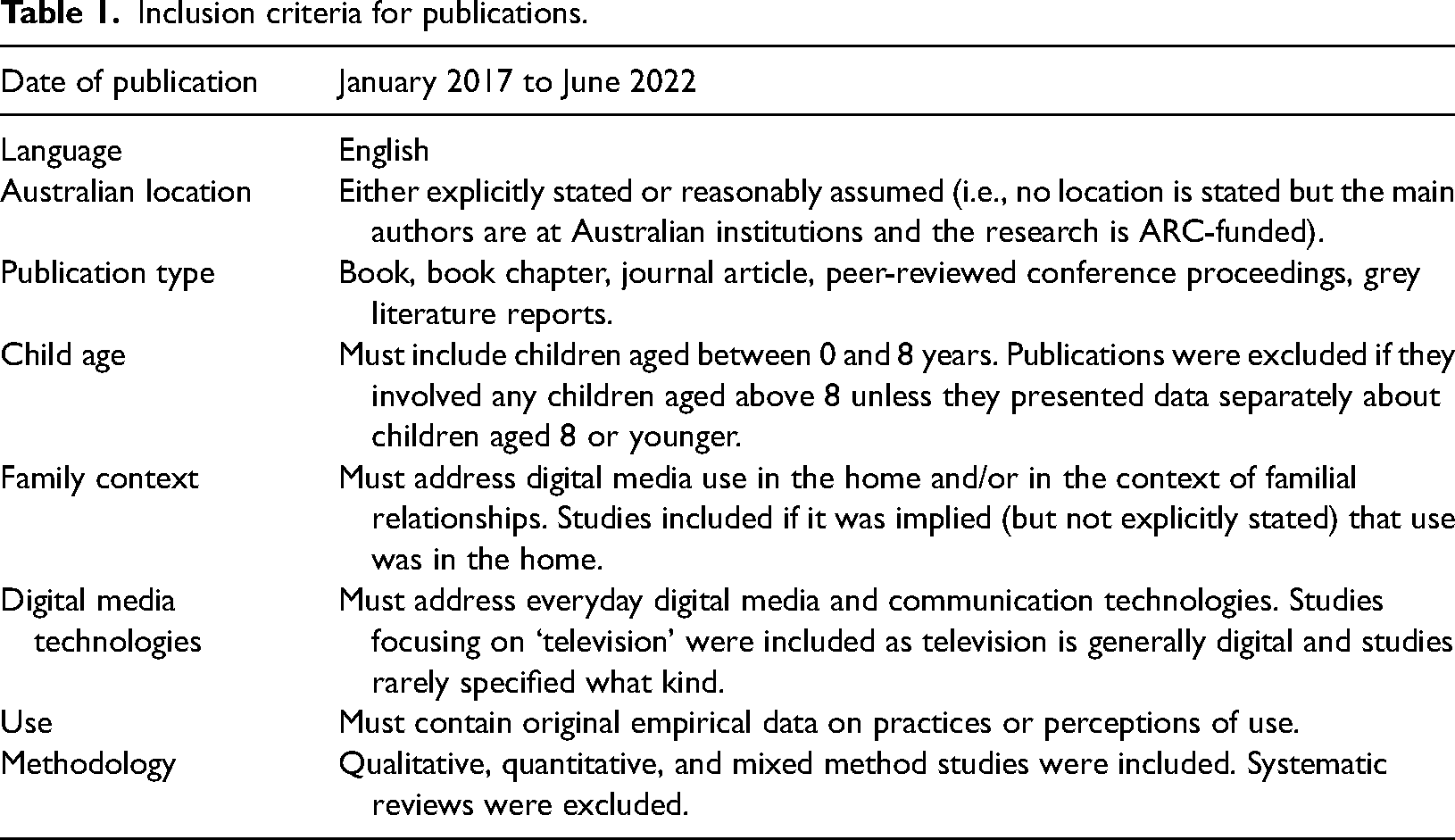
This preliminary screening process produced a sample of 141 publications for full-text screening – a process in which articles were read in full to confirm or deny inclusion according to the same criteria. Full-text screening produced a sample of 36 included publications.
Unlike other forms of structured review where search methods must be defined in advance, scoping review searches are often iterative and may draw on researchers’ existing knowledge and networks to ensure the best possible coverage of a field (Arksey and O'Malley, 2005). To this end, the sample was crosschecked against recent publications from Australian scholars known to be active in the field. This added 11 further publications. A grey literature search was also conducted through Google searches combined with a more targeted review of publications released by key organisations, such as the Office of the eSafety Commissioner. This added eight further publications.
This process produced a total sample of 55 publications for analysis.
Analysis process
For initial analysis, the following dimensions were captured about each publication (Table 2).
Dimensions analysed.
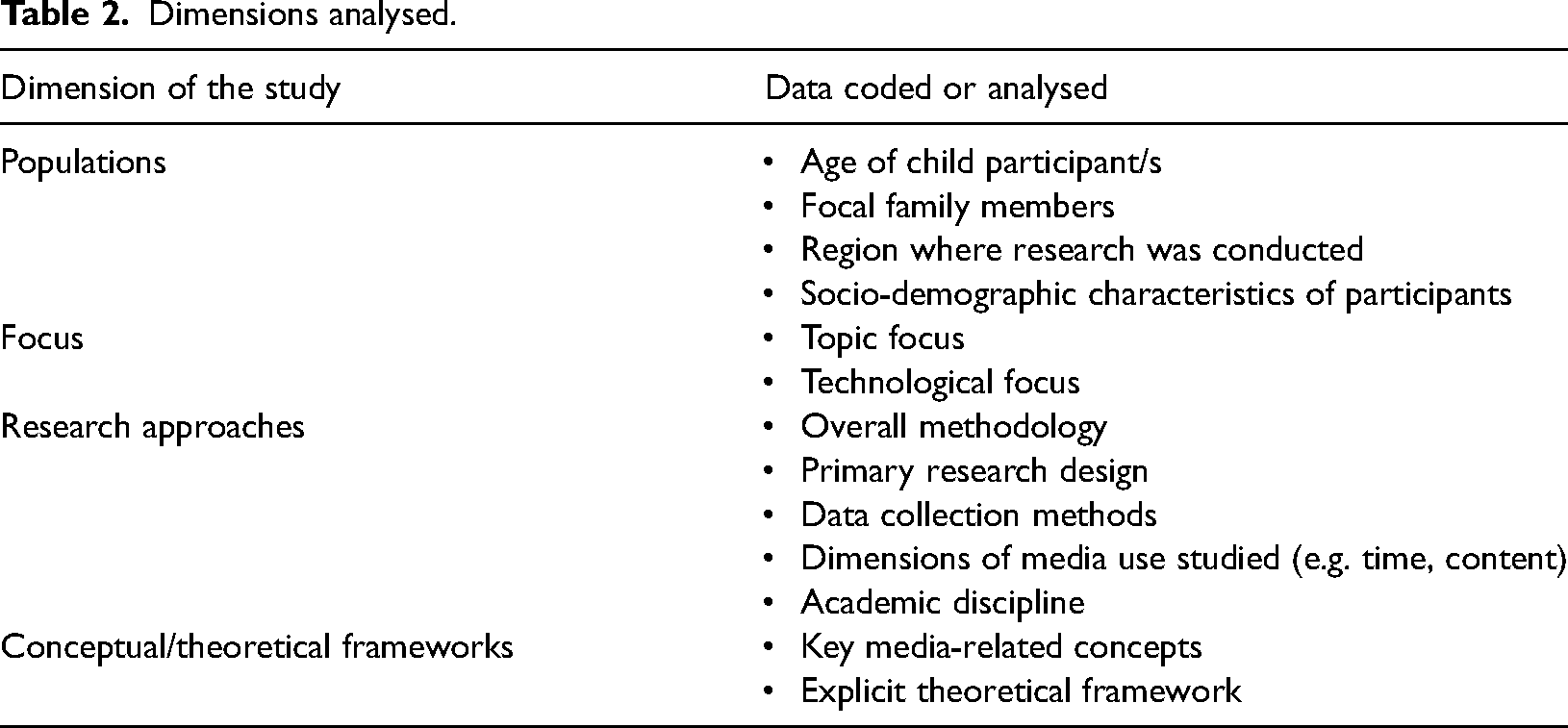
This process was conducted in Zotero by using the ‘tags’ function to manually code each publication for the elements listed above. 4
As noted, the data from this scoping review broadly mirror that of our international review so we are only presenting data here that are relevant to our aims of outlining a distinctly ‘Australian’ agenda for research on digital childhoods. A full overview of the scoping review findings is available in Supplemental Material 2.
Further details about analysis are explained in the finding sections below. At times, the coding analysis is supplemented with in-depth, qualitative analysis developed through close reading within subsets of publications.
Demographics and difference
To get a sense of the social contexts being studied, we coded publications that focused on a specific cohort of children or families, particularly those with minoritised demographics. We found that six publications (10.9% of the total sample) had this type of specific participant focus (Figure 1). We inductively coded the types of participants they examined (Figure 2). Where studies examined participants with multiple characteristics such as ethnic minority with a disability, we coded for all characteristics. Two studies are coded as focusing on ‘migrant/ethnic minority’ participants. Being a migrant is not synonymous with being an ethnically minoritised group and vice versa; however, the categories were not clearly defined in the studies so they have been grouped for simplicity. These studies are described in more detail in the discussion below.
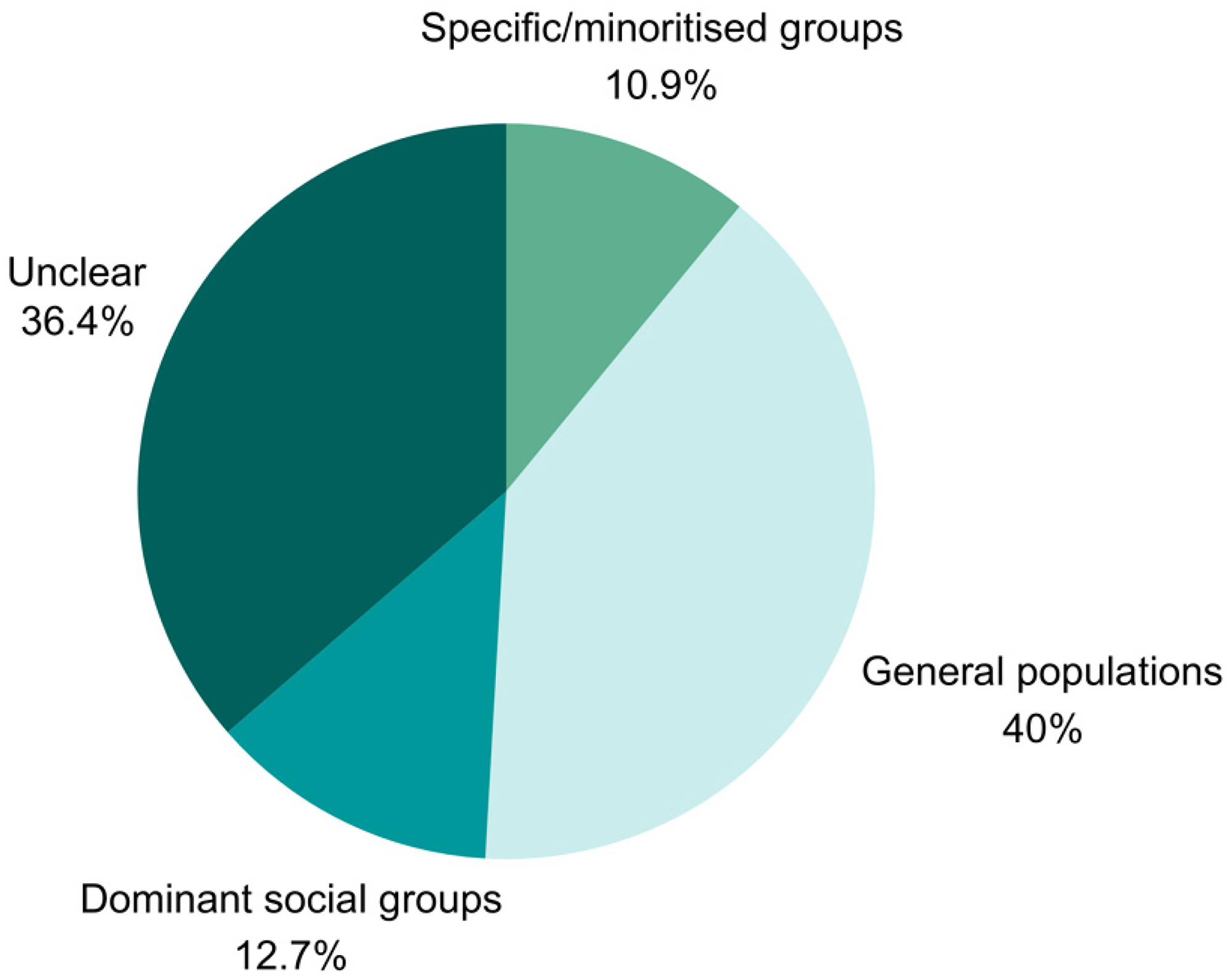
Type of participant sample.
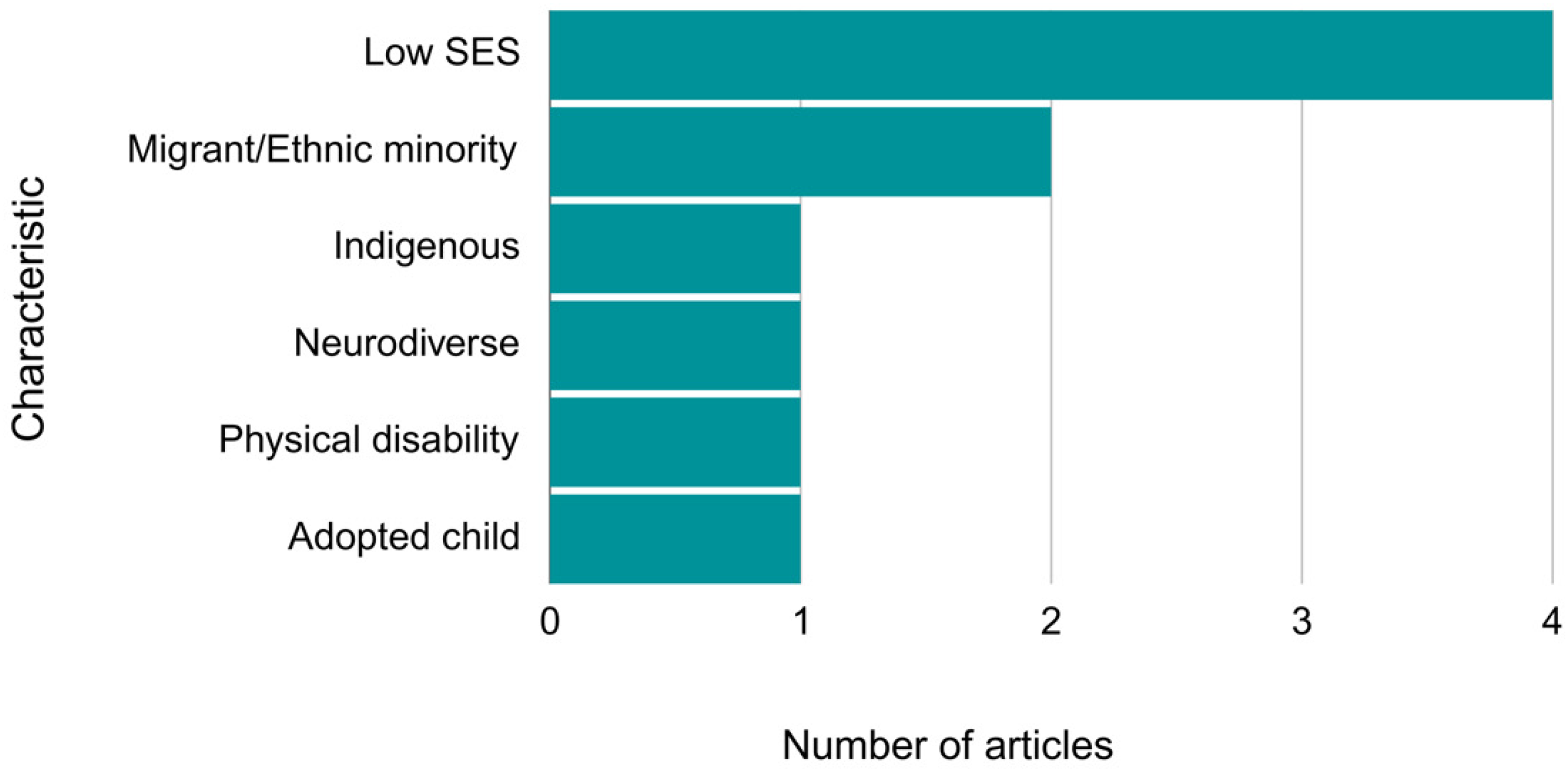
Target cohorts among studies that focused on specific populations.
We also examined the participant demographics in the remaining 49 studies that do not focus on a specific cohort of participants (Figure 1). Twenty-two studies (40% of the total sample) had a somewhat diverse participant sample, labelled ‘general populations’ in Figure 1. Some of these studies were using representative sampling approaches; in most cases, participants were from a range of socio-demographic contexts, but this was not due to representative sampling, nor discussed in the study or a feature of its analysis. A further seven publications (12.7% of the total sample) largely or wholly involved a homogenous sample of participants from dominant social groups (White, middle–upper SES, etc.). The remaining 20 publications (36% of the total sample) were deemed ‘unclear’ as they did not report participant demographics or did not report them clearly enough to analyse.
These findings suggest there is relatively little interest in understanding how the digital media experiences of young families may differ across contexts. In fact, our analysis somewhat overstates the interest in social contexts given that we coded studies as focusing on a particular type of family or child regardless of whether they elaborate on the meaning and implications of that social position. For example, one publication focuses on a case study of an adopted child who is of ‘Chinese heritage’ and has a physical disability (Fleer et al., 2018). We coded the study under ‘adopted child’, ‘migrant/ethnic minority’, and ‘physical disability’, but only the child's experience of disability is a focus of the study while the other two are noted in passing. This is not a critique of the article – not all social contexts are equally relevant for all studies – but it illustrates that there is less interest in diverse social contexts across the studies than our quantitative findings suggest.
To further examine the social contexts being studied, we coded each publication for the locations where the research occurred (full location findings are available in Supplemental Material 2). Two findings from this data are particularly relevant. Firstly, 16 studies gave minimal or no data about the location of the research. 5 This is surprising given the significant differences between urban, regional, rural, and remote populations in Australia. Secondly, none of the studies substantially engaged with rural or remote settings, which is notable given these settings typically experience greater barriers to digital connectivity (Thomas et al., 2023). 6
Overall, these findings illustrate that there is relatively little interest in understanding how the digital media experiences of young families in Australia may differ across contexts. This is in keeping with broader trends in English language research on young children and digital media, which has tended to focus on homogenous, advantaged populations. Jordan and Prendella (2019) note that most studies involve participants from ‘WEIRD’ (Western, Educated, Industrialized, Rich, and Democratic) countries and tend to leave out children within those countries who are poor, experience housing insecurity, or have a disability. Our international scoping review evidenced this at scale, finding a lack of attention to the lived experiences of children and families from minoritised groups, including those from low SES, Indigenous, racialised, and/or migrant backgrounds (Mannell et al., 2024). Echoing a wider history in which White middle-class childhoods are taken as a scientific model of ‘normal childhood’ (Sammond, 2005), research on children and media has largely taken a particular subset of children as sufficiently representative of digital childhood more broadly. In the sections that follow, we discuss how a lack of attention to differing Australian childhoods has elided the experiences of Indigenous and migrant families, and families facing digital exclusion, and demonstrate how Australian media research could make meaningful inroads in these areas.
Multicultural Australia: migrant and Aboriginal and Torres Strait Islander communities
Only two of the 55 publications focused on populations from migrant and/or ethnic minority backgrounds: a case study of the tablet use of an adopted child of Chinese heritage (Fleer et al., 2018) and a study of how children with ‘diverse needs’, including some from culturally and linguistically diverse (CALD) families, engaged with AI robot toys (Kewalramani et al., 2021). One further publication – a longitudinal study by the Australian Government Department of Social Services – focuses on Indigenous children. Among its varied findings, it notes growing rates of device and internet use (Department of Social Services, 2020).
While Indigenous, migrant, and ethnically minoritised populations are not yet a feature of research on digital media use by young families, they hold important places in Australian society. Australia has a vast, rich, and diverse First Nations history and present. Indigenous people in Australia constitute ‘a distinct social, cultural, and economic group’ and, despite two centuries of colonial violence and dispossession ‘remain in existence – socially, culturally, and spiritually strong – owing to centuries of successful anti-colonial resistance, political organisation, and cultural resurgence’ (Carlson and Frazer, 2020). Australia is also increasingly ‘superdiverse’ (Vertovec, 2007). Today, nearly half (48.2%) of Australians have a parent born overseas (ABS, 2022a). Almost 20% of the total population were born in countries referred to as ‘predominantly non-English speaking countries’ and just over 22% speak a language other than English at home (ABS, 2022b).
There are existing traditions of Australian media research that illustrate the potential of greater attention to these communities. In terms of Indigenous Australians, there is a growing body of digital media scholarship investigating how the politics of being Indigenous shapes digital and online experiences. While some of this work highlights the experiences of Indigenous Australians who face digital exclusion, such as those in remote communities (Featherstone, 2024), other research has examined how Indigenous Australians have continually ‘made successful and influential use’ of available communication technologies (Carlson, 2024). This latter research has focused primarily on how adults and adolescents use and experience social media platforms and dating apps, showing that ‘there are different stakes for Indigenous people in being online: both in terms of the possibilities it brings about and the risks it carries’ (Carlson and Frazer, 2020). For example, on one hand, Indigenous Australians use social media to extend cultural practices such as Sorry Business (Carlson and Frazer, 2015), affirm and celebrate Indigenous identity (Hutchings and Rodger, 2018), connect with relatives lost through forced removal (Carlson and Frazer, 2018), and engage in online activism (Fredericks et al., 2022). On the other, social media and dating platforms can disrupt traditional cultural practices and regularly ‘facilitate the reproduction of power hierarchies in which Indigenous people are subjected to racial violence, subjugation, and discrimination’ (Carlson and Frazer, 2018: 12; see also Carlson, 2020). As non-Indigenous researchers, it is not our place to specify precisely what research on digital media use by Indigenous Australian young families should address. 7 However, this scholarship indicates that there are likely to be important and distinct elements to the digital experiences of Indigenous families that need to be understood. This is reiterated by a recent report on the online experiences of older Indigenous children (aged 8–17 years) which found they are both more likely to have meaningfully creative, engaged, and social experiences online than national averages, and more like to be exposed to potentially harmful situations such as bullying and hate speech (eSafety Commissioner, 2022).
Similarly, in the context of migrant communities, there is a distinct body of Australian research investigating the complex roles that digital media play in configuring cross-border family communication (e.g. Baldassar, 2008; Cabalquinto, 2019; Zhao, 2019). These studies focus on how migrants sustain connections with their family members through the tactical use of a range of information and communication technologies. However, these studies focus primarily on the communicative affordances of digital technology as critical infrastructure for ‘doing family’ (Morgan, 1996) at a distance, without sufficient attention to how families from migrant backgrounds talk about and interact around digital media and devices. How migrant parents and children understand and negotiate the meanings of digital media and incorporate them in the different domains of everyday family life remains under-studied. Furthermore, this existing research largely focuses on the ‘transnational’ experiences of migrant families in terms of the geographical locations of family members. We are still unclear how families’ engagement with digital media not only takes place in the ‘transnational social field’ (Levitt and Schiller, 2004), but is heavily mediated by local institutions, cultures, and networks in the host countries. This is a particularly rich question in the context of families with young children as they are likely to be engaged in local networks of education and care that have direct implications for their digital media use. In this respect, we need a better understanding of the roles that digital media play in Australian migrant families. How and why do Australian families from migrant backgrounds incorporate digital technologies in their everyday family life? How are their transnationalised and localised media practices mediated by migrant cultures and norms around digital technology use? How do migrant parents and children negotiate media use in family contexts? Finally, we need more critical investigation of how uneven digital literacies and resources shape migrant families’ everyday engagements with digital media. The media experiences and concerns of families with refugee backgrounds, for example, may differ significantly from those who have migrated to Australia via business investment or skilled migration schemes. In this sense, focusing on intra-migrant diversity would further enrich knowledge about Australian family media use and disrupt any homogenous conclusions about the implications of media for children and families at large.
Examining media experiences and practices in culturally plural Australia therefore means paying attention to a diverse range of family structures, social relationships, and everyday experiences that intersect with family media practices. This perspective intentionally problematises the concepts of ‘Australian childhoods’ and ‘Australian families’, opening up much-needed academic discussions around diversity in family media use. This is not just an issue of inclusion and representation but will also push the field to explore new questions and approaches, as the types of children studied in media research shape ‘how we think about children and childhood, what questions we ask about media's role in children's lives, and the variables and contexts we consider to be important as we design our studies’ (Jordan and Prendella, 2019: 237). For example, in our scoping review, we found that among studies with a significant focus on particular family members, none attended to extended family members, such as grandparents. (Figure 3). This mirrors our international review, which similarly found very little attention to family members besides parents and mothers (Mannell et al., 2024), overlooks the many cultures in which extended family members, and even broader community members, play very active roles in raising children and thus in family media practices (c.f., Modecki et al., 2022). 8 Our argument then is that investigating the digital media practices of migrant and Indigenous families with young children, as well as other diverse families across Australia, will not only better capture the breadth Australian experiences (and, in doing so, contribute to areas that are under-researched internationally), it will also sensitise the field to new and important questions, theories, and approaches to researching digitally-mediated family life.
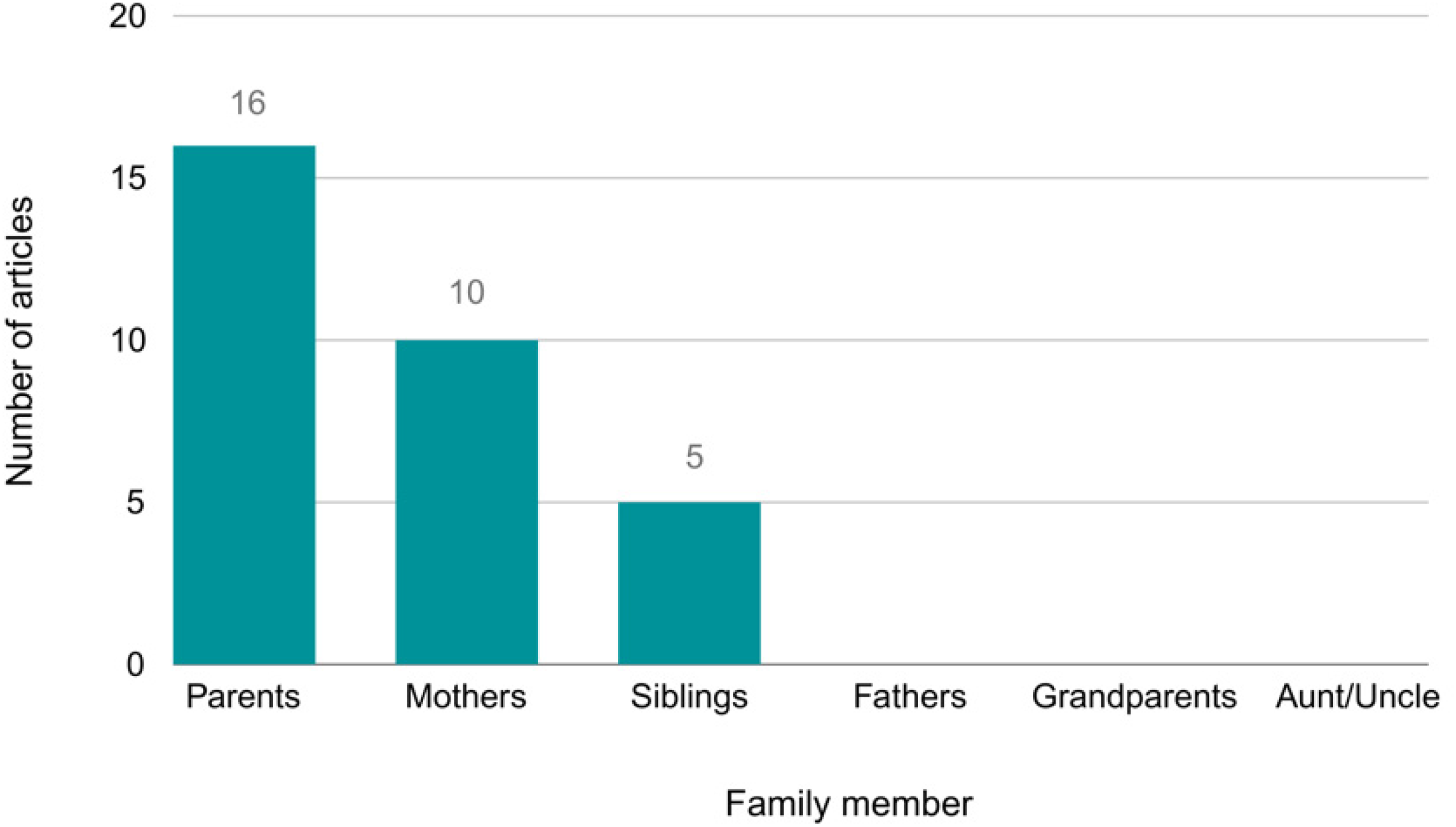
Studies that focus on specific family members.
Digital inclusion
So far, we have shown that there has been relatively little interest in understanding how the digital media experiences of young families differ across Australia and have argued for more attention to Indigenous and migrant contexts. Another context that also requires more attention is families facing barriers to digital inclusion. Digital inclusion refers to the ability to participate meaningfully in digital society through having both access and digital literacies and skills (Katz and Gonzalez, 2016; Livingstone and Helsper, 2007). Its inverse, digital exclusion, is often associated with broader social and cultural exclusions (Reisdorf and Rhinesmith, 2020; Warschauer, 2003).
There is a significant tradition in Australian research of examining communication infrastructures and their role in national building – a theme of particular importance given that Australia's geographical size has made providing equitable infrastructure difficult. This tradition includes substantial research on digital exclusion, which has shown that while rates of digital inclusion are improving, some communities face persistent barriers to digital participation (Thomas et al., 2023).
Yet, there is currently a lack of evidence about what this means for younger children. The findings of our review illustrate this in two ways. Firstly, as demonstrated in the findings above, there was little attention to groups that are statistically more likely to face digital exclusion. Australians living on low incomes, those with less education, those living in regional and remote communities, and Aboriginal and Torres Strait Islander Australians are far more likely to be digitally excluded (Thomas et al., 2023) and, according to our review, far less likely to be the focus of research on digital media use by young families. Secondly, when categorising the literature according to the topic of each study, we found no studies focusing on issues of digital inclusion (see Supplemental Material 2). To check if any studies engaged with digital inclusion issues in the course of discussing other topics, we reviewed the full text of each study again. We found one discussion of inclusion issues: a longitudinal survey about Indigenous children in Australia noted that children's access to technology at home was ‘significantly associated with the socio-economic characteristics of the family’ and that children in very remote areas had much lower access than those in urban areas (Department of Social Services, 2020). Of course, some Australian research on digital inclusion likely touches on the experiences of families with young children but our review suggests this is not yet a significant focus of inclusion or digital childhood research. This is a significant gap that urgently needs to be addressed because digital inclusion is associated with broader socio-economic success (Dezuanni et al., 2023).
To develop a fuller picture of how digital exclusion impacts young families in Australia, research should prioritise two key areas: (1) How digitally excluded children experience the digital media environment differently to their peers in terms of access to information, learning, and entertainment; and (2) the associated impacts of digital exclusion on early digital and media literacy development. It is important to focus on children's access to digital information, learning, and entertainment because these are central to success at school, social and cultural opportunities, the chance to participate in areas of interest, to develop passions, and to participate in communities (Katz and Gonzalez, 2016). In Australia, as in many similar countries, digital access has become essential for full participation in learning at school, particularly as students advance into upper primary school and into secondary school (Dezuanni et al., 2023; Gottschalk and Weise, 2023). Children's entertainment is now predominantly digitally focussed (Auxier et al., 2020), and the ways that children and young people socialise, engage with community, develop friendships, and form identities are interwoven with digital participation (Jenkins et al., 2016). As a result, digitally excluded children are likely to have different educational, social, and cultural experiences to their more advantaged peers and this has consequences for the kinds of cultural capital (Livingstone and Sefton-Green, 2016) they can develop.
To better understand the impacts of digital exclusion on children's opportunities to develop cultural capital, we need extensive qualitative research about their everyday digital (and non-digital) experiences. While not captured in our sample as it was published too recently, one example of this work is the ‘Advancing Digital Inclusion for Low Income Australian Families’ project (Dezuanni et al., 2023) which conducted research with low-income families in six Australian communities. Researchers visited families several times to gain an in-depth understanding of family members’ access to digital technologies, how they learnt to use technologies, and what they spent their time doing. Rich descriptions of children's use of digital technologies provided nuanced accounts of the complex ways low-income children navigated their inadequate access to digital technologies. This kind of work needs to be replicated and expanded to address other forms of digital exclusion that are being experienced by Australian children; for example, children living with a disability, children living in remote locations, and Aboriginal and Torres Strait Islander children.
A second area that needs urgent attention is the impacts of digital exclusion on early childhood digital and media literacy development. Digital and media literacy includes a range of operational, cultural, and critical skills and knowledge (Dezuanni, 2015; Green and Beavis, 2012) that contribute significantly to successful participation in the digital society and economy. Children with less access to digital technologies and less support at home to use technologies are unlikely to develop digital and media literacies in tandem with their more advantaged peers. We know from nationwide testing in Australia that children from low-income families perform significantly worse on Information and Communication skills tests than children in more advantaged circumstances (Hall et al., 2023). We also know from a nationally representative survey that less advantaged Australians have much less confidence in their digital media abilities than Australian adults who are more advantaged (Notley et al., 2024).
Better understanding the experiences and impacts of digital exclusion for young children would not only provide a fuller picture of digital childhoods in Australia and aid improving outcomes for all Australian children, it would also contribute much needed nuance to the international research field. As noted above, English language research has largely focused on privileged populations – populations that tend to be more digitally connected and have greater digital literacy. As a country in which digital inclusion remains unequal, Australian research has an important opportunity to provide evidence about what is at stake and how best to support families facing exclusion.
Conceptual approaches to parenting
Our findings also identify a second substantial area of need and opportunity around conceptual approaches to parenting. As noted above, research on digital media and young families has a strong focus on parents, particularly mothers (Figure 3). To better understand how family relationships are conceptualised within our Australian literature sample, we reviewed whether and how parenting was implicated in each publication. Most of the studies focused on instrumental dimensions of parenting: namely how parenting practices could optimise positive outcomes for children or mitigate negative ones. This manifested in three main ways. First, many studies were motivated by, or produced conclusions about, educating or supporting parents to avoid digital media harms (or, less often, to optimise benefits). For example, several studies concluded that strategies were needed to support better adherence to Australian government ‘screen time’ guidelines (Cliff et al., 2017; McNeill et al., 2020; Santos et al., 2017). Secondly, studies directly examined the impacts of parenting practices on children's media use and associated harms or benefits – for example, by studying correlations between parental behaviours and how much ‘screen time’ children have (Downing et al., 2019). Thirdly, studies implicitly addressed parental responsibility through their focus on the positive or negative impacts of home-based media behaviours (e.g. Dadson et al., 2020; Litterbach et al., 2017). A few studies also examined how parents’ own media use might affect their children, such as how parents’ mobile device use impacts playground supervision (Mangan et al., 2018).
Overall, then, there is a heavy focus on concrete, instrumental dimensions of parenting with most studies taking the aims and functions of parenting on face value. The studies contained little conceptual engagement with cultural constructions of parenthood, or with other factors that shape meanings and experiences of parenting. This is partly due to the dominance of health and education disciplines across the literature we studied (see Supplemental Material 2 for discipline coding; see also Mannell et al., 2024). Within these disciplinary perspectives, parents are primarily relevant for their role as enabling or mitigating factors in positive or negative outcomes. What this leaves out, however, is a more fundamental question about how ‘good parenting’ is constructed within cultural contexts, and how this shapes the way that young families perceive and engage with digital technologies in their everyday lives.
Examining Western parenting cultures
While literature on Australian children and technology rarely considers the cultural constructions of parenthood, these constructions are, of course, central to how families with young children navigate digital technologies. There is a need to better understand how Western parenting culture shapes the experiences of Anglo-Australian families, and how this informs the norms against which all families are compared. While our review suggests that much of the research is being conducted within Anglo-Australian contexts and families, this is currently taken as a kind of neutral setting that has not yet been subject to much investigation. Put simply, we see Australian media research as having an important opportunity to interrogate how White middle-class parenting cultures intersect with normalised practices and discourses around family digital media use. Anthony Albanese's recent comments when announcing the federal government's social media ban helpfully illustrate this as he made several references to the importance of sport in an Australian childhood and diametrically opposed this ‘positive’ vision of childhood with time spent using digital technology. This included comments like ‘Parents want their kids off their phones and on the footy field. So do I’ (Long, 2024). These comments demonstrate how conversations about digital technology are embedded in broader cultural norms about the meaning of a good childhood and good parenting.
There are substantial scholarly resources that could inform an inquiry into how Australian parenting cultures, and Western parenting cultures more broadly, intersect with perceptions and experiences of digital media in family life. Sociological and historical literature has examined how parenting evolved in Anglo-Celtic and American contexts across the 19th and 20th century, leading to specific expressions of contemporary parenting culture (see Lee et al., 2014). This research has, for example, tracked the rise of ‘intensive parenting’ – an expectation that good parenting involves unprecedented amounts of time, money, and attention (Hays, 1996). As children have been perceived as increasingly vulnerable and at risk, the expectations around raising them have increased, with parents now seen as almost wholly determining the physical, psychological, emotional, and, increasingly, neurological wellbeing of their children throughout their lives, including adulthood (Faircloth, 2014). Particularly for middle-class families, a child's development is no longer something that unfolds spontaneously given a safe and supportive environment; it requires the ‘concerted cultivation’ of children's talents and abilities (Lareau, 2003) and the proper application of parenting skills informed by the latest scientific evidence. For parents of very young children, there is a heightened pressure to get parenting ‘right’ as they are urged that their child's ‘first years last forever’ by shaping their brain function in ways that determine their futures (Lee et al., 2014).
A few Australian studies have begun to raise this broader cultural context. Within the literature we reviewed, Lupton's (2017, 2020) studies of pregnancy and infant tracking apps note the intensification of practices central to the idea of ‘good’ mothering, particularly intensive monitoring and seeking and acting on information. Work by Page Jeffery (2020), which was not in our sample as it addresses teenagers, has similarly drawn attention to the emphasis on monitoring in constructions of ‘good parenting’ and how this intersects with parental mediation of teens’ online activities.
Expanding these investigations will provide both more contextualised understandings of Australian digital childhoods and meaningful contributions to the international research field. While conducting our international scoping review, we found that explicit discussion of parenting culture was almost exclusively limited to studies of families from non-Western or marginalised contexts. For example, a study of tablet use among Vietnamese pre-schoolers provided detailed context about the parenting culture in Vietnam, such as the tendency for children to be closer to their mothers and the high value parents place on education (Pham and Lim, 2019). This kind of cultural context was absent from studies that were largely about White and/or middle-class parents in countries like the USA, the UK, and Canada (for an exception not captured in our review, see Willett, 2023). By pursuing these questions, Australian research can generate much needed insights into how Western parenting cultures are shaping debates and experiences around children's media.
Conclusion: toward a richer understanding of young children's digital media use
This article has identified significant opportunities for Australian media and communications research to contribute to both national and international understanding of digital childhoods.
These opportunities are focused on three key areas: how Indigenous and migrant families experience and navigate digital media, how digital exclusion shapes early childhood experiences, and how Anglo-Celtic Australian parenting cultures inform normative understandings of children's digital media use. Deeper attention to these areas would not only provide a fuller picture of Australian digital childhoods but would also address areas of significant need in international research. Ultimately, we suggest that each of these areas will better explain how the digital media use of families with young children is a deeply contextual phenomena – the meanings and implications of which cannot be easily generalised. While we have focused primarily on the contributions this would make to scholarly discussions, this kind of analysis – which considers how the meaning and implications of digital childhoods differ across contexts and unpacks the social constructs surrounding them – is also much needed within public debates. This was poignantly illustrated by the Australian governments’ social media ban campaign, mentioned earlier, which hinged on false assumptions about broadly generalisable effects and notably ignored evidence about the significance of social media for young people in marginalised contexts. While our review here has focused on much younger children and a broader range of digital media use, our point is that in a context where well-meaning but misguided attempts to catch up on technology regulation are finding fertile ground, nuanced research about the breadth and meaning of digital media use has never been more important.
Supplemental Material
sj-docx-1-mia-10.1177_1329878X251337831 - Supplemental material for What Australian research offers the study of digital childhoods: A scoping review of digital media use by families with young children
Supplemental material, sj-docx-1-mia-10.1177_1329878X251337831 for What Australian research offers the study of digital childhoods: A scoping review of digital media use by families with young children by Kate Mannell, Xinyu Zhao, Julian Sefton-Green and Michael Dezuanni in Media International Australia
Footnotes
Acknowledgements
We thank Scheherazade Bloul for her Research Assistance in the early phases of this project.
Declaration of conflict of interests
The authors declared the following potential conflicts of interest with respect to the research, authorship, and/or publication of this article: One of our authors, Xinyue Zhao, is on the editorial board of this journal at the time of submission. Xinyue will not be involved with any editorial decisions or processes relating to this article.
Funding
The authors disclosed receipt of the following financial support for the research, authorship, and/or publication of this article: This research was supported by the Australian Research Council Centre of Excellence for the Digital Child (grant number: CE200100022).

Supplemental material
Supplemental material for this article is available online.
Notes
References
Supplementary Material
Please find the following supplemental material available below.
For Open Access articles published under a Creative Commons License, all supplemental material carries the same license as the article it is associated with.
For non-Open Access articles published, all supplemental material carries a non-exclusive license, and permission requests for re-use of supplemental material or any part of supplemental material shall be sent directly to the copyright owner as specified in the copyright notice associated with the article.
