




Abstract
This study explores how political leaders use TikTok to construct and communicate political authenticity through strategies of immediacy, consistency and ordinariness. Through a combined qualitative and quantitative method, we take a case study approach and analyse 380 videos by the political leaders in Queensland, Australia. Immediacy, the most prominent authenticity type, demonstrates high engagement, reflecting the platform's demand for real-time interaction. The concept of ambivalent ordinariness, where politicians blend personal and political personas, emerges as a significant strategy. This is exemplified by videos showing personal activities like cooking, which humanise the political image. However, the study also acknowledges the paradox of performative politics, where strategic efforts to appear genuine may undermine perceived authenticity. The research contributes to understanding how social media platforms like TikTok can effectively contribute to political engagement, offering insights into the interplay between digital media strategies and authentic political communication.
Introduction
TikTok has rapidly emerged as a platform for information dissemination and public engagement (Grantham, 2024; Lewis and Grantham, 2022). Its unique content and distribution model has proved highly influential on public opinion. Despite continuous ban threats and doubts about the platform's unfamous opacity (Hooton, 2023), as shown by an emerging stream of literature, TikTok has surfaced as a pivotal platform in political communication, offering a medium for engaging with a diverse and predominantly younger audience (Cervi et al., 2023; Grantham, 2024; López Fernández, 2022; Moir, 2023). Its significance extends beyond traditional political messaging. TikTok facilitates a form of ‘civic imagination’ (Jenkins et al., 2016: 30; Literat and Kligler-Vilenchick, 2021: 2), enabling users and political figures alike to contextualise and tackle political issues in ways that are relatable and accessible. This is particularly important given the platform's reach among younger demographics, who are often less engaged in conventional politics (Vijay and Gekker, 2021). The brevity and creative nature of TikTok content allow for the concise yet impactful presentation of issues, fostering engagement among a demographic that might not be reached through traditional media channels. Furthermore, the platform's algorithmic promotion of content based on user engagement patterns amplifies visibility (Zhang and Liu, 2021). This combination of accessibility, creativity and algorithmic amplification makes TikTok an influential tool in modern political communication (Cervi and Marín-Lladó, 2021).
Although an important stream of literature has pointed out the increased valorisation of authenticity in political communication (Enli, 2015; Serazio, 2017), especially on social media (Enli, 2025), TikTok has brought about a renewed surge in demand for genuineness (Chu et al., 2024) to the extent that authenticity has become a crucial aspect and a self-presentation norm on the platform (Barta and Andalibi, 2021). Accordingly, politicians face the challenge of constructing their personality and presenting themselves as authentic by adhering to TikTok's vernaculars, adapting and sometimes mimicking the techniques of influencers’ marketing (Cervi, 2023). In order to explore if/how politicians construct authenticity on TikTok, we draw from the Australian case of Queensland's political leaders.
Despite a decline in its political use in 2023 due to identified risks (Hooton, 2023), most political figures in Australia have continued or resumed its use, underscoring its relevance and dynamic role in contemporary political communication (Cervi et al., 2023; López Fernández, 2022; Moir, 2023), but no study so far has analysed in-depth how this medium is used by Australian politicians. To fill this gap, the present work analyses TikTok usage by Queensland politicians from 1 January 2023 to 31 January 2024. The politicians considered in the study are the former Queensland Premier (up to the day of her resignation) – Annastacia Palaszczuk; her replacement, Queensland Premier (from the date of his appointment on 12 December) – Steven Miles; and Leader of the Opposition – David Crisafulli. The research assesses 380 videos for content, engagement and political authenticity, employing Luebke and Engelmann's (2023) three-dimensional definitions of immediacy, ordinariness and consistency.
This research explores the following research questions:
RQ1: In what ways do the Queensland Premier and Opposition Leader use TikTok to engage users? RQ2: How do they construct political authenticity?
Literature
TikTok and political communication
TikTok's rise in the digital realm has redefined the landscape of social media with its unique approach to content and engagement (Zhang and Liu, 2021). As a platform where an account or established social network is not a prerequisite for accessing content, TikTok sets itself apart by leveraging a sophisticated algorithm that suggests videos based on trends and individual viewing histories (TikTok, 2020; Zhang and Liu, 2021). This method ensures that engaging posts gain further traction, perpetuating a continuous cycle of viewer interaction (Oden and Porter, 2023; Schellewald, 2023).
This open-access model has not only facilitated unprecedented growth in terms of downloads but also enabled users to explore a myriad of niches and communities, fostering a sense of personal discovery among its audience. By 2020, TikTok was the most downloaded app globally, reaching 1.5 billion downloads by the year's end (De Leyn et al., 2021), and it experienced a significant surge to 4.4 billion downloads by 2023 (Iqbal, 2024). The platform boasts over 1.5 billion monthly active users, capturing more than 20% of internet users worldwide (De Leyn et al., 2021; Iqbal, 2024). In Australia alone, TikTok has captivated more than 8.5 million users, representing over 40% of the country's adult population (Long, 2023).
TikTok has metamorphosed into a platform for collaborative political dialogue, enabling users to address complex issues with a touch of creativity and levity (Literat and Kligler-Vilenchik, 2021). The platform champions ‘civic imagination’, empowering users to utilise popular culture as a lens to frame political narratives, enhancing their appeal and accessibility and serves as a medium for collective political expression (Jenkins et al., 2016: 30; Literat and Kligler-Vilenchick, 2021: 2). Despite its concise format, TikTok's content holds the power to captivate and influence, establishing a deep rapport with its audience and facilitating meaningful idea exchanges (Wang, 2020), making it a unique platform for politicians to engage with younger demographics, fostering political awareness and participation and allowing them to present an authentic and relatable image.
Even if TikTok has an explicit ban against paid political advertisements (Chandlee, 2019), political actors worldwide are joining the app, regarding it as a ‘unique opportunity to (re)connect with young people’ (Cervi and Marín-Lladó, 2021: 12), often disillusioned by traditional messaging (Collin, 2015). By leveraging trends, memes and influencer collaborations, politicians can amplify their visibility and relatability, particularly through behind-the-scenes glimpses and personal stories (Rastrilla et al., 2023; Wilches Tinjacá et al., 2024). Scholars highlight TikTok's ability to humanise candidates (Ariza et al., 2022) and foster ‘politainment’ – a blend of politics and entertainment – though concerns about polarisation and hate speech persist (Battista, 2023; Cuevas-Calderón et al., 2022). Its approach to content creation and sharing has been pivotal in influencing public perspectives, notably among youth. Previous literature shows that despite its potential for dynamic voter engagement and authenticity, many politicians misuse TikTok as a traditional promotional tool, failing to adapt to its informal, fast-paced nature (Bösch and Ricks, 2021; Zurovac, 2022). Success requires trend-based, authentic content (Cotter et al., 2022; Moir, 2023), yet unfamiliarity with these dynamics risks alienating audiences (Muñoz, 2021). However, TikTok's potential in governmental outreach are demonstrated by its influential role in the 2022 Australian Federal electoral campaigns (Grantham, 2024). During this election campaign, the Australian Labor Party used TikTok's performance features and participatory approach to engage in negative campaigning with humorous content (Grantham, 2024). Similarly, TikTok has proven to be an essential tool for political communication in Latin America (Figuereo Benítez et al., 2022) and in Europe (Bösch and Ricks, 2021; Cervi, 2020). In general, recent research has shown that political actors tend to concentrate on the performativity side of the platform using it for a form of promotion that leads to politainment (Cervi, 2023), rather than using it as a tool for direct communication with the electorate.
Despite its broad reach and potential for impactful messaging, TikTok has encountered significant challenges. Ethical concerns surrounding TikTok's parent company, ByteDance, have sparked debates about data privacy and geopolitical risks (Jia and Liang, 2021). These concerns have led to regulatory scrutiny in several countries (Gray, 2021), prompting restrictions on the platform, including bans on government devices in countries like the USA and Australia, highlighting widespread fears about potential data misuse by foreign entities. Paradoxically, despite TikTok’s extensive use during the last European campaign, the European Parliament, European Commission and the European Union Council have imposed bans on the app for staff devices. Additionally, under the European Parliament's ban, lawmakers and staff were advised to remove the TikTok app from their personal devices (Goujard and Wax, 2023).
Authenticity and the role of TikTok in politics
Social media use, inherently strategic in nature, is a public performance where authenticity is a key construct (Vainikka et al., 2017).
Social media content displaying people in seemingly unscripted moments, thus perceived as authentic, has proven to be exceptionally spreadable, as it tends to connect emotionally with users, making it a viral phenomenon (Abidin, 2017). A prominent reason why the fascination with genuine, real and un-staged moments has intensified is that media are increasingly perceived as unreal, staged and manipulated. As a counterweight to phenomena such as virtual reality, disinformation and artificial intelligence, the (apparently) raw, unproduced and unprocessed has become appealing in the context of popular culture.
The concept of authenticity, often used to assess the genuineness of objects or individuals, is understood from a constructivist perspective as a socially constructed attribute, focusing on how authenticity is assigned, staged and performed (Grazian, 2018). In social media culture, authenticity merges with sincerity, encompassing honesty and revealing one's inner life. Drawing from Goffman's (2002) dramaturgical approach, Maares et al. (2021) consider that individuals strategically perform and control impressions to maintain a positive identity and avoid stigma. People are motivated to be perceived positively and avoid anything that could damage their identity. This performance, termed authenticity labour (Maares et al., 2021), involves the careful performance of authenticity to build sociocultural capital, which can later be converted into economic capital. This labour includes showcasing a passion for work, being constantly ‘on’, selectively sharing personal matters, and presenting an authentic persona that manages roles across different contexts (Abidin, 2020; Duffy and Hund, 2015; Long and Wilhoit, 2018).
Coming across to voters as ‘authentic’, trustworthy, and, thus, honest is increasingly becoming a key criterion for politicians to be elected (Enli, 2015). In media-saturated societies, voters get most of their information about politics and politicians through mediated communication. Accordingly, their evaluation of politicians’ trustworthiness/authenticity highly depends on how politicians’ performances adapt to each medium's specific logic, affordances and cultural environment.
Starting with this premise, Enli suggests the so-called ‘paradox of mediated authenticity’, referring to the fact that even though we rely heavily on mediated representations for our understanding of the world and society, we are still very much aware that the media is often constructed, manipulated and sometimes even faked (Enli, 2015). Mediated authenticity, therefore, is a social construction but claims legitimacy as a representation of raw and unscripted reality that involves complex interactions among politicians, media and audiences (Luebke, 2021; Luebke and Engelmann, 2023). Luebke (2021) offers a comprehensive framework to analyse this construct, dividing it into three distinct yet interconnected perspectives: performed, mediated and perceived political authenticity. The concept of performed authenticity is intricately linked to the strategic actions and performances of politicians. Some see this as manipulative and contrary to genuine political messaging. The idea of ‘the paradox of performative politics’ suggests that performed authenticity is not merely a sincere revelation of the politician's inner self but a calculated performance to construct an authentic image (Alexander 2010: 167). Luebke (2021) further elaborates on this, describing performed political authenticity as a specific style of performance with the goal of crafting an image that appears genuine to the audience. Mediated political authenticity is the process of shaping perceptions of authenticity through the lens of journalistic and media technologies, including social media. This perspective emphasises the influence of technological features inherent to social media platforms, such as direct messaging and personal information sharing. These features can affect the conveyance of political performances, fostering a sense of immediacy and blurring the boundary between personal and public communication (Manning et al., 2017). The third approach, perceived authenticity, is the audience's subjective judgement of a politician's genuineness. Perceptions of authenticity can vary significantly based on ideological leanings, political attitudes and media consumption habits, suggesting that alignment with a political party or ideology can influence perceptions of a politician's authenticity (Hahl et al., 2018). This emphasises the para-social relationship that must occur (Wang, 2020).
Different authors (Gaden and Dumitrica, 2015; Enli, 2015; Luebke, 2021) have used different criteria to assess political authenticity.
In this paper, we will use Luebke and Engelmann's (2023) definitions to assess political authenticity, distinguishing between immediacy, ordinariness and consistency. Immediacy is direct and spontaneous communication, often delivered on social media, such as what appears to be unscripted moments that respond to live or current matters. Consistency refers to the alignment between a politician's beliefs, actions and public persona and encompasses when a politician discusses party-driven policy. Ordinariness is about presenting oneself as an approachable, everyday person (Luebke and Engelmann, 2023).
Ambivalence
Gun Enli's proposal to assess political authenticity mainly aligns with Luebke and Engelmann's definitions (2023). However, when studying populist communication she adds the category of ambivalence. According to Enli (2025), ‘in political communication, ambivalence is mainly seen in the version of populist politicians, as they often question the authority of politicians and elites and thus place themselves as both an actor (politician) and an opponent (anti-politician)’ (Enli, 2015: 137) and is considered a marker of authenticity.
As Mudde (2004) explains, populist leaders are not necessarily true outsiders, as they are often connected to or members of the elites. Still, they are perceived as such because they master strategic ambivalence. For example, Donald Trump in the USA and Silvio Berlusconi in Italy, both multimillionaire tycoons, were able to incarnate the ‘political outsider’, the antithesis of the political establishment, by praising their lack of political experience. Trump, for instance, turned his rawness into a performative asset, denying being a politician during his campaign: ‘I am a businessman, not a politician’ and ‘I am not a politician. Thank goodness!’ This allowed them to present themselves as ordinary men, thus as ‘one of us’. However, as Enli (2025) points out, this is paradoxical and comes across as strategic ambivalence because it downplays their position in the economic establishment and power relations.
Similarly, populist leaders tend to construct their persona in an ambivalent way, simultaneously embodying ‘the man of the street’, who knows what people need, and the charismatic leader who can save them (Cervi, 2020). This performed ambivalence can be risky: according to Enli (2025), ambivalence is more advantageous for populists than mainstream politicians because populism is founded on scepticism towards authorities.
Since none of the analysed politicians are theoretically considered populist we have not included ambivalence in our analysis, however, our results have shown that this criterion is needed to describe specific practices.
Elections in Australia
In Australia, state elections are characterised by various voting systems, each tailored to meet the diverse needs of the electorate. Systems such as first past the post, preferential and proportional representation (single transferable vote) are used (Smith et al., 2023). These methods ensure that the electoral outcomes align closely with the voters’ preferences, contributing to political stability and limited demand for electoral reforms. The adaptability and effectiveness of these systems reflect their capacity to accommodate regional variations and the distinct political landscapes of each state (Smith et al., 2023).
One of the distinctive features of the Australian electoral system is compulsory voting, which mandates that all eligible citizens participate in elections. This policy, introduced in 1924, ensures a high level of civic engagement and voter turnout, significantly higher than in countries where voting is optional (Brett, 2021).
Methodology
This study examines the use of TikTok by Queensland's political leaders to cultivate performed political authenticity (Luebke, 2021; Luebke and Engelmann, 2023). As the 2024 Queensland election approached, this phase of the study analyses thirteen months of data from former Queensland Premier (up to the day of her resignation) – Annastacia Palaszczuk (n = 84), her replacement, Queensland Premier (from the date of his appointment) – Steven Miles (n = 21) and Leader of the Opposition – David Crisafulli (n = 275). Employing a mixed-method content analysis the research analyses 380 TikTok videos, focusing on the period from 1 January 2023 to 31 January 2024. This time period was chosen to analyse the development of political authenticity by the political leaders who would be running for Premier in the 2024 Queensland State election. The analysis assessed the content, engagement patterns and political authenticity using Luebke and Engelmann's (2023) approach of immediacy, ordinariness and consistency. Using an interpretivist epistemological framework, which enabled the exploration of how political authenticity is constructed and visibility labour techniques are employed in TikTok videos, these definitions from Luebke and Engelmann (2023) were used to code each video as outlined in the Codebook (Appendix A). The coding was done to determine if the authenticity type was present or not based on the approach from Luebke (2021).
The meta-data and a live link to the video were collected. The meta-data include posting dates and number of views, likes, comments and shares. Then, a codebook (Appendix A) was used to analyse each video. This included analysing the topic of the posts, whether a trend was used, performance features and if humour was present.
It must be acknowledged that Premier Palaszczuk ceased using TikTok between 29 March and 16 June 2023, resulting in a much smaller data set. Premier Miles did not recommence using his account until after he was appointed Premier on 12 December, resulting in a much smaller data set. However, as both accounts relate to the same political party leadership, it can be considered that the data for the ALP Queensland was a total of 105 TikTok videos. Although this is significantly smaller than the number of videos posted by Crisafulli, this presents a finding that these two politicians missed a crucial opportunity to develop their political authenticity in the year preceding the Queensland State election.
Two pilot coding sessions were performed. The first pilot returned an average Cohen's kappa of 0.72. The areas of disagreement were mainly related to trends and performance features, which required some reconsideration of the definitions to ensure all bias was removed. The second pilot returned an average Cohen's kappa of 0.89.
In alignment with an interpretivist epistemology, the analysis was strengthened, and the rigour of results was ensured through qualitative measures, including a close engagement with the data.
Results
Account meta-data
The three political accounts used in this research have a high number of followers and high engagement in relation to the population size. Two were established in 2021, with the Crisafulli account commencing in March and the Palaszczuk account commencing in June. Meanwhile, the Miles account was established in June 2022 (Table 1).
Account metadata.

Figures 1‒3 show the engagement across the three accounts. They draw on the number of plays only, as the likes, comments and shares were minimal in comparison. Crisafulli's account across the analysed data shows a slightly more consistent engagement rate, with one significant peak on 30 November with 3.6 million views (Figure 3), while Palaszczuk's (Figure 1) and Mile's (Figure 2) accounts show less consistency but high engagement, particularly for Palaszczuk given the smaller number of videos posted during the collection period. The lower number of videos on these two accounts suggests a missed opportunity in the year prior to the election year for Queensland State politics.
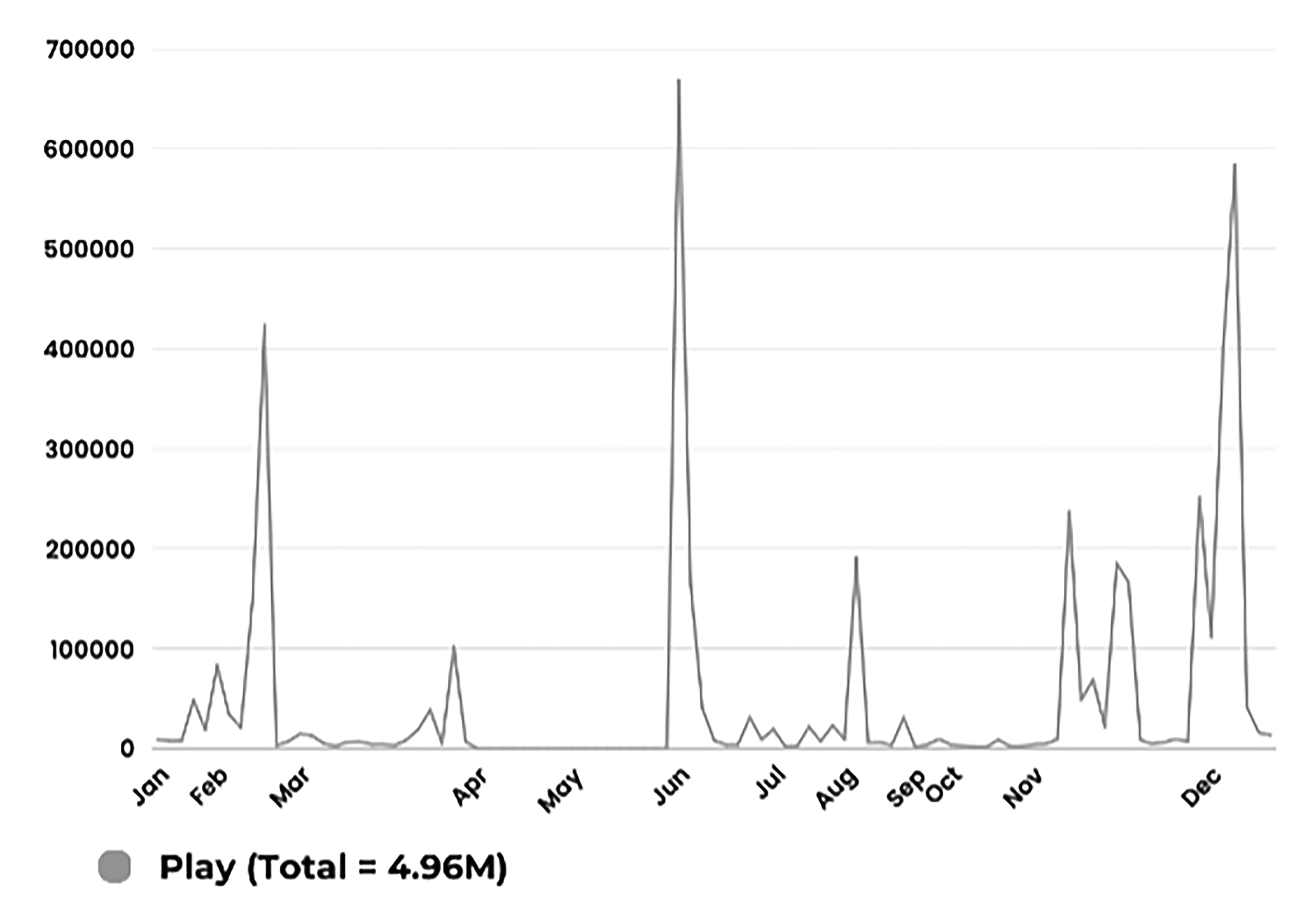
Play rate by date – Palaszczuk.
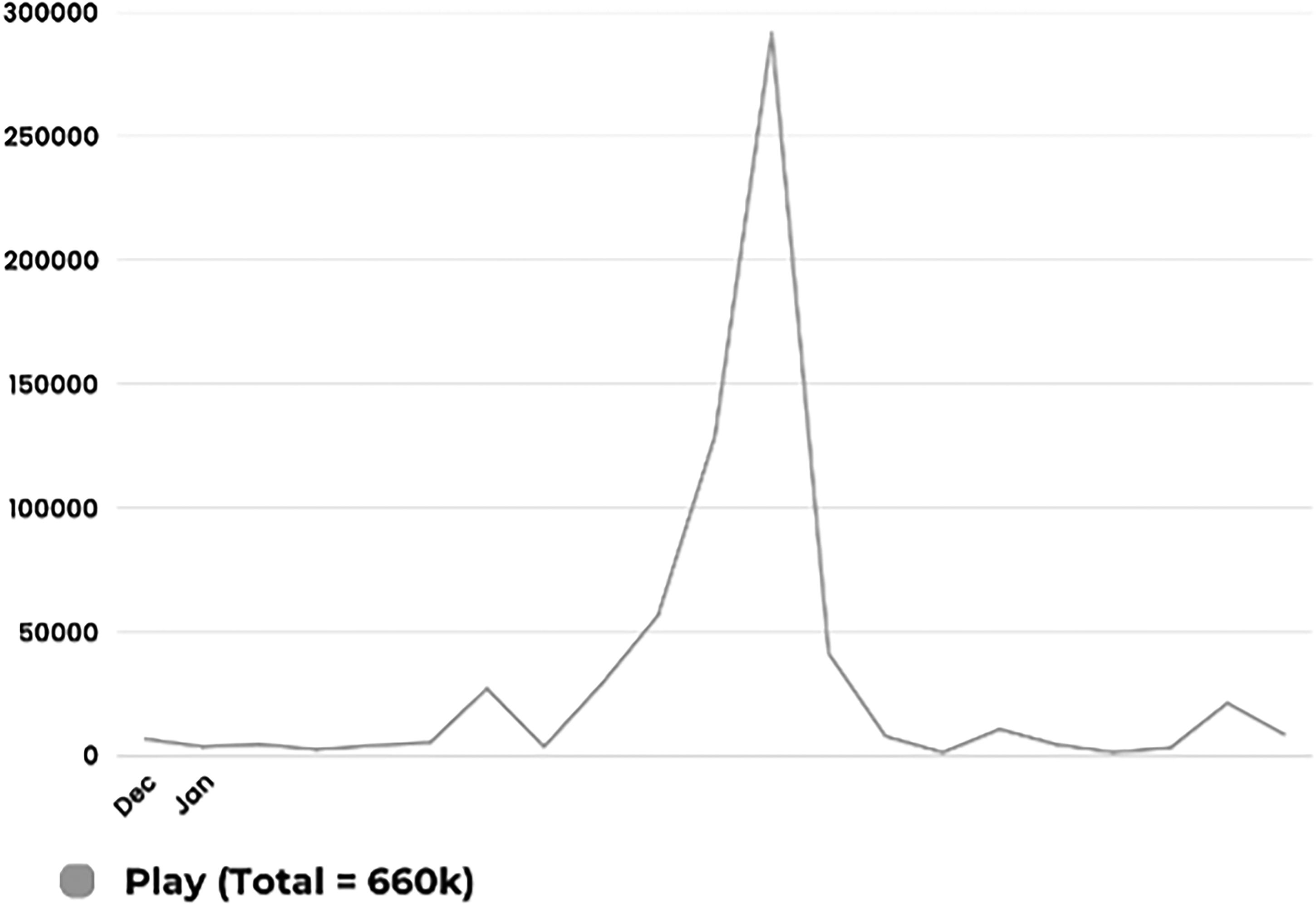
Play rate by date – Miles.
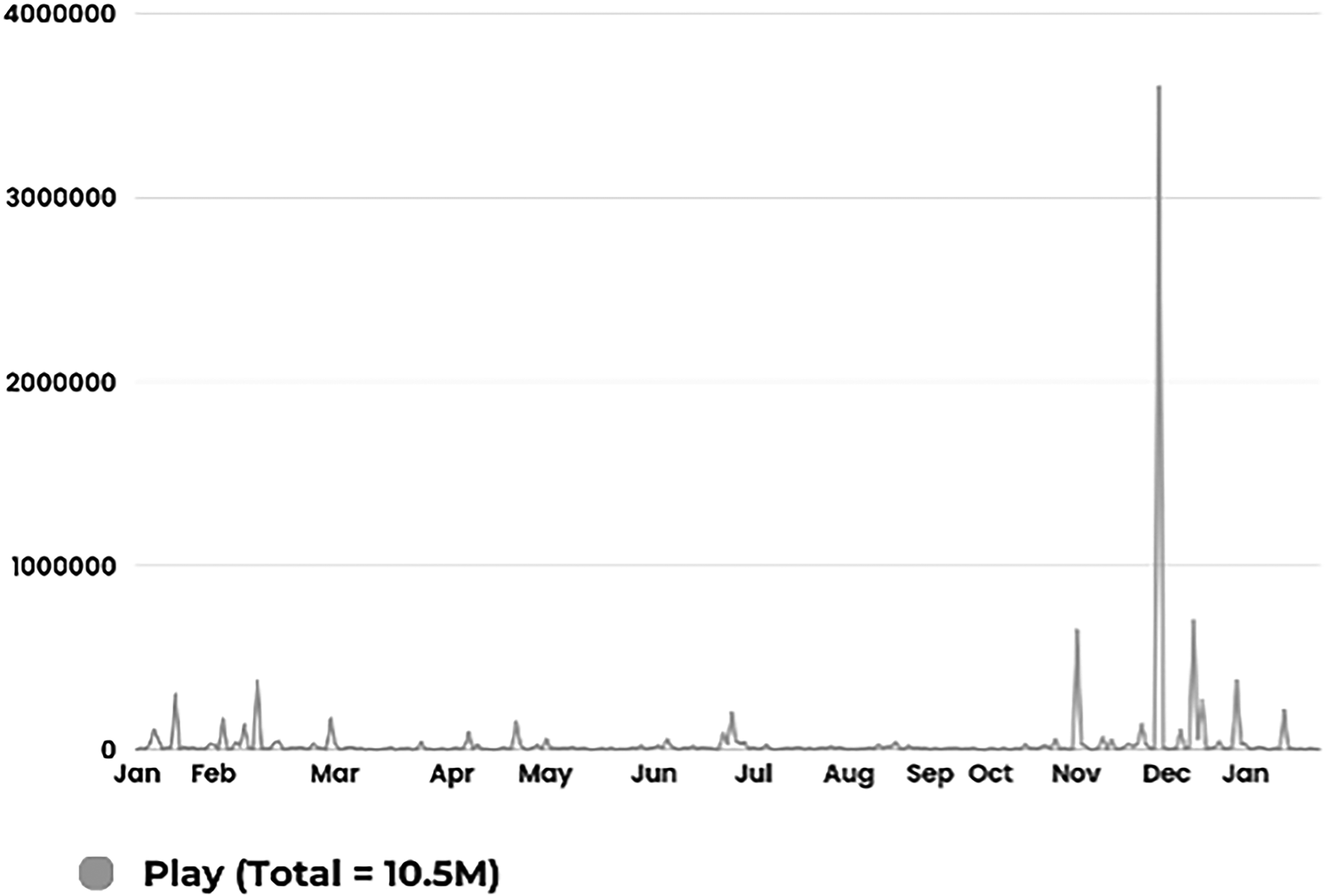
Play rate by date – Crisafulli.
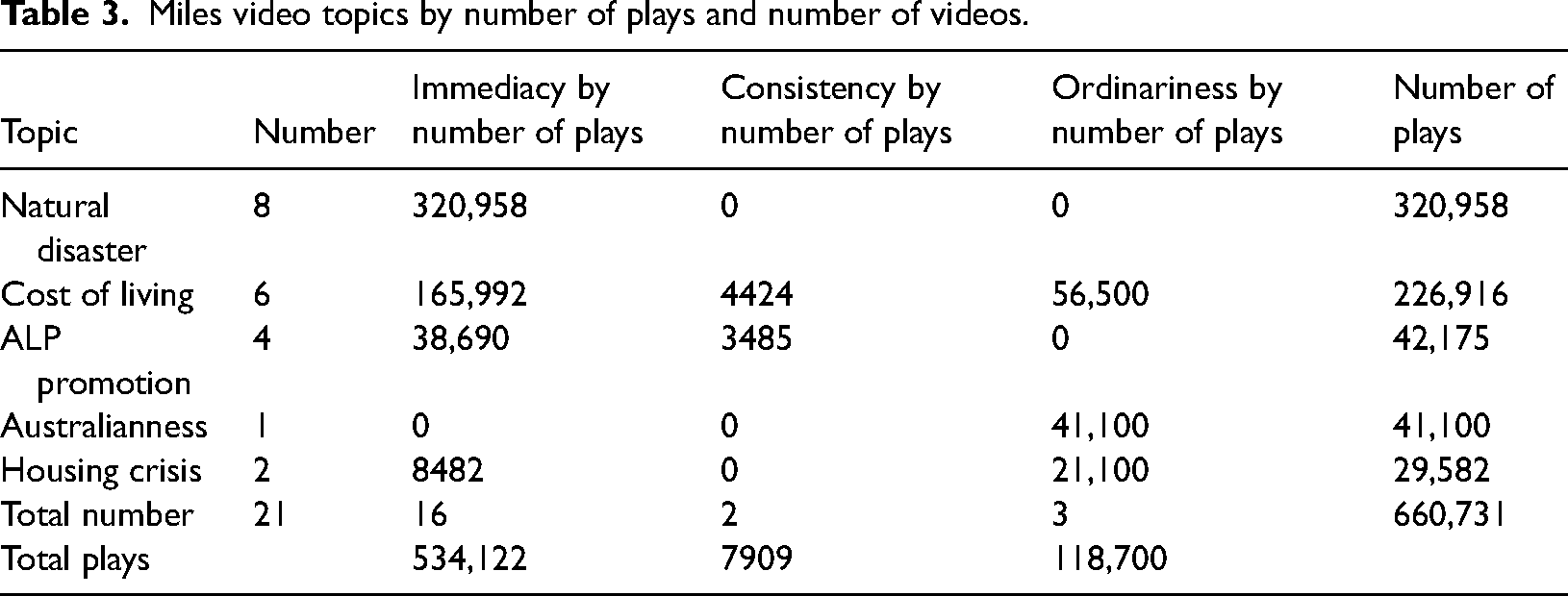
Tables 2‒4 outline the political authenticity type, as defined in Appendix A, displayed by each account in order of prominence and by the topic that gained the most engagement. The most prominent authenticity displayed by all three accounts was immediacy, meaning that all three politicians prioritised discussing relevant topics in what was performed as direct and spontaneous communication. Among Crisafulli's 275 videos analysed (Table 4), 41% (n = 113) prioritised immediacy. This was also the type of authenticity that received the most engagement. In the 84 videos by Palaszczuk (Table 2), the analysis shows a similar approach, with 52% (n = 44) using immediacy. Miles (Table 3) also prioritised immediacy, with 74% (n = 16) using this authenticity type.
Palaszczuk video topics by number of plays and number of videos.
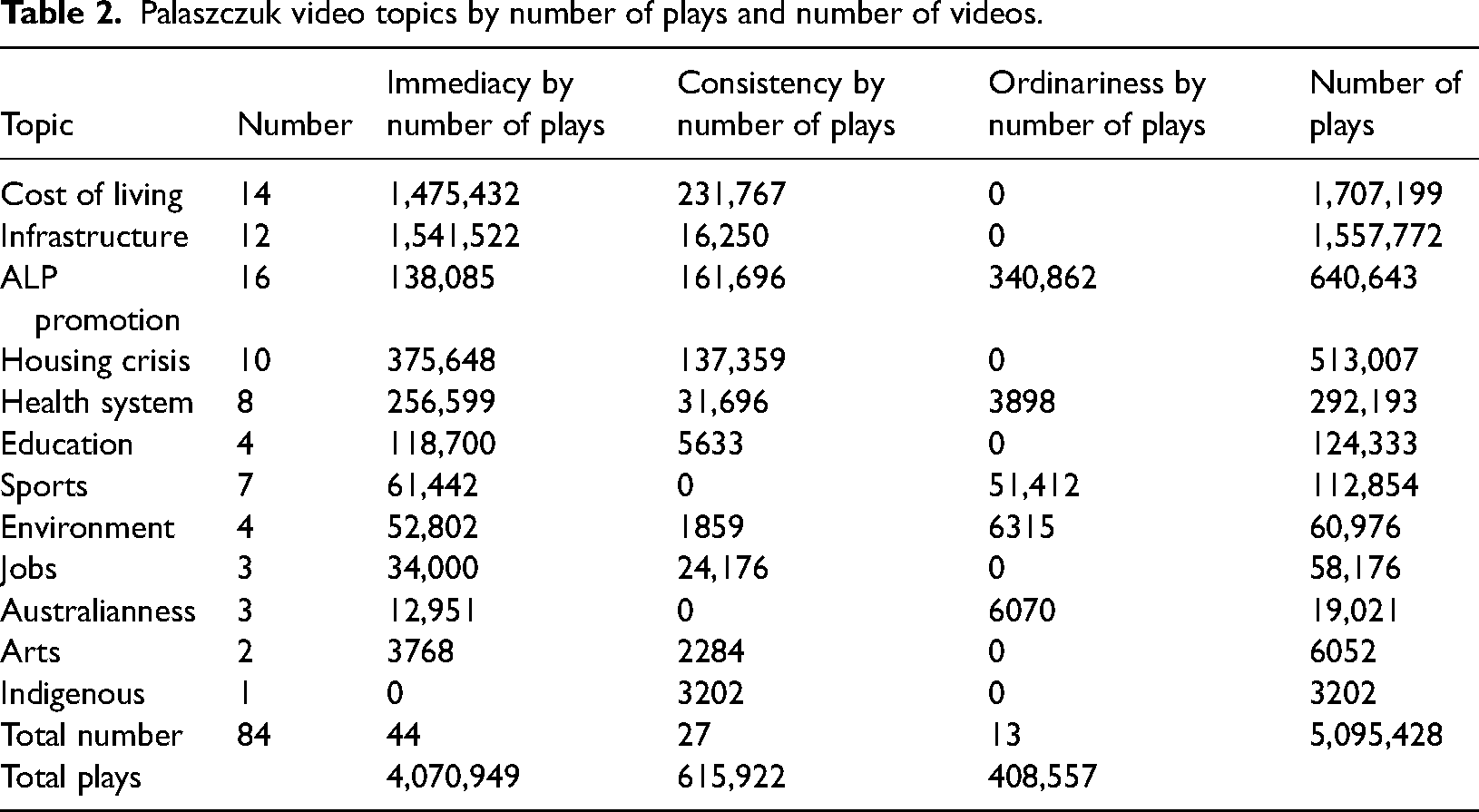
Miles video topics by number of plays and number of videos.
Crisafulli video topics by number of plays and number of videos.
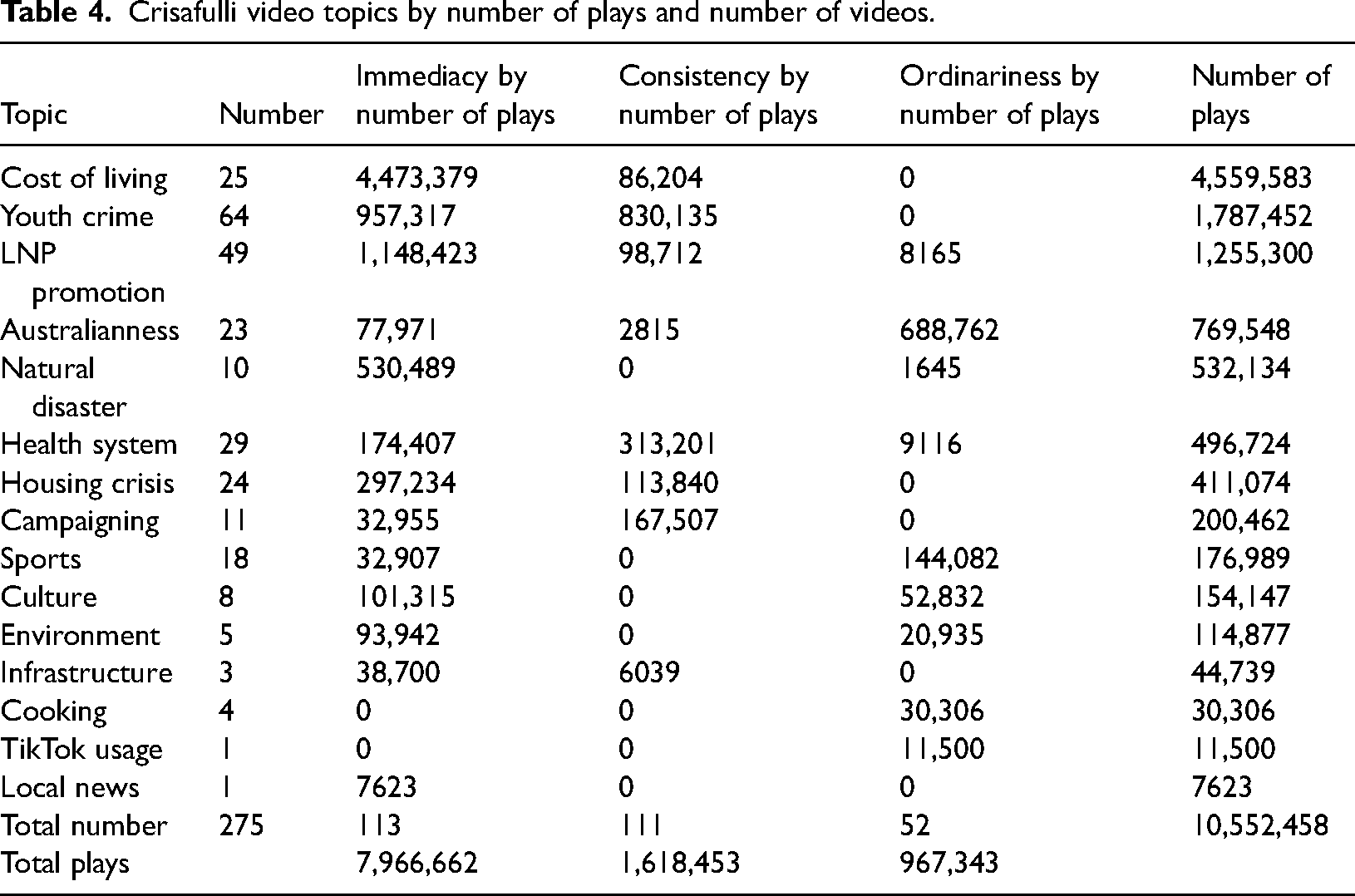
The second most prominent approach for Crisafulli (n = 111) and Palaszczuk (n = 27) was consistency. This type of authenticity, as defined in Appendix A, was found in videos that tackled current issues in Queensland and the alignment to party-driven policy, such as the topic of ‘cost of living’, which was the topic with the highest engagement for both accounts. This finding highlights the way politicians can be noticed on these platforms when tackling topics of interest and reinforces that TikTok audiences want to know how politicians are dealing with current concerns.
Of interest, though, is Crisafulli's commitment to ordinariness, defined in Appendix A as videos that present oneself as an approachable, everyday person. Just under 18% (n = 52) of his videos depict him in this way, which becomes quite a prominent and consistent feature in his videos. Of note here is his use of humour, which was present in 53 of his videos, and 31 of those were analysed as ‘ordinariness’.
Similarly, Miles uses ordinariness in his videos with 16% of his videos coded this way.
Integration with social media and political authenticity
As shown in Tables 2‒4, the prevalent employment of immediacy was observed in 52.38% of Palaszczuk's content, with over 4 million views and 234,222 likes, in 73.69% of Miles's content, with 534,122 views and 12,112, and even more, pronounced in Crisafulli's account with 41.39% of his posts amassing 8 million views and 784,110 likes. This underscores a strategic alignment with the algorithmic demands of social media for real-time, authentic engagement (Maares et al., 2021). The engagement rate demonstrates the politicians’ adeptness at crafting content that resonates with the immediacy sought by TikTok users and shows their ability to maintain a pulse on current events and public sentiment trending on the platform. The substantial viewership and interaction suggest that the audience perceives these efforts as engaging, thus likely enhancing the politicians’ perceived authenticity and relatability on the platform, which subsequently sees the content picked up by the algorithm and pushed to more users (Oden and Porter, 2023; Schellewald, 2023; TikTok, 2020; Zhang and Liu, 2021). This concept is further discussed below against specific trending topics and uses of visibility labour that were used by the political accounts.
However, when juxtaposed with Alexander's (2010) concept of the paradox of performative politics, the strategic orchestration of these immediacy-laden posts introduces a complexity to the interpretation of authenticity in digital political communication. This paradox implies that even as politicians strive to project authenticity through immediate and relatable content, strategic performance might dilute the authenticity of such engagements. While effective in garnering views and likes, the methodical crafting and timing of posts to maximise immediacy and relevance (Abidin, 2020) invite scrutiny regarding the genuine spontaneity of these interactions.
For instance, Palaszczuk's timely and crafted video about the ‘free kindy’ announcement (Figure 4), displayed as a duet with the popular TikTok user ‘mum_that_toks’, enhances the immediacy and relatability of the post, but it also reduces the audience's perceived genuineness and authenticity, given the strategic performance applied to it. Drawing on the platform's affordances and performance features (Abidin, 2020), this video received high engagement (164k views).
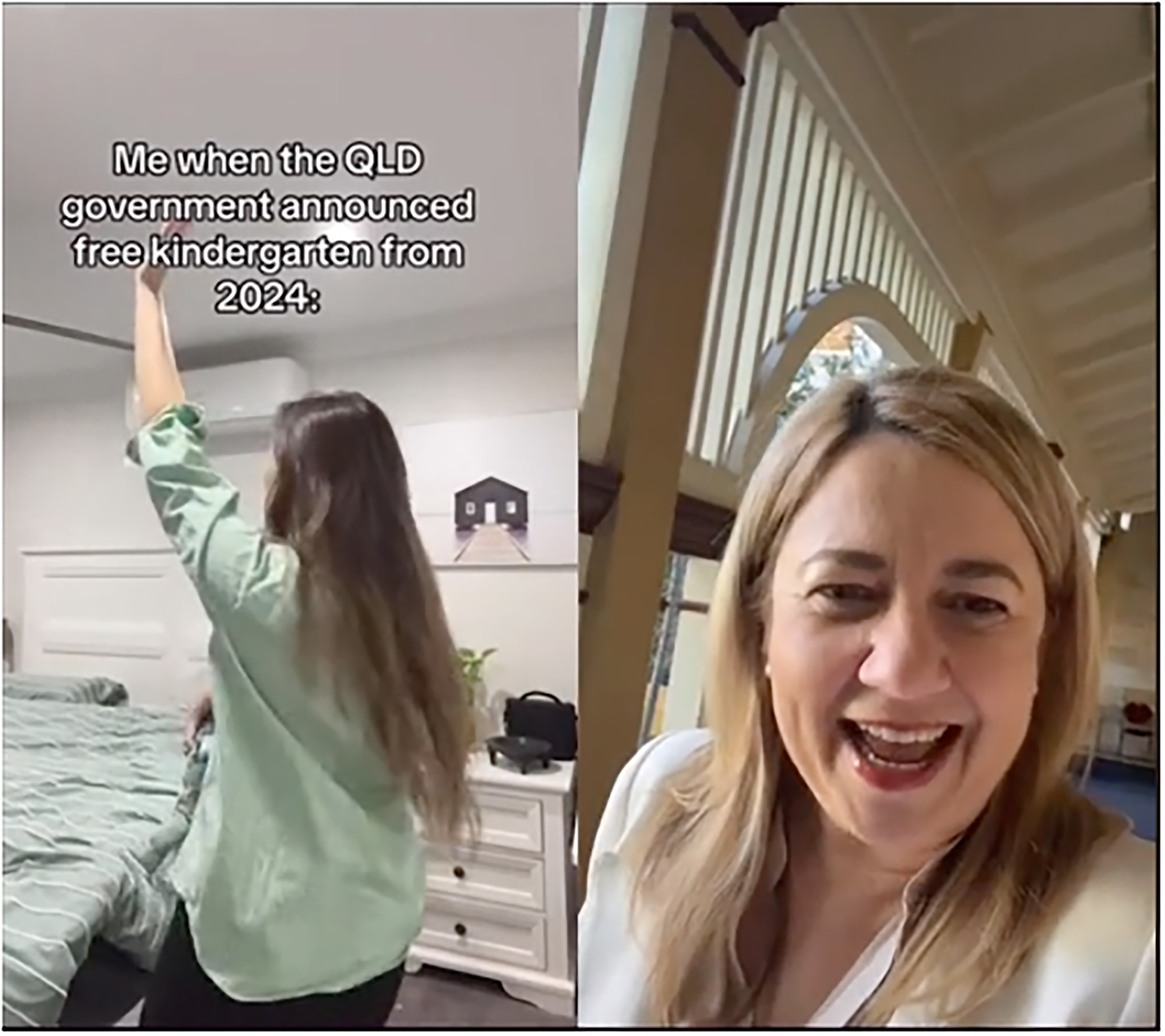
Palaszczuk – free kindy video.
Therefore, while Tables 2‒4 illustrate immediacy's success in engaging the audience, they also prompt a deeper reflection on the intricate balance between strategic communication and authentic engagement in the digital era of politics (Rastrilla et al., 2023; Vainikka et al., 2017; Wilches Tinjacá et al., 2024). The challenge for political figures lies in navigating this delicate balance, ensuring that their endeavours to connect with constituents in real time do not compromise the perceived genuineness of their digital personas (Cotter et al., 2022; Moir, 2023).
The varying degrees of consistency and ordinariness across the accounts reflect a calculated balance between maintaining a coherent political narrative and appearing relatable to the electorate. Palaszczuk's content exhibited a 32% focus on consistency and a 15% emphasis on ordinariness, whereas Crisafulli's approach balanced a near-equal focus on consistency (41%) and ordinariness (18%). However, Steven Miles took a different approach, focusing more heavily on ordinariness (16%) than consistency (11%). This strategic variation suggests the politicians’ approach to crafting their online personas, carefully calibrating their content to strike a delicate balance between articulating a coherent political narrative and fostering a sense of relatability among their followers. This balance is crucial for building and sustaining sociocultural capital on platforms like TikTok, where user engagement highly depends on perceived authenticity (Duffy and Hund, 2015; Long and Wilhoit, 2018).
The endeavour by politicians like Crisafulli and Miles to portray themselves as ordinary through TikTok, including engaging in everyday activities such as cooking videos from their homes, emphasises a deliberate effort to dismantle the traditional barriers that often separate political figures from the electorate. This approach, however, navigates a complex landscape, as there exists an inherent scepticism among the public regarding the authenticity of politicians portraying themselves as ‘one of us’. The scepticism stems from a widespread perception of politicians as characteristically different due to their positions of power and the nature of political life, which is often seen as detached from the everyday experiences of the general populace.
Ambivalent ordinariness
Some of the assessed videos showed a sort of bipolarity in which political actors simultaneously present themselves as both ordinary citizens and politicians, disrupting the traditional lines between public and private personae by capitalising on the performative affordances of TikTok.
Inspired by – and partially departing from – Enli's (2015) definition of ambivalence and drawing from Joshua Meyrowitz's (1986) concept of ‘middle region behavior’, we propose the category of ambivalent ordinariness. Meyrowitz (1986) considers that there is a middle region where the distinction between ‘front stage’ and ‘back stage’ (Goffman, 2002) becomes blurred. According to his theory, the main example of the ‘middle region’ is television, which politicians use to come across as personalities and to demonstrate their character to voters. Miles's ‘lunchbox chats’ are a prime example (Figure 5). These videos show Miles cooking/preparing food, appearing ordinary and close to the citizens. But, contrary to what one would expect, while cooking, he not only talks about politics, which is already quite disruptive but also addresses political issues, bringing about concrete political proposals. Typically, when politicians try to highlight their ‘one of us’ aspect, they share seemingly unaltered ‘behind the scenes’ material or portray themselves as ‘the man beyond the politician’, offering viewers a glimpse of their personal life without directly discussing politics. Miles’ videos, therefore, perfectly represent Meyrowitz's (1986) ‘middle region behavior’, in which the distinction between ‘front stage’ and ‘back stage’ (Goffman, 2002) becomes blurred.
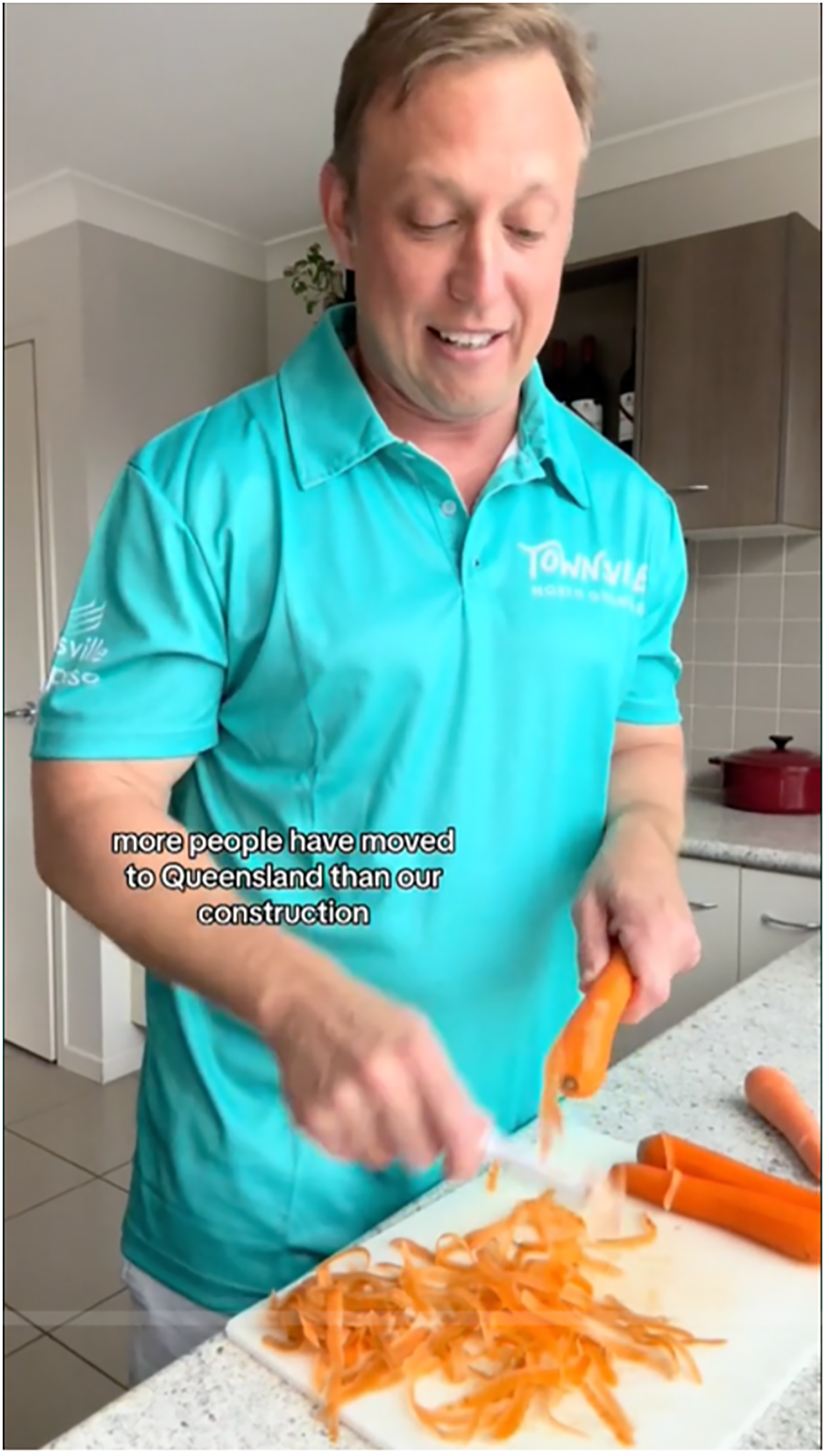
Miles – Lunchbox chats.
From a format perspective, these TikTok's display ‘calibrated amateurism’. Abidin (2017) defines calibrated amateurism as an attention economy where individuals meticulously curate a seemingly genuine appearance that mimics the raw style of amateurs, regardless of their actual status or expertise. This involves utilising suitable platforms, tools, cultural expressions and social capital within a performance environment. In Miles’ case, the location (his home's kitchen), his look (he wears casual clothing such as a sports t-shirt) and his actions (he prepares very ordinary food, such as sandwiches) are staged to convey ordinariness as per the definition used in this study (Luebke and Engellmann, 2023), bringing out the ‘man’ by depicting him in a very intimate and familiar scene. Nonetheless, his speech act completely stands out of context, as he assumes the role of the expert politician who deals with complex topics (e.g. cost of living) and proposes solutions. This ‘middle region behavior’ constitutes what we define as ambivalent ordinariness. The politician appears simultaneously as the ordinary man and the leader, coming across as an ‘average father’ who prepares snacks and as a skilled decision-maker able to find effective solutions to complex problems.
This is quite different from Crisafulli's kitchen-based videos, where he steps away from a direct political message and focuses on his Italian culture through cooking videos of traditional dishes. This approach goes beyond personal storytelling; it's a political gesture that celebrates cultural diversity and inclusivity, resonating with Australia's multicultural ethos. His identity as an Italian-Australian becomes a symbol of integrating cultural heritage with Australian values, enhancing his appeal among those who value cultural representation as a political priority. Videos like these, including the one shown in Figure 6, have garnered significant engagement, with some exceeding 10,000 views.
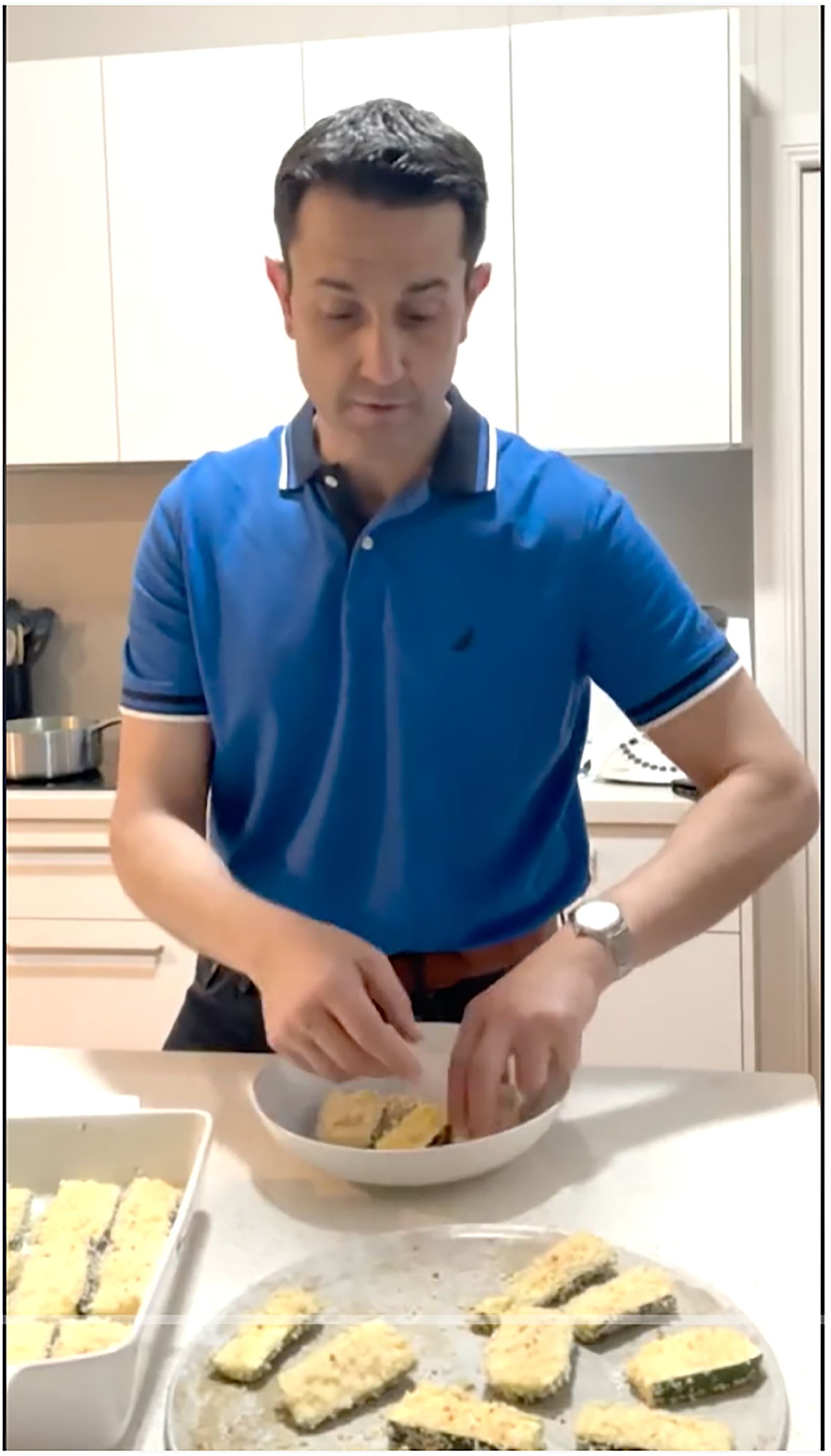
Crisafulli – Crisafulli in the kitchen.
Crisafulli's use of his Italian-Australian heritage is a unique way of speaking to a significant portion of the Australian population. According to the Australian Bureau of Statistics (2022), 50 years ago, Italy was the second most common country of birth for Australians (ABS, 2022). From 1947 to 1976, over 360,000 Italians migrated to Australia, and the median age of those is now 72 years (ABS, 2022). Second-generation Italians and those reporting Italian ancestry rose to 1.1 million in 2021 (ABS, 2022). While these figures specifically relate to second and third-generation Italian-Australians, the descendants of immigrant families from varying countries of origin constitute a significant portion of the Australian population. These generations often navigate a unique cultural identity that blends their ancestral heritage with their Australian upbringing. Despite the challenges associated with integrating multiple cultural identities, second- and third-generation Australians commonly express a strong sense of belonging to the Australian nation. This sense of belonging is often reinforced through community involvement and participation in national cultural practices, further solidifying their identity as Australians. Most importantly, Crisafulli's videos displaying his ‘Italianity’ through food seem to mimic those of Italian far-right populist Matteo Salvini, who extensively uses food in his social media communication to come out as an ordinary man, an authentic Italian (Cervi, 2021) and to leverage exclusionary messages through ‘gastro-populism’ (Starita, 2022).
In this vein, although our definition of ambivalent ordinariness departs from Enli's original conceptualisation and application to populist politicians, it allows to observe how political actors who are not populist seem to borrow populist's techniques when performing on TikTok.
Australianness and humour as political tools
The notion of ‘Australianness’ is a prominent element in all three leaders’ use of TikTok, mirroring a broader political trend of evoking national pride and identity (Grantham, 2024). This patriotic appeal, deeply ingrained in the Australian consciousness and used in political campaigns (Gizzi-Stewart, 2016; Grantham, 2024), is evident in videos like that depicted in Figures 7 and 8. Traditionally, patriotic appeals may resonate more with older generations who have experienced patriotism's influence in politics (Gizzi-Stewart, 2016). However, younger TikTok users prefer content that offers entertainment value (Schellewald, 2023).
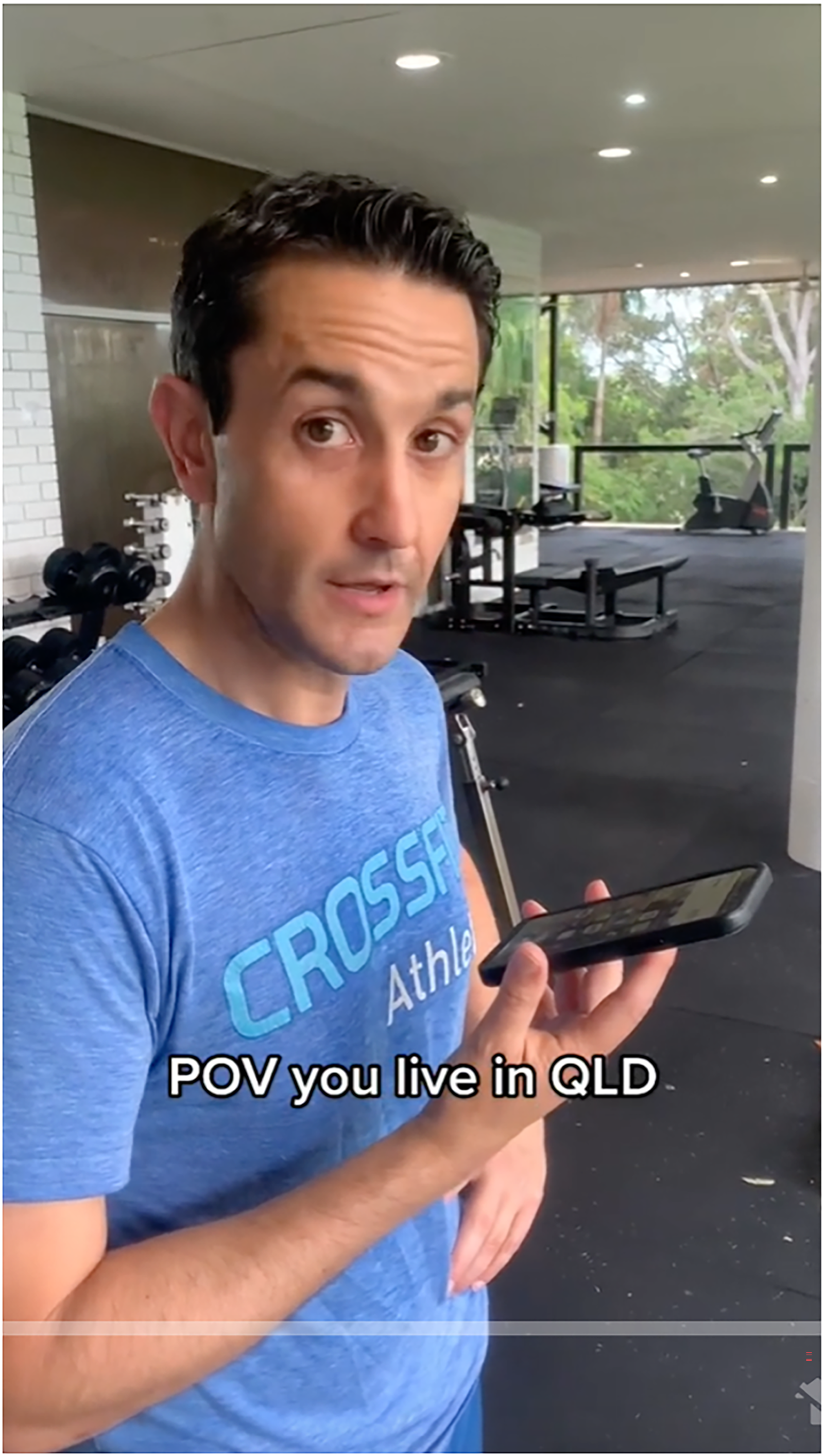
Crisafulli – Crisafulli at the gym.
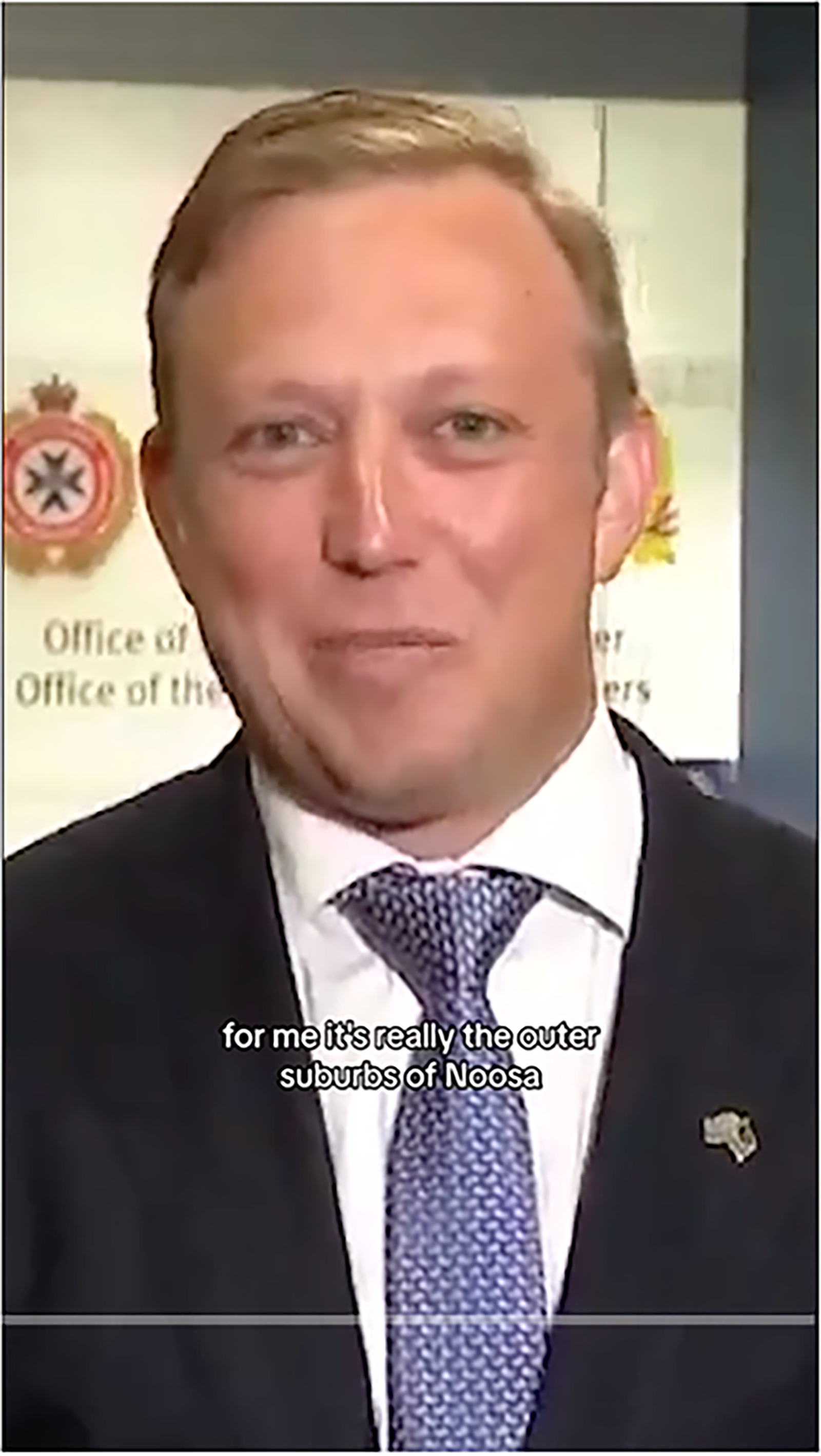
Miles – Gympie is the new Paris.
Crisafulli and Miles offer such a strategy. In Figure 7, Crisafulli asks Siri about the time, temperature and humidity of that day, which was particularly harsh, with 82% humidity and over 27 degrees at 6:50 am. Despite being simple in its performance, the video makes Crisafulli appear as an ordinary Queenslander who is proud to deal with the classic Queensland summer weather. While Miles (Figure 8) uses a distinct style of Australian humour during an official daytime television interview. He describes a regional town as the outer suburbs of a ritzy seaside holiday location, sending the hosts into hysterical laughter.
The strategic incorporation of ordinariness and humour aligns with the broader discourse on the importance of sociocultural capital in digital spaces (Duffy and Hund, 2015; Long and Wilhoit, 2018). In the context of TikTok, where community engagement and personal connectivity are paramount, the ability to present oneself as ordinary and approachable while engaging audiences through humour is a potent tool for building and sustaining a loyal following. This approach not only enhances the perceived authenticity of the political figure but also fosters a sense of intimacy and trust. Again, this is an example of how these politicians use the ‘middle region behavior’, to enhance their authenticity (Meyrowitz, 1986). Hence, the use of ordinariness, augmented by humour, exemplifies an understanding of the dynamics of digital political communication on TikTok. It highlights the evolving nature of political engagement, where success increasingly hinges on the ability to resonate with audiences on a personal level, transcending traditional political discourse and embracing the ordinariness, humour and middle ground through ambivalent ordinariness that characterises everyday human interactions, ultimately using TikTok to communicate directly with the electorate on topics of importance.
Conclusion
The analysis of political communication on TikTok, as evidenced by the practices of Queensland's political figures, reveals the critical importance of immediacy, consistency and ordinariness in engaging the platform's user base and constructing political authenticity (RQ2). These findings contribute to broader discussions on digital political communication by demonstrating how social media affordances shape political engagement strategies. The application of these elements is influenced by TikTok's distinct culture and the wider digital landscape's demands for authenticity. This study answers RQ1 by demonstrating that Queensland's political leaders engage TikTok users through a combination of immediacy, consistency and ordinariness. The dominant use of immediacy across all three accounts reflects a strategic alignment with TikTok's algorithm, ensuring the content remains timely and engaging (Abidin, 2020; Luebke, 2021). However, the varied application of consistency and ordinariness reveals distinct engagement strategies. Crisafulli integrates humour and cultural identity to craft a relatable persona, while Miles and Crisafulli employ ambivalent ordinariness, merging personal and political messaging to create a middle-region identity (Enli, 2015; Meyrowitz, 1986), albeit sometimes subtly in the case of Crisafulli. Palaszczuk, in contrast, relies on consistency, using TikTok to reinforce leadership credibility by engaging with trending issues (Vainikka et al., 2017).
A significant contribution of this study is the development of a new criterion to assess how politicians manufacture authenticity: ambivalent ordinariness. This concept captures how politicians blend personal and political personas to create relatable yet authoritative online identities. Ambivalent ordinariness is exemplified in the content strategies of Miles and Crisafulli, who integrate domestic activities with political messaging. This approach challenges traditional distinctions between public and private personas, allowing politicians to appear both as ordinary citizens and as leaders.
The fusion of personal elements with political messaging demonstrates a strategic response to the platform's cultural expectations. The skilful employment of ambivalent ordinariness by Miles and Crisafulli highlights their understanding of the platform's demand for engagement and relatability, particularly among demographics that value spontaneity and genuineness. Accordingly, and acknowledging the existence of what Gerbaudo (2018) calls an ‘elective affinity’ between populism and social media, we can predict that more politicians will apply ambivalent ordinariness in their communications on TikTok.
RQ2 is addressed through an analysis of how these strategies construct political authenticity. The study finds that authenticity on TikTok is a performative construct shaped by digital affordances. Immediacy fosters a perception of direct and spontaneous communication, yet its strategic deployment raises questions about performative authenticity (Abidin, 2020; Alexander, 2010). Consistency reinforces credibility by aligning content with political messaging, while ordinariness humanises politicians, making them appear approachable (Duffy and Hund, 2015; Long and Wilhoit, 2018). However, the reliance on performance-driven authenticity means that even efforts to appear relatable can be perceived as staged, highlighting the delicate balance between genuine engagement and strategic self-presentation (Rastrilla et al., 2023; Wilches Tinjacá et al., 2024).
These strategies stress the evolving nature of political communication in the age of social media, where traditional barriers between the public and political figures are increasingly blurred. The findings point to a sophisticated navigation of TikTok's landscape, where success hinges on the ability to authentically integrate the personal with the political, leveraging the platform's unique features to foster a deeper connection with the electorate.
It is acknowledged that this study did not consider the comments of followers or TikTok viewers. Instead, it only considers the engagement meta-data as an algorithmic tool for further engagement. Future studies could extend this research by exploring the impact of these communication strategies on voter perceptions and behaviour, examining the role of algorithmic mediation in shaping political discourse on TikTok and comparing these dynamics across different cultural and political contexts. Future research should continue to explore these dynamics, particularly as political figures increasingly turn to emerging platforms to connect with constituents, demonstrating that such constituencies increasingly prioritise digital platforms over traditional ones for access and consumption of news and information.
It is further acknowledged that due to the political environment and leadership changes that occurred during the collection period, the data collected is not representative data. Instead has been used as a case study approach to understand the strategic communication and political authenticity performances that each politician used.
Using Queensland's political leaders as a case example, the findings contribute to the broader discourse on digital political communication, highlighting the evolving nature of authenticity and engagement in the age of social media.
Our data are limited to the Australian case; thus, future studies should observe if politicians use ambivalent ordinariness in other contexts.
Footnotes
Declaration of conflicting interests
The authors declared no potential conflicts of interest with respect to the research, authorship and/or publication of this article.
Funding
The authors received no financial support for the research, authorship and/or publication of this article.
