



Abstract
Podcasting has become a widespread method of science communication. This paper describes a practice-led, extended-mixed methods study that aimed to examine the possibilities for podcasting in the field of palaeontology. The method combines (1) the production of a two-year podcast series by the author with (2) interviews with other ‘palaeo podcasters’ and (3) a study of 24 palaeontological podcasts. Each method contributes insights into how this form of science communication, specifically within the field of palaeontology, might be usefully developed. Drawing on data from all three approaches, the paper demonstrates the practical considerations, audience engagement strategies and use of discipline expertise required to develop and sustain this form of science communication.
Podcasting continues to mature as a platform for the communication of science as well as a medium of entertainment and a source of news. With origins at the intersection of radio and participatory media on the Internet (Adler Berg, 2023; Berry, 2006, 2016; Birch and Weitkamp, 2010), podcasting is a platform and medium through which individuals, groups and organisations can create and distribute audio storytelling content. It originated as a distinct form of media alongside the wider diversification and development of Internet media to incorporate richer forms of content (beyond text) around the early 2000s and specifically encompasses ‘audio-content downloaded from the internet either manually from a website or automatically via software applications’ (Berry, 2006: 144). With higher Internet speeds and more capable devices, podcast listening is now more likely to occur as a form of streaming (i.e. dynamically downloading) rather than pre-downloaded files and more likely to occur via a multi-purpose device such as mobile phones or smart speakers rather than a dedicated music player such as the iPod (a device for which the medium is named). Additionally, the formal entry of the video-based social networking site YouTube into podcasting (Clarke, 2022) and moves to encourage video podcasts by Spotify (Spotify for Podcasters, n.d.) mark the growing importance of visual elements in what has traditionally been an audio-only medium.
Podcasting has been cited as a method for telling scientific stories since its origin (Birch and Weitkamp, 2010; Harrison and Loring, 2023; Kinkaid et al., 2020; MacKenzie, 2019; Picardi and Regina, 2008; Yuan et al., 2022). Indeed, 2004, the year to which Berry attributes the creation of the word ‘podcasting’ (Berry, 2006), is also when MacKenzie (2019) began a large-scale study of science podcasts. Thus, podcasts and science have been intertwined since the inception of the medium. Although some fields of science have widely embraced podcasting, the extent to which the field of palaeontology has embraced the medium is not clear in the existing literature or, at least, has not been studied in particular; instead, being bound up with wider science communication studies (MacKenzie, 2019; Yuan et al., 2022). Palaeontology has historically been closely associated with other artistic and creative media, such as through the prominence of visual ‘palaeoart’ within the science itself and the public communication of that science (Witton, 2014; Witton et al., 2014). Other recent creative media research efforts in palaeontology have focused on poetry (Christison et al., 2022), video games (Clements et al., 2022) and comics (Wings et al., 2023). Within this creative context, the possibilities for the podcast medium as a source of palaeontological news, insight and storytelling are intriguing.
This paper seeks to further develop the field of science communication primarily from the communication perspective by examining the possibilities for the communication of palaeontology topics through podcasting. The project has been developed by a communication researcher with an interest in science communication as opposed to arising primarily from the practice of communicating science by scientists, which is a predominant method of science communication. It is practice-based, following an emerging tripartite method described further below.
Methods
This paper reports the results of a 2-year multi-method study consisting of (1) the production of a palaeontology podcast undertaken by a media researcher (the author); (2) interviews with six other palaeontology podcast producers conducted during this podcast production; and (3) a primarily quantitative analysis of 24 palaeontological podcasts. The combination of the three approaches (creative media production, qualitative interviews and quantitative analysis) constitutes what Fulton et al. (2023: 115) recently articulated as ‘extended-mixed methods’: a multidisciplinary research approach that advocates the addition of creative practice to the ‘qualitative plus quantitative’ mixed methods approach.
Fulton et al. (2023) describe ‘practitioner-based enquiry’ involving the production of a creative artefact as a method of creative practice within their extended-mixed method framework. Therefore, the podcast itself is considered a creative practice-based research product, the production of which supports data and insights gathered from the two further methods (qualitative interviews and quantitative analysis of other podcasts in the field). In the context of this study, the practice-led approach demonstrates ways in which creative media production activities might contribute to efforts to communicate about palaeontology. Each of the three methods offers a different perspective on this question. Each informed the outcome and conduct of other aspects of the study. The three methods are further described below.
Podcast production
Scholarship concerning the development and purposes of podcasts within research and academic practice is widespread. Cook (2023: 47) argues scholarly podcasts are an ‘insurgent’ and ‘generous’ practice that ‘make scholarship open not only because they are free to listen to but also because they liberate knowledge’. Cox et al. (2023: 8) similarly claim that ‘for academics, podcasting can serve thus as a bridge between multiple aspects of valid and meaningful work’. Scholarly or academic podcasts are cited as more accessible, both in terms of cost and technical availability, than other forms of academic knowledge dissemination (Ava-Pointon, 2021; Bose et al., 2021; Copeland and McGregor, 2021; Euritt, 2022; McGregor and Copeland, 2022).
Drawing on these perspectives, the first of the three methods used for this study was the development of a scholarly podcast intended to feature a topic of personal interest to the researcher – palaeontology. Elements of the podcast production were informed by the researcher's podcast listening habits and prior experience as a podcast producer and radio broadcaster. The initiation and production of the first season were driven by ‘an enthusiasm of practice’ (Haseman, 2006: 100) for both podcasting and palaeontology, with the other reflective aspects of the project developed later. Given the researcher's novice status in palaeontology but expertise in audio production, the podcast is primarily interview-based, featuring expert guests on each episode. Copeland and McGregor (2021) recommend choosing a genre and format early in the podcast development process. As such, it is worth noting that this podcast production is within the education (science) genre, and the format is interview-based. The selection of guests and some alternatively formatted experimental episodes are further described later in the paper, as are the ethical implications of this method.
In the Australian academic system, a podcast is considered a form of non-traditional research output (NTRO), that is, a presentation of a research product that is not a ‘Traditional: “book”, “book chapter”, “journal article” [or] “conference paper”’ (Australian Research Council, 2015). These include recorded and rendered works. Such products remain defined as a research output if they contribute to the ‘creation of new knowledge and/or the use of existing knowledge in a new and creative way to generate new concepts, methodologies, inventions and understandings’ (Australian Research Council, 2015: 3). This contribution to knowledge emerges from an experimental and iterative approach to podcast production, which evolves as the project develops based on feedback from guests and listeners, observation and reflection. This approach involves varying episode formats, podcast descriptions and the podcast's visual language (changing logos and adopting more consistent social media branding), all of which constitute the podcast product. This practice follows other scholarly podcasting practices that exhibit ‘creativity that emerges from a podcasting practice that works out what it is or could be as it goes along’ (Cook, 2023: x).
This NTRO approach can also be considered a form of ‘practice-led research’ (Haseman, 2006: 100): Practice-led research is intrinsically experiential… Practice-led researchers construct experiential starting points from which practice follows. They tend to ‘dive in’, to commence practising to see what emerges.
The creative practice insights are provided through reference to published elements of the podcast, including both episodes and transcripts, auxiliary material such as social media posts and notes collected by the author as a form of auto-ethnography throughout the 2-year production period. These textual sources constitute ‘a reflective journal to document the making of the artefact’ (Fulton et al., 2023: 111) and are referred to throughout this paper.
Interview participants
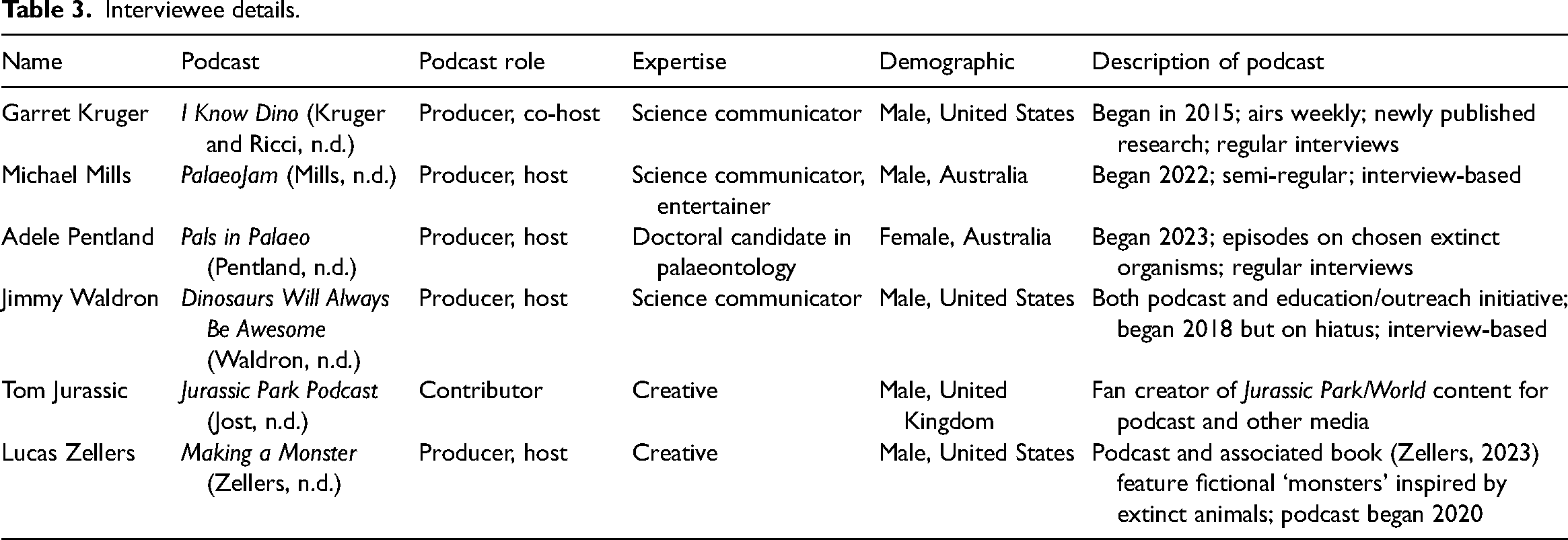
The second method adopted for this study consists of interviews with six podcast producers and hosts from a range of podcasts, each focusing on different palaeontology-related topics, largely related to dinosaurs. Although palaeontology as a field is not confined to dinosaurs, this clade does have an outsized influence on the discipline. Each interview was recorded for and published as part of an episode of the NTRO podcast, and the published podcast transcripts have been coded for emergent themes using NVivo.
The study was approved by the Human Research Ethics Committee at the author's institution to obtain clearance to interview guests and to waive the ‘standard requirement’ of anonymity for research participants (Svalastog and Eriksson, 2010), which is typically impractical and undesirable for the podcast medium except in specific circumstances. There is an ongoing and important debate about the anonymity and pseudonymity of research subjects within the social sciences and humanities (Allen and Wiles, 2016; Berkhout, 2015; Grinyer, 2002; Lubet, 2018; Marx and Macleod, 2018; Murphy et al., 2021; Svalastog and Eriksson, 2010). It is not plausible to contribute extensively to that debate here except to say that podcasting is more likely to follow journalistic norms that emphasise an ‘Aim to attribute information to its source’ (Media Entertainment and Arts Alliance, n.d.). Tennant (2023) notes that even non-journalist podcasters tend to adopt journalistic ethics such as these. That said, all interviewees were allowed to choose a name (including pseudonyms if required) and affiliations by which they would be identified in both the published podcast episodes and any subsequent formal research papers. Because the interview material had already been made public via the podcast, it was not anonymised for reporting purposes in this study. The NTRO practice-based approach used in this study positions the interview guests as experts, allowing them the opportunity to fully ‘own’ their story.
Each interview was conducted and published to the podcast feed as part of the podcast's standard production schedule. Each guest was provided with a participant information sheet, and verbal consent was sought for the recording and publishing of the interviews beforehand. They were also offered the opportunity to review the edited version of their episode and request any changes pre-publication. Finally, each of the six interviewees has been provided a draft copy of this paper for review and comment, and several have elected to add additional comments which are included in the paper (cited as personal communication where appropriate). This approach departs from traditional scholarly and journalistic publishing approaches and was a decision informed by consideration of reputational risk in the human research ethics processes underpinning this project.
The interview participants are not demographically representative. There is a noticeable bias towards the researcher's home country (Australia) as well as the United States and the United Kingdom. Five of the six participants identify as male, and all of them are English speakers. Despite these commonalities, the participants bring diverse experiences in podcast production, differing in age and years of involvement with the medium.
Podcast analysis
The quantitative method used in this study involved collecting and analysing a unique small dataset of 24 active palaeontology or dinosaur-related podcasts compiled from a combination of sources. The sampling was based on an assessment of the title and description of candidate podcasts, covering all dinosaur and palaeontology topics, including dinosaur media, but not geology, unless the series description or title specifically included reference to extinct organisms. The sample demonstrates this dinosaur bias noted above, particularly concerning the large number of podcasts related to dinosaur media, such as the Jurassic Park/Jurassic World (Spielberg, 1993; Trevorrow, 2015) series of films.
Aspects of the podcast analysis follow those of MacKenzie (2019), with additional bespoke parameters specific to the design of this study. MacKenzie ‘analysed online textual and visual data’ from a sample of ‘952 English language science podcasts’ available at that time (2019: 1). That study found correlations between independent affiliation, the number of episodes produced and whether podcasts developed supplementary funding sources such as advertising or merchandise sales. Aspects of the sampling and analysis approach have been adapted for this study, as explained in the relevant sections below.
Candidate podcasts were identified from a range of sources. The primary initial source was the Palaeocast (Marshall et al., n.d.) ‘Palaeontology Podcast’ list (n.d.), from which inactive podcasts were removed (defined as podcasts that had not published an episode within 12 months of data collection). Video-only series and non-English podcasts were also removed from the list. A corpus of 100,000 podcasts from the audio company Spotify (Clifton, Reddy et al., 2020) was also searched for the terms ‘dinosaur’ and ‘palaeontology’ (and the alternate spelling ‘paleontology’) as well as shortened variations of those words (‘dinos’, ‘paleo’/‘palaeo’). This search yielded one additional active podcast series that met the selection criteria. From personal listening habits, the researcher was aware of one additional podcast that met the selection criteria; this was also added to the list. Finally, MacKenzie's (2019) podcasts identified as having the subject area ‘Paleontology/Anthropology/Archaeology’ were consulted, and one further podcast was opportunistically added as it also met the search criteria. MacKenzie's list included 16 podcasts in this category, of which four are now inactive, five related more to archaeology or anthropology than to palaeontology and the others were already present on the Palaeocast list (n.d.). The author acknowledges that these methods may not have captured all podcasts that otherwise met the selection criteria.
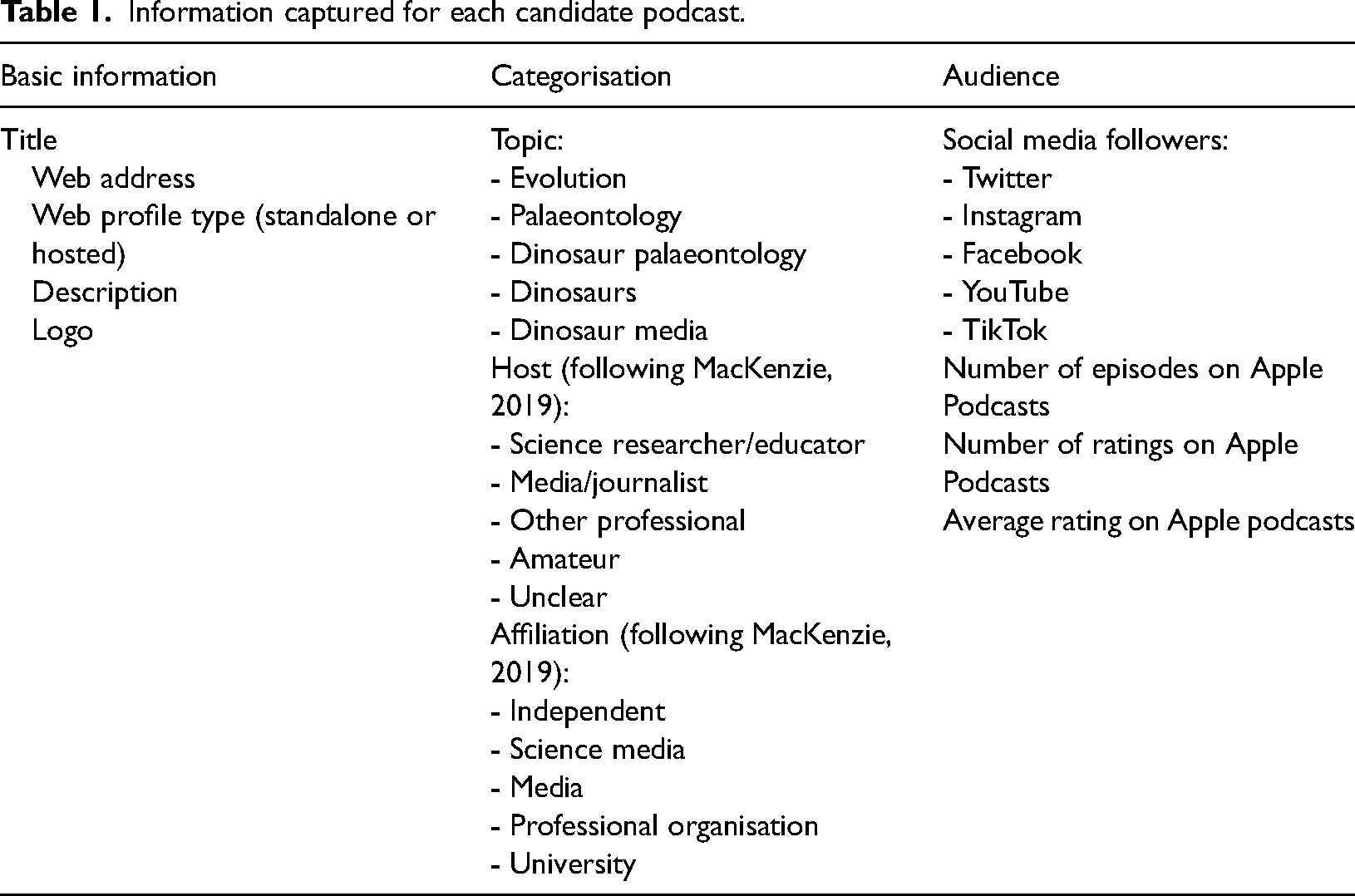
The decision to capture social audience data, number of episodes and ratings from across the selected social media platforms was made to inform analysis of audience reach using social media as an imperfect comparative proxy and possible correlation between the length of the series and audience size. The Apple Podcast metrics were selected as they were available for all podcasts, making comparison achievable.
The basic information and general observations collected for each of the 24 analysed podcasts include details about textual and distribution practices such as self-selected topics and publication channels. In addition to the actual recorded audio of each episode or series, certain textual hallmarks of podcasts are not common to other media. As an Internet-native medium, this includes a web address (whether on a custom website, as a profile page on a hosting channel or both), the published description and a logo. The titles of each podcast have also been collected and analysed.
Results
The results are presented for each of the three methods, while the discussion section is thematically integrated and demonstrates how each method informed the further development of the others.
Podcast production
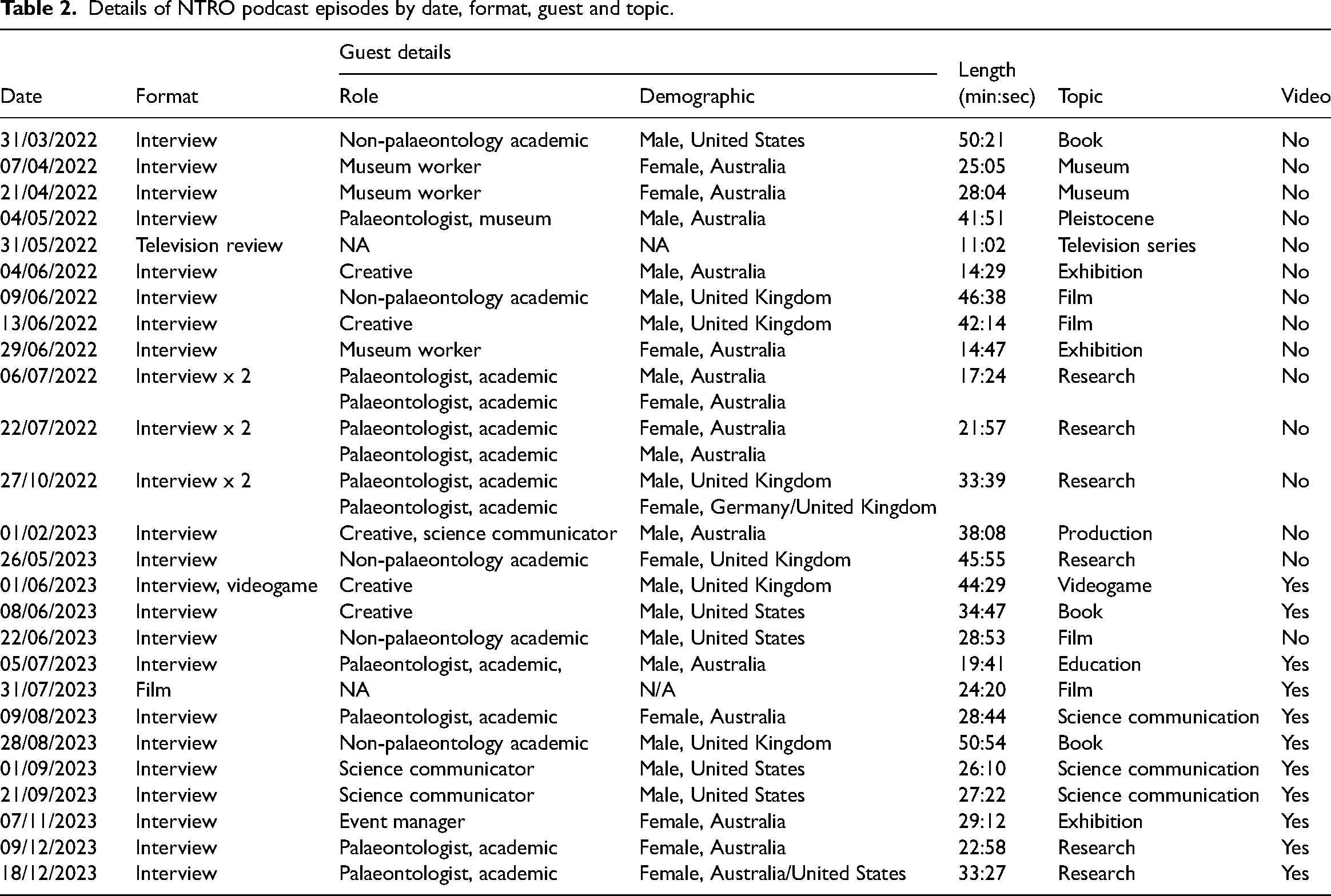
The NTRO podcast was produced for two seasons between 2022 and 2023. A total of 26 substantive episodes were published to the podcast's feeds during that period. Two further ‘trailer’ episodes were also produced. The substantive episodes featured a total of 27 guest interviews, including two guests who featured twice and two further episodes featuring only the author with sound clips from other sources. There were 13 h and 22 min of audio programming produced as part of the NTRO.
The podcast received 1967 downloads during 2022–2023 as recorded by the host platform Spotify and YouTube (to which it was cross-posted). The podcast included a video in most episodes from mid-2023 on. There were 10 subscribers on YouTube and 60 on Spotify. On other social media platforms, the following follower numbers were recorded at the end of December 2023: Instagram, 213; Twitter (now renamed X), 145; Facebook, 34; and Threads, 45.
Interview participants
The six interview participants described in this paper were drawn from the overall guest pool for the podcast. They were selected for inclusion in this paper due to their involvement in podcast creation compared to interviewees with other roles (Tables 1 and 2). This method contributes additional qualitative insights into the findings of this paper. Because the podcast guests have been fully identified by their professional names (one pseudonymously), this practice is followed within the paper. The six interviewees are profiled in Table 3.
Information captured for each candidate podcast.
Details of NTRO podcast episodes by date, format, guest and topic.
Interviewee details.
Podcast analysis
The analysis of the additional podcast dataset primarily focused on collecting and comparing quantitative data. This included a collection of social media statistics, ratings and a content analysis of titles and logos. Table 4 provides basic information about each podcast included in this portion of the study.
Details of 24 palaeontology podcasts.
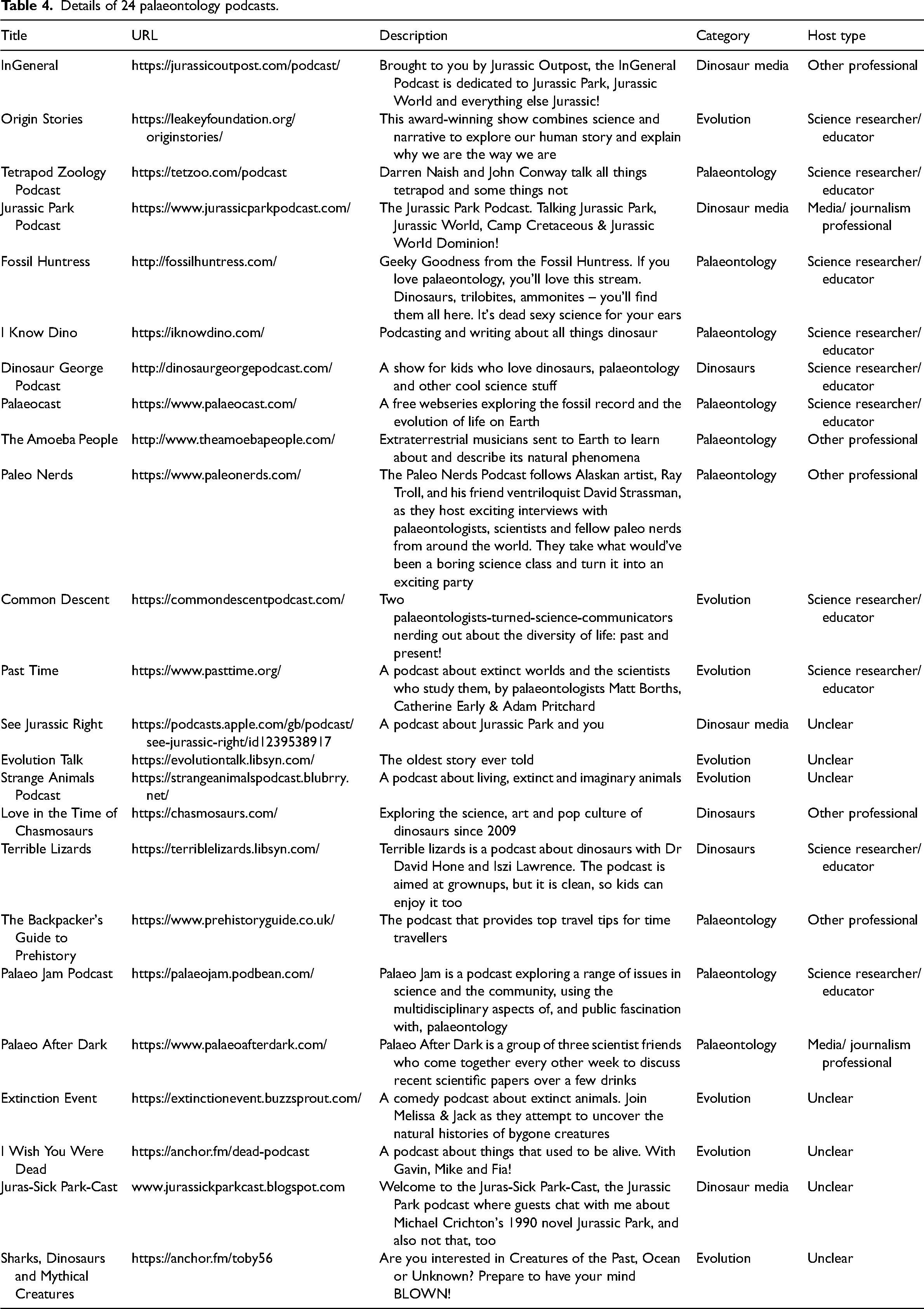
Figure 1 demonstrates the range of social media followers for each selected podcast.
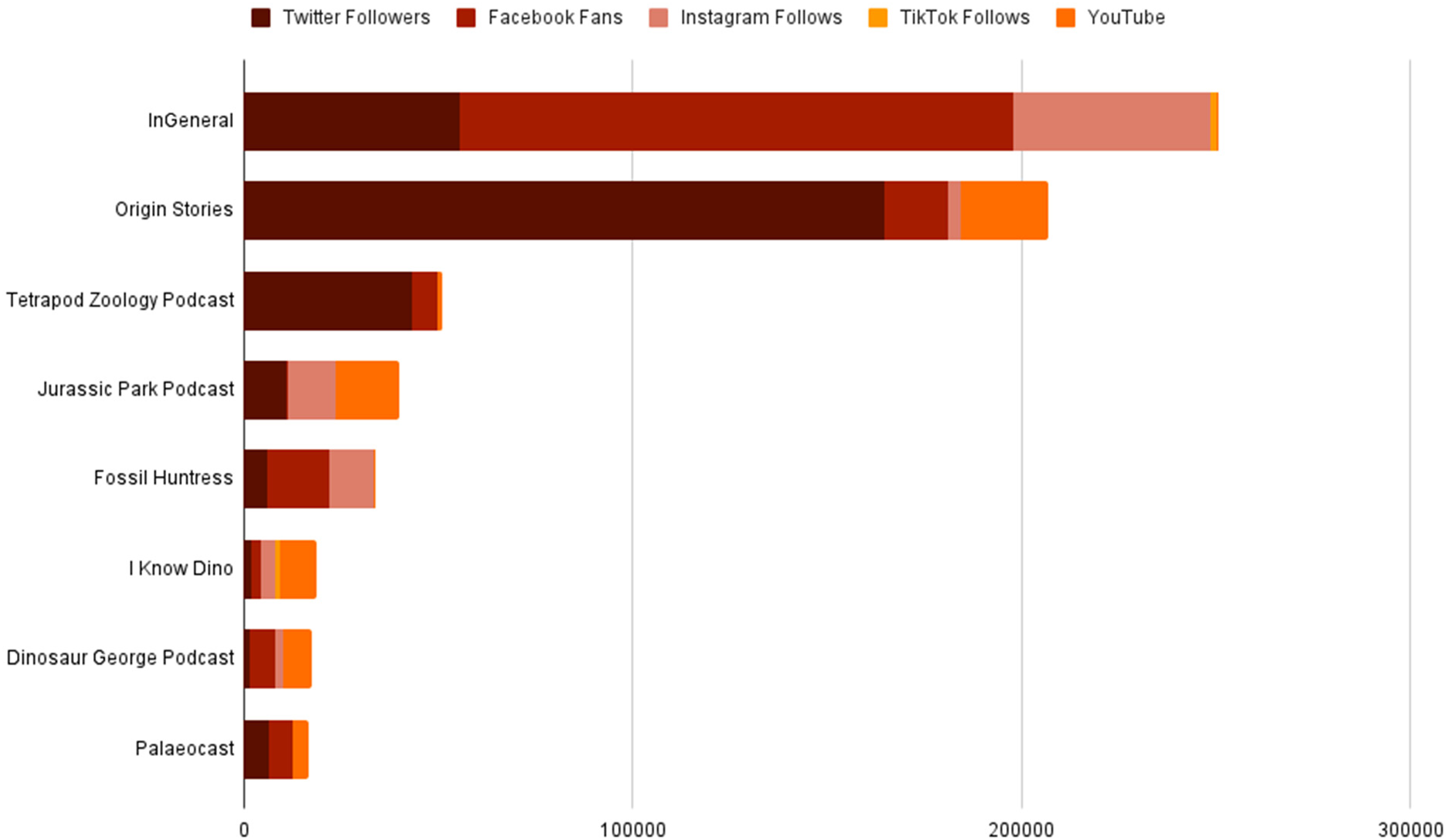
Social media followers for the top eight podcasts in the sample.
Table 5 outlines the most common terms used in podcast titles, the more common visual elements deployed in the podcast logos and some representative samples of each kind.
Title and logo elements in 24 palaeontology podcasts.
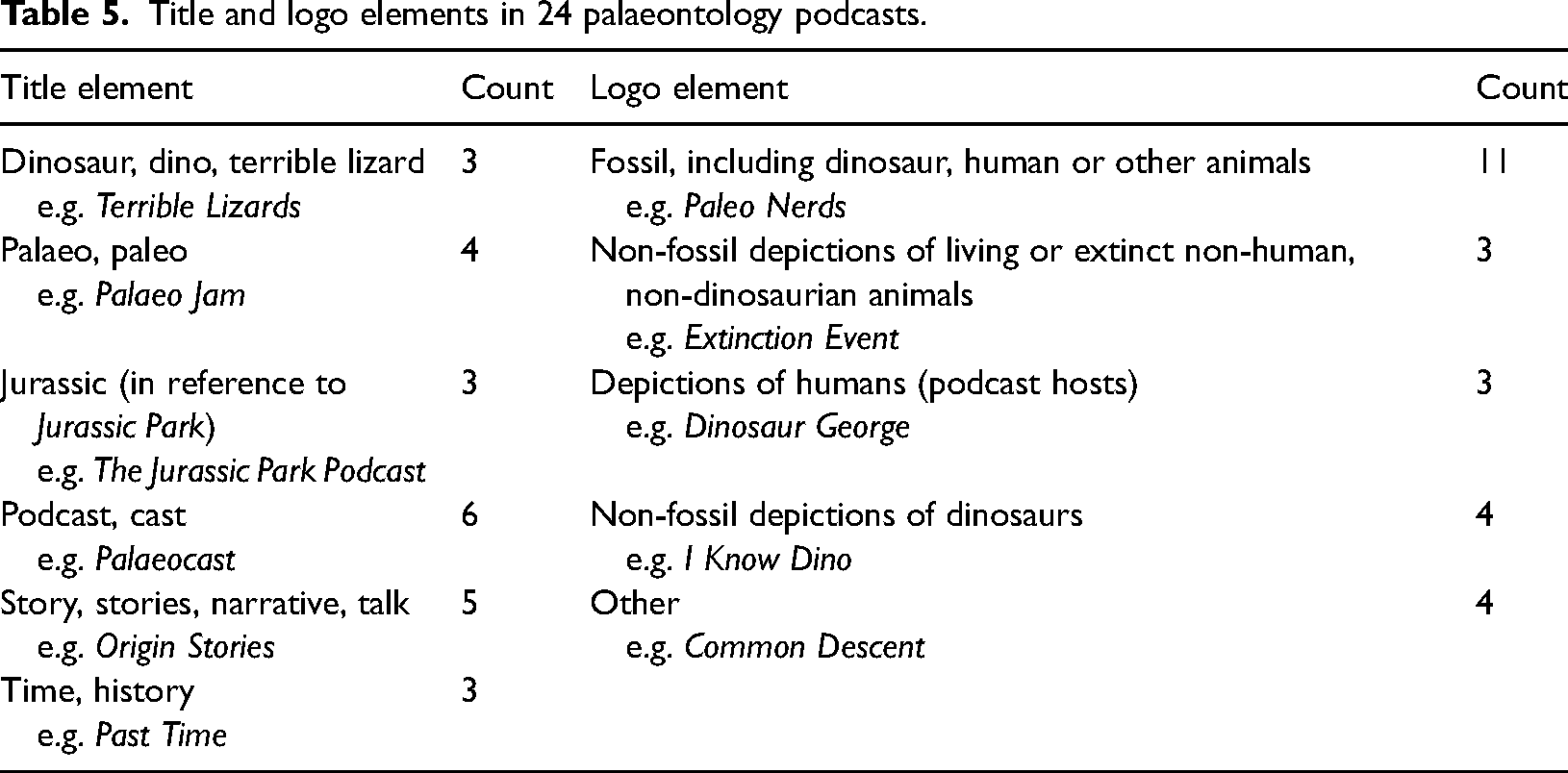
Some titles are relatively novel in the dataset (e.g. Love in the Time of Chasmosaurs 1 (Orr et al., n.d.)), while others use one novel word combined with a common word (e.g. Palaeo Jam).
Three different website arrangements were identified for the sample podcasts. Twelve have custom web addresses and websites with links to their social media, podcast feed(s) and other information about the podcast. Sometimes, as seen on the website for I Know Dino, these include additional information such as school lesson plans and lists of palaeontological museums. Nine of the podcasts have a web presence that is hosted by either a dedicated podcast hosting website such as Spotify for Podcasters, Libsyn or Apple or a blogging platform. A further three podcasts have website sub-sections on larger websites. These are Origin Stories, which is part of the research, advocacy and funding organisation The Leakey Foundation (n.d.); Tetrapod Zoology Podcast (Conway and Naish, n.d.), which is part of a broader Tetrapod Zoology media enterprise by palaeontologist Darren Naish; and InGeneral, which is a sub-section of the Jurassic Outpost website (n.d.).
A pre-eminent theme in the published podcast descriptions is an emphasis on science, particularly palaeontology, although related sciences and related terms are also described. For example: Palaeo Jam is a podcast exploring a range of issues in science and the community, using the multidisciplinary aspects of, and public fascination with, palaeontology. (Mills, n.d.) Geeky Goodness from the Fossil Huntress. If you love palaeontology, you’ll love this stream. Dinosaurs, trilobites, ammonites — you’ll find them all here. It's dead sexy science for your ears. (Fossil Huntress, n.d.)
Several of the podcast descriptions refer to the expertise of the hosts/producers/presenters, with six of the series descriptions either naming specific palaeontologists involved (Dr David Hone on Terrible Lizards (Hone and Lawrence, n.d.)) or specifying that the hosts or guests are palaeontologists or scientists. Three other podcasts in the sample refer to other professions or expertise, such as artist and performer duo Ray Troll and David Strassman on Paleo Nerds (n.d.) or ‘extraterrestrial musicians’ The Amoeba People (n.d.).
Discussion
The results from this study are presented thematically below, with each theme informed by elements from the three methods described above. All podcasts consist of common elements that distinguish them as being part of the medium and distinct from other but related forms: a certain sense of ‘podcastness’ (Berry, 2018). This sense includes consideration of ‘not only defined delivery system but also industrial, textual and cultural distinctiveness’ (Berry, 2018). This analysis attempts to account for each of these aspects of the medium with a focus particularly on the industrial and textual practices associated with podcast production across all three methods described in this paper, which together constitute the extended-mixed method approach.
The three themes presented below are (1) storytelling and other strategies; (2) engaging audiences; and (3) the role of science and experts. Theme 1 deals with the mechanisms used by the interviewed podcasters to develop and deliver their audio content in terms of technical aspects of production and how they devise and structure the content of episodes. Theme 2 describes methods of engaging with audiences both within the podcast audio content and via social media, drawing on the data collected both for the NTRO podcast, reflections from the interviewees and data gathered for the quantitative analysis. Finally, Theme 3 deals with the involvement of scientists, science and other experts within the podcasts, responding to the various podcast structures discovered during the interviews, creative practice and the quantitative review.
Theme 1: storytelling in palaeo podcasts
Storytelling is a common theme emerging from the results of all methods used in this study. Storytelling, alongside authenticity and intimacy, has been described as one of the ‘guiding aesthetic values of the young podcast industry’ (Laughlin, 2023: 820). Narrative storytelling is widely used even in news-based podcasts (Lindgren, 2015, 2021; Nee and Santana, 2022). Likewise, Spinelli and Dann (2019) describe verbal storytelling as one of the key elements of podcasting that differentiate the medium from radio. In addition to storytelling within the audio product, the term is extended here to some of the common textual and industrial practices that exist around the studied podcasts, the creative work, and as described by the interviewees. These practices are part of the overall presentation and reception of the podcast medium, even where they are not directly part of the audio content, such as social media, logos and titles.
The terms story/stories and related terms appeared across the titles and descriptions in the podcast analysis as outlined in the results section above. Additionally, these terms were invoked in responses to the interview questions. For example, both Jimmy Waldron and Michael Mills linked their podcast and science communication work to their desire to entertain and tell stories. Waldron claimed that ‘I’ve always liked being able to tell a story, keep things fun’. Similarly, Mills said: People do not engage with facts and data… People engage with stories. So if you’re doing sci-comm, and there's no narrative to it, you’re not doing sci-comm.
A title must both impart knowledge about the topic and intrigue the prospective audience to access the material. A study of repeated posts of the same image on the social network Reddit found that a post title needs to be differentiated from similar content while still matching the expected norms of the community and that it should neither be too long nor too short (Lakkaraju et al., 2013). There has also been an experimental correlation between informative film titles and the performance of those films at the box office relative to pre-release marketing volume and spending (Bae and Kim, 2019). The range of titles in the 24 analysed podcasts demonstrates the popularity of dinosaurs, palaeontology generally and specific media such as the Jurassic Park (Spielberg, 1993) and Jurassic World (Trevorrow, 2015) franchise.
The qualitative data provides further insight into the title development. Jimmy Waldron described the process for settling on the title Dinosaurs Will Always Be Awesome as a trial-and-error through discussion with friends. He rejected a more abstract title (Meso52) for being too confusing. Waldon said, ‘What I really want people to know, after all this, is that no matter what you do, where you’re from, or how old you are, dinosaurs will always be awesome’. Garret Kruger arrived at the title for I Know Dino only after discovering that many other website URLs featuring the name dinosaur were unavailable: ‘Anything with dinosaur in it, like any version of dinosaur was either taken or squatted on’. Both the qualitative and quantitative data suggest that within this field, using words such as fossil(s), palaeo/paleo and dinosaurs in podcast titles is perceived to improve prospects for discovery and search engine optimisation.
In addition to title selection, the cover image or logo is an element of how audiences access and view podcasts. Copeland and McGregor (2021) note that cover art embodies an important cultural and technical decision for scholarly podcasts. In a study of mobile phone application icon designs, which are comparable to podcast logos given their characteristics and the location of access (typically a mobile phone), Ho and Hou (2015: 2266) identified six key characteristics that should be considered when designing an icon: ‘artifact imitation, cartoon elements, 3D effect, color, dynamic elements, and novelty’. These guiding frameworks inform both the analysis of the podcast artwork presented in this paper and the practice-based approach.
The initial logo for the NTRO podcast consisted of a photograph of a T. rex skeleton alongside the podcast title. However, after reviewing the data collected for this study, a new logo was designed ahead of the second season, featuring an Australian theropod (Australovenator wintonensis) instead of the T. rex. The figure remains recognisably dinosaurian but is more niche and relevant to the podcast's home location. Such strategic modifications demonstrate the value of linking qualitative, quantitative and creative research methods under the extended-mixed method framework. Insights generated from one method can be usefully applied to inform and strengthen the others.
Cook (2023: 79) observes that podcasts ‘can inform and entertain at once with an awareness of the observation of stories as they unfold through narrative and interview formats’. The results and outcomes from all three methods of this study demonstrate that in palaeontology, podcasts can seek to inform audiences through planned storytelling. The interviewed podcast hosts demonstrate this approach and a direct focus on storytelling in the latter season of the NTRO reinforces it from the practice-based perspective.
Theme 2: engaging audiences – the intimacy of podcasts
Podcasting is regularly and widely described as an ‘intimate’ medium (Adler Berg, 2023; Ava-Pointon, 2021; Cook, 2023; Copeland and McGregor, 2021; Euritt, 2022; Laughlin, 2023; Lindgren, 2021; McGregor, 2019; McGregor and Copeland, 2022; McHugh, 2017; Robson, 2021). In Euritt's (2022: 16) detailed description of intimacy within podcasting, the term is defined as ‘a cultural code for communicating a feeling of relational closeness in time and/or space’.
The interview participants described multiple ways in which they sought to build connection or closeness either with an audience or collaborators through their podcast work. Tom Jurassic describes his multi-platform content creation, which includes interview segments and audio drama for The Jurassic Park Podcast, as ‘a process of finding a lot of like-minded people who I can share that [fandom] with and actually getting a lot of energy back off of the people I share that with as well’. Michael Mills similarly describes his podcast Palaeo Jam as ‘a conversation. It's me chatting with my paleo pals about the cool stuff that they do’. In a similar vein, Adele Pentland named her podcast Pals in Palaeo. Pentland stated that she chose the name ‘because I wanted… the listeners to feel that they could relate to and find kinship with me and my guests’ (personal communication). Each of these invokes a sense of friendship or camaraderie involved in the podcasting enterprise – one form of ‘intimacy’ to which Euritt (2022) and others refer. Cox et al. (2023) couch scholarly podcasts in terms that emphasise community development and contribution to community goals, an observation that the quotes from the interviewees above support.
Several of the interviewees discussed specific audience strategies and engagement. When asked about the parasocial nature of podcasting, Pentland recounted a story of how a research student had approached her at a conference: ‘I think she just really had the sense that she knew me because she listened to the podcast’. Garret Kruger shared a similar experience: I remember the first time, I was talking just in line for something, and somebody turned around and looked at me like they knew me. And I was like, what's happening, and then they, like, knew who I was.
An additional measure of non-audio engagement with audiences includes using social media channels to post additional content, show excerpts and promotional material. Social media metrics have become widely adopted as a proxy for audience reach and engagement (Balfour, 2020; Lim et al., 2016). Other science communication projects have counted social media metrics for comics (Jonsson et al., 2022) and correlations with citations (Lamb et al., 2018), as well as in health promotion initiatives (Lim et al., 2016; Veale et al., 2015). Like MacKenzie (2019), this study could not access direct listenership numbers for the studied podcasts, which makes access to social statistics helpful, even if imperfect. All the social media data were collected on a single day in December 2022. This makes the numbers broadly comparable as single-point-in-time figures. However, it does not provide insights into growth over time, and no correlations have been identified between the number of published episodes and the breadth of social media engagement.
Each of the three podcasts with the highest number of social media followers across platforms is part of a larger enterprise and, as such, does not have social media accounts solely dedicated to the podcast. InGeneral, with over 250,000 followers across all platforms, is part of the broader Jurassic Park Outpost website. Similarly, the 206,000 social followers attributed to Origin Stories are in fact followers of The Leakey Foundation. There is then a significant gap to the 51,000 followers of Tetrapod Zoology Podcast, which again is part of a broader media enterprise by palaeontologist Darren Naish. The Jurassic Park Podcast, with about 39,000 followers across all social platforms, is the most popular podcast-first example in the group, followed by I Know Dino with 18,000 followers. The Fossil Huntress pages (nearly 34,000 followers) are more complicated as they cover a podcast known as Fossil Huntress as well as a general website and social presence focused on palaeontology in Canada, including traditional media (television) productions. Most of the podcasts have fewer than 10,000 followers across the sampled social media platforms.
Theme 3: the role of science and experts in palaeo podcasts
Both the qualitative and quantitative methods demonstrate that even when the hosts are not scientists, interview guests tend to have direct and active expertise in palaeontology or a related field. This, too, is the approach adopted for the NTRO podcast.
Though a minority of the podcast hosts interviewed for this paper were palaeontologists or otherwise directly involved in a relevant scientific field, most of the podcasts rely on science or scientists for their content. I Know Dino producers Garret Kruger and Sabrina Ricci see themselves as dinosaur enthusiasts, but in each episode, they report new scientific papers and discoveries in detail – specifically newly described dinosaurs – while also frequently interviewing palaeontologists. Jimmy Waldron's Dinosaurs Will Always Be Awesome enterprise features images and hands-on learning opportunities with real and replica fossils, which he pursues to bring access to science to communities without access to such educational resources, and early episodes of his podcast were co-hosted by palaeontologist Dean Lomax. Lucas Zellers relies on scientific descriptions of extinct animals to inform his fictional monsters, and while The Jurassic Park Podcast primarily focuses on the Jurassic Park films, it also runs segments discussing the science of palaeontology in comparison with the screen representations. In contrast, Adele Pentland is a palaeontologist (see, e.g. Pentland et al. 2022) and primarily interviews other palaeontologists to generate content for her show. Michael Mills likewise focuses his time largely on direct interviews with palaeontologists.
MacKenzie (2019) developed a classification system for podcast hosts that was used unmodified for this study. From the 24 sample podcasts, 10 (42%) were classified by the author as hosted by science researchers/educators, with 5 being other professionals (such as artists or musicians) and only 2 being media or journalism professionals. The remainder (nearly 30%) were unclear, and none were identified solely as amateurs. MacKenzie (2019) found that 65% of their podcast sample was hosted by scientists, with the next highest group being media professionals at 10%. Therefore, the figures differ markedly from that larger ‘all-science’ study to this smaller palaeontology study. Interestingly, despite specifically including podcasts focused on dinosaur media, the media category is also not over-represented in this sample compared to MacKenzie. However, this study found greater uncertainty in classification and therefore has a far higher ‘unclear’ figure. It is worth noting that in this scheme, the author of the study (and host of the NTRO podcast) would be unlikely to be classified as a science researcher. However, the predominance of scientists as guests overcomes this matter and demonstrates why the simplistic classification, while useful for broad comparison, may not be appropriate for all studies of podcasts.
A second classification scheme has also been borrowed from MacKenzie: affiliation. This classification allows the determination of whether a podcast is explicitly linked to any scientific or other identifiable organisation. This category also differs widely from the findings of MacKenzie, who found that only 38% were produced independently. In contrast, this study shows that a vast majority of the sampled palaeontology podcasts – 21 out of 24 or 88% – were produced independently. That is, the podcast descriptions did not identify any affiliation to a university, research organisation or media organisation beyond the podcast or website itself. Only Tetrapod Zoology (science media), InGeneral (media) and Origin Stories (professional organisation) were deemed to be affiliated in this study. This suggests that even when the hosts of a podcast are scientists or professionals, the podcasts are produced without direct support, or only tacit support, of their home organisation. Further recognition of podcasts as valid research and engagement projects would begin to rectify this matter and support podcast producers’ efforts. This view is supported by Cox et al. (2023) who suggest formalising podcasting within the academic system to benefit researchers. The Australian academic system offering formal recognition of creative work within research evaluation frameworks goes some way towards developing and supporting the practice of academic or scholarly podcasting. While individual institutions still make their own internal decisions as to whether the Australian Research Council definitions (2015) are applied to a given work, the existence of that framework to acknowledge outputs encourages them to view such works favourably.
Conclusion
The extended-mixed method framework described by Fulton et al. (2023) is a useful and effective method for considering podcasts across a specific niche as it allows cross-referencing and calibration of practitioner insights from a creative project, as well as qualitative insights (in this case via interview), and additional qualitative data. The practice-led NTRO approach allows researchers to explicitly tie their allocated research time to products that engage broad audiences rather than being sideline activities. The method employed in this paper, combining reflexive media production and analysis of the wider media context into which the production enters, will prove to be a durable and interesting form of research and production for science communicators and others. The analysis should usefully inform decision-making for other researchers and producers examining the podcast platform as a medium for science communication, whether in palaeontology or other fields of science, technology, engineering and mathematics or scholarly activity in other fields. In concert with others who have made arguments in favour of further recognising and developing scholarly podcasting as a research practice (Ava-Pointon, 2021; Birch and Weitkamp, 2010; Cook, 2023; Cox et al., 2023; McGregor and Copeland, 2022; Monty, 2024), it is hoped this project demonstrates the viability of scholarly podcasting as a method of academic enquiry.
Footnotes
Declaration of conflicting interests
The author declared no potential conflicts of interest with respect to the research, authorship, and/or publication of this article.
Funding
The author received no financial support for the research, authorship, and/or publication of this article.
