



Abstract
This article underscores the transformative impact of victim–survivor voices in reshaping public discourse on child sexual abuse (CSA). The research project took as the backbone for analysis the Malka Leifer case that spanned 15 years and is linked to the Australian Royal Commission into Institutional Responses to Child Sexual Abuse's report of Case Study 22, which examined responses in ultra-Orthodox Jewish schools to child sexual abuse. Adopting a mixed methods research approach, this study combines qualitative media analysis of 102 news articles and 8 in-depth focus groups to investigate the impact of media outlets in amplifying victim voice and influencing public discourse, and how this impacts the subjects of mediatised public crises. Drawing on the theorising of Couldry and Cottle, the article considers the capacity and limitations of survivor-advocates to leverage media power in the contemporary media system. By exploring the ‘Privileging Victim Voice’ frame, this paper sheds light on how victim–survivor advocates utilised mainstream, local religious, and social media to solidify their central place in the narrative and its reportage. The media analysis served as the foundation for a ‘peer conversation’ style of focus groups with Jewish community members to investigate local impacts of the case's media reportage. The focus group methodology sought to represent this diverse community as wholly as possible. Findings reveal the significant power of journalists’ framing and sourcing practices, and how Jewish institutional child sexual abuse is framed by media outlets within the Australian media landscape. Further, it showcases the broader implications of public inquiries, such as Australia's Royal Commission, in empowering victim–survivors and centreing their narratives in media reportage.
Introduction
‘I feel like I know that the girls would not have got the justice they deserve without the media, but at the same time, it's not devoid of the circus. So, I'm thinking, how much of this is good for the girls? And how much of it is just people wanting to sell newspapers?’ (RK, FG8)
This paper critically analyses the transformative impact of victim–survivor voices in reshaping public discourse on Child Sexual Abuse (CSA) in religious settings. Cases of CSA have come to the forefront of Jewish community-based discourse over the last decade (Epstein and Crisp, 2018; Katzenstein and Fontes, 2017; Lusky-Weisrose et al., 2022; Mendes et al., 2019, Mendes et al., 2020; Mendes and Pinskier, 2021; Nadan et al., 2019), as victim–survivors have started to disclose abuse experienced within Jewish institutions. Abuse allegations at Yeshivah College Melbourne first emerged in 2011 when Manny Waks, now a prominent victim–survivor advocate, disclosed the CSA he endured there to Australian legacy news outlet, The Age (Waks, 2016). As the first in Melbourne's Jewish community to come forward publicly with his story, Waks inspired many other victim–survivors to disclose their abuse and went on to harness significant media power through local, legacy, and new media to achieve justice for himself and other victim–survivors who suffered CSA at Jewish institutions.
Responding to growing awareness of abuse in institutional settings, the Australian Royal Commission into Institutional Responses to Child Sexual Abuse (RCIRCSA) ran from 2013 to 2017 and featured 57 public hearings and over 8000 private sessions, naming over 4000 institutions in Australia where historical CSA occurred. Case Study 22 of the RCIRCSA examined the response of Orthodox Jewish institutions, specifically Yeshivah College Melbourne and Yeshiva Bondi, to CSA and served as a significant moment for both the Australian and global Jewish community in recognising abuse within Jewish institutions. This was the first Royal Commission to live stream all 57 public hearings to a global online audience (McCallum and Waller, 2021: 794). Interestingly, of all public hearings, Case Study 22 had the largest international audience tune in.
Concurrently to the Yeshivah case study, the Malka Leifer CSA scandal was having perhaps an even greater impact on Australia's Jewish community and their localised knowledge formation (Berger and Luckmann, 1966). The RCIRCSA's recommendations from Case Study 22 revealed the challenges faced by ultra-Orthodox Jewish sects in responding to CSA (RCIRCSA Report of Case Study 22, 2016), and these same complexities are evident in the Leifer case, which continued to gain notoriety against the backdrop of the RCIRCSA. The learnings from the Yeshivah case created a ripple effect for the global Jewish community (Mendes et al., 2019, Mendes et al., 2020; Mendes and Pinskier, 2021). Yet ultimately, the complexity and notoriety of the Leifer scandal – and its lack of resolve at the conclusion of the RCIRCSA – inspired me to investigate whether the RCIRCSA had a lasting impact in changing community-based discourse on current ultra-Orthodox Jewish CSA cases in Australia.
The Australian Jewish community is a diverse ethnic and religious minority of approximately 113,000 members, and Victoria is the most populous Jewish state or territory in Australia, home to roughly 46% percent of the Australian Jewry (Graham and Markus, 2018). Scholarly research has recognised the diversity of the Australian Jewish community, with affiliations typically categorised by community denominations’ adherence to traditional Jewish law, Halacha (Epstein and Crisp, 2018: 524). Expanding on the community's diversity, Mendes and Pinskier note the Australian Jewish community ranges from ultra-Orthodox, to traditional and modern-orthodox, to conservative and progressive Jews, and those who are completely secular (Mendes and Pinskier, 2021: 3–4). The Adass Israel community is an ultra-Orthodox sect of Judaism, whose Melbourne community consists of roughly 300 families (Mendes and Pinskier, 2021: 4). The selected case study analyses institutional child sexual abuse within this insular community, which has its own news sources and does not generally access the internet.
This paper utilises the Malka Leifer case study as the backbone for analysis to examine how the case's mediatisation has impacted Leifer's victims and more broadly, Melbourne's Jewish community. Malka Leifer was the principal of ultra-Orthodox Jewish girls’ Adass Israel School, located in Melbourne, Australia. In 2008, after the school was notified that Leifer had been allegedly abusing her students, Leifer and her family were aided by the Adass School Board to flee to Israel in the middle of the night. Since 2014, Dassi Erlich, Elly Sapper and Nicole Meyer, three sisters abused by Leifer, spent years trying to extradite Leifer from Israel, who argued she was too mentally unwell to travel. Two of the three sisters gave private submissions to the RCIRCSA in 2016 and together they spearheaded the #bringLeiferback campaign. In August 2023 Malka Leifer was found guilty of 18 of 29 charges of child sexual abuse, and sentenced to 15 years in prison, 11.5 years with no parole, and 5.5 years counting towards time already served in Israel and Australia (Thompson and Silva, 2023). The case spanned 15 years, and garnered significant global attention due to its notoriety and mediatisation, with victim–survivor advocates and their supporters lobbying to Australian and Israeli politicians for Leifer's extradition so official court proceedings could commence.
While the sisters were not able to travel to Israel for extradition proceedings during the COVID-19 pandemic, Waks attended court on their behalf while also live blogging court updates through his Facebook statuses. Both the sisters and Waks have been active voices in mainstream and religious media's reportage of the case, while utilising their social media presence to spread awareness. The case is unique ‘in embodying an intersection of several taboos that threaten social order’ (Lusky-Weisrose et al., 2022: 169), through a female perpetrator abusing female adolescents and the scandal taking place across two countries. Moreover, the unique insularity of the ultra-Orthodox Adass community and the corruption by Israeli politicians to aid Leifer's evasion of justice, marks the significance of the selected case study (Lusky-Weisrose et al., 2022).
To examine the role of survivor advocacy, local news and global social media in the Jewish community, this article adopted a mixed methods research approach combining a qualitative media analysis of 102 articles using framing theory (D’Angelo, 2019), and peer conversation style discussions (Gamson, 1992) with 8 focus groups. The focus group discussions formed the main research methodology, to understand how the Australian Jewish community negotiate and respond to cases of CSA. Despite many in the community holding this subject matter close to their hearts – ranging from secular Jews to religiously conservative Jewish Australians such as the ultra-Orthodox community – I faced challenges in finding participants for the study. This suggests the sensitivities surrounding research of Jewish institutional CSA and its media reportage, alluding to a general wariness community members feel towards being subjects of a study. Once participants were recruited, I sought to make them feel safe and free of judgment, so they could unreservedly share their insights, with the richness of the data ultimately reflecting the crucial nature of this approach.
The research demonstrates how survivor-advocates harnessed media power to expedite judicial processes and shaped the narrative through the case's mediatisation (Couldry and Hepp, 2013; Hjarvard, 2013), while also broadening their advocacy work. The paper engages with Couldry (2012) and Cottle's (2004, 2006) foundational media studies debate through a social constructionist perspective, to analyse whether, or to what extent, media empowers victim–survivors or further discriminates them. This mixed methods approach explores the impact of journalists’ sourcing and framing practices six years on from the RCIRCSA, and how media writers and survivor-advocates can work together to privilege victim–survivor voice. Additionally, this paper examines the symbolic nature of ‘the sisters’, and how this symbolism impacted on the Jewish community amidst a public crisis event. The paper also explores community critique of survivor advocacy, which emerged through the focus group discussions, and demonstrates the community tension that arises during justice seeking processes by victim–survivors of CSA (Death, 2018).
Literature review
Crisis of child sexual abuse in the Jewish community
This paper draws on research conducted for the Breaking Silences (DP190101282) project (McCallum and Waller, 2021; McCallum et al.; 2022; Waller et al.; 2020), which examined media reportage of the Australian Royal Commission into Child Abuse. A global chain of inquiry has ensured a change in responses and understanding of child sexual abuse (Wright, 2017; Wright and Swain, 2018).
Revelations and allegations of child sexual abuse have been increasing in Jewish institutions. This is especially evidenced across ultra-Orthodox Jewish institutions over approximately the last decade (Epstein and Crisp, 2018; Katzenstein and Fontes, 2017; Lusky-Weisrose et al., 2022; Mendes et al., 2019; Mendes et al., 2020;Mendes and Pinskier, 2021; Nadan et al., 2019). The unique insularity of the ultra-Orthodox Jewish community, and ‘the distinctive religious and cultural values, worldviews and norms that prevail’ (Nadan et al., 2019: 1201) have been identified in research as hindering this community's approach to CSA (Mendes et al., 2019; Mendes et al., 2020; Mendes and Pinskier, 2021).
Mendes er al. (2019) utilised the RCIRCSA to examine how ultra-Orthodox Jewish communities negotiate institutional child sexual abuse, noting the key institutional structures that present challenges in responding to allegations. Further, they recognise the key role of independent advocacy groups ‘such as Jewish Community Watch in supporting Jewish victims of institutional child sexual abuse’ (2019: 939). They examine the responses of Jewish institutions against the backdrop of the RCIRCSA, noting the limitations of this public commission of inquiry in being wholly representative of Jewish organisations and communities, due to this community's diversity (2020), while also noting the urgent research need in countries with larger Jewish populations like the USA and England (Mendes et al., 2019).
Recently, scholarly literature has utilised the Malka Leifer case study as a lens for examining the impact of the mediatised public crisis on the Jewish community. Mendes and Pinksier note the significance of the Bring Leifer back campaign in influencing Jewish community understanding of child sexual abuse (Mendes and Pinskier, 2021: 128). Lusky-Weisrose based (2022) study similarly analysed the Leifer scandal within the Israeli context. Their work emphasises media's central role in promoting discourse of institutional child sexual abuse, yet they recognise both the advantages and limitations of online discourse when the diverse Jewish community negotiate the crisis of abuse through newer media forms.
Religion and media
To understand how the advocacy efforts of victim–survivors interrelate with the Australian Jewish community against the backdrop of the Leifer case, this paper draws on theorisations of religion and media. The mediatisation of religion (Abdel-Fadil, 2018; Lundby, 2018) has propelled the Leifer case into the political public sphere, with media's reportage influencing the progression of public crisis and the community formation which can emerge through mediatised events. Cohen's (2012, 2014) work explores the relationship between Jewish values and the media, and asserts that ‘while in modern society, the right to privacy is subservient to the right to know, in Judaism the right to know is subservient to the right to privacy’ (Cohen, 2012: 20). This reveals that with the increase of CSA disclosures in Jewish institutions, and reportage by both mainstream and local religious media, there is now ‘a tension that's waiting to be broken’ (SD, FG1) in the Jewish community. Additionally, Cohen notes ‘there is virtually no research on media aspects of the Jewish Diaspora’ (2012: 12) and this paper hopes to contribute to this research field, by showcasing how Jewish victim–survivors in the diaspora harnessed media power through mainstream, religious and global social media, consequently developing a media presence and shaping the narrative in both the Australian and Israeli media landscape.
Recognising the significance of local religious media, Cohen concludes: The Diaspora Jewish media may have some ill-defined role in strengthening religious identity. Notwithstanding the information age, globalisation and Internet, the media appears unlikely for the foreseeable future to replace such conventional forms as the synagogue, the Jewish school and yeshiva. Rather, they strengthen these forms, acting as a second fiddle. (Cohen, 2012: 202–203)
This highlights the interrelation between traditional Jewish conventions and local religious media, and how these two notions work together in the new media age to strengthen Jewish identity. Cohen's assertion reveals that though there is minimal research on Jewish diaspora media, this media form can play a crucial role in deepening the Jewish identity of diaspora community members, especially in times of mediatised public crisis events.
The ‘Jewish identity (is) no longer dependent upon intermediary media sources’ (Cohen, 2012: 187), with Jewish individuals able to determine their own religious and cultural identity within the global media age. In this same way, Jewish survivor-advocates can establish and shape their own narrative through social media advocacy appealing to their community (Death, 2018).
Media rituals
Building on Schudson (2001) and Carey's (1989) work that approached media as ritual, this paper is informed by the media studies frameworks of Nick Couldry (2012) and Simon Cottle (2004) to consider power relations in media practices and how people use media to inspire colle.ctive action. Examining the mediatised public crisis of Stephen Lawrence's murder, Cottle (2004) identifies mediatised public crises as the sixth analytical approach that can be ‘accommodated under an overarching conception of mediatised ritual’ (Cottle, 2006: 416). Cottle contends ‘mediatised rituals are those exceptional and performative media phenomena that serve to sustain and/or mobilise collective sentiments and solidarities on the basis of symbolisation and a subjunctive orientation to what should or ought to be’ (Cottle, 2004: 31) through appealing to ‘collective solidarities, identities and outlooks’ (Cottle, 2004: 23). For Couldry, media rituals are enacted through ‘category distinctions and boundaries’ (2012: 131) which work to solidify media's place in the social world.
Cohen's work similarly explores how mass media and religion can work together to strengthen collective action and religious identity. Also adopting a social-constructionist approach, Cohen contends ‘the media not only construct the reality but may even contribute to creating it…result(ing) in the audience itself becoming involved as a “participant” in an event’ (Cohen, 2012: 49). Thus, through the Leifer case's mediatisation, audiences were actively engaged with the case and supported the three sisters, and subsequently became part of this ritualised aspect of media through invoking collective solidarities. The focus group findings explore the personal investment of many participants in seeing justice achieved for victim–survivors in the Leifer case.
Media power in local and global settings: Couldry and Cottle
Cottle contends that non-elite actors can leverage media power within mediatised public crisis events to instil positive change and invoke collective solidarities. In contrast, Couldry asserts that it is generally elite institutions who harness media as a strategic form of power which ultimately defines how media shape public understanding. This paper examines how media power was harnessed throughout the Leifer case, and whether it was non-elite actors or the elite and media institutions themselves, who influenced the progression of the case.
Presencing is ‘a whole set of media-enhanced ways in which individuals, groups and institutions put into circulation information about, and representations of, themselves for the wider purpose of sustaining a public presence’ (Couldry, 2012: 98). Couldry asserts that maintaining a media presence is regarded as an essential component for exerting power in the media landscape, yet argues it is generally elites who are able to leverage this. In contrast, building on Durkheim, Cottle's model recognises the power of symbolism to ‘construct collective solidarity and build social order’ (Cottle, 2004: 42) which transcends the theorisation of media presencing. Couldry's presencing differs from Cottle's discussion of symbolism, yet both ‘are essentially struggles of symbolic power’ (Cottle, 2004: 38) to ensure an individual's perspective is effectively represented within mediatised public crisis events.
Cottle argues that ‘mediatised rituals and the struggles played out on the media stage cannot be viewed in terms of an opposition between strategic and symbolic power…Both (political elites and non-elites), in fact, are likely to mobilise forms of strategic or symbolic power’ (Cottle, 2004: 41). Couldry and Cottle approach characterisation in the media through different lenses, yet both recognise the crucial role of maintaining a media presence in empowering individuals. Through sustaining their place in the media arena, strategic and symbolic power can be harnessed by both political elites and non-elites to influence mediatised public crises and subsequent community formation. This research will investigate who ultimately leveraged power within this mediatised event.
Drawing on Couldry's conceptualisation of voice (2010), Death's study of child sexual abuse governance in Church institutions asserts ‘survivors have been able to engage in cultural change whereby their voices are not only recognised, but recognised as significant’ /(2018: 80). This research considers Death's discussion of victim–survivor voice, and how it can be politicised to exert and redefine power in media. Her work emphasises how amplification of victim–survivor voice predates the RCIRCSA, and it is these advocacy efforts that were crucial to the establishment of public commissions of inquiry.
Methodology
Media analysis methodology
A mixed methods research approach was used to analyse how media framed victim–survivors throughout this mediatised public crisis and influenced the Jewish community's understanding of child sexual abuse. It paid particular attention to how media power was leveraged to strengthen ethnocultural and religious identity and collective solidarity of Jewish news audiences.
The media analysis compared coverage by Australian mainstream media outlets, The Age, Herald Sun, and Australian Broadcasting Corporation (ABC) to the Australian Jewish News (AJN), a local, Jewish community weekly newspaper. Using the Factiva Database, the search terms ‘Malka Leifer’, ‘child sex/ual abuse’ and ‘Adass Israel school’ were entered to examine the frequency of coverage in The Age, Herald Sun and ABC throughout the duration of the case.
However, as Factiva does not include the AJN in its database, I manually searched the AJN website to find reportage on Leifer. Due to the notoriety of the Leifer scandal in Australia's Jewish community, the AJN had a webpage dedicated solely to the case's reportage, titled ‘Bring Leifer Back’ that ensured access to all relevant articles (Australian Jewish News, 2022). A broad search noted the frequency of articles in the database before narrowing down the dataset. Due to the extensive time period of the case and the extensive news coverage, the dataset was narrowed down to four time periods (Table 1): - - - -
Media analysis sample size by publication and reportage period.
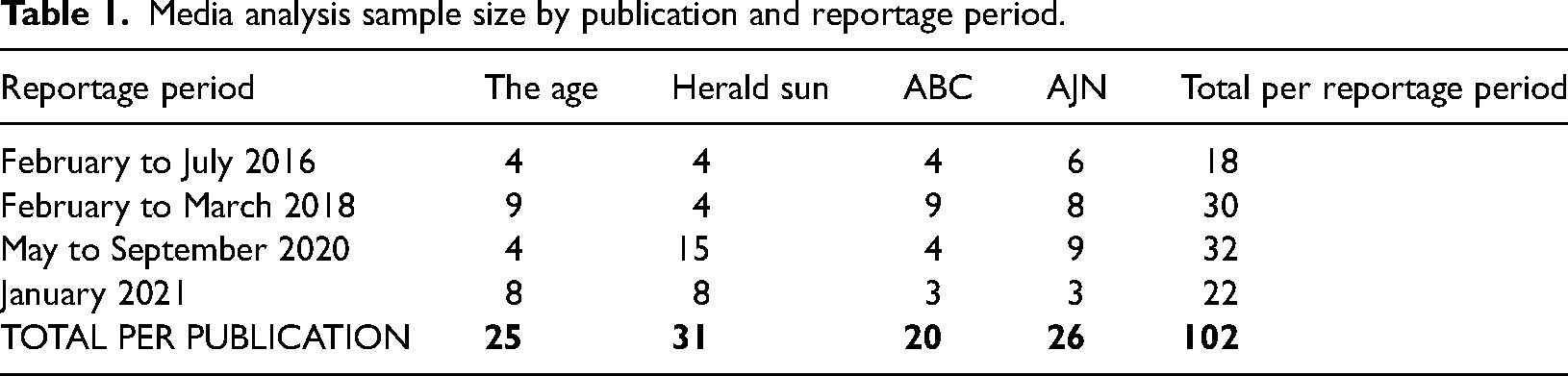
A total of 102 articles were analysed, including editorials, feature articles, op-eds and letters to the editor. After the dataset was confirmed, I began rereading the articles in concert with the academic literature, noting prevalent themes to consider the different frames used by news outlets when mediatising the case. Existing scholarly research examining how Jewish institutional CSA is framed and the challenges in ultra-Orthodox communities to responding to cases of abuse was also engaged with when analysing the frames (Lusky-Weisrose et al., 2022; Mendes et al., 2019, 2020; Mendes and Pinskier, 2021). Once the themes were more clearly distinguished, data was reanalysed and coded against the frames identified using the thematic framing theory approach (D’Angelo, 2019). The frames were identified inductively, through ‘a process of coding the data without trying to fit it into a pre-existing coding frame, or the researcher's analytic preconceptions’ instead, the ‘themes identified are strongly linked to the data’ (Braun and Clarke, 2006: 83). After the frames were identified through the media analysis, I analysed participant discussions of the mediatised public crisis, to further synthesise and validate the frames.
Focus group methodology
To provide participants with a safe space to discuss issues openly, the paper was informed by Gamson's peer conversations (1992) and Kitzinger's natural groups (1995). 8 peer conversation style focus groups were conducted, where participants were placed in a discussion with their peers; friends, family, or colleagues, who they elected to participate in the research with them. This approach to focus groups is again inductive, using participants’ insights to further crystalise the themes and frames identified in the media analysis. Due to the highly sensitive nature of CSA, the subject matter this research paper is interrelated with, participants were provided with a support services referral sheet. The data was also anonymised, and participants were given pseudonyms. Further, the aim was to replicate the energy of Shabbat dinner because, as one participant said: ‘we talk Friday night’ (LI, FG3). This traditional cultural practice is a space where the community typically negotiates matters that are relevant to them (Cohen, 2012: 180). It is for this reason, that the focus group discussions were mainly held in participants’ homes, a safe space typically surrounded by Judaica, where issues related to the community are often deliberated over Jewish holiday meals.
It was initially difficult to recruit participants via social media. Although the Jewish community heavily relies on social media as a form of connection through participating in community groups and following Waks’ Facebook status updates on the trial, the platform's openness, seemingly deterred prospective participants from lodging interest to participate in the study via social media. Additionally, another obstacle with regards to social media procurement, was a lack of rapport between myself and the people I was approaching. The prospective relationships lacked the foundation of trust and made people unwilling to volunteer for the study.
Ultimately, recruitment via social media was unsuccessful and I instead relied on using local social networks through word of mouth and the snowballing technique (Scott, 2014). From this mode of contact, participants seemed happy to participate and to be contacted to arrange times to meet. While some were apprehensive at first, all individuals I made phone contact with then agreed to participate in a focus group with peers, after learning about the study and the purpose of the project. These hesitant reactions suggest that Melbourne's Jewish community members felt a general wariness about the subject. It is important to remember that ‘the research interview… (has) a clear power asymmetry between the researcher and the subject’ (Kleinknecht et al., 2018) which further justifies the community's hesitation to participate, especially when already wary of the Leifer case's notoriety and media, as a cultural group who have faced prejudice in many facets of society. It was therefore crucial to make participants feel safe and free of judgement, so they were able to unreservedly share their insights. The successful procurement of focus groups through word of mouth, demonstrates community interiority being mobilised, however, only after participants felt there was an existing rapport between me and whoever contacted them to participate in the study alongside them.
Semi-structured interviews were conducted, with a free-flowing discussion that lasted approximately 60 to 90 minutes. Participants were asked how they first heard about the Leifer case and who they feel are the main voices that tell the story, what news sources they engage with, whether they read the AJN, and asked to reflect on their feelings about the prevalence of antisemitism in the Australian media landscape. Participants were asked about their localised knowledge of prejudice in news media due to this notion being the driving force for Jewish community members’ unease and wariness of the Leifer case's mediatisation. Towards the conclusion of the discussions, participants were presented with sample articles to further synthesise the frames identified through the research. This text and talk approach (Gamson, 1992) of qualitative methodology enabled comparison of the frames that emerged in both the media analysis and focus groups and see how they interrelate.
Frames
A text and talk approach of qualitative methodology was utilised to explore the four frames identified through the inductive mixed methods approach: Orthodox Otherness, Interiority, the Israel-Centred Jewish Identity (Cohen, 2012: 195) and Privileging Victim–Survivor Voice.
‘Orthodox Otherness’, reveals how ultra-Orthodox Jewish community members – typically from more conservative sects – were referred to through an ‘otherness’ frame by both mainstream and religious media, and in discussions with more assimilated Jewish community members.
The ‘Interiority’ frame analyses how this mediatised public crisis event exacerbated the connectedness and inwardness of the Australian Jewish community, largely due to a wariness and fear of how non-Jewish audiences would perceive the broader community with regards to the Leifer scandal.
The ‘Israel-Centred Jewish Identity’ frame, building on Cohen's (2012) work, reveals how Israel is intrinsically linked to Jewish identity, and thus an interdependent relationship exists between Israel and Jewish people, that is evident in both media's reportage and in particular, the community's discussion of the mediatised crisis.
Lastly, of the four frames identified, the ‘Privileging Victim–Survivor Voice’ frame is the focus of this paper. This frame illustrates how victim–survivor voices are amplified and framed as central to the narrative, due to their advocacy efforts and journalists’ framing and sourcing practices, and then how these voices continue to be privileged by media's consumers as they engage with the Leifer case (Death, 2018). It is within this frame, that the lasting symbolism of ‘the sisters’ solidifies itself in news audiences’ psyche.
Findings
Media analysis findings: the public and the local – ABC and AJN privileging victim–survivor voice
The media analysis found that victim–survivor voices were central to the narrative within media reportage, due to both journalists’ sourcing and framing practices, and survivor-advocates successfully harnessing media power as a transformative tool for change. Of the news publications selected for analysis, it was the public broadcaster, the ABC, and the local Jewish community outlet, the AJN, that most consistently and frequently privileged victim–survivor voice throughout their reportage of the Leifer case.
During the 2016 reportage period, the sisters had not yet publicly disclosed their identity. However, one of the sisters selected the public broadcaster to break her story using a pseudonym. Thus, showcasing the ABC's influential place in Australia's media landscape (Ricketson and Mullins, 2022). Throughout the 2018 reportage period, all mainstream and local media outlets selected for analysis enacted the ‘Privileging Victim–Survivor Voice’ frame following the sisters’ public disclosure. However, it was only the ABC and AJN who chose to quote Elly Sapper and Nicole Meyer by name, instead of solely sourcing Dassi Erlich's voice.
From May to September 2020, extradition attempts continued throughout the pandemic. The sisters’ campaign efforts extended to broader advocacy work for victim–survivors of CSA, through the #LetUsSpeak campaign established by journalist and survivor-advocate Nina Funnell, in efforts to abolish sexual assault victim gag-laws. The sisters fought against the Victorian laws that were ‘quietly introduced in February to silence sexual abuse victims’ (Herald Sun, 2.9.20) and were granted permission to publicly share their stories by name in September 2020 through the politicisation of their voice (Death, 2018). 100% of the ABC and AJN's 2020 articles utilised the ‘Privileging Victim–Survivor Voice’ frame. Interestingly, while the Herald Sun did not quote victim–survivors as frequently as the ABC and AJN, the dataset illustrates this publication dedicated the most reportage to the #LetUsSpeak campaign and advocacy efforts of the three sistersa (Let Us Speak, 2018; Simonis, 2020). This reinforces the Herald Sun's reputation as a conservative media outlet with a strong advocacy lens (Muxworthy, 2022), and the articles’ headlines reveal how the publication took a performative stance in advocating for the rights of victim–survivors and supporting the three sisters. In January 2021, the final reportage period, the sisters were unable to give new commentary for fear of being held in contempt of court. Despite this, it was again the public broadcaster, the ABC (100%) and the AJN (66%) that most frequently amplified the sisters’ voices. With the exception of the Herald Sun's commitment to report on the #LetUsSpeak campaign, it was public and locally based media who were the most dedicated to privileging victim–survivor voice and framing it as central to the narration of this public crisis event. This has important implications for how the participants in the focus groups ‘read’ the media's coverage of the Malka Leifer case. Focus Group findings – ‘We had advocates in our community that were keeping it right in front of our faces…who kept it alive’.
The media analysis highlights that survivor-advocates voices were central to shaping the mediatised narrative. This was borne out in the focus group discussions as they examined how the Australian Jewish community engages with local, social and legacy media. Each participant group was asked what news sources they engage with and trust, how reportage of the Leifer case makes them feel, and who they considered to be the main voices in reportage. Participants were asked to share their insights on their engagement with the case and antisemitism in news more broadly, before presenting them with a selection of media texts (Table 2).
Focus group demographics.
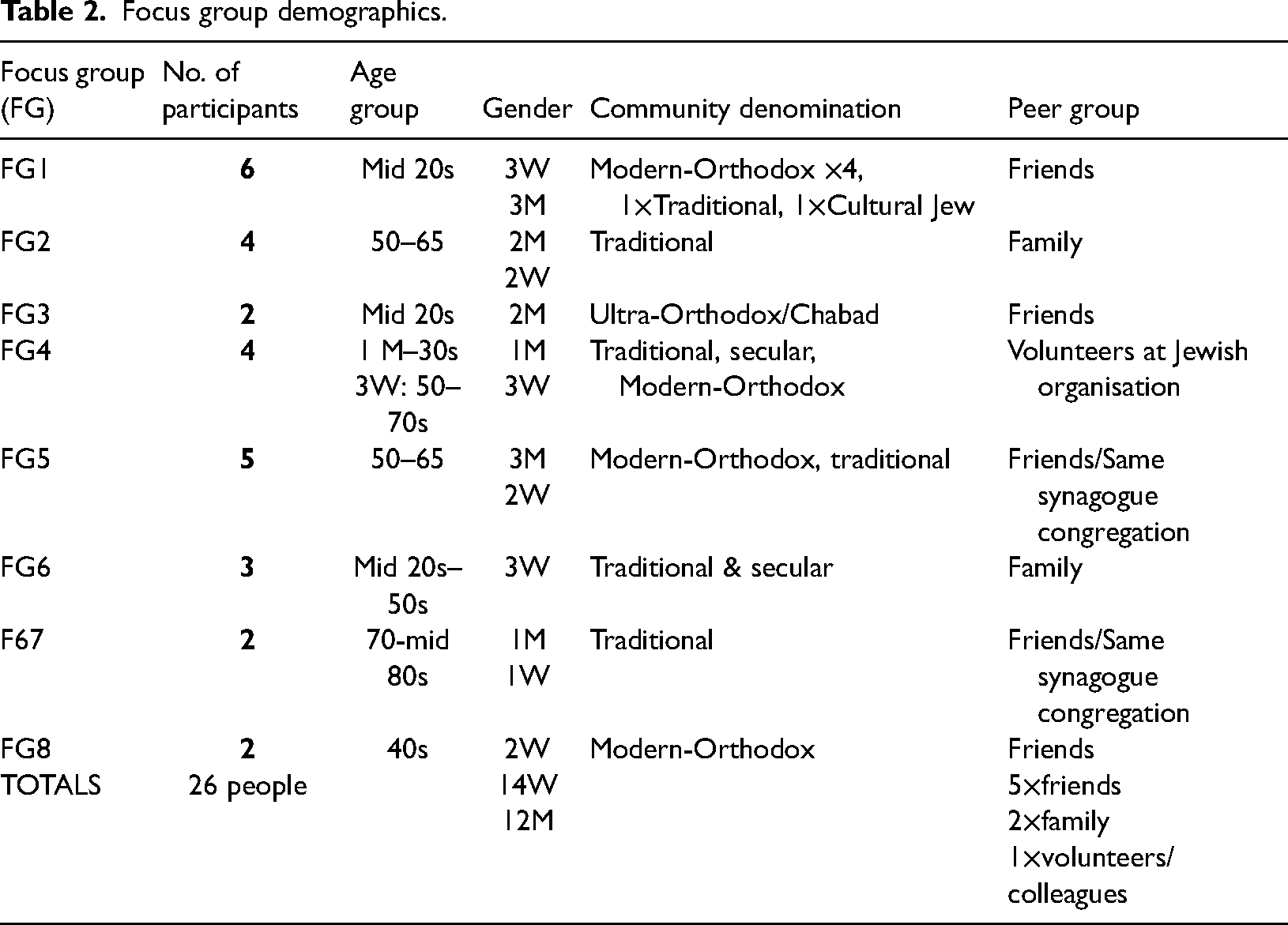
Even though victim–survivors were unable to campaign in recent years so as not to be held in contempt of court, when participants were asked who they viewed as the main voices who told the story of Malka Leifer, an overwhelming majority believed it to be the sisters. Dassi, Elly and Nicole were ‘always at the forefront. They’re always being interviewed in the press through different media outlets’ (MA, FG2).
This was a point of discussion among focus group participants as they talked about the case. Focus Group participant GR contended: We had advocates within our community that were keeping it right in front of our faces, because they wanted her back. It comes back to the sisters and Manny Waks, who kept it alive and kept the media pumped with information…it's a credit to them because otherwise it would have been forgotten because we all move on with our lives. (GR, FG2)
Through this quote, the successful advocacy efforts of the sisters and Manny Waks are recognised, while also highlighting that it is because of these individuals, that the community has been so actively engaged with the case, further reinforcing Death's work on the politicisation of victim–survivor voice (2018).
LI, a Haredi ultra-Orthodox participant, noted it was the ABC's three-part Australian Story documentary (Australian Broadcasting Corporation, 2018) and the sisters’ central place in it, that ultimately triggered the greatest change in his family's perspective on the Leifer case. He reflects: Really the only thing I have any consciousness of, is that documentary…that was incredibly powerful. I know the emotions evoked in my immediate family members, like it really intensified their wish to see this closed. It's like justice served kind of thing. And it really made each person and story real, both the victims and the villains, it created characters out of each out of them. That they were real people who did these things, and the context in which it happened as opposed to just being a news story. (LI, FG3).
LI's quote is insightful as it demonstrates how influential the ABC documentary was in shifting perception of the Leifer case, specifically for ultra-Orthodox Jewish community members with difficulty accepting revelations of abuse within their community. Additionally, through the ABC's reportage, victim–survivors were a central focus of the documentary and imprinted themselves as the dominant angle of coverage while being empowered to share their story. Participant MN further supports this, contending ‘the story was being told through them (the sisters)’. This highlights the media's successful efforts in propelling survivor-advocate voices to the forefront of reportage and showcases how survivor-advocates were able to harness media power as a tool to spread their message and increase awareness due to sourcing practices by journalists who reported on the case. Focus Group 4 features a discussion with four participants who vary from secular to modern-orthodox community denominations, and only share the commonality of all volunteering at the same Jewish organisation. The centrality of survivor voice is again depicted below in the discussion with Focus Group 4: Who would you say are the main voices that tell the story of Malka Leifer? You're talking about media? However you interpret the question. The girls.
Yeah, I see the girls, the image of the girls… definitely the voices of the girls. That's what I'm aware of.
Particularly the most, Dassi. Yes.
This is noteworthy as Dassi is highlighted as the most prominent of the three sisters. Both MG and BJ view the symbolic nature of sisters as central to the story. QE went on to say: Yeah, I agree. I think they've been really out there, out front. And determined. GC same for you? Yeah, I’d say they’ve helped shape the narrative to be about sort of seeking, I don’t know about justice, but seeking a sort of retribution for what's happened. In terms of shaping it so yeah, them and I’d probably also say, the short form media.
QE and GC agree with their fellow participants that the sisters’ voices were crucial, and GC also attributes credit to the media, demonstrating the symbiotic relationship between journalists’ sourcing and framing practices and victim–survivors voices when leveraging media power (Lusky-Weisrose et al., 2022; Mendes et al., 2019). QE sheds light on why this duality has occurred: They are forming the narrative, the girls. But I think it's heightened in the background of the Royal Commission… a lot of people thought…it's only the Catholic Church…and everybody learned a lot from reading and listening to the stories. When these girls came out already, I think we'd been reshaped and rewired in the way we received the story.
This extract is significant as it reveals that while the participants are from different community denominations, they all view the sisters as central to the narrative – ‘forming’ and ‘shaping it’. Thus, recognising how victim–survivor voices have become politicised and public understanding reconfigured to recognise these voices at the heart of revelations during public inquiries (Death, 2018: 142). Additionally, QE's comment highlights the RCIRCSA's role in laying the foundations for a changing dialogue with regards to institutional CSA in Australia, as found by McCallum and Waller (2021: 789). QE's observation that the Royal Commission enabled the sisters’ story to successfully resonate with audiences, because ‘we’d been reshaped and rewired’ (QE, FG4), emphasises the lasting impact of the RCIRCSA approximately six years later, in enabling survivor voice to be privileged attentively by both media and its consumers (McCallum and Waller, 2021: 789). This supports the existing body of research that recognises the Royal Commission's role in enhancing understanding of institutional CSA within the Australian Jewish community (Lusky-Weisrose et al., 2022; Mendes et al., 2019), and how this global chain of inquiry (Wright and Swain, 2018) has enhanced Jewish community understanding of the crisis of abuse within its community. Moreover, through media privileging Jewish victim–survivor voice and ensuring it was central to reportage, the symbolic imagery of the sisters solidified itself in audiences’ minds and sustained their engagement with the case, subsequently uniting the Jewish community.
After Leifer's extradition order was given, participant BN shares she was ‘really proud that she’d (been extradited) and happy for Dassi, because Dassi had posted a lot…she was an open book, so it felt like a win’ (BN, FG6). Here, BN is specifically referring to Erlich's social media page, which garnered a significant following.
These participant quotes demonstrate how through mainstream, religious and social media, survivor-advocates leveraged media power and became central to the narration of the case. Additionally, journalists’ editorial choices to frame these women as central to the story, ensured community members felt a personal investment due to their shared cultural identities, and worked to inspire collective action from within the community. By BN sharing ‘it felt like a win’, it suggests a personal stake that BN held in the progression of the case, due largely to the sense of connection Erlich was able to foster between herself and her dedicated social media following.
This is further evident through BB, a participant in Focus Group 7, sharing ‘Dassi seems to be a spokesperson for her three sisters’ (BB, FG7). In response, FL believes ‘Dassi was the initial spokesperson…but since then, the other sisters have been speaking out’ (FL, FG7). Erlich was the first of her sisters to speak out publicly and has the largest social media following through her Facebook and Instagram pages, and both of these factors seem to contribute to why all these years later, she is still seen as the most prominent of the sisters. This suggests the lasting significance of maintaining a social media presence within the hybrid media system of the globalised world (Chadwick, 2013; Couldry, 2012; Lusky-Weisrose et al., 2022).
Diverse community perspectives on survivor advocacy
Many focus group participants recognised the fundamental role of victim–survivor advocates in inspiring collective action and community formation in cases of CSA. Yet, the focus group discussions also revealed some criticism towards these figures and a tension that emerges within the Jewish community when individuals disclose abuse. Many participants discussed the concept of justice, and this is a recurring notion weaved throughout this paper. Justice seeking processes for victim–survivors involve not just criminal prosecution for perpetrators, but public shaming and accountability (2018: 54), and sheds light on the subsequent community tension that arises in times of mediatised public crisis. Further, the Jewish community's interior values (Cohen, 2012) clash directly against this public process of revelation undertaken by Jewish victim–survivor advocates. This illustrates that as journalists frame and source through privileging victim–survivor voice, this can consequently create separation between the assimilated community, and the community's more religiously conservative members (Lusky-Weisrose et al., 2022).
Focus Group 3 featured a discussion between two ultra-Orthodox Jewish friends, who are both part of the Chabad (a large Orthodox Jewish denomination) community, and are affiliated with Yeshivah College Melbourne, the institution named in Case Study 22 of the RCIRCSA.
Discussing victim–survivor advocates, participant AA shares ‘Manny, like I've sort of distrusted his opinion. I feel like there's always another motive’ (AA, FG3). When asked to elaborate on this, AA notes Waks ‘pretty much destroyed their (community members) reputation and they hadn’t done anything necessarily wrong’ (AA, FG3). This illustrates how for some Yeshivah community members, there is a tension that exists in parallel with the advocacy work of victim–survivors. Cohen's assertion that in accordance with Jewish Law, the ‘most severe is the divulging of secret information to the wider public that is intended or has the effect of damaging someone's reputation (lashon hara)’ (Cohen, 2012: 20), illustrates why some community members hold a level of contempt for survivor-advocates who publicly disclosed and subsequently tarnished reputations of prominent community members (McCallum et al., 2022).
Reflecting on the CSA at Yeshivah, LI contends ‘the ripple effect, it went across the entire Jewish, at least English-speaking world. It was about really strict rules…it seems like it's an overstep of precaution’ (LI, FG3). As community members closely affiliated with Yeshivah College Melbourne, their observations reveal these participants hold a degree of wariness and criticism towards Waks, who doubt the motives behind his advocacy efforts. For AA, Waks’ involvement in mediatised events ‘takes away credibility’ (AA, FG3), and while LI does not share this sentiment, he recognises ‘his (Waks’) activism expanded beyond sexual abuse cases throughout COVID. He was very on top of making sure that the Orthodox communities did not step out of line of the restrictions’ (LI, FG3). Thus, suggesting as victim–survivors continue to sustain and broaden their advocacy work, some Jewish community members interpret this as an anti-Orthodox agenda.
These sentiments are echoed in Focus Group 5, a group of modern-orthodox Jewish people in their 50s and 60s. Participant RL shares ‘if Manny hadn’t done what he did to make it front and centre in the press and he pushed and overdid it at times, too, yes, he pushed his own barrow…but I think it did make a difference’ (RL, FG5). This quote reveals Waks’ reflexivity in utilising media as a tool for his advocacy, acknowledging the onus that was placed on survivor-advocates to proliferate their message, particularly when abuse allegations first emerged in the Jewish community prior to public commissions of inquiry (Death, 2018). In response, RG notes ‘the problem with that then becomes…that they raise or push that agenda further than it possibly needs to be. Because otherwise they lose their relevance’ (RG, FG5). Interestingly, both RL and RG identify as ‘traditional with a modern-orthodox bend’ (RG, FG5), and acknowledge how survivor-advocates successfully leveraged media power to achieve justice. However, they also echo the criticisms of Focus Group 3 through doubting how victim–survivor advocates continue to maintain their relevance in the media landscape. This highlights that not only are ultra-Orthodox Jews sceptical of some survivor-advocates’ agendas, but more religiously liberal modern-orthodox members of the community also.
In relation to the Leifer case, when asked who are the main voices that told the story, a symbiotic relationship is revealed between the three sisters and Manny Waks. RG shares: I would say that the victims being the three sisters. But that is supported or encouraged, or I don't want to downplay their role in it, it sounds like they're being put up as puppets when I say it, but I think Manny Waks’ organisation is very strong at pushing this line and ensuring that it stays in front of our faces in the Jewish community and more broadly in the general community. (RG, FG5)
This insight reveals that while the sisters were central to shaping the narrative and inspiring collective action, some religiously conservative participants struggled to accept the agency of victim–survivors unless they were supported by other prominent survivor-advocates in the Jewish community who had previously leveraged media power. This reveals how victim–survivor networks can work together to successfully utilise media as a tool for change while advocating for their cause (Death, 2018; Mendes et al., 2019).
Discussion and conclusion
The analysis of media texts and talk about the Malka Leifer case among the local Jewish community in Melbourne, Australia revealed how its mediatisation solidified itself in the Jewish community's shared understanding. The three sisters, were a central voice in reportage and harnessed media power to invoke collective solidarities and identities while campaigning for Leifer's successful extradition back to Australia. The advocacy efforts of non-elite actors, and their ability to become central to reportage in legacy, local and new media outlets, were critical to expediting judicial proceedings (Death, 2018).
The qualitative media analysis revealed that the Australian public broadcaster, the ABC, and local community media outlet, the AJN, privileged victim–survivor voice most frequently and consistently. This emphasises the fundamental role of both public and local media (Hess, 2016) within the Australian media landscape, in enabling victim–survivors of CSA to leverage media power and change Jewish and wider community-based discourse. The AJN's commitment to reportage, despite the challenges it faced when historically reporting on cases of CSA in the Jewish community (Chatskin, 2018), reveals how local religious news outlets, through enacting a performative stance, can strengthen ethno-cultural identity in the Leifer case by invoking collective solidarities and identities (Cottle, 2004).
However, this was only made possible due to the lasting impact of Australia's child abuse Royal Commission six years on, which established a changing dialogue surrounding CSA (McCallum and Waller, 2021, p.793) and enabled victim–survivor voices to be continuously privileged and framed as central in the reportage of their stories. As found by McCallum and Waller, ‘the royal commission's ground-breaking methodology and deep orientation to news media created possibilities for journalism to give sustained attention to the most vulnerable among victims and survivors’ (2021: 797). The RCIRCSA successfully influenced journalists’ sourcing and framing practices, to consistently privilege victim–survivor voice when framing a narrative.
Additionally, Couldry asserts ‘media institutions are involved in the definition of “insiders” and “outsiders” in social discourse, and perhaps international political discourse also’ (2012: 184). This further supports my contention that by the RCIRCSA further emphasising victim–survivors as crucial to reportage of CSA, the Australian legacy and local media landscape has consequently redefined these voices as ‘insiders’, thus enabling survivor-advocates to successfully harness media power and inspire collective action through justice seeking processes that began even prior to public commissions of inquiry (Death, 2018).
Further, media's ‘influence now extends to “all spheres of society and social life”’ (Couldry, 2012: 251) and by victim–survivors’ being framed as central to coverage, this ensured the Jewish community's sustained engagement with the case for more than 15 years. This is exemplified through participants sharing they ‘made the decision not to give any funds to Israel until Malka Leifer was back in Australia’ (GR, FG2), revealing the personal stake from community members that was triggered by the advocacy work of victim–survivors, demonstrating media as ritual in practice (Cottle, 2004). I contend that Couldry and Cottle's theorisations interact synchronously; it is both journalists’ altered sourcing and framing practices in response to the RCIRCSA, and survivor-advocates ability to harness media as a tool, that strengthens ethno-cultural identity and community formation within this mediatised public crisis.
Ultimately however, the focus group discussions revealed that it is predominantly the sisters and Waks, who shape the Jewish community's understanding and engagement with the case. Even when the media is referenced with regards to the case, it is often in relation to survivor-advocates and their voice in the story. Media outlets are also referenced and discussed by participants, but in a largely secondary sense when compared to discussion of victim–survivor voices. Therefore, while both Couldry and Cottle's theorisations are evident in the dynamics of the case, it is non-elite survivor advocates’ voices that attributed to shaping the Jewish community's understanding of the case, through harnessing media power and consequently inspiring collective action (Mendes and Pinskier, 2021). This work supports Mendes and Pinskier's study (2021) which emphasises the vital role played by community advocacy groups in altering public discourse of institutional child sexual abuse within the Australian Jewry. Furthermore, it provides additional depth to Lusky-Weisrose, Marmora and Tener's analysis of the Leifer case, and how the complainants were framed as ‘victims and heroes’ (2022: 170), yet continue to face criticism when furthering their advocacy work.
The centrality of victim–survivor voice influenced the progression of the Leifer case and worked to unite the Australian and broader Jewish community through their collective action and engagement with the #BringLeiferback campaign. However, as survivor-advocates continue to stay relevant within the media landscape, some Jewish community members are wary of their intentions and agendas. Several participants shared that they regard some victim–survivors’ advocacy work as transcending beyond that of CSA, and to one of an anti-Orthodox agenda, leading to some unease and division within the community.
Footnotes
Declaration of conflicting interests
The author declared no potential conflicts of interest with respect to the research, authorship and/or publication of this article.
Funding
The author disclosed receipt of the following financial support for the research, authorship and/or publication of this article: supported by the Department of Education, Australian Government (grant number Research Training Program (RTP)).
