



Abstract
This article reflects on and progresses Australian and international debates about the urban–rural digital divide. In commentary style, I draw on my own experience of living in rural Australia and six years of scholarship devoted to understanding digital inclusion in geographically remote communities. The paper is anchored theoretically in global scholarly debates around rural digital inclusion, but also deeply contextualised in the current state of digital infrastructure and capability investment and the lived experiences of people in rural Australia. In tacking stock of the geographical digital divide, I combine findings and vignettes from my published research with the insights of other authors and data from the Australian Digital Inclusion Index. I make observations about the evolution of geographical digital inclusion in Australia focused on three themes: incremental digital development; the complexity and cost of getting connected; and compounding factors of disadvantage. These insights culminate in articulation of an emerging digital divide within rural cohorts.
Introduction
The rural–urban digital divide is a global phenomenon. In developing countries, this divide is often associated with agricultural communities where farmers tend to have less income, lower levels of education, and be of older age, which are determinants of digital exclusion that compound geographically based digital disadvantage (Helsper, 2021). Likewise, in many developed countries ‘lower average levels of education and skills in rural areas have a negative impact on adoption and use’ of digital technologies, which is underpinned by ‘persistent and growing differences in data infrastructure quality between urban and rural areas’ (Salemink et al., 2017: 360). In Australia, digital inclusion challenges have largely emerged because of the country's ‘tyranny of distance’ factors (Blainey, 2001). The continent's highly centralised population and vast, rugged terrain have made it difficult – physically, financially and politically – to build telecommunications infrastructure and deliver digital capability programmes in remote areas (Freeman and Park, 2015).
I was compelled to research rural digital inclusion after spending four years (2014–2017) based in the Northern Territory and Far North Queensland where I experienced the communities’ ongoing struggle with limited mobile and broadband connectivity. I returned to the city in 2018 but have continued to undertake fieldwork in remote areas. This commentary style article takes stock of Australia's progress in addressing the geographical digital divide which, despite recent progress shown in the Australian Digital Inclusion Index (ADII), remains today (Thomas et al., 2023). 1 I discuss my own qualitative research to illuminate: how digital disadvantage impacts people's lives; the socio-cultural factors underpinning digital exclusion; and interventions that may help overcome contextualised barriers to digital participation across life spheres.
To begin, I define digital inclusion and position the article in international scholarship, before reviewing recent investments in digital access and capability in rural Australia. Here I show that current approaches to addressing rural digital inclusion are ad hoc, top-down, and continue to leave many people behind. This is followed by a methodological summary of my qualitative rural digital inclusion research conducted between 2017 and 2023. I then present overall observations about Australia's changing geographical digital divide along three themes: incremental digital development, the complexity and cost of getting connected, and compounding factors of disadvantage. These insights culminate in articulation of an emerging digital divide within rural cohorts.
The digital divide, digital inclusion and social inclusion
Digital inclusion – and related concepts like the digital divide and digital inequality – has attracted increasing attention from scholars and policymakers around the world (Hargittai, 2021; van Dijk, 2020). While ‘digital divide’ tends to emphasise disparities in access to digital infrastructure and services, ‘digital inclusion’ is a broader term that accounts for non-technical (social, political, cultural) factors that impact people's digital participation. Drawing together research by leading scholars, Ragnedda (2019) articulates a digital inclusion continuum through summaries of three levels of digital divide (see Figure 1). The first level pertains to access to digital infrastructure and services, the second level to digital skills, and the third level to opportunities and benefits afforded by digital participation. Interpreted from a rural perspective, the first level divide is often characterised by provision of fewer and lower quality telecommunications services alongside less sophisticated digital devices in geographically remote and sparsely populated areas. The second-level digital divide may include people's limited ability to use digital technologies and connections for rural applications like digital agriculture and disaster response. The third-level divide could refer to inequitable access to healthcare and telehealth, barriers to employment and remote learning, and missing out on the associated economic, social and cultural benefits.
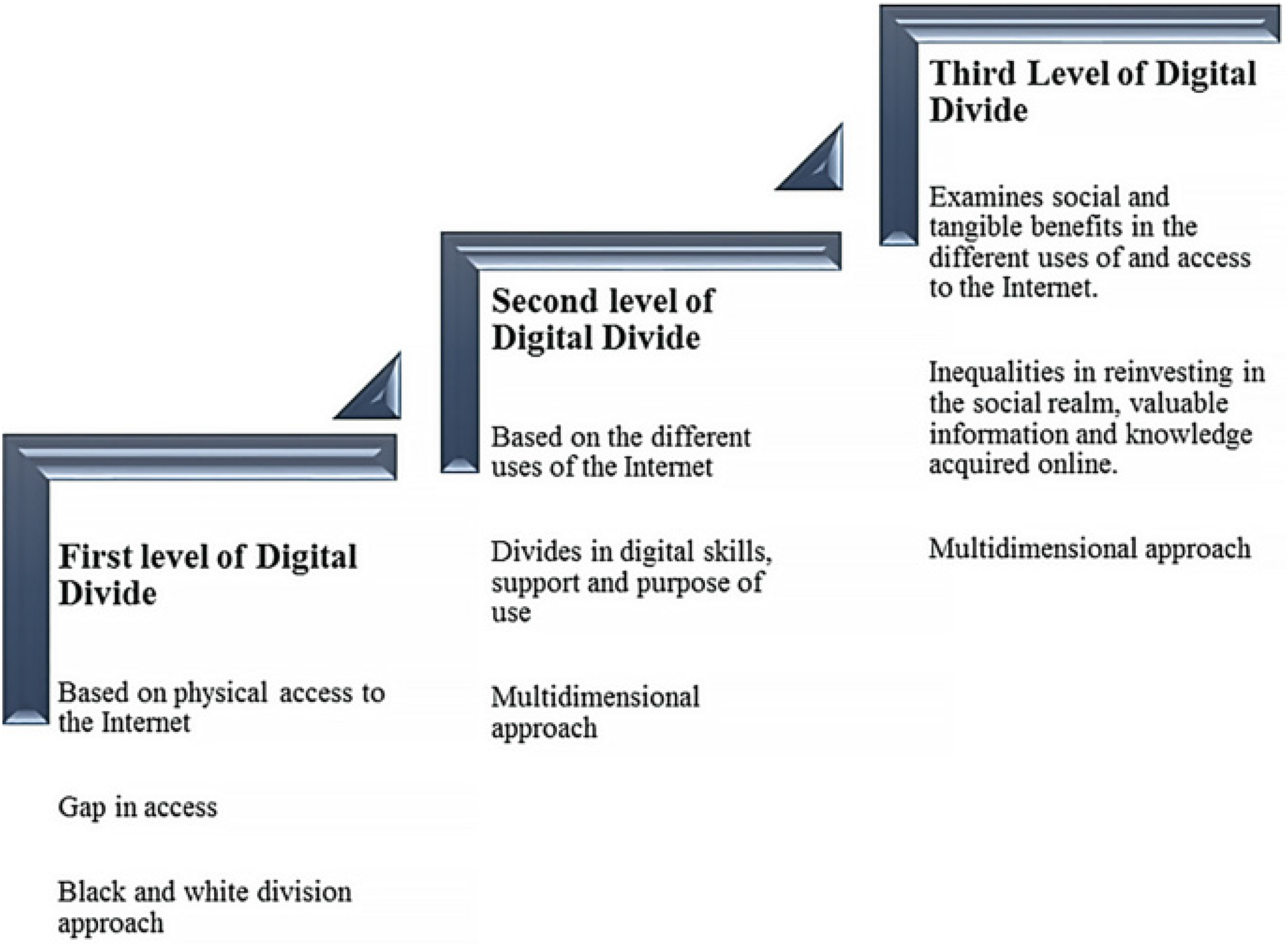
Three levels of the digital divide (Ragnedda, 2019: 35).
There is growing evidence that digital inclusion and social inclusion are inextricably linked (van Deursen et al., 2017). Indeed, the United Nations has declared digital inclusion is a human right (Article 19, 2021). While I am mindful and respectful of individuals’ choices not to participate in digital life, the majority of my research participants were seeking better digital connectivity to participate in society. Australian state and federal government services are increasingly digital-by-default (Australian Digital Transformation Agency, 2021). Furthermore, as essential services and commercial businesses become more centralised in cities and reliant on online platforms, physical shopfronts for social services, higher education and employment providers, telecommunications providers, and news media outlets are disappearing from rural townships (Cheers, 2019). Therefore, rural residents must increasingly use digital technologies (or have a proxy) to engage in daily life. The choice to remain offline is diminishing rapidly.
Internationally, digital inclusion scholars have noted the potential of digital technologies to reduce poverty and inequity among marginalised groups, such as women (Zhu et al., 2022) and migrants (Kitimbo, 2021). By example, Ye and Yang (2020) demonstrate how a mobile platform, WeCountry, helped marginalised rural Chinese people to achieve political, social and economic inclusion through: increased information flow among government, grassroots leaders and villagers; increased affective and cultural sharing; and increased exchange of resources in the village. More broadly, in a scoping review of recommendations made by digital inclusion scholars in rural Europe, Esteban-Navarro et al. (2020) find that digital inclusion has the potential to reduce rural depopulation and, through advanced digital skills training specifically, improve social communication processes that promote empowerment and entrepreneurship. Conversely, Helsper (2021) observes that the digitalisation of society has also served to further entrench vulnerable people in disadvantage. This has been referred to as a digital and social ‘inequality loop’ in which ‘those already marginalised have limited chances to use the Internet as a tool of social inclusion, thus being further marginalised’ (Ragnedda et al., 2022: 3). 2
Geographically based digital inclusion
Geographically based digital inclusion focuses on disparities in access to and use of digital technologies based on where people are located. At the global level, Helsper (2021: 57) explains, ‘less access (in poorer countries) does put these countries globally at a disadvantage, since their citizens are less likely to benefit from the global resources available to more connected citizens in other (wealthier) countries’. At the country level, Helsper notes that digital divides between rural and urban areas are not always a consequence of limited access to mobile and broadband services (as has historically been the case in Australia) but can be highly correlated with wealth. In the USA, for example, ‘the differences in mobile broadband use between rural and urban areas … is mostly explained by household demographics rather than infrastructure’ (Helsper, 2021: 57–58). In Canada, emphasis has been placed on barriers to digital inclusion related to unequal telecommunications investment and the lack of grassroots consultation in designing and rolling out digital infrastructure, which have led to poor digital uptake and outcomes for geographically remote populations, including the Inuit and Métis peoples (McMahon, 2020).
McMahon et al.'s (2011) approach highlights the cultural and racial dimensions of the rural–urban divide in many colonised counties. These authors have pioneered a ‘first mile’ approach to telecommunications investment, which ‘foregrounds community-based involvement, control and ownership … it holds potential to move beyond the historical context of paternalistic, colonial-derived development policies, in the context of broadband systems development’ (McMahon et al., 2011: 1). In Australia, governments and the telecommunications industry have traditionally taken a ‘last mile’ infrastructure approach to addressing digital inclusion in remote Indigenous (and other) communities, combined with digital skills programmes. This approach has been ineffective in making marked progress towards the Closing the Gap target for digital inclusion 3 (Department of Prime Minister and Cabinet, 2023). As scholars (Featherstone et al., 2022; Rennie et al., 2016) have noted, community-led approaches are essential for digital connectivity services and skills development programmes to be successful. The recent release of the First Nations Digital Inclusion Plan, authored by the National Indigenous Advisory Agency with support from the Commonwealth Government, is a positive step toward co-designed solutions but it falls short of explicating how the amibtious target of parity between Indigenous and non-Indigenous Australia by 2026 will be resourced and realised.
Digital infrastructure and capability in rural Australia
Given the centrality of unequal distribution of digital infrastructure to the rural-urban digital divide in Australia, it is important to acknowledge the recent substantial investments in rural telecommunications infrastructure. Less, but some, attention has been paid to upskilling rural consumers and building digital capability in social infrastructure organisations such as libraries, which also play a critical role in supporting locals to get connected and use digital technologies (Marshall et al., 2020). The latter initiatives tend to be sector-led/focused and do not attract substantial funding from public agencies. I now present a summary of recent (2016 onwards) government- and industry-led infrastructure initiatives, and sector-focused digital capability initiatives 4 , building on the detailed accounts of rural Australia's telecommunications legacy discussed in my previous work (see Marshall et al., 2020: 197–199). In particular, the below summary should be read against the backdrop of key federal policy developments that have shaped the current state of rural digital inclusion, such as the privatisation of Australia's national telecommunications carrier between 1997 and 2011; the establishment of the Universal Service Obligation (1999) and subsequent Universal Service Guarantee (2018) (Australian Department of Infrastructure, Transport, Regional Development, Communications and the Arts, n.d.); and the rollout of the National Broadband Network (NBN) between 2014 and 2020 by the government-owned NBN Co. 5 (Gregory, 2019). See Appendix 1 for a more detailed account of recent digital infrastructure and capability initiatives in rural Australia.
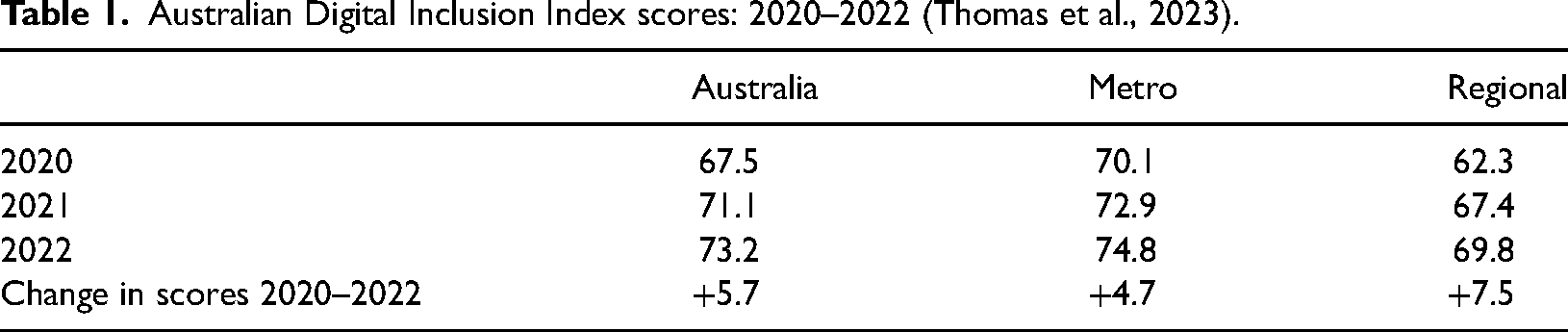
Government-led programs. Successive governments, in collaboration with telecommunications companies (telcos) and industry partners, have made substantial investments in expanding rural mobile networks, extending and improving NBN broadband connections, and offering consumers better telecommunications services and products. For example, under the Mobile Black Spot Program (MBSP) 6 between 2015 and 2021 more than 1,270 new mobile base stations were erected across Australia. Yet, consumers continue to report that black spots, congestion and outages are causing interruptions, inefficacy and frustration (Hartsuyker et al., 2021). Similarly, the Regional Connectivity Program (RCP) 7 , founded in 2020, invests in new infrastructure and upgrades to mobile and broadband backhaul and service. RCP grants rely on collaborative bids made by local partners (like local governments) in partnership with a telco where they pledge matched funds to the grant amount sought. RCP projects totalling AU$413 million have been funded across Australia, including mainland and island Indigenous communities. Furthermore, NBN's rural broadband solutions (fixed wireless and satellite) have undergone incremental improvements to broadband speed, data and value (see Table 1). These and other progrms are now captured within the Better Connectivity Plan for Regional and Rural Australia program (2022 + 5 years), which continues to provide more rural Australians with better digital connectivity.
Australian Digital Inclusion Index scores: 2020–2022 (Thomas et al., 2023).
Industry-led developments. Low earth orbit (LEO) satellites are currently disrupting the rural telecommunications landscape. Consumers who are dissatisfied with NBN satellite services are moving to Starlink because of its lower latency, higher speed, and greater data allocation (Baird, 2023), notwithstanding substantial upfront and ongoing costs and a lack of domestic technical support. Even though LEO satellite services hold potential for 100% voice and date coverage in coming years – a dream come true for rural Australia – they are likely to remain premium products in the short to medium term and therefore won’t be accessible to everyone. Finally, Telstra and other major carriers plan to turn off their 3G mobile networks (still relied upon by many rural Australians) from 2024 and replace them with expanded 4G in rural areas and 5G in urban areas. While cast distances 8 will likely preclude public/commercial 5G networks from being rolled out extensively in rural areas, private 5G networks can, for example, enable advanced IoT applications such as real-time monitoring of soil moisture or water levels to inform on-farm decision-making. Accordingly, many rural consumers are unlikely to benefit from public 5G networks (Wilken et al., 2023) or the focused 5G innovations in the agricultural sector.
Sector-focused digital capability initiatives. The Regional Tech Hub (RTH) 9 , managed by the National Farmers’ Federation (NFF) and based in Canberra (Australia's capital city), has been funded by the federal government since 2020 to provide independent advice and support about phone and internet options and how to manage technical issues (e.g., dropouts, slow speeds). While this is a service for anyone living in rural Australia, its founders (Better Internet for Rural, Regional and Remote Australia (BIRRR) 10 ) and ongoing managers (NFF) are from the agricultural sector. While the RTH's recent partnership with the Australian Communications Consumer Action Network is an encouraging step towards broader impact, its services do not align well with the needs of remote Indigenous communities, for example. As an area of increasing prioritisation, initiatives focused on remote Indigenous digital connectivity and capability include: NBN-provided free Wi-Fi in some remote communities and the Telstra-funded Deadly Digital Communities 11 in Queensland and inDigiMob 12 programme in the Northern Territory (see Appendix 1). 13
Ideally, government, industry and the community sector should work together to address the rural-urban digital divide across all three levels (Ragnedda, 2019): digital infrastructure and services; digital skills and capability; and benefits afforded by digital participation. So far, an overwhelming proportion of public and private investment has been targeted to addressing the first level of digital divide. This has certainly helped raise the overall level of rural digital inclusion year-on-year since at least 2014 when the ADII first measured digital inclusion. Yet, scholars and policymakers have known for at least two decades that building digital infrastructure often does not equate to digital inclusion (DiMaggio and Hargittai, 2001). Even though millions of dollars have been spent in recent years, many people are still being left behind. To contextualise my observations about the progression of the geographical digital divide in Australia, I now provide a methodological summary of my relevant work.
Methodological summary
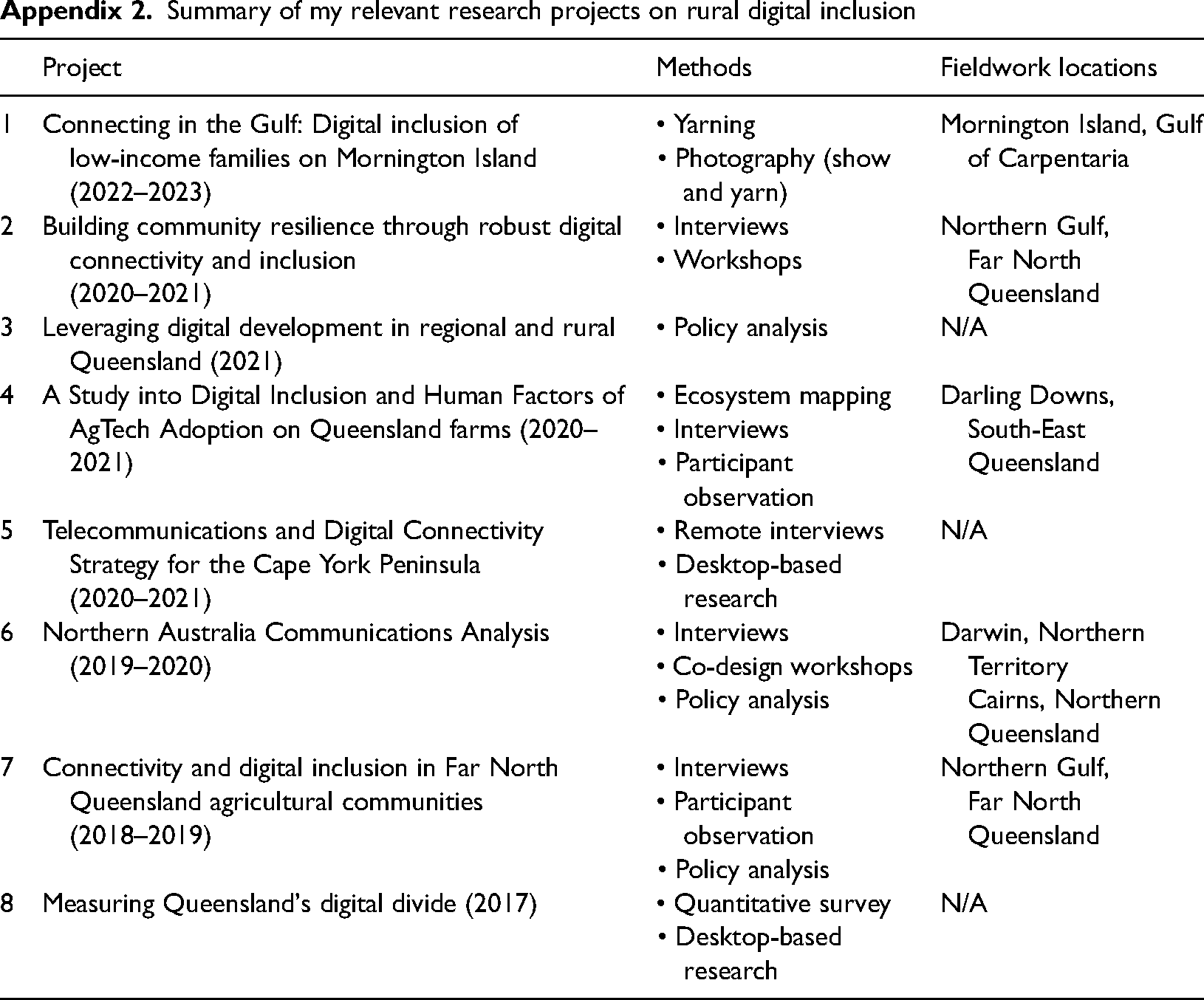
My research projects were undertaken in rural communities in Queensland, which has Australia's most decentralised, mainland state-based population (State Development, Infrastructure, Local Government and Planning, 2023) and represents the digital inclusion challenges facing rural Australia more generally. While rural Queensland is home to diverse populations, my work has mainly focused on people living and working in agricultural communities (e.g., farming and other industries like local government, natural resource management, tourism, health and education) and remote Indigenous communities. I have principally employed ethnographic methods (co-design, participant observation, interviews, focus groups) to immerse myself in these rural contexts. This has been possible because of my personal and professional connections in Far North Queensland in particular, through which I have fostered trusted relationships with industry partners and participants. The relevant projects, their locations and timeframes, and data collection methods are summarised in Appendix 2, with detailed methods for each project in the associated publications.
My empirical work has largely focused on what I term ‘consumer-level’ rural digital inclusion, which is defined by types of digital services that are for individuals (rather than enterprises). For example, although customers serviced by NBN satellite or fixed wireless can (in some circumstances) invest in alternative infrastructure to leverage existing backhaul fibre to achieve higher speed connectivity on their properties, these are not ‘consumer-level’ options in terms of cost, ease of access and ongoing servicing. Depending on the location, common ‘consumer-level’ voice and data services in rural areas include NBN satellite internet or fixed wireless internet, 4G mobile broadband and now Starlink satellite. Enterprise grade broadband solutions like Business NBN Satellite are also available but were not used by my research participants. Accordingly, the themes explored below are founded in people's grassroots experiences of trying to get connected and participate in digital life, evidenced by selected findings and vingettes within the context of top-down rural digital development.
Themes emerging from rural digital inclusion research in Australia
Incremental digital development isn’t enough
My work has consistently shown that many rural Australians are still waiting for reliable, affordable and accessible connectivity to reach them. For example, cattle property owners living on the outskirts of a Far North Queensland town expressed frustration that, despite the proximity of two mobile towers (from different providers) in town, and a nearby NBN fixed wireless tower, they lacked a reliable voice and data connection to stay in touch with distant family and run their family business. The couple struggled to troubleshoot connectivity issues themselves and had little success seeking help from service providers over the phone, often walking to high places on the property to get mobile signal. One told me: ‘We can stand on our head somewhere and get it done’ (Marshall and Dale, 2019). For rural consumers, such experiences are often accompanied or framed by frustration surrounding poor customer service, limited technical skills and local support, and a reluctance to change providers to a better product or service in case they were disconnected (Marshall et al., 2021). In 2023, many rural consumers continue to experience these challenges, suggesting that current initiatives are not adequately designed or delivered to meet contexualised needs in a timely fashion.
Digital infrastructure development is, at present, devoid of any (visible) over-arching policy or strategy and the default ‘last mile’ approaches will, by definition, reach the most geographically and digitally excluded people last. Areas for digital development are essentially identified and prioritised by telcos who are the lead applicants for grants programmes such as the RCP and MBSP. While these government programmes purport to be ‘place-based’ by, for example, requiring co-investment from local stakeholders, there are consequences to this approach that can contribute to digital inequality. Projects in regions with local investors (often councils) that have higher wealth and more digital acumen – and where telcos stand to acquire new customers – are more likely to be applied for (and therefore funded) than the more remote regions with fewer ratepayers/customers and less digital expertise. Moreover, government-led infrastructure programmes have been relatively unsuccessful in promoting market competition in rural areas, with the majority of RCP and MBSP funding going to either NBN Co. or Telstra. Notwithstanding the several projects that have been funded for remote Indigenous communities, the cost-benefit approach that largely underscores telcos’ co-investment strategies will trend towards locations with more people and wealthier industries, thus deepening the divide these schemes seek to remedy.
Access to rural telecommunications is increasingly complex, costly and inequitable
Although backhaul telecommunications infrastructure is held by just a few entities, the number of rural retail service providers has increased exponentially in recent years. 14 At face value, rural consumers have more choice of products and services than ever before, but the experience on the ground is confusing, frustrating and still leaves people ‘under-connected’; that is, consumers have some access to the internet and digital technologies but not the desired amount (Katz, 2017). My research participants have repeatedly reported they are confused about the best options available to them, and that good advice is hard to come by. 15 For example, in a small town (200 people) with an over-subscribed 4G service, one participant shared that their existing home phone/mobile provider, Telstra, recommended that they sign up for a 4G internet plan. While satellite would likely be a better option for the customer, Telstra does not sell NBN satellite plans and so did not recommend it (Marshall et al., 2019). This evidences not only questionable practices from telcos, but also a lack of independent advice (or knowledge of where to get it) and local support available to rural customers.
Complexity and inequity also stem from the requisite need for rural consumers to acquire specific connectivity literacies to access and manage their connections. Separate from ‘digital ability’ or ‘digital literacy’, connectivity literacy (Hartsuyker et al., 2021) includes, for example, purchasing specific makes and models of hardware (e.g., modems, routers, boosters) to make digital systems work; allocating finite data between competing interests of household members and workers; and planning to complete online tasks during off-peak times (Marshall et al., in press). 16 Further, because extreme weather events and a dependence on remote energy solutions make rural telecommunications less reliable, rural consumers are likely to ‘layer up’ on several services (often with multiple providers) to provide redundancy (Marshall et al., 2019; Marshall et al., 2023b). This increases the cost and complexity of being connected, with rural households ultimately paying more for less (in terms of data, speed, reliability and service) across several devices and providers.
Geographical digital exclusion is compounded by intersecting forms of disadvantage
The geographical digital divide in Australia has been historically underpinned by unequal access to telecommunications infrastructure. The substantial investment in infrastructure to redress this issue may have prevented other important factors associated with rural digital inclusion from being fully recognised by policy makers. My research revealed, for example, intersecting disadvantages pertaining to intergenerational digital in/exclusion. While not typical of farmers generally, I spoke to some older graziers, particularly men, who showed little interest in technology. One woman reported that her husband responds to emails by printing them out, handwriting a response, and asking her to type and send the email back on his behalf. Likewise, in one multi-generational farming household, the parents and grandparents didn’t see a pressing need to learn/adopt digital technology which limited the children's exposure to technologies and mentoring for digital skills development (Marshall et al., 2019) 17 . Conversely, I encountered one farming family in which the father shared his interest in digital technology with his son, including flying a drone andusing a 3D printer to make pool parts. The son went on to make and sell 3D souvenirs for campers visiting their property (Marshall and Dale, 2019). These findings show that rural children's digital in/exclusion may not necessarily be a factor of access but of their parents’ digital choices and opportunities.
My research also shows that rural women's digital participation can be both undermined and promoted through digital labour (Marshall, 2021). In line with the above articulation of connectivity literacy as an additional component of digital ability, I identified that this work often befalls women in rural households. For example, women often take control of managing connections and trouble-shooting problems because internet connections reside in the home (the ‘women's domain’). Furthermore, women do the domestic digital labour of educating children and small business accounting. While these activities tend to reinforce gendered and inequitable division of labour, some women are also learning digital skills that not only surpass their male counterparts but enable them to pursue other social and economic opportunities online. As one woman said of her online retail business, ‘The biggest one for me is putting myself out there, like, to do videos because I don’t like speaking in front of people. Just building confidence to do what I’ve got to do, basically’ (Marshall, 2021: 55). These qualitative insights provide opportunities for nuanced ways to address intersecting digital disadvantage in rural communities such as promoting more digital entrepreneurship programmes for women (Esteban-Navarro et al., 2020).
Finally, my work has highlighted intersecting forms of digital disadvantage in remote Aboriginal communities. In a study on Mornington Island, my colleagues and I observed systemic under-inclusion of Aboriginal family members who are often mobile only – a known characteristic of many digitally excluded people – with implications across the ADII's dimensions of access (people rely on a congested and unreliable mobile network), affordability (mobile data is expensive and runs out easily when 'hot-spotted' across households), and digital ability (mobile devices limit the types of activities able to be learned and performed online). We found that, even when better quality and value-for-money options exist (namely NBN satellite), people continue to choose pre-paid mobile. While this may seem counter-intuitive, when interpreted using a decolonising lens, the decision to be mobile only is a rational choice made by families who are financially vulnerable and want to avoid lock-in contracts and possible debt (Marshall et al., 2023). An ideal response would be for NBN Co. and retail service providers to develop affordable, pre-paid satellite products 18 , but this has not been forthcoming. More work is needed to understand the contextualised barriers to, and opportunities for, digital participation amongst Indigenous peoples and other vulnerable populations within rural communities, such as migrants, people with disability, culturally and linguistically diverse people, low-income households, and people living in community housing.
Discussion: an emerging digital divide within rural cohorts
Taking an intersectional lens to these observations, I propose that the geographical digital divide in Australia is no longer (only or predominantly) between urban and rural cohorts, but within rural cohorts. The 2020, 2021 and 2022 ADII data support this claim, finding that ‘regional’ Australia is now ‘digitally included’, with the threshold for inclusion set at 61.0 (out of a possible 100) in 2020 (See Table 1). While the threshold is only notional, the data do suggest that the various investments made in recent times have had a positive impact. Interestingly, as reflected in the more granular ADII data collected in 2022 – using the Australian Statistical Geography Standard Remoteness Structure (Australian Bureau of Statistics, 2023) – ‘remote’ areas now fare better than ‘outer regional’ areas, indicating that other factors beyond geography are playing a greater role in digital in/exclusion (Figure 2). ADII authors suggest ‘one reason for this may be that these areas tend to have an older and more economically disadvantaged population – two key indicators for lower levels of digital inclusion’ (Thomas et al., 2023: 9).
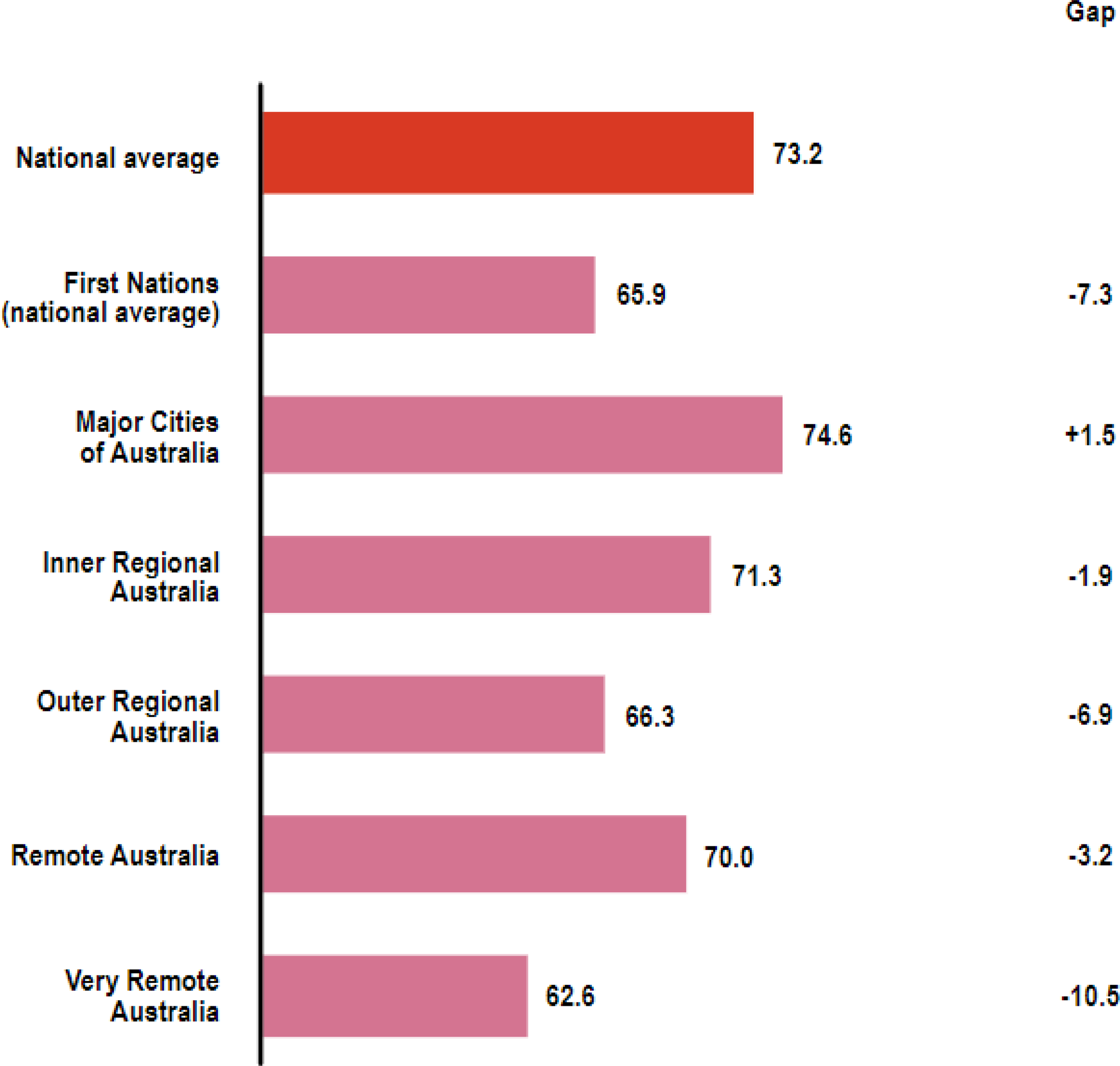
Australian Digital Inclusion Index (ADII) scores by remoteness in 2022 (Thomas et al., 2023).
My research suggests that the emerging digital divide within rural cohorts is predicated on disparities between those who have the exposure, resources, expertise and opportunity to make digital connectivity work for them and others who are precluded by the complexities, costs and inequities explored above. As in the USA (Helsper, 2021), the Australian geographical digital divide could be being superseded by wealth or other factors. While some of my earlier work suggested that farmers were being left behind in the digital economy (Marshall et al., 2020), it is now evident digital inclusion is improving in some rural Australian cohorts. This may partially be driven by Australia's burgeoning digital agricultural sector (Hansen et al., 2022). Not only are wealthy and powerful agricultural companies and representative bodies investing in their own substantial digital infrastructure, small-to-medium farming businesses have increasing opportunities to access funding and support for their own digital technologies (e.g., drones, probes) and fit-for-purpose networks, from private 5G to Low Power Wide Area Networking (LoRaWAN). The agricultural sector is also conducting work to prepare a digitally capable agricultural workforce (KPMG and Skills Impact, 2019). People embedded in the digital agricultural revolution have worked hard to reap the benefits of digital technologies and rightly point out that they are digitally included.
This emerging digital divide within rural cohorts is an altogether different challenge compared to the ‘tyranny of distance’ factors (location, terrain, weather) that have characterised rural–urban connectivity divides. The emerging rural digital divide is not (only) one of infrastructure, but increasingly of people's capacity to access and use available services. However, meaningfully addressing rural digital inclusion is not merely a case of educating digitally excluded people in connectivity literacy. For example, teaching people how to select in-home hardware for the best performance of a rural internet connection may enable them to maximise down/upload speeds but will not address the technical limitations of the service, the slow pace of infrastructure upgrades, or the lack of localised technical support. Relatedly, connectivity literacy will not address inequities in the affordability of rural broadband services. The ADII reports that 27.1% of people in very remote Australia say that the cost of internet access is inhibiting their use (Thomas et al., 2023). This is further compounded by the ‘layering up’ practices identified in my research. In other words, it is not necessarily a lack of available internet services or connectivity literacy that inhibits access, but an inability to pay for them.
Accordingly, there are limitations to both the access-driven approaches to infrastructure and service provision and some user-centric approaches focused on grassroots digital skills development. As Mariën and Prodnik (2014) highlight, user-centric and participatory approaches to policy-making are laden with assumptions that people will become empowered and therefore re-included in society. However, even well-intentioned, community-focused digital inclusion interventions in rural Australia may overlook the social, economic, political and technical conditions that enable and constrain end users in their digital choices and behaviours. For example, as alluded to above, while the RTH (with forthcoming outreach programmes) may play an important role going forward, its emphasis on connectivity literacy as a ‘core foundation of digital inclusion’ (BIRRR, n.d.) places undue onus on people who may be experiencing other prohibitive forms of disadvantage, such as low income or limited English literacy. Likewise, providers of other publicly and privately funded digital inclusion prorgams should take stock of the limiations of their approaches to servicing rural communities. Overall, we must radically rethink our ‘last mile’ approaches to rural digital inclusion (related to both physical infrastructure and digital capability building) by prioritising our most digitally excluded people and making structural changes that help ensure everyone has a fair opportunity to participate in digital society. As Mariën and Prodnik (2014: 43) state: digital inequalities are an inherent aspect of Western capitalist societies. Moreover, they are a structural issue that requires fundamental and structural changes and public policy interventions, amongst other politics of redistribution.
Conclusion
In this paper, I have reflected on emerging, intersectional digital divisions within rural cohorts that go beyond historical infrastructural disparities in Australia. On one hand, some rural consumers are acquiring specific knowledge, literacies, connections and technologies that are enabling them to be included and participate online socially and economically. On the other hand, there is a sector of rural consumers, who may be less educated, on lower income, or experience other factors of disadvantage, that remain under-connected and have fewer opportunities for meaningful digital participation. We must find new ways to tackle intersecting rural digital exclusion beyond the predominantly ad hoc, top-down, commercially driven approaches to investment and initiatives. Drawing on Canadian research, Australia could consider adopting a ‘first-mile’ approach to digital infrastructure and capability building, which ‘puts the needs of local communities first and ahead of the needs of private sector telecommunication corporations’ (McMahon et al., 2014). We need ambitious, holistic solutions and partnerships that are human-centred in their design, delivery and ongoing support to transform and future-proof rural internet and mobile services (Marshall et al., 2023a). These activities should be underpinned by a federal digital inclusion strategy 19 to guide more equitable distribution of funds and targeted, co-designed digital connectivity and capability initiatives that are fit-for-purpose and truly place-based.
Theoretically, this paper extends research on geographical digital inclusion by pointing to the complexities of rural digital inclusion that may be overlooked because of an historical focus on distance, terrain and infrastructural challenges. The anatomy of the geographical digital divide in Australia is changing. While rural digital inclusion factors of wealth and education, for example, have been recognised in the literature, this article draws attention to more granular factors associated with the material assembly and management of localised digital infrastructure that may be specific to rural homes and communities. Such insights have implications for how rural digital inclusion may be more effectively researched to illuminate the true costs (in time, resources and money) of getting connected and using digital technologies in rural areas, and if/how such barriers interfere with access. Following immersive qualitative methodologies – such as Kennedy et al.'s (2020) household ‘technology tours’ – more research is needed to understand the full range of deeply contextualised digital inclusion determinants and impacts experienced by diverse rural peoples. Moreover, work is needed to document and unpack how rural telecommunications policy and programmes are designed, whose interests are being served in the process, and how we can create the circumstances under which scholars, policymakers, industry and communities can effectively work together toward genuine geographical digital inclusion.
Footnotes
Acknowledgements
I acknowledge funding received from the Australian and Queensland Governments on various projects on which this article is based, as well as the industry partners and participants that made the work possible. I thank my co-authors and colleagues at the Queensland University of Technology and James Cook University. I acknowledge that my research took place on the unceded lands of Aboriginal and Torres Strait Islander Traditional Owners, and I pay respects to their Elders past, present and future.
Funding
The author disclosed receipt of the following financial support for the research, authorship, and/or publication of this article: This work was supported by the Australian and Queensland Governments.

Notes
Correction (March 2024):
Article updated to correct minor changes in the article.
Appendix
Summary of my relevant research projects on rural digital inclusion
| Project | Methods | Fieldwork locations | |
|---|---|---|---|
| 1 | Connecting in the Gulf: Digital inclusion of low-income families on Mornington Island (2022–2023) |
• Yarning • Photography (show and yarn) |
Mornington Island, Gulf of Carpentaria |
| 2 | Building community resilience through robust digital connectivity and inclusion (2020–2021) |
• Interviews • Workshops |
Northern Gulf, Far North Queensland |
| 3 | Leveraging digital development in regional and rural Queensland (2021) | • Policy analysis | N/A |
| 4 | A Study into Digital Inclusion and Human Factors of AgTech Adoption on Queensland farms (2020–2021) | • Ecosystem mapping • Interviews • Participant observation |
Darling Downs, South-East Queensland |
| 5 | Telecommunications and Digital Connectivity Strategy for the Cape York Peninsula (2020–2021) |
• Remote interviews • Desktop-based research |
N/A |
| 6 | Northern Australia Communications Analysis (2019–2020) |
• Interviews • Co-design workshops • Policy analysis |
Darwin, Northern Territory Cairns, Northern Queensland |
| 7 | Connectivity and digital inclusion in Far North Queensland agricultural communities (2018–2019) |
• Interviews • Participant observation • Policy analysis |
Northern Gulf, Far North Queensland |
| 8 | Measuring Queensland's digital divide (2017) | • Quantitative survey • Desktop-based research |
N/A |