



Abstract
The Open University (OU), in partnership with Music Mark (MM) and the Orchestra of the Age of Enlightnement (OAE), conducted research with two main objectives. First, to identify the specific needs of primary music education in England from key stakeholders’ perspectives. Second, to explore how collaboration among the participating organisations could enhance music education in England’s primary schools, providing a foundation for future planning. The study involved 48 participants, including headteachers, music curriculum Leaders, classroom teachers, and music service providers from primary school settings. It focused on classroom music lessons, excluding individual and small group tuition. The study used a qualitative research approach with constant comparative analysis. Data were collected through an online questionnaire and focus group interviews. Responses were coded to identify relevant themes. Findings highlighted the need for (1) advocating for music education in schools, (2) strengthening initial teacher training with a more robust music teaching component, and (3) empowering music curriculum leaders and generalist teachers to influence school leaders. These findings hold relevance for similar educational contexts in England, the rest of the United Kingdom, and internationally. Suggestions for the involved partners extend beyond this collaboration, offering insights for future joint initiatives.
Primary school music education in England
Music education in primary schools plays a vital role in fostering cognitive, social, and creative development. Research highlights music’s benefits for memory, language processing, and spatial-temporal reasoning, all of which contribute to cognitive growth (Hallam, 2010; Hallam & Himonides, 2022; Kraus & Chandrasekaran, 2010). Socially, group music-making supports collaboration, empathy, emotional regulation, and identity formation (Evans & McPherson, 2012). When used creatively, music fosters exploration, risk-taking, and innovative thinking (Burnard, 2012).
Recognising these wide-ranging benefits, national policy in England has positioned music as a key component of primary education and since 1992 music has been a statutory part of the National Curriculum for Key Stages 1 and 2, targeting ages 5–11. Government-funded state schools follow this curriculum, while academies and free schools (state schools that operate independently) have more flexibility (Department for Education [DfE], 2011). The current curriculum focuses on performing, listening, composing, and understanding music across genres and traditions, encouraging instrumental learning and deeper musical knowledge.
Other initiatives that have contributed to shaping the music education landscape in England include the 2011 Henley Review, which influenced the creation of the National Plan for Music Education (NPME) (DfE, 2011). Published in 2011 and updated in 2022 (DfE, 2022), the NPME seeks to address inequalities, promote inclusivity, and ensure sustainability through to 2030. The refreshed NPME, The Power of Music to Change Lives (DfE, 2022), calls for at least one hour of high-quality curriculum music weekly at Key Stages 1–3, complemented by co-curricular opportunities. However, teachers have continuously and repeatedly raised concerns about the quality of music education in schools, describing it as fragmented due to frequent curriculum reforms—particularly over the past 10 years—and varied approaches taken by music hubs and other bodies (Savage, 2021).
Music hubs, which were initially introduced by the first NPME (DfE, 2011), are regional organisations funded by Arts Council England to provide schools with resources, training, and partnerships (DfE, 2011). Although the NPME (DfE, 2022) emphasises the role of music hubs in developing sustainable and inclusive music education ecosystems, the autonomy schools retain over staffing decisions limits music hubs’ ability to enforce the aims set out by Arts Council England, particularly those that depend on collaboration with schools to improve music provision and share best practice (Savage, 2021).
As discussed in what follows, persistent challenges—most notably funding shortages, limited teacher confidence, and inadequate training—continue to hinder progress in music education in England. In addition, perceptions of music’s value among headteachers, senior leadership teams, music curriculum leaders, generalist teachers, specialist music teachers, and music hubs significantly influence practice and curriculum priorities. Partnerships between schools and cultural organisations are crucial for bridging resource gaps, yet sustainable models for collaboration remain underexplored (DfE, 2022).
To address these challenges, The Open University (OU), Music Mark (MM), and the Orchestra of the Age of Enlightnement (OAE) conducted an exploratory project to support primary schools and music hubs. By gathering perspectives from senior leadership teams, music curriculum leaders, generalist teachers, and music hub representatives, the project aims to inform strategic planning and strengthen collaborative efforts.
For clarity, in England:
Headteachers: lead and manage schools, set strategic direction, and foster positive culture.
Senior leadership teams: assist headteachers with curriculum planning, staff management, and school effectiveness.
Music curriculum leaders: coordinate music curricula in alignment with the guidelines outlined in the NPME and associated resources while promoting musical opportunities.
Specialist music teachers: deliver classroom and/or instrumental music lessons, often part-time or freelance, under varied work contracts and arrangements, frequently as self-employed or working via music hubs.
Generalist teachers: teach across the curriculum, including classroom music, sometimes with input or support from music specialists.
Music hubs: government-funded partnerships, typically led by local music services, that work with schools to provide high-quality music education and opportunities for children and young people, both within and beyond the school setting (Arts Council England [ACE], 2023).
The following sections review literature on funding issues, the value and place of music in the curriculum and the contributions of The Open University, Music Mark, and the Orchestra of the Age of Enlightnement in advancing music education.
Funding issues
Music education in England’s primary schools faces persistent barriers to equitable access and consistent provision (Henley & Barton, 2022). The government’s school inspectorate, Ofsted, has highlighted ongoing funding disparities since 2012, with significant gaps between students who can afford private tuition and those from lower socio-economic backgrounds, exacerbating inequalities in provision. Budget pressures have forced many schools to reduce or eliminate subsidies for instrumental lessons, with nearly half offering no instrumental or vocal instruction. Extracurricular activities, such as choirs and instrumental groups, are vital for student development but remain inconsistently accessible (Office for Standards in Education [Ofsted], 2023).
Between 2019 and 2022, the Conservative government allocated £79 million annually to music hubs and £25 million for instrument purchases, but primary schools’ share of this funding remains unclear (DfE, 2022). Funding disparities are stark: school music budgets in 2022 ranged from £0 to £100,000 (Incorporated Society for Musicians [ISM], 2022). Independent schools received far more funding than academies, free schools, and maintained schools, where average budgets were £1,865, £2,152, and £9,917, respectively (ISM, 2022). Over half of teachers in maintained schools reported insufficient budgets limiting per-pupil spending, curtailing learning opportunities, and increasing reliance on unpaid teacher efforts to provide extracurricular resources (ISM, 2022).
The Labour government’s 2024–25 budget allocated £76.1 million to music education, with plans for a National Music Education Network to address inequalities and align with the refreshed NPME (DfE, 2022). However, this remains below the inflation-adjusted £127 million last allocated in 2009–10 (Music Mark [MM], 2024). Regional inequalities also persist, with northern schools reporting greater resource shortages than those in the east (Cooper, 2018). Broader cuts to specialist staff, leadership support, and resources have left many schools and educators struggling (APPG for Music Education, 2019; House of Lords Library, 2023).
Value and place of music in the curriculum
Headteachers and Senior leadership teams play a key role in shaping curriculum priorities, with their perceptions strongly influencing music’s place in the curriculum (Simones, 2015). Pressures from statutory assessments at age 11, particularly in mathematics and English, have led to reduced music provision in many schools. Over half of the schools surveyed by the Independent Society of Musicians (ISM, 2018) failed to meet their statutory music curriculum requirements, resulting in disparities driven by funding limitations, leadership priorities, and the variable expertise of music curriculum leaders. These factors have resulted in inconsistent access to quality music education across schools and regions (Ofsted, 2012, 2023).
Variability in teaching quality continues to present significant challenges, particularly as many generalist teachers report lacking the confidence and subject-specific expertise required to deliver effective music education (Welch & Henley, 2014). A recurring issue is music delivery scheduled during teachers’ preparation, planning, and assessment (PPA) time, often relying on pre-packaged lesson plans provided by external organisations and purchased by schools or local authorities to support time-pressed teachers (ISM, 2022). To mitigate such disparities, the Department for Education (DfE, 2021) has advocated for the use of supplementary resources such as the non-statutory Model Music Curriculum (MMC) and partnerships with music hubs (Fautley & Daubney, 2020). Nevertheless, the MMC has been critiqued for its heavy emphasis on Western classical repertoire, lack of cultural diversity, limited creative scope, and a teacher-led approach that may marginalise learner-centred practices. Moreover, it offers insufficient guidance for generalist teachers (ISM, 2021). Music hubs face challenges such as inconsistent funding and regional disparities (ACE, 2023). In response, the Department for Education announced a restructuring of music hubs in the refreshed NPME (DfE, 2022), reducing their number from 116 to 43 in an effort to improve funding distribution and reach (Schools Week, 2023). However, it remains uncertain whether this restructuring will successfully align policy ambitions with the practical realities schools and teachers face in delivering a diverse, creative, and inclusive music curriculum.
The Open University, Music Mark, and the Orchestra of the Age of Enlightnement: Engagement with Music Education
The Open University, established in 1969, is a leader in accessible, high-quality distance education, with over 2.3 million learners worldwide and 140,215 students in 2022–23 (Statista, 2024). Its music department offers interdisciplinary programmes, including music history, ethnomusicology, and contemporary practices. Collaborating with major organisations like the Orchestra of the Age of Enlightnement, The Open University connects academic research with live performance through study days, pre-concert talks, and curriculum support. It also advises school exam boards to promote diversity and inclusion in music education.
Music Mark, a charity and membership organisation for musicians in the United Kingdom, advocates for equitable, high-quality music education. It collaborates with music hubs, schools, and universities, offering campaigns like Ten Things Schools Should Know About Music (Music Mark, 2020) to help schools integrate music into curricula and highlight music’s cognitive, social, and emotional benefits. Music Mark supports government initiatives like the NPME and delivers teacher training and professional development through resources such as A Common Approach (https://www.musicmark.org.uk/a-common-approach/) and Why Music (https://www.musicmark.org.uk/providers/why-music/).
The Orchestra of the Age of Enlightnement, a leading orchestra in the United Kingdom specialising in historically informed performance, brings expertise in period instruments and music from the seventeenth to nineteenth centuries. Its 2023–24 education programme engaged over 23,000 participants through 381 workshops and 63 concerts, reaching primary and secondary schools, special needs settings, and universities. Notable projects include Key Stage 1 training sessions in Durham and York, preparing students for live performances like Papageno and the Bird that would be Free (https://oae.co.uk/wp-content/uploads/2024/10/The-Magic-Flute-and-The-Bird-That-Would-Be-Free-programme.pdf).
Together, The Open University, Music Mark, and the Orchestra of the Age of Enlightnement leverage their combined expertise in academia, advocacy, and performance to create innovative resources and expand access to music education in primary schools across the United Kingdom. The research questions addressed collectively by these project partners fall under the following themes:
Perception of roles in music delivery: how do senior leadership teams, music curriculum leaders, and generalist teachers perceive their roles concerning music delivery in primary schools?
Training and support needs: what specific training and support needs are identified by the above participants and music hubs in relation to music?
Support through partnership: what support could a partnership between The Open University, Music Mark, and the Orchestra of the Age of Enlightnement most effectively offer to these participants in their roles and their identified training and support needs in relation to music?
Methodology
This qualitative study used purpose-built data collection tools, including an online questionnaire and focus group interviews, targeting senior leadership teams, music curriculum leaders, generalist teachers, and music hub representatives across England. The questionnaire combined closed, open-ended, and Likert-type-scale questions to gather insights into participants’ work contexts, the role of music in their school curriculum, and their involvement in planning, setting, and delivering music education. It also captured demographic information, workplace music provision, and support from music hubs or cultural partners and asked about willingness to join focus group interviews.
Of the 48 questionnaire respondents, 11 participated in semi-structured focus group interviews: members of senior leadership teams (4), music curriculum leaders (4), and generalist teachers (3). Although five music hub representatives consented to be contacted for focus group interviews, they were unavailable to attend. These interviews, informed by questionnaire responses, explored participants’ views on necessary continuous professional development, preferred collaboration with cultural partners, and resources The Open University, Music Mark, and the Orchestra of the Age of Enlightnement could provide to support music education.
Ethical approval was granted by The Open University Ethics Committee. Informed consent was obtained after participants were briefed on the study’s purpose, withdrawal rights, and data handling. Anonymity was ensured by assigning pseudonyms and removing identifying information from findings. Data collection occurred from February to May 2022, with Music Mark disseminating the questionnaire to members and music teacher communities via Facebook groups. Focus group interviews were conducted in June 2022. Responses were analysed using constant comparative analysis, coding for themes and examining participant responses in relation to frequency, agreement, and disagreement. Data triangulation across sources ensured reliability and depth of interpretation.
Characterisation of participants
Participants held diverse roles and musical expertise, ranging from advanced degrees to self-taught experience. Most music curriculum leaders and all music hub representatives identified as music specialists, whereas all generalist teachers and members of senior leadership teams did not. Music curriculum leaders’ qualifications varied widely: several had undergraduate music degrees, five held master’s degrees in music education, five had completed a Postgraduate Certificate in Education (PGCE), four achieved Grade 8 performance proficiency (a standard indicating advanced instrumental or vocal skill), and two were self-taught. Of those music curriculum leaders participating in focus groups, two had master’s degrees, one an undergraduate degree, and the other had no degree but stated having completed instrumental music exams up to Grade 8.
Appendix 1 (Online Supplemental Material) summarises participants’ roles, musical training, and self-perceptions as specialists or non-specialists. Five music curriculum leaders had over 20 years of teaching experience, with two holding notable positions such as Ofsted Inspector and local music centre manager. Participants’ teaching experience across senior leadership teams, music curriculum leaders, and generalist teachers ranged from one to 40 years, averaging 14 years. Music hub representatives supported between six and 195 schools annually, focusing on developing tailored music curricula.
Participants’ work contexts
Participants work locations included a range of settings:
22 participants (46%) worked in urban schools; six of them participated in focus groups.
17 (35%) worked in suburban schools; four participated in focus groups.
six (13%) worked in rural schools; one participated in a focus group.
three (6%) worked in semi-rural schools; none participated in focus groups.
Table 1 summarises participants’ work contexts in relation to student numbers, percentages of pupils on free school meals, and those with English as an additional language—showcasing their diverse educational settings.
Characterisation of Participants’ Work Contexts.
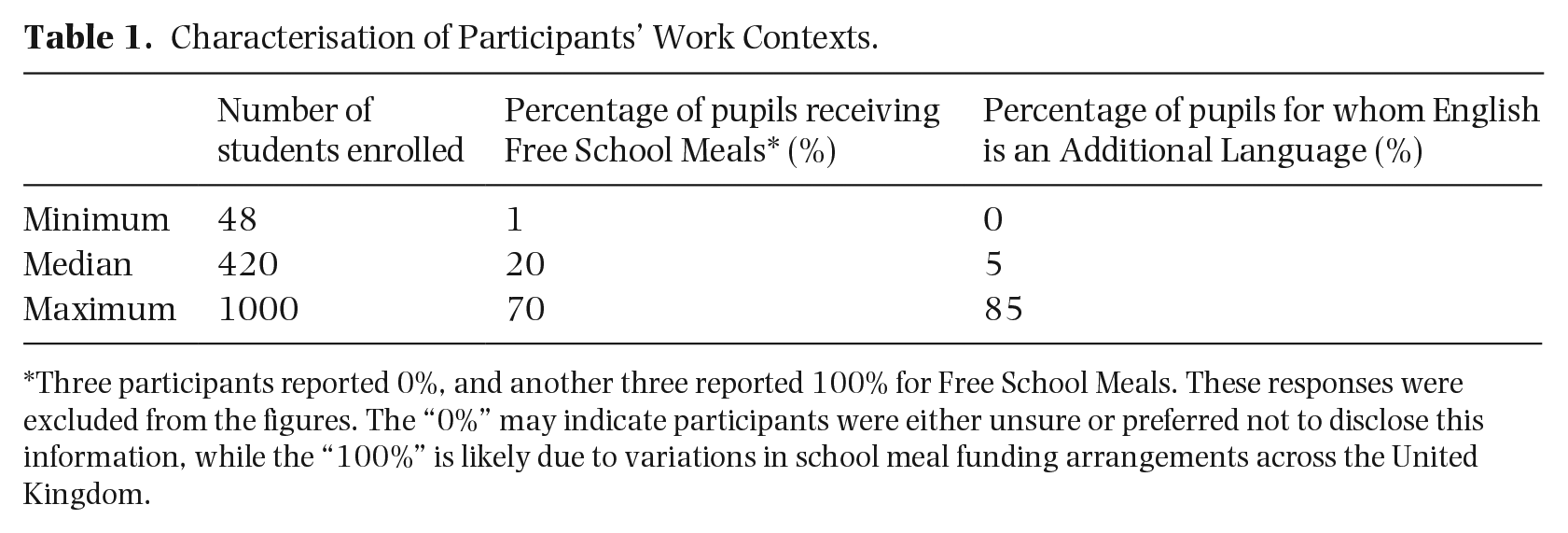
Three participants reported 0%, and another three reported 100% for Free School Meals. These responses were excluded from the figures. The “0%” may indicate participants were either unsure or preferred not to disclose this information, while the “100%” is likely due to variations in school meal funding arrangements across the United Kingdom.
Music provision in participants’ work contexts
Among senior leadership teams, music curriculum leaders, and generalist teachers (n = 41), 10 reported £0 for school music budgets, and 22 reported under £1,000. Two did not respond. Excluding a £60,000 outlier (likely covering instrumental and vocal tuition funded by parents), the highest budget was £10,000, with a median of £500 (see Figure 1).
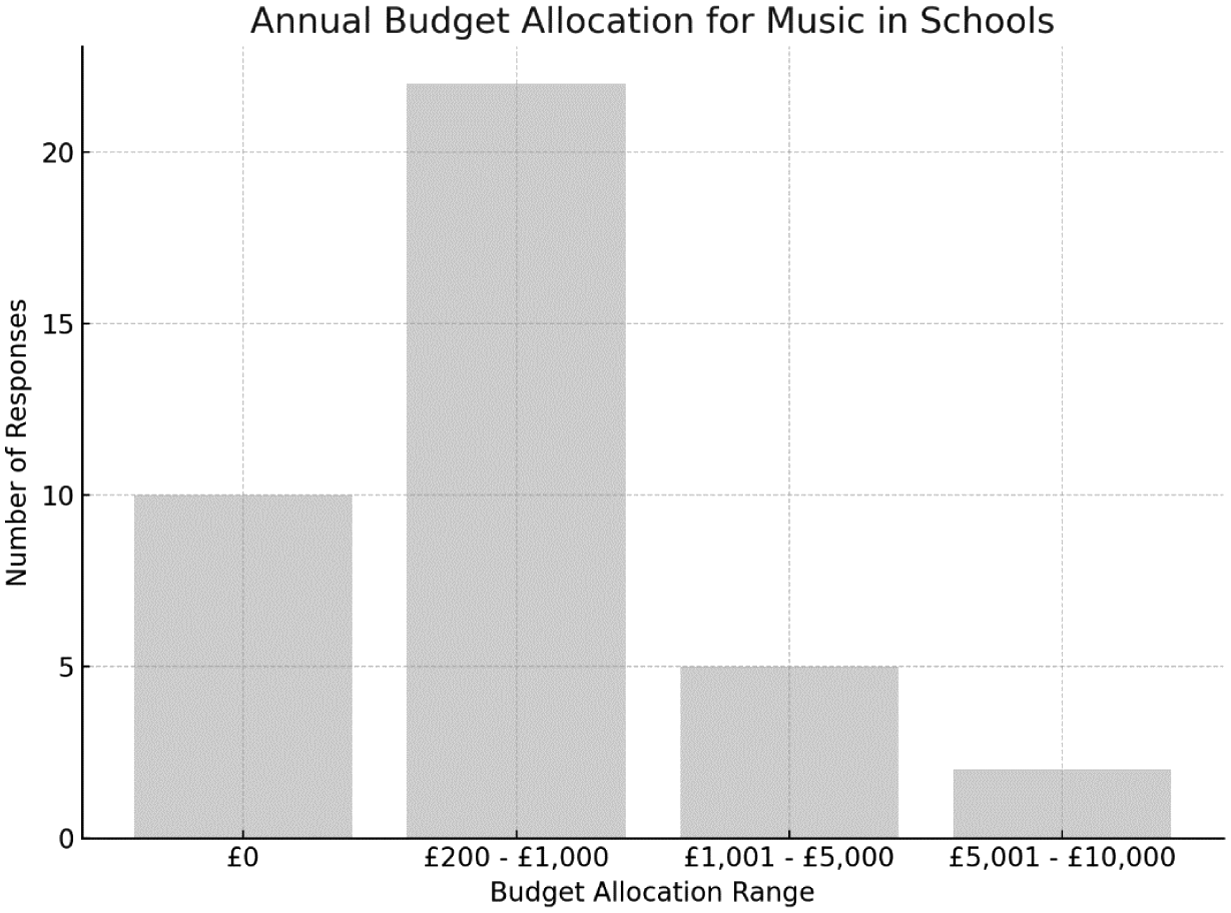
Annual Budget Figures Allocated for Music in Schools According to Senior Leadership Teams, Music Curriculum Leaders, and Generalist Teachers participating in This Study.
Thirty-five participants (72%) answered “yes” to whether their school music curriculum leaders were music specialists, and six (12%) answered “no.”
In response to “who teaches music at your school?” participants indicated diverse teacher sources, reflecting varied contractual arrangements. Responses included:
Employed specialist teacher (n = 22);
All classroom teachers (n = 17);
A specialist from a music service or hub (n = 8);
Freelance specialist teacher (n = 5);
Other (n = 4) (e.g., high-level teaching assistants, musically inclined classroom teachers, local organisations).
These responses show schools combining internal staff and external providers to balance budgets, expertise, and needs. But while freelance specialists enrich learning by offering unique skills, this may lead to variability in teaching quality, higher long-term costs, and reduced alignment with school policies. For freelancers, systemic issues arise. Optional teaching qualifications reinforce the undervaluing of teaching skills compared to performance skills (Norton et al., 2019). In addition, freelancers lack access to staff meetings and ongoing professional development, limiting their ability to stay current and engage in collaborative growth (Simones, 2025).
Results and discussion
This section is divided into three main parts, each addressing one of the study’s research questions. Throughout the findings, data collected by questionnaire is indicated as (Q) and data from focus group interviews as (FGI). The first subsection focuses on findings related to participants’ perceptions of their roles in music delivery in schools. The second explores the training and support needs identified by senior leadership teams, music curriculum leaders, generalist teachers, and music hubs. Finally, the third subsection considers how a partnership between The Open University, Music Mark, and the Orchestra of the Age of Enlightnement could support participants in their current roles.
What are the perceptions of senior leaders, curriculum leaders, and generalist teachers regarding their roles in primary music education?
This subsection is subdivided by participants’ specific roles, namely senior leadership teams, music curriculum leaders, and generalist teachers.
Senior leadership, commitment, and curriculum coherence as relevant foundations of a music-rich school environment
In response to the questionnaire question, “which best describes the place of music in your school?,” the five participating senior leaders shared their individual and consistently positive perspectives. Three indicated music as “an integral part of the school, in and out of the classroom”; two stated that music is “treated equally with other subjects”; and none selected “less important than some subjects” or “minimal to no importance.”
In focus groups, four senior leaders shared a vision for inclusive, high-quality music education accessible to all students. However, they also identified several challenges: limited expertise among generalist teachers, time constraints, funding shortages, and issues with curriculum coherence (see Table 2).
Senior Leadership Team Vision For Music in Schools and Barriers to Implementation.
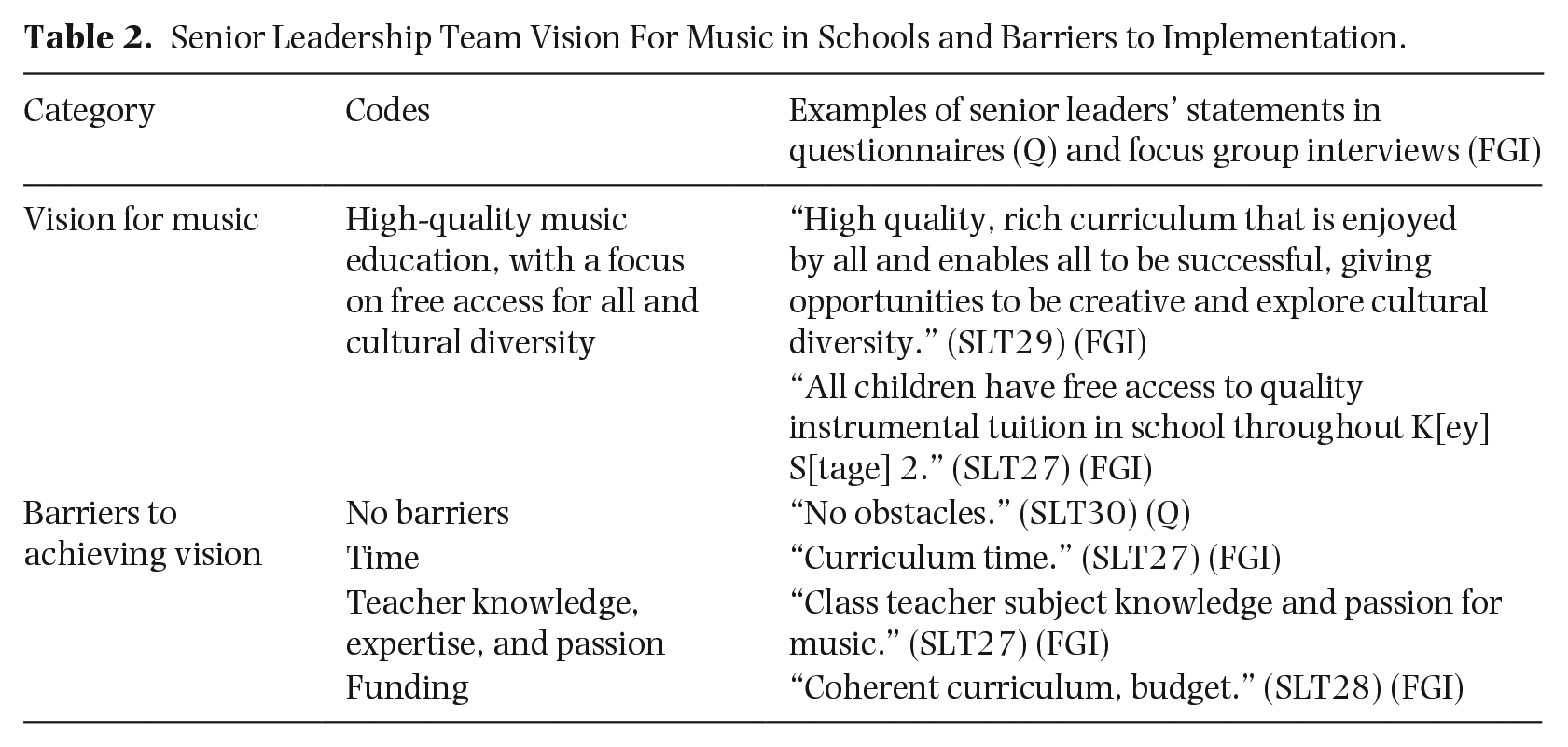
Challenges such as limited funding and the expertise of generalist teachers are well documented in the literature (ISM, 2018; Devaney & Nenadic, 2021). However, discussions on curriculum coherence in music have mainly focused on progression (Ofsted, 2023). Broader educational literature (Pountney & Swift, 2022) highlights that curriculum coherence discussions should also consider how to:
structure learning systematically from basics to advanced levels;
reinforce concepts through interdisciplinary links;
focus on overarching goals;
avoid repetition or gaps; and
ensure shared understanding among educators and stakeholders.
Schools must design music curricula tailored to their students’ needs, cultural contexts, and societal demands. But while this autonomy is valuable, it adds significant pressure. Ofsted (2023) recommends collaboration with music hubs to ensure well-designed music curricula. However, stretched school staff often struggle to allocate the necessary time, and in schools with limited musical expertise, curriculum quality may rely overly heavily on music hub support.
In questionnaire responses, one senior leader (SLT30) reported “no obstacles” to their vision:
“All children learn to play an instrument. Music and performance are a key part of school life.” (SLT30)
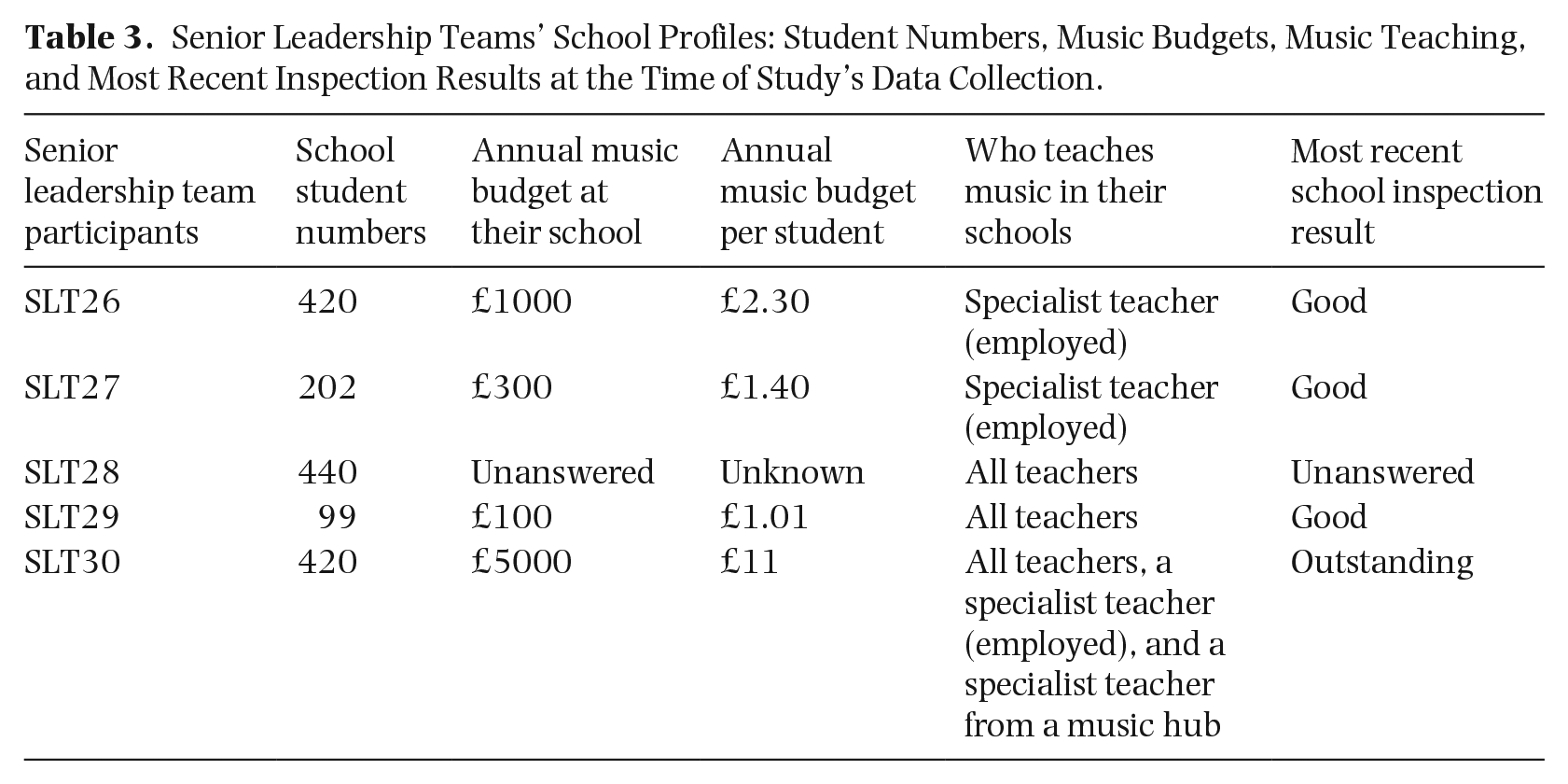
This senior leader had an annual music budget of £5,000 for 420 students, equating to £11 per child. Generalist teachers, an employed specialist teacher, and a music hub specialist supported music delivery.
By contrast, Table 3 shows that other senior leadership teams had significantly lower budgets and less support from music hubs or specialist teachers. Although £11 per child annually may seem modest, it is nine times greater than other teams’ budgets. This highlights how increased funding, strong leadership, effective management, and valuing music as a core part of school life can embed music more effectively, even with limited resources.
Senior Leadership Teams’ School Profiles: Student Numbers, Music Budgets, Music Teaching, and Most Recent Inspection Results at the Time of Study’s Data Collection.
Music curriculum leaders balancing diverse expectations through cohesive development frameworks
All music curriculum leaders expressed high expectations for music in their schools. However, their responses revealed varied priorities, including alignment with the MMC (DfE, 2021), progression across key stages, musical performance and self-expression, and accessibility for all (see Appendix 2, Online Supplemental Material).
Alignment with the MMC reflects a commitment to standards and structured progression. Prioritising progression across key stages denotes aspirations on continuity and effective knowledge-building. Emphasis on performance and self-expression highlights the value of creativity and personal growth, while accessibility goals demonstrate a commitment to inclusivity.
Participant comments echoed tensions concerning expectations. One noted:
“They [expectations] should be high, but I struggle with the lack of appetite for music education in this school/community, the lack of funding for resources and opportunities, the disinterest in learning instruments other than the piano or drums, and the poor opportunities our feeder primaries offer students to access music.” (MCL22)
Others raised similar concerns:
“Some teachers avoid music as they are not confident in its delivery and have so much maths and English to deliver.” (MCL11) “Many teachers feel they aren’t musical enough to teach music well.” (MCL3) “Students here struggle with independence, creativity, and group work, and this is further hampered by the inability to actively listen.” (MCL21)
Positive perspectives also emerged:
“High-quality teaching and learning, using the spiral curriculum model children are singing, playing, composing and listening and appraising to music.” (MCL9) “Lots of music making through singing, composing, performing.” (MCL1)
These statements illustrate the aspirations and obstacles music curriculum leaders face. Barriers included lack of funding, limited resources, time pressures, curriculum inadequacy, low teacher confidence, challenges in mixed-age teaching, minimal parental support, accessibility issues, and behaviour management (see Appendix 2). Such challenges are widely noted in the literature (e.g., Hennessy, 2013, 2017) and point to the need for systemic responses, such as enhanced funding, targeted professional development, and sustained advocacy for music’s role in education.
The role of music hubs was also highlighted, especially in relation to concerns about the variability of support offered:
“Music hubs are being given the option to opt in to help school staff with curriculum music or opt-out. . . I work in an area where our music hub opted out. . . whereas others have chosen to opt in. . . I do hope the new National Plan for Music absolutely nails music hubs to help schools because currently, there is nobody out there. . . we’re all in these multi-academy trusts who are only interested in data in literacy, numeracy as far as I can see.” (MCL22)
It is important to note that data collection preceded the refreshed NPME (DfE, 2022), which called for sustainable funding and delivery models for music hubs. The government has pledged continued support while encouraging hubs to build partnerships and diversify resources.
The recent re-tendering process, which reduced the number of hubs from 116 to 43 through regional mergers, aims to improve efficiency. However, whether this structural change will enhance support for schools in delivering high-quality music curricula, ensuring progression, and providing inclusive access, particularly for students with special educational needs and disabilities, remains to be seen. Strategic partnerships will be key to achieving these aims.
The impact of insufficient training preparation on generalist teachers’ music teaching
Generalist teachers (n = 9) were asked in the questionnaire, “what really happens in your music classroom?” Appendix 3 (Online Supplemental Material) offers selected responses that reflect the diversity of their experiences.
Across both the questionnaire and focus groups, three core challenges emerged: time pressures, behaviour management, and unmet training needs. A recurring theme emphasised by both generalist teachers and music curriculum leaders was the limited academic preparation generalist teachers receive in music. Participants reported that Initial Teacher Training (ITT) often provides only two to six hours of music instruction. This limited preparation is well documented in the literature (e.g., Devaney & Nenadic, 2021; Durrant & Laurence, 2010; Mills, 1989).
The impact of this limited training on classroom practice was frequently raised in focus groups. Participants highlighted how it affected teachers’ ability to sequence learning effectively:
“I spoke to a university’s ITT department, and they said the current postgraduate [students] get two hours in one year’s PGCE [on music teacher training]—there’s a reason why [generalist] teachers cannot teach music at primary. By the time they get to secondary [school], where they [the students] got specialist music teachers, it is too late.” (GT34) “There’s this real dearth of understanding among teachers broadly, and it’s about sequencing and breaking down content [of the learning into small, achievable chunks]. Consequently, teaching is seen in many places to jump from one skill area and level to another; children aren’t building logically or progressively on their musical skill set, so they fail and lose motivation.” (MCL14) “If they’ve got the right educator skill set and the right little steps in place, a teacher who knows their class can be very powerful.” (MCL23)
These comments illustrate how inadequate training can limit teachers’ confidence and reduce music teaching effectiveness. Although music curriculum leaders were often willing to offer support through team teaching or observation, time constraints frequently hindered this collaboration. As one generalist teacher explained, such opportunities often rely on teachers giving up PPA time, which is rarely feasible.
A music curriculum leader echoed this frustration:
“You have one meeting a week, which is where we do our professional development, and it’s a kind of everyone does the same meeting week in, week out, and as somebody who delivers almost exclusively music, I sit through weeks and weeks of literacy, phonics, maths, you name it. I have to sit through it. But I find it very difficult to get time assigned for music or art and maybe get one meeting a year.” (MCL11)
Another significant barrier highlighted by generalist teachers was the stop-start nature of music lessons, often taught weekly, unlike the daily reinforcement of core subjects. They advocated for more frequent, integrated music activities to embed music in classroom culture:
“They just thought, leave it, come back next week and we will pick up where we left off, which is what we do in other curriculum subjects, in schools. But in music, its power is that you can do it a few minutes every day, a few minutes every day, a few minutes every day, and it builds and builds and builds. And the more you do it, the more it becomes part of your routine. But also, it becomes part of the culture of your class.” (GT32)
The participant’s view above aligns with the NPME (DfE, 2022), which advocates for at least one hour of high-quality curriculum music each week in Key Stages 1 to 3, supported by co-curricular experiences to foster consistency, engagement, and cultural integration.
What specific training and support needs are identified by participants and music hubs in relation to music?
The findings (Online Supplemental Material, Appendix 4) highlight significant gaps in training and support across all senior leadership teams, music curriculum leaders, generalist teachers, and music hubs. While each group faces distinct challenges, several common themes emerge. One of the most significant findings is the need for enhanced leadership skills, particularly among senior leadership teams, music curriculum leaders, and music hub representatives. Appendix 4 outlines specific leadership skills and knowledge that music curriculum leaders and music hubs require. For music curriculum leaders, this includes building staff confidence in teaching music. At the same time, for music hubs, this involves strategic planning and addressing the long-term decline of music provision in schools.
Focus group interviews revealed that music curriculum leaders and generalist teachers recognise the importance of developing the skills necessary to influence senior leadership teams’ agendas. This includes helping senior leaders to adopt a strategic mind-set that places music at the core of their school’s priorities, to advocate for music’s importance, and to realise the importance of music-related professional development:
“Influence leadership to understand and champion the importance of music in schools and cultural capital in each school.” (MCL21) “Influence leadership to enable staff to do professional development.” (GT34)
Focus groups highlighted that music and arts education are often undervalued, with senior leadership teams playing a key role in this issue. Two main factors were identified: first, that academisation (the decentralisation of state school funding) has intensified senior leadership teams’ focus on literacy and numeracy data, sidelining music and the arts; and second, that a cycle of inadequate support leaves generalist teachers undertrained, meaning they are less likely to advocate for music when they progress into leadership roles, perpetuating its undervaluation.
Participants expressed the following concerns:
“There needs to be a huge amount of work done on senior leadership team understanding of the benefits of having a musical school and an arts-based school.” (MCL22) “We’ve now had a decade and, in that decade, the newly qualified teachers who were not supported from 2010 are now our senior leaders, and they have been tunnel-vision fed a dialogue that makes value judgments on the arts—that the arts are not important or as important because the most important thing for primary school is math and literacy.” (MCL3)
All groups highlighted that inadequate generalist teacher training impacts the quality of music teaching, leading to fragmented delivery and missed opportunities for students. Insufficient focus on music in ITT leaves generalist teachers underprepared, especially for teaching diverse learners. Expanding music training in ITT could address these gaps, but such changes would require legislation. Given the current financial pressures in higher education, universities are unlikely to revise practices without regulatory enforcement.
Music curriculum leaders and music hubs also faced challenges staying updated with best practices, hindering their ability to lead effectively. Both groups stressed the need for stronger networks to reduce isolation, share best practices, and collaborate. Strengthening collaboration across schools and regions could improve the quality of music education.
These findings suggest that addressing these training and support needs requires a coordinated approach focusing on:
introducing legislation to ensure adequate music training in ITT programmes;
allocating resources for professional development to enhance teaching and leadership skills, creating practical resources and supporting strategic initiatives; and
fostering partnerships between schools, hubs, and educational leaders to create a cohesive approach to music education.
While these findings are not unexpected, the present project offers insight into participants’ specific training and support needs, which could inform ITT programmes and continuing professional development initiatives led by music hubs, professional musicians’ associations, universities, and other institutions. In addition, the collaborative nature of the project and the complementary remits of the three leading organisations highlights the potential of partnership working in delivering training, advocating for music education, and influencing policy.
What could a partnership between the The Open University, Music Mark and the Orchestra of the Age of Enlightnement offer?
This research explored whether participants’ schools collaborated with cultural partners for music or other purposes to understand their views on partnerships between The Open University, Music Mark, and the Orchestra of the Age of Enlightnement. Seventeen participants reported working with cultural partners for music education, while 21 indicated partnerships for non-music educational purposes (see Online Supplemental Material, Appendix 5). A cultural partner is defined here as an individual, organisation, or entity promoting artistic, educational, or creative initiatives to enrich children’s cultural experiences.
Focus group interviews showed that participants and their schools were open to collaborating with cultural partners but faced challenges including skill gaps, limited capacity, and financial constraints. Timing was a key issue, with participants suggesting cultural partners initiate discussions early in planning to allow adequate preparation and to clarify time and resource commitments. They emphasised the need to align cultural offerings with the curriculum and children’s musical development, avoiding superficial, entertainment-focused engagement. Live music experiences and cross-curricular projects were particularly appealing to generalist teachers.
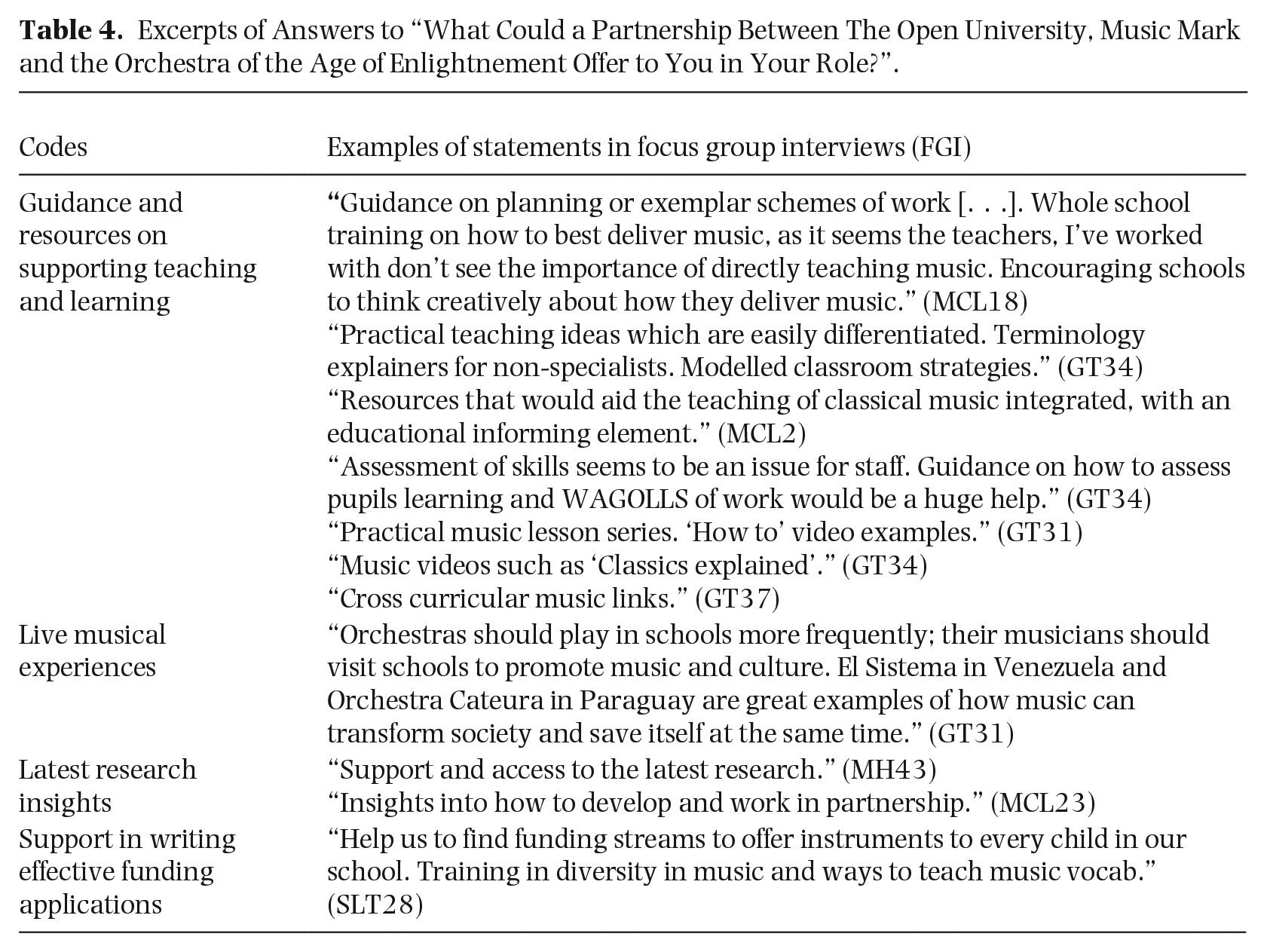
In response to “what could a partnership between the The Open University, Music Mark, the Orchestra of the Age of Enlightnement offer to you in your role?” participants highlighted the need for guidance, access to resources, live music performances, research opportunities, and funding support (see Table 4). However, replicating existing offerings was viewed as having limited value. Schools already have some access to live music and teaching resources, though not always easily. Participants noted the wide availability of music lesson plans, some more practical than others. While expanding teaching resources to cover a broader repertoire and styles is possible, it was not seen as an urgent priority.
Excerpts of Answers to “What Could a Partnership Between The Open University, Music Mark and the Orchestra of the Age of Enlightnement Offer to You in Your Role?”.
Findings, implications, limitations, and conclusions
Participants shared insights into their roles in music delivery, their training needs, and how a partnership with The Open University, Music Mark, and the Orchestra of the Age of Enlightnement could support them.
Roles in music delivery
Participants highlighted that schools rely on a combination of internal staff and external providers to deliver music education. While this approach balances budget constraints and expertise, it often leads to inconsistent teaching quality, higher costs, and limited professional development for freelance specialists. As supported by existing research, these challenges highlight the need for sustainable staff training frameworks (Norton et al., 2019; Simones, 2022).
Leadership must extend beyond senior leadership teams to empower music curriculum leaders and generalist teachers to shape curriculum and pedagogic practice across schools. This form of distributed leadership would help embed music as a core cultural element, positioning it as integral rather than peripheral to the curriculum. While financial constraints remain challenging, this project’s findings indicate that meaningful progress can still be achieved on modest budgets (e.g., £11 per child annually) when there is strong pedagogic leadership and a shared commitment to music. These elements, leadership, cultural value, and funding are deeply interconnected; without strategic leadership, music’s cultural positioning may weaken, and limited funding may not be used to its fullest potential.
Schools’ autonomy in designing music curricula is both a strength and a challenge. Limited time, staff capacity, and expertise hinder curriculum development, highlighting the need for collaboration with music hubs. Flexible frameworks prioritising curriculum coherence beyond learning progression are essential, offering clear guidance while accommodating diverse school contexts. This aligns with broader research advocating a balance between structure and adaptability (Pountney & Swift, 2022).
Music curriculum leaders’ varied expectations for music education, including curriculum alignment, performance, self-expression, and accessibility, emphasise the need for cohesive frameworks to guide curriculum development. These frameworks should promote equitable, well-rounded music education that develops musicianship holistically encompassing performance, composition, and improvisation, with musical self-expression and creativity development at the core of the learning process. They should also aim to reduce disparities between schools, ensuring all pupils can access high-quality musical experiences regardless of context. While flexible to diverse contexts, such frameworks must provide clear guidance to integrate curriculum-based, performance-focused, and accessibility-driven goals. This concern reflects broader issues in music education, including inconsistent quality across contexts (e.g., Ofsted, 2023; Zeserson et al., 2014).
Generalist teachers reported challenges such as time pressures, classroom management, and resource shortages, with the most critical issue being inadequate preparation during ITT. This lack of training diminishes their ability to teach music effectively and undermines long-term advocacy for music education, especially as they advance into senior leadership roles. The deficiency in ITT preparation is well-documented (e.g., Devaney & Nenadic, 2021; ISM, 2019) and highlights a persistent gap between research and practice.
However, addressing this issue requires more than funding. It calls for more vigorous advocacy for music within ITT and a shift in how higher education institutions design courses. Policy changes that prioritise music’s societal value and emphasise its importance in ITT, alongside a change in mind-set within higher education, are essential to drive meaningful reform and break the cycle.
Training and support needs
The findings highlight significant gaps in training and support for music curriculum leaders, generalist teachers, and music hubs. While each group faces unique challenges, common themes include the need for stronger leadership skills and specialised training. Strengthening ITT programmes with a robust music teaching component is essential to addressing these challenges, and leadership training to empower music curriculum leaders and generalist teachers to influence school policies should be a priority.
Addressing these gaps requires a coordinated response that recognises the interdependence of teacher preparation, in-service professional development, and school leadership in supporting music curriculum leaders and generalist teachers to refine their practice and contribute meaningfully to curriculum development. Recognition by senior leadership teams of music curriculum leaders and generalist teachers’ leadership potential alongside structured support to develop these skills could help reposition music as a core component of a broad and balanced curriculum. Such efforts must be underpinned by policy frameworks that value cultural education and protect music from being marginalised by competing priorities or limited resources.
The role of The Open University, Music Mark, and the Orchestra of the Age of Enlightnement partnership
Participants highlighted the potential for a partnership between The Open University, Music Mark, and the Orchestra of the Age of Enlightnement to act as a catalyst for meaningful change, particularly by addressing gaps rather than duplicating existing provision. Their priorities included enhanced training, curated resources, live music experiences, research-informed practice, and advocacy for music’s place in education.
Collaborative discussions among the three institutions reinforced the importance of involving a broader network of stakeholders, including local institutions, cultural organisations, and policymakers, to achieve a sustainable, system-wide impact. In response, the partnership is exploring the following strategic actions:
Co-developing a flexible curriculum framework in collaboration with music hubs and schools, balancing curriculum content, performance opportunities, and inclusive access.
Designing a leadership course tailored to senior leadership teams, music curriculum leaders, and generalist teachers to strengthen advocacy and curriculum influence.
Engaging with higher education institutions and policymakers to inform the design of ITT programmes and ensure new teachers are equipped to deliver high-quality music education.
The present research highlights that piecemeal solutions or expanding existing resources will unlikely drive meaningful change. Systemic transformation is needed, with universities and music organisations playing a key role. Integrating MusicHE (the national organisation for music in higher education) into Music Mark offers a timely opportunity to bridge the gap between teacher training and professional practice. Music Mark’s vast network of teachers places it in a strong position to support MusicHE in aligning training provision with school realities while strengthening collective advocacy for music as a valued, lifelong subject.
This study has limitations, including a small participant sample and the inability to capture England’s diverse school and geographic contexts fully. Despite these constraints, the findings provide valuable insights into educators’ challenges in delivering high-quality music education. The relevance of these findings extends beyond the immediate partners, offering opportunities for institutions and organisations to focus on areas aligned with their expertise.
Supplemental Material
sj-docx-1-rsm-10.1177_1321103X251370243 – Supplemental material for Exploring England’s primary music education needs: Insights from schools’ senior leadership, music curriculum leaders, generalist teachers, and music hubs
Supplemental material, sj-docx-1-rsm-10.1177_1321103X251370243 for Exploring England’s primary music education needs: Insights from schools’ senior leadership, music curriculum leaders, generalist teachers, and music hubs by Lilian Simones, Gary Griffiths and Martin Clarke in Research Studies in Music Education
Footnotes
Acknowledgements
The authors would like to express gratitude to the research participants, for taking time out of their busy schedules to participate in this study.
Author contribution(s)
Contribution statement
The authors and project partners confirm contribution to the paper as follows: Study conception and design: Clarke alongside project partners Music Mark (MM) and the Orchestra of the Age of Enlightenment (OAE); Data collection: Griffiths; Analysis and interpretation: Griffiths, Simones, Clarke; Draft Manuscript preparation: Simones. All authors and partners reviewed the results and approved the final version of the manuscript.
Declaration of conflicting interests
The authors declared no potential conflicts of interest with respect to the research, authorship, and/or publication of this article.
Funding
The authors disclosed receipt of the following financial support for the research, authorship, and/or publication of this article: This work was supported by funding from the Open University, UK.
Ethical approval and informed consent statements
This study received ethical approval from The Open University, UK Ethics Committee. Participants were provided with detailed information about the study’s purpose, procedures, potential risks, and their right to withdraw at any time without consequence. Informed consent was obtained from all participants prior to their involvement.
Data availability statement
Questionnaire and Focus group interviews anonymised data available upon request.

Supplemental material
Supplemental material for this article is available online.
Author biographies
References
Supplementary Material
Please find the following supplemental material available below.
For Open Access articles published under a Creative Commons License, all supplemental material carries the same license as the article it is associated with.
For non-Open Access articles published, all supplemental material carries a non-exclusive license, and permission requests for re-use of supplemental material or any part of supplemental material shall be sent directly to the copyright owner as specified in the copyright notice associated with the article.
