



Abstract
In this Finnish-based study, professional composers (n = 2), student music teachers (n = 6), eighth-grade comprehensive school pupils studying in an extended music program (n = 22), and university and school music educators (n = 2) were brought together to pilot a partnership model for teaching and learning music composition. The one-year project offered (a) a composition pedagogy course for student music teachers, including lectures by composers and a seminar and teacher training in a comprehensive school, and (b) collaborative composition workshops for eighth-grade pupils under the supervision of student music teachers, professional composers, and a school music teacher. In Part 1, we conducted a survey to investigate pupils’ experiences relating to their creative musical agencies and basic psychological needs. In Part 2, we used a phenomenographic approach to examine educators’ perceptions of student music teachers’ development as composition teachers. In Part 3, we used phenomenography to study the student music teachers’ experiences of their development as composition teachers. The results indicate that (a) the musical agency and basic psychological needs of the eighth-grade pupils were supported; (b) the educators succeeded in planning and implementing the pilot course, taking into account both the social and pedagogical aspects of collaborative composition; and (c) the student music teachers felt that their attitudes toward teaching music composition changed and that their confidence increased during the project. We recommend future modifications to the present educational model and consider its potential implications for music education in the Finnish context.
Introduction
Engaging in music composition provides young people with positive experiences (Hopkins, 2013), opportunities to express themselves (Lewis, 2012), increased motivation to engage in music education in general (Leung, 2008), cultural integration (Simpson, 2013), and social inclusion (Paananen, 2022a). In Finland, music composition has gained increased emphasis, including in the latest National Core Curricula for Basic Education, in which improvisation and composition, either individual or collaborative, are described as objectives in music learning. Furthermore, pupils’ creative products constitute part of the musical repertoire at all grade levels (The National Board of Education, 2014). Although the national curriculum does not provide detailed prescriptions of music composition, it generally encourages collaborative music making.
Prior research findings on collaborative composition in the school context suggest that pupils’ level of musical knowledge (Burnard & Younker, 2008), instrumental skills (Seddon, 2006; Seddon & O’Neill, 2006), shared understanding (Wiggins, 2000), friendship, and age (Burnard & Younker, 2008; MacDonald et al., 2002; Miell & MacDonald, 2000) affect their compositional ability. As a teacher is perceived to be a facilitator of students’ creative processes (Deutsch, 2016; Hopkins, 2013; Karjalainen-Väkeva & Nikkanen, 2013; Paananen-Vitikka, 2020), teachers need knowledge of the developmental and social aspects of composition (Burnard & Younker, 2008; Paananen, 2007) as well as of collaborative composition as a process (Fautley, 2005; Hopkins, 2019).
In this study, we approach students’ creative musical agency from the perspective of self-determination theory (SDT; Deci & Ryan, 2000), according to which positive motivational consequences result from conditions that allow the satisfaction of three basic psychological needs: “autonomy,” “competence,” and “relatedness.” We argue that to foster students’ creative musical agency in collaborative composition, music teachers should be able to facilitate these conditions throughout the composition process. Teachers’ roles involve motivating students to come up with ideas, mentorship, providing the scaffolding that students require (Deutsch, 2016; Muhonen, 2014), and nurturing positive social interaction.
Existing literature suggests a strong connection between a music teacher’s knowledge, skills, and identity as a composer and pupils’ experiences and development as composers (Lewis, 2012). The insufficient learning experiences of student music teachers in composition from an early age to the university level result in negative attitudes toward and lack of confidence in teaching composition (Paananen, 2022b; Randles & Smith, 2012). Low confidence may cause teachers to leave out composition in the curriculum altogether (Hopkins, 2013). Although Finnish university degree programs in music education do include pedagogical courses in creative musical activities, only one-third of music teachers describe their skills in teaching composition as good (Partti, 2016). As a result, composition is not regularly taught in Finnish schools (Partti, 2016). In Juntunen’s (2011) study, 47% of ninth-grade students reported that they had never participated in improvising, composition, or arranging in school.
This study examines a partnership composition project involving professional composers, university music teacher training, and a comprehensive school extended music program. The pilot project aimed to promote the creative musical agency of pupils and develop the composition pedagogical skills of student music teachers. Two composers worked together with a university teacher to provide a composition pedagogy course for the student music teachers, who then practiced teaching composition at the school through pupil composition workshops. The university teacher, school music teacher, and composers formed an educator team, which provided the student music teachers with support during the practice.
In the context of the pilot project, our research consists of three parts. First, we conducted a survey to examine pupils’ collaborative composition experiences in light of the theory advanced by Deci and Ryan (2000). The aim was to explore whether pupils’ basic needs were fulfilled and their creative musical agency supported in the workshops where student music teachers acted as teachers. Second, using the phenomenographic approach (Marton, 1986), we interviewed the educator team on their perceptions of the development of the student music teachers’ composition pedagogical skills in the project. Third, phenomenography was used to interview the student music teachers on their experiences of the development of their composition pedagogical skills. By bringing together all three perspectives, we aimed to create a more holistic picture of partnership.
Theoretical background
Collaborative composition: Process and challenges
Fautley (2005) presented a model of the group composition process of lower secondary school pupils. Using Wallas’ (1926) four-stage model (preparation—incubation—illumination—verification) as a starting point, he aimed to explain the processes between the phases. The model includes nine phases: the pregenerative phase; (a) the initial confirmatory phase; (b) the generation of ideas; (c) exploration; (d) organization; (e) work in performance; (f) revision; (g) transformation/modification; (h) extension/ development; and (i) final performance. The model was verified by Hopkins (2019), who used broader categories of behaviors. According to Hopkins (2019), the process begins with planning/verbal reflection, which leads to the generative phase (exploring/improvisation, development), and is completed in the postgenerative phase (notation/recording, rehearsing, performing). Both researchers underlined the process as complex and nonlinear in nature.
One distinguishing feature between collaborative and individual composition (Burnard & Younker, 2004; Heinonen, 1995; Webster, 1988) is the ongoing interaction and negotiation within the group. Group members provide one another with help, information, and feedback; influence one another’s thinking; and assess how effectively the group works (Johnson & Johnson, 1998). Negotiation may begin with each group member introducing their musical idea in turn (Campbell, 1995) or devising a premade plan of structural elements (Allsup, 2003). The process may also begin with spontaneous collective improvisation (Allsup, 2003; Hill et al., 2018).
The literature points to several challenges in teaching collaborative composition from the perspective of music teachers. Time limitations (Hopkins, 2013; Karjalainen-Väkeva & Nikkanen, 2013; Leung, 2004; Lewis, 2012; Partti, 2016) are related to the fact that creative problem-solving requires time. Instances have also been reported where positive interaction has not been nurtured by educators during students’ negotiations with one another or the teacher (Sætre, 2011). Large and heterogeneous groups, lack of instruments and technological resources (Partti, 2016), unfit learning environments (Ojala & Väkevä, 2013), and assessment issues (Paananen, 2020; Partti, 2016) have also been presented as challenges.
Previous partnership projects with professional composers
Several partnership studies have reported examples of when professional composers have taken on the role of music teachers who model the composition process for pupils. Collaboration with composers is considered by pupils as a motivating experience (Watson & Forrest, 2008) that helps develop their confidence and supports learning (Burnard & Swann, 2010). Positive student experiences have been reported in situations where the composer establishes democratic, nonhierarchical learning relations (Lawy et al., 2010). In contrast, disempowered student experiences have been reported in situations where the composer takes over the final decisions regarding a musical piece (Partti & Westerlund, 2013). Partnerships between a composer and a teacher may offer the potential for the teacher to gain new insights into teaching composition. In an ideal situation, the composer and educator can find ways to use each other’s expertise and learn from each other (Partti & Väkevä, 2018). Some practical partnership projects conducted in Finland are worth mentioning, such as the Composition Pedagogical Education (SÄPE—Säveltämisen pedagogiikan koulutus) projects (2016–2021), in which music teachers planned and implemented composition projects for their pupils under the supervision of experienced trainers (see Paananen-Vitikka, 2020).
Theoretical lenses: A self-determination perspective of composition
In their SDT, Deci and Ryan (2002) describe agency as individuals’ innate striving to actualize their human potential and construct a coherent sense of self by seeking challenges and new perspectives and actively internalizing and transforming cultural practices. Musical agency can be defined as “belief in one’s capacity to engage musically, initiate musical ideas, and intentionally influence one’s musical life circumstances” (Wiggins, 2016, pp. 103–104). What is specific to music composition is the pursuit to create something new based on one’s musical ideas. Thus, creative musical agency is a specific form of musical agency.
Applying SDT to music composition, we argue that students who perceive themselves to be acting with a sense of “autonomy,” “competence,” and “relatedness” during composition may experience high-quality motivation to compose (see Reeve, 2012). “Autonomy” is the psychological need to experience behavior as emanating from and endorsed by the self (Deci & Ryan, 1985). It refers to the desire to self-organize and control one’s experiences and behavior and act in accordance with one’s sense of self (Deci & Ryan, 2000). It forms an integral part of divergent thinking (Runco & Cayirdag, 2013). An autonomy-supportive motivational style is the behavior teachers often encourage to vitalize and develop their students’ inner motivational resources (Assor et al., 2002; Reeve, 2012). To foster autonomy, we suggest that teachers should aim to tune pupils’ senses and thinking toward the creative process and encourage the free imagination and exploration of ideas, solutions, and strategies. Teachers should respect pupils’ ideas and intentions and facilitate negotiations so that everyone is respected by others.
“Competence” is the need to experience one’s own effectiveness (Deci & Ryan, 2000). It reflects the desire to seek out and master environmental challenges (Deci, 1975). Suitably challenging and interesting composition tasks, instruction, guidance, support, feedback, and encouragement from music teachers as well as within-group support are required to promote the sense of competence. Formative assessment plays a central role in promoting learning and a sense of competence in pupils (Deutsch, 2016; Leung et al., 2009; Paananen, 2020). Through an inquiry-based method of teaching, pupils can realize the possible alternatives and directions of progress (Deutsch, 2016; Muhonen, 2014). Thus, to foster competence, teachers should encourage pupils by believing in their abilities, creating a framework for composing, demonstrating styles and techniques, promoting arrangements, and guiding pupils toward expanding their own potential (Karjalainen-Väkeva & Nikkanen, 2013). Music technology can also be used in generating ideas, experimenting with materials, recording, and notating musical ideas and products (Chen, 2012; Hoffman & Carter, 2013).
“Relatedness” refers to the need to experience a community and relate to other individuals and groups (Deci & Ryan, 2000) as well as to establish close emotional bonds and secure attachments with others. Students may experience relatedness need satisfaction to the extent that they relate to teachers and peers in an authentic, caring, and reciprocal way (Deci & Ryan, 1991). Thus, during composition, teachers should facilitate social processes; association; group cohesion; and a warm, caring, and safe atmosphere to promote students’ sense of relatedness.
Pilot project
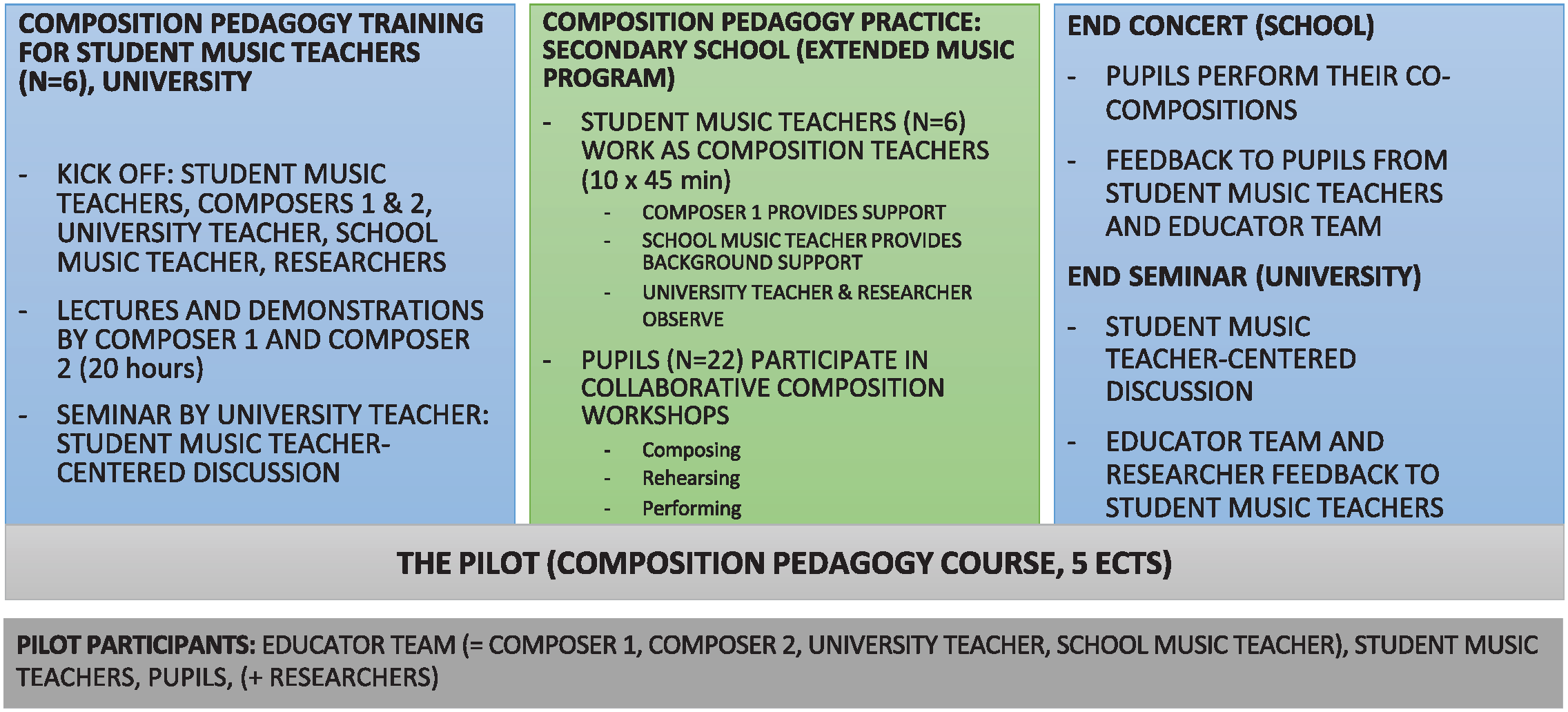
The partnership project that is the focus of this study aimed to support pupils’ creative musical agency in collaborative composition and develop student music teachers’ knowledge and skills in composition pedagogy. A collaborative team of educators was formed, consisting of two professional composers, a university teacher, and a school music teacher (see Figure 1). Collaboration was perceived as forming reciprocal working relationships and contributing to shared, student-centered goals by providing mutual support and offering constructive feedback (Hargreaves, 1998). The project began when the researcher and university teacher invited the other members to participate.
The Project Design.
The university composition pedagogy course began with 20 hr of lectures planned and implemented by the composers, and a seminar led by the university teacher. The course continued with a teacher training period of 10 hr in school, where the student music teachers planned and led workshops (10 × 45 min) under the supervision of Composer 1 and the school music teacher.
Each pair of student music teachers was responsible for teaching one group of seven to eight pupils. Composer 1 modeled composition approaches in situations where the student music teachers did not know how to guide the pupils. Each workshop had a designated classroom. Pianos, acoustic guitars, band and Orff instruments, percussion, keyboards, body percussion, voices, pupils’ own instruments, and digital applications such as BandLab and Sibelius were used in the workshops. The student music teachers began their workshops with interactive games and creativity exercises to warm up. They used inquiry methods and various approaches to composition and provided support and continuous feedback to the pupils. The project ended with a concert—in which pupils from the school were invited as the audience—and a closing seminar—in which experiences were shared and discussed among the educators, the student music teachers, and the researchers.
The project was adaptable to the music curriculum of the eighth-grade extended music program; in Finland, optional extended music education includes as many as four to six weekly music lessons, which can be flexibly targeted to choir, orchestra, singing, playing, improvising and composing, music technology, music theory and solfège, and musical styles and cultures. The amount of composition instruction varies between schools.
Research questions
The following research questions (RQs) correspond to the three parts of our study:
RQ1. To what extent did the eighth-grade pupils feel that their needs for autonomy, competence, and relatedness were met and their creative musical agency supported in the composition workshops? (Part 1)
RQ2. Based on the educator team members’ perceptions, how did the student music teachers’ composition teaching skills develop in the project? (Part 2)
RQ3. To what extent did the student music teachers experience the development of their composition teaching skills in the project? (Part 3)
Method
The research questions, methods, and participants in each part of the study are summarized in Table 1. Throughout the study, research ethics were addressed according to the standard procedures (Finnish National Board on Research Integrity, 2023). Letters of information concerning the study were given to the pupils and their parents, the student music teachers, and the participating composers and teachers. Written and signed consent forms were obtained from all the participants. Participant anonymity was assured, and pseudonyms were used for all study participants. Moreover, it was recognized that music composition activities could evoke strong feelings in pupils and students and that they would need to be handled with the utmost discretion and care.
Research Questions, Participants, and Methods in Parts 1 to 3 of the Study.

Part 1: Questionnaire data
One eighth-grade class in a comprehensive school (n = 22, girls: 64%, boys: 36%, age range: 14–15 years) participated in the composition workshops. The pupils studied in an extended music program, and the data were gathered from them at the school using paper questionnaires designed by the researcher and delivered by the school music teacher.
The survey was intended to generate data on the pupils’ experiences related to their sense of autonomy, competence, relatedness (Deci & Ryan, 2000), and creative musical agency. We used both multiple-choice questions anchored on a five-point Likert-type scale and open-ended questions (see Supplemental Appendix 1). The multiple-choice questions were related to six sum variables, and the value for each negative proposition was reverted before calculating the frequencies of the sum variables across the Likert-type scale (Metsämuuronen, 2009).
Collaboration and within-group support were measured with four questions related to the group members listening to, agreeing with, and supporting one another and working as active members in the group. This variable was connected to a sense of relatedness. High in-group support could also affect feelings of competence. Motivation was measured with three questions related to feelings of enthusiasm and positive feelings toward collaborative composition, as well as a willingness to compose during one’s free time. Such feelings often accompany high-quality motivation in relation to agency (see Reeve, 2012). Sense of competence was measured using five questions related to understanding the task, task difficulty, positive feelings toward the collaborative product, and learning new things. Sense of autonomy was measured with two questions related to preference for collaborative versus individual composition and not receiving too many instructions from educators. Support and feedback from educators were measured with three questions related to receiving sufficient personal and group-specific feedback and encouragement. Support was considered important for developing a sense of competence. Future expectations of music composition were measured using two questions related to a desire to participate in compositions and becoming a composer in the future. Strong expectations typically accompanied high-quality motivation and strong feelings of agency (Reeve, 2012).
In the open-ended questions, the participants were asked to freely describe aspects related to creative musical agency: the atmosphere of the workshops, the theme of the compositions, idea generation, feelings evoked by the resulting compositions, the challenges encountered, positive experiences, and how composition workshops could be developed in the future. The short verbal responses were analyzed by classifying and clustering expressions.
Part 2: Group interview data
The educator team (n = 4) consisted of two professional composers (C1 and C2), the university teacher (UT), and the school music teacher (MT). The team was experienced in composition pedagogy, and the composers taught composition, music theory, and music technology at a music school. The team participated in a 60-min group interview that was designed to address the following themes:
Composition pedagogy education in the project.
Student music teachers as composition teachers in the workshops.
Practical matters and resources.
The data were analyzed using the phenomenographic approach (Marton, 1986; Niikko, 2003, pp. 33–37). Phenomenography provides direct descriptions of the phenomenon of interest, describes individuals’ conceptions in a contextual and integrated way, and produces descriptions of conceptions that are useful in teaching and learning (Bruce, 1997, p. 5).
We read through the collected data several times to gain a complete picture and find meaningful expressions relating to the research questions. The expressions were then grouped into themes and compared with each other. The themes were made into discrete categories encompassing all the expressions, before these categories were combined into higher-order descriptions. The hierarchically ordered outcome space is presented in Supplemental Appendix 2.
Part 3: Individual interview data
Six third-year student music teachers (S1–6) participated as informants in the project. One student interviewed the other students for her master’s thesis. 1 Some student music teachers were beginners in composition, whereas some had studied songwriting. Each 60-min individual interview was based on the following themes:
Previous experience in music composition.
Conceptions of teaching music composition at the secondary school level.
Experiences of development as a music composition teacher in the project.
Attitudes toward teaching music composition in the future.
The phenomenographic analysis was similar to that conducted in Part 2. The hierarchically ordered outcome space is presented in Supplemental Appendix 2.
Results
In what follows, we report our results for each part of the study: Part 1—pupils’ workshop experiences: autonomy, competence, relatedness, and creative musical agency; Part 2—the educator team’s perceptions of student music teachers’ development as composition teachers; and Part 3—student music teachers’ experiences of their development as composition teachers.
Part 1: Pupils’ workshop experiences: Autonomy, competence, relatedness, and creative musical agency
Pupils’ musical backgrounds
The data relating to musical background indicated that the majority (96%) of the eighth-grade pupils participated in solo instrumental lessons (band/orchestral instruments). The most popular musical activities reported were listening to music (100%), playing an instrument (82%), singing (64%), composing (27%), and dancing (23%). The majority (73%) had gained some previous experience with music composition, usually in school. Their musical tastes were quite broad and represented several music styles (60% preferred pop/rock, 41% classical music, 23% jazz, 18% rap, hip hop, or funk, and 5% spiritual music).
Multiple-choice questions
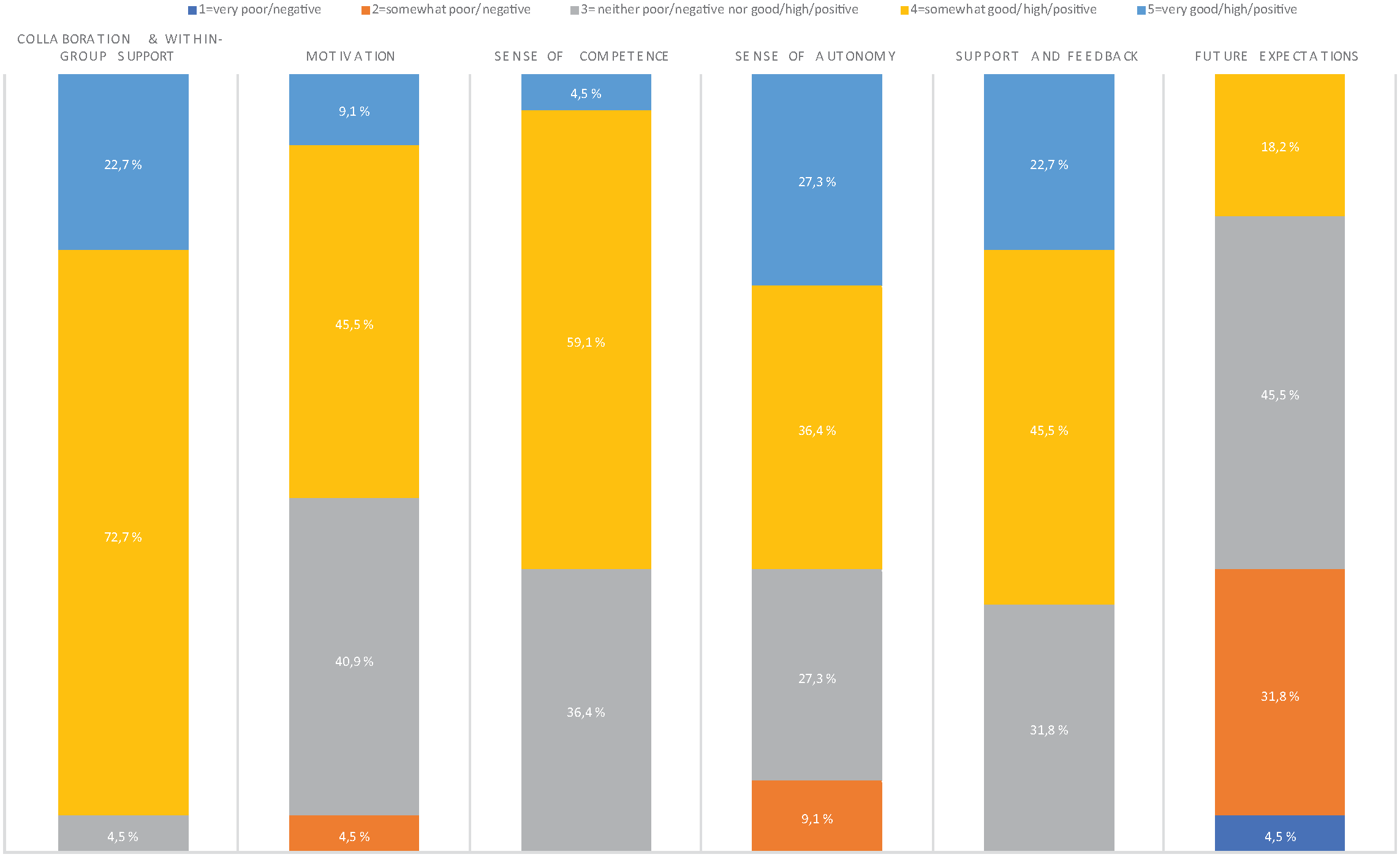
Figure 2 presents the percentages of responses across the Likert-type scale for each of the six sum variables:
Collaboration and within-group support: About 4.5% of the participants rated “collaboration and within-group support” as neither good nor poor, 72.7% somewhat good, and 22.7% very good. This finding indicated that the pupils’ “sense of relatedness” and “sense of competence” were actively supported by their peers in the group. Thus, the student music teachers succeeded in grouping and creating good atmospheres in the workshops.
Motivation: About 4.5% of the participants rated their motivation as somewhat poor, 40.9% neither poor nor high, 45.5% somewhat high, and 9.1% very high. Although only 27% of the pupils reported that composition was one of their favorite musical activities, the general motivation to compose appeared to be much higher among the sample.
Sense of competence: About 36.4% of the participants rated their sense of competence as neither poor nor high, 59.1% somewhat high, and 4.5% very high. This finding indicated that for a majority of the pupils, their sense of competence was supported by the student music teachers, who provided suitable exercises and tasks, varied approaches for composing, technical guidance and support, and continuous feedback.
Sense of autonomy: In this sum variable, the participants’ ratings were marked by the most variation. About 9.1% rated their “sense of autonomy” as somewhat poor, 27.3% neither poor nor high, 36.4% somewhat high, and 27.3% very high. For a majority of the pupils, their “sense of competence” was supported. However, 27% of the participants preferred individual rather than collaborative composition. The student music teachers facilitated opportunities for pupils to develop creative musical agency, thus facilitating autonomy.
Support and feedback: About 31.8% of the participants rated support and feedback as neither poor nor high, 45.5% as somewhat high, and 22.7% as very high. For a majority of the pupils, their sense of competence was sufficiently supported by the feedback provided by student music teachers, Composer 1, and the school music teacher.
Future expectations of music composition: About 4.5% of the participants had very negative future expectations, 31.8% somewhat negative, 45.5% neither negative nor positive, and 18.2% somewhat positive. This finding likely reflected particular musical backgrounds, as composition as a favorite musical activity was reported by only 27% of the participants.
Sum Variables Related to Basic Psychological Needs: Response Frequencies (n = 22).
Open-ended questions
Atmosphere and support
The descriptions related to the atmosphere of the workshop were classified according to their content. The majority (91%) of verbal expressions were positive, such as “good,” “nice,” “joyful,” “humorous,” “enthusiastic,” “relaxed,” “group work went well,” “everybody tried their best,” “all ideas were accepted,” “nice to invent ideas,” “it was easy to express one’s opinion,” “everyone was experiencing the joy of creativity,” “everyone felt free,” and “everyone achieved consensus.” One participant reported that the atmosphere was “a little bit embarrassing.” One participant did not answer this question. The majority (91%) of the participants received support from the student music teachers, 55% from the school music teacher, and 50% from Composer 1. These findings further demonstrated that the pupils’ senses of relatedness and competence were supported.
Initial phase and idea generation
All pupils described how the ideas were generated in the workshop. We identified four types of responses related to idea generation: style (38%), structure (10%), improvisation/chance (34%), or other (10%) comments:
Style: “We threw different ideas in the air and discovered that jazz was supported by most of us.” (Emily)
Structure: “First, we made the structure, and then we planned each section at a time. We combined everyone’s ideas.” (Joe)
Improvisation or chance operations: “First, we improvised some random rhythms and then combined them. Everybody made a one-bar rhythm” (May). “We used a die to choose pitches and rhythms.” (Roger)
Other comments: “We couldn’t get started at first, but then it began to roll more fluently.” (Jill)
Feelings evoked by the completed composition
The pupils described the feelings that the completed composition evoked in them. Most (55%) of these expressions were positive, such as “merry,” “funny,” “self-assured,” “dreamy,” “nice to create,” “describes real life well,” “sounds nice,” “a catchy melody,” and “easy game.” A minority (27%) reflected astonishment or were related to the structure of the composition, such as “surprising,” “confusing,” “mixed,” “extraordinary,” “abrupt,” and “fluctuating.” The rest (18%) did not provide a description. Here, positive expressions could be seen as evidence of the pupils’ increased feelings of creative musical agency and competence.
Challenges, positive experiences, and expectations
Most challenges were related to the idea generation phase, such as “beginning,” “proceeding after choosing the style,” “making ideas work,” “combining everyone’s idea into a whole,” and “choosing the melody or rhythm.” Some descriptions were related to other phases: “composing a part using your instrument,” “playing some of the rhythms,” or “every phase had its challenges.” These responses represent competence-related challenges.
Social aspects, such as “making compromises,” “composing together in general,” “writing the lyrics,” and “choosing the name for the composition,” were also mentioned as challenges, arguably reflecting autonomy-related challenges. About 18% of the participants reported not having encountered challenges.
A majority of the participants (59%) reported some positive aspects of composing in general, such as “generating/implementing one’s ideas,” “creating everything independently,” “creating something new freely,” “easiness and creativity,” “fun and easiness of independent composing,” “fun generating ideas in collaboration,” “being content with one’s composition performance,” “addictiveness to success in composing,” and “nice experience in general,” all of which related to the three basic psychological needs.
The pupils expressed gratitude for the “fun of composing” and playing “many different instruments.” A variety of instruments seemed to be important for their sense of autonomy. But expressions such as “smaller workshop sizes,” “more time to compose,” and “more freedom for personal ideas” reflected greater need for autonomy. Some pupils had the desire for “pupil-made division into groups,” thus expressing a greater need for relatedness. About 54% of the pupils did not provide specific feedback.
Part 2: The educator team’s perceptions of student teachers’ development as composition teachers
Essential knowledge and skills provided in the composition pedagogy course
The essential content of the composition pedagogy course was described as relating to social interaction, creativity, composition pedagogy, music technology, and reflection upon composition teachership. The “social interaction” lectures were related to a safe and positive atmosphere—that is, the learners’ sense of relatedness (Deci & Ryan, 2000). The demonstrations included verbal, musical, and bodily group exercises. For example, a conversation method was introduced to demonstrate how it felt when a peer responded to one’s questions positively versus negatively: “We talked about composition pedagogy and had this yes-and-no exercise” (C1).
“Creativity” was presented as a concept: “Defining creativity is important in itself as a higher-order issue” (C2). A variety of bodily, musical, ear training, visual, and verbal exercises aimed at stimulating creative thinking were also introduced (C1).
“Composition pedagogy” was related to the teacher’s role in supporting pupils’ composition processes. Inquiry methods were introduced whereby the teacher prompted the process by asking the students to imagine aspects of a future composition or produce new musical materials for an unfinished composition. This was important, as learners’ sense of “autonomy” can be fostered when their ideas are respected (Deci & Ryan, 2000). Various verbal, visual, atmospheric, and musical starting points and tools to compose and improvise in the music class were demonstrated and performed in practice with the student music teachers. These pedagogical features are important in fostering learners’ sense of “competence” (Deci & Ryan, 2000).
We collected all individual haiku compositions to form collaborative musical compositions. We also had a chord progression task in which one pitch was changed at a time, a machine improvisation task, and a task based on timbre cards. (C1)
“Music technology” formed an essential part of the course. The student music teachers practiced their software skills as they notated their compositions using Sibelius or MuseScore (C1). The functionalities of a digital audio workstation were presented through “recipes” using these applications. “Composition was compared with cooking—the kinds of recipes we could use. The process with BandLab consisted of different musical elements: bassline, chord progressions, composing accompaniments, and melodies” (C2).
The seminar included “reflections upon composition teachership” and ongoing experiences at school. The seminar was student-centered: “We had discussions mostly from the students’ perspectives.” (UT)
Student music teachers as composers
The participants described the student music teachers as highly motivated to compose music:The student music teachers were enthusiastic. They wanted to compose many more pieces of different styles and work their compositions longer than the course allowed (C1).
The group of student music teachers was described as “heterogeneous” in relation to their composition and notation “skills” and “musical preferences.” Some were at a more advanced level, whereas others were less experienced: Different levels of skills and very different styles of music were observable. Some students thoroughly elaborated on their individual compositions. Some created short compositions. Some needed support in notating their compositions. (C1)
Student music teachers as composition teachers
The participants reported that the student music teachers appeared to have learned the essential content of the course. Most of them had succeeded in grouping the pupils and rehearsing independently to play their compositions in the final concert. “The BandLab training was observable in the ways in which the students approached the composition structure in the workshops” (MT). “They were able to develop the methods in their own personal ways in the composition workshops” (C1).
The participants pointed out that greater autonomy should be given to eighth-grade pupils as composers and learners of music technology: “They were provided with certain chord options. Instead, they could have pondered together with the group how chords could be found” (C1).
Independent teaching was reported as a skill that was yet to be acquired. The student music teachers chose to practice teaching in pairs: “I suppose some of them felt insecure, so they did not want to teach the group independently” (C1). As a result, the workshop size, which was originally planned to include two to three pupils, increased. The student music teachers apparently lacked experience in teaching adolescent pupils: “Bachelor’s students have so far only participated in teacher training at the lower primary school level” (UT).
Future development needs
Future development needs were related to “pre-course skills,” the “composition pedagogy” course, the “workshops,” and “resources.” The university teacher suggested that general classroom management studies should precede the course. Modifications to the composition pedagogy course were also suggested. First, composition as a concept could be defined more thoroughly (C2). In addition, creating elaborate student compositions and giving student feedback required more time: “It is important for the students to gain experience in creating at least one composition as well as they can” (C1). It was also suggested that the course should include “song lyrics pedagogy” (UT).
Teaching “notation” was regarded as essential for the pupils (C2). The use of graphical notation was also recommended: “Not everything has to be put on traditional staff” (UT). The large workshop size and paired teaching were described as challenges to the “atmosphere” and “social interaction” around the composing: “There is one extra variable if there are two workshop leaders and the interaction between them” (MT). Nevertheless, “resources” such as teaching facilities and the availability of musical instruments were regarded as good in general (C1).
Part 3: Student music teachers’ experiences of their development as composition teachers
Essential knowledge and skills of composition teachers
In terms of the essential knowledge and skills required by music teachers teaching composition, within the data, we identified musical, pedagogical, and social interaction skills, with the musical and pedagogical skills involving the fostering of pupils’ sense of “competence” (Deci & Ryan, 2000). Composition skills were regarded as an essential “musical skill”: “If you have personal background in composing, then you know the process better, and you are able to guide” (S3). The teacher should know enough music theory to support pupils’ composition processes: “If we think of melody, harmony, bassline, and rhythm, there is a need to understand these elements separately and as components of a whole” (S4). Knowledge of musical genres and instrumental skills were also considered important: Deeper knowledge of genres. If pupils aim for something specific, the teacher should know about it—the basics of all instruments in music class. Nothing earth shattering, just the basics. (S5)
According to the student music teachers, various “pedagogical skills” were essential. For example, the teacher should be able to differentiate between levels of instruction so that pupils can compose according to their potential: “Perhaps more guiding questions for beginners. And for those who are at a more advanced level, like, OK, think about the dynamics, and let’s see next time how you feel about it” (S4).
Many of them also deemed it important to consider the learning environment and time constraints: “Of course, it depends on how much time there is for the composition task, and you have to take into account which instruments you have there” (S3).
Mastering a range of pedagogical methods was considered important: “It’s good to have a set of different exercises, how to begin music composition with the pupils” (S6). Composition should also be integrated into other areas of music learning: “The basic elements of the musical style should be learned first and then applied to music composition” (S3). Motivation should begin with small tasks and exercises that stimulate creativity. Composition should be “demystified” and made easy to approach with lower-level learning goals: A composition may be a very simple thing; it doesn’t have to be good. Every little idea is important and valuable. I tried to underline that composing is fun because you can explore many things. (S3)
Four student music teachers thought that teachers should respect pupils’ idea generation, not restrict it, thus respecting pupils’ “sense of autonomy”: “Teachers should not give direct answers but guide students through exercises” (S2). The student music teachers conceived of formative assessment as a form of support throughout the composition process: “There’s a need to support learning because the pupils don’t know everything and to create a relaxed feeling so that the pupils feel free to ask for help” (S5). The teacher should encourage pupils and allow them to proceed at their own pace: The teacher should not tell [pupils] exactly what to do or in which order but should see when support is needed, and somehow, in that moment, guide which direction to take. (S6)
It was considered more important to assess the process than the final product (S3). However, the task goal should also be clearly communicated to pupils: “If the pupils are told what aspects are assessed, it also motivates them to do those things” (S1). Personal feedback on pupils and self- and peer assessments were considered important.
Essential “social skills” included the teacher’s ability to create a safe space in the classroom: Often, the compositions are related to difficult experiences, such as the death of one’s mother. As a teacher, you should have ears and eyes open on how you handle those things. (S1)
Teachers should also know how to encourage pupils in free experimentation, fun, creativity, and risk-taking: “Try out what you like, be creative, and take risks. The goal is to create a relaxed atmosphere so that discipline will not hamper creativity” (S3).
The teacher should be able to divide the class into workshops based on individual pupils’ personalities so as to enable progress, “so that you won’t put together those who won’t get along” (S3). Grouping was described as creating a sense of belonging: “From the start, I’d aim to create a good atmosphere in which everyone’s ideas are accepted, valued, and respected” (S6). These social skills were important in fostering a sense of “relatedness” in pupils. Furthermore, verbal communication should be adapted according to the pupils’ knowledge: “You should be aware of their previous knowledge so that you know the kinds of expressions you should use in teaching” (S3).
Development of composition pedagogical skills during the project
Two student music teachers reported having learned music theory when the pupils created musical motifs or phrases: “I really learned new things about rhythm when one pupil wanted to compose a rhythm, which was actually rather challenging to notate” (S5). One student music teacher described having learned about musical styles: “I knew this genre but did not have deep knowledge about it” (S1). Two student music teachers reported that they had developed their knowledge of instrument sounds: All the things you can do with the piano when you open the lid and all that you can do with the violin—a whole new world was opened for me. (S1)
All participants reported having learned new methods, exercises, perspectives, and tools, such as games to play in teaching music composition: “There were different tools, such as dices, rhythm cards, and note cards. And BandLab, starting with bassline, so I feel it was a good set of different tools” (S1). Progress was also achieved in social interaction skills, such as creating a good atmosphere and grouping: “For instance, that yes-and-no exercise is awesome when you think of the atmosphere. In the beginning, I thought it was a stupid exercise, but then I understood its purpose” (S1).
Four participants learned to make compromises or give and receive feedback: “When one pupil wanted one thing and another pupil a different thing in composing, what to do when everyone’s wishes cannot be fulfilled” (S2). Almost everyone developed their knowledge of pupils’ skills and personal traits. Furthermore, most student music teachers were able to form a picture of music composition as a process: “I learned about the process of composition—how you can start to create with pupils when the goal is to make a whole song, which is then performed” (S2).
The participants also reflected on their development as composition teachers. They all reported that their attitudes toward teaching composition had changed during the project. Although they felt that they were still learning teachership, they gained self-assurance, flexibility, and motivation: “I don’t feel sure and bold about teaching composition yet, but I have the tools for it, and I’m developing my skills” (S2). “I don’t know how I would have survived without this course. It was very important” (S6).
Expectations
The participants described their expectations regarding what should be done in future courses and in relation to their own development as music teachers. Some wanted to see more education relating to general classroom management, whereas others wanted information on musical development, formative assessment, and music technology. Three participants hoped for more education in guiding a larger process: “The course included many little exercises but lacked a perspective on bigger projects” (S2).
The student music teachers also described what they would like to explore in future composition workshops. The topics included improvisation (S3), music technology-based composing (S6), and music theory and lyrics (S5): “Harmonization with the pupils. And it would have been awesome if we had time to write lyrics” (S5). Two participants hoped to allow pupils to compose more independently in the future: “One pupil would have liked to compose alone, independently, and if we had had a chance to guide this pupil individually, it would have been a good thing” (S4).
Discussion
Overall, the pilot project turned out to be successful from the perspective of supporting pupils’ basic psychological needs—autonomy, competence, and relatedness (Deci & Ryan, 2000)—and creative musical agency. Most of the participating pupils achieved a “sense of autonomy.” The features deemed to have a positive effect on pupils’ sense of autonomy were in line with findings from previous research on the teacher’s role in guiding composition (Deutsch, 2016; Muhonen, 2014, 2016). The student music teachers succeeded in ensuring that the pupils were introduced to a variety of ways to tune into the creative process, encouraged in creative exploration, and given an opportunity to generate and perform their own parts of a collaborative musical piece. They avoided providing premade solutions to compositional problems. The pupils respected each other’s musical ideas during composition. A broad variety of musical instruments and technological resources were available for them, in contrast with Partti’s (2016) sample. As some pupils had a preference for individual instead of collaborative compositions, we suggest that in the future, pupils should also have the opportunity to engage in individual composition.
For the majority of pupils, their “sense of competence” was also fostered by the student music teachers, who were responsible for helping develop achievable goals and providing sufficient support and feedback—similar to reports in the studies by Deutsch (2016), Karjalainen-Väkevä and Nikkanen (2013), and Muhonen (2014). Each collaborative composition process (Fautley, 2005; Hopkins, 2019) was successfully completed. The pupils’ positive characterizations of their final products reflected their feeling of success in having achieved their compositional goals.
The challenges faced by pupils were most often competence-related, such as generating and combining ideas. Despite having warmed up, the pupils regarded the pregenerative and generative phases (Fautley, 2005; Hopkins, 2019) as the most challenging parts of the process. Therefore, more attention should be given to supporting pupils’ preliminary explorations and negotiations in the future.
The student music teachers’ social interaction contributed to creating a positive and safe atmosphere, thus supporting the pupils’ “sense of relatedness.” In contrast with Sætre (2011), the pupils’ negotiations were generally positive, and they enjoyed composing together. Their shared musical preferences created cohesion. Using musical style as a starting point for composition can also offer a way to differentiate one’s musical identity from others, thereby fostering a sense of “autonomy” (Paananen, 2022b).
A minority of pupils regarded composition as their favorite musical activity or had the desire to become a composer. However, most of them expressed motivation to compose. Positive attitudes toward the workshops and collaborative compositions were indicative of evidence of the pupils’ increased feelings of “creative musical agency.” Nevertheless, sustaining motivation for composition would probably require regular engagement in composition across the school years (see Juntunen, 2011; Partti, 2016).
The educators succeeded in planning and implementing the course, taking into account the social and pedagogical aspects of collaborative composition. The student music teachers mostly met the course objectives, and felt that their confidence, flexibility, and motivation to teach composition during the project increased, despite previous inadequacies regarding studies in composition (Paananen, 2022b; Randles & Smith, 2012).
The way in which the present model prepared the student teachers was innovative, as it included a team of composition educators who taught and supervised the student music teachers throughout the process. Our study also produced novel information about student music teachers’ development in composition pedagogy. For future partnership projects, we recommend the present approach as well as the space to explore the adaptations suggested by the pupils and student music teachers, such as more time to compose (Hopkins, 2013; Karjalainen-Väkeva & Nikkanen, 2013; Leung, 2004; Lewis, 2012; Partti, 2016), more space for individual ideas, smaller workshops, a wider range of compositional approaches, formative assessment, classroom management, and independent teaching. Such a model could be applied in university degree programs in music education and extended music programs in up to 40 towns across Finland (Eerola & Eerola, 2014), as well as within optional courses in music composition in general music education.
Supplemental Material
sj-pdf-1-rsm-10.1177_1321103X241284513 – Supplemental material for A partnership composition project between professional composers, a university music education program, and a comprehensive school extended music program
Supplemental material, sj-pdf-1-rsm-10.1177_1321103X241284513 for A partnership composition project between professional composers, a university music education program, and a comprehensive school extended music program by Pirkko Paananen and Kaisa Nissi in Research Studies in Music Education
Supplemental Material
sj-pdf-2-rsm-10.1177_1321103X241284513 – Supplemental material for A partnership composition project between professional composers, a university music education program, and a comprehensive school extended music program
Supplemental material, sj-pdf-2-rsm-10.1177_1321103X241284513 for A partnership composition project between professional composers, a university music education program, and a comprehensive school extended music program by Pirkko Paananen and Kaisa Nissi in Research Studies in Music Education
Footnotes
Acknowledgements
We are grateful to the composers, university teacher and school music teacher for their contributions to the educational part of the present project.
Author contribution(s)
Declaration of conflicting interests
The author(s) declared no potential conflicts of interest with respect to the research, authorship, and/or publication of this article.
Funding
The author(s) received no financial support for the research, authorship, and/or publication of this article.

Supplemental material
Supplemental material for this article is available online.
Notes
Author biographies
References
Supplementary Material
Please find the following supplemental material available below.
For Open Access articles published under a Creative Commons License, all supplemental material carries the same license as the article it is associated with.
For non-Open Access articles published, all supplemental material carries a non-exclusive license, and permission requests for re-use of supplemental material or any part of supplemental material shall be sent directly to the copyright owner as specified in the copyright notice associated with the article.
