



Abstract
In 1997, Norway became the first country to make statutory provision for schools of music and arts requiring every municipality to run such a school. Based on an explicit vision of “schools of music and arts for everyone,” the aim is to provide music education for all children, regardless of social and economic background. Despite their statutory status, there are no official documents regulating the teaching content. The schools have an advisory curriculum framework, but as this framework barely mentions musical genres, teachers are free to choose content and modes of instruction. In this article, we address the following research questions: What kinds of music are used as teaching content in the schools of music and arts? Who, and what, decide which music is used? We report the findings from a survey of music teachers (N = 151) working in schools of music and arts that were selected using a quota sampling strategy. The survey questionnaire comprised both structured and open-ended questions. We found that while the teaching content encompasses a wide range of musical genres and styles, various styles of popular music predominate. Moreover, the teachers’ own choice of music was altogether the most prominent option, along with other categories involving teacher-led decisions. Our findings also suggest that the teachers’ own preferences and taste in music had a certain impact on the content used. However, the students’ and teachers’ influence on the teaching content seems to vary with the musical style/genre being taught. Students’ preferences were emphasized to a higher degree when teaching popular music, while the teachers decided what music to play more often when teaching art music/classical music. The findings are discussed against Kallio’s ideas of the school censorship frame, and the authors argue that the wider cultural-musical heritage seems to be a strong force when making decisions about teaching content.
Keywords
Introduction
The Norwegian schools of music and arts offer extra-curricular activities in music and other art forms for children and adolescents. In 1997, Norway became the first country in the world to make statutory provision for such schools (Norwegian Education Act, 1998, § 13–16; NOU, 2013), requiring every municipality to run them. Based on an explicit vision of “schools of music and arts for everyone,” the aim is to reach all children, regardless of social and economic background. Thus, the schools are mainly state funded, with a limited student fee, and without entrance examinations. Still, they are only attended by about 13% of the target group (Berge et al., 2019), and attendance is highly stratified by social class, ethnicity, and sex (more girls than boys).
Despite their statutory status, there are no official documents regulating the schools of music and arts’ teaching content. Even though an advisory curriculum framework exists (Norwegian Council for Schools of Music and Performing Arts, 2016), it gives teachers considerable freedom to select repertoire and modes of instruction. While popular music and folk music have been included for many years (Dugstad, 1989; Kommunenes sentralbyrå, 1989), the dominance of Western classical music has been, and may still be perceived to be, notable within these schools (Ellefsen, 2017; Ellefsen & Karlsen, 2020; Karlsen & Nielsen, 2021).
In this article, we understand musical genres and practices as heavily imbued with symbolic meanings, which in turn contributes to the perpetuation of cultural and social differences. Consequently, the repertoire and teaching content selected, as well as who or what is involved in decisions about it, have implications for who will feel included in or excluded from the school of music and arts system. As such, the research outlined in this article connects to the broader international discussion on social justice in music education (e.g., Benedict et al., 2015), as well as the discussion on how various repertoires, styles, and genres carry potential for stratified forms of participation (e.g., Dyndahl et al., 2021). We report the findings from a survey of selected music teachers working in the Norwegian school of music and arts system. Taking the above issues as a point of departure for exploring the survey data, we addressed the following research questions:
RQ1. What kinds of music are used as teaching content in Norwegian schools of music and arts?
RQ2. Who, and what, decide which music is used?
Previous research
The Nordic school of music and arts system is closely connected to the ideals of the welfare state, and hence to the ideology of social democracy. This can also be traced in Nordic research relating to these schools, which explores their democratic possibilities or shortcomings in relation to, for example, social inclusion (Bergman et al., 2016; Tillborg, 2021), social justice (Kuuse, 2018; Väkevä et al., 2017), or Indigenous self-determination (Kallio & Heimonen, 2019). Implied in this research are also concerns about who decides on the music used. Over the past two decades, there has been a shift in the power balance between teachers and students in this regard. In their early study of the interaction between Swedish school of music and arts teachers and their students, West and Rostvall (2001) described this interaction as clearly teacher-centered, with teachers having “little interest in the students’ experiences or initiatives” (p. 287, our translation). Almost a decade later, Holmberg (2010) described how teachers were challenged by students’ requests to influence teaching methods and content, and another 10 years later such challenges were still evident in Jeppsson’s (2020) study in which teachers emphasized that they wanted to offer “something other than what is requested [by the students]” (p. 182, our translation). These findings imply a perceived conflict between the traditional heritage of Western classical music that has permeated the background of many teachers, and the popular music that many of their students wish to play. In addition, as Jeppsson (2020, p. 17) notes, teachers and leaders in schools of music and arts are nowadays bound to navigate the liberal democratic ideal permeating Nordic school systems, and according to which students have the right to influence their own education. In such a context, what forces are likely to regulate teaching content? According to Jordhus-Lier (2018), teacher competence, and specifically their “genre versatility” (p. 137) has now become a sought-after asset, as such versatility has the potential to broaden the content each teacher can offer her students. Furthermore, Blix (2018) suggests that textbooks might be the main content-regulating resource at the beginner level, which again leaves much power with the teacher who selects which textbooks to use. Thus, despite the trend toward increased student influence on taught content, it seems clear that teachers in schools of music and arts still bear much of the responsibility for selecting repertoire and teaching material. The above research also suggests, more or less explicitly, that repertoire selection is influenced by the teacher’s educational background and associated musical and pedagogical traditions, as well as by the teaching material that the teacher chooses to employ. In short, several forces come into play when teaching content is being selected or, by implication, deselected.
Theoretical perspectives
In this article, we adopt Kallio’s lens of “the school censorship frame” (Kallio, 2015b, p. 75; see also Kallio, 2015a) through which it is possible to view music teachers’ selection of content. Kallio (2015b) focused upon how school music teachers in Finland negotiate “popular music meanings, as [they] make decisions regarding which popular musics to include as part of their teaching, and which to exclude” (p. 4). These processes of selection were viewed in relation to sociological theories of deviance, in order to establish a framework for understanding the dynamics underpinning the stigmatization of certain forms of music and hence the “processes of social censure” (Kallio, 2015b, p. 4): how and why they were left out of the teaching content. These frames “for teacher decisions and actions” were “seen as censorship processes that reinforce[d] selective ideas of propriety and certain moral boundaries in the classroom” (Kallio, 2015b, p. 5). Factors that contributed to teachers’ decision-making were identified and coined as the school censorship frame. Kallio (2015b) found this to be constituted in and through “censorious narratives that framed the music teachers” (p. 74) from the point of view of school, staff, parents, teachers, students, curricula, culture, and religion.
While Kallio’s work centered on the processes of censorship in relation to popular music, 1 similar or related censorious forces may frame teachers’ selection of material in schools of music and arts. Kirkegaard and Otterbeck (2017, p. 4) contended that music censorship can be subtle, and may sometimes be “interpreted as a kind of curating” based on an expressed intention to “protect genres or musics” or even the performers or listeners. While protecting their students may not be their aim, school of music and arts teachers’ careful selection of teaching content can be understood as a form of socialization in mastering specific musics, which strongly resembles the processes of censorship. Both of these processes are linked to aesthetic choices that “are never objective or neutral” (Kirkegaard and Otterbeck, 2017, p. 4). According to Jeppsson (2020), the liberal democratic ideal that informs much of the contemporary school of music and arts landscape involves handing over at least part of the responsibility for education (and its content) to the students. From the above overview of previous research, one can also detect a steadily increasing tension around the question of who should have the power to define teaching content—the student or the teacher? However, does this imply that teachers’ influence with regard to content is inappropriate or entirely bad?
The above issue relates to didactic practices in general, which “have to do with management: to manage participations, experiences, consciousnesses of actions in line with more or less stated norms and standards and through this also manage subjects” (Krüger, 2018, p. 145, our emphasis). Following a similar line of thought, Biesta (2021) has argued that, besides qualification and socialization, perhaps the most central purpose of education is precisely the formation of human subjectivity or the “subject-ness” of those being educated. Naming such processes as the subjectification of education, he holds that they have an existential orientation “towards how children and young people can be encouraged and supported to exist as subjects of their own life rather than as objects of cultivating forces and interventions” (Biesta, 2021, p. 40). In order to be or become such an active and responsible self, one needs, however, to face reality and figure out what is possible: “education [should], in other words, [allow] for a ‘reality check’ of our initiatives, ambitions and desires” (Biesta, 2021, p. 50). Biesta (2021) argues for a reinstallation of teaching and the teacher, given that students will have to “learn something, that they learn it for a reason, and that they learn it from someone” (p. 43, italics in original), but also connected to the unreasonable in “offload[ing] the responsibility of teachers onto students” (p. 54). This is notable in the context of schools of music and arts, in which notions of content selection rest on specific cultural repertoires that define what it means (or should mean) to be a student in these settings.
The study
This research is a sub-study of a larger project exploring musical upbringing and schooling for children and young people in Norway, where one of the research areas focuses on the extra-curricular schools of music and arts. 2
Methodology
In order to collect systematic data relating to the music being taught in schools of music and arts, we chose to conduct a survey among music teachers. A survey design also allowed for systematic comparison between teachers (De Vaus, 2013).
The survey
The survey questionnaire was distributed electronically to 902 music teachers in 70 schools of music and arts between October 2019 and May 2020. 3 Schools were selected using a quota sampling strategy (De Vaus, 2013), defining quotas according to geography 4 and municipal size. 5 The Norwegian schools of music and arts are characterized by local conditions and traditions, and which subjects are offered are, among other things, connected to the schools’ size and geography (Berge et al., 2019; Jordhus-Lier et al., 2021). We therefore performed a disproportionate allocation in order to ensure representation of teachers from small schools and from every county. All music teachers in the selected schools were invited to participate in the study.
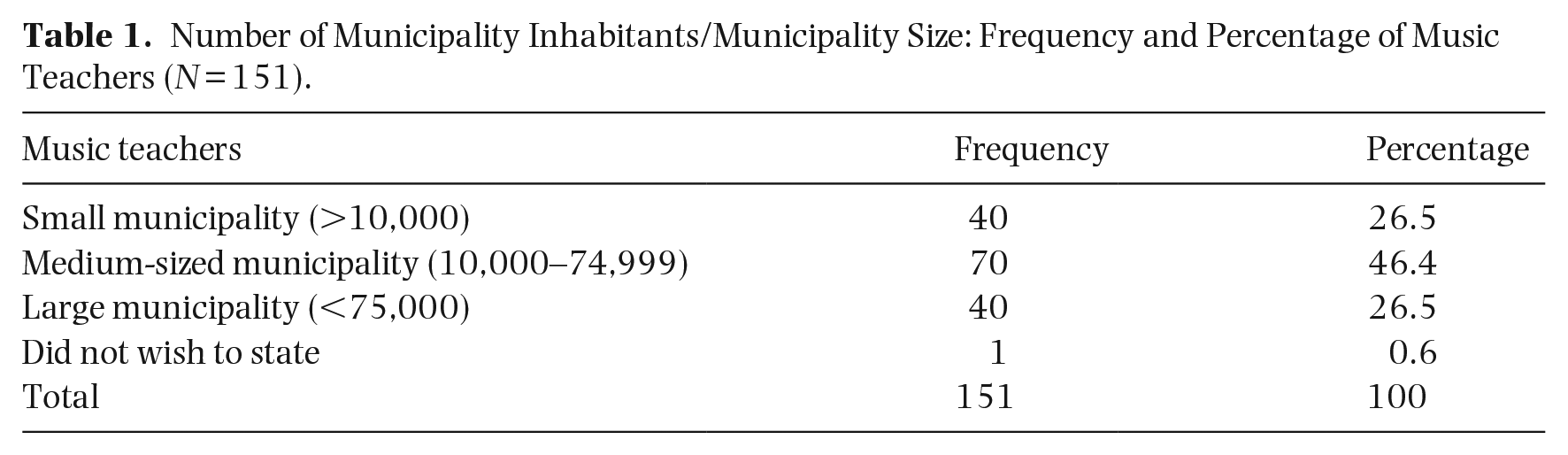
Sampling also took account of accessibility. Schools were excluded if their website did not display teachers’ email addresses, as to protect teachers’ anonymity, we did not wish to involve rectors in the selection process. 6 We received 151 responses, with good geographical and size-related dispersion (see Figure 1 and Table 1).
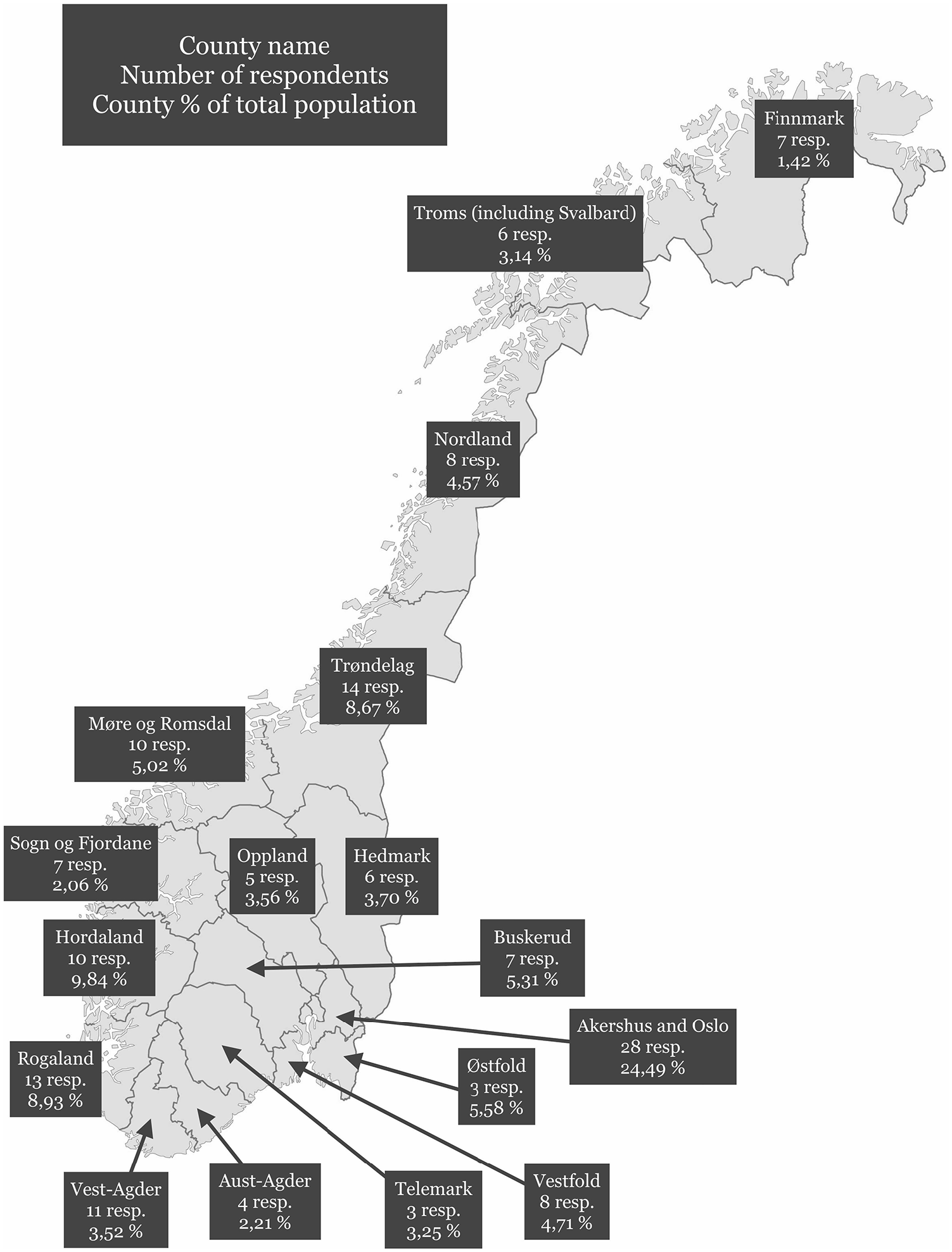
Respondent Selection and Population Base.
Number of Municipality Inhabitants/Municipality Size: Frequency and Percentage of Music Teachers (N = 151).
The distribution of instruments taught by the participating teachers (see Figure 2) also matches the frequency of instruments offered in schools of music and arts as reported in a previous survey (Jordhus-Lier et al., 2021). This indicates that 151 teachers to some degree represent the multifariousness of music teachers in such schools.
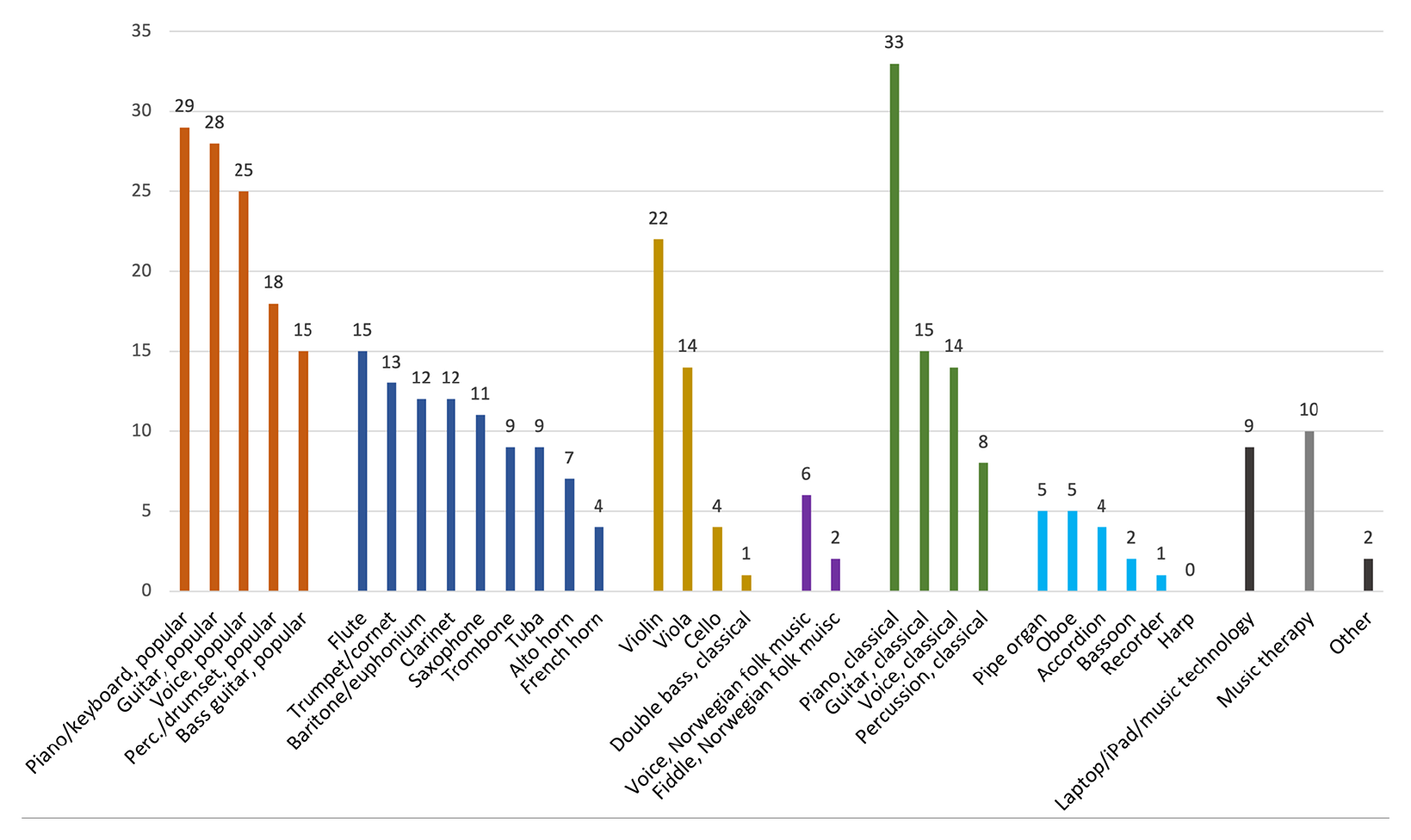
Instruments Taught by the Survey Respondents (N = 151). The Use of Different Colours Indicates the Grouping of Instruments Mainly in Terms of Instruments Used in Popular Music, Wind Instruments, String Instruments, Instruments Used in Norwegian Folk Music, Other Instruments (Mainly Within the Classical Genre) and Other Offerings.
Participants
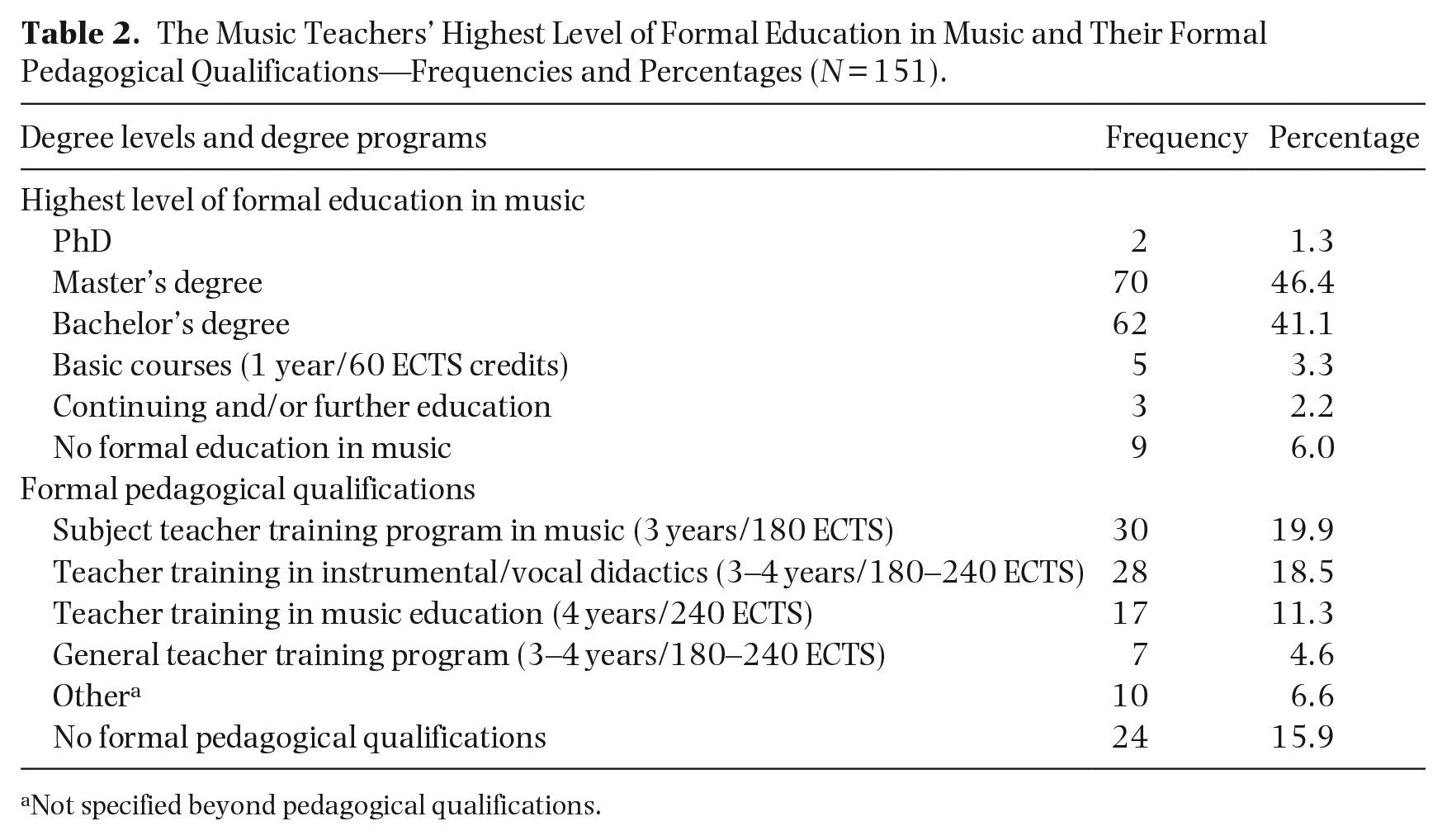
All survey participants were working as music teachers in schools of music and arts; their teaching experience within the system ranged from 1 year to 42 years (M = 14.8, SD = 10.1). The sample included 73 women (48.3%), 76 men (50.3%), and 2 who did not wish to gender-identify (1.3%). A breakdown by age and employment shows that teachers ranged in age from 20 years to 65 years old (M = 44.5 years, SD = 10.8) and occupied from 4% to 83% of a full position (M = 37.9%, SD = 25.8). In total, 142 teachers (94%) had formal music education, and 127 (84.1%) had formal pedagogical qualification (see Table 2). 7 In total, 114 teachers (75.5%) had a background in art music/classical music, 73 (48.3%) in popular music, 21 (13.9%) in Norwegian folk music, seven (4.6%) in wind band music, and nine (6.0%) in other genres. 8 As these numbers indicate, some of the teachers were familiar with several genres.
The Music Teachers’ Highest Level of Formal Education in Music and Their Formal Pedagogical Qualifications—Frequencies and Percentages (N = 151).
Not specified beyond pedagogical qualifications.
In accordance with the Norwegian guidelines on research ethics, 9 the teachers were informed when signing into the web-based questionnaire that their participation was voluntary, that they could withdraw at any time and that their responses would be anonymized.
Questionnaire design
The questionnaire comprised both structured (including matrix) and open-ended questions, focusing on the kinds of music used as teaching content and who and what decides which music to use. The questions about teaching content were open-ended, asking respondents to provide examples of music used on their most recent teaching day (q. 1 and 2), music they preferred to use as teaching content (q. 3) and music used in joint concerts or performances (q. 6). In the first and second questions we also asked the teachers to indicate whose idea it was to work on this music. In addition, respondents provided certain background information, including gender, age, teaching experience, and educational background.
Analysis
The survey gathered both quantitative and qualitative data, which we analyzed using SPSS and NVivo, respectively. The open-ended questions related to teaching content (q. 1, 2, 3 and 6) were first analyzed qualitatively in NVivo to construct categories of musical genres and styles from the music examples that the teachers provided. Several researchers were involved in deciding the musical genre and style categories, and the research group jointly determined the final categorization, thereby ensuring “coder reliability” (Kvale & Brinkmann, 2009, p. 205). The final categories of musical genres and styles (see Figures 3 to 5) were then subjected to further analysis in SPSS. Responses to the open-ended questions (q. 1e and 2e), referring to whose idea it was to play this music, were also jointly categorized by the research group and analyzed using SPSS.
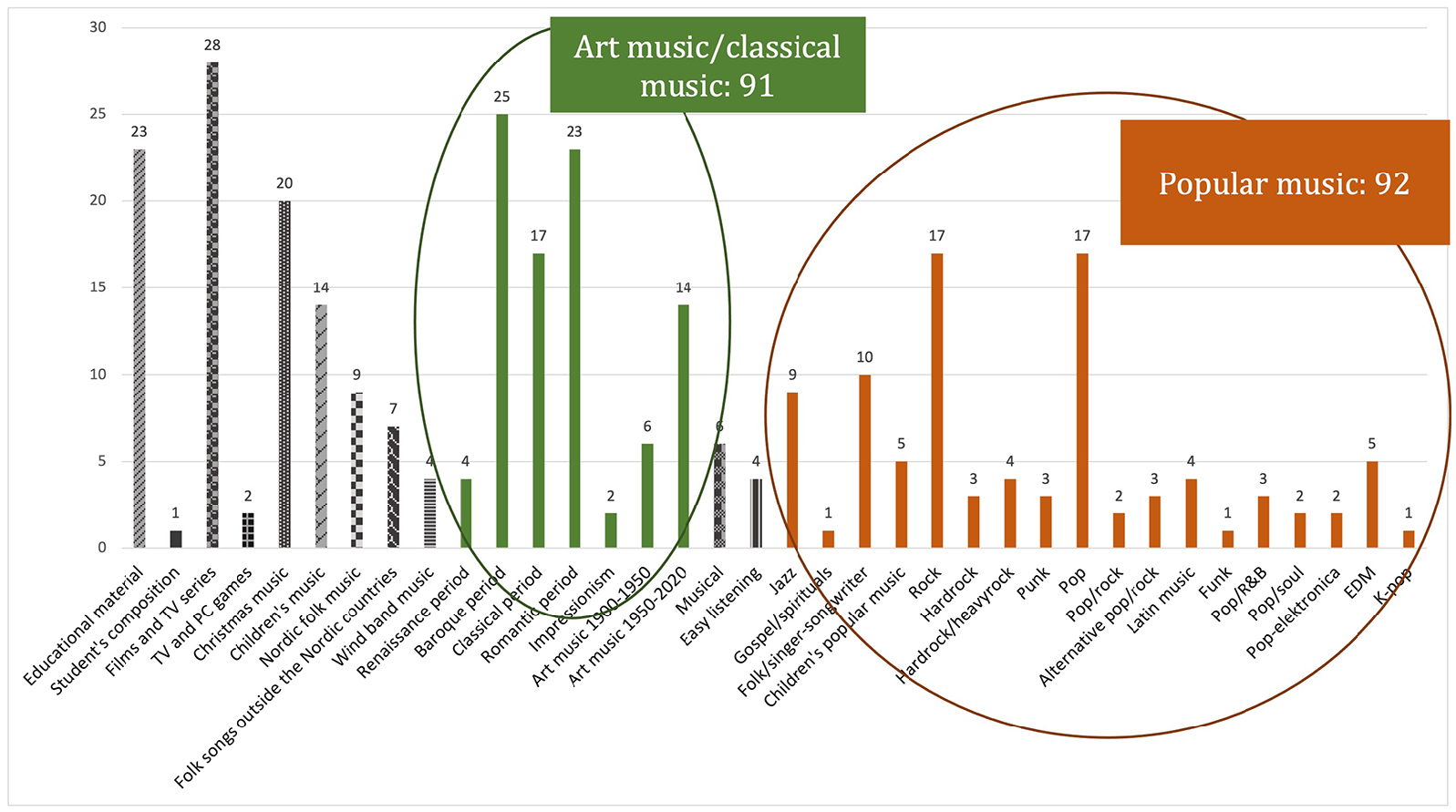
Frequency of Musical Genres and Styles Taught in Instrumental and Vocal Lessons During the Most Recent Schools of Music and Arts Teaching Day (N = 301, Music Examples).
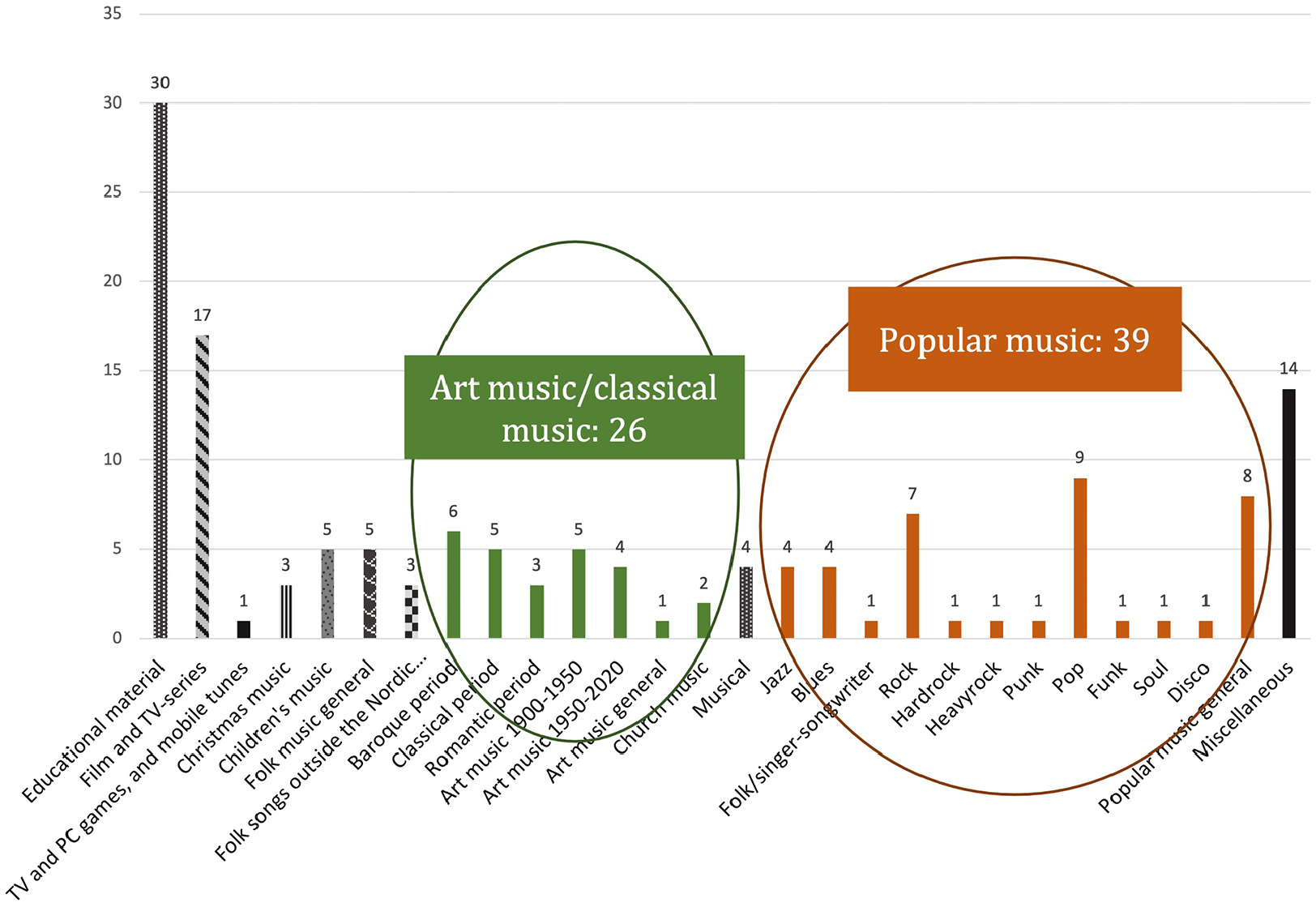
Frequency of Musical Genres and Styles Favoured by Teachers for Instrumental and Vocal Tuition (N = 147, Music Examples).
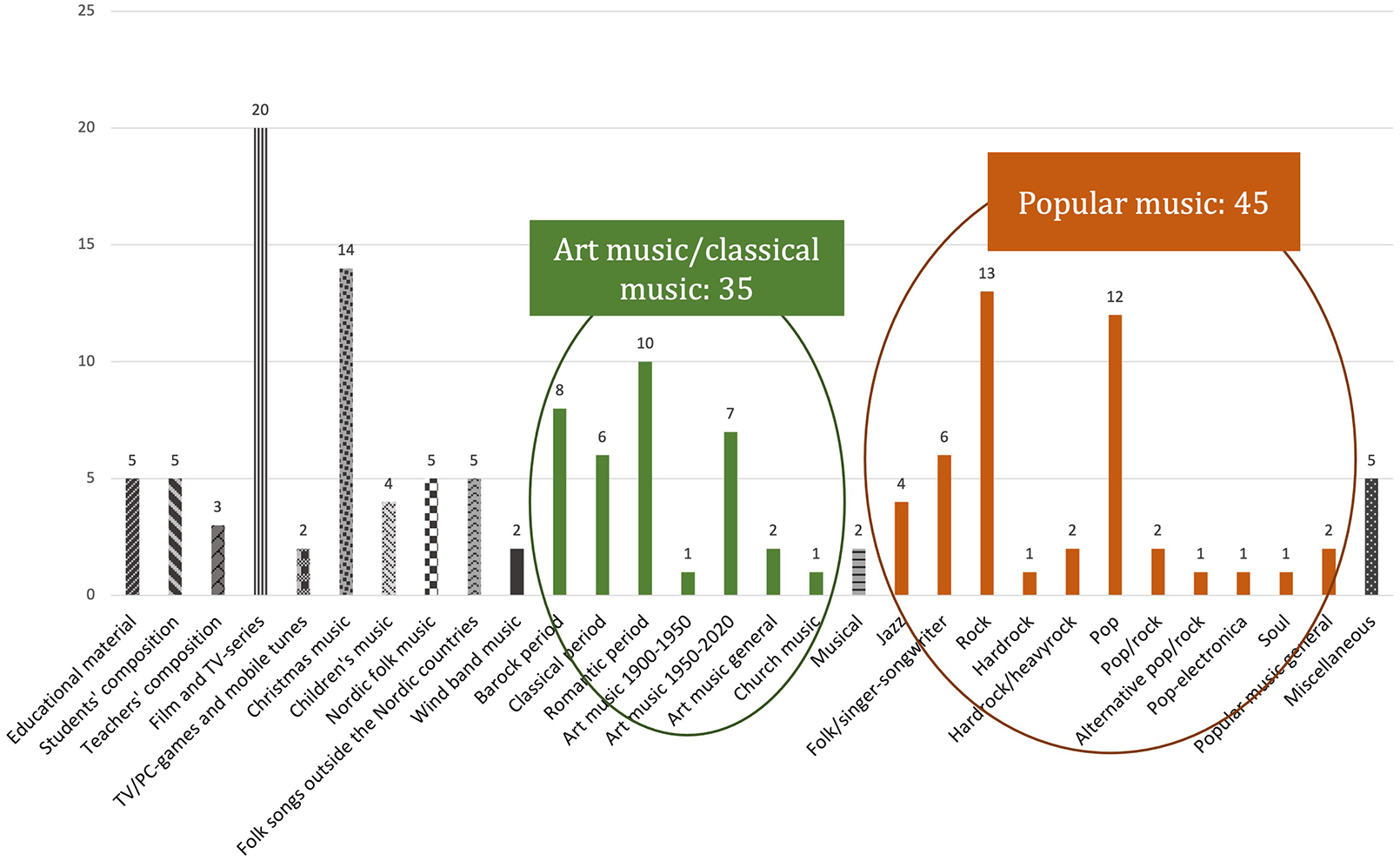
Frequency of Musical Genres and Styles in Joint Concerts/Performances (N = 152, Music Examples).
In response to question 3 (examples of music that the teachers preferred to use in their instrumental and vocal teaching) and question 6 (music that students had performed in joint concerts or performances), some teachers 10 included more than one example. In these few cases, we decided to include up to two examples per teacher. As the teachers could choose whether or not to respond to open-ended questions, not all of these (or related sub-questions) were addressed.
As the SPSS analyses principally examined frequencies and chi-squares, we cannot claim any knowledge of causal relationships among the variables investigated; nor can we generalize from our results, as our sample only included 151 music teachers, all working in the Norwegian school of music and arts system.
Results
The music used as teaching content in schools of music and arts
Vocal and instrumental tuition
Our first research question addressed what kinds of music are used as teaching content in schools of music and arts. The participating teachers were asked to provide two examples of music that they worked on with their student(s) in instrumental and vocal lessons during their most recent teaching day; they were also asked to describe those musical examples. As Figure 3 shows, various styles of popular music (92 examples/30.6%) and art music/classical music (91 examples/30.2%) predominated across the wide reported range of musical genres and styles. Less frequently mentioned examples included music from films and TV series (28 examples/9.3%), educational material like daily exercises and textbooks (23 examples/7.6%), Christmas music (20 examples/6.6%), folk music 11 (16 examples/5.3%), and children’s music (14 examples/4.7%). The least frequent examples included wind band music (four examples/1.3%), easy listening (four examples/1.3%), and musicals (six examples/2.0%), as well as one mention of a student composition.
When asked to list examples of music, they preferred to use as teaching content, most teachers listed various styles of popular music (39 examples/26.5%), educational material (30 examples/20.4%), and art music/classical music (26 examples/17.7%) (see Figure 4). Some favored music from film and TV series and TV/PC game tunes (18 examples/12.2%), but folk music (eight examples/5.4%), children’s music (five examples/3.4%), musicals (four examples/2.7%), and Christmas music (three examples/2%) were mentioned less often.
Notably, popular music appears most frequently in both teachers’ recent teaching content and in their preferred teaching content. Teachers also expressed a greater preference for educational material (20.4%) than in their accounts of the previous day of teaching (7.6%). Conversely, art music/classical music was less favored (17.7%) than in the teachers’ accounts of actual teaching content in use (30.2%).
Joint concerts/performances
The teachers were also asked to provide an example of music performed by their students as part of their school’s last collaborative project. As shown in Figure 5, a few referred to students’ compositions (five examples/3.3%) and teachers’ compositions (three examples/1.9%). In most cases, however, students performed various styles of popular music (45 examples/29.6%), art music/classical music (35 examples/23.0%), or music from film and TV series and TV/PC game and mobile tunes (22 examples/14.5%). Other teachers referred to Christmas music (14 examples/9.2%) and folk music (10 examples/6.6%), and a smaller number mentioned educational material (five examples/3.3%), children’s music (four examples/2.6%), wind band music (two examples/1.3%), and musicals (two examples/1.3%).
In summary, granted the variation in the number of musical genres and styles that teachers said they preferred to use, they reported actually using, and they used in joint concerts/performances, the data indicate that popular music predominates, followed by art music/classical music, film/TV series and TV/PC game music, and educational material.
Variables (who and what) that may decide which music is used as teaching content
Vocal and instrumental tuition
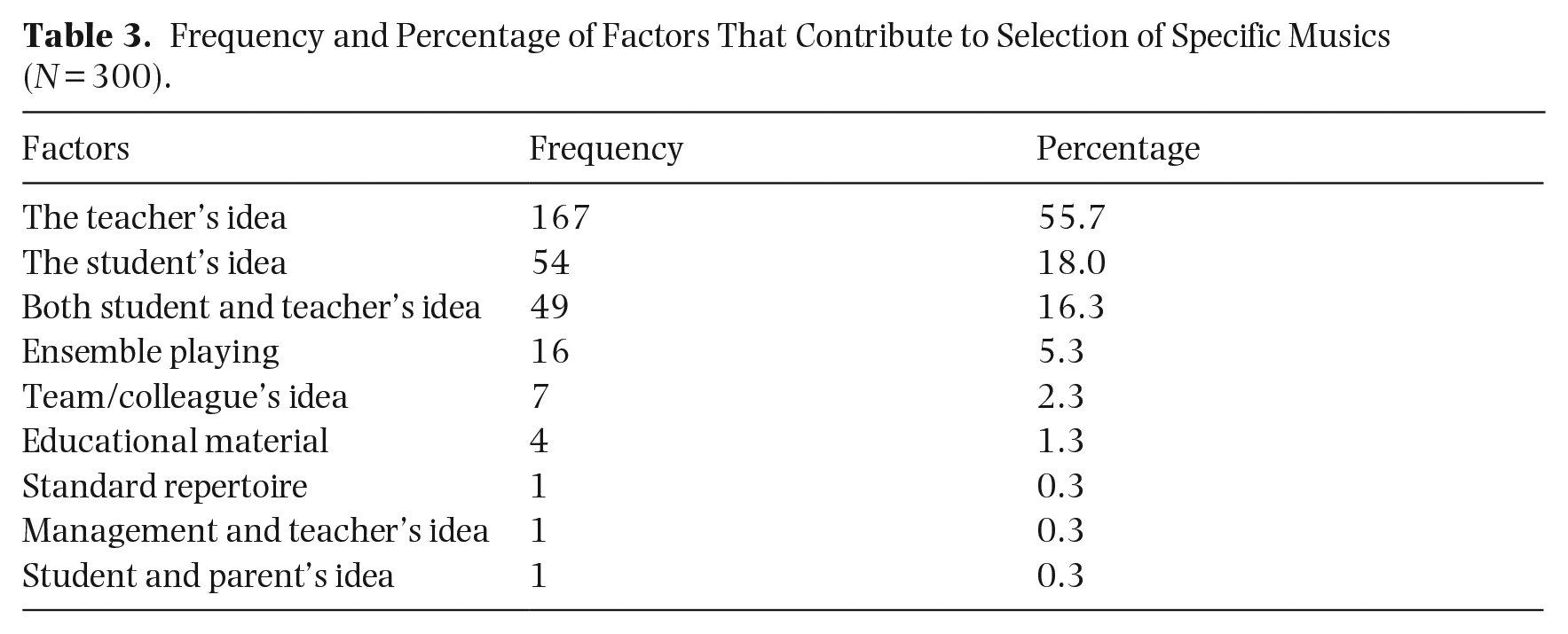
Our second research question addressed who and what decide which music is used for teaching purposes in schools of music and arts. As well as selecting two music examples from their most recent teaching day, teachers were also asked whose idea it was to use this music. Based on their answers, we constructed nine categories of factors that contributed to music selection. As shown in Table 3, more than half of the examples were the teacher’s idea (167 examples/55.7%). However, some of the music was chosen on the basis of students’ ideas (54 examples/18.0%) or ideas jointly developed by students and teacher (49 examples/16.3%). Other less common categories included music from the student’s ensemble playing (16 examples/5.3%) and suggestions from a team member or colleague (seven examples/2.3%). In addition, a few choices related to educational material (four examples/1.3%), the standard repertoire for an instrument or genre (one example/0.3%) and ideas jointly advanced either by a student and parent (one example/0.3%) or by management and teacher (one example/0.3%).
Frequency and Percentage of Factors That Contribute to Selection of Specific Musics (N = 300).
We were also interested in examining the extent to which the teachers believed that certain other named variables contributed to the selection of teaching content. These variables were not specifically related to the cited music examples but were identified by the researchers (based on previous research and one of the researchers’ background as a teacher in schools of music and arts) as potentially relevant and compiled as a list. The teachers’ responses indicated that the student’s progression/development (M = 4.79, SD = 0.46) and the teachers’ own choices (M = 4.30, SD = 0.78; see Table 4) were seen as most influential. The choice of music was also seen to depend on the student’s upcoming concerts/performances (M = 3.93, SD = 0.94) and the instrument’s standard repertoire/traditions (M = 3.71, SD = 1.05). To a lesser extent, the choice of music was also thought to be influenced by student preferences (M = 3.68, SD = 0.85), as well as other musical settings in which students participate (M = 3.32, SD = 1.11). The school’s local curriculum (M = 2.45, SD = 1.27), team/colleagues (M = 2.19, SD = 1.12), and principal/management (M = 1.36, SD = 0.66) were seen to have relatively little influence on the music selected, and this was supported by the finding that these three variables were most often considered “not relevant” by the participating teachers.
Means and Standard Deviations for Factors That Contribute to Selection of Specific Musics in Instrumental and Vocal Tuition (N = 151).
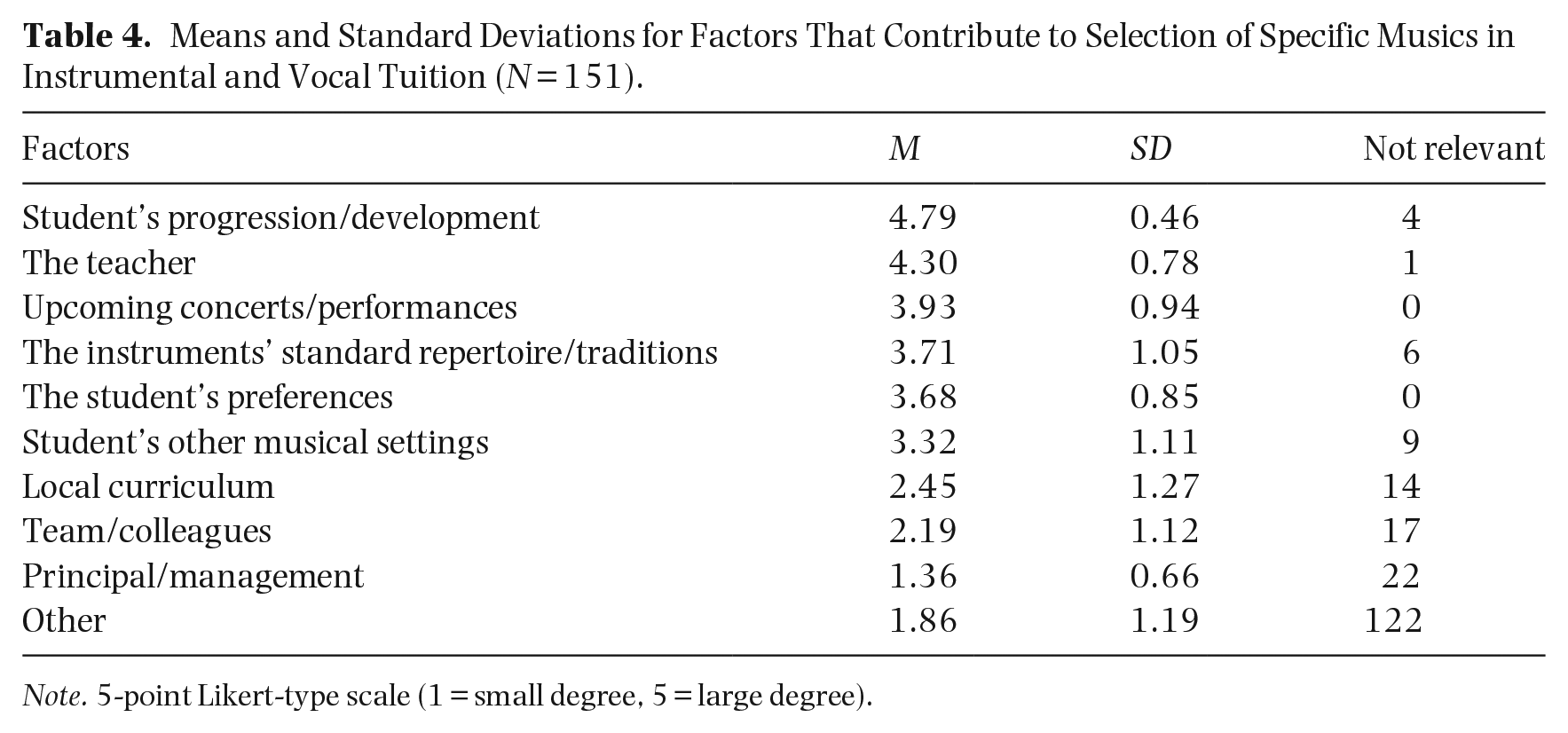
Note. 5-point Likert-type scale (1 = small degree, 5 = large degree).
Tables 3 and 4 earlier indicate some discrepancies between what the teachers identified as influencing their choice of teaching content and who actually chose the music listed in the snapshots of their actual practice. Students’ preferences were given much greater prominence in the general accounts than in the snapshots, where only a fifth of the examples were attributed to students’ ideas. The teachers’ greater emphasis on their own input in deciding which musics to use is also reflected in the extent to which these are teacher-led team decisions, based on categories like student’s progression/development, upcoming concerts/performances, and the instruments’ standard repertoire/traditions. Furthermore, when asked to rate the extent to which their own taste and musical preferences influenced the choice of teaching content, this was seen to contribute to their choices (M = 3.54, SD = 0.96) and to significantly influence the musical genres and styles listed in the snapshots from their own practice, 12 χ2(35, 300) = 59.29, p < .05.
We also explored the relationships between musical style/genre taught and teachers’ views about who or what generally decided the choice of music. Teachers were asked which musical genre(s) predominated in their teaching: art music/classical music (109 teachers/72.2%), popular music (106 teachers/70.2%), Norwegian folk music (23 teachers/15.2%), wind band music (one teacher/0.7%), or other musical genres 13 (eight teachers/5.2%). As these statistics show, several of the teachers in our sample identified more than one genre as “predominant” in their teaching. On examining the relationship between musical genres taught and teachers’ views about who or what decides the choice of music, we found that students’ preferences were emphasized to a significantly higher degree when teaching popular music, χ2(4, 151) = 12.30, p < .05, than when teaching art music/classical music 14 (n.s. 15 ). In addition, the teacher decided what music to play significantly more often when teaching art music/classical music, χ2(3, 150) = 11.32, p < .05, than when teaching popular music (n.s.). However, both when teaching popular music, χ2(4, 145) = 31.09, p < .001, and art music/classical music,χ2(4, 145) = 18.87, p < .001, significant emphasis was placed on the instrument’s standard repertoire/traditions.
Joint concerts/performances
We also investigated who and what generally decides the choice of music for collaborative projects in the schools by examining the extent to which the teachers thought that the above predefined variables influenced the choice of music for joint concerts or performances. As in the case of instrumental and vocal tuition, our findings indicate that the music selected was largely seen to reflect student progression/development level (M = 4.28, SD = 0.95) and that the teachers rated their own choices of music as having a large influence in this context (M = 4.09, SD = 0.88; see Table 5). Furthermore, the theme of the concert/performance (M = 3.97, SD = 1.14) was believed to contribute to a great extent to the choice of music while student preferences (M = 3.20, SD = 1.16), the views of team and colleagues (M = 3.20, SD = 1.42), and the instrument’s standard repertoire/traditions (M = 3.11, SD = 1.24) were seen as lesser influences. In keeping with the collaborative emphasis, the views of colleagues and the team were considered more important here than in the context of instrumental and vocal tuition, and fewer teachers considered those views “not relevant.” Finally, audience success (M = 2.82, SD = 1.24), the local curriculum (M = 2.22, SD = 1.25), and the views of the principal/management (M = 1.69, SD = 1.69) were seen to have relatively little influence on the choice of music.
Means and Standard Deviations for Factors That Contribute to Selection of Specific Musics in Joint Concerts/Performances (N = 151).
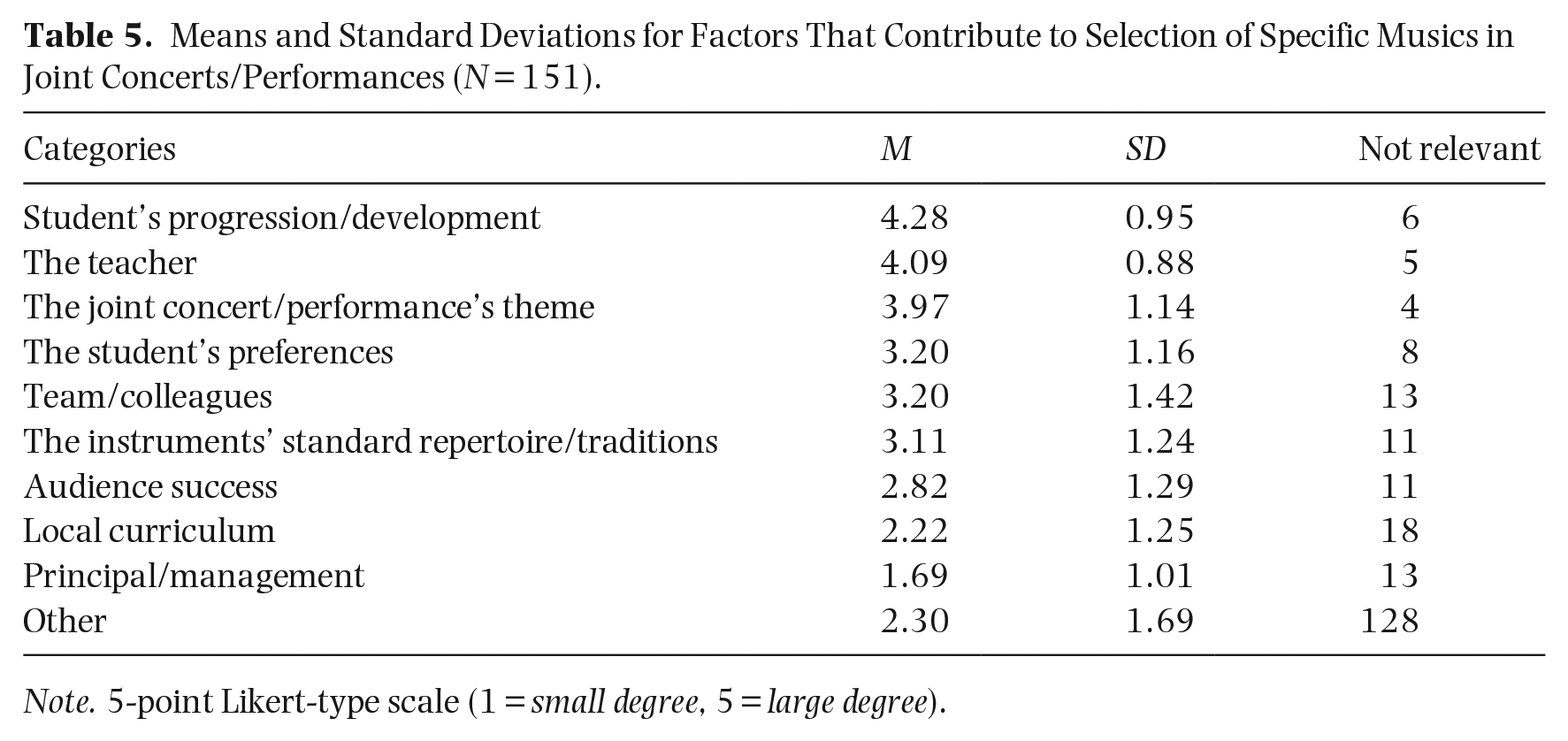
Note. 5-point Likert-type scale (1 = small degree, 5 = large degree).
Discussion
For the purposes of this study, we asked music teachers in Norwegian schools of music and arts what kinds of music are used as teaching content and who and what decide which music to use. Regarding the first question, our findings suggest that while the teaching content encompasses a wide range of musical genres and styles, various styles of popular music predominate. For vocal and instrumental tuition, popular music was used slightly more frequently than educational material, art music/classical music, or music from film/TV series and TV/PC games. For joint concerts or performances, popular music was again mentioned more frequently than art music/classical music or music from film/TV series and TV/PC games. Popular music predominated especially in the teachers’ reports of their preferred content for vocal and instrumental teaching and the music selected for joint concerts or performances. Overall, the predominance of popular music is supported by the findings from our previous study, which explored what is on offer, more broadly, in Norwegian schools of music and arts (Jordhus-Lier et al., 2021).
Regarding the second research question (who and what decide teaching content), the teachers preferred making their own choice of music. Teachers’ own preferences and taste in music had a significant influence on the content used in vocal and instrumental tuition. While the teachers also indicated that students’ ideas and music preferences influence the choice of music, the findings regarding the strength of this influence on the teaching content are somewhat ambiguous. Of particular interest here is the finding that students’ and teachers’ influence on teaching content seems to vary according to the musical style/genre being taught. When teaching popular music, significant emphasis was placed on students’ preferences; conversely, teachers’ preferences were emphasized when teaching art music/classical music. It is also interesting that music from films and TV series is well represented in the teachers’ accounts of their most recent teaching day, their stated preferences and the content for joint concerts. As students are generally familiar with this music, and much of it is written in an art music idiom, it can be argued that this genre represents a favorable interface between relevance and popularity on the one side and musical and cultural traditions on the other side.
Returning to the idea of a censorship frame as constituted in and through teachers’ decisions and actions (Kallio, 2015a), 16 our findings suggest that similar forces influence the selection of teaching content in schools of music and arts, according to teachers’ background, education and values, and preferred musical traditions and associated modes of teaching and learning. In Kallio’s work (2015a, p. 199), some of the framing forces were connected to the larger surrounding cultural context as well as the perceived demands of curricula. Our findings demonstrate how schools of music and arts’ wider cultural–musical heritage directs the instrumental and vocal teachers’ right to decide which musical traditions are of value more generally, and which musical material is of educational value more specifically. This heritage can also be related to teachers’ responsibility to socialize students into the rules, principles, and repertoires of particular musical styles and genres. Perhaps unsurprisingly, these cultural–contextual forces seem to influence more when teaching art music/classical music than when teaching popular music, but their overall influence across styles and genres seems clear. Other cultural and contextual forces seem to frame the teachers from the view of students, and are perhaps more connected to recent policy and ideology than to tradition. These influencing factors show the importance of students having an impact on their own education (see, for example, Jeppsson, 2020) and taking the students’ interests and preferences into account. This can be understood as a form of socialization into contemporary culture and society rather than heritage and tradition. Nonetheless, despite these findings, it was notable that the teachers we surveyed still seemed to hold the power when deciding what to teach, despite the trend toward student-influenced approaches highlighted in recent research.
As recounted earlier, Biesta (2021) reminds us of the important role of the teacher in fulfilling all purposes of education, not least that of subjectification. In the process of becoming the kind of active and responsible selves that he envisions to be the goal of education, students need the teacher, to learn from and to provide them with resistance when they try to figure out what is possible—to reality check of their “initiatives, ambitions and desires” (Biesta, 2021, p. 50). This, however, requires that the students perceive themselves to be allowed to express their desires and occupy a position where negotiation with the teacher is possible, for example, concerning to what extent they can or should influence their own music education and decide what repertoire should be taught. Such a position rests on very specific cultural repertoires that imply a particular kind of student subject. For some students, engaging in such negotiations may be central to experiencing their participation as meaningful. However, some may feel alienated when encouraged to exercise this kind of agency or independence. This diversity may be rooted in the differing cultural logics of families or other school systems. According to Lareau (2011), such differences in cultural repertoires are also linked to social class; while middle-class children may be taught, implicitly and explicitly, that it is their right to negotiate with figures of authority (i.e., teachers or parents) and to tailor their education to suit their needs, working class children may lack any such sense of entitlement. It may therefore be pertinent to ask, with Dyndahl (2021),
which students would be best able to detect and exploit the benefits of a music education that appears to be based on the student’s prerequisites while actually concealing what knowledge and skills are really appreciated and rewarded in an educational situation that is nonetheless institutionalised and formalised? (p. 175)
In other words, for students in schools of music and arts with no earlier access to the forms of knowledge and skills legitimized by this school system, teachers’ strong influence over content may be a good thing. In assuming the right (and possessing the knowledge) to define what counts as good and valid educational material, as well as taking responsibility for socializing students into particular musical traditions and the educational culture that the schools of music and arts represent, teachers ensure that students can access important forms of musical qualification. This can have far-reaching effects on the student’s potential and capacity for future musical participation and may facilitate subsequent entrance to higher music education. While idolizing music teachers’ authority has well-known and less beneficial side-effects, regardless of the level of education (see, for example, Baker, 2014; Rosabal-Coto, 2016; Røyseng, 2021), it seems likely that teachers who take appropriate responsibility for their students’ music-related subjectification may be of lasting value to their students’ future musical life. This idea applies across school systems and across musical styles and genres, and should not be forgotten when striving to adapt to current education policy and ideological trends.
Concluding remarks
In this article, we have found the teaching content of the Norwegian schools of music and arts to be diverse in musical genres, but with a slight popular music dominance. We have also found that the teachers’ influence on which music is used is generally strong, and stronger when art music/classical music is taught than when teaching popular music. Further research, for example, involving interviews with teachers about their content-related decision-making processes, would be a way to explore such influence more in depth. This influence may be beneficial for students’ subjectivation, socialization, and qualification. Simultaneously, the same teachers have to deal with educational ideals that propose the students as active agents and decision-makers in their own education. Here, it is important that the teachers know and remember that students are positioned differently with respect to the ability and entitlement required to engage in negotiations about what should be taught and how. Herein lies perhaps the main contribution of this study to the international field of music education and its ongoing discussions on social justice: to highlight that the teacher has an important role in music education. This role needs to be executed with great sensibility toward students’ self-perceived positioning, regardless of the musical repertoire taught, if equality should be upheld or enhanced. As Biesta (2021) reminds us, “the question of equal educational opportunities [is] both urgent and complex” (p. 45). In this case, it may mean that the freedom to choose does not always equate inclusion, even in music education.
Footnotes
Declaration of conflicting interests
The author(s) declared no potential conflicts of interest with respect to the research, authorship, and/or publication of this article.
Funding
The author(s) disclosed receipt of the following financial support for the research, authorship, and/or publication of this article: This work was supported by The Research Council of Norway (grant number 274936).
