



Abstract
The quality of parental support is recognized as a crucial factor in the early stages of a student’s development, and particularly in instrumental music education. At the start of 2020, the outbreak of a global pandemic crisis posed new and unprecedented challenges to education, forcing families to stay at home to prevent contagion. This investigation was conducted during the period of a COVID pandemic lockdown in Portugal. We explored whether parental support, provided during the lockdown period, was associated with their child’s achievement as reported by their instrumental music teacher. For this study, 39 parent–teacher dyads of first-grade students of an instrument music course were recruited from two public music conservatories. Parents supplied information on the frequency in which they provided student-support-related attitudes and actions in the home context. Simultaneously, teachers provided information about the student’s achievement during the lockdown compared with the previous in-person performance period. Results indicate a strong relationship between parental support and musical achievement, with students who received higher levels of supportive parental involvement performing better than before the pandemic crisis. The findings are discussed in relation to the importance of parental involvement in a child’s instrumental music education.
Introduction
Various research has shown that parental support is of the highest importance in the early stages of a learner’s musical development (Asmus & Hodges, 2006; McPherson, 2009; McPherson & Davidson, 2002; Pomerantz et al., 2005; Zdzinski, 1996). In fact, the link between parental involvement and children’s musical achievement is so strong that some authors assert that a lack of parental support will seriously impede the learning of a musical instrument (McPherson et al., 2012; Reis, 2009).
At the start of 2020, the outbreak of a global pandemic crisis posed new and unprecedented challenges across all areas of education, including music education. Due to the SARS-CoV-2 pandemic (stemming from a new coronavirus first identified in China in late 2019), various countries took measures to stop the spread of the virus. Worldwide, the emergency measures to prevent contagion included social isolation and the suspension of any non-essential economic activities, including the closure of educational facilities that affected all levels and modalities of the education system (Mackenzie & Balmer, 2020).
Unable to maintain in-person classes and lessons, students and teachers were forced to stay at home and to create and explore new tools and strategies to maintain pedagogical continuity. In Portugal, the Government decreed the lockdown of schools effective on March 16, thus affecting the last 2 weeks of the second term (March 16–27) and the entire third term (starting on April 14). At music conservatoires, music teachers were encouraged to adopt whatever means and tools they found most effective given the availability of computers and internet connections. Instrumental music teachers were allowed to teach synchronous lessons through video-conference calls or, if the internet connection proved insufficient, asynchronous lessons through receiving videos from students and sending them feedback through the same means (Portuguese Ministry of Education, 2020).
During the period of lockdown, the family environment also changed considerably. The lockdown of businesses and services forced many adults to work from home. Many others were laid off or unable to find full- or part-time work (Portuguese Government, 2020). House confinement heavily affected family routines and the way parents helped their children with their schoolwork. The social and psychological consequences of this dramatic change cannot be underestimated.
Staying at home all day challenged many parents to work and to assist their children with schoolwork at the same time. Some parents reported difficulties coping with the demands and expressed anxiety about their children’s progress because they were unable to focus on subjects taught through online classes, became bored and unable to sustain their concentration, or preferred gaming rather than online learning (Apriyanti, 2020). Other parents, however, reported that their children were happy with the online learning setting, but acknowledged their concern that they had little interaction with their teacher during this period (Zhao et al., 2020). When parents worked in sectors that could not be locked down, children often stayed with grandparents or other relatives, often away from their instruments (e.g., piano, harp) and therefore unable to practice (Oliveira & Oliveira-Silva, 2020).
Although the repercussion of long-term school closures is yet to become evident, the transference of all learning activities from school to home over a number of months offered a unique opportunity to study the role of parental support in children’s musical achievement, given that the positive association between children’s academic growth and parental support in the learning process is widely supported by the research literature (Chohan & Khan, 2010; Desforges & Abouchaar, 2003).
In the context of school education, parental support involves a diverse range of actions and activities by parents to assist their children with their learning. This may include communicating with the child’s teacher, seeking to understand the school’s policies, participating in parent meetings, communicating with teachers, or even arranging logistics associated with home-school commuting (Desforges & Abouchaar, 2003). Parents’ attitudes and expectations about their child’s academic path have a significant impact on a student’s academic achievement. Gonzalez-Pienda et al. (2002) observed that parents tend to be more involved and offer higher levels of support in the early stages of their child’s learning process but decrease their engagement as the student grows older. This early support contributes to developing values such as the sense of responsibility by the child (Fan, 2001).
Likewise, parental support is especially important in the early stages of music learning, a period when young students often do not possess a high degree of autonomy so need considerable positive reinforcement and support with their learning (McPherson, 2000, 2009; McPherson & Davidson, 2002; Sloboda et al., 1996). During the beginning stages of learning a musical instrument, students create beliefs, perceptions, and expectations about their music learning that are influenced not only by their teachers, but also by the kinds of interactions they have with their families and especially with their parents (McPherson, 2009). In fact, the mindset parents hold concerning their child’s musical achievement affects their child’s attitudes and behaviors and the perceptions they hold regarding a host of beliefs and attitudes, such as their own competence, potential, effort, resilience, and identity (McPherson, 2009). As a result, high levels of parental support foster self-esteem, motivation, and positive outcomes. In contrast, low levels of parental support can lead to a vicious and negative emotional spiral, demotivation, and even distrust and stress (Creech, 2010). Research on the relationship between first-graders and their mothers has shown that mothers who perceived their child to lack potential, motivation, or the temperament required to thrive in music (according to their own expectations) withdrew support and assistance, thus seeding in the mind of the young learner a sense of incompetence that led to negative outcomes (McPherson & Davidson, 2002).
Young learners are not expected to take the initiative, grab their instruments, and regulate their practice sessions on their own. Instead, they usually rely on their parents’ support in the form of reminders and other forms of reinforcement to manage their own practice schedules (McPherson & Davidson, 2002). By structuring practice time, parents promote the development of self-regulation through autonomy-supportive attitudes (McPherson, 2009). Self-regulated students are independent learners who are able to organize their practice according to their own set goals, in addition to effectively monitoring their practicing sessions by devising the best strategies to overcome difficulties and challenges, and by solving problems they have explored on their own. This approach enhances feelings of competence and enables students to develop their capacity to thrive (McPherson, 2009; McPherson & Zimmerman, 2002; Zimmerman & Cleary, 2006).
Although there is evidence that other factors are also crucial for musical achievements, such as the quality of the student–teacher experience (Gaunt, 2011) and the number of hours of practice (Sloboda et al., 1996), it seems that a more reliable predictor of success is the time parents spend with their child supervising home practice (Brokaw, 1982; Davidson et al., 1996; McPherson, 2009). As instrumentalists spend most time engaged with their instruments when practicing, parents play an important role in structuring practice sessions to ensure their child can develop their own unique capacities (Davidson et al., 1996). Davidson and colleagues (1996) suggest that more positive outcomes are reached by students whose parents attend their lessons and listen to their practice. By doing this, parents are able to transfer information received during lessons to practice sessions and thus assist their child by scaffolding their practice.
The literature on parental support tends to distinguish between parenting styles (i.e., the attitudes that convey an appropriate emotional climate) and parenting practices (i.e., the behaviors that give shape to parents’ expectations about their child’s learning process; Kuppens & Ceulemans, 2019). Investigating the role that parental support plays in instrumental music learning, Creech (2010) proposed three types of parenting style: behavioral, cognitive/intellectual, and personal support. Behavioral and cognitive/intellectual support has proved to be effective and the most appropriate for beginners who, lacking individual autonomy, often require external regulation from significant adults and emotional support to cope with the anxiety and stress that may arise from unsuccessful practice and failure. Therefore, an authoritative kind of parenting leads to positive outcomes based on high involvement, high structuring, and autonomy-support (McPherson, 2009). Conversely, an authoritarian kind of parenting—in which parents are highly demanding and exert high levels of control but are not involved with their child’s learning—tends to thwart the development of self-beliefs such as self-confidence and self-efficacy, and consequently decreases the learner’s motivation and engagement.
In the literature on talent development, parental support has been found to play an important mediating role between the four requirements to thrive (early start, access to good coaches, practice, and effort) and resultant success. For instance, as stated by Witte et al. (2015), highly involved parents provide an early start to their sons or daughters (as often parents are artists or professionals in that activity), seek the best teachers and coaches available, structure practice sessions and competitions, take care of all managerial actions, adapt family routines to the needs of their children, and provide emotional support to cope with stressful moments and instances of failure.
According to Creech (2010), the parents’ role “lies at the heart of a system that advances the child’s development while professionals take primary responsibility for the advancement of knowledge and skills” (p. 28). This is evident in research such as Sosniak’s (1985) study, in which interviews with 24 talented American concert pianists revealed that none of them had parents who were professional musicians. This demonstrates that parents do not have to provide artistic or technical support, as often the most harmonious relationships occur when each agent cooperatively acknowledges their own role: parents provide affective and behavioral support whereas teachers provide artistic and technical knowledge (Creech, 2010). Yet when parents are intimately involved, their child internalizes more deeply the values and rules of music education and develops autonomy and a will to learn (Küpers et al., 2015). This transfer process from external to internal regulation is a landmark of Deci and Ryan’s (1985) Self-Determination Theory—a theory suggesting that the quality of motivation (ranging from amotivation, passing through extrinsic motivation to intrinsic motivation) depends on the fulfillment of three basic psychological needs: competence, autonomy, and relatedness.
Many studies over the past decades have provided important information on the impact of parental involvement in music education. For instance, Creech and Hallam (2003) found that students achieve higher results when their parents attend musical instrument classes, supervise home practicing, and attend public performances by the child. Comeau et al. (2015), investigating the relationship between children and their significant adults in a sample of Chinese and American piano students, found that learners tend to assimilate adults’ working ethics and attitudes, practice for longer, and achieve higher results when parents attend lessons and provide support at home. The common feature of these reports is that the most accomplished students benefit from supportive backgrounds, with music always present and highly valued in their lives (Sosniak, 1985). The house confinement and the lack of in-person accompaniment from musical instrument teachers during the pandemic provided a unique opportunity to study the role of parents in children’s music education. During the lockdown, most parents assumed an unprecedented amount of responsibility for their child’s learning process, through their use of external regulation cues, schedule and practicing monitoring, provision of physical conditions suitable for practicing, encouragement, and assessment of the match between goals set by the teacher and what was achieved by the student. Within this context, the present research therefore focused on 6- and 7-year-old students’ musical achievement, and used questionnaires to gauge the level of parental support during the lockdown period.
Method
This study is part of more extensive longitudinal research aimed at predicting musical achievement through motivation and parental support data collected before the commencement of musical studies (Oliveira et al., 2021). With the outbreak of the SARS-CoV-2 pandemic and the resulting lockdown, we hypothesized that the quality and quantity of parental support children received would significantly affect their engagement with the musical instrument learning process, and consequently, their development and acquisition of musical skills. In this study, the scope of parental support encompasses parental behaviors supporting student’s autonomous practice at home or monitoring and participating in the music instrument practice (Creech, 2010).
The protocol for this study, including the questionnaires, was approved by the Católica Ethics Board at the Universidade Católica Portuguesa, where the work was conducted.
Objectives
The objectives of the investigation were as follows:
To identify the type of parental support provided by parents during the pandemic lockdown;
To clarify students’ achievement in instrumental music classes before and during lockdown, as assessed by their musical instrument teachers; and
To analyze the relationship of the aforementioned variables to determine whether parental support was associated with musical achievement during the pandemic lockdown period.
Participants
Participants were recruited from the community of teachers and parents of first-grade students (between 6 and 7 years old; 19 boys and 20 girls) participating in the instrumental music courses at two Portuguese public music conservatories in the northern region of the country. We sought to also obtain an appropriate distribution of parents according to the children’s instruments to ensure a representative sample of the full array of instruments taught at the institutions. The instruments played by the final sample were violin (n = 8), piano (n = 5), viola and clarinet (n = 4 each), double bass, guitar, flute, and trumpet (n = 3 each), cello (n = 2), and organ, bassoon, French horn, and percussion (n = 1 each).
After contacting parents, we explained the study and the importance of ensuring confidentiality and anonymity of the data. Parents were informed that responding to the survey meant accepting to participate in the study. Upon the parents’ acceptance to participate in the study, we approached their child’s instrumental music teacher, and the same ethical procedure was applied. The set of teachers included in our sample comprised teachers with at least 3 years of teaching experience who were tenured at their school. In total, 39 parents (14 males; 25 females), one per student (19 males; 20 females) and the respective teachers (23 males; 16 females) answered the questionnaire, resulting in a sample of 39 parent-teacher dyads. Neither the teachers,’ parents,’ or students’ genders showed any significant effect upon the total score for parental support—teachers: t(37) = −.37, p = .150; parents: t(37) = −.94, p = .178; students: t(37) = .96, p = .181.
Parents’ sociodemographic characteristics
Table 1 provides a summary of sociodemographic data regarding the 39 parents who participated in this study.
Parents’ Sociodemographic Characteristics.
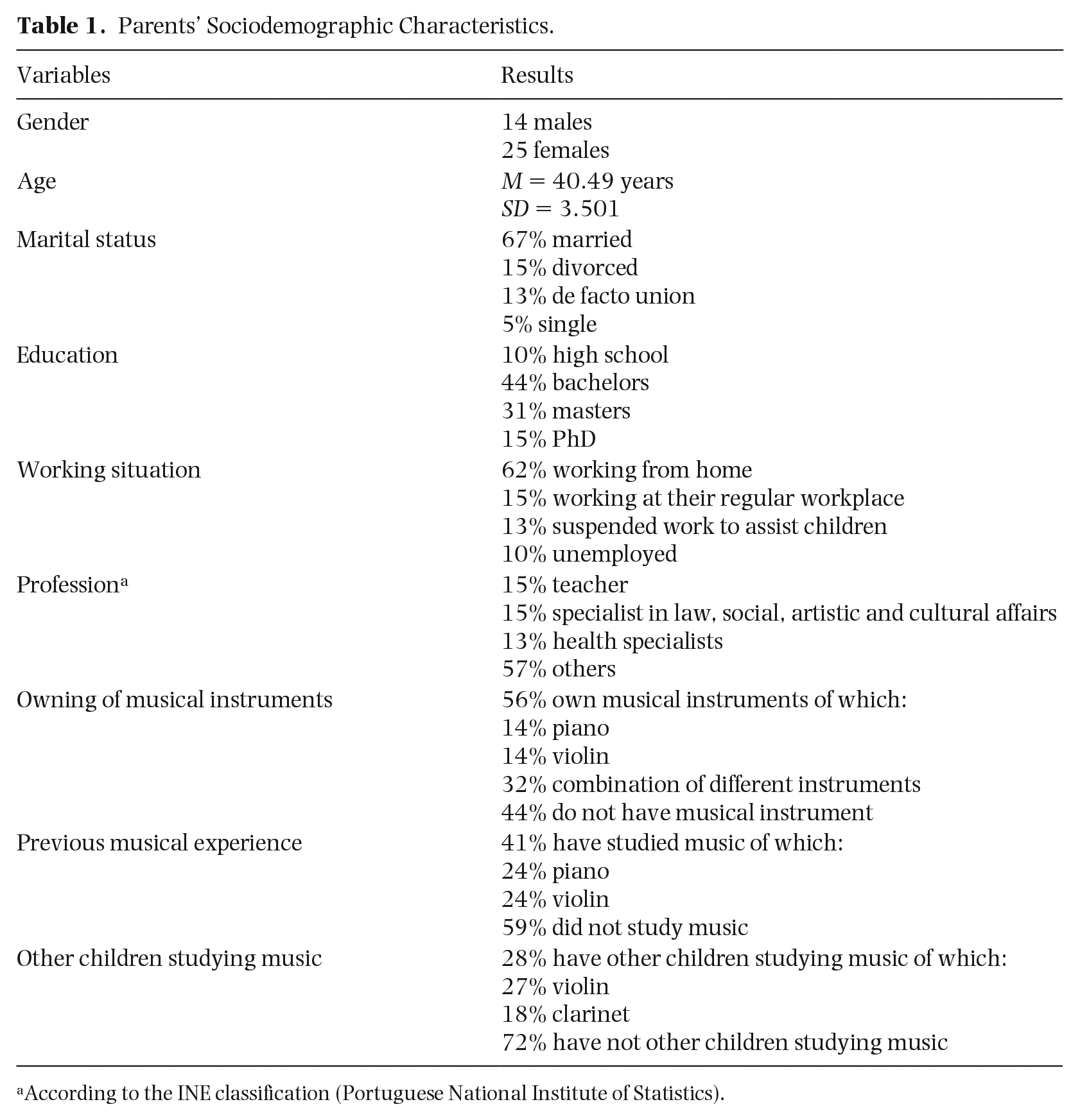
According to the INE classification (Portuguese National Institute of Statistics).
Measures
To carry out this investigation, we constructed two instruments, one for parents based on existing work (Tai et al., 2018; Zdzinski, 2013) and another for teachers. For the parents’ questionnaire, we extracted items that dealt explicitly with attitudes from the PIMTQ (Parental Involvement in Music Training Questionnaire) by Tai et al. (2018), that in turn was adapted from the PIHEM (Parental Involvement-Home Environment in Music) by Zdzinski (2013). The resulting seven-item questionnaire was translated into Portuguese and then piloted with four parents to assess the clarity of wording. The questionnaire was considered adequate as doubts or misunderstandings did not arise from the trial. Cronbach’s alpha for the seven-item set was .907, evidencing the reliability of the instrument. We ran an exploratory factorial validity test having reached a 1-factor design, with item loadings ranging from .692 to .885. As a result, we developed a short questionnaire comprising seven items to measure the frequency of attitudes and actions in the home context using a 5-point Likert-type answering scale (see Figure 1). Qualtrics® survey software (https://www.qualtrics.com/) was used to code and analyze these data.
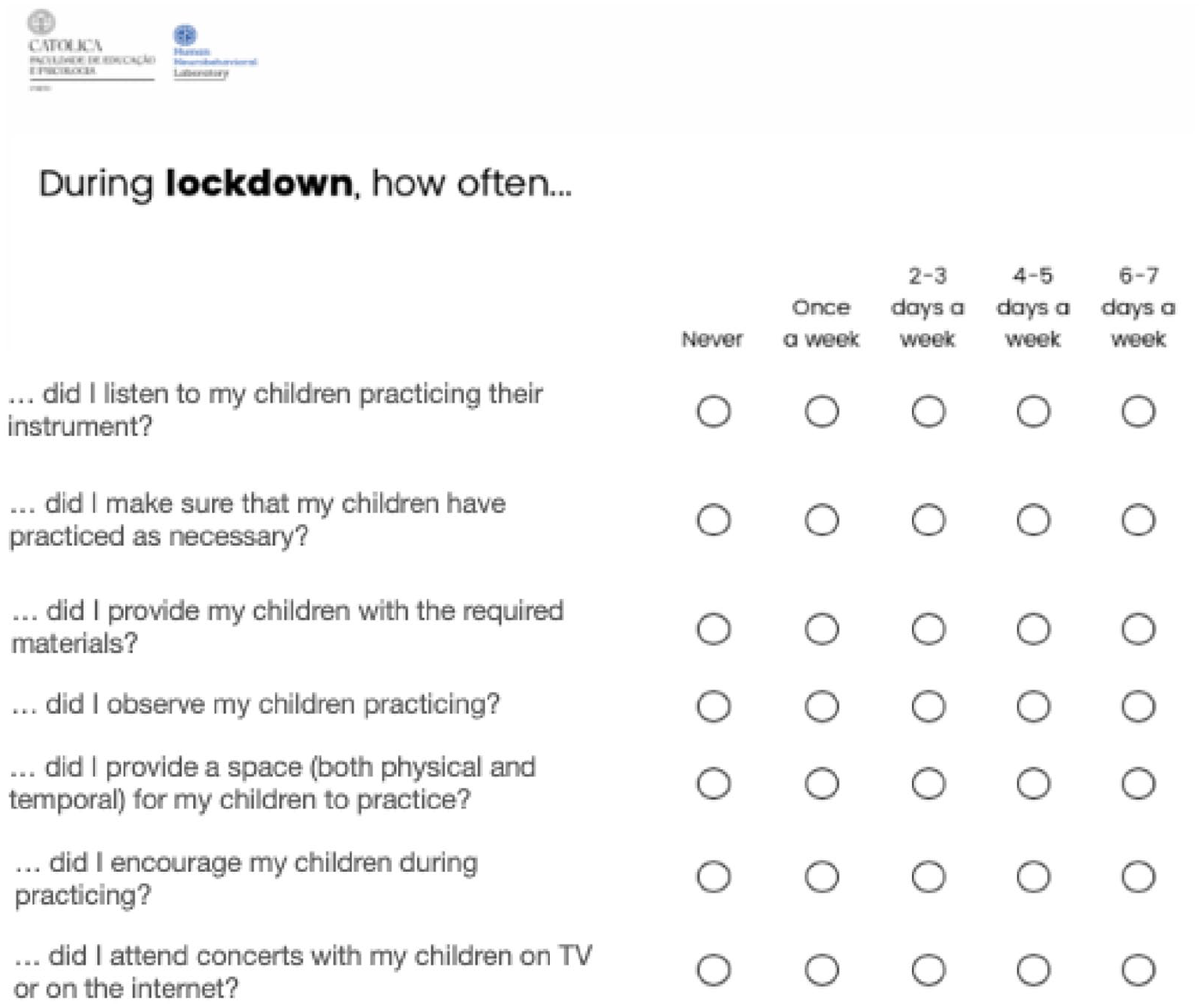
Parents Questionnaire with 7 Items and a 5-Point Likert Scale.
The musical instrument teachers’ assessment of students’ achievement comprised a single item asking respondents to compare the musical instrument performance of each student during the lockdown with the previous in-person performance period using a 9-point Likert-type scale, in which 1 = worsened a lot, 5 = remained the same, and 9 = improved a lot (see Figure 2).
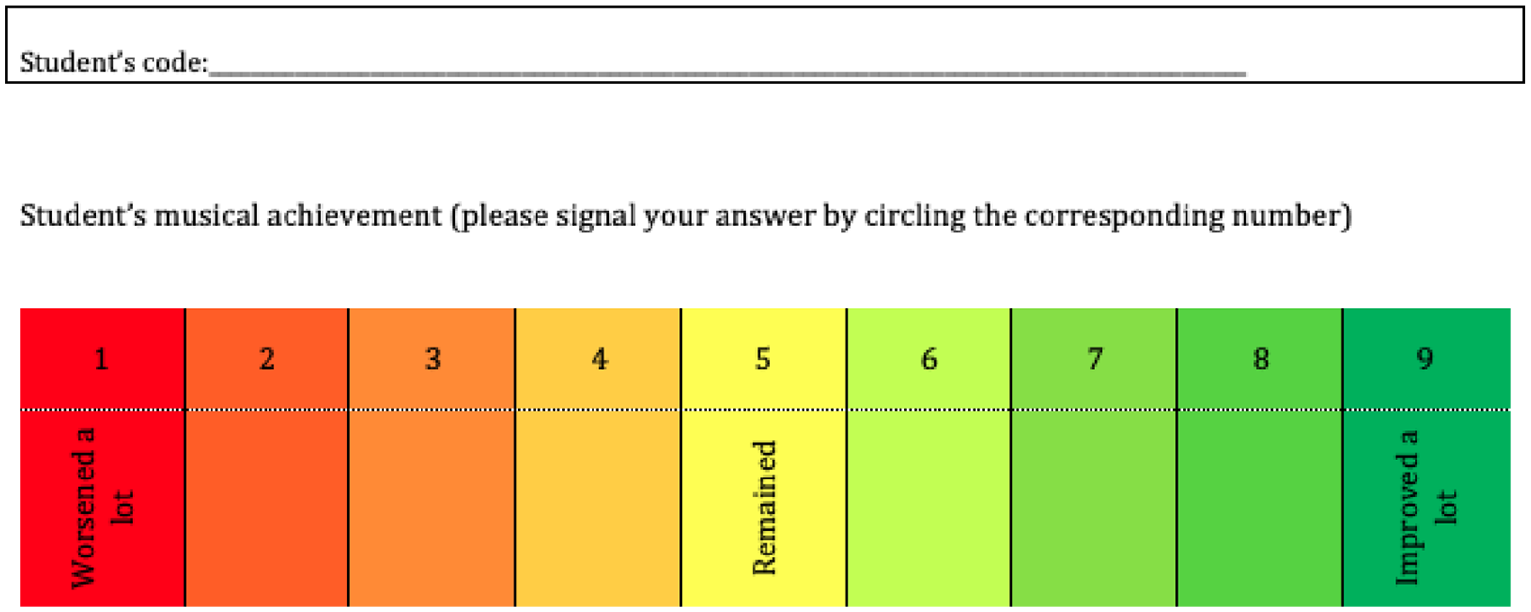
Teachers Questionnaire with 1 Item and a 9-Point Likert Scale (From Worsened a Lot to Improved a Lot).
Procedure
When parents and teachers accepted the invitation to participate in the study, they were sent the informed consent form and the questionnaires by email. Teachers’ data were sent back directly to the research team, while the parents’ data, which took them approximately 6 min to complete, was registered on the Qualtrics platform using a personal computer/laptop, tablet, or smartphone. The data for this study were collected between April 30 and May 15, 2020.
Results
Initially, we calculated a sum score for each parent-participant (possible range: 7–35), with higher scores indicating more parental support received by students. The average score for our sample was 23.18 (SD = 5.862; Min. = 11, Max. = 35), meaning that, as a whole, the group of 39 participating students was receiving regular support and care as reported by their parents.
The most frequent type of parental support was providing a space (both physical and temporal) to practice (41% answered to have done so for 6 to 7 days a week); the second most frequent type of parental support was providing the required materials (38.5% reported doing so for 6 to 7 days a week); the third most frequent answered item was “making sure that my son or daughter has practiced as necessary” (20.5%). The least frequent type of parental support was “attending concerts with children on TV or on the internet” (35.9% said they had never done it) while the second least frequent item was “observing children practicing” (15.4% reported never having done this). The items with higher answering percentages were numbers 5% and 1 (41%), meaning that for 6 to 7 days a week parents provided a space to practice, and that for 4 to 5 days a week parents listened to their child practicing, respectively (Table 2).
Parents’ Responses About Different Types of Support Provided to Children During the Musical Instrument Study.
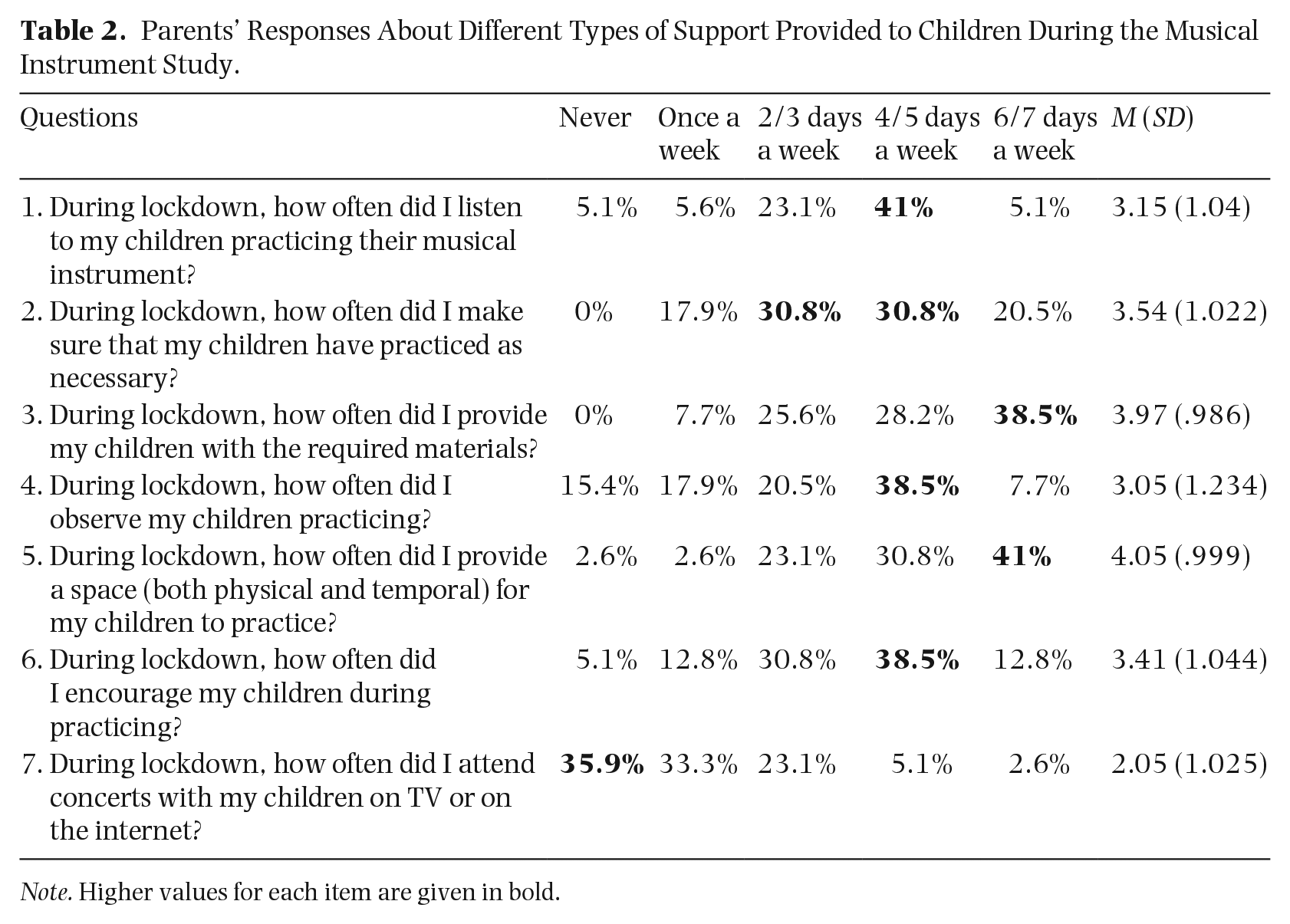
Note. Higher values for each item are given in bold.
Considering the total scores, there were no differences in parental support provided between parents who had and those who had not studied music t(37) = 1.064, p = .294. Furthermore, there were no differences in parental support received between children who have or do not have brothers or sisters studying music t(37) = 1.481, p = .147.
As for the students’ musical achievement, teachers reported ratings (possible range: 1–9) ranging from 3 (worsened) to 9 (improved a lot). The average rating was 5.82 (SD = 1.745), meaning that, as a whole, the cohort of 39 students presented a better musical performance during lockdown compared with the previous in-person lesson routine. Following teachers’ ratings, around 50% of the students improved their performance level, compared with 31% who retained the same level of performance, and 19% who were evaluated as having lower levels of performance (see Figures 3 and 4); 20 students improved their performance, 11 remained the same, while eight students worsened their performance during the lockdown period. There were no differences in the children’s musical achievement according to their gender, U = 170, p = .567, nor the level of support provided by their parents according to their child’s gender, t(37) = .960, p = .343.
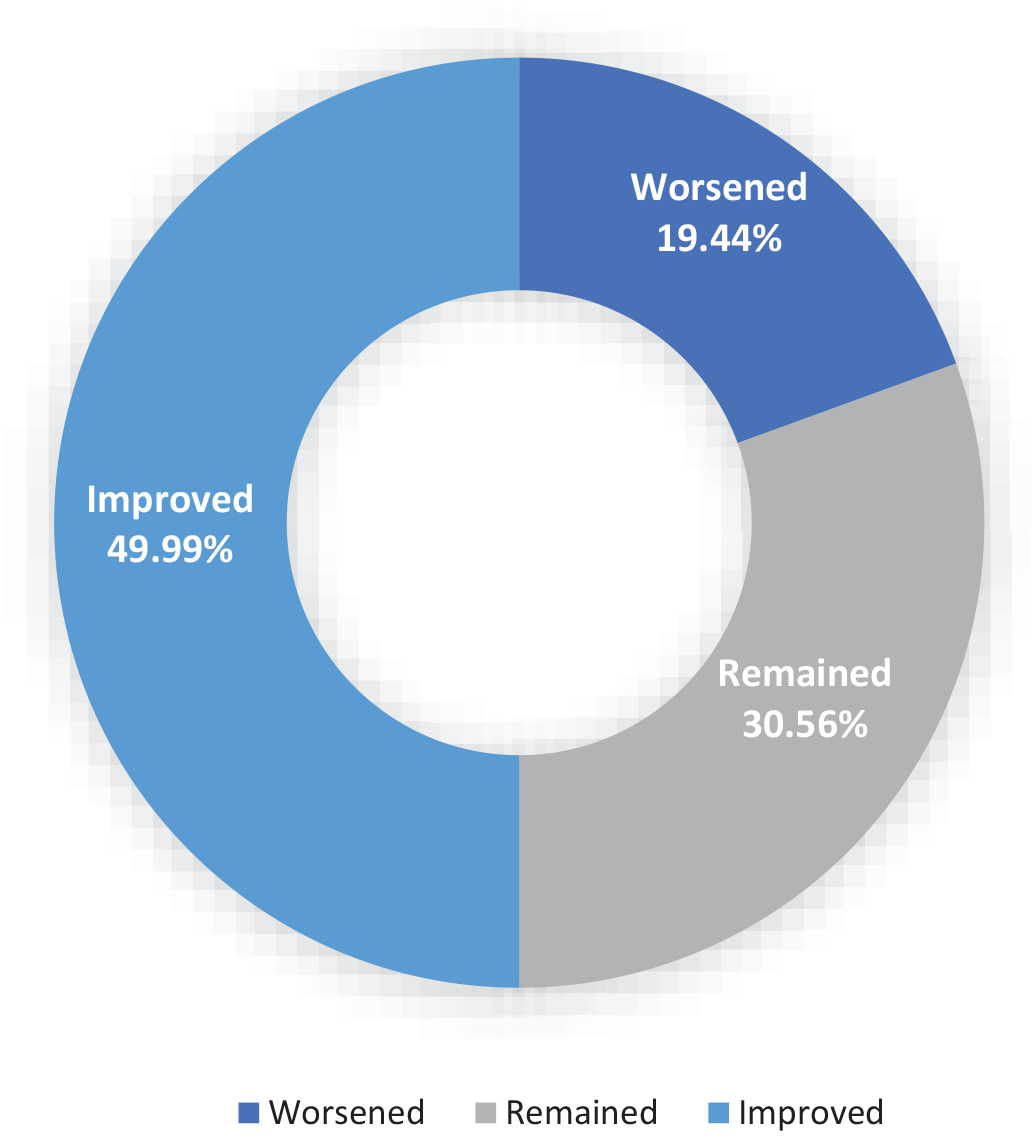
Pie Chart Showing Teachers’ Ratings of the Students’ Musical Achievement During Lockdown.
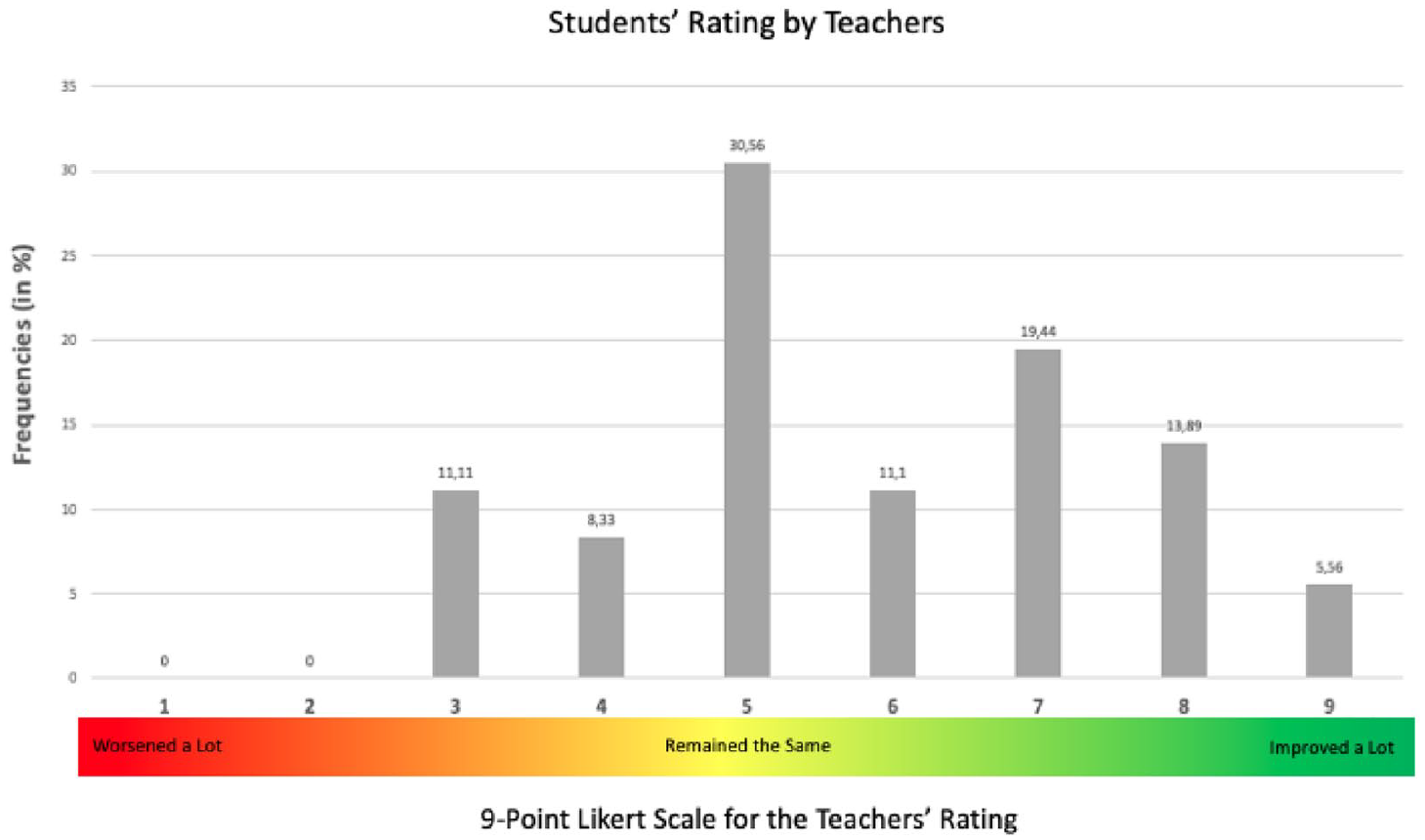
Graph Showing the Teachers’ Ratings of the Students’ Musical Achievement During the Lockdown.
Considering that the students’ musical achievement during lockdown was an ordinal variable, we performed a Spearman correlation analysis that examined the relationship between the teachers’ scores (as an index for the students’ performance) and the parents’ questionnaire total score (as an index for the type of parental support). Results showed that parental support was highly and positively correlated with students’ musical achievement during the lockdown, rs = .619, p < .001. Isolated items also correlated positively with the students’ performance. Table 3 shows the correlations and significance values for each test.
Correlation Between Items on the Parents’ Questionnaire and Students’ Musical Achievement as Reported by Their Teachers.
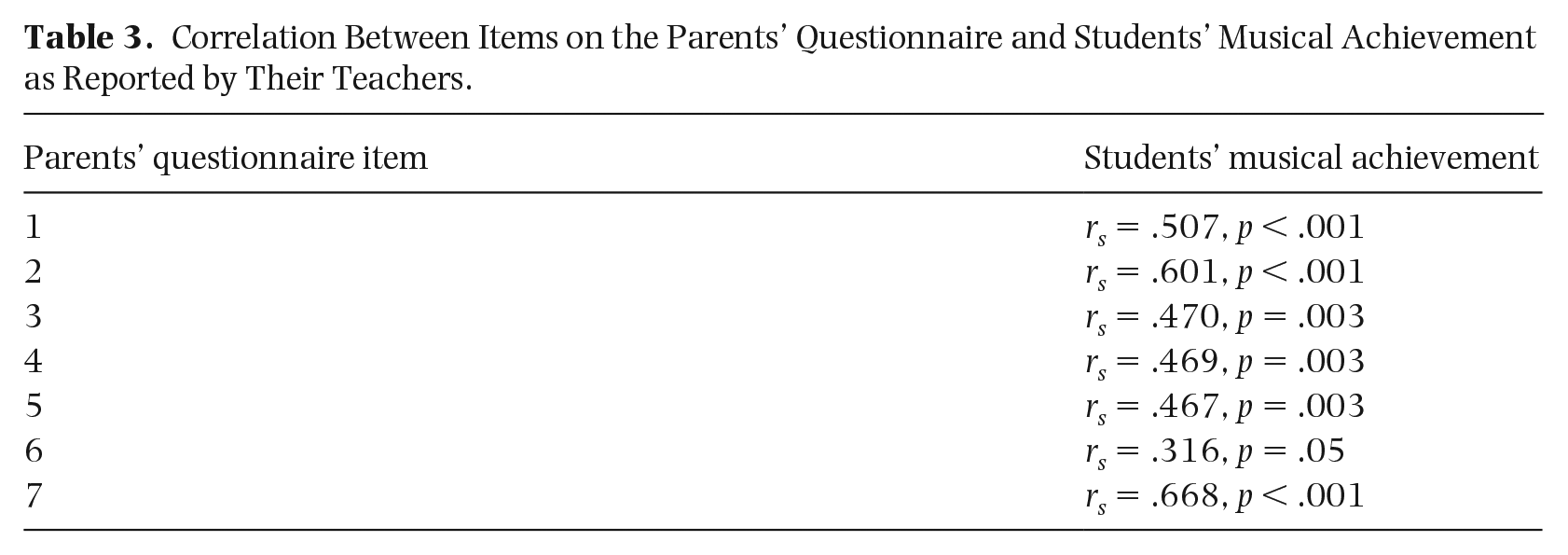
The strongest single item correlation was between Item 7—During lockdown, how often did I attend concerts with children on TV or on the internet?—and students’ musical achievement as reported by teachers, rs = .668, p < .001. The least positive correlation was between Item 6—During lockdown, how often did I encourage my children during practicing?—and student’s musical achievement, rs = .316, p = .05.
There was a significant difference between parents who were at home and those who remained working at their regular workplaces, t(37) = −3.111, p = .004. Those who remained working at their regular workplace provided less parental support compared with those who stayed at home to work online, who suspended work to assist their child, or who were unemployed. We found that those who remained working in their regular workplaces were typically healthcare professionals or distribution sector (grocery) workers; the majority of all others were sent home to prevent the spread of the virus.
Discussion
This study sought to understand the nature and type of support provided by parents during the pandemic lockdown, through comparing a measure of parental support with a measure of students’ musical achievement as rated by their instrumental music teachers. As we hypothesized, our results suggest a strong positive relationship between parental support and musical achievement, with students who received higher levels of parental support achieving better results.
Our findings are in line with extant research literature, demonstrating that highly-engaged parents tend to be more capable of motivating their child by providing external regulation and structure for young learners in terms of their development of autonomy (Deci & Ryan, 1985; McPherson, 2009). They achieve this by helping their child persist when facing challenges and adversity, observing their practice, attending instrumental music lessons, and checking to make sure they have worked on the material assigned by their teacher. Previous research has shown that the quality of parents’ engagement affects children’s time spent practicing and their views and perceptions about music education rules and requirements (Comeau et al., 2015). Thus, when parents show enthusiasm and value music, students internalize the importance that music may have in their lives and gain satisfaction by performing an activity from which all family members derive pleasure.
The data presented above were collected during an atypical and challenging period for families and teachers. Although we acknowledge that some variables could not be controlled—such as the anxiety that may have arisen from the danger of the pandemic or the psychological burnout that many families experienced when unable to cope with all the challenges posed by the lockdown (e.g., balancing work and giving assistance to children)—we still believe this moment represented a unique period to study the relationship between parental support and musical instrument achievement.
Another uncontrolled variable was the pedagogical modality adopted by the teachers. All teachers involved in this investigation used a combination of both synchronous lessons and the provision of feedback by sending written notes or giving in-person comments during the following synchronous lesson. This practice did not allow us to probe the different pedagogical modalities that affect students’ learning. The two different models (synchronous and video feedback) have their own merits and disadvantages. Synchronous lessons allow for online interaction and quicker corrections as the student plays; however, the quality of the sound is often compromised. On the contrary, video feedback enhances the student’s attentional processes and develops performance practice because student needs to play through the piece without stops or mistakes; sound quality is generally better, although the teacher cannot intervene regularly to provide feedback on progress.
One potential limitation of this study is that our sample’s age range was restricted to 6- and 7-year-old students. This choice had to do with the fact that first-graders usually need greater external regulation from their parents or guardians because they lack the autonomy and experience to cope with a new or demanding activity. Our sample was also limited to the northern region of Portugal. It would be interesting to study students of other ages and in other regions of the country and internationally. Finally, we asked the instrumental music teachers to rate their students’ achievement after 6 weeks of online learning. It would be interesting to expand the period of musical achievement assessment in future studies.
Instead of asking students directly about the parental support they received or their development during the lockdown, we preferred to use a hetero-report approach (using teachers’ and parents’ responses). The reason for this choice was to collect more robust data, given our belief that parents would be best placed to supply information about what they were doing in terms of their own parental support.
The teachers’ one-item questionnaire was developed specifically for this investigation to take advantage of the lockdown context. Therefore, it is not possible to comment on its validity or reliability. Future research may extend this technique by administering the questionnaires to larger samples and comparing results with other data to assess reliability and validity.
Our findings have several implications for music education. First, we advise schools to devise programs that actively involve parents in the institution’s dynamics, such as through family concerts or workshops, as previous studies have shown that parental involvement signals to the child the importance that music may have in their lives (Küpers et al., 2015; Reeves, 2015). Other effective measures might be parent-oriented talks to raise awareness of their role in the student-teacher-parent pedagogical triangle. This relationship might be collaborative and might be sustained by a mutual commitment where each agent acknowledges its own role—parents provide affective and logistic support whereas teachers convey technical and artistic information.
Usually, parents are advised by music teachers to create an artistic atmosphere at home through listening to music and attending concerts on television, or through other means accessible to the family. Many sources encourage parents to create art-friendly home environments and expose their infants to music (Fassbender, 1996; Howe et al., 1995; Ilari, 2002; Papousek, 1996). This recommendation is based on widely accepted perspectives. One such perspective stems from the work of Sloboda and Davidson (1996), who found that musical talent is not the exclusive reserve of a few elected human beings, but instead the result of several different factors, including “enculturation” through exposure to the artistic products of a given community. Contrary to the formal music education provided in music teachers’ classrooms, enculturation depends on an informal music education provided or facilitated most of the time by parents. This enculturation involves unexpected music learning experiences in daily life that are distinct from the types of experiences provided by teachers (Chohan & Khan, 2010). Furthermore, by investigating the biographies of 42 talented young musicians, Sloboda and Davidson found that the only factor directly associated with talent development was listening to their parents singing from an early age and eventually joining in whenever they felt comfortable. More recently, Williams and colleagues (2015) found that shared music activities at home develop a wide array of social and emotional competences like attentional and emotional regulation and prosocial skills. In the pursuit of this art-friendly home environment, parents are also advised to offer their children music or sound toys with which they can experiment and create original (age appropriate) music, and to encourage their children to express themselves by singing structured songs and improvising (Dean, 2020). As children grow older, parents can replace such toys by taking them to concert halls to attend live performances (Creech, 2010).
Other strategies to encourage students with their instrumental learning may include staging home performances to family and visiting relatives and friends. These live performances can promote the development of a child’s musical identity, build confidence, and prevent the development of performance anxiety by making performance a regular and ordinary facet of the learning process.
In sum, it is crucial that parents are active agents in their child’s learning process and not merely passive observers of the process. A positive and trusting three-way relationship between students, teachers, and parents is paramount. As Dorothy Rich (1987) states, “Families and teachers might wish that the school could do the job alone. But today’s school needs families, and today’s families need the school. In many ways, this mutual need may be the greatest hope for change” (p. 62).
Footnotes
Declaration of conflicting interests
The author(s) declared no potential conflicts of interest with respect to the research, authorship, and/or publication of this article.
Ethical approval
This paper was written in compliance with my institution’s ethical standards.
Funding
The author(s) disclosed receipt of the following financial support for the research, authorship, and/or publication of this article: This study was supported by BIAL Foundation, Grant/Award Number: 217/16.
