



Abstract
Urban Grit is a collaborative project, focusing on greening deficits in inner city Dublin, Ireland. A particular case study – the Oliver Bond House, in the south west inner city, is explored. The aim of the research was to develop “nature probes” – to make visible the role of the urban commons in this everyday environment. The paper traces how we reached the point of greenspace deficit in this part of Dublin and how we can operationalise and conceptualise practices of urban commoning pertaining to greening. Writing as academics and practitioners, this collaborative approach of “commoning our knowledge” supports communities who are undergoing rapid urban change. In doing so, it contributes to more nuanced conceptions of commons in marginalised urban communities.
Introduction
Urban Grit emerged as a collaboration between academics in disciplines of geography, art, design and community development practice, in inner city Dublin, Ireland. The interdisciplinary group emerged in response to greening deficits in the area that are enmeshed within a wider social and historical context, showing continuous and compounding inequalities in this highly pressurised part of the city. The aim of the work was to explore, expand and make visible ongoing grassroots community work around urban greening. Through Urban Grit, we experimented with interdisciplinary methodologies to validate and deepen existing grassroots greening work and probe new explorations of greening as commons in urban space in a particular social housing complex – Oliver Bond House, located in the south west inner city.
Dublin is increasingly recognised as a global city (Hall, 1984) for its technological and financial sectors and global networks. It has, however, also suffered from the impact of increased private investment in housing coupled with a decrease of investment in the number of social housing units (Hearne, 2020, 2022). The area of Dublin where our case study is located, Dublin 8 and the surrounding Liberties area in particular, has seen intense development that has created a feeling of unease among residents, especially residents of social housing complexes (Kayanan et al., 2022). The Liberties is an area of Dublin historically known for its textiles, brewing and distilling. The Liberties and wider Dublin 8 area have struggled with social housing planning, design and investment, and for decades, they have been subjected to repeated rounds of policy intervention (Moore-Cherry et al., 2015). The focus of this study, the Oliver Bond House, was designed by renowned architect Herbert George Simms and built in 1936. The flat complex is situated between the River Liffey and the Liberties in the southwest inner city of Dublin. There are 391 flats in 14 blocks (see Figure 1 for a depiction of the building typology). Historically, the original plans by Herbert Simms indicate that the design was envisioned to create spaces of well-being – large green spaces and water fountains. The water fountains no longer function and the green areas are locked (see Figure 2). Currently, residents of Oliver Bond House have around double the levels of respiratory illness, compared to other parts of Dublin 8 (Creane et al., 2024) suggesting a direct correlation between higher incidences of asthma and poor physical environmental conditions in the area.
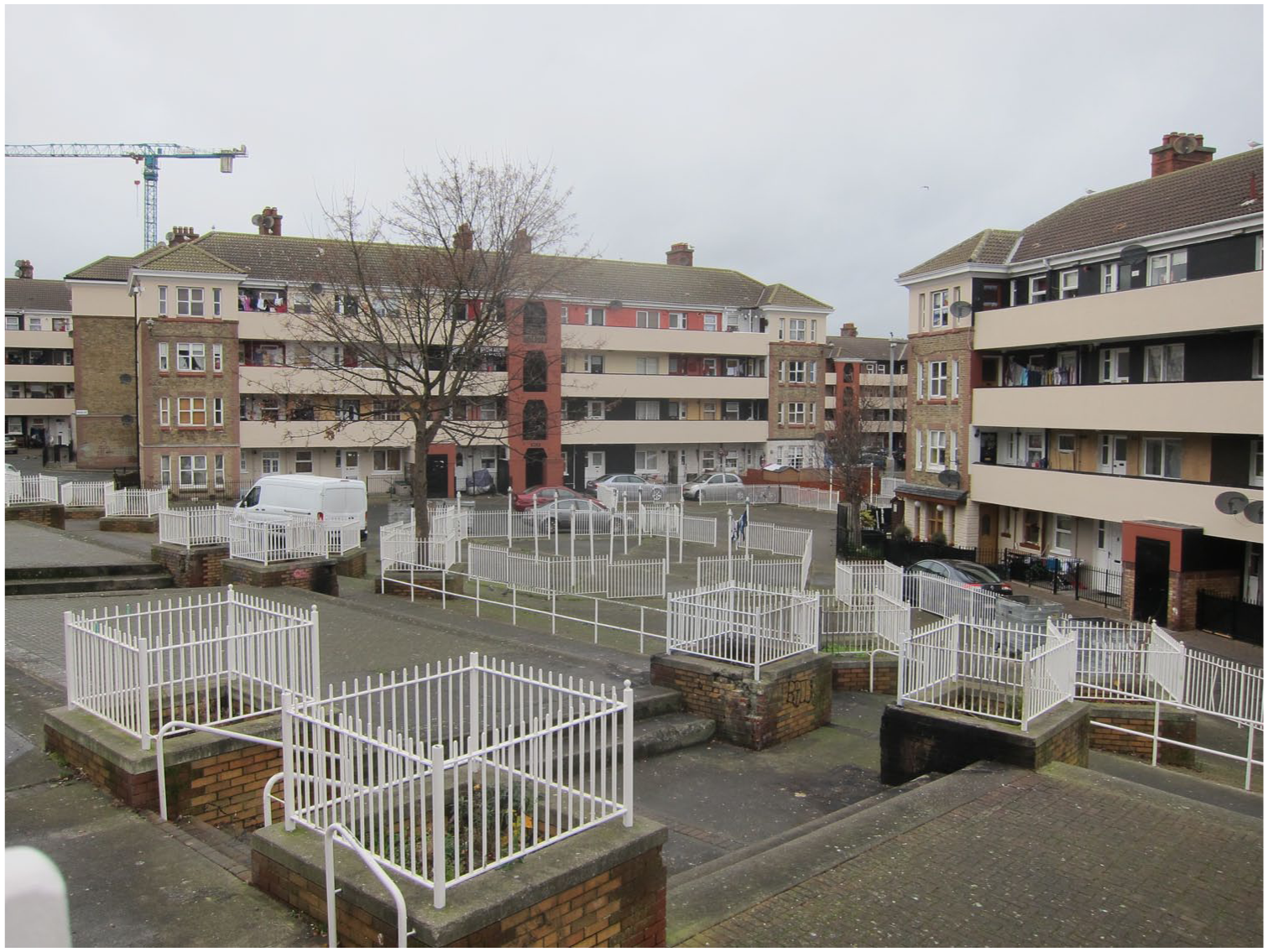
Oliver Bond Housing Complex (391 Flats in 14 Blocks) [2022] [Photograph].
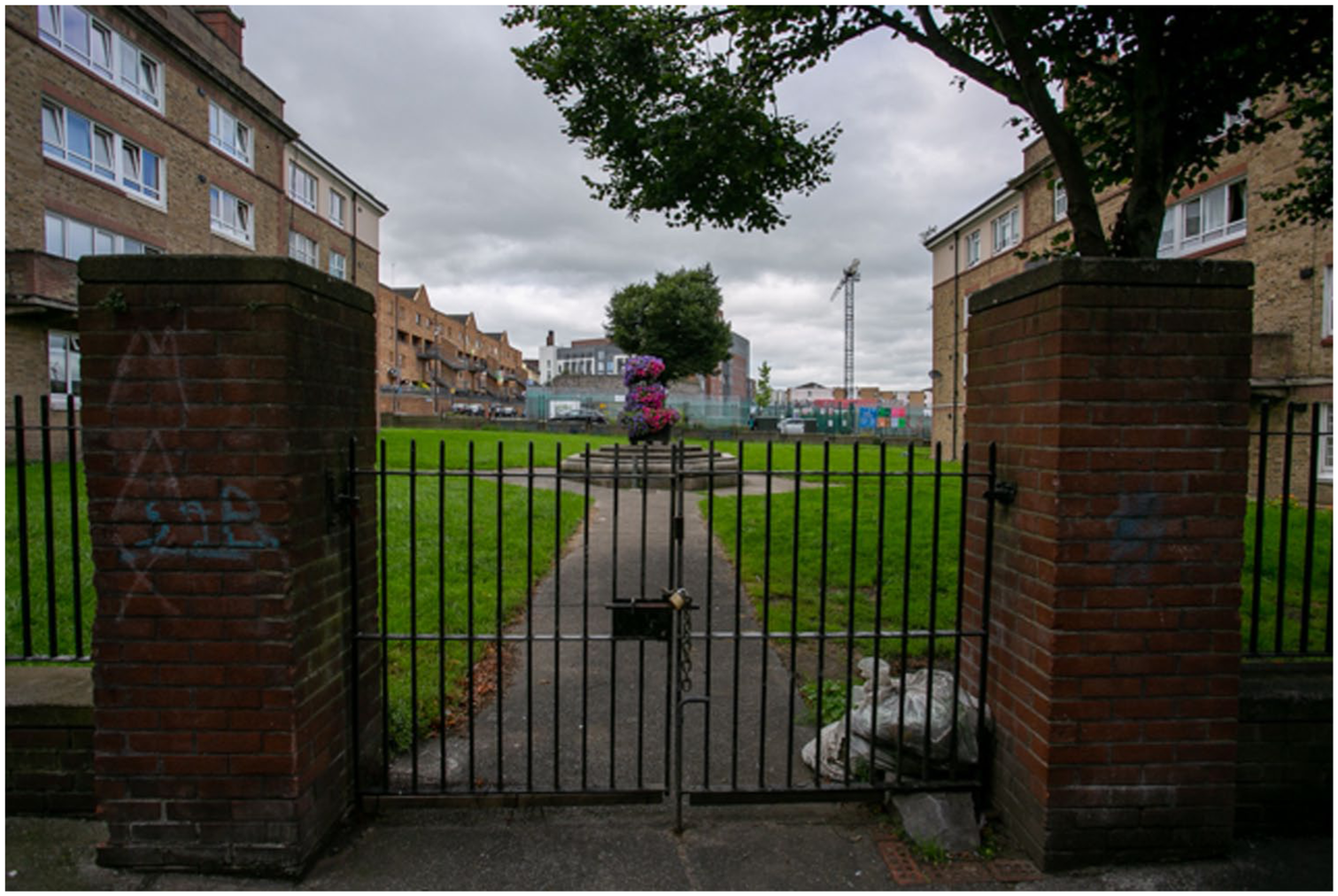
Oliver Bond House Water Feature – The Design Originally Had Greenspaces and Water Fountains to Create Spaces for Wellbeing – These Fountains No Longer Function and the Gates to the Open Space Are Locked [2022].
In addition to years of neglect and a system that prioritises housing as profit, there has been a deliberate systematic lack of refurbishing and maintenance of the Oliver Bond grounds and buildings for over 50 years – an often invisible slow erosion of resources and care over time (Nixon, 2013). The residents of Oliver Bond House have been promised a newly regenerated site and, in the interim, suffer from poor, damp housing conditions (Manzo & Grove, 2024; Robert Emmet Community Development Project, 2021). In response, residents of Oliver Bond House have come together to campaign for and to improve indoor living conditions. In a similar way, anti-social behaviour in the open space areas has prompted some residents to occupy these spaces for social gatherings and food growing – seen here as a form of commoning of urban space.
Through the concept of ‘probing’, of engaging residents in experiences with and conversations about nature and greening in the area, a creative methodological approach using ‘nature probes’ was developed. Methods took the form of participatory mapping using data-driven work on greening deficits in the area, artistic interventions including walks and talks and in-depth biographic narrative interviews with long-term residents. One of the biggest difficulties for inner city residents, and especially those in social housing, is access to land, exacerbated by enclosure and privatisation. Commoning in Oliver Bond House provides a valuable cultural-historical frame for advancing desired transformations in the neoliberal city, as residents negotiate urban neglect and regeneration. The theme of commons as coping shows that when people’s basic needs are not being met, they resort to other means, other spaces, modes and networks, as a way to survive.
In Dublin city, Bresnihan and Byrne (2015) articulated the commons and its struggles, detailing the many needs and desires which are not met, or excluded, by the pattern of high rent, the commodification of social/cultural life and the regulation of public space – escaping the forms of enclosure which limit what can happen in the city. This articulation of need may be associated with commons or processes of commoning in high-pressure urban areas, with particular individuals in the community acting as commoning agents. Urban Grit explored this practice and process of urban commons and made visible the role of the commons in the Oliver Bond House community and wider geographical neighborhood. The collaborative culture of working together to ‘common our knowledge’ demonstrates an approach to engaging with communities who are undergoing rapid urban change, contributing more nuanced conceptions of commons in working with marginalised urban communities. The paper advances a new mode of spatial action that merged with existing urban commoning practices in the area, seeking to listen to and reflexively respond to community greening needs.
The research builds on already completed critical work in the Dublin 8 area that mapped greenspace deficit (www.mappinggreendublin.com); the imminent threat of green gentrification (Triguero-Mas et al., 2022); and the strong social capital and sense of community and culture of care in Oliver Bond House (Manzo & Grove, 2024) that has to date been overlooked in urban regeneration plans. Urban greening was chosen as an entry point for the work due to the pressures evident in this part of the city in terms of traffic, building density and population (Clavin et al., 2021). Literature and policy recommendations have evidenced that access to good quality green space and ecologies have mental health and physical benefits for individuals and communities (Bell et al., 2018; Carlin et al., 2020; Scott et al., 2020). The often gradual and postponed effects of neglect (Nixon, 2013) are, however, not prominent in policy-related literature on health and urban greening.
In summary, Urban Grit was framed as a collaboration between designers, artists and social scientists, working alongside a community development project, the Robert Emmet Community Development Project (RECDP), based at Oliver Bond House. The specific objectives of the project were threefold: First, to collaborate together to set up a space to better understand the impacts of the greenspace deficit in this part of the city; second, to create a set of research tools, called ‘nature probes’ to explore nature and greenspace deficits in the area and; third, to come up with a set of outputs for the community, for action. Success was determined through meaningful engagement and the qualitative impact of creative outcomes and outputs. This impact was deemed as successful through networks, spaces and policy/planning interventions. More broadly, the paper contributes to understandings of how cultural and social activities operate in these high-pressure inner-city spaces through the urban commons and the role of interdisciplinary teams in advancing commoning practices.
The history, planning context, the evolution of the city of Dublin as a global player and drivers for change in this part of the city are detailed below in a review of literature that is crucial to understanding the broader evolving context of greenspace deficit and its impacts. This is followed by examples of common responses, particularly pertaining to greening relevant to this part of Dublin city. The methodology developed to probe nature is detailed, along with the findings presented in terms of outcomes and focus for action.
Dublin 8 and Oliver Bond House: Development Pressures in a Global City
Since 2018, Dublin has officially been seen as a global player in the Globalisation and World City network (GaWC), a network that indicates the importance of cities as nodes in a world city network that enables corporate globalisation. The restructuring of urban space and governance around market-oriented policies, entrepreneurialism and the prioritisation of private over public interests is a hallmark of globalisation and neoliberalisation in cities. Neil Smith’s (2002, 2005) work highlights how neoliberalism drives urban processes such as gentrification, disinvestment and reinvestment, producing landscapes of inequality where capital seeks out new sites for accumulation. Lees (2008, 2016) extends these arguments by demonstrating how neoliberal urban policies often manifest in the transformation of housing, public space and community life, particularly through state-led gentrification and the commodification of urban culture. Their scholarship underscores how neolberalisation reshapes cities globally, not only economically but also socially and politically, producing exclusions and reinforcing class divisions while presenting these changes as ‘revitalization’ or ‘regeneration’.
Kelly (2014, p. 185) argues that the re-focusing of priorities of the neoliberal local state has been reflected in a redistribution and channeling of wealth through the built environment in Dublin. It has been argued that neoliberalism has been embodied in new urban redevelopment projects and that Dublin, in its physical form, has increasingly become a reflection of a neoliberal agenda (Brenner & Theodore, 2002; Swyngedouw, 2005), resulting in the privatisation of space over public interests.
Dublin as a Global Player
The history of the growth and evolution of Dublin city as a global player, particularly in terms of the tech industry (Kayanan, 2024) and the strategic hands-off approach of the state, has been documented by a number of urban geographers since the late 1990s (Killen & MacLaren, 1999; MacLaren & Kelly, 2014; McGuirk, 2000). The 1990s saw dramatic changes in Dublin’s inner city, a transformation sustained by economic growth, which expanded tourism, office and residential functions in the city, along with the enhanced popularity of the inner city as a place to live (MacLaren, 1993). The ways in which market-led urban change has been engendered in urban renewal policies in Dublin have relevance to Dublin 8. Brenner and Theodore (2002) comment on the relationship between state and urban structuring at this time and claim that cities had become ‘targets’ and even ‘laboratories’ for a variety of policy experiments (Brenner & Theodore, 2002, p. 368).
Critical Geographical Information Systems (GIS) mapping work (Moore-Cherry et al., 2015) has identified and mapped the locations of state interventions in Dublin, indicating that several layers of interventions occurred in particular parts of the city, including Dublin 8. Again, the concept of ‘experiment’ became relevant as a possible reason for repeated state interventions. O’Donnell’s (2012) work revealed that the state was engaged in a process of experimentation and correction in urban policy, while facilitating the creation of a landscape primarily for capital accumulation. Not only had the state actively restructured itself to cope with the challenges and demands of a changing global context, but intervention in the urban development process had become a key activity (O’Donnell, 2012).
Therefore, from the late 1990s to the mid-2000s, the Irish state managed to proceed with a highly political neoliberal urban development agenda, resulting in significant negative consequences for working-class residents of Dublin’s inner city (Brudell & Attuyer, 2014). In both Ireland and the United Kingdom, this phase of urban renewal was distinguished by policy moves to incorporate working-class communities within the local state’s consultative and participatory structures, and there was an attempt to reconfigure an adversarial and contentious planning arena into a collaborative one (Healey, 1997). Some claim that such partnership and participatory structures were devised to contain emerging crises and contradictions in the interests of maintaining the hegemony of the neoliberal agenda (Brudell & Attuyer, 2014; Karaminejad et al., 2020).
Dublin’s Changing Socio-cultural Landscape
As Swyngedouw et al. (2002, pp. 545–546) suggest, these shifts have resulted in the ‘reimagining and recreating [of] urban space, primarily for the outsider, the investor, developer, business(person), or the money packed tourist’. The state takes an active role in reshaping the urban landscape to deal with problems such as decay, while also attracting and maintaining capital investment (Harvey, 2011). The large-scale redevelopment of green and grey spaces of Dublin 8 has associated designs, architectures and visible infrastructures. These visual artefacts of material culture establish a place identity for the city as a whole, creating new space for public culture (Lawton, 2019; Zukin, 1996).
The assumption that the look and feel of cities should be upheld makes a set of assumptions that, although seemingly innocuous, can have profound implications for questions of inclusion and justice (Lawton, 2019). The large-scale redevelopment of green and grey spaces of Dublin 8 has associated designs, architectures and visible infrastructures. These visual artefacts of material culture establish a place identity for the city as a whole, creating new space for public culture (Lawton, 2019; Zukin, 1996). Reality is therefore influenced by the overlaps between everyday practices and broader forms of design and development discourse (Lawton, 2019) in creating an image for this particular part of Dublin city.
Zukin (1996) asserts that in global cities the strategy of producing spaces for cultural hegemony imposes a new way of seeing urban landscape – internationalising it; because it is inherent in the symbolic economy of a global city, to shape the tastes of global elites and aid in the circulation of images that influence ‘climates’ of opinion and investments and ‘mentalities’. Processes of neoliberalisation across scales are dynamic, slippery and highly adaptable, and this is precisely what contributes to the persistence of neoliberal ideas (MacLaren & Kelly, 2014) and associated built form. This lack of transparency on urban processes is compounded by a ‘black boxed’, often unrevealed or miraged, ‘magic of planning’ (Abram, 2016, p. 19). This is observed in the lack of clarity around local planning in the area, the precarious nature of the redevelopment of large-scale housing complexes such as Oliver Bond House and also in the appearance and then disappearance of grassroots community growing initiatives. The latter includes the emergence and then disappearance of community gardens in Dublin 8 over the decades due to insecurity of tenure.
Responses to Urban Change in Dublin City
From a socio-economic standpoint, such urban development may have the impact of changing the social structure of the city through processes of gentrification. In turn, this impacts the type of housing, leisure environment, retail environment and so on (Atkinson, 2003; Lees, 2003; Lees et al., 2010; Slater et al., 2004; Smith, 2002), causing pressure on space and consequently the provision of appropriate greening (Anguelovski et al., 2018) in this part of Dublin (Common Ground, 2019; South Inner City Community Development Association [SICCDA], 2019). Communities are, however, differently and unequally positioned to articulate strategies in response to such urban change (Anguelovski et al., 2020; van Holstein, 2020). In 2021 an alternative Greening Strategy was developed for the Dublin 8 area as a grassroots tool, appropriate to place (mappinggreendublin.com) that grew from research that demonstrated the greening deficit in this part of the city. The Dublin 8 study area has about 10 m2 of greenspace and 0.22 trees per person, about 4 m2 less green area and half the number of trees available for residents/workers elsewhere in the city (Clavin et al., 2021). The World Health Organisation (2012) has recommended an ideal value of 50 m2 of urban green space per capita. These differences are a result of both the higher population density and the higher proportion of built-up space found in the city.
Oliver Bond House residents have worked to articulate their own change in their community, using creative agency to build a more livable inner city urban environment, in a process that the authors refer to as urban commoning. This takes varying forms including an alternative walking tour that offers a resident’s view of this historic part of the city, food growing initiatives and beekeeping. The commons was chosen as a socio-cultural provocation to make visible and validate the initiatives and energy expended by residents to improve greening in the area.
Urban Commons and the Practice of Commoning
A commons is a shared resource that can be defined in various, nuanced ways (De Angelis, 2019; Ostrom, 1990; Shiva, 2020). Therefore, commoning may be where socio-physical space can be politicised, and fragmented struggles re-articulated (Bianchi, 2018). Stavrides (2016) put forward the concept of ‘common space’, a space used under conditions decided on by communities and open to anyone – a dialogue of struggle to gain access to resources. Lijster’s (2022, p. 158) commoning community is furthermore pervaded by what he calls a dissensual common sense, describing ‘how we commonly sense the world, and to the way we conceive of ourselves as community’. In tracing the historical roots of the commons in a rural context, at one time nearly half of the land in Britain was Common Land, but from the 16th century onwards the gentry excluded Commoners from land, which could be ‘improved’ through agriculture with progressive enclosure of once common land over several centuries depriving most of the British people of access to land for agricultural. For over 500 years, pamphleteers, politicians and historians have argued about enclosure, those in favor insisting that it was necessary for economic development or ‘improvement’, and those against claiming that it deprived the poor of their livelihoods and led to rural depopulation (Fairlie, 2009).
According to Lijster (2022), the question of whether we see (sense) and understand (make sense of) something as either ‘common’ or as ‘commodity’ has drastic consequences for our world and will make the difference between a politics of extraction, exploitation and inequality, or one of common abundance, mutual care and democratic governance. Within highly pressurised inner city areas, grassroots responses to green space deficit provide an effective example of the triarchy between state/private/commons (Newton & Rocco, 2022) and how the commons intersect in a complex web of continuous negotiation and trade-offs.
Urban Commoning
Ostrom’s (1990) definition of commons as a resource shared by a group of people, inspired a wave of urban literature (Foster & Iaione, 2015; Iaione, 2012, 2016) that conceives of urban commoning as the process whereby the governance of urban spaces (e.g. parks, streets, deserted factories) is devolved from the municipality to the urban citizenry. It thereby constitutes the everyday practice of sharing resources, a cooperative stance that goes beyond state/public provision and market-based competition (Volont & Smets, 2022). The field of urban commons can be grouped into various diverse categories, including multispecies urban commons that consider more-than-human stakeholders (Haldrup et al., 2022), global, infrastructure, markets, knowledge, cultural, medical and health and neighbourhood (Feinberg et al., 2021; Hess, 2008).
In addition to such direct commoning practices, intermediary strategies and tools exist. This includes digital approaches to prototyping and urban resilience (Baibarac et al., 2021; Baibarac & Petrescu, 2019) and living labs, though controversial in their association with the smart city (Belfield & Petrescu, 2025; Kayanan et al., 2021; vander Sloot & Lanzing, 2021). In terms of social commoning (Mellick Lopes et al., 2024; Schaeper et al., 2022), these may facilitate imaginings of desirable alternatives (Baibarac-Duignan & Medeşan, 2023) but require commoning actors or agents.
Commoning Agents: The Role of Scholarship When Policy Fails
The interdisciplinary (art, design, social science) and place-based nature of the Urban Grit project lends itself directly to various conceptions of the commons – the neighbourhood commons (e.g., urban greenery; housing), the cultural commons (e.g., participatory art practices) and knowledge commons (e.g., public education, digital divide). More indirectly, it speaks to global, infrastructure, market and health commons in the form of public land use as well as community exchange and public health and well-being in the inner city area.
The Urban Grit academic partners acknowledge that they have not themselves carried out urban commoning practices as a way to cope with everyday deficits in Oliver Bond House itself. The partners working in the RECDP and staff and students located in the nearby National College of Art and Design (NCAD) do play a particular role as commoning agents in creating and claiming space and narrative with and for residents. In support, the academics involved in the Urban Grit team provide a particular conceptualisation of the commons in terms of sharing and bringing together of ideas, thereby creating synergies of practices – commoning our knowledge.
The roles of academics, professional actors and community stakeholders in commoning practices have received attention in recent years. Teli et al. (2022) frame design researchers as intermediary actors between commons and institutional spheres (Teli et al., 2022). Similarly, Petrescu and Petcou (2023: 17), in their manifesto, look to the function of the professional architect as being a hopeful commoning agent. They argue for a practice of resilience and commons-based regeneration, [where] architect’s role should include skills for defending the urban commons they have initiated. In a similar way, each member of the research team (social scientist, designer, artist) has developed practices of critical and participatory enquiry for working with communities in and on the urban commons. In this way, practicing (Foucault, 2004) an interdisciplinary urban commoning approach, merges critical social science, art and design and community practice in an attempt to pool, merge and ‘common our knowledge’ with each other and communities we work with.
Art and design have a role in supporting political struggles (Thompson & Lorne, 2023). When/if policies and politics fail, but grassroots actors decide to ‘just do’, then design can be an intermediation (Teli et al., 2022). Such work may act outside of dominant planning discourse (Aernouts, 2020), taking on more of a facilitation role that enhances capacity building and a local sense of ownership. In the context of this work, the authors refer to this intermediary action in support of greenspace commoning practice by the community, as nature probing.
Methodology: Probing the Urban Commons
Building on an earlier project in the area called Mapping Green Dublin (2019–2021) 1 that mapped greening deficits in the wider Dublin 8 area, Urban Grit took place from 2021 to 2023. The methodological approach for Urban Grit translated scholarly and professional knowledge into practice through social science, art and design, to work toward conceptualising the commons in this pressurised inner city area. Methods, insights and mapping tools were used to explore the micro-geographies and nature’s closest-in (Rich, 1986) to this high-density inner city neighborhood, as a means to empower local engagement in both commoning knowledge and engagement in decision making. Greening deficits in the area were mapped with support from the Robert Emmet Community Development Partnership (RECDP). Building on this mapping, we collaborated as an art and design team to develop ‘nature probes’ to make visible the role of the urban commons and greening in the everyday environment, to build commoning capacity and to inform future public consultations and development and to support community action. Traditionally, ‘cultural probes’ are kits that consist of instructions, artefacts and other prompts that have been used to facilitate user-centred design research. The term has been adopted here to describe the sensitive probing of knowledge and experiences related to the greening deficit. Instead of artefacts that are handed over to gather and extract information, a range of ‘nature probe’ methods (mapping, artistic interventions and biographic narrative interviews) are utilised to foster a shared and collaborative knowledge – a knowledge commons.
In the Urban Grit project, lived experiences and imaginings of nature are probed through an interdisciplinary team of commoning agents. These include grassroots actors and representatives such as RECDP and intermediary actors (researchers, artists and designers) who facilitate and convene nature probing in support of grassroots actors striving to take control of space narratives where they live.
Commoning Perspectives of the Urban Grit Team
The varying and converging research perspectives and positionalities of the team are outlined below.
Visual Artist Perspective
Socially engaged artists work with a variety of creative methodologies and tools to question and collectively connect to an issue with an intentional community or group of participants. I have been working in the neighbourhood of Dublin 8 over the last 15 years on a number of socially engaged ecology projects. Currently, I teach in Art and Critical Ecologies at (the National College of Art and Designa nearby Arts College) working with students to connect to an outdoor novel ecology, decolonising thinking about ‘nature’ and working with community greening projects to develop practices of climate justice. There is a lack of tree canopy, green parks and greenspace more generally in the area. Embedded in an inner city hard landscape, we realise the work, though urgent, is always at risk and temporary and subject to the larger policy directions of the city, with its focus on economy and development. As artists and activists, we use these gaps and interim moments that sites like community gardens provide to common, build nature connection, food sovereignty and solidarity. These interim spaces become important for demonstrating other ways of being with community, ecology and place. We learn how to common our knowledge, to work together and collaborate, share and create a commoning practice – a different type of narrative that is based on care and attention but also through this practice aim to affect policy and inspire new imaginaries for our city.
Social Science Perspective (Geography)
My work as an urban geographer, planner and educator has brought me into close collaboration with artists, designers and communities who are activated in creating change because they have not had their community needs met. Academic working practices that encourage pedagogies of separation within working groups lead to fragmented outcomes. A focus on openness, sharing and generosity between collaborators creates abundance and the emergence of new ideas, practices and often new actor constellations that go beyond the original group. Having porous boundaries and a decolonisation of the self and one’s disciplinary canon creates truly interdisciplinary work with communities. Communities are the places where the fragmented sectoral policies meet. Without active, open, collaboration, place-based work becomes yet another practice of extraction and unsustainability.
Design Perspective
As a researcher, I use people-centred design to support equitable and just access to commons, collaborating with communities, local and international organisations in varying global contexts. I am an outsider in Dublin 8 and in fact in Ireland. Therefore, my role leading up to and during the Urban Grit project falls into that of a supportive intermediary who acts as a sounding board and can be drawn on to offer different perspectives or facilitate capacity-building activities. This includes design thinking workshops to support the development of local commoning initiatives. Here, the role of the designer requires a departure from the traditional client-designer relationship in which designs are handed over and instead necessitates a reflexive understanding of one’s own entanglement or in this case external outsider status to activate community-led and owned responses valuing local knowledge and lived experiences.
The set of nature probe tools was adapted to explore interaction and gather insights on and with nature and greenspace in the area – in turn, the tools are absorbed by participants as knowledge commons. They are critical and participatory mapping (to map greening deficits in the area); artistic interventions (to provide a creative mode of expression for greening deficits and the greening commons) and biographic narrative interviews (to probe and reflect on the changing urban and greening environment through time). These tools drew out experiences and imaginaries of nature and greenspace from Oliver Bond House residents. The development of these probes was a careful, collaborative and iterative exercise in the nexus between critical social science, art and design.
Critical and Participatory Mapping
The GIS specialist used the QGIS plugin (Meroni & Selloni, 2022) with the community (May to December 2021) to carry out work on mapping out coordinates in the locality. However, a digital literacy gap in the local community required a more user-friendly and less technical open-source software, Open Street Map (January 2022), highlighting the need to foster knowledge commons through appropriate tools. The GIS specialist also carried out a separate GIS analysis on the number of trees per square metre in Dublin.
Artistic Interventions
The nature probes work carried out with the community of Oliver Bond House involved an artist in residence (Anthony Freeman). Anthony, a long-term resident and artist in the community and as an Urban Grit project artist in residence at REDCP, was given a brief to work with the community to create a ‘nature probe’ for the area, that is, a participatory and artistic intervention to highlight the local greening deficit and also activate individuals to common the greenspaces in the area.
In addition to the above, visual artist Seoidín O’Sullivan convened a series of walks, talks and workshops in the area, integrating walking methodologies (Springgay & Truman, 2019) into the overall research. These were part of a wider ATS-led project called RADICLE in the area 2 that merged with Urban Grit. RADICLE acted as a temporary workshop, gathering space and a point of connection for critical thinking about urban ecologies that connected with the aims of the Urban Grit project.
Biographic Narrative Interviews
Qualitative biographic narrative interviews (Chamberlayne et al., 2002; Greene & Rau, 2018; Jaeger-Erben, 2013; Menary, 2008) were carried out with Oliver Bond House residents. Biographic research was conducted into residents’ retrospective life stories with a focus on specific life stages or transitions as they have recently been encountered or are occurring in situ (Greene, 2018; Jaeger-Erben, 2013). Narrative is understood as a ubiquitous means by which self-reflexive individuals make sense of their experiences and how they unfold and transition over time. Communities tell stories that are specific to their way of life and as such, are particularly suitable when different voices are at stake (Jovchelovitch, 2019). In-depth interviews were carried out with five individuals who are long-term (over at least two generations) residents of Oliver Bond House, with a view to sharing their story and experiences of how green and open spaces have changed in the area. This is a limited sample and the interviewees were recruited by RECDP. These were the people identified as having lived, long term, in the housing complex or the surrounding area and who could provide this ‘life-story’ scale of narrative. The narrative interviewing method provided an interviewee with the freedom to tell their story of experiencing green and open space, growing up and living in and around the inner city area, in a way that is meaningful to them – a window into the dispositions and evolution of habitus (Bourdieu, 1977). The biographic narrative interviews were analysed indexically in terms of stories (who, what, when, where) and non-indexically (descriptive and argumentative), looking for where emphasis and reflection lay in the narrative. A thematic analysis using inductive, open coding (Glaser & Strauss, 1990) was carried out to explore how, over time, residents’ relationships to and experiences of green and open space have changed.
Findings
This section presents knowledge and subsequent aspects of spatial commoning that result from nature probing in the Urban Grit project through participatory mapping, artistic interventions and biographic narrative interviews.
Commoning Knowledge and Space Through Mapping
The map (Figure 3) illustrates the greening deficit in the Dublin 8 area. The Oliver Bond housing complex has 1.32 trees per square metre (factored by 1000), which is within the lowest category in Dublin city. Simultaneously, there are parts of the area that have the lowest levels of self-reported health nationally. This map was used in a shared discussion with the director of RECDP, in their advocacy work and in a presentation to a local community gardening group. The map has subsequently been used to make a case for enhanced greenspace in the most recent Dublin City Development Plan. In addition, the local community garden group continued to map the greenspaces in the area with a view to identifying sites for growing crops, having adapted the open-source mapping as a tool. However, in isolation, the ways we conventionally think about such inequalities through maps are insufficient to understand the complex realities of the processes that we are mapping (Shelton, 2022). Therefore, the artistic intervention and biographic interviewing provide an additional qualitative layer with which to further probe the commons in terms of greening.
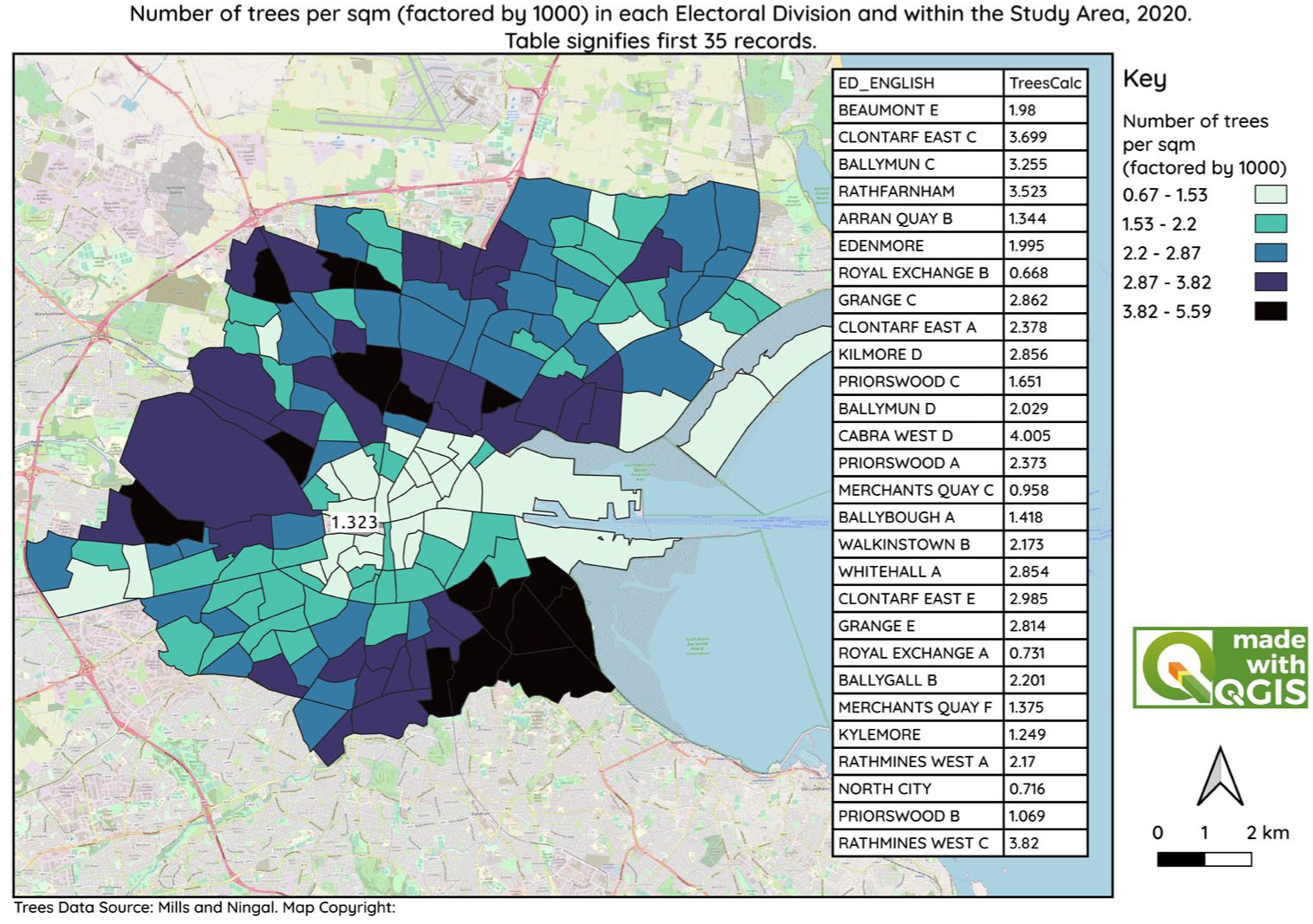
Map of the Tree Cover in the Study 2020.
Commoning Knowledge and Space Through Artistic Interventions
The artistic intervention led by local artist, Anthony Freeman, resulted in the establishment of a well-being garden, housing bees, sculptures, plants and importantly a shared, quiet space for the community. This responds to the need for more quiet spaces in this inner city area (Figure 4).
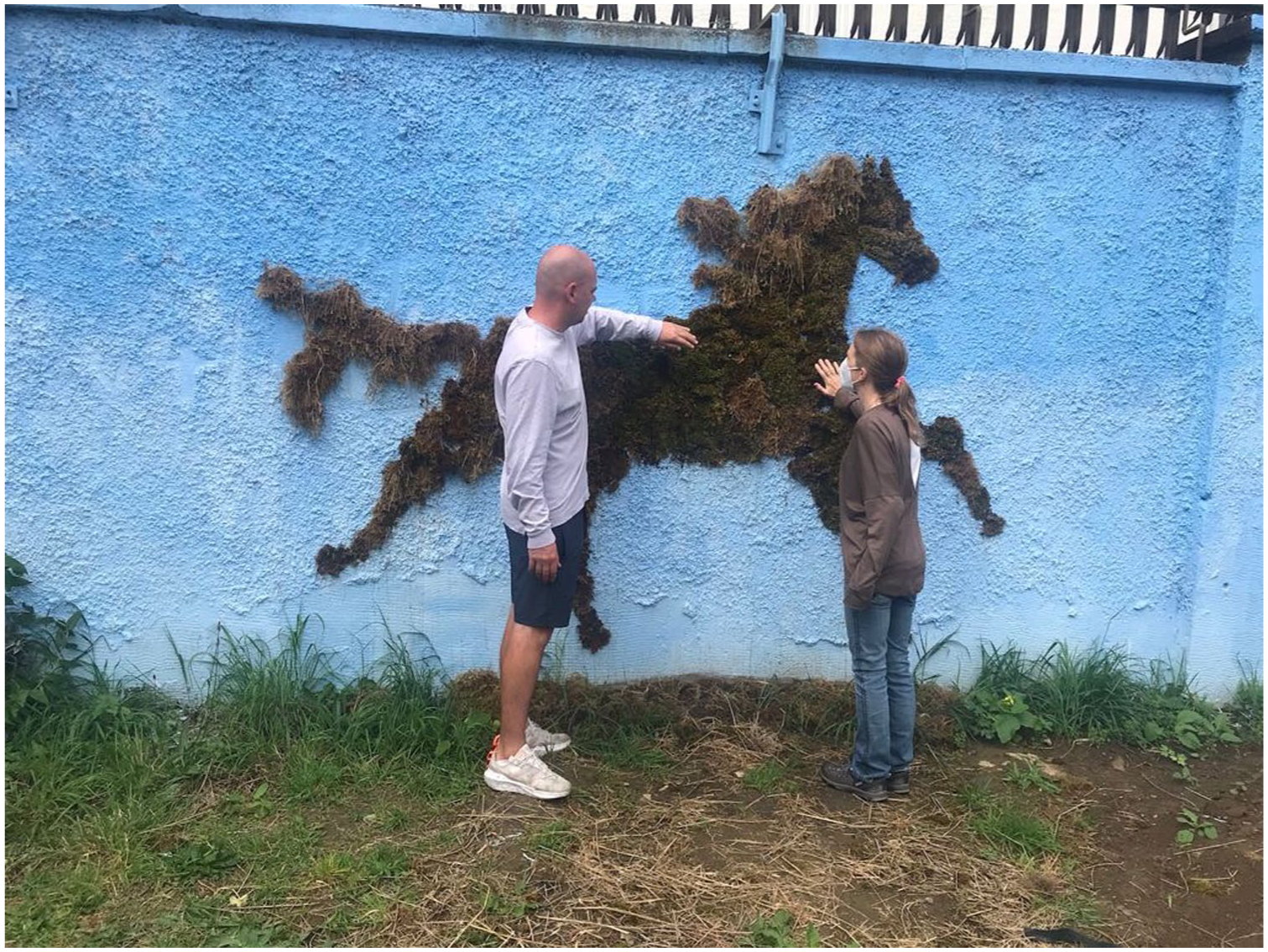
The Urban Grit Well-Being Garden Designed by Artist, Anthony Freeman [2022].
The space is temporary, housed on the property of the Dublin Digital Hub, which provides units for technology, digital media and creative companies. The site has since become part of a new Pear Tree masterplan 3 for the area, a formal conceptual layout that sets a long-term vision and strategy for development of an area, which includes the Guinness Quarter. The proposals in the masterplan are centred around the delivery of new homes in a residential-led, mixed-use development plan. The Pear Tree masterplan does detail the apiary in use in the ‘Freeman garden’ site. For now, the Freeman well-being garden site remains for the community of Oliver Bond House until such time as the masterplan is operationalised.
A series of nature probe events in the form of walks, talks and workshops were convened by artist Seoidín O’Sullivan, who examined and spoke to alternative ways of operating that are not solely focused on profit. Instead, they were focused on spaces to collectively organise and socialise, garden as a community, skill share, plant and seed swap as well as connect with the earth and seasonal cycles. This series included the following events:
A Social Justice Greening toolkit workshop with URBANA (BCNUEJ, 2021) led by Panagiota Kotsila to analyse the extent to which urban plans and policy decisions can contribute to more just, resilient, healthy and sustainable cities, and how community groups in distressed neighbourhoods contest environmental inequities as a result of urban (re)development processes and policies.
Discussion on a local flax growing and weaving project with a yarn school. Through the medium of textiles, participants creatively explore personal and collective history and meaning. Committed to equality, social justice and sustainable development, the teacher used the medium of textiles to explore what these principles mean in practice.
Design prototyping workshop with the Urban Grit designer, working with community greening projects, with the aim of supporting people who are interested in taking action to enhance green spaces and/or biodiversity in their local area. The workshop was intended to build design thinking capacity, enabling participants to frame and develop grassroots projects.
Novel Ecologies talk with Dr. Melissa Pineda Pinto and the Novel Eco team. An urban ecology research group studies urban ecosystems from multiple angles including how species adapt and survive in rapidly-changing cities, and what new and novel ecosystems exist in urban areas.
Oliver Bond Community Garden walk and talk with Ezak Abderrezak Meddar. Ezak is a resident of Oliver Bond House. During lockdown, he was unable to visit his allotment to grow food. He was also unable to sleep at night due to a group of youth/ drug dealers hanging out under the balcony of his window. To address these two issues, Ezak planted a bed/plot, which meant the group would not tread on this tended ground (See Figure 5). This planting was an effective tactic and other neighbours from the apartment complex asked him to do the same. Now there are vegetables, flowers and fruit trees on what was previously a grass lawn. This provides an example of commons as coping, demonstrating that when people’s needs are not being met, they resort to other means and other spaces as a way to survive and enact change.
Bee 8 walk and talk with Anthony Freeman O’Brien and Robert Emmet. This Bee Walk builds on Anthony’s existing work with the RECDP in establishing common bee hives in and around the greenspaces in the area and on roofs – creating nature connection, creating positive spaces, developing training around beekeeping and up-skilling residents as beekeepers. Anthony is also involved in counter-walking tours in the area. A walking tour of the Liberties that tells the story of the place from a long-term resident’s perspective. 4 The In Our Shoes walking tour (see Figure 6) is a form of commoning in and of itself that occupies spaces temporarily, through developing counter narrative coupled with walking methods. Here, interested visitors are taken on a tour of the neighbourhood led by those who are from the area, highlighting a spectrum of unheard voices and stories of the area – a counter story to the well-marketed and ubiquitous Dublin Bus tour and a form of knowledge commoning. This series of walks, talks and workshops served to strengthen capacity of intermediary and grassroots commoning agents, drawing on external experiences and expertise as well as disseminating local commoning practices to wider audiences.
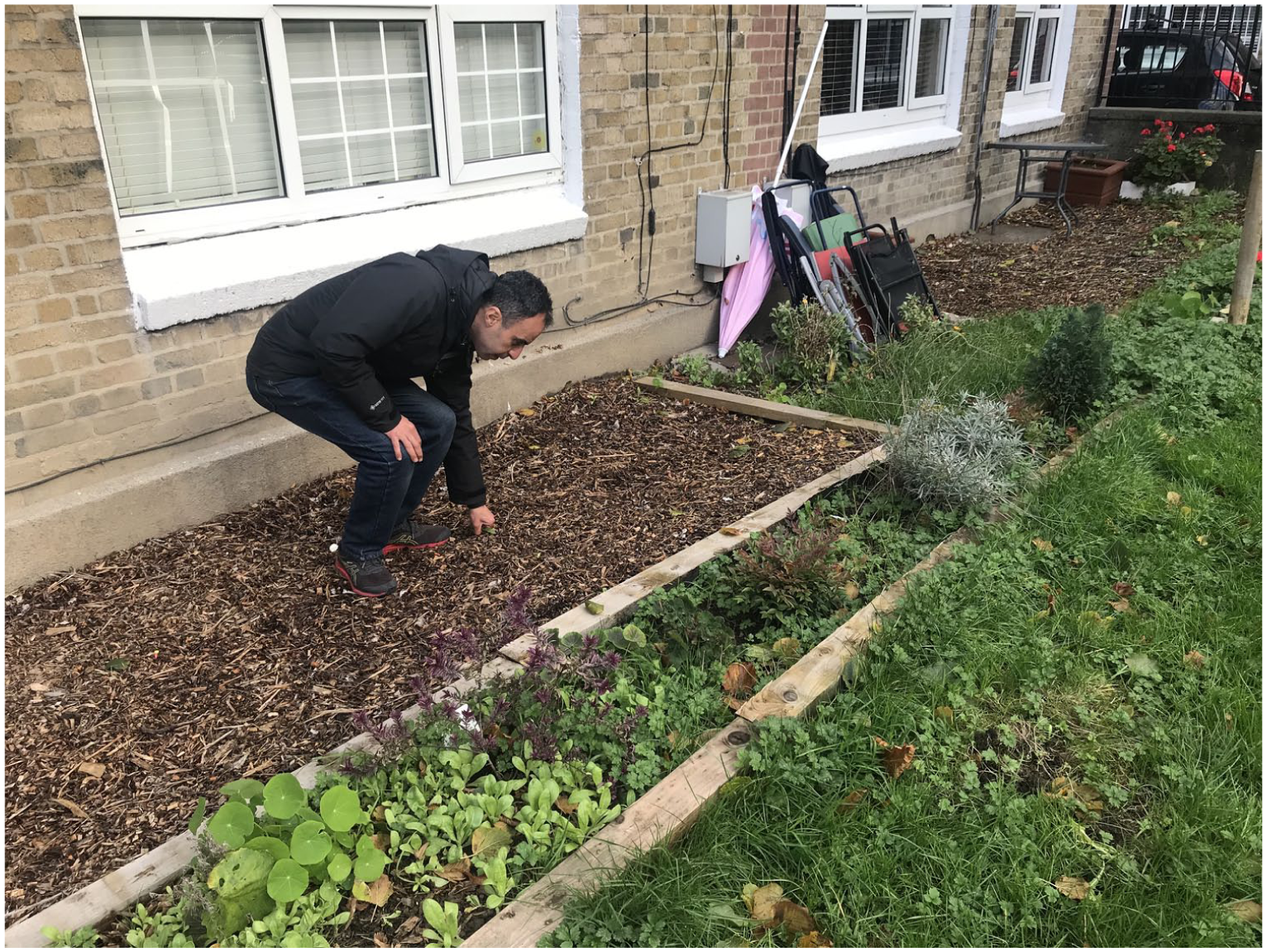
Ezak’s Garden Outside the Window of His Flat at Oliver Bond [2022].
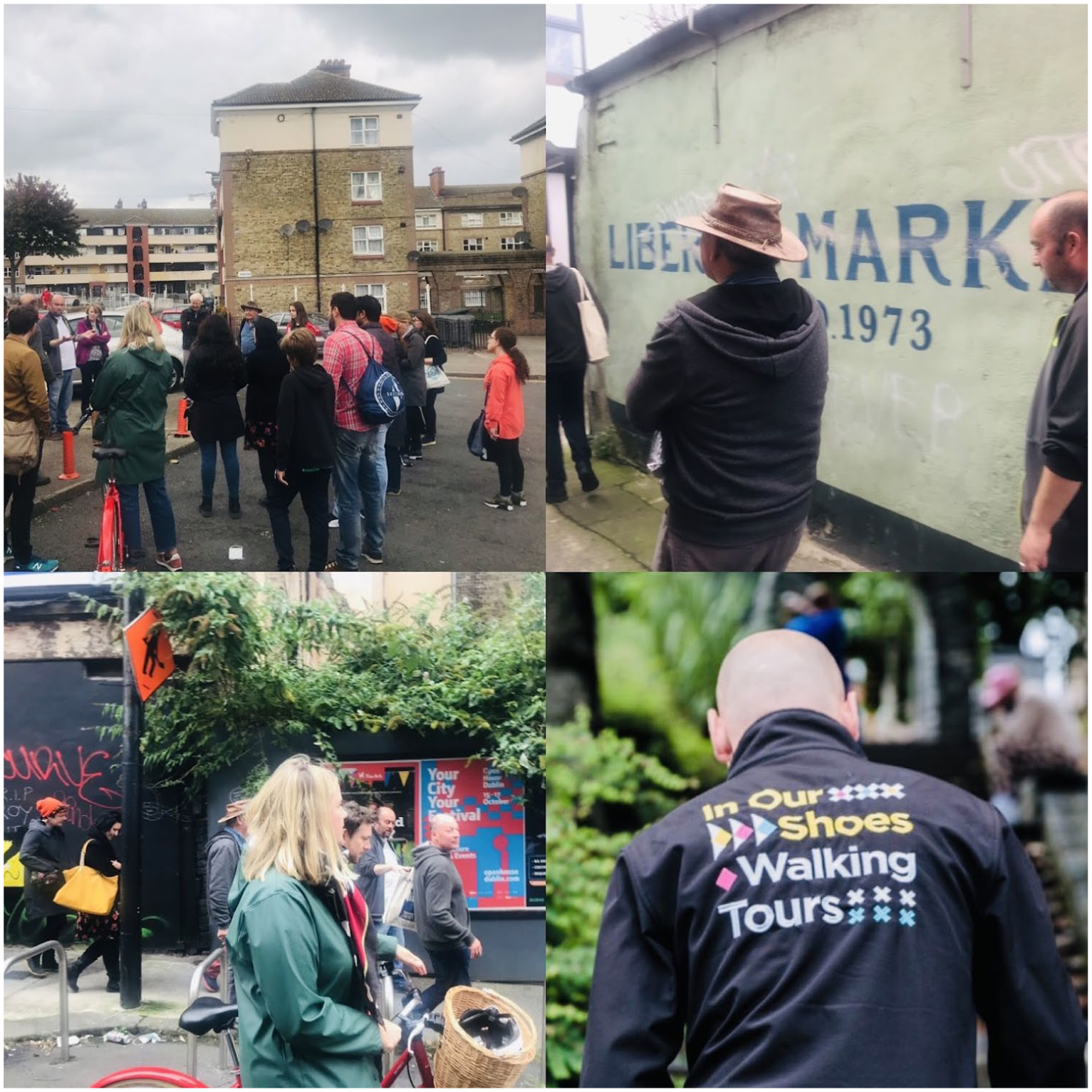
In Our Shoes Walking Tour as Supported by the Robert Emmet CDP [2021].
Commoning Knowledge and Space Through Oliver Bond House Narrative Biographical Interviews
The emerging themes from the biographic narrative interviews included neighbourhood and geographical imaginary through time; and housing and open space design through time.
Neighbourhood and Geographical Imaginary Through Time
The interviewees spoke positively about inner city life and the enjoyment they get from using the greenspaces throughout their life course. Walking plays a very important role in the everyday life of all interviewees, some walking to the Phoenix Park every day (1.6 km away). Such a walk invariably involves chatting with people they know along the way, fulfilling a social role. Three of the residents spoke of migration between other social housing complexes in Dublin through their life course, citing housing complexes such as Ballymun (6.2 km away in the northern edge of the city) as more rural with more open space to play football and other games for their children.
The interviewees all enjoyed living in the inner city, the buzz and accessibility. Interviewees had different geographical narratives and imaginings of greenspace and nature through the life course. This depended both on migration between housing complexes and on their experiences travelling outside of the inner city. There were references not just to greenspaces but also blue, brown spaces and the changing of the seasons – a colour palette (Baty, 2021) within and around the housing complex. The introduction of the Dublin Area Rapid Transit (DART, 1980s) was significant in that people’s geography expanded to Bray, Howth and Sandymount, where beaches are located along the coastline.
Grandparents remembered demarcating informal football pitches in local available spaces to play football. Weaver Park (built in 2017 and a 1-km walk away) was seen to be exclusively for the children of nearby Teresa’s Gardens. In a similar way, the nearby and new Bridgefoot Street Park (built 2022), was seen by one interviewee to be deliberately inaccessible to the very young children in Oliver Bond House, as the Bridgefoot Street road acts as a barrier, with no pedestrian crossing provided for children. For one interviewee, a particular understanding of exclusion, othering and gentrification in and around the area of the Oliver Bond House demonstrates how these communities are controlled, ignored and neglected – the gritty conflicts that gentrification brings in an urban environment (Smith, 2005).
Housing and Open Space Design Through Time
The Oliver Bond balconies (see Figure 1) play an important part in everyday conversations and passive surveillance for residents interviewed, to keep an eye on anti-social behaviour. All of the interviewees spoke of the issue of drug use in the area. Four of the interviewees noticed the bench and food growing that appeared during the COVID-19 pandemic (as planted by Ezak), with the intention of pushing out ongoing drug use in that space. Using food growing as a form of coping and commoning has been associated with community gardening projects elsewhere (Clavin, 2011), but this specific intervention was a direct result of anti-social activity in one location at a particular time, signaling a strong sense of autonomy and agency from the individuals involved. Such seats and benches created are also seen to be more important as one gets older, to get out and about and not to be ‘stuck in the flat’ (Int5). This is particularly the case for those who are in the upper floors with no access to a lift.
There is restricted access in some of the parks (e.g., St. Audeons and Herbert Park), with one interviewee stating that there are signs restricting use, for example, ‘no ball kicking’, with people in the neighbourhood saying, ‘ah sure the park is probably closed’ (Int10).
More recently, young people are involved in designing the area, for example, building, planting and taking ownership, ensuring that the structures and planting remain intact – a form of intergenerational neighbourhood commoning. This is in keeping with the findings of work done with youth workers in the wider Dublin 8 area (Clavin et al., 2021), where public structures built with local young people in the area are not vandalised. Two of the interviewees spoke of the lack of maintenance currently in the Oliver Bond House flats and the wider area (e.g., nearly St. Catherine’s Park) and that ‘if the people who live there are responsible (for it) they take care of it’ (Int 9) – a case for commoning the neighbourhood that stresses the correlation between sense of ownership, responsibility and agency (Feinberg et al., 2021; Hess, 2008).
These interviews provide important context to better understand the lived experience of those living in Oliver Bond House and to pave the way for people to articulate their thoughts about greening, how they value greening and how greening needs change through the life course, from children’s play provision to parenting through to old age, mobility and getting out and about. The interviews provide additional depth in understanding of changing commoning practices and commoning as coping and the ubiquity of collective action and coping in the area.
Discussion: Reflections on the Commons
The authors argue that a perpetual state of underinvestment and neglect has motivated the commoning practices as they are identified during this study, centering on Oliver Bond House. Local commoning practices are therefore part of a response to neoliberal systems of erosion, neglect, discrimination and othering, which promote self-help instead of providing fundamental spaces and services to the community. When a baseline of provision for resources such as greening and associated infrastructure is not provided, then commons becomes a necessity – a way of coping.
Commons as Coping
The emerging theme of commons as coping goes to the heart of the commons concept – when people’s needs are not being met, they resort to other means and other spaces as a way to survive and enact change – this is seen in the case of the food growing and the well-being spaces provided in Oliver Bond House. Proximity to soil, planting and biodiversity has been proven to ground and connect people to the earth. Urban food growing spaces more generally have for decades been used as places of solidarity on food sovereignty issues and often focus on food and health (Armstrong, 2000; Clavin, 2011; Firth et al., 2011) – they are also, as seen here, sites of struggle (Bach & McClintock, 2021; McClintock & Guimont Marceau, 2023) for land and resources. When there is an erosion of cultures and stories, people find ways to tell their stories.
Work on coping and environmental distress may be relevant here. Where coping can be broadly categorised into problem-focused, emotion-focused and meaning-focused coping (Ojala & Bengtsson, 2019; Russell & Victoria, 2022). The greening deficit in the area has proven to be activating for some members of the community engaging in informal commoning practices to enhance green spaces and access thereof. Those involved in food growing, bee keeping, counter-walking tours of the area and in building the new well-being site for the Urban Grit project are tackling the greenspace deficit and prevailing narrative of this part of the city, head-on – enacting problem-focused coping. Those who are activated for change and directly involved in commons activities may also engage in meaning-focused coping (Folkman & Moskowitz, 2007; Ojala, 2012; Stanisławski, 2019), but unless the sites remain safe and secure, meaning-focused coping may not be sustained. For example, Urban Grit’s well-being garden is in the site of the new Pear Tree redevelopment and its future uncertain. Ironically, an old Irish pear tree sits at the entrance to the Wellbeing Garden (see Figure 7). In the meantime, the residents of Oliver Bond House continue to fight for healthier homes and a newly regenerated site that meets their needs – emotion-focused coping.
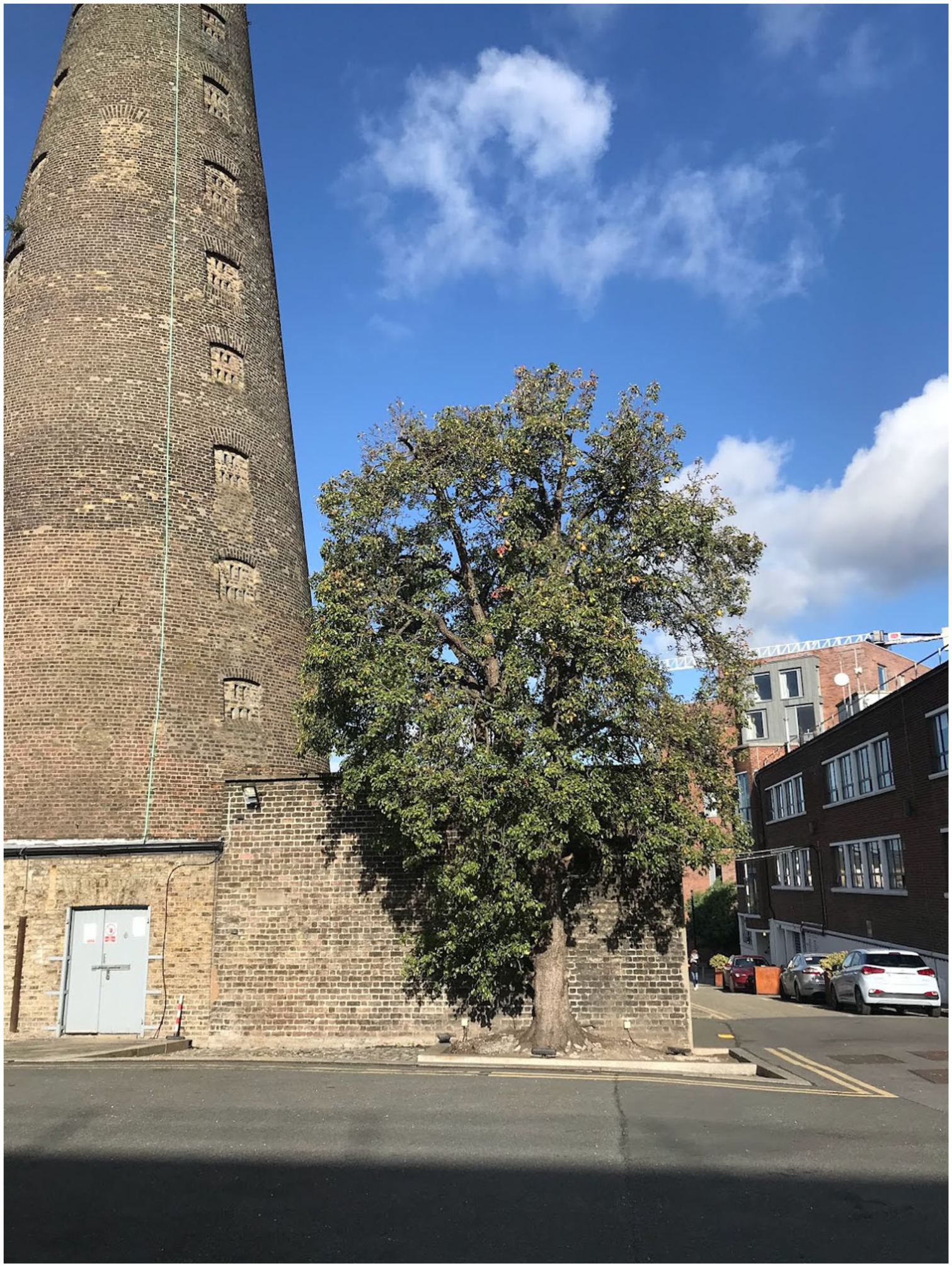
The Pear Tree Adjacent to the Wellbeing Garden, The Pear Tree Is Ireland’s Oldest Fruit Tree [2022].
The commons activity in and around the Oliver Bond housing complex is an example of what De Angelis (2013, pp. 605–606) calls the ‘commons fix’, that is, the process whereby markets, states and municipalities, guided by the reign of capital, ‘have to ask the commons to help manage the devastation’. This indicates a need for structural change – for the fair provision and distribution of resources in this part of the city, where, for generations, people have lived and worked.
Commoning Our Knowledge Through Nature Probes
Urban Grit builds on previous mapping and design work within Dublin 8 and further develops capacity and process for ongoing work and peer-to-peer learning (Thompson & Lorne, 2023), opening up critical, creative and participative enquiry in the area. It is not a living lab, and it is also not one singular designated commons space or knowledge commons. In this way, it is not necessarily scalable (Zielke et al., 2021), but there are lessons from the community struggles and from the interdisciplinary work that can be replicated and practiced elsewhere.
The nature probing activities including mapping, artistic interventions and biographic interviewing support commoning activities in and around the Oliver Bond House. They highlight how the commons intersect in a complex web of continuous negotiation and trade-offs within highly pressurised inner city areas. The commoning activities are in spite of or because of a culture of extraction, exploitation and inequality in inner cities, and foster a culture of common abundance, mutual care and democratic governance.
The question arises as to how these commoning practices can have longevity and remain in control of Oliver Bond House residents, how they can feed into formal development processes for the area, but avoid being muted by ongoing formal masterplanning (Abram, 2016) in the area. Here, the role of interdisciplinary design teams (Thompson & Lorne, 2023) potentially creates a platform for probing nature commons in a way that is iterative, dynamic and impactful, offering different modes of expression, agonism (Mouffe, 2007) and ethic of care (Puig de la Bellacasa, 2017) in working with and for communities.
The concept of nature probes as a set of tools and activities to support people to express and articulate change in their areas is one way to foster knowledge commons through appropriate tools. These tools build capacity and draw out experiences and imaginaries of greening in the area, modes of expression currently not used in development plan consultation. Specifically, through the use of GIS, artistic interventions and the biographic narrative interviews, they are a way to foster knowledge commons that often lie in public institutions, local authorities and universities.
The more technocratic findings form the mapping work, that is, the map and statistics relating to greenspace deficit in the area have been used by RECDP in response to the latest Dublin Development Plan. Currently, in terms of mapping, QGIS and Open Street map tools are not integrated with formal planning-related mapping processes. Such integration would strengthen and create more inclusive decision-making at the local level. RECDP was able to utilise these knowledge commons to advocate for more greenspace. This demonstrates that communities are well placed to bridge the gap between grassroots knowledge and formal planning channels.
The authors argue that a perpetual state of underinvestment and neglect has motivated the commoning practices as they are identified during this study, centring on Oliver Bond House. The community’s commoning practices are therefore arguably part of a response to neoliberal systems of erosion, neglect, discrimination and othering, which promote self-help instead of providing fundamental spaces and services to the community. Agile strategies for generating new and safeguarding existing community-owned green spaces amid urban pressures need to be further developed and acknowledged in the formal planning for this inner city area. As researchers and practitioners, sharing our knowledge is a way to provide communities with information they may need to campaign for more and appropriate resources that are pertinent to everyday well-being and quality of life, and nature probes are one way to open up spaces to further express and communicate unmet needs.
The question remains – how can commons be protected and advanced within the context of large-scale development, for example, the Pear Tree Crossing Masterplan and the redevelopment of the Guinness Quarter in the area. The commoning activities are in spite of or because of a culture of extraction, exploitation and inequality in inner cities, and foster a culture of common abundance, mutual care and democratic governance. However, while the temporary well-being garden and other food growing and greening initiatives are positive examples of commoning greenspace, greater permanence and protection are required to achieve lasting impact.
Conclusive Remarks
In the absence of an appropriately regenerated site for Oliver Bond residents, a question remains around how commoning activity can be protected and advanced within a highly pressurised inner city urban environment. Commons activities in and around the Oliver Bond housing complex are an effective example of how the commons intersect in a complex web of continuous negotiation and trade-offs within highly pressurised inner city areas. Urban Grit highlights the socio-political stakes of urban commons, particularly the challenges of greenspace deficits in marginalised communities, and proposes methodological experiments for addressing them.
The paper has situated the Urban Grit project in decades of urban development practice that has systemically neglected Oliver Bond House residents. A methodological approach has been presented that through fostering knowledge commons through nature probing, helps bridge the gap between grassroots knowledge and formal planning channels. Nature probing methods through mapping, artistic interventions and biographic narrative interviews make visible and support individual and community expression of unmet needs. The collaborative efforts of intermediary commoning agents in the Urban Grit project in facilitating and convening nature probing, has contributed to more nuanced conceptualisations of commons in marginalised communities affected by rapid urban change.
As researchers and practitioners, commoning our knowledge is a way to open up a space of participative, critical and creative inquiry and provide communities with information they may need to campaign for more and appropriate resources that are pertinent to everyday well-being and quality of life. The research highlights that when people’s basic needs are not being met, they may resort to commoning as coping. Nature probes are one way to open up spaces to further express and communicate these unmet needs.
Footnotes
Acknowledgements
The research was in partnership with the Robert Emmet Community Development Project (RECDP). A special thanks to Prof. Niamh Moore Cherry (UCD) for facilitating this work and to Austin Campbell (The Liberties Community Project) for his comments on the article. Thanks to Eoin O’Mahony for his mapping work for Urban Grit.
Ethical Considerations
The research had ethical approval for interviews and workshop engagement from the UCD Ethics Office 2021. Information sheets were provided and consent forms were signed by all research participants.
Publication Consent
Consent has been provided by the research partner RECDP for the publication of this article, plus images.
Author Contribution
AC: principal co-investigator, research co-design, report and writing, interviews, ethical approval. SS: community engagement, curation and art work, writing, methodology. AS: co-design, writing, community engagement, design thinking workshop, methodology.
Funding
The authors disclosed receipt of the following financial support for the research, authorship, and/or publication of this article: This research was funded by the Irish research council’s (IRC) New Foundations Grant (2021–2022).
Declaration of Conflicting Interests
The authors declared no potential conflicts of interest with respect to the research, authorship, and/or publication of this article.
Date Availability
Not relevant.
Notes
Author Biographies
 )
)