




Abstract
This article examines how urban installations oscillate between being perceived as ordinary furniture and as memorials, depending on the observer’s cognitive engagement. Focusing on the Kordon Platform in İzmir, the study draws on Roland Barthes’s Camera Lucida, particularly the concepts of punctum and studium, to explore how memory is activated through visual and cognitive interaction with design. Although grounded in theoretical frameworks, the argument is developed through a practice-based analysis of a single case. Adopting an observer-centered phenomenological approach, the study combines in-depth field observations with a semi-structured interview with the designer. It investigates how commemorative meaning arises not solely from form but through processes of perception and cultural association. The marble blocks, often perceived as urban fixtures, gain mnemonic significance when viewers reinterpret their spatial and narrative cues. Integrating theories of cultural memory, photography, and cognition, the article shows how abstract memorials resist fixed narratives and enable individualized remembrance.
Introduction
The Kordon platform installation is located along the coastal promenade in one of the most popular recreational areas of İzmir, Turkiye, seeming to be designed to meet the need for urban seating (Figure 1). The other function of this rectangular monolithic block is rarely unveiled by passersby or those who use it for rest (Figure 2). Indeed, this stone, as one of four identical markers, outlines one of the corners of the platform above the sea where an iconic building of the coastline, The Palet Restaurant, once stood (Figure 3). These stones are situated to re-introduce the building’s previous existence to the citizens in an abstract form. The installation, intended as a poignant reminder of the memory of the place, assumes the role of a site of memory in Pierre Nora’s (1989) terms, as it quietly exists without explicitly revealing its mnemonic function, despite its prominent location and visibility to the public. As Robert Musil proclaimed in 1957, “there is nothing in this world as invisible as monuments” (as cited in Sherman, 1994, p.206), the invisibility of what these stones mark blurs the ways to define their function as either a memorial or urban furniture. The distinction between memorial and urban furniture in the case of the Kordon Platform is deliberately blurred. This ambiguity arises less from the object itself and more from the user’s subjective perception. The meaning of the design shifts according to individual engagement, challenging fixed categorizations. By highlighting this ambiguity, the article invites a reconsideration of how memorials may operate as ordinary urban objects, and how perception determines their commemorative value.
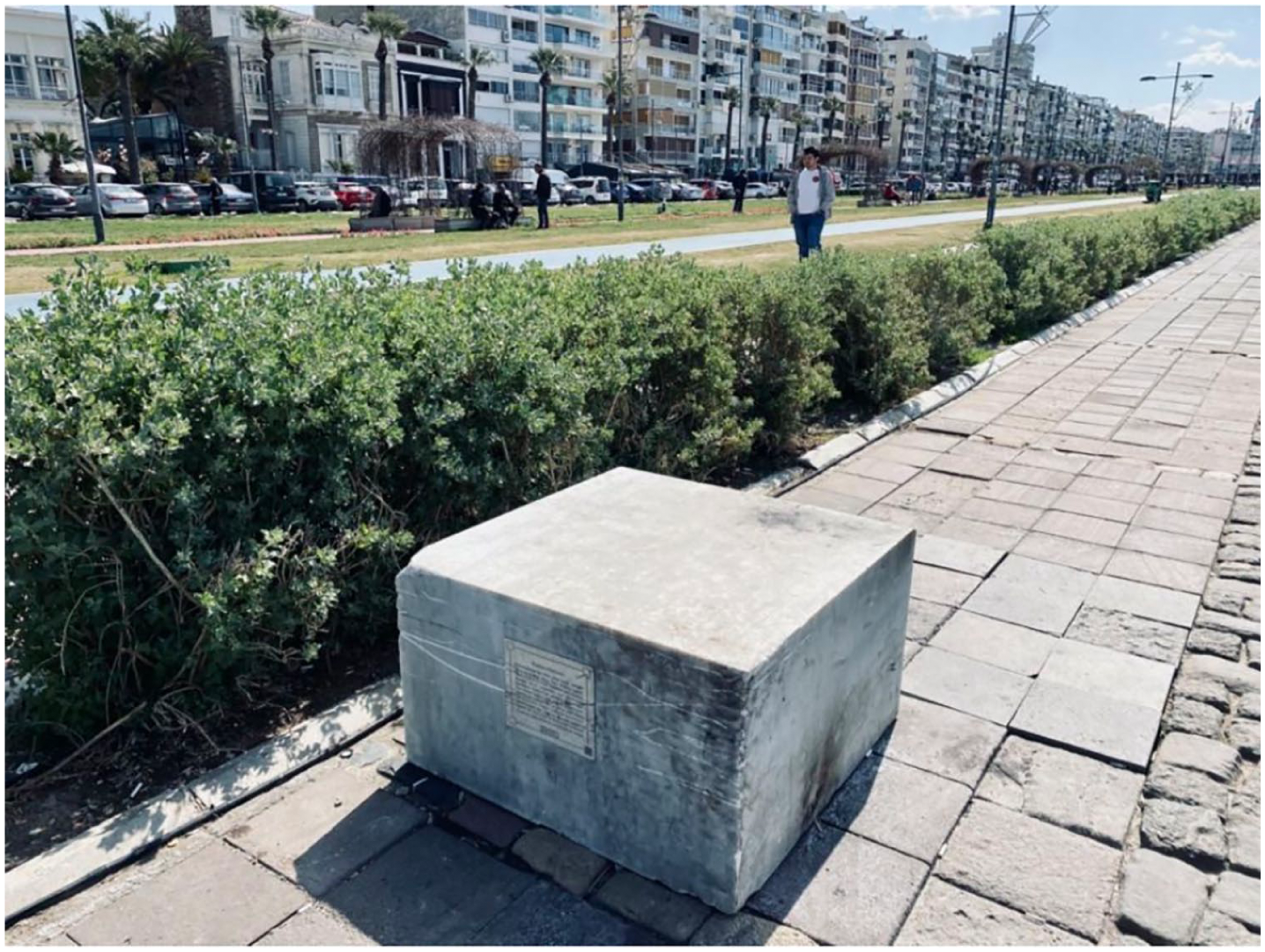
The Kordon Platform, 2024.
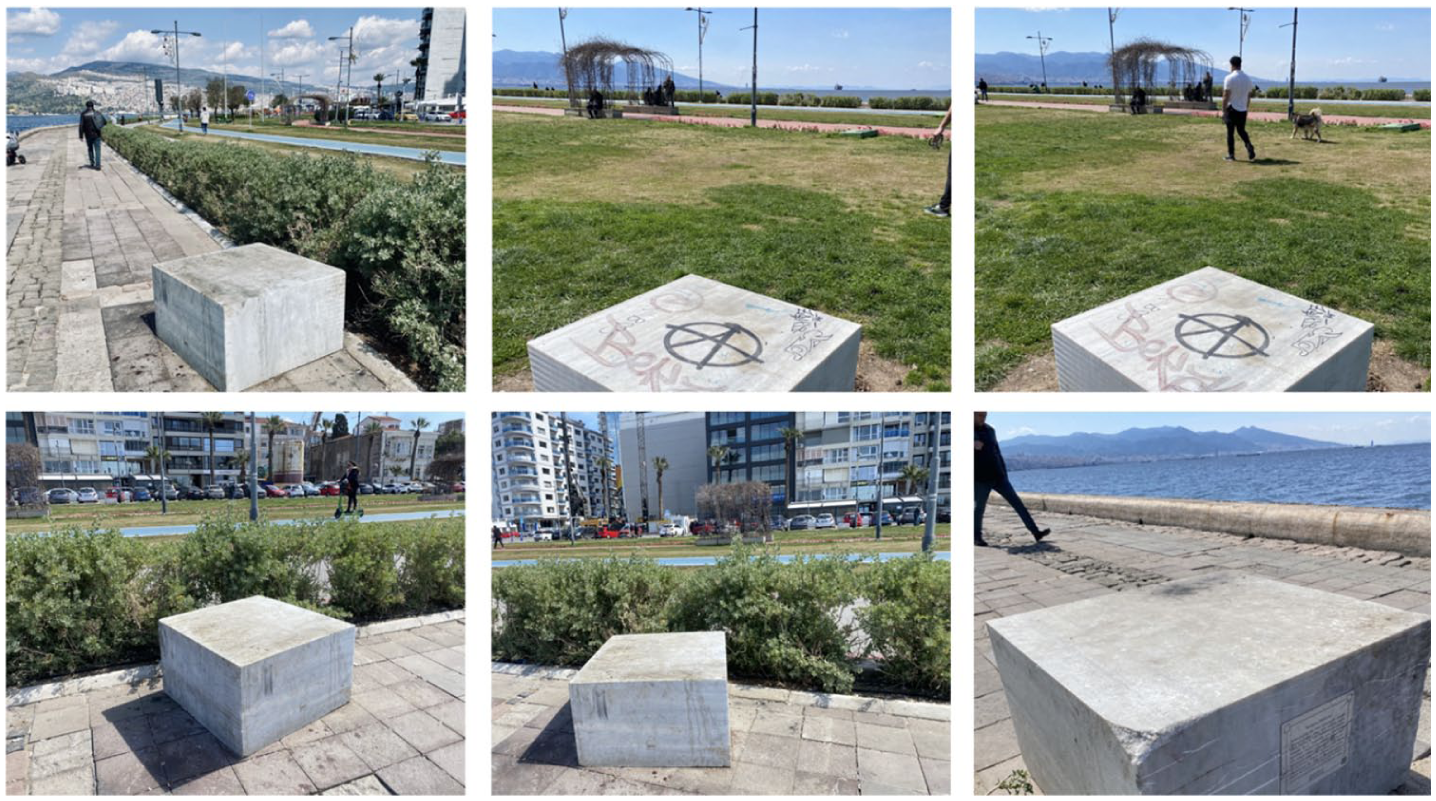
The Marble Blocks in the Urban Landscape, 2024.
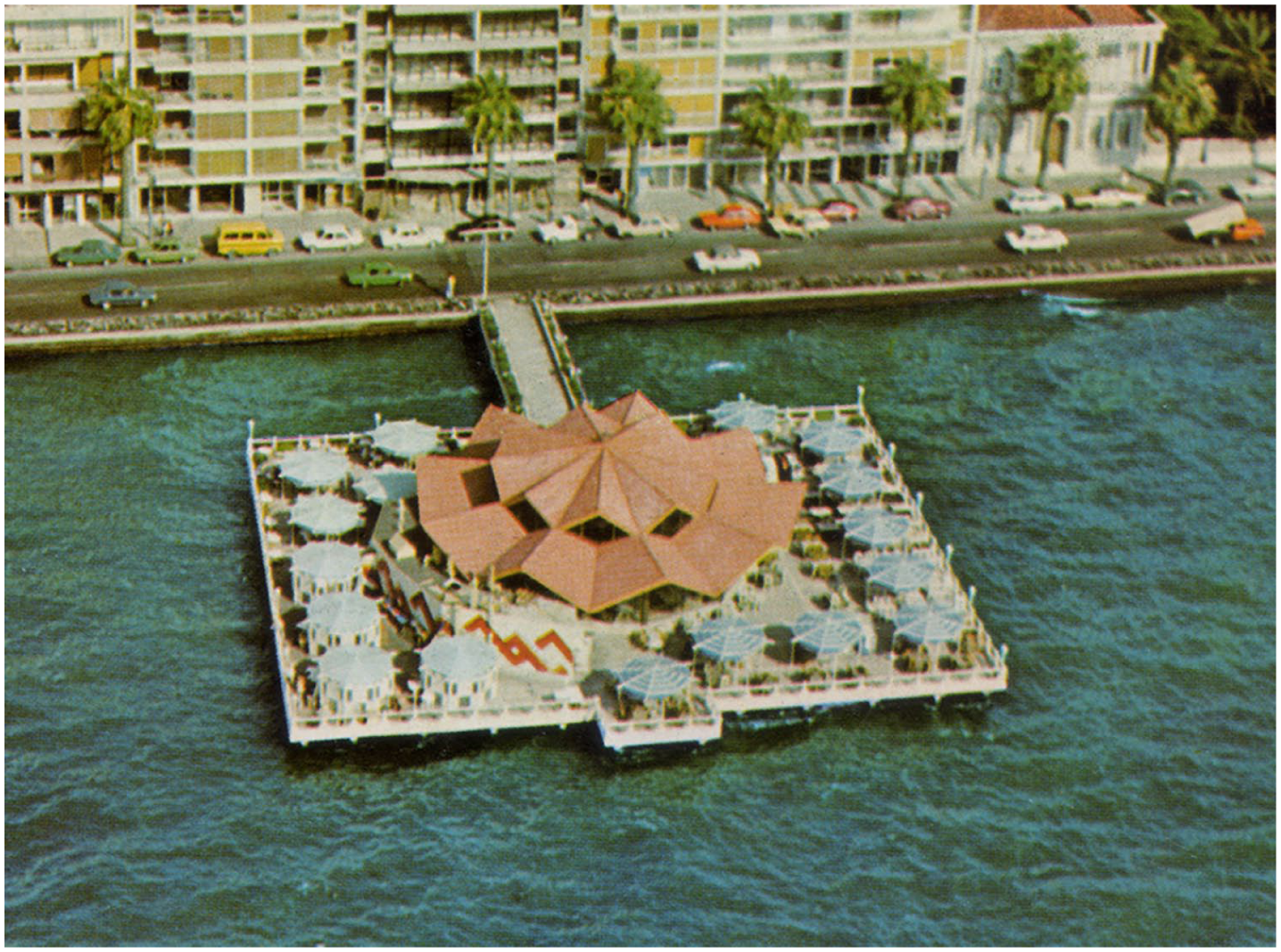
The Palet Restaurant.
Charles Péguy’s (1873–1914) metaphor, later cited by Bachelard (1994, p. 79), imagines memory not as something immediately visible but as something stored away, folded on the shelves of a metaphorical closet, hidden from the present yet waiting to be retrieved. Describing memory as residing “on the shelves of memory and in the temples of the wardrobe,” he evokes the city’s past as a layered interior that demands spatial intervention to be recalled. When existence gives way to absence, the existential wholeness is disrupted, tends to be forgotten, and requires finding the closet’s key to remember. Urban installations can be considered architectural keys that unlock the closet of the city’s past. This article focuses on the differences in memorials and urban furniture to explore the effects of the ambiguities in the functions and usages of these objects on cognitive processes of the citizens. Therefore, the aim of this article is not to impose a rigid classification but to elucidate the processes through which such distinctions are formulated. To further articulate how such distinctions in function and usage influence the cognitive responses of citizens, this study draws on Roland Barthes’s theory of photography, particularly his distinction between studium and punctum. While originally developed to explain the layered reception of photographic images, these concepts offer a compelling analytical lens for interpreting urban installations.
In his seminal work, Camera Lucida: Reflections on Photography (1981) Roland Barthes (1915–1980) introduced the concepts of “studium” and “punctum,” providing a perspective for interpreting photographs. While studium refers to the viewers’ general, culturally informed engagement with a photograph, punctum is their unexpected emotional or subconscious response on deeply personal levels. In this context, studium corresponds to the general, culturally encoded meaning of an object, whereas punctum designates the element that disrupts this familiarity, piercing the viewer with personal resonance or emotional intensity. Memorials, as in the Kordon Platform installation, are built to tackle social, cultural, and mnemonic problems on an urban scale while presenting layered meanings that invite both structured recognition and spontaneous associations. From an ontological perspective, grasping the meaning of a memorial depends on both the cognitive abilities of observers and its design language. Roland Barthes’s theory of photography provides a valuable analytical framework in this study for interpreting the ambiguity of urban installations, particularly the tension between their functioning as memorials or merely as pieces of street furniture.
The concepts of punctum and studium have been the subject of inquiry across various disciplines, from history to psychoanalysis, due to their broad applicability in understanding visual perception and meaning-making. While many scholars have connected these concepts to philosophical perspectives—such as those of Sartre, Merleau-Ponty, and Benjamin—through themes like looking, death, and loss (Dant & Gilloch, 2002; Depeli, 2015; Eldridge, 2016), others have explored them within psychoanalytic frameworks focused on the subconscious (Amir, 2018) and from an urban design perspective (Zhu, 2022). Even though these studies provide valuable insights, there remains a significant gap in spatial research that explicitly connects studium and punctum to the processes of looking and seeing in relation to urban memory. Addressing this gap, the present study seeks to integrate Barthes’s photography theory into a spatial context, connecting the concepts of studium and punctum with urban memory and the cognitive processes triggered by ambiguous urban installations.
This study adopts a qualitative, case-based methodology, combining theoretical interpretation with empirical inquiry to investigate the Kordon Platform. This particular urban installation was selected as a case study because it embodies the conceptual tensions at the heart of this research: the ambiguity between memory and function, between memorial and urban furniture, and between looking and seeing. As a memorial situated in a highly visible yet symbolically ambiguous location, the platform resists a singular reading. Furthermore, its contested design process and reception by the public provide a rich empirical ground for analyzing the phenomenological experience of urbanized space. In this sense, the Kordon Platform does not merely illustrate the theory; it offers a site where theory and spatial practice converge. The analysis is guided by an observer-dominant approach, focusing on the effects of the cognitive abilities in the meaning-making process through the concepts of studium and punctum, exploring the line of definition between a memorial and a piece of everyday urban furniture. In-depth field observations were conducted at various intervals throughout the day, week, and month, and they were complemented by semi-structured interviews with the designer that offered valuable background on the intended function and symbolic intentions. The empirical findings are interwoven with the theoretical framework to construct a dialectical reading in which the case and the theory inform and challenge one another. Through this exploration, the study aims to offer an interdisciplinary perspective, creating the aforementioned demarcation between memorial and urban furniture, using the definitions of perception-attention and looking-seeing.
Blurring the Line: Between Memorial and Urban Furniture
Commemorative structures that take the form of urban furniture offer practical functions such as seating or shelter, while simultaneously seeking to convey symbolic meaning through design. The interpretation of this symbolic dimension often depends on the cognitive engagement of the observer. In the latter half of the twentieth century, traditional, heroic monuments were increasingly replaced by spatial installations that emerged in response to the grandiose aesthetics and fixed narratives of conventional memorials. This shift has been widely discussed in the literature, with scholars emphasizing the changing social dynamics of memory and the transformation of urban commemorative practices (Huyssen, 1995; Michalski, 1998; Savage, 1999; Szrom, 2008; Young, 2000). These so-called “counter-monuments,” a term coined by James E. Young (1999), gained prominence particularly during the 1980s—an era later referred to as the “memory boom” (Winter, 2002)—and have since reshaped not only cultural discourse but also the memorial landscape of contemporary cities. Nevertheless, finding the key of the metaphorical closet of a city’s memory extends beyond mere access; it involves the question of what is remembered, reinterpreted, or appropriated in the act of recollection.
As Assmann (2011) outlines, cultural memory operates through dimensions such as being “created, established, communicated, continued, reconstructed, and appropriated” (p. 10). His distinction between functional memory and storage memory offers a useful framework to interpret how different urban elements relate to memory. While functional memory refers to short-term, adaptive, and context-dependent acts of remembering, much like the everyday presence of urban furniture, storage memory encompasses long-term, symbolic, and intergenerational remembrance, which aligns more closely with the role of memorials. Although Assmann does not make this analogy explicitly, the tenuous distinction between urban furniture and memorial can be metaphorically used to illustrate the layered operations of cultural memory in public space. In this regard, Kordon Platform stands as a compelling case that blurs the boundary between functional and storage memory, embodying both the everyday characteristics of urban furniture and the symbolic charge of a memorial.
Kordon Platform was designed in 2021 by Metehan Özcan, a Türkiye-based interior and visual communication designer. As one of the four urban installations initiated by “Urban Tank,” a community initiative, as part of a project called “WithDesign [tasarımile]” supported by the Goethe-Institut Istanbul (Urban Tank, 2021). In the website of this funded project, the aim is defined as “to contribute to the development of a ‘more transitional’ design perception in Izmir and to create a suitable climate for the development of a design approach that the citizens are aware of, interpret and demand its continuity” (Urban Tank, 2021). In the framework of this broader aim, the design approach in Kordon Platform, according to Özcan’s own accounts, is explained as follows: The Kordon Platform project marks the location of a platform that once extended from the shore into the sea in Alsancak, supporting various structures over time, on today’s reclaimed coastal road. Marble blocks outline the former boundaries of the offshore platform, which once housed buildings such as the Altay Sports Club Lounge, Disco Karina, and Palet Restaurant. In 1998, the rapid highway project that led to the platform’s demolition was halted through the efforts of civil society organizations, and the reclaimed land was transformed into a green space. (Bartu, 2021)
The explanatory plaques embedded into one side of each block discreetly reveal this narrative of urban amnesia to those who look closely and observe attentively (Figure 4). Indeed, İzmir’s shoreline has undergone continuous changes throughout its millennia-long history due to both natural processes and human interventions, particularly land reclamation (Yılmaz, 2018). This transformation has led to the disappearance of numerous structures and landscape areas that were built along the coast and held significant value in the collective memory of the citizens. Kordon, one of the most significant shoreline areas in the city center, took its current form through a 1990s redevelopment plan, creating a vast green public space. Initially, a multi-lane highway project led to land reclamation in 1997, extending the shoreline. Following public opposition, the plan was abandoned in 1999, and the area was transformed into a park by 2004 (Yılmaz, 2018). Throughout this process, Palet Restaurant, one of the most iconic structures on the coastline with its overwater presence and folded plate roof, was relocated to the opposite shore of the city, erasing its spatial and architectural imprint not only from the urban waterfront but also from its memory (Figure 5). The intention to draw the memory of this building out of the closet is most explicitly articulated by Özcan: After it [the building] left the designer’s hands, I was always intrigued by how users experienced the space differently from what was originally envisioned, how they later remembered it, and how they communicated it to each other. This project is somewhat about recalling these structures, as well as marking the location of this platform on the coastal infill. (Urban Tank, 2021)
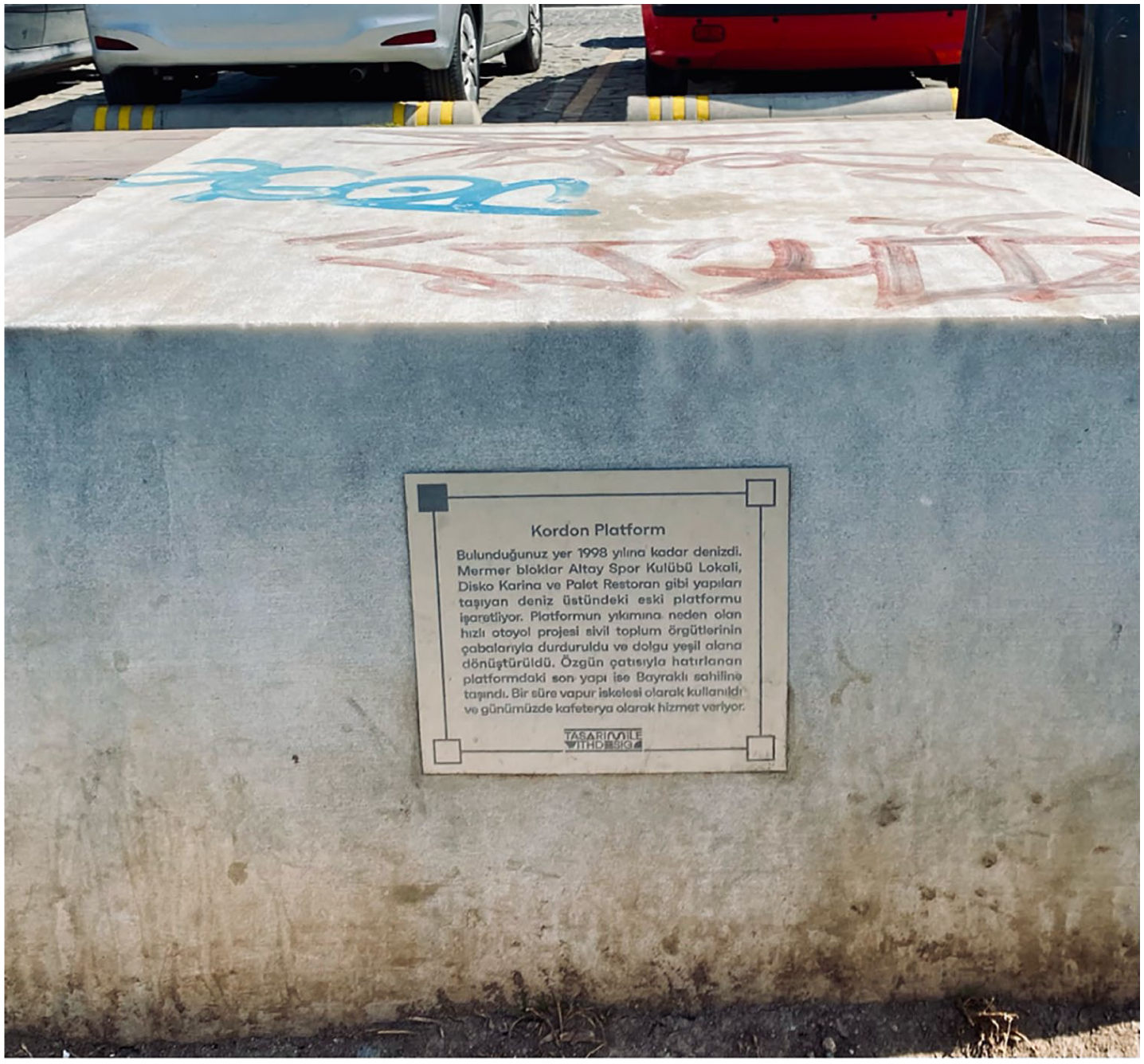
The Plaque on Marble Blocks, 2024.
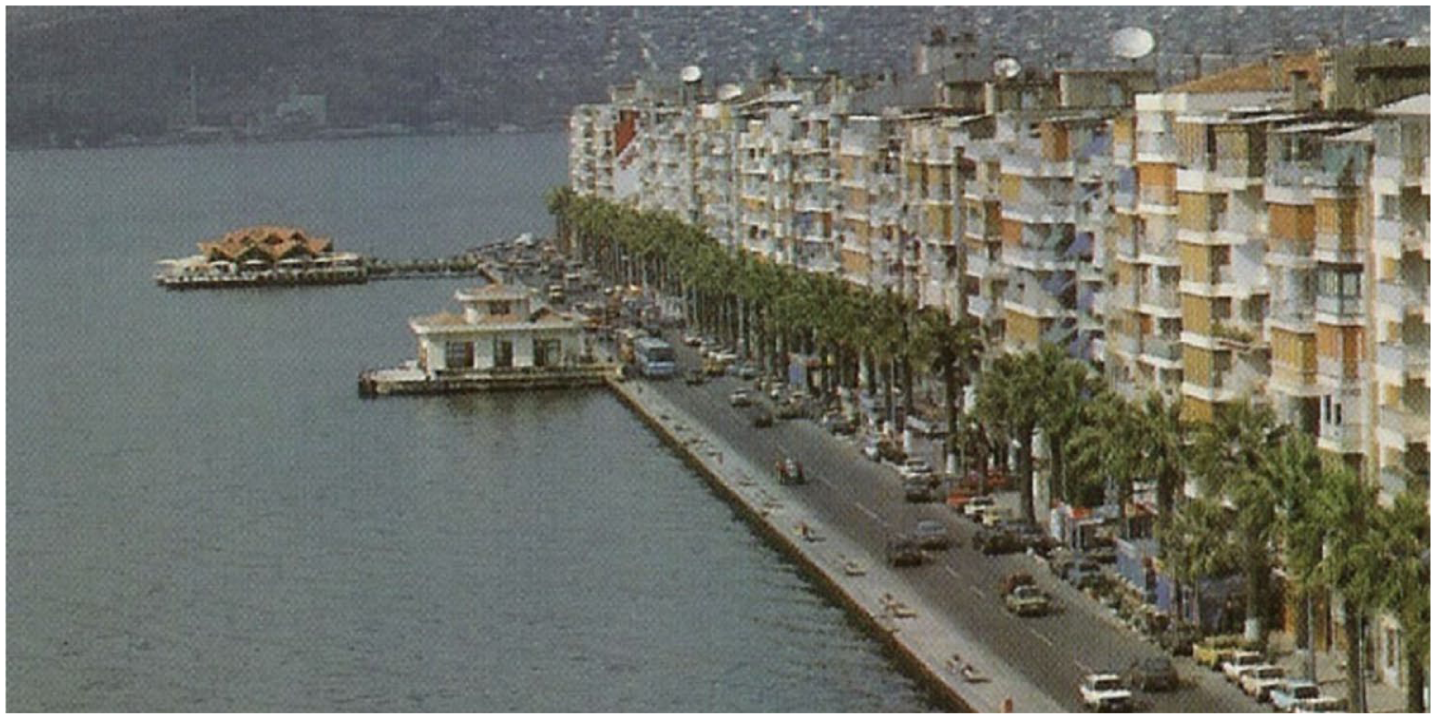
Palet and Alsancak Pier.
In this context, the physical gesture intended to activate memory becomes especially significant. However, this attempt at commemoration remains deliberately understated: the design idea, namely, marking the site’s corners “by dividing a marble block into four parts” (Urban Tank, 2021) adopts such a subtle and abstract approach that it frequently eludes recognition as a memorial. As a result, for many urban dwellers, these corner elements fail to transcend their role as ordinary street furniture. For example, one of the marble blocks is routinely repurposed by local fishermen as a makeshift table, illustrating how the intended mnemonic function becomes obscured through everyday use (Figure 6). This illustrates that the efficacy of a memorial in triggering collective storage memory, as defined by Assmann (2011), is not ensured by its physical presence alone, especially when its form is as abstract or minimalist as that of the Kordon Platform.
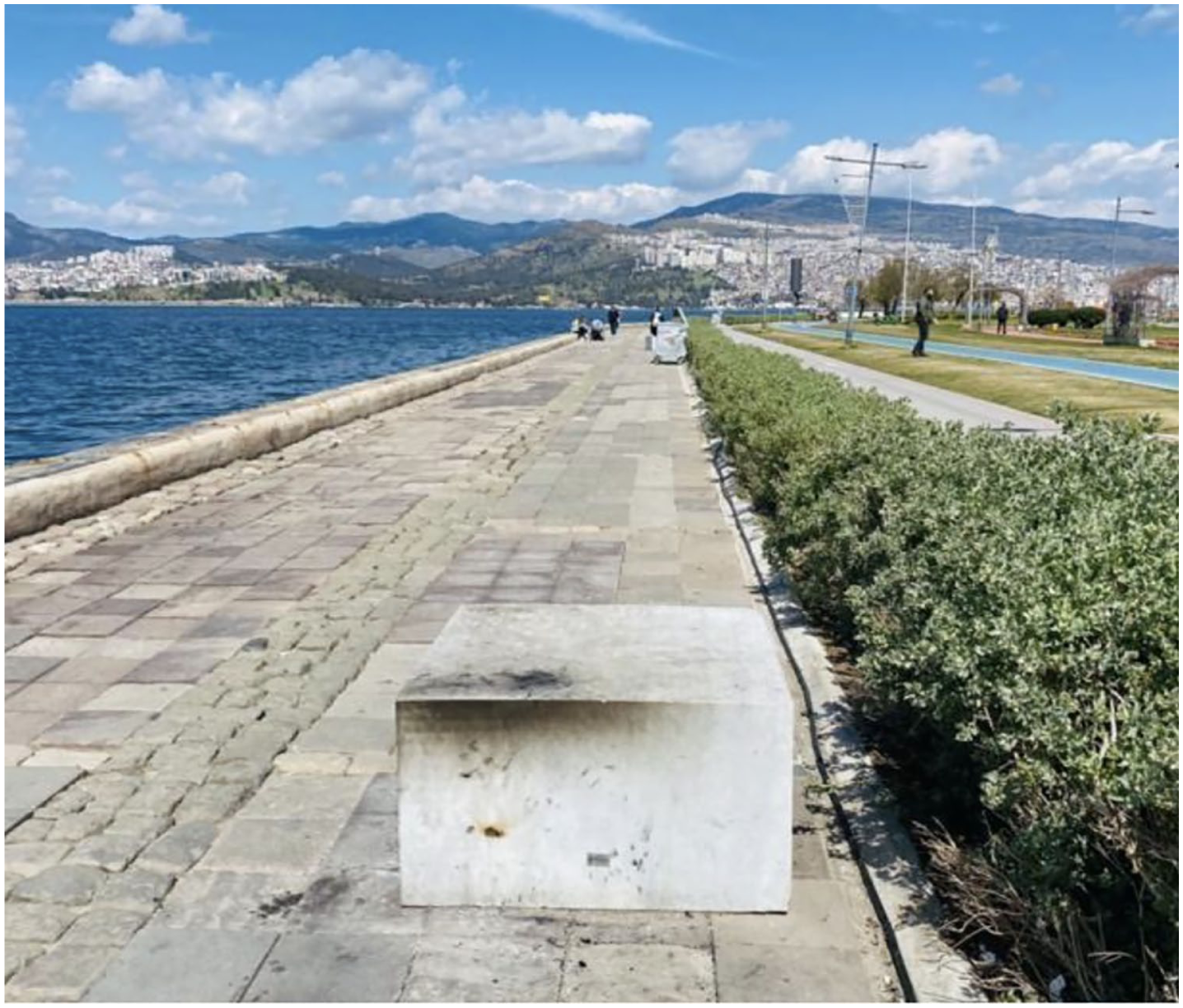
One of the Marble Blocks, 2024.
In this regard, Young (1989, p. 101) draws attention to the challenges—and indeed the potential—posed by abstraction in memorial design. Referring to Maya Lin’s Vietnam Veterans Memorial, and in alignment with the counter-monument approach, he argues that “in its hermetic and personal vision, abstraction encourages private visions in viewers, which would defeat the communal and collective aims of public memorials.” Rather than rejecting this effect, Young frames it as a shift in commemorative strategy, one that embraces ambiguity and invites multiple interpretations. The abstract nature of a memorial may thus open a wide spectrum of interpretations, potentially undermining its ability to anchor a shared historical narrative. In a similar vein, Yılmaz (2010), in her article proposing “the art of memory” as a lens for analyzing memorials, argues that the further a representational design moves away from directly referencing the actual event or memory it commemorates, the more it opens space for interpretative diversity in the collective remembrance process. Ultimately, whether an object in public space is perceived as a memorial or simply as street furniture hinges not solely on its material form or the designer’s intention, but on how it is cognitively and emotionally engaged with by its observers. When functional use is perceived as dominant, the interpretation tends to favor the reading of the object as furniture. Conversely, when the desire to remember becomes more pronounced, this balance shifts. The object begins to act more as a memorial than as everyday infrastructure.
Urban Installation as a Rubin Vase
The tenuous boundary between memorial and furniture is shaped not solely by the designer’s intent, but by the observer’s shifting cognitive focus, similar to the well-known Rubin vase illusion (Figure 7), where foreground and background perception alternate depending on the viewer’s attention. The Rubin vase illustrates two interrelated yet distinct scientific concepts. First, it highlights the discrepancy between looking and seeing. While we may initially recognize two faces when looking at the image, directing our attention more consciously may reveal a goblet in the center. This distinction underscores how perception depends not only on visual input but also on attentional focus. Second, the example serves as a premise for understanding information processing. Although external stimuli are received through the visual organs, object recognition is generated internally within the cerebral cortex (Eagleman, 2016; Taylor, 2009), emphasizing the central role of the brain’s cognitive functions.

“Hidden Faces and Goblet” by Edgar Robin.
When one looks at an object, the first features perceived are typically shape and color (Moutoussis & Zeki, 1997). This visual process follows three main stages: the retina, the optic nerve, and the brain. Light first reaches the retina, where it is converted into electrical signals via phototransduction (Purves et al., 2001). Photoreceptors (rods and cones) activate bipolar and ganglion cells, sending signals through the optic nerve. At the optic chiasm, the signals partially cross sides and continue to the lateral geniculate nucleus (LGN) in the thalamus before reaching the visual cortex for further processing. In the brain, the primary visual cortex (V1) and secondary visual areas (V2–V6) extract increasingly complex features: V3 processes form, V4 color, and V5 motion (Humphries, 2021; Lindsay, 2020). These regions contribute to two major pathways: the dorsal stream (“where”) for spatial location, extending to the parietal lobe, and the ventral stream (“what”) for object recognition, projecting to the temporal lobe (Marr, 1982). Despite regional specialization, the neocortex remains highly plastic, adapting functionally based on experience—a view supported by Eagleman (2021), who defines the brain as a “lifewired system.” This plasticity enables the brain to construct meaning, reduce uncertainty, and respond dynamically to its environment.
The process of attributing meaning to a stimulus occurs through neurons, the brain’s fundamental units. Although the human brain contains approximately ten billion neurons, what truly matters for cognition is the network of synapses—the communication channels between neurons—that transmit information from the external world to the brain (Eagleman, 2021, p. 7). This transmission process, called neurotransmission, involves electrochemical signals that not only allow neurons to communicate with the brain but also with one another. Neurons deliver sensory input to the brain and relay motor responses from the brain to the body. This bidirectional flow of information highlights that perception is not limited to bottom-up processing, which focuses on raw sensory input. It also involves top-down processing, shaped by factors such as prior experience, education, and personal interests (Connor et al., 2004). This explains why a monument might, at times, be perceived merely as urban furniture. The subjective nature of such experience is known as qualia, which is determined not just by the stimulus itself but by how it is internally structured and interpreted (Eagleman, 2018, 2021, p. 105). A similar dynamic plays out between memorials and urban furniture: how an observer interprets a design determines its meaning. Whether it is seen as a commemorative marker or simply a functional object depends less on its physical form and more on the observer’s cognitive and emotional engagement.
Take, for instance, the Memorial to the Murdered Jews of Europe in Berlin, designed by Peter Eisenman. At first glance, it appears as an undulating field of gray rectangular blocks, evoking a hidden presence within the city (Figure 8). Yet, unlike the Kordon Platform, its repetition and scale interrupt the urban flow, prompting both pause and reflection. Rather than functioning as mere urban furniture, the installation’s multiplicity and scale assert symbolic depth and demand engagement. As Halbwachs (1992) emphasizes, collective memory is always anchored in specific social groups and generational contexts; thus, individuals’ responses to the memorial are shaped by their cultural frameworks, knowledge, and even touristic orientation. The site’s frequent appropriation by tourists—many of whom engage with the blocks in playful or aestheticized ways—illustrates how the “touristic gaze” can obscure or dilute its commemorative intent. The presence of the adjacent underground information center, offering historical background and personal testimonies, contrasts with the abstract field above.
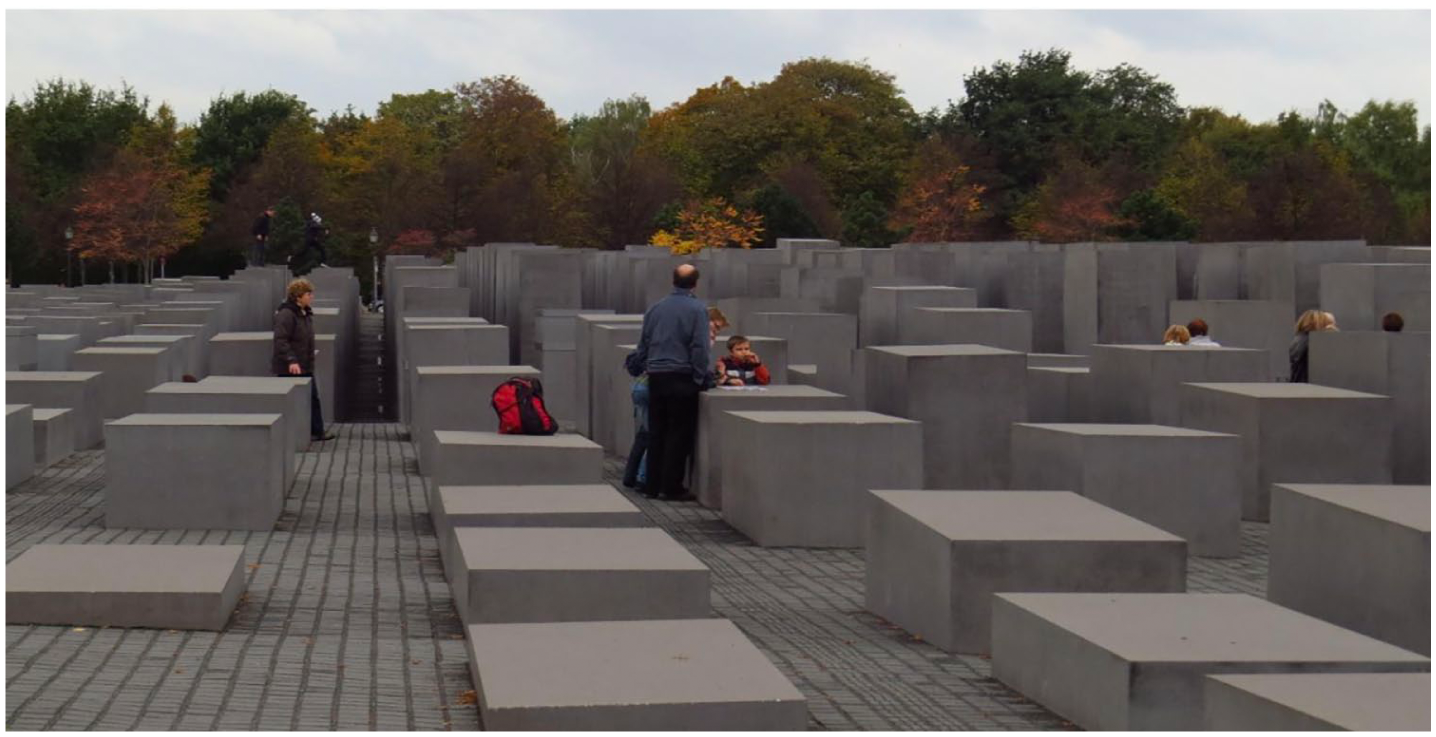
Memorial to the Murdered Jews of Europe.
Homomonument in Amsterdam, on the other hand, provides seating areas (Figure 9) offers contemplative space for city dwellers alongside the shore of a canal. In contrast to the Memorial to the Murdered Jews of Europe, understanding the memorial feature of the Homomonument may be more challenging at first glance. However, as seen in Figure 10, the information panel is placed in a highly visible position for city dwellers, and together with the amphitheater-like platform extending toward the canal (Figure 11) and the inscription completing the triangular form on the ground, its commemorative character becomes more explicit. According to the rules of perception, if an observer approaches an object with a curious mindset, they may surpass the initial level of cognitive process of perception, reaching an attention level. The level of attention given to a memorial provides the necessary cognitive environment for a deeper understanding of its significance. It’s not just about looking at it, but truly seeing it. One common tactic that demands attention and is frequently employed is the use of inscriptions on the memorials. Thus, even though the Homomonument explicitly intends to serve as urban furniture, its memorial function is more readily perceived than in the case of the Kordon Platform, which, much like Rubin’s Vase, requires a substantial attention shift to reveal its commemorative dimension.
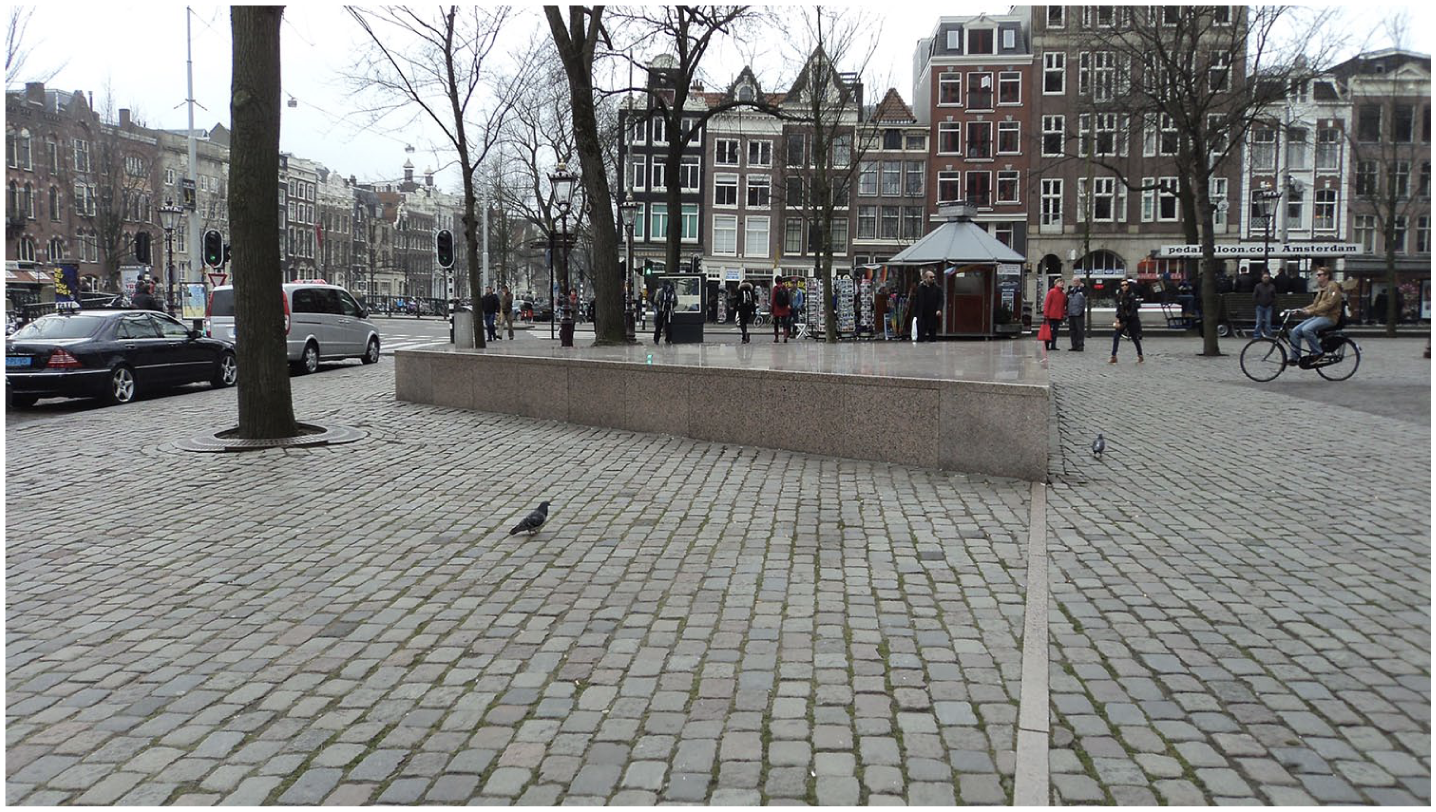
Inland Block of the Homomonument.
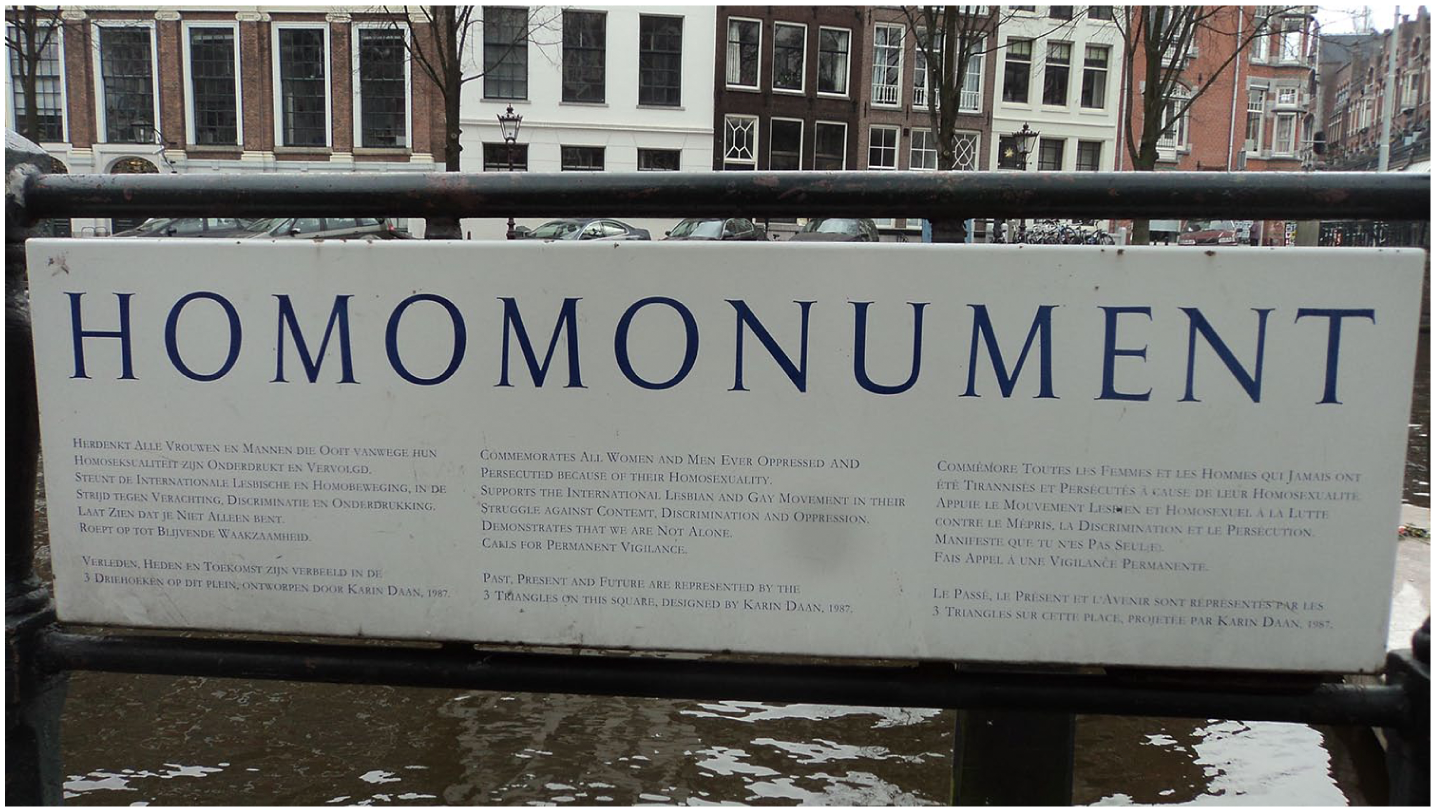
Informative Plate of the Homomonument.
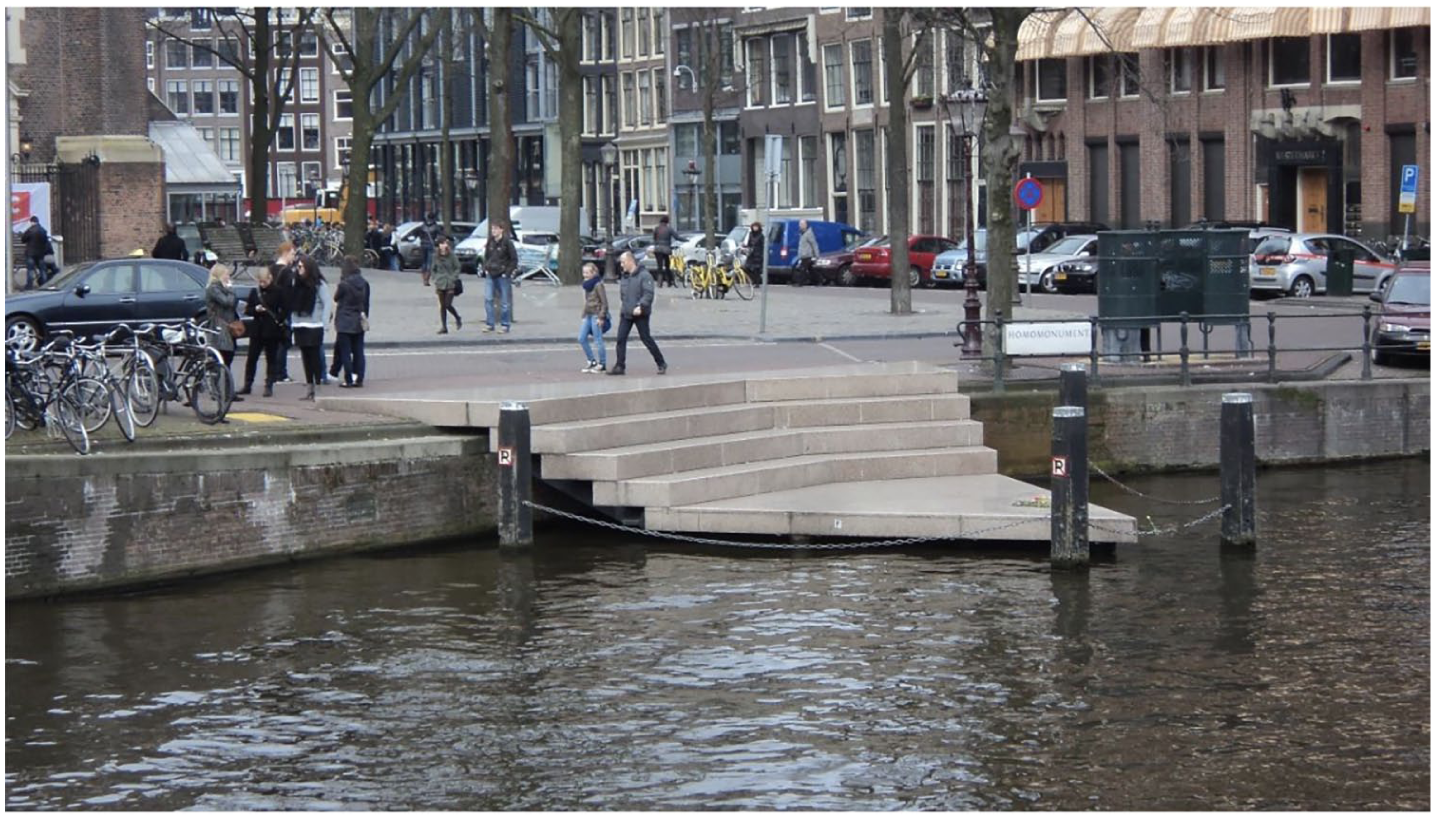
Canal Seating of the Homomonument.
Kordon Platform in the Lens of the Theory of Photography
In an interview, Özcan, the designer of the Kordon Platform, emphasizes that while browsing through old photographs of İzmir on social media, he noticed that the most frequently shared ones depicted two now-absent structures: the Palet Restaurant and the Konak Pedestrian Overpass. What caught his attention was not only the frequency of their appearance but also the deeply personal and varied ways in which these lost landmarks were remembered and shared. Through filters, captions, and framing choices, users seemed to reconstruct spaces that no longer exist, giving them renewed presence in the digital landscape. Özcan describes this experience as being “haunted” by these images of the past due to the emotional weight they seem to carry despite their physical absence. This reaction, born out of mediated visual encounters with architectural loss, closely parallels Roland Barthes’s reflections on photography as a site where loss, memory, and emotional resonance converge. In his seminal work Camera Lucida (1981), Barthes (1981, p. 4) turned to photography as both a deeply personal object of reflection and a medium uniquely capable of remembering “what could never be repeated existentially” or who could never return in any other form but through the image. Barthes believes that the life of someone who had existed before us encapsulates the very essence of history, and only in this manner does photography evoke a sense of surprise (p. 65). The photograph, therefore, according to Barthes, should aim to convince the observer that the depicted subject once truly existed; it represents not only an absence, but the past presence of the subject (p. 85).
Barthes (1981) claims, in Camera Lucida, that we engage with images on two levels: the studium, which refers to a general interest in the subject matter, and the punctum, which is a sudden and intense personal connection to a specific detail within the image, but not requiring attention. The punctum appears before the studium by punctuating it. Purged of all cultural codes, the punctum is that which captures individual attention within the spectrum, making the photograph memorable. In literary terms, it is the element that ascends from the scene and resonates with the spectator (Barthes, 1981; 26). The studium emerges from the accumulation of knowledge and culture, linked to figures, faces, gestures, settings, and actions, and represents a significant component of education. It elicits a sense of average feeling as it revolves around judgmental criteria such as cultural, political, and aesthetic aspects in photography. It involves the continuous collaboration of the prefrontal cortex, a region responsible for social memory and judgment (Postma et al., 2008; Rizzolatti & Sinigaglia, 2008), with the already established criteria stored in memory.
The punctum, contrary to the studium, often resides in a specific detail and embodies a form of loving, thereby aligning with temporality, death, as well as loss (Barthes, 1981, p. 43; Depeli, 2015; Eldridge, 2016). This is precisely why photographs that capture the punctum leave a lasting impact on the spectator, eliciting a love that surpasses mere admiration. In this form, punctum represents our subconscious, comprising personal experiences that may “unexpectedly” surface without conscious awareness. The concept of punctum establishes a direct connection with the emotions of the observer, particularly by engaging the limbic system and the amygdala, the centers of emotions and emotional memory, with an element of surprise (Bradley & Sambuco, 2022; Damasio, 2018; Richter-Levin, 2004). In this regard, punctum aligns with the act of looking. From the perspective of looking, it scientifically connotes that the eye rambles and shifts at different points in the visual field (Zhaoping, 2024). As such, since it does not demand as much conscious attention, it engages with peripheral vision which processes visual input with lower acuity and often outside conscious awareness. This mode of perception contributes to guiding the viewer’s gaze by detecting salient features in the visual field. These salient elements are processed early in the visual stream, particularly in the primary (V1) and secondary (V2) visual cortices, where the initial construction of a saliency map occurs (Zhaoping, 2024).
As Kahneman’s (2011) theory of fast thinking suggests, perception often occurs rapidly through the magnocellular pathway (M-pathway), triggering intuitive, affective responses in the limbic system. Similarly, Barthes’s concept of punctum creates emotional resonance rather than structured interpretation, aligning with what cognitive neuroscience now defines as automatic, bottom-up processing (Zou et al., 2023). Rather than invoking the metaphysical subconscious, punctum operates through fast, peripheral perception, enabling the brain to register low-resolution visual cues before conscious awareness. According to Treisman and Gelade’s (1980) Feature Integration Theory, visual features such as color, shape, and orientation are first processed in parallel. Later, attention binds them together in a serial and focused way. When the number of features increases, this process slows down and becomes more difficult. Figure 12 schematically illustrates punctum.

An Overall Punctum Scheme Regarding the Cognitive Process Discussions.
On the other hand, studium, in contrast to punctum, refers to “the very wide field of unconcerned desire, of various interests, of inconsequential taste,” aligning more with preference than with emotional attachment (Barthes, 1981, p. 27). It requires the viewer’s sustained and conscious attention, forming a kind of visual education through which the object is connected to broader cultural, historical, or aesthetic frameworks relevant to the observer’s interpretive lens. Each individual responds to stimuli differently, and determining which stimulus to attend to becomes a crucial aspect of perception. These responses are primarily guided by top-down processes, indicating that personal factors such as prior knowledge, experiences, and education significantly influence attentional focus within a visual field (Connor et al., 2004). While Posner (1980) likened attention to a spotlight on visual space, later studies showed it also prioritizes objects (Duncan, 1984) and integrates both object and location (Tipper, 2001). This selective process, as noted by Broadbent (1958) and Thorndike (1920), reflects how the brain filters stimuli. It is supported by the slower parvocellular pathway (P-pathway), responsible for processing fine detail, color, and texture (Zou et al., 2023). Thus, studium aligns with Kahneman’s (2011) slow thinking. It aligns with central vision and is processed through top-down mechanisms, allowing the observer to perceive and interpret the nuanced visual features of an image. Figures 13 and 14 schematically illustrate the relation of studium to visual cognition and its interplay with punctum.

An Overall Studium Scheme Regarding the Cognitive Process Analysis.
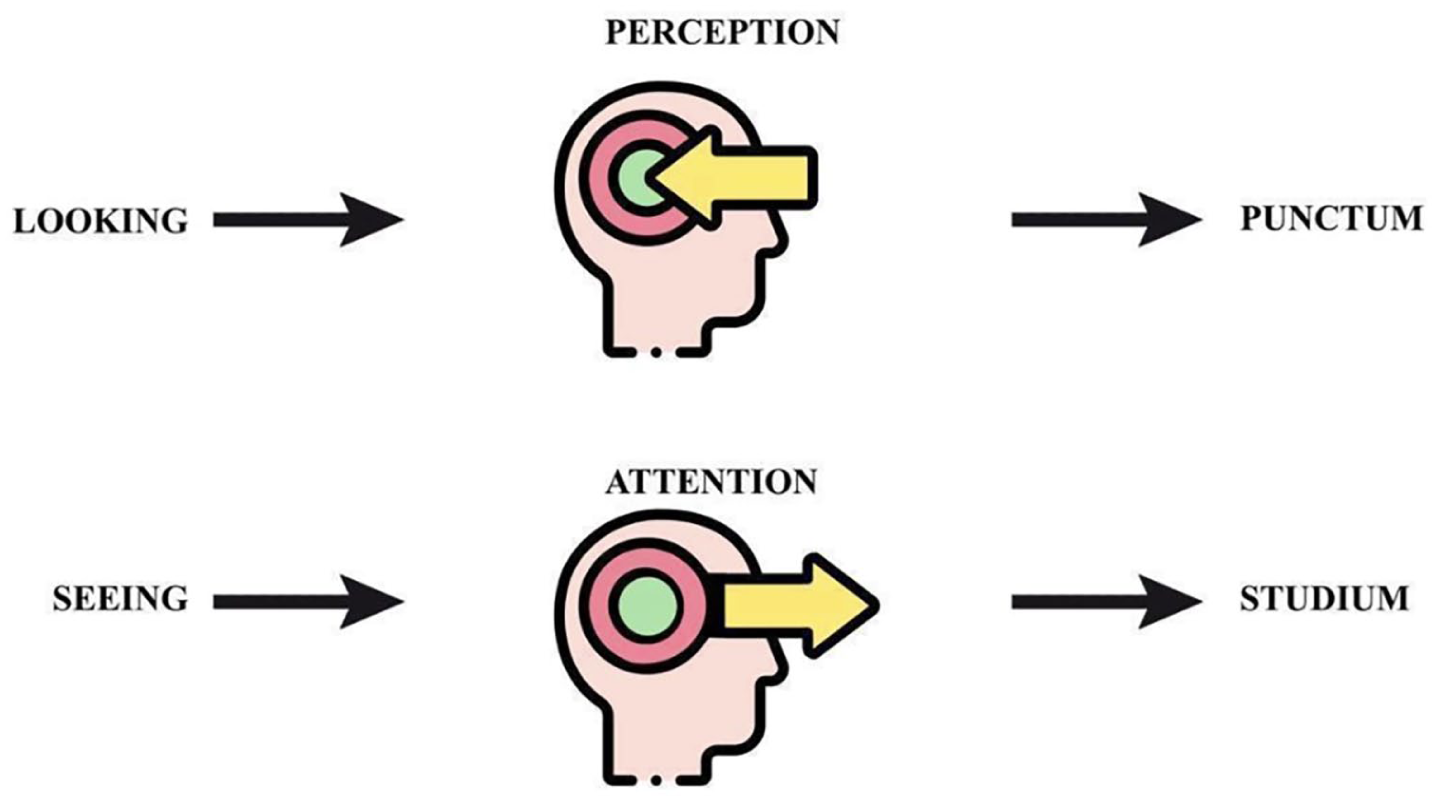
Studium is Seeing and Attention; Punctum is Looking and Perception.
This cognitive grounding of studium and punctum not only enriches our understanding of photographic meaning but also opens a path for their application in spatial disciplines. Bridging this theoretical foundation with urban design, recent scholarship has sought to translate these visual-conceptual tools into frameworks that interpret how cities are perceived and remembered through space. In this perspective, Jiale Zhu (2022) proposed a method of synthesis by adapting Barthes’s model to Kevin Lynch’s (1960, 1976) theories on urban space. In this work, the concept of studium is intricately linked to the keywords of common interest, lived experience, and local culture, all of which manifest in various elements of urban landscapes, such as streets, walls, canals, mountains, and different typologies of districts and buildings. For example, a familiar neighborhood park or a preserved traditional street may serve as studium, reinforcing the sense of belonging. In contrast, Zhu (2022) conceptualizes punctum as representing critical nodes and focal points associated with spatial features that pierce the flow of urban experience such as the sudden demolition of a long-standing building, the appearance of a haunting monument, or even the sight of an abandoned overpass charged with nostalgic imagery. Building on Zhu’s theoretical synthesis, one may argue that urban furniture often aligns with the notion of studium, as it typically reflects elements of shared culture, everyday function, and localized familiarity. Conversely, when such objects are imbued with emotional charge, historical memory, or symbolic resonance, they may shift into the register of punctum, piercing the everyday urban landscape and prompting deeper reflection.
Seeing Memorial in Camera Lucida
Camera Lucida, as a term, refers to a tool that allows the user to trace an object by visually superimposing its virtual image onto a flat surface (Merriam-Webster, 2024). The system originated from the contrasting Latin association of camera obscura, meaning “dark room,” and literally translates to “light chamber” (Merriam-Webster, 2024). In Camera Lucida (1981), Barthes uses this contrast to reveal the paradox of the photographic image—fully visible yet elusive—capturing the tensions between looking and seeing, presence and absence, remembering and forgetting. This duality is particularly relevant in urban contexts where spatial elements such as memorials simultaneously invite recollection and elude full comprehension. Their presence is visible and physically tangible, yet the historical or emotional significance they carry may remain inaccessible without a specific cultural or narrative lens. Moreover, the recalled information is not an exact replica of the past, but rather a mental construct of it: “the enemy of memories is not time but other memories,” underlining the interference theory of forgetting (Eagleman, 2021, p. 4; also see Bergström, 1893; Ebbinghaus, 1885).
This fluidity of the remembered past underscores Boym’s (2001) distinction between reflective and restorative nostalgia: the former invites critical contemplation of memory’s complexities, whereas the latter seeks to re-establish lost origins. The Kordon Platform aligns more closely with reflective nostalgia rather than restorative nostalgia. While restorative nostalgia seeks to reconstruct a lost past through physical or symbolic restoration, reflective nostalgia dwells in the act of remembrance itself, acknowledging the impossibility of full recovery while inviting personal and collective reflection. The Kordon Platform does not attempt to reconstruct Palet Restaurant; instead, it creates an ambiguous and interpretive space that allows for subjective engagement with the object.
When the passersby look at the Kordon Platform, their initial perception will involve information processing about its line, color, and shape, respectively, and these will be directed to the V3 and V4 areas of the visual cortex as schematically illustrated in Figure 15. According to this schematization, our cognitive processing prioritizes the analysis of lines over basic geometric shapes. This preference arises from the fact that identifying a shape necessitates both geometrical information and the retrieval of the associated name from our stored memories. This also leads the observer to seek an answer to the “what” of the design based on their personal background, resulting in top-down processing. At this point, whether a designed object is perceived as memorial or urban furniture is therefore not inherent to the object itself, but rather a product of the observer’s perceptual and cultural framework.
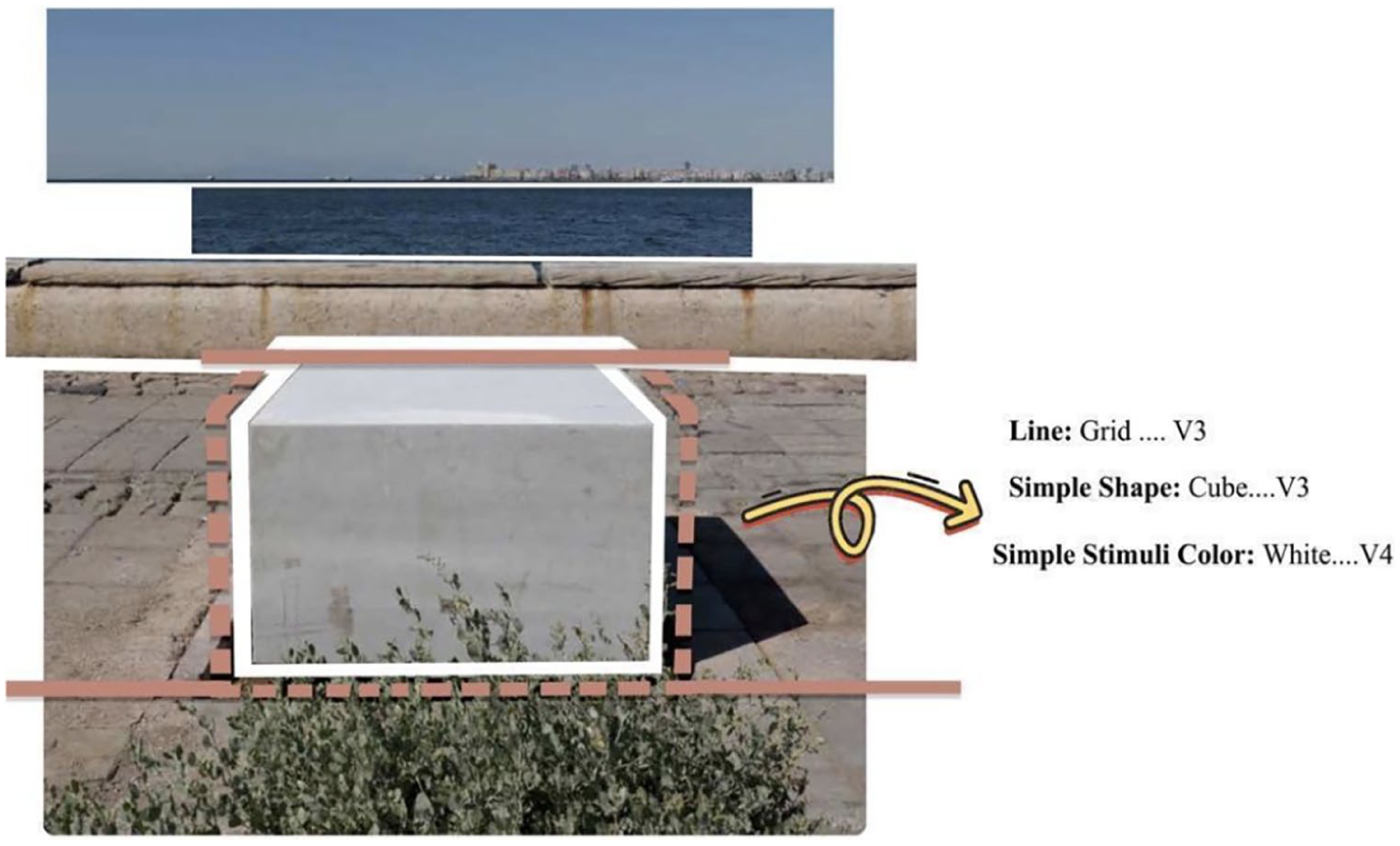
Information Processing of the Kordon Platform.
This perceptual variability calls to what Svetlana Boym (2001) defines as the “culture of memory,” wherein collective practices and associations determine how urban elements are remembered and valued. In societies, like in Türkiye, where monuments are traditionally equated with heroic statuary or figurative sculpture, for instance, a minimalist concrete block may fail to register as a “memorial.” In contrast, in cultures shaped by Anglican or Anglo-Saxon traditions—where memorials often take the form of modest grave markers or anonymous commemorative stones (Yılmaz, 2014, p. 335), such an object may seamlessly signify memory. The distinction between urban furniture and memorial thus hinges not only on personal perception but also on collective cultural codes that define what is seen, remembered, or overlooked in the urban realm.
As illustrated in Figure 16, captured on the inaugural day of the Kordon Platform, individuals quickly adapted to their surroundings based on the initial information about their daily lives. They used the platform as an impromptu table for their drinks, bags, and bottles. Two people stand casually in front of it, engaging in conversation, reminiscent of a lively cocktail party atmosphere (Figure 16). The scene reflects a social interaction where the overall design was deemed to be seen as urban furniture from the very first moment of its introduction. The main feature of the design, its memorial status, was overlooked. Özcan (2024) articulates his perspective on these usages, which is centered on the act of looking and seeing, using the following words: “It’s fascinating how these structures have evolved over time, from being a point of contention during the coastal road demolition to their current use as a cafeteria.”
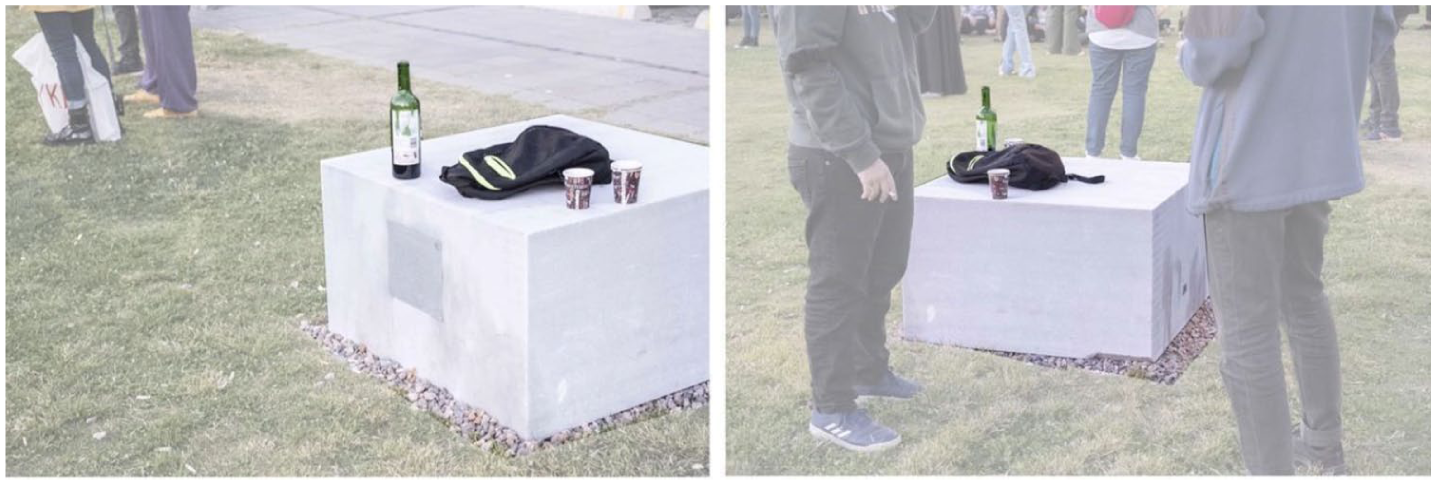
Marble Blocks Were Used as Tables by the Observers.
Today, a situation similar to what Özcan conveys in the above words manifests itself despite all decays and interventions. As local fishermen began to use the two marble blocks located near the sea more frequently, the blocks became increasingly visible. The blackness on the surface of one of the blocks, likely caused by the effects of soot from a nearby fire, has become prominent, emphasizing the influence of design on perception. In contrast, the marble blocks located at the rear end are particularly vulnerable to user intervention, as they often utilize the grassy area for picnics. As a result, these blocks are frequently marked with scribbles and writings, as they are often perceived merely as writable white surfaces (Figure 17). Nevertheless, most people continue to treat them as urban furniture, overlooking the metal plaques that hint at their commemorative purpose. It dissolves inconspicuously into the familiar spatial codes of the coastal landscape, remaining unnoticed.
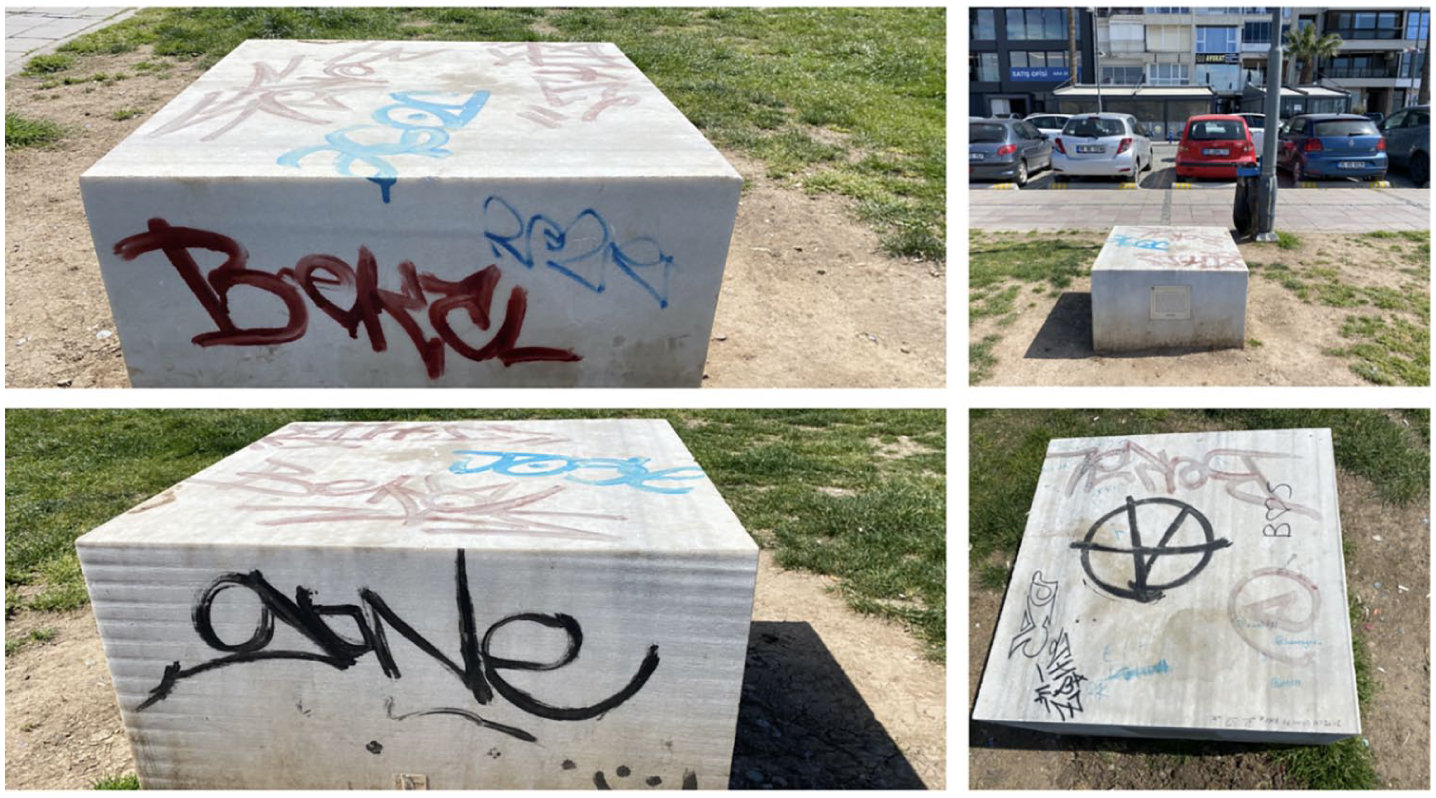
Scribbles and Writings on the Marble Blocks Located on the Grass, 2024.
Yet, the subtle quality of the marble blocks with their unusual locations and sizes in the waterfront landscape has the potential to create a point where punctum appears before the studium by punctuating it. This prompts the viewer to question and realize that the design on display is not just ordinary urban furniture, but rather conceals an underlying monumental significance. This sudden reaction and moment of recognition, when transformed into a search driven by curiosity, may activate the rational faculty of studium in the effort to understand what the marble blocks signify. At this point, the explanatory texts on the side surfaces undoubtedly provide a contextual background. However, since what is remembered bears no visual or spatial resemblance to the commemorated object itself, the process, much like Boym’s concept of reflective nostalgia, invites personal reflection. It also opens up a space for the multiplicity of meanings that Young attributes to counter-monuments. The metaphorical key to Péguy’s “closet” of memory may have unlocked the door, but the memorial does not evoke a specific remembered object; rather, it enables the individual to generate a new memory, interwoven with personal background and emotions in that particular moment and place. Its highly abstract form resists a single historical narrative, studium, prompting visitors to project their own memories, associations, or even silences onto the site.
Conclusion
This article aims to explore the distinctions between memorials and urban furniture, examining how the ambiguities in their functions and uses impact citizens’ cognitive processes, drawing on a conceptual framework by Roland Barthes. Barthes’s theories in Camera Lucida offer a concept-based alternative reading that addresses the ambiguities of the visible and the invisible in our understanding of memorials. Amid these discussions, it becomes clear that the line between memorials, the most (in)visible symbols of a city, and urban furniture is often blurred. The dominance of one over the other is shaped not only by their physical presence, but also by the observer’s cognitive capacities, the memorial’s design language, and the cultural codes it references. The observer’s role is crucial—they must see to unlock the past it holds, not just look. Otherwise, the memorial can be perceived as urban furniture, serving various functions for each passerby.
As such, the Kordon Platform, which represents this blurred line between memorial and urban furniture, has a bridge-like disposition in transferring this theoretical discussion to practice through a current discussion. It also constitutes a premise for future studies that will focus on the relationship between theory and practice through different examples. Changing the bridge will not sever the relationship between theory and practice; instead, examining this relationship through various bridges will make this grounded theory even more valuable. Therefore, this study has ultimately established a connection between memory, urban installations, and theory of photography that engages cognition and triggers memory. By providing an interdisciplinary perspective for demarcating memorials from urban furniture or vice versa, it has also the potential to be adapted and applied in different disciplines. The future research on memory can draw upon this theoretical framework, adapting it to various disciplines and drawing new insights, sparking intrigue and eagerness to explore the study’s implications.
Footnotes
Author Contributions
This manuscript originated from a doctoral course taken by İlke Hiçsönmezler and taught by Umut Altıntaş. The initial conceptual framework of the manuscript was developed collaboratively by İlke Hiçsönmezler and Umut Altıntaş during the course. Umut Altıntaş contributed to the development of the article’s conceptual framework and provided guidance on the structure and language during the early phases of the writing process. Ahenk Yılmaz, who later joined the project as İlke Hiçsönmezler’s PhD supervisor, structured the theoretical framework and expanded the scope with international references. The article was primarily written by Ahenk Yılmaz and İlke Hiçsönmezler.
Data Availability Statement
The data that support the findings of this study are available from the corresponding author, [İlke Hiçsönmezler], upon reasonable request.
Declaration of Conflicting Interests
The authors declared no potential conflicts of interest with respect to the research, authorship, and/or publication of this article.
Funding
The authors received no financial support for the research, authorship, and/or publication of this article.
Ethical Approval and Informed Consent Statements
We confirm that all research was conducted to the highest possible ethical standards, regardless of the requirements of the local setting. Informed consent for information published in this article has been received from the designer of Kordon Platform.
