




Abstract
This article aims to contribute to the study of the relationship between the increasing size and verticality of contemporary cities and the lived experiences of their residents. Drawing on 20 residential biographies of apartment owners in the newly built large housing estates (LHEs) on the outskirts of St. Petersburg, Russia, I explore how their specific geometry and materiality co-constitute everyday neighboring interactions. As an analytical tool, I apply a version of social practice theory that treats materiality as an influential constitutive component of everyday life. The article shows how geometry, including verticality and size, as well as shared materiality, shape and mediate neighboring practices. I argue that diverse neighboring interactions, occurring simultaneously at larger and smaller scales, as well as in visible and invisible modes, are inherent in vibrantly gigantic and monolithic housing. The article coins the concept of elastic neighboring, focusing on the everyday oscillation between residents’ isolation and awareness of each other.
Keywords
“For me, neighborly relations mean having one thing in common—the building. I’m always happy to help a neighbor with building issues, but visiting each other or celebrating holidays together—I don’t see any point of that,” 27-year-old Anna 1 told me when we talked in her one-room apartment in a 22-story apartment complex. Many new residents I met on the outskirts of St. Petersburg, Russia, between late 2017 and early 2019, were even more radical about the anonymity of relationships with neighbors in large housing estates (LHEs). They introduced themselves as “introverts” who were reluctant to meet their fellow residents, and even if they wanted to, the type of housing that they lived in did not suit them. They drew a clear distinction between mass-produced high-rise housing, where there is no social connection between neighbors, and old residential buildings with 5, 9, or 12 floors, and a culture of engaged neighborliness, where co-residents actively socialize and visit each other. This form of co-housing originated in the 1960s to 1980s when workers and their families lived side by side for generations in social housing blocks acquired from the Soviet state. It partially survived the economic and social turmoil of the 1990s, serving as a safety net of non-monetary help and care for many, and still exists in some areas (Salmi, 2006; Vanke, 2023). Since about the early 2000s, St. Petersburg, and especially its periphery, has become hyper-vertical, growing up to 30 stories and higher. It has been a part of the unprecedented rates of the vertical expansion of built space, seen as the global neoliberal capitalist response to urban population growth and the intensity of people’s spatial and social mobility. Learning to be a neighbor was one of the challenges that residents, like Anna, faced in the new neighborhoods (Chernysheva & Sezneva, 2020; Tykanova & Tenisheva, 2020; Zaporozhets & Brednikova, 2022). Observing life in such residential areas during my fieldwork, I wondered how everyday neighboring is possible in a built environment that is perceived as unneighbourly even by its residents. Thus, this research aimed to contribute to the understanding of the specificity of neighboring in large housing developments.
The mainstream social studies of high-rise buildings examine them as housing extremes—either central luxury penthouses or peripheral poor mass social rental sector. Since the era of the old global cities, skyscrapers have been interpreted and criticized as vertical symbols of power, wealth, and security of elite residents (Graham, 2020; Wolseley, 2020). Meanwhile, high-rise social housing has been interpreted as a basis for deprivation and crime (Bartram, 2016; Gifford, 2007; Kearnes et al., 2012; Norris, 2014). The proliferation of high-rise housing and the settlement of the middle classes in it led researchers to move beyond the dichotomy of “high-rise apartments for the privileged and for the masses” (Urban, 2012, p. 158) to the ordinariness of this form of housing. Despite this, a growing body of research continues to stigmatize and marginalize “human-unfriendly” large buildings. Their common characteristics include a sparse but hyper-dense form of living, rapid turnover of residents, lack or absence of outdoor spaces for socializing, very high above-ground living without direct access to the outdoors, and limited accessibility to each other from inside the house (Graham & Hewitt, 2013; Hess et al., 2018; Karsten, 2015, 2022; Kerr et al., 2018; Nethercote & Horne, 2016; Rao, 2020; Urban, 2012; Yuen & Yeh, 2011). Huge apartment complexes have been consistently blamed for the decline of the ideal and norm of affective, lifelong bonds between co-residents. Such a view of LHEs as huge monolithic “spatial containers” has been highly criticized for canceling the counter-logic of privacy, care, and intimacy (Arrigoitia, 2014; Baxter, 2017; Jacobs, 2006; Jacobs et al., 2007).
An ontology that focuses on the relations between social practices and material arrangements, or the practice–arrangement nexus, and treats materiality as an influential constitutive component of everyday life (Reckwitz, 2002; Schatzki, 2010), provides new impetus for a nuanced analysis of vertical life. Social practice theory, which pays special attention to the material environment of practices or the essential role of materiality in everyday life, has gained popularity in neighboring studies (Bukowski & Smagacz-Poziemska, 2022; Karsten, 2015, 2022; Kerr et al., 2018; Maller et al., 2016). In my research, I applied the socio-material perspective of analysis to identify which aspects of built materiality, and in what ways, co-constitute residents’ everyday practices and neighboring actions. From this perspective, materiality, or more broadly physicality, includes its physical components and properties, such as format, shape, scale and size, architectural style, construction details of the building, and physical properties of building materials and, more importantly, facilitators of communication, and so on (cf. Bartram, 2016; Bukowski & Smagacz-Poziemska, 2022; Jacobs, 2006; Schatzki, 2010).
In this article, I explore how residents of mass housing are connected through built materiality, conceptualizing neighbor interactions as co-created through materiality and residents’ everyday practices. I focused on the meaningful housing parameters that emerged in the homeowners’ narratives, such as geometry, including verticality and size, and shared materiality that facilitates communication, such as ceilings, walls, radiators, windows, doors, stairwells, corridors, elevators, and so on. The article begins by addressing the question of how to study co-residence in LHEs based on the materiality-based theory of practices. I then present the research setting and the empirical data collected. The following series of sections intersect different aspects of geometry and built materiality and show how they shape and mediate neighbor relations in LHEs. I conclude by attempting to move beyond the dominant understanding of neighboring in massive complexes as either anonymous or too decent, to a more ethnographic understanding that takes into account the simultaneity and interdependence of different aspects of geometry and materiality in the everyday lives of residents.
Conceptualizing Neighbor Interactions Within the Geometry and Materiality of LHEs
I believe that the studies of high-rises, preoccupied with their enormous scale and anonymity, narrow the analysis of everyday life in such environments. Based on the idea that the physical properties of the materials shape human activity (Schatzki, 2010), I argue that a more diversified view of the materiality and geometry of LHEs’ would allow us to reveal a more vibrant and less stereotyped everyday life. Therefore, I focus on two significant aspects of high-rise arrangements to capture the specificity of neighbor relations there.
First, to overcome the limitation of the mainstream methodological view on high-rises as a vertical, monolithic site (cf. Grabher et al., 2018, p. 252), I address their multidimensional geometric coordinates (at least, two) and scales. Current neighboring studies show that the horizontal perspective of suburban houses and low/mid-rise development and, on the contrary, the vertical one of high-rise global cities should not be antagonistic. In people’s everyday lives, “horizontal and vertical extensions, imaginaries, materialities and lived practices intersect and mutually construct each other” (Graham & Hewitt, 2013). In her definition of high-rises, Jane M. Jacobs (2006) tries to avoid the absolutization of verticality and uses the term “big thing” to combine the height with the width of massive buildings. Moreover, architecturally, large and tall buildings have quite a wide range of scales inside when it comes to the everyday lives of their occupants. However, smallness (small-scale segments) should not be ignored in favor of overall grandeur. In addition, a large scale or a large distance can be a significant interaction context in smaller fragments of the material environment. Moreover, both proximity and distance have been valued as geographical categories of equal epistemological status. Thus, interactions across distance can be as meaningful as those that are physically close, especially when actors share similar material environments (Grabher et al., 2018, pp. 246–252).
Second, analyzing social relations in large, populated complexes requires breaking with the obsession with observable, purely physical, face-to-face interactions as the only meaningful or primary ones, and turning to their hidden, “invisible” forms and dimensions. In my research, I follow the tradition that distinguishes between physical perception of copresence, face-to-face interaction in shared physical space (being there), and interaction beyond physical copresence, or copresence as perception and mutual accessibility for personal contact (being aware). Contemporary interactionists see close and distant, physical and virtual, and direct and indirect copresence as equally possible, as well as copresence involving different actors such as artifacts, and all these modes can be synthetically fused (Felder, 2020; Grabher et al., 2018; Knorr Cetina, 2009). Interactions and mutual perceptions constantly shift between the virtual and the physical and can also be mediated by a shared materiality that enables and impedes communication.
Critical situations in particular highlight the entanglement and mutual conditioning of physical and virtual modes of copresence (Campos-Castillo & Hitlin, 2013; Grabher et al., 2018, pp. 249–251). This argument is in line with previous research on the uneven and abrupt character of neighbor relations, which balance proximity and distance, individualization and collectivity, and the search for connectedness and withdrawal/dissociation (van Eijk, 2012). Material rupture, in particular, contributes to fluctuations in neighbor relations, exposing a fine line between visible and invisible communication when unfamiliar neighbors living two floors up leak the ceiling of the co-residents below, and they must somehow interact to resolve the problem.
Thus, I consider neighbor interactions as having different modalities within the architectural infrastructures and the physical layout form of LHEs. Verticality and horizontality, bigness and smallness, material design for direct and indirect communication—all these arrangements simultaneously co-constitute everyday life in massive high-rise complexes studied here through the example of LHEs in St. Petersburg, the second largest city in Russia.
Newly Built LHEs in St. Petersburg: Fieldwork Coordinates
Today, more than five million St. Petersburg residents live in a variety of housing types, including low-rise historic buildings inherited from the 18th to early 20th centuries, mid-rise housing built in the 1950s to 1980s in the Soviet Union beyond the downtown area, and mega-scale LHEs, which are growing primarily in the city’s periphery and on the edge of the adjacent Leningrad Oblast (see Trumbull, 2013). Massive LHEs change the entire urban fabric and become the new home for thousands of residents who bought their apartments directly from developers or previous owners. Such residential areas proved to be my field sites for more than a year. In the interest of generalizability, I visited several massive new complexes spatially dispersed along the edge of the city, either on the border of older neighborhoods, in the former industrial or abandoned areas near forests and old parks, or even in the middle of nowhere (see Figure 1). Many of these areas are under development and surrounded by construction sites (see Figure 2). Once completed, they will have on-site supermarkets and small shops, restaurants and cafes, post offices and health services, daycare centers and schools, recreational facilities, and other community and commercial services. But overall, the neighborhoods lack social and transportation infrastructure. The newly constructed housing in which I conducted my research belongs to the commercial “economy class” segment of predominantly prefabricated panel buildings. According to the federal program “Affordable Housing for Russian Citizens” launched in 2005, such housing should be “affordable and comfortable” for the average citizen to purchase (see Pachenkov et al., 2020). However, real estate prices in the buildings I visited are quite high due to the limited building space available in St. Petersburg and the overall high cost of land in the region. Such LHEs are socially mixed environments, dominated by young families with small children as owners and youth and international and domestic migrants as tenants.
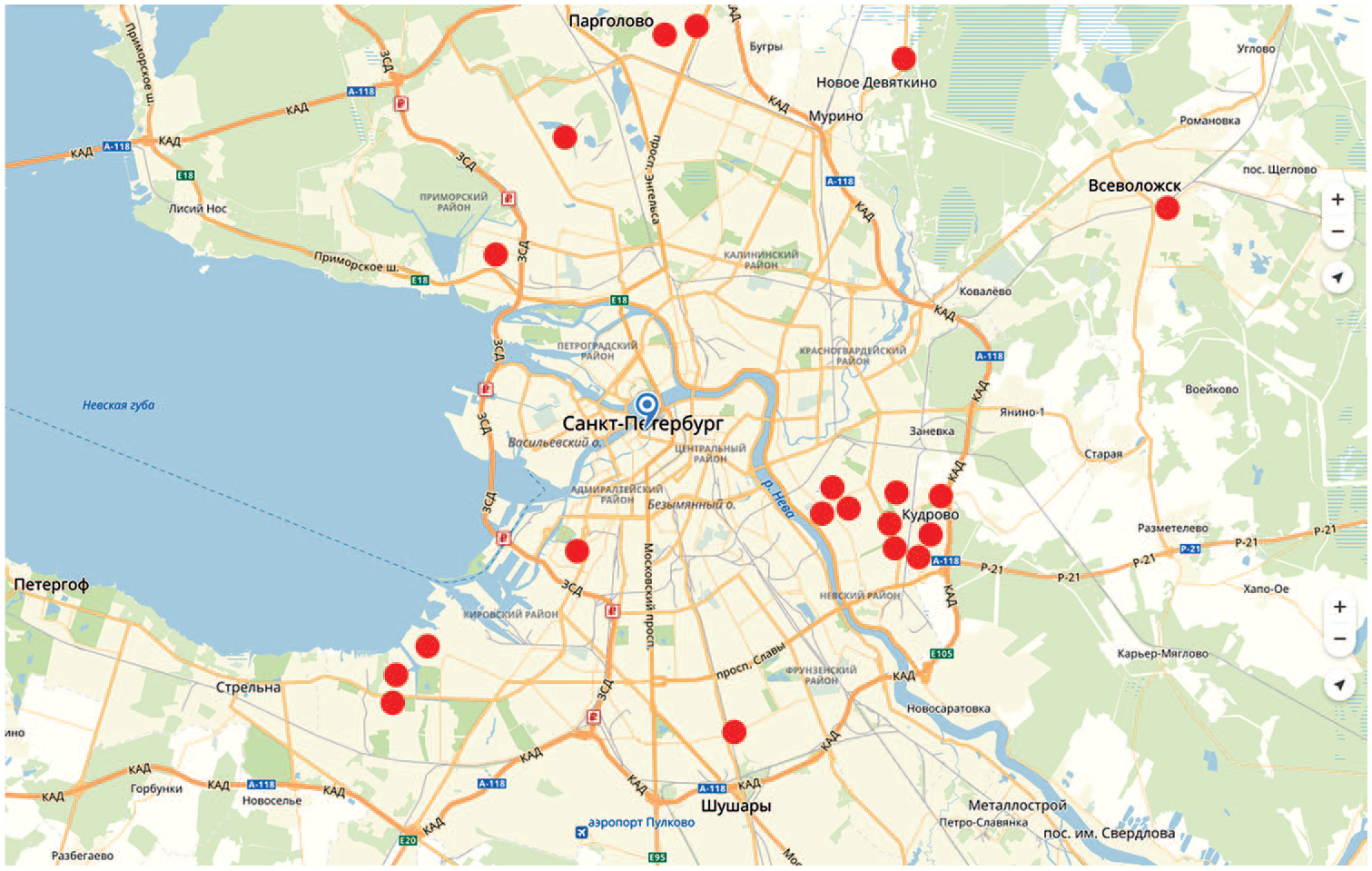
Map of Research Sites in St. Petersburg.
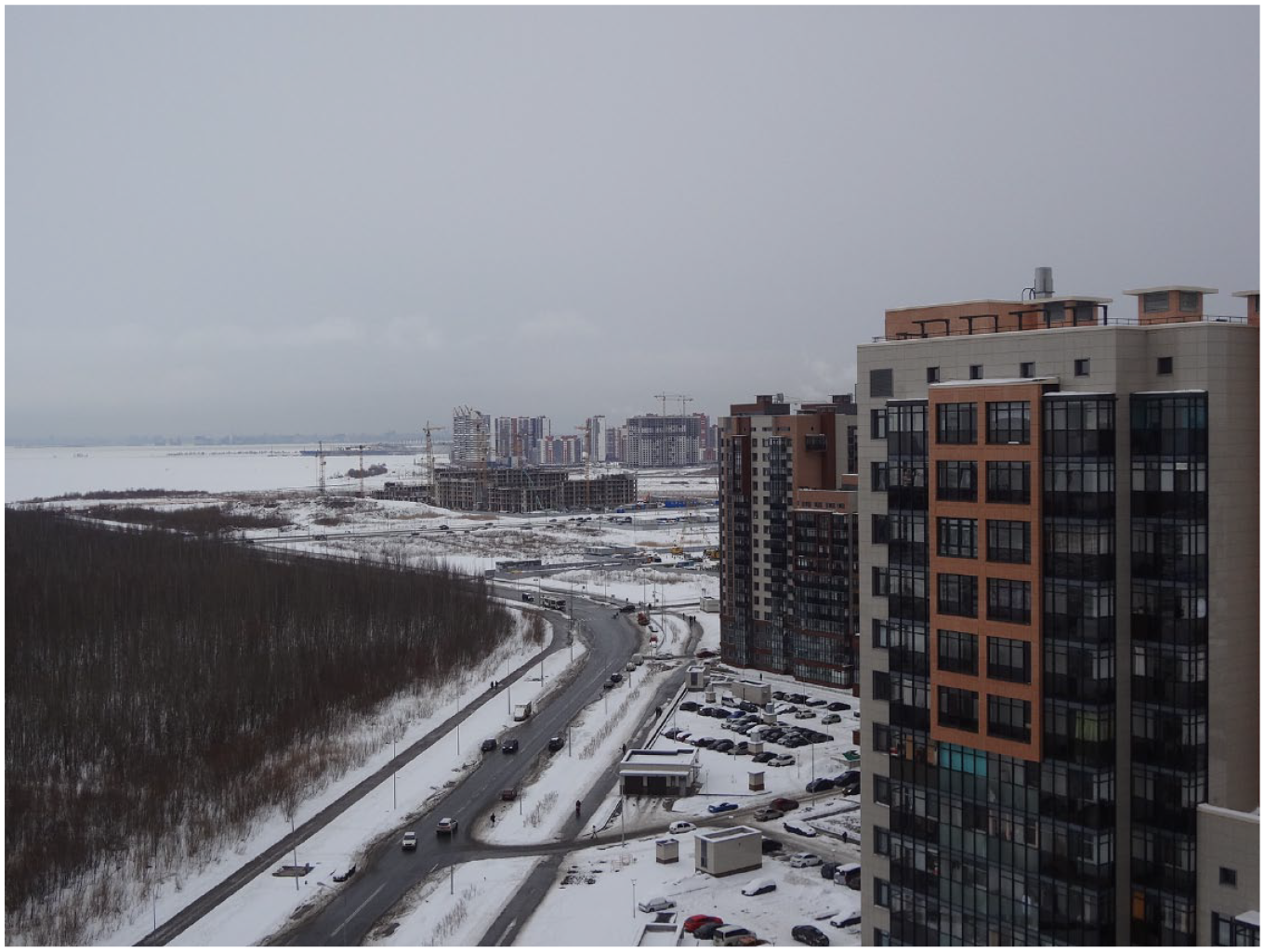
Newly Built High-Rises in the Southern Periphery of St. Petersburg, 2019.
In my sample, the size of each estate varied from up to seven buildings in a complex, up to 26 floors and 35 sections in a building, and up to 14 apartments on a floor (see Figure 3). LHEs are equipped with heating, water, ventilation, plumbing, lighting, garbage collection, and so on. They are managed either by homeowners associations or by property management companies that provide various in-house services and facilities. 2 Depending on their resources, they employ a range of service workers who are paid by the residents—managers, accountants, engineers, receptionists, plumbers, electricians, cleaners, and gardeners. None of the areas I studied can be defined as a classic gated community, but almost all of them were fully or partially equipped with security measures such as fences, gates, internal or external CCTV, checkpoints with guards and concierges. Playgrounds and open-air gyms are usually the only outdoor spaces in the neighborhoods.
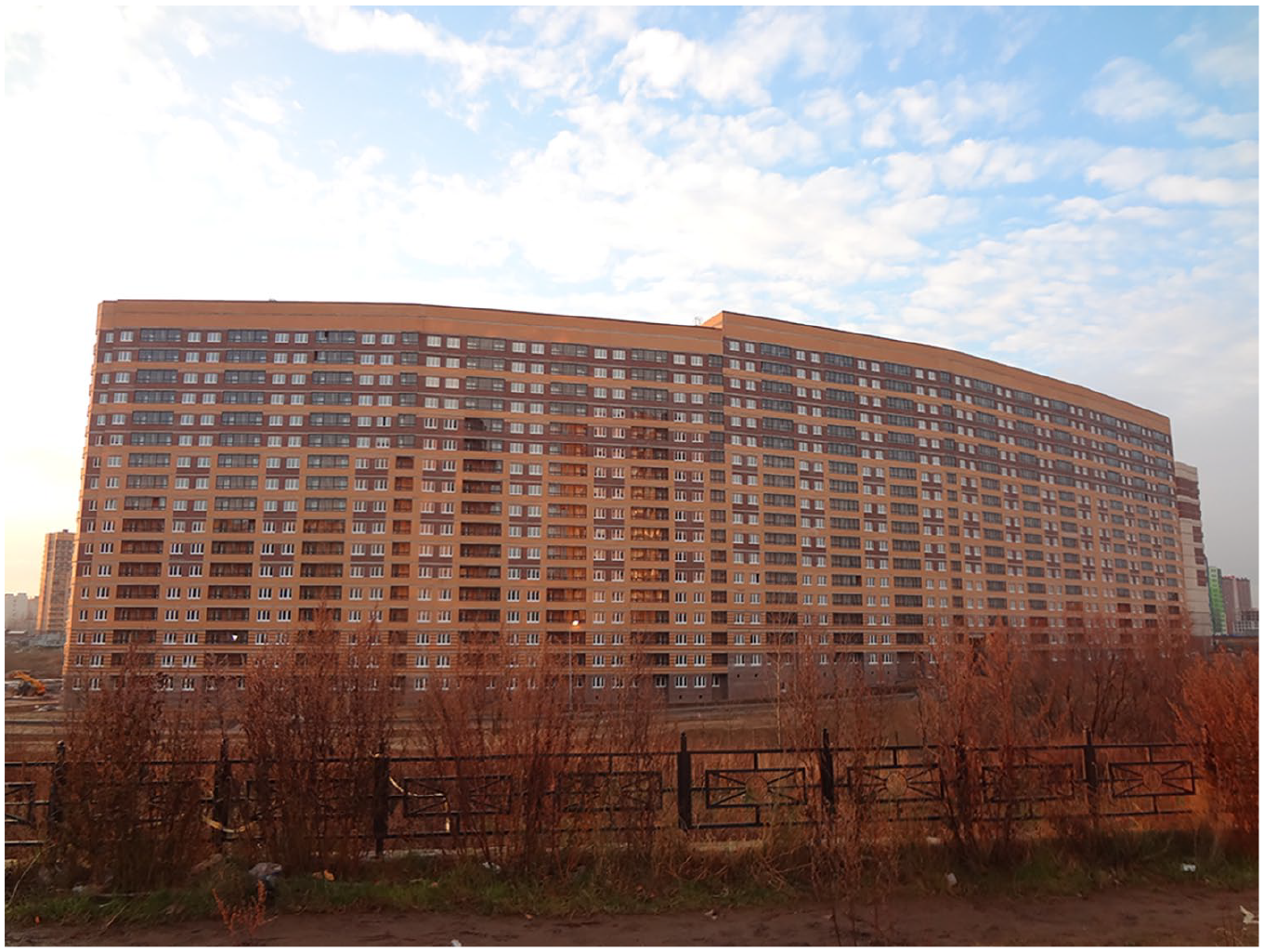
New High-Rise in the Northern Periphery of St. Petersburg, 2017.
The empirical data consist of 20 in-depth semi-structured interviews with 21 participants (including one married couple), (co-)owners of newly built studio, one and two-bedroom apartments that they had purchased and moved into between six months and 10 years prior to our meeting. Interviewees ranged in age from 22 to 41, with the majority in their 30s. With one exception, all were highly educated professionals working in public and private sectors such as oil and gas, IT and cultural industries, real estate and medicine, management and administration, research and analysis, nongovernmental organizations (NGOs) and universities, as well as self-employed. Three interviewees were on maternity leave. In terms of household composition, they live either alone (seven cases), as a couple (four cases), as single parents or couples with children aged between 5 months and 13 years (eight cases), or as a three-generation family (one case). Six people in the sample were originally from St. Petersburg; others had moved here from elsewhere in Russia. All but two bought their first home. They invested in construction at different stages, from construction pit to completion, and used different sources of financing, from mortgages to family savings. In terms of lifestyle, the sample represents residents who do not spend much time in the neighborhood during the day, nor do they participate in any form of local neighborhood activism. They also prioritize quality time with family and friends.
The interview partners were recruited through personal and professional networks, snowballing, and chance encounters. Recruitment and building trusting relationships with the interviewees were facilitated by my positionality in the field as a homeowner in a high-rise apartment complex of nearly 10,000 people. Having lived there with my family for 10 years at the beginning of the project, I was accepted as a reliable person to share my views on the typical problems faced by the residents of LHEs. The interview was designed as a “residential biography,” from the first remembered place of residence to the current one with a focus on the latter. We talked about co-residents perceived as neighbors, spaces of and reasons for interaction, cooperation and conflicts with them, the specificity of material arrangements, and so on. 3 All but two of the interviews were conducted in the apartments and were accompanied by informal conversations, tours of the flats with window or balcony views, and several short tours of the neighborhood. Interviews lasted from one to three hours. They were all audio-recorded, transcribed verbatim, and then coded thematically based on the tags of housing materiality and related neighbor interactions.
Getting to Know Neighbors in the New and Large Living Environment
Getting the door keys and moving in is a time of euphoria of getting a new home and meeting new neighbors, especially the closest ones. The first residents live in half-empty complexes, sometimes not even fully equipped, surrounded by construction sites, underdeveloped transportation, and social infrastructure. They are excited to visit each other’s empty apartments, borrow tools, check out the possibilities for decorating, and ask about the facilities in the area. The euphoria wanes a bit when the neighbors realize that the communal infrastructure of the economy class segment is brand new but quite cheap and weak and that the adjoining materiality—walls, pipes, corridors, balconies, air ducts, and electric wires—connects them and makes them interdependent and mutually vulnerable. Some residents, like the 37-year-old Natalia (one-room flat, solo), try to anticipate potential disruptions and make contact with vertically connected neighbors: The first thing I did [when I moved in], was to get the phone numbers of the neighbours above and below me. [. . .] That was crucial because of potential leaks. [. . .] It was especially necessary in the very beginning when the pipes were leaking. All [materials] were from the developer, and the quality was not high. So, it was extremely necessary.
Initial face-to-face neighborly encounters do not necessarily translate into strong ties. Co-residents may keep in touch with each other to minimize possible economic and reputational damage in the event of a rupture. They may continue to greet each other, but they do not stay in touch because they do not even cross paths all that often. They are much less interested in the vast spaces beyond their homes. The homeowners I interviewed were not fully aware of the size of the built space: “I have no idea how many buildings there are here. It’s built and built and built” (Gulia, 29, one-room flat, solo). Even long-time residents like 38-year-old Svetlana (two-room flat, preschool-age daughter and husband) sometimes did not know for sure the number of floors and sections in their buildings. She tried hard to remember when I asked her: I think twenty-four. No, less. Seventeen, I think. There are probably seventeen floors here, or twenty. I do not even know. I push on the seventh floor [in the elevator] and that’s it. And it turns out we have twelve front doors here, I think. (counting) Six, seven, eight . . . Yes, there are twelve front doors, and there are four flats on each floor.
Not knowing neighbors by sight is presented as the norm for upscale high-rises. As the above-mentioned Natalia put it, “We don’t know each other exactly because of the number of people. If it were a kind of clubhouse with twenty apartments, of course, I would know everyone.” Arthur (30, one-room flat, solo) echoed her in our conversation, referring to the size of the section of his building:
Do you know people who live around here, at least age, family composition?
Look, there are 18 floors here.
No, I mean on your floor.
Oh, on my floor. Well, I know there’s a mother, a grandmother, and a little child live over there. Then there’s a guy over there. [. . .] Then there is a woman, and then . . . further . . . I don’t go there, I’m afraid I’ll get lost (laughing).
During my fieldwork, I got lost several times in those long and winding hallways that Arthur mentioned (see Figure 4). Neighbors on the same floor do not cross paths there for weeks or even months, so they can hardly recognize each other when they do meet. This can also happen because of the rapid residential turnover, as the apartments in the peripheral complexes are transitional housing for many: The turnover is pretty intense, because there are eight apartments on our floor, and I think seven of them are rented out. [. . .] Sometimes I get off the elevator [together], on the same floor, and I think, “Oh, wow! I am seeing [this person] for the first time.” I’ve seen neighbors from both sides [of the apartment]. I probably won’t even recognize one of them by sight. I know another one personally, but we don’t meet. Of course, I cannot remember all the people, who change endlessly. After ten years I know only three neighbors. (Veronika, 41, two-room flat, husband)
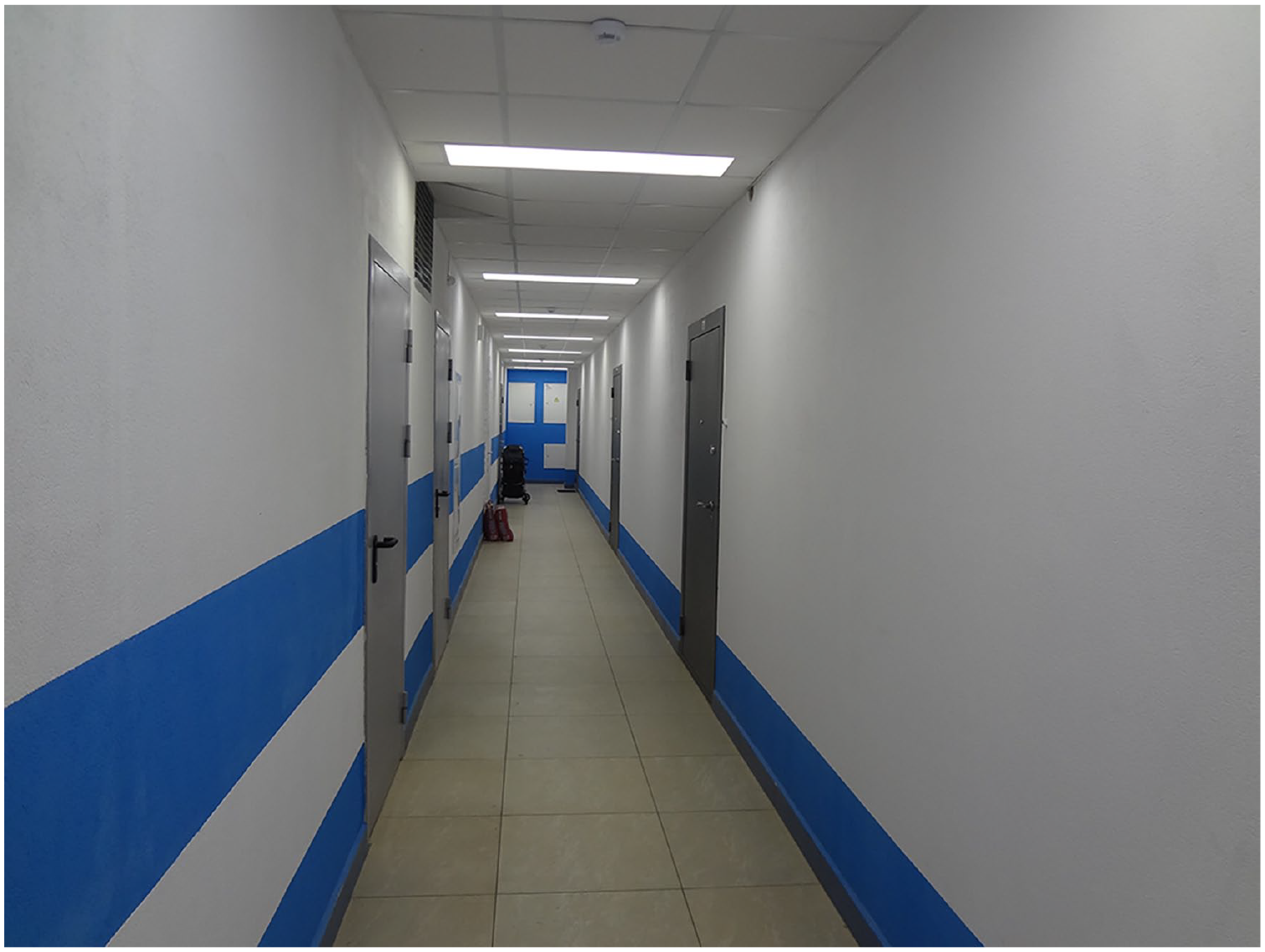
Long Corridor in One of the High-Rise Buildings, St. Petersburg, 2018.
The dense and ever-changing social environment, as well as the size of the apartment, is used as an excuse for distancing oneself and being choosy in dealing with neighbors: Sometimes I don’t feel like it, because the building is big, and when they say hello to me, I always answer, but sometimes I feel guilty that no, I don’t want to, I turn away. [. . .] Here, sometimes you don’t want to be noticed, and here, in a big building, it is possible to be invisible, so to speak, well, if you want to. . . If there are a lot of people. (Marina, 40, one-room flat, baby-daughter and husband)
In Veronika’s and Marina’s quotes, size and crowding make room for a variety of neighbor experiences and feelings. They evoke both indifference and curiosity about the never-seen neighbors lurking on the numerous floors and around the corners of the long corridors. Hundreds of unknown residents perceive each other as an invisible social environment. A common self-introduction “I’m an introvert” justifies invisible neighbor relations, lowers expectations of neighborly politeness, and even reduces the identity of the resident to that of a services consumer. Crucially, the ability to recognize a neighbor in the kaleidoscope of faces can signify stable and trustworthy relationships in such a context.
Reducing the Scale Through Shared Materiality
Eugenia (29, two-room flat, husband) illustrates the down-to-earth geometry of neighboring, “Today, neighbors are only those who belong to the closest circle—up, down, left, right, that’s it.” This cruciform micro-world is bounded vertically and horizontally by shared spaces and adjoining properties, such as corridors, walls, windows, and balconies, and, respectively, by sensual copresence—visual, auditory, olfactory, and related everyday issues (cf. Baxter, 2017; Kerr et al., 2018). My interviewees primarily referred to neighbors on the same floor, and especially next door: The people I consider my neighbours live across [the hallway]—an old lady and an old man with a dog. They are very nice. And over there, on the other side [of it], there are two children, a woman, and a man. We have a good relationship. They know me, and I know them, but we practically never meet. We can ask them for a hammer drill or something else. They will not refuse to help. I try not to go any further. (Victoria, 22, one-room flat, husband)
Next door and further horizontal neighboring often involve trivial small exchanges, such as greetings and brief chatting, as well as immediate help such as borrowing an iPod charger. Emotionally, it is easier to knock on their doors when they can help or personally rebuke them, if they disturb: I see them [next-door neighbours] a lot—we open and close our doors almost at the same time. I can tell them, “Hey, you guys don’t smoke. My whole closet, all my clothes smell”—“We don’t smoke, we do it on the other side [of the apartment].” I say, “Well . . . you do not tell a person who does not smoke. I understand that very well, but [stop it].” And they stopped. (Yanzhima, 33, three-room flat, teenage son)
However, face-to-face communication is less common than that mediated by shared thin and weak walls, ceilings, and floors with good acoustic conductivity. Poorly soundproofed property is generally perceived as a normal material condition of mass-produced high-rise residential buildings. Various routine noises heard by neighbors, such as toilet use and ordinary conversations, as well as crying babies, loud sex, or daytime drilling, are described with understanding, tolerance, and irony:
How is the audibility here?
Very good, you can hear everything—how we cry, how we cough. [. . .] We hear the people upstairs because their newborn child is very often sick. Once we went downstairs together and she said, “Can you hear him crying?” I said, “Don’t worry, we can hear you.” I wanted to add that we heard how you conceived him, but I didn’t (laughs). (Svetlana, 38, two-room apartment, preschool daughter and husband)
For me, the neighbours are those whom I can hear. I do not know them. [. . .] Most often, we can hear the ones above and next door.
What do you hear?
Mostly quarrels and music.
What do you do in such moments?
First, I check out what time it is. If the music is still allowed, and according to the law, it is until 11 p.m., [. . .] I just distract myself. (Vera, 28, one-room flat, two pre-school age sons and husband)
The interviewees, like Vera, acknowledge a general right to party, play instruments, and even listen to some loud music to relax after work. They are aware that thin walls sporadically make every resident, including themselves, an annoying neighbor. However, in the case of systematic nuisance behavior, nocturnal or continuous noise, and persistent unpleasant odors, an irritating neighbor has been addressed by other residents, personally, but mostly indirectly—through written letters in/on the postbox (Figure 5).
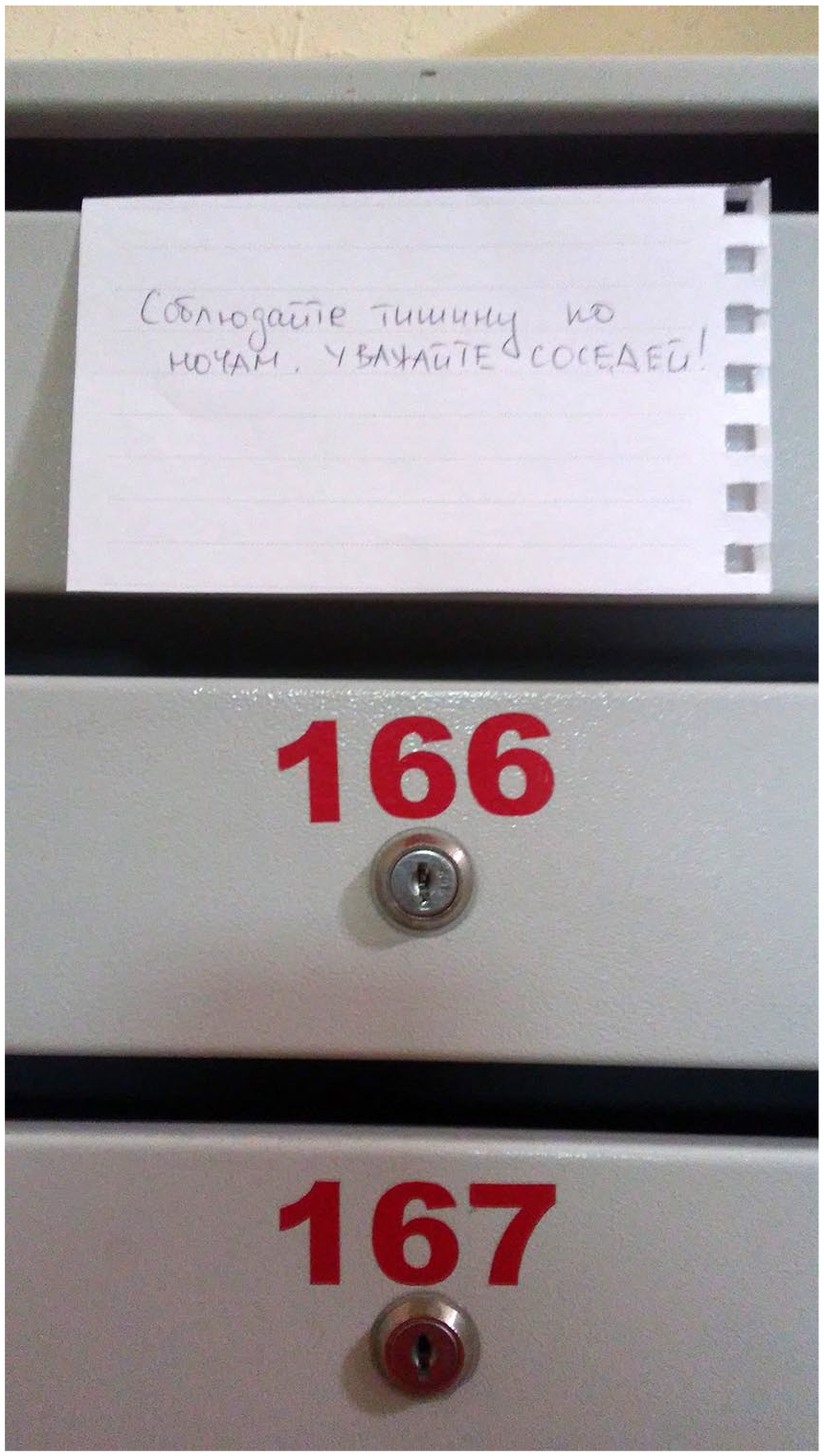
Anonymous Hand-Written Note on the In-House Mailbox.
However, it is more common to avoid face-to-face negotiations and opt for materially mediated struggles, such as turning up the music even louder or banging on the radiator with a pair of scissors to demand immediate silence. For example, Ekaterina (38, studio, solo) suffered for months from the terrifying sounds of domestic violence emanating from a heterosexual couple living above her. She faced the dilemma of protecting the victimized woman in a traumatizing relationship or herself as a neighbor who witnessed male aggression and did not know how to intervene but stay safe. One night, she used the heating pipes connecting the apartments as a mediator, both to communicate with the perpetrators and to seek the invisible support and cooperation of others: I decided to wake up other neighbors and signal to [the couple] that in general there is control and people can hear what is going on. I started banging on the radiator in the bathroom with a mop. Well, I banged once—they went quiet. Then they started again. Then I banged again—they stopped. And I did it two or three times.
Ekaterina’s story eloquently demonstrates how shared materiality creates, as Maxime Felder (2020, p. 687) puts it, “opportunities for a fast transition from anonymity to intimacy.” I would add that intimacy then easily swings to commonality through adjacent walls and radiators. In large-scale housing, populated by people who barely know each other, they mediate neighbor relations as an alarm system that alerts the closest residents to serious harm and violence.
However, as in the previous vignette, the source of the noise is not always clear. Transmitted through shared walls, it can come from anywhere, vertically or horizontally, and sometimes a search for the offending apartment and its occupants yields no results, so the suffering side must give up and endure: We have a dog barking somewhere, not close by, but it’s barking and whining somewhere. We’ve already made some notes saying that someone’s dog is howling and barking, we don’t understand where. Somewhere far away, but still loud enough for us to hear. (Katia, 35, two-room flat, preschool son and husband)
Adjacent materiality functions as a vehicle for sounds, noises, and smells that introduce neighbors to each other’s habits, pets, lifestyles, occupations, and so on. Such a sensual background ensures the invisible awareness of neighbors and allows for the minimization of face-to-face interaction. However, disruptive and eccentric neighbors, for example, smoking the pot or doing handicrafts in the stairwell, make the massively scaled environment less anonymous and function “as a sign of the vitality of social life” (Felder, 2020, p. 686). Breakdowns and accidents, such as leaks, force neighbors to communicate for a reason, when they repair and maintain the materiality of their households individually, collectively, or through a housing company. Once the problem is solved, they return to invisible communication.
Elevator as Practice: Isolation and Communication Across Floors
Mundane interactions extend beyond the closest neighbors to the entire section of the building, through an elevator—an artery that connects the floors. 4 Verticality as everyday practice (Baxter, 2017) is not even; it is full of tensions between upper and lower floors. On the one hand, height implies marginality and cheapness, as well as related insecurities, such as possible elevator breakdowns or the inadequacy of fire ladders that do not reach the upper floors. On the other hand, the top floors offer the advantage of spectacular views of historic St. Petersburg or the Gulf of Finland, as well as a sense of distance from the residents below. As Gulia (28), who lives alone in a one-room apartment on the 16th floor, put it, “I really wanted a higher floor so there would be fewer people around.” The residents of the lower floors, in turn, point to the conflictual aspects of vertical neighboring, such as leaks, cigarette butts, and ashes falling on the balconies. Again, they opt for indirect communication through handwritten or printed warning notices (Figure 6). They were posted in almost all the lobbies I visited during the fieldwork, which also shows that this confrontation never ends (cf. Baxter, 2017).
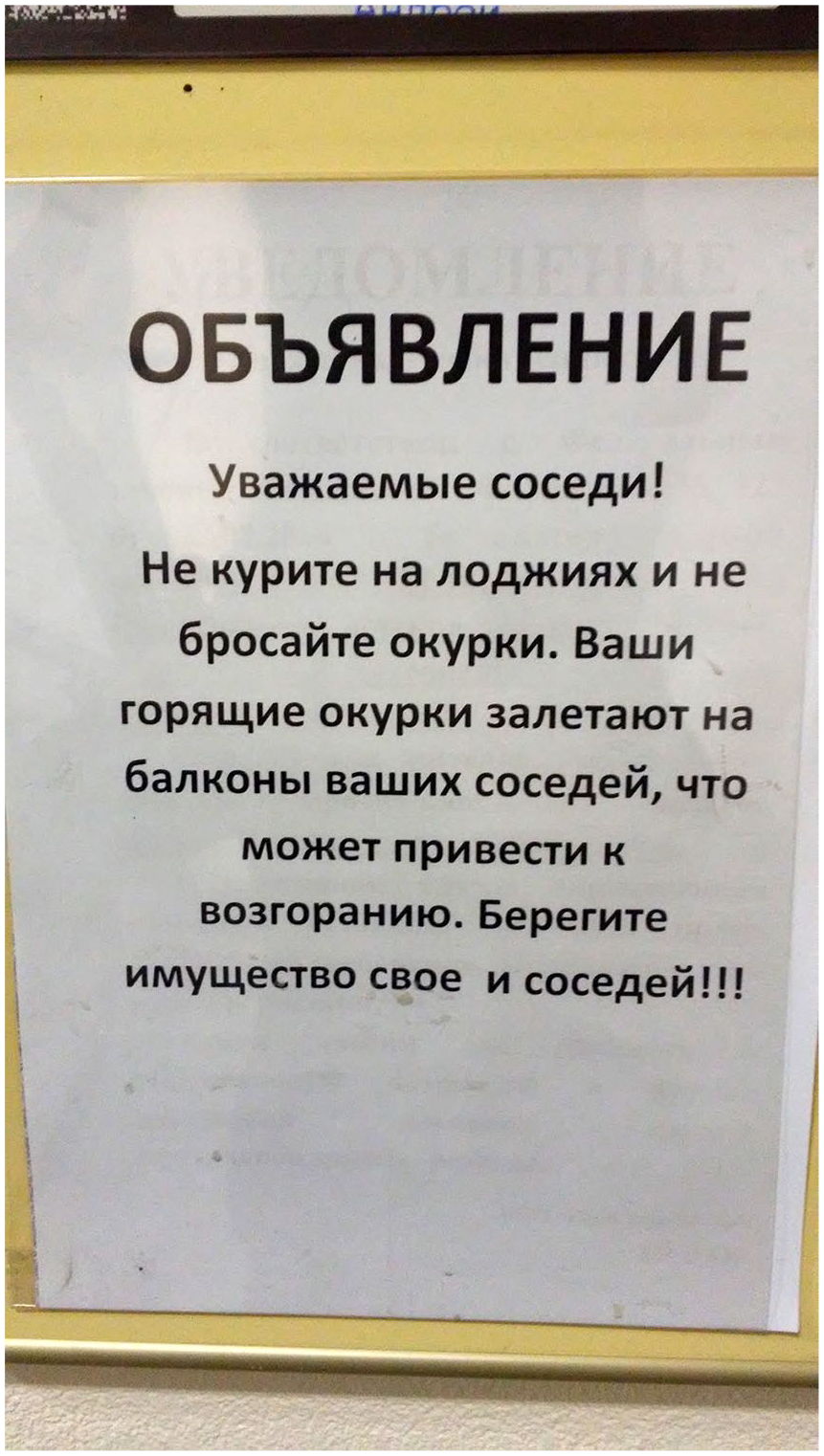
Anonymous Typed In-House Note Posted on the Ground Floor by the Entrance Door.
The above-mentioned Katia lives on the 14th floor and also uses notes in a desperate attempt to protect herself and her family from the negative aspects of vertical neighboring multiplied by shared materiality: I suffer terribly from the fact that we live next to the elevator—the first apartment, and the garbage chute is right there, and this rumbling. And we have people who like to go out with their stuff at 2 or 3 in the morning. And there it is . . . with great effort you put the child to bed, and here it flies from the 17th floor, this crap, rumbling, everything is shaking, and our next apartment. . . This is just horrible. I even left some notes, but they were taken away. This is just useless.
Like a garbage chute, an elevator can be a source of annoying noise. But it is also the only place for chance encounters with any vertically related residents and strangers (cf. van Eijk, 2012). It is a mobile space of everyday vertical practices, a transit to the outside or home (see Baxter, 2017). During the elevator ride, passengers have to share a small space, so it becomes socially tense as soon as at least two unrelated people enter. In the absence of clear rules, behavior in the elevator varies from civil inattention to friendly recognition (cf. Kusenbach, 2008). I have identified three main motivations for interaction in the elevator: distance, control, and recognition. Sometimes the residents prefer to interact as little as possible during the elevator ride, “I don’t say hello so as not to be disturbed.” Natalia lived on the top 25th floor of her building at the time of our interview. On the way up, she protected her anonymity and privacy from other passengers, especially total strangers, by keeping her destination a secret: In the elevator, I never press my button first. I don’t think they need to know what floor I live on. I live above everybody and that’s it. So, everybody comes out—I click [my button]. That is my thing. “Which one?—I go up.” So, we still live in such an atmosphere of mistrust.
Natalia might envy the residents of the first two floors, who use the safety stairs instead of the elevator and are almost completely cut off from the neighbor encounters (cf. Karsten, 2015, p. 245). For neighbors who know each other, however, the ride to the top floors is time for friendly small talk, to exchange news, or to meet a neighbor who becomes a useful contact, such as a repairman.
5
The elevator ride can be as inspiring as it is annoying. The same Natalia referred to the cases when, dressed up for work, she struggled with a feeling of disgust when a man with a smelly garbage bag joined her in the elevator. An absent neighbor who left a smell in the elevator can also be annoying. Vera recalled riding in a smoky elevator: I suspect the neighbour who lives across [from me]. I rode [the elevator] a couple of times [after he smoked], and it felt unpleasant. [. . .] This series of smells, of bad habits, usually comes from him when he passes by. So, it could be him, it could be somebody else, but I haven’t caught the hand yet, so I don’t know.
Height, just like the long corridors, hides neighbors from each other. An elevator as an in-house vehicle can bring them together for a few minutes or even seconds a day. At the same time, it downplays the size of the house and extends its smallness, which is confined to the apartment and the immediate neighbors. Some homeowners greet everyone they meet at or in the elevator just to show that they belong there. Selective communication in the elevator—greeting everyone or only familiar people, nodding first or only nodding back, initiating small talk, or completely ignoring other passengers—allows one to balance and combine proximity and distance, visibility, and autonomy.
Elastic Neighboring in LHEs
In her book “Community as Urban Practice,” Talja Blokland (2017) argues for a crucial shift away from the “decline of community” discourse, with its culture of togetherness and emotional attachment, to the idea of multilayered and elective belonging in contemporary social relations. She emphasizes that community, or rather social connectivity, is now built through shared practices, experiences, and symbols. This view is particularly relevant to urban high-rises, where old communities exist only in nostalgic memories and shared geometry, while materiality functions as a more down-to-earth basis for everyday communication. In addressing the question of how neighbor co-residence in LHEs works, I found that the concept of elastic neighboring could provide a good answer. This concept shows a mechanism of oscillating neighbor connections through the specific physical characteristics of the building.
The interview narratives reveal that all the geometrical and material opposites of LHEs, such as bigness and smallness, verticality and horizontality, and shared walls as barriers and mediators, not only coexist and intersect, but more importantly, are mutually permeated in neighboring practices. At the same time, neighbors are near and far, visible and invisible to each other. They live in all of these dimensions simultaneously, choosing one or the other routinely or accidentally on a daily basis. Walls, ceilings, and corridors exist everywhere, but in megacomplexes, the same material components introduce neighbors to each other, bring them together, alienate them, and turn them away. The large scale legitimizes detachment even with door-to-door neighbors but shared materiality demands awareness and face-to-face communication even with a neighbor living three floors above.
At the level of everyday life, the scale of the building is manageable and adaptable. The optimal scope of living, associated with the apartment and the surrounding spaces, is installed in bigness since a private home is an inevitable focus of life where neighbors do not want to know each other. Although downscaled bigness, mediated by the shared corridors, thin walls and ceilings, windows, and balconies, can provide support and trust, it is mostly annoying because of the proximity of neighbors. On the other hand, bigness is incorporated into smallness. A large scale creates the perception of an overpopulated environment as an “absence of neighbors” and justifies a lack of sociability when neighbors do not know each other. Thus, a huge scale allows fellow residents to play with proximity, depending on their intentions.
The invisibility of neighbors is paradoxically embedded in face-to-face communications. What is probably specific to this scale of living is the uncertainty of knowing whether the person you meet in the hall is a neighbor or not. Even familiar neighbors who have been seen once or twice usually “hide” in the folds and pockets of corridors and floors. However, invisible neighbors do not necessarily mean a lack of connection, as direct and indirect communication mediated by shared materiality is completely blurred. Walls, ceilings, sockets, and pipes transmit sounds and smells that invisibly introduce co-residents to one another. Adjacent materiality, especially weak and broken, connects neighbors, sometimes against their will. It produces both an opportunity to interact and speak up, and an inconvenience to negotiate, fight, and control neighbors, even without seeing them. The fragile balance between direct and indirect communication usually tends to shift toward the latter.
Therefore, the geometry and built materiality of densely populated LHEs provide a wide scope for elastic neighboring, stretching from complete autonomy and isolation, or elective interactions with neighbors, to awareness, (in)voluntary communication, and even cooperation with them. It can expand and contract in different ways, from the apartment and its adjoining corridors, through the building section, to the entire dwelling. It varies from voluntary participation in interactions with next-door neighbors or small talk with elevator passengers to involuntary greetings in the stairwell or non-verbal actions such as banging on the radiators to request silence.
Despite the allegedly constant isolation and fragmentation, the inhabitants of LHEs remain connected, although it is a specific kind of connectedness in which only mutual recognition or not disturbing others can be qualified as neighborliness. In such a context, remaining invisible does not necessarily mean indifference. Struggling for comfort in their small worlds of private homes, the residents therefore maintain the house, which functions as a communal practice beneficial to others. A clearly gigantic building appeared as a fragile social space with a moving frontier between public and private good (material and social). This building is indeed the only thing that the residents share, and they seem to have nothing more in common than these common walls.
Footnotes
Acknowledgements
The author is grateful for the critical comments of two anonymous reviewers.
Declaration of Conflicting Interests
The author(s) declared no potential conflicts of interest with respect to the research, authorship, and/or publication of this article.
Funding
The author(s) disclosed receipt of the following financial support for the research, authorship, and/or publication of this article: This work was supported by Kone Foundation, Finland (projects The layered cake of Russian-Finnish neighborness: everyday interactions at different scales, 2016–2019, and The Big Layered Cake: toward the conceptualization of neighborness, 2019–2022).
