




Abstract
The courtyard form of the traditional Arab house responded to both climate and the culture of its inhabitants. Islamic values, as well as socioeconomic factors, played crucial roles in the design. However, the mid-20th century marked the beginning of Saudi Arabia’s first rapid economic growth as a result of the discovery of oil; which dramatically increased the wealth and prosperity of the population, and resulted in new lifestyles. This period witnessed the introduction of the grid layout street pattern and the detached villa house. This type became the prevalent style in Saudi Arabia, the central province, and Riyadh in particular. While the traditional courtyard house more than satisfied cultural needs, increasingly it was viewed inappropriate for affluent 21st-century lifestyles. Yet this research confirmed that the villa style is creating fundamental problems for Saudi families. The theoretical framework is set in sustainability theory, and investigates the principles of home through human needs, place, and house. The methodology uses a survey strategy with questionnaires, interviews, and building analysis to determine which aspects of home are satisfied by each type. The dilemma is that Saudi families will not return to the courtyard type because it does not meet important requirements of status; whereas the villa type does not meet significant criteria such as privacy. The context is increasing climatic temperatures, which are making both types increasingly uncomfortable. This study highlights the need for a specific contemporary home style that would satisfy 21st-century aspirations, respect Islamic culture, and respond to changing climate.
Introduction
The mid- to late 20th century marked a period of rapid economic growth in Saudi Arabia, as a result of the discovery of oil (Eben-Saleh, 1998). It dramatically increased the wealth and prosperity of the population, resulting in new lifestyles (Bahammam, 1998). This change promoted internal migration from villages to major cities in search of a better life, creating a massive increase in housing demand. The capital city of Riyadh was the most affected by the rural to urban migration. The huge influx forced the state to begin providing new infrastructure and roads (Al-Ibrahim, 1990) through a policy of demolishing parts of the old neighborhoods and traditional houses (Eben-Saleh, 1998). In addition, government programs such as providing free plots of land plus long-term interest-free loans to Saudi citizens were key factors that made it possible to build more and bigger houses (Bahammam, 1990). The State adopted the modern villa style and grid pattern for development in Riyadh and subsequently in all the cities in the Kingdom (Al-Hathloul, 1981). The old compact, pedestrian-orientated, high density, and mixed-use urban environments gave way to car-based neighborhoods with lower density and zoning by function. Overseas planners and constructors came, built, and departed. Intensive coverage of Western lifestyles and the booming economy brought the dream of an easier life. People desired the kind of houses they saw in the films, magazines, and on television. Thus, despite the common sense approach of traditional courtyard house design, residents increasingly viewed it as connected to a past that they did not wish to revisit. Yet in contrast to the apparent contentment, evidence is starting to appear that residents are not totally satisfied with these new houses as windows begin to be blocked-up and high fences built between the houses. There is also a notion that families are becoming isolated within their own homes. This paper will investigate how the people of Riyadh are responding to the changes in houses and neighborhoods. It will be based on a theoretical framework that analyses the principles of home through sustainability. A major issue is the human needs of families. These involve a number of aspects, and there will be an evaluation of which features of the house types match the characteristics of human needs. Emotional engagement is derived from creating a sense of place. Home is where the physical nature of the house and its neighborhood satisfy human needs and generate a sense of place. Residents will be surveyed and interviewed about satisfaction with their homes to identify specifically what is favored in each house type. Finally, there will be an appraisal of whether it is possible to overcome emergent areas of dis-satisfaction through design proposals.
Therefore the objectives of the study are as follows:
To investigate the concepts of home.
To demonstrate the nature of courtyard houses and villas.
To explore the extent of residents’ satisfaction.
To identify features that should be included in the layout and design of houses to meet residents’ needs.
Sustainability Theory
The essence of sustainability theory can be found in the Brundtland Commission’s statement on meeting current human needs without compromising the ability of future generations to meet their own needs. For a practical application of sustainability, respect must be shown for what connects communities to place. According to Scammon (2012), the concept of place denotes a community’s culture and should be included in applications of sustainability theory. Culture connects people to place through identity and values, and the continuance of that culture is one of the major objectives. Hawkes (2011) asserts that a healthy society depends on lively and influential cultural activities. Therefore, they function as a catalyst for sustainability. Zhang (2013) argues that the house has traditionally acted as a container for cultural activities, festivities, and rituals. Rapoport (1969) identifies that the term home brings these aspects together as a symbol of comfort, identity, dreams, and aspirations. He emphasizes that the satisfaction of human needs is the first factor in shaping a home. Place relates to dwelling in terms of individual identity, and house requires appropriate forms and spaces.
Human Needs
The hierarchy of human needs originated with the work of Maslow (1954). It starts with physiological requirements and moves up to psychological requirements. When interpreted in terms of home, the hierarchy can be expressed as the folllowing: shelter, safety, security, privacy, status and aesthetics. Where all these needs are satisfied, the residents should find self-fulfillment. It has been argued that technological advancement has produced routine protection from the climate. However during the 21st century, increasingly extreme climates are occurring, especially as a result of global warming (Barros & Field, 2014). Safety of the residents and security to safeguard their property are fundamental to the experience of home. Among others, Fried (1970) and Rachels (1975) point out that privacy is necessary to achieve intimate relationships. As defined by Matthews (2008), it is morally important for two reasons. First, privacy enhances autonomy and individual dignity. Second, it consists of the ability to manage access to one’s person by providing a barrier between the public domain and the person. In terms of status, Maslow (1954) asserts that everybody has a desire for self-respect, self-esteem, and for the esteem of others. With regard to aesthetics, each resident has a specific level of ability that enables him or her to distinguish beauty (Danaci, 2012), and the perception of being surrounded by beauty enhances self-esteem. Uzunoglu (2012) argues that unpleasing forms, shapes, and styles of architecture create disordered built environments that have negative psychological effects on inhabitants.
Place
The literature recognizes that three related concepts in particular capture people’s experience of, and emotional engagement with, a place. These are attachment (Low, 1992), identity (Proshansky et al., 1983), and sense of place (Hay, 1998a). Most researchers agree that place and its meanings are created in a complex manner and involve a variety of interconnected variables (eg Relph, 1976; Tuan, 1977). Place attachment is a positive bond to physical and social settings (Moore & Graefe, 1994), and several authors note that it grows with time (e.g., Low, 1992). Place identity is defined as an emotional constituent. It is fundamental to human life and integral to place making, which in turn enhances the values of people who use a place. The notion of dwelling is an expression of place identity, in which residents feel comfortable and secure, and find enjoyment (Oswald & Wahl, 2005). Sense of place is a primary measure of human relationship with a spatial location and thereby gives it special value (Hay, 1998b). Therefore, without a thorough understanding of a location, it would be difficult to identify why a particular place is special (Relph, 1993). People demonstrate sense of place by applying their moral and aesthetic judgment to locations. Place can express people’s experiences and aspirations, and it becomes significant due to the interaction of various attributes, such as activities, traditions, social ties, and length of association (Low, 1992). It is encouraged by daily encounters with the locality and neighbors, seasonal celebrations, sustained physical personalization, and warm feelings about the community (Werner et al., 1993). Family, neighbors, celebration, and community can all be expressions of symbolism. The recognition of place requires a dynamic perspective—one that emphases people’s ongoing and evolving relationships. It has been termed as dimensions of self that develop in relation to the physical environment (Proshansky, 1978). Place can convey a sense of belonging to a community (Relph, 1976). People and place can have strong connections and achieving these connections is necessary for generating meaningful domestic environments.
House
Researchers have identified the non-emotionally based aspect of house, which can be characterized as a physical unit with distinct spaces for its residents, and a structure separating private from public domains (Rapoport, 1995). Therefore, as Le Corbusier (1923) points out, a house can be interpreted as merely a machine for living in, as it may lack psychological significance for individuals (Dovey, 1985). It is an artifact that may also provide investment returns and other financial benefits through ownership. The form of houses presents a complex picture, although the principal differentiation is between those that are joined together in an urban composition and those that stand separate from one another. Thus, they are recognized by architectural types, for example, detached, semi-detached, and terraced, which create different spatial patterns in a neighborhood. Access to a house is across the threshold, that is, entrance or access from the street, which serves to define territory. This threshold varies in different cultures and periods, and in some houses, users may enter through a hierarchy of spaces. Front and back help to differentiate formal and informal visiting patterns, and the entrances could be used for separate functions or categories of people (Rapoport, 1969). A house is essentially for the provision of activities, where each space may have a specific function, for example, living, sleeping, cooking, bathing, entertaining, and storing (Rapoport, 1990). The spaces can be cellular, where each activity is allocated a separate space, or open plan where a number of different activities occur in a single space (Hanson, 1998). This internal arrangement is about responding to relationships. Yet a house is more than simply space. It has a physical form that can be characterized by features such as length, width, scale, geometry, texture, color, and light. It is constructed from building materials, which might be described as warm, cold, creative, or bland (Rapoport, 1969). A building constructed of natural materials, for example, mud, wood, and stone evokes completely a different character to man-made materials, for example, concrete, steel, and glass. The notion of house is related to performance attributes, for example, fitness for purpose, building utilization, temperature, ventilation, illuminance, sound, energy utilisation, and buildability, which affect the operational efficiency of the building. Although fulfillment of these performance attributes is essential, they are lower orders of design aspiration (Giddings et al., 2013). The study of house is significant as it helps in understanding that physical characteristics are important as they afford different options for people and therefore impact on the quality of life.
Home
Home in this sense does not mean simply to build a house, but to dwell and create a complete environment to which its residents are attached. It is defined by the way people make their world meaningful (Heidegger, 1962). Home may have symbolic and latent value that is internalized by its residents (Rapoport, 1995). It offers psychological reassurance as well as satisfying physiological needs. Seminal writings on the concept of home (e.g., Dovey, 1985) provide knowledge regarding the human-environment relationship. Alexander (1979) emphasizes that domestic built environments connect individuals to their surroundings in an infinite number of ways, most of which are subconscious. For this reason, it is significant to determine what works, what feels pleasant, what is psychologically beneficial, and what appeals. Thus, home should incorporate a wide variety of personal values—such as aspiration, motivation, physical well-being, and lifestyle choices (Feldman, 1990). Home is a complex, multi-faceted, and multi-layered concept, where different connotations can occur interchangeably and/or simultaneously. It is not merely a place to live, it is a way of weaving life into particular geographic space, and in this way, it is observed as a holistic entity comprising three inter-related qualities of people, environment, and time. Home transcends the material characteristics of domestic space. It is not neutral space, but fulfils a role as the setting for social relationships. It offers its inhabitants comfortable spaces, but also spaces where they can bring a sense of order to their lives. Home is identified as place in which people can be more themselves than in any other space (Dovey, 1985). Furthermore, the residents give a sense of identity to the place they call home and they draw their identity from it. Finally, home also has to be a physical entity, that is, a house where people undertake their daily activities. This study recognizes home as a place that provides an interplay on a variety of levels of experience from personal to cultural. It is also clear that an appropriately designed domestic environment has many benefits for its dwellers, improving their quality of life and maximizing physical and mental health (Kyle & Dunn, 2007). The principles of home are summarized in Figure 1.
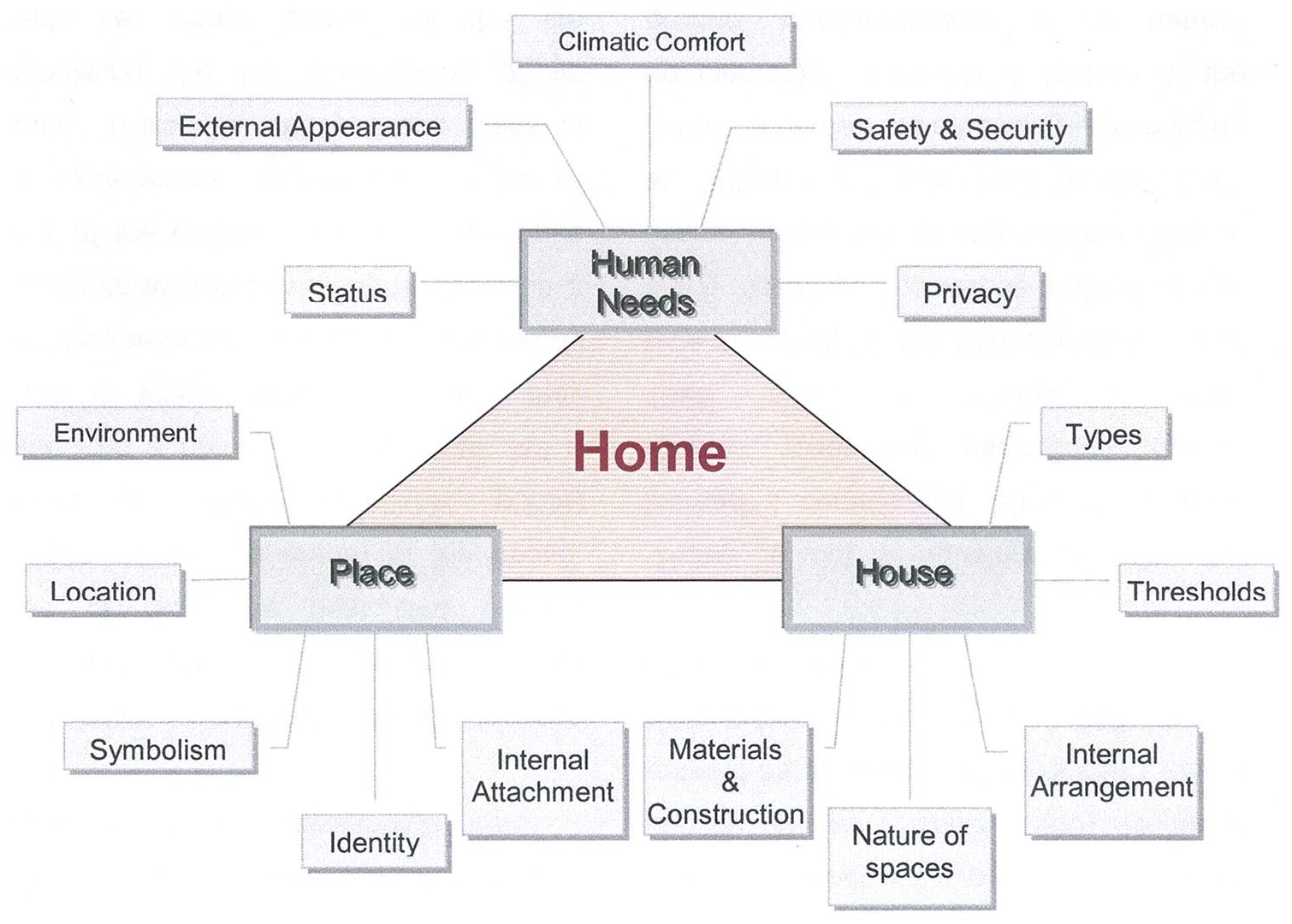
The principles of home.
Project Background
Saudi Arabia occupies the greater part of the Arabian Peninsula, with an area of 2,149,790 km2. It extends from the Red Sea in the west, to the Arabian Gulf in the east—from Jordan, Iraq, and Kuwait in the north to Yemen, Oman and UAE towards the south. Turkustani (2008) notes that the country is represented by four principal geographic provinces—western, southern, eastern, and the central province (see Figure 2).
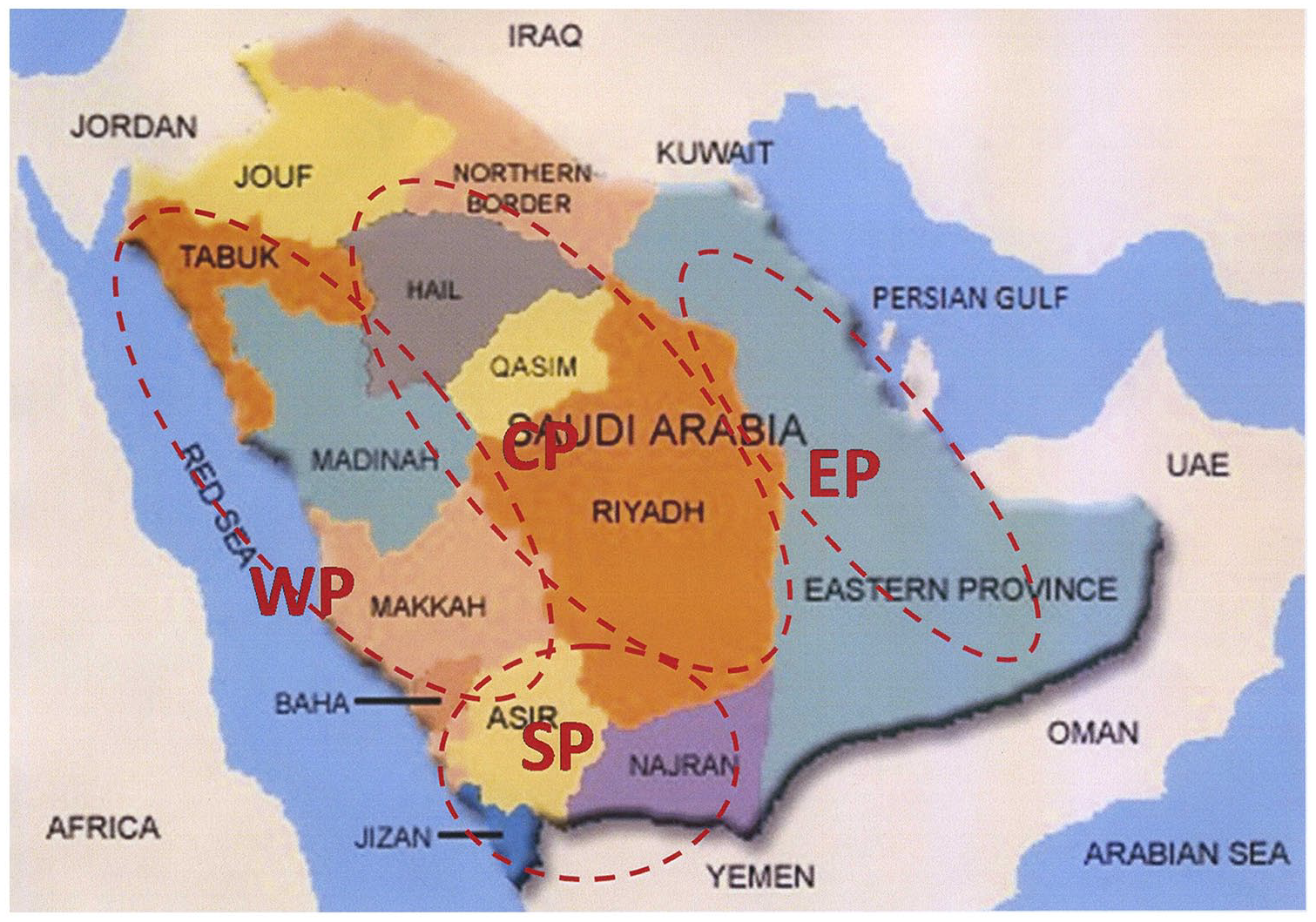
Saudi Arabia and its provinces.
The central province has been selected for this study. It is focused on Riyadh, the most populated and the fastest developing city, as well as the capital of the Kingdom. Eben-Saleh (2001) points out that the desert climate of this province is clearly evident in the time-honored urban fabric of the city. It was characterized by compact urban patterns, narrow winding alleyways, and cul de sacs; which were used to deter intruders, create communities, engender privacy, and minimize the effects of dust storms and impact of the hot sun. Talib (1984) explains that the external expression of the houses was typified by a low number and small size of external openings, which reduced the impact of the hot and dry climate on the internal spaces of the house. Bahammam (1998) adds that the courtyard has played a key role in the traditional house, in terms of the multiplicity of functions in an open private space where the family could engage in activities such as celebrations, meetings and other events; in addition to creating a safe place for children to play their games. The courtyard, which provided light and natural ventilation, also had the role of regulating temperature inside the house by providing shade in the daytime and preserving cold air at night, to cool the building during the following day (Al-Sayed, 2011).
The origin of contemporary residential settlements stems from when Aramco (Arabian-American Oil Company) built its housing projects in the eastern region of Saudi Arabia between 1938 and 1944 (Elsheshtawy, 2011; Shiber, 1967). These projects introduced a new concept of space and a new home image. This early intervention had a deep but not immediate effect on the people. Kimball (1956) notes that the company’s senior staff were completely imported from the United States. He observed an area of single-storey family houses. Each house was surrounded by a grassed margin, usually enclosed by a hedge. This new spatial concept contrasted strongly with the traditional home environments (Al-Naim, 2016). By 1947, the government had taken advantage of the American engineers and surveyors employed by Aramco to create the first planned areas in Saudi Arabian cities following a grid iron pattern (Al-Hathloul, 1981). Local people also engaged them to design their new houses as there were few architects in Saudi Arabia. They were all detached houses (Al-Hathloul & Anisur-Rahmaan, 1985).
In 1953, King Saud succeeded his father and decided to modernize Riyadh. The process of modernization was greatly imitative of Western models (Jarbawi, 1981). This created confusion between modernization and Westernisation in Saudi society. By the end of the 20th century, communications systems coupled with economic and technological development had changed many of the cultural characteristics of these age-old societies (Morely & Robin, 1995). In terms of domestic building, it was apparent that concrete structures with their neatness and sharp edges represented modernity (Al-Naim, 1996). It also seems that whether or not better conditions were achieved, Westernisation implied a higher societal status. Impressed by the Aramco model, in 1960, a circular from the Deputy Minister of Interior for Municipalities stated that all new houses require setbacks (Al-Said, 1992). These interpretations of modernity were all rather fragmented before the government engaged Doxiadis Associates, Consultants on Development and Ekistics, Athens, to formulate a Master Plan and Programme to guide the development of Riyadh up to 2000. The final version of the Plan was approved by the Council of Ministers in 1973 (High Committee for the Evaluation of the Riyadh Master Plan [HCE], 1973). It confirmed and enhanced the trends of the 1950s and the 1960s, and introduced a supergrid as the urban structure, within which secondary grids emphasized this form as the most desired pattern for the development of Riyadh. It proposed large plot sizes, confirmed the setback requirements, and institutionalized the villa as the most desirable dwelling type. Doxiadis favored a linear concept of city form based on his model of Dynapolis, but the city developed beyond this concept and spread out in most directions from the traditional core (Bromley, 2002). Doxiadis did not believe in satellite developments, as he argued that a detached settlement form does not integrate into an expanding and dynamic settlement. The government agreed and continued its policy of confining urban sprawl. Nevertheless, family houses were designated in areas of low density, implying suburban character (Al-Hathloul, 2017). The establishment of the Ministry of Municipal and Rural Affairs and the Real Estate Development Fund (REDF) in 1975 confirmed the villa as the only house type to be constructed in Riyadh. Whereas the courtyard enclosed by the traditional house afforded shelter, privacy and security; this contemporary building type surrounded by space set in the grid pattern, exposed residents to the climate and the gaze of passers-by (Al-Ibrahim, 1990), and the concept of home was reduced from the traditional spiritual house to a Westernised physical and spatial one.
Methodology
The research design employs mixed methods. The questionnaire survey is a quantitative technique aimed at collecting large data sets to establish patterns of responses. The semi-structured interview is a small-scale method to establish reasons for the questionnaire results, as qualitative data, and to discover perceptions of place. There is also factual observation of the houses to provide visual data. The first aim of the data collection was to discover responses from residents as to how well both houses types satisfy the human needs established in the literature. This is achieved by the questionnaire survey of a sample of households. According to local statistics, in 2016, there were 155,000 courtyard houses and 455,000 villas in Central Riyadh. To achieve 95% confidence with 5% margin of error, sample sizes of 375 and 384 were required. It was therefore decided to randomly survey 400 households of each house type. Ten districts for each house type were selected by random numbers. A team of 10 researchers were engaged and briefed by one of the authors of this paper. Thus each researcher undertook 80 questionnaires in two districts, in person to generate the high response rate of 97%. The questions were based on human needs and ask about residents’ satisfaction with internal and external comfort in different climatic conditions; safety, security, privacy—internally and externally—and the importance of status and external appearance. Following analysis of the results, the semi-structured interviews were carried out with a random sample of 10% of respondents, that is, 40 families for each house type. The objective of these interviews was to discover the underlying reasons for the questionnaire responses and therefore the interviews were structured around the issues contained in the questionnaire survey. At the same time, a second set of semi-structured interviews were undertaken to assess residents’ perception of place. These focus on attachment, identity, sense of place, symbolism, and environment for both houses and neighborhoods. Both questionnaires and interviews engaged with the head of household as representative of family members. The observation schedule of lived visual data (Emmison et al., 2012) records appearance, spatial layout, and alterations for both house types.
Results and Discussion
The purpose of the survey was to obtain insitu data as a means of testing the concepts discovered in the literature. In terms of questionnaire results from the courtyard houses, shelter in relation to the climate received a mixed response, with 51% of respondents opting for them being uncomfortable. Meteorological evidence shows that temperatures have become more extreme in recent years, and sandstorms have become more violent (see Figure 3). Thus, it is conceivable that the houses perform less well as climatic modifiers than in the past. Some residents have introduced air-conditioning and covered the courtyards to increase protection from the climate. However, these changes affect the relationship between inside and outside. Safety and security are reasonably well-rated by respondents as both results are over 70%. Privacy has been the principal advantage of this house type, and it is still strongly supported by the residents for both indoor and outdoor spaces at 84% and 90%, respectively. Status is not highly rated in the questionnaire results with only 16% support, and aesthetics received a neutral response as only 32% consider it to be important.
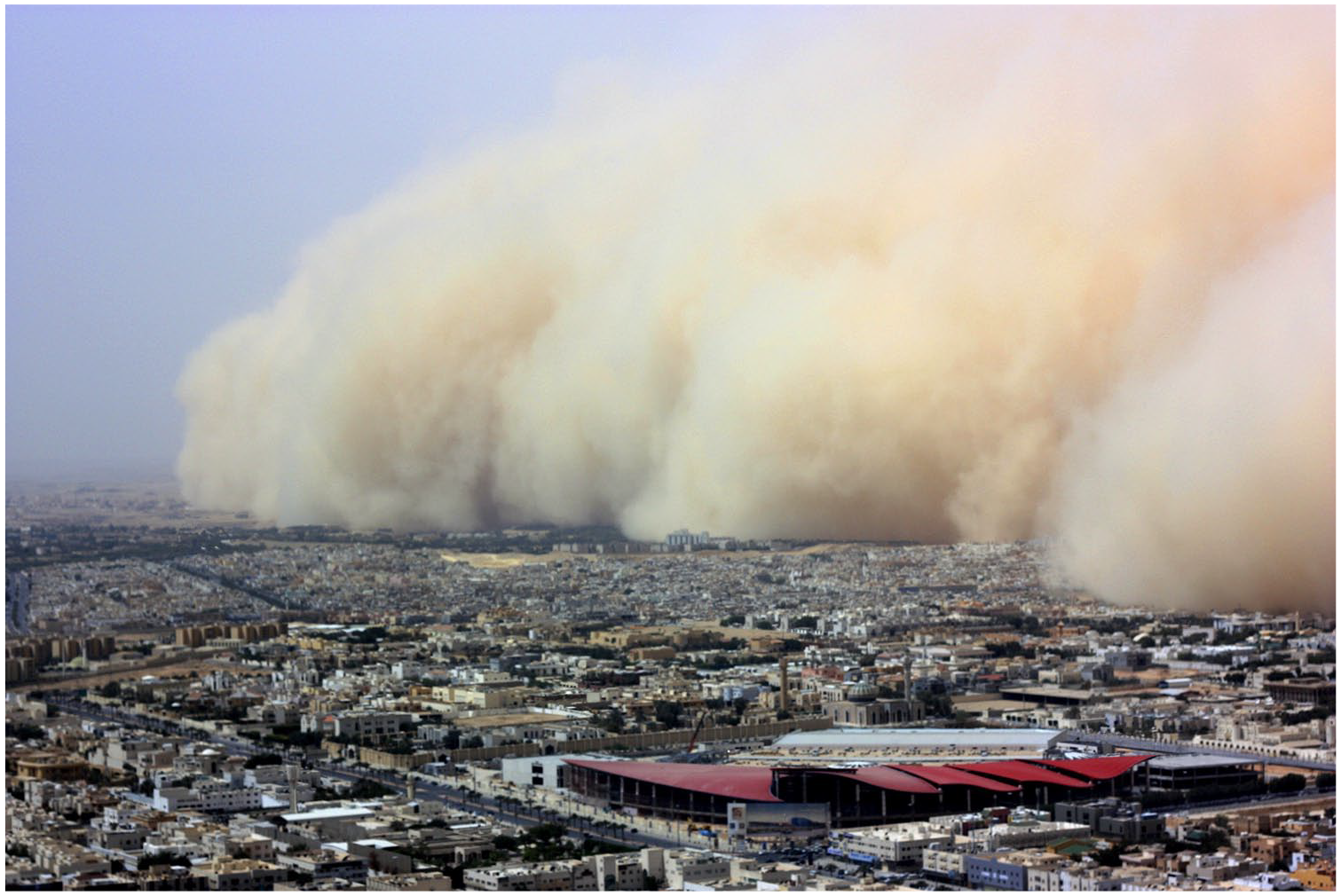
Sandstorm over Riyadh reproduced by permission of The Associated Press.
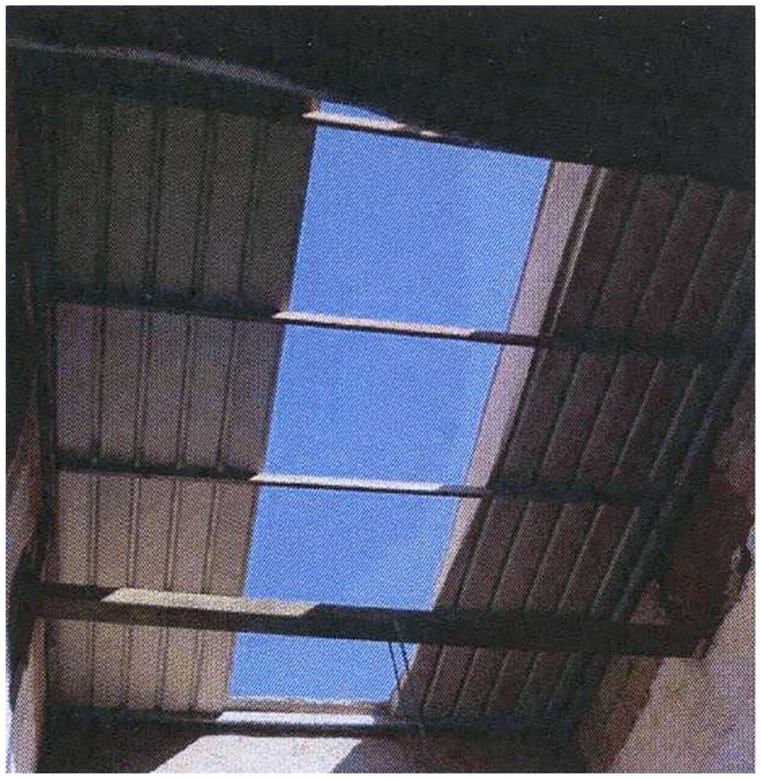
In the interviews, residents recognize that climatic conditions have worsened in recent years. They also point out that demand for car space has led to opening out the narrow alleys to produce wide asphalted roads. Their view is that in itself, this has contributed to raising the temperature in traditional neighborhoods, making it easier for sandstorms to blow through these spaces. After covering the courtyards, even partially, they feel that they have lost the notion of them being outdoor spaces (see Figure 4). They confirm that safety and security are generally good in the courtyard houses but there are comments about vulnerability of the roofs in terms of intruder access (see Figure 5). Privacy did not attract any further comment. Exclusive use of mud bricks precludes individual features, which adds to the plain or even austere facades. These residents are at the poorer end of society, as the vast majority of affluent citizens have moved out to the villas. The remaining residents are happy not to draw attention to themselves, but would prefer decoration to the outside of their homes.
Partially covered courtyard.
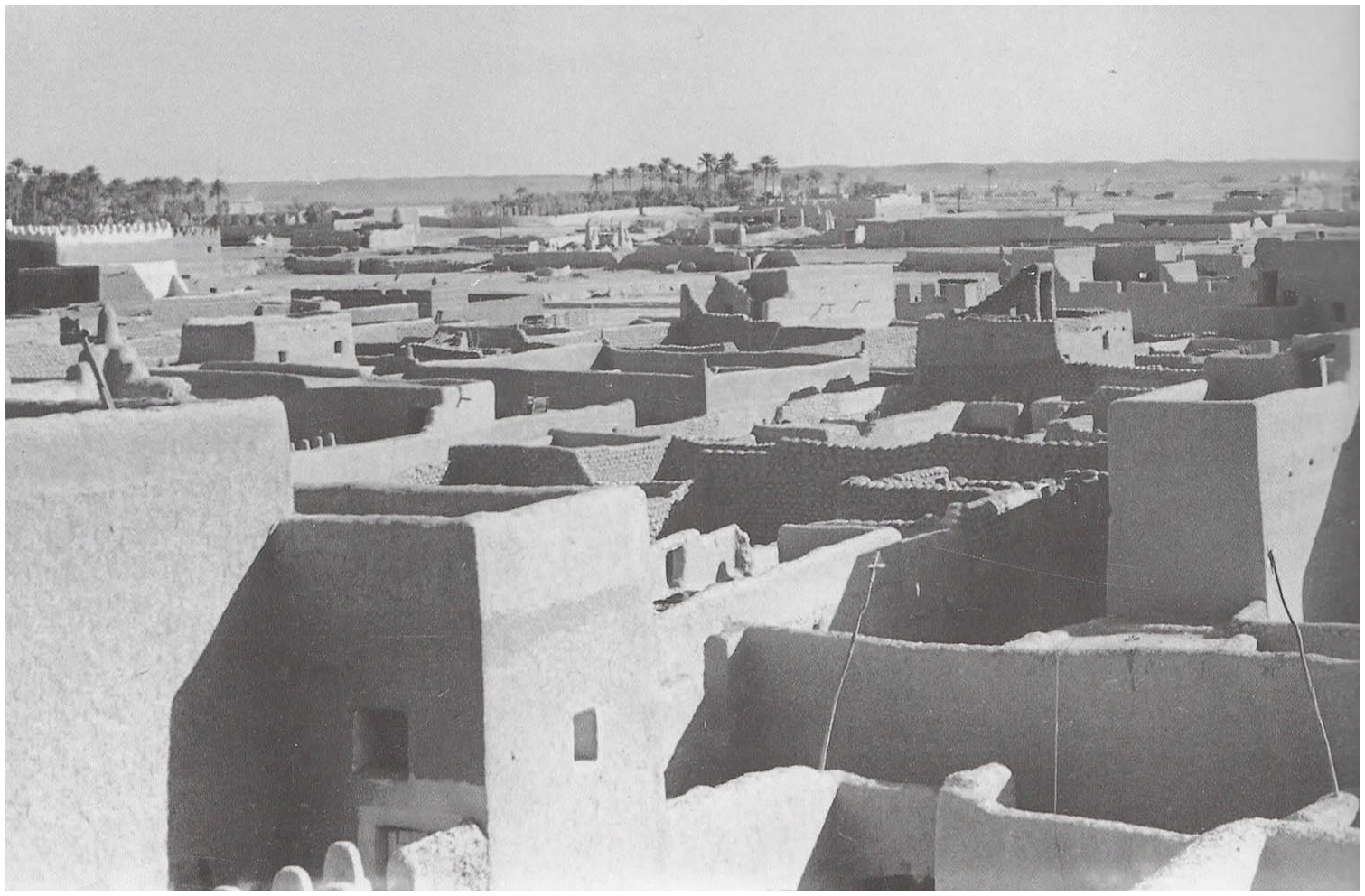
Roof reproduced by permission of the Royal Commission for Riyadh City (Arriyadh Development Authority).
For the villa houses, the questionnaires show narrow positive support for shelter in terms of comfort, and the house as climatic modifier; although there are some contradictory results. Residents reported 69% satisfaction with the indoor environment and 39% externally. A significant number of the residents have increased the capacity of their air-conditioning units. There is a strong positive response for safety at over 90% as residents have installed alarms and reinforced doors and windows against intruders. Security received less support at 45%. The response to inside privacy is strongly supported at 84%, but the results for outside privacy are less positive with 45% support as residents still feel susceptible to the gaze of others. Not surprisingly, status and external appearance are strongly supported, with both attracting over 90% positive results.
During the interviews, residents stated that initially, technological solutions to climatic modification appeared attractive. However, the need to continuously upgrade air conditioning units due to rising temperatures, and blocking-up openings (see Figure 6), are creating the feeling of an artificial environment that is causing psychological problems. The residents feel safe in their houses, but only as a result of the security provisions that they have installed. They acknowledge that the desire for a modern appearance with the use of large windows and balconies has had a negative impact by exposing the house to unwanted intrusion from onlookers, and leading to a lack of privacy of both indoor and outdoor spaces. As a result, households have found it necessary to block off balconies and windows on a regular basis. The residents also stated that they need the fences and barriers between houses that have become commonplace throughout contemporary neighborhoods (see Figure 7). They are conscious that fences, blocking openings, and security provisions are further isolating them from the neighborhood. The interviews confirm that aesthetics and status were the most important factors in selecting villa houses. Some of the residents argue that this response to the needs of a 21st-century lifestyle is not providing sufficient safety, security, and privacy.
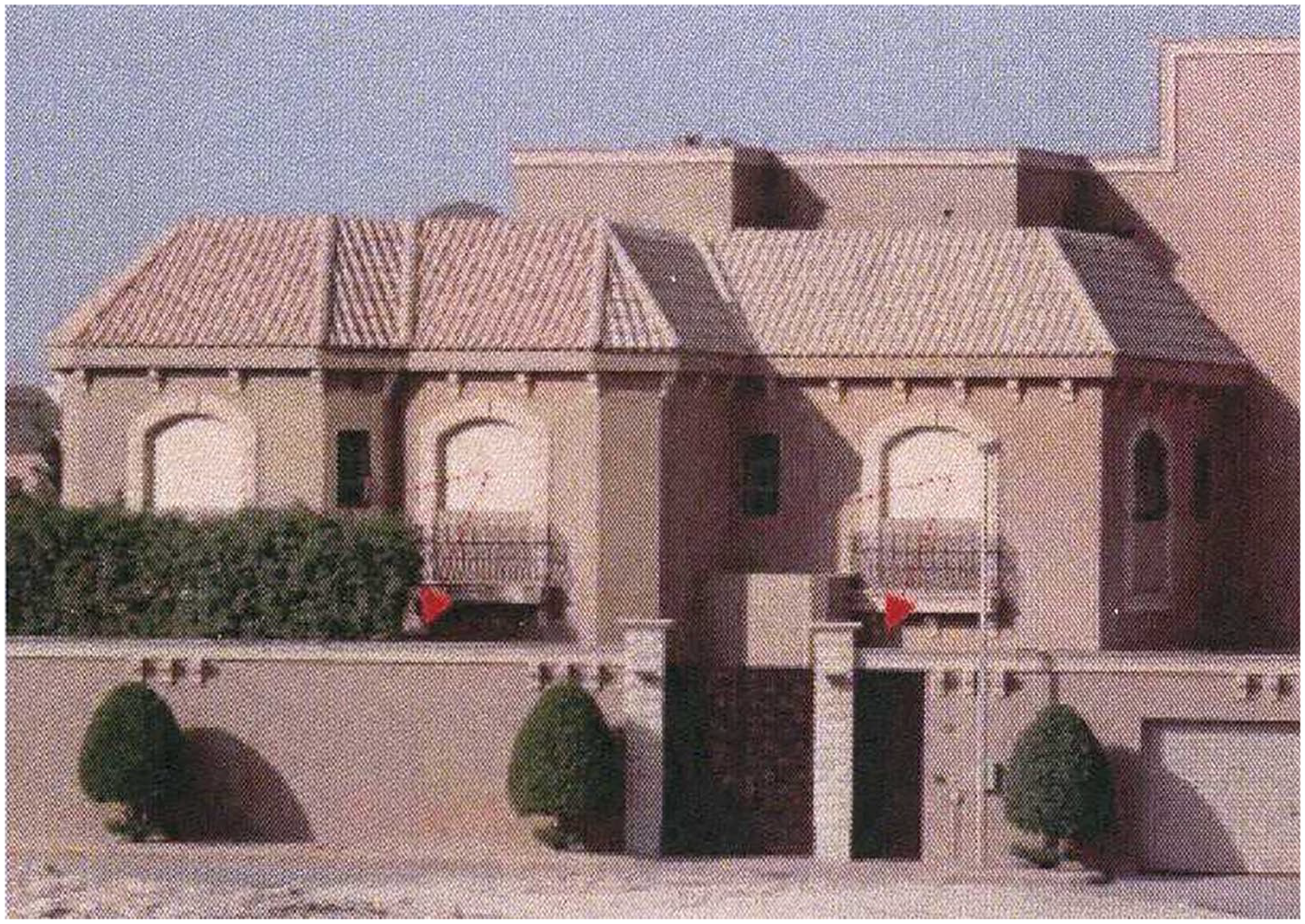
Blocked-up windows.
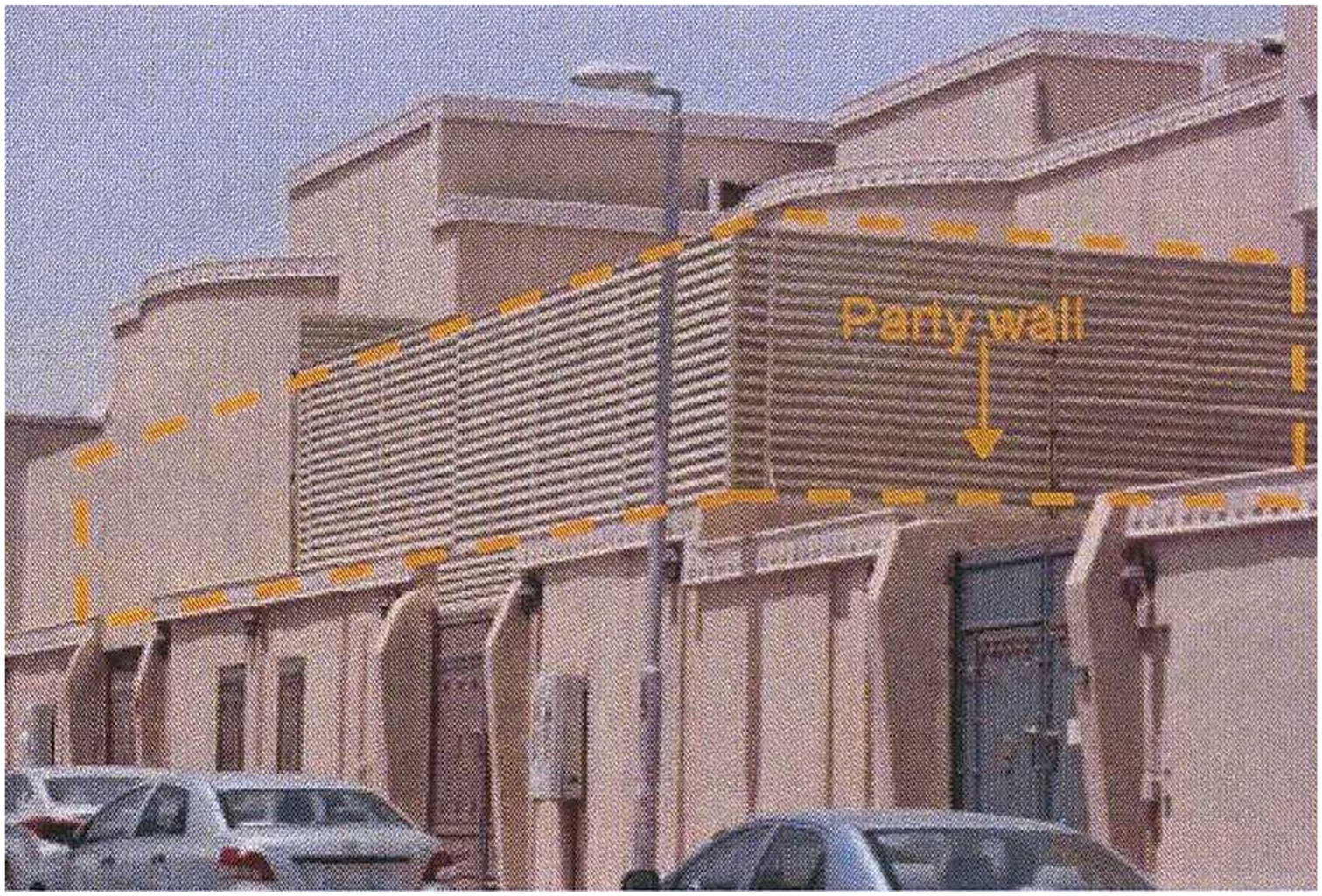
Fences and barriers.
The second set of interviews focused on place. The courtyard house type (see Figure 8) is joined to other houses and faces onto a relatively narrow street or alley, and the threshold marks the boundary between the public and private domain. In these homes, residents responded as follows. Three spaces—flat roof, courtyard, and living space, are key places that they would miss if they moved to another dwelling. These places bring the household together at different times of the day. There are no serious drawbacks with the courtyard house, except that it is not compatible with a modern lifestyle, for example, the sizes of rooms are too small to accommodate modern furniture, especially in the living space and bedrooms. Within the limitation of available spaces, family cohesion is generally maintained, and the courtyard remains the most commonly used space for household activities. Externally, the homes do not reflect residents’ personalities due to the uniformity of building materials and elements. In addition, there is the difficulty of identifying the property boundaries of each house. Cultural values such as respect for the neighbors’ privacy are expressed through the form and features of the house, that is, it is oriented towards the inside with limited openings towards the outside. The respondents do not worry about moving within the neighborhood, because all locations within it have similar meanings that are linked to a particular family or tribe. Symbolism in the home is demonstrated by many familial changes. The perception is that the home is full of feelings and emotions, which change over time, according to the family occasion. The courtyard plays a central role as most family memories are forged within that space. Furthermore, the flat roof on the first floor is open to the sky and symbolizes family and relatives. The females of the household tend to use the flat roof to enjoy their summer evenings with other female relatives, entertaining and sleeping. The roof and courtyard integrate the homes with the outside environment, connecting with the sky and enabling the residents to feel the weather throughout the different seasons of the year.
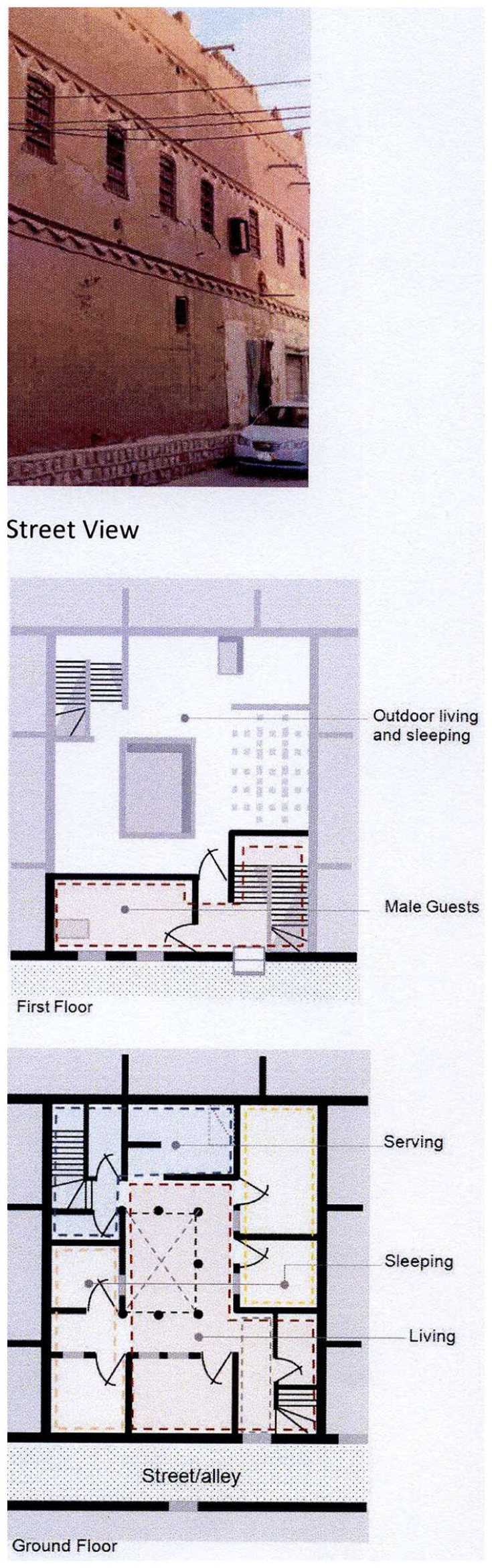
Courtyard house: Street view and plans.
The respondents indicate that a neighborhood of courtyard houses normally has a variety of spaces, which are essentially the domain of immediate neighbors. They confer a kind of group ownership on semi-public spaces that make them uncomfortable for anybody else to use, although other residents do cross them as part of a circulation route. There is also public space, where residents are able to meet and be involved in social activities. The external spaces—public and semi-public—constitute the most meaningful places which residents would miss if they moved to another neighborhood. These places are always actively used by residents—children, women, and men—with full consideration for safety and segregation between males and females. Taking a walk in the neighborhood is a common phenomenon due to the alleys being narrow, shaded, and prioritized for pedestrians. There is a strong feeling of belonging to the neighborhood and the residents feel a metaphorical ownership of the spaces outside their homes. Their perception is that this feature typifies each traditional neighborhood and supports their identity. There are positive feelings about their neighborhood that would make it difficult to transfer to another neighborhood. The spatial elements symbolize the major activities that take place in them, for example, the open space of the mosque symbolizes the community annual festival that follows the month of fasting. The connection between home and neighborhood is eased by groups of houses being formed around external spaces.
The prevailing feeling amongst the respondents is that villa houses (see Figure 9) do not satisfy their spiritual needs, and that there are no particular places in their houses that they would miss if they moved. They tend to add elements in the yards, for example, a Bedouin’s black tent or a fire hearth, as reminders of a traditional way of living. The results indicate that the houses may not be capable of meeting their requirements for comfort as there is a perception that they lack safety, security, and privacy. This in turn, creates a feeling of instability and the desire to make alterations to their houses or move to another place. A villa house may meet the needs for daily activities, except dining, as there is often no identified space. Hence, residents tend to convert the family living room into a temporary dining space for the time that they have a meal. The external appearance of their houses reflect the owners’ personalities. They briefed the designers as to the kind of status they required, and the designers interpreted it so that the house style and materials express the owners’ wishes. Nevertheless, the houses do not express cultural values. The number and size of outward-facing openings do not protect the privacy of the household. This, in turn, negatively affects relationships between neighbors. Symbolism is expressed as a place where children grow up and all the changes that come with it. The majority of memories is associated with the family living space where the household spends most of the day. There is a consistent notion that the houses are isolated from the external environment, and that the house form, openings, and building materials do not suit the climate.
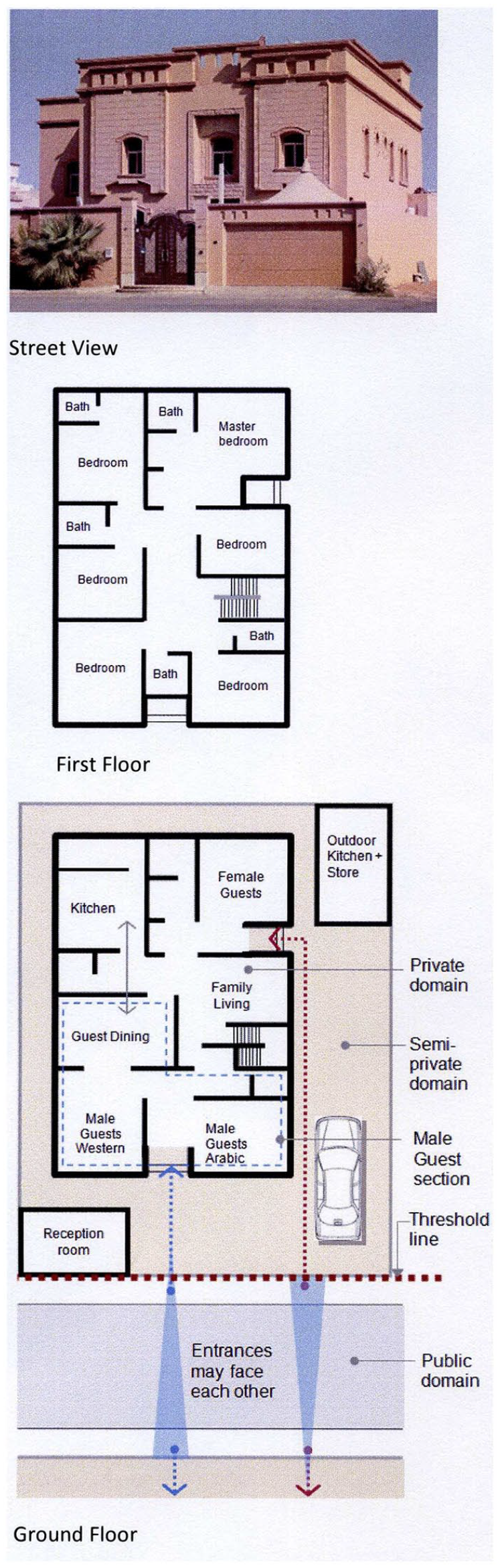
Villa: Street view and plans.
The results demonstrate that a new type of house is necessary, set within a neighborhood that exhibits more sophisticated urban design than merely grids of streets. The principles of these proposals are set out in Figure 10.
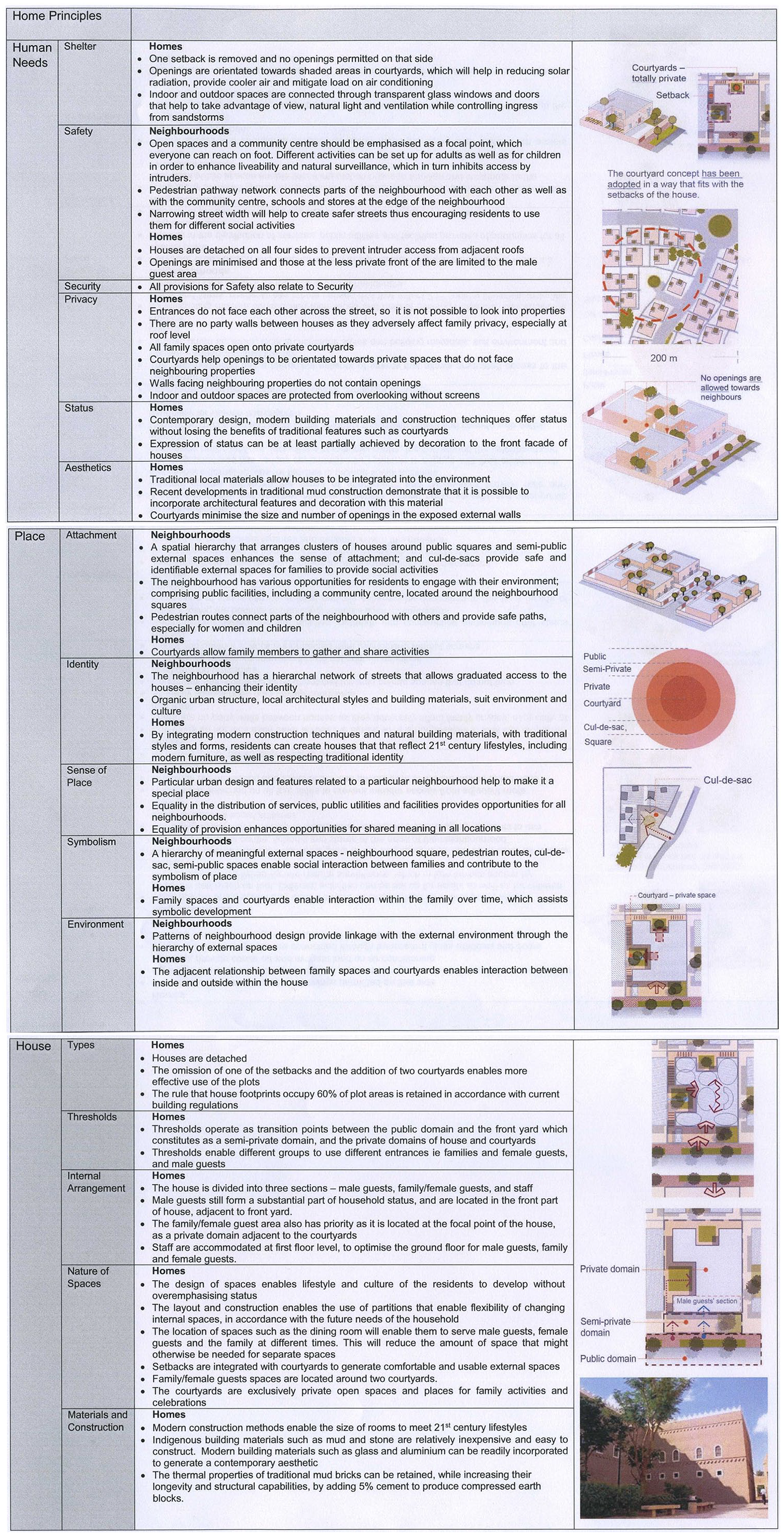
Principles of the proposals.
Conclusions
The courtyard house has been the traditional solution for providing homes in the region and Riyadh in particular. It satisfied the self-effacing nature of the people through its anonymous external appearance. It met human needs and provided contact with the outside through the private courtyard, which also enabled the house to act as a climatic modifier. The buildings were connected, which produced a neighborhood of intimate pedestrian spaces where the families could walk and meet others. The cul-de-sac form inhibited intruders. However, the mid-20th century oil boom rapidly enhanced the wealth of residents, and changed the psyche of society. From a relatively equal society, status became increasingly important. The people could now afford the affluent Western lifestyles that they saw on television and film. The government encouraged a new kind of development by establishing an infrastructure of wide grid pattern streets. The affluence generated a car borne environment and walking became very uncomfortable. This structure encouraged individual villa houses to be developed. These houses satisfied the aspirational 21st-century lifestyles but presented a number of disadvantages. They internalized the family, and contact was lost with both the outside environment and local communities. Privacy is a particularly significant human need, which was undermined by the outward-facing windows. Residents built fences between themselves and their neighbors, and blocked-up windows to prevent passers-by seeing into their homes. They became almost totally dependent on air-conditioning and artificial light. All these factors have started to have negative psychological effects on the residents. The courtyard houses were viewed as too small, crude, and representative of a poor past. Affluent residents did not wish to re-engage with this house type. The context also changed to an environment of rising temperatures and increasing sandstorms. The courtyard house started to lose its traditional advantage as a climatic modifier, while air-conditioning in the villa houses was constantly upgraded, itself leading to rising outside temperatures. Clearly a solution is needed for this housing dilemma. A questionnaire survey was undertaken with 800 residents, and a sample of 80 residents were subsequently interviewed. A building analysis of each house type was also recorded. The outcome was that a new schema is needed for house design and development, which incorporates a more sophisticated approach to urban design. An updated version of the courtyard house would re-establish connections between inside and outside, and enable privacy and shading by locating doors and windows onto the courtyard. This will also reduce the load on the air-conditioning. Neighborhood design should recognize the demands of vehicular transportation. Yet, while roads would enable direct communication, they could lead to smaller streets, eventually becoming cul de sacs in which groups of houses are located. These would protect outside space for families to congregate. The cul de sac form also allows a separate network of pedestrian spaces to permit safe and gracious movement, as well as opportunities to meet others. The dilemma of homes in Riyadh certainly requires a solution. This proposal is based on a sustainability theory that is aimed at retaining societal values, meeting the hierarchy of human needs, and establishing real places that respect 21st-century aspirations.
Footnotes
Declaration of Conflicting Interests
The author(s) declared no potential conflicts of interest with respect to the research, authorship, and/or publication of this article.
Funding
The author(s) received no financial support for the research, authorship, and/or publication of this article.
