




Abstract
Background:
Childhood is a crucial time for sun safety, as sun exposure in children is a major risk factor for the development of skin cancers. Identifying which programs effectively target children within schools is essential.
Objectives:
Three interventions ([1] delivery of a 30 minute presentation on sun-safety, [2] providing sunscreen samples to students at school, and [3] dispersal of letters to parents encouraging sun-safety item use) were evaluated.
Methods:
Six-grade 6 classrooms at 3 different schools were recruited, each with 1 intervention and 1 control class. Demographic information and sun safety knowledge and habits were assessed in early April 2024 using a validated questionnaire. Starting in mid-April 2024, the intervention classes received the 3 interventions. The questionnaire was re-administered to all classes in mid-June 2024. The responses were analyzed using descriptive and inferential statistical tests.
Results:
A total of 111 students participated. The intervention classes showed positive trends in sun safety behaviours, including a greater increase in the number of sun safety items in school at follow-up and less of an increase in frequency of sunburns. Gender-based differences were also identified, such that female students exhibited lower overall baseline sun safety behaviours and a greater response to the interventions.
Conclusions:
The 3 interventions evaluated improved certain aspects of sun safety behaviors among children. Future research with longitudinal follow-up is needed to fully assess the impact of these interventions. However, given the low effort and cost, implementation of these interventions represents a low-barrier option to promote sun safety behaviours among children.
Introduction
Even though UV solar radiation is a significant contributor to skin damage, skin ageing, and deadly forms of skin cancer, 1 many Canadians do not follow effective sun-safe practices, such as daily sunscreen use, shade-seeking, and sun-protective clothing use. 2 This is particularly alarming, given that skin cancers have the highest incidence of all cancers in Canada, despite being preventable.2,3 Notably, childhood is a particularly crucial time for sun safety and skin cancer prevention, as sun exposure in children is a major risk factor for the future development of skin cancers.2,4 Policies and educational programs targeting children within schools is thus an essential aspect of a public health approach to skin cancer prevention and overall skin health promotion in Canada. Given the role of UV radiation in vitamin D synthesis, policies must be nuanced, protecting children from excessive, damaging UV radiation while ensuring adequate levels of safe sun exposure are received. 5
Studies conducted in Edmonton, Alberta, found gaps in both sun-safe behaviours in elementary-aged children and sun protection programs within primary and secondary schools.4,6 One study specifically identified interventions improving sun safety habits in elementary-aged children. 6 When implemented with elementary-aged students, these interventions were found to increase the children’s sun safety preparedness. 7 However, due to small sample sizes, a need for further research was identified. The goal of this study was to further evaluate the effectiveness of the 3 sun safety interventions described by Li et al ([1] delivery of a 30 minute educational presentation on sun safety within the grade 6 health curriculum, [2] sunscreen samples provided and made accessible for students at school, and [3] dispersal of letters to encourage parents to coach their children to wear sun-safety items).
Materials and Methods
Six grade 6 classrooms at 3 different schools (school 1, school 2, school 3) within the Elk Island Public School Board in Sherwood Park, Alberta, Canada, participated. At the time of this study, there were no sun safety policies or programs implemented within any of the schools. The schools were relatively equivalent in terms of size, location within the county, and curriculum. Using a quasi-experimental cohort design, an intervention and control class from each school were recruited (Figure 1). Teachers from each classroom were contacted for permission, and parental consent forms were provided. Students who returned their consent forms were enrolled in the study. Demographic information and baseline sun safety knowledge and habits were assessed in early April 2024 with a validated paper-based questionnaire adapted from Glanz et al (see Supplemental Materials). 8 The questionnaire measured multiple aspects of sun safety behaviours, including which sun safety items students had with them at school, how often they used sun safety items (sun hats, sunglasses, long sleeve shirts, and sunscreen), how much time they spent outside in the sun during both weekends and weekdays, sunburn frequency, and time spent tanning. Each student was assigned a single anonymized code to use for the baseline and follow-up surveys.
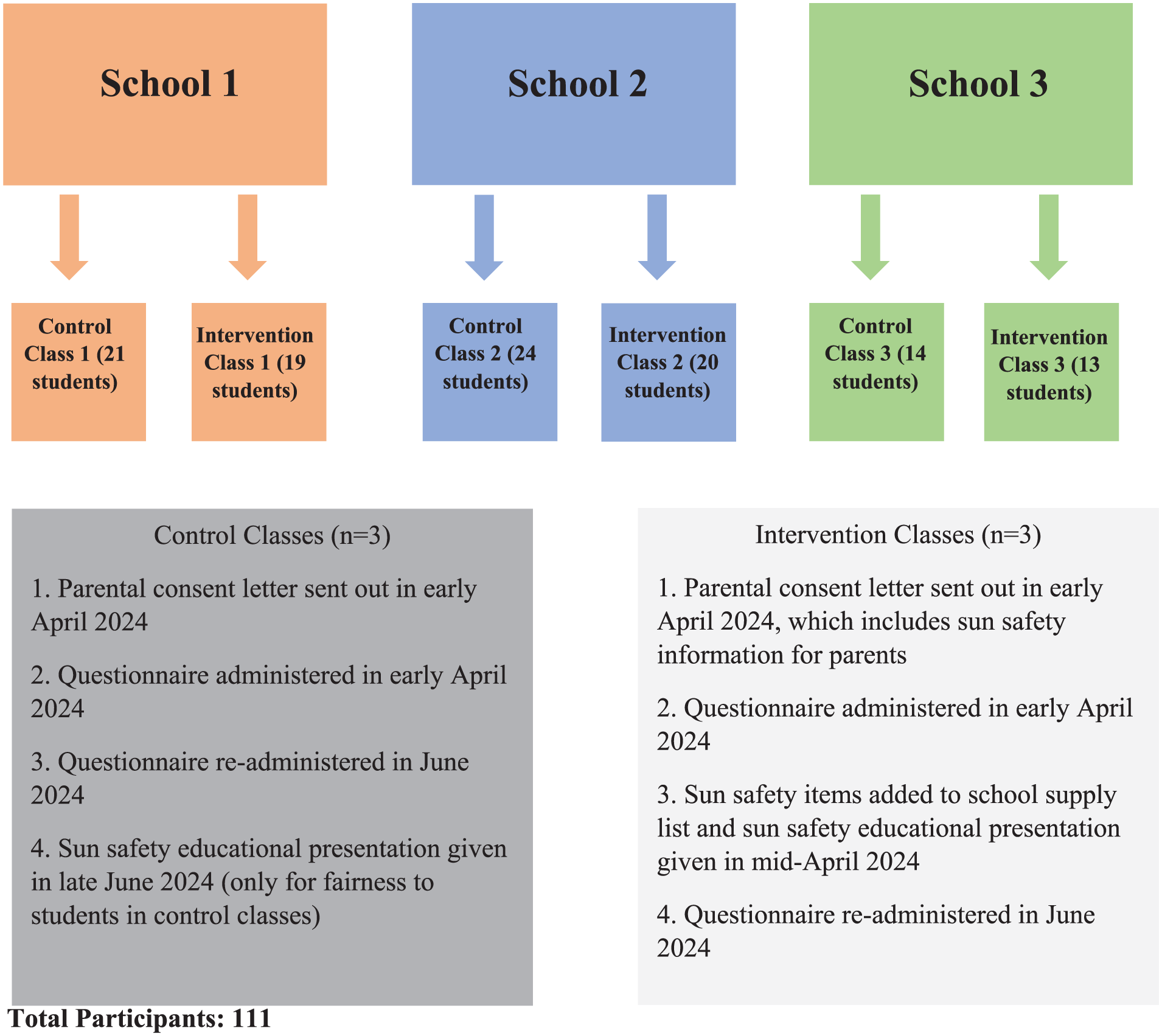
Summary of student distribution across 3 schools and timeline of intervention and control class research activities. Total participants: 111.
Starting in early April, students in intervention classes received the 3 interventions (Figure 1). All students in intervention classes received a letter to parents (as part of their consent form) encouraging parents to coach their children to use sun safety items (sunscreen and protective clothing; see Supplemental Materials). In mid-April, all students in intervention classes received a standardized 30 minute presentation on sun safety from research staff (see Supplemental Materials). From mid-April to the end of June, students in the intervention classes had sunscreen samples made accessible to them within the classroom. The sun safety behaviour questionnaire was re-administered to both control and intervention classes in late June 2024, ~1.5 months after the start of the interventions. The responses were tallied and transcribed into Microsoft Excel. After data collection and study conclusion, the 30 minute sun safety presentation was delivered to the control classes to ensure they received equal opportunity to learn about sun safety.
A total of 222 student questionnaires with complete demographic data were retained as the analytical sample. Missing sun safety outcome data were addressed using a multiple imputation approach. 9 Students were asked to indicate the frequency with which they engaged in various safety-related behaviours on a 5-point Likert scale ranging from never to always. An overall summative sun safety behaviours score was generated using the sun safety behaviours assessed by the questionnaire (tan frequency reverse-coded), with higher scores indicating a higher frequency of engaging in sun-safe behaviours. Descriptive statistics of participant responses per question and demographics were generated for the sample and stratified by time. The distribution of sample characteristics was compared using Fisher’s exact tests to determine if their characteristics varied between baseline and follow-up. To determine changes in sun safety outcomes over time, and differences in outcomes between participants in the intervention and control groups, generalized estimating equation modelling (number of sun safety items) and cluster-adjusted ordinal logistical regression models with robust standard errors (time spent outside, frequency of sunburns, sun safety behaviour scores) to adjust for repeated measures nested within students were used. 10 Before constructing the longitudinal models, missing sun safety outcome data were addressed using Multivariate Imputation by Chained Equations. 9 Briefly, 20 multiply imputed datasets were generated using a random seed (5432) and pooled to obtain overall estimated associations. All descriptive statistics, multiple imputations, and longitudinal models were completed using STATA (v.17.0), StataCorp LLC 4905 Lakeway Dr, College Station, TX 77845, United States.
Results
A total of 111 students, with 52 in the intervention group and 59 in the control group participated (Table 1). The study included a balanced sample, with the same number of participants at baseline and follow-up. In addition, approximately even representation across all 3 schools were found (Table 1). The majority of students had lower melanin skin types (very fair or fair), and the sample was reasonably balanced between male (52.3%) and female students (44.6%), with a very low number of students who indicated their gender as “other.”
Overall Descriptive Characteristics of Study Participants Sampled at Baseline (April) and Follow-Up (June), 2024 (N = 222).
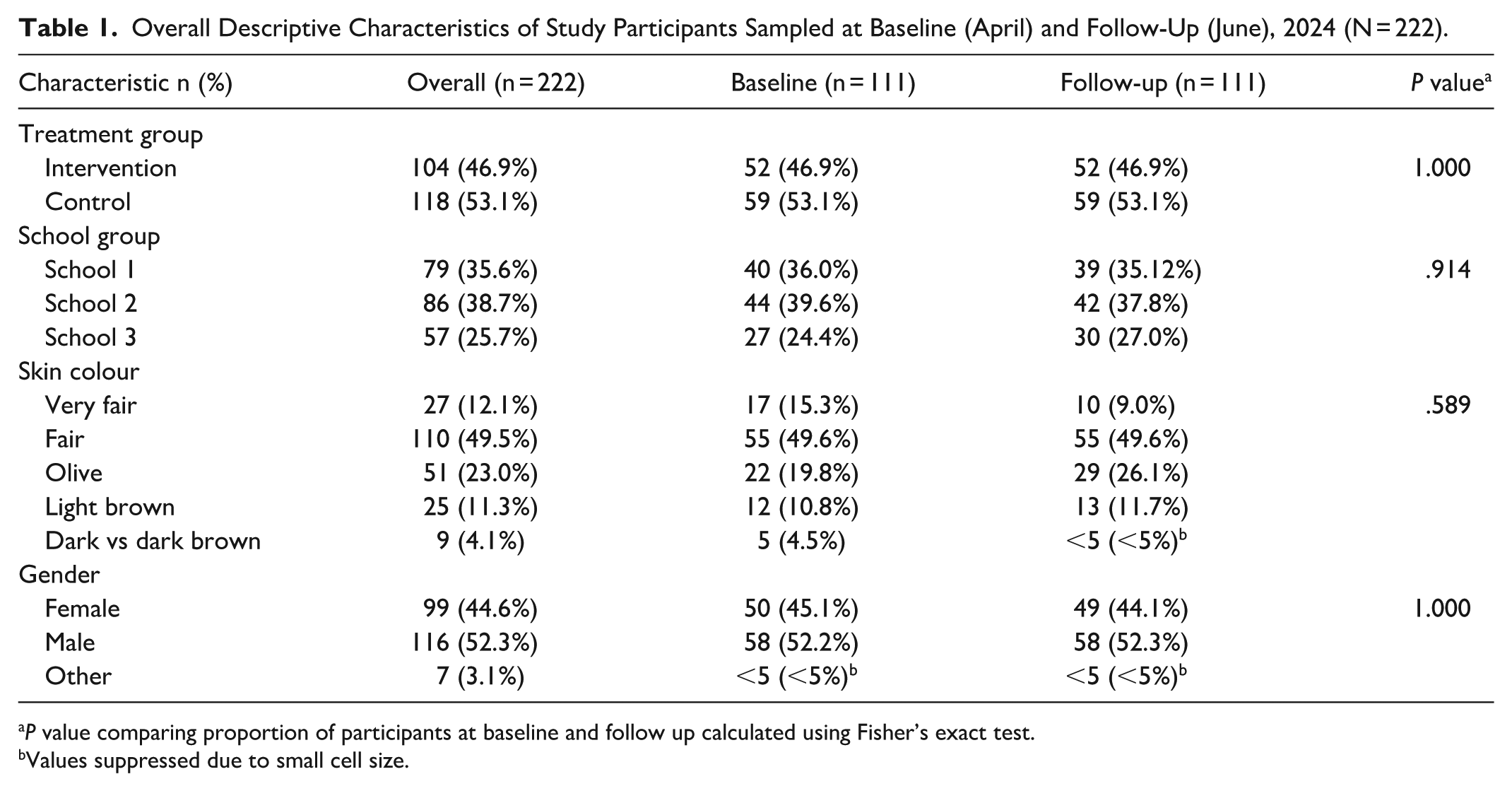
P value comparing proportion of participants at baseline and follow up calculated using Fisher’s exact test.
Values suppressed due to small cell size.
Students had 47% higher odds (OR = 1.47, 95% CI = 1.01-2.14) of spending more time outside on weekends at follow-up compared to baseline (Table 2). Among all students, female students had significantly lower sun safety behaviour scores (OR = 0.50, 95% CI = 0.27-0.90) than male students. Within the male-specific group, sun safety scores decreased for those in the intervention group (OR = 0.37, 95% CI = 0.15-0.96) compared to those in the control group. A trend in the opposite direction was observed when analyzing female students. Within the female specific group, the intervention group experienced an increase in safety sun behaviour scores (OR = 1.05, 95% CI = 0.36-3.06) compared to those in the control group. However, the changes for females were not statistically significant at the 95% CI.
Results From Multivariable Generalized Estimating Equation and Cluster-Adjusted Ordinal Logistic Regression Models Assessing the Longitudinal Associations Between Treatment Groups (Intervention vs Control) and Sun Safety Indicators Among Students Attending Schools in Edmonton, Alberta.
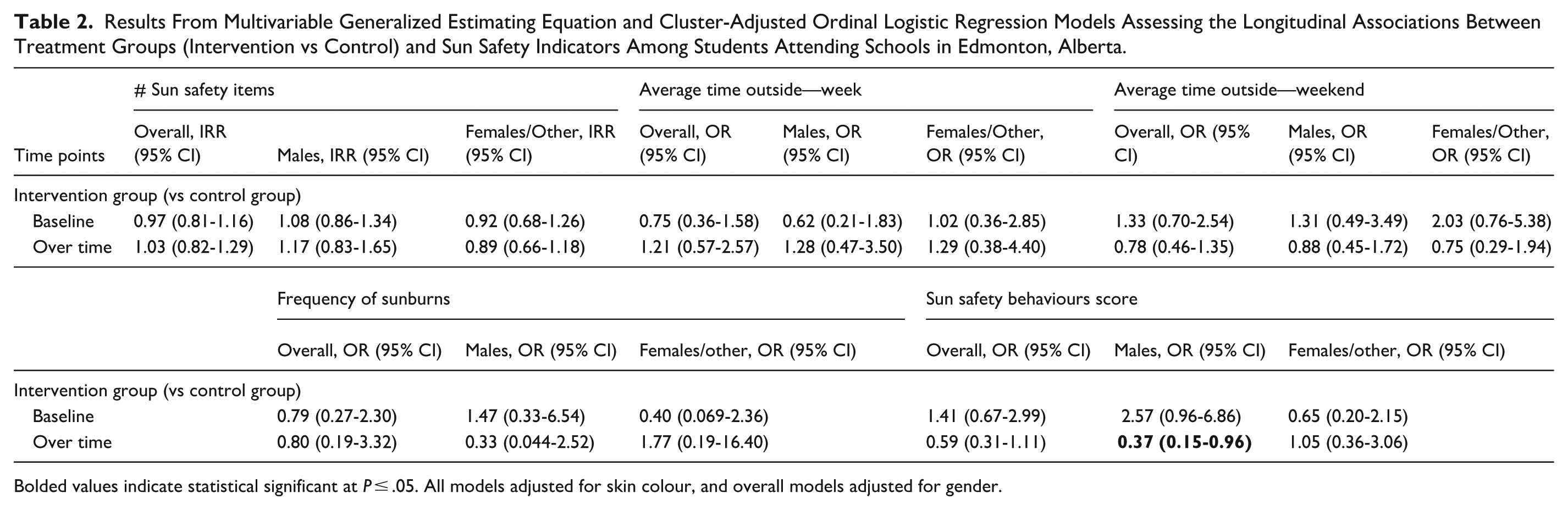
Bolded values indicate statistical significant at P ≤ .05. All models adjusted for skin colour, and overall models adjusted for gender.
Descriptively, the intervention classes showed positive trends in sun safety behaviours. The number of sun safety items at school increased for those in the intervention classes compared to the control classes for both the overall (Incidence rate ratio, IRR = 1.03) and the male-specific (Incidence rate ratio = 1.17) student groups (Table 2 and Figure 2). The frequency of sunburns remained approximately the same for those in the intervention group, compared to an increase in sunburn frequency observed in the control student cohort. This was true for both the overall (OR = 0.80) and the male-specific (OR = 0.33) samples (Table 2 and Figure 2). Otherwise, the analysis did not yield statistically significant differences in outcomes within or between the control and intervention groups (Table 2).
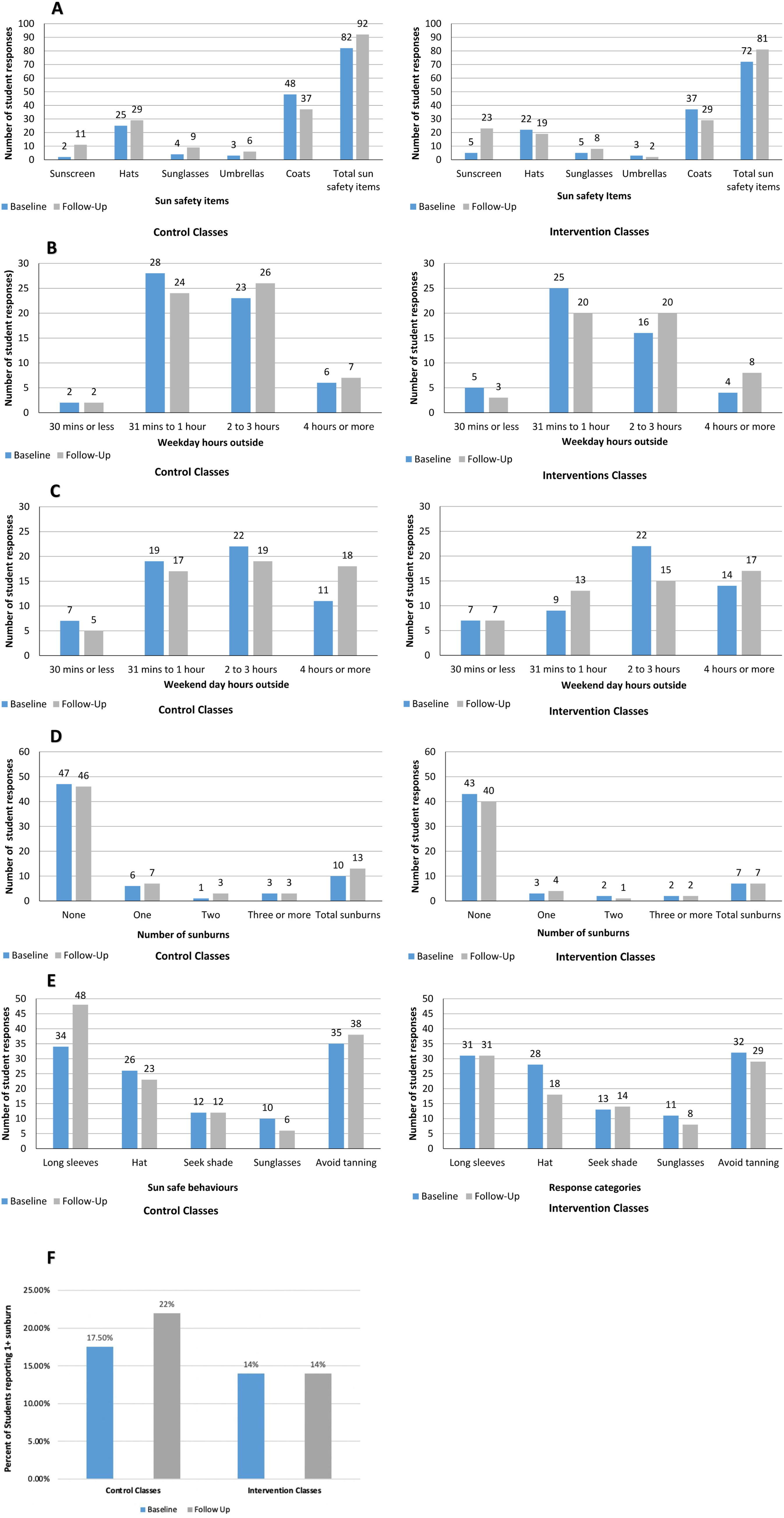
Distribution of responses from students in control (left) and intervention (right) classes at baseline and follow-up for questions on (A) the number of sun safety items available at school. (B) The average time spent outside on weekdays. (C) The average time spent outside on weekend days. (D) The number of sunburns experienced in the past 2 months. (E) The number of students who frequently engaged (eg, “often” or “always”) in sun-safe behaviours. (F) Percent of students reporting 1+ sunburns.
An estimated power calculation for repeated measures was performed using an ANOVA F test for between-within subjects with Greenhouse–Geisser correction (Ho: delta = 0 vs Ha: delta ≠ 0). Our estimated power was 0.0500.
Discussion
This study provides evidence that the 3 interventions trialled may be of benefit in improving sun safety behaviours among elementary-aged children, especially for increasing sun safety item utilization and stabilizing sunburn frequency among students from spring to summertime, a critical period when increased outdoor activities and sun exposure on skin unadjusted for strong UVR elevates sunburn risk. 11 These findings are similar with other research among elementary-aged populations, which found interventions similar to those evaluated in this study lead to improvement in sun safety behaviours, sun safety item utilization, and decreased sunburn rate.5,7,12,13
Interestingly, these study results suggest gender differences in sun safety behaviours and that the evaluated interventions may influence male and female students differently. Specifically, although the increase in sun safety score within the female intervention subgroup was not statistically significant compared to female control counterparts, the positive trend, particularly in the context of females having lower baseline sun safety scores than males, highlights an important area for potential targeted intervention. While male students began with higher baseline scores compared to females, the intervention did not appear to further improve these scores significantly among the male students. However, descriptive findings aligned with the overall positive direction of change regarding sunburn frequency and sun safety item use. These findings underscore the importance of future research examining how gender influences the effectiveness of sun safety interventions. While gender-based differences in sun safety behaviours and the psychosocial drivers are well documented in adolescents and college students, with factors like gender-specific perceptions of tanning benefits and gender-specific peer and cultural norms shaping sun protection intentions and practices, our findings suggest these patterns also impact responsiveness to interventions among elementary-aged children.14,15 This further emphasizes the need for tailored, gender-specific strategies to enhance behavioural outcomes in elementary-aged children.
Study limitations include having 2-time points for data collection, lacking collateral data from parents and teachers regarding student behaviours, and not having enough students with other gender identities to explore associations for non-binary and other gender-diverse students. All participating schools were also in the same geographic region with similar socioeconomic characteristics, which may limit the generalizability of findings to more diverse school populations or different climatic zones. Given our reliance on self-reported data, a social desirability bias could also be affecting the results. 16 The weather and temperature conditions during baseline versus follow-up were also different, which may have confounded the interpretation of changes in sun safety behaviours independent of the interventions. For instance, the change in season and increased amount of sun exposure at follow-up compared to baseline during the study period could have influenced the sun safety behaviours of children, independent of the interventions. The analysis was underpowered at 0.05, which was likely due to the small effect size of the intervention. Future research with a longitudinal follow-up and additional perspectives is needed to fully assess the impact of the interventions, as well as improve the power of a future similar study.
The results from this study suggest that the interventions evaluated may be an important part of a sun safety school approach. However, in determining what a comprehensive approach to sun safety for elementary students may involve, it’s useful to review the different strategies that have already been implemented both internationally and within Canada.
Review of Existing Sun Safety School Policies and Programs
Globally, multiple approaches to sun safety have been implemented in elementary schools, most commonly through formal sun safety policies at either the school board or individual school level. Such policies have been adopted in regions including California, 17 Florida, 18 Australia, 19 New Zealand, 20 Wales, 21 and Southern Spain. 22 The policies vary but overall include key evidence-based elements: (1) student education on sun safety, (2) ensuring access to outdoor shade, (3) parental and teacher communication regarding sun safety, and (4) recommendations (but rarely a requirement) of sunscreen use and protective clothing when UVR exposure is deemed excessive.17 -22 Unfortunately, there is wide variability in how these policies are enforced or monitored, and there are often low rates of policy implementation.17 -22 However, policy uptake is frequently supported by national or regional programs that function as resource hubs, offering participating schools access to training modules, educational materials, and implementation checklists. Research from Australia suggests that this model improves adoption of sun-safe school policies. 23
In contrast to policy-based approaches, some schools employ program-based approaches without formal policies.24 -26 These programs often include similar elements, such as student education, parental outreach, and promotion of sun-protective behaviours. Further, more intensive interventions have also been evaluated. For example, a California-based program uses sun safety coaches who work directly with school principals to review existing policies, integrate sun safety practices, provide educational resources, and facilitate access to grant funding. 27 Additionally, hybrid approaches that combine in-school programming with digital outreach are emerging in the United States and Canada. One such example is UV&Me, which reinforces sun safety through school presentations and extends engagement through digital tools and social media. 28
In the Canadian context, a scoping review was recently conducted, which evaluated the existing research evidence regarding sun safety policies and interventions in Canadian elementary schools. 5 The review found robust evidence demonstrating the effectiveness of school-based sun safety interventions in Canada, including implementation of an educational sun safety curriculum, 12 brief educational interventions,29,30 and simple educational sun safety messaging for parents. 30 However, despite this strong research evidence, the review identified inconsistent implementation of sun safety policies and/or programs within Canadian elementary schools. 5 For instance, within Alberta, even though the local health authority has multiple sun safety resources developed for elementary schools, there is a relative dearth of formal sun safety programs or policies in any of the surveyed Albertan school districts. 5 Similarly, at the national level, sun safety resources are available to Canadian schools, including SunSense, a program developed by the Canadian Cancer Society, and educational tools provided by the Canadian Skin Cancer Foundation.31,32 However, uptake of such comprehensive sun safety policies or programs across Canada is limited. 5 The review concluded that a paradox exists in Canada, whereby knowledge and resources to enhance sun protection are available but are not being implemented in ways that are accessible to educators, students, and families. 5
Implementing a Sun Safety Approach
Ideally, a sun safety approach in Canadian elementary schools should be comprehensive, including multi-level interventions. 5 At a provincial level, recommended interventions include the integration of sun safety requirements into educational safety and wellbeing legislation, the development of standardized legislation implementation guidelines, and the establishment of funding mechanisms for sun safety programs. 5 At the school board level, recommended interventions include mandatory sun safety policy development (in collaboration with parents and community members) and the integration of sun safety principles into professional development for teachers. 5 At the individual school level, interventions include environmental modifications (such as shade infrastructure, UV-based activity modifications), and the implementation of an educational sun safety curriculum that promotes student sun safety behaviours including daily sunscreen and protective clothing use. 5
Due to institutional resource constraints, implementing a comprehensive sun safety approach is often challenging, and thus planning a more gradual implementation strategy can be helpful. As a practical starting point, the recommendation from this study is that individual schools or school boards can first implement the 3 core interventions evaluated: (1) 30 minute presentations within the health curriculum, (2) parental letters encouraging sun-safe behaviours, and (3) ensuring students have access to sunscreen at school through providing samples. In terms of feasibility, these interventions can be more easily implemented by (1) showing educational sun safety videos at school-wide events or during regularly scheduled classroom activities, (2) sending out digital newsletters to parents through already established email lists, and (3) encouraging teachers and parents to remind children of sun-safe behaviours (such as sunscreen use and bringing in personal sunscreen supplies to school). These low-cost, minimally resource-intensive, and scalable strategies provide an entry point for sun safety programming and may be implemented using existing resources, including materials from local health authorities, the Canadian Cancer Society’s SunSense program, 3 or resources from our research group. Based on a school’s available resources, their sun safety approach can then be expanded to include other important elements such as outside shade infrastructure development, implementation of program effectiveness monitoring strategies, and interactive student educational sessions, in collaboration with both school boards and provincial governments.
Together, these strategies have the potential to foster a comprehensive, sustainable sun safety culture across Canada and internationally. Future research is needed to assess the long-term impact of these combined interventions and their effectiveness in promoting lasting behavioural change.
Supplemental Material
sj-docx-2-cms-10.1177_12034754261436039 – Supplemental material for Improving Sun-Safe Practices for Elementary School Children
Supplemental material, sj-docx-2-cms-10.1177_12034754261436039 for Improving Sun-Safe Practices for Elementary School Children by Garrison J. B. Dyck, Aakankshya Kharel, Samuel A. J. Lowe, Andy D. Lee, Pamela Mathura and Marlene Dytoc in Journal of Cutaneous Medicine and Surgery
Supplemental Material
sj-docx-3-cms-10.1177_12034754261436039 – Supplemental material for Improving Sun-Safe Practices for Elementary School Children
Supplemental material, sj-docx-3-cms-10.1177_12034754261436039 for Improving Sun-Safe Practices for Elementary School Children by Garrison J. B. Dyck, Aakankshya Kharel, Samuel A. J. Lowe, Andy D. Lee, Pamela Mathura and Marlene Dytoc in Journal of Cutaneous Medicine and Surgery
Supplemental Material
sj-docx-4-cms-10.1177_12034754261436039 – Supplemental material for Improving Sun-Safe Practices for Elementary School Children
Supplemental material, sj-docx-4-cms-10.1177_12034754261436039 for Improving Sun-Safe Practices for Elementary School Children by Garrison J. B. Dyck, Aakankshya Kharel, Samuel A. J. Lowe, Andy D. Lee, Pamela Mathura and Marlene Dytoc in Journal of Cutaneous Medicine and Surgery
Supplemental Material
sj-pptx-1-cms-10.1177_12034754261436039 – Supplemental material for Improving Sun-Safe Practices for Elementary School Children
Supplemental material, sj-pptx-1-cms-10.1177_12034754261436039 for Improving Sun-Safe Practices for Elementary School Children by Garrison J. B. Dyck, Aakankshya Kharel, Samuel A. J. Lowe, Andy D. Lee, Pamela Mathura and Marlene Dytoc in Journal of Cutaneous Medicine and Surgery
Footnotes
Acknowledgements
The authors thank the homeroom teachers for allowing this study to be completed and for their continued support. We thank all students and parents who made our study possible, as well as the Elk Island Public School Board and the board superintendent, Dr Sandra Stoddard, for her support and guidance. Lastly, we would like to thank Dr Julie Peconi of Swansea University, Wales, United Kingdom, whose valuable insights and expertise greatly enriched this study.

Ethical Considerations
Ethical approval was obtained from the University of Alberta Health Research Ethics Board (Pro00135948).
Consent to Participate
Anonymity was maintained at every step during questionnaire collection. Written consent was obtained from all participants’ parents/legal guardians and verbal assent was obtained from all participants.
Author Contributions
Marlene Dytoc: supervised and aided in project design, aided in manuscript development and review. Pamela Mathura: supervised and aided in project design, aided in manuscript development and review. Garrison J. B. Dyck: co-led project design, aided in data collection, entry and analysis, and co-led manuscript development and review. Aakankshya Kharel: co-led manuscript development and review, and aided in data collection, entry, and analysis. Samuel A. J. Lowe: assisted with quantitative data analysis, interpretation, and edited the manuscript. Andy D. Lee: aided with manuscript review.
Funding
The authors disclosed receipt of the following financial support for the research, authorship, and/or publication of this article: Funding for this study was obtained from the Global Wales Partnership.
Declaration of Conflicting Interests
The authors declared no potential conflicts of interest with respect to the research, authorship, and/or publication of this article.
Supplemental Material
Supplemental material for this article is available online.
References
Supplementary Material
Please find the following supplemental material available below.
For Open Access articles published under a Creative Commons License, all supplemental material carries the same license as the article it is associated with.
For non-Open Access articles published, all supplemental material carries a non-exclusive license, and permission requests for re-use of supplemental material or any part of supplemental material shall be sent directly to the copyright owner as specified in the copyright notice associated with the article.
