



Abstract
Background:
Hidradenitis suppurativa (HS) is a physically debilitating skin disease characterized by nodules and abscesses in intertriginous areas. There is a profound psychosocial element to HS, as it contributes to higher mental comorbidities, lower self-esteem, and diminished quality of life. TikTok represents an active space for HS patients to share their experiences.
Objectives:
This study aims to perform a reflexive thematic analysis of HS-related videos on TikTok to explore the themes within videos shared by content creators.
Methods:
This study utilized Braun & Clarke’s protocol for reflexive thematic analyses. The first 108 consecutive videos identified by searching #HidradenitisSuppurativa on TikTok were included in the pool. Included videos were posted from 2020 to 2025, in English, and conceptually related to HS.
Results:
Ninety-three of the original 108 videos were retained, with a total of 109.3 million views. 69.9% of the included videos were generated by lived experience creators, followed by medical professionals (17.2%). The majority of content creators were female (67.7%), and 23.7% of videos were sponsored product endorsements. Ultimately, 6 themes emerged: Promoting Products (29%), Educational Empowerment (27%), HS as Lived Reality (23%), Advocacy Through Visibility (13%), Medical Mistrust (3%), and Internalized Stigma & Self-Blame (3%).
Conclusion:
This analysis underscores the importance of addressing facets of HS, which may be routinely overlooked in clinical evaluations, including the role of alternative therapies and patient education. Clinicians should recognize TikTok as a platform for self-expression among patients with HS and use this awareness to support the psychosocial needs revealed in this study.
Introduction
Hidradenitis suppurativa (HS) is an inflammatory dermatological condition that typically presents as painful, deep nodules, and abscesses. 1 The pathogenesis of HS is multifaceted, involving a complex interplay of genetic, biological, and lifestyle factors, including smoking, obesity, and diet. 2 Typically, the management of mild HS involves lifestyle changes and topical antibiotics such as clindamycin, while severe HS may require oral antibiotics, surgery, or anti-inflammatory biologic therapies like adalimumab. 3
The global prevalence of HS is 1% to 2%, and it disproportionately affects individuals aged 18 to 29 years, females, and those of African American heritage.3,4 HS has up to a 10-year delay in diagnosis and is frequently misdiagnosed as other soft-tissue skin infections.3,4 Moreover, HS can have profound repercussions on an individual’s mental health and is associated with major depressive disorder, anxiety, substance abuse, and suicide risk. 5 Patients also report higher levels of loneliness and social isolation, stemming from low self-esteem, lesion visibility, and scarring.6,7 Other facets include a deterioration in patients’ relationships and intimacy, and a decline in workplace productivity.6,8 Together, these factors highlight the importance of studying the psychosocial impacts of HS alongside its physical symptoms.
In the current social zeitgeist, social media platforms such as TikTok serve as powerful spaces that facilitate patient engagement and information dissemination.9,10 TikTok allows users to generate short videos to share their daily experiences, exchange information, and uplift each other.11,12 Medical providers have also joined TikTok to engage with patients and provide evidence-based advice and resources in an accessible format.11,12 Despite these positive aspects, TikTok can serve as an echo chamber, amplifying misinformation and at times promoting unhealthy content or stigma.11,12 The discourse surrounding HS on social media should be explored further, as it may serve as a platform for patients to voice their experiences with disease prognosis and management.
Therefore, this study aims to explore patient and provider perceptions of HS on TikTok. This qualitative analysis will allow key themes and perspectives from both groups to be identified and compared. Understanding this discourse may help destigmatize HS and shape more empathetic and effective care.
Methods
This study employed a reflexive thematic analysis design using Braun and Clarke’s 6-phase method.13,14 This analysis followed the protocols of previous literature with a similar scope and adheres to the Standards for Reporting Qualitative Research (SRQR) guidelines.11,12,15 As this study used publicly accessible data, ethics exemption was granted by the University of Calgary Conjoint Health Research Ethics Board under TCPS 2 (2022) Article 2.2(b). 16
Data were retrieved by searching #HidradenitisSuppurativa on TikTok. The first 108 consecutive videos were extracted on May 8, 2025. A “clean session,” that is, a browser without a previous log-in, cookies, or watch history, was utilized to minimize algorithmic bias. Inclusion criteria included English-language TikTok videos posted from 2020 to 2025 that were directly relevant to HS.
Two reviewers (N.S. and S.H.) independently reviewed and coded each TikTok video. Both coders had previous experience conducting qualitative, health-related thematic analyses. The coding table was constructed iteratively, whereby the reviewers would compare codebooks, collapse disagreements, and modify themes. The review process consisted of 4 phases: data familiarization, during which each video was transcribed and interesting content was noted; initial code generation; creation of the main themes; and review and refinement of themes. A coherent narrative was created to report the themes alongside their definitions.
Results
The aggregated pool of videos accounted for 109.3 million total views on TikTok. As shown in Table S1, the majority of videos were created by individuals with lived experience with either active HS lesions or disease under remission (n = 65; 69.9%). The second most represented creators in the pool were board-certified dermatologists and plastic surgeons (n = 16; 17.2%). Patients with HS were primarily female (75.0%), with males making up only 14.3% of the sample (Table S3).
Six major themes were identified through an iterative process: “HS as Lived Reality,” “Promoting Products,” “Medical Mistrust,” “Internalized Stigma and Self-Blame,” “Advocacy Through Visibility,” and “Educational Empowerment” (Figure 1). In addition, 23 sub-themes were constructed (Figure 2). The 2 most represented themes in the pool were “Promoting Products” and “Educational Empowerment,” comprising 29% and 27% of the sample, respectively (Figure 2). Videos covering “Medical Mistrust and Alternative Care” and “Internalized Stigma and Self-Blame” were the least represented, each constituting 3% of the overall pool (Figure 2).
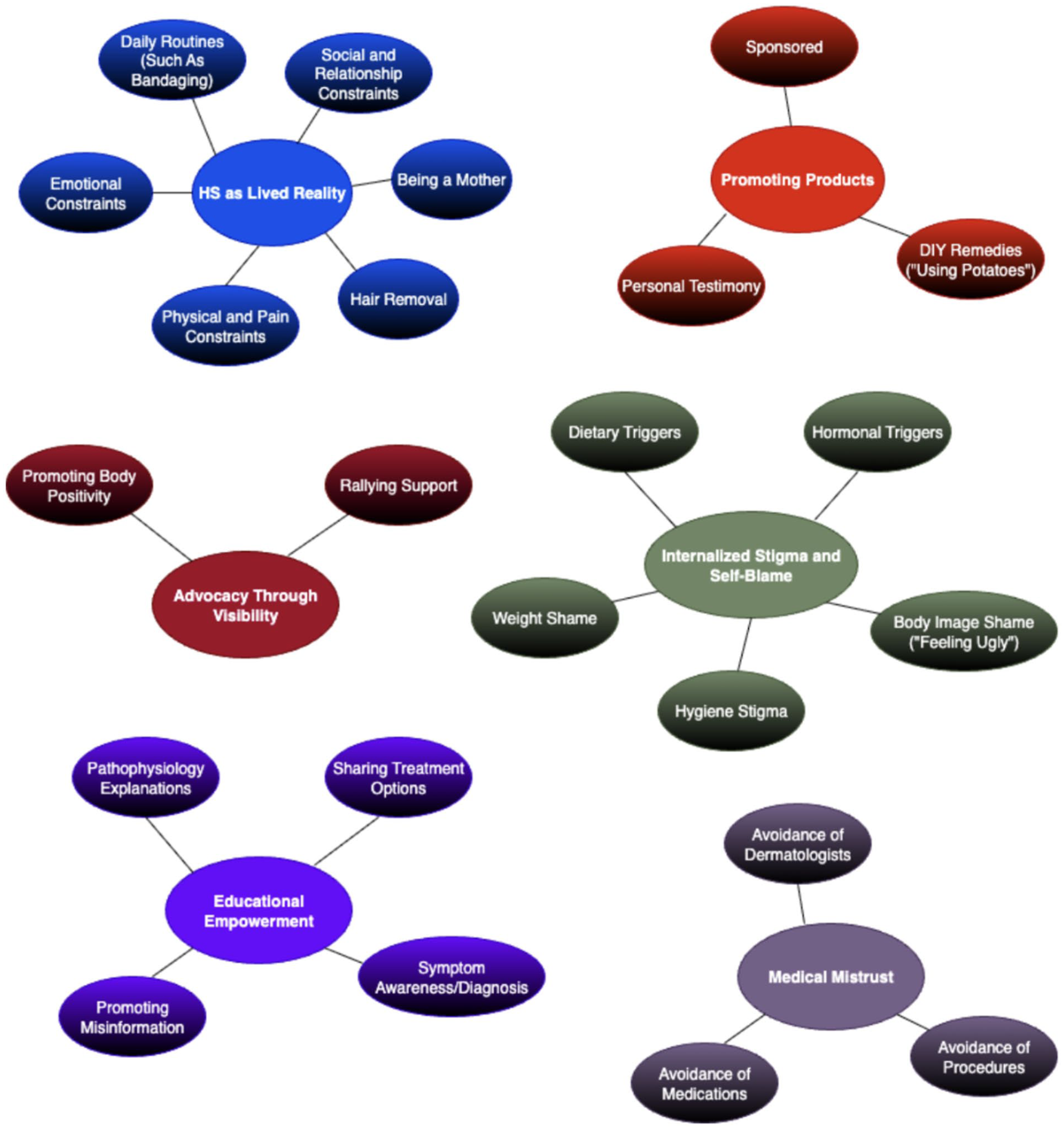
A flow diagram representing the 6 major themes identified in this thematic analysis, as well as the associated sub-themes.
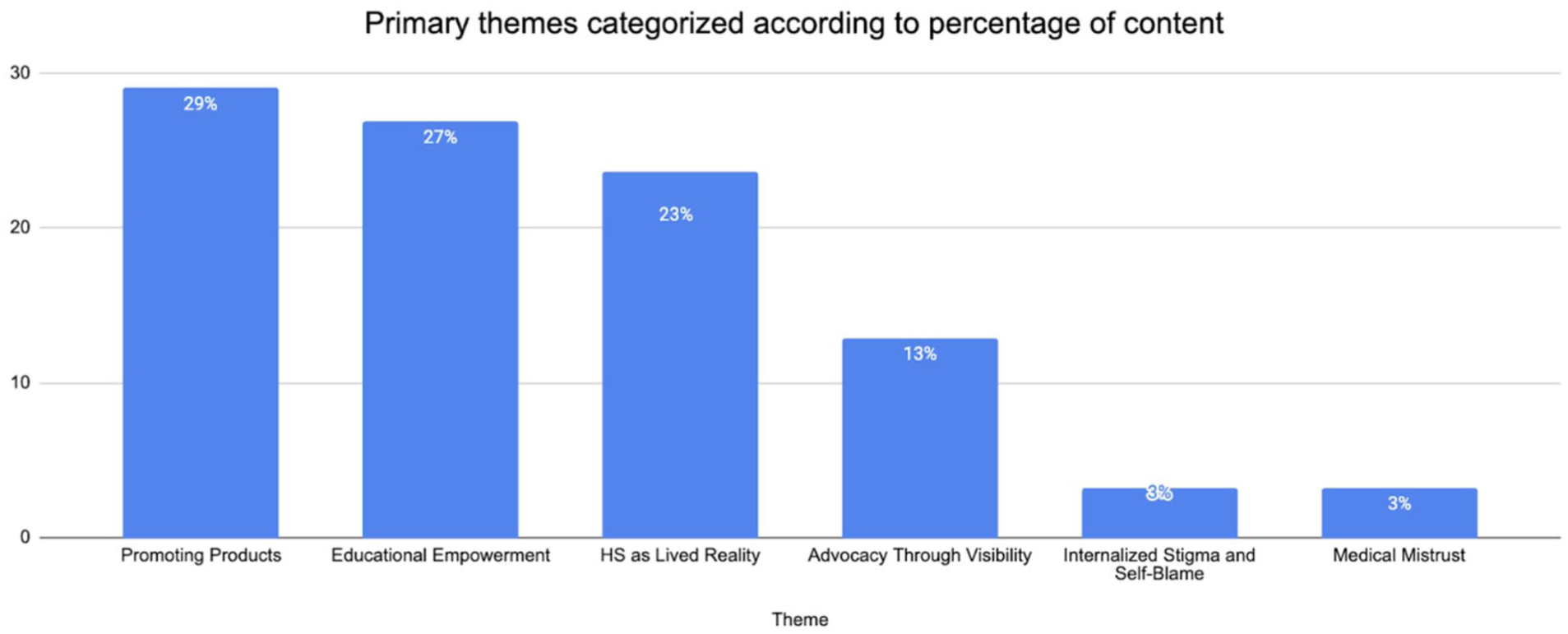
TikTok video themes categorized according to the proportion of content expressed as a percentage.
Demographics of Lived Experience Content Creators
The majority of lived experience content creators were female (84.0%) (Table S3). Most lived experience creators (60.3%) had a perceived “dark” skin tone, followed by a light skin tone (26.0%) and a medium skin tone (9.6%) (Table S4). The axilla was the most prominent region affected, constituting 61.8% of the sites (Table S5). There was nearly equal representation of the head and neck (7.9%), lower abdomen (6.6%), inguinal region and groin (6.6%), inframammary region and chest (5.3%), and inner thigh (5.3%).
Theme 1: HS as Lived Reality
A substantial proportion of TikTok videos focused on the day-to-day realities of HS, such as patients’ daily routines, reflections on body image, and social functioning. This theme accounted for the highest average views (2.10 million). Twenty-two videos fell under this category, comprising 23% of the overall pool (Figure 2). Five sub-themes were identified, encompassing the physical, social, and emotional constraints of HS.
Some individuals discussed acceptance and support from their social circles:
In my past, if I got close to a partner, I would definitely let them know about my HS. They have been very supportive and my friends are also supportive too. — Lived Experience Content Creator
However, there was also much emphasis on social rejection and low self-esteem:
[HS] makes me feel extremely uncomfortable. Being seen is my worst nightmare; it makes me feel disgusted and fear I may be judged. I want it to be hidden. — Lived Experience Content Creator
Other creators discussed the impact of HS on motherhood:
POV: You’re a mom with chronic illness flare-up, but the show must go on. — Lived Experience Content Creator
Theme 2: Promoting Products
The most represented theme was “Promoting Products,” which accounted for the third highest average views (619,000). This theme included videos that promoted products targeted towards treating or minimizing HS lesions. Twenty-seven videos specifically referenced products, most of which were marketed as “miracle cures.” The most pervasive sponsored product was MyMagicHealer, which includes grapeseed oil, olive oil, propolis extract, and lavender essential oil as active ingredients (Table S6):
MyMagicHealer has given me the confidence to take pride in my self-care. — TikTok user on MyMagicHealer I’ve been through many clinical trials. Every now and then, new topicals would come out, but I can’t speak highly enough about MyMagicHealer. I’ve had a few nagging areas on my back where I get HS, and on my bottom. In four days they all calmed down. It’s all due to this. — TikTok user on MyMagicHealer
MyMagicHealer was also endorsed as a solution for non-HS dermatological conditions:
We call [MyMagicHealer] the universal skin healer, because it heals 97% of common skin issues. You basically use this for any painful, inflamed, infected, dry, cracked, irritated, sensitive, or raw skin. — TikTok user on MyMagicHealer
The full list of endorsed products is provided in Table S6.
Theme 3: Medical Mistrust
Approximately 3% of the videos expressed frustration and mistrust of medical professionals, accounting for 310,000 average views. This category was defined as individuals discussing apprehension to receiving medical care for HS due to prior negative experiences. Sub-themes that fell within this category included avoidance of dermatologists, avoidance of medications, and avoidance of procedures. Example quotes include:
My dermatologist didn’t give me Cosentyx. It was honestly because I don’t think he knew about Cosentyx. . . [or] how to give it. — TikTok user After my dermatologist had [previously] given me a round of Keflex that didn’t work, I thought maybe she’d prescribe me something else. . . But it was Keflex again, the same medication that didn’t work. — TikTok user
TikTok videos from other professionals sometimes reinforced mistrust of dermatological therapies. Some plastic surgeon content creators made subtle claims which positioned them as more effective at treating HS than dermatologists:
If you have HS and have seen your dermatologist but have failed medical management, come see us for a more permanent solution through reconstructive surgery. — Plastic Surgeon TikTok user
Many content creators endorsed the use of alternative care products over medical therapies, claiming the former were safer by virtue of being more “natural”:
MyMagicHealer is all natural. There are no pharmaceutical drugs included in this, so there’s nothing I’m going to get addicted to. — TikTok user
Theme 4: Internalized Stigma and Self-Blame
Approximately 3% of the overall sample included elements of self-criticism expressed by individuals with lived experience. These videos accounted for 234,000 average views. Within this theme, content creators attributed their HS to intrinsic factors, blaming their hygiene, weight, or diet for their flares. Five sub-themes emerged, including content focusing on dietary triggers, hormonal triggers, weight shame, body image shame, and hygiene stigma. Most of the videos discussing self-blame were created by males with severe HS on their chest and neck:
I used to shower multiple times a day to feel clean. — TikTok user My HS is a result of eating my trigger foods. It’s nobody’s fault but mine so I’ll soldier through the pain. — TikTok user
Theme 5: Educational Empowerment
The “Educational Empowerment” theme included informative videos that focused on educating the general public on the etiology, pathophysiology, or management of HS in a digestible manner. These videos accounted for 1.32 million average views. For instance, one video discussed Humira as a management strategy, but also shed light on some of its potent side effects:
Humira is an immunosuppressive medication. It does help in HS, but. . . it can cause. . . cancer. It can reactivate tuberculosis and predispose you to infections. — TikTok user
Some videos, grouped under the “Promoting Misinformation” subtheme, contained factually incorrect information. These videos tended to be created by non-medical professionals, such as estheticians:
HS makes people not a candidate for shaving because it can cause flare-ups. Unfortunately many waxers will turn away people with this condition due to lack of education and/or experience. — Esthetician TikTok user
Theme 6: Advocacy Through Visibility
This theme represented the third most prevalent category of videos, comprising 23% of the overall pool and accounting for 953,000 average views. These videos were primarily created by individuals with lived experience, who used social media as an outlet to advocate for solidarity and promote HS normalization. A key differentiating characteristic of this theme from “HS as a Lived Reality” was that the former focused primarily on the resilience and motivational aspects of HS videos. Some videos underscored the importance of body positivity:
I have HS. I have bandages and scars all over my body, and I’m perfectly fine with them because I’ve learned to accept them. — Lived Experience TikTok user
One video discussed a newly launched online HS community called “The Healing Space.” This video emphasized how such platforms could allow individuals living with HS to freely share their emotional journeys without judgment:
It’s hard to not think negative things about yourself. We feel shame and we isolate. We can have all the tools in the world, but what helps us use those tools? Having relatability to people’s stories. . . We want to change the stigma, because you never know who has HS. We never want them to feel like it was their fault or that they’re alone. — Lived Experience TikTok user
Discussion
The goal of this study was to analyze and stratify content from TikTok under the #HidradenitisSuppurativa hashtag to explore the range of information available to the public. Six broad themes were uncovered, representing diverse types of content: “HS as Lived Reality,” “Promoting Products,” “Medical Mistrust,” “Internalized Stigma and Self-Blame,” “Advocacy Through Visibility,” and “Educational Empowerment.” The findings from this study illuminate the current landscape of HS discourse shared by experts and individuals with lived experience. These perspectives are crucial from a clinical standpoint in elucidating patient understanding and guiding treatment.
“Promoting Products” was the most represented theme in the sample. Most of the endorsed products were suggested as natural alternatives to medical therapy, particularly MyMagicHealer. However, these remedies are not supported by HS management guidelines, and there is a growing concern regarding their risks and adverse effects, such as drug interactions.17,18 Prior work has supported this finding, underscoring how TikTok’s algorithm influences consumer behaviour by building trust in creators who appear genuine through paid promotions. 19 Ultimately, this underscores the importance of disseminating information on the efficacy and associated risks of alternative therapies for HS, as well the clinical importance of screening for their use.
A striking finding was that “Educational Empowerment” represented the second most predominant theme in the sample pool. This finding paralleled a similar thematic analysis of Acne videos on TikTok, where approximately 34% of videos related to “Acne Education.” 11 Within this category, numerous videos spread misinformation, for example by endorsing home remedies like egg whites and potatoes with unvetted efficacy. Other studies have also identified a high proportion of misinformation among unmoderated medical content on social media. This category illustrates the importance of assessing patients’ understanding of their disease.
Approximately 23% of the videos fell under “HS as a Lived Reality,” which captured the daily routines of individuals with HS. This theme also garnered the highest number of average views (2.10 million), which reflects its relatability and authenticity. Prior literature underscores the discordance between the clinical presentation and day-to-day experience of living with HS. 20 Notably, patients tend to rate their burden of disease as more severe than healthcare providers, and physicians may not be aware of the magnitude of the psychosocial burden of HS. 20
As such, this theme is important because it highlights the physical, emotional, and social struggles experienced by HS patients and their families. 21 For example, several video creators were mothers silently struggling to manage their own HS flares while caring for their young children—a hidden dimension of HS that was illuminated in these videos.
Although the “Medical Mistrust” theme only represented a small minority of videos, they acted as a powerful reminder of eroded trust with HS patients. This study identified 3 key areas of avoidance: dermatologists, medication, and procedures. Most of the videos that expressed an ambivalence towards dermatologists were centred around prior negative experiences, such as a dermatologist who did not provide appropriate management or failed to adequately address a patient’s concerns. This was also the case for procedure avoidance. Medication avoidance appeared to stem from a preference for naturopathic alternatives over conventional allopathic options. Physicians managing HS should be especially cognizant of the potential for “medication-phobia,” which may be attributed to a lack of health literacy, fear of side effects, polypharmacy, or past negative experiences. 22
The “Internalized Stigma and Self-Blame” theme underscored the tendency of patients to blame themselves for their HS. 23 Individuals with HS are also prone to comparing their disease severity or presentation with those of others in online communities, which could further cement negative self-perceptions. This theme had the lowest number of average views (234,000 views), which suggests that content addressing internalized stigma or self-blame may not be as engaging or resonate as much as other themes. This could be due to the more sensitive, personal, or heavy nature of this content. Overall, these findings are crucial from a clinical perspective as they highlight the importance of effectively communicating the pathogenesis and etiology of HS, and dispelling assumptions that could promote self-blame. Patients should be made aware that, although lifestyle modifications can help in mitigating disease severity, HS also has a biological basis. Moreover, there was a predominance of male video creators within this theme. Interestingly, this finding contradicted that of prior studies, which supported self-blame as a more frequent coping strategy in females compared to males. 24 However, this contradiction could be attributed to selection bias. From a healthcare provider standpoint, it is essential to further explore this vulnerability in male populations to ensure it is not overlooked.
In contrast to “Internalized Stigma and Self-Blame,” videos falling under “Advocacy Through Visibility” exemplify the potential of TikTok to serve as a mode of empowerment for individuals living with HS. As many individuals with HS may internalize negative perceptions, it is crucial to promote body positivity and help foster resilience. Clinicians should be aware of the potential for patient-centred solutions and seek to uplift those with lived experience.
A limitation of this study was that the sample comprised only the top videos found when searching #HidradenitisSuppurativa, as determined by TikTok’s algorithm. The included videos may therefore not be fully reflective of the most popular videos on TikTok. However, this approach is also beneficial as it approximates the experiences of individuals of HS who may be casually scrolling. This paper also only examined a sample of 108 videos, which may not capture the complete range of HS content on TikTok. Additionally, TikTok and other social media platforms are constantly evolving, and the types and distribution of topics discussed on social media may also change quickly.
Conclusion
This study identified 6 primary themes that captured the experiences and insights expressed by patients, professionals, and other HS creators on TikTok. These themes underscore the importance of addressing elements such as misinformation, alternative naturopathic remedies, mistrust of healthcare, and self-blame—issues which are vital in the management of HS and may be frequently overlooked in a clinical setting. The findings of this analysis also underscore elements surrounding the day-to-day experiences of individuals with lived experience, such as physical limitations, social and emotional impacts, and HS during motherhood. These insights may guide healthcare providers in anticipating patient outcomes and integrating holistic psychosocial supports into HS management.
Supplemental Material
sj-docx-1-cms-10.1177_12034754251411895 – Supplemental material for “I Am An HS Warrior”: A Reflexive Thematic Analysis of #HidradenitisSuppurativa on TikTok
Supplemental material, sj-docx-1-cms-10.1177_12034754251411895 for “I Am An HS Warrior”: A Reflexive Thematic Analysis of #HidradenitisSuppurativa on TikTok by Nirav Saini, Stephanie Huynh and Laurie M. Parsons in Journal of Cutaneous Medicine and Surgery
Supplemental Material
sj-docx-2-cms-10.1177_12034754251411895 – Supplemental material for “I Am An HS Warrior”: A Reflexive Thematic Analysis of #HidradenitisSuppurativa on TikTok
Supplemental material, sj-docx-2-cms-10.1177_12034754251411895 for “I Am An HS Warrior”: A Reflexive Thematic Analysis of #HidradenitisSuppurativa on TikTok by Nirav Saini, Stephanie Huynh and Laurie M. Parsons in Journal of Cutaneous Medicine and Surgery
Footnotes
Acknowledgements
None.
Author Contributions
Nirav Saini was involved with conceptualization (lead), data curation (lead), formal analysis (lead), investigation (lead), methodology (lead), project administration (lead), visualization (lead), writing—original draft (lead), writing—review & editing (lead). Stephanie Huynh was involved in formal analysis (supporting), investigation (supporting), visualization (supporting), writing—original draft (supporting), writing—review & editing (supporting). Dr. Laurie M. Parsons was involved with conceptualization (lead), supervision (lead), writing—original draft (lead), writing—review & editing (lead).
Data Availability Statement
Data were publicly accessed through TikTok without the creation of an account.
Declaration of Conflicting Interests
The authors declared no potential conflicts of interest with respect to the research, authorship, and/or publication of this article.
Funding
The authors received no financial support for the research, authorship, and/or publication of this article.
Ethics Statement
Ethics exemption was granted by the University of Calgary Conjoint Health Research Ethics Board under TCPS 2 (2022) Article 2.2(b).

Supplemental Material
Supplemental material for this article is available online.
References
Supplementary Material
Please find the following supplemental material available below.
For Open Access articles published under a Creative Commons License, all supplemental material carries the same license as the article it is associated with.
For non-Open Access articles published, all supplemental material carries a non-exclusive license, and permission requests for re-use of supplemental material or any part of supplemental material shall be sent directly to the copyright owner as specified in the copyright notice associated with the article.
