



Abstract
Dear Editor,
Microplastics (MPs), defined as synthetic polymer particles measuring less than 5 mm, have emerged as pervasive environmental contaminants that pose a growing threat to human respiratory health. 1 While the environmental toxicity of cigarette filters has long been recognised, recent studies reveal that active smoking itself may serve as a direct route for microplastic inhalation.2-4
Cigarette filters are primarily composed of cellulose acetate (CA) and are resistant to biodegradation. They fragment under environmental stress, producing secondary microplastics.
5
Heated tobacco products (HTPs), which are often marketed as environmentally safer alternatives, have also been found to contain persistent polymeric components such as poly(lactic acid).
6
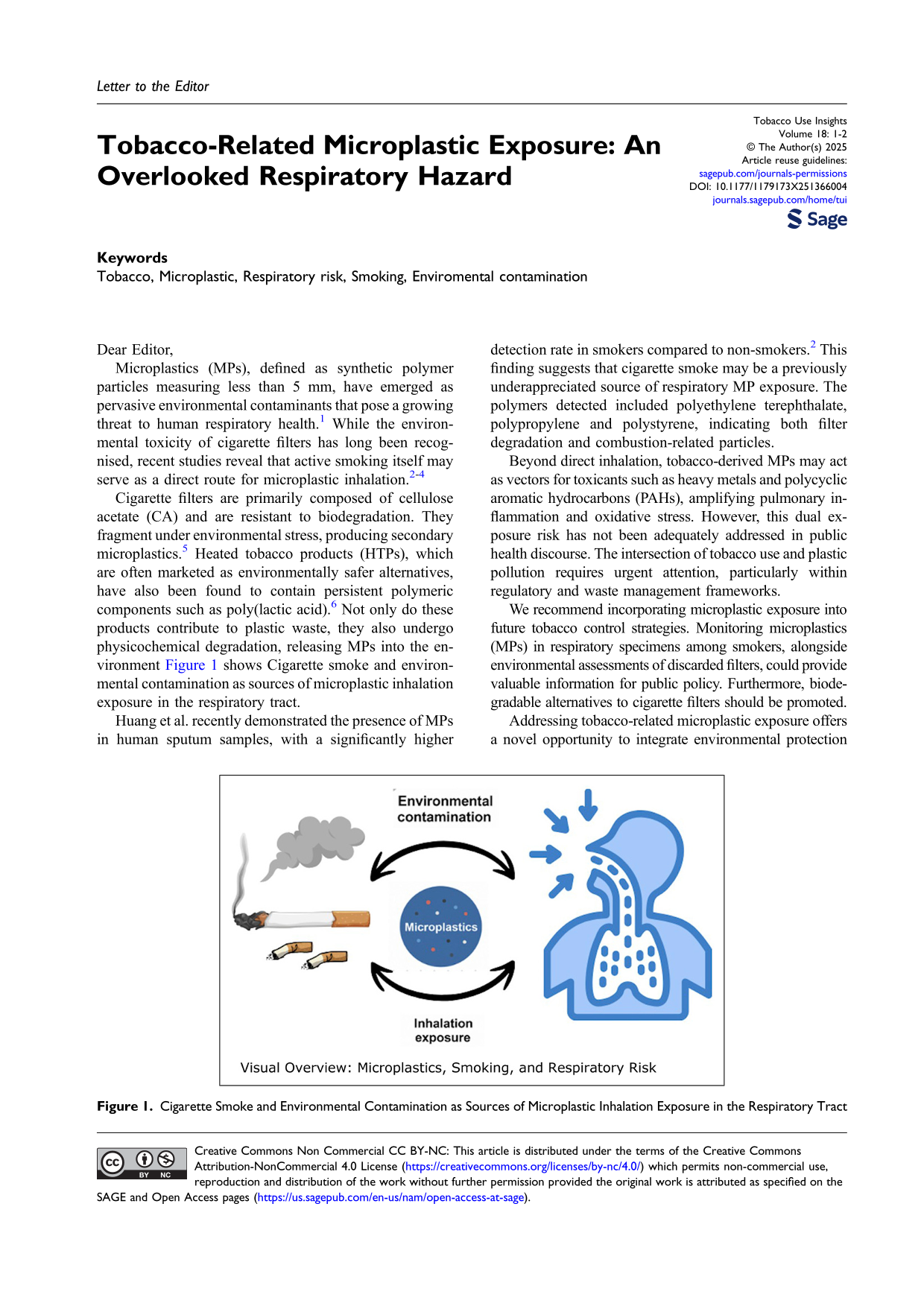
Not only do these products contribute to plastic waste, they also undergo physicochemical degradation, releasing MPs into the environment Figure 1 shows Cigarette smoke and environmental contamination as sources of microplastic inhalation exposure in the respiratory tract. Cigarette Smoke and Environmental Contamination as Sources of Microplastic Inhalation Exposure in the Respiratory Tract
Huang et al. recently demonstrated the presence of MPs in human sputum samples, with a significantly higher detection rate in smokers compared to non-smokers. 2 This finding suggests that cigarette smoke may be a previously underappreciated source of respiratory MP exposure. The polymers detected included polyethylene terephthalate, polypropylene and polystyrene, indicating both filter degradation and combustion-related particles.
Beyond direct inhalation, tobacco-derived MPs may act as vectors for toxicants such as heavy metals and polycyclic aromatic hydrocarbons (PAHs), amplifying pulmonary inflammation and oxidative stress. However, this dual exposure risk has not been adequately addressed in public health discourse. The intersection of tobacco use and plastic pollution requires urgent attention, particularly within regulatory and waste management frameworks.
We recommend incorporating microplastic exposure into future tobacco control strategies. Monitoring microplastics (MPs) in respiratory specimens among smokers, alongside environmental assessments of discarded filters, could provide valuable information for public policy. Furthermore, biodegradable alternatives to cigarette filters should be promoted.
Addressing tobacco-related microplastic exposure offers a novel opportunity to integrate environmental protection with the promotion of respiratory health. Given the urgency of both issues, we urge the public health community to explore this important but often overlooked intersection.
