




Abstract
Background:
Muscle mass is an important determinant of metabolic health and physical function. It has previously been demonstrated that the postprandial rise in circulating essential amino acids acts as the main stimulus for muscle protein synthesis (MPS). The current study investigated the postprandial plasma essential amino acid (EAA) and branched-chain amino acid (BCAA) responses of (1) Hydrolyzed whey protein isolate (HWPI) compared to plasma treated non-hydrolyzed whey protein isolate (PT-NHWPI), (2) standard branch-chain amino acids (S-BCAA) compared to plasma treated branch-chained amino acids (PT-BCAA), (3) standard pea protein (S-PP), compared to plasma treated pea protein (PT-PP), and (4) HWPI compared to PT-PP.
Methods:
Ten subjects (24.6 ± 5.3 years; 178.8 ± 8.1 cm; 78.6 ± 10.1 kg) participated in a double-blind, randomized, crossover trial comparing four separate protein conditions (HWPI, PT-NHWPI, S-PP, PT-PP). A separate cohort of ten subjects (26.4 ± 7.4 years; 178.8 ± 5.9 cm; 85 ± 12.3 kg) participated in a double-blind randomized, crossover trial comparing two branch-chain amino acid conditions: S-BCAA and PT-BCAA. All conditions were administered following a 7-day washout. Plasma EAA and BCAA concentrations were assessed from blood donated by subjects at pre-consumption, 30-, 60-, 90-, 120-, and 180 minutes post-consumption.
Results:
Blood plasma levels of total EAA and BCAA concentration were significantly greater in all treated conditions at 30-, 60-, 90-, and 120 minutes post consumption (P < .05). There were no differences between PT-PP and HWPI.
Discussion:
All proteins significantly elevated EAAs, and BCAAs from basal levels. However, we conclude that the consumption of the treated proteins significantly raises blood levels of EAAs, and BCAAs to a greater extent across multiple dairy, vegan, and isolated BCAA conditions. Moreover, atmospheric plasma treatment of a vegan protein source makes its amino acid response similar to whey. Thus, protein supplementation with that has undergone Ingredient Optimized® atmospheric plasma treatment technology may be highly beneficial for improving the blood plasma amino acid response.
Introduction
Skeletal muscle health throughout the lifespan is under the influence of environmental factors, among which mechanical and nutritional factors play pivotal roles. The macronutrient that has the greatest physiological impact on skeletal muscle health, via well-defined specific mechanisms, is protein. 1 However, the ability of protein to impact muscle health is highly dependent upon protein quality. 2 Skeletal muscle is constantly remodeled and maintained throughout the lifespan through the interaction between muscle protein synthesis and protein breakdown. 3 However, an increase in the rate of muscle protein synthesis is necessary for hypertrophic adaptations to exercise training 4 and maintenance of muscle mass in advanced age. 5 Increases in muscle protein synthesis have been attributed to the postprandial rise in circulating essential amino acids (EAA). 6 Consequently, protein quality has been defined as the capacity of a protein to provide EAA. 7 However, a subgroup of EAA known as branched-chain amino acids (BCAA) have also been shown to be important regulators of protein anabolism. 8 Therefore, the BCAA content of protein sources should be recognized when considering protein quality.
Research over the past decade has demonstrated that digestion and absorption kinetics of proteins may be as, or more, important than the amino acid content itself. For example, studies show that whey protein isolate (WPI) stimulates protein synthesis to a greater degree than casein, even though the amino acid profile is comparable between WPI and casein. 9 The faster digestion rate and subsequent greater rise in plasma EAA and BCAA was the driving mechanism behind differences in these proteins. 9 For these reasons, scientists have spent a great deal of time attempting to improve the plasma amino acid response of both whole protein sources and free-form amino acids. 10 Hydrolysis is currently the gold standard process known to improve the plasma amino acid response. 2 This technique pre-exposes proteins to specific digestive enzymes, causing hydrolysis of the proteins into di-, tri-, and tetra-peptides. 11 The efficacy of this technique was demonstrated by Morifuji et al 20 who found that whey and soy protein hydrolysates had greater responses in plasma increases in both EAA and BCAA (hydrolyzed whey > non-hydrolyzed whey > hydrolyzed soy > non-hydrolyzed soy) than the non-treated conditions. However, an inherent problem with hydrolyzed protein is the ensuing bitter taste reported following consumption of treated proteins. 12
Recently, the use of atmospheric plasma has been implemented in powdered forms of protein and amino acids. Plasma-altered protein powders have exhibited increased surface area 13 as well as positive impacts to solubility and dispersibility, 14 which serve as potential benefits for beverage production. Plasma modification has further been shown to alter the taste and perceived mixability of powdered protein, which addresses problems commonly seen in hydrolyzed proteins. 15 Furthermore, plasma modification has demonstrated the ability to alter protein structure in such a way that exposes the hydrophobic pockets of a protein. 16 These structural alterations have been confirmed by using a protein thermal shift which showed an improved ability for dye to bind to the protein. 17 Improving protein powder’s hydrophobicity enhances enzymatic degradation and ultimately may promote increased digestibility, as demonstrated using other protein modification methods. 18
Our laboratory recently examined the impact of applying plasma modification to whey protein isolate (WPI). 10 We found that consumption of the treated WPI raised plasma EAA, BCAA, and leucine to a greater extent compared to WPI with no treatment. These results open up a number of additional questions. First, how well does this new plasma modification method compare to a gold-standard hydrolyzed whey? Second, can this method improve the plasma response in free-form amino acids, which are already in their simplest and easily digestible form? Finally, can plasma treated processes be applied to improve the quality of more sustainable and globally ecological-friendly plant-based protein sources? Therefore, the purposes of this study were to investigate the postprandial plasma EAA and BCAA responses of (1) hydrolyzed whey protein isolate (HWPI) compared to plasma treated non-hydrolyzed whey protein isolate (PT-NHWPI), (2) standard branch-chain amino acids (S-BCAA) compared to plasma treated branch-chained amino acids (PT-BCAA), (3) standard pea protein (S-PP), compared to plasma treated pea protein (PT-PP), and (4) WPI compared to treated PT-PP.
Methods
Study population
A total of twenty healthy, resistance-trained men participated in study (descriptive statistics below). Subjects were screened to ensure that they met and would adhere to the following criteria prior to entry into the study: (1) not taking performance enhancing supplements for the previous 6 weeks; (2) non-smokers; (3) not taking amino acid supplements; (4) not using anabolic or catabolic hormones; (5) not on medication or supplements known to influence any of the variables measured in the study; and (6) free of metabolic diseases. Written informed consent was obtained from all study participants, and the protocol was approved by an Institutional Review Board and in agreement with the Declaration of Helsinki.
Study design & protocol
Ten subjects (24.6 ± 5.3 years; 178.8 ± 8.1 cm; 78.6 ± 10.1 kg) participated in a double-blind, randomized, crossover trial comparing four separate protein conditions in which conditions were administered on separated occasions following a 7-day washout. The investigated protein conditions were high DH hydrolyzed whey protein isolate (HWPI) with a Degree of Hydrolysis (DH) of 10%, plasma treated non-hydrolyzed whey protein isolate (PT-NHWPI), standard pea protein (S-PP), and plasma treated pea protein (PT-PP). A separate cohort of ten subjects (26.4 ± 7.4 years; 178.8 ± 5.9 cm; 85 ± 12.3 kg) participated in a double-blind randomized, crossover trial comparing two branch-chain amino acid conditions: standard branch-chain amino acids (S-BCAA) and plasma treated branch-chained amino acids (PT-BCAA). A 7-day washout separated the administration of BCAA conditions. Plasma treated conditions were exposed to cold atmospheric plasma to incite functional and structural changes in the protein peptide to more readily expose binding sites for enzymatic cleavage. Conditions were sourced from a single 1 kg container to ensure that both conditions were from the same supplier, batch, had the same production date and were stored in the same manner.
Subjects reported to the laboratory in the morning after an overnight fast (⩾10 hours) and a catheter (Introcan® Safety IV Catheter, Braun Medical Inc., Bethlehem, PA, USA) was inserted into an antecubital vein and a resting blood sample was drawn at time zero (0 minute). Immediately thereafter, subjects ingested a bolus of one of the testing conditions mixed with 236 mL of water. The bolus serving size for protein conditions (HWPI, PT-NHWPI, S-PP, and PT-PP) was 25 g of powder and PT-BCAA and S-BCAA conditions was 10 g of powder. Following ingestion of the supplement, subjects were not allowed to consume any food products until the 3-hour time course was completed. Additionally, subjects were not allowed to consume water 1 hour before or 1 hour after consumption of the investigational product. Serial blood samples were collected into two 10-mL serum separation tubes and was centrifuged for 15 minutes at 2500 × g at 4°C. The resulting plasma was stored at −80°C and transported on dry ice to Quest Diagnostics (Tampa, FL, USA) for clinical analysis of amino acid concentration. This process of overnight fasting, consumption of test shake and sequential blood draws was applied to all testing days.
Statistical analysis
Results were obtained for plasma concentrations of EAAs (valine, leucine, isoleucine, threonine, methionine, tryptophan, phenylalanine, and lysine) and BCAAs (valine, leucine, and isoleucine). Classification of amino acid essentiality is in accordance to previous literature. 19 Prior to carrying out inferential statistics, normality was confirmed via Shapiro-Wilk testing (P > .05). Plasma amino acid concentrations was compared using a mixed model ANOVA with condition as the between-subjects factor, time as the within-subjects factor, and subjects as the random factor. Whenever a significant F-value was obtained, a post-hoc test with a Tukey’s adjustment was performed for multiple comparisons purposes. Incremental area under the curve (iAUC) was calculated by subtracting the baseline (ie, 0 minute) concentration form each subsequent timepoint (ie, 30-, 60-, 90-, 120- and 180 minutes) and then applying the linear trapezoidal rule to the resulting concentration. The total iAUC were analyzed by paired-sample t-test. The significance level was previously set at P < .05. Results are expressed as mean ± standard deviation.
Results
Plasma treated pea protein (PT-PP) versus high DH hydrolyzed whey protein isolate (HWPI)
No significant condition by time interactions were detected for plasma EAA or BCAA concentration (P > .05). However, a significant main time effect was observed (P < .001) in which concentrations of plasma EAA and BCAA at 30 minutes and 60 minutes were higher than all other time points (P < .001, Figure 1). No significant differences were found for iAUC of plasma EAA (P = .926, PT-PP: 48829 ± 16431 minutes◆µmol/L; HWPI: 49506 ± 14913 minutes◆µmol/L; meandiff = 678), plasma BCAA (P = 0.512, PT-PP: 28295 ± 8719 minutes◆µmol/L; HWPI: 25820 ± 9954 minutes◆µmol/L; meandiff = 2475), or plasma leucine concentrations (P = .999, PT-PP: 10754 ± 3520 minutes◆µmol/L; HWPI: 10756 ± 3893 minutes◆µmol/L; meandiff = 2).
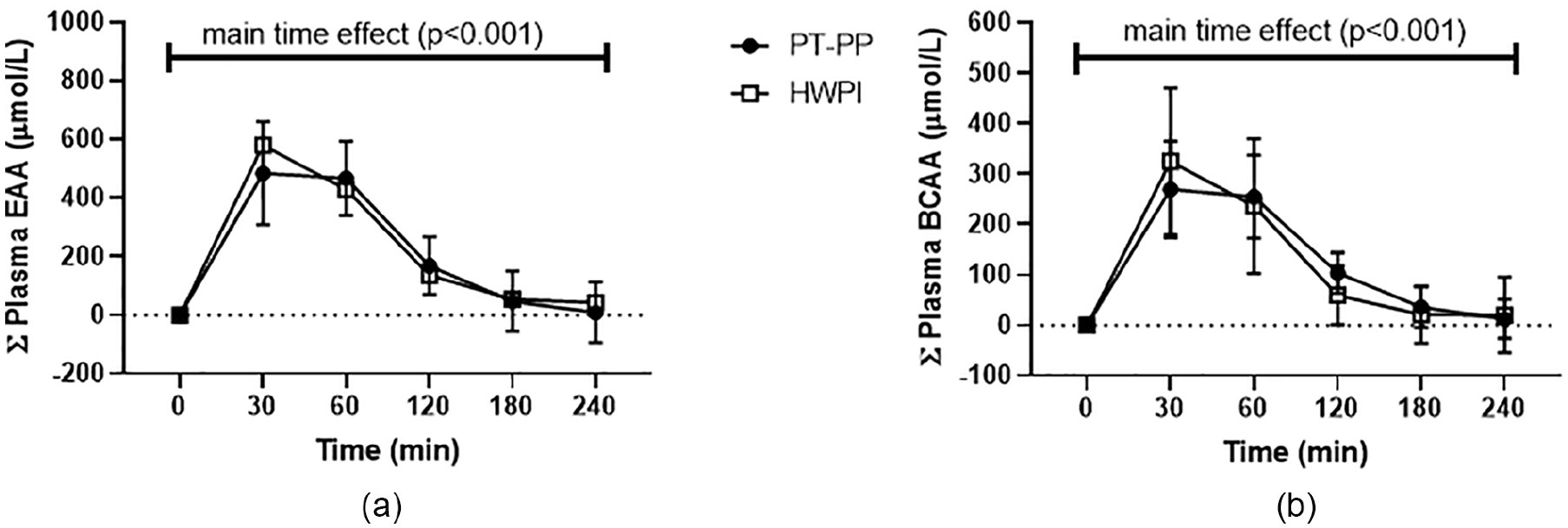
4-hour time course response of plasma concentrations of (a) EAA. (b) BCAA for PT-PP and HWPI conditions.
Plasma treated pea protein versus standard pea protein
A significant condition by time interaction was detected for plasma EAA and BCAA (P < .001). Post-hoc analysis revealed that PT-PP elicited higher concentrations of plasma EAA compared to S-PP at 30 minutes (P < .001), 60 minutes (P < .001), and 120 minutes (P < .05; Figure 2). Furthermore, PT-PP elicited higher concentrations of plasma BCAA at all time points following 0 minutes (30-120 minutes P < .001, 180 minutes and 240 minutes P < .01; Figure 2). Additionally, iAUC was significantly greater in PT-PP for plasma EAA (P < .001, PT-PP: 48829 ± 16431 minutes◆µmol/L ; S-PP: 1979 ± 19345 minutes◆µmol/L; meandiff = 46850), plasma BCAA (P < 0.001, PT-PP: 28295 ± 8719 minutes◆µmol/L; S-PP: –5939 ± 8548 minutes◆µmol/L; meandiff = 34233), and plasma leucine concentrations (P < .001, PT-PP: 10755 ± 3520 minutes◆µmol/L ; S-PP: 1640 ± 4009 minutes◆µmol/L; meandiff = 9116).
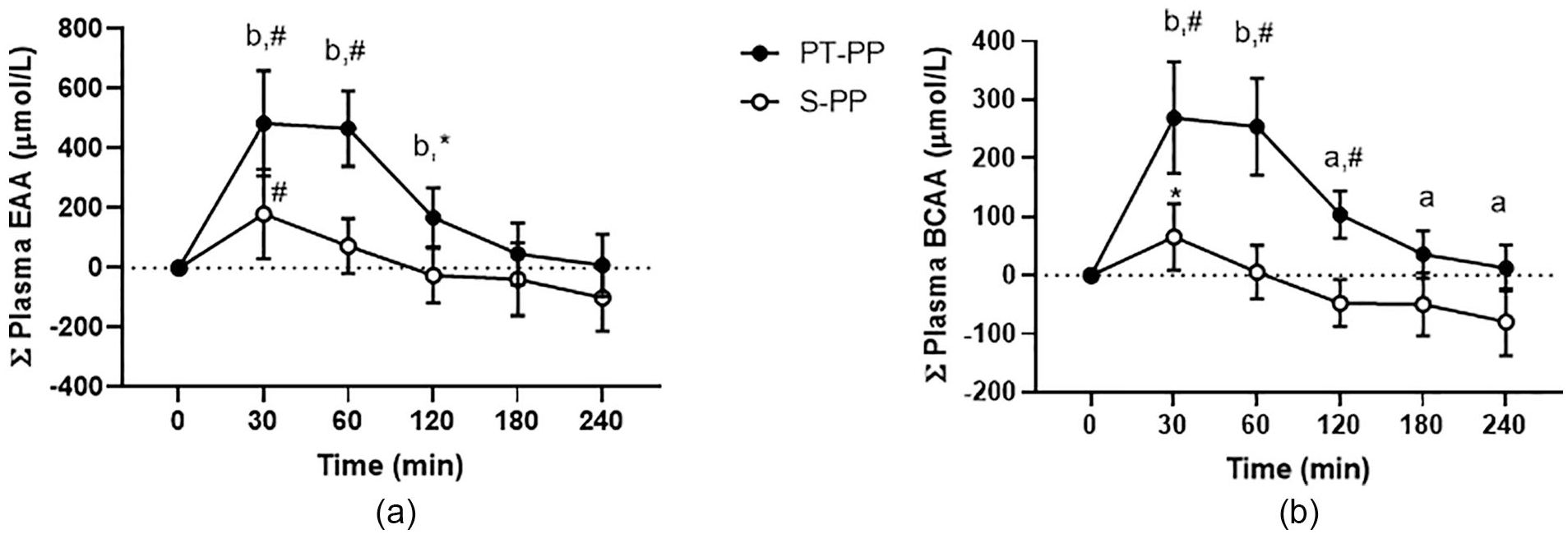
4-hour time course response of plasma concentrations of (a) EAA. (b) BCAA for PT-PP and S-PP conditions.
Plasma treated non-hydrolyzed whey protein isolate (PT-NHWPI) versus high DH hydrolyzed whey protein isolate (HWPI)
A significant condition by time interaction was detected for plasma EAA and BCAA (P<0.05). Post-hoc analysis indicated that PT-NHWPI elicited higher concentrations compared to WPI at 60 minutes (P < .001; Figure 3). The PT-NHWPI condition demonstrated significantly greater iAUC for plasma EAA (P < .01, PT-NHWPI: 76040 ± 19558 minutes◆µmol/L; HWPI: 49506 ± 14913 minutes◆µmol/L; meandiff = 26534), plasma BCAA (P < .05, PT-NHWPI: 41640 ± 15714 minutes◆µmol/L; HWPI: 25820 ± 9954 minutes◆µmol/L; meandiff = 15821), and plasma leucine concentrations (P < .05, PT-NHWPI: 16926 ± 5424 minutes◆µmol/L; HWPI: 10755 ± 3893 minutes◆µmol/L; meandiff = 6171).

4-hour time course response of plasma concentrations of (a) EAA. (b) BCAA for PT-NHWPI and HWPI conditions.
Plasma treated BCAA versus standard BCAA
A significant condition by time interaction was detected for plasma BCAA (P < 0.001), leucine (P < 0.001), isoleucine (P < 0.001), and valine (P < 0.001). Post-hoc analysis revealed that PT-BCAA elicited higher plasma concentrations compared to S-BCAA at 30 minutes, 60 minutes, and 120 minutes for the cumulative total BCAA concentration (Figure 4) and independent BCAA concentrations (Table 1). Between condition differences in plasma valine concentrations were also detected at 180 minutes. PT-BCAA demonstrated greater iAUC for plasma BCAA (P<0.001, PT-BCAA: 88752 ± 21283 minutes◆µmol/L; S-BCAA: 23091 ± 14120 minutes◆µmol/L; meandiff = 65661).

4-hour time course response of plasma BCAA concentrations PT-BCAA and S-BCAA conditions.
Plasma BCAA concentration for PT-BCAA and S-BCAA (µmol/L).
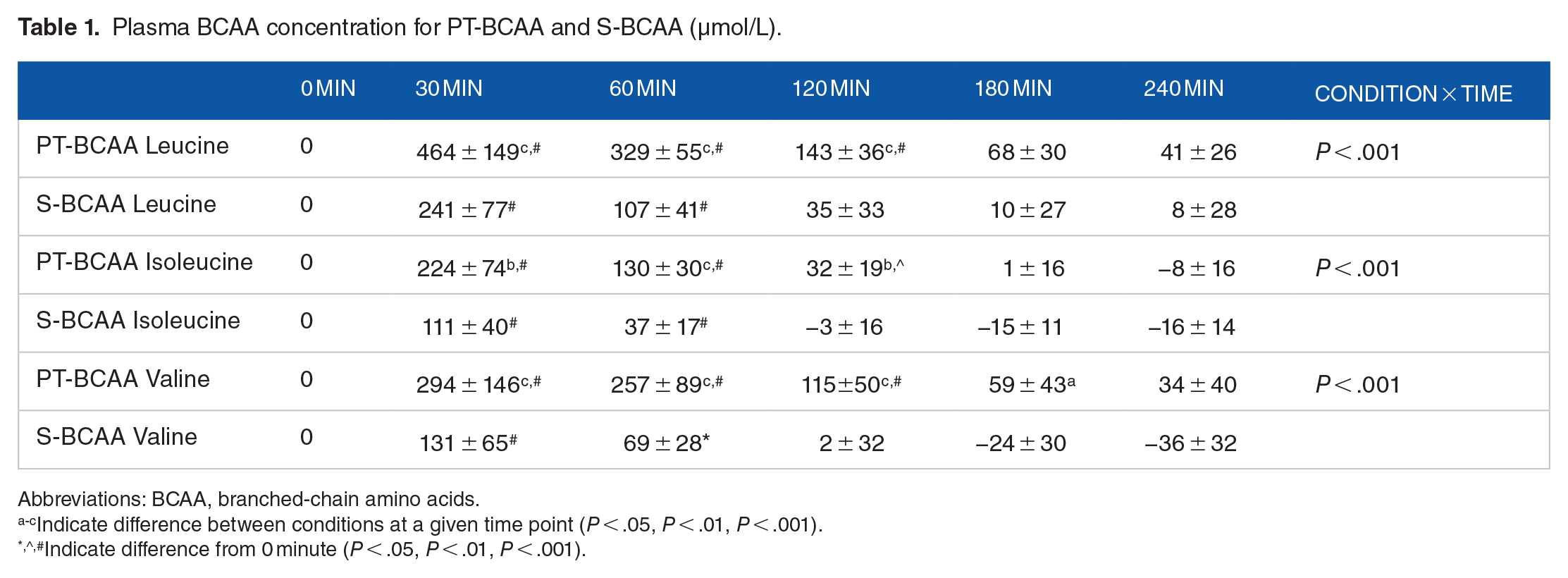
Abbreviations: BCAA, branched-chain amino acids.
Indicate difference between conditions at a given time point (P < .05, P < .01, P < .001).
Indicate difference from 0 minute (P < .05, P < .01, P < .001).
Plasma treated leucine versus standard leucine
A significant condition by time interaction was detected for plasma leucine (P < 0.001, Figure 5). Post-hoc analysis revealed that PT-Leucine elicited higher concentrations compared to S-Leucine at 30 minutes (P < 0.001), 60 minutes (P < 0.001), and 120 minutes (P < 0.001). Plasma leucine iAUC was greater in PT-Leucine compared to S- Leucine (P < 0.001, PT-Leucine: 42639 ± 6851 minutes◆µmol/L; S-Leucine: 14991 ± 6560 minutes◆µmol/L; meandiff = 27648).

4-hour time course response of plasma leucine concentrations for PT-Leucine & S-Leucine conditions.
Discussion
The primary purposes of this study were to investigate the postprandial plasma EAA and BCAA responses of (1) HWPI compared to PT-NHWPI, (2) S-BCAAs compared to treated PT-BCAA, (3) S-PP compared to PT-PP, and (4) HWPI to treated PT-PP. The principal findings were that plasma modification demonstrated greater amino acid responses in HPWI, BCAAs and pea protein isolate. It was also found that plasma modification rendered pea protein as effective as HWPI in terms of elevating both EAAs and BCAAs in the blood.
Hydrolyzed whey protein
Our previous research found that WPI amino acid responses were improved by plasma modification. However, it was uncertain if plasma modification of WPI could improve the amino acid response compared to a faster digesting hydrolyzed source of whey. Protein hydrolysates are produced from purified protein sources by heating with acid or, preferably, addition of proteolytic enzymes, followed by purification procedures. 20 Each protein hydrolysate is a mixture of peptides of different chain lengths together with free amino acids. Presently, hydrolyzed protein is the gold-standard method for increasing the plasma BCAA and EAA response. 20 In fact, previous studies have shown both milk and vegetarian sources of protein are enhanced using this technique. 20 Given the effectiveness of this technique, it was uncertain whether plasma treatment of non-hydrolyzed whey would show improvement or even match hydrolyzed whey. Intriguingly, we found that plasma treatment could improve non-hydrolyzed whey over the HWPI control. These differences in circulating amino acids are likely due to whey protein being treated with cold atmospheric plasma to provoke structural changes in protein peptides to more readily expose binding sites for enzymatic cleavage. 13 This treatment has been shown to expose hydrophobic pockets of protein and increase protein surface hydrophobicity by as much as 20%. 16 These results, therefore, extend our previous findings in WPI to HWPI. 10
Branched chain amino acids
The BCAAs are unique from other amino acids because the rate-limiting enzymes responsible for their degradation are low in splanchnic tissues. 8 Thus, orally ingested BCAAs appear rapidly in the blood stream, exposing muscle to high concentrations of these amino acids; ultimately making them unique regulators of skeletal muscle health. 8 The present study found that modification of BCAAs was able to enhance their plasma response. Bioavailability of amino acids depends on their ability to cross the intestinal mucosa and enter systemic circulation. 21 Amino acids with a more hydrophobic surface can permeate the epithelial barrier more efficiently than amino acids with a hydrophilic surface, 22 thereby increasing bioavailability. Therefore, it is probable that increasing hydrophobicity of BCAAs with cold plasma treatment enhanced enzymatic degradation, ultimately promoting greater bioavailability.
Pea protein solate treatment
A growing global population, combined with factors such as changing socio-demographics, is placing increased pressure on the world’s resources to provide not only more, but also different, types of food. 23 Increased demand for animal-based protein is expected to have a negative environmental impact, requiring more water and land. 23 Addressing this “perfect storm” has necessitated more sustainable production of existing sources of protein as well as alternative sources for direct human consumption. For these reasons, scientists have spent a great deal of time investigating plant-based alternative protein sources. 24 The trouble is engineering them to have similar health-promoting effects as animal-based sources. These health-promoting outcomes are thought to be driven by the quality of the protein source.
Protein quality is generally ascribed by EAA and BCAA content. 2 For this reason, plant-based proteins, which are lower in EAA and BCAA, generally result in less favorable changes in body composition and performance compared to dairy or meat sources. 2 However, research over the past decade has demonstrated that digestion and absorption kinetics of proteins may be more important than the amino acid content itself.2,20 For example, studies show that WPI stimulates protein synthesis to a greater degree than casein, even though their amino acid profile is comparable. 9 The faster digestion rate and subsequent greater rise in EAA and BCAA in plasma was the driving mechanism behind differences in these proteins. 9 The present research sought to investigate if cold plasma treatment of a vegan protein source could improve its bioavailability and make the amino acid response similar to a gold-standard, fast digesting HWPI. First, we found that S-PP had a very poor amino acid response and only increased BCAA and EAA levels significantly at 30 minutes post-ingestion. Second, we found that PT-PP was able to increase the plasma response to a far greater degree than S-PP. Intriguingly, this increase was virtually identical to HWPI. Therefore, we demonstrate that PT-PP may provide a viable high-quality source of sustainable protein. This finding gives an alternative supplemental protein option for those who opt to avoid dairy derived sources, such as vegans or those with dairy intolerances.
Conclusion
In summary, we report that the ingestion of treated dairy, vegan, and individual amino acids significantly raises blood levels of EAA, and BCAA compared to non-treatment versions. Thus, the technical application of treating a variety of protein and amino acid sources with plasma surface treatment to further expose hydrophobic pockets and increase enzymatic degradation appears to promote greater concentrations of circulating EAA, and BCAA. Future research should consider the long-term biological impact of supplementation including changes in recovery, body composition, and performance.
Footnotes
Funding:
The author(s) disclosed receipt of the following financial support for the research, authorship and/or publication of this article: Plasma Nutrition Inc financially supported this work and supplied the tested conditions.
Declaration of conflicting interest:
The author(s) declared the following potential conflicts of interest with respect to the research, authorship, and/or publication of this article: Plasma Nutrition Inc owns the trademark ingredient tested in this study. This does not alter the authors’ adherence to all policies set forth by this journal, Nutrition and Metabolic Insights, as detailed online in the submission guidelines.
Author Contributions
MHS, JMW, and RPL were involved in conceptualizing the study and structuring the study design. MHS, MWS, RHG, DDR, and CRO were involved in carrying out study procedures, data collection, and data curation. MHS and RHG performed statistical analysis of study data. All authors assisted in writing the manuscript for submission and approved the final version of the manuscript. The results provided in this manuscript do not constitute endorsement of the product by the authors.
