




Abstract
This present study investigated the presence, levels and health impact of some trace elements in rice sold on some Ghanaian markets using an Inductively coupled plasma mass spectrometry (ICP-MS). Analysis with the ICP-MS revealed that, the concentration of essential and non-essential metals followed the order: S > K > P > Mg > Ca > Si > Na > Zn > Mn > Al > Fe > Bi > Cu > Sn > B > Mo > As > Ba > Sb > Ni > Sr > Co > V > Ti > Be > Pb > Cd > Li > Zr > Ag > Y respectively. The results showed that rice for sale on Ghanaian markets are rich sources of S, K, Mg and Ca with moderate levels of essential minerals like Fe, Mn, Zn and Cu. The health impact assessment revealed all samples for population categories recorded hazard quotients greater than 1 for As and P. This implies that As and P could accumulate and adversely affect the health of Ghanaian children, adolescents, adults and the aged. The likely cancer risk (LCR) estimated from this study revealed that in children, adolescents, adults and the aged, As, Pb, Ni and Cd could individually and in combined accumulated concentrations induce carcinogenicity to consumers in Ghana overtime, since their LCR and Total Likely Cancer Risk (TLCR) exceeded the maximum safe limit of 1 × 10⁻⁴. A bioavailability study is recommended to determine the exact levels of these toxic substances in the body system of consumers to help formulate policies to protect the health of rice consumers in Ghana. Future studies could incorporate a broader dietary exposure assessment and investigate potential mitigating factors, such as rice preparation methods, that could reduce toxic metal concentrations.
Introduction
Rice, a staple food for millions around the world, is an integral part of diets in many countries, including Ghana. It serves as a source of essential nutrients and plays a vital role in ensuring food security. 1 In a number of countries across the globe, rice consumption plays a vital role in the alleviation of poverty, eradication of hunger as well as food security and development of the economy. 2 However, the safety of rice consumption goes beyond the consideration of basic nutritional value, since the crop can absorb contaminants such as heavy metals from cultivated soils which could accumulate and have profound implications on human health. 3
In recent years, the growing concerns over the quality of rice sold on Ghanaian markets has spurred a need for comprehensive research to evaluate the health impact of essential and non-essential elements found in this vital grain. Essential elements, such as Fe, Zn and Se are vital for maintaining optimal health when supplied in their required quantification, as they are involved in various physiological processes. However, when present in excessive amounts, these essential elements can become toxic and pose health risks. 4 Given the pervasive presence of trace elements nearly in all parts of the environment, individuals whose primary dietary energy source is rice confront the risk of contamination 5 These trace elements, which are found in different environmental components like water, soil and air, could gradually enter the human body through the consumption of the grains of rice crops that have accumulated such elements. Consequently, when people consume contaminated plants such as rice, they become susceptible to various health implications associated with the intake of these trace elements. 5
On the other hand, non-essential elements, such as Pb, Cd and As, have no known biological function in the human body, yet cause several adverse biochemical impacts to the human system. Due to environmental contamination and agricultural practices, these elements can find their way into rice crops, particularly in regions where pollution is prevalent. Their presence in rice raises serious concerns as they are known to be toxic even at very low concentrations, and their long-term consumption can lead to detrimental health effects, including organ damage and increased risk of cancer. 6
Essential elements are known to have vital physiological and metabolic processes in humans when present in their required quantification. 7 Zn has been shown to regulate several different enzyme catalysed processes and many metabolic pathways all leading to good health in humans. However, deficiency in Zn can cause an increase in the risk of spontaneous abortions and can trigger many mental and physiological disorders. 8 Cu is involved in many metabolic processes in humans and can act as a cofactor for several enzymes that catalyse redox reactions. 9 Cu deficiency could lead to cholesterol metabolism changes, as well as certain abnormalities in babies. 10 Manganese being an essential trace element plays a vital role in the human body. 11 Studies revealed exposure to significant levels of Mn accumulates in the mitochondrion of oligodendrocytes, neurones and even astrocytes leading to the inhibition of ATP synthesis as a result of the inhibition of F1/F0 ATP synthase of the respiration chain of the mitochondria. 12
Regardless of the numerous health concerns associated with Sb poisoning, specific diseases could be treated with compounds of Sb in their right doses. 13 Compounds of Sb such as antimony trioxide (Sb2O3) could regulate the signalling of SEK1/c-jun kinase in the case of acute promyelocytic leukaemia cell lines thereby resulting in apoptosis. Again, DNA binding action in K562 cells can be suppressed by arylstibonic acids that contain Sb. 14 According to Lai et al, 13 Sb has been shown to alter normal biochemical processes in tissues and cells via the formation of complexes with biomolecules. Exposure to low levels of vanadium potentially leads to the development of rhinitis, asthma and high cancer risk susceptibility. 15
The health effect associated with Cd poisoning is very severe and as such could cause bone, liver and kidney damage. 16 Lead is an example of a potentially toxic heavy metal that can have negative effects on almost every organ in the human body and the nervous system. 9 Exposure to toxic levels of Pb could lead to an increase in the pressure of blood in humans, result in abortions, decreased cognitive performance as well as brain and kidney damages. 9
Understanding the health impact of essential and non-essential elements in rice sold on Ghanaian markets is critical for public health interventions and policy-making. Heavy metal pollution research in rice and several other cereals has been conducted in several parts of the world. As, Cd, Cu and Pb are notable heavy metals of public safety concerns. A study at Aboabo market, Tamale, Ghana revealed detectable levels of some heavy metals (Cu, Zn, As and Pb) and potential health concerns over As pollution in rice. 6 A study in Nigeria also informed of potential health effects to consumers from Pb and Cd pollution in rice. 17 A study on rice cultivated in Macedonia revealed significantly high levels of Pb, As, Cd, Cu and Zn and their potential for adverse health conditions from accumulation over long periods of time. 18
Previous research on metal contamination in Ghana have primarily focussed on a small number of analytes and potential health risks for a single category of the Ghanaian population. For instance, the study by Arhin et al 19 highlighted the levels of transition metals in rice, and revealed that the concentrations of these metals were lower than those recorded in prior studies in Ghana especially Cu, Cd and Fe. Similarly, Boakye et al 20 investigated the farmer awareness and consumer concerns of heavy metals, revealing insufficient knowledge on contamination risks, emphasizing the lack of sufficient knowledge on contamination risks. While these studies have significantly contributed to research on the contamination risks of rice in Ghana, this current study focussed on a broad scale assessment of metal analytes assessing essential and non-essential element concentrations but also conducting a comprehensive health impact assessment across different population groups. Such assessments are necessary to provide information on the risks associated with rice consumption. Therefore, this research aims to conduct a thorough health impact assessment on essential and non-essential elements in rice sold on Ghanaian markets. Thus, examining the levels of these elements in rice samples and evaluating their potential health effects. The study seeks to provide knowledge on the risks posed by essential and non-essential elements in rice consumed by Ghanaians and make recommendations to policymakers and to the government.
Materials and Methods
Study Area
This study was conducted in the smallest of the sixteen (16) regions in Ghana, Greater Accra Region. Despite having 3245 km2, it is the most populated and urbanized region in Ghana. Outcome of the last population census showed, it accounted for 17.7% of the country’s population, representing 5 455 692 people. Its capital, Accra, is as well the capital city of Ghana.
Sample Collection, Preparation and Analysis
A total of 60 rice bags comprising 3 bags each from 20 different rice brands were bought from some markets (Achimota, North-Dzorwulu, Kotobabi, Nima, Kaneshie, Accra central, Mamprobi, Chorkor and Awoshie) in the Greater Accra region of Ghana. Figure 1 shows the graphical representation of locations where samples were taken in the Greater Accra region of Ghana.

Map of study area.
The 3 samples from each brand were put together to form a single composite sample. The composite samples were coded, B1 to B20. Information and labels on the rice packages indicated that some rice brands were cultivated and refined in United States of America (USA), Thailand, Vietnam, Ghana and India: (B1-B4 and B11-B14 were from Vietnam; B5 and B8 were from the USA; B6, B7, B9, B10, B16, B17 and B18 were from Thailand; B15 from India; and B19 and B20 were from Ghana. Approximately 100 g of each sample (dry weight) was milled with a mortar and pestle and then split with a riffle splitter to have an even representation and distribution of the rice sample. The rice samples were digested using a slight modification to method developed by Akinyele and Shokunbi. 21 A mass of 1.00 g of each sample was weighed into separate digestion tubes, 3 and 2 mL of ultrapure acids (Nitric and Hydrochloric acids respectively), 0.5 mL deionized water, were added and the mixture heated at 105°C for an hour. One millilitre of high purity Hydrogen peroxide was added and further heated until a clear digest was obtained. Digestion tubes were then removed from the digestion blocks, and upon cooling, the digest was filtered into a 50 mL sample bottles and topped to the mark with deionized water. The elements were quantitatively determined by a Shimadzu ICP-MS 2030. The conditions for the Shimadzu ICP-MS 2030 operations are shown as Table 1.
Operating conditions for Shimadzu ICP-MS 2030.

Quality Assurance
Ultrapure acids (67% Nitric acid and 35% Hydrochloric acid) and deionized water were used for the acid digestion of the rice samples, and then method blanks were used to eliminate the influence of reagents on the analysis results. A NIST (1568A and 1568B) certified reference material (CRM) obtained through ULTRASPEC from South Africa and prepared from individual element concentrates obtaining desirable recoveries as shown by Table 2.
Percentage recoveries for analysis.

A multi-element ICP standard was used to calibrate the instrument by generating a calibration curve with a Relative Standard Deviation (RSD) of about 3%. The instrument’s quality control parameters such as inter-element correction, internal standard correction and drift correction were all performed to ensure the authenticity and validity of the analysis results. Matrix spike recoveries were performed to measure the effects of interference.
Health Impact Assessment
Ghana’s population can be categorized into distinct groups across various age ranges: the aged, adults, adolescents, and children. To comprehensively assess the evolving health status of the population, it is imperative to analyse the health impact to each distinct group of the population. This evaluation was conducted for each of these demographic segments: children, adolescents, adults and the aged. A comprehensive approach was adopted, utilizing the Integrated Risk Information System (IRIS) methodology developed by the United States Environmental Protection Agency (USEPA).22,23 This method centres on dietary risk estimations, a crucial factor considering the impact of elements on human health. The health risk assessment considered elements for which sufficient toxicological data was available; reference doses (RfD) and cancer slope factors (CSF) as shown by Table 3. The evaluation was based on several key health risk characterization parameters such as the daily rate of exposure (DRE), total likely cancer risk (TLCR), and hazard index (HI). For elements with strong evidence of carcinogenicity in humans and comprehensive toxicity profiles, cancer risk assessments were performed. In this context, certain organizations, such as the Agency for Toxic Substances and Diseases Registry (ATSDR) and The International Agency for Research on Cancer (IARC), have designated elements like Ni, Co, Cd, Pb, As, Be and Cr as carcinogens. 24 To provide a thorough assessment, various metrics were employed; non-cancer risk metrics such as DRE, HQ and HI, as well as cancer risk metrics such as lifetime cancer risk (LCR) and the total lifetime cancer risk (TLCR) through ingestion. These metrics were quantified using the equations (1)–(5), respectively below.22,25
Standard parameters characterizing health risk assessment.
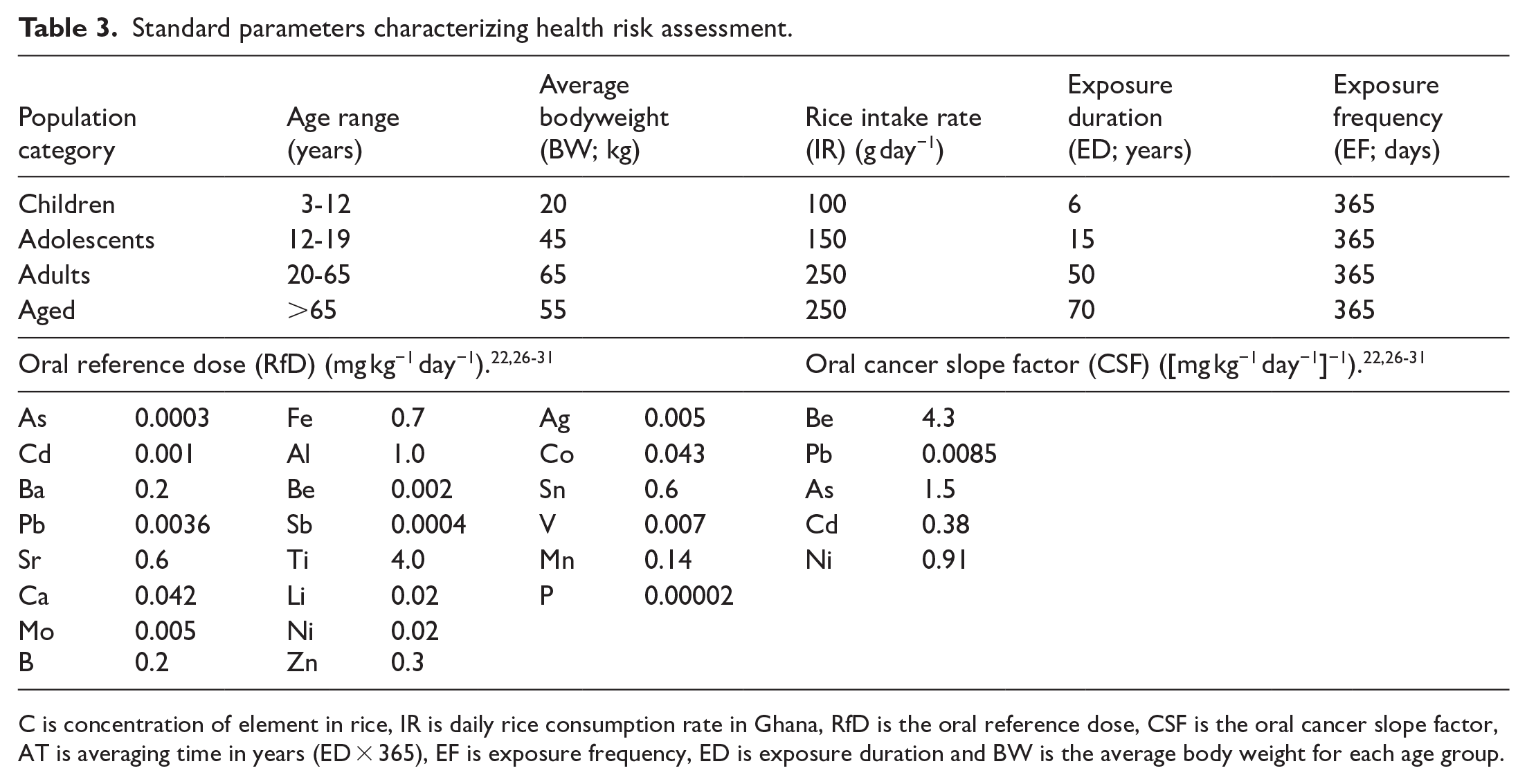
C is concentration of element in rice, IR is daily rice consumption rate in Ghana, RfD is the oral reference dose, CSF is the oral cancer slope factor, AT is averaging time in years (ED × 365), EF is exposure frequency, ED is exposure duration and BW is the average body weight for each age group.





Results
Levels of Elements Analysed in Rice Samples Shelfed on Ghanaian Markets
Figures 2 and 3 show the graphical representation of the levels (mg kg−1) of essential and non-essential elements respectively in rice sold on Ghanaian markets. Hazard quotients (HQ) estimate for non-cancer risk associated with consumption of trace elements in rice, is presented in Tables 6 to 9 as Supplemental Data for children, adolescents, adults and the aged respectively. Figure 4 represents the hazard index for the various population categories in this study. Likely cancer risk for children and adolescents, and that for adults and the aged are shown as Figures 5 and 6 respectively. Total likely cancer risk for the population category is graphically presented as Figure 7.
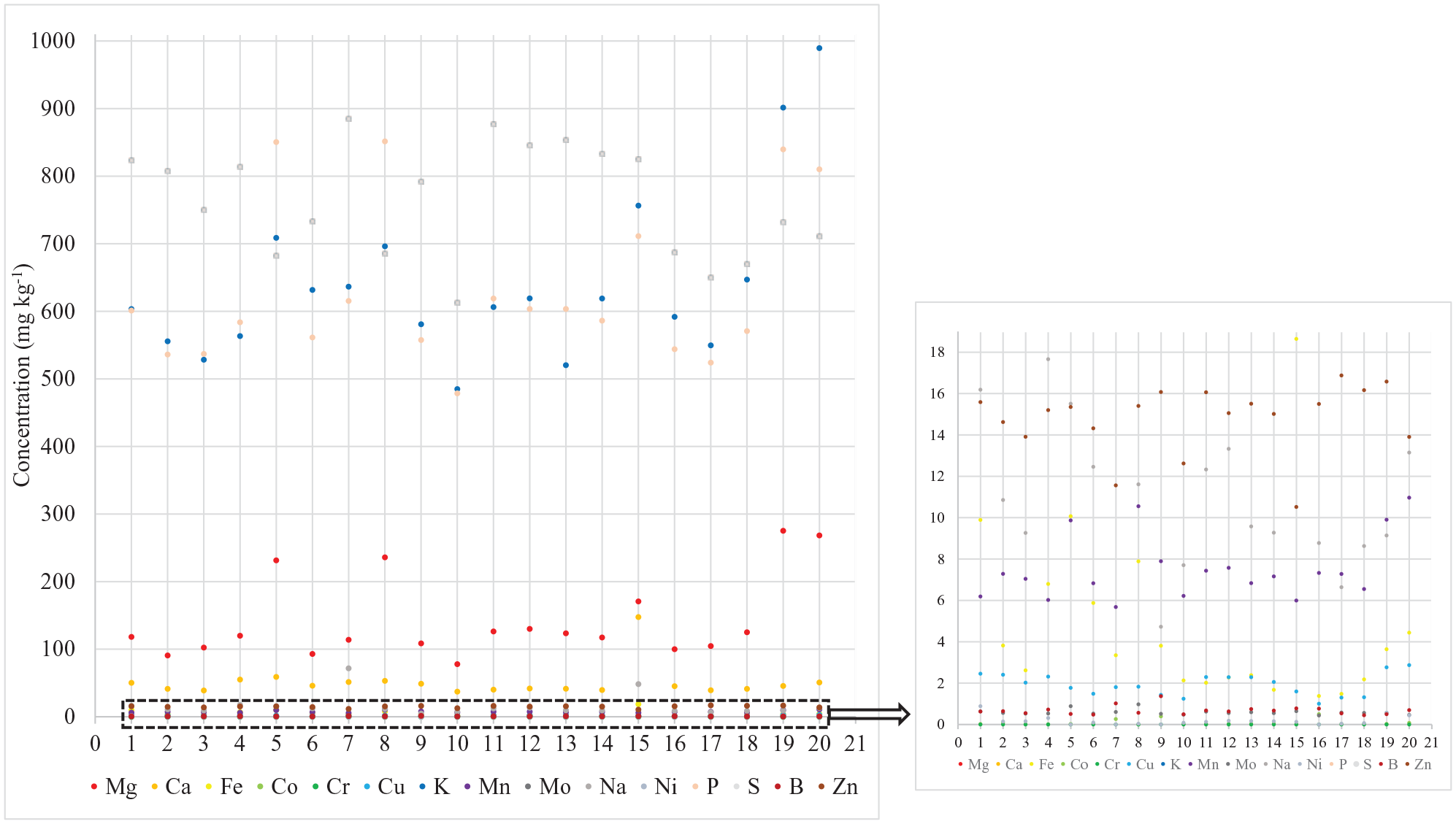
Concentration of essential elements (mg kg−1) in rice sold on Ghanaian markets.
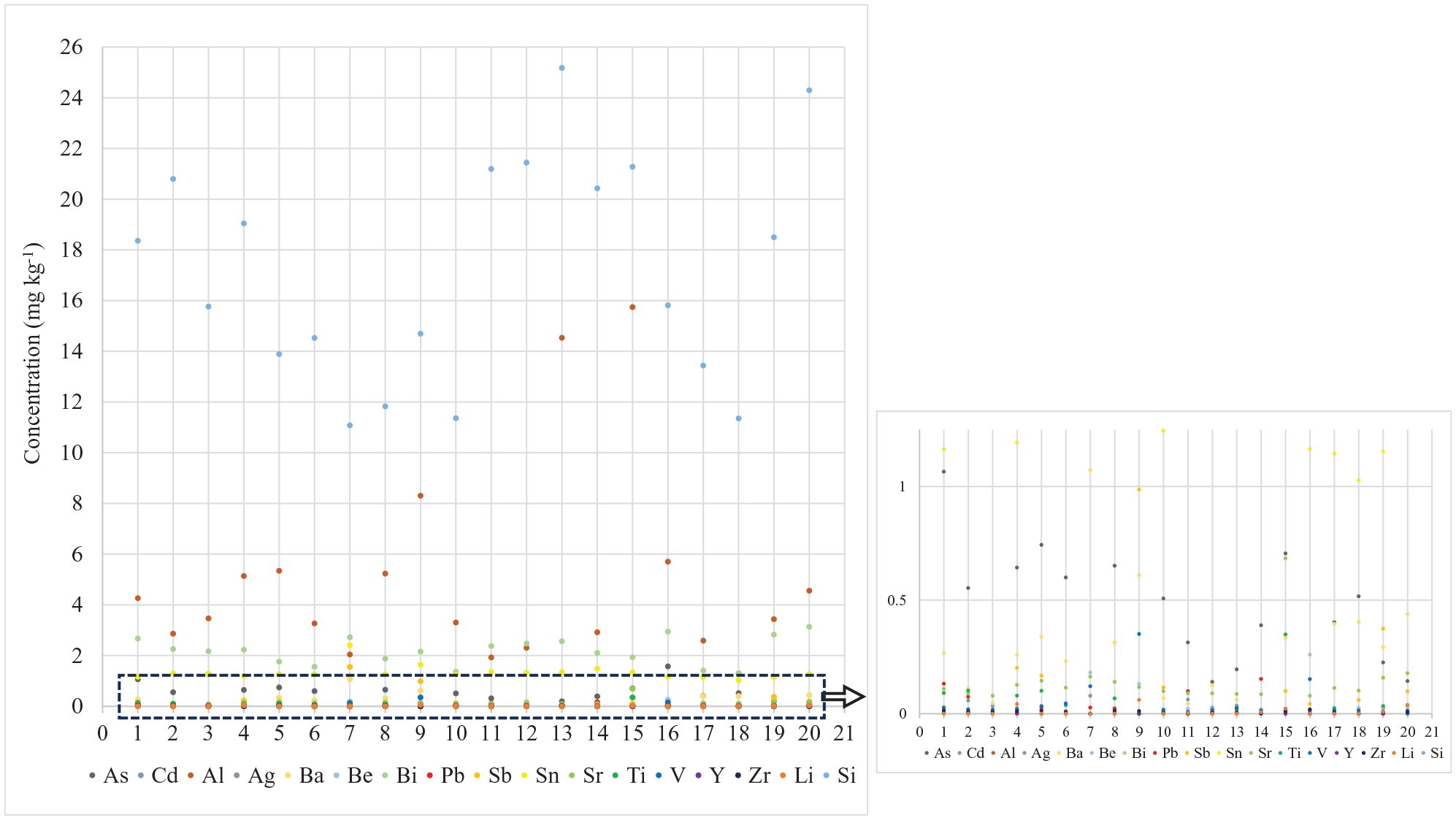
Concentration of non-essential elements (mg kg−1) in rice sold on Ghanaian markets.

Hazard index estimates for children, adolescents, adults and the aged, on consumption of rice contaminated by trace elements.

Lifetime cancer risk (LCR) assessment in children and adolescents.

Lifetime cancer risk (LCR) assessment in adults and aged.

Total lifetime cancer risk (TLCR) estimates in Children, Adolescents, Adults and the Aged.
Discussion
Levels of Elements Measured in Rice Samples
Qualitative analysis of elements in rice samples detected the presence of 31 elements, of which include: boron (B), phosphorous (P), calcium (Ca), iron (Fe), zinc (Zn), nickel (Ni), sodium (Na), molybdenum (Mo), silicon (Si), copper (Cu), sulphur (S), cobalt (Co), potassium (K), lithium (Li), manganese (Mn), magnesium (Mg), Silver (Ag), beryllium (Be), aluminium (Al), strontium (Sr), tin (Sn), antimony (Sb), lead (Pb), titanium (Ti), vanadium (V), yttrium (Y), zirconium (Zr), barium (Ba), bismuth (Bi), arsenic (As) and cadmium (Cd). The levels of these elements are represented graphically as Figures 2 and 3. Again, descriptive statistics of measured levels are presented in Table 4. Chromium (Cr) was not detected (ND) in all 20 rice brands by ICP-MS used for analyses. Again, elements such as Co, Li, Ni, As, Cd. Ag, Ba, Pb, Sb, Ti, Y and Zr were not detected in some rice samples. Average levels of the elements detected ranked as follows: S > K > P > Mg > Ca > Si > Na > Zn > Mn > Al > Fe > Bi > Cu > Sn > B > Mo > As > Ba > Sb > Ni > Sr > Co > V > Ti > Be > Pb > Cd > Li > Zr > Ag > Y.
Descriptive statistics of essential and non-essential elements in rice samples.

At α = .05, there was a significant difference between the rice brands with respect to measured levels of elements (P-value of .00043). As well, there existed a significant difference between the levels recorded for each of the 31 elements detected (P-value of 0).
Mg, Ca, Fe, Zn, K, Mn, P, B, S, Ni, Mo, Na, Cu, Cr and Co, are all considered to be essential in human diet with several biological functions.32,33 The average concentration of essential metals in rice from this present study in Ghana were in the order: S > K > P > Mg > Ca > Na > Zn > Mn > Fe > Cu > B > Mo > Ni > Co. Figure 2 presents a graphical representation of measured levels of essential elements and Table 4, shows the descriptive statistics. At P-values of .00039 and 1.0E−194, there existed a significant variation in the brands of rice samples with respect to measured levels and levels of essential elements in the rice samples respectively .
Figure 3 and Table 4 show the concentration of non-essential elements in the rice samples in this study, and their descriptive statistics respectively. Bi, Ba, Ag, Cd, As, Be, Pb, Sb, Sn, Zr, Y, V, Ti, Sr, Li, Si and Al are considered as non- essential minerals in human diet and health.32,33 The average levels of non-essential metals detected in this study were in the order: Si > Al > Bi > Sn > As > Ba > Sb > Sr > V > Ti > Be > Pb > Cd > Li > Zr > Ag > Y. There was no significant difference between the rice brands with respects to non-essential element levels (P-value of .09281), however, there existed a significant difference between non-essential elements measured in the rice samples (P-value of 3.0E−143).
Comparison of Measured Levels to Regulatory Limits
Essential Elements in Rice Samples
Zn is largely present in human tissues as an essential element with several biological functions such as signalling of cells, acting as an antioxidant and also as an anti-inflammatory in nature. Lack of Zn in human diet may result in seizures, hypothermia, dermatitis, nausea and loss of hair. 34 Zn levels measured in this study ranged 10.51 to 16.87 mg kg−1, and these were all well within the WHO tolerable and specified limits of 50 mg kg−1. 35 Though Zn is nutritionally vital to the health of humans in required proportions, in relatively very high levels, it could affect human health in numerous ways such as slowing and reducing immune functions and damaging the renal system. 36 Insufficient Zn in human diet could result in diarrhoea and retarded growth. 37 Rice sold on Ghanaian markets contained moderate amounts of Zn which is essential for consumers.
Copper is an essential element which controls and regulates the biological function of many proteins in the human body such as lysyl oxidase, ceruloplasmin and cytochrome oxidase. Cu influences the efficient functioning of the human immune system, and as such, insufficient amount of Cu in human diet could disrupt the efficient transport of Fe in body tissues. Cu could however accumulate in the body and induce Cu toxicity especially in infants. 38 From this study, the levels of Cu were well within the 40 mg kg−1 maximum tolerable limit by the WHO. 39 Rice sold on Ghanaian markets therefore contained moderate and essential levels (1.00-2.87 mg kg−1) of Cu which is vital to health of consumers.
Mg is an essential element in human diet, playing very significant functions in the nutrition and overall health of humans such as the production and storage of energy, supports the functions of the nervous system through the transport of nerve impulses and supports smooth movement of muscles through muscular contraction. A deficiency of Mg in human diet could however result in hypertension, diabetes and cirrhosis of the liver. 40 For both males and females, Mg recommended dietary allowance (RDA) for ages 1 to 3, 4 to 8 and 9 to 13 years are 80, 130 and 240 mg day−1 respectively. 41 Whereas RDAs are 410, 400, 420 and 420 mg day−1 for 14 to 18, 19 to 30, 31 to 50 and ⩾51 years respectively for males, females in these age ranges have RDAs of 360, 310, 320 and 320 mg day−1. From Table 4, Mg ranged 77.82 to 275.21 mg kg−1 in this study. Recalculating levels per the intake rates presented in Table 3 for the various age groups informs of measured levels not meeting up to RDA, however, this could be supplemented, as nutrient from other food staples are consumed by the population. 25
Chromium is an element needed in minute quantities by the human body. When the body is supplied with the required amount of Cr, this enhances the function of insulin, absorption and digestion of foods such as fats, proteins and carbohydrates. 42 From the study results, levels of Cr, with a detection limit (DL) of 0.005 μg L−1) were undetectable in all rice samples. This demonstrates that the rice sold on some Ghanaian markets may contain significantly low levels of Cr, a carcinogen, in accordance with common scientific reporting by Peasah et al 43 and Liu et al. 44
Measured levels of Ni (DL of 0.04 μg L−1) in the samples (ND to 0.88 mg kg−1) were within the WHO maximum acceptable limit of 1.5 mg kg−1 in food. 45 Nickel in higher concentrations can however accumulate in the body and induce metal allergy leading to several skin infections such as dermatitis. 46 Accumulation of Ni in the human body could also result in headache, asthma and even hypoglycaemia. 47
Mo is another essential element with vital biological functions. Mo acts as a catalyst for certain reactions such as transfer of electrons, protons and oxygen. 48 The soil character and type of water used for irrigation, largely determines the amount of Mo in food. 49 The Food and Nutrition Board of the United States Institute of Medicine recommended an average amount of 0.1 to 0.3 mg kg−1 of Mo in human diet. 50 The levels of Mo in all the rice brands in this current study averaged 0.59 ± 0.13 mg kg−1 and ranged between 0.43 to 0.97 mg kg−1, exceeding this recommended dose. There is not enough data and information on Mo toxicity in humans. 50 Mo is rapidly excreted through micturition, therefore high levels of Mo in human diet may pose little to no health risks per available data. 49
Ca is an essential element and very critical for several biological functions in the human body; circulation of blood, regulation of the rhythm of the heart and conduction of nerves. 51 Levels of 1000 to 1500 mg day−1 of Ca are recommended by the German Osteology Association. 52 The Harvard School of Public Health also recommended a daily dietary intake of 1000 mg of Ca. 42 Levels of Ca ranged from 37.11 to 147.59 mg kg−1, with an average of 50.67 mg kg−1, as presented by Table 4. Measured levels in this study are however inadequate to meet the daily recommended intake for consumers. Despite brands analysed in this study not meeting up to nutrient requirements, other brands shelfed on Ghanaian markets could however meet up to nutrient requirements.
In human diet, Fe is an essential trace element needed in optimum quantities for good human health. Inadequate Fe in diet can adversely affect the immune system’s response and could result in disruption and alteration of the smooth functioning of the brain. 53 Fe levels ranged from 1.37 to 18.64 mg kg−1. RDAs of 7 to 11 mg day−1 and 7 to 18 mg day−1 are reported for 3 to 70 year old males and females respectively. 54 Per the intake rate of rice for the various age groups from Table 3, Fe levels fall below daily requirements and as such indicates that on the Ghanaian markets, not all the rice brands for sale are a rich source of Fe. Consumers may therefore have to resort to other food staples to supplement for Fe, as diets rich in Fe remedies anaemia. 55
Though there is so far no known data on the maximum acceptable limits of Mn in the human body, the scientific opinion on dietary reference values recommended an intake of 3 mg day−1 of Mn. 56 From Table 4, levels measured were well within this daily recommended intake value for only adults and the aged, taking into account the intake rates used in this study as shown in Table 3. In human diet, Mn is an essential element which maintains and regulates biochemical and cellular reactions in the human body system. In minute (required) quantities, Mn aids in effective metabolisms of nutrients and regulation of blood sugar level, however, in higher concentrations, Mn can accumulate and become toxic thereby inhibiting the smooth functioning of the central nervous system. 57
Though the human body needs only minute amounts of Co, its safe recommended daily intake limit has not yet been set. Co however, as an essential element plays several important biological functions in the human body, such as the production of red blood cells, protein synthesis, metabolism of carbohydrates and fats, producing antiviral and antibacterial compounds to strengthen the immune system against bacterial and viral infections. 58 Vitamin B12 is an integral source of Co, and as such, the body derives substantial amounts of Co from Vitamin B12. There is therefore no single health condition associated with Co intake. It rarely has a toxicity profile, but high levels of accumulated Co can lead to cardiomyopathy (effect to the muscles of the heart) and polycythaemia (increasing levels of red blood cells). 58
Potassium was the second most abundant element recorded, with a mean concentration of 639.51 ± 124.21 mg kg−1 ranging from 484.90 to 989.45 mg kg−1. The highest K concentration was measured in samples B19 and 20 of Ghanaian origin, at levels of 901.39 and 989.45 mg kg−1 respectively as shown by Figure 2. High concentration of K in the rice samples may be due to the use of K rich fertilizers on rice farms. 59 K is very essential in human diet and is mostly used by all the tissues of the body, as a result, it is sometimes called the body’s electrolyte because it mediates the carriage of signals and electric charges in the biological activation of the nerves and cell functions. The United States National Academy of Medicines has recommended a daily intake of 2320 mg day−1 for women and 3016 mg day−1 for men. Excess K in the body is flushed out by the kidney through urine, sweat and stool. 42 The results from this current study have demonstrated that the rice sold on the Ghanaian markets are good source of K especially rice brands of samples B19 and B20, both originating from Ghana, however inadequate to meet daily dietary requirements and should be supplemented from other foods in diets.
Na is very vital in human diet and health and is needed in minor (required) quantities for biological and biochemical functions in the body such as relaxation and contraction of muscles, conduction of impulses of the nerves and maintaining a good balance of minerals and water. Excess sodium content in food can result in stroke and increased blood pressure. It is estimated that about 500 mg day−1 of Na is required for vital biochemical function in the body. 42 Sodium content solely from rice for sale on Ghanaian markets (4.73-71.61 mg kg−1) is however inadequate to meet nutrient requirements of the Ghanaian populace per the intake rates of rice in Ghana.
P is a key and vital element that regulates blood pH, teeth and bone development, activates enzymes and provides energy for the body. 42 P toxicity is very rare because in healthy individuals, the body regulates excess amounts of P. The daily recommended allowance of P is 700 mg day−1. 42 Results from this study therefore demonstrates significant levels of P (478.59-851.51 mg kg−1). Insufficient P in human diet could result in loss of food appetite, weakness in muscles, anaemia and rickets.
Boron is considered beneficial in human diet with respect to several biochemical functions such as development of bones, healing of wounds and metabolism of hormones and minerals. 60 Levels of B in this study ranged from 0.45 to 1.37 mg kg−1 with an average of 0.67 ± 0.21 mg kg−1. An acceptable daily dietary safe limit of 1 to 20 mg of B has been suggested by the World Health Organization. 61 Results from this study demonstrated that the rice sold on Ghanaian markets contained inadequate B per the rice intake rate for children, adolescent, adults and the aged.
Sulphur concentration in rice from this study were significantly high relative to the other elements with an average of 763.52 ± 81.97 mg kg−1 ranging from 612.83 to 884.98 mg kg−1 with the highest S content detected in sample B7 of Thai origin at 884.98 mg kg−1 shown by Figure 2. S plays very crucial biological functions such as repairing of deoxyribonucleic acids (DNA) and protection of cells against damage. Whilst there is yet no dietary allowance recommended for S, foods rich in S lower the risk of chronic disease infections. 62 Results from this study therefore indicates that the rice for sale on Ghanaian markets are sulphur-rich and may help improve the health of the population. Further investigation should be conducted to ascertain the exact sulphur compounds present in the rice samples since individual compounds have different reaction properties.
Non-essential Elements in Rice Samples
Lead (DL of 0.006 μg L−1) is not a vital mineral in human diet. It is associated with high toxicity in humans with a high carcinogenicity profile. 63 Acute and chronic exposure to Pb have been linked to a number of health implications such as renal and neurological damage, paralysis and headache. Pb was detected in 10 out of the 20 rice brands analysed with an average of 0.029 ± 0.047 mg kg−1 ranging from ND to 0.15 mg kg−1. Studies by64,65 has demonstrated that rice can be enriched with lead. The concentration of Pb in rice samples in this study was well within the WHO maximum tolerable limit of 0.2 mg kg−1,66 however, the toxicity of a contaminant does not just arise due to the dietary concentration but also from the rate of consumption and body mass of consumers. Rice is one of the most consumed and important foods in Ghana, hence, the Ghanaian population could therefore still be at risk of Pb exposure and toxicity in accumulated levels owing to frequent rice intake.
Arsenic (As) mostly occurs in nature through geological activities, but can also be introduced into the environment through anthropogenic activities. In all the grain crops, accumulation of As is highest in rice due to the high availability of rice plants. 67 A maximum limit of 0.20 mg kg−1 of As in polished rice was proposed by the European commission.68,69 With the exception B12 and 13, and B20, all detectable levels of As in 18 of the samples exceeded this safe maximum limit as shown in Figure 3. Sample B19, from Ghana, recorded a level of 0.23 mg kg−1, slightly exceeding the limit. As could accumulate in the human body and result in lesions of the skin, carcinogenicity and diabetes. 70 This raise concerns over the amount of As detected in rice samples in this study, as this could cumulatively have an adverse effect on the health of consumers over a long period of time.
Cadmium (DL of 0.04 μg L−1) is so far not known for any significance in human diet though lower amount of Cd are needed for the growth and maximum development of animals. 71 In this study, levels of Cd ranged from ND to 0.062 mg kg−1 with a mean concentration of 0.02 ± 0.018 mg kg−1 as shown in Table 4. The amount of Cd detected in all the rice samples considered in this study was within the WHO maximum tolerable limit of 0.3 mg kg−1 in food, 45 but could however affect human health adversely by accumulating in the body causing kidney damage. 72 Fertilizers, rocks and fungicides used on rice farms may account for the Cd content in the rice samples in this study. 72
Samples B17 and 7 from Thailand, B8 from USA and B1 from Vietnam were the only rice samples which recorded traces of Ag. Concentration of Ag in this study averaged 0.005 ± 0.018 mg kg−1 as shown in Table 4 and Figure 3. Sample B7 recorded the highest Ag concentration of 0.079 mg kg−1. Ag is biological inert, as such even when it gets into the human body, it does not get absorbed into the body tissues easily but passes out with waste. This informs of the presence of Ag in rice sold on Ghanaian markets having little or no adverse impact to the health of consumers. Prolonged exposure to silver may however result in allergies, gastrointestinal infections and respiratory tract infections. 73
Aluminium is a non-essential element majorly introduced into the environment from natural sources like bauxite which contains a high percentage of alumina. There is inadequate literature on Aluminium toxicity in humans since the element is rapidly excreted through urine. 69 Al concentration in this study ranged from 1.30 to 15.74 mg kg−1 with a mean concentration of 4.91 ± 3.86 mg kg−1. It is therefore recommended that further studies should be conducted by the world health regulatory bodies to establish the toxicity profile of Al in human diet.
Antimony (DL of 0.005 μg L−1) was detected in 10 of the 20 rice brands, with an average concentration of 0.19 ± 0.39 mg kg−1. By nature, Sb is present in the earth crust and finds its way into the environment through series of natural phenomenon such as volcanoes, bush fires and wind. Oral exposure by Sb severely affects the gastrointestinal system. The USEPA reports of an oral RfD of 0.0004 mg kg−1,74 thereby informing of recorded levels of Sb in rice sold on Ghanaian markets potentially being detrimental to the health of consumers. To minimize the availability and toxicity of Sb in the environment, knowledge of any Sb spill or discharges should be reported to the Environmental Protection Agency in affected regions to take necessary steps to prevent the leaching, accumulation in the environment and eventually entering the food chain.
Strontium is not essential in human diet, and there is inadequate information on its toxicity to humans. There is however evidence to suggest that metabolism in human bones maybe indirectly affected by high dosages of Sr.75,76 Levels of Sr in this current study averaged 0.14 ± 0.13 mg kg−1, ranging from 0.079 to 0.68 mg kg−1. The WHO has not yet established a safe dietary limit for Sr, yet still, a world average daily intake of 1.5 mg is reported for Sr. 76 Much focus should therefore be placed on the emerging levels of Sr in human diet by world health regulatory bodies and researchers to provide adequate information on the toxicity, toxicological profile and maximum tolerable limits of Sr in human diet.
Lithium was detected and quantified in only 7 of the 20 rice brands studied; B19 and 20 originated from Ghana, B15 from India, B4, B11 and B14 from Vietnam and B9 from Thailand. Levels of Li in this study averaged of 0.009 ± 0.018 mg kg−1. Li is largely present in vegetables and grains. It is usually taken up from the soil by plants, and travels through the food chain to the human body. 77 Li has very little toxicity to humans and to the environment, with very rare deficiency cases. A daily dietary limit of 0.0143 mg kg−1 (1.0 mg day−1 for a 70 kg body weight) of Li has been recommended. 78 Quantifiable levels of Li in the 7 rice brands were however insufficient to meet the nutrient requirement according to rice intake rates for children through to the aged.
Concentration of Ti (DL of 0.0004 μg L−1) varied from ND to 0.35 mg kg−1 with a mean of 0.046 ± 0.08 mg kg−1, and sample B15 which was of Indian origin contained the highest amount of Ti (0.35 mg kg−1). Ti so far has no established biological functions. Rocks, especially igneous rocks are a major source of Ti and the weathering of these rocks could eventually introduce Ti onto farm lands. 79
Y was detected in 14 of the rice brands. All with the exception of B16 from Thailand (0.0127 mg kg−1), recorded levels < 0.01 mg kg−1. Y ranged ND to 0.0127 mg kg−1, with a mean of 0.003 ± 0.004 mg kg−1. V ranged from 0.004 to 0.35 mg kg−1 with a mean of 0.05 ± 0.08 mg kg−1; B9 from Thailand recorded the highest levels of 0.35 mg kg−1. Frequent exposure to Y can affect the liver and result in cancer. 80 Zr was detectable in 17 of the rice brands with levels measured < 0.02 mg kg−1.
Tin has no essentiality in human diet and to health. The concentration of Sn in the rice samples ranged from 1.03 to 2.40 mg kg−1 with a mean concentration of 1.33 ± 0.28 mg kg−1. Sn is a non-biodegradable element present in the environment and usually attached to soil and sediments. 81 There should therefore be proper segregation and disposal of wastes with Sn content, since improper disposal of tin-containing wastes could result in dissolution of tin and subsequent accumulation in the environment and then entering the food chain.
Bismuth is a rare element with several industrial applications and biological functions such as in pharmaceuticals and treatment of cancer respectively. Proteins and enzymes are potential targets for Bi. Bi toxicity largely depends on the type of Bi compound. 82 Further studies should be conducted to ascertain the exact types of Bi compounds present in rice in order to make the appropriate and necessary decisions to improve the health of consumers. Levels of Bi in this present study ranged from 1.30 to 3.13 mg kg−1 with an average concentration of 2.19 ± 0.54 mg kg−1.
Beryllium is a considered toxic naturally occurring element usually from rocks, soil, oil and coal. Rice produced in farms contaminated with Be will eventually introduce some percentage of Be to consumers through the food chain. 83 There were traces of Be in all the rice samples studied ranging from 0.008 to 0.26 mg kg−1 with an average concentration of 0.045 ± 0.066 mg kg−1. Be can cause lungs cancer in humans, and as such the Beryllium Lymphocyte Proliferation Test is therefore recommended to ascertain the likelihood of having a chronic disease from Be pollution.
Silicon is a vital nutrient with a high plant uptake rate from the soil, aiding in strengthen of bones and healing of wound. Increasing the amount of Si in human diet could help prevent some diseases such as atherosclerosis and diabetes. 84 One unique biochemical function of Si is its ability to form Si-metal complexes with heavy metals by interrupting the absorption of these metals through the gut. 85 The Si levels detected in rice samples in this study could help minimize the adverse health impact of heavy metals to the Ghanaian population.
Barium is known to be toxic aside it being non-essential in human diet. The average concentration of Ba in the rice samples was 0.27 ± 0.25 mg kg−1, and ranged ND to 1.071 mg kg−1. The highest Ba levels was measured for in sample B7 (1.071 mg kg−1) of Thai origin shown by Figure 3. A concentration of 0.02 mg kg−1 has been set by Choudhury and Cary 86 as the daily tolerable intake rate for barium and barium compounds. Obtained results demonstrated that rice brands for sale on Ghanaian markets are contaminated with levels of Ba which could potentially affect the lives of consumers in accumulated levels.
Comparison of Measured Levels to Previous Studies Conducted
Table 5 shows a comparison of trace elements in rice from this study with those from a wide geographical diversity. Presented in Table 5 below, mean of Zn and Mn levels in Thai originated rice in this study (14.726 ± 1.988 mg kg−1 and 6.822 ± 0.748 mg kg−1 respectively), was lower than a similar study conducted also in Ghana (19.1 ± 0.00 and 19.2 ± 0.3 mg kg−1 and 10.9 ± 0.00 mg kg−1 and 14.7 ± 0.3 mg kg−1 respectively) by Wireko-Manu and Amamoo. 87 Zn and Mn followed a similar trend with respect to rice from Ghanaian origin. However, average Zn levels in all samples (14.788 ± 1.631 mg kg−1) varied similar to a study in USA (13.2 mg kg−1) by TatahMentan et al. 33 Fe levels conformed to this trend when compared to TatahMentan et al. 33
Comparison of study results to previous studies.

Abbreviation: ND = not detected.
Average of Cu levels in all 20 samples (1.925 ± 0.531 mg kg−1) was similar to a study conducted in Portugal and Spain (1.8 ± 0.6 mg kg−1) by Pinto et al, 32 but lower than that reported by Fu et al 88 in China (4.260 ± 0.826 mg kg−1). Rice brands of Ethiopian origin in a study in Ethiopia by Abitew and Yimam, 89 were significantly higher in average concentration than Ghana originated rice in this study when Cd, Ni, Mg and Cu are considered.
Mean of all 20 samples (4.912 ± 3.860 mg kg−1) and means with respect to place of origin of rice sold on Ghanaian markets for Al were significantly higher than reported for by Pinto et al 32 in all 56 samples from various origins (0.53 mg kg−1) in their study in Portugal and Spain.
Studies by Pinto et al 32 (0.17 ± 0.06 mg kg−1), Hensawang and Chanpiwat 90 (0.167) and Fu et al 88 (0.155 ± 0.0585 mg kg−1) reported similar averages of As in all their samples, however, were lower than average reported in this study (0.532 ± 0.409 mg kg−1) and a study conducted in Nigeria by Adeyeye et al. 91
Results in this study showed a lower Ti level, and a higher Ba level when compared to the average levels in samples by Pinto et al. 32 Average of Mo in all samples in this study varied similar to that reported by Pinto et al. 32 Whereas Cr levels were below detectable limits in study, they were however quantifiable.32,88,89,91,92
Health Impact Assessment
Non-carcinogenic Health Risk Assessment
Hazard Quotient (HQ) determines the health implications resulting from a single contaminant or chemical constituent, whilst Hazard Index (HI) measures combined impact of chemical constituents. 17 When the Hazard Quotient (HQ) and hazard index (HI) is ⩾1, then the day-to-day exposure is likely to result in non-carcinogenic health implications to the population. Presented in Supplemental Tables 6 to 9, children (3-12 years), adolescents (12-19 years), adults (20-65 years) and the aged (⩾65 years) HQ values for all 20 samples, with respect to these elements: Fe, Zn, Al, Ag, Cd, Ba, Li, Mo, Sn, Sr, Ti, B, Be, Co, Cu, Mn, Ni, Pb and V, were within the safe limit of 1. However, HQ values for As and P in all 20 rice samples, and in some samples for Sb were greater than 1. As, Sb and P polluted rice sold on Ghanaian markets could accumulate and adversely affect the health of the Ghanaian child, adolescent, adult and the aged. The HI assessment in this study estimates the combined health impact of the elements found in rice sold on Ghanaian markets. Hazard index values calculated for children, adolescents, adults and the aged, all exceeded the safety threshold of 1 as shown by Figure 4. This suggests that the combined levels of essential and non-essential elements could be detrimental to the health of Ghanaian consumers.
Carcinogenic Health Risk Assessment
Cancer risk in humans resulting from pollution by a single element over a lifetime is determined by estimated values of likely cancer risk (LCR), whereas total likely cancer risks (TLCR) determines that for multiple elemental pollution. 17 According to USEPA, 30 both TLCR and LCR values should be between 1.0E−6 and 1.0E−4 in order for a potential for cancer risk in humans not to exist. However, values lower than the minimum safe limit (1.0E-6), are as well considered to pose no potential for cancer risk in humans. 25 Figure 5 shows the lifetime cancer risk in children and adolescents, and Figure 6 shows that in adults and the aged. Estimated TLCR values for children, adolescents, adults and the aged, are represented graphically as Figure 7. LCR estimates from this study revealed that in children, adolescents, adults and the aged, As, Pb, Ni, Be and Cd could individually and in combined accumulated concentrations induce carcinogenicity to consumers in Ghana overtime, since the LCR and TLCR all exceeded the maximum safe limit of 1.0E−4.
The toxicity of a contaminant does not just arise due to the dietary concentration but also from the rate of consumption and body mass of consumers. Fractions of the ingested substance could be excreted, hence a smaller fraction is to be absorbed by the body tissues which may not necessarily be harmful. 93 This informs that though the LCR and TLCR for As, Pb, Ni and Cd exceeded the safe limit, they may not necessarily induce any carcinogenicity. Further bio-accessibility studies are therefore recommended to ascertain the exact levels and impact of pollution by these elements in consumers, to inform and help authorities in proper decision-making and policy formulation to improve the health of the population.
Conclusion
This study successfully estimated the levels and potential health impact of essential and non-essential elements to the different population categories that consume rice in Ghana for a total of 32 elements. The results indicated that the rice sold on Ghanaian markets contained the required levels of Zn, Cu, Ni, Mn, Pb and Cd. Mg, Ca, Fe, K, Na, P and Li content in samples were insufficient per nutrient requirements set by regulatory agencies. Mo, As and Sb exceeded their respective maximum safe limits required in food. Some rare and toxic elements such as Sn, Bi, Be, Si, Ba, S, Al, Sr, Ti, Y, Zr and V were however detected in this study with very little data on their toxicity profile.
The health impact assessment revealed As and P in all samples recorded hazard quotients (HQ) greater than 1. In most samples Sb was detected, HQ values exceeded the safe limit of 1. This implies that As, Sb and P could accumulate and adversely affect the health of the Ghanaian children, adolescents, adults and the aged. Hazard index, which determines the non-cancer risk as a result of exposure to multiple contaminants exceeded 1 in children, adolescents, adults and the aged. This informs that, a cumulative pollution by these elements may pose potential non-cancer risk to the Ghanaian populace within the various age groups as classified in this study.
The likely cancer risk (LCR) estimates from this study revealed that in children, adolescents, adults and the aged, As, Pb, Be, Ni and Cd could individually and in combined accumulated concentrations induce carcinogenicity to consumers in Ghana overtime, since the LCR and TLCR all exceeded the maximum safe limit of 1.0E−4. A bioavailability study is recommended to determine the exact levels of these toxic substances in the body system of consumers to help formulate policies to protect the health of rice consumers in Ghana. Animal testing of elements with no toxicity profile should be carried out to provide adequate information on the toxicity levels of these contaminants. This will provide information for effective decision making and policy formulation to protect the health of the Ghanaian public and the world at large.
The study acknowledges the absence of data on rice consumption rates in Ghana and long-term dietary patterns, which could influence the exposure levels of essential and non-essential elements. Additionally, while the study identifies potential health risks, it does not account for the cumulative effects and bioavailability of other dietary and environmental sources of toxic elements. Future studies could incorporate a broader dietary exposure assessment and investigate potential mitigating factors, such as rice preparation methods, that could reduce toxic metal concentrations. Moreover, public health policies should emphasize regular monitoring of rice and other staple foods to ensure compliance with safety standards and minimize health risks to consumers.
Supplemental Material
sj-xlsx-1-ehi-10.1177_11786302251350482 – Supplemental material for Exposure and Health Impact Assessment of Essential and Non-essential Elements in Rice Sold on Ghanaian Markets
Supplemental material, sj-xlsx-1-ehi-10.1177_11786302251350482 for Exposure and Health Impact Assessment of Essential and Non-essential Elements in Rice Sold on Ghanaian Markets by Jonathan Awewomom, Theresa Yvonne Arhin, Yaw Doudu Takyi, Agyei Gyasi Yaw, Janet Saaka, Francis Opoku, Marina Aferiba Tandoh, Emmanuel Adu Amankwah and Osei Akoto in Environmental Health Insights
Footnotes
Acknowledgements
A preprint has previously been published [Jonathan, A., et al. 2023].

Consent to Participate
The authors with written informed consent prior to their involvement understand the study’s aims and procedures, and the right to withdraw at any time without facing any costs.
Author Contributions
J.A - Conceived, project administration, writing, editing and review of manuscript; T.Y.A, A.G.Y, J.S writing and editing, Y.D.T, F.O, M.A.T, E.A.A; writing, editing and reviewing and O.A Project Administration, editing and revision.
Declaration of Conflicting Interests
The author(s) declared no potential conflicts of interest with respect to the research, authorship, and/or publication of this article.
Funding
The author(s) received no financial support for the research, authorship, and/or publication of this article.
Data Availability Statement
Data is available upon request.
Supplemental Material
Supplemental material for this article is available online.
References
Supplementary Material
Please find the following supplemental material available below.
For Open Access articles published under a Creative Commons License, all supplemental material carries the same license as the article it is associated with.
For non-Open Access articles published, all supplemental material carries a non-exclusive license, and permission requests for re-use of supplemental material or any part of supplemental material shall be sent directly to the copyright owner as specified in the copyright notice associated with the article.
