



Abstract
Introduction:
The utilization of sanitation facilities is recognized as critical factor in disrupting the transmission of diseases associated with the fecal-oral route. Nevertheless, there exists a paucity of evidence regarding the aggregated prevalence of latrine utilization across East Africa.
Objective:
This study aimed to determine the pooled prevalence of latrine utilization and its associated factors among households in East Africa.
Methods:
This systematic review and meta-analysis was designed based on the PRISMA guidelines. A comprehensive systematic literature search focused on prevalence of latrine utilization and its associated factors in East African was conducted using the PubMed, Science Direct Cochrane Library, and African Journals Online (AJOL) databases. Gray literature was explored through Google Scholar and Google Search. Review authors independently extracted all necessary data using a standardized data extraction format. STATA 14 statistical software was used to analyze the data. A random effect model was computed to estimate the pooled level of latrine utilization in East Africa.
Results:
After reviewing 1806 studies, 24 studies were finally included in this systematic review and meta-analysis. The result of 24 studies revealed that the pooled prevalence of latrine utilization level in East Africa was 57.05% (95% CI: [50.51, 63.60]). The factors associated with the utilization of latrine included educational status (AOR: 3.69, 95% CI: [2.07, 6.60]), latrine distance from dwelling (AOR: 2.73, 95% CI: [1.70, 4.36]), and latrine cleanness (AOR = 5.06, 95% CI: [2.76, 9.27]).
Conclusions:
In this review, the pooled prevalence of latrine utilization in East Africa was low. Factors significantly associated with latrine utilization were educational status, latrine distance from dwelling and cleanness of the latrine. Therefore, it is recommended that measures to promote behavioral change toward further improvement in sustainable and consistent latrine utilization should be carried out based on the evidence of the determinant factors found in this systematic review.
Introduction
The worldwide lack of sanitation poses a serious health risk, affecting billions of people around the world, particularly those in impoverished communities. 1 Latrine utilization involves all household members using designated latrine facilities, which are crucial for sanitation and hygiene. This practice is essential for public health and clean living environment, encompassing not just usage but also behaviors and attitudes that demonstrate a commitment to sanitation. 2 Around 1.1 billion individuals engaged in open defecation, lacking access to any sanitation facilities. 2 Nearly 2.3 billion individuals worldwide lack access to basic sanitation services and resort to open defecation. 3
A key aspect of controlling communicable diseases is the implementation of latrines and proper sanitation facilities. Access to safe sanitation is crucial for reducing pathogen transmission. Poor sanitation can contaminate water and food, promoting the spread of infections like cholera and dysentery, which thrive in communities lacking adequate latrine infrastructure. 4 Access to clean drinking water and adequate sanitation is an essential requirement for human health and is recognized as a fundamental human right by the United Nations. The provision of sanitation necessitates the existence of facilities and services that facilitate the safe disposal of human waste. This aspect is integral to the sustainable development goals established for attainment by the year 2030.5,6
In numerous developing nations, particularly within African communities, the availability of enhanced sanitation facilities remains limited. Consequently, individuals are compelled to resort to the hazardous practice of open defecation, which heightens the likelihood of disease transmission. 2 Inadequate water, sanitation, and hygiene significantly impact public health, causing about 4.0% of global mortality and 5.7% of the disease burden in Disability-Adjusted Life Years, mainly from diarrheal diseases. Annually, around 1.8 million people die from diarrheal illnesses, with children under 5 accounting for 90% of these deaths. 7
An estimated 88% of diarrheal diseases are linked to unsafe water, poor sanitation, and inadequate hygiene, while inadequate sanitation is also associated with helminthic infections, enteric fevers, and trachoma. 8 In addition, elevated levels of open defecation are linked to considerable socioeconomic, environmental, and public health repercussions that impact the overall well-being and dignity of humanity, with women and children being the most affected demographics. 9
Enhancing the accessibility and effective use of latrines is crucial and represents a cost-efficient approach to alleviating the health issues linked to inadequate sanitation practices. 10 The utilization of latrines may be influenced by a variety of behavioral, cultural, social, geographic, and economic factors that vary among different communities. 11 Sanitation facilities are being established across Africa through a health extension program and investments to improve access to safe water and sanitation services. 12
To improve latrine usage, various strategies have been implemented by governmental and non-governmental organizations. 13 A key initiative is community-led total sanitation, introduced by Dr. Kamal Kar, which aims to reduce open defecation and promote better hygiene in developing countries. Research shows that CL-TS effectively increases latrine usage rates. 13
In East Africa, a number of small and fragmented studies were carried out to assess the extent of latrine usage, leading to significant inconsistencies in their findings. Some research shows a positive trend in the use of latrines, while other studies highlight problems that deserve attention. In addition to this, previous investigations have revealed significant regional differences in latrine utilization rates, which suggest that comprehensive understanding of the problems require a more coherent approach.4,7,10 Therefore, establishing a pooled prevalence of latrine usage at regional level is necessary to obtain a more accurate overall estimate. Thus, this systematic review and meta-analysis aims to assess the overall pooled prevalence of latrine utilization and associated factors among households in the region. The findings will be vital for policymakers, reflecting the current state of latrine usage in East African countries and serving as a basis for anticipating future epidemiological and economic challenges related to latrine utilization in communities.
Methods Protocol and Registration
This systematic review and meta-analysis aimed to assess the prevalence of latrine usage and its associated factors among households in East Africa. A review protocol was submitted to an international registry to ensure transparency, and the study followed PRISMA guidelines for scientific rigor 14 (Supplemental Table S1).
Searching Strategies
A comprehensive systematic literature search was conducted using Cochrane Library, PubMed, African Journals Online (AJOL), and Science Direct international databases. A systematic approach was followed to conduct an advanced search. In the beginning, search terms were developed for 8 key areas: “ Prevalence,” “Toilet facilities,” “Latrine,” “Utilization,” “Sanitation,” “Improved latrine,” “Associated Factors” and “East-Africa.” These key-words were retrieved from Google Scholar and then individually searched in PubMed to identify relevant Medical Subject Heading (MeSH) terms within the MeSH hierarchy tree. These terms were then combined using advanced Boolean search logic, specifically using the “AND” and “OR” operators to effectively bring the concepts together. The search was also made by combining the above search terms with the names of all countries included in East Africa. The search was carried out from August to September 2024.
Inclusion and Exclusion Criteria
Articles that met the following determined inclusion criteria were included in this systematic review and meta-analysis: (A) published and unpublished studies in any period, (B) examined the prevalence and/or associated factors of latrine utilization, (C) studies were conducted in East African countries, (D) studies reported in the English language were included in the systematic review and meta-analysis. However, the present study excluded research articles that were not fully accessible despite multiple attempts to contact the original authors via email were excluded from analysis. The reason for this exclusion was that the content of these articles could not be assessed due to the lack of complete texts. In addition, studies where it was difficult to extract the required data were also excluded. Furthermore, this systematic review and meta-analysis specifically excluded qualitative studies, systematic reviews, editorial letters and reviews, short communications, and studies conducted in outside east African countries.
Outcome Measurement
The main outcome of this systematic review and meta-analysis was the prevalence of latrine utilization, and the secondary outcomes were to identify the associated factors for latrine utilization. This was assessed using the pooled odds ratio derived from two-by-two contingency table.
Operational Definitions
Study Selection and Extraction Process
Two review authors (YAA, & ASA) conducted an independent assessment of the articles identified through literature searches to determine their eligibility. Initially, all articles retrieved from the database search were screened based on their titles and abstracts to identify those that satisfied inclusion criteria. Any discrepancies were resolved through review by the other review authors (KAG). Data were obtained from the complete article utilizing a Microsoft Excel data extraction template. The parameters extracted included the first authors, publication year, study setting, study design, sample size, level of latrine utilization, and the quality assessment of each study. Discrepancies among the 3 authors during the data collection and inclusion process were addressed through discussion and reached consensus. Additionally, any missing or incomplete data from the published studies were solicited via email minimum of 2 occasions. The data were extracted using the Joanna Briggs Institute (JBI) data extraction checklist.
Quality Assessment
The JBI quality appraisal tools designed for cross-sectional studies were employed to evaluate the quality of the selected articles and to determine the potential risk of bias present in each study. 19 Three authors (YAA, ASA & KAG,) independently assessed the quality of the included articles. The quality assessment tool contains 8 questions: (Q1) clear inclusion and exclusion criteria, (Q2) description of the study subject and study setting, (Q3) use of a valid and reliable method to measure the exposure, (Q4) standard criteria used for measurement of the condition, (Q5) identification of confounding factors; (Q6), strategies for confounding factors, (Q7) use of a valid and reliable method to measure the outcomes, and (Q8) use of appropriate statistical analysis. It was evaluated using the JBI critical appraisal checklist options of “yes,” “no,” “unclear,” and “not applicable.” The risks for biases were classified as low (total score, 5-8) and high (total score, 0-4). The study scored 50% or higher on all quality-assessed items, which were considered low-risk and included in this review. Disagreements that arose during the full-text quality assessment were resolved through evidence-based discussion (Supplemental Table S2).
Statistical Analysis
The gathered data were organized in Microsoft Excel and subsequently analyzed with STATA version 14 statistical software. The findings were illustrated through graphs, tables, and forest plots. To evaluate heterogeneity among the studies, Cochran’s Q-statistics and Higgins’ and Thompson’s I² test were employed. Heterogeneity was categorized as high, moderate, and low, corresponding to thresholds of 75% and above, 50% to 75%, and 25% and below, respectively. The initial results of the test statistics indicated a considerable degree of heterogeneity across the studies (I2 = 98.4%, P = .00), prompting the application of a random effects meta-analysis model to estimate the pooled effect as per Der Simonian and Laird. To explore potential sources of this heterogeneity, a univariate meta-regression analysis was performed, taking into account the publication year, country of origin, and sample size of the studies. Additionally, publication bias was evaluated using Egger and Begg tests at a significance level of 5%. To mitigate the random fluctuations observed among the individual point estimates of the primary study, a subgroup analysis was conducted, focusing on both the country and the specific study settings (regions). The prevalence, along with its associated 95% CI, was illustrated through a forest plot. Within this plot, the dimensions of each box indicated the weight attributed to each study, while the horizontal lines crossing through the boxes represented the 95% CI.
Results Exploration of Articles
One thousand eight hundred six (1806) primary studies that addressed latrine utilization and associated factors were searched using various databases. Eight hundred seventy-four (874) of these identified articles were excluded because of similarity and duplicated articles. Among the remaining 932 articles, 814 studies were excluded based on title and abstract, and the remaining 118 articles were assessed as full-text articles. After reviewing the full text, 94 articles were deleted because they contained missing full titles and abstracts and reported findings from outside East African countries. Finally, 24 articles with 12 531 study participants were included for this systematic review and meta-analysis study (Figure 1).
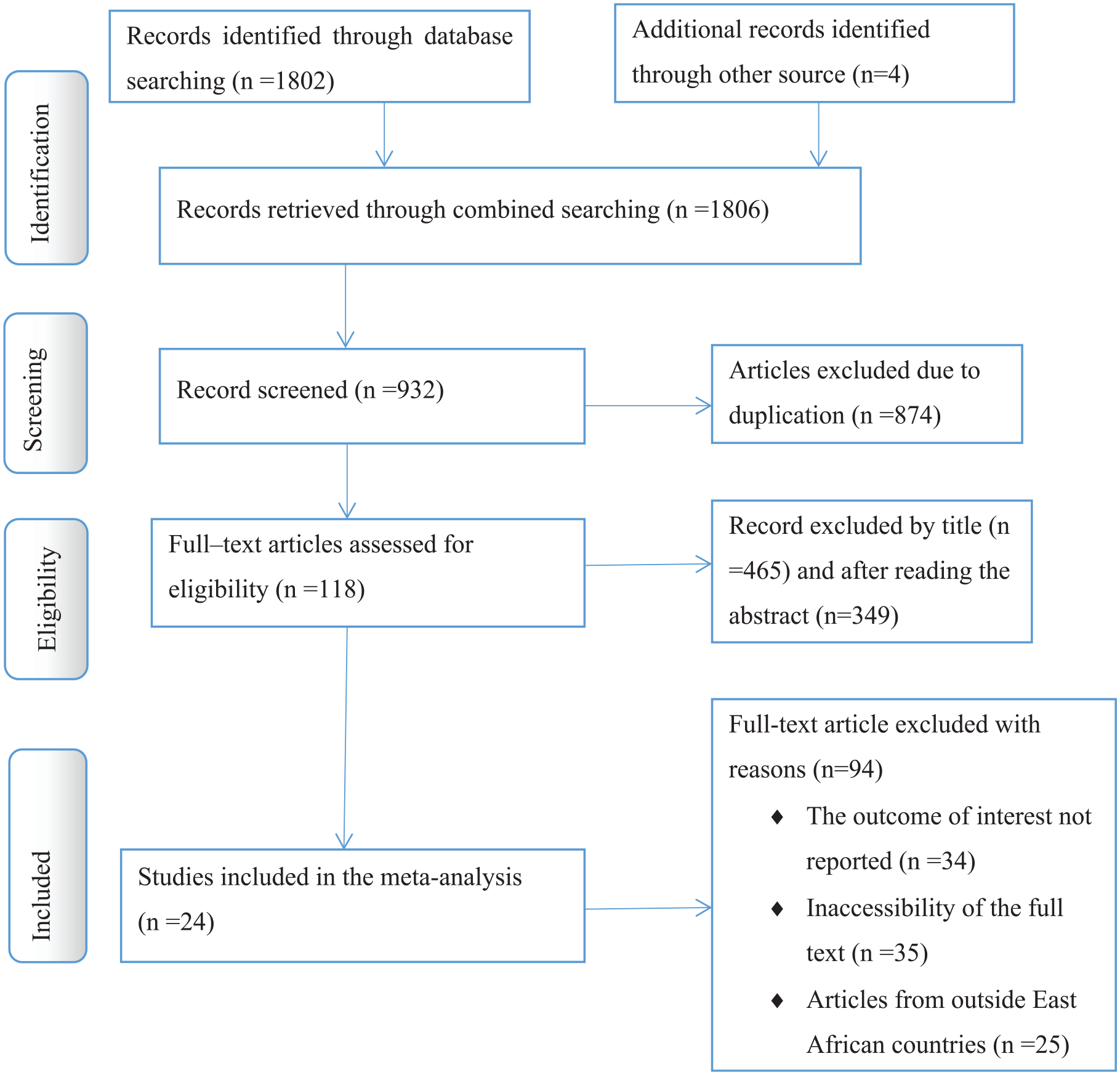
Flow diagram showing the study identification process.
Characteristics of the Original Articles
These 248,15,16,20 -40 studies were published from 2010 to 2024. In the current meta-analysis, 12 531 study participants were involved to estimate the pooled prevalence of latrine utilization in East African countries. Regarding the study design, all of the studies were cross-sectional study design. The sample sizes of the studies ranged from 175 24 to 824. 16
The articles included in the study were conducted in 5 countries in the East African region. Among these, 14 studies were conducted in Ethiopia8,15,16,20,21,23,26,27,29,31,33 -35,38, 3 studies were conducted in Tanzania22,24,36, 3 studies were also conducted in Rwanda25,32,40, 2 studies were conducted in Uganda,28,39 and 2 studies conducted in Kenya.30,37 Moreover, 12 studies were conducted in rural areas, 6 studies were in urban, and 6 studies were in both rural & urban settings (Table 1).
Characteristics of studies that reported the prevalence of latrine utilization in East Africa.
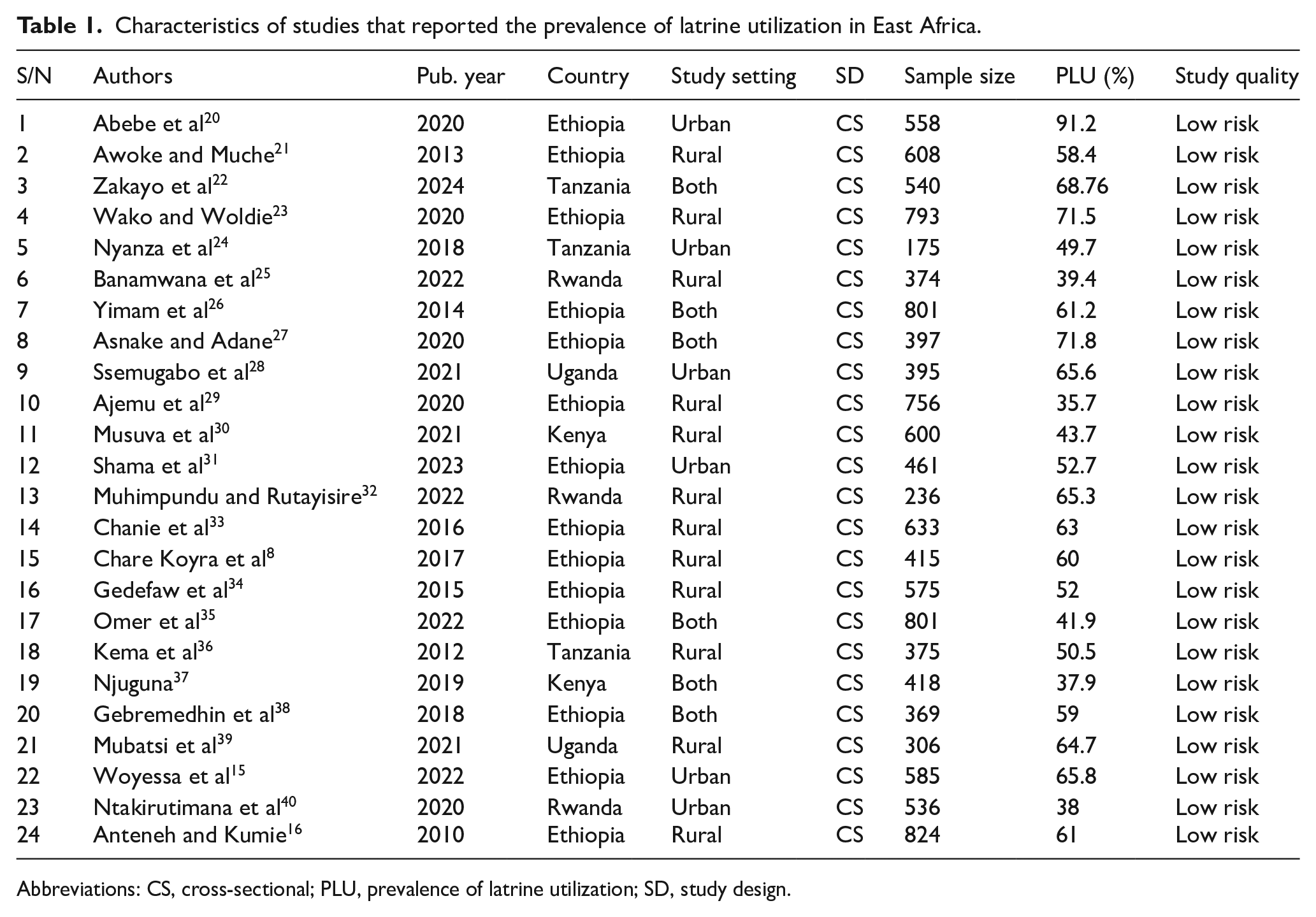
Abbreviations: CS, cross-sectional; PLU, prevalence of latrine utilization; SD, study design.
Prevalence of Latrine Utilization in East Africa
Before conducting a meta-analysis on the effect sizes of the studies included, it was necessary to assess the presence of statistical variability among studies. This was accomplished by employing forest plots and conducting statistical tests. There was high/considerable heterogeneity among the included studies in the pooled prevalence of latrine utilization. The Stata generated statistical test of variation (I2 = 98.4% and P < .001) indicating high heterogeneity. Therefore, the random effects model was used to estimate the pooled prevalence of latrine utilization in East Africa. The overall pooled prevalence of latrine utilization in East Africa was found to be 57.05% (95% CI: [50.51, 63.60]) (Figure 2).

The pooled prevalence of latrine utilization in East Africa.
Subgroup Analysis
In order to appreciate the heterogeneity of individual studies, subgroup analysis was conducted based on the region where the studies were conducted. The output of subgroup analysis revealed that, the highest latrine utilization was observed in Uganda of East- Africa with a prevalence of 65.21% (95% CI: [61.68, 68.73]) followed by Ethiopia with pooled latrine utilization of 60.38% (95% CI: [51.66, 69.10]) (Table 2).
Subgroup prevalence of latrine utilization among countries of East- Africa.

Similarly, subgroup analysis was also performed between study settings (urban, rural and both). The pooled latrine utilization for study settings that means urban, rural, and both were found to be 60.56% (95% CI:[42.07, 79.06]), 55.42% (95% CI:[48.61, 62.23]) and 56.76% (95% CI: [45.74, 67.78]) respectively (Figure 3).
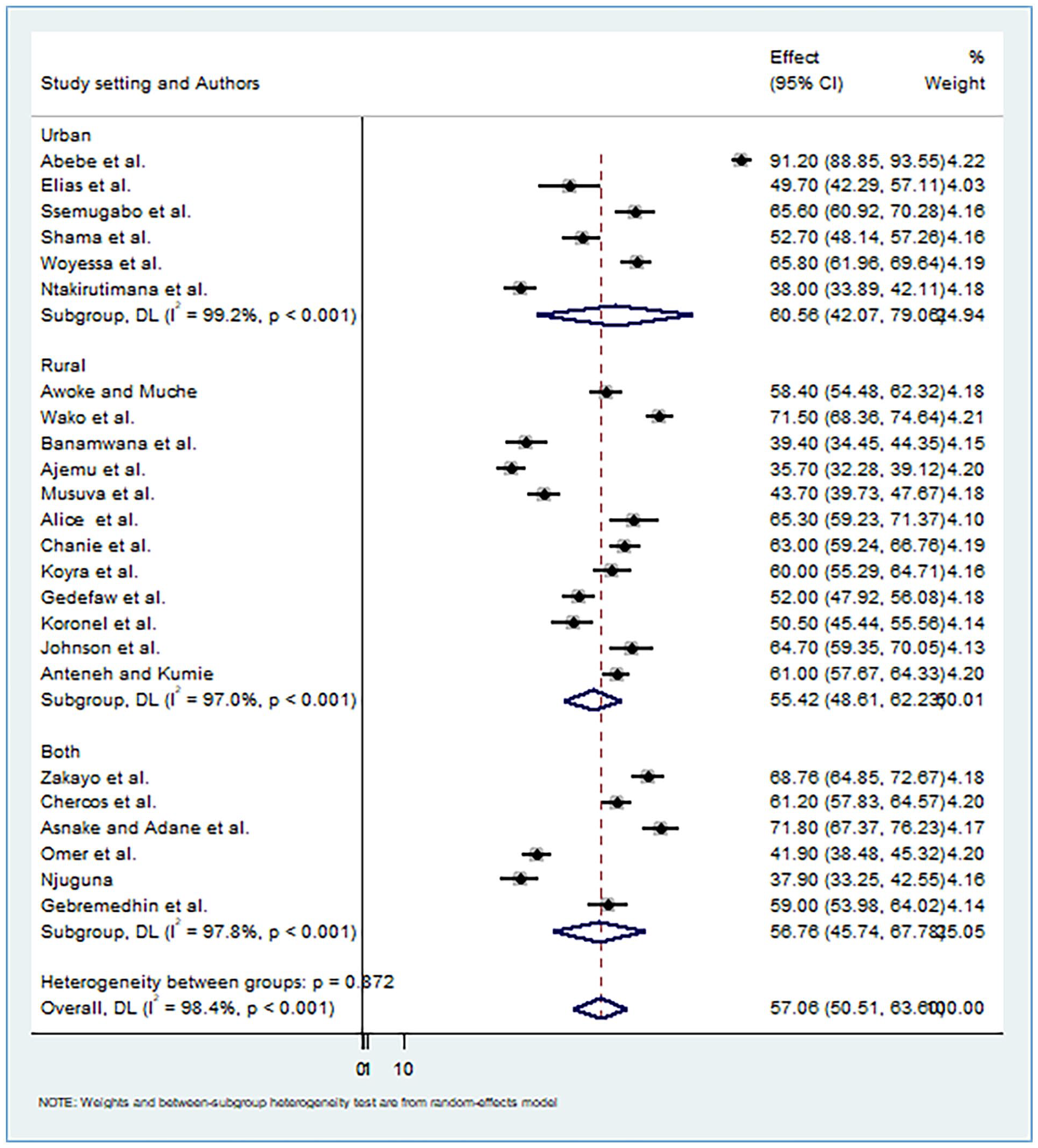
Subgroup analysis of latrine utilization status by study settings in East Africa.
Sensitivity Analysis
In addition to conducting subgroup analysis, we performed a sensitivity analysis by excluding each study to investigate the origin of heterogeneity. This analysis showed that omitting one study had no statistically significant effect on the overall evaluation of the studies (Table 3).
Sensitivity Analysis for the prevalence of latrine utilization in East Africa.

Meta-Regression
Meta-regression was utilized alongside subgroup and sensitivity analysis to identify potential sources of heterogeneity related to publication year, country, and sample size. The findings from the meta-regression indicated that there were no significant sources of heterogeneity associated with publication year (P-value = .98), country (P-value = .56), or sample size (P-value = .96; Table 4).
Meta-regression analysis based on publication year, country, and sample size of the studies in East-Africa.

Publication Bias
Moreover, Publication bias was also assessed using the Begg and Egger tests. The result of Begg and Egger tests were not statistically significant for estimating the level of latrine utilization (P = .17) and (P = .26) respectively (Figure 4).

Funnel plots for publication bias of latrine utilization in East Africa.
Factors Associated With Latrine Utilization in East Africa
A meta-analysis was conducted to determine the factors associated with latrine utilization, employing a random effects model. In the extraction, we aimed to illustrate the relationship between each factor and the outcome variable. Consequently, we analyzed the combined effect of 3 specific factors on the outcome variable: the educational status of the household head, the distance of the latrine from the dwelling, and the cleanliness of the latrine.
In this study, factors associated with latrine utilization were assessed using 15 studies.8,15,20,22,23,25,26,29 -31,33 -35,38,39 Among 15 articles, the findings of 8 studies8,20,22,23,26,31,37,38 revealed that latrine utilization was significantly associated with educational level. As a result, Households with primary and above education were 4 times (AOR: 3.69, 95% CI: [2.07, 6.60]) more likely to utilize latrines as compared with illiterate households (Figure 5).

The association between latrine utilization and educational status in East Africa.
According to this study, the association between latrine utilazation and its distance from dwelling has been assessed in 6 studies.15,29,31,34,35,39 As a result, Households that had latrines less than or equal to 6 m far from the living room were 3 times (AOR: 2.73, 95% CI [1.70, 4.36]) more likely to utilize their latrine compared with households had greater than 6 m away from the living room (Figure 6).
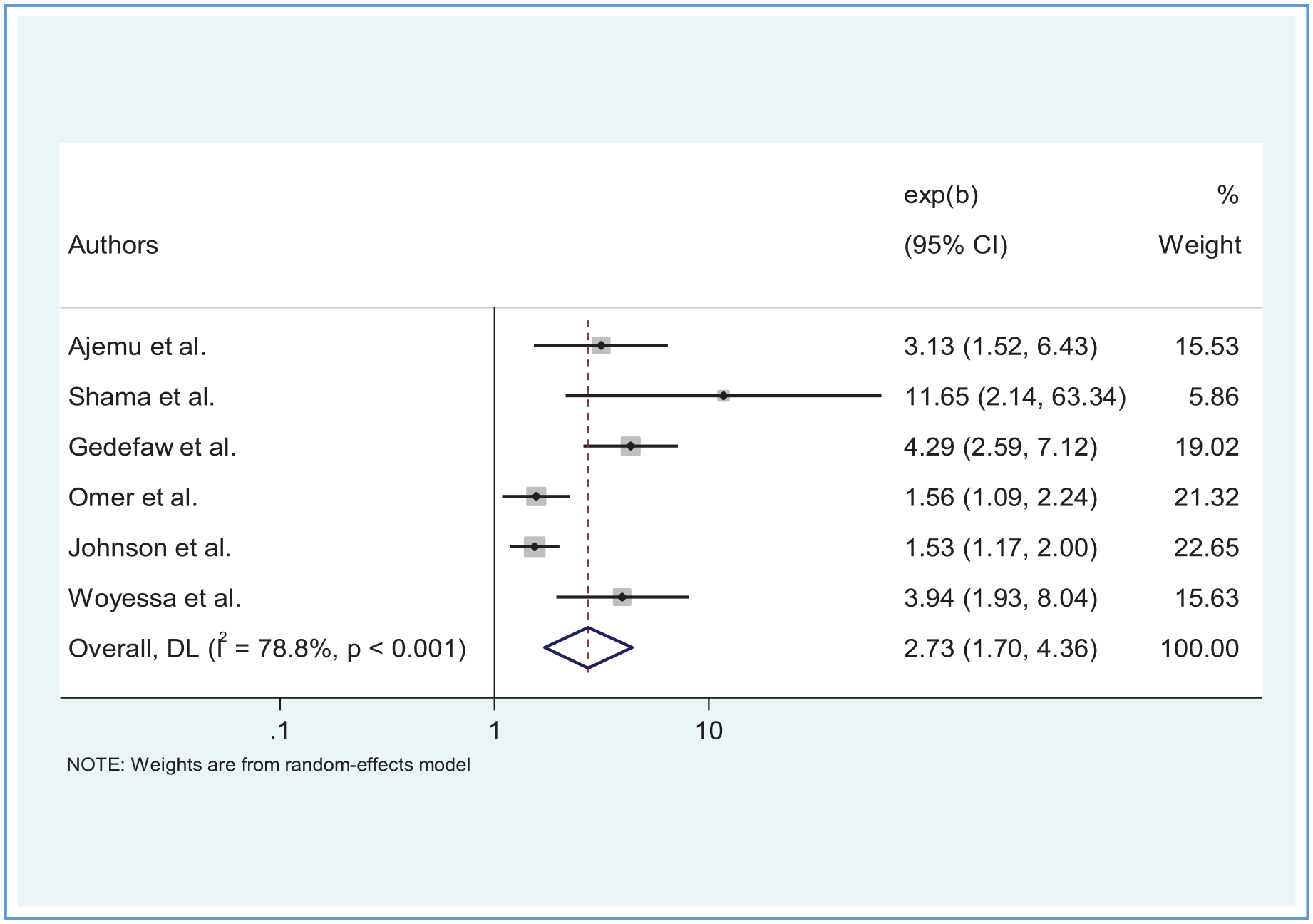
The association between latrine utilization and its distance from dwelling in East Africa.
Moreover, the association between latrine utilization and its cleanness has been assessed in 6 studies.23,25,26,33,35,38 The result showed that the combined effect of latrin cleanness was significantly associated with latrine utilization. Households with clean latrines were 5 times (AOR = 5.06, 95% CI: [2.76, 9.27]) more likely to use their latrines than those with dirty latrines (Figure 7).
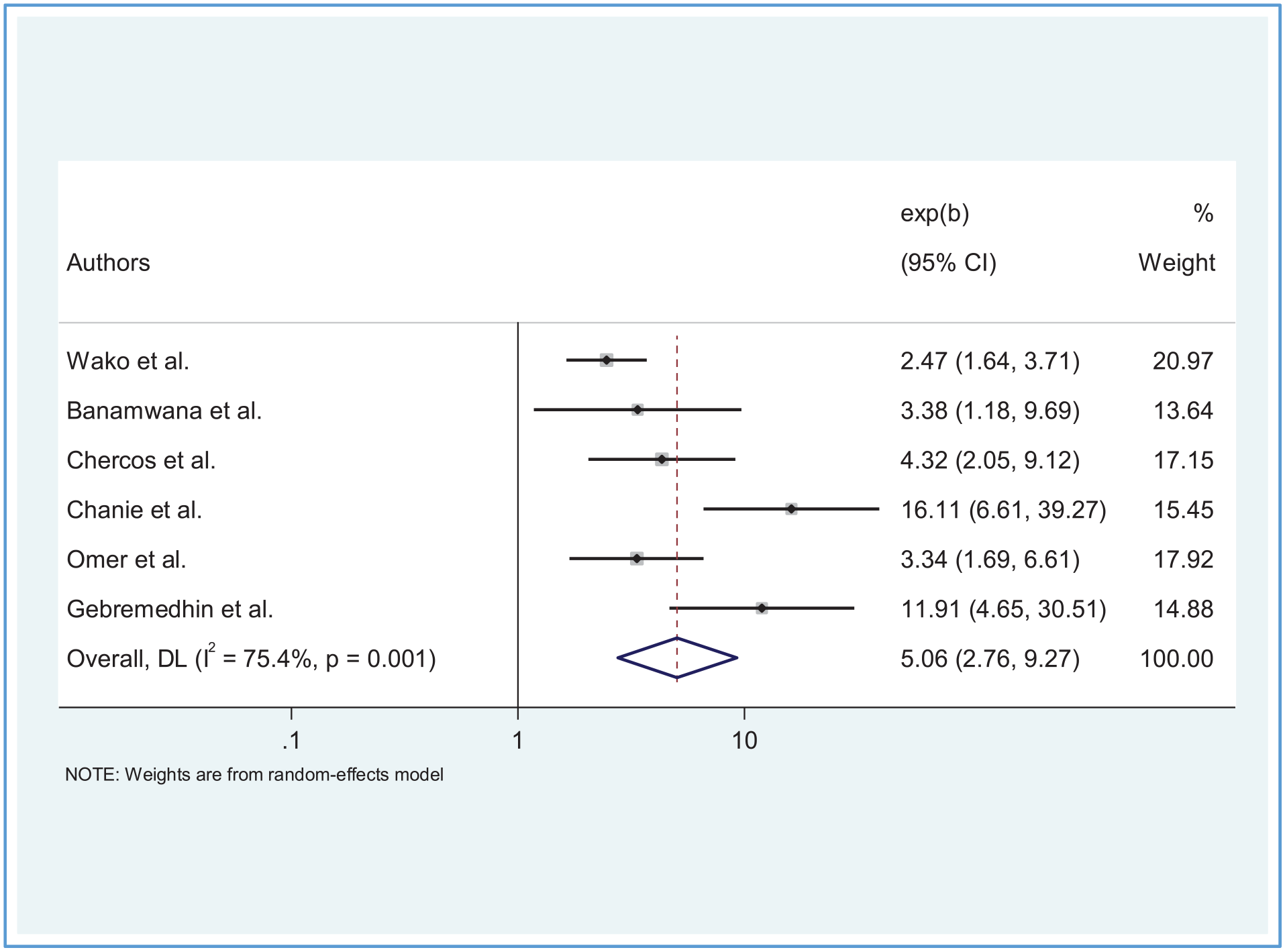
The association between latrine utilization and its cleanness in East Africa.
Discussions
This systematic review and meta-analysis were conducted at the sub-regional level to estimate the pooled prevalence of latrine utilization and its associated factors among Households in East African Countries. This systematic review and meta-analysis disclosed that the pooled level of latrine utilization in East Africa was 57.05% (95% CI: [50.51, 63.60]). The pooled prevalence of latrine utilization in the present review is lower than a study conducted in Ghana which revealed that 66.5% of the community had proper latrine utilization, 41 a study conducted in Vietnam revealed that latrine utilization was estimated to be (71%). 42 Likewise, the finding of this meta-analysis is much lower than other community-based studies conducted in Nepal (94.3%). 11 The observed discrepancy between the current meta-analysis and similar findings may be attributed to variations in the sociodemographic characteristics of the study participants. Reports from other African nations primarily focused on data collected from urban populations, whereas this study incorporated both urban and rural settings. Additionally, differences in study design may also account for the observed variation. 41
However, the current combined prevalence of latrine usage is higher than the figures reported by the World Health Organization worldwide (39%). 43 likewise, the current pooled latrine utilization result is slightly higher than that from southern Asia countries reported by the World Health Organization (WHO) and United Nations Children’s Fund (UNICEF) joint monitoring program (JMP) 2021 (50%), 44 and a study conducted in Indian which revealed that 47% of the community had proper latrine utilization. 45 The noted discrepancy may arise from factors such as temporal variations, the context of the study, sample size, and socioeconomic disparities across various settings. Furthermore, an additional potential explanation for this discrepancy could be attributed to the fact that a significant portion of the population in the developing world lacks access to basic sanitation facilities. 46
The pooled prevalence of latrine utilization level in Uganda and the people region of East- Africa was 65.21% which is lower than the pooled prevalence of latrine utilization level in other region of the African country in Nigeria 69.1%. 47 The observed variation may stem from differences in the period of data collection across studies and research outcomes are influenced by changing social, economic, environmental conditions. Thus, it’s essential to consider the socioeconomic and sociocultural contexts, as well as the timing of data collection, when analyzing result variations. 11
In this systematic review and meta-analysis, we performed a subgroup analysis by study settings (urban, rural, and both). However, the finding was not statistically significant despite a slight discrepancy. Latrine utilization was found to be better in the urban setting (60.56%) as compared to rural (55.42%) and both (56.76%). Better latrine utilization in urban settings might be due to higher literate populations residing in urban than in the counterpart settings.
The educational level of the respondents has a significant association with latrine utilization. The finding of this study is supported by other similar studies conducted in west Africa, Ghana, 41 and Bangladesh. 48 Education plays a crucial role in shaping human behavior, particularly in health-related activities. As individuals attain higher levels of education, their understanding of disease causation, transmission, and the impact of human waste on the spread of communicable diseases also improves. Consequently, this enhanced knowledge enables them to effectively manage and safely dispose of various types of waste, including human excreta, through the use of properly constructed latrines. 49
The establishment of a suitable distance between the latrine and the living area plays a crucial role in promoting better sanitation practices within a household. When latrines are positioned at an appropriate distance, it not only helps to minimize unpleasant odors and the potential for contamination of living spaces but also creates a more hygienic environment overall. This study revealed that households whose latrine is found within 6 6 meters distance from the dwelling had 3 times increased latrine utilization as compared to their counterparts. A consistent result was reported from the study in Bangladesh. 48 The placement of latrines at a considerable distance from residences can significantly diminish their usage, especially during nighttime hours. This phenomenon largely attributable to the inconvenience faced by elderly and disabled individuals, who may find it challenging to access latrines that are situated far from their homes.
Furthermore, cleaning the latrine is one of the factors that attracts household members to regularly utilize the latrine. In the current study, regarding the cleanliness condition of latrines, household members were attracted to use well-cleaned latrines 5 times more likely than uncleaned latrines. This finding is similarly supported by study done in India. 45 The observed phenomenon suggests that latrine cleanliness affects user behavior, as unhygienic toilets deter use. Users are likely to prefer clean and attractive environments, which increases their willingness to use the facilities compared to dirty ones.
Limitations of the Study
In this systematic review and meta-analysis, we recognized some limitations. The primary issue was that only articles published in English were taken into account for this subregional review. The other constraint is the cross-sectional nature of the included articles, which can affect the second objective due to the presence of confounders. Moreover, the pooled prevalence might not represent the whole country or region.
Conclusions
Based on the findings of this study, it was concluded that the pooled prevalence of latrine utilization in East-Africa was low. Factors significantly associated with latrine utilization were educational status, latrine distance from dwelling and cleanness of the latrine. Therefore, it is recommended that measures to promote behavioral change toward further improvement in sustainable and consistent latrine utilization should be carried out based on the evidence of the determinant factors found in this systematic review and meta-analysis.
Supplemental Material
sj-docx-1-ehi-10.1177_11786302251339523 – Supplemental material for Latrine Utilization and Associated Factors Among Households in East Africa: A Systematic Review and Meta-Analysis
Supplemental material, sj-docx-1-ehi-10.1177_11786302251339523 for Latrine Utilization and Associated Factors Among Households in East Africa: A Systematic Review and Meta-Analysis by Yibeltal Assefa Atalay, Agumase Shibabaw and Kelemu Abebe Gelaw in Environmental Health Insights
Supplemental Material
sj-docx-2-ehi-10.1177_11786302251339523 – Supplemental material for Latrine Utilization and Associated Factors Among Households in East Africa: A Systematic Review and Meta-Analysis
Supplemental material, sj-docx-2-ehi-10.1177_11786302251339523 for Latrine Utilization and Associated Factors Among Households in East Africa: A Systematic Review and Meta-Analysis by Yibeltal Assefa Atalay, Agumase Shibabaw and Kelemu Abebe Gelaw in Environmental Health Insights
Footnotes
Acknowledgements
We would like to express our gratitude to the investigators of primary studies and the database owners.
Authors’ Contribution
Y.A.A. writing- original draft data, writing review and editing, data curation, methodology, conceptualization, formal analysis, and software. A. S.A. writing-review and editing, validation, investigation, visualization, formal analysis, and software. K.A. G. writing review and editing, data curation, methodology, formal analysis, and software Finally, all authors reviewed and approved the final version of the manuscript.
Funding
The author(s) received no financial support for the research, authorship, and/or publication of this article.
Declaration of Conflicting Interests
The author(s) declared no potential conflicts of interest with respect to the research, authorship, and/or publication of this article.
Data Availability Statement
Not applicable
Supplemental Material
Supplemental material for this article is available online.
References
Supplementary Material
Please find the following supplemental material available below.
For Open Access articles published under a Creative Commons License, all supplemental material carries the same license as the article it is associated with.
For non-Open Access articles published, all supplemental material carries a non-exclusive license, and permission requests for re-use of supplemental material or any part of supplemental material shall be sent directly to the copyright owner as specified in the copyright notice associated with the article.
