



Abstract
Access to safe drinking water is essential for public health. In Arua City, Northern Uganda, boreholes serve as a primary water source, but their safety may be compromised by radionuclide contamination. This study analyzed gamma-ray-emitting radionuclides (²²⁶Ra, ²³²Th, and ⁴⁰K) in borehole water samples from Ayivu East, Ayivu West, and Arua City Central using gamma spectrometry. Eighteen samples from 6 boreholes per division were assessed against UNSCEAR global averages. Results showed high variability in radionuclide concentrations. Several boreholes, particularly on Arua Hill’s slopes, had ²²⁶Ra levels exceeding the global average of 35 Bq/L, while ²³²Th remained below 30 Bq/L in all samples. ⁴⁰K concentrations surpassed the global average of 400 Bq/L in all divisions. Absorbed dose rates in some boreholes exceeded 57 nGy/h, though annual effective doses remained below 0.41 mSv/y. Hazard indices in specific boreholes suggested health risks. The study recommends regular monitoring, geological assessments, safe drilling, public awareness, and water treatment to ensure water safety and protect public health.
Introduction
Access to safe drinking water is a fundamental human right and an essential component of public health.1 -3 International organizations such as the Environmental Protection Agency (EPA), International Commission on Radiological Protection (ICRP), United Nations Scientific Committee on the Effects of Atomic Radiation (UNSCEAR), and World Health Organization (WHO) recommend a daily water intake of at least 1to 2 L for adults to avoid health problems.4,5 Therefore, the supply of clean, safe, and quality drinking water (bore-hole, tap, spring, mineral, purified, distilled, etc.) is of vital importance. In Arua City, Northern Uganda, boreholes are widely used to access groundwater due to the limited availability of surface water. However, the safety of boreholes water can be compromised by various contaminants, including radioactive substances. 6 Radioactive contamination in drinking water poses significant health risks due to its potential to cause chronic diseases, including cancer, upon prolonged exposure.7,8 Radioactive elements can enter water sources through natural processes such as the dissolution of minerals containing radioactive materials, as well as through anthropogenic activities like industrial discharges and improper waste disposal.7,9 Once these elements are present in the water, they can be ingested by humans, leading to internal exposure to radiation. 7 The health implications of consuming water with high levels of radioactive contaminants necessitate regular monitoring and assessment to ensure public safety. 7
Humans are continuously exposed to ionizing radiation from both natural and cosmic sources. These include cosmic rays originating from outer space and the Sun, as well as terrestrial radionuclides found in the Earth’s crust, construction materials, air, water, and food. 10 Additionally, the human body itself contains naturally occurring radionuclides. Ionizing radiation has always been present in the environment and constantly affects all living organisms.10 -12
In Arua City, the reliance on borehole water makes it essential to understand the extent of radionuclide contamination. Previous studies in various regions have highlighted the presence of radionuclides in groundwater, but limited data is available for Arua City. This study aims to address this gap by analyzing the radionuclide concentrations in water samples from selected boreholes in Arua City. By doing so, it seeks to provide a comprehensive assessment of the radiological safety of borehole water in this region and contribute to the formulation of effective water quality management strategies.
The specific objectives of the study were to identify and determine the concentration of the radionuclides 226Ra, 232Th, and 40K in the borehole water samples from Arua City and to estimate the effective dose to humans from borehole water consumption.
Related Studies on Radionuclide Concentrations in Water Samples From Bore-Holes in Arua City, Northern Uganda
Globally, various studies have examined radionuclide concentrations in groundwater, highlighting the diverse geochemical environments and their impacts on water quality. In the United States, extensive research has been conducted to assess radionuclide levels in various aquifers. For instance, Szabo and Zapecza 13 studied groundwater in the Newark Basin, New Jersey and found significant concentrations of uranium and radon. This study emphasized the influence of geological formations rich in uranium on groundwater quality. In Europe, research has been conducted in countries like Finland and Sweden, where the granitic bedrock contributes to high radon levels in groundwater. Ratia et al 14 reported that Finnish groundwater often contains radon concentrations exceeding the recommended limits, which poses a health risk to the population. Similarly, Czymzik et al 15 identified elevated radon levels in Swedish groundwater, stressing the importance of regular monitoring and mitigation measures in regions with high natural radioactivity.
In Africa, radionuclide contamination in groundwater has been investigated in several countries. A study by Lawal et al 16 in southwestern Nigeria found elevated levels of uranium and thorium in groundwater, attributed to the underlying crystalline basement rocks. In Ghana, Kezo et al 17 reported radon levels in borehole water that surpassed WHO guidelines, highlighting the need for continuous monitoring to protect public health.
In Uganda, groundwater is a vital resource for many communities, especially in rural and semi-urban areas. However, there has been limited research on the radiological quality of groundwater. One notable study by Okello 18 focused on the Moroto district, where uranium concentrations in borehole water were found to be significantly high. This research indicated that the geological formations in the area, which include granitic and metamorphic rocks, contribute to the elevated uranium levels in groundwater.
In Arua City, located in the northwestern region of Uganda, groundwater from boreholes is a primary source of drinking water for the local population. 19 Despite the critical reliance on this resource, there is a notable absence of studies specifically investigating radionuclide concentrations in borehole water in Arua City. Most existing research in the area has focused on other aspects of water quality, such as bacterial contamination and chemical pollutants.19 -21
The lack of data on radionuclide contamination in Arua City is a significant concern, given the potential health risks associated with long-term exposure to radioactive elements. Without this information, it is challenging to assess the radiological safety of the borehole water and to implement appropriate mitigation measures. Therefore, this study aims to fill this research gap by systematically analyzing the concentrations of key radionuclides in borehole water samples from different locations within Arua City.
Methodology
Study Area
Arua City is located in the northwestern part of Uganda, near the border with the Democratic Republic of Congo (DRC) and South Sudan. It serves as the administrative and commercial hub of the West Nile region, characterized by a diverse cultural and economic setting. 22 Arua was recently upgraded from a municipality to a city, enhancing its significance as a key urban center in northern Uganda. Arua City has an estimated population of approximately 1.2 million people, 23 reflecting its status as one of the most populous urban centers in Northern Uganda. The study focused on water samples from 3 distinct divisions within Arua City: Ayivu East, Ayivu West, and Arua City Central. These divisions represent a mix of urban, peri-urban, and rural settings, making them ideal for assessing radionuclide contamination across varied environmental and socio-economic contexts. Figure 1 shows map of the study area indicating the sampling points.

Map of the study area.
Arua City is situated at an altitude of approximately 1200 m above sea level and lies between latitudes 3.0°N and 3.5°N, and longitudes 30.5°E and 31.0°E. 22 The region is characterized by a combination of flat terrain and rolling hills, with various streams and rivers contributing to the local hydrological system. The area experiences a tropical climate with 2 main seasons: a rainy season (March to November) and a dry season (December to February). Average annual rainfall ranges between 1200 and 1500 mm, with temperatures typically varying from 20°C to 30°C. 22
Arua City’s rapid urbanization has led to increased demand for water resources, necessitating reliance on boreholes, especially in areas where piped water systems are inadequate or non-existent. The 3 divisions differ in population density and infrastructure: Ayivu East is primarily peri-urban, with rapid expansion of residential areas. The water sources here mainly serve households and small-scale agricultural activities. Due to its proximity to industrial areas and agricultural fields, there is potential for contamination of groundwater sources. Ayivu West is predominantly rural, this division is characterized by scattered settlements and agricultural land use. Residents rely heavily on boreholes for their domestic and agricultural water needs. The rural setting may influence the level of radionuclide contamination due to varying soil compositions and land use practices. Arua City Central is the most urbanized division, encompassing the city’s commercial and administrative centers. With higher population density and extensive infrastructure development, there is significant pressure on groundwater resources. The area is characterized by high reliance on boreholes due to intermittent supply from the municipal water system.
The selection of boreholes was based on factors such as population density, land use patterns, and accessibility. In total, 18 water samples were collected from boreholes, with 6 samples each from Ayivu East, Ayivu West, and Arua City Central.
Research Design
The research design involved exploratory and descriptive research designs. Exploratory design was used to find the number of distribution and location of Boreholes in Arua City. The Department of Geological Survey and Physical Planning, Arua City was consulted for guidance.
The descriptive design was used to measure the activity concentrations of the radionuclides present in Borehole water collected using Sodium Iodide detector which is Thallium activated detector. It was also used to find the mean, range, activity concentrations, absorbed dose rate, annual effective dose equivalent, and the radiological hazard levels in the borehole water samples in the 3 divisions of Arua City.
Sampling and Preparations of Samples
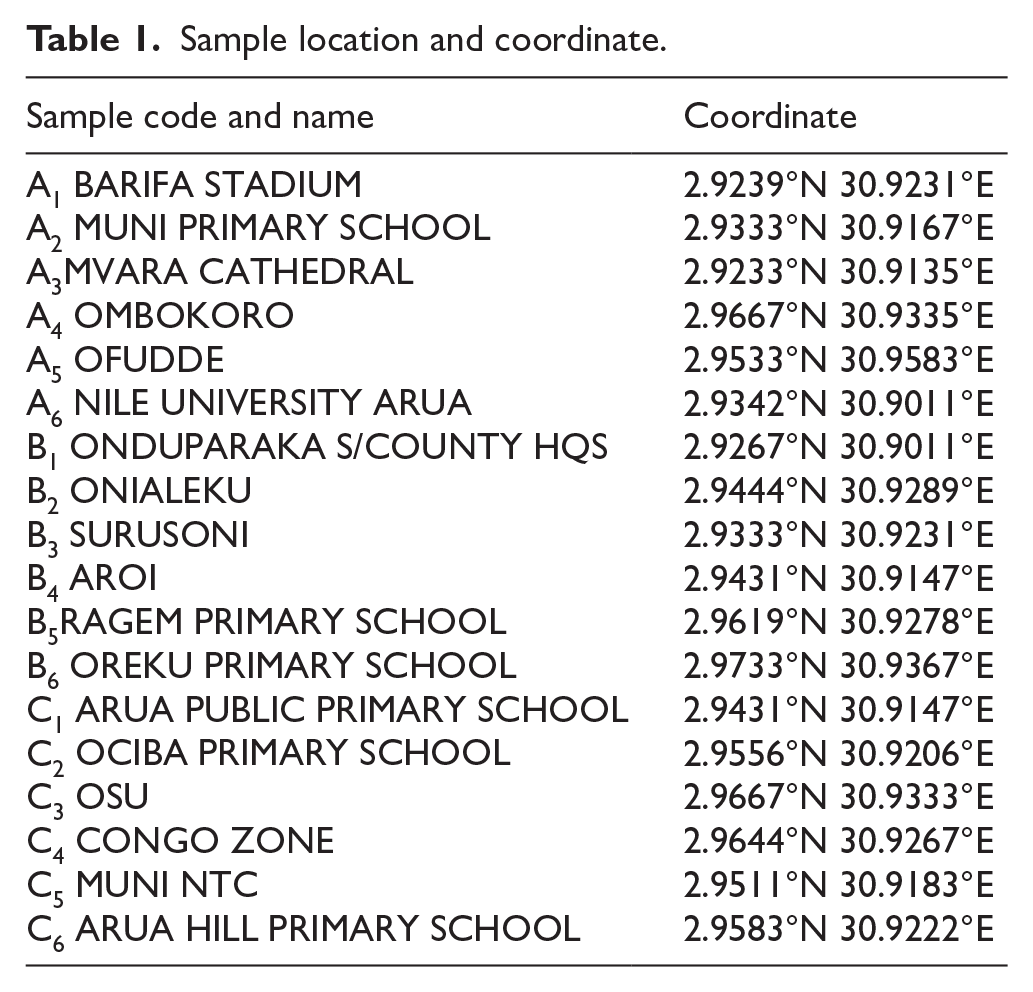
The study was carried out in the 3 divisions of Arua City, namely Ayivu East, Ayivu West and Arua City Central. The divisions have on average over 10 boreholes in each division. Table 1 shows the sample point, label and the location coordinates. Ayivu East was designated A and 6 samples picked from A were labeled as A1, A2, A3, A4, A5, and A6. Ayivu West was designated B and the 6 samples picked were labeled as B1, B2, B3, B4, B5, and B6 while Arua City Central was designated as C and the 6 samples picked were labeled as C1, C2, C3, C4, C5, and C6. The Boreholes considered were at least 500 m from each other. Water samples were collected directly using clean half liter mineral water bottles and were labeled according to the location. The water samples were transferred into a standard polyethylene marinelli beaker in the laboratory for analysis.24, 25 The concentrations of radionuclides 238U, 232Th, and 40K in the water samples will be determined using gamma-ray spectroscopy techniques.
Sample location and coordinate.
Identification of Radionuclides 226Ra, 232Th, and 40K in the Borehole Water Samples
The water samples were analyzed for the existence of gamma ray emitting radionuclides (226Ra, 232Th, and 40K) and the activity concentrations of the radionuclides determined using Sodium Iodide (NaI) detector, GDM 20 series that is Thallium activated. The system made use of an IBM compatible personal computer. The detector operated using a cylindrical NaI(Tl) crystal of height 7.62 cm and diameter 7.62 cm. The calibration of the detector for energy and efficiency was first done before the detector was used for any experimental work.
Sodium Iodide (NaI) detectors were selected for this study due to their cost-effectiveness, ease of use, and suitability for field or routine environmental monitoring. Specifically, NaI detectors are significantly less expensive to acquire and maintain making them more accessible for institutions or regions with limited resources, such as field-based studies in developing areas like Northern Uganda; NaI detectors are sufficiently sensitive for detecting and quantifying common gamma-ray-emitting radionuclides like 226Ra, 232Th, and 40K,26,27 especially when the focus is on comparing concentrations or estimating dose rates rather than resolving closely spaced gamma peaks; NaI detectors generally offer faster counting times and are well-suited for routine screening of multiple samples, 26 which is beneficial in studies involving numerous borehole water samples like this one; NaI detectors are appropriate for dose estimation, 26 since the main objective of this study was to assess radiological risks (eg, dose rates, hazard indices) rather than perform detailed spectral analysis, the resolution limitation of the NaI detector did not significantly hinder the reliability of the results.
The GDM 20 NaI(Tl) detector system and its photomultiplier tube was mounted in a box. The detector was surrounded by a silvered lead cylinder containing lead shots in order to shield it from back ground radiations. The hermetic seal protects the hydroscopic NaI from moisture absorption and other radiological influence. To reduce the effect of background radiations a cylindrical lead (10 cm) thick with a fixed bottom and a movable copper envelope the detector. The lead shield contains an inner concentric cylinder of copper (0.3 mm) thick in order to absorb characteristic X- rays generated in the lead shield. The detector was connected to the computer with a multichannel analyzer (MCA) card and AutoDAS version 3.16. The detector system used in the experimental analysis is shown in the Figure 2.

GDM 20 NaI(Tl) gamma ray detector.
The detector has an A/D converter which has 1024 channels and an amplifier time constant of 2 µs. The sample was mounted on the surface of the NaI(Tl) detector. When the gamma rays interact with the NaI crystal it creates a weak light. The light was collected and converted into electrical signals/ pulses in the photo multiplier tube (PMT).
The pulses are amplified and converted into digital information by the A/D converter. The information was then processed by the computer which presents it on the monitor as a frequency diagram or photo peaks of the distribution of the energy of the gamma quanta. The photo peaks were then analyzed in order to determine the activity concentrations of the radionuclides present in the water samples. Experimental peak energies were then determined from the computer software and were related to the theoretical energies of the different radionuclides.
The peak experimental energy of 85.92 keV corresponds to the theoretical energy of 84 keV for 228Th radionuclide. The presence of 228Th confirms the presence of 232Th which is the parent radionuclide of 228Th. The gamma rays at experimental energies in the range of 366.26 to 503.13 keV correspond to theoretical energy of 580 keV for 208Tl radionuclide. This radionuclide is a daughter product of 232Th radionuclide. This confirmed the presence of 232Th in the samples. The gamma rays at experimental energies in the range of 191.70 to 238.27 keV detected in the samples corresponded to theoretical energy of 238 keV for 212Pb a daughter product of 232Th. This confirmed presence of 232Th in the samples. The gamma rays at experimental energies in the range of 88.29 to 188.33 keV detected in the water samples corresponded to theoretical energy of 185 keV for 226Ra which is a decay daughter radionuclide of 238U radionuclide. Hence 238U was present in the sample. Gamma rays at experimental energies in the range of 1188.83 to 1574.42 keV corresponded to theoretical energy of 1460 keV for 40K radionuclide. This confirmed the presence of 40K in the water samples. The photo peaks with experimental energies of less than 84 keV corresponded to the characteristic X-rays.
The background radiation due to radiations from the external environment or impurity radionuclides in the detector was also measured with the movable cover of the detector open. The spectrum of the background radiation was stored in the computer with a file code of BR202423. The background spectrum was always subtracted from the spectrum obtained when the sample was run for a given live time. This was to obtain the net energy spectrum of only the radionuclides present in the water samples. During the analysis of the water samples, the polythene marinelli beaker was cleaned and its mass (MB) obtained from the weighing scale. The mass of the beaker and water sample (MBW) was also obtained. This was then used to determine the mass of the water sample (MW) that was used during the analysis by subtraction. The sample in the marinelli beaker to be analyzed was placed on the detector. The analysis was run for a live time of 1511 seconds. The spectrum obtained for the test water sample was stored with a specific file name for example OGWE 1. This procedure was followed for all the other water samples that were analyzed. The water samples from each borehole from all the divisions were analyzed once and the spectrum obtained used for identifying the radionuclides present in the sample. The net photo peak count / spectrum obtained after subtracting the background radiation spectrum was used for computing the basic data that included; centriod energy, the standard deviation, Full Width at Half Maximum (FWHM), net area (sum between markers) and the count rate for each sample.
Activity Concentration
The activity concentrations in the samples were determined using equation (1) 28 :

Where C is the activity concentration of the radionuclide in the sample (Bqkg−1), Cn is the count rate under the corresponding peak,
The below detection limit (BDL) of a measuring system defines its ability to detect radiation without interference from samples. The BDL (Bqkg−1) in samples is calculated using equation (2) 28 :

Where Cb is the net background count in the corresponding peak, tb is the background counting time (s) and k is the factor that converts counts per second (cps) to activity concentration (Bqkg−1) as given in equation (1).
The raw data obtained were converted to convectional units using conversion factors of 8.632 × 10⁻⁴, 8.768 × 10⁻⁴ and 6.431 × 10⁻⁴ for 40K, 226Ra, and 232Th respectively to determine their activity concentrations. Each sample was measured for 29 000 seconds, and the environmental γ-ray background at the laboratory site was determined using an empty container under identical conditions. The resulting BDL values were: 14.54 Bqkg−1 for 40K, 3.84 Bqkg−1 for 226Ra and 9.08 Bqkg−1 232Th. This was subtracted from the measured γ-ray spectrum of each sample.
Calibration Factors (CF)
The calibration factors for each radionuclide were determined using the following equations:
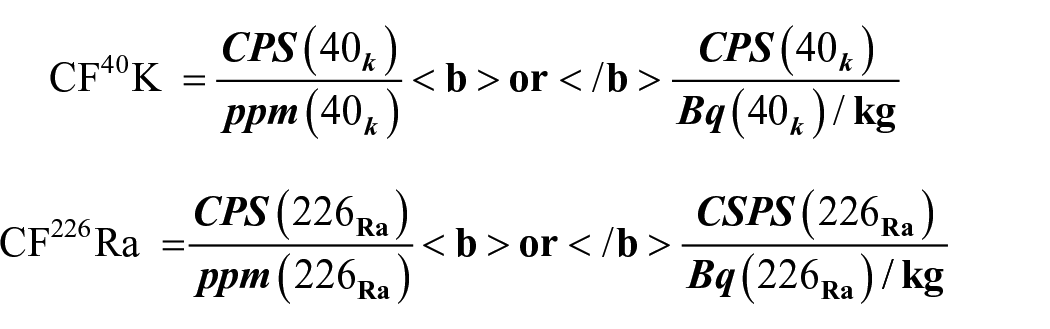
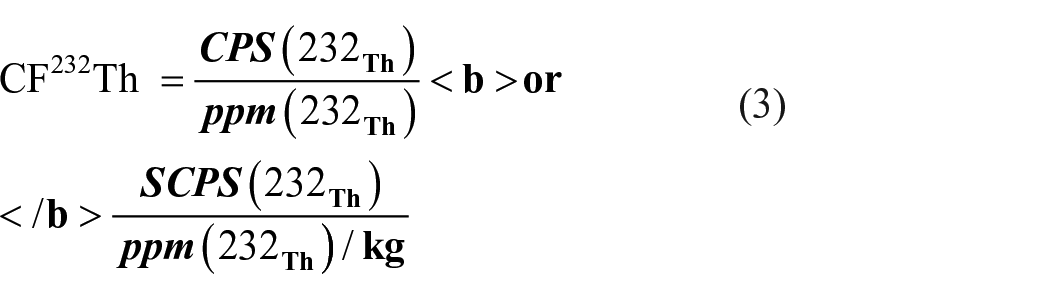
(Al-Ghamdi et al 29 )
The energy calibration values for quantitative spectral analysis are provided in Table 2.
Energy calibration for quantitative spectra analysis.

Source: Al-Ghamdi et al 29 .
Absorbed Dose Rate
When radiation from a radioactive substance is emitted, it is absorbed by surrounding materials. The United Nations Scientific Committee on the Effects of Atomic Radiation 30 provided dose conversion factors to convert the activity concentrations of 226Ra, 232Th, and 40K into dose (nGyh−1 per Bqkg−1) as 0.427, 0.662, and 0.043, respectively. Using these factors, the total absorbed dose rate in air is calculated as given in the equation (4). 30

Where CRa, CTh, and CK are the activity concentrations (Bqkg−1) of radium, thorium, and potassium, respectively in the samples.
Effective Dose Rate
The annual effective dose rate is estimated using the conversion coefficient from absorbed dose to effective dose (0.7 SvGy−1) and an outdoor occupancy factor of 0.2.30 -32 The effective dose rate, measured in mSvy−1, is calculated as follows:

External Hazard Index (Hex)
Exposure to radiation from 226Ra, 232Th, and 40K can pose an external hazard. This external hazard index (Hex), is calculated using equation (6)18,25:

Where CRa, CTh, and CK are the activity concentrations (Bqkg−1) of radium, thorium, and potassium, respectively as obtained in the analyzed samples. For the radiation level to be considered safe for the public, this external index should be less than1 mSvy−1.
Internal Hazard Index (Hin)
The internal hazard index (Hin) gives the internal exposure to carcinogenic radon and is given by equation (7),25,33:

The value of this index should be less than 1 mSvy−1 in order for the radiation hazard to have negligible hazardous effects to the respiratory organs of the public.25,34
Results
Gamma Ray Emitting Radionuclides Detected in Water Samples
In the detection of gamma ray emitting radionuclides, the prominent photo peak counts were identified and their experimental energies determined. The radionuclides of 226Ra, 232Th, and 40K were detected in all the 3 divisions.
Activity Concentrations of Radionuclides in the Water Samples
The values of activity concentrations of 226Ra, 232Th, and 40K from borehole water samples in the 3 divisions, Ayivu East, Ayivu West, and Arua City Central are shown in Table 3. The activity concentrations in each division were plotted in bar graph to show how the concentrations were varying from one borehole to another. The radiological parameters were also compared to show their variation across divisions. The values of activity concentrations of 226Ra, 232Th, and 40K that are the daughter and parent gamma ray emitting radionuclides were compared with the world average values of 35 Bql−1, 30 Bql−1, and 400 Bql−1 for 226Ra, 232Th, and 40K, respectively. 35
Activity concentrations of the 3 radionuclides in water from the 3 divisions.

Abbreviations: BH, boreholes; A, Ayivu East; B, Ayivu West; C, Arua City Central.
The activity concentrations of the radionuclides were found to vary from one division to another.
The activity concentrations of 226Ra in Ayivu East were found to vary from one borehole to another. The variation in the activity concentration of 226Ra in the Ayivu East was plotted in bar graph as shown in Figure 3.
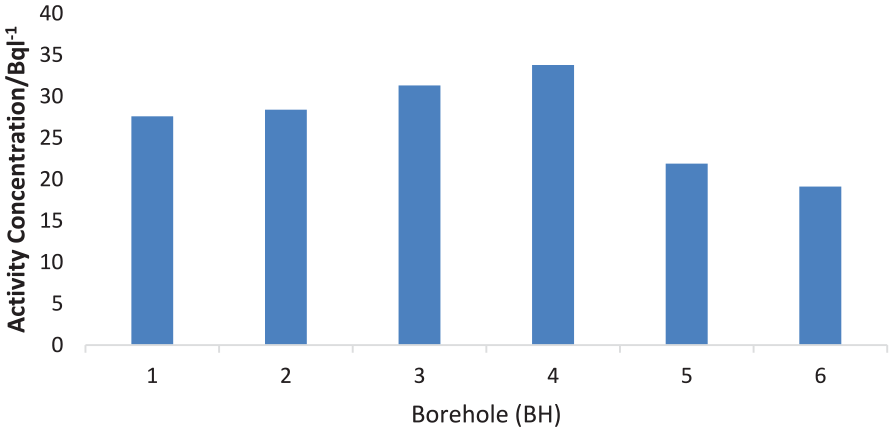
Bar graph of activity concentrations of 226Ra in Ayivu East water samples.
The activity concentrations of 226Ra in Ayivu East ranged from 19.11 Bql−1 to 33.79 Bql−1. The concentrations of 226Ra in water samples obtained from Ayivu East were below the world average value of 35 Bql−1.
The activity concentrations of 232Th in Ayivu East was found to vary from one borehole to another and its variation was plotted in form of a bar graph shown in Figure 4.
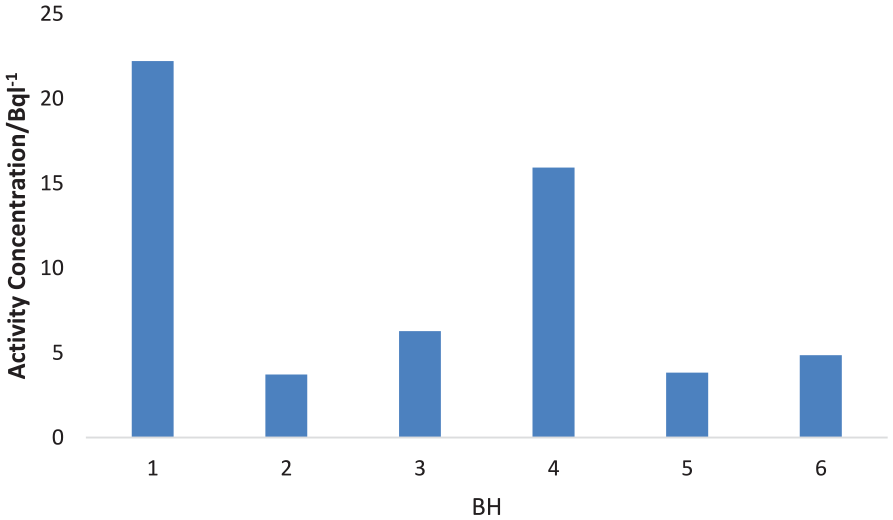
Bar graph of activity concentrations of 232Th in Ayivu East water samples.
The activity concentration of 232Th was found to range from 3.83 Bql−1 to 22.21 Bql−1. The activity concentrations of 232Th from boreholes in Ayivu East were compared with the world average activity concentration of 30 Bql−1. It was found out that water samples from all selected boreholes in this region were below the world average value. It was noted that boreholes 1 and 4 located at Barifa Stadium and Ombokoro had the highest activity concentrations compared to the other 4 boreholes although it was below the world average value. The boreholes 1 and 4 are located on the slopes of Arua hill while the other boreholes were on the flat land. The slopes of Arua hill had more dissolved compounds of 232Th in underground water.
The activity concentrations of 40K in Ayivu East was detected in only 2 boreholes while the other boreholes were below detectable limits. In borehole 1 located at Barifa Stadium, the activity concentration of 40K was found to be 1870.00 Bql−1 while in borehole 4 located at Ombokoro the activity concentration determined was found to be 1510.00 Bql−1. The activity concentrations were above the world average value of 400 Bql−1.
The activity concentrations of 40K in Ayivu East were found to vary from one borehole to another and its variation was plotted in bar graph shown in Figure 5.

Bar graph of activity concentrations of 40K in Ayivu East water samples.
The concentration of 226Ra in Ayivu West was found to vary from one borehole to another. The variation in the activity concentration of 226Ra in Ayivu West was plotted in bar graph shown in Figure 6.
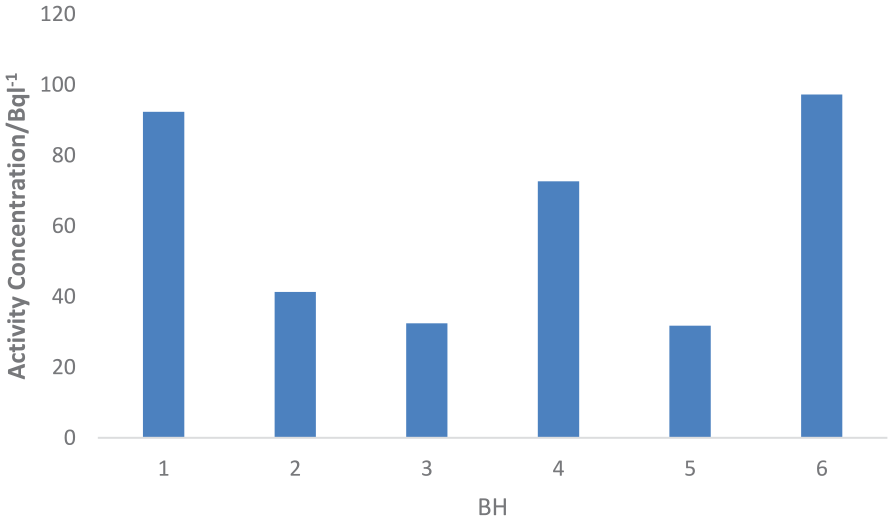
Bar graph of activity concentrations of 226Ra in Ayivu West water samples.
The activity concentrations of 226Ra in Ayivu West ranged from 31.72 Bql−1 to 97.19 Bql−1. It was found out that the activity concentrations of 226Ra in boreholes 1, 2, 4, and 6 located at Onduparaka County HQS, Onialeku, Aroi and Nile University exceeded the world average value. These boreholes were located on the slopes of Arua hill where rocks had high accumulation of radioactive minerals. The activity concentration of 226Ra was found to be higher in borehole 6 and 1 located at Nile University and Onduparaka County HQS.
The activity concentrations of 232Th in Ayivu West were found to vary from one borehole to another. The variation in the activity concentration of 232Th in Ayivu West was plotted in bar graph as shown in Figure 7.
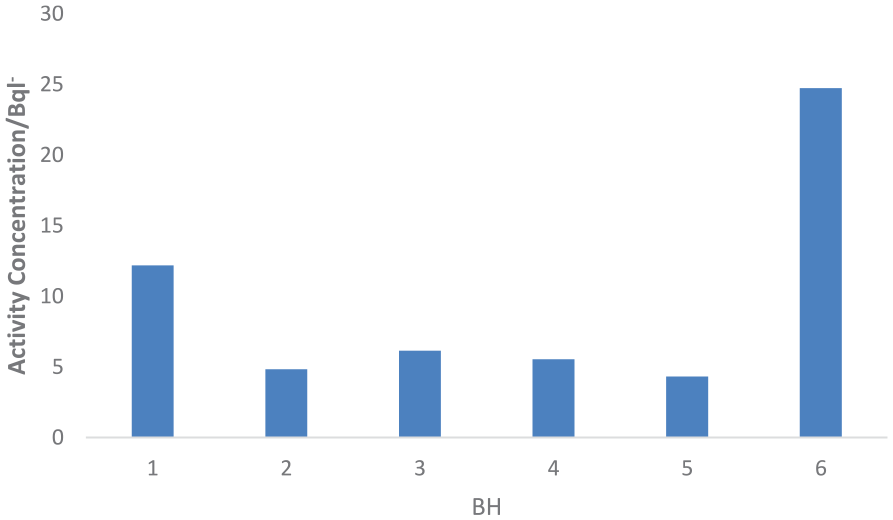
Bar graph of activity concentrations of 232Th in Ayivu West water samples.
The activity concentration of 232Th in Ayivu West was found to range from 4.32 Bql−1 to 24.73 Bql−1. All the boreholes selected in the region did not exceed the world average value of 30 Bql−1. Although the activity concentration of 232Th in Ayivu West was found to be lower than the world average value, the highest activity concentration was found in borehole 6 located at Nile University. This implies that the soils and rocks around Nile University were rich in 232Th that had dissolved in water.
The activity concentrations of 40K in Ayivu West were found to vary from one borehole to another. It was found that 40K was detected in only 3 boreholes while the other 3 boreholes were at low detectable limits. The variation in the activity concentration of 40K in the region was plotted in bar graph shown in Figure 8.

Bar graph of activity concentrations of 40K in Ayivu West water samples.
The activity concentrations of 40K in Ayivu West were found to range from 1210.00 Bql−1 to 4360.00 Bql−1. The boreholes 2, 3, and 4 located at Onialeku, Surusoni and Aroi where 40K was detected exceeded the world average activity concentration of 400 Bql−1. These boreholes were located on the slopes of the Arua hill where rocks had high accumulation of radioactive minerals. Although the activity concentration of 40K exceeded the world average value, it was found to be highest in borehole 3 located at Surusoni.
The concentration of 226Ra in Arua City Central was found to vary from one borehole to another. The bar graph was used to compare the activity concentration of 226Ra in Arua City Central as shown in Figure 9.

Bar graph of activity concentrations of 226Ra in Arua City Central water samples.
The activity concentrations of 226Ra in water samples from Arua City Central ranged from 41.82 Bql−1 to 92.62 Bql−1. The activity concentrations of 226Ra in all selected boreholes were found to exceed the world average value of 35 Bql−1. Although the activity concentration of 226Ra exceeded the world average value, it was found to be higher in boreholes 2, 4, and 5 located at Ociba Primary School, Congo Zone, and Muni NTC respectively compared to other boreholes. These boreholes were located on flat low land even though their activity concentrations were high compared to the other borehole water samples. The rock geology in the area had high accumulation of radioactive minerals.
The activity concentrations of 232Th in Arua City Central were also found to vary from one borehole to another. The variation in the activity concentration of 232Th in Arua City Central was plotted in bar graph shown in Figure 10.

Bar graph of activity concentrations of 232Th in Arua City Central water samples.
The activity concentration of 232Th was found to range from 2.79 Bql−1 to 24.36 Bql−1. The activity concentration of 232Th in all boreholes in the region did not exceed the world average value of 30 Bql−1. Although the activity concentration of 232Th in Arua City Central was found not to exceed the world average value, the highest activity concentration was found in borehole 4 located at Congo Zone.
The activity concentrations of 40K in Arua City Central was found to vary from one borehole to another. It was found that 40K was detected in only 4 boreholes, 2 boreholes were at low detectable limits. The variation in the activity concentration of 40K in the region was plotted in bar graph shown in Figure 11.

Bar graph of activity concentrations of 40K in Arua City Central water samples.
The activity concentrations of 40K in Arua City Central were found to range from 2850.00 Bql−1 to 3850.00 Bql−1. The boreholes 1, 2, 3, and 4 located at Arua public primary school, Ociba Primary School, Osu, and Congo Zone where 40K was detected in Arua City Central exceeded the world average activity concentration of 400 Bql−1. Although the activity concentration of 40K detected in the boreholes exceeded the world average value, it was found to be highest in borehole 2 located at Ociba Primary School. However 40K was not detected in the 2 boreholes 5 and 6 from Muni NTC and Arua hill primary school respectively.
The average activity concentration of 226Ra was found to be different across the 3 divisions. The variation of the average activity concentration across the divisions was plotted in bar graph as in Figure 12.

Bar graph of average activity concentration of 226Ra in the 4 divisions.
The results of the study found out that the average activity concentration of 226Ra was high in Arua City Central compared to the other 3 divisions. This could be due to the fact that the rocks in Arua City Central had high accumulation of compounds of 226Ra that had dissolved in underground water.
The average activity concentration of 232Th was also found to be different across the 3 divisions. The variation of the average activity concentration across the divisions was plotted bar graph as in Figure 13.

Bar graph of average activity concentration of 232Th in the 3 divisions.
The average activity concentration of 232Th was found to be high in Arua City Central compared to the other 3 divisions. This could be due to the fact that the rocks in Arua City Central had high accumulation of compounds of 232Th that had dissolved in underground water.
The average activity concentration of 40K was also found to be different across the 3 divisions. The variation of the average activity concentration across the divisions was plotted in bar graph as in Figure 14.

Bar graph of average activity concentration of 40K in the 3 divisions.
The average activity concentration of 40K was also found to be high in Arua City Central compared to the other 3 divisions. This could be due to the fact that the rocks in Arua City Central had high accumulation of compounds of 40K that had dissolved in underground water.
ANOVA and Tukey’s HSD Test for the Activity Concentration
Table 4 shows the ANOVA results for the activity concentrations of the 3 radionuclides across the 3 divisions.
ANOVA for the activity concentration.

Explanation:
• Between Groups: Variation due to the differences between divisions.
• Within Groups: Variation within each division.
• Total: Total variation in activity concentrations.
• F: The test statistic from the ANOVA analysis.
• Sig. (P-value): Determines if the differences are statistically significant.
Given that the ANOVA result for Radium-226 (226Ra) showed a statistically significant difference across the divisions (P-value < .05), we can proceed with a post-hoc test (Tukey’s HSD) to determine which specific pairs of groups (divisions) differ. Table 5 shows the Tukey’s HSD Test for 226Ra.
Tukey’s HSD Test for 226Ra.

From these results, we conclude that 226Ra concentrations differ significantly between Ayivu East and the other 2 divisions, but there is no significant difference between Ayivu West and Arua City Central.
Gamma Ray Absorbed Dose Rates
The absorbed dose rates from the gamma ray emitting radionuclides in the water from different boreholes in the 3 divisions are shown in Table 6. The absorbed dose rates in each of the boreholes obtained in the study from the 3 divisions of Arua city were compared with the world wide average value of 57 nGyh−1 . 36
Absorbed dose rates by gamma rays from water samples in the 3 divisions.

The absorbed dose rate was found to vary from one borehole to another. The average absorbed dose rate was also found to vary from one division to another. The absorbed dose rates determined in Ayivu East were found to vary from one borehole to another. The variation in the absorbed dose rates in Ayivu East was compared using a column bar chart shown in Figure 15.
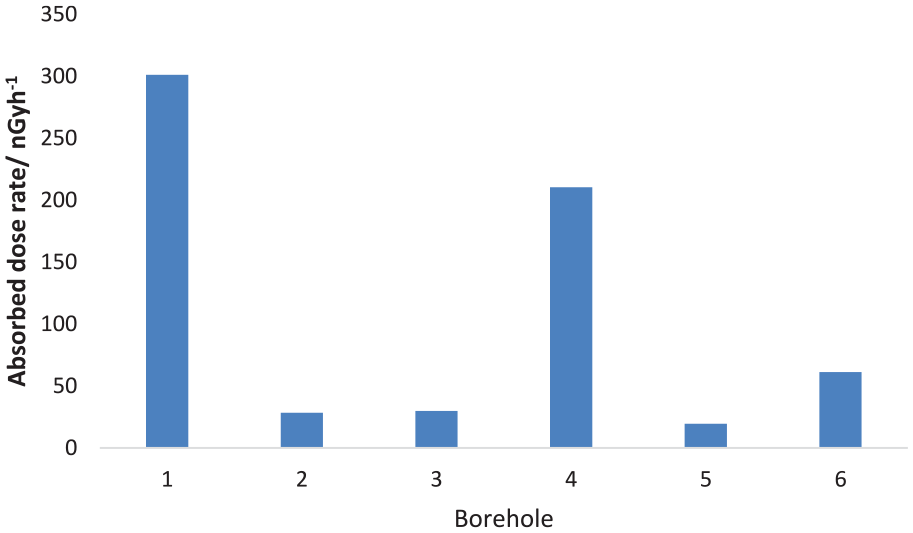
Bar graph of absorbed dose rates by gamma rays in Ayivu East.
The absorbed dose rates determined in Ayivu East ranged from 19.53 to 301.10 nGyh−1. The absorbed dose rates were found to exceed the world average value of 57 nGyh−1 in boreholes 1 and 4 located at Barifa Stadium and Ombokoro respectively. This was due to the high activity concentration of the 3 radionuclides of 226Ra, 232Th, and 40k in the water samples obtained from Ayivu East.
The absorbed dose rates in Ayivu West was also found to vary from one borehole to another and its variation was also compared using a column bar chart shown in Figure 16.

Bar graph of absorbed dose rates by gamma rays in Ayivu West.
The absorbed dose rates that were determined in Ayivu West ranged from 29.61 to 265.58 nGyh−1. The absorbed dose rates were found to exceed the world average value of 57 nGyh−1 except in boreholes 5 at Ragem Primary School.
This was due to the variation in the activity concentration of the 3 radionuclides of 226Ra, 232Th, and 40k in the water samples. However, the absorbed dose rate in Ayivu West was found to be high in borehole 3 located at Surusoni. The rocks found around Surusoni had high accumulation of radioactive minerals. The water samples from boreholes that did not show presence of 40K had low absorbed dose rates.
The absorbed dose rate in Arua City Central was also found to vary from one borehole to another and its variation was compared using a bar graph as shown in Figure 17.

Bar graph of absorbed dose rates by gamma rays in Arua City Central.
The absorbed dose rates that were determined in Arua City Central ranged from 83.65 to 497.27 nGyh−1. The absorbed dose rates were found to exceed the world average value of 57 nGyh−1except in boreholes 6 located at Arua Hill Primary School. However, the highest absorbed dose rate in the region was found in borehole 4 located at Congo Zone.
The average absorbed dose rates were found to be different across the 3 divisions. The variation of the average absorbed dose rate across the divisions was plotted in form of a bar graph as in Figure 18.

Bar graph of average absorbed dose rate in the 3 divisions.
The average absorbed dose rate was found to be high in Arua City Central compared to the other 3 divisions. This could be due to the high activity concentration of the 3 radionuclides in this region. The high activity concentrations are as a result of high accumulation of dissolved radioactive minerals in underground water.
Annual Effective Dose Equivalent by the Gamma Rays
The annual effective dose equivalent determined in each borehole was compared with the world wide internal exposure limit of 0.41 mSvy−1. 30 The Annual effective dose equivalent by gamma rays in each borehole are shown in Table 7.
Annual effective dose equivalent by gamma rays.

The annual effective dose equivalent by gamma rays in water samples in all the 3 divisions were found to vary from one borehole to another. The average annual effective dose equivalent also varied from one region to another. The values of annual effective dose equivalent were found to be below the world wide internal exposure limit of 0.41 mSvy−1 in all the boreholes.
The average annual effective dose equivalent was found to be different across the 3 divisions. The variation of the average annual effective dose equivalent across the 3 divisions was plotted in a bar graph as in Figure 19.

Bar graph of average annual effective dose equivalent.
The average annual effective dose equivalent was found to be high in Arua City Central compared to the other 3 divisions.
Radiological Hazard Levels by Gamma Rays in Water Samples
Internal Radiological Hazard Levels by Gamma Rays in Water Samples
The internal hazard level by gamma rays from radionuclides in each of the water samples from boreholes in the 3 divisions were determined and shown in Table 8.
The Internal hazard levels by gamma rays in the 3 divisions.

The internal hazard level obtained in Ayivu East ranged from 0.13 to 0.86. The internal hazard levels varied from one borehole to another. The average internal hazard levels were also found to vary from one region to another. The variation of internal hazard levels in Ayivu East was plotted in form of a column chart shown in Figure 20.

Bar graph of variation of internal hazard level by gamma rays in Ayivu East.
The internal hazard levels determined in Ayivu East were found to be below the maximum permissible value of unity as per the ICRP recommendations.
Although the internal radiological hazard levels obtained from each borehole was found to be below unity, the highest value was obtained in borehole 1 located at Barifa Stadium compared to other boreholes.
In Ayivu West values varied from 0.18 to 1.02. The variation in the internal hazard level determined for each borehole was plotted in form of a bar graph as shown in Figure 21.
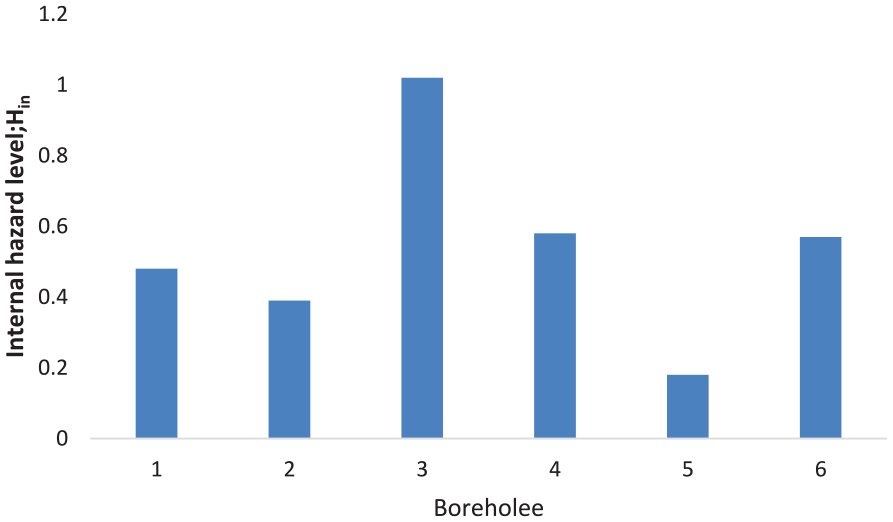
Bar graph of variation of internal hazard level by gamma rays in Ayivu West.
The internal hazard levels determined in Ayivu West were found to be below unity except in borehole 3 located at Surusoni that exceeded unity by 0.02.
Internal hazard levels in Arua City Central varied from 0.39 to 1.21 and its variation was plotted in form of a bar graph as shown in Figure 22.
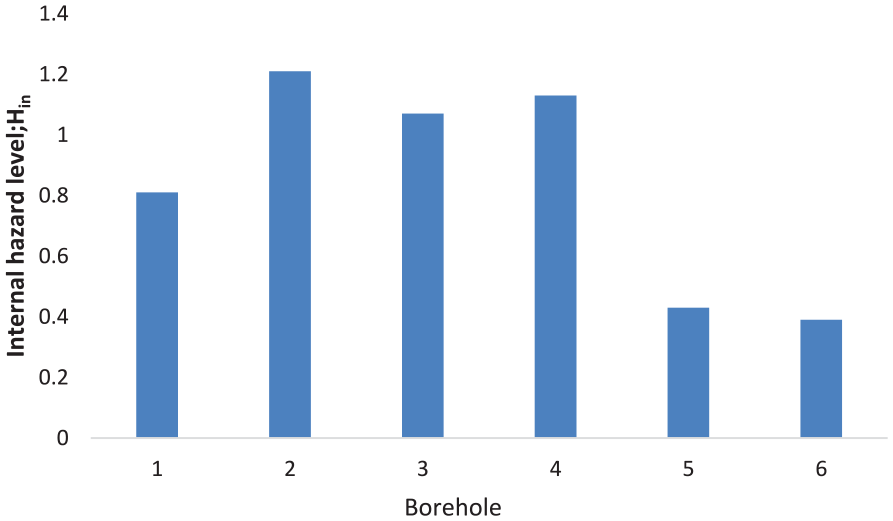
Bar graph of variation of internal hazard level by gamma rays in Arua City Central.
The internal radiological hazard levels were found to be above unity the maximum permissible value according to the ICRP recommendations in boreholes 2, 3, and 4 located at Ociba Primary School, Osu and Congo Zone. This means that the water samples from Ociba Primary School, Osu and Congo Zone are not radiologically safe for human consumption.
The average internal hazard level was found to be different across the 3 divisions. The variation of the average internal hazard level across the 3 divisions was plotted in form of a bar graph as in Figure 23.

Bar graph of the average internal hazard level in the 3 divisions.
The average internal hazard level was found to be high in Arua City Central compared to the other 3 divisions. This could be due to the high activity concentration of the radionuclides of 226Ra, 232Th, and 40K in this region. The high activity concentrations are as a result of high accumulation of dissolved radioactive minerals in underground water.
External Radiological Hazard Levels by Gamma Rays in Water Samples
The external hazard levels by gamma rays determined from radionuclides detected in the water samples from each borehole in the 3 divisions are shown in Table 9.
External hazard levels by gamma rays in the 3 divisions.
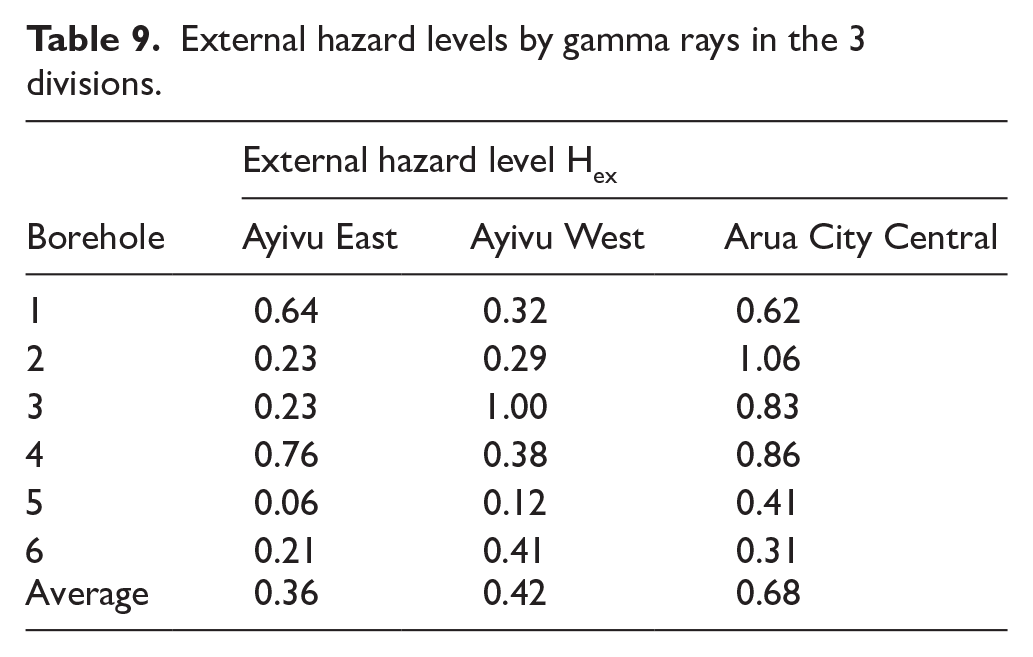
The external hazard level obtained in Ayivu East for each borehole ranged from 0.06 to 0.76. The variation of the external hazard level determined for each borehole was plotted in form of a bar graph as shown in Figure 24.

Bar graph of variation of external hazard level by gamma rays in Ayivu East.
The external radiological hazard levels obtained for each borehole was found to be below the maximum permissible value of unity according to the recommendations of the ICRP.
However high hazard levels were obtained from boreholes 4 and 1 located at Ombokoro and Barifa Stadiums as compared to other boreholes.
In AyivuWest external hazard levels varied from 0.12 to 1.00. The variation of the external hazard level determined for each borehole was carried out using a column chart shown in Figure 25.

Bar graph of variation of external hazard level by gamma rays in Ayivu West.
The external radiological hazard levels obtained for each borehole did not exceed the maximum permissible value of unity according to the recommendations of the ICRP.
External hazard levels obtained from each borehole in Arua City Central was found to vary from 0.31 to 1.06. The variation of the internal hazard levels was plotted as a column bar chart shown in Figure 26

Bar graph of variation of external hazard level by gamma rays in Arua City Central.
The external radiological hazard levels obtained for each borehole as in Figure 26 was found to be below unity the maximum permissible value according to the recommendations of the ICRP except in borehole 2 located at Ociba Primary School that exceeded unity by 0.06. This means that the water from Ociba Primary School obtained for the study in Arua City Central was not radiologically safe for human consumption.
The average external hazard level was found to be different across the 3 divisions. The variation of the average external hazard level across the 3 divisions was plotted in form of a bar graph as in Figure 27.

Bar graph of the average external hazard level in the 3 divisions.
The average external hazard level was found to be high in Arua City Central compared to the other 2 divisions.
Discussion
The current study analyzed the concentrations of gamma-ray-emitting radionuclides, including 226Ra, 232Th, and 40K, in borehole water samples from 3 divisions in Arua City: Ayivu East, Ayivu West, and Arua City Central. The findings reveal variability in the activity concentrations of these radionuclides, influenced by local geological characteristics. The activity concentrations of 226Ra in this study were found to exceed the world average value of 35 Bq/L in multiple boreholes across all 3 divisions, especially in those located on the slopes of Arua Hill. This finding aligns with previous research conducted in regions with similar geological settings. For example, a study by Faweya et al 37 in southwestern Nigeria reported high concentrations of 226Ra in groundwater sourced from areas with granite and pegmatite rocks, attributing the elevated levels to the dissolution of radium from mineral-rich rocks . Similarly, Abu-Sharar et al 38 observed higher radium concentrations in groundwater from central Jordan due to the presence of phosphate deposits. These findings support the conclusion that elevated 226Ra levels in Arua City are likely due to the dissolution of radium from uranium-bearing rocks, particularly in areas with high geological activity such as the slopes of Arua Hill.
However, our findings contrast with studies from regions with less geological activity or different rock compositions. For instance, Chowdhury et al 39 reported lower 226Ra concentrations in groundwater from Bangladesh, where the geology is predominantly alluvial and lacks significant mineral deposits containing radium. This discrepancy underscores the influence of local geology on radionuclide concentrations in groundwater.
The concentrations of 232Th in borehole water were below the worldwide average value of 30 Bq/L across all 3 divisions. This result is consistent with studies conducted in regions with similar soil compositions and mineralogy. For example, Arunima et al 40 found that 232Th levels in groundwater from southern India were below international limits, explaining the lower concentrations by the limited solubility of thorium in water and its tendency to remain bound to soil particles rather than dissolve into the groundwater. The lower 232Th concentrations compared to 226Ra observed in this study align with existing literature indicating that thorium compounds are less soluble in groundwater due to their strong tendency to form insoluble hydroxides and adsorb onto soil and rock surfaces. Charles 30 also reported similar findings, highlighting that thorium is less mobile in the environment compared to radium, leading to lower concentrations in water sources.
The concentration of 40K exceeded the worldwide average value of 400 Bq/L in all divisions. This high level of 40K is similar to findings from studies in other regions with potassium-rich geology. For instance, Alali 41 observed elevated 40K levels in groundwater from Saudi Arabia, attributing this to the presence of potassium-bearing minerals like feldspar and mica in the local rock formations. Similarly, Bineng et al 42 found high concentrations of 40K in borehole water in Cameroon, associated with granitic rock formations rich in potassium minerals.
The widespread occurrence of elevated 40K concentrations in Arua City’s borehole water suggests a significant presence of potassium-bearing rocks in the region. This aligns with geological assessments that identify the prevalence of granitic rocks and other potassium-rich minerals in northern Uganda, contributing to the higher 40K activity levels observed in the study area.
The absorbed dose rates from gamma radiation in borehole water samples were found to vary across the divisions, with several boreholes exceeding the world population mean absorbed dose rate of 57 nGy/h. This is consistent with findings from Oyero 43 , who reported elevated absorbed dose rates in groundwater from mining regions in Nigeria due to high concentrations of 226Ra and 40K. The similar trends observed in Arua City suggest that local geological factors, including the mineral composition of rocks, significantly influence the radiological hazard levels in groundwater.
The annual effective dose equivalent in all borehole water samples from Arua City remained below the international exposure limit of 0.41 mSv/y, indicating minimal immediate radiological health risks to the population. This observation is in line with findings by Khaled et al 44 , who measured 222Rn concentrations in drinking water samples from Qena City, Egypt. Their study reported annual effective doses rate below the recommended safety limits set by international guidelines. Despite some elevated radon levels, the effective doses remained low due to factors such as water consumption rates and natural dilution processes.
The internal and external hazard indices for most boreholes in this study were below unity, suggesting limited long-term radiological hazards. However, exceptions were identified in specific locations such as Surusoni and Ociba Primary School, where the internal hazard index exceeded unity, indicating a potential health concern for prolonged exposure. Similar outcomes were reported by Lolila and Mazunga 45 in their assessment of soils around the Manyoni uranium deposit in Tanzania. Their study found hazard index values greater than 1 in several samples, which they attributed to elevated concentrations of naturally occurring radionuclides, particularly due to uranium-rich geological formations. This supports the hypothesis that underlying geology significantly influences radiological risk in groundwater sources.
Limitations
This study on radionuclide concentrations in borehole water from Arua City, Northern Uganda, faced several limitations that may have influenced the findings:
Conclusion
This study investigated the concentrations of gamma-ray-emitting radionuclides, including 226Ra, 232Th, and 40K, in borehole water samples from Ayivu East, Ayivu West, and Arua City Central in Arua City, Northern Uganda. The results indicate significant variability in radionuclide activity concentrations across the study area, influenced by local geological characteristics. The activity concentrations of 226Ra exceeded the worldwide average value of 35 Bq/L in several boreholes, particularly those located on the slopes of Arua Hill. This suggests that the local geology, rich in uranium-bearing minerals, is a significant source of radium in groundwater. The statistical analysis confirmed that 226Ra showed significant variation across the different divisions, highlighting localized sources of radium contamination.
The activity concentrations of 232Th were below the global average of 30 Bq/L in all boreholes. This outcome aligns with existing literature indicating that thorium has lower solubility and mobility in groundwater compared to radium, reducing its presence in water samples despite its potential occurrence in local rock formations. High concentrations of 40K were detected in borehole water across all divisions, exceeding the worldwide average of 400 Bq/L. This is likely due to the prevalence of potassium-rich minerals such as feldspar in the region’s geological formations.
The internal and external radiological hazard indices were below unity for most boreholes, indicating minimal radiological health risk from consuming the borehole water. However, a few boreholes, notably those located at Surusoni and Ociba Primary School, exhibited hazard indices around or slightly above unity, suggesting potential health risks due to higher radionuclide activity concentrations. The annual effective dose equivalent for all boreholes was below the international safety limit of 0.41 mSv/y for drinking water, indicating that the current radionuclide levels are unlikely to pose significant health risks under typical consumption scenarios. Nonetheless, specific boreholes with elevated hazard indices may require monitoring and possible mitigation measures to ensure public safety.
In conclusion, while the majority of the boreholes in Arua City appear to meet international safety standards for radionuclide concentrations in drinking water, the identification of specific high-risk boreholes indicates the need for targeted intervention to protect public health.
Recommendations
Based on the findings of this study, the following recommendations are proposed to address the radiological risks associated with the presence of radionuclides in borehole water from Arua City:
Footnotes

Author’ Contributions
Conceptualization, A.U., J.C.; methodology, A.U., J.C.; investigation, A.U., J.C.; supervision, A.U., L.O., A.O.O.; writing—original draft preparation, A.U., J.C., L.O., A.O.O.; writing—review and editing, A.U., J.C., L.O., A.O.O.; visualization, A.U., J.C., L.O., A.O.O.
Funding
The author(s) received no financial support for the research, authorship, and/or publication of this article.
Declaration of Conflicting Interests
The author(s) declared no potential conflicts of interest with respect to the research, authorship, and/or publication of this article.
Data Availability Statement
The datasets generated during and/or analyzed during the current study are available from the corresponding author upon reasonable request.