



Abstract
Background:
Long-lasting insecticide-treated bed nets (LLITNs) are a key malaria prevention method, but their consistent use in Ethiopia, particularly among rural mothers, remains challenging. Information on LLITN usage among pregnant women in resource-limited settings is especially scarce. This study investigated LLITN utilization and the factors influencing its use among pregnant women in the Gechi district, Southwest Ethiopia, in 2024.
Methods:
A community-based cross-sectional study was conducted from June to July 2024, including 422 randomly selected pregnant women. Data collection employed a pretested questionnaire, and logistic regression analysis was utilized to identify factors influencing LLITN usage. Variables with a P-value < .25 in univariable analysis were incorporated into the multivariable logistic regression model. Adjusted odds ratios (AORs) with 95% confidence intervals (CIs) were computed, and statistical significance was set at P ⩽ .05. The model’s performance was assessed using the Hosmer-Lemeshow goodness-of-fit test.
Results:
The finding of this study revealed that 93.9% of the respondents had LLITN, and the current utilization status of pregnant women was 46.5% [41.7%-51.3%]. The low level of utilization was significantly associated with women’ education, parity, antenatal care (ANC) attendance, and family size. Accordingly, women without formal education were 52% less likely [AOR: 0.48, 95% CI: 0.28-0.81]; those with primipara were 1.98 times more likely [AOR: 1.98, 95% CI: 1.30-3.03]; a family size of less than 5 was 2.53 times [AOR: 2.53, 95% CI: 1.61-3.87] more likely, and women who attended at least 1 ANC visit were 2.08 times more likely [AOR: 2.08, 95% CI: 1.21-2.58] to use LLITN.
Conclusion:
The pregnant women’s LITN utilization in settings was low, associated with women’s education, parity, antenatal care attendance, and family size. Key players should focus on awareness creation and ANC follow-up to reduce illness during pregnancy, particularly in rural, hard-to-reach settings.
Plain Language Summary
Insecticide-treated bed nets (ITNs) are a key malaria prevention method, but their consistent use in Ethiopia, particularly among rural mothers, remains challenging. Information on ITN usage among pregnant women in resource-limited settings is especially scarce. This study investigated ITN utilization and the factors influencing its use among pregnant women (PW) in the Gechi district, Southwest Ethiopia, in 2024. A community-based cross-sectional study was conducted from June to July 2024, including 422 randomly selected PW. Data collection employed a pretested questionnaire, and logistic regression analysis was utilized to identify factors influencing insecticide-treated net (ITN) usage. Variables with a p-value < 0.25 in univariable analysis were incorporated into the multivariate logistic regression model. Adjusted odds ratios (AORs) with 95% confidence intervals (CIs) were computed, and statistical significance was set at p ⩽ 0.05. The model’s performance was assessed using the Hosmer-Lemeshow goodness-of-fit test. The finding of this study revealed that 93.9% of the respondents had ITN, and the current utilization status of PW was 46.5% [41.7%-51.3%]. The low level of utilization was significantly associated with women’ education, parity, antenatal care (ANC) attendance, and family size. Accordingly, women without formal education were 52% less likely [AOR: 0.48, 95% CI: 0.28-0.81]; those with primipara were 1.98 times more likely [AOR: 1.98, 95% CI: 1.30-3.03]; a family size of less than five was 2.53 times [AOR: 2.53, 95% CI: 1.61-3.87] more likely, and women who attended at least one ANC visit were 2.08 times more likely [AOR: 2.08, 95% CI: 1.21-2.58] to use ITN. The pregnant women’s ITN utilization in settings was low, associated with women’s education, parity, antenatal care attendance, and family size. Key players should focus on awareness creation and ANC follow-up to reduce illness during pregnancy.
Introduction
Malaria remains one of the most significant global health challenges, disproportionately affecting tropical and sub-tropical regions, with sub-Saharan Africa bearing the highest burden.1,2 It is a parasitic disease caused by Plasmodium species, transmitted through the bites of infected female Anopheles mosquitoes. 3 Globally, malaria continues to pose severe health, social, and economic challenges. It is particularly devastating in sub-Saharan Africa, where the disease contributes to approximately 25% of all maternal deaths in endemic areas. 4 The effects of malaria extend beyond health, significantly impacting economies by reducing workforce productivity, increasing healthcare costs, and perpetuating cycles of poverty in affected communities. 5
Pregnant women are among the most vulnerable groups affected by malaria, as pregnancy suppresses immune function, making them more susceptible to infections. 6 This vulnerability is most pronounced in women during their first pregnancies and those of younger maternal age, who exhibit less acquired immunity than older, multiparous women. 7 Studies estimate that approximately 25 million pregnancies annually are at risk of malaria infection in sub-Saharan Africa alone, with dire consequences for both maternal and fetal health.8 -10
Malaria during pregnancy is associated with a range of adverse outcomes, including maternal anemia, placental malaria, intrauterine growth restriction, and increased risks of miscarriage, stillbirth, and neonatal mortality.11,12 Placental malaria, caused by the sequestration of P. falciparum-infected erythrocytes in the placenta, leads to placental insufficiency. This compromises the transfer of oxygen and nutrients to the fetus, often resulting in low birth weight (LBW) deliveries, which are a leading cause of neonatal death and long-term developmental issues. 12 Infants born with low birth weight are at higher risk of delayed social and cognitive development, neonatal sepsis, and mortality in the first year of life. 12
The burden of malaria in pregnancy is particularly high in Ethiopia, where approximately 65% of the population resides in malaria-endemic regions, and 75% of the land area is conducive to malaria transmission. 13 These alarming statistics underscore the urgent need for effective preventive strategies to protect pregnant women and their unborn children from this devastating disease. One of the most effective strategies for malaria prevention is the use of insecticide-treated bed nets (ITNs). ITNs create a physical barrier between individuals and mosquitoes while also killing mosquitoes that come into contact with the net. 14 Consistent and proper use of ITNs has been shown to reduce malaria-related deaths by approximately 20% in endemic areas 15 and lower malaria episodes by 48% to 50%. 15 For pregnant women, ITN use is particularly crucial as it significantly reduces the risk of adverse pregnancy outcomes. Studies indicate that ITN usage can reduce malaria transmission by up to 90%, miscarriages by 33%, and stillbirths by 25%.8,9,16 Recognizing the critical importance of ITNs, the World Health Organization (WHO) recommends that all pregnant women sleep under an ITN as early as possible during pregnancy, ideally before conception.17,18
Despite their proven effectiveness, the utilization of ITNs among pregnant women in sub-Saharan Africa, including Ethiopia, remains alarmingly low. Studies have identified several barriers to ITN usage, including limited access to ITNs, lack of awareness about their benefits, and sociocultural factors. 19 Educational status, occupation, rural residence, ownership of a television or radio (a proxy for health information exposure), religion, ethnicity, and family income are significant determinants of ITN utilization among pregnant women.20,21 Furthermore, misconceptions about ITN safety during pregnancy and discomfort associated with sleeping under nets contribute to low usage rates.13,22
In Ethiopia, the Federal Ministry of Health has made substantial efforts to improve ITN access, distributing large quantities of long-lasting insecticidal nets (LLINs) to address the population at risk. 23 However, this distribution effort has not fully translated into widespread ITN usage, particularly among vulnerable populations such as pregnant women. Research shows that knowledge gaps about ITN use, coupled with logistical challenges in distribution, have hindered the success of malaria prevention programs in rural and underserved areas.24 -26 In the Gechi district, more than 3000 cases were reported annually in the area, and to control the disease, more than 17,000 LLINs were distributed recently for more than 6000 households living in risk areas (unpublished report of the Gechi district health office 2024). Despite massive distribution of the nets, the level of utilization among pregnant women in the setting is limited information that enhances the prevention intervention. Therefore, this study aimed to assess the utilization and associated factors of insecticide-treated nets among PW in Gechi Woreda, which helps the policymakers and concerned bodies to emphasize the utilization of ITNs by pregnant women.
Methods and Materials
Study Area and Period
The study was conducted in Gechi Woreda, in the Oromia Region, from June 2024 to July 2024. The woreda is located in the Bunno Bedelle Zone and has 33 kebeles, with a total population of 108 133 (52 985 males and 55 147 females). In 2015, the population was 22 393 households, with an estimated 23 930 child-bearing-age women (15-49) in the woreda. The woreda has 4 governmental health centers and 8 private health institutions. The health centers are Gechi Health Center, Chara Health Center, Hurufa Health Center, and Sekecha Health Center.
Study Design and Population
The study used a community-based cross-sectional design, focusing on PW (pregnant women) in Gechi Woreda. The population consisted of randomly selected PW from selected kebeles. The study included all currently PW and households who volunteered, while exclusion criteria excluded women who were unable to respond or were absent after 2 round home visits.
Sample Size and Sampling Techniques
Sample Size
The sample size was calculated using a single population proportion formula assuming a 95% confidence interval and 51% prevalence (P) from the study conducted on Insecticide Treated Net utilization among PW in Ethiopia, 2023, and a precision of 5% between the sample and the 10% non-response rate was taken. 27
nⅰ =

The study calculated a final sample size of 422, including a 10% non-response rate. The samples for the factors related to ITN utilization were calculated using Epi Info software. Considering the factors reported from previous studies, such as maternal education 28 and ANC attendance, 29 were analyzed. For maternal education, with a 95% confidence level, 80% power, and a 1:1 ratio, the calculated sample size for maternal education was 132, while for ANC attendance it was 118. To ensure sufficient power, the largest sample size of 422 PW was selected.
Sampling Procedures
The sample size for each pregnant women were allocated proportionally to each selected kebeles and each participant were selected using simple random sampling from the sampling frame taking community health information registers as sampling frame (Figure 1).
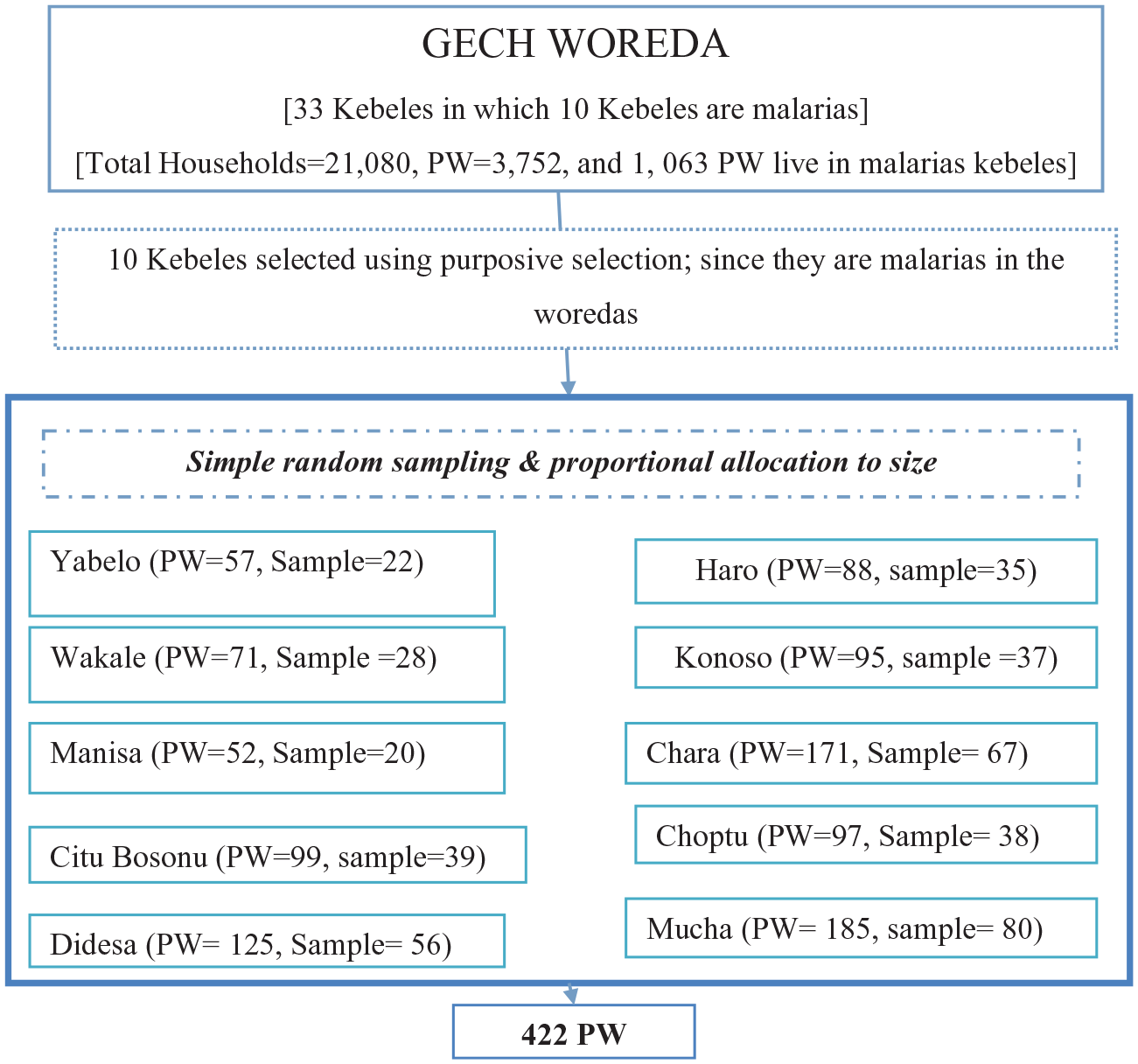
Schematic presentation of sampling procedures.
A questionnaire was developed after a thorough review of literatures.4,13,30 -32 The data collection tools contain (socio-demographic characteristics, individual factors, ITN-related factors, and obstetric-related factors). The validity and reliability of data collection tools was done on 21 of the total study participants at Borecha woredas. Based on the information, the data collection tools were modified for the final data collection. The principal investigator was chosen by 2 supervisors and 4 data collectors from Borecha Woreda with health-related backgrounds, knowledge of the languages of the community in the study area, and data collection experience. A structured questionnaire administered by an interviewer in person was used.
Study Variables
The study analyzed ITN utilization as a dependent variable, while independent variables included socio-demographic characteristics, behavioral factors, obstetric factors, and ITN-related factors such as availability, accessibility, affordability, possession of ITNs, and sleeping patterns.
Operational Definition
Data Management and Analysis
Data was collected using structured questionnaires, entered into Epi-data version 4.4.1.0, and exported to SPSS version 20 for analysis. Descriptive statistics (mean, standard deviations, and percentages) were computed to present the data and describe the study participants. The bivariable and multivariable logistic regression analyses were carried out to identify variables that are significantly associated with ITN utilization. Variables in bivariable analysis whose p-value is less than 0.25 were included in multivariable analysis, and then multivariable analyses were performed for those candidate variables in bivariable analysis to investigate independent predictors by controlling for possible confounders. A multivariable logistic regression model was used to identify factors associated with ITN utilization. Hosmer-Lemeshow’s goodness of fit test was used to assess whether the necessary assumptions for the application of multivariable logistic regression were fulfilled. Multicollinearity was assessed using standard error, and the variables were entered into the multivariate model without multicollinearity. Adjusted odds ratios (AOR) were calculated with 95% CIs, and statistical significance was declared at P ⩽ .05.
Data Quality Management
The data collection tool was developed in English and translated into Afan Oromo, ensuring consistency and accuracy. Two days of training were provided to data collectors and supervisors, covering the study’s purpose, data collection tools, procedures, interview techniques, and confidentiality. A pretest involving 5% of the total study participants was conducted at Borecha Woreda Health Center to assess the reliability and validity of the instruments, with necessary adjustments made before the final data collection.
Ethical Considerations
Ethical approval was obtained from the Institutional Review Board (IRB) of the College of Health Science, Mattu University. Subsequently, a formal letter from the Department of Public Health was submitted to the Gechi Woreda Health Office, which in turn issued similar letters to respective health centers. Written Informed consent was secured from all participants, ensuring their right to withdraw from the interview at any time and guaranteeing the confidentiality of their responses.
Results
Socio-Demographic Characteristics of Study Participants
In this study, a total of 413 PW were involved, resulting in a response rate of 97.87%. From the total participants, 90.3% of them were from rural communities, 97.7% were married, more than half (68%) of them attended primary education, 73.1% work as housewives in their role in the household, and about half (60%) of the respondents have 5 or more family members (Table 1).
Sociodemographic characteristics of study participants among PW in Gechi woreda of Buno Bedele Zone, 2024 [N = 413].

Maternal Characteristics
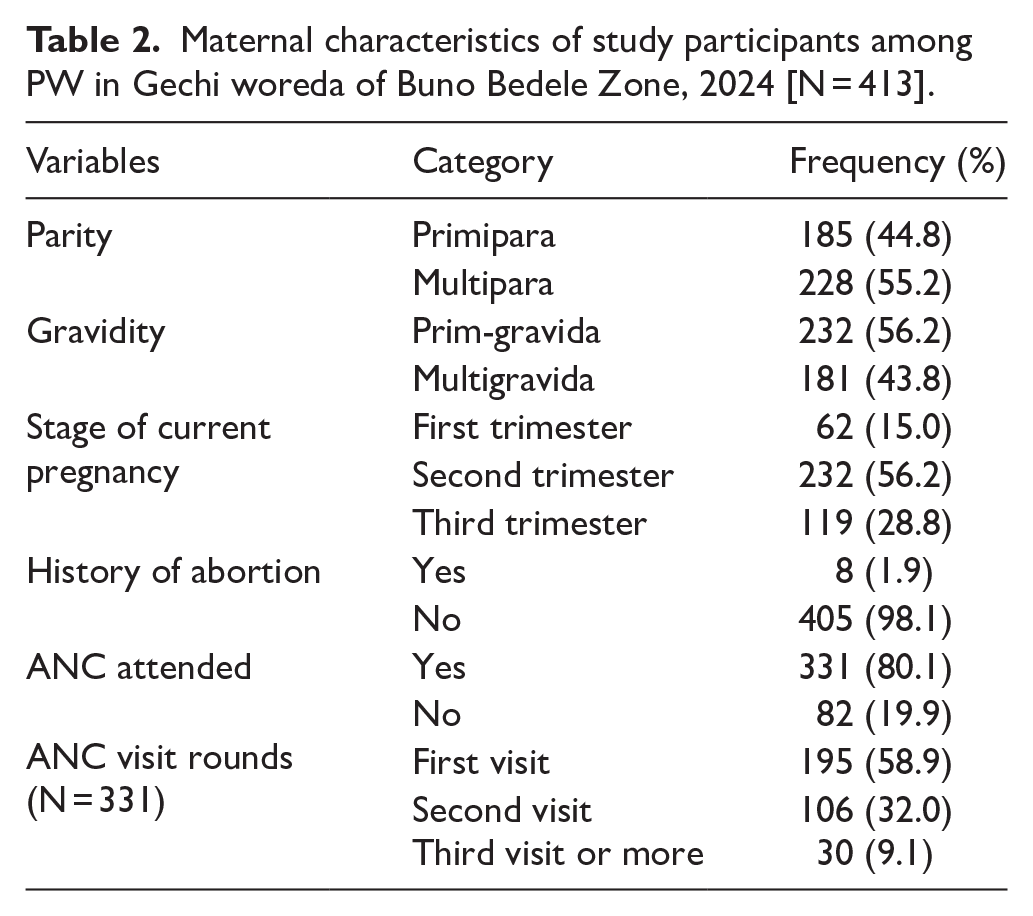
Of the total participants (413 PW), 44.8% of them were primipara, 55.2% were multipara, 56.2% were prim-gravda, 43.8% were multigravida, and about 1.9% had a history of abortion. The current prevalence is 80.1% following antenatal care (ANC), in which 58.9% visited once, 32% visited twice, and 9.1% visited 3 times or more. The stage of the current pregnancy shows that 15% were in the in the first trimester, 56.2% were in the second trimester, and 28.8% were in the in the third trimester (Table 2).
Maternal characteristics of study participants among PW in Gechi woreda of Buno Bedele Zone, 2024 [N = 413].
Attitude Towards ITN Utilization
The study participant’s attitude toward ITN utilization was assessed using 8 questions, as explained in the following table. After analysis of the total 413 participants, more than half (65.86%) of women had a positive attitude toward ITN utilization, and only 34.14% reported having a negative attitude toward ITN utilization (Table 3).
The study participant’s attitude toward ITN utilization among PW in the Gechi District of Buno Bedele, 2024 [N = 413].

Knowledge of PW on Malaria and ITN
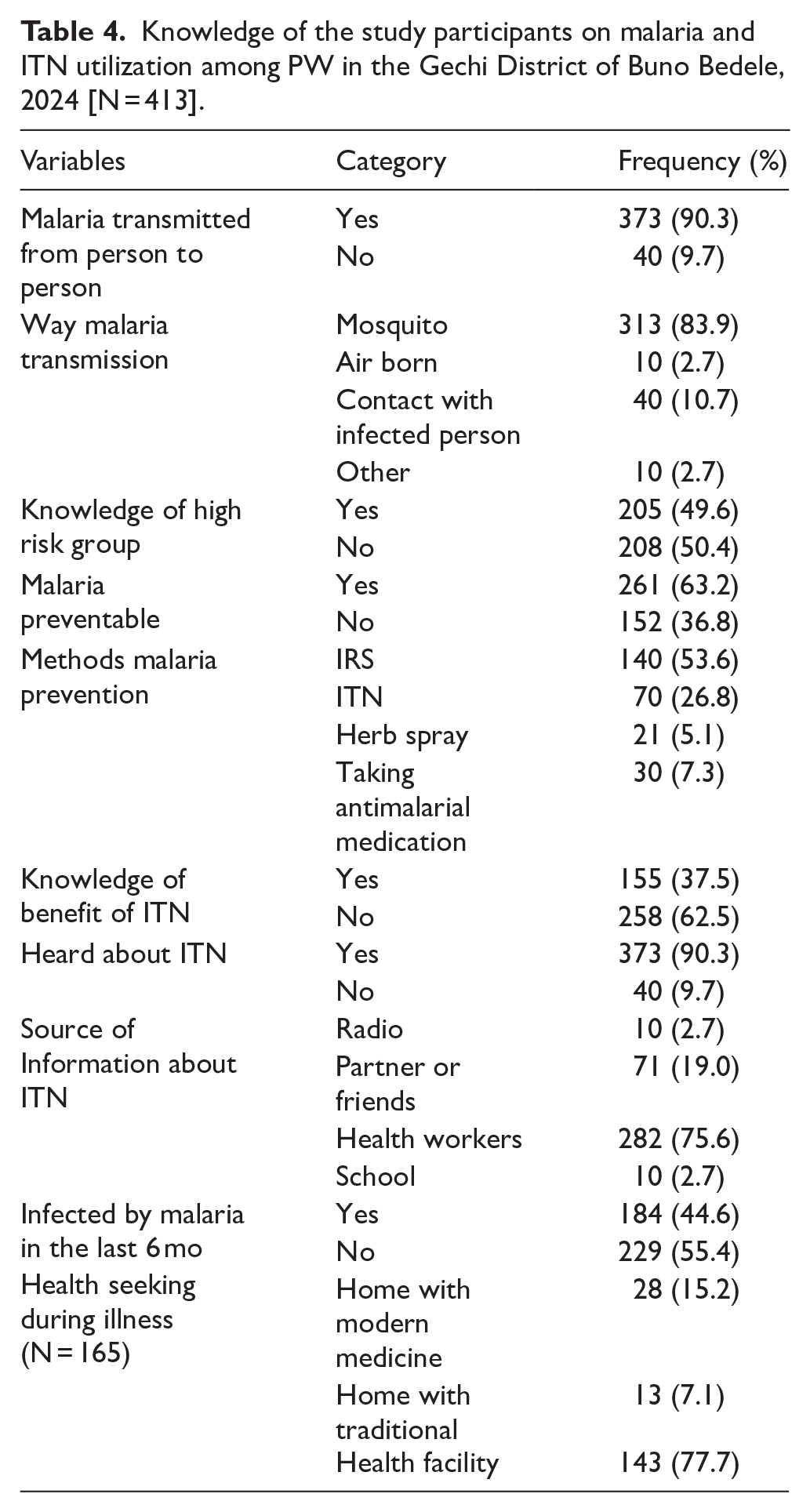
Of the total respondents, 90.3% know that malaria is a communicable disease, and 83.9 of them reported it is transmitted by mosquito bite, 2.7% by airborne, 10.7% by contact, and 2.7% by other means such as through contaminated food. On risk groups, only 49.6% know the risk groups (children and PW), and 63.2% know the possibility of prevention, of which only 26.8% thought ITN was an alternative prevention method. Concerning knowledge of the ITN, 90.5% of them heard about it, and of those who heard the massage, 75.6% were from health workers. In the last 6 months, about 44.6% experienced malaria at least once, and of those who got the disease, 77.7% visited health facilities (Table 4).
Knowledge of the study participants on malaria and ITN utilization among PW in the Gechi District of Buno Bedele, 2024 [N = 413].
Sleeping Patterns and ITN Utilization
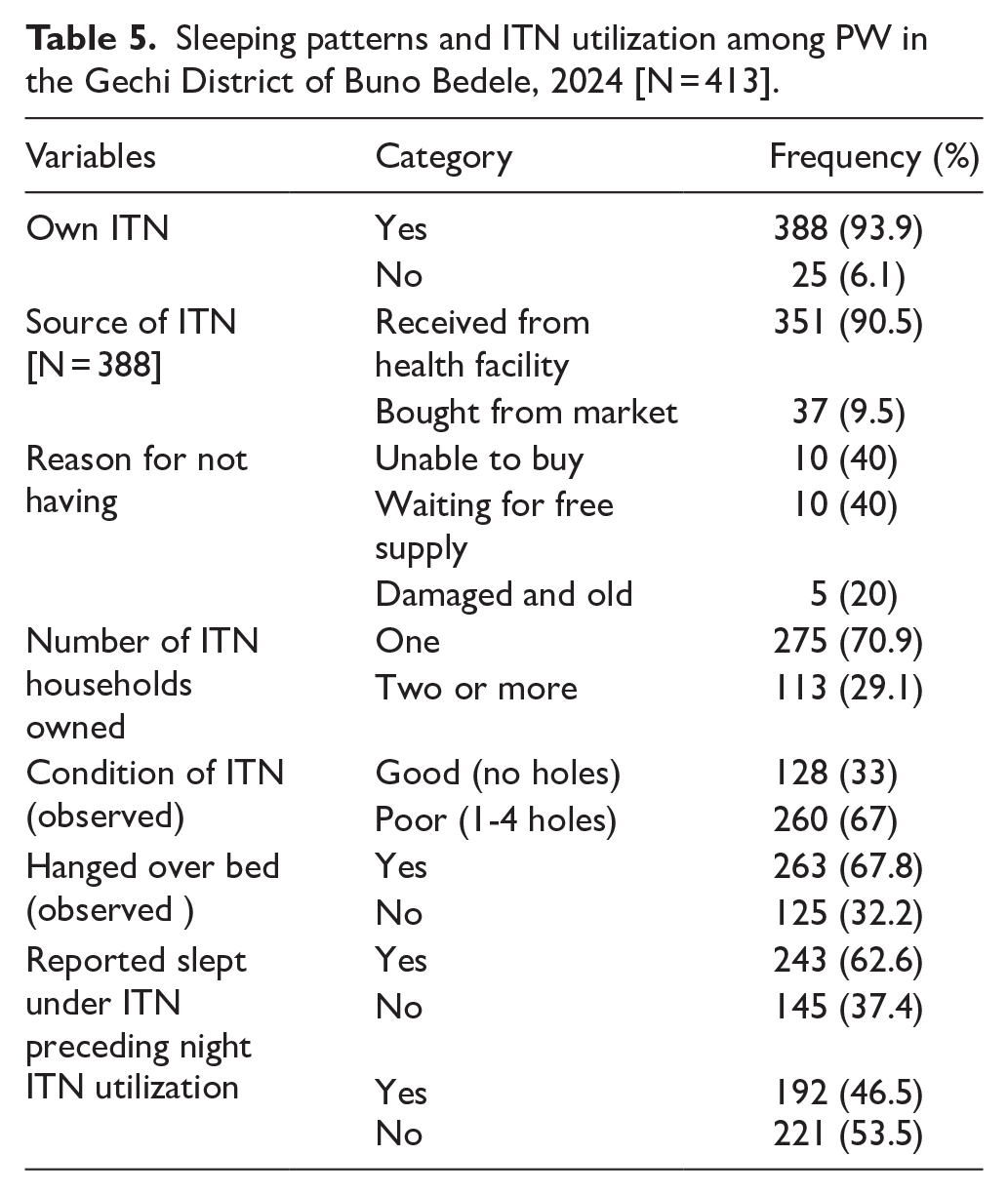
The majority (93.9%) of the respondents reported owning ITN, of which 90.5% received it from health facilities for free, and about 70.9% of the households owned 1 ITN per household, and 33% of the ITN were in good condition as per field observation in this study. Concerning the ITN utilization, 67.8% of the ITNs were hanged over the beds during the home visit, 62.6% of the women reported they slept under the ITN preceding night of the survey day, and the overall utilization status as per WHO recommendation was only 46.5% utilization in the setting (Table 5).
Sleeping patterns and ITN utilization among PW in the Gechi District of Buno Bedele, 2024 [N = 413].
Factors Associated With ITN Utilization Among PW
In the analysis of factors associated with ITN utilization, different factors were included in the binary logistic regression, including socio-demographic factors, maternal factors, knowledge-related factors, attitudes toward utilization, and ITN-related factors. Accordingly, marital status, women’ education, husband education, parity, ANC attendance, and family size were associated with maternal ITN utilization in crude analysis at a P-value less than .25 and were candidates for multivariable analysis. In the final model, women’ education [AOR: 0.48, 95% CI: 0.28-0.81], parity [AOR: 1.98, 95% CI: 1.30-3.03], ANC attendance [AOR: 2.08, 95% CI: 1.21-2.58], and family size [AOR: 2.53, 95% CI: 1.61-3.87] were significantly associated with ITN utilization at a P-value less than .05 after controlling for confounders (Table 6).
Multivariable analysis of factors associated with ITN Utilization among PW in the Gechi District of Buno Bedele, 2024 [N = 413].

Significant at P-value less than .01.
Discussion
This community-based cross-sectional survey was conducted among randomly selected PW in the Gechi district of Buno Bedele zone in south-west Ethiopia. The study involved 413 PW to identify LLITN utilization and factors associated with utilization in the setting. The findings of the study showed that the majority (93.9%) of the respondents reported owning LLITN. About 70.9% of the households owned 1 LLITN per household. The level of utilization, 67.8% of the LLITNs were hanged over the beds during the home visit, 62.6% of the women reported they slept under the LLITN preceding night of the survey day, and the overall utilization status as per WHO recommendation was only 46.5% [ 41.7%-51.3%] utilization in the setting. This level of utilization was consistent with the finding from other parts of Ethiopia. For instance, study from Miesso Woreda Eastern, 29 and from East African Countries 47.05%. 34 However, this finding shows lower utilization when compared with meta-analysis results in Ethiopia that shows 59.42%, 4 Ruwanda that shows 75%, 35 and from Nigeria that shows 71.8%. 36 The difference may be due to the nature of the study that the current study was community based study while most of the studies were institution based studies.
The low level utilization was significantly associated with women’ education, parity, Antenatal care (ANC) visit, and previous malaria infection in the last 6 months. The current study revealed that sociodemographic factors mother education and family size were significantly associated with utilization. Accordingly, women who had no formal education were 52% less likely to utilize than those who attended at least primary education. Similarly, women who had family size less than 5 members was 2.53 times more likely to utilize. Similar studies also documented the importance of maternal education in the improvement of health behaviors including LLITN utilization during pregnancy.13,34,35 This is due the fact that education enhances the knowledge of the women and shapes their practice. On the other hand large family size may have additional constraints than small size. 34 Mother those had large family size may be buzzy to feed child and low consideration for their own health.
The factors that contribute for the lower utilization were maternal factors ANC attendance and parity. Accordingly, PW who attended at least 1 ANC visit were 2.08 times more likely to utilize LLITN. Similarly, PW those with primipara were 1.98 times more likely to utilize than their counterparts. This finding was consistent with similar studies from Malawi 37 and Rwanda. 35 The study highlights the disparity between ownership and effective utilization of long-lasting insecticide-treated nets (LLITNs), urging community health workers to implement educational programs to address social and cultural barriers. It also suggests prioritizing interventions for large families and women without formal education and promoting health education to improve access to antenatal care. Misuse of LLITNs, such as repurposing them for non-health-related purposes, is attributed to knowledge gaps and cultural practices. The cross-sectional nature of the study limits causal inference due to temporal relationships. Therefore, future research should focus on longitudinal interventional studies with robust validation methods and innovative approaches.
Conclusion
The study found that despite good ownership of LLITNs among women, their utilization is very low when compared with the national malaria elimination target. The low LLITN utilization among PW underscores the need for action to save life-giving women. Factors such as education, gravidity, antenatal care attendance, and previous malaria infection in the last 6 months significantly influenced LLITN utilization. Key players in maternal care should focus on awareness creation and ANC follow-up to reduce malaria during pregnancy.
Footnotes
Acknowledgements
The authors would like to thank all study participants, data collectors, and survey supervisors, Gechi woreda health office administrators for their valuable support.

Author Contributions
DOD: methodology, formal analysis, visualization, original draft writing, and reviewing the manuscript. SKT: methodology, formal analysis, visualization, writing review, editing. BM: methodology, formal analysis, visualization, writing, review editing. Finally, all the authors proofread and approved the final version.
Funding
The author(s) received no financial support for the research, authorship, and/or publication of this article.
Declaration of Conflicting Interests
The author(s) declared no potential conflicts of interest with respect to the research, authorship, and/or publication of this article.
Data Availability Statement
The data sets analyzed during the current study are available in the supporting information.