



Abstract
Biogas production uses microorganisms to degrade organic material in the absence of oxygen to produce CH4, CO2, and other residual gases. Anaerobic digestion of cattle manure and human feces for biogas production is an important technology in Ethiopia’s National Energy Strategy. Thus, this study aimed to analyze determinants and characteristic composition of biogas product at different agroecological zones in Southern Ethiopia. In this study, biogas plants were categorized based on agroecology, size, age, and design type. A total of 32 biogas plants were included and their gas composition were analyzed using OPTIMA Biogas Analyzer. One-way ANOVA and paired-wise comparison were widely used for data analysis. ANOVA results for CH4 revealed that agroecology, temperature, and biogas plant design were statistically significant whereas biogas plant size and age of biogas plants were not statistically significant. From this study, the authors concluded that agroecology, biogas plant design, and temperature significantly affect biogas yield quality. Future research needs to focus on seasonal variation of biogas product at different agroecological zones and evaluation of the rural household biogas plants’ performance.
Introduction
Biogas is a combustible mixture of gas produced by microbial fermentation of organic matter in an oxygen-starved environment.1,2 Globally, about 35 billion cubic meters of methane-equivalent of biogas by volume is produced on an annual basis. 3 As research findings have shown, the current global biogas potential contributes significantly to the decarbonization of the current and future energy systems.4,5 In developed countries, biogas production increased due to the encouragement of renewable energy policies.6,7 However, in Africa, the delayed adoption of biogas technology is partly attributed to inadequate technology selection.7-9
Biogas was first introduced into Ethiopia in the early years of the 1960s by Ambo Agricultural College to provide energy for welding agricultural tools.10,11 In 2008, the national biogas program was launched for the wider dissemination of domestic biogas in the country in collaboration with SNV as the technical advisor 12 and Ethiopia Ministry of Water and Mineral Resources as the national implementing agency under the name NBPE.13,14 Until the end of 2019, about 23 802 biogas plants were constructed under Phase I, Phase II, and NBPE+.11,14 About 80% of constructed biogas plants were with 6 m3 capacities15,16, 16% with 8 m3 capacities, (2%) with 4 m3 capacity, and (1%) with 10 m3 capacities.13,14,17
Based on the SNV project document, a total of 1226 biogas plants were constructed from 2017 to 2021 in Southern Ethiopia accounting for 11% of the total biogas users for this period. 18 In Wondo Genet Woreda, the first biogas program was introduced in 2011.19,20 Similarly, in Damot Woyde and Ana Lemmo, the first biogas plants were introduced in 2010 and 2015, respectively. Research findings indicated that the major challenges to the mass dissemination and functionality of biogas plants in Southern Ethiopia were the socioeconomic, environmental, technical, political, and institutional factors.21-23
Depending on the type of substrate used, process control, management system, and other parameters biogas consists of 40% to 70% methane (CH4), 30% to 50% carbon dioxide (CO2), 0% to 10% nitrogen (N2), 5% to 10% water vapor (H2O), oxygen (O2) at a concentration of 0% to 1%, and hydrogen sulfide (H2S) at a concentration of 0 to 10 000 ppm.1,24,25 Moreover, biogas quantity and quality depend on the biogas plant design,7,26 environmental factors, and other operational parameters like temperature, pH, total solid content, mixing rate, carbon to nitrogen ratio, organic loading rate, hydraulic retention time, nutrient availability, and toxic compounds.4,27,28
Temperature is a critical factor in the performance of biogas plants as it affects biogas production rate, microbial activity, and overall process stability.7,29 The AD process can be operated under 3 temperature ranges: Psychrophilic (below 20°C), 30 Mesophilic (25°C-40°C); and Thermophilic (40°C-60°C).1,2 At temperatures lower than 10°C and above 70°C, biogas production stops, and the fermentation bacteria will be destroyed.24,30 Moreover, climatic conditions are vital factors affecting biogas product composition, dissemination potential, and sustainability of domestic biogas technology.31,32 Thus, providing a suitable temperature range and low-temperature fluctuations is essential for the operation of AD.29,33,34
Biogas plant design (such as Fixed-Dome, Floating Drum, Plastic Bag, Balloon Type, Earth Pit, Ferro-cement, etc.), construction materials, availability of feedstock, and operational modes vary according to the geographical location of biogas installation.35,36 Additionally, biogas plant size and design vary depending on the country, climatic conditions, local skills, feedstock availability, energy accessibility and affordability, biogas and fertilizers needs, transportation feasibility, economic affordability, and policy regulations such as waste and energy programs. 37 Even though many digesters have been built at the national level, the frequent failures of biogas plants negatively affected the adoption of clean alternative energy sources in Ethiopia.23,38,39
In Ethiopia, there are published scientific researches on biogas technology adoption, determinants factors, challenges, and opportunities.39,40 However, biogas technology specialists still face a knowledge gap to contextual the effectiveness and suitability of biogas products for local conditions which poses a detrimental impact on the biogas dissemination program of Ethiopia. 39 Even though a large number of biogas plants were constructed in the country, there was scarcity of evidence-based policy guidance regarding the optimal design and operation of biogas plants tailored to local conditions.
Regular biogas quality evaluation is important to provide sufficient information for authorities to have well-supported policy decisions in process optimization, energy content determination, and environmental impact assessment.4,41,42 Thus, incorporating a real-time monitoring system as a biogas plant design factor was found to be crucial for successful operation and maintenance. 7 Moreover, biogas composition analysis can be used to control the anaerobic digestion and subsequent processes. 39 As far as the knowledge of the researchers, there is a dearth and paucity of documented pieces of evidence regarding biogas composition of household biogas plants based on their size, age, design type, and agroecology which plays a crucial role in enhancing the biogas quality. Thus, this study aims to determine the effect of agroecology, biogas plant size, age, and design on biogas product quality.
Materials and Methods
Study Design, Setting, and Period
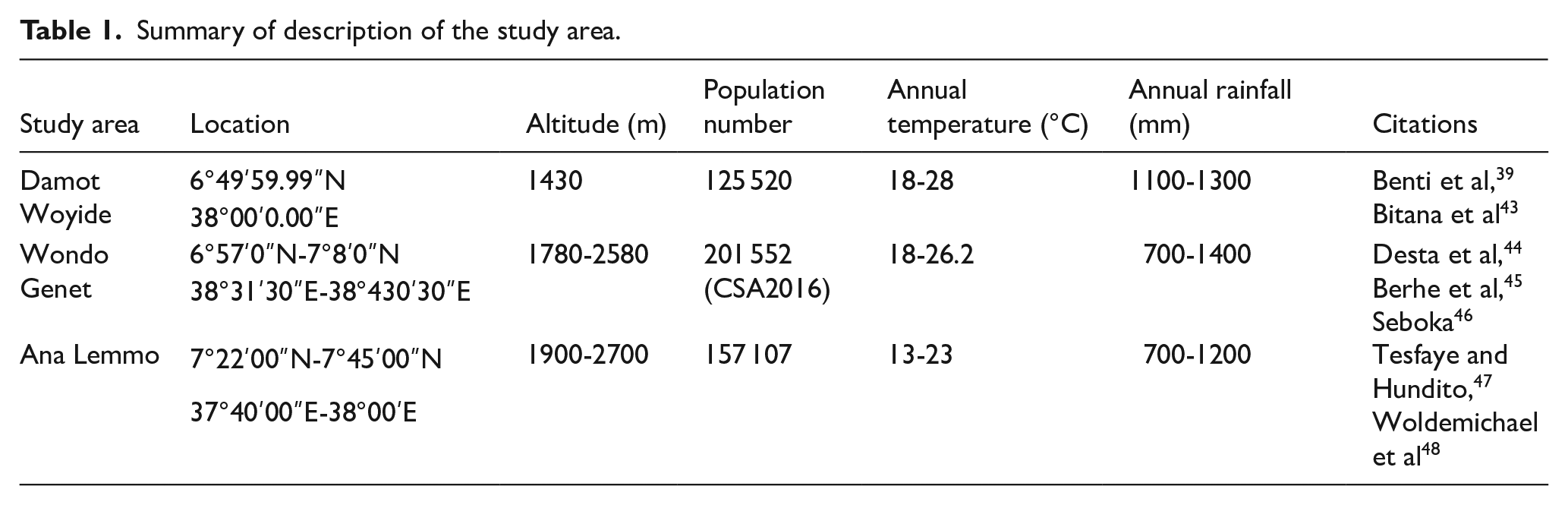
This study employed the experimental study design to accomplish the research objective. The objective was reached within a structured framework that included a measurement process, the analysis of collected raw biogas data, and results evaluation. The study was conducted from May 10th to June 25th, 2024 in selected agroecological zones (Table 1) from rural areas of southern Ethiopia: Damot Woyde (lowland), Wondo Genet (midland), and Analemo (highland; Figure 1).
Summary of description of the study area.

Map of the study areas using QGIS version 3.8.3.
Eligibility Criteria
The domains of this study were chosen based on the research purpose and availability of the resources. Because the biogas plant installations, agroecological circumstances, and energy consumption methods of these chosen study sites shared many traits with other Ethiopian regions. Furthermore, there is no hard scientific proof of the present state of biogas and the caliber of biogas product composition in these study areas, which are located in distinct agroecology. Therefore, all functional biogas plants from Damot Woyde and Ana Lemo were qualified for the study while 20 biogas plants from Wondo Genet woreda were qualified according to the kind of feedstock, digester age, size, and design.
Data Collection Methods and Tools
Digester Design Type and Feedstock Selection
The biogas digesters selected for this study were Senedu 2008, Senedu 2008 modified, and Plastic bag (SYSTEMA). All fixed-dome design type digesters used cattle manure and toilet wastes as feedstock except the 3 new plastic bag digesters models called “Systema,” it uses cattle manure only.
Altitude Measurement Tool
In this study, each sampled biogas plant location and altitude was recorded using Garmin GPSMAP 78S Handheld Marine GPS by allowing the GPS to acquire a strong signal and stabilize for a few minutes before recording. It is a high-sensitivity GPS receiver capable of providing accurate positioning and improved reception in challenging environments and it can record up to 10 000 track points and save up to 200 tracks. 49
Biogas Product Composition Measurement Tools
The characteristics composition of biogas products from sampled biogas user households were measured using portable gas analyzers called “OPTIMA Biogas Analyzer.”41,50,51 It is adapted to the measurements of CH4, CO2, H2S, O2, N2, CO, NO, and NO2 with measurement accuracy: CH4 (0%-100% v/v ± 1.5%), CO2 (0%-100%v/v ± 0.5%), CO2 (60-100 vol% ± 1.5%), O2 (0-25 vol% ± 1.0%), H2S (0-5000 ppm ± 2.0%), and H2S (0-10 000 ppm ± 5.0%). 52 It also measures the ambient and differential gas pressure and temperature.53,54 The volume percentage of the biogas composition produced from sampled biogas plants was measured. Three replications were taken for each day sample for 4 consecutive days. 41
Variables and Their Measurements
For biogas composition (CH4, CO2, H2S, and N2), and gas temperature and pressure measurement, detailed background information about the biogas plants (the current functionality status, the plant ages, size, feedstock type, and operation and maintenance history) was taken from the Woreda bioenergy office and the biogas user households. For each study site, biogas sample measurement days and duration were scheduled with the biogas user households and Woreda bioenergy office technician. Biogas composition from each biogas digester was measured using OPTIMA Biogas analyzer, produced by the MRU GmbH in Neckarsulm, Germany. 53
The main components are an infrared sensor, a sample chamber or light tube, a wavelength sample chamber, and gas concentration is measured electro-optically by its absorption of a specific wavelength in the infrared (IR). The IR light is directed through the sample chamber toward the detector. The detector has an optical filter in front of it that eliminates all light except the wavelength that the selected gas molecules can absorb. Ideally other gas molecules do not absorb light at this wavelength, and do not affect the amount of light reaching the detector to compensate for interfering components. Optima 7 Biogas analyzer also comprises a Teflon filter for protection against dirt and soiling, with robust stainless-steel connectors (gas ports) through which one end of a hose was connected while the other end was connected to the motorcycle tube which was used to store the biogas produced from each category of substrates. Different gas composition present in the biogas exhibited cross-sensitivity in the infrared spectrum, and that enabled the percentage of individual gases in the biogas sample to be measured. 55
For measurement, the machine is switched on and automatic calibration takes place when the zeroing button is pressed and takes a few minutes until zeroing is completed in a ventilated condition. The main biogas output gate valve is closed and the hose is disconnected from the cooking stove. The biogas outlet hose and the probe of the gas analyzer was firmly connected to the hose for measurement. Then, the biogas get valve is opened and the analyzer starts when the biogas measurement button is pressed. It measures selected biogas compositions, the gas temperature, and pressure at the same time. Consecutively, 4 days of biogas reading data were taken with 3 replications per sample and recorded in the notebook.
Bias
Selecting only 3 regions from Southern Ethiopia might affect the diversity of biogas plant experiences in other biogas adopter regions and this might lead to a slightly narrow understanding of the technology’s applicability at the country level. Additionally, the purposive selection of only specific functional biogas plants might lead to skewed results when generalized nationwide. Furthermore, the accuracy of the measurement might be affected by external conditions since the data was taken place in open environments.
Sample Size Determination and Sampling Procedures
In this study, sample biogas plants were selected based on their size, design type, age, and agroecological condition (Damot Woyde, Wondo Genet, and Ana Lemo) from southern Ethiopia. A total of 32 household biogas plants were selected for measurement from each study sites (Table 2).
Sample selection from the total biogas plants in study areas.

Data Quality Control
Before data collection, 2 days of training were given for technicians and operators on using the OPTIMA analyzer. In this study, data quality was controlled throughout the measurement by calibrating/zeroing the machine before and after each sampled gas measurement in ventilated conditions following the manufacturer’s guidelines. Similarly, the probe and the gas filter of the machine were cleaned and the measurement took place in a ventilated room. Each sampled biogas measurements were taken with 3 replications for four consecutive days to control variability and increase the precision. Finally, the data validity was checked after analysis to identify outliers.
Data Processing and Analysis
First, the collected data were checked for completeness and consistency. Then, they were cleaned, coded, and entered into EpiData version 3.1 for further analysis. The entered data were exported to STATA version 17 software for analysis. Descriptive and summary statistics were conducted and reported using tables and figures. All parameters were statistically analyzed based on their characteristics. One-way analysis of variance (ANOVA) was used to compare the statistical significance level by comparing their group mean of independent variables (agroecology, temperature, digester design type, volume/size, and age/year of installation) at 95% confidence interval, P < .05. Paire-wise comparison was used to determine which specific groups differ from each other is statistically significant or not using the Bonferroni test (adjusts the significance level based on the number of comparisons being made, reducing the chance of Type I errors when conducting multiple tests). All statistical tests were carried out using STATA software version 17. The overall methodological framework applied in this study was illustrated in schematic diagram, Figure 2.

The methodological framework.
Results
Biogas Distribution in the Study Areas
For this study, three woredas (Damot Woyde, Wondo Genet, and Ana Lemo) were selected from three agroecology. According to the Woredas` bioenergy office data, there are 387 biogas plants of size 2.5 to 16 m3. Of those biogas plants, the majority (308) were found in Wondo Genet Woreda, and the remaining 42 and 37 were found in Damot woyde and Ana Lemo Woredas, respectively, Table 3.
The current biogas distribution in the study areas.

Eight plastic bag digesters called SYSTEMA (a prefabricated modular plastic biodigester package provided with full appliances and connections) of sizes 8, 12, and 16 m3 were found in Wondo Genet Woreda. The remaining biogas plants in the study area were fixed-dome models (Senedu 2008 and Senedu 2010 modified) with sizes 2.5, 6, 8, and 10 m3. Except for Wondo Genet Woreda, all functional biogas plants found in the Woredas were used for biogas composition measurement.
Status of Functionality of Biogas Plants
The functionality status of biogas plants in the study area varies significantly. Of the total (387) biogas plants, 189 (48.8%) are functional, and 198 (51.2%) are non-functional. The highest and lowest functionality status was recorded at Wondo Genet and Ana Lemo, 175 (57.37%) and 6 (16.21%), respectively (Figure 3).

Biogas plants’ functionality status in the study areas.
Biogas Dissemination History in the Study Areas
Damot Woyde Woreda (Lowland)
In Damot Woyde, the lowest and highest altitudes of the sampled biogas plant’s location are 1361 and 1472 m above sea level, respectively. In the area, only 2 biogas plants were constructed before the baseline study by Hawassa University in collaboration with the funding organization in 2010. After a baseline study, 20 biogas plants of which three 8 m3 and seventeen 6 m3 were constructed in 2020/2021. Additionally, Wolaita Sodo University funded the construction of 20 new biogas plants of size 6 m3. Hence, the total number of biogas digesters constructed during the study period was 42. However, as the authors observed during the field survey, only 8 biogas plants were functioning with minor problems and the remaining 34 biogas plants were non-functional. The highest CH4 product composition was recorded (66%) in this Woreda due to the conducive temperature for AD.
Wondo Genet Woreda (Midland)
In Wondo Genet, the lowest and highest altitude ranges of the sampled biogas plant’s location are 1721 and 1821 m above sea level, respectively. In 2011, Wondo Genet Woreda was the first Woreda for the introduction of NBPE from southern Ethiopia. 44 Until the experimentation date, 308 biogas plants were constructed in different Kebeles. The conducive agroecology, feedstock availability, and access to water make the area more preferable for biogas plant adoption. Hence, from 13 Kebeles and 2 cities administrative, 7 Kebeles and 2 administrative cities constructed differently sized biogas plants. The remaining 5 found in the temperate zone couldn`t adopt biogas plants due to inconvenient temperatures. Almost two-thirds of biogas plants are found in 2 Kebeles named Wosha (125) and Abaya (65).
Ana Lemo Woreda (Highland)
In Ana Lemo, the lowest and highest altitude ranges of sampled biogas plants are locations 2026 and 2381 m above sea level, respectively. In 2018, the Woreda’s administration provided full financial support for the construction of the first 2 biogas plants of size 6 m3 in Fonko Town (administrative city of the Woreda) for biogas technology promotion and indicated an interest in joining the NBPE. Then after, in 2020, the Woreda bioenergy office joined NBPE and constructed 35 biogas plants of size 6 m3 within 3 consecutive fiscal years, from 2021 to 2023. However, during field observation, only 16.21% of biogas plants were functional with minor defects and the remaining 83.78% were non-functional.
Determinant of Biogas Composition and Quality
Composition of Biogas Product at Selected Agroecological Zones
In this study, a total of 18 fixed-dome biogas digesters type of size 6 m3 were selected for biogas quality measurement depending on their agroecological location (Damot Woyde, Wondo Genet, and Ana Lemo). The mean CH4 and CO2 contents were determined to be 60.25% and 36.53% for Damot Woyde, 58.09% and 40.21% for Wondo Genet, and 54.27% and 42.34% for Ana Lemo, respectively (Figure 4). One-way ANOVA revealed that there was a statistically significant difference of CH4 at (P = .0153; Table 4). Additionally, from the Bonferroni test, Ana Lemo was statistically significant with Damot Woyde (P = .015) and not significant with Wondo Genet (P = .157).
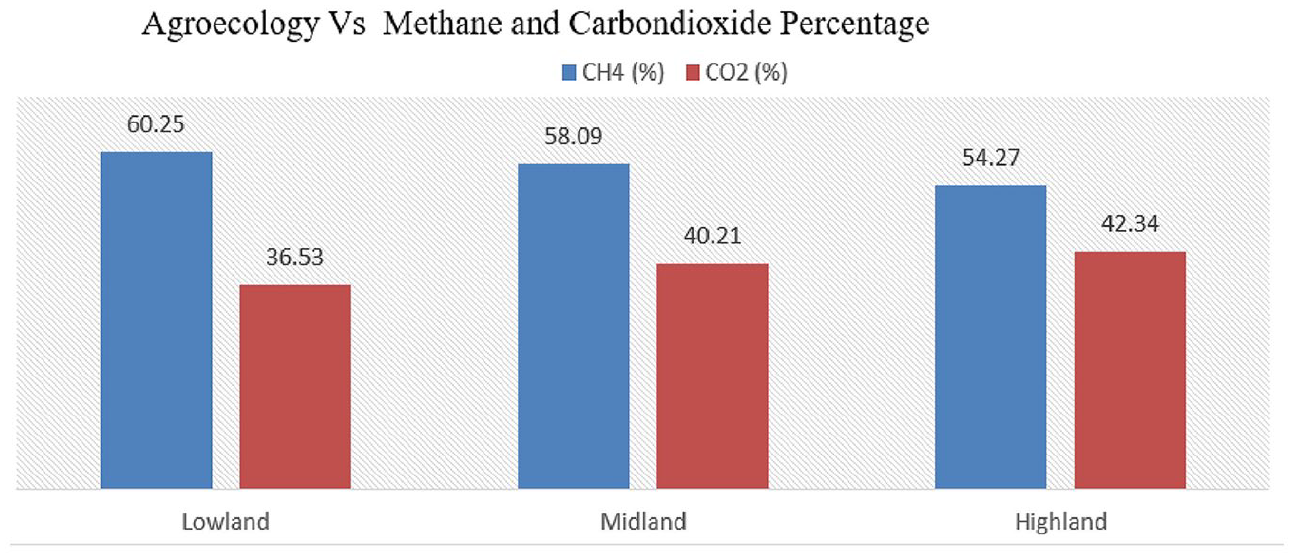
Percentage of CH4 and CO2 at 3 agroecological zones.
The effect of agroecology on biogas plant product.

p-value ≤ 0.05 (5% significance level).
p-value ≤ 0.01 (1% significance level).
Methane Content (%)
In the study areas, the mean CH4 content was found to be 57.54%, while the highest CH4 (66.1%) and the lowest CH4 (52.5%) were recorded at Damot Woyde and Ana Lemo, respectively (Table 4). This number was the highest and lowest of all sampled fixed-dome design type and plastic bags/SYSTEMA biogas plants in the study areas. One-way ANOVA revealed a statistically significant difference at (P = .0153). Additionally, from the Bonferroni test, the CH4 contents at Damot Woyde and Ana Lemo (P = .015), Damot Woyde and Wondo Genet (P = .750), and Wondo Genet and Ana Lemo (P = .157).
Carbon Dioxide Content (%)
The mean percentage of CO2 content from the 3 study sites was 39.69%. The minimum and maximum values were recorded at Damot Woyde (29.52%) and Ana Lemo (44.43%) (Table 4). As one-way ANOVA revealed, there was a statistically significant difference at (P = .023). The Bonferroni test has shown that the CO2 at Damot Woyde and Ana Lemo was (P = .015), Wondo Genet and Ana Lemo was (P = .157), and Wondo Genet and Damot Woyde was (P = .750).
Hydrogen Sulfide Content (ppm)
The H2S concentration in biogas is the highest from the residual gas next to CO2 and varies from 50 to 10 000 ppm depending on the feedstock’s Sulfur content.56,57 As shown in (Table 4), the mean value of H2S concentration in the study areas was determined to be 720.4 ppm or (0.072%) and the minimum and maximum records were 122.75 and 1917.6 ppm for Damot Woyde and Wondo Genet, respectively. One-way ANOVA showed a statistically significant difference between the 3 agroecology at (P = .0003). The Bonferroni test for H2S (ppm) has also shown the paired-wise comparison at Damot Woyde and Wondo Genet (P = .000), Damot Woyde and Ana Lemo (P = 1.000), and Wondo Genet and Ana Lemo (P = .002).
Nitrogen (ppm)
The mean nitrogen N2 concentration was 2.51 ppm, and the minimum (1.36 ppm) and maximum (4.36 ppm) concentrations were determined at Wondo Genet and Damot Woyde, respectively. One-way ANOVA result between the 3 agroecology was statistically significant at (P = .012; Table 4). And the pairwise comparison between Damot Woyde and Wondo Genet (P = .013), Damot Woyde and Ana Lemo (P = 1.000), and Wondo Genet and Ana Lemo (P = .068).
Pressure (hPa)
For functional biogas plants, the average biogas pressure typically ranges from 10 to 50 hectopascals (hPa). 58 The mean pressure of the study sites was 31.68 hPa, and the minimum and maximum values were recorded at Damot Woyde (29.52%) and Ana Lemo (44.43%) (Table 4). As one-way ANOVA revealed, there was a statistically significant difference at (P = .023). The paired-wise comparison also showed that H2S at Damot Woyde and Wondo Genet was (P = .022), Wondo Genet and Ana Lemo was (P = .206), and Wondo Genet and Ana Lemo was (P = .822).
Temperature (°C)
The mean gas temperature of the 3 agroecological zones was 23.82°C whereas the lowest (17.2°C) and highest (29.1°C) records were recorded from Ana Lemo and Damot Woyde, respectively. One-way ANOVA result indicated that temperature was highly significant at (P = .000). Paired comparison, the Bonferroni test, also has shown that each paired agroecology significantly varies at (P = .000).
Digester Age (Year of Construction)
Here, eight fixed-dome design type digesters (two biogas samples for each year) of the same volume (6 m3) that use the same feedstock (cow manure and toilet waste) selected from the same agroecology Wondo Genet but constructed in different years (2010, 2013, 2020, and 2022). Taking the year of construction as an independent variable and the biogas composition as a dependent variable, the effect of biogas plant ages on biogas product quality was computed statistically. The ANOVA result revealed that H2S and gas pressure were statistically significant at P = .0006 and .0054, respectively. However, other measured variables were not statistically significant at a 95% confidence interval (Table 5).
The effect of biogas digester age on biogas composition.

p-value ≤ 0.05 (5% significance level).
p-value ≤ 0.01 (1% significance level).
-non-significant at p-value ≤ 0.05 (5% significance level).
Digester Size (m3)
To ascertain the impact of biogas plant size on biogas quality, nine fixed-dome design biogas plants (6, 8, and 10 m3) that were built in the same year and utilized manure and toilet wastes as feedstock were chosen. The CH4 content ranged from the lowest at 57.89% to the highest at 53.89%, with the mean being 56.22%. The size of biogas plants did not have a statistically significant impact on the quality of biogas product (Table 6).
The effect of biogas digester size on biogas product.

Digester Design Type
Here, two fixed-dome Senedu-2008, seven Senedu-2010 modified, and three plastic bag/SYSTEMA biogas digesters were selected to compare the effect of biogas volume/size on biogas product composition. As one-way ANOVA model indicated, SYSTEMA biogas design type has statistically significant difference with all fixed-dome digesters of the sizes (6, 8, and 10 m3) at CH4 (P = .000), CO2 (P = .0421), H2S (P = .0397), N2 (P = .1467) compared to, the same year of installation, the same agroecology (Table 7).
The effect of biogas digester design type on biogas product.

p-value ≤ 0.05 (5% significance level).
p-value ≤ 0.01 (1% significance level).
-non-significant at p-value ≤ 0.05 (5% significance level).
Mean Value of Biogas Compositions
In this study, the overall mean value of biogas composition for each selected independent variable (agroecology, digester size, design type, and age of digester plants) was pointed out in Table 8.
Summary of mean of biogas compositions in the study areas.

Discussions
Agroecology
Agroecology is mainly related to temperature that affect the biogas production and its quality.36,59 Temperature is a critical factor that affects the efficiency of the AD process.2,60 Hence, biogas quality is primarily determined by its CH4 contents. 61 The CH4 concentration increases when the CO2 concentration decreases and vice-versa. The best-quality biogas have lower CO2 concentration; the same result was observed by Tauš et al. 6 Since CH4 content was directly linked with the temperature changes, the small temperature change significantly changes the biogas production rate and the CH4 quality as observed by Lohani et al. 27 According to Sabbir et al., 34 temperature was found to have a significant effect on biogas production whereas pressure did not have a significant effect on biogas quality. According to Jameel et al., 24 at temperatures below than 10°C biogas production stops whereas above 70°C the fermentation bacteria is destroyed.
Agroecology variation significantly affected the CH4 composition at (P = .0153). At Damot Woyde (Damot Woyde), the CH4 quality was significantly higher than the other 2 woredas (Wondo Genet and Ana Lemo), due to higher temperatures that give favorable conditions for microorganisms to convert the organic matter to biogas with CH4 quality (60.3%); temperatures higher than 25°C were more conducive to high biogas production efficiency.59,62 But in cold climates (Ana Lemo), biogas plants suffered from lower biogas production than the Wondo Genet and Damot Woyde areas due to low average temperatures (18.7°C). As the author observed during the field survey, in colder climates (Ana Lemo), the users feed their digester regularly due to the surplus availability of manure and water though the AD process takes place slowly resulting incomplete AD process. This low gas production was directly related to temperature and most developing countries exposed to this issue27,30 and recommendations provided by Lohan et al. 63
Other parameters might be biogas digester management practices with the complexity of the process due to seasonality as mentioned by other researchers.64,65 In India, at an elevation of 1600 to 2200 m above sea level and with large diurnal temperature swings of −8.0°C to 35°C, the effectiveness of biogas production was highly affected by extra cost to maintain a digester temperature higher than the average ambient temperature. 63 Moreover, even though the feedstock in the study area was both manure and toilet wastes, the chemical composition of the food type that the household members eat and the cattle breed under different agroecology might vary and affect biogas composition as discussed by Ketuama et al. 36 and Abbas et al. 66
Concentration of H2S
The presence and concentration of H2S in the biogas is an indication of the activity levels of sulfate-reducing bacteria in AD process. 36 The presence and diversity of methanogenic and sulfate-reducing bacteria differ with altitude due to different factors like temperature, pH, and other environmental conditions. 67 Thus, in cooler climates, specific microbial communities (sulfate-reducing bacteria) dominated and contributed to the high production of H2S 1401 and 474 ppm for Wondo Genet and Ana Lemo, respectively. Additionally, cooler temperatures slow down the overall digestion process leading to longer HRT for organic matter resulting in increased production of H₂S. Wondo Genet Sampled biogas plants in Wondo Genet are older which might give additional opportunities for sulfur-reducing bacteria.
Nitrogen (N2)
The concentration of N2 mainly rely on the AD process, environmental conditions, the nature of the organic feedstock, and operational practices. 59 The mean N2 concentration was maximum at Damot Woyde (3 ppm) and minimum at Wondo Genet (1 ppm). This was because, Damot Woyde climates have high humidity and stable temperatures, which can enhance microbial activity leading to more efficient breakdown of nitrogen compounds and resulting in increased production of N2. 59 The highest N2 at Damot Woyde might be due to feeding high protein content manure and toilet waste to the digester than feedstock in Wondo Genet and Ana Lemo as of. 68 Moreover, N2 is produced from nitrogen-containing feedstock due to the degradation of proteins and urea in the manure when there is a change in temperature, pH, inoculum, or microbial community primarily during the hydrolysis process. 69
Pressure (hPa)
In the study areas, the biogas pressure was varied depending on digester size to family members, production rate, frequency and duration of consumption. 24 The biogas pressure was decreased when the user households consumed at a rate greater than the production in the digester. The highest pressure was recorded at Wondo Genet (53.42 hPa) for fixed dome digester of size 6 m3 constructed in 2010 and the lowest was determined to be 5.05 hPa for plastic gag digester constructed in 2022. In Wondo Genet, those aged biogas plants users didn’t frequently use for cooking and lighting because they use electricity for lighting and making Enjera (Ethiopian flat bread). Additionally, their family members are also fewer as compared to the recent users, 2022.
Digester Age
Here, fixed-dome design biogas plants of size 6 m3 were selected from Wondo Genet. The ANOVA result revealed that the biogas compositions (CH4 (P = .39), CO2 (P = .53), and N2 (P = .93)) were not significantly affected by the age of the digester as shown in (Table 8). This result was in line with Roubík et al. 41 The Bonferroni test for H2S shows that there was a statistically significant difference at (P = .0006); indicating that the aged biogas plants increased the H2S concentration. This might be due to changes in microbial communities, accumulation of sulfur compounds, and environmental conditions within the digester. Since the organic matter and sulfur-containing compounds present in the feedstock can be accumulated in the digester over time. As the AD process continues, these compounds might be converted into H₂S by sulfate-reducing bacteria. As the age of the biogas plants increases, the possibility of corrosion of metal parts increases.6,41,70
Digester Design Type
For effective digestion, the digester design/shape must be taken into consideration.71,72 In Wondo Genet woreda, the performance of most of the biogas digesters was good as compared to other study sites (Damot Woyde and Ana Lemo) where their performances were below the design capacity and some digesters got dormant soon after serving for a short time, particularly in Ana Lemo. All selected fixed-dome digesters of sizes (6-10 m3) performed relatively better and were statistically significant compared to plastic bag digesters. This was due to the feedstock variability (all fixed-dome design type biogas plants use manure and toilet wastes while plastic bag plants use only cattle manure), and the effect of daily temperature fluctuation of plastic bag digesters as discussed in detail. 30 Similarly, in Nepal, the gas analysis result showed that the digester efficiencies were much lower than the design expectations. 73 The CH4 product for those households who feed the digester after 3 to 1 week has higher quality than those who feed regularly but less quantity that cannot afford for daily desired cooking. This might be due to a longer retention time that increases the CH4 product due to complete fermentation (allowing more time for microbial processes). As 74 the experimental result indicated that the highest CH4 products were obtained in the least frequently fed AD unit at a lower organic loading rate. However, due to poor digester quality, scarcity of water and manure, lack of management skills, and maintenance services, particularly in Damot Woyde and Ana Lemo woredas, more than 80% of the digesters were non-functional which was also common in most developing countries as other researchers mentioned.3,75
Digester Size
In this study, biogas plants of different sizes (6, 8, and 10 m3) were taken for comparison. However, the ANOVA result revealed that the size of biogas plants didn`t have a statistically significant effect on the quality of biogas products. This might be because the biogas quality primarily depends on other parameters like the temperature, feedstock, pH, C: N, and retention time than the size of the biogas plants. Other researchers also shared the same result.36,76 However, according to Ogunwande, 71 digester surface area significantly affects the biogas yield.
Strengths and Limitations of the Study
This study focuses on biogas plants in rural areas of Southern Ethiopia, it enhances the relevance and applicability of findings, promoting community involvement in renewable energy initiatives due to the country’s reliance on agriculture and the need for sustainable energy solutions and examining different agroecological zones may provide comprehensive insights into how agroecological factors influence biogas production and sustainability. The results obtained from this study could also inform the local and national policies regarding renewable energy development and agricultural practices.
However, the limited sample size did not adequately represent all agroecological zones at the country level. Due to time constraints, the study was conducted relatively over a short period so it did not include seasonal variations in biogas production and other long-term trends. The characterization may depend on specific technologies or designs of biogas plants that are not universally applicable. Moreover, this study did not compare biogas plants with other renewable energy sources or traditional energy sources in the country.
Conclusions
Biogas product is an empirical function of various parameters such as agroecology, digester size, design type, substrate-to-water ratio, pH, OLR, Carbon Nitrogen ratio, temperature, HRT, etc. Combining these variables collectively determines the efficiency of the anaerobic digestion process and the methane quality. This study highlighted the current status of rural biogas plant quality, factors affecting the biogas quality, and the importance of optimizing anaerobic digestion processes in rural communities. The biogas composition for selected biogas plants of different digester sizes, ages, design types, and agroecological zones (Damot Woyde, Wondo Genet, and Ana Lemo) was analyzed. The biogas compositions were analyzed for biogas plant: ages (2010, 2013, 2020, and 2022 years), sizes (6, 8, and 10 m3), and design types (fixed-dome Senedu 2008, Senedu 2008 modified, and plastic bag/SYSTEMA).
This study provided comprehensive results on determinants of biogas quality and the compositions of biogas products for different agroecological conditions, digester sizes, ages, and design types. Among the 3 study woredas, Wondo Genet Woreda was selected to measure biogas composition for different biogas plant sizes, ages, and design types due to the availability of functional biogas plants and the earliest adoption of biogas technology in Ethiopian history.
In the study areas, the mean CH4 content was 56.77% regardless of their size, shape, design, and agroecology whereas the minimum CH4 (52.5%) and maximum CH4 (66.11%) were recorded at Analemo and Damot Woyde, respectively. The mean CH4 contents were 57.54%, 56.22%, 57.82%, and 56.19% for agroecology, size, age, and design type, respectively. One-way ANOVA results for CH4 content showed statistically significant differences for agroecology, digester design type, and temperature; the biogas quality of rural households was significantly influenced by agroecological zones, biogas plants` design type, and temperature variation. However, the biogas plants` size and age have no significant effect on the biogas quality in the study area.
All biogas plants in the study areas have no pretreatment system to enhance biogas production. However, co-digestion of manure and toilets was found to be the best solution to mitigate the limitations of mono-digestion and improve the CH4 quality as confirmed by the authors.77,78 Among the sampled biogas plants, plastic bag or “SYSTEMA” biogas plants have the lowest methane composition compared to the fixed-dome digesters. Moreover, biogas products significantly reduce the dependence on firewood consumption and environmental pollution, but it does not meet the requirements for engine fuel unless upgraded. This study forwarded the following recommendations:
Biogas System Design
The design of biogas systems must fit the specific agroecological conditions, local agricultural practices, and resource availability of the rural communities by considering optimal digester sizes and design types.
Regular Maintenance and Technical Training
Implementing regular maintenance schedules and providing technical training for biogas user households significantly enhances the performance of existing digesters; most of the biogas plants in the study area were failed because of technical faults.
Research and Development
Further research is needed to explore innovative designs and technologies that can improve the biogas quality by experimenting with different feedstock combinations or integrating additional energy recovery systems.
Future research should be done on scaling up biogas systems, integrating local knowledge and practices, and exploring policy frameworks that support biogas development in rural areas of Ethiopia.
It is recommendable to research the seasonal variation of biogas products at different agroecology to evaluate the efficiency of functional biogas plants.
Comprehensive research could be important to compare the performance biogas plants with other renewable energy sources and traditional energy sources.
Government Policy and Support
Government policies should provide continuous financial support in the form of subsidies or low-interest loans for the sustainable dissemination of biogas technology, particularly in regions with high biogas potential. The NBPE should give biogas plant management and maintenance training, provide replacement appliances, and timely services to strengthen the achievement of the biogas program in the country. Finally, regular follow-up and quality assessment measures should be vital to enhance the productivity of biogas.
Therefore, a holistic approach that considers agroecological factors, suitable digester designs, and optimal temperature settings can enhance biogas production and improve gas quality, ultimately contributing to sustainable energy solutions.
Footnotes
Acknowledgements
The authors are very thankful to Hawassa University, the heads and staff of the Wondo Genet College of Forestry and Natural Resources, the Study woreda bioenergy office coordinators, the study participants, and supervisors.

Ethical Considerations
Not applicable.
Consent to Participate
Not applicable.
Consent for Publication
Not applicable.
Author Contributions
All authors made a significant contribution to the work reported, whether that was in the conception, study design, execution, acquisition of data, analysis, and interpretation, or in all these areas; they took part in drafting, revising, or critically reviewing the article; they gave final approval of the version to be published; they agreed on the journal to which the article had been submitted; and they agreed to be accountable for all aspects of the work.
Funding
The author(s) disclosed receipt of the following financial support for the research, authorship, and/or publication of this article: Hawassa University provided financial support for this study. However, the funding agency had no role in the collection, analysis, and interpretation of the data, as well as the writing up of the manuscript.
Declaration of Conflicting Interests
The author(s) declared no potential conflicts of interest with respect to the research, authorship, and/or publication of this article.
Data Availability Statement
The data sets used for this study are available from the corresponding authors on reasonable request