




Abstract
Background:
Wastewater treatment is crucial to protecting public health and the environment by removing Biohazards. In Ethiopia, however, significant research gaps limit progress, especially regarding the efficiency of Biohazard removal in existing treatment facilities. This review evaluates the effectiveness of current treatment methods for Biohazard removal, highlights key challenges, and offers recommendations.
Methods:
This scoping review followed PRISMA guidelines, systematically searching databases like NLM. Science Direct, HINARI and Scopus for Biohazard removal studies in Ethiopia, with independent reviewers screening and analyzing relevant data to identify key challenges.
Results:
Out of 1218 studies initially recorded by title and abstract, only 11 articles were selected for analysis. The Activated Sludge Process emerged as a highly effective system, achieving 85% to 95% removal of antimicrobial resistance (AMR) and total coliforms. Other methods, such as the Conventional Activated Sludge, and Anaerobic-Aerobic Reactors, demonstrated promising results but were found only in select locations. However, the widely adopted Oxidation Ponds, Ethiopia’s most common wastewater treatment system, showed the lowest AMR removal efficiency, at just 30% to 50%. Significant challenges, including inadequate infrastructure, high operational costs, and weak regulatory enforcement.
Conclusions and recommendations:
The review underscores the need for affordable wastewater treatment in Ethiopia, highlighting challenges such as inadequate infrastructure and high costs. To enhance effectiveness and reduce public health risks from Biohazards like AMR, recommendations include adopting cost-effective treatment technologies, strengthening regulatory frameworks, increasing public awareness, promoting corporate responsibility, and investing in infrastructure for sustainable wastewater management.
Plain language summary:
This scoping review highlights the Activated Sludge Process and Anaerobic-Aerobic Reactors as effective methods, achieving 85% to 95% AMR removal. In contrast, Oxidation Ponds, commonly used in Ethiopia, show only 30% to 50% efficiency. Addressing challenges like inadequate infrastructure and costs is crucial, necessitating low-cost technologies for sustainable wastewater management.

Keywords
Introduction
Wastewater treatment is a vital process that removes contaminants from wastewater, resulting in effluent that can be safely discharged into the environment or reused. 1 This process plays a crucial role in safeguarding public health by preventing waterborne diseases and protecting ecosystems from pollution. 2 Effective wastewater management not only enhances water quality but also supports sustainable development by enabling the reuse of treated water for various applications, contributing to resource conservation. 3
Wastewater contains various biohazards, including pathogenic bacteria (eg, E. coli), viruses (eg, norovirus), protozoa (eg, Giardia), antimicrobial-resistant (AMR) bacteria, and helminths, all of which pose significant risks to public health and the environment. The removal efficiencies of BOD5, COD, TSS, total coliform, fecal coliform, and multidrug-resistant (MDR) E. coli are key indicators of wastewater treatment effectiveness. BOD5 removal indicates the reduction of oxygen-demanding organic matter, while COD removal reflects the breakdown of a broader range of contaminants. TSS removal helps improve water clarity and reduce pollution. The removal of total and fecal coliforms is essential for ensuring water safety and preventing bacterial contamination, and the removal of MDR E. coli is critical for controlling the spread of antimicrobial resistance. Effective removal of these biohazards through proper wastewater treatment is vital to prevent waterborne diseases, protect drinking water quality, and combat the global issue of AMR. Failure to adequately treat wastewater can lead to environmental degradation, heightened health risks, and non-compliance with regulatory standards, underscoring the importance of efficient treatment systems in safeguarding public health and ecosystems. 4
Assessing microbial indicators, such as coliforms and critical global contaminants in various environmental media, including wastewater, is essential for effectively addressing significant health risks and environmental pollution, enabling efficient resource allocation to protect public health and the ecosystem.4,5 Effective wastewater treatment is critical for removing these harmful contaminants, ensuring the safety of water resources, and protecting public health. 6
Adsorption, flotation, ion exchange, chemical precipitation, membrane filtration, coagulation, flocculation, phytoremediation, and electrochemical methods. Among these, adsorption is extensively studied but faces challenges related to ion selectivity and cycling stability. Chemical and membrane methods are effective but generate large volumes of sludge, while electrochemical techniques require further development for large-scale applications. To enhance the scalability and effectiveness of these methods, future research should prioritize eco-friendly, cost-effective approaches and focus on testing with real wastewater samples. 7
The spread of antimicrobial resistance (AMR) is a critical global health issue, driven by the overuse and misuse of antibiotics in human healthcare, agriculture, and animal husbandry. When antibiotics like ciprofloxacin, metronidazole, and sulfamethoxazole enter water sources, they contribute to the development and spread of resistant pathogens, further complicating treatment options. This not only threatens public health by making infections harder to treat but also disrupts ecosystems. Addressing AMR requires effective waste management, improved antibiotic stewardship, and the development of innovative treatments to curb its spread. 8
Antibiotics like ciprofloxacin (CIP) released into water sources pose significant biohazards, including contributing to the spread of antimicrobial resistance (AMR). These contaminants disrupt ecosystems and public health, as resistant pathogens thrive in contaminated environments, making infections harder to treat. This review explores sustainable remediation technologies for CIP, such as advanced oxidation processes (AOPs), electrochemical processes, and adsorption using various materials like carbon nanotubes and metal-organic frameworks. 9 Biohazard removal in wastewater treatment varies between advanced and conventional methods. Conventional systems, such as activated sludge reactors and Oxidation ponds, are widely used for their cost-effectiveness and simplicity. These systems focus on removing total and fecal coliforms with moderate success. However, they often fall short in eliminating more resilient microbial agents like viruses and fungi.10,11
Recent studies showed that advanced treatment methods, especially a novel system combining up-flow anaerobic sludge blanket (UASB) reactors with aerobic treatment, have shown promising results. This approach has achieved over 90% removal of key pollutants like chemical oxygen demand (COD) and biochemical oxygen demand (BOD) and over 80% total nitrogen (TN) removal. 12 Additionally, advanced oxidation processes (AOPs) and tertiary treatments, such as UV disinfection and membrane filtration, have demonstrated high efficacy in removing antibiotic-resistant bacteria and genes. 13
Advanced wastewater treatment methods improve Biohazard removal and tackle emerging contaminants, essential for sustainable management. 14 As Ethiopia and other regions enhance their infrastructure, integrating these techniques can greatly benefit public health and environmental protection. The production of activated carbon (AC) from waste tires (WT) using H3PO4 and KOH was optimized for hydrogen (H2) production through subcritical water gasification (SCWG) of oily sludge (OS). 15
Biohazards removal in wastewater treatment poses substantial challenges in middle and low-income countries, particularly in Sub-Saharan Africa, including Ethiopia.16,17 One major difficulty is the lack of adequate infrastructure and resources, which hampers the implementation of effective treatment systems. Many facilities are obsolete or poorly maintained, resulting inefficient Biohazard removal. 18 Furthermore, limited access to advanced technologies and skilled personnel exacerbates the situation. Conventional treatment approaches frequently often fail to address emerging contaminants and pathogens effectively, endangering public health at risk. 19 The variability in wastewater composition, influenced by seasonal changes and urbanization, further complicates Biohazard treatment removal processes or efficacy. 20 The effectiveness of wastewater treatment for the removal of biohazards is significantly influenced by the type of catalysts and operational conditions used in the process. In particular, the use of highly active bimetallic FeMn catalysts immobilized on SBA-16 supports has shown promising results in eliminating water contaminants, such as various dyes, which are indicative of the removal of biohazards. The FeMn catalysts, particularly with 5% bimetal content, achieved high degradation efficiencies of 87% for Methyl Orange, 99.8% for Orange (II), and 99.9% for Methylene Blue under optimized conditions (catalyst dosage of 0.5 g/L, H2O2 concentration of 0.98 mM, and pH 4). These findings suggest that the integration of such catalytic processes could play a crucial role in enhancing wastewater treatment, especially in improving the removal of biohazards and other contaminants, contributing to better public health and environmental protection. 21
Currently, in Ethiopia, poor national wastewater management, the non-application of the polluter pays principle, and weak law enforcement result in industries discharging untreated wastewater into the environment. Due to unstructured systems, vulnerable citizens cannot assert their rights or hold public authorities accountable. The government has not sufficiently emphasized environmental damage, leading to widespread pollution affecting communities. Therefore, this scoping review aims to assess the efficacy of existing wastewater treatment methods in Ethiopia for Biohazard removal. Additionally, it aims to identify the challenges faced in implementing effective wastewater management practices, highlighting the need for improvements to enhance public health and environmental protection in the region.
Methods
Search strategy and data extraction
This review was conducted following the Preferred Reporting Items for Systematic Reviews and Meta-Analysis (PRISMA) guidelines to ensure a rigorous and transparent methodology. 22 A systematic search was performed across multiple databases, including NLM, JBI, Scopus, Wiley Online Library, Cochrane Library, Hinari, and African Journal Online Library. Additionally, an internet search was conducted using open-access resources such as Google Scholar and institutional repositories from universities like Jimma University, Debre Markos University, University of Gondar (UoG), and Addis Ababa University (AAU). To capture a wide range of relevant studies, a combination of MeSH terms and Boolean phrases was used, such as: “Microbes” OR “Biohazards” OR “Bacteria” OR “Fungi” OR “Viral” OR “Microbial removal” AND “Advanced wastewater treatment” OR “Conventional wastewater treatment” AND “Challenges in Ethiopia” OR “Wastewater treatment challenges.” The search strategy involved three key steps: (1) an initial search to identify relevant text words in titles and abstracts, (2) a comprehensive search across all databases using the identified keywords, and (3) a review of the references of all identified articles to discover additional studies.
The unique contribution of this review lies in its specific focus on Ethiopia, a region where wastewater treatment challenges have been underexplored. Unlike other studies that generalize treatment practices globally, this review critically assesses the effectiveness of current biohazard removal technologies in Ethiopian wastewater treatment systems, particularly regarding the removal of antimicrobial resistance (AMR) and coliforms. It also highlights specific challenges faced in Ethiopia, such as limited infrastructure, high operational costs, and weak regulatory enforcement. This work stands out by providing a comprehensive comparison of treatment methods, including the Activated Sludge Process, Oxidation Ponds, and Anaerobic-Aerobic Reactors, and offering insights into the performance of these systems in Ethiopia. Moreover, the review goes beyond simply evaluating existing technologies by proposing practical recommendations for improving wastewater management in the country.
The selling point of this review is its contextual relevance to Ethiopia, where wastewater treatment systems face unique challenges. It provides an actionable framework for improving public health and environmental safety through better wastewater treatment methods. By addressing both existing barriers and potential solutions, this review offers valuable guidance for future research, policy development, and the implementation of cost-effective, sustainable wastewater treatment technologies in Ethiopia and similar resource-constrained regions.
Study selection
The discrepancy between the stated number of reviewers and the names provided may raise concerns about the reliability and transparency of the screening process, particularly in terms of consistency and objectivity. It is crucial for a systematic review to clarify the number and identities of the reviewers involved to ensure accountability and confirm that the review process adheres to rigorous standards. In this case, the authors employed one group of three independent reviewers (AGY, AA, and CY) to extract the data.
To address this concern, the authors have implemented several measures to ensure consistency and reduce potential discrepancies in applying the inclusion/exclusion criteria. First, an agreement was established on the inclusion and exclusion criteria prior to screening, ensuring that all reviewers were aligned regarding what qualifies as relevant literature. Additionally, the use of Endnote version 8 for handling and managing the search results ensured that all data was organized systematically and consistently across the reviewers, reducing the likelihood of inconsistent data handling.
Furthermore, any disagreements between the reviewers during the selection process were resolved through discussion or by consulting a second independent reviewer group (MAY and GMB). This added layer of oversight ensures that final decisions were made based on collective consensus, which enhances the reliability and objectivity of the screening process. The reviewers’ collaborative approach to resolving conflicts guarantees that the inclusion/exclusion criteria were applied consistently, regardless of the combinations of reviewers involved at different stages of the review. These measures strengthen the overall integrity of the systematic review process.
Eligibility criteria (inclusion and exclusion criteria)
This systematic review included studies addressing the biohazards removal efficacy of wastewater treatment and associated challenges in Ethiopia, focusing on studies published between 2010 and 2023 to capture recent advancements. Only studies published in English were included to avoid translation issues, and full-text availability was required for inclusion. Studies that were inaccessible despite repeated email inquiries or lacked comparison data, defined as those without control groups or baseline measurements, were excluded. “Relevant data” refers to studies providing measurable microbial removal efficacy, while “comparison data” refers to studies with control groups or baseline measurements. These criteria ensure the review’s rigor and transparency, enhancing its comprehensiveness and reproducibility.
Data extraction
Two expert researchers (AG and CY) collected the relevant data from the selected articles. The following extracted details were recorded: name of primary authors, publication year, study period, study design, study setting, sample size, Magnitude of removal efficacy, and OR with CI of relevant factors were all included. The author (AG and CY) created a simple data extraction format in Microsoft Excel 2016 sheet. Using this structured data extraction form, two authors (AG and CY) independently extracted the data. If disagreements between data extractors persisted a third researcher (GM) varied the extracted data to ensure its accuracy and eliminate any incorrect information (Supplementary File).
Methodological quality appraisal
Since this is a scoping review aiming to map a broad topic to identify key concepts, gaps, and types of evidence available. No risk of bias assessment or quality appraisal of included studies was conducted.
Result and Discussion
Study selection and identification
A total of 1218 studies or records were found from different electronic online database sources. Of this article, 1041 articles were excluded based on duplication, while 22 records were excluded due to deviation from our purpose. After reading the title and abstract, 50 articles were excluded because there were not relevant to this systematic review. Again, 60 articles were removed due to poor quality and a lack of clearly stated outcomes. Finally, 11 articles were selected and used for microbial removal of wastewater treatment and challenges in Ethiopia (Figure 1).
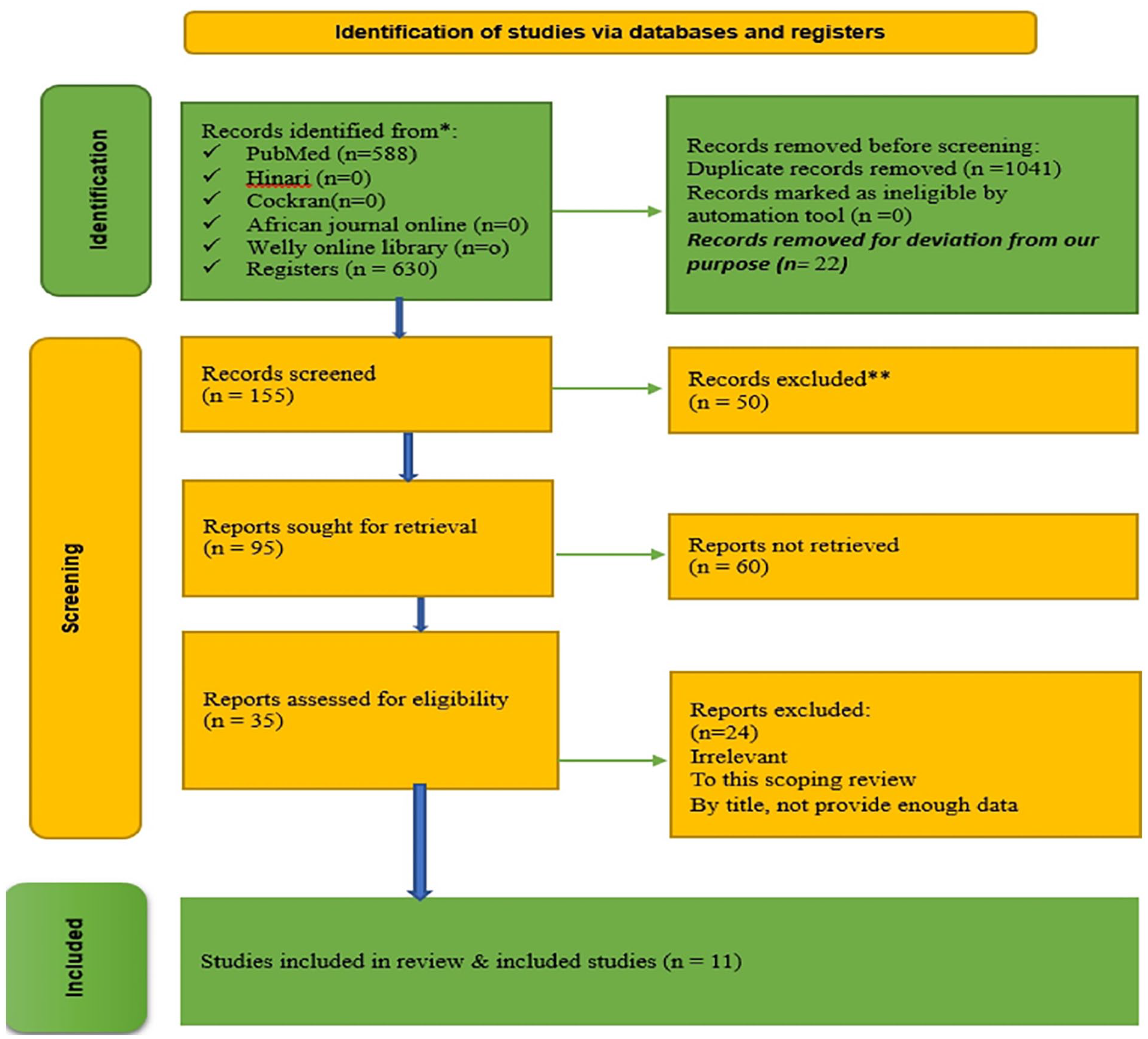
PRISMA flow diagram of article selection for Biohazard removal of wastewater treatment and challenges in Ethiopia.
Characteristics of included studies
The literature included in this review, categorized by geographical origin, is distributed as follows: Amhara Region (n = 1 (9.1%)), Oromia (n = 2 (18.2%)), Southern Nations and Nationalities Region (n = 2 (18.2%)), and Addis Ababa City (n = 6 (54.6%)) were included. In Ethiopia, small-scale industries, slaughter and Abattoir houses, and municipal wastewater treatment plants (WWTPs) are often less up-to-date than their counterparts in developed countries in terms of technology and efficiency. In this review of the 11 studies, five of them (45.6%) used lagoons and ponds for microbial treatment and removal. The concentration of studies in Addis Ababa (54.6%) and the reliance on lagoons and ponds (45.6%) in the literature could have several implications for the understanding and development of wastewater treatment technologies in Ethiopia. First, the overrepresentation of Addis Ababa may skew the findings toward urban wastewater treatment systems, potentially underrepresenting the challenges and innovations in other regions, such as Amhara, Oromia, and Southern Nations. This could limit the generalizability of findings across Ethiopia, especially since regional variations in infrastructure, resources, and regulatory frameworks can affect the applicability and scalability of treatment technologies. The predominance of lagoon and pond systems in the studies also suggests a reliance on relatively low-cost, low-tech solutions for wastewater treatment. While these methods are commonly used in developing countries due to their simplicity and affordability, they may not be as effective or efficient in removing biohazards compared to more advanced technologies, such as membrane filtration or advanced oxidation processes. The reliance on lagoons and ponds could therefore limit the scope for developing more efficient treatment methods that address emerging contaminants and antimicrobial resistance (AMR), both of which are growing concerns globally.23 -27 This is because Lagoons and ponds are cost-effective, environmentally friendly options that leverage natural biological processes for wastewater treatment. While lagoons and ponds are beneficial for wastewater treatment, they may not match the efficiency of advanced technologies in developed countries. However, Ethiopia is currently experiencing advancements in wastewater treatment plants, by enforcing laws and legislation through the implementation of Environmental Impact Assessments (EIA), promoting better environmental practices and improved treatment outcomes (Table 1).
Type of wastewater treatment plant for microbial removal of wastewater treatment and challenges in Ethiopia.

Biohazards removal efficiency of wastewater treatment plant
Wastewater treatment plants (WWTPs) play an important role in managing Biohazards including antimicrobial resistance (AMR) from wastewater. However, their efficacy varies greatly depending on the treatment process and methods used.
The wastewater treatment plants in the Dilla Coffee Processing Industry utilize ponds, achieving AMR efficiencies ranging from 30% to 50%. 26 Similarly, the Kaliti catchment treatment plant implements a combination of ponds and lagoons, achieving microbial removal efficiencies to 40% to 60%. 27 Additionally, the treatment plants at Luna and Kera Abattoirs had relatively higher microbial removal efficacy compared with the Dilla Coffee Processing Industry utilize ponds and Kaliti catchment treatment plant implements a combination of ponds and lagoons, with rates between 50% and 70%. 32 These variations underscore the role of treatment design in optimizing microbial removal efficiency. The effectiveness of wastewater treatment systems is deeply influenced by design, technological integration, and operational conditions. Advanced technologies like activated sludge systems exhibit superior microbial removal efficiency compared to simpler pond-based systems, which primarily rely on natural processes such as sedimentation, biological degradation, and sunlight exposure. Hybrid systems, combining anaerobic reactors with constructed wetlands, provide a cost-effective balance between performance and environmental sustainability. Natural systems leverage microorganisms for organic matter breakdown and algae for oxygen production, promoting aerobic conditions. However, their efficiency is often constrained by factors such as pond design, retention time, and environmental variables. To enhance these systems, integrating additional treatments like aeration or disinfection can significantly improve pathogen and antimicrobial resistance removal. Regular performance monitoring is crucial to maintain compliance with health and safety standards.
The study done in wastewater treatment systems at Hawassa St. George Brewery and Mojo Tannery illustrates the effectiveness of different technologies in microbial removal. At Hawassa St. George Brewery, the treatment process involves an influent tank, equalization buffer, anaerobic effluent tank (UASB reactor), and a post-aeration tank, which collectively achieve a microbial removal efficiency of 60% to 80%. 33 This efficiency reflects the ability of anaerobic processes to break down organic matter, limited by factors such as retention time and operational conditions. On the other way, Mojo Tannery implements an anaerobic reactor and constructed a wetland, achieving a higher microbial removal efficiency of 70% to 85%. This system benefits from enhanced biological activity due to the trickling filter’s design. 24 Moreover, studies on Conventional Activated Sludge (CAS) processes microbial removal efficiencies were 80% to 90%, 31 while the activated sludge process achieves even higher rates of 85% to 95% microbial removal efficiency. 28 These variations highlight the critical role of treatment technology selection in optimizing wastewater treatment outcomes and microbial removal.
The study at Hawassa University Referral Hospital used both vegetated and non-vegetated wetlands for wastewater treatment, with the average removal of multidrug-resistant (MDR) E. coli efficiency of 60% to 80%. 25 In contrast, constructed wetlands that incorporate various treatment technologies, including anaerobic-aerobic reactors, improve removal efficiency by 70% to 85%. 24 The microbial removal efficiencies of wastewater treatment systems at Hawassa St. George Brewery, Mojo Tannery, and Hawassa University Referral Hospital highlight the critical role of treatment technology selection and resource availability in determining performance. Large industries, such as breweries and tanneries, can afford advanced systems like UASB reactors, aeration tanks, and constructed wetlands, achieving microbial removal efficiencies of up to 85% by investing in hybrid approaches that balance cost and effectiveness. In contrast, smaller facilities or public institutions with limited resources often rely on simpler systems, such as ponds or vegetated wetlands, which are cost-effective but less efficient, necessitating enhancements like aeration or disinfection and regular monitoring. These comparisons emphasize the utility of combining different treatment technologies, with the integration of anaerobic and aerobic processes proving effective in optimizing wastewater treatment and enhancing AMR removal capacities.
Overall, the average removal of multidrug-resistant (MDR) E. coli in wastewater treatment systems varies based on the type of treatment technology employed. Advanced treatments, such as membrane bioreactors (MBR), advanced oxidation, or tertiary disinfection systems, generally achieve the highest removal rates, ranging from 85% to 95%. These methods combine physical filtration and chemical processes, effectively targeting resistant bacteria. Conventional secondary treatments, like activated sludge or trickling filters, show moderate removal efficiencies, typically between 50% and 85%. These processes rely on biological degradation and sedimentation, reducing bacterial load but not always fully eliminating MDR strains. Basic primary treatments, such as sedimentation and screening, offer the lowest removal rates, ranging from 30% to 50% (Table 2).
Summary of wastewater treatment methods and biohazards removal efficiencies in Ethiopia.
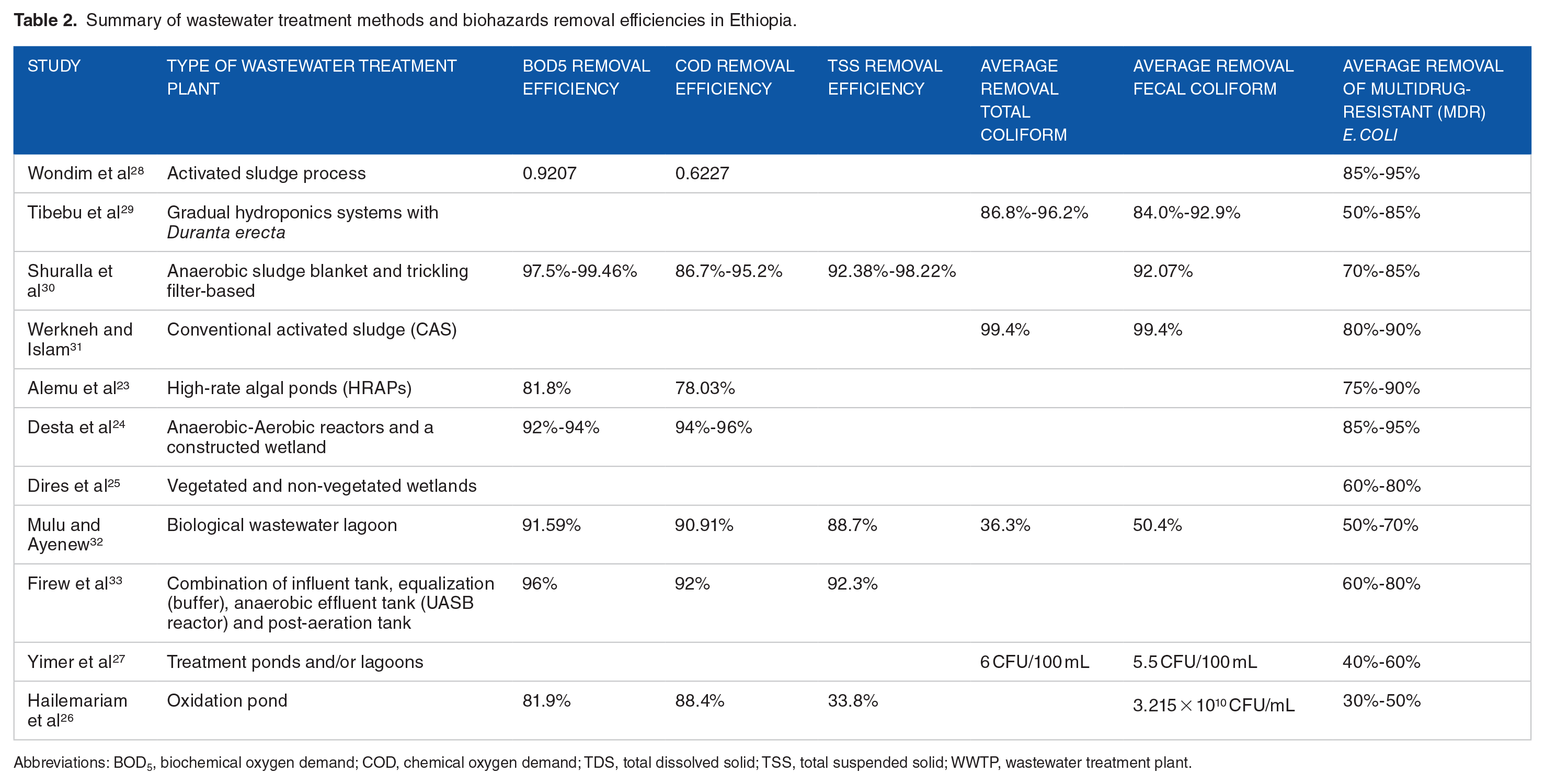
Abbreviations: BOD5, biochemical oxygen demand; COD, chemical oxygen demand; TDS, total dissolved solid; TSS, total suspended solid; WWTP, wastewater treatment plant.
To optimize wastewater treatment systems in Ethiopia, particularly with limited resources, a focus should be placed on integrating various treatment technologies, such as combining anaerobic and aerobic processes or enhancing constructed wetlands. While advanced systems like membrane bioreactors offer high efficiency, cost-effective adaptations or scaled-down versions could be prioritized. Optimizing conventional systems, such as activated sludge or trickling filters, through improved aeration or bioaugmentation can enhance their ability to reduce antimicrobial resistance (AMR). Additionally, local adaptation of systems, regular maintenance, and continuous monitoring are essential to ensure effective operation. Training local operators and involving communities in the process can further enhance system performance and sustainability, ensuring more efficient management of biohazards. 34
Wastewater treatment opportunities and challenges in Ethiopia
The existing Federal Democratic Republic of Ethiopia’s constitution guarantees the right to a clean and healthy environment (Article 44/1) and mandates government responsibility for this (Article 92/1). Environmental protection is further emphasized in various legislations, including the Environmental Policy, which prioritizes improved sanitation for sustainable urban development. Additionally, water resource management regulations mandate the treatment of significant wastewater effluents, aligning with Article 13(2) of the Proclamation. 35 The Environmental Pollution Control Proclamation No. 300/2002 clearly states that “no person shall pollute or cause any other person to pollute the environment by violating the relevant environmental standards and all urban administrations shall ensure the collection, transportation, and, as appropriate, the recycling, treatment or safe disposal of municipal waste through the institution of an integrated municipal waste management system”. 36 Despite a clear mandate for the Ministry of Water and Energy (MoWE) on wastewater management, responsibilities have shifted to individual towns, with the Ministry of Urban Development and Housing (MoUHD) taking a more active role. Although the 2015 urban wastewater management strategy aims to protect the environment and public health, it remains unimplemented. Consequently, the existing policy framework is ineffective, as industries continue to discharge untreated wastewater, highlighting a significant gap between regulations and actual practice in safeguarding communities and the environment. 37 These frameworks present valuable opportunities for advancing wastewater treatment initiatives in Ethiopia. Even though the above-mentioned opportunities are good option for increasing the advancement of Biohazard removal efficiency of waste water treatment plants, there is challenges are faced for implementation of this technologies these are inadequate infrastructure and investment hinder the establishment and maintenance of effective treatment facilities. Many existing plants are outdated, leading to inefficiencies and limited capacity to handle increasing urban populations and industrial discharges and also lack of skilled personnel trained in wastewater management, which affects operational efficiency and maintenance. Additionally, regulatory frameworks are often poorly enforced, allowing industries to discharge untreated wastewater, which exacerbates environmental pollution. Public awareness of the importance of wastewater treatment is also low, leading to insufficient community support and engagement. Furthermore, financial constraints limit the ability of local governments to invest in advanced technologies and sustainable practices. Lastly climate change impacts, such as droughts and floods, further complicate wastewater management, challenging the reliability of water sources and treatment processes.38,39
Poor wastewater management and weak law enforcement in Ethiopia allow industries to discharge untreated wastewater, harming vulnerable communities. Environmental protection must be prioritized, as effective management is vital for development and public health. Collaborative efforts among stakeholders are essential to address water quality challenges and ensure sustainable solutions for all.19,40 Addressing these challenges is crucial for improving wastewater management and protecting public health and the environment.
As shown in Figure 2, various factors influence the removal of organic micropollutants in wastewater treatment systems, including treatment technology, operational conditions, and the characteristics of the wastewater itself (Figure 2). It highlights that the concentration of pollutants significantly affects removal efficiency, with lower concentrations (ng-µg/L) potentially requiring different treatment strategies than higher concentrations (mg/L). Additionally, the chemical properties of these micropollutants, particularly their functional groups, play a crucial role in determining their reactivity and biodegradability; some structures are more susceptible to microbial degradation, thereby impacting overall removal rates.

Factors influencing the removal of organic micropollutants in wastewater treatment system.
WWTP conditions are pivotal in this context, with operational parameters such as Sludge Retention Time (SRT), Hydraulic Retention Time (HRT), and temperature directly influencing the growth and activity of microorganisms responsible for pollutant breakdown. Furthermore, redox conditions within the treatment system—whether oxic or anoxic—significantly determine the types of microbial processes that can take place. These processes, including nitrification, aerobic heterotrophy, anammox, denitrification, and anaerobic digestion, are sensitive to the redox environment, thereby affecting the composition and functionality of microbial communities.
At the core of the figure is the concept of microbial activity and adaptation, which illustrates how both the characteristics of organic micropollutants and the operational conditions of the WWTP influence microbial behavior. Microorganisms may adapt their metabolic pathways in response to the types of pollutants and the prevailing environmental conditions, leading to changes in community composition over time. Ultimately, the culmination of these interactions is the removal of organic micropollutants, underscoring that effective removal is reliant on the adaptability and activity of microbial communities shaped by the properties of the pollutants and the conditions within the treatment system.
Overall, Middle and low-income countries, like Ethiopia, face several challenges in implementing effective wastewater treatment systems for biohazard removal. Key issues include inadequate infrastructure and investment, which hinder the establishment, operation, and maintenance of modern treatment facilities. Many existing plants are outdated or insufficiently equipped to handle the growing volumes of wastewater from urban populations and industries, leading to inefficiencies. Additionally, there is a lack of skilled personnel trained in wastewater management, affecting operational efficiency and maintenance. Regulatory frameworks often suffer from poor enforcement, allowing industries to discharge untreated or inadequately treated wastewater into the environment, exacerbating pollution. Public awareness about the importance of wastewater treatment is also limited, leading to insufficient community engagement and support for treatment initiatives. Financial constraints further restrict the ability of local governments to invest in advanced or sustainable treatment technologies. Furthermore, climate change impacts, such as droughts and floods, complicate water management and wastewater treatment, affecting both the reliability of water sources and the treatment processes. These challenges highlight the need for integrated approaches, capacity building, improved regulatory enforcement, and investment in sustainable wastewater treatment solutions. 41
Comparative analysis with global wastewater treatment practices
Ethiopia’s wastewater treatment practices, as reflected in the findings, exhibit significant gaps in terms of technology, infrastructure, and implementation compared to international benchmarks. Globally, advanced wastewater treatment systems often utilize tertiary treatment processes, including nutrient removal and disinfection, to meet stringent environmental and public health standards. In contrast, Ethiopia largely relies on basic or partially functional treatment systems, with limited adoption of advanced methods like activated sludge or membrane bioreactors. For instance, studies from other low-income countries, such as Kenya and Bangladesh, also highlight similar challenges in wastewater management, including inadequate funding, technical capacity, and enforcement of regulations. However, countries like Rwanda have made strides in improving wastewater treatment through public-private partnerships and donor-supported initiatives, providing a useful model for Ethiopia to consider.
Despite these limitations, Ethiopia shares common barriers with other low-income countries, such as limited access to financing and technological resources, as well as a lack of skilled workforce to operate and maintain treatment facilities. Nevertheless, international benchmarks, such as those set by the World Health Organization (WHO) and the United Nations Environment Programme (UNEP), emphasize cost-effective and scalable approaches, including decentralized wastewater treatment systems. By drawing lessons from nations that have successfully scaled up wastewater treatment using community-based and low-cost interventions, Ethiopia could better align its practices with global standards. This comparative discussion highlights the need for tailored interventions that consider Ethiopia’s specific socio-economic and environmental context while learning from international best practices to enhance its wastewater treatment capabilities.
Conclusion and Recommendation
This scoping review underscores the urgent need for enhanced wastewater treatment infrastructure and technologies in Ethiopia, focusing on strategic planning, community engagement, and capacity-building to effectively manage antimicrobial resistance (AMR) and promote sustainable practices. Although technologies like oxidation ponds and activated sludge reactors exist in Ethiopia, they are ineffective in removing AMR. Adjusting operating parameters and incorporating anoxic and anaerobic compartments can enhance bioreactor performance for removing micro-pollutants.
Implementing low-cost, onsite technologies—such as combining anaerobic baffled reactors (ABR) with subsurface-flow constructed wetlands (SFCW) filled with crushed bricks and compost—can significantly improve AMR removal. This integrated approach involves metabolizing antibiotic residues through anaerobic digestion, further eliminating AMR pathogens via biological and adsorption processes in SFCWs, and utilizing wetland plants for additional clarification. Additionally, the sludge from the ABR can be repurposed for composting, contributing to effective AMR management. ABR and SFCW offer cost-effective, low-tech solutions that are ideal for low-income areas, and their relatively simple maintenance and operation could make them more suitable for decentralized, community-driven treatment systems. These technologies could complement large-scale efforts by providing localized solutions for areas with limited infrastructure, reducing the burden on centralized systems. On the other hand, scaling up such technologies for city-wide implementation might pose challenges due to land availability and resource constraints. In contrast, the Eastern Catchment Plant, with its larger scale, advanced treatment capabilities, and potential for greater AMR removal efficiency, could achieve more sustainable, long-term solutions for Addis Ababa’s wastewater challenges. However, the capital-intensive nature of such large plants may conflict with the limited resources available for expansion and maintenance. Thus, a hybrid approach that incorporates both large-scale projects and decentralized, low-cost systems might offer a balanced solution, ensuring broader coverage and flexibility while optimizing AMR removal and sustainability in the city (Figure 3).
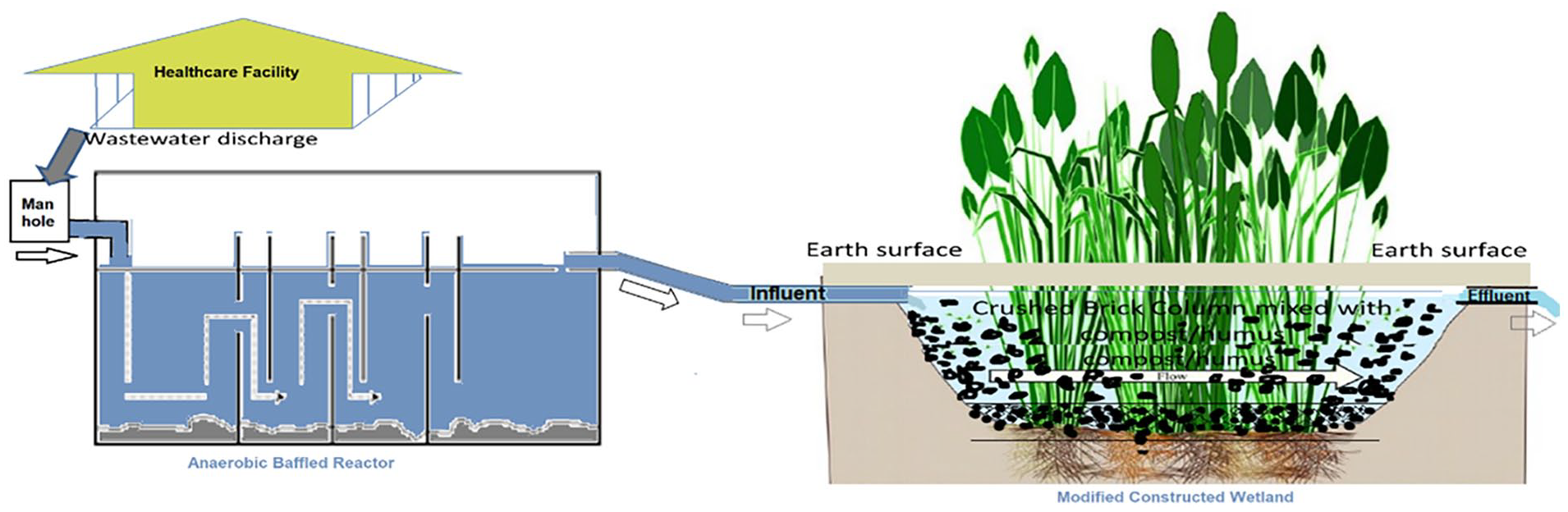
Proposed wastewater treatment system for low-income countries based on findings for the removal of antimicrobial resistance (AMR) from wastewater discharge.
Supplemental Material
sj-xlsx-1-ehi-10.1177_11786302241312770 – Supplemental material for A Review on Biohazards Removal in Ethiopia: Efficacy of Existing Treatment Systems and Challenges
Supplemental material, sj-xlsx-1-ehi-10.1177_11786302241312770 for A Review on Biohazards Removal in Ethiopia: Efficacy of Existing Treatment Systems and Challenges by Chalachew Yenew, Muluken Azage Yenesew, Argaw Ambelu, Gashaw Melkie Bayeh and Almaw Genet Yeshiwas in Environmental Health Insights
Footnotes
Acknowledgements
We would like to express our sincere gratitude to the staff from Bahir Dar University, Addis Ababa University, Debre Tabor University, and Injibara University who were involved in this study. We also extend our thanks to all the contributing authors of the original study for their valuable contributions.
Funding:
The author(s) received no financial support for the research, authorship, and/or publication of this article.
Declaration of conflicting interests:
The author(s) declared no potential conflicts of interest with respect to the research, authorship, and/or publication of this article.
Author Contributions
C.Y., G.M.B. and A.G.Y. wrote the main manuscript text A.A. and M.A.Y prepared Figures as well as Tables. All authors reviewed the manuscript.
Availability of Data and Materials
The data supporting the findings of this study are available from the corresponding author upon reasonable request.
Ethics Approval and Consent to Participate
This study is a scoping review; therefore, it did not require an ethical review.
Consent for Publication
In light of the absence of any identifying images or personal details that could compromise participant anonymity, the Consent for Publication is Not Applicable.

Supplemental Material
Supplemental material for this article is available online.
References
Supplementary Material
Please find the following supplemental material available below.
For Open Access articles published under a Creative Commons License, all supplemental material carries the same license as the article it is associated with.
For non-Open Access articles published, all supplemental material carries a non-exclusive license, and permission requests for re-use of supplemental material or any part of supplemental material shall be sent directly to the copyright owner as specified in the copyright notice associated with the article.
