




Abstract
The Middle East is facing serious climate change challenges, rendering it as one of the most affected regions worldwide. This paper aimed to investigate the outcomes of climate change in the Middle East. In 2024, a qualitative study was conducted employing a methodology that integrated systematic review for data collection and thematic analysis for data analysis. Such integration of the approaches provided valuable insights into the findings within the literature in a comprehensive and categorized format. PubMed, Scopus, ProQuest, and the Cochrane Database of Systematic Reviews were searched for relevant studies published between 2000 and 2024. The quality of these studies was assessed using the AACODS (Accuracy, Coverage, Objectivity, Date, Significance) checklist. The data extracted from the included studies underwent a thematic analysis utilizing Braun and Clarke’s methodology. After completing the screening process, a total of 93 papers were deemed suitable for inclusion in the study. The quality assessment of these selected studies demonstrated a notably high standard, particularly in terms of authority, accuracy, coverage, objectivity, and significance. Moreover, minimal levels of bias were observed within the included studies. Subsequent thematic analysis of the findings from the systematic review identified 6 overarching themes: “Human Health Outcomes,” “Animal Health Outcomes,” “Plant Health Outcomes,” “Ecological Outcomes,” “Economic Outcomes,” and “Political Outcomes.” The study revealed ecological outcomes as the most prevalent consequences of climate change in the Middle East, including alterations in habitat distribution, temperature increase, water scarcity, and more. The outcomes seemed to be interconnected, exacerbating each other. Yemen and Syria had faced severe consequences, leading to political unrest and humanitarian crises in which Yemen ranking among the most water-stressed nations globally, while Syria contending with millions of displaced individuals living in dire conditions.
Key Messages
• • The Middle-East region has experienced severe negative outcomes due to the climate change, and it is considered as one of the most significantly affected regions around the globe.
• • The study found the primary impacts of climate change in the Middle East and reported that these effects are interrelated and compound each other. Furthermore, the study reported countries including Yemen and Syria experiencing severe consequences, contributing to political instability and humanitarian emergencies.
• • This study highlighted the need for healthcare policymakers and researchers to examine Yemen and Syria’s experiences to address their urgent situations and implement preventive measures in their own countries. Additionally, the study emphasized the innovative climate change policies of the UAE and Kuwait, offering valuable insights for mitigating the climate crisis.
Introduction
Climate change is perceived as the most significant health hazard of the 21st century, exerting both direct and indirect impacts on human lives by destabilizing environmental and social health determinants.1,2 The escalation in temperatures, coupled with the occurrence of fires, floods, and droughts, can induce both physical and mental human pathologies, either directly or indirectly. Extreme meteorological phenomena result in the loss of human lives and essential life resources, thereby imposing a substantial mental strain. 2 This underlines the multifaceted and profound implications of climate change on human health and well-being.
Climate change can be defined as a modification in the patterns of global or regional climate, particularly a transformation that became evident from the mid to late 20th century onward and is ascribed to human activities. It is typified by a rise in sea surface temperature, an escalation in the severity of extreme weather events, a deterioration in air quality, and the destabilization of natural systems attributable to the augmentation in greenhouse gas emissions.3 -5
Climate change is linked to various healthcare indicators. It contributes to increased mortality rates from extreme weather and temperature changes, with studies indicating a potential rise in global death rates, particularly among vulnerable groups such as the elderly.6,7 Health issues associated with climate change include respiratory diseases, cardiovascular problems, and mental health disorders. Key factors such as exposure to extreme temperatures, air pollution, and infectious diseases are critical for monitoring population vulnerability to climate-related hazards.8,9 Additionally, adaptation indicators are essential for strengthening health system resilience against climate impacts, facilitating the identification of effective practices that can be replicated across different contexts.8,10
The Middle East region is confronted with severe temperatures, droughts, floods, and escalating sea levels, conditions that are intensified by its geographical characteristics. The Middle East and North Africa (MENA) region ranks among the most susceptible areas worldwide to the impacts of climate change. Notably, countries such as Iraq are particularly at risk, with Iraq ranking as the fifth most vulnerable nation globally to climate change.11,12 MENA economies are significantly dependent on oil and gas revenues, posing risks amid accelerating global energy transitions. In this regard, countries like Saudi Arabia are pursuing economic diversification initiatives, such as Vision 2030, but face challenges due to entrenched fossil fuel dependencies.13,14 Furthermore, agriculture, employing a substantial portion of the population in MENA, is particularly vulnerable to climate variability, with forecasts suggesting a 15% to 45% reduction in water discharge by century’s end, jeopardizing rain-fed agriculture that accounts for approximately 70% of the region’s output.15,16
The Middle East, a region strategically located at the intersection of North Africa and West Asia, encompasses a diverse array of countries. These include Bahrain, Egypt, Iraq, Jordan, Kuwait, Lebanon, Oman, Qatar, Saudi Arabia, Syria, the United Arab Emirates, Yemen, Iran, and Turkey. Additionally, the territories of Gaza and the West Bank, as well as the nation of Israel, are also part of this region. This geographical composition underscores the region’s cultural and political diversity. 17
Recognizing the impacts of climate change on specific regions, particularly those severely affected, can provide policymakers and stakeholders with a more comprehensive and accurate perspective on the consequences of climate change in their respective regions. This understanding can enhance their analytical capabilities during crises, thereby enabling the implementation of more efficient and effective measures and policies to counteract the adverse outcomes of climate change in their region.
Upon evaluation by the authors of the manuscript during the research process, it was observed that there were no systematic reviews within the existing literature that aimed to investigate the outcomes of climate change on the Middle East in a comprehensive context. This observation underscores the necessity and importance of conducting research with such a focus. In this regard, A systematic review was conducted to investigate the correlation between climate change and violent conflict in the Middle East and North Africa (MENA) region. The findings of the study indicated that climate change has the potential to amplify the risks associated with violent conflict through a variety of mechanisms. 18 Another systematic review aimed to consolidate knowledge on the impact of climate change on health in the Eastern Mediterranean region (EMR). The study highlighted the scarcity of research in this area and underscored the need for long-term studies investigating climate change and health correlations. It also advocated for broader regional studies considering various factors influencing disease spread. 19 Another review investigating the link between climate change and human health in the Middle East found that health is significantly influenced by climatic factors such as extreme heat, water shortages, and air pollution. It also revealed that climate change impacts the epidemiology of vector-borne diseases and health outcomes of population displacement in this region. 20
In light of the aforementioned context, Given the importance of the outcomes related to climate change in the Middle East region and the lack of a comprehensive review of this phenomenon, this paper endeavored to investigate the outcomes of climate change within the Middle East region through a systematic review. We aimed to gather data on these outcomes without any scope limitations to provide a detailed and comprehensive analysis of the findings for the benefit of stakeholders, including healthcare policymakers, administrators, and researchers in the context of climate change.
Materials and Methods
This qualitative study was conducted in 2024. Our methodology combined a systematic review for data collection and a thematic analysis for data analysis. Our approach to the systematic review was in accordance to the Preferred Reporting Items for Systematic Reviews and Meta-Analyses (PRISMA checklist). 21
Research question
The research question was formulated as the following: “What are the outcomes of climate change in the Middle East region?”
Data collection
The process of data collection encompassed 4 distinct stages: initial database searches, screening of abstracts, thorough examination of full-text articles for eligibility, and extraction of data from the corpus. Our search was conducted across 4 reputable databases: PubMed, Scopus, ProQuest, and the Cochrane Database of Systematic Reviews. To facilitate a comprehensive search, the search terms were categorized into 3 domains—Outcome, Climate Change, and Middle-East - in order to identify studies that align with the specified criteria. The search strategy began with the use of broad terms to enhance sensitivity, incorporating synonyms through the use of the “OR” operator. To ensure specificity and minimize the inclusion of irrelevant studies, the “AND” operator was utilized within our search methodology. The search strategy is presented in Table 1.
The search strategy utilized for conducting the systematic review.

Inclusion and exclusion criteria
In our study, we incorporated articles published in English between April 2000 and March 2024, specifically addressing the outcomes of climate change in Middle Eastern nations. Articles were excluded if they: (1) did not address the pertinent outcomes of climate change in Middle Eastern countries, (2) lacked a title or abstract detailing the topic of our study, or (3) lacked a title, abstract, or full-text content that presented any outcome of climate change in Middle Eastern countries. Consequently, the manuscripts that discussed the relevant outcomes of climate change in Middle Eastern countries were incorporated into the research for further analysis.
Screening and data extraction
The researchers conducted a thorough analysis of the references cited in the articles to pinpoint studies that were pertinent to the topic but were not captured by the search strategy. Multiple authors collaborated to validate the results at each stage of the search process, aiming to enhance reliability and mitigate potential biases. Initially, 2 authors autonomously reviewed all articles retrieved from the databases. Subsequently, abstracts of the chosen articles and reports were scrutinized in the second phase. This was followed by a comprehensive evaluation of the full text of the selected articles. Ultimately, articles demonstrating adequate validity were included in the study. The data extraction from the selected papers was carried out using a pre-structured form consisting of various sections, such as the publication year, country of origin, study type, and a summary of the research.
Quality appraisal of the included studies utilizing the AACODS checklist
The evaluation of the quality of the studies included in the analysis was undertaken by 2 authors utilizing the AACODS (Accuracy, Coverage, Objectivity, Date, Significance) checklist which comprised 6 criteria. 22 An established scoring protocol was employed throughout the evaluation process, where a response of “Yes” corresponded to a score of 2, “Can’t Tell” to 1, and “No” to 0. Scores were tabulated within a range of 0 to 12, with higher scores indicative of heightened quality. Subsequently, the studies were stratified into 4 tiers based on their total scores: very low quality (0-3), low quality (4-6), medium quality (7-9), and high quality (10-12). Only studies classified as medium or high quality were considered appropriate for inclusion in research endeavors. Any disparities noted between the assessments of the 2 authors were resolved through dialog and consultation with an independent arbiter. These protocols were reiterated twice to ensure methodological consistency.
Thematic analysis
The aim of this phase was to discover the outcomes of climate change in Middle Eastern countries mentioned within the texts of the included studies. During this phase of the research, we employed Braun and Clarke’s method for thematic analysis, comprising 6 sequential steps: familiarization with the data, coding, theme generation, theme review, theme definition and naming, and final write-up. 23
Initially, we aimed to acquaint ourselves with the subject matter and research context by thoroughly reviewing the content within the finalized studies. Subsequently, we proceeded to code the elements corresponding to the aim of the study based on the information extracted from the final studies. Following this, we derived sub-themes and overarching themes from the coded data by organizing and grouping the codes. The generated themes underwent multiple rounds of review to ensure the robustness and reliability of the process. Subsequently, we defined and labeled the themes and sub-themes based on their core essence and distinctive characteristics. Finally, we consolidated the themes, sub-themes, and corresponding codes into a unified document.
The thematic analysis process adhered to Lincoln and Guba’s criteria for qualitative research to validate and authenticate the findings. These criteria encompassed 4 fundamental aspects: credibility, transferability, dependability, and confirmability of the qualitative content analysis process. 24
Results
Systematic review
The search conducted within the databases resulted in 5914 references, among which 95 were identified as duplicates. Following the screening process of the remaining references, a total of 93 papers were selected for inclusion in the study (Figure 1). The bibliography of the included studies revealed a substantial representation of quantitative investigations carried out across diverse geographical regions, notably with Iran and Turkey standing out for their prevalence in the literature. The methodologies employed in these studies encompassed both quantitative and qualitative approaches. Further details regarding the characteristics of the included studies are presented in Appendix 1 (Bibliography).
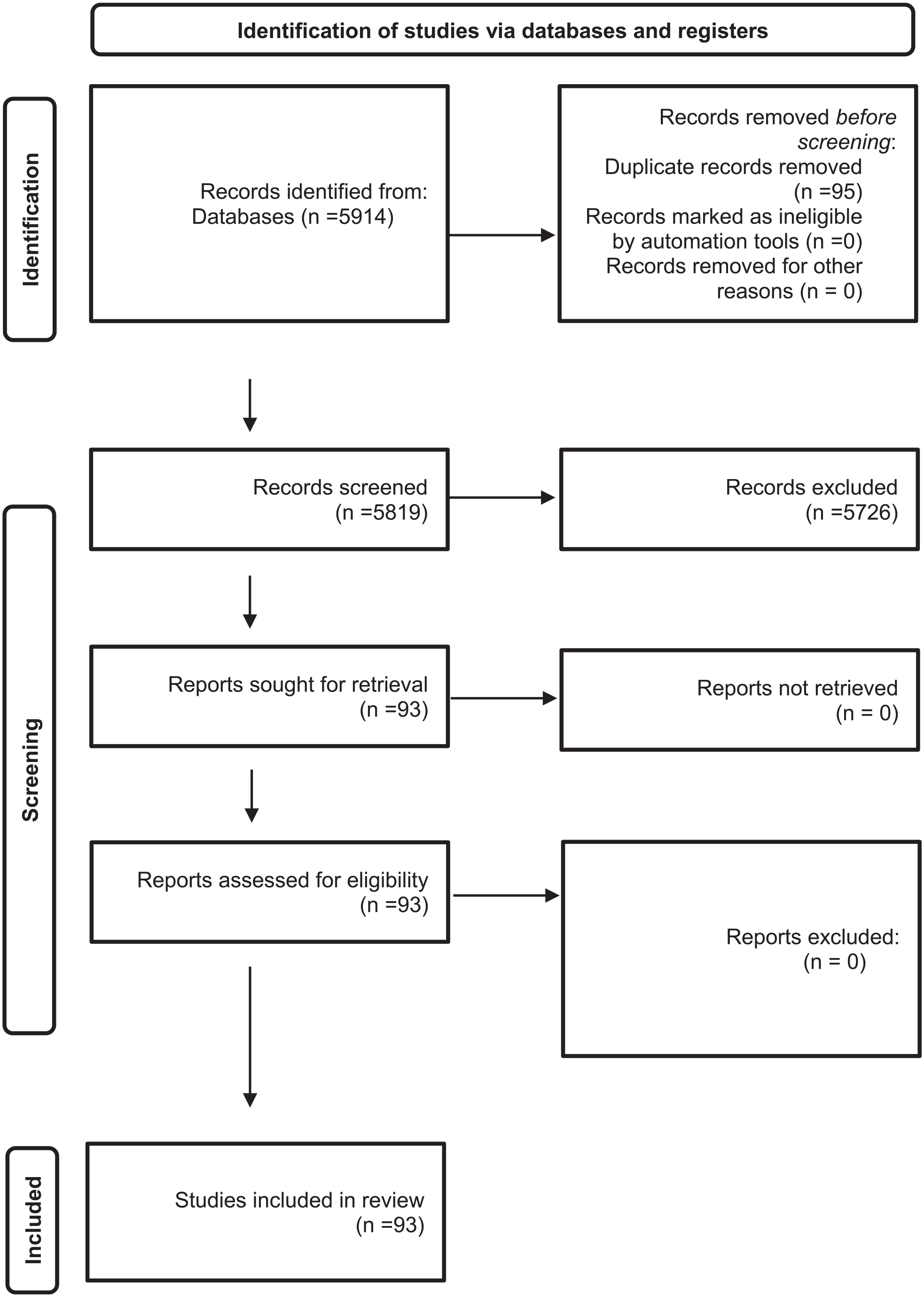
PRISMA diagram of the systematic review.
Quality assessment
As depicted in Figure 2, the quality assessment of the included studies revealed a high level of quality, with the bias levels within the studies found to be minimized, as indicated by Question 4 (Q4) of the AACODS checklist. However, it is noteworthy that, as per Question 5 (Q5) of the checklist, the publication dates of a number of studies were relatively dated. For further elaboration on the quality assessment of the studies, Appendix 2 (Quality assessment) provides additional details. The description of each question within the AACODS checklist is provided below:
• Q1: Authority: Is the author or source of the information reputable and trustworthy?
• Q2: Accuracy: Is the information reliable, truthful, and correct?
• Q3: Coverage: Does the information cover the topic comprehensively and sufficiently?
• Q4: Objectivity: Is the information presented in an unbiased and balanced way?
• Q5: Date: Is the information current and up-to-date?
• Q6: Significance: Is the information relevant, important, and valuable to the topic?

Quality assessment of the included studies.
Thematic analysis
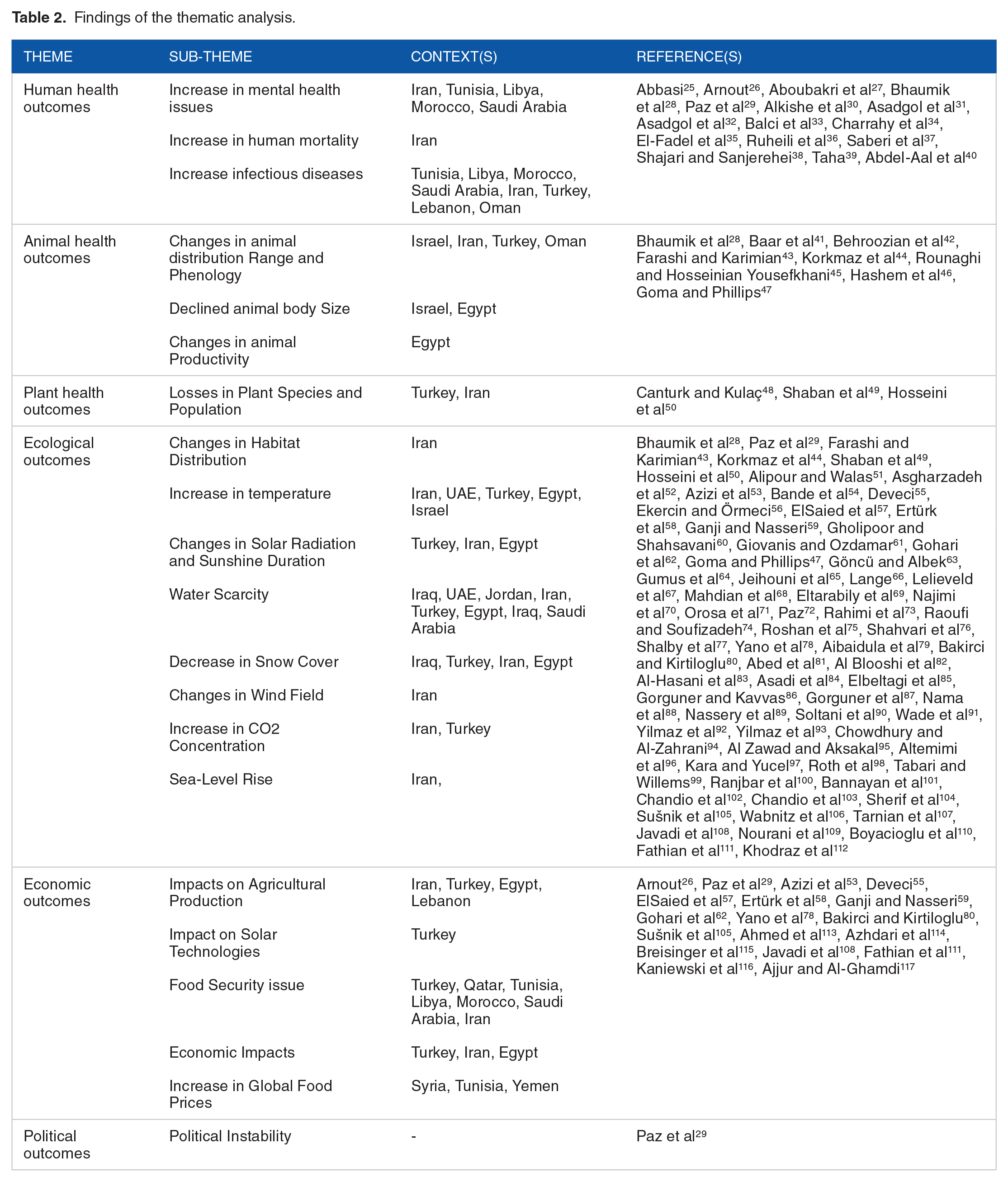
The thematic analysis on the findings of the systematic review yielded 6 themes as delineated in Table 2. The themes included “Human Health Outcomes” cited by 17%, “Animal Health Outcomes” cited by 8%, “Plant Health Outcomes” cited by 3%, “Ecological Outcomes” cited by 74%, “Economic Outcomes” cited by 19%, and “Political Outcomes” cited by roughly 1% of the included studies (Figure 3). The percentages, calculated based on the number of citations of each theme by the included studies, signify the prevalence and repetition of the data regarding each theme within the included studies.
Findings of the thematic analysis.

Distribution of themes among the included studies.
Human health outcomes
This theme included 3 sub-themes presenting multiple outcomes. Firstly, there is an observed increase in mental health issues, particularly depression, which is linked to rapid climate changes that urban populations have not had the opportunity to adapt to.25,26 Secondly, the potential for climate change to cause a significant increase in human mortality has been highlighted, indicating a clear trend toward increased death rates due to the changing climate.27 -29 Lastly, the studies have noted that climate change is influencing the geographic distributions and abundances of arthropod vectors, which subsequently affects the distribution and epidemiology of associated vector-borne and infectious diseases.26,29 -40
Animal health outcomes
This theme included 3 sub-themes underscoring multiple outcomes. Firstly, there are changes in animal distribution range and phenology, which refers to the study of cyclic and seasonal natural phenomena in relation to climate and animal life. Climate change is found to affect these aspects significantly.28,41 -45 Secondly, there is a noted decline in animal body size. This phenomenon has been widely studied in mammals and birds, with most findings indicating a reduction in body size due to global warming. However, there is limited data on similar size change patterns in invertebrates, particularly insects.28,41 -45 Lastly, changes in animal productivity have been observed, with heat waves, humidity, and drought being the major climatic changes affecting smallholding animal production. 46
Plant health outcomes
This theme included only 1 sub-theme which underscored significant loses in species and population in plants due to the global climate change.48 -50
Ecological outcomes
This theme included multiple sub-themes presenting multiple outcomes. Firstly, changes in habitat distribution have been observed due to climate change.48,50 -52 Secondly, an increase in temperature and warm weather has been noted.28,29,47,53 -79 Thirdly, significant changes in the amount of yearly average global solar radiation and sunshine duration have been found.60,69,73,80 Fourthly, climate change exacerbates water scarcity, threatening all sectors in arid regions and hampering sustainable development plans.44,56 -60,64 -67,69,70,81 -95 Fifthly, there has been a significant decrease in snow cover, with the area and percentage of snow cover decreasing continuously during the study periods.43,58,62 -64,66,70,76,78,96 -99 Sixthly, changes in wind field were found to be the most disadvantageous for the Persian Gulf’s capacity to flush dissolved pollutants out. 100 Seventhly, climate change was seen to be correlated with an increase in CO2 concentration.74,75,101 -103 Lastly, the results presented that climate change leads to a rise in sea levels.100,104 -106 These findings collectively highlight the extensive impacts of climate change on the ecology of the Middle East.
Economic outcomes
This theme included several sub-themes underscoring multiple outcomes. Firstly, climate change is known as one of the main factors influencing agricultural production, having extensive impacts on the agricultural sector.100,104 -106 Secondly, changes in solar radiation and sunshine duration can impact various solar technologies such as solar drying, cooking, heating, and building illuminations. 80 Thirdly, the studies assessed the risk of climate change from the perspective of loss in food grains and food security, with food loss negatively correlating with food security as it increases reliance on food imports. 80 Fourthly, the papers identified the relationship between food waste and food import, food prices, and economic growth, with losses in food supplies contributing greatly to price increases. However, the GDP growth rate was presented to be a weak instigator.57,105,113,114 Furthermore, employment and housing of residents were presented to be affected30,75,77,78. Lastly, even under perfect climate change mitigation, the world market prices for food are projected to increase, affecting the economies differently. Higher global prices for food negatively affect most sectors of the economy, except for agriculture, which benefits from the higher prices. However, real household incomes decline, particularly those of poor rural nonfarm households. Higher food prices pose challenges to the poor, and higher global prices for food will lower overall GDP growth, raise agricultural GDP, and decrease real household incomes. 115
Political outcomes
This theme had only 1 sub-theme presenting the outcomes of climate change. The findings delineated that Climate change plays an important role in contributing to political instability in the region through displacement of people, food insecurity, and increased violence. 29
Discussion
As outlined by the findings of the study, multiple themes emerged subsequent to the conduct of thematic analysis on the collected data from the review. Among these themes, “Ecological Outcomes,” “Economic Outcomes,” and “Human Health Outcomes” exhibited the most prevalent distribution across the included studies. Within this section, our endeavor was to thoroughly examine and analyze these principal outcomes of climate change in conjunction with other findings and evidence cited within the literature. These findings can be utilized by the beneficiaries, particularly in the realm of public health policy and intervention, in order to prioritize such contexts in their plans and policy designs for combating and mitigating climate change effects on society.
As indicated by the findings, the “Ecological Outcomes” of climate change in the Middle East encompassed alterations in habitat distribution, temperature increase, changes in solar radiation and sunshine duration, water scarcity, reduction in snow cover, shifts in wind patterns, elevated CO2 concentration, and rising sea levels28,29,43,44,48-106,110-115,118. The “Economic Outcomes” of climate change in the Middle East encompassed impacts on agricultural production, effects on solar technologies, issues pertaining to food security, economic consequences, and a rise in global food prices.26,29,53,55,57 -59,62,78,80,105,108,111,113 -117 And, the “Human Health Outcomes” of climate change in the Middle East comprised an increase in mental health disorders, elevated human mortality rates, and a rise in infectious diseases.25 -39
The evidence highlighted the interrelationship between the outcomes of climate change, emphasizing that ecological outcomes such as extreme heat, water scarcity, and air pollution exert significant impacts on human health outcomes (another prominent outcome of climate change reported by our study) in the Middle East.19,20 Moreover, the susceptibility to climate change in the region is exacerbated by factors including elevated rates of population growth, urbanization, political conflicts, and low economic performance. 20 This demonstrates the presence of interconnectedness and causal relationships among the various outcomes of climate change, with each outcome both influencing and exacerbating the others (Figure 4).

Interconnectedness and causal relationships among the various outcomes of climate change.
The Middle East region has faced distinct challenges stemming from its climatic variability, with desert-like conditions prevalent in some areas, characterized by arid, hot climates and limited precipitation and vegetation. Furthermore, economic disparities within the region have resulted in differing levels of resilience and adaptation to climate change impacts. Notably, per capita gross domestic product (GDP) varies significantly, ranging from $758 in Yemen to $65 908 in Qatar. 20 This phenomenon presents the diverse status of the countries within the Middle East region in terms of economic and financial attributes, which have affected the varying levels of ability of the countries to respond to climate change. This has resulted in some weaker regions that have responded poorly to the effects of climate change and some wealthier regions that have responded differently.
As reported by the findings of our study, Yemen, the least developed in the Middle East region, has experienced a severe cholera epidemic in 2016, surpassing 1 million suspected cases by January 2018. The conflict and destruction of infrastructure exacerbated the outbreak. Unique climatic conditions, influenced by El Niño and regional winds, facilitated cholera transmission from the Horn of Africa to Yemen. 29 Moreover, Yemen ranks among the most water-stressed nations globally, with projections suggesting that its capital, Sana’a, may become the first to exhaust its water supply. Predating the conflict, approximately half of Yemen’s population lacked reliable access to clean water and sanitation. The country’s infrastructure, including vital facilities like water desalination plants and reservoirs, has sustained significant damage throughout the civil war, further aggravating the water crisis. 118 And, the UN has declared Yemen as the world’s worst humanitarian crisis, with 21 million people in need of humanitarian assistance. 119
Another example reported by the findings of our study is Syria, where prolonged droughts exacerbated by climate change have led to extensive migration, food insecurity, malnutrition, and the breakdown of public health infrastructure, culminating in social unrest and civil strife.26,115 The drought, attributed to escalating greenhouse gas emissions and global warming, has been identified as a primary driver of regional conflict. 115 Furthermore, the ongoing war in Syria has inflicted severe damage on public health services, resulting in decreased life expectancy and a resurgence of preventable diseases due to health system collapse.120,121 Moreover, Syria harbors the largest internally displaced population worldwide, with 6.5 million displaced individuals among its 17 million inhabitants. The opposition-controlled area in Northwest Syria accommodates roughly 4.2 million people, over 2.8 million of whom are internally displaced populations from various regions. Within the opposition-controlled area, internally displaced camps provide refuge for approximately 1.5 million displaced Syrians, with over 75% comprising women and children. 122 These findings present a close relationship between climate change outcomes and political affairs, as supported by the literature. 123
It is worth mentioning that the situation in the Middle East regarding the outcomes of climate change varies among each country. In this regard, in contrast to the experience of Yemen and Syria, the UAE and Kuwait are leading efforts in the Middle East to address climate change. The UAE’s green economy strategy aims to incorporate 7% renewable energy by 2030, along with a nuclear power plant in Abu Dhabi supplying up to 25% of electricity needs. Despite heavy reliance on desalination, the UAE is also investing in water recycling. Meanwhile, Kuwait has ratified the Kyoto Protocol and the Paris Agreement, aiming for 15% renewable energy by 2030 as part of its 2035 vision, integrating renewables into water-energy sectors and promoting socioeconomic sustainability.124,125
The approach to addressing the climate crisis in the Middle East has entailed a blend of mitigation and adaptation strategies. Mitigation strategies have geared toward curtailing greenhouse gas emissions, transitioning to renewable energy sources, and enhancing energy efficiency. Conversely, adaptation strategies have focused on addressing the repercussions of climate change, including extreme temperatures, droughts, and flooding, through both precautionary and reactive measures.20,126,127 As regions exhibit varying sources and levels of emissions, they require tailored climate policy approaches that consider local conditions and capacities. 128 A place-based strategy is presented to be essential for achieving the transformations needed to reach net-zero emissions. This approach integrates local environmental, economic, and social factors into climate strategies, resulting in more effective and sustainable outcomes. 128
Limitations and Implications
A limitation of this study was the exclusion of local papers published in local languages within scientific journals of each Middle Eastern country, which could serve as a valuable consideration for future researchers. Another limitation of the study was its limited scope, which was confined to the Middle East. Future researchers can expand the scope to include other regions of the globe. The study ranked climate change outcomes based on their citations in the included studies. These findings can help beneficiaries, especially in public health policy, prioritize contexts in their plans and interventions to combat and mitigate the effects of climate change on society. The study also explored the catastrophic consequences of the climate change crisis in the Middle East, particularly focusing on Yemen and Syria. This serves as a significant implication for healthcare policymakers and researchers, both regionally and internationally, to examine the experiences of these nations meticulously and devise initiatives not only to alleviate the dire situations in Yemen and Syria but also to implement preventive policies in their respective countries. Additionally, the study highlighted the pioneering climate change policies of the UAE and Kuwait in the Middle East; This aspect offers valuable insights for policymakers and researchers, encouraging them to leverage the experiences of these nations in mitigating the climate change crisis. Policymakers in the Middle East, or in other regions with similar contexts, can implement various strategies to mitigate the effects of climate change on their areas. These strategies may include implementing green initiatives (e.g. transitioning to renewable energies) to enhance the sustainability of their regions.
Conclusion
Our study aligned with previous systematic reviews supporting the hypothesis that climate change has severely affected the Middle East region. The analysis of reviewed data revealed ecological outcomes as the most prevalent consequences of climate change in the Middle East, including alterations in habitat distribution, temperature increase, water scarcity, and more. The outcomes seemed to be interconnected, exacerbating each other. Yemen and Syria had faced severe consequences, leading to political unrest and humanitarian crises in which Yemen ranking among the most water-stressed nations globally, while Syria contending with millions of displaced individuals living in dire conditions. In contrast, the UAE and Kuwait had led regional efforts to address climate change, employing a mix of mitigation and adaptation strategies, serving as potential models for other countries. Future reviews focusing on internally published papers in local languages may be beneficial for obtaining a precise understanding of the phenomenon and its outcomes in the region.
Supplemental Material
sj-docx-1-ehi-10.1177_11786302241302270 – Supplemental material for A Systematic Review on the Outcomes of Climate Change in the Middle-Eastern Countries: The Catastrophes of Yemen and Syria
Supplemental material, sj-docx-1-ehi-10.1177_11786302241302270 for A Systematic Review on the Outcomes of Climate Change in the Middle-Eastern Countries: The Catastrophes of Yemen and Syria by Mohsen Khosravi, Seyyed Morteza Mojtabaeian and Mina Aghamaleki Sarvestani in Environmental Health Insights
Supplemental Material
sj-docx-2-ehi-10.1177_11786302241302270 – Supplemental material for A Systematic Review on the Outcomes of Climate Change in the Middle-Eastern Countries: The Catastrophes of Yemen and Syria
Supplemental material, sj-docx-2-ehi-10.1177_11786302241302270 for A Systematic Review on the Outcomes of Climate Change in the Middle-Eastern Countries: The Catastrophes of Yemen and Syria by Mohsen Khosravi, Seyyed Morteza Mojtabaeian and Mina Aghamaleki Sarvestani in Environmental Health Insights
Footnotes
Funding:
The author(s) received no financial support for the research, authorship, and/or publication of this article.
Declaration of conflicting interests:
The author(s) declared no potential conflicts of interest with respect to the research, authorship, and/or publication of this article.
Author Contributions
MK theorized the project, conducted the review, and data analysis, wrote the text of the manuscript and coordinated in the quality assessment of the papers. SMM wrote the methods section and cooperated in conducting writing of the manuscript. And, MAS conducted the quality assessment of the included studies, wrote the bibliography and coordinated in writing of the manuscript; All of the authors contributed in the screening process of the papers.
Ethical Approval and Consent to Participate
Not applicable.
Consent for Publication
Not applicable.
Availability of Data and Materials
The research data can be accessed by contacting the author of the paper.

Supplemental Material
Supplemental materials for this article are available online.
References
Supplementary Material
Please find the following supplemental material available below.
For Open Access articles published under a Creative Commons License, all supplemental material carries the same license as the article it is associated with.
For non-Open Access articles published, all supplemental material carries a non-exclusive license, and permission requests for re-use of supplemental material or any part of supplemental material shall be sent directly to the copyright owner as specified in the copyright notice associated with the article.
