




Abstract
The role healthcare systems can play in surmounting global challenges like climatic change and resource scarcity is large, considering the major social and environmental impact. The research investigates the role of organizational behavior in influencing the adoption of sustainability initiatives in Greek healthcare organizations in regard to climate change. The research surveys 379 healthcare professionals from the public and private sectors with regard to organizational attitudes toward climate change, the adoption of sustainable practices, and individual environmental perspectives. Results underline that health care administration is still cut off from environmental considerations, with limited employee involvement in such initiatives of sustainability. The major barriers were poor communication, lack of education, and inadequate awareness across institutions. The study also emphasized that healthcare organizations need to align their values with environmental strategy so they can work in unison toward seeking sustainability. These would be stimulating initiatives for more leadership and active staff who become involved in making meaningful contributions toward global sustainability from the healthcare sector.
Plain language summary:
Amidst global challenges such as climate change and resource scarcity, the health sector plays a pivotal role in promoting social well-being and environmental sustainability. However, achieving sustainability goals necessitates more than simply adopting environmentally friendly practices; it requires a profound shift in organizational behavior towards a holistic and integrated approach. This study scrutinizes the critical role of organizational behavior in terms of management’s perception of climate change, the way a health organization operates in relation to staff mobilization and the views of its own staff always with climate change in mind and its effects. An analysis of a sample of 379 health professionals through a relevant questionnaire from the public and private sectors of the healthcare industry in Greece revealed a significant degree of detachment of the administrations from environmental concerns, with the simultaneous absence of motivation of the staff on corresponding issues, while negative was the health workers’ overall perception of climate, showing significant challenges in communication in addition to education and awareness within the organization. Overall, this research provides a window into the adoption of Organizational Behavior principles by healthcare organizations in order to ensure their sustainability.
Keywords
Introduction
Climate change is arguably one of the greatest threats to environmental sustainability, human health and social well-being worldwide.1 -3 The health care sector is one of the main factors with a strong negative environmental footprint as it is responsible for approximately 4% of global emissions,4,5 while according to the World Health Organization it absorbs a large percentage of economic resources reaching $9 trillion, that is, approximately 11% of the global Gross Domestic Product.6,7 The outbreak of the Covid-19 pandemic a few years ago not only highlighted the critical role of a quality health system in times of health crisis, 8 but also underscored the imperative need to change the general mindset and behavior towards a greener and environmentally friendly direction, which will extend from the state and organizations to the community and people as individual entities. 6 Based on the above, the Health Organizations should be the first to create the appropriate path for sustainability through policies and actions of a voluntary nature, which should go beyond the mandatory and basic legal obligations of the organizations. 4 The above project can be achieved by adopting the basic principles of Organizational Behavior both in the operational planning of the organization and in its daily operation. Organizational Behavior focuses on individual characteristics, leadership features, as well as organizational climate, clarifying the complexity of interactions, communication dynamics, and decision-making processes, and can arguably be the cornerstone for successfully integrating sustainable policies and actions. 9 This knowledge permits organizations to adapt their strategies to include the unique dynamics of their workforce, thereby fostering a unified culture in relation to shared vision which will favor sustainability. 10
The healthcare industry is characterized by high complexity and is considered one of the largest labor-intensive industries with human resources being a key feature. 11 Since climate change is largely caused by human activity, and the success of environmental programs often depends on employee behavior,12,13 promoting employee environmental behavior can be one of the factors that could help in a smoother transition to a more sustainable operation of health structures.14,15 In this way, special emphasis should be placed not only on building a green and sustainable climate at a collective level, but also on the awareness of the staff itself through their education on environmental issues and the active participation of employees in making relevant decisions. 16 After an extensive search of relevant literature, it emerged that there is a significant research gap regarding the factors that influence small, everyday sustainable behaviors and also the difficulties of their more general application throughout the organization. 17 The present study comes to fill this gap and strengthen the existing international literature, analyzing the role of organizational behavior in the Greek health sector in relation to addressing the challenges of climate change and promoting sustainable practices. The Greek Health Sector, being at the crossroads of public health and environmental responsibility, is a compelling case study to explore the symbiotic relationship between organizational behavior and the successful implementation of sustainable initiatives. In Greece, there are seven health departments with 125 public hospitals (small hospitals/health centers, general hospitals, university hospitals and special hospitals) and 182 private ones. According to the data of the Ministry of Health for 2022, by December 2022 there were a total of 34,699 specialized beds in all public hospitals of the country, while over 236,831 people were working in activities related to human health and social care according to the Greek Statistical Authority.
The primary focus of this research endeavor is the inquiry into the impact of organizational behavior in the implementation of sustainable practices in a healthcare organization. The study seeks hospital managements’ perception of the challenges of climate change and investigates their response, whether through voluntary initiatives or compliance with environmental legislation. In addition, it examines how leadership influences staff motivation to adopt environmentally friendly practices and the degree to which healthcare professionals participate in climate change initiatives. In this way, the research offers important understanding of how organizational structures and leadership can influence the adoption and implementation of sustainable practices in healthcare organizations. The next section will be devoted to the detailed analysis of the existing theoretical framework, which will be followed by the review of relevant research, methodology, results and discussion and finally the conclusions of the study will be presented.
Theoretical Background
While pollution in all its forms is responsible for 1 in 6 deaths 18 and nearly 70% of deaths worldwide are caused by diseases that could be exacerbated by planetary warming, 19 the need to transition to a sustainable path is becoming progressively urgent with increasing natural disasters, huge economic and human losses caused by climate change still expanding at a frenetic rate.1,20
In order to achieve this in the human factor-based healthcare sector, it is not enough for the management of organizations to simply comply with environmental legislation, but the involvement of all employees of a healthcare organization is crucial to create a strong and ninth green culture.21,22 Some factors that lead to the awareness and motivation of employees to operate greener in their daily work are green human resource management,23,24 support from the organization itself,25,26 support from immediate supervisors, 27 as well as the organization’s emphasis on environmental issues through policies and practices that promote its environmentally conscious actions.28,29 While the commitment to the organization still seems to have an important role,26,27 so does the personal environmental concern of the employee, 12 along with the identification of values between the organization and worker. 30 In all of the above, the managements of the organizations have an important connecting role as they are able to exert a significant influence on the employees and, therefore, direct them to greener behaviors.25,31,32
In particular, a management that presents an environmentally conscious culture that promotes the voluntary adoption of climate actions and policies, integrates the consequences of climate change into its operational planning, exploits the knowledge derived from the analysis of Organizational Behavior, encourages initiatives of staff and enables the active participation of all stakeholders in meetings, discussions and decisions, can create a supportive climate of trust that will lead to the creation of a strong unified green culture and lay the foundation for a shared green vision throughout the organization.33 -39
The success of this approach, however, requires relevant environmental education and awareness at all levels of the organization with an emphasis on staff, in order to increase awareness and motivation within the organization towards a more sustainable operation in their daily work and outside of it by building with in this way a single culture and a common green vision.40 -42 In order to accomplished that, it could be useful to reach into a collaboration between environmental education researchers and health professionals with a view to advocate evidence-based strategies for policy and promote low-emission lifestyles, which will foster a deeper understanding of how healthcare professionals can contribute to mitigating environmental challenges, leading to more effective strategies for sustainability and climate action.43 -45
In order to achieve a successful establishment of a common green vision and a smooth transition to the greener operation of a hospital, it is necessary to approach the subject holistically from the staff to the administration culture itself. 46 A related study showed that management plays a vital role in encouraging the active participation of employees in the environmental policies of the organization, while the same research also highlighted the important role of education and training of staff on related issues. 47 Important finding of this research was also the importance of communication and cooperation between management and staff, pointing out feedback from staff as a cornerstone in the evaluation of the actions and policies that have been implemented with the aim of improving the environmental performance of the organization. 47
Despite the fact that the impact of climate change on both human health and well-being and the environment has become clear in the academic community as well as in the business world, many organizations around the world are still not taking sufficient measures to limit its consequences, something that is evident strongly from a related survey where it showed that only 8% of US respondents and 13% of non-US respondents have taken action to address the effects of climate change. 48 The same study addressed workers who are in organizations that are directly involved in the provision of health care worldwide. Further than that, the survey revealed that 69% of participants stated that it was extremely or very important for them personally that their organization implement policies and actions to address climate change, while at the level of personal knowledge 69% of clinics, 67% of leaders of clinics and 54% of executives had high or moderate awareness of the effects of climate change on health. 48
Staff’s commitment to the vision of the organization as well as staff education and training can be a cornerstone in achieving the greenest operation of a health structure without however altering the results and the quality of services provided. Case in point, the Veteran Health Administration (VHA) is the largest and most comprehensive health care system in the United States, responsible for providing care to approximately nine million veterans annually. 49 One of the initiatives it implemented was the Green Environmental Management System (GEMS), established in 2008. 50 GEMS is a framework designed to identify and manage environmental risks and opportunities. 50 An important factor in the success of the program was the existence of a strong culture of cooperation and communication, which, as mentioned above, acts as a key tool for the development and implementation of such initiatives, while another important element that helped the smooth transition to greener practices was its highly trained staff, which, due to the climate of trust that existed, was characterized by high levels of commitment to the goals and vision of the organization. 51
Finally, it seems that indeed the identification of the organization’s values with the employee’s as well as the organization’s approach to environmental issues seems to influence the individual behavior of the employees to a large extent. The above was more evident through related research which investigated factors affecting voluntary green behavior among employees, focusing on employee-organization fit, perceived insider status, and green organizational climate. 52 The study’s descriptive statistics showed positive correlations among these variables. Employee-organization fit positively influences voluntary green behavior, mediated by perceived insider status. Moreover, the green organizational climate moderates the relationship between perceived insider status and voluntary green behavior, as well as the indirect relationship between employee-organization fit and voluntary green behavior via perceived insider status. 52
In summary, the need for health organizations to shift towards sustainable practices amid the challenges posed by climate change cannot be understated. As emphasized in this review, the adoption of environmentally friendly policies and measures requires a concerted effort by both management and staff, guided by the principles of organizational behavior. 53 By fostering a culture of environmental responsibility, promoting employee awareness and participation and education, and leveraging effective communication channels, healthcare organizations can pave the way for a greener and more sustainable future. 54 Through collaboration, education and commitment to shared values, these organizations can play a key role in reducing the impacts of climate change and ensuring the well-being of both individuals and the planet. 55 By addressing these aspects, this research aims to provide valuable insights into the interplay between organizational behavior and the success of sustainable policies and actions in the Greek healthcare sector, ultimately contributing to the advancement of sustainable practices in the industry.
Materials and Methods
Research population delimitation—Sampling size
The present study recruited all healthcare workers working in the Administrative, Medical, Nursing and Technical Services of public or private Greek health facilities. Respondents of the present research are 379 healthcare employees from Greece. The participants are drawn from public hospitals and private clinics as well, they also encompass different professional roles in healthcare settings. More precisely the sample encompasses workers from Administrative, Medical, Nursing and Technical Services thus providing a mix of personnel types involved in healthcare adaptation to climate change. The law will apply to the 349 participants who work in public, and not (for now) on the remaining 30 dentists employed at private clinics. This distribution is indicative of the larger footprint that public health has in Greece relative to private providers. Although it is not possible to compare directly without significant confounding as an artifact of the sampling frame, there are two important components which highlight distinct ways that public and private health organizations in various sectors differently address climate change adaptation. All the subjects were adults older than 18 years, with a good command of Greek language to comprehend fully regimes and be able to provide valid answers. There was wide variation in the roles of participants included in the sample, from administrative staff to doctors, nurses and technicians—this is essential for understanding diversity absolutely necessary while addressing different risky settings/areas within healthcare. This sample entails the first profile of how Greek hospitals and clinics respond to climate change, while it reveals their state regarding organizational levels of adaptation end every professional working in these.
Sampling method
In this research the stated preference method was used being widely employed in empirical work to study preferences of individuals, mainly in scenarios where choices and behaviors cannot be exactly observed. It involves collecting data through a survey or an experiment by asking participants to express their strongest preference for hypothetical scenarios. It is especially useful in the contexts of health, transport or environmental economics or any other area where direct observation may be practically impossible. The stated preference method has several techniques. The most common of which are the valuation condition method (where participants have to state how much a good or service is worth) and the choice experiment (involving consumers making choices from alternatives). For this research, the choice experiment technique was selected. This approach will also enable investigation of the trade-offs people are willing to make between different attributes of health services, in particular, in relation to adaptation to climate change. The choice experiment method was chosen for its ability to provide fine-grained understanding of preferences in a structured way and therefore is ideal for investigating how health workers in Greece prioritize different aspects of their work environment in relation to climate change adaptation. The design will also allow the study to find out potential barriers and facilitators to adaptation within hospitals and clinics.
Instrument development
The questionnaire, developed by the researcher for this study, comprises a total of 23 items and is categorized into three subcategories: Organizational Attitude toward Climate Change; Climate Change Initiatives and “Green” Behavior; and, Personal Attitudes and Thoughts about Climate Change and the Environment, inclusive of some demographic questions. The five-point Likert scale assisted in measuring the quantitative variables in the three categories of the questionnaire. Using ten questions to analyze the category of “Organization’s Attitude towards Climate Change” rendered a result of .911 in the use of the Cronbach’s Alpha test, proving a high internal consistency. The category of “Climate Change Initiatives and ‘Green’ Behavior” was analyzed using seven questions, obtaining a result of .890. Finally, the category “Personal Attitudes and Thoughts on Climate Change and the Environment” was reviewed by six questions, measured with a Cronbach’s Alpha of .870. All in all, one can state that the questionnaire shows an acceptable level of reliability, as the general Cronbach’s Alpha amounts to be .909. For the first dimension, the “Organization Attitude towards Climate Change,” no scale was used and no total score arrived because the responses were not in scale format; hence, the data was based on the total number of responses for the questions, which was converted into percentages for analysis. Secondly, for the dimension “Climate Change Initiatives and ‘Green’ Behavior” and the third dimension, “Personal Attitudes and Thoughts on Climate Change and the Environment,” a value of 3 is accounted for as a neutral value in the five-point Likert scale, which corresponds to the neutral attitude category of the participants towards the questions. On this scale, the general averages of the responses for each dimension were made to capture the overall trends and attitudes of the participants towards the respective categories.
Data collection
Data were collected over a 3-months period and more specifically from November 3, 2022 to February 17, 2023. The questionnaire created for the purposes of the research was sent to all 7 Health Districts of the country, as well as to private employees of the healthcare sector from the close environment of the researchers, so that there would be a relative representativeness and in order to make possible the comparative evaluation of the health structures from different regions of Greece and also between the public and private sectors in terms of their attitude towards climate change. For the public sector a link was sent electronically to all Health Districts via Google Forms and the reason why the research was extended to all the Health Districts, is because in studies within the Greek context which examined energy consumption as well as the management of infectious agents, significant differences were recorded based on the region of the hospitals.56,57 It is crucial to point out that for the sending of the questionnaire, all the necessary approvals were obtained both from the Scientific Councils of the Hospitals and from the Scientific Councils of their Authorities (Health Districts).
Correctness—Data completeness check—Statistical data processing
Due to the nature of the questionnaire, a more extensive completion of the results using tables and frequency diagrams was preferred. After completing the questionnaires, they checked for correctness. From the correctness check which was carried out, 100% of the questionnaires were correctly completed. Then, a completeness check was conducted which revealed that 100% are completed. Regarding the statistical analysis, apart from the descriptive recording of the answers, which is of particular interest, an ANOVA examination was carried out to contrast the mean ages of respondents by response category for each question. Also, the chi-square test was used for all pairs of responses which are the categorical variables of the survey. The processing as well as all the analyses concerning the collected data was carried out using the Statistical Program SPSS Version 26 for Windows.
Results
Demographic statistics
In terms of demographics, the majority of the sample consisted of women (76.25%, N = 289), while men represented only (23.75%, N = 90). The mean age of the participants was 44.6 years (SD = 9.99). The majority had a master’s degree (35.09%, N = 133), followed by graduates of technological education (24.27%, N = 92), higher education (20.6%, N = 78), secondary education (15.3%, N = 58) and lastly the PhD holders (4.75%, N = 18). Regarding work sectors, the majority was working in the public sector (92.08%, N = 349), with the rest in the private sector (7.92%, N = 30). Regarding the health districts, the majority worked in the 1st Health District (Attica) (45.38%, N = 150), followed by the 2nd (19.79%, N = 68). Subsequently, the 6th and 5th Health Districts accounted (12.14%, N = 45) and (11.35%, N = 43) respectively, while smaller samples originated from the 3rd, 7th, and 4th Health Districts with percentages of (5.28%, N = 20), (3.96%, N = 17) and (2.11%, N = 8) respectively. The majority worked in larger health organizations (over 250 employees), (62.01%, N = 235) of the sample. At the administrative level, the majority were administrative staff (42.5%, N = 161), followed by nursing staff (32.7%, N = 124), medical staff (20.3%, N = 77) and technical staff (4.5%, N = 17). The majority were employees (82.32%, N = 317), followed by supervisors (11.87%, N = 45), with managers, accounting (5.8%, N = 22) of the total sample.
General statistics
According Figure 1, a significant percentage of the sample (49.08%, N = 186) stated that they did not know whether their organization considers the risks of climate change in their business planning. Only (27.97%, N = 106) reported that their organization takes these risks into account. In addition, the smaller percentage of the responders stated that the organization does not take climate change into account at all (22.96%, N = 87). Regarding the allocation of funds for climate-related measures, the majority of the sample (53.83%, N = 204) did not know how to answer. Only (12.93%, N = 49) reported that their organization spends part of its budget on environmental protection measures, while the rest answer negative (33.2, N = 126). Regarding the factors that influenced organizations to take action on climate change the most responders cited the change in legislation as the main factor, (25.59%, N = 97). To a lesser extent, pressure from management (7.12%, N = 27) and pressure from society (3.96%, N = 15) influenced the decision. The lowest impacts were recorded by the purchase and change in management (2.9%, N = 11).
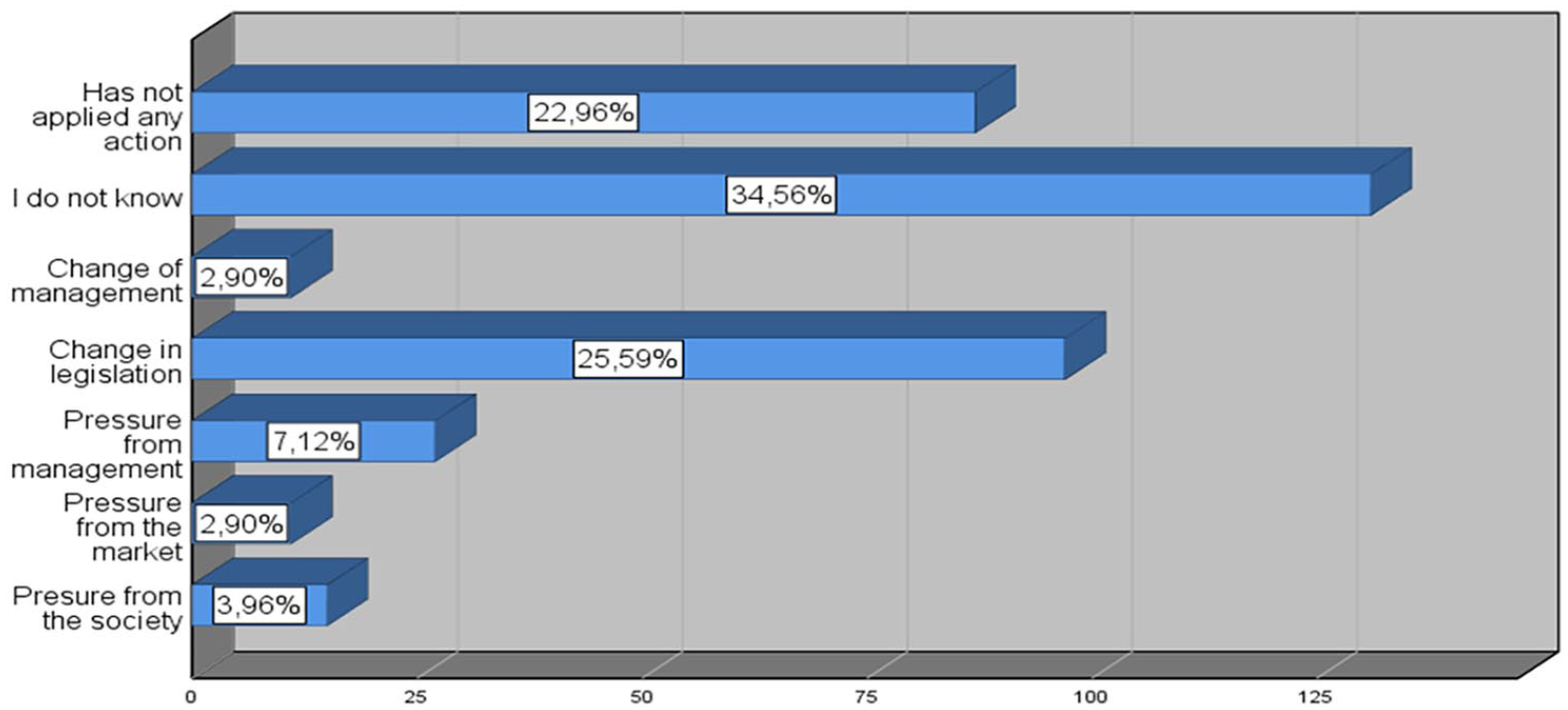
Bar chart for the question “What has taken place in recent years for your organization to take actions and measures on climate change.”
As shown in Table 1, the mean value for motivation for climate change actions was 2.63 (SD = 0.837). From this data, it can be appreciated that there was no significant match between the values of the organization and its personnel. This observation is also reflected in questions about whether the organization actively encourages employees to operate in a green manner and consider the environmental footprint of their actions at work. In particular, it suggests that people in positions of responsibility do not motivate their subordinates to adopt environmentally friendly practices, resulting in a lack of effort in training and informing staff about environmental issues. Furthermore, it indicates a difficulty among workers in voicing their environmental concerns. In addition, the above finding indicates a striking lack of commitment from staff to the organization’s environmental strategies and reflects a lack of enthusiasm about collective participation in its environmental work.
Descriptive statistics for climate change advocacy section.

According to Table 2, the mean value for the variable “Personal Attitudes to Climate” was 2.55 (SD = 0.948). This indicates that employees do not make significant efforts to incorporate environmentally friendly actions during their work. Furthermore, this analysis reveals that it is rare for employees to take actions that create a positive image for their organization. Furthermore, it implies a weak willingness among employees to voluntarily and proactively participate in developing actions and taking necessary measures to operate in a more environmentally friendly way, with the aim of reducing their impact on the environment during their work.
Descriptive statistics for the personal climate attitudes section.

At this point, it is crucial to be mentioned that the majority of respondents have not attended any course or seminar related to climate change or environmental management (66.75%, N = 253), while the rest have attended something related to these issues (33.25%, N = 126). Furthermore, it is underscored that the majority of respondents seem to be conscious of the actions and measures taken at the European and national levels (55.15%, N = 209) while a significant percentage of responders state that they are unaware of the measures and actions taken by central governing bodies (44.85%, N = 170).
Private and public healthcare organizations comparison
Comparing the private and public sectors in terms of the factors that influenced the adoption of climate change actions in recent years (Figures 2 and 3), it was observed that in the public sector the majority of respondents did not know (36.39%, N = 127), while the corresponding percentage in the private sector was (13.33%, N = 4). In both sectors, the change in legislation seems to have played a crucial role, (25.79%, N = 90) in the public sector and (23.33%, N = 7) in the private sector. A large percentage of respondents also indicated that their organizations have not taken action to address climate change (23.5%, N = 17) in the private sector and (16.67%, N = 109) in the public sector. In addition, it was observed that the change in management had a greater effect on the private sector, while it had a smaller effect on the public sector, with respective percentages of (6.67%, N = 2) and (2.58%, N = 9). Finally, in the private sector, both pressure from management (10%, N = 3), from the market (16.67%, N = 5), and from society (13.33%, N = 4) played an important role in the implementation of climate change policies and actions. However, it seems that these factors did not have the same effectiveness in the public sector, with rates of (6.86%, N = 24), (1.72%, N = 5) and (3.15%, N = 4) respectively.

Bar chart for the question “What has taken place in recent years for your organization to take actions and measures on climate change,” according to work sector (public sector).

Bar chart for the question “What has taken place in recent years for your organization to take actions and measures on climate change,” according to work sector (private sector).
It is worth noting that (27.5%, N = 96) participants stated that their organization includes the threats of climate change in their operational planning, while the remaining (22.3%, N = 78) responded that their organization does not take into account the potential risks of climate change in the design of its operation. In the private sector, a similar balance is observed (as in the previous table) with the responses being divided. In particular (36.6%, N = 11) reported that they do not know if the risks of climate change are included in their operational planning, (33.3%, N = 10) reported that they are included, while the remaining (30%, N = 9) reported that their organization does not include these risks in its operational planning (Table 3).
Frequency table for the question “My organization takes into account the potential risks of Climate Change in its business planning” by work sector.

When asked if the company where they work allocates funds for climate-related measures and actions, the public sector is, once again, incredibly ignorant. Of those surveyed, 55.3% (N = 193) do not appear to know if funds have been provided for such actions, 31.2% (N = 109) responded that no funds have been provided, and only 13.4% (N = 47) stated that efforts have been made to finance climate-related measures and actions. As a result, in the private sector, (56.6%, N = 17) respondents stated that their company has not allocated funds for climate-related initiatives, while (36.6%, N = 11) respondents said they are unsure if their company has budgeted for such initiatives. It is noteworthy to emphasize that a mere 6.7% (N = 2) of respondents stated that their organization possesses resources for climate-related initiatives and actions (Table 4).
Frequency table for the question “Does my organization dedicate funds to climate measures and actions” by work sector.

Health districts comparison
After the analysis between the seven Health Districts of Greece, the majority of respondents it turns out either did not know how to answer (44.4%, N = 155) or answered negatively (18.1%, N = 63) on whether their organization is aware of and implementing the new climate provisions. Only (37.5%, N = 131) stated that their organization is implementing the new provisions. In the 1st Health District (Attica), (24.6%, N = 37) reported that their organization is implementing the new provisions, while (57.3%, N = 86) were not aware and (18%, N = 27) answered negatively. In the 2nd (Piraeus and Aegean), (47.05%, N = 32) responded positively, while (35.2%, N = 24) did not know to answer and (17.6%, N = 12) responded negatively. For the 3rd (Macedonia), (30%, N = 6) stated that their organization is implementing the new provisions, while (70%, N = 14) did not know how to answer. In the 4th (Macedonia and Thrace), (62.5%, N = 5) responded positively, while (37.5%, N = 3) did not know to answer. In the 7th (Crete), responses were split: (33.3%, N = 5) positively, (40%, N = 6) negatively, and (26.6%, N = 4) did not know. In the 5th (Thessaly and Central Greece), (46.5%, N = 20) responded positively, (32.5%, N = 14) did not know, and (20.9%, N = 9) responded negatively. In the 6th Region (Peloponnese, Ionian Islands, Epirus and Western Greece), (57.7%, N = 26) answered positively, (22.2%, N = 10) did not know, and (20%, N = 9) answered negatively.
Regarding whether organizations take into account climate change risks in their operational planning, in the 2nd Health District, (41.1%, N = 28) answered positively, (33.8%, N = 23) did not know, and (25%, N = 17) answered negatively. In 1st, only (15.3%, N = 23) said they take climate change risks into account, while (63.3%, N = 95) did not know and (21.3%, N = 32) answered negatively. In the 3rd, (35%, N = 7) responded positively, (60%, N = 12) did not know and (5%, N = 1) responded negatively. In 4th, responses were split with (50%, N = 4) responding positively and (50%, N = 4) not knowing. In 5th Health District, (27.9%, N = 12) responded positively, 46.5% (N = 20) did not know, and (25.5%, N = 11) responded negatively. In the 6th, (37.7%, N = 17) responded positively, (33.3%, N = 15) did not know and (28.8%, N = 13) responded negatively. Lastly in 7th, responses were split with (33.3%, N = 5) responding positively, (26.6%, N = 4) responding negatively, and (40%, N = 6) did not know how to respond.
Comparison according demographic questions
According to the data of Figure 4, personnel in the private sector promote green behavior on average slightly more than those in the public sector, with a mean of 2.81 (SD = 0.713) versus 2.61 (SD = 0.846). This implies that private organizations prioritize promoting eco-friendly work practices more than other organizations do, and that there is greater uniformity in the way that various private enterprises approach this. On the other hand, there is more variation in the public sector, where some companies efficiently encourage environmentally friendly conduct while others may not keep up, resulting in a wider range of experiences among staff members. In general, both industries might do more to encourage environmentally friendly workplace practices.
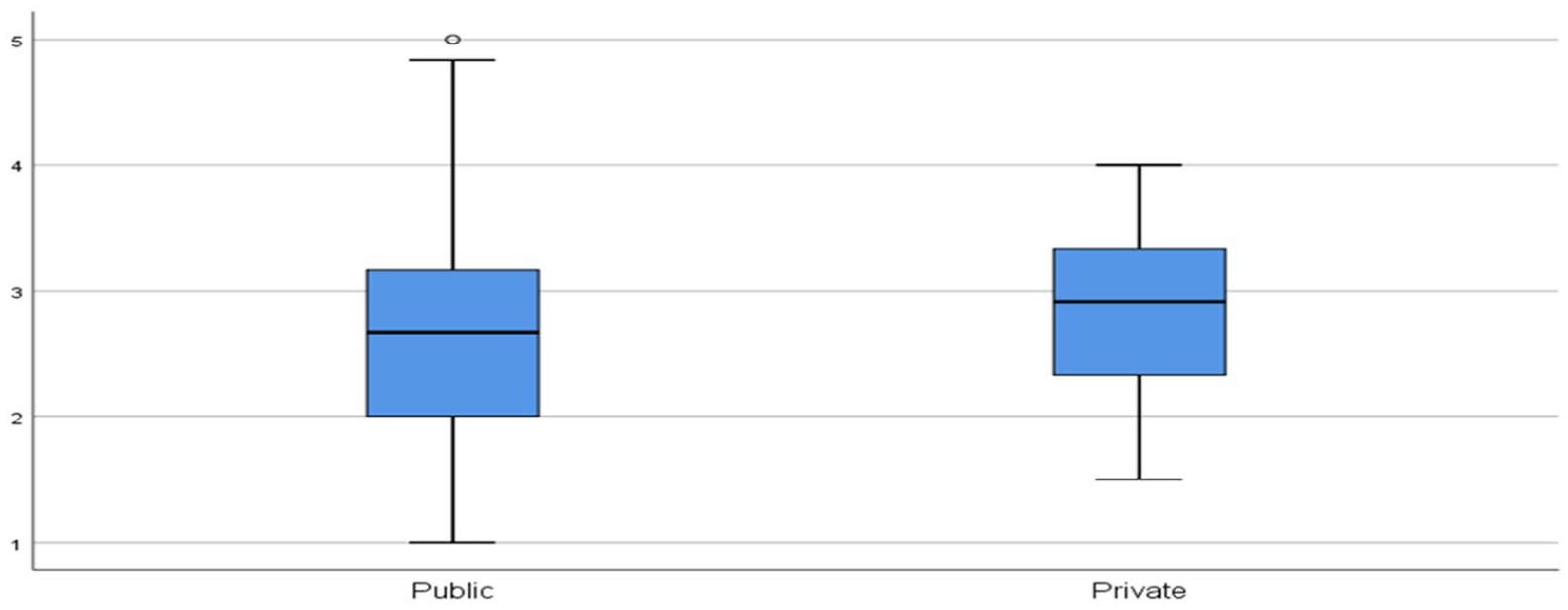
Boxplot for the average grade for the Climate Change Incentive Actions section according the work sector.
However, there were statistically significant variations in the responses to the question “My organization dedicates funds to climate measures and actions” when the chi-square test (Table 5) was used to evaluate the relationship between the work sector (public or private). The results of the test indicated a significant correlation (χ2 = 8.146, P = .017) between the work sector and the amount of funds allocated for climate initiatives. With the exception of 1 cell (16.7%) with an expected count of fewer than 5, the assumption regarding predicted frequencies was largely realized. Near the five-percent barrier, the minimum expected count was 3.88, although most cells had sufficient predicted frequencies. The rates of positive responses to the allocation of funds for climate measures and actions appear to be significantly higher in the public sector (13.5%, N = 47) than in the private sector (6.7%, N = 2), which is in contrast to the adoption rates of more “green behavior” in relation to the work sector (Table 6). This is somewhat expected given that the public sector is required to accept national and European guidelines and frequently uses funds from the corresponding sources, whereas the private sector is primarily concerned in profit. This implies that in order to encourage private structures to adopt climate action, the state must support policies that achieve just that.
Chi-square tests for the question “Does my organization dedicate funds to climate measures and actions” by work sector.
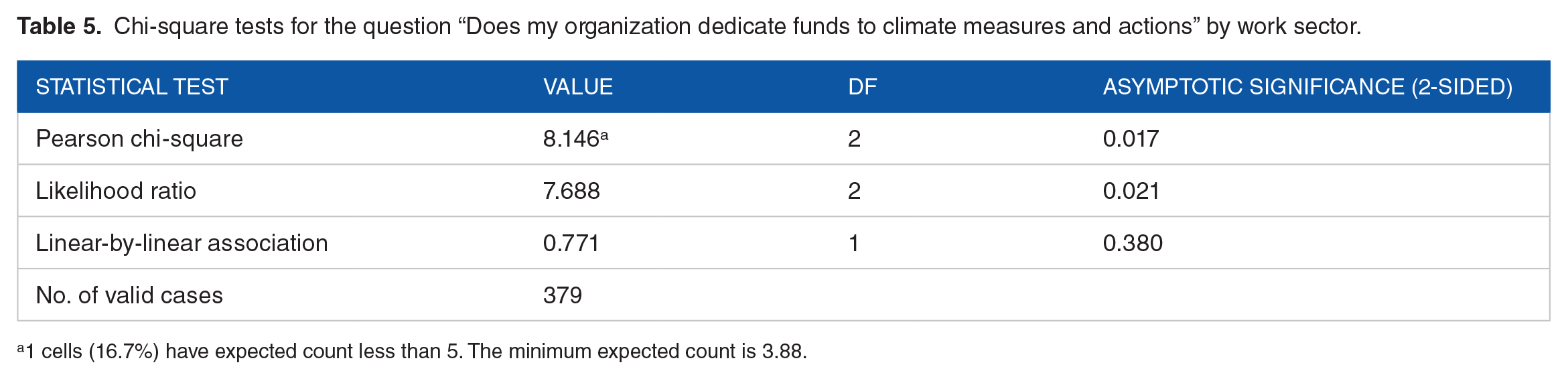
1 cells (16.7%) have expected count less than 5. The minimum expected count is 3.88.
Frequency table for the question “My organization takes into account the potential risks of climate change in its business planning” by work sector.

In addition, a comparison was made according to the service in which the participants work (Figure 5). With a mean price of 2.67 (SD = 0.687), technical service employees have the highest average price, according to the data. Administrative staff members are closely behind with a mean price of 2.66 (SD = 0.797). The nursing service employees are ranked second (M = 2.64, SD = 0.949), followed by the medical service employees (M = 2.55, SD = 0.765), who exhibit the lowest levels of mobilization. It is important to note that, despite a small variation across the three services (Technical, Administrative, and Nursing) in terms of encouraging and motivating staff to work in a more environmentally friendly manner, the average values are low in every instance, suggesting that little to no effort is being made to encourage healthcare professionals to use environmentally friendly practices in their day-to-day work.
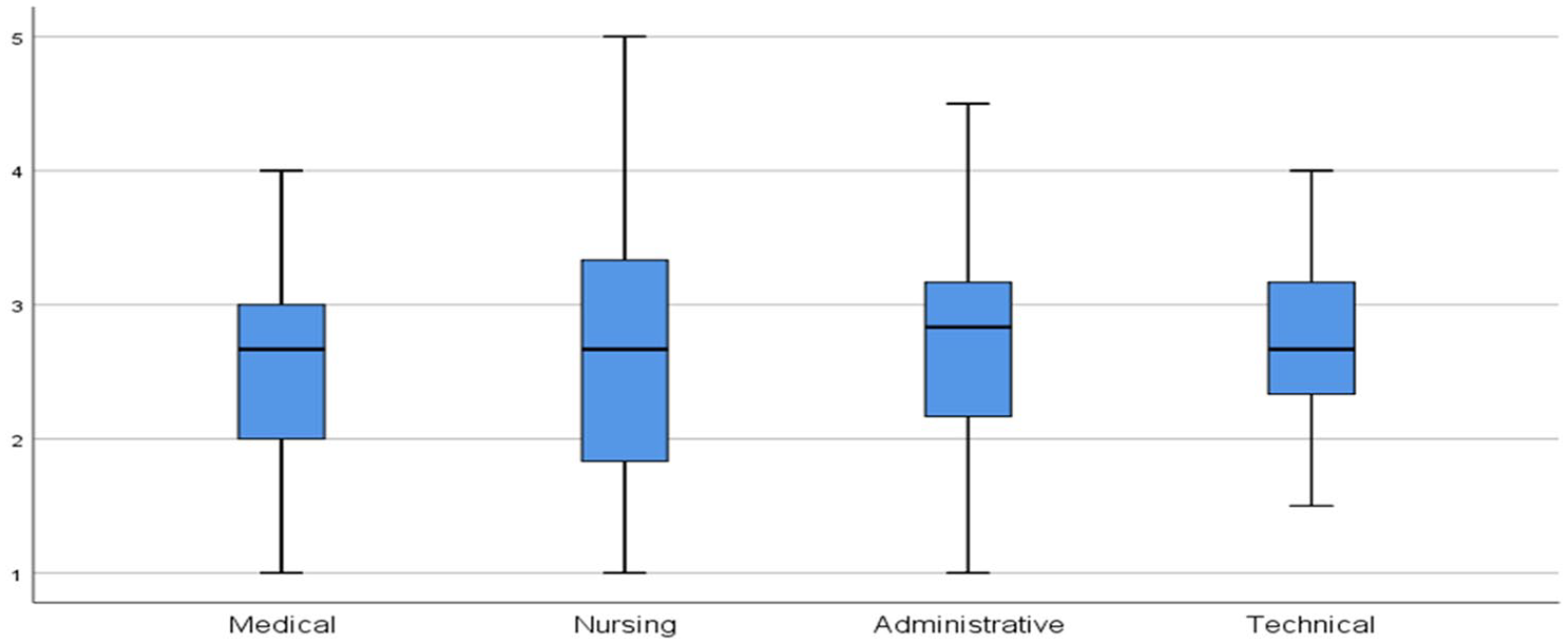
Boxplot for the average grade for the Climate Change Incentive Actions section according the service in which participants work.
Regarding the kind of service, the participants work for and their educational attainment, a comparable analysis was carried out for the section “Personal Attitudes towards Climate” (Figures 6 and 7). The examination of individual perspectives on climate change in various service sectors presents a complex image of involvement. The average score for the medical industry was 2.51 (SD = 0.898), which indicates a rather neutral attitude with substantial variability. The mean score for the nursing industry is (M = 2.54, SD = 0.918), which indicates a somewhat more optimistic outlook with modest variability. The mean score of the administrative sector is higher (M = 2.59, SD = 0.977), indicating a more optimistic outlook with more variation in views. On the other hand, the technical sector similarly reports a mean score of M = 2.51, but the standard deviation is larger (SD = 1.149), indicating a significant amount of response variability. The administrative sector exhibits the most positive average attitude toward climate change, though with major variability, and the technical sector exhibits a significant variation of perspectives, despite the fact that the mean scores across sectors are generally rather near to neutral.
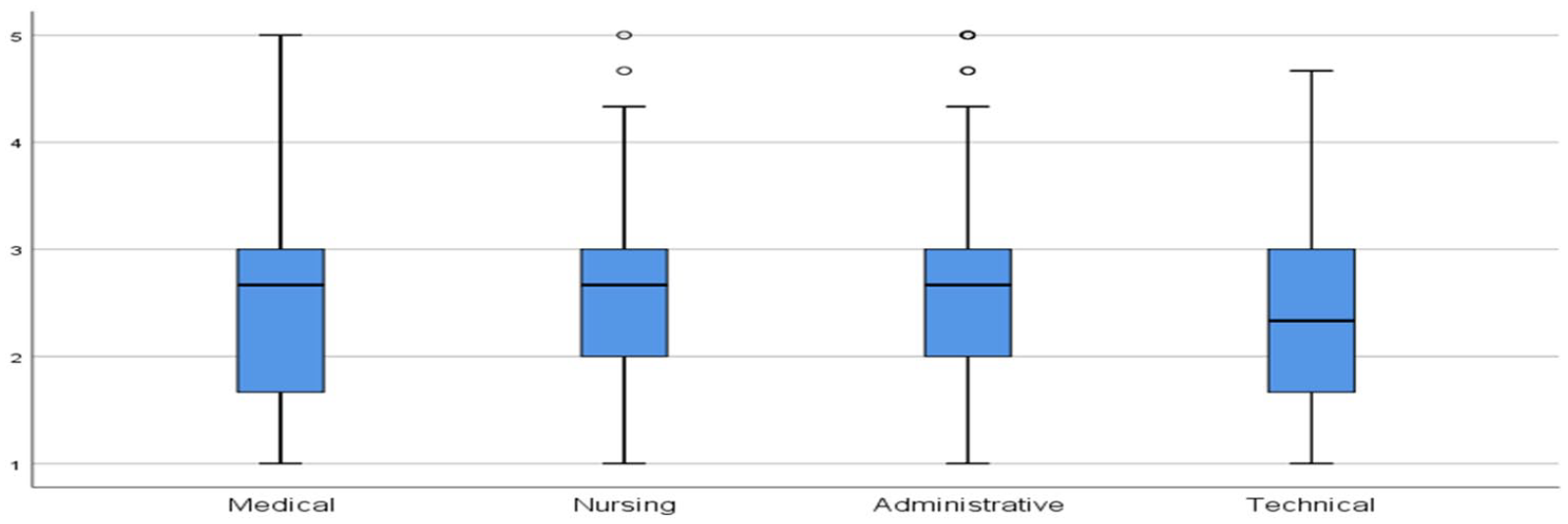
Boxplot for the average grade for the section “Personal Attitudes on the Climate” according the service in which participants work.
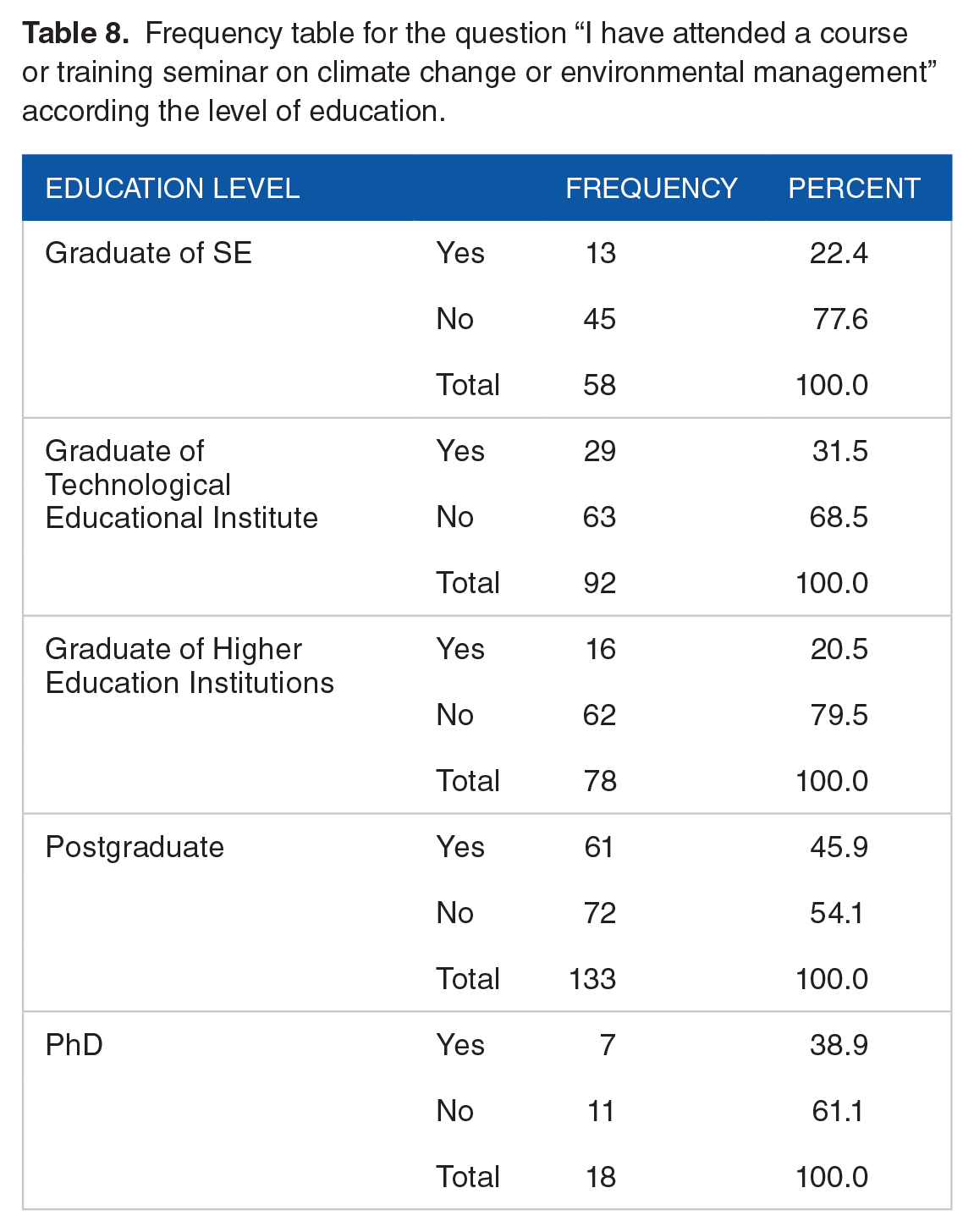
The Figure 7 below, makes it clear that the participants’ educational attainment has an impact on how “green” their thinking and behavior are at work. Higher education levels are associated with an increasing trend in average scores when it comes to personal attitudes regarding climate change, according to an analysis of attitudes across education levels. The lowest mean scores (M = 2.48, SD = 0.899) and (M = 2.38, SD = 0.957) were obtained by graduates from Technological Educational Institutes and High School graduates, respectively. These results indicated both significant attitude variability and lower average participation. On the other hand, the mean score of those with a university degree is marginally higher (M = 2.58 SD = 0.799), indicating a little more positive and consistent perspective. Those with master’s degrees report even higher mean scores (M = 2.67, SD = 1.028), which suggests a typically more optimistic outlook. Lastly, but with considerable fluctuation, those holding a doctorate have the highest mean score (M = 2.72, SD = 0.972), indicating the groups’ most optimistic views regarding climate change. Overall, these findings imply that although there is significant variation in answers within each educational level, greater educational attainment is linked to more positive personal attitudes on climate change. The relationship between the education level and the response to the question “I have attended a course or training seminar on climate change or environmental management” was investigated using a Pearson Chi-Square test (Table 7). A statistically significant correlation between the variables was found by the Pearson Chi-Square test results (χ2 = 18.689, P = .001). This implies that there are notable differences in the responses’ distribution between the categories. The predicted frequencies in the contingency table satisfied the necessary requirements after the Chi-Square test assumptions were reviewed. To be more precise, the lowest expected count was 5.98 and no cells (0.0%) had an expected count lower than 5. This increases the findings’ robustness and guarantees the validity of the Chi-Square test. Finally, it’s important to note that people with postgraduate degrees provided the majority of the affirmative responses (Table 8).
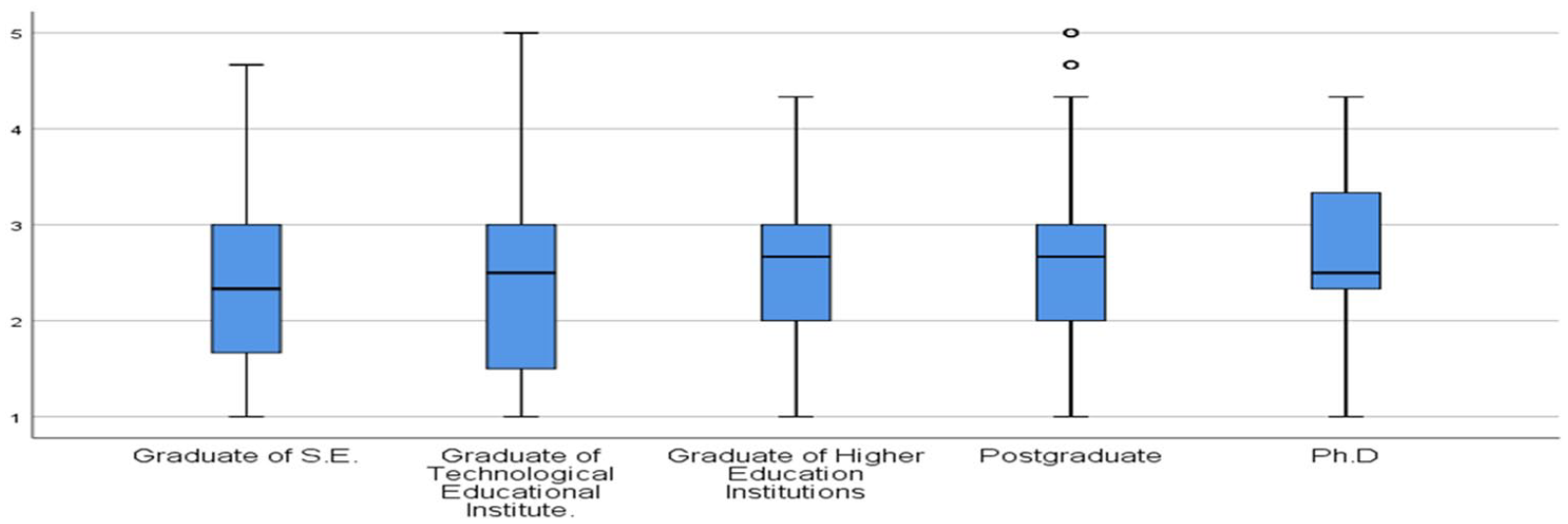
Boxplot for the average grade for the section “Personal Attitudes on the Climate” according education level.
Chi-square tests for the question “I have attended a course or training seminar on climate change or environmental management” according the level of education.

0 cells (0.0%) have expected count less than 5. The minimum expected count is 5.98.
Frequency table for the question “I have attended a course or training seminar on climate change or environmental management” according the level of education.
Consistently, the examination of individual perspectives on climate change for various occupational roles indicates significant disparities in involvement (Figure 8). The group with the lowest mean score, employees (M = 2.48, SD = 0.901), showed a largely neutral attitude with some variation. Supervisors, on the other hand, report a higher mean score (M = 2.96, SD = 1.121), indicating a more optimistic outlook, albeit with significant individual variability. Additionally, managers have a higher mean score (M = 2.86, SD = 0.985), indicating that they have a more optimistic outlook than employees but still exhibit a great deal of variability, much like supervisors. In general, managers and supervisors have more positive attitudes regarding climate change than employees do, but there is significant variation in these groups’ viewpoints as opposed to employees’ more consistently neutral attitudes.

Boxplot for the average grade for the section “Personal Attitudes on the Climate” according the job position of the participants.
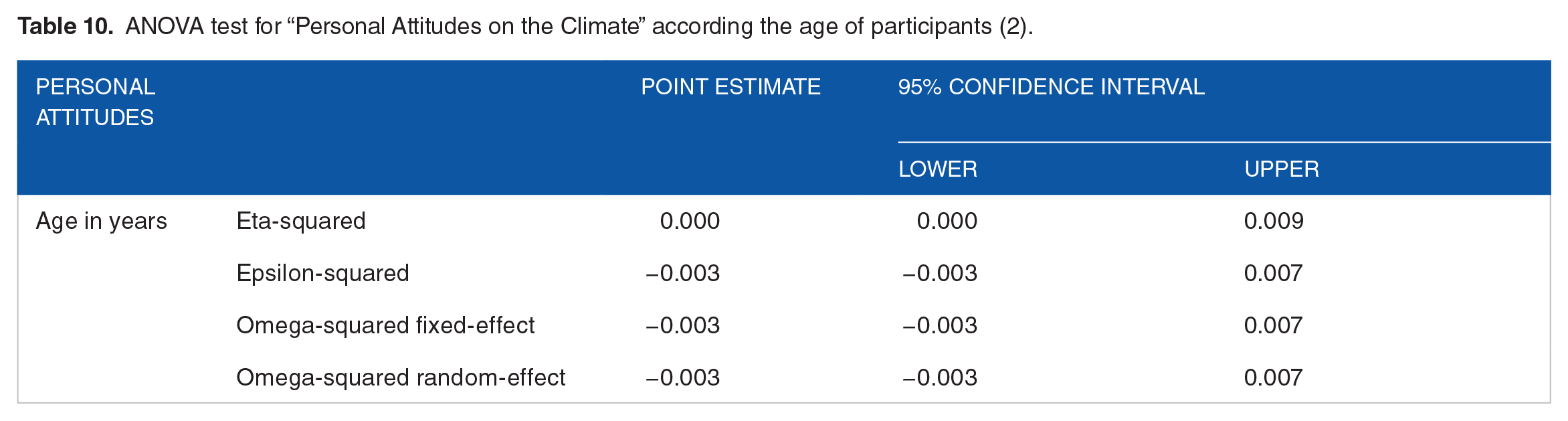
To find statistically significant differences in mean age between respondents who provided different answers describing their behavior related to the topic, one-way analysis of variance (ANOVA) tests were performed (Tables 9 and 10). The findings did not signify anything. P = .857, F(1, 377) = 0.033. This suggests that sentiments toward climate change are similar across age groups. Age had no discernible influence on views, according to an effect size analysis: η 2 = .000, with a 95% confidence interval between 0.000 and 0.009. In conclusion, this study shows that age has no discernible impact on an individual’s attitudes toward climate change.
ANOVA test for “Personal Attitudes on the Climate” according the age of participants (1).

ANOVA test for “Personal Attitudes on the Climate” according the age of participants (2).
Finally, the study shows a pattern where smaller businesses tend to report higher levels of engagement when comparing their sizes in the “Climate Change Incentive Actions” area (Figure 9). The very small category, which includes companies with fewer than ten employees, has the highest mean score (M = 2.89, SD = 0.550), suggesting a more favorable attitude toward climate change advocacy and less variation in replies. A considerably less positive but nonetheless engaged attitude with moderate variability is reflected in the somewhat lower mean score (M = 2.71, SD = 0.883) of small firms, defined as those with fewer than 50 employees. The mean score (M = 2.56, SD = 0.785) for medium-sized businesses (those with 250 or less employees) indicates a more neutral position with modest variability. With more than 250 workers, large firms have a mean score (M = 2.59, SD = 0.866) that is comparable to medium-sized organizations but has a little bit more variability. Overall, there is a general pattern of declining mean scores with rising organizational size, along with moderate to high variability in responses across all sizes, with very small firms exhibiting the highest average engagement in climate change initiatives.
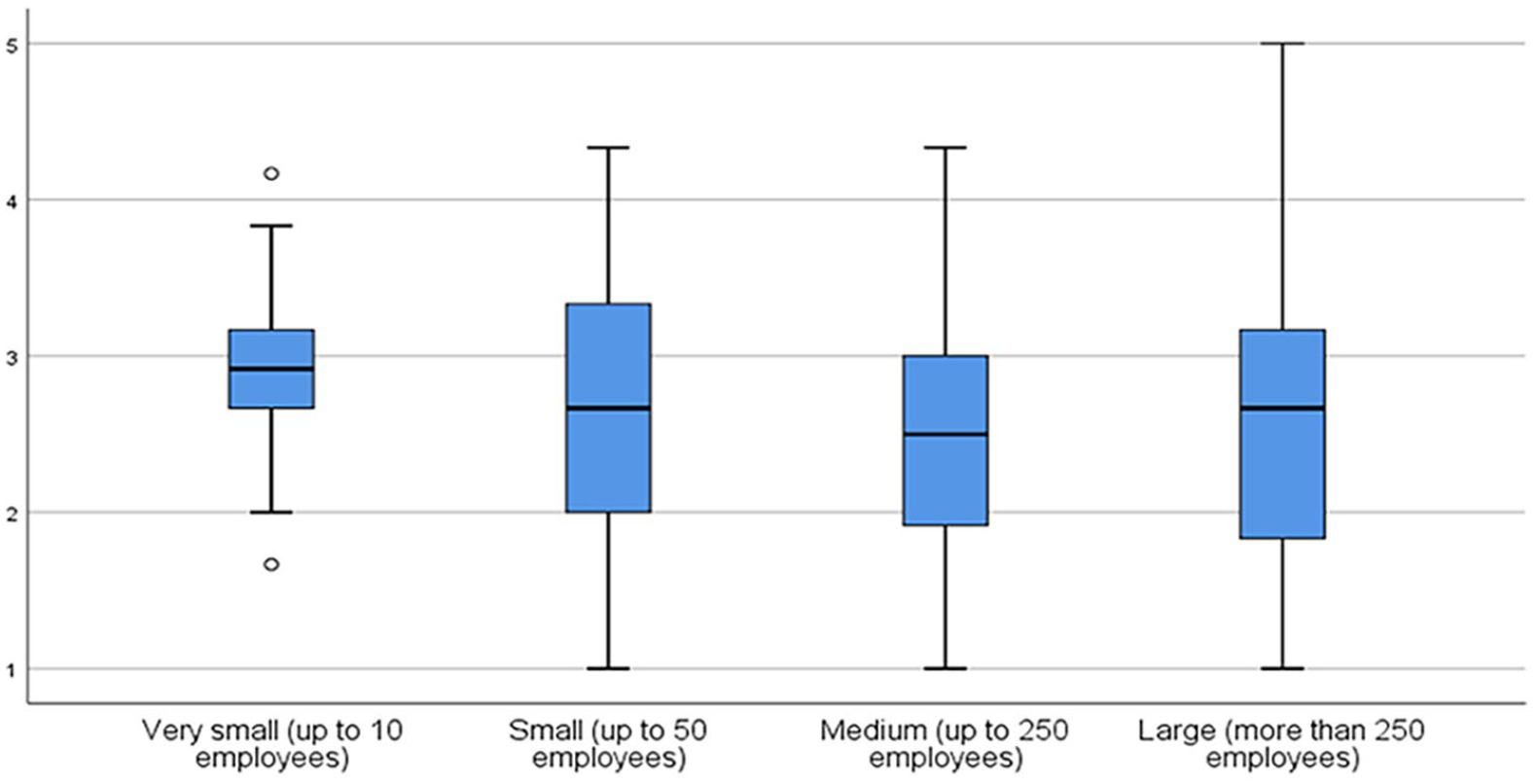
Boxplot for the average grade for the Climate Change Incentive Actions section according the size of the organization.
Discussion
Sustainability in the healthcare sector is an emerging area of research where a number of approaches have been conducted across different regions and organizational structures. The variation in approaches has resulted in the critical findings regarding enabling factors of green aspirations within the healthcare industry. This paper discusses the Greek healthcare sector, focusing upon the role organizational behavior plays in promoting sustainable policies. The study focuses on the leadership, employee engagement, and education in healthcare institutions with a view towards taking up environmental responsibility. Therefore, these factors are very important to sustainability initiatives in the broader sense, since they agree with results from other studies.
For example, contrary to the case of the Veterans Health Administration (VHA) in the United States, which ensures that top-down leadership allows opening up collaborative environments conductive to the success of sustainability policies within the Greek healthcare system, the results present a contrast. The study finds that although leadership is important, it will need wider stakeholder input to cultivate real commitment to sustainability in the Greek setting. In the case of the Greek system, there is a need for greater collaboration, with more open communication and participation of multiple stakeholders in decision-making. The differences therefore call for modification of sustainability strategies within the unique organizational and cultural context.
Lastly, education and training also emerge as a very important aspect that may support sustainability—this is something that the present study confirms. The VHA experience, in which continuous and structured training strengthened green competencies among health-care staff, stands in sharp contrast to the Greek health-care sector, in which variable, ad hoc training programs have led to highly variable levels of staff engagement. However, in the Greek setting, this research requires much more investment in education to ensure that healthcare people are well equipped to be effective in acting toward sustainable development.
In nutshell, the research indicates that it takes leadership in education and an alignment of the organizational green vision with individual values of the employees to encourage voluntary green behavior. Such studies, for example, one by Xiao et al., 52 back up this idea, showing that employees will work for sustainability efforts if they feel valued and their actions align with the organizational goals. However, the current research demonstrates that, in a Greek healthcare context, practical factors such as communications and training override the effects of psychological ownership in promoting green behavior. This could be indicative of development areas in which emotional ownership of sustainability targets could further raise green initiatives in the Greek health sector.
Another important aspect that renders the success of the sustainability policy is proper two-way communication of management with employees. The current study’s results, therefore go in favor of Lee and Lee 47 and Xiao et al., 52 as they point out the feedback mechanisms are integral to enhancing the environmental performance on a constant basis. While VHA has structured channels of communication that facilitate this integration of the sustainability feedback into practice, the Greek healthcare system—by its strategy of less formal approaches to communication—hinders the effective implementation of green initiatives. It also underlines the case for a systemic communication strategy in Greece, in terms of ensuring that the feedback provided by employees is channeled into the continuous betterment of sustainability efforts.
One particularly striking finding in this study was the chasm between healthcare workers’ awareness of climate change and their ability to do something meaningful at an organizational level. This is noted in other studies, for example, Salas 48 observes the same kind of phenomena, where high levels of climate change awareness are at times not directly translated into the tangibility of action inside healthcare settings. There are many constraints in the Greek healthcare sector: organizational inertia, lack of resources—all preventing the full integration of green practices. This will, however, require more organizational commitment to strategic planning by bringing in awareness and incorporating actionable steps toward achieving sustainability.
Compared to Molero et al., 53 which sees organizational behavior in the context of sustainability, the current study is more practical in respect to gaps associated with training and communication issues in the Greek health system. According to the study, such gaps are very important in understanding the differences in the effectiveness of sustainability initiatives compared to more structured systems like VHA. This practical approach lays equal emphasis on meeting the needs of each healthcare system in laying the ground for effective sustainability practice.
Heterogeneous efforts are required to bend healthcare delivery toward sustainability. The decision-making authorities at different levels, such as governmental bodies and healthcare managers, need to undertake a set of strategies. 58 This would begin with introducing national legislation that would bind the organizations to instigate sustainability practices through clear regulations and green incentives. Second, healthcare managers have to ensure that they introduce comprehensive training programs that are updated regularly with new green technologies and practices. Such programs should contain hands-on workshops and professional development opportunities available to all levels of staff. The leadership of a healthcare organization is considered the most powerful influence towards environmental responsibility. Active leadership should demonstrate the clear delivery of a strategic vision related to sustainability and set official organizational sector goals. Supporting this stance is Li et al., 59 who explain that the existence of the potential to move in a sustainability direction within a healthcare institution is when leaders model green behavior and put environmental responsibility at the top of their agenda.
Additionally, healthcare organizations have to devise flexibility in the form of regular questionnaires and suggestion boxes so that feedback from the employees can be received and utilized effectively toward refining the sustainability policy. 59 This participative approach is also underpinned by patient involvements and wider community participations in the development of the green policy in assuring that all sustainability initiatives are supported and implemented accordingly.
Critical infrastructural investments in green practices may be in the form of energy-efficient systems, waste-reduction programs, or even policies on sustainable procurement and the likes, which unfortunately have been the missing link between awareness and action. This should be accompanied by ongoing communication. Staff should receive updates on the progress and any difficulties sustainability initiatives have encountered. These combined strategies will give a complete and strong structure toward the implementation of sustainable practices in healthcare organizations.
In summary, organizational behavior plays a significant role in the achievement of sustainability programs within the health care area. More broadly, the results of this study emphasize the role of leadership, education and training, communication, and feedback mechanisms. Meanwhile, they provide evidence of the need for tailoring particular approaches to the special challenges of various health systems. Such factors help health organizations develop more practical and sustainable practices that go hand in hand with social goals and organizational goals but also contribute to the global efforts towards mitigating climate change.
Conclusion
Consequently, this study forms one of the important contributions toward finding the links between organizational behavior and sustainability in the health sector in the Greek context. The result of the study therefore indicates critical gaps within the interface of leadership engagement, staff motivation, and organizational culture that are likely to stand in the way of the intention to adopt sustainable best practices among Greek health organizations. These results agree with the available literature that underlines the coherent role of the organizational culture top-level commitment into sustainability. Our study, on the other hand, has highlighted the strong challenges in the Greek context as there is a lack of structured educational and information dissemination and, mostly, a lack of strong management or employer engagement to respond to the challenge of climate change and sustainability.
This would therefore assist in the identification of organizational weaknesses more specific in nature and hampering successful sustainability initiatives within the Greek Healthcare sector. This would back up not just a lack of well-organized training and awareness programs for health care staff but even further deepen the overall importance of leadership and organizational culture in leading towards sustainable practices. This also slightly resonates with the general theoretical frameworks indicating the role that can be drawn by leadership and culture in matters concerning organizational change at large and, in particular, sustainability.
A key limitation of this survey is the not-so-satisfactory awareness of organizations, and especially of health personnel, about climate change and sustainable development, which was one of the strongest reasons preventing many more responses from occurring and a lot more of the questionnaires from being analyzed in order to be included in this text. We will attempt to make good this limitation by using more proactive approaches to engage employees, and hence any changes in perception toward climate change can be captured, underlining the practical changes that have emerged during this interim period. The overcoming of the constraint related to time, being already a serious limitation of the research, maybe in the future, one could enlarge the study outside the geographical boundaries of the country and keep best practices of experiences from European and international sites in mind. This will give an opportunity for a comparative evaluation of the Greek healthcare system with other systems.
Future research should, therefore, extend the research outside of Greece, primarily with longitudinal studies aiming to examine how perceptions and attitudes change over years. Evidence on best practice in terms of the way that sustainability considerations in the operations of healthcare organizations are set can be very useful from comparative studies between the Greek healthcare organizations under investigation here and evidence of healthcare organizations’ operations in countries related to having made more progress in these directions.
In this sense, these organizations are being enforced to play an agonistic role toward minimizing impacts on the environment. This is because the global community faces increased challenges of climate change and resource scarcity. In this respect, Greece falls far behind many countries and lacks a comprehensive policy in the health sector in as far as sustainability is concerned. Whichever way it is done, the fragmented approach can never achieve the long-term benefits that are associated with sustainability under Greece’s health organizations. First, the Greek government should establish a solid regulatory framework that would stipulate obligations for any healthcare organization regarding the implementation of sustainable practices. Second, provision of financial and political incentives for health care providers to strive toward focusing on, and including, sustainability in their operations. Third, healthcare organizations must project consistency through their leaders’ commitment to sustainability by investing in green technologies and improving waste management practices. The participation of employees in the decision-making process of sustainability matters is encouraged. Staff training and development programs need to be the first priority for the purpose of creating awareness about sustainability and inducing innovation in ways to counter challenges.
International collaboration within the health professions underwrites organizational sustainability with the best practice and knowledge transfer across borders. Building up to an even larger leverage to impact sustainability within individual health care organizations across Greece would be the creation of partnerships devising an innovative approach within Greece itself. The Greek health service may actually help towards the global one of mitigating the impacts of climate change through successfully working within the boundaries set by the established theoretical frameworks of organizational behavior and sustainability by adopting these practical steps.
By that, it means concerted action from the top of government and health organization leaders and employees. In the years to come, Greek health organizations can therefore be first run in this respect, way ahead of counterparts in organization performance in other parts of the pan, in instilling sustainability as an organizational value and implementing more proactive training, development, and internal leadership engagement practices.
Footnotes
Acknowledgements
We would like to extend our deepest gratitude to all those healthcare workers who have supported and contributed to the completion of this article. Additionally, we would like to acknowledge the funding agency for their financial support, without which this research would not have been possible.
Funding:
The author(s) disclosed receipt of the following financial support for the research, authorship, and/or publication of this article: This work has been supported by the CARING NATURE project that has received funding from the European Union’s Horizon Europe research and innovation program under the Grant Agreement No. 101101322.
Declaration of conflicting interests:
The author(s) declared no potential conflicts of interest with respect to the research, authorship, and/or publication of this article.
Author Contributions
The authors confirm contribution to the paper as follows: study conception and design: A.S. I.P. data collection: I.P. and P.Z. analysis and interpretation of results: I.P and C.P; draft manuscript preparation: A.S. I.P. and F.R.; reviewed the results and approved the final version of the manuscript, A.S. and I.N.
Use of AI Tools Declaration
The authors declare they have not used Artificial Intelligence (AI) tools in the creation of this article.