




Abstract
Solid waste management system in Mzuzu City is a growing concern due to its inefficiency and the resulting effect of accumulation of solid waste. In light of this environmental challenge, a study was conducted to assess the system’s effectiveness. Through a mixed methods approach and random sampling, 400 respondents from 5 different areas of the city of Mzuzu were selected to provide comprehensive and unbiased responses. It was found that both the public and private sectors lack a complete commitment to sustainable waste management, citing reasons such as limited knowledge on recycling benefits, inadequate infrastructure and budgetary constraints. As a solution, the study proposes a government-led campaign to change attitudes towards waste production and promote recycling. Additionally, a Public-Private Partnership (PPP) should be utilised to develop policies and strategies that encourage private sector involvement in eco-friendly waste management. To further enhance recycling practices, support is needed in transitioning to circular economy waste management practices through regular education and training.
Introduction
Ecosystems and human health are seriously at risk from the volume and complexity of waste that the modern economy generates. 1 This waste, if not handled properly, poses a great risk of contaminating both our land and drinking water, as highlighted by Njewa et al. 1 The rise in solid waste production is a direct result of population growth, urbanisation and industrialisation, all of which are steadily on the rise. This trend has severe consequences for our environment and society as a whole. 2 In fact, the World Health Organisation predicts that 2.01 billion tons of waste are produced annually, with a projected increase of 70% by 2050 to a staggering 3.4 billion tonnes. 3 Despite this alarming statistic, 33% of the world’s solid waste is not properly managed, either through burning, open dumping, or simply not being accounted for.4,5 It should be put into context that the unsustainable waste disposal methods are on rise. This neglect of waste management affects at least 2 billion people, as reported by the Global Waste Management Outlook. 6 It is clear that urgent action is needed to address the global waste crisis.
In developing nations, particularly in Sub-Saharan Africa (SSA), waste management is a pressing issue that is primarily tackled through 2 systems. The first is the government-run official system, which is responsible for ensuring the safe and cost-effective collection and disposal of solid waste by municipal authorities. 7 However, due to limited financial resources, it is difficult for this system to address the full scope of the waste management problem. 8 As a result, it is often criticised as being ineffective and expensive. 9 On the other hand, the second system is informal and involves private dealers such as scavenger communities and associations. This system plays a crucial role in the economy by recognising the value of materials like plastic, bottles, paper and cans for reuse. 10 In some areas, residents even pay a fee for waste pick-up services provided by these private entities. While the official system focuses on collection, sorting, recycling and sale of waste, there is little collaboration and interference between the 2 systems, leading to prolonged and exacerbated waste management issues. 11
Transforming the public’s concerns, preferences, knowledge and habits is the crucial first step towards achieving a successful and sustainable municipal solid waste management system. Local governments play a vital role in this process by providing the necessary infrastructure. 12 To effectively reduce household waste, it is essential to involve the public in the development of recycling procedures and provide education on waste management.10,11,13 The success of these initiatives relies heavily on the active participation of individuals in sorting waste at the source. 14 Therefore, conducting comprehensive surveys based on proven theories is crucial to understanding the factors that drive public participation in waste management programmes and promoting sustainable practices within the circular economy framework. By incorporating circular economy principles into waste management, we can create a closed-loop system where resources are continuously recycled and repurposed.15,16 This approach not only reduces waste production but also maximises the value of resources,17,18 making it a crucial strategy for achieving sustainable waste management.
The government of Malawi has taken significant steps towards managing solid waste in the country. Through the enactment of various laws and the establishment of the National Sanitation Policy, they have shown a commitment to addressing sanitation concerns. These laws not only outline the public’s role but also align with the Environmental Management Act, 19 ensuring that solid waste management is conducted in an environmentally responsible manner. To ensure the success of these efforts, the government has actively involved various stakeholders including Non-Governmental Organisations (NGOs), commercial companies, donors and the media. This collaborative approach, as outlined in Msukwa et al, 12 highlights the importance of coordinated efforts in creating a long-lasting impact on Malawian sanitation. Despite these efforts, the reality remains that solid waste management has been largely ineffective in most cities, as highlighted by Ndau and Tilley 20 and Njewa et al. 1
Studies by Ndau and Tilley, 20 Bundhoo, 21 Roxburgh, 22 and Tilley and Kalina 23 have analysed the solid waste management strategies in Malawian townships. However, these studies have primarily focused on one-time waste management strategies, neglecting more sustainable and cost-effective methods. Additionally, there is a lack of knowledge when it comes to categorising waste for recycling into organic manure. 24 This is because no studies have been carried out to provide guidance on the appropriate waste categorisation for future conversion into organic manure. As a result, waste management policies are being developed without considering sustainable solutions.
The Malawian government has recognised the need for better waste management in Mzuzu City and has taken action to address the issue. In 2017, they launched the Mzuzu Waste Management Project, aimed at enhancing waste collection and disposal within the city. 7 While the project has achieved some positive results, there is still much progress to be made in upgrading the city’s waste disposal infrastructure.
This study makes significant contributions to the literature in 5 main ways. Firstly, it sheds light on the current challenges and opportunities in solid waste management in Mzuzu city through a comprehensive analysis of the factors contributing to waste accumulation and the transition to sustainable waste management systems. By delving into the factors that impact the effectiveness of current waste management strategies, this study offers valuable insights into the policy landscape for sustainable waste management.
Secondly, it breaks new ground by presenting evidence to support a novel sustainable waste management technique. Despite extensive research in the field, there has been a lack of studies in Malawi specifically focusing on the feasibility of implementing sustainable waste management systems. As such, this study provides crucial insights into effective policies and legislation to promote sustainable waste management practices. By identifying gaps in existing regulations and proposing innovative solutions, this study can inform policymakers in their efforts to improve waste management systems. Thirdly, the research assesses the viability of implementing innovative, cost-effective recycling technologies in Mzuzu City. It tackles issues such as community acceptance, desire to engage and practical barriers to recycling projects. This advances our theoretical knowledge of assessing the viability and effectiveness of novel waste management systems.
Fourthly, the study emphasises the need of political will and institutional support in ensuring the success of sustainable waste management systems. It examines the influence of government commitment, policy frameworks and public-private partnerships on waste management projects. This adds to our theoretical knowledge of the institutional and governance issues that influence waste management results.
Lastly, this study stands out for its holistic approach in evaluating the current state of waste management. Unlike previous literature, which has focused on singular aspects of waste management, this study takes into account all relevant stakeholders and factors at play. This integrated approach, based on the theory of collective action, recognises the importance of involving all parties in the pursuit of sustainable waste management. With this study, we can move towards a more effective and inclusive approach to managing waste.
Methodology
Theoretical frameworks
Collective action theory
The study used the theory of collective action in waste management, pioneered by Olson in 1965. Olson introduced the concept of collective action in waste management, which highlights the difficulty of providing a public good within a large group without proper incentives. This theory promotes collaboration and mutual trust among individuals to achieve a common goal. Its effectiveness has been demonstrated in various studies, including one that proposes increasing public involvement in waste recycling. However, the study acknowledges the challenges of rallying participants for collective action. To overcome this, the Institutional Analysis and Development (IAD) framework was utilised in organising recycling and recovery programmes, incorporating the principles of collective action for successful public participation.
The CAT theory was chosen for the study because of its all-encompassing methodology and recognition of the value of teamwork in attaining sustainable waste management. This comprehensive approach looks at institutional strategies, frameworks and public involvement to get a deeper understanding of waste management. Expanding upon the findings of renowned researchers such as Partelow and Nelson, 25 who emphasised the influence of social networks, group efforts and governance establishment on environmental sustainability, encompassing waste handling, this study used the 2 theories of CAT and IAD. Partelow and Nelson 25 found that the theories of Institutional Analysis and Development and Collective Action can explain the emergence of self-organisation and social networks, as well as the structures and types of connections among actors, in their study on social networks, collective action and the evolution of governance for sustainable tourism on the Gili Islands, Indonesia. The institutional arrangements that result in long-term success in environmental governance, as well as the key factors influencing success and the obstacles to success, have been the focus of collection action research. Numerous social and ecological variables have been demonstrated to have an impact, and their significance has been supported by empirical research. Variables like group size, communication, transaction costs, socioeconomic heterogeneity and configurations of the operational and collective choice rules have recurring patterns in society. 26
Institutional Analysis and Development (IAD) framework
According to Mills et al, 27 there are various ways to enhance group success and improve cooperation within the community. One effective method is to involve individuals with whom the group has already established a relationship. Additionally, implementing institutional policies that limit group size can also contribute to better outcomes. It is also beneficial to utilise locally adaptable engagement strategies and seek external support. Overall, the study highlights the importance of boosting social and professional confidence within groups, which ultimately leads to ongoing development and stronger collaboration within the community.
Discovering how institutions operate and evolve over time is a complex and intriguing journey, one that Institutional Analysis and Development (IAD) strives to contribute to. 28 When it comes to policy analysis and evaluation, delving into the workings of institutions presents a maze of intricate and uncertain situations, encompassing society’s pressing dilemmas that often defy traditional rationality arguments. 29 At the heart of this challenge lies collective action, which serves as the foundation for understanding political and social institutions. 30 Therefore, a deep understanding of IAD is crucial in navigating the intricacies of how individuals collaborate and engage in waste recycling efforts. As noted by Khan et al, 31 while seeking technological solutions to enhance recycling and recovery activities is vital, it may not always be feasible in certain countries. In contrast, solutions that involve active participation from the community have the potential to thrive in any nation. The real hurdle is in rallying and uniting people to work towards a common goal. This is where the theory of collective action and the IAD framework come into play, as they provide valuable insight into the factors that may hinder public participation in solid waste management in Mzuzu city, aligning with the city’s institutional policies and strategies.
Research design
The study utilised a mixed methods design, combining both quantitative and qualitative data collection methods. This approach, known as the explanatory design, allowed the researcher to first gather numerical data and then use qualitative data to enhance and validate the findings. As explained by Creswell, 32 this approach offers the best of both worlds – the in-depth exploration of research questions through qualitative methods, and the objectivity and precision of statistical data through quantitative methods. By incorporating both approaches, the study aimed to overcome the limitations of each and provide a comprehensive understanding of the phenomena under investigation. While quantitative research adds a numerical dimension and improves the accuracy of research instruments, qualitative research allows for a contextualised analysis of lived experiences. The mixed methods design was carefully chosen to create a cohesive and intuitive appeal, bridging the gap between the seemingly opposing paradigms of quantitative and qualitative research.
Study setting
The study was conducted in Mzuzu city for a period of 10 days. The study areas were randomly selected. The decision to focus on this city was due to its pressing issue of mounting solid waste, a direct result of rapid urbanisation and the rise of informal settlements. A reconnaissance survey for Mzuzu city council revealed that accumulation of solid wastes is increasing at an alarming rate. Waste is being accumulated at high rates because the rate of waste removal from the city is far much below the rate at which the solid waste is being accumulated. The reconnaissance survey further showed that the rate of waste removal is below the rate of waste accumulation because of inadequate financial resources to support solid waste removal. Thus, accumulation of waste presents an opportunity for recycling.
Study population sampling and sample size
The participants in this study were chosen based on the principles of collective action theory. The population included a diverse range of households, businesses and the Mzuzu City Council. This encompassed both the producers of waste and those responsible for regulating the waste management process. To gather information from the first group, a structured questionnaire was utilised, while interviews with key informants were conducted at the Mzuzu City Council. By including both perspectives, a comprehensive understanding of waste production and management was achieved.
The study utilised a strategic multistage sampling approach. The first step involved purposefully selecting Mzuzu city as the study area, as shown in Figure 1, due to its concerning level of solid waste buildup. This presented a prime opportunity to explore circular economy, a crucial aspect of this research. The second stage involved randomly selecting participants. This process had the potential for complications such as difficulty in selecting suitable sampling units, inefficiency in sample utilisation and a higher rate of non-response. To mitigate these challenges, the field staff underwent thorough training and a pilot study was conducted on a separate sample group not included in the final sample size.

Map showing study sites in Mzuzu city.
The following equation was used to calculate the sample size because it is clear how many people live in the area. The total population of Mzuzu city according to National Statistical Office (NSO) is 221 272 residents. Following Taherdoost, 33 the sample size was determined using the formula as follows.

Where: n = Sample size, N = Population size and e = Error of margin
Yamane 34 suggests that a sample size of 30 is adequate for accurately representing a population. However, for this particular study, a sample size of 400 participants was utilised. This larger sample size not only enabled more precise estimations of the population’s characteristics, but also ensured increased response rates and more reliable inferences. By using a substantial sample size, the study was able to gather more trustworthy data and make more accurate conclusions about the population as a whole.
Data collection methods and instruments
Survey
The research utilised both qualitative and quantitative approaches to gather data. Participants were first given semi-structured questionnaires to complete, providing valuable quantitative data. Later, key informant interviews were conducted using an interview guide to gather qualitative insights. The questionnaire was carefully designed and administered well to respondents to ensure clarity. Divided into 4 sections, it covered demographic characteristics and research objectives. A 5-point Likert scale was employed to accurately capture the participants’ perceptions, knowledge, attitudes and values. This comprehensive approach allowed for a well-rounded and in-depth analysis of the subject matter.
Key informant interviews
Three experienced individuals from the Mzuzu city council were chosen as key informants for their expertise in waste management. According toCreswell, 32 combining various data collection methods like surveys, Focus Group Discussions (FGD), observations and key informant interviews can reduce the number of key informants needed. A physical planner, an environmental officer and the city’s planning director were purposefully selected to provide valuable insights for the study. An interview guide was used to ensure effective data collection during the key informant interviews.
Data analysis
SPPS version 22 was used for analysing quantitative data using descriptive statistics where percentages, charts, graphs and tables were used. Qualitative data that was collected through the use of Key informant interviews was analysed thematically. In this context, the data was checked, cross-checked, categorised and organised according to the themes. In practicality, the similarities were put together, and the differences were also put together, respectively. Finally, the conclusions drawn were included in the discussion chapter.
Validity and reliability
To reinforce the accuracy of our research instruments, we sought the expert opinions of waste management professionals. Through consultation and modification, we ensured that our questionnaires aligned with the study’s objectives and provided clear and relevant information. To further enhance the credibility of our study, we utilised method triangulation, member checking and reflexivity. When presenting qualitative data, we were committed to reporting our findings with honesty. Additionally, to preserve the authenticity of our participants’ perspectives, we incorporated verbatim statements from their responses.
Ethical considerations
Before embarking on this research in the city of Mzuzu, the researchers took the necessary step of obtaining permission from the city council. As noted by Miller, 35 the bond between the participants and the interviewer is just as crucial, if not more so, than the research objectives themselves. With this in mind, the researchers made sure to secure informed consent, voluntary participation and a guarantee of confidentiality and anonymity before approaching the participants.
Results
Demographic characteristics
The study took into consideration a range of demographic characteristics, such as the age, education level, marital status and primary occupation of the household head. These factors were carefully selected due to their significant influence on the key variables being examined. Neglecting to examine them would have resulted in a limited understanding of the main variables at hand.
Age for respondents
The study comprised of a heterogeneous sample of 20 participants (5%) in the 18 to 24 age range, 100 participants (25%) in the 25 to 29 age range and 130 participants (32.5%) in the 30 to 24, 35 to 40, 41 to 50 and over 50 age range. Age is an important factor to take into account in any society because it has a significant impact on how knowledgeable and capable a person is when making decisions. Unfortunately, because of their limited capacity for independent, well-informed decision-making, children are frequently perceived as being at a disadvantage. Rather, the decisions made by more productive age groups have a significant impact on their choices. Adults are the most economically engaged generation, and as such, they also produce the most waste from their homes and businesses.
Level of education
The study also considered the level of education among the respondents. Interestingly, 2 (0.5%) individuals had no formal education, while 15 (3.8%) had pursued alternative forms of education. Primary school education was completed by 38 (9.5%) participants, while a significant number of 210 (52.5%), 75 (18.8%) and 60 (15%) had completed secondary, university and vocational education, respectively. This diverse range of educational backgrounds within the surveyed population highlights their potential for understanding and implementing sustainable waste management techniques. It’s worth noting that even those with only primary education may possess valuable insights and knowledge on environmentally friendly waste management. This variation in educational attainment among the respondents serves as a crucial factor in understanding the community’s capacity for sustainable waste management.
Marital status of the household head
In terms of marital status, the survey revealed that 20 individuals (5%) were divorced, while a large majority of 245 (61.3%) were happily married. Additionally, 124 (31%) identified as single and 11 (2.8%) as widowed. It is worth noting that the majority of participants were married, which could potentially play a role in their approach to sustainable waste management. Family dynamics and responsibilities may vary based on one’s marital status, highlighting the importance of considering these demographic factors in promoting eco-friendly practices.
Occupation of the household head
The last demographic variable was occupation of the household head. Forty-six (11.5%) were involved in farming, 101 (25.3%) were involved in formal employment, 41 (10.3%) were involved in large scale business while 19 (4.8%), 28 (7%) and 165 (41.3) were involved in other occupations, regular non-farm waste employment and small-scale business respectively.
The findings are thus clear that most respondents are employed in small businesses, with farming and formal jobs trailing closely behind. But these occupations not only shape one’s job prospects, but also have a profound impact on household income. Those who hold steady jobs have the means to purchase food, while business owners have the potential to earn even greater profits. However, the amount of money earned can vary greatly depending on the specific profession. This, in turn, affects the amount of disposable income and available resources for managing waste.
Length of residency in the area
Among the 400 respondents who were included in the study, 8% of those surveyed have only been living there for 1 to 1.5 years. This suggests that their understanding of the local waste management systems and practices may still be developing. 1 to 5 years: The majority (53%) of respondents have been living in the region for 1 to 5 years. This group, being a significant portion of the population, is likely to have a good grasp of regional waste management techniques compared to recent arrivals. 5 to 10 years: Almost a third (29%) of those surveyed have been residing in the region for 5 to 10 years. With a longer period of time to adjust to the local waste management systems, this group may be more inclined to adopt sustainable waste management practices. 10 to 20 years: 8% of respondents have been living in the area for 10 to 20 years. This group consists of long-term residents who may actively participate in community initiatives for sustainable waste management and have a deep understanding of local waste management techniques. More than 20 years: Only 3% of those surveyed have been living in the area for more than 20 years. These long-time locals are likely to have extensive knowledge of the waste management systems in the area and could serve as advocates for environmentally-friendly waste management practices. Overall, this data highlights the importance of considering the length of residency when addressing waste management issues in Mzuzu City, Malawi. By understanding the demographics of the population, effective and sustainable waste management strategies can be implemented.
Statistics presented in Table 1 reveal a rather concerning trend – a significant percentage of respondents resort to disposing of their waste in less than ideal ways. Shallow pits, open spaces and even the side of the road are all common options for waste disposal, according to the data. However, it’s not just individual actions that are cause for concern. Table 1 shows that a majority of respondents do not have access to public waste cans near their homes. This lack of accessibility highlights potential issues with waste management infrastructure. Among those who do have access to public bins, the most common emptying frequencies are once a week, twice a month and once every month. While smaller percentages reported less frequent emptying, such as once every 2 weeks or once every 2 days. It’s clear that more needs to be done to improve waste management in residential areas. In fact, the majority of respondents expressed dissatisfaction with the state of public waste cans in their neighbourhoods. The condition was described as ‘bad’ or ‘neither bad nor good’ by most, with a smaller percentage rating it as ‘very bad’ or ‘very good’. This highlights the need for better maintenance of public waste bins. Interestingly, a significant portion of respondents believe that the state of public waste bins directly affects waste management. This suggests that locals understand the importance of well-maintained waste infrastructure for efficient waste disposal. However, a surprising 55% do not see a connection between the 2. This disparity brings attention to the need for education and awareness regarding waste management and the role of public waste bins in it.
Waste disposal practices and public bin characteristics.

Methods used by the private sector in waste collection
Civil and corporate actions such as the participation of society, non-governmental organisations and private enterprises are key to the effective management of solid waste as intellectual and cultural dimensions embedded in these organisations facilitate the process of public participation. Many techniques were found among the respondents who stated that the private sector was involved in waste collecting. Table 2 demonstrates that door-to-door collection was the most often reported technique (63%), wastes pickup stations (14%), mobile waste collection units (15%) and bin/container drop-off locations (19%). These results demonstrate the variety of waste collection strategies used by the private sector, with door-to-door collection being the most widely used technique as shown in Table 3.
The state of waste recycling in Mzuzu city.

Private sector involvement and methods in waste collection.
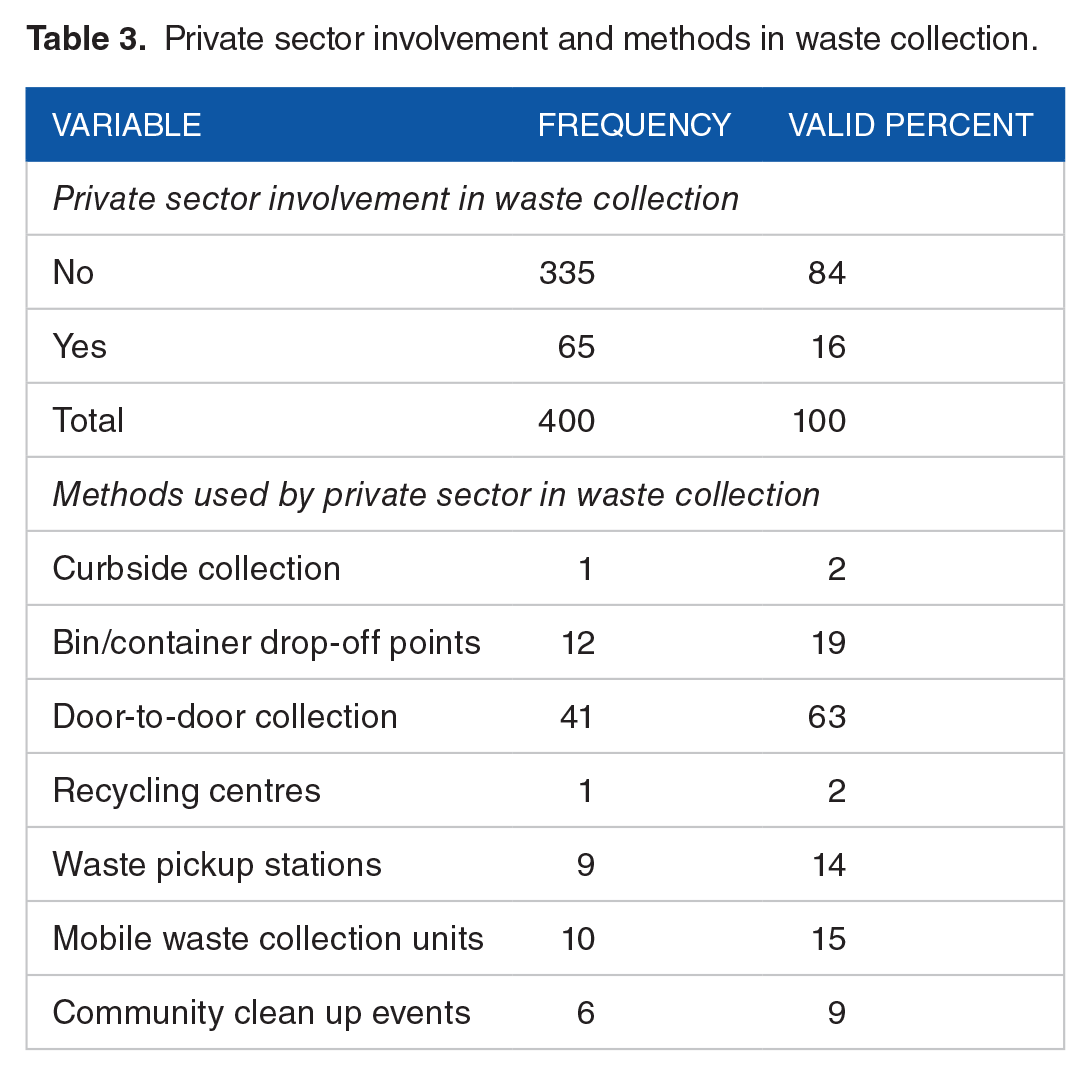
The findings of this study have significant implications for revolutionising waste management practices and fostering collaboration between the public and commercial sectors. By understanding the current methods and level of private sector participation, stakeholders can explore opportunities to enhance waste collection services and accelerate the city’s shift towards a circular economy.
Comparison between waste collection methods used by private sector and public sector
In the course of assessing the efficacy of waste management techniques, the key informants provided their perspectives on the distinctions between the approaches employed by public and private organisations. They claimed that the efficacy of private waste collectors surpasses that of public collectors.
‘Availability of funds and necessary vehicles make private institutions effective. Currently, we only have one waste collection vehicle which is not enough unlike our private counterparts who have all these resources. People themselves and the private service providers (whether individual or firms) play the biggest role in solid waste management. The city council plays a small part. Already this is indicative of positive future efforts from the public. The city council can play its technical, planning and organisational part while the public implement the best practices, guided by the council’s structure’.
Effectiveness of existing waste management systems towards a circular economy
Using a 5-point Likert scale, participants were asked to rate their perceptions of the current waste management system in Mzuzu City. The study found that the waste management system in Mzuzu City is ineffective within their specific area.
Challenges affecting implementation of sustainable waste management in Mzuzu city
Mzuzu City faced numerous challenges in implementing sustainable waste management practices. One of the major roadblocks was the absence of recycling practices. Despite its obvious benefits, recycling remains a foreign concept to many due to a lack of awareness and the misconception that it yields no tangible results. Furthermore, financial limitations and a lack of dedication were also cited by some as hindrances to adopting recycling habits.
The latest findings reveal crucial insights into the state of recycling in Mzuzu City and highlight the urgent need for targeted resource allocation and education initiatives. These efforts are essential in reducing waste generation and promoting recycling, aligning with the principles of the circular economy. By recycling, we not only conserve valuable resources and energy, but also prevent the build-up of waste. However, the Key Informants have brought attention to the challenges posed by increasing urbanisation and shifting consumption patterns. As a result, there is a high demand for waste collection services, but unfortunately, the city councils have limited capacity to meet this demand. This has resulted in less than 30% of the waste being collected, leaving the city with towering piles of uncollected waste.
Community attitudes towards waste recycling and separation
Feasibility of establishing waste conversion system
The survey results were largely positive, with the majority of participants expressing excitement about the potential for implementing a waste recycling system. Only a small fraction held any doubts, demonstrating the community’s openness to innovative solutions for managing waste. This optimistic outlook highlights a promising opportunity for creative waste management strategies.
Willingness to separate recyclables
Furthermore, a large portion of participants have shown a strong desire to take part in recycling efforts. This is evident in the overwhelming majority who are willing to separate their recyclables into designated containers, as well as the minimal number who are not inclined to do so. By adopting this proactive approach, residents have the potential to greatly enhance the effectiveness and efficiency of waste management and recycling programmes.
Availability of space for multiple bins
It’s also important to think about how feasible recycling is at home. Although a significant section of the community feels they have enough room to have multiple containers for different kinds of waste, a significant portion also say they don’t have enough space. To guarantee that the enthusiasm for wastes separation transfers into regular practice, such practical issues must be resolved.
The community’s overall attitude towards recycling and waste conversion is definitely a step in the right direction. However, there are still some practical obstacles to consider and overcome in order to ensure that public services and infrastructure align with the enthusiasm and determination of individuals to dispose of waste in an environmentally friendly manner.
Perceived challenges in establishment of a recycling system in Mzuzu City
Many respondents expressed concerns about the challenges faced in achieving sustainable waste management. These obstacles stem from the complex task of creating a comprehensive recycling system and ensuring a smooth supply chain for recyclers. Additionally, the lack of financial support and resources for companies and individuals trying to implement sustainable waste management techniques was a major concern raised by numerous participants. One potential solution that was highlighted is the use of financial incentives to encourage greater involvement in sustainable practices. However, it was also recognised that changing long-standing attitudes and habits surrounding waste disposal is no easy feat. This underscores the importance of community education and awareness initiatives in promoting and supporting sustainable practices.
One of the major challenges preventing effective waste management is the lack of coordination and collaboration between government, corporations and communities. In order to successfully address this issue, it is crucial for all parties to work together and communicate effectively. Another pressing concern highlighted by respondents is the insufficient capacity for waste treatment and disposal, resulting in overflowing landfill sites. It is imperative to invest in waste treatment infrastructure to tackle this problem. These findings are illustrated in Figure 2.

Challenges affecting implementation of sustainable waste management.
The community sees these obstacles as a challenging terrain that hinders the achievement of sustainable waste management in Mzuzu City. To tackle this issue, a holistic approach is crucial, encompassing infrastructure development, financial incentives, educational campaigns, collaborative efforts with stakeholders and improved waste treatment capabilities.
Discussion of Key Findings
This section discusses the results and shows the exceptions, unsettled points, applications and implications of the results. Where possible the chapter links the results to policy needs in waste management in light of the circular economy.
Effectiveness of existing waste management systems towards circular economy
According to the study, it seems that there is a widespread scepticism among respondents regarding the effectiveness of Mzuzu City’s waste management techniques in achieving sustainable goals. When asked to share their opinions on the city’s systems and practices for managing waste sustainably, many participants expressed dissatisfaction. This is a surprising finding, as a significant portion of the surveyed population remains unconvinced about the city’s efforts. Further analysis of the data reveals that the majority of key informant interviews point to several factors contributing to the ineffectiveness of sustainable waste management in Mzuzu City. These include limited infrastructure and markets for recycling, low public awareness and participation in recycling, inadequate resources for waste reduction programmes, and challenges in waste-to-energy initiatives. Clearly, there are significant obstacles that need to be addressed in order to improve the city’s waste management practices and achieve sustainable goals.
Numerous studies, including one by Adeleke, 36 have highlighted significant flaws in these systems that undermine their effectiveness. However, there is hope for improvement. In South Africa, researchers have identified key physical components for successful integrated waste management and are working towards addressing current challenges and future goals. One major issue hindering South Africa’s progress towards sustainable waste management is the lack of accurate and reliable data on waste-related matters. This makes it difficult for decision-makers to implement effective strategies. Additionally, there is a lack of commitment and a failure to see waste recycling as a valuable business opportunity. In contrast, the waste management systems in Malawi are heavily reliant on community awareness and the actions of waste regulators. Unfortunately, many communities lack the necessary knowledge to properly manage waste and promote a circular economy. To truly achieve sustainable waste management, it is crucial for both individuals and governing bodies to have a deep understanding of all aspects of waste management. This includes proper waste collection, segregation and recycling processes. By educating and empowering communities, and promoting a shift towards viewing waste as a valuable resource, we can move closer towards a truly sustainable future.
Despite the challenges faced by the sustainable waste management systems, the Mzuzu city has made impressive strides towards improving its effectiveness. According to key informant interviews with the Mzuzu city council, significant efforts have been made towards sustainable waste management.
‘Efforts have been made to embrace circular economy principles. These are: Promoting Reuse: We encourage the reuse of items through donation centres and repair workshops. Extended Producer Responsibility (EPR): We advocate for EPR programs where manufacturers take responsibility for product disposal. Community Initiatives: We support community-based initiatives that focus on upcycling and repurposing materials. These efforts align with circular economy principles to reduce waste and promote sustainability’
The state of waste management today has highlighted significant gaps that demand our immediate attention. From the institutional framework to the collection, sorting and repurposing of waste, there are crucial areas in need of improvement. Despite the pressing need for sustainable waste management infrastructure, there seems to be a lack of commitment from both the public and commercial sectors in investing in recycling initiatives. It’s time to bridge these gaps and revitalise our waste management system for a greener and cleaner future.
Mzuzu city council has long been a champion for sustainable waste management practices, with a strong focus on recycling. And it’s not just officials who recognise the importance of these efforts – residents of Mzuzu wholeheartedly agree, as confirmed by key informant interviews. In fact, during our own conversation with Mzuzu city officials, we witnessed firsthand the overwhelming support and dedication to this cause. From innovative initiatives to pioneering programmes, Mzuzu city council is leading the way towards a cleaner, greener future for all.
‘Mzuzu City has a comprehensive Waste Management Policy that outlines guidelines and strategies for sustainable waste management. This policy encompasses waste reduction, recycling, waste-to-energy initiatives, and community involvement. Additionally, there are bylaws in place that mandate waste separation at the source and proper waste disposal which have been derived from the National Local Government Act. These policies and bylaws are key in providing a conducive environment for sustainable waste management’.
Challenges affecting implementation of sustainable waste management in Mzuzu city
The study identified several challenges surrounding waste management in Mzuzu city, including frequency of waste collection, separation of recyclables and overall satisfaction with the management process. Through key informant interviews, it was discovered that limited financial resources hindered the council’s ability to meet the expectations of residents. This was evident in the failure to regularly collect waste and the presence of unscheduled waste heaps in undesignated areas. This issue was also highlighted in a previous study by Msukwa et al, 12 which examined the technical challenges of waste management. The study revealed that the city’s rapid population growth has put a strain on the council’s resources, resulting in less than 30% of waste being collected daily. This leaves a significant amount of waste uncollected, posing a threat to public health and the environment.
This can however provide opportunities for waste reduction and waste recycling. Public awareness campaigns and programmes can provide opportunities for public participation in solid waste management, incentives for recycling and waste reduction can increase public participation in solid waste management and improved communication and engagement of residents can increase public participation in solid waste management.
According to a recent study by Sinthumule and Mkumbuzi, 37 the success of community waste management efforts in municipalities can be attributed to the active participation of the public and cooperation from the private sector responsible for managing waste. Furthermore, the authors argue that raising awareness about waste management has significantly improved solid waste management in various cities. 38 However, achieving this success requires careful strategic planning, inclusivity, transparency, continuity and proper allocation of resources. 39
Effective public participation is crucial in the management of waste, and there are various strategies that can be utilised to achieve this goal. One approach is through advocacy and counselling for waste collectors, as well as households. Another key aspect is monitoring the waste sorting behaviour of households, as highlighted by Zakianis. 40 Additionally, civil and corporate actions, such as involving society, non-governmental organisations and public and private enterprises, play a vital role in waste management. This is because these organisations possess intellectual and cultural dimensions that can facilitate the process of public participation, as Seren 41 emphasises. However, without proper waste management structures and plans in place, community participation campaigns may not be as effective, as observed by Sekarningrum. 42
To truly achieve sustainable waste management, it is essential to involve the community in activities like recycling and decision making. While technical and economic factors play a crucial role, addressing issues like public acceptance, evolving values and behavioural changes are equally important.15,43 This means actively engaging local authorities and the public, and incorporating all stakeholders in the decision-making process. The key to success lies in empowering the community, promoting transparency, fostering cooperation and collective action, effective communication and providing easy access to information. 44
Factors leading to lack of commitment for participation in sustainable waste management systems by the public and private sectors
One of the pertinent findings is that both government and private institutions show less commitment towards sustainable waste management. The study finds a number of factors that led to no commitment.
Public sector
Respondents cited a lack of financial resources, inadequate waste disposal facilities and negligence as reasons contributing to the perceived lack of government commitment.
Inadequate resources
The results of this study align with McAllister’s 45 research on the effectiveness of Waste Management Services Offered by eThekwini Municipality in Ntuzuma Township, Durban. It has been discovered that the availability of resources plays a crucial role in the government’s dedication to sustainable waste management. Additionally, political determination has been proven to create a conducive environment for environmentally-friendly waste management practices. However, the majority of waste management infrastructure and facilities are struggling to keep up with the fast-paced economy and technological advancements, resulting in a decline in their efficiency and capacity. These challenges are also prevalent in Mzuzu City, particularly in the areas of waste collection, processing and disposal.
Across many locations, the lack of reliable and consistent waste management services is a persistent issue. A recent study conducted through key informant interviews revealed that various factors can greatly influence the success of sustainable waste management efforts. One of the primary challenges is the scarcity of collection vehicles, which are often poorly maintained and prone to delays. As a result, waste is often haphazardly disposed of in open spaces near rivers, waterways and roads. Furthermore, the transportation of hazardous waste materials, including biological and industrial waste, alongside municipal waste, greatly hinders proper recycling procedures. This issue is exacerbated by the inadequate infrastructure for waste disposal, which has not kept pace with the rapid growth of urban populations. 1 In the city of Mzuzu, for example, the lack of adequate disposal sites and properly maintained vehicles has become a pressing concern. As urbanisation continues to drive up waste generation, it is imperative that steps be taken to address this pressing need.
After several engagements with key informants at Mzuzu City Council, it became apparent that resource availability was a major factor impacting the public government. Despite this challenge, the council expressed a strong dedication to implementing sustainable waste management, as shown in one of their responses below: ‘Achieving sustainable waste management is an ongoing challenge, and we recognize that there is always room for improvement. While we have made significant strides in waste collection and disposal, sustainability involves a complex set of factors. We are continually working to enhance our efforts, including waste reduction, recycling, and community engagement, to move closer to the goal of sustainable waste management’.
Furthermore, the key informant interviews with officials of Mzuzu City Council, showed that despite the fact that the council’s commitment was affected by a number of problems, there had been some pieces of evidence that there was at least some commitment. This was shown in the statements by one of the respondents below; ‘As Mzuzu City Council, we have initiated several programs to sensitize the community about the economic benefits of waste management. This includes organizing workshops and training sessions on waste separation, recycling, and the creation of value-added products from recyclable materials with the help from non-governmental organizations such as Find Your Feet (FYF), Waste Advisors and many other NGOs. Furthermore, we collaborate with local entrepreneurs and organizations to establish businesses that utilize recycled materials, creating economic opportunities. Local entrepreneurs such as Vegan Africa, KCHKNA and many others. Our institution has implemented various initiatives to promote sustainable waste management, including introducing waste separation at the source to facilitate recycling, establishing recycling centres and promoting the recycling of materials like plastics, paper, and glass at the ward level, conducting public awareness campaigns on responsible waste disposal and the benefits of recycling through the engagement of market committees, collaborating with local entrepreneurs to create businesses focused on waste-to-product ventures, and exploring waste-to-energy projects to reduce waste volume and generate renewable energy. These initiatives are part of our commitment to achieving sustainable waste management practices in Mzuzu City’.
Despite facing numerous challenges, the public’s commitment to sustainable waste management has been less than ideal. However, there is a glimmer of hope as the council has taken steps towards promoting these practices. With some additional support, their efforts could truly make a difference.
Lack of political will
The study revealed that the lack of political will is a crucial factor that affect the success of sustainable waste management systems. It is the driving force behind the development of waste management laws and regulations. When political will is strong, it leads to the creation of comprehensive waste management frameworks that prioritise sustainability through practices like waste reduction, recycling and proper disposal methods. These findings are consistent with previous studies conducted in developing countries. For example, Batista et al 46 discovered that political will significantly influences the implementation process of sustainable solid waste management systems. Similarly, Serge 47 conducted a study titled ‘Sustainable Solid Waste Management in Developing Countries: A Study of Institutional Strengthening for Solid Waste Management in Johannesburg, South Africa’, which also highlights the significant impact of political will on solid waste management decisions and implementation. In countries like Malawi, political will plays a critical role in the successful implementation of key development initiatives, including the management of sustainable solid waste management systems. This has a direct impact on the progress towards a circular economy, a crucial aspect in achieving the Sustainable Development Goals.
Private sector
Inadequate support from both the government and households
The study further discovered that insufficient support from both the government and households has been identified as a major hindrance to private sector involvement. This aligns with the conclusions of Adib and Mahapatro 48 and Afful et al, 49 who also conducted studies on private sector engagement in solid waste management. Interestingly, Afful et al 48 also discovered a lack of public-private partnerships in sustainable waste management practices, particularly in regards to recycling.
In many developing countries, there is a lack of enthusiasm from the private sector when it comes to recycling. This could be due to the perception that recycling is not as profitable as other business ventures. Research and interviews confirm that the private sector has minimal involvement in sustainable waste management. During key informant interviews, it was revealed that private companies struggle with obstacles such as steep upfront costs, strict regulations and unpredictable market conditions in their waste management endeavours. Furthermore, without a well-defined policy and incentives in place, the private sector may feel discouraged from participating in these initiatives.
Feasibility of establishing new economical recycling systems in Mzuzu Township
After thorough evaluation, multiple factors were considered when determining the potential success of implementing a new, cost-effective recycling system in Mzuzu. These included the practicality of constructing a waste conversion system, the willingness of individuals to separate recyclables, and the availability of space to accommodate multiple bins. Results from a survey revealed that the majority of participants are enthusiastic about the possibility of utilising a waste conversion system to repurpose discarded materials, with only a small percentage expressing doubts. This optimistic outlook showcases the community’s receptiveness towards innovative waste management approaches. Furthermore, the favourable stance towards implementing a waste conversion system exemplifies the community’s dedication to actively participating in sustainable waste management practices.
Moreover, the survey revealed a strong desire among participants to actively contribute to recycling efforts. This was evident in the significant number of individuals who expressed willingness to sort recyclable materials into separate bins, contrasted with the small percentage who admitted reluctance to do so. By taking an active approach, residents could greatly enhance the efficiency and effectiveness of waste collection and recycling systems. Despite this eagerness, the current reality in Mzuzu is that only a small fraction of locals engages in waste segregation. A deeper investigation into the reasons behind this revealed that many are simply unaware of how to properly separate their waste. Other factors such as a shortage of waste bins and incorrect waste sorting methods also contribute to the low participation rates. It is clear that a lack of knowledge in waste categorisation plays a significant role in this community’s poor participation. Until individuals gain a better understanding of proper waste classification, their actions will continue to be influenced by this gap in knowledge.
Encouraging a positive attitude towards recycling is crucial in fostering a culture of active participation in sustainable waste management programmes. This valuable discovery echoes the sentiments of numerous experts who have observed that individuals with a favourable mindset are more inclined to engage in waste separation and recycling efforts. In fact, various studies have identified a strong correlation between a positive attitude and residents’ involvement in waste sorting.50 -52 These findings are further supported by Negash et al, 53 who attribute the success of waste sorting initiatives to individuals’ positive outlook. Therefore, it is vital to cultivate enthusiasm among residents to actively take part in recycling procedures for optimal results.
Furthermore, inhabitants’ waste separation behaviour and intention are influenced by the waste separation infrastructure and management system, their attitudes and the behaviour of people around them. It is also necessary to assess the feasibility of recycling at home. While the majority of the population believes they have enough space to accommodate multiple bins for different waste categories, a sizable fraction does not. If waste separation enthusiasm is to be transformed into regular practice, such practical obstacles must be solved.
The community’s outlook on waste conversion and recycling is largely optimistic. However, there are practical obstacles that need to be addressed in order to fully embrace sustainable waste management. It is crucial for infrastructure and public services to align with the community’s eagerness and readiness for this important cause. The challenges faced in Mzuzu’s solid waste management system highlight the lack of collective action in many of the existing initiatives
Conclusion and Recommendations
Despite producing a sizable amount of solid waste, the city of Mzuzu is confronted with a critical problem: improper waste management. This issue is frequently disregarded since earlier studies and interventions prioritised on temporary fixes over long-term solutions. Additionally, there is a lack of understanding regarding the proper management of waste through recycling and the reduction of waste generation in the context of the circular economy. The study found a number of contributing factors, including inadequate funding, inadequate facilities for disposing of waste and a general lack of concern. The efficacy and efficiency of the current waste management infrastructure and facilities are declining as a result of their inability to keep up with financial and technological advancements. Waste processing, collection and disposal face a number of difficulties in Mzuzu; this is a problem that is shared by other places where these services are either non-existent or very rare. The Mzuzu City Council and its residents are still upbeat about the prospect of putting a sustain in place in spite of these obstacles.
The study recommends that in order to address this problem, widespread awareness campaigns be started to inform the public about the value of actively contributing to the reduction of solid waste generation and recycling. The study suggests building solid waste recycling facilities in Mzuzu to close the current recycling gap and make it easier to collect and process recyclable materials. In addition to advancing the circular economy, this vital infrastructure will open the door for future financing from the public and private sectors. This could include recycling facilities of the latest technology, effective collection systems and waste-to-energy initiatives. The report also recommends that the public and private sectors introduce incentive programmes to encourage citizens to participate in recycling initiatives. The public will gain from lower workload and resource expenditure, enhanced social and economic wellbeing, and a cleaner and safer environment, while the private sector may profit from convenient waste collection services and business opportunities.
Footnotes
Funding:
The author(s) received no financial support for the research, authorship, and/or publication of this article.
Declaration of conflicting interests:
The author(s) declared no potential conflicts of interest with respect to the research, authorship, and/or publication of this article.
Author Contributions
Tommy Wakana Kamanga: Conceptualization, methodology, writing—original draft, and project administration.
Moses MN Chitete: Data collection, formal analysis investigation, resources, and writing—review and editing.
Bernard CG Kamanga: Data curation, software, and visualization.
Chitsanzo Damazio: Validation, supervision, and writing—review and editing.
Yamikani Yafeti: Literature review, and writing—review and editing.
Mary Sibande: Supervision, project administration, and writing—review and editing.
