




Abstract
Introduction:
Municipal solid waste collectors are at risk of experiencing work-related health problems due to the waste they handle and the physical effort they put in. Work-related injuries among domestic waste collectors have been the subject of scant research in developing nations. Therefore, it is necessary to describe work-related injuries in these subpopulation groups.
Objective:
This study aimed to determine the prevalence and associated factors of work-related injury among municipal solid waste collectors in Hawassa city, Southern Ethiopia.
Methodology:
A cross-sectional study was conducted from January 11 to 30, 2022, with all the registered municipal solid waste collectors (411). Three diploma environmental health professionals assisted in collecting data using a pretested structured interviewer-administered questionnaire; 1 Bachelor of Science environmental health professional served as a supervisor. Statistical Package for the Social Sciences (SPSS) version 20.0 was used to enter, clean, code, and analyze the data. Associations between independent and dependent variables were assessed, and the strength of the associations was presented by using Adjusted Odds Ratio (AOR) and 95% confidence intervals (CI). According to the bivariable analysis, all independent variables associated with a P-value <.25 were entered into a multivariable logistic regression model. Variables in the multivariable regression analysis were considered significant if their P-value was less than 0.05.
Results:
In this study, the prevalence of work-related injuries within the last 30 days was 12.9% (95% CI: 9.5, 16.3), while the prevalence over the last 12 months was 59.4% (95% CI: 54.7, 64.0). After adjusting for possible confounding factors, age 18 to 24 years [AOR = 1.72;95% CI: (1.07, 2.76)], lack of personal protective equipment (PPE) utilization [AOR = 2.30; 95% CI: (1.44, 3.68)], chewing khat (yes) [AOR = 2.32;95% CI: (1.32, 4.08)], drinking alcohol (yes) [AOR = 1.80; 95% CI: (1.003, 3.24)] and job dissatisfaction [AOR = 2.26, 95% CI: (1.44, 3.54)] were shown to be significantly associated with work-related injury.
Conclusion:
The prevalence of work-related injuries was high. Age 18 to 24 years, chewing khat, drinking alcohol, lack of PPE utilization, and job dissatisfaction were significantly associated with work-related injury. Based on the findings of this study, we suggest that addressing these risk factors could help to reduce work-related injuries.
Introduction
Workplace accidents are a significant problem for workers in a variety of workplaces and industries. 1 About 2.3 million fatalities are caused annually by work-related diseases and accidents worldwide, of which more than 350 000 are caused by work-related accidents and close to 2 million by work associated diseases. 2 In addition, millions of workers suffer from work-related nonfatal illnesses and injuries, placing enormous social and economic costs on businesses, communities, and nations. 3 The financial impact of poor occupational safety and health standards is estimated to constitute 4% of the worldwide gross domestic product annually, and the human cost of this everyday challenge is enormous. 4
Compared with other workers involved in activities unrelated to waste management, municipal solid waste collectors face higher rates of workplace health problems. 5 Due to the weight of the waste to be collected and the numerous chemical and biological contaminants that may occasionally be present in the waste stream, workers may be exposed to dangers related to their health, and safety. 6
Globally, unsafe practices and exposure to physical, mechanical, and chemical dangers are leading causes of work-related injuries. Other potential factors linked to work-related injuries include the sociodemographic characteristics of workers, job arrangements, environmental factors, psychosocial issues, and societal situations.7 -9 Solid waste collectors are likely to have a low socioeconomic level in low-income nations, and several socioeconomic variables, including poverty, illiteracy, unfavorable housing circumstances, and a lousy diet, exacerbate medical issues. 10 Previous studies in Ethiopia have shown that occupational injuries in municipal solid waste collectors are associated with sociodemographic factors, the work environment, and behavioral factors.8,11 -14 In developing nations, handling solid waste presents a number of problems. First of all, a lot of waste is handled and transported with difficulty since it is not appropriately controlled in manageable quantities. Furthermore, sorting becomes more difficult because recyclables are frequently combined with non-recyclable materials. Furthermore, many waste pickers are vulnerable individuals, such as children or women of childbearing age, who are exposed to hazardous working conditions.15 -17
In developing nations like Ethiopia, door-to-door collection of household and commercial waste is organized by municipal solid waste collectors. Generally, waste is either thrown directly into the ground, necessitating manual clearing, or it is placed in a plastic bag or basket to be cleaned by hand. The garbage is then physically emptied onto a waste truck after being transported to collection sites using pushcarts or containers.11,12 However, in high-income nations waste collector handle sealed mainly plastic bags and coated trash cans, workers in low-income countries have significantly more direct contact with solid waste. 18
Throughout the past 20 years, Ethiopia has strengthened the application of occupational health and safety protection to mitigate workplace hazards. Labor unions have also been successful in improving working conditions. Nonetheless, there are still health concerns related to solid waste management that need to be addressed. 19
Hawassa City’s population is growing at a rapid pace. The city’s rapid expansion and population growth have increased the volume and kind of solid waste, making waste management a major challenge. 20 Solid waste generated by diverse human activities within a city may pose health risks to solid waste collectors unless an appropriate solid waste management program is put in place. In developing nations, waste management has not gotten enough attention to safeguard workers from occupational hazards. 21 Therefore, in order to properly understand the severity of the issues in Hawassa city, occupational injuries suffered by municipal solid waste collectors must be documented. However, none of the past studies in Ethiopia8,11 -14 focused on Hawassa City. Thus, the aim of this study was to determine the prevalence of work-related injuries and the risk factors associated with them among municipal solid waste collectors in Hawassa, southern Ethiopia.
Methods
Study area
This study was conducted in Hawassa city, a large urban city in the Sidama region. It is located in the rainy tropical climatic zone 271 km away from Addis Ababa, the capital city of Ethiopia. It is situated between latitudes 06°0. 97′N and 07°0. 23′N and longitudes 38°0. 37′E and 38°0. 47′E and an elevation of 1685 m above sea level. 22 The latest estimate, which is based on the Central Statistical Agency of Ethiopia’s 2007 census, the city has a total population of 386 773 individuals, of which 195 320 are males, and the remaining 191 453 are females. A total of 61 279 households were located within the city. 23
Study design and period
A cross-sectional study was conducted from January 11 to 30, 2022.
Population
All 419 registered municipal solid waste collectors who had direct contact with the waste in Hawassa made up the research population. Waste collectors who were seriously ill during data collection and unable to respond were excluded from the study.
Sample size determination
The sample size was determined using the formula for a single and double population proportion, assuming a margin of error of 5%, considering a 95% confidence level of 63.9% proportion of work-related injury, 13 and 10% of the non-respondent rate to come up with a sample size of 389 participants. In the end, all eligible workers (419) were included in the study since the overall number of eligible workers was not significantly different from the estimated sample size (389).
Study variables
Dependent variable and the operational definition
Work-related injury
The dependent variable was measured as if a solid waste worker experienced a work-related injury in the past year, it was coded as 1 and if not, it was coded as 0.
Work-related injuries were defined as any physical condition that an individual developed throughout the course of the previous year while carrying out their duties; however, conditions related to work that necessitated exposure assessments and laboratory testing were not included in this definition. 12
Chewing khat: It can be concluded that the respondents are regular users of khat leaves if they use them at least once a week to induce happiness and stimulation (this was coded as 1). If not, it was marked as 0. 24
Drinking alcohol: alcohol is consumed at least once a week as a psychoactive substance to elicit strong emotions and enthusiasm, it was coded as 1 and if not, it was coded as 0. 24
Independent variables
Data collection procedure and quality control
Structured interviewer administered, questionnaire was used to study participants to obtain the data. The study’s objectives and a review of other pertinent works on work-related injuries served as the foundation for developing the questionnaire. The questionnaire was initially developed in English, then translated into Amharic and Sidamic, and finally back into English to verify its accuracy. To ensure reliability of data collection, 3 diploma environmental health professionals were appointed as data collectors, while 1 BSc in environmental health professional oversaw the process as a supervisor. The supervisor and data collectors attended a 1-day training before starting work. Training was provided to the interviewers and supervisors regarding the importance of privacy and confidentiality, the usefulness of the study, independent factors, interviewing techniques, and how to control the quality of the data. A pretest was conducted on 5% of the solid waste collectors in Yirgalem town, which is 45 km from Hawassa city, before the main data gathering began. Before the actual data collection, the questionnaire underwent proper modification. To guarantee uniformity and thoroughness, the supervisor kept an eye on the data collection procedure. The data was double-checked by the supervisor to ensure accuracy and consistency. Next, 5% of the dataset was double-input into Epi Info Version 7 to confirm the accuracy of the data entered.
Data processing and analysis
The results of every analysis were compiled and presented via tables, graphs, and quantitative data-describing metrics of mean and standard deviation. Then, binary logistic regression was applied for factors associated with work-related injuries. In bivariate analysis variables with a P-value less than or equal to .25 were considered candidate for multivariable analysis. Moreover, the prevalence of the association between the dependent and independent variables was measured by the adjusted odds ratio (AOR) with the corresponding 95% confidence interval. In the analysis, a state of significance was finally declared using P-values less than .05.
Results
Demographic and socioeconomic characteristics of the participants
Four hundred, and eleven (411) municipal solid waste collectors participated in the study, making a response rate of 98.09%. All of the waste collectors who participated in the study were male. The participants ranged in age from 18 to 39 years old, with a mean age of 23.82 (4.07) years and a standard deviation of 4.07 years. Two hundred thirty-six (57.42%) of the study participants were in the age group of 18 to 24 years. More than two-thirds of the waste collectors (339 (82.48%)) were single, and more than half of them (258 (62.77%)) belonged to the Sidama ethnic group, and (305 (74.21%)) lived in an urban area. Two hundred ten (51.09%) of the participants were illiterate, and (290 (70.56%)) were protestant religious followers. About (261 (63.50%)) of the participants they had a monthly income of 450 to 800 birr (Table 1).
Demographic and socioeconomic characteristics of municipal solid waste collectors in Hawassa city, Southern Ethiopia January, 2022.
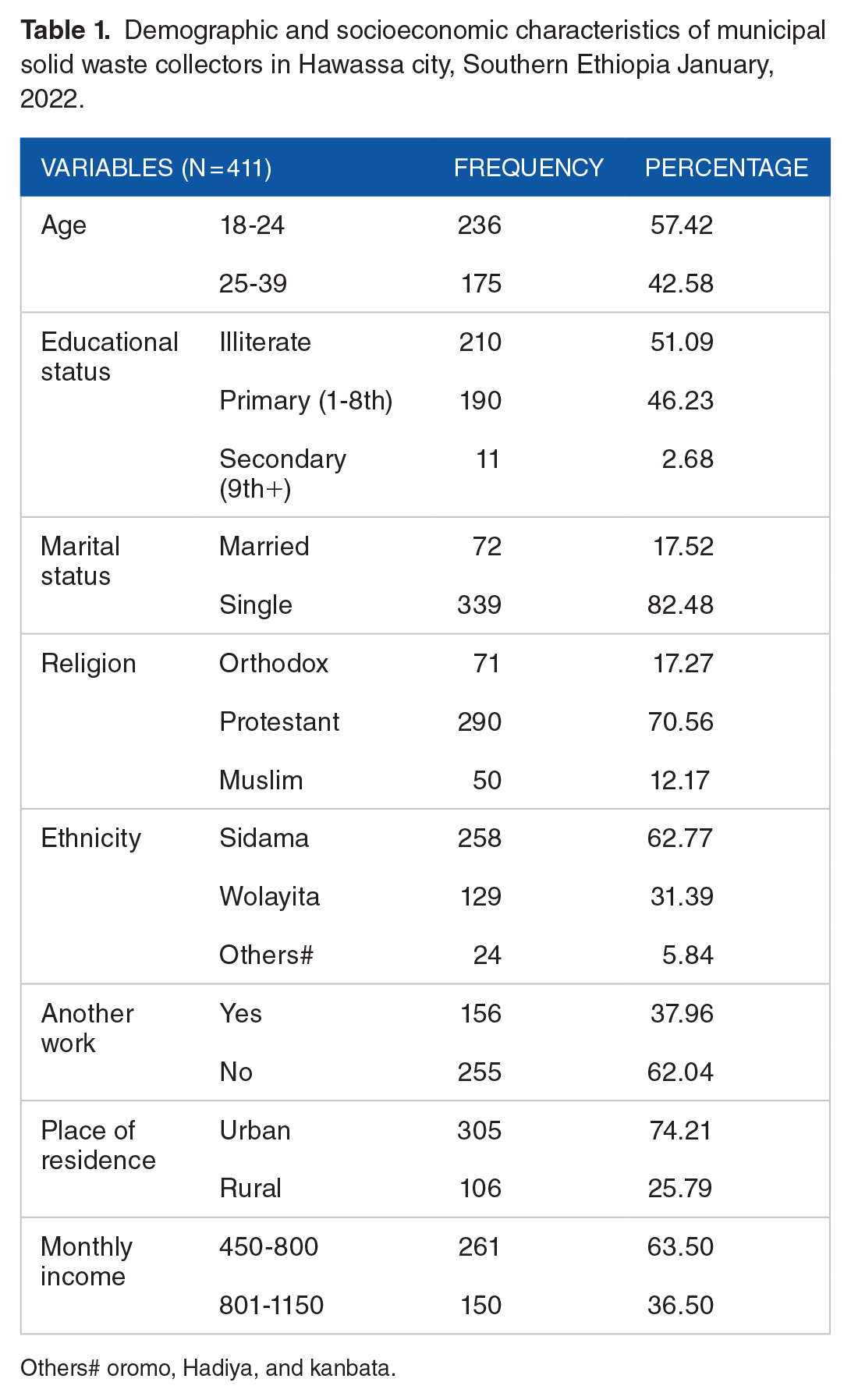
Others# oromo, Hadiya, and kanbata.
Occupational safety and behavioral-related factors
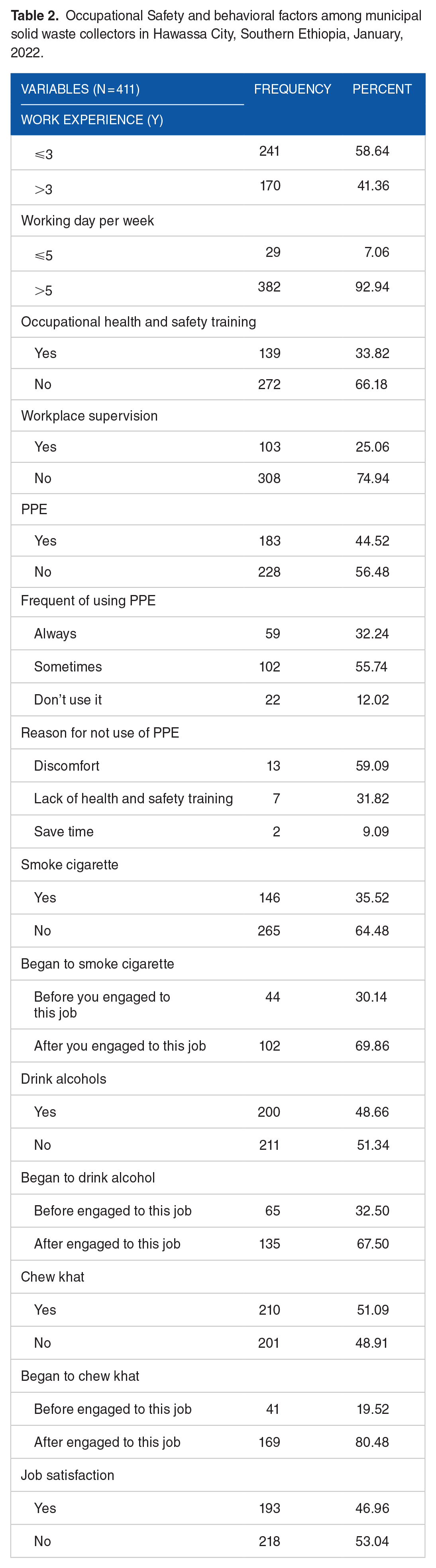
Two hundred forty-one (58.64%) collectors had less than or equal to 3 years of work experience, and (382 (92.94%)) participants had worked for more than 5 days per week. A total of 139 participants (33.82%) received training related to occupational health and safety. Out of the 139 individuals who had received training, 83 (59.71%) were undergoing their initial training, while the remaining 56 (40.29%) were doing on-the-job training. The majority of participants (308 (74.94%)) did not receive supervisory visits at their workplace. Among all the participants, (183 (44.52%)) used some kind of PPE, including a face mask, an apron, a boot, or a glove. In terms of how frequently people used PPE, (59 (32.24%)) participants used it always, (102 (55.74%)) used it sometimes, and (22 (12.02%)) did not use it. The main excuses given by the participants for not using PPE were as follows. Thirteen participants (59.09%) reported discomfort from not wearing personal protective equipment (PPE) while on the job, less than 10 reported not receiving health and safety training (31.82%), and less than 10 reported saving time (9.09%). Among the participants, (146 (35.52%)), (200 (48.66%)), and (210 (51.09%)) had a history of cigarette smoking, alcohol consumption, and khat chewing in the last year, respectively. About (102 (69.86%)) smokers were reported as they started smoking after they engaged in their current line of work. Similarly, (135 (67.50%)) and (169 (80.48%)) participants also reported that they began to drink alcohol and chew khat, respectively, after they joined this line of work. Regarding job satisfaction, (218 (53.04%)) participants were not satisfied with their work (Table 2).
Occupational Safety and behavioral factors among municipal solid waste collectors in Hawassa City, Southern Ethiopia, January, 2022.
One hundred eight (59.02%) had a glove, (106 (57.92%)) had an apron, (25 (13.66%)) had boots, and 8 (4.37%) had a face mask (Figure 1).
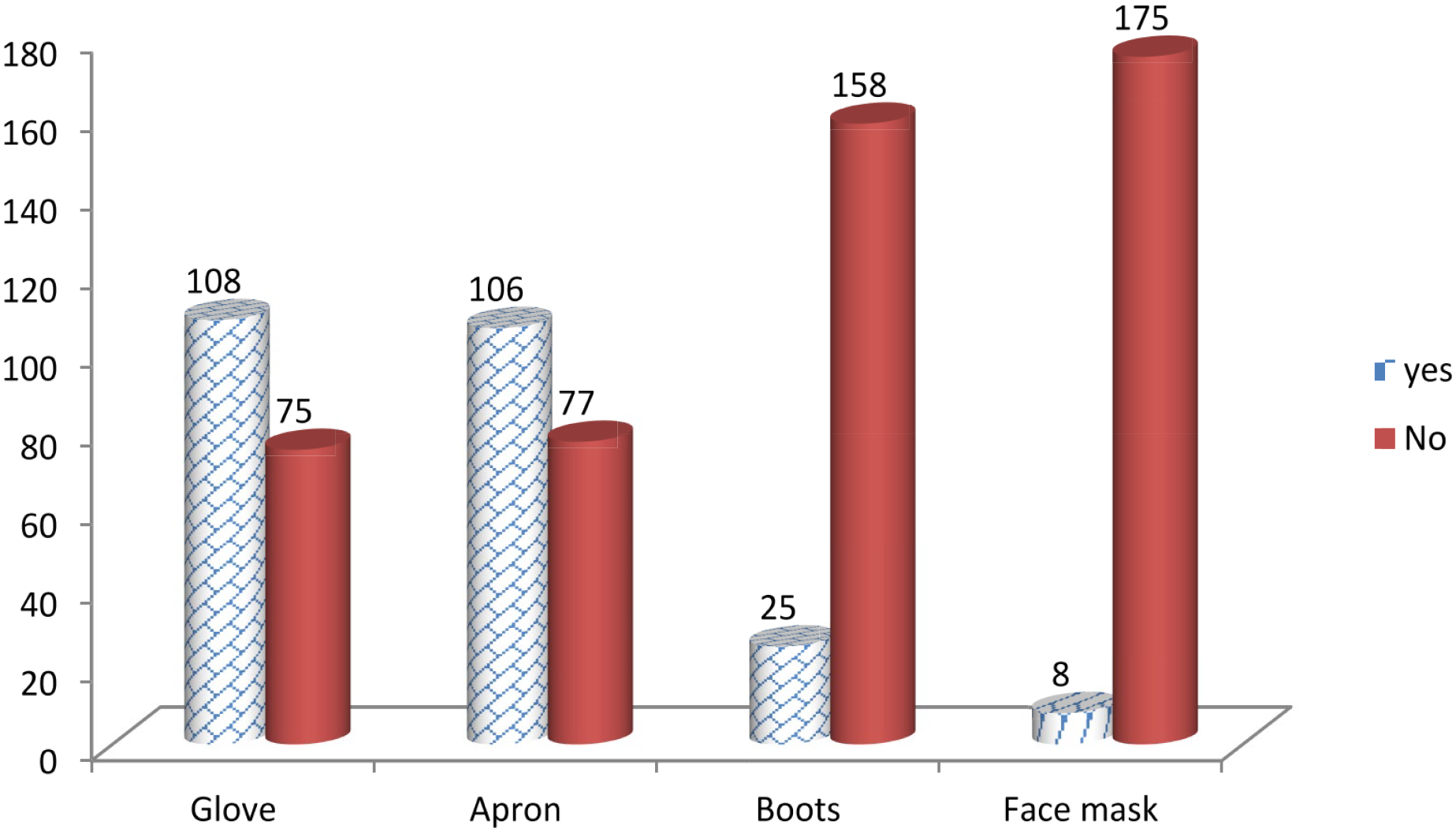
Personal protective equipment utilized by Hawassa city municipal solid waste collectors, Southern Ethiopia, January, 2022.
Characteristics and distribution of work-related injuries
Of the 411 municipal solid waste collectors In this study, the prevalence of work-related injuries within the last 30 days was 12.9% (95% CI: 9.5, 16.3), while the prevalence over the last 12 months was 59.4% (95% CI: 54.7, 64.0). Overall, (142 (58.2%)) of the waste collectors were injured on their hand, while (128 (52.50%)) were injured on their leg . The leading type of injury reported by the workers was puncture (120 (49.20%)), followed by cutting ((110 (45.08%)). By examining the 244 municipal solid waste collectors who experienced a work-related injury in the preceding year, the severity of the injury was assessed. Of them, 41 (16.8%) missed more than 3 days and 73 (29.92%) missed 1 to 3 working days. Of the individuals who reported injuries connected to their jobs, 15 (17.90%) were admitted to healthcare facilities and 43 (17.60%) received treatment there (Table 3).
Prevalence and distribution of work-related injury among municipal solid waste collectors in Hawassa city, Southern Ethiopia, January, 2022.
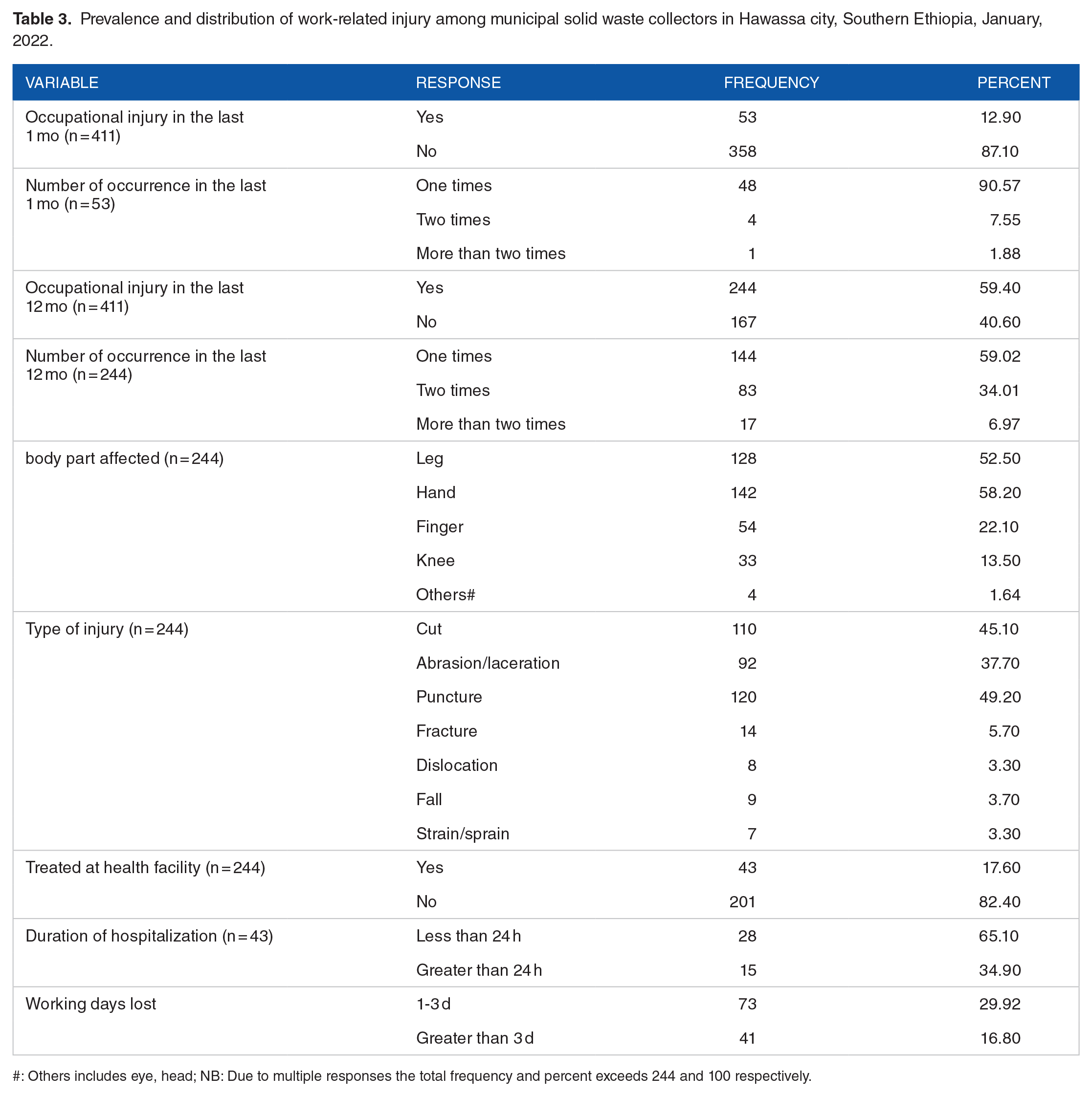
#: Others includes eye, head; NB: Due to multiple responses the total frequency and percent exceeds 244 and 100 respectively.
Causes of work-related injury
Of the 244 municipal solid waste collectors that had injuries, (93 (38.10%)) were injured by collecting waste (Figure 2).
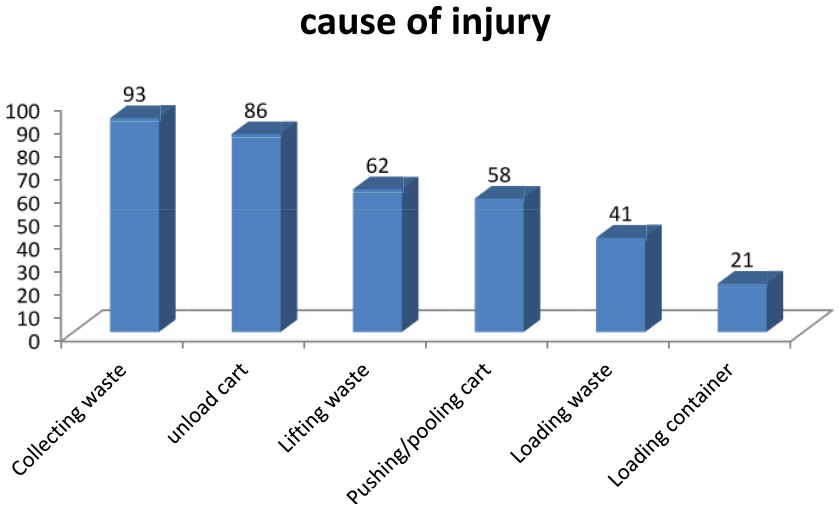
Factors contributing to work-related injuries among municipal solid waste collectors in Hawassa City, Southern Ethiopia, January 2022.
Factors associated with occupational injuries
According to our multivariable analysis, the odds of having a work-related injury were 1.72 times greater among workers aged 18 to 24 years [AOR = 1.72; 95% CI: (1.07, 2.76)] than among those aged 25 to 39 years. Those who did not use PPE experienced work-related injuries 2.30 times higher than those who did [AOR = 2.30; 95% CI: (1.44, 3.68)]. In addition, the odds of work-related injury were 1.80 times higher [AOR = 1.80; 95% CI: (1.003, 3.24)] among those who reported drinking alcohol than those who did not drunk. The likelihood of work-related injury was found to be significantly higher [AOR = 2.32; 95% CI: (1.32, 4.08)] among participants who reported chewing khat than those who did not chew khat. The analysis revealed a difference in the likelihood of a work-related injury according to job satisfaction; waste collectors who were not satisfied with their work were 2.26 times more likely to have a work-related injury than those who were satisfied with their work [AOR = 2.26; 95% CI: (1.44, 3.54)] (Table 4).
Summary of logistic regression of relative effects of associated factors and work-related injury among municipal solid waste collectors in Hawassa city, Southern Ethiopia January, 2022.
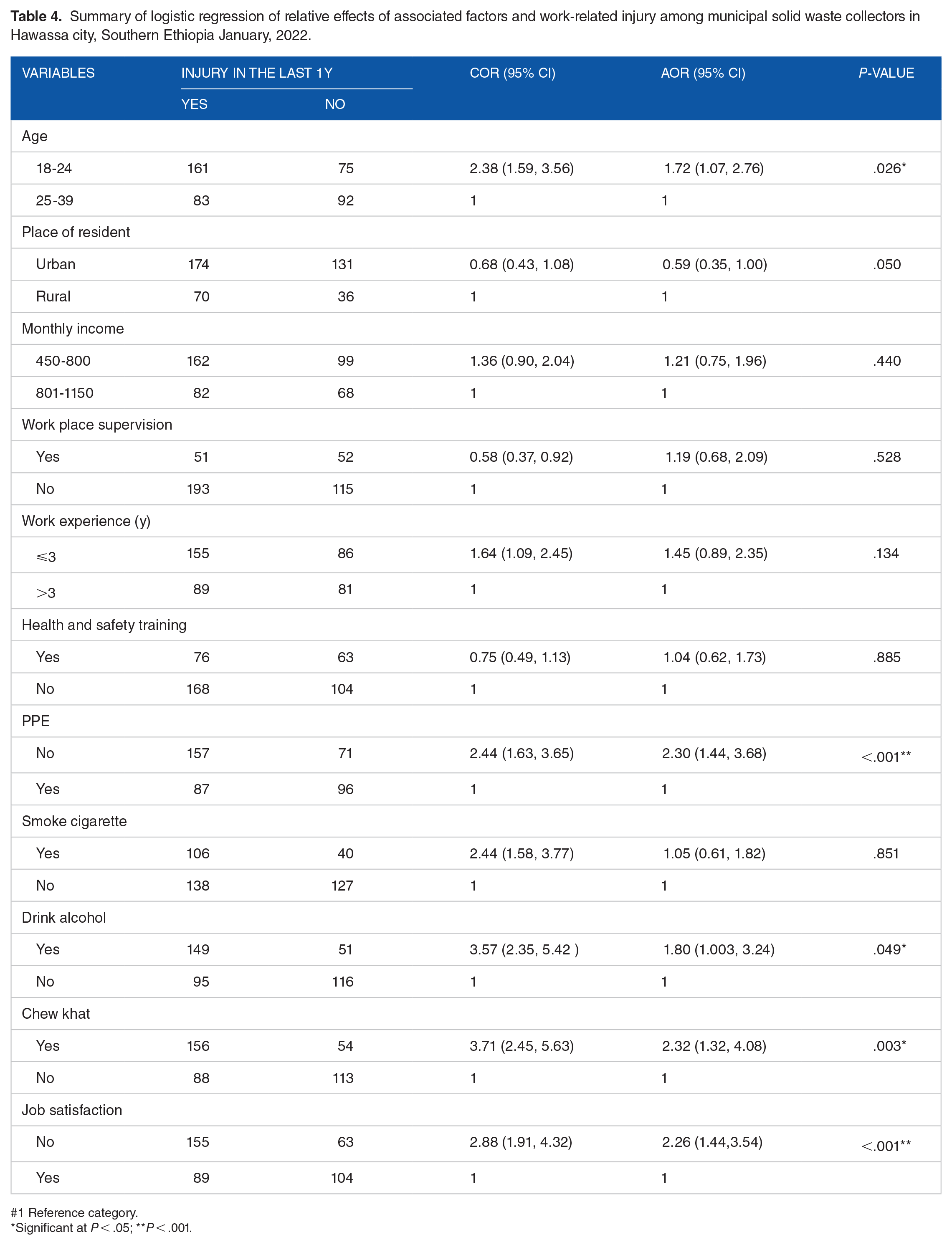
#1 Reference category.
Significant at P < .05; **P < .001.
Discussion
In this study, the annual prevalence of work-related injury was nearly 60%. The finding of this study, was consistent with the findings of a study conducted in Gonder town and Bahirdar city 13 and a study conducted in Harar town, Ethiopia. 25 But, the results of this study was higher than those of other studies carried out both within the country and outside. The studies were carried out in Amhara region, Ethiopia, 12 Mekele city, Ethiopia, 26 South Africa, 27 Kigal city, Rwanda, 28 and Ghana. 29 Differences in the kinds and composition of waste generated, as well as inadequate utilization and shortages of personal protection equipment, can all contribute to differences in annual prevalence. The high likelihood of work-related injuries may also be impacted by the fact that most waste collectors do not always use PPE. On the other, the findings of this study indicate that the prevalence of work-related injuries over a month was 12.9%. These results are in line with prior research carried out in Gonder and Bahirdar. 13 The hand and the leg were the bodily areas most frequently affected. The results of this study are in line with previous studies conducted among municipal solid waste collectors in Ethiopia.11 -13 Likelihood of injuries among municipal solid waste collectors is increased because they use their hands to wipe waste before placing it in carts and tracks. 11 Furthermore, a lack of safety measures or precautions may have contributed to the problem. According to this study, puncture injuries were the most common type of injury, followed by cuts. This finding is inconsistent with studies conducted in Ethiopia, Rwanda, Colombo, Brazil, and Nepal.11,28 -31 The high frequency of punctures may be explained by a lack of community awareness of waste workers’ safety when hazardous items are disposed of without taking the required safety precautions. In this study, we found that, various factors were involved in the cause of work-related injury. Most of the waste collectors experienced work-related injury were caused due to collecting waste and then unloading and lifting waste. The findings of the study are consistent with studies carried out in Ethiopia.12,13
According to this study, the assessment of the severity of work-related injury revealed that 43 (17.6%) of the cases were hospitalized, from which 15(34.5%) were hospitalized for more than 24 hours and 41 (16.8%) were absent from work for more than 3 days. This finding was lower than that of previous studies conducted among municipal solid waste collectors in Gondor town and Bahirdar city. 13
Age, lack of PPE use while on duty, alcohol consumption, chewing khat, and job dissatisfaction were the main contributors to work-related injury in this study. However, monthly income, place of residence, workplace supervision, health and safety training, and smoking cigarettes were not significantly associated with work-related injury.
According to this study, individuals between the ages of 18 and 24 had a 1.72 times higher risk of injury than people 25 and older. The finding of this study are consistent with those of other Ethiopian studies that have been done.14,26,32 The study’s conclusions suggested that a lack of work experience, inadequate safety training, and the fact that the majority of collectors in this age range consume alcohol and khat may all contribute to the higher rate of work-related injuries among young people.
Another factor of interest is the relationship between the utilization of PPE and work-related injury. The occurrence of work-related injury among nonusers was 2.30 times greater among their counterparts. The finding of this study are consistent with those of the studies conducted in Ethiopia,13,25,32 and abroad in Ghana, 29 and in Bethlehem and Hebrew, 33 where using PPE prevented workplace injuries more effectively than not using PPE. In another industry, such as Tendaho Agricultural Development in Ethiopia, non-use of PPE was similarly strongly associated with work-related injury 9 and Arba Minch Textile Factory, Southern Ethiopia. 34 A possible explanation might be the difference in the nature and composition of the generated waste.
This study showed that work-related injury was 1.80 times higher among those who reported drinking alcohol than among their counterparts. These findings are in agreement with those of a studies in Gondar town and Bahir Dar City, northwest Ethiopia, 13 Kigali city, Rwanda, 28 and Mumbai, India. 35 Additionally, individuals are more likely to engage in additional actions that increase the risk of harm. On the other hand, many studies conducted in Ethiopia and Colombia among municipal solid waste collectors have shown no discernible difference in the injury caused by alcohol consumption.11,12,31
Additionally, khat use was strongly linked to injuries sustained at work. Workers who chewed khat had 2.32 times the risk of harm as did those who did not. The reason for this could be explained by the fact that khat usage boosts the activity of waste collectors, which is a result of neglecting the importance of PPE and proper workplace safety measures. However, other studies conducted in Ethiopia have shown that chewing khat was not significantly associated with work-related injuries.11 -13
Job dissatisfaction was also another variable statistically associated with work-related injury. In this study, workers dissatisfied with their jobs were 2.26 times more likely to develop injuries than their counterparts. Possible explanation could be that participants’ excessive workload enhances fatigue, ignorance and negligence in practicing health and safety precautions at the workplace, which are essential parameters affecting injury. However, other studies conducted in Ethiopia have shown that job satisfaction is not significantly associated with work-related injury. 11
Conclusion
The prevalence of
Footnotes
Acknowledgements
The authors would like to thank the Department of Environmental Health, Hawassa University, for approval for ethical clearance. The authors are also very grateful to the data collectors and study participants. We would especially want to thank Genet Elias for her steadfast assistance.
Funding:
The author(s) received no financial support for the research, authorship, and/or publication of this article.
Declaration of conflicting interests:
The author(s) declared no potential conflicts of interest with respect to the research, authorship, and/or publication of this article.
Author Contributions
Availability of Data and Materials
The “dataset will not be shared to protect the participant’s identities.”
Ethical Approval
Before the research began, informed verbal consent was obtained from all participants involved in the study. In addition, letters of support were acquired from the Hawassa City Health Department and the Hawassa University Department of environmental health. Additionally, the Institutional Review Board (IRB) of Hawassa University provided ethical clearance and approval. Every procedure was carried out in compliance with the applicable rules and regulations.
Consent for Publication
Not applicable.
