



Abstract
Background and Objective:
There have been significant effects of the current coronavirus-19 (COVID-19) infection outbreak on many facets of everyday life, particularly the environment. Despite the fact that a number of studies have already been published on the topic, an analysis of those studies’ findings on COVID-19’s effects on environmental pollution is still lacking. The goal of the research is to look into greenhouse gas emissions and air pollution in Bangladesh when COVID-19 is under rigorous lockdown. The specific drivers of the asymmetric relationship between air pollution and COVID-19 are being investigated.
Methods:
The nonlinear relationship between carbon dioxide (
Results:
The bound test confirmed the existence of long-run and short-run relationships between variables. Bangladesh’s strict lockdown, enforced in reaction to a surge of COVID-19 cases, reduced air pollution and dangerous gas emissions, mainly
Keywords
Introduction
The Coronavirus-19 (COVID-19) has spread throughout the world. As of February 6, 2022, there have been over 435 million overall cases and 5.95 million deaths globally since the virus was first discovered in Wuhan, China. The World Health Organization (WHO) proclaimed such infections to be a pandemic on January 30. In horizontal transmission, the virus spreads indirectly through contaminated surfaces like plastic and stainless steel and directly across intimate interactions via respiratory secretions produced by sneezes and coughs. 1 Severe acute respiratory syndrome Coronavirus 2 (SARS-CoV-2) is a corona virus that causes severe acute respiratory syndrome.2 -4 Although the virus’s intermediate point of origin and mode of transmission to humans are unknown, the virus’s ability to spread quickly from human to human has been established. 5 Direct contact or droplets formed by coughing, sneezing, or talking were the most common ways for the virus to spread from person to person.2,6,7 In the worst-case scenario, COVID-19 can result in kidney failure, pneumonia, and even death.2,8
The world has seen a massive growth in environmental contamination during the last few decades. Pollution of the environment is a serious problem that continues to endanger people’s lives. As pollution concentrations grow, so do the number of respiratory infections.
9
In the contemporary global environment, where economic operations are rising, pollutants are increasing at a quicker rate. Pollution from the environment causes a wide variety of illnesses. It has a detrimental influence on human health through increased infection susceptibility.
10
Without a doubt, developing countries are the most affected. Traditional pollution sources, such as drinking water contaminated by waste, poor hygiene, and poor indoor air quality emissions, are still being addressed.
11
Pollution in the environment has reached alarming levels all across the world. Greenhouse gas emissions have increased because of economic development, industrialization, and urbanization.2,11,12 As a result, harmful chemicals such as atmospheric carbon dioxide (
COVID-19 will have a significant economic impact, but there is a bright side that might mitigate some of its unfortunate facts. Reduced human interference in the environment has given nature a “healing time” as states have practiced social isolation and quarantine for more than a month. One notable effect that is being noticed is on the air quality, which is being felt by everyone and documented in numerous official reports. 13 Marine life is more active, smog has made way for clear skies, and major cities’ pollution levels have significantly dropped. The situation today is a “reset” for nature and humans, giving us the opportunity to observe and assess how humans are affecting the environment. These positive impacts have allowed us to reevaluate our impact on our surroundings. 14 As a result, we deduce that quarantine measures have improved the air quality in Bangladesh, inspiring us to investigate the quality of the air and the impact of environmental pollutants’ associations with COVID-19 in Bangladesh as well as around the world.
Without a doubt, the new corona virus has wreaked havoc on the ecology and climate around the planet. Because of the lockdowns, there has been a considerable reduction in transport activity, which has resulted in a huge reduction in air pollution. Since the epidemic, China’s
Bangladesh is a densely populated, tiny country that is well-balanced. The weather in Bangladesh can be changeable. 16 Bangladesh seems to be the third country in South Asia to be affected, after Pakistan and India. 17 On March 8, 2020, Bangladesh announced the first COVID-19 outbreaks at the Institute of Epidemiology, Disease Control, and Research (IEDCR). The city of Dhaka, Bangladesh’s capital, has been the hardest hit. Bangladesh’s government issued a 10-day curfew as a first step to combat the epidemic from March 26, 2020, to May 30, 2021. The Bangladesh government then enforced a 21-day lockdown from April 5, April 26, 2021, as the second stage. Finally, from July 1 to August 31, 2021, Bangladesh’s government implemented a partial lockdown. To try to stop the spread of COVID-19, Bangladesh’s authorities implemented quarantines and lockdowns. All other organizations, including educational institutions, are closed save for emergency services (eg, medical, fire, police, food supply, and so on) to urge people to stay at home. Except for the conveyance of vital commodities and emergency services, all public transportation services (eg, buses, trucks, trains, planes, etc.) were suspended. Following the announcement of the lockdown, the government and administration made the difficult decision to implement it, which included no social gatherings, a significant reduction in vehicles and public transportation, and the complete closure of industries, shopping malls, and non-emergency administrative buildings, among other things. Figure 1 depicts the overall scenario in Bangladesh during and after the lockdown.
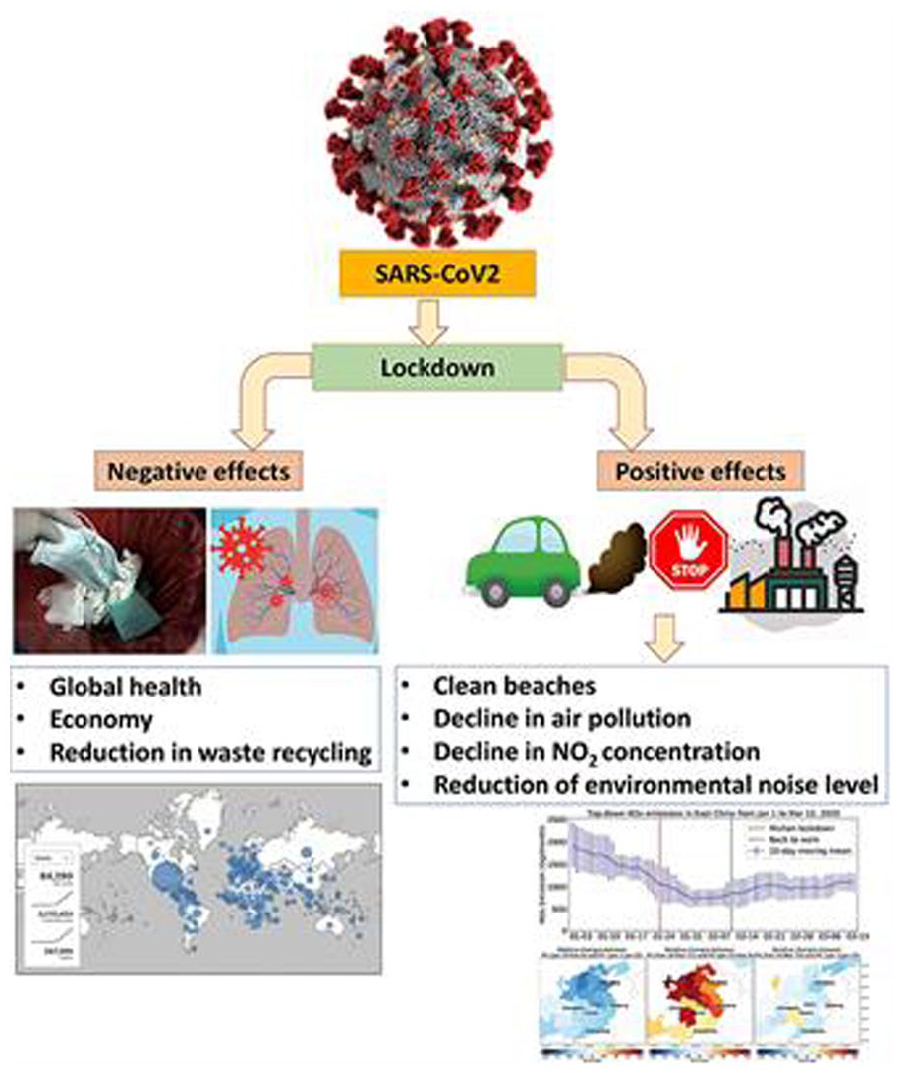
COVID-19, lockdown and the effects on the world. Adapted from “Kumar et al.” 18
Industrial output, educational establishments, building activities, and small and large-scale businesses were all affected by the long-term shutdown. It has had a significant negative impact on the economy, and a great number of individuals are experiencing difficulties in their daily lives as a result. Because of the uncontrollable COVID-19 scenario, Bangladesh’s government declared a red, yellow, and green zone on June 16, 2020, based on the number of people infected. During the lockdown, nature has a chance to recover while residents maintain social distance, quarantine at home, and engage in as few outside activities as possible. As a result, during the lockdown, Bangladesh observed a blue sky in the Dhaka metropolis for more than 100 days.
The current study will look at the impact of carbon emissions and
COVID-19 has also taught us some important things. All of these are tied to human survival, readiness, and environmental responsibility, all of which will contribute to future pandemic control. Lockdowns of many varieties are proving useful not only in breaking the chain of illnesses, but also in repairing the environment. In various parts of the world, pollution levels have decreased, and nature has begun to reclaim its territory. What matters is what we learn as a species because of this. Will we be able to dramatically cut our carbon footprint? Will there be any limits on traveling that aren’t necessary? Will we cut back on the quantity of contaminants we throw into ecosystems so that nature can breathe? Will all stakeholders, including governments, organizations, and individuals, band together to combat the environmental plague that has been ravaging the world for decades, claiming lives and destroying biodiversity? Vaccines or other measures, as well as coordinated efforts across national and continental borders, will be used to combat the deadly COVID-19, the most explosive pandemic in a century, sooner or later. A fresh viewpoint is required to address some of the fundamental concerns raised by the epidemic. To stop these pandemics in their tracks, humanity must work together. The best method to prevent pandemics is to focus all your efforts on achieving environmental sustainability goals.
The effect of temperature on the distribution of COVID-19 in diverse situations has been studied in several recent articles. Most investigations failed to discover a direct association between the COVID-19 pandemic and the temperature, according to Bilal et al.
19
The air has reached its purity and has become healthy throughout this critical period. According to Muhammad et al,
20
during the COVID-19 lockdown period, the world’s most polluting cities, including China, Spain, France, Italy, and the United States, cut nitrogen dioxide (
Fayaz 21 has investigated the lock-down COVID-19 effects on the air pollution indices in Iran and its neighbors. In India’s megacity Delhi, Mahato and Pal, 23 revisiting air quality during lockdown and influenced by the second surge of COVID-19, discover that both the nationwide lockdown and the city-scale restriction are responsible for improving the city’s air quality, though the rate of improvement was higher (39%) during the first cycle of lockdown (nationwide) than during the second cycle of lockdown (city-scale). A case study from Indian cities demonstrates negligible effects on the persistent property of urban air quality, which Chelani and Gautam 24 studied during the COVID-19 pandemic. According to Dang and Trinh, 25 “The Beneficial Impacts of COVID-19 Lockdowns on Air Pollution: Evidence from Vietnam,” NO2 concentrations drop by 24% to 32% 2 weeks after the COVID-19 lockdown.
Lockdown has also had an effect on the air pollution indices in the highest producer of greenhouse gas regions, such as China in PM2.5 and NO2, 26 the United States in PM2.5 and NO2, 27 the UK in nitric oxide (NOx), with about 50% reductions and increases in Ozone gas (O3) and Sulfur di oxide (SO2), 28 and South Korea in PM2.5, PM10, NO2, and Carbon monoxide (CO). 29 The decline and changes of NO2, PM2.5, and PM10 have been observed in Asia 30 and Iran. 31
During the lockdown, Delhi, India’s capital, saw considerable improvements in air quality and a reduction in the rate of specific air pollutants.
32
Air pollutants and aerosol concentrations have a positive association,
33
and aerosol concentrations have decreased because of the reduction in major air pollutants. Overall, the epidemic has wreaked havoc on the global economy, affecting the environment either directly or indirectly. The COVID-19 epidemic enhanced air and water quality, decreased noise, and helped to rehabilitate the environment.34,35 The COVID-19 pandemic in the region is linked to the transportation sector’s emissions of environmental pollutants like
Because of its worldwide upheaval, COVID-19 has had a multitude of ecological and environmental impacts. Because of movement restrictions and a significant slowdown in socio-economic activities, environmental performance has improved in many places, and water contamination has been reduced in different parts of the world as well. The environmental effects of COVID-19 on the environment are shown in Figure 2. As factories, transportation, and businesses have closed, GHG emissions have plummeted. According to Henriques,
37
New York’s air pollution levels will have dropped by nearly half because of virus-control measures. Heavy industry closures in China were expected to account for roughly half of the reduction in Nitrous oxide (
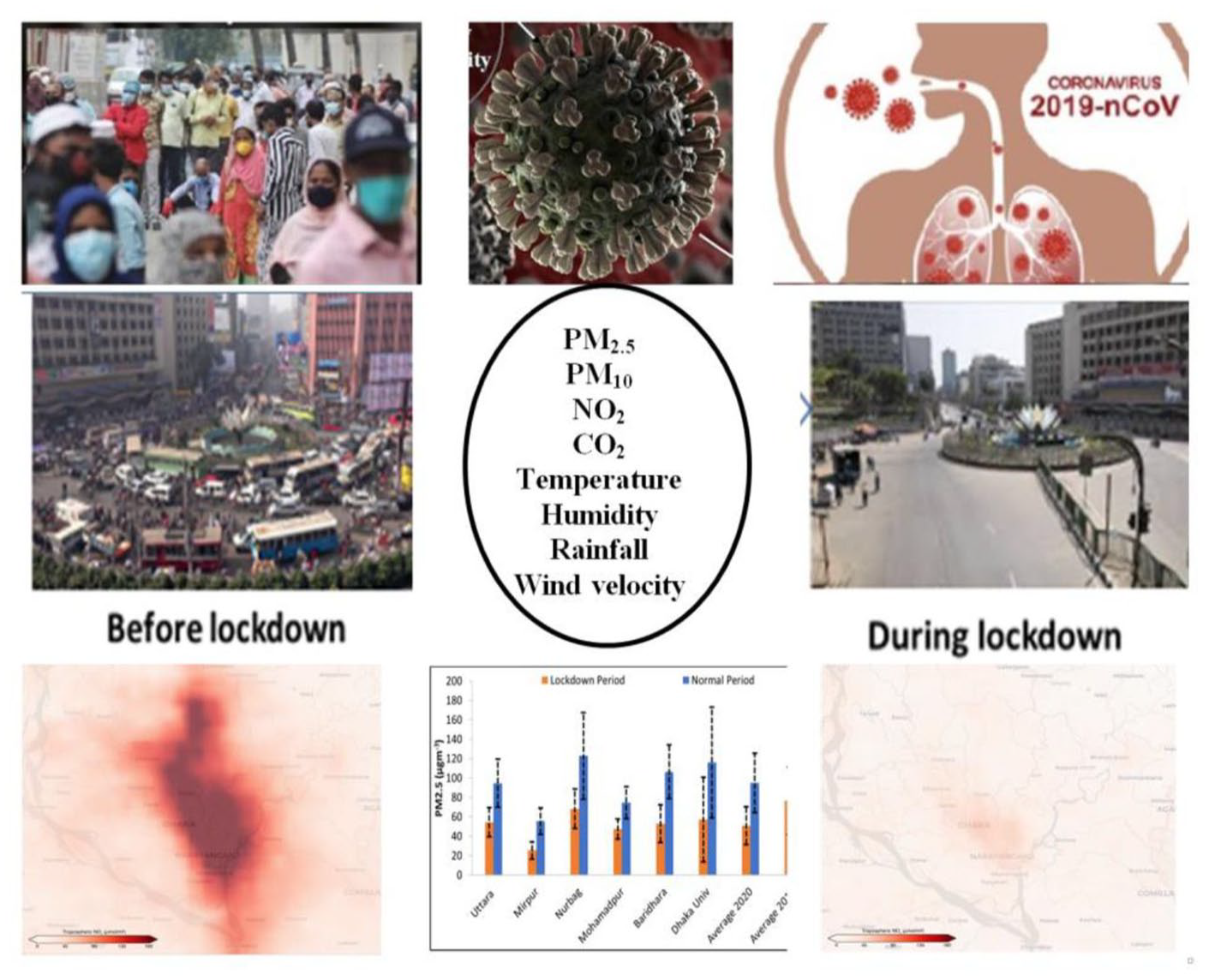
Total scenario during and before (after) lockdown in Bangladesh. Adapted from “Pavel et al.” 43
Methodology
Data description
The impacts of COVID-19’s determinants on
Methods
As reported by Shin et al
46
we utilized a NARDL model to investigate the long and short-run nonlinear interactions between the variables. Based on the previous work of Sarfraz et al,
44
our model will be as follows, taking into account the nonlinear link between daily-confirmed cases, daily confirmed fatalities, lockdown on carbon emission and


The partial sum of positive and negative shocks in daily-confirmed cases (DC), daily confirmed deaths (DD), and lockdown (LD) has been estimated by the nonlinear autoregressive distributed lag (NARDL) approach. While some variables are nonlinearly related, the usual ARDL model can only look at the straight-line association across exogenous and endogenous variables.47,48 The nonlinear ARDL model handles negative and positive changes in variables. The decomposition of the NARDL model into a partial sum of positive and negative changes is shown by the

Where,

Equation (2) can be included in the following NARDL equation with an unrestricted error correction representation:

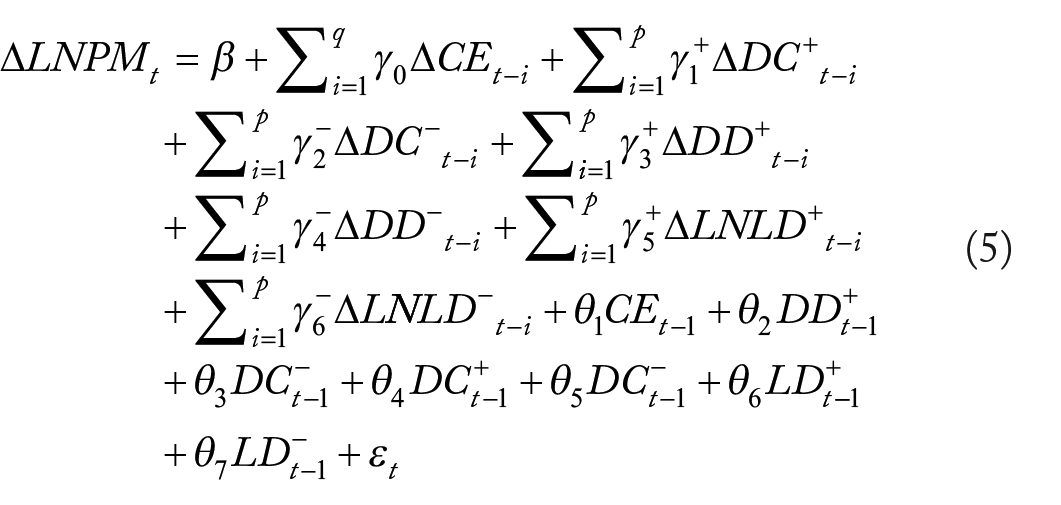
The lag order of this model can refer to p and q. the long run nonlinear effects of DC, DD, and LD on CE are defined by
The NARDL model can be used in several ways. To see if the data was stationary, we performed the Augmented Dickey–Fuller (ADF) and Phillips–Perron (PP) tests. The study then used bound testing, as proposed by Shin et al
46
to check for the presence of co integration. Using the F-test, we checked the null hypothesis of

Results and Discussion
Table 1 summarizes
Descriptive statistics.

Here, Std. Dev. stands for standard deviation.

Carbon emission and

Contributions of all the study variables.
The study used unit root test to check the order of integration in time series data using the ADF and PP tests and the results are presented in Table 2. For the optimal lag structure, the Akaike information criterion (AIC) was employed. Daily positive cases, daily deaths,
Unit root test results.
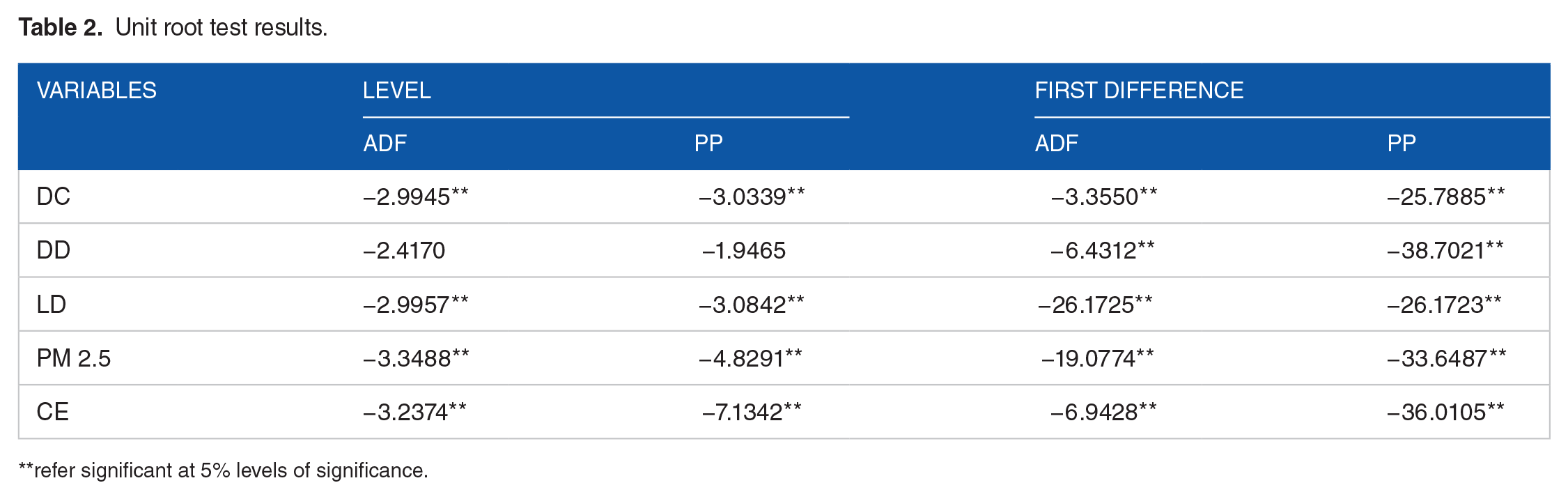
refer significant at 5% levels of significance.
The bound test results of NARDL model for co integration have been shown in Table 3. The bound test shows that there is an inconclusive relationship in a linear ARDL way for model 1, because at 5%, the calculated value (F-statistic) of 3.04 is halfway between the required lower threshold of 2.86 and the higher limitation of 4.01. In a linear approach, the bound test demonstrates that there is an inconclusive decision. On the other hand, the results of the non-linear ARDL specification indicate the long-run cointegration existence as the value of the F-statistic is 14.14 is bigger than the value of 3.52 at 5%, showing that the non-linear ARDL specification is co-integrated. On the basis of the t-statistic, the same conclusion can be drawn.
Bounds test results for co-integration for model 1 and model 2.

The critical values are from the Narayan 53 .
Again, when the long-run co-integration connection between
NARDL estimate results.

Here, Std. indicates standard.
refer significant at 5% levels of significance and the significance value is 0.05. *refer significant at 10% levels of significance and the significance value is 0.1.
Model 1 and Model 2’s long and short run estimations are provided in Tables 5 and 6, respectively. Model 1 has demonstrated that DC+ has positive and significant effects on carbon emissions in the short run, while LD+, LD−, and LD (−1) have negative and significant effects. In model 2, only LD+ has a negative and substantial influence on
NARDL short run and long run estimates for model 1.

refer significant at 5% levels of significance and the significance value is 0.05.
NARDL short run and long run estimates for model 2.
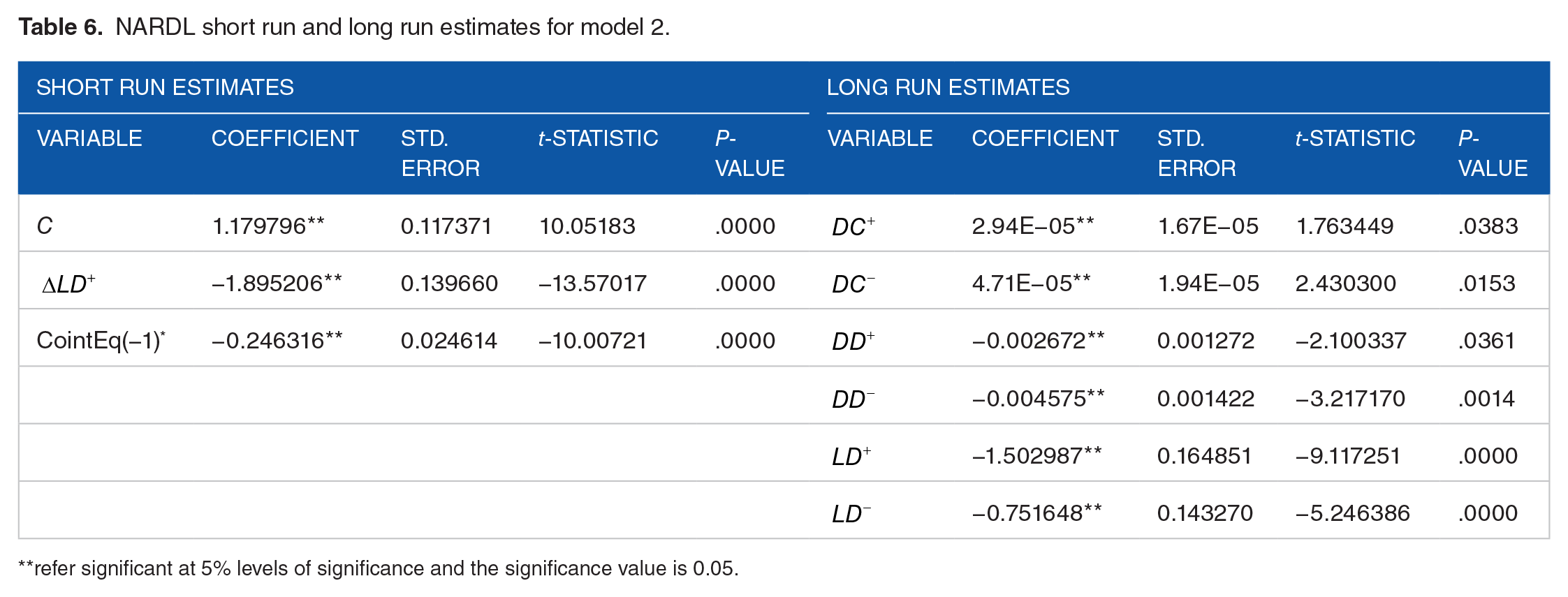
refer significant at 5% levels of significance and the significance value is 0.05.
Various good and negative environmental repercussions have been reported in each of the Southeast Asian countries because of the COVID-19 lockdown and restrictions. According to Kanniah et al, 56 the region’s pollution levels, and haze pollution have both improved dramatically. Other countries throughout the world have also seen an improvement in air quality. The results show that the lockout has resulted in a significant increase in air quality and may serve as a vital method of decreasing emissions, which has an impact on urban sustainability in the long run. As a result, in the coming years, a short-term shutdown to manage unhealthy air pollution may be enforced. The COVID-19 lockout provided us with a once-in-a-lifetime chance to gather, evaluate, and analyze a wide range of real-time data in terms of long-term environmental sustainability. This includes greenhouse gas emissions, short-term air quality fluctuations, and meteorological data.
According to Barbier and Burgess, 57 these actual statistics could be used for prognostication and reaction studies, allowing for improved preparation at both the local and national scales. This information will be critical in persuading policymakers and stakeholders to collaborate to enhance climate change policies at the national and regional levels. According to Manzanedo and Manning, 58 these policies may strengthen the capability to handle eco-efficiency concerns not only in Bangladesh, but also internationally. Furthermore, in Asian countries, the COVID-19 lockout reduced energy consumption in the manufacturing industries while increasing power usage at the household and community level. Because of the current economic downturn in Asia, the development of renewable power and public transit is almost impossible. 59 However, in the long run, a small amount of money might be allocated to the establishment of innovative green energy sources such as solar power and gas storage for renewable power.
With a significance of 1% and a negative sign assumption, the ECT term verifies the long-term link between
NARDL diagnostic test and Wald test results.
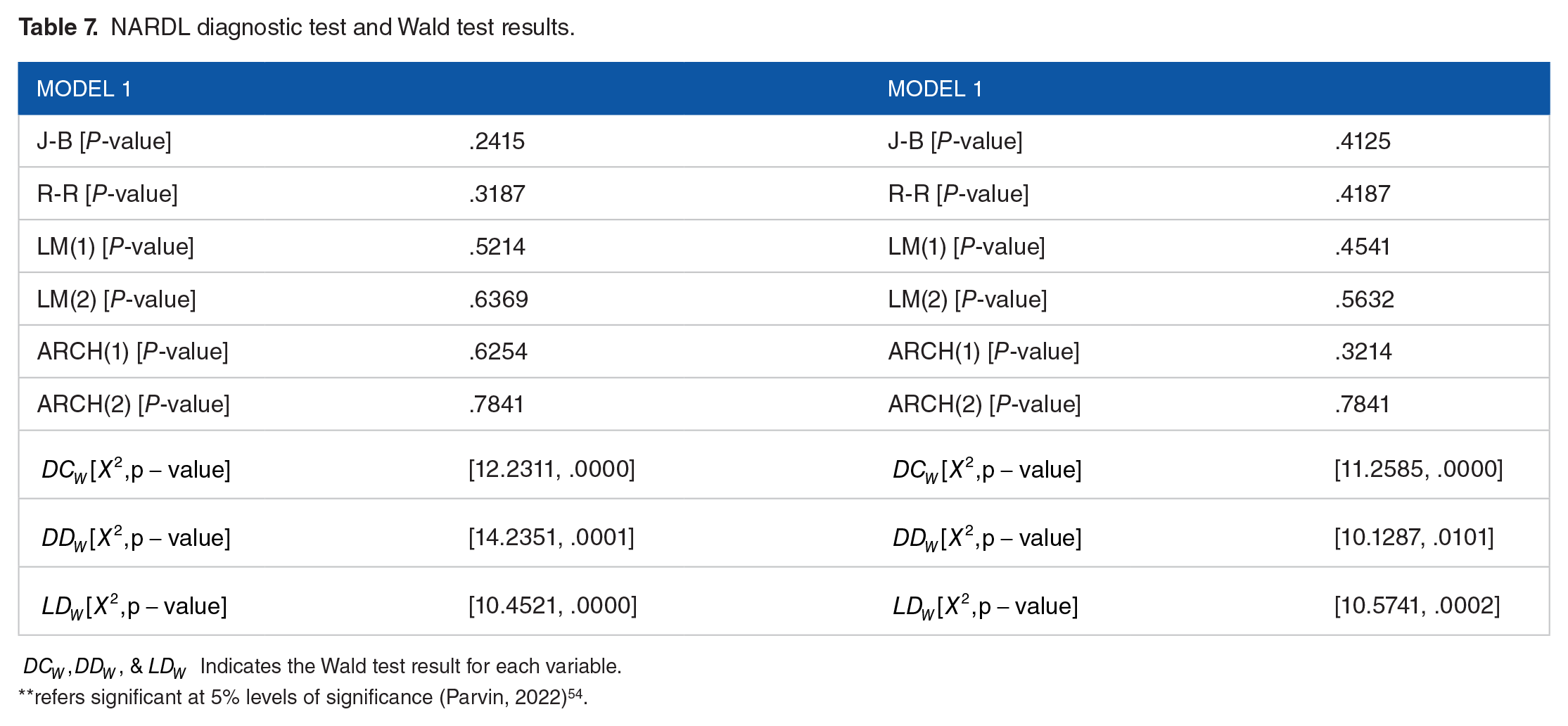
refers significant at 5% levels of significance (Parvin, 2022) 54 .

Stability check for model 1.
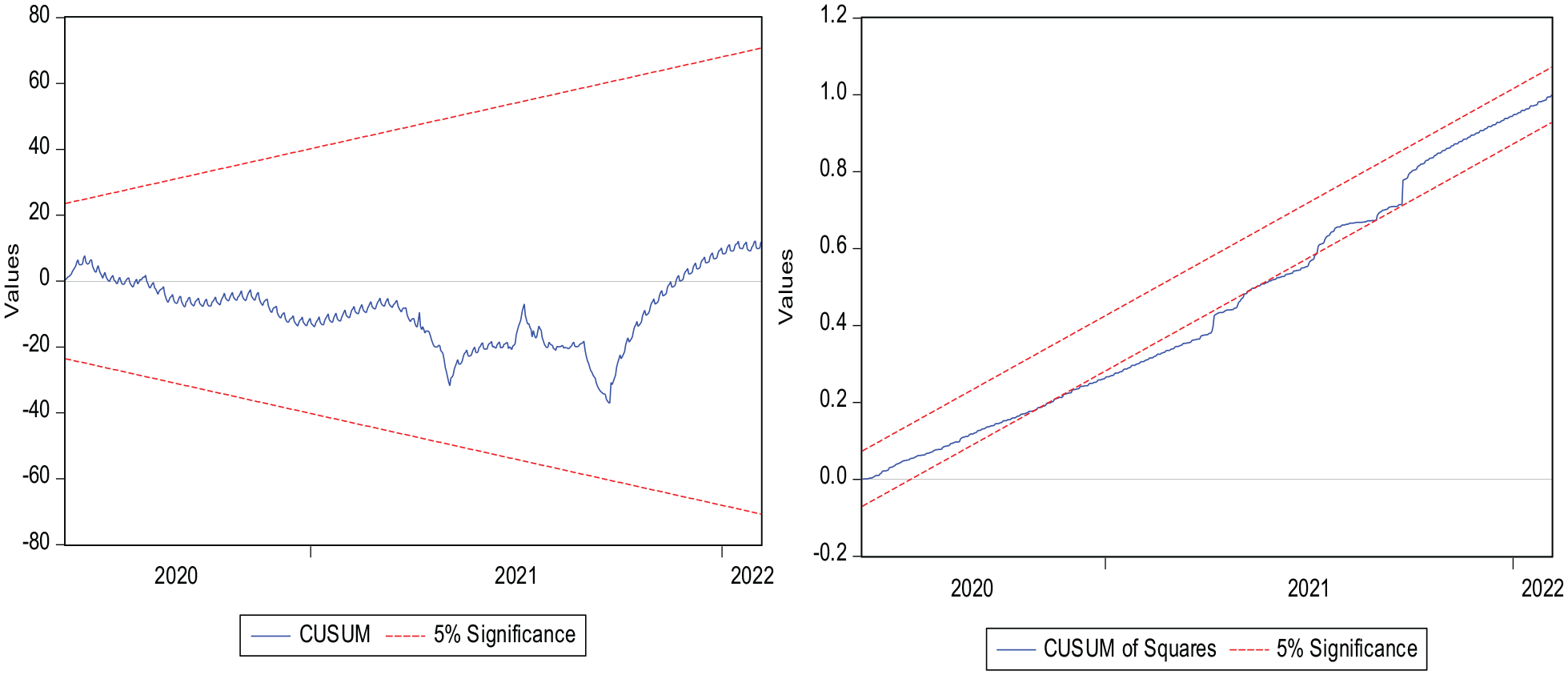
Stability check for model 2.
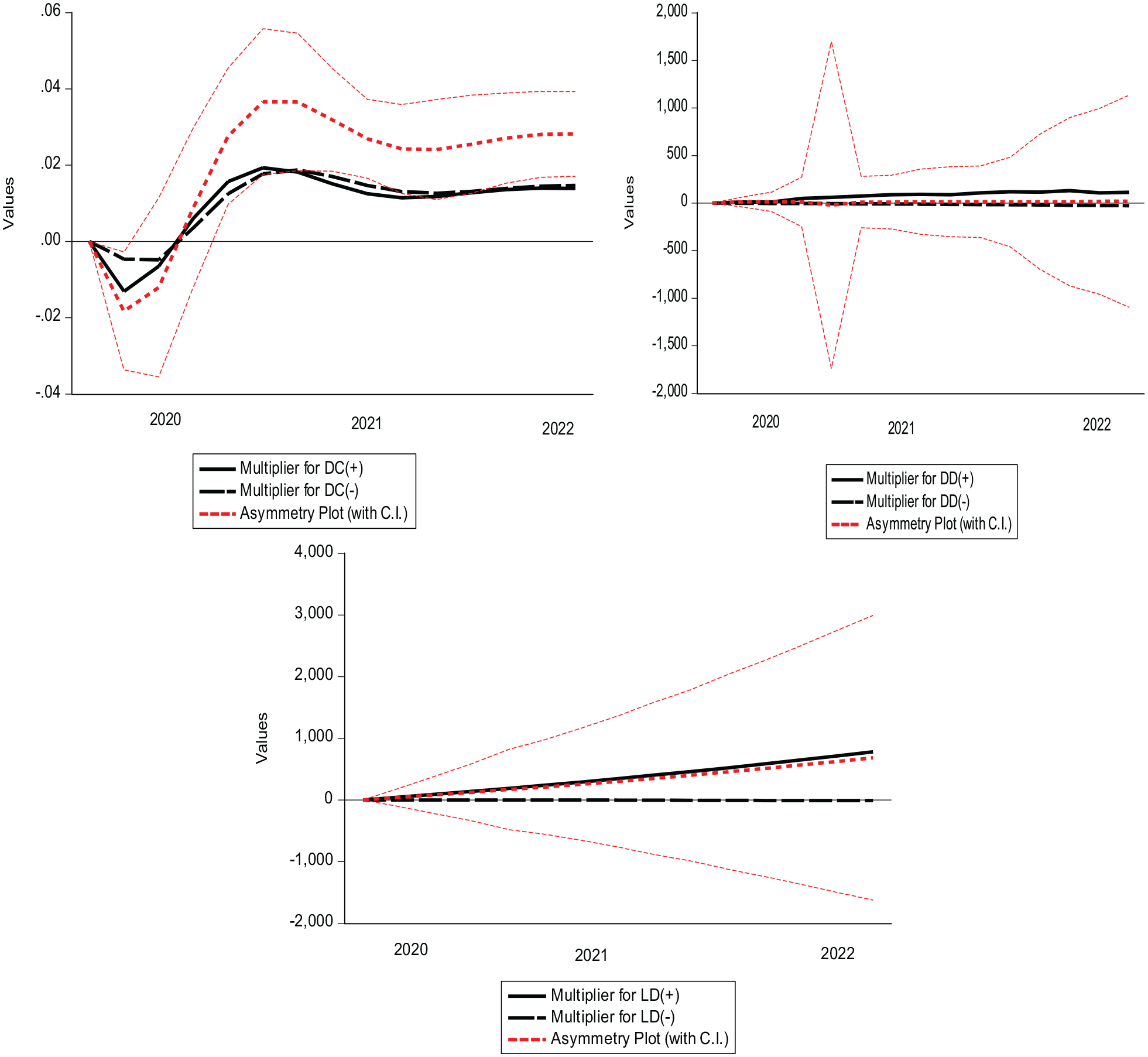
Dynamic multiplier graph COVID-19 determinants on carbon emissions.

Dynamic multiplier graph COVID-19 determinants on PM 2.5.
The COVID-19 pandemic may be seen as a “blessing in disguise,” where air quality is improving and the earth is reviving itself, according to the preliminary analysis of air quality data in the current study. By reducing air pollution through controlled emissions of major air pollutants, it is possible to significantly reduce a number of health problems like asthma, cardiovascular disease, respiratory conditions, and premature deaths. These favorable effects of an air pollution lockdown can reassure the government and authorities that strict air quality regulations and emission reduction plans can significantly enhance the environment and people’s health. In addition, the Bangladeshi government may take the following actions to reduce financial risks associated with climate change, use cleaner or alternative fuels, like CNG or LPG, promote public transportation systems, such as the Metro, require engine-driven vehicles to be certified as PUC (Pollution Under Control) compliant by-passing tests for carbon monoxide and hydrocarbons, and implement adaptation policies.
Conclusion
The link between
The lockdown undoubtedly helped to reduce
Even though we present some rather intriguing findings, we also want to draw attention to some shortcomings in the prior work. Firstly, the current study only focuses on Bangladesh, which is struggling with a lack of medical and financial resources to combat this pandemic. As a result, we encourage future research to examine the exposure of global pandemics like COVID-19 over a larger dataset in order to examine how environmental pollutants may have contributed to the spread of the current pandemic. The development of statistical tests that account for spatial information will be one of the future directions of this research.
Supplemental Material
sj-xlsx-1-ehi-10.1177_11786302231164288 – Supplemental material for The Nexus Between COVID-19 Factors and Air Pollution
Supplemental material, sj-xlsx-1-ehi-10.1177_11786302231164288 for The Nexus Between COVID-19 Factors and Air Pollution by Rehana Parvin in Environmental Health Insights
Footnotes
Acknowledgements
We are grateful to the Bangladesh Meteorological Department (BMD) for making the day wise datasets used in this study available on request. We are also thankful to Miyan Research Institute, International University of Business Agriculture and Technology (IUBAT).
Declaration of Conflicting Interests:
The author declared no potential conflicts of interest with respect to the research, authorship, and/or publication of this article.
Funding:
The author received no financial support for the research, authorship, and/or publication of this article.
Author Contributions
Conceptualization and approval: Rehana Parvin; methodology: Rehana Parvin; software: Rehana Parvin; analysis: Rehana Parvin; data curation: Rehana Parvin; validation: Rehana Parvin; draft preparation: Rehana Parvin; visualization: Rehana Parvin; review and editing: Rehana Parvin; supervision: Rehana Parvin.
Code Availability
IBM SPSS and Eviews 10 were utilized for statistical analysis and code will provide to the corresponding author upon reasonable request.
Consent to Participants
Informed consent was obtained from all individual participants included in the study.
Consent to Publish
The participant has consented to the submission of the case report to the journal.
Data Accessibility
The data has been provided in the form of a zip file for online submission as a supplementary file.
Ethical Approval
Not applicable.
Supplemental Material
Supplemental material for this article is available online.
References
Supplementary Material
Please find the following supplemental material available below.
For Open Access articles published under a Creative Commons License, all supplemental material carries the same license as the article it is associated with.
For non-Open Access articles published, all supplemental material carries a non-exclusive license, and permission requests for re-use of supplemental material or any part of supplemental material shall be sent directly to the copyright owner as specified in the copyright notice associated with the article.
